2255-4823/$ – see front matter © 2013 Elsevier Editora Ltda. All rights reserved.
ASSOCIAÇÃO MÉDICA BRASILEIRA
REVISTA DA
7PMVNFt/ÞNFSPt/PWFNCSP%F[FNCSPt*44/t*44/ 0OMJOF
www.ramb.org.br
ARTIGOS
ARTIGOS ORIGINAIS _____________Qualidade da informação da internet disponível para pacientes em páginas em português ___________________________________________________________645 Acesso a informações de saúde na internet: uma questão de saúde pública? ______650 Maus-tratos contra a criança e o adolescente no Estado de São Paulo, 2009_______659 Obesidade e hipertensão arterial em escolares de Santa Cruz do Sul – RS, Brasil ___666 Bone mineral density in postmenopausal women with and without breast cancer ___673 Prevalence and factors associated with thoracic alterations in infants born prematurely __________________________________________________679 Análise espacial de óbitos por acidentes de trânsito, antes e após a Lei Seca, nas microrregiões do estado de São Paulo ___________________________________685 Sobrevida e complicações em idosos com doenças neurológicas em nutrição enteral ______________________________________________________691 Infliximab reduces cardiac output in rheumatoid arthritis patients without heart failure ______________________________________________________698 Análise dos resultados maternos e fetais dos procedimentos invasivos genéticos fetais: um estudo exploratório em Hospital Universitário _______________703 Frequência dos tipos de cefaleia no centro de atendimento terciário do Hospital das Clínicas da Universidade Federal de Minas Gerais __________________709
ARTIGO DE REVISÃO ______________Influência das variáveis nutricionais e da obesidade sobre a saúde e o metabolismo __714
EDITORIAL
Conclusão: como exibir a cereja do bolo 633
PONTO DE VISTAOs paradoxos da medicina contemporânea 634
IMAGEM EM MEDICINAObstrução duodenal maligna: tratamento endoscópico paliativo utilizando prótese metálica autoexpansível 636 Gossypiboma 638
DIRETRIZES EM FOCO
Hérnia de disco cervical no adulto: tratamento cirúrgico 639
ACREDITAÇÃO
Atualização em perda auditiva: diagnóstico radiológico 644 SEÇÕES ____________________________
www.ramb.org.br
Revista da
ASSOCIAÇÃO MÉDICA BRASILEIRA
REV ASSOC MED BRAS. 2013;59(6):563-570
Original article
Impact of early enteral nutrition therapy on morbimortality
reduction in a Pediatric Intensive Care Unit: A systematic
review
q
Fernanda Marchetto da Silva
a,b,*, Ana Carolina Gouvea Bermudes
b,c, Ivie Reis Maneschy
b,
Graziela de Araújo Costa Zanatta
b,c, Rubens Feferbaum
d, Werther Brunow de Carvalho
d,
Uenis Tannuri
e, Artur Figueiredo Delgado
fa Ambulatory of Specialties, Instituto da Criança, Hospital das Clínicas, Faculdade de Medicina, Universidade de São Paulo, São Paulo, SP,
Brazil
b Departament of Pediatrics, Faculdade de Medicina, Universidade de São Paulo, São Paulo, SP, Brazil
c Pediatric Intensive Care Unit, Instituto da Criança, Hospital das Clínicas, Faculdade de Medicina, Universidade de São Paulo, São Paulo,
SP, Brazil
d Faculty of Medicine, Universidade de São Paulo, São Paulo, SP, Brazil
e Discipline of Pediatric Surgery, Faculdade de Medicina, Universidade de São Paulo, São Paulo, SP, Brazil f Post-graduation Program in Pediatrics, Faculdade de Medicina, Universidade de São Paulo, São Paulo, SP, Brazil
A RT I C L E I N F O
Article history:
Received 3 August 2012 Accepted 4 June 2013
Keywords: Critical care Nutritional therapy Malnutrition Child mortality Palavras-chave: Cuidados críticos Terapia nutricional Desnutrição
Mortalidade na infância
q Study conducted at Instituto da Criança do Hospital das Clínicas, Faculdade de Medicina, Universidade de São Paulo, São Paulo, SP,
Brazil.
* Corresponding author.
E-mail: [email protected] (F.M. Silva).
A B S T R A C T
Objective: To assess the impact of early introduction of enteral nutrition therapy on morbidity and mortality reduction in a pediatric intensive care unit.
Methods: A search was performed in the literature of the last 10 years in English, with the target population of individuals aged 1 month to 18 years admitted to pediatric intensive care units in the PubMed, Lilacs and Embase databases using the keywords: Critical Care, Nutritional Support and Nutrition Disorders or Malnutrition.
564
REV ASSOC MED BRAS. 2013;59(6):563-570Conclusion: The scientific evidence on the use of enteral nutrition therapy in improving the development of critically ill pediatric patients is still scarce and further studies are needed focusing on it, and better guidelines must be formulated.
© 2012 Elsevier Editora Ltda. All rights reserved.
O impacto da introdução precoce de terapia nutricional enteral na redução da morbimortalidade na Terapia Intensiva Pediátrica: uma revisão sistemática
R E S U M O
Objetivo: Avaliar o impacto da introdução precoce de terapia nutricional enteral na redução da morbimortalidade em unidades de terapia intensiva pediátrica.
Métodos: Pesquisa bibliográfica nas bases de dados PubMed, Lilacs e Embase dos últimos 10 anos, em língua inglesa e população-alvo de indivíduos de 1 mês de idade a 18 anos, internados em unidades de terapia intensiva pediátrica, usando as palavras-chave: Critical Care, Nutritional Support e Nutrition Disorders or Malnutrition.
Resultados: Apesar dos avanços na qualidade dos cuidados clínicos, a prevalência de desnutrição em crianças hospitalizadas permanece imutável nos últimos 20 anos (15-30%) e tem implicações no tempo de internação, curso da doença e morbidade. A desnutrição é comum e é com frequência pouco reconhecida e então, não tratada. A terapia nutricional é parte essencial no tratamento dos pacientes pediátricos gravemente doentes que apresentam estado de hipercatabolismo proteico, que pode ser minimizado com um plano terapêutico nutricional efetivo. Neste estudo, foram revisadas publicações que mostraram que ainda há uma escassez de pesquisas controladas e randomizadas com bom tratamento estatístico em relação à terapia nutricional enteral com desfecho relacionado à morbimortalidade. As diretrizesatuais para terapia nutricional desses pacientes são amplamente baseadas na opinião de experts e em dados extrapolados de estudos em adultos, bem como de estudos realizados em crianças saudáveis.
Conclusão: A evidência científica na utilização de terapia nutricional enteral na melhora da evolução dos pacientes pediátricos gravemente doentes ainda é escassa e são necessários novos estudos focados nisso, além de diretrizes mais bem-formuladas.
© 2012 Elsevier Editora Ltda. Todos os direitos reservados.
Introduction
Malnutrition is a continuous process that begins with inadequate nutrient intake followed by functional and metabolic changes that lead to loss of body composition, resulting in growth and muscle strength impairment ,as well as increasing the risk of aspiration pneumonia with a negative impact on brain growth and development, which may increase the length of hospital stay and hospital costs.1-7 It should be emphasized that malnutrition is a disease with adverse consequences on body composition and function and not just a change in the body appearance and shape.5
Approximately 15-55% of patients admitted to any hospital have malnutrition, especially those critically-ill admitted at pediatric intensive care units (ICUs), with a mortality rate of 9-38%. A part of them arrive at the hospital in an already malnourished state; however, most of them develop malnutrition during hospitalization due to hypercatabolism caused by sepsis, shock and inflammation, which rapidly leads to decreased lean body mass, impaired function of vital organs
and destruction of immune processes, consuming as much as 30-50% more energy from the individual.3,5,7-14
Nutrition is an important part of the treatment of critically-ill children. The onset of early nutritional therapy and an appropriate therapeutic plan can reverse hypercatabolism. Adequate nutritional support focused on the patient’s nutritional risk, especially when he or she cannot be fed orally, aims to improve resistance to infections, promote wound healing and reduce morbidity and mortality of critically-ill malnourished patients, preventing loss of muscle protein, as that survival of critically-ill patients is inversely proportional to the loss of lean mass.4,6-8,14-16
Enteral nutrition is always the first option when there is no gastrointestinal involvement, as it inhibits the intestinal mucosa atrophy, reducing the incidence of bacterial translocation, in addition to being less expensive. However, if this is not a possibility, parenteral nutrition should be used as a source of macro and micronutrient uptake or as supplement to the enteral nutrition.4,10
In order to treat these patients, it is desirable to design an appropriate treatment plan, considering the indication
Palabras clave: Cáncer de recto Radioterapia
REV ASSOC MED BRAS. 2013;59(6):563-570
565
of nutritional therapy, side effects and available feeding techniques. One should take into consideration the patient’s clinical history, physical and laboratory assessment (especially micronutrient levels such as zinc, calcium and magnesium), use of drugs and alcohol, gastrointestinal function, including dentition, swallowing and absorption.3,14
The follow-up of this treatment plan should emphasize aspects of the consequences of malnutrition, such as decreased lean body mass, fatigue and depression, food intake and vital functions.3,14 The results of this plan and its follow-up should be communicated to all professionals involved, including those who treat the patient in future consultations after discharge or those who will treat the patient after hospital transference.4
Methods
A research was performed by two independent reviewers, in the PubMed, Embase and Lilacs databases, using the following key words: Critical Care, Nutritional Support and Nutrition Disorders or Malnutrition. The filters were articles published in the last 10 years, in the English language and the target population aged from 1 month of to 18 years. Letters, editorials and commentary articles were excluded. A total of 261 articles were found.
At a later phase, the two reviewers independently selected the articles based on titles and abstracts, excluding those that were reviews and of which populations were not related to the theme and thus, five articles were included. At another moment, the two reviewers met with a third researcher (expert), who suggested the inclusion of another article that was considered relevant to the study.
Article selection was directed to meet the questions structured in the PICO methodology (Population, Intervention, Comparison and Outcome). The population consisted of critically-ill pediatric patients admitted to tertiary intensive care units, excluding the neonatal period; the intervention included morbimortality, evaluating the nutritional therapeutic plan defined during hospitalization in the ICU; the comparison was made with other studies in which there was no therapeutic plan for enteral nutritional therapy for critically-ill patients; and finally, the outcome sought to minimize morbimortality with enteral nutritional therapy. The degree of recommendation and level of evidence used in this study results are based on the model proposed by the BMA17 (2008).
Results
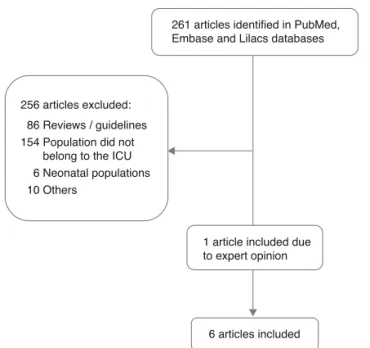
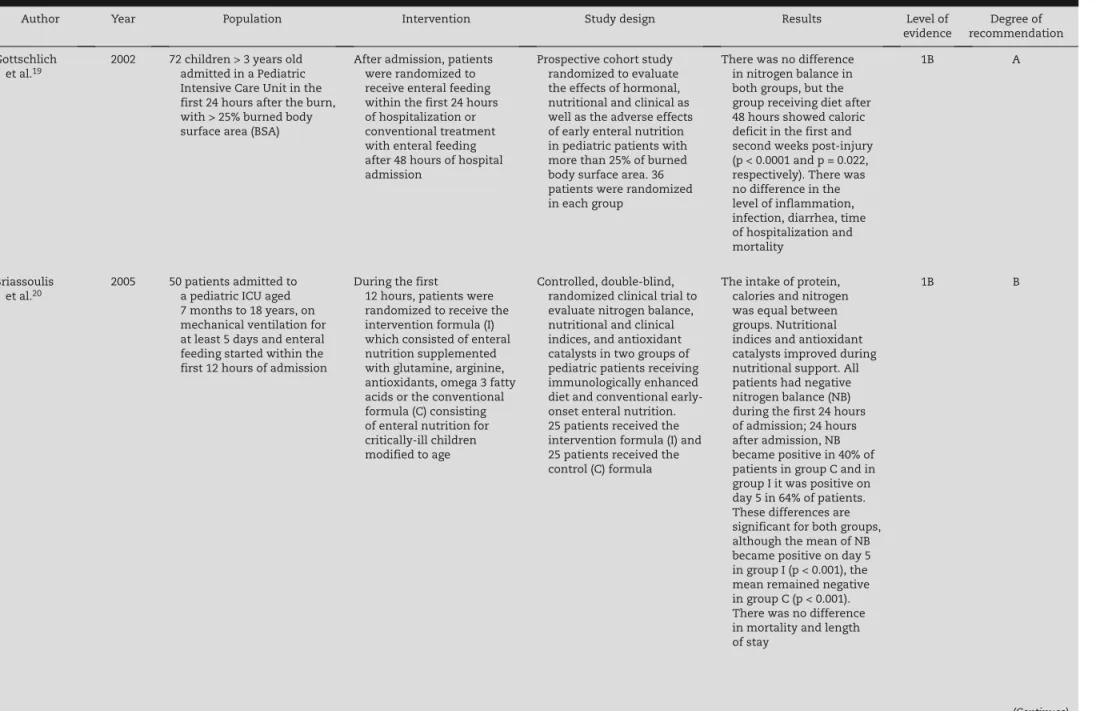
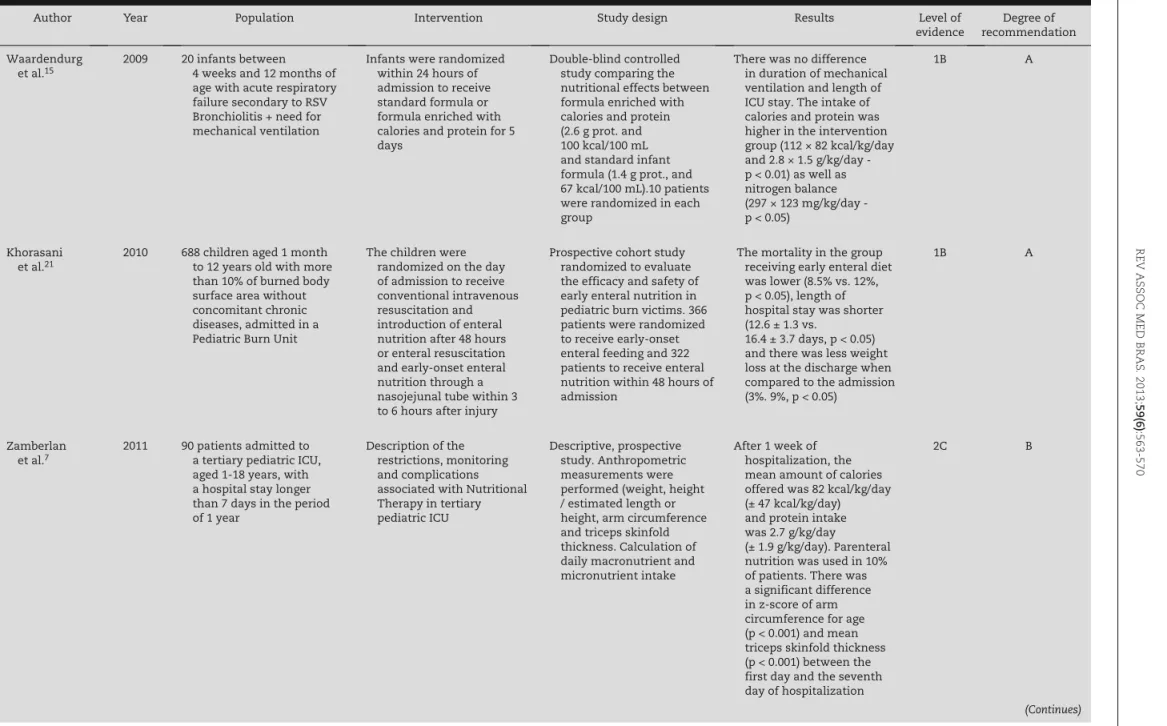
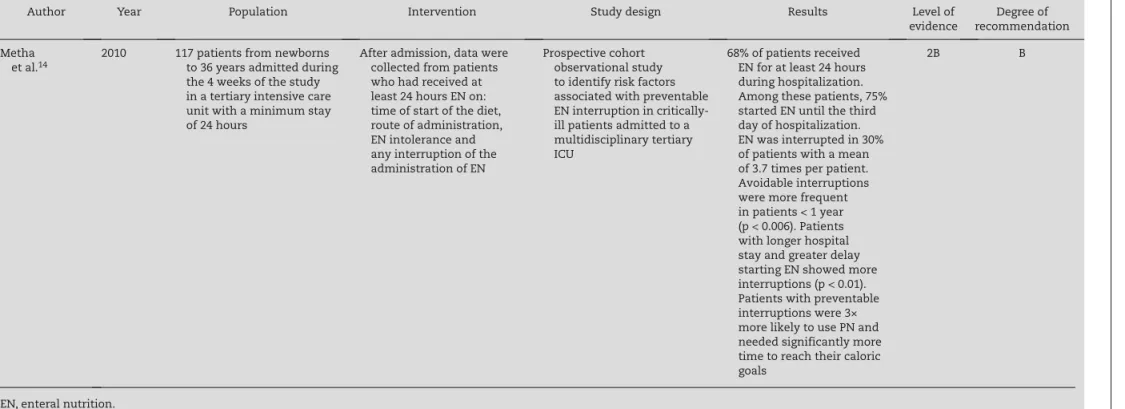
Article selection was performed as shown in Figure 1. Of the six selected articles, two were carried out in Burn Units and four in General Pediatric ICUs. The data are shown in Table 1.
Gottschlich et al.18 studied 77 children admitted to a Burn Unit with a mean of 52.5 ± 2.3 of burned body surface area (BSA), mean age 9.3 ± 0.5 years, who were randomized to receive enteral nutrition within 24 hours or after 48 hours of hospitalization. The groups were homogenous in terms of percentage of burned BSA, age, sex, presence of inhalation
injury, need for mechanical ventilation and weight at admission and there was no statistically significant difference regarding mortality (11% vs. 8%, p = 0.9999 ) between them. Regarding morbidity, nutritional assessment was performed, which showed no significant weight loss in both groups and no patient had gastric aspiration.
Khorasani et al.19 studied 688 children with a mean burned BSA > 20% who were randomized to receive early-onset enteral nutrition in the first 3-6 hours post-injury or after 48 hours. The groups were homogenous according to age, weight, percentage of burned BSA, cause of burn, time of debridement start, antibiotic therapy and number of grafts. In the group of early-onset enteral feeding, lower mortality (8.5% vs. 12%) was observed, as well as shorter hospital stay (12.6 ± 1.3 × 16.4 ± 3.7 days) and less weight loss in relation to admission (3% x 9%) (p < 0.05 for all variables).
Briassoulis et al.20 randomized 25 patients to receive intervention (I) formula, which consisted of enteral nutrition supplemented with glutamine, arginine, antioxidants, omega 3 fatty acids, and another 25 patients to receive the control (C) formula, which consisted of enteral nutrition for critically-ill children modified for age. The groups were similar regarding demographic and clinical characteristics, as well as nutritional indices on the first day. There was no difference in mortality (12% Group I vs. 4% Group C, p > 0.05) and length of hospital stay (13 × 11.5 days, p > 0.05).
Van Waadendurg et al.21 randomized 10 children with acute respiratory failure requiring mechanical ventilation to receive a standard formula and other 10 children to receive formula enriched with calories and protein. The duration of mechanical ventilation and length of ICU stay did not change significantly between groups (5.5 ± 0.7 × 7.1 ± 2.2 days and 9.0 ± 2.7 vs. 6.7 ± 0.7 days, respectively, p > 0.05). The intake of calories and protein was higher in the intervention group (112 × 82 kcal/kg/day and 2.8 × 1.5 g/kg/day; p < 0.01), as well as nitrogen balance (297 × 123 mg/kg/day, p < 0.05).
Fig. 1 – Flowchart of article selection.
256 articles excluded:
86 Reviews / guidelines 154 Population did not belong to the ICU 6 Neonatal populations 10 Others
261 articles identified in PubMed, Embase and Lilacs databases
566
REV
ASSOC MED BRAS
. 2013;
59(6)
:563-570
Author Year Population Intervention Study design Results Level of
evidence
Degree of recommendation
Gottschlich
et al.19 2002 72 children > 3 years old admitted in a Pediatric
Intensive Care Unit in the first 24 hours after the burn, with > 25% burned body surface area (BSA)
After admission, patients were randomized to
receive enteral feeding within the first 24 hours of hospitalization or conventional treatment with enteral feeding after 48 hours of hospital admission
Prospective cohort study randomized to evaluate
the effects of hormonal, nutritional and clinical as well as the adverse effects of early enteral nutrition in pediatric patients with more than 25% of burned body surface area. 36 patients were randomized in each group
There was no difference in nitrogen balance in both groups, but the group receiving diet after 48 hours showed caloric deficit in the first and second weeks post-injury (p < 0.0001 and p = 0.022, respectively). There was no difference in the level of inflammation, infection, diarrhea, time of hospitalization and mortality
1B A
Briassoulis et al.20
2005 50 patients admitted to
a pediatric ICU aged 7 months to 18 years, on mechanical ventilation for at least 5 days and enteral feeding started within the first 12 hours of admission
During the first
12 hours, patients were randomized to receive the intervention formula (I) which consisted of enteral nutrition supplemented with glutamine, arginine, antioxidants, omega 3 fatty acids or the conventional formula (C) consisting of enteral nutrition for critically-ill children modified to age
Controlled, double-blind, randomized clinical trial to
evaluate nitrogen balance, nutritional and clinical indices, and antioxidant catalysts in two groups of pediatric patients receiving immunologically enhanced diet and conventional early-onset enteral nutrition. 25 patients received the intervention formula (I) and 25 patients received the control (C) formula
The intake of protein, calories and nitrogen
was equal between groups. Nutritional indices and antioxidant catalysts improved during nutritional support. All patients had negative nitrogen balance (NB) during the first 24 hours of admission; 24 hours after admission, NB became positive in 40% of patients in group C and in group I it was positive on day 5 in 64% of patients. These differences are significant for both groups, although the mean of NB became positive on day 5 in group I (p < 0.001), the mean remained negative in group C (p < 0.001). There was no difference in mortality and length of stay
1B B
Table 1 – Research data.
REV
ASSOC MED BRAS
. 2013;
59(6)
:563-570
567
Author Year Population Intervention Study design Results Level of
evidence
Degree of recommendation
Waardendurg
et al.15 2009 20 infants between 4 weeks and 12 months of
age with acute respiratory failure secondary to RSV Bronchiolitis + need for mechanical ventilation
Infants were randomized within 24 hours of
admission to receive standard formula or formula enriched with calories and protein for 5 days
Double-blind controlled study comparing the
nutritional effects between formula enriched with calories and protein (2.6 g prot. and 100 kcal/100 mL and standard infant formula (1.4 g prot., and 67 kcal/100 mL).10 patients were randomized in each group
There was no difference in duration of mechanical
ventilation and length of ICU stay. The intake of calories and protein was higher in the intervention group (112 × 82 kcal/kg/day and 2.8 × 1.5 g/kg/day - p < 0.01) as well as nitrogen balance (297 × 123 mg/kg/day - p < 0.05)
1B A
Khorasani et al.21
2010 688 children aged 1 month
to 12 years old with more than 10% of burned body surface area without concomitant chronic diseases, admitted in a Pediatric Burn Unit
The children were randomized on the day
of admission to receive conventional intravenous resuscitation and introduction of enteral nutrition after 48 hours or enteral resuscitation and early-onset enteral nutrition through a nasojejunal tube within 3 to 6 hours after injury
Prospective cohort study randomized to evaluate
the efficacy and safety of early enteral nutrition in pediatric burn victims. 366 patients were randomized to receive early-onset enteral feeding and 322 patients to receive enteral nutrition within 48 hours of admission
The mortality in the group receiving early enteral diet
was lower (8.5% vs. 12%, p < 0.05), length of hospital stay was shorter (12.6 ± 1.3 vs.
16.4 ± 3.7 days, p < 0.05) and there was less weight loss at the discharge when compared to the admission (3%. 9%, p < 0.05)
1B A
Zamberlan
et al.7 2011 90 patients admitted to a tertiary pediatric ICU,
aged 1-18 years, with a hospital stay longer than 7 days in the period of 1 year
Description of the restrictions, monitoring
and complications associated with Nutritional Therapy in tertiary pediatric ICU
Descriptive, prospective study. Anthropometric
measurements were performed (weight, height / estimated length or height, arm circumference and triceps skinfold thickness. Calculation of daily macronutrient and micronutrient intake
After 1 week of hospitalization, the
mean amount of calories offered was 82 kcal/kg/day (± 47 kcal/kg/day) and protein intake was 2.7 g/kg/day
(± 1.9 g/kg/day). Parenteral nutrition was used in 10% of patients. There was a significant difference in z-score of arm circumference for age (p < 0.001) and mean triceps skinfold thickness (p < 0.001) between the first day and the seventh day of hospitalization
2C B
Table 1 – Research data. (Continuation)
568
REV
ASSOC MED BRAS
. 2013;
59(6)
:563-570
Author Year Population Intervention Study design Results Level of
evidence
Degree of recommendation
Metha et al.14
2010 117 patients from newborns
to 36 years admitted during the 4 weeks of the study in a tertiary intensive care unit with a minimum stay of 24 hours
After admission, data were collected from patients
who had received at least 24 hours EN on: time of start of the diet, route of administration, EN intolerance and any interruption of the administration of EN
Prospective cohort observational study
to identify risk factors associated with preventable EN interruption in critically-ill patients admitted to a multidisciplinary tertiary ICU
68% of patients received EN for at least 24 hours
during hospitalization. Among these patients, 75% started EN until the third day of hospitalization. EN was interrupted in 30% of patients with a mean of 3.7 times per patient. Avoidable interruptions were more frequent in patients < 1 year (p < 0.006). Patients with longer hospital stay and greater delay starting EN showed more interruptions (p < 0.01). Patients with preventable interruptions were 3× more likely to use PN and needed significantly more time to reach their caloric goals
2B B
EN, enteral nutrition.
REV ASSOC MED BRAS. 2013;59(6):563-570
569
Zamberlam et al.10 demonstrated that 80% of patients received enteral nutrition (complete polymeric diet according to the age, when the administration route was gastric and oligomeric diet when the administration route was post-pyloric) and 35% received oral feeding. After a week of hospitalization, the mean amount of calories offered was 82 kcal/kg/day (± 47 kcal/kg/day) and the amount of protein offered was 2.7 g/kg/day (± 1.9 g/kg/day). Parenteral nutrition was used in 10% of patients. There was a significant difference in z-score of arm circumference for age (p < 0.001) and mean triceps skinfold thickness (p < 0.001) between the first day and the seventh day of hospitalization.
Metha et al.22 demonstrated that 68% of the patients received enteral nutrition (EN) for at least 24 hours during hospitalization. Among these patients, 75% started EN until the third day of hospitalization. EN was interrupted in 24 patients (30%) with a mean of 3.7 times per patient (1483 hours without receiving EN). The interruption was considered avoidable in 58% of the episodes in 15 patients. Avoidable interruptions were more frequent in patients younger than 1 year (p < 0.006). Patients with longer hospital stays and greater delay starting EN showed more interruptions (p < 0.01). Patients with avoidable interruptions were three times more likely to use parenteral nutrition and needed significantly more time to reach their caloric goals.
Discussion
Despite advances in the quality of clinical care, the prevalence of malnutrition in hospitalized children has remained unchanged over the past 20 years and has implications for the time of hospitalization, course of disease and morbidity. Malnutrition is common among those children, and is often poorly recognized and therefore, goes untreated. The reported prevalence of malnutrition in pediatric hospitals is around 15-30% of patients. Children admitted to the ICU are at risk of change in the nutritional status and anthropometric measures over time.1,22 The energy deficit accumulated in the first days of hospitalization in critically-ill patients may have an important role in clinical outcomes and length of ICU stay.23
Nutritional therapy is an essential part in the treatment of critically-ill pediatric patients and inadequate nutrition therapy is associated with increased morbidity and mortality. This is particularly true in patients with prolonged ICU length of stay. The majority of patients with a defined therapeutic plan can achieve the established calorie-protein and micronutrient goals within the first 5 days of hospitalization with early-onset enteral nutritional therapy (within 72 hours).
Critically-ill patients may have reduced energy demand for several reasons, such as the use of sedation and analgesic agents that decrease the basal metabolic rate, the energy required for activity is minimal, especially if the patient is on mechanical ventilation and patients during severe metabolic stress are in a catabolic state and are not growing.7,24,25 However, most critically-ill children show a protein hypercatabolic state, with high consumption of endogenous reserves, which can be minimized with an effec-tive therapeutic plan.
Enteral nutritional therapy is supported as it reduces intestinal mucosa atrophy and decrease intestinal permea-bility, with consequent reduction in the incidence of bacterial translocation and septic complications, as well as being of lower cost and more physiological.11 There are three major obstacles to providing nutritional supply to critically-ill pediatric patients: fluid restriction, gastrointestinal intolerance and diet interruptions caused by procedures or after the performance of tests.7
In the study by Mehta et al.22 carried out in a tertiary pediatric ICU to identify risk factors associated with avoidable interruptions of enteral nutrition, it was shown that despite the early onset of diet infusion, it was interrupted numerous times, some in avoidable situations, which led to a three-fold increase in the use of parenteral nutrition and significant delay in achieving the caloric goals. The study had no statistical power to detect results such as infectious complications, long-term morbidity and mortality.22
In patients with gastrointestinal intolerance, trophic feeding may be instituted, which is also called minimal enteral nutrition, that is, to supply small volumes of diet (10-15 mL/ kg/day) with no intention of providing adequate calories for growth, but enough to exert trophic effects on the intestinal mucosa improving milk tolerance, reducing sepsis and length of hospital stay.26,27
In this study, literature articles published in the past 10 years were systematically reviewed, totaling six original articles, showing that studies in children are still less than expected when compared with the number of publications in adults. There is a paucity of randomized controlled studies performed in children, mainly regarding enteral nutritional therapy with morbimortality-related outcomes. Current guidelines for nutrition therapy in critically-ill pediatric patients are largely based on the opinion of experts and data extrapolated from studies carried out in adults, as well as studies in healthy children.7
According to a literature review carried out on adults by Zaloga et al.,28 the majority of prospective controlled studies support the idea that early-onset enteral nutritional therapy improves clinical outcomes in critically-ill patients. Using an evidence-based approach, the recommendation for the use of early enteral nutrition in these patients is a grade A recommendation.17
Evidence-based studies for enteral nutritional therapy in pediatrics that were reviewed in this study mention the level of evidence 1B, which are randomized controlled trials with narrow confidence interval, the level of evidence 2B, which are cohort studies including randomized clinical trials of lower quality, and 2C, which is the observation of therapeutic results. This result shows that further randomized studies with best scientific treatment in pediatric patients are lacking.17
However, the selected studies may suggest a higher degree of recommendation for early-onset enteral nutrition therapy in reducing morbidity and mortality, helping to construct guidelines, flowcharts and standards for pediatric intensive care with secondary and mainly tertiary care level.
570
REV ASSOC MED BRAS. 2013;59(6):563-570well-defined effects regarding the progression of nutritional assessment, such as that by Zamberlam et al.10 can improve the content of guidelines and flowcharts. After establishing a treatment plan, it is very important to follow strict guidelines provided to the entire multidisciplinary team of intensive care, so there is no inadvertent interruption and worsening in morbimortality (Mehta et al.22).
Conclusion
The scientific evidence for the use of enteral nutritional therapy in improving the evolution of critically-ill pediatric patients is still scarce. Further studies with better design and statistical analysis are needed, according to the evaluation of the systematic review. In addition, guidelines for prioritizing pre-established therapeutic plans may be better formulated.
Conflicts of interest
The authors declare no conflicts of interest.
R E F E R E N C E S
1. Agostoni C, ESPGHAN committee in Nutrition. The Need for Nutrition Support Teams in Pediatric Units A Commentary by the ESPGHAN Committee on Nutrition. J Pediatr Gastroenterol Nutr. 2005;41:8-11.
2. Malnutrition Advisory Group (MAG). Guidelines for detection and management of malnutrition. Redditch: British Associa-tion for Parenteral and Enteral Nutririon; 2000.
3. Kondrup J, Johansen N, Plum LM, Bak L, Larsen IH, Martinsen A, et al. Incidence of nutritional risk and causes of inadequate nutritional care in hospitals. Clin Nutr. 2002; 21:461-8. 4. Briassoulis G, Zavras N, Hatzis T. Malnutrition, nutritional
índices, and early enteral feeeding in critically ill children. Nutrition. 2001;17:548-57.
5. Hartman C, Shamir R, Hecht C, Koletzko B. Malnutrition screening tools for hospitalized children. Curr Opin Clin Nutr Metab Care. 2012;15:303-9.
6. Soylu OB, Unalp A, Uran N, Dizdarer G, Ozgonul FO, Conku A, Ataman H, Ozturk AA. Effect of nutritional support in children with spastic quadriplegia. J Pediatr Neurol. 2008;39:330-4. 7. Flaring U, Finkel Y. Review article. Nutritional support to
patients within the pediatric intensive setting. Paediatr Anaesth. 2009;19:300-12.
8. Fox JV, Miller J, McClung M. Nutritional support in the critically injured. Crit Care Nurs Clin North Am. 2004;16:559-69. 9. Gur AS, Atahan K, Aladag I, Durak E, Cokmez A, Tarcan E,
Tavusbay C. The efficacy of nutrition risk screening-2002 (NRS-2002) to decide on the nutritional support in general surgery patients. Bratisl Lek Listy. 2009;110:290-2.
10. Zamberlan P, Delgado AF, Leone C, Feferbaum R, Okay TS. Nutrition therapy in a pediatric intensive care unit: indications, monitoring, and complications. JPEN J Parenter Enteral Nutr. 2011;35:523-9.
11. Peter JV, Moran JL, Phillips Hughes J. A metaanalysis of treatment outcomes of early enteral versus early parenteral
nutrition in hospitalized patients [Review article]. Crit Care Med. 2005;33:213-20.
12. Mehta NM, Bechard LJ, Dolan M, Ariagno K, Jiang H, Duggan C. Energy imbalance and the risk of overfeeding in critically ill children. Pediatr Crit Care Med. 2011;12:398-405.
13. Hulst J, Joosten K, Zimmermman L, Hop W, van Buuren S, Büller H, et al. Malnutrition in critically ill children: from admission to 6 months after discharge. Clin Nutr. 2004;23:223-32. 14. Mehta NM, Bechard JL, Cahill N, Wang M, Day A, Duggan
CP, et al. Nutritional practices and their relationship to clinical outcomes in critically ill children – an international multicenter cohort study. Crit Care Med. 2012;40:1-8.
15. Jie B, Jiang Z, Nolan MT, Efron DT, Zhu S, Yu K, Kondrup J. Impact of nutritional support on critical outcome in patients at nutritional risk: a multicenter, prospective cohort study in Baltimore and Beijing teaching hospitals. Nutrition. 2006;26: 1088-93.
16. Allison SP. What is the goal of nutrition in the intensive care unit? Nestlé Nutrition Workshop Series Clinical & Performance Program. 2003;8:119-32.
Associação Médica Brasileira (AMB). Projeto Diretrizes. São Paulo; 2008 [accessed 20 Apr 2012]. Available at: http://www. projetodiretrizes.org.br/projeto_diretrizes/texto_introdutorio. pdf
18. Gottschlich MM, Jenkins ME, Mayes T, Khoury J, Kagan RJ, Warden GD. An evaluation of the safety of early vs delayed enteral support and effects on clinical, nutritional and endocrine outcomes after severe burns. J Burn Care Rehabil. 2002;23:401-15.
19. Khorasani EN, Mansouri F. Effect of early enteral nutrition on morbidity and mortality in children with burns. Burns. 2010;36:1067-71.
20. Briassoulis G, Filippou O, Hatzi E, Papassotiriou I, Hatzis T. Early enteral administration of immunonutrition in critically ill children: results of a blinded randomized controlled clinical trial. Nutrition. 2005; 21:799-807.
21. Van Waardenburg DA, Betue CT, van Goudoever JB, Zimmermann LJ, Joosten KF. Critically ill infants benefit from early administration of protein and energy-enriched formula: a randomized controlled trial. Clin Nutr. 2009;28:249-55. 22. Mehta N, McAleer D, Hamilton S, Naple E, Leavitt K, Mitchell
P, et al. Challenges to Optimal Enteral Nutrition in a Multi-disciplinary Pediatric Intensive Care Unit. JPEN J Parenter Enteral Nutri. 2010;34:38-45.
23. Singer P, Pichard C, Heidegger CP, Wernerman J. Consedering energy deficit in the intensive care unit. Curr Opin Clin Nutr Metab Care. 2010;13:170-6.
24. Briassoulis G, Venkataraman S, Thompson AE. Energy expenditure in critically ill children. Crit Care Med. 2000;28: 1166-72.
25. Agus MS, Jaksic T. Nutritional support of the critically ill child. Curr Opin Pediatr. 2002;14:470-81.
26. Mishra S, Agarwal R, Deorari MJA, Paul VK. Minimal enteral nutrition. Indian J Pediatr. 2008;275:67-9.
27. Tyson JE, Kennedy KA. Trophic feeds for parenterally fed infants. Cochrane Database Syst Rev. 2005.
28. Zaloga GP. Early enteral nutritional support improves outcome: hypothesis or fact? Crit Care Med. 1999;27:259-61.
29. Metha NM, Compher C; A.S.P.E.N. Board of Directors. A.S.P.E.N. Clinical Guideline: nutrition support of critically ill child. JPEN J Parenter Enteral Nutr. 2009;33:260-76.