IUL - School of Social Sciences
Department of Social and Organizational Psychology
Gender, age and multiple social support:
Impact on the well-being of socially vulnerable youths
Carina Alexandra Alegria Mendonça
Dissertation submitted as partial requirement for the conferral of Master in Community Psychology and Child Protection
Supervisor:
PhD, Francisco Simões, Researcher, CIS-ISCTE-IUL
I
IUL - School of Social Sciences
Department of Social and Organizational Psychology
Gender, age and multiple social support:
Impact on the well-being of socially vulnerable youths
Carina Alexandra Alegria Mendonça
Dissertation submitted as partial requirement for the conferral of Master in Community Psychology and Child Protection
Supervisor:
PhD, Francisco Simões, Researcher, CIS-ISCTE-IUL
II
Agradecimentos
Em primeiro lugar, agradeço ao meu orientador, Drº Francisco Simões, pela
disponibilidade, conselhos e recomendações ao longo de todo o processo, por ter sempre, no momento certo, uma palavra de incentivo e motivação. Sem dúvida que aprendi muito consigo ao longo deste ano, obrigada por tudo!
À Direção do programa Escolhas um especial agradecimento pela disponibilidade em colaborar neste estudo, bem como aos coordenadores e jovens dos projetos participantes. Sem a vossa colaboração este estudo não teria sido possível. Obrigada pelo tempo e pela confiança que depositaram em nós.
Aos meus pais, que ao longo dos anos me disseram que o importante é não desistirmos dos nossos sonhos. Independentemente do resultado final o importante é tentar e saber que demos o nosso melhor. Obrigada por tudo o que fazem por mim. São os meus heróis, sempre.
Aos meus avós, pelos mimos e pelos valores que me transmitiram ao longo da vida. Em especial à minha avó Cisa, estejas onde estiveres espero que estejas orgulhosa de mim. Consegui vó!
À minha prima e amiga, Vanessa Mendonça, por ser um modelo e uma inspiração para mim, “Quando for grande quero ser como tu!”.
À Mag e à Rafy, obrigada por toda a ajuda ao longo do ano, pelos conselhos,
motivação e partilha de sabedoria. Foram em muitos momentos, a minha tábua de salvação. São as maiores!
Às minhas Catarinas (Correia e Soares), obrigada por serem as melhores amigas que a vida me podia dar.
À Alexandra, agradeço toda a boa energia, “luz” e positividade que trouxe à minha vida nos últimos anos. Contigo aprendo todos os dias a (pelo menos tentar) ser uma pessoa melhor. Tanto a nível pessoal como profissional, obrigada por tudo.
Aos meus restantes familiares e amigos, obrigada por me aturarem. Por me acompanharem nos bons e maus momentos. Gosto muito de todos vocês.
III Abstract
The aim of this research is to understand to what extent structural factors such as gender and age, MSS coordination between sources, and the potential interaction between these factors is related to disadvantaged youths’ well-being. The study was carried out in twenty-three Escolhas projects of the metropolitan area of Lisbon. Data collection occurred between April and July of 2017.
Two hundred and thirty-six adolescents aged 12 to 18 years old (M = 14.10; SD = 1.78; 60.20% boys) participated in this study. A three-class solution was retained after Latent Class Analysis (LCA) was conducted, because it guaranteed a more balanced participants’ distribution and a more feasible comparison between MSS patterns.
Further analysis, using a Generalized Linear Model (GLM) showed that gender was not associated with greater quality-of-life; however, girls denoted higher social anxiety and depression rates, as hypothesized. In addition, younger participants presented higher rates of quality-of-life, but age was not related to negative well-being indicators as expected. High-attuned MSS proved to be an optimal pattern of MSS in terms of promoting greater quality-of-life, lower social anxiety, and lower depression among disadvantaged youths. The replication of this study in other contexts seems required, namely in rural settings given that in these areas resource deprivation tends to have greater impacts on disadvantaged youths’ well-being and development.
Key Words: Social Support Attunement, Social Anxiety, Depression, Quality-of-life, Adolescents
Codes PsycINFO:
IV Index
Introduction ... 1
Well-being: Definition and Indicators ... 2
Gender, Age, and Well-Being Among Disadvantaged Youths ... 3
Multiple Social Support: Definition and Measurement Approaches ... 4
Multiple Social Support and Well-Being Among Disadvantaged Youths ... 5
Present Study ... 6 Method ... 7 Participants ... 7 Site ... 8 Escolhas Program ... 8 Measures ... 8 Social support. ... 8 Quality-of-life. ... 9 Depression. ... 10
Social anxiety in peer relationships. ... 10
Procedures ... 11
Data Analyses ... 11
Results ... 13
Correlational and descriptive analysis ... 13
Latent class analysis ... 13
General Linear Model and Multiple Mean Pairwise Comparisons ... 14
Gender, multiple social support attunement and well-being outcomes models. ... 14
Age, multiple social support attunement and well-being outcomes models. ... 16
Discussion ... 18
Implications and Limitations ... 20
Conclusion ... 21
References ... 22
Appendix ... 34
V
Appendix B – Informed Consent / Request for Participation Authorization (Education Officers) ... 37 Appendix C – Study Protocol ... 38
Tables Index
Table 1 – Zero-order correlations between study variables ... 28 Table 2 – Fit indices for one-, two-, three- and four-latent class solutions for latent class analysis ... 29 Table 3 – Means (and standardized errors) for social support variables for the four-clusters latent class analysis solution ... 29 Table 4 – Descriptive information for each cluster of multiple social support attunement ... ... 30 Table 5 – Means and standard deviations for each cluster of multiple social support
attunement ... 31 Table 6 – Multiple regressions testing independent effects of gender and multiple social support attunement with age and ethnic group as covariates ... 31 Table 7 – Post-hoc comparisons between interaction categories of GenderXMSS attunement levels for each of the outcome variables ... 32 Table 8 – Multiple regressions testing independent effects of age and multiple social support attunement with ethnic group as covariate ... 32 Table 9 – Post-hoc comparisons between interaction categories of ageXMSS attunement levels for each of the outcome variables ... 33
1 Introduction
Multiple Social Support (MSS) refers to help, encouragement, and protection provided by two or more sources from the same or from different life contexts (family, friendships, and/or work, among others) (Rueger, Demeray, & Malecki, 2010; Sarason & Sarason, 2009). Multiple Social Support Attunement (MSSA) is a concept recently developed that intends to describe patterns of social support in terms of greater or lesser coordination social support provided by different support figures (Simões, Calheiros, & Alarcão, submitted). The aim of this research is to understand to what extent structural factors such as gender and age, MSS coordination between sources, and the potential interaction between these factors is related to disadvantaged youths’ well-being. In this study, disadvantaged youths will designate young people with fewer opportunities than their peers to achieve goods such as education or societal positions, because of social, economic, and/or cultural reasons (Bendit & Stokes, 2003). In addition, well-being will be measured in terms of quality-of-life, social anxiety, and depression.
This study may add contributions to the existent literature in two different ways. First, it constitutes an unprecedented attempt to test the connections between patterns of MSS among disadvantaged youths’ and their well-being, including its potential
interactions with gender and age. This vision represents a shift of focus on the well-being literature from a comparison between the influence of each support source (in other words, a competitive view of MSS outcomes that is dominant), to a model of analysis emphasizing MSS coordination (which underlines the potential relevance of greater or lesser intended or unintended cooperation between sources), uncovering its benefits and caveats.
Second, this study is the first to focus on the role of MSSA on the well-being of different age and gender groups of disadvantaged youths. The need to understand how MSSA operates across disadvantaged youths’ groups as well across gender and age subgroups is a noteworthy gap to be filled in. The literature has shown that
disadvantaged youths tend to show worst well-being prospects compared to the general population whether their vulnerabilities are due to clinical conditions (Tremolada, Bonichini, Basso, & Pillon, 2016) cultural differences (Alonso-Fernández, Jiménez-Fernández, Hernández, & Palácios-Ceña,2017) or lack of social conditions and family support (Jozefiak & Sønnichsen Kayed, 2015), but these have not been related to differences in MSS patterns. In addition, MSS compensatory effects, among which
2
MSSA may be included, are particularly important to improve disadvantage adolescents’ well-being prospect, because MSS quality is associated with more encouraging developmental perspectives at this stage (Cotterell, 2007).
Well-being: Definition and Indicators
Well-being refers to individual care in a healthy way and covers aspects such as awareness of the physical condition, stress reduction and self-responsibility in care (Pinto, Fumincelli, Mazzo, Caldeira, & Martins, 2016). Well-being has been
approached from an hedonic perspective associated to happiness, pleasure, or subjective perceptions of well-being, as well as from an eudaemonic perspective focused on the realization of human potential in the context of the individual’s life that leads to optimal functioning (Diemer, 2009).
Well-being is an umbrella concept covering several positive or negative physical, psychological, social, and/or economic dimensions. A common positive indicator of well-being is quality-of-life; it has been delimited by the World Health Organization (1997) as the individual perception about position in life, considering the cultural context personal values, as well as subjective goals, expectations, and routines. Quality-of-life measures may emphasize different attributes such as development and
improvement of life, objective evaluation, empowerment, independence, dignity, achievement of goals and aspirations, capacities, or autonomy (Pinto et al., 2016).
A widely used negative indicator of well-being is anxiety, including social anxiety. Social anxiety involves a fear of being embarrassed or humiliated in social interaction or performance (Carvalho, Cunha, Cherpe, Galhardo, & Couto, 2015). Social anxiety tends to be particularly prevalent in peer relationships in adolescence; its persistence and degree of impairment may lead to a psychological disorder also known as a social anxiety disorder (American Psychological Association, 2013). Another commonly used negative indicator of well-being is depression. Depression designates a multidimensional condition involving cognitive (e.g. self-depreciating thoughts), emotional (e.g. sadness feelings), behavioral (e.g. social withdrawal), and physical (e.g. sleep problems) manifestations. The persistence of these symptoms may lead to
psychopathology; its high prevalence is seen as one the most serious current public health problems worldwide (American Psychiatric Association, 2013), including among late children and adolescents (Shavers, 2014).
3
Gender, Age, and Well-Being Among Disadvantaged Youths
Adolescence is a developmental period marked by great biological, cognitive, and social changes affecting personal balance and well-being (Cotterell, 2007).
However, the impact of these changes is not univocal across different groups. Age and gender have been described as key sources of variation across well-being indicators, but mixed trends are evident in the literature (Rueger, Malecki, Pyun, Aycock, & Coyle, 2016).
Gender disparities have been found regarding quality-of-life, with some identifying similar rates for adolescent boys and girls (e.g. Marques, Mota, Gaspar, & Matos, 2017), a few detailing higher quality-of-life rates among boys (e.g. Chraifa & Dumitrub, 2015), and others reporting the opposite (e.g. Tremolada, Bonichini, Basso, & Pillon, 2016). These contradictions may be due to different research contexts or to different quality-of-life measures; some of them emphasize quality-of-life physical elements (e.g. Marques et al. 2017), others focus on its psychological dimensions, and others involve a multidimensional assessment. In the case of clinically vulnerable youths, girls tend to show lower quality-of-life rates (Tremolada et al., 2016), while boys tend to show a better self-image (Topolski, Patrick, Edwards, Huebner, Connell, & Mount, 2001). However, these results are limited to clinical populations; gender
differences on quality-of-life measures among socially disadvantaged youths are underreported.
Gender comparisons show different trends when well-being is compared based on negative indicators such as social anxiety and depression. Adolescent girls tend to report higher levels of social anxiety than boys (Chaplin, Gillham, & Seligman, 2009), a propensity that is stronger among clinically-diagnosed samples (Cummings, Caporino, & Kendall, 2014). In general, depressive symptoms are also more prevalent among girls (Cummings et al., 2014) and can be two to three times higher when compared to boys. This trend is consistent among socially disadvantaged girls (Patwardhan, Mason, Savolainen, Chmelka, Miettunen, & Järvelin, 2017), irrespectively of ethnic origin (Moon & Ro, 2010) and are more pronounced among girls at-risk of school failure (McCarty et al., 2008). Overall, girls are more prone to develop anxiety and depression symptoms, due to greater predisposition for rumination, negative cognitive style, or corumination (excessive discussion of problems in intimate relationships) (Cummings et al., 2014).
4
Age is also a determining factor of well-being outcomes. Quality-of-life is generally higher in late childhood compared to early adolescence (Dolan, Peasgood, & White, 2008; Ronen, Hamama, Rosenbaum, & Mishely-Yarlap, 2016). The transition to adolescence induces greater inclination for negative social evaluation and depression; these symptoms may overlap, but social anxiety tends to precede depressive symptoms (Dalrymple & Zimmerman, 2011). In general, these negative well-being indicators tend to be worst in early adolescence, with improvements towards late adolescence,
including among more vulnerable youths (Dolan et al., 2008). This pattern is justified by developmental demands, including the diversification of social relationships, a greater centrality of peer relationships, in which social interactions and performance are more valued, the normative involvement in deviant behaviors (e.g. substance use), or biological changes which may make adolescents more prone for emotional instability and negative mood, especially in early adolescence (Cotterell, 2007).
Multiple Social Support: Definition and Measurement Approaches
MSS can be defined as enacted, perceived, or received social interactions involving help, protection, and encouragement made available to individuals (Sarason & Sarason, 2009) by two or more sources integrated in personal social networks. Its results may be analyzed in terms of: (a) relative influence or unique impact of each system or source of support; (b) total MSS influence of all sources; and (c) MSS intended or unintended coordination.
Most of the studies in the field of MSS analyze the influence of each source of social support on a given set of outcomes, regardless of the effects of other social support sources; these MSS effects are also known as unique effects (Rueger, Malecki, & Demaray, 2010). The second approach tests how total MSS, meaning the total
amount of social support provided by all sources, affects a given outcome. Here, MSS is measured as the sum of all social providers’ support rates, which can then be used as a predictor of an outcome of interest (blind, for review). The third perspective considers interindividual differences in terms of the degree of coordination perceived between MSS providers, based on each provider’s social scores (Levitt, Levitt, Crooks,
Hodgetts, & Milevsky, 2005). This approach, labeled MSSA, is based on the concept of attunement as a sense of unity in relationships (Erskine, 1998). This attunement
5
1998) and mentoring (Pryce, 2012), and has recently been extended to the social support literature to describe the degree of perceived coordination between multiple supportive relationships, irrespectively of the form (perceived or received) or dimension (e.g. autonomy support) of social support (Simões & Simones, in press). The degree of perceived coordination among social support providers may take one of at least three forms: low-attuned MSS involves low levels of support from all sources; unattuned MSS occurs when the level of support is unbalanced across different providers, with ones providing higher support and others lower support; and high-attuned MSS occurs when all providers offer high levels of support (blind, for review).
Multiple Social Support and Well-Being Among Disadvantaged Youths
MSS structure goes through important changes during adolescence (Cotterell, 2007) which may ultimately affect the frequency, intensity and direction of well-being. Greater MSS delivered by sources such as close family members, teachers, best friends (Rueger et al., 2010) or mentors (Goldner & Mayseless, 2009; Simões & Alarcão, 2014) improves adolescents’ well-being. The study of MSS impact on disadvantaged youths’ well-being has not followed a MSSA approach; this means that a comparison among different MSS sources has been the most fruitful standpoint in this field of inquiry.
Quality-of-life tends to be lower among vulnerable youths (Tremolada,
Bonichini, Basso, & Pillon, 2016), especially among those who present chronic physical conditions (Cassarino-Perez & Dell’Aglio, 2015). Among these youths, higher MSS, namely the one provided by family and friends tends to predict higher quality-of-life rates (Cassarino-Perez & Dell’Aglio, 2015). Less seems to be known about the effects of MSS with quality-of-life facing social, cultural and/or economical adversities, in the case of disadvantaged youths. Some studies tend to show that MSS may have a
buffering effect, by reducing the impact of social hardship on quality-of-life
perceptions. For instance, social support provided by mothers and partners was found to buffer the negative effect of adolescent pregnancy on low social-economic status girls’ quality-of-life (Pires, Araújo-Pedrosa, & Canavarro, 2014). On the other hand, greater MSS delivered by teachers and peers mitigates the negative effect of bullying on victims’ quality-of-life (Flaspohler, Elfstrom,Vanderzee, Sink, & Birchmeier, 2009).
Some studies have shown that lower MSS provided by parents, peers, and teachers overlaps with greater adolescents’ social anxiety (Leeves & Banerjee, 2014;
6
Sahranc¸Celik, & Turan, 2017). Greater cumulative or total MSS effects have also been associated to lower adolescents’ social anxiety, with parental and peer support leading to lower social anxiety rates (Cavanaugh & Buehler, 2016). However, less is known about the associations between MSS and social anxiety among disadvantaged youths. Recent research shows, however, that at-risk delinquent youths, who are usually overrepresented across lower socioeconomic ranks, reported higher social anxiety and also evidenced lower MSS provided by mother, father, and best friend (Mercer, Crocetti, Meeus, & Branje, 2017).
Lower MSS also induces depressive symptoms seemingly to social anxiety. A recent meta-analytical review (Rueger, Malecki, Pyun, Aycock, & Coyle, 2016) synthesized the effects of perceived social support on depression. Familial sources, teachers, and significant others, such as mentors, seem pivotal in preventing depressive symptoms among adolescents (Chaturvedi & Kumari, 2016; Rueger et al., 2010). Mixed trends have been found regarding the role of friends’ support, with some studies finding a minimal impact in reducing depressive symptoms (Rueger et al., 2010) while others report the opposite (Kerr, Preuss, & King, 2006). Among disadvantaged youths, MSS from family and friends has a protective role by reducing the negative impact of cumulative risk on depression (Patwardhan et al., 2017). Low total MSS provided by family, friends, and significant others was also found to be associated with higher incidence of depression among adolescents from ethnic minorities (Khatib, Bhui, & Stanfeld, 2013).
Present Study
The literature review shows that: (a) gender disparities are contradictory regarding well-being outcomes, but girls seem more prone to develop anxiety and depression ; (b) early adolescents seem in greater risk to develop poorer well-being; (c) MSS effects on quality-of-life, social anxiety, and depression are mostly studied from the perspective of the impact of each source (the unique effects perspective); (d) greater MSS seems to improve adolescents’ well-being perspectives; (e) studies relating MSS patterns and disadvantaged youths’ well-being is non-existent.
Given the gaps found in the literature, the aim of this research is to understand to what extent structural factors such as gender and age, MSS coordination between sources, and the potential interaction between these factors is related to disadvantaged
7
youths’ well-being. MSSA covers three significant relationships: closest family member, mentor, and best friend. Well-being is depicted according to a positive (quality-of-life) and two negative indicators (social anxiety in peer relationships and depression).
It was expected that worse quality-of-life, social anxiety, and depression rates could be found among girls and early adolescents. No hypothesis was formulated regarding how different MSSA conditions could affect the connections between gender and age and well-being indicators, given the exploratory nature of this research.
Method Participants
Two hundred and thirty-six adolescents aged 12 to 18 years old (M = 14.10; SD = 1.78; 60.20% boys). Of the 236 youths included in the study, 122 (51.69%) identified themselves as African, 98 (41.53%) identified themselves as Portuguese, and the
remaining 16 (6.77%) identified themselves with other ethnic groups. As for their level of education, 216 (88.95%) were enrolled in middle school (5th to 9th grade); and 23 (9.75%) were enrolled in secondary school (10th to 12th grade), and 3 (1.30%) were enrolled in primary education (4th grade or below).
One-hundred and seventy-three of the participants indicated their mother as the closest family member (73.31%), followed by 40 participants who indicated their father (16.95%), 11 (4.66%) who indicated their grandmother or grandfather, eight (3.39%) indicated an aunt or an uncle, and the remaining four (1.69%) indicated a brother or a sister. Regarding closest family member occupational, 147 (62.28%) were employed, 62 (26.26%) were unemployed, 18 (7.64%) were students, and nine (3.82%) were retired. As for their closest family member educational level, 73 (30.93%) were not aware of it, 66 (27.97%) reported that they had lower secondary or technical education, 51 (21.61%) completed primary education, and 39 (19.49%)completed higher education. Finally, 3.0% has not completed primary education.
8 Site
The study took place in Lisbon Metropolitan Area. This region encompasses 18 municipalities of the districts of Lisbon and Setúbal, corresponding to the most
populated area of Portugal (Instituto Nacional de Estatística, 2015). Lisbon
Metropolitan Area represents 37% of the Portuguese Gross Domestic Product (GDP). The per capita GDP in the region is set at 22800 Euros (Instituto Nacional de
Estatística, 2015). The Gini coefficient for this region is 33.90%, while the risk of poverty reached 12.40% of its population, in 2014 (Instituto Nacional de Estatística, 2017).
Escolhas Program
Programa Escolhas (Choices Program) is a joint nation-wide initiative created in 2001 and held by the Portuguese Government, the High-Committee for Migrations, the General Bureau of Education, and the Social Welfare Institute, in partnership with local organizations, co-funded by European Union funding; its mission is to promote social inclusion, equal opportunities, and social cohesion among vulnerable children and adolescents (Site Oficial Programa Escolhas, 2017). Escolhas program is currently in its sixth edition; the program is focused in five main actions: (a) educational inclusion and non-formal education; (b) professional training and employability; (c) civic
participation; (d) digital inclusion; and (e) youth entrepreneurship. Recently, the program has been acknowledged by international bodies such as the Organization for Economic Cooperation and Development (OECD) as a valuable social intervention to promote social inclusion among disadvantage children and youths (Carcillo et al., 2015).
Measures
Social support.
Social support was measured using the Portuguese version of the Basic Needs Satisfaction in Relationships Scale (BNSRS) (Simões & Alarcão, 2013). The
questionnaire is an adaptation from the its original English version (La Guardia, Ryan, Couchman, & Deci, 2000) and encompasses 9 items rated on a five-point Likert scale that ranges from 1 (never) to 5 (always). The possible scores range from 9 to 45 points. The scale comprises nine affirmative items (e.g. When I am with him/her, I feel free to
9
be who I am) covering issues of relatedness, competence and autonomy support; three of the items are reversed (e.g. When I am with him/her, I often feel inadequate or incompetent). The BNSRS assesses the satisfaction of social support in any targeted relationship, with higher scores indicating greater satisfaction of social support through the satisfaction of basic psychological needs support in a particular relationship. In this study, the BNSRS was used to calculate a whole score of the adolescents’ appraisals of the level of social support offered by the parent (mother, father, legal representative) with whom they live and spend more time mentors or class directors, their best friend, and the program’s mentor. The option of rating relationships with class
directors was given to the non-mentored students because this was their most relevant relationship with a teacher. The internal consistency of the BNSRS is adequate in both the original English version (α = .94) (La Guardia, Ryan, Couchman, & Deci, 2000) and the Portuguese version (α = .80) for the whole scale (Simões & Alarcão, 2013). In this study, internal consistency was adequate for closest family member social support (α=.79), mentor social support (α=.79) and best friend social support (α=.79).
Quality-of-life.
The KIDSCREEN-27 assesses quality-of-life in children and adolescents between 8 and 18 years of age (Ravens-Sieberer et al., 2007). The 27 items included in this instrument are organized into 5 dimensions. Physical Well-Being (5 items; sample item: “Have you felt full of energy?”) explores the level of the child’s/adolescent’s physical activity, energy and fitness. Psychological Well-Being (7 items; sample item: Has your life been enjoyable?) includes measures of positive emotions, satisfaction with life and emotional balance. Parent Relations & Autonomy (7 items; sample item: Have you been able talk to your parent(s) when you wanted to?) examines relationships with parents, the atmosphere at home, feelings relative to age-appropriate freedom, and the degree of satisfaction with financial resources. Social Support & Peers (4 items; sample item: Have you had fun with your friends?) examines the nature of the respondents’ relationships with other children/adolescents. Finally, School Environment (4 items; sample item: Have you got on well at school?) explores the child’s/adolescent’s perceptions of his/her cognitive capacity, learning and concentration, and feelings regarding school (Ravens-Sieberer et al. 2007). For each dimension, the respondents describe their perceptions during the previous week. Depending on their nature, the
10
items are rated on a 5-point Likert scale of intensity ranging from 1 (nothing) to 5 (extremely) or on a 5-point Likert scale of frequency ranging from 1 (never) to 5 (always). The whole-scale scores range from 5 to 135 points, with higher scores denoting a more positive perception of quality of life. In this work, KIDSCREEN-27 was used as a whole scale of quality-of-life. The level of internal consistency of the KIDSCREEN-27 for the whole scale was adequate in previous studies (α = .89) (Simões & Alarcão, 2014) as well in this work (α=.82).
Depression.
Depression was measured using the Portuguese version (Carvalho, Cunha, Galhardo, & Couto, 2015) of the Center for Epidemiological Studies Depression Scale for Children (CES-DC) (Weissman, Orvaschel, & Padian, 1980). This questionnaire assesses depression in children and adolescents aged 6 to 17 years old and encompasses 20 items (sample item: I felt low and unhappy) four of them reversed (sample item: I felt happy), covering emotional, cognitive and behavioral depressive dimensions. Items are rated in 4-point Likert scale ranging from 0 (never) to 3 (frequently). For each dimension, the respondents describe their perceptions during the previous week. Total scores range from 0 to 60 points, with higher scores indicating higher levels of
depressive symptoms. The level of internal consistency of the CES-DC was adequate in previous studies for the whole scale of the original English version (α= .90) and the Portuguese version (Carvalho et al., 2015) (α= .90), as well in this work (α=.86).
Social anxiety in peer relationships.
The Portuguese version (Pechorro, Silva, Marôco, & Gonçalves, 2014) of the Social Anxiety Scale for Adolescents (SAS-A) (La Greca & Lopez, 1998) was used to assess participants’ social anxiety in peer relationships. The SAS-S includes 22 items organized in three dimensions; Fear of Negative Evaluation (eight items; sample item: I feel that people talk about me behind my back); Social Avoidance and Stress-New (six items; sample item: I am shy when I meet new people); and Social Avoidance and Stress – General (four items; sample item: I keep quiet when I am in group). The SAS-A also includes four neutral items are neutral which are not added to scores. Items are rated in 5-point Likert scale ranging from 1 (not at all) to 5 (every time). Whole scale scores range from 18 to 90 points. Respondents higher scores indicate higher levels of
11
social anxiety. In this study, the SAS-A was used as a whole measure of social anxiety in peer relationships. Previous studies have shown high internal consistency for whole scale scores, for the original English version (α=.91) (La Greca & Lopez, 1998) and for the Portuguese version (α=.91) (Pechorro et al., 2014). In this study, internal
consistency for SAS-A whole scale was adequate (α=.90).
Procedures
Escolhas program board was contacted to present the study aims and
methodology, as well as to obtain an agreement to contact each project. Afterwards, 47 projects from 13 municipalities of the Lisbon area were contacted for informed consent to participate, corresponding to all active projects of Escolhas program in this
geographical area in 2017. Twenty-three projects agreed to participate. After parental informed consent was obtained from adolescents’ legal guardians who complied with the inclusion criteria, a collective administration of the study’s protocol was conducted in each project using an online survey tool. Data collection was supervised by the first author and involved an explanation of research goals, ethical principles (e.g.
confidentiality norms), asking the participants for their voluntary consent to participate, and assisting in the online filling in of the protocol. The participants had 30 minutes to complete the survey. Data collection occurred between April and July of 2017.
Data Analyses
To categorize the participants on the basis of the degree of MSSA, latent class analysis (LCA) was employed. LCA is, originally, a clustering mixture model in which the observed variables are independent categorical variables (Celeux & Govaert, 2016). Recent developments have made it possible to perform LCA easing these assumptions. LatentGold (version 5.1) (Vermunt & Magidson, 2005) is a fully developed software to conduct rigorous LCA, with a number of advantages over other software packages: (a) modeling may include ordinal, continuous, and/or nominal variables; (b) local
independence assumption between variables is not required to perform LCA in this program; and (c) exploring patterns of group membership may include all covariates at the same time, instead of a more exploratory approach available in other programs. This means that classification and class membership prediction group is simultaneously conducted in LatentGold, avoiding prediction and measurement models reestimation
12
which sometimes may be impractical, especially when the number of potential covariates is large (Vermunt, 2010).
In this study, LCA involved a three-step approach using the software utilities and recommendations (Vermunt & Magidson, 2005). First, a LCA model was built based on social support measures for each of the selected support relationships. Second, participants were assigned to clusters based on their posterior class membership probabilities, meaning that covariates of social support measures identified in the zero-order correlations matrix (gender and ethnicity) were included in the process of defining each participant membership probability. Fit indices that included the Bayesian information criteria (BIC), sample-size-adjusted BIC, and entropy statistics were compared to identify the model with the best fit. The validation of differences between MSSA groups was made through post-hoc mean comparisons tests between social support measures for all regarded sources. Percentiles 25, 50, and 75 were estimated for each source of support, based on the participants’ original ratings for closest family member, mentor, and best friend social support, to facilitate class membership interpretation. Ratings < P25 indicated low social support; ratings between P25 indicated low social support and P49 indicated medium-low social support; ratings between P50 and P74 indicated medium-high social support; ratings above P75 showed high social support.
Finally, the association between gender or age, MSSA, and outcome variables was investigated using SPSS 23.0. A Generalized Linear Model (GLM) approach, including gender (or age), MSSA, and their interaction in the model as factors, as well as ethnicity as a covariate in the case of the quality-of-life model, was followed to test independent effects. An omnibus test of between-factors independence was calculated, as well as the model fit. A second model without the interaction term (e.g.genderXMSSA) was tested whenever interactions were not significant. Parameter estimates are reported for the models depicting independent effects for gender or age and MSSA, including covariates when necessary. Pairwise mean differences for within gender and age groups are also reported, with 95 % confidence intervals (95 % CI), based on Least Significance Difference (LSD) post-hoc tests method. This decision is based on the interest in exploring differences across gender and age subgroups, even when interactions these factors and MSSA are not significant.
13 Results Correlational and descriptive analysis
Table 1 depicts the zero-order correlations between the study variables. Gender is significantly associated with closest family member (p < .05), mentor (p <.01), and best friend support (p < .05). In addition, ethnicity was significantly associated with closest family member (p < .05) and best friend support (p <.01). Age (p <.01) and ethnicity (p <.05) were significantly associated with quality-of-life as well. Percentiles were
calculated to depict social support means distribution, with the following results: (a) closest family member support (P25 = 33.00; P50 = 39.00; P75 = 41.00); (b) mentor (P25 = 34.00; P50 = 39.00; P75 = 43.00); and (c) best friend (P25 = 33.00; P50 = 40.00; P75 = 45.00).
Latent class analysis
According to Table 2, a four-classes model showed the best fit to the data, with a BIC of 4132.19, a sample–size-adjusted BIC of 4007.49, and an entropy score of .42. Although a four-classes solution presented a better global fit when all indicators were considered, the decision was to retain a three-classes solution, because one of the classes had a small number of members (n < 30). In addition, when the four classes were collapsed into gender or age subgroups, these subgroups included only a few participants (n < 15).
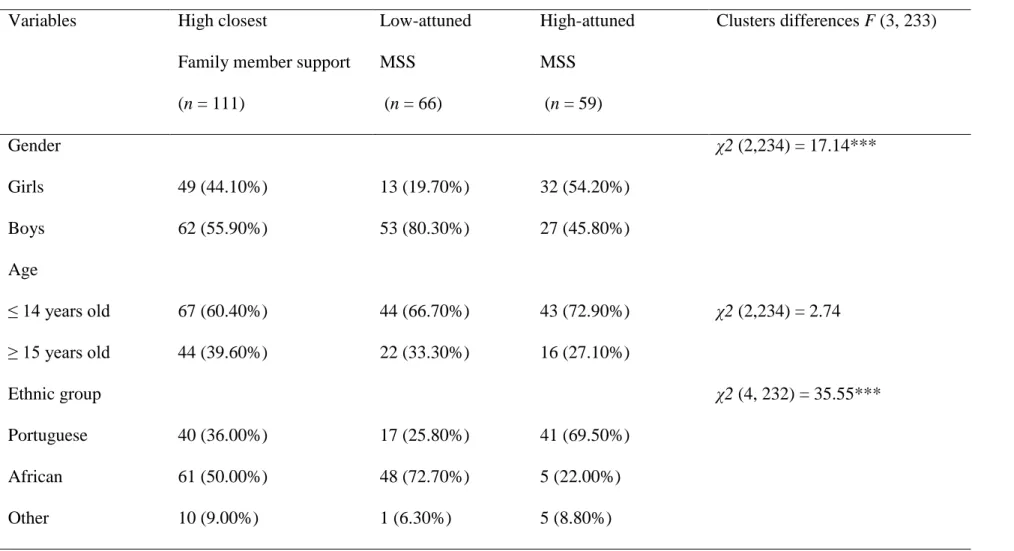
Tables 3 and 4 present main descriptive statistics for each class. Class 1 (closest family member high support) (n = 111; 46.61%) was characterized by youth reports of middle high support (> P75) from closest family member (M = 38.91; SD = 2.92) and middle low support (< P50) from mentor (M = 38.72; SD = 4.43) and best friend (M = 38.61; SD = 4.61); this class showed a greater proportion of boys (n = 62; 55.90%), early adolescents (≤ 14 years old) (n = 43; 72.90%) and African participants (n = 61; 50.00%). Class 2 (low-attuned MSS) (n = 66; 27.97%) was characterized by youth reports of low support (< P25) from closest family member (M = 29.97; SD = 4.14), mentor (M = 32.72; SD = 5.35), and best friend (M = 32.26 SD = 6.15); this class showed a greater proportion of boys (n = 53; 80.30%), early adolescents (≤ 14 years old) (44; 66.70%), and African participants (n = 48; 72.70%). Class 3 (high-attuned MSS) (n = 59; 25.00%) was characterized by youth reports of high support (> P75) from closest family member (M = 41.57; SD = 1.38) and mentor (M = 42.75; SD =
14
2.41), and middle high support (> P50) from best friend (M = 44.78 SD = .45); this class showed a greater proportion of girls (n = 32; 54.20%), early adolescents (≤ 14 years old) (n = 43; 72.90%) and Portuguese participants (n = 41; 69.50%). Differences between all the support variables were significant across the three classes (p < .001), according to Scheffe post-hoc tests.
According to Table 5, high-attuned MSS presented a higher estimate of average quality-of-life (M = 106.54; SD = 7.78), as well as lower average rates of social anxiety (M = 42.85; SD = 15.20) and depression (M = 13.37; SD = 8.71), compared to all other groups.
General Linear Model and Multiple Mean Pairwise Comparisons
Gender, multiple social support attunement and well-being outcomes models. A GLM including quality-of-life as an outcome variable, with gender, MSSA, and their interaction entering in the model as factors, while age and ethnicity were included as covariates, revealed a significant model, Pearson χ2 (8, 228) = 106.57, p < .000. The omnibus test of independence between gender and MSSA, including their interaction, was also significant, Wald χ2 (7, 229) = 75.62, p < .000. Only MSSA displayed a significant independent effect on quality-of-life (p <.001). An identical model was set without the interaction term between gender and MSSA, which was also significant,
Wald χ2 (5, 231) = 71.36, p < .000; according to the results for this model presented in
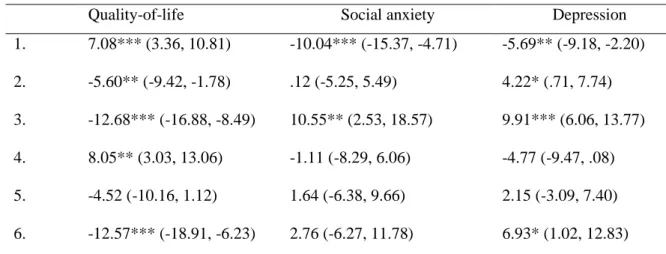
Table 6, closest family high support was associated to greater quality-of-life (p <.01), contrary to low-attuned MSS (p <.001), in comparison to high-attuned MSS.
Subsequent pairwise comparisons across categories of boys and girls, regarding their levels of MSSA, were significant, Wald χ2 (5, 231) = 58.40, p < .000. According to Table 7, boys reporting closest family member high support showed significant better quality-of-life rates than those reporting low-attuned MSS (p <.001); in turn, boys in the low-attuned MSS class also denoted lower quality-of-life compared to those included in the high-attuned MSS class (p <.01). Conversely, according to Table 7, girls included in closest family member high support evidenced significantly higher quality-of-life mean rates than those included in the low-attuned MSS (p <.01), but also worse quality-of-life rates compared to girls included in high-attuned MSS class girls (p <.01) classes. In addition, girls included in the low-attuned MSS class presented significant lower
15
average quality-of-life rates compared to those include in the high-attuned MSS class (p <.001).
A GLM including social anxiety as an outcome variable, with gender, MSSA, and their interaction entering in the model as factors, revealed a significant model, Pearson χ2 (6, 230) =196.58, p < .000. The omnibus test of independence between gender and MSSA, including their interaction, was also significant, Wald χ2 (7, 229) = 22.90, p < .000. Gender (p <.001) and MSSA (p <.001) displayed a significant independent effect on social anxiety, contrary to their interaction. An identical model was set without the interaction term between gender and MSSA, which was also significant, Pearson χ2 (4, 232) = 197.72, p < .000. According to the results for this model presented in Table 7, girls denoted higher social anxiety rates (p < .001); participants reporting low-attuned MSS also denoted significantly greater social anxiety (p < .001), in comparison to those reporting high-attuned MSS. Multiple mean pairwise comparisons reveal that boys reporting closest family member high support denoted lower social anxiety mean rates than boys in the low-attuned MSS class (p <.05); conversely, boys reporting low-attuned MSS showed higher social anxiety compared to those included in a high-attuned MSS class (p <.001). In the case of girls, only those reporting low-attuned MSS denoted significantly higher mean rates of social anxiety compared to girls reporting high-attuned MSS (p <.001).
A GLM including depression as an outcome variable, with gender, MSSA, and their interaction entering in the model as factors, revealed a significant model, Pearson χ2 (6, 230) =82.22, p < .000. The omnibus test of independence between gender and MSSA, including their interaction, was also significant, Wald χ2 (5, 231) = 41.38, p < .000. Gender (p <.01) and MSSA (p <.001) displayed a significant independent effect on depression, contrary to their interaction. An identical model was set without the interaction term between gender and MSSA, which was all significant Pearson χ2 (4, 232) = 82.49, p < .001. According to the results for this model presented in Table 7, girls denoted higher depression estimates (p <. 01); participants reporting closest family member high support (p <.01) and low-attuned MSS (p <.001) also denoted significantly greater depression estimates (p <.001), in comparison to those reporting high-attuned MSS. Pairwise mean comparisons show boys reporting closest family member high support presented lower depression mean rates compared to boys included in low-attuned MSS (p <.001); the later showed
16
significantly higher mean rates than boys included in the high-attuned MSS class (p <.001). Girls included in the closest family member high support presented
significantly lower depression mean rates compared to girls in the low-attuned MSS class (p <.01); the same trend was evident for girls in the low-attuned MSS group, when compared with girls in the high-attuned MSS class (p <.001). Finally, girls in the closest family member class display lower depression mean rates than girls in the high-attuned MSS class (p .05).
Age, multiple social support attunement and well-being outcomes models. A GLM including quality-of-life as an outcome variable, with age, MSSA, and their interaction entering in the model as factors, while ethnicity was included as a covariate, revealed a significant model, Pearson χ2 (7, 229) = 98.86, p < .000. The omnibus test of independence between age and MSSA, including their interaction, was also significant, Wald χ2 (6, 230) = 70.02, p < .000. Age (p <.001) and MSSA (p <.001) displayed a significant independent effect on quality-of-life, contrary to their
interaction. An identical model was set without the interaction term between age and MSSA, which was also significant, Pearson χ2 (5, 231) = 98.06, p < .000; according to the results for this model presented in Table 8, early adolescents denoted higher quality-of-life estimates; in addition, closest family high support was associated to greater quality-of-life (p <.01), contrary to low-attuned MSS (p <.001), in comparison to high-attuned MSS. According to Table 9, early adolescents reporting closest family member high support showed significant better quality-of-life rates than those reporting low-attuned MSS (p <.001); in turn, early adolescents in the closest family member high support (p <.01) and in the low-attuned MSS (p <.001) classes also denoted lower quality-of-life mean rates compared to those included in the high-attuned MSS class. Conversely, older adolescents included in closest family member high support presented significantly higher quality-of-life mean rates than those included in the low-attuned MSS (p <.01). In addition, older adolescents included in the low-attuned MSS class presented significantly lower average quality-of-life rates compared to those include in the high attuned MSS class (p <.001).
A GLM including social anxiety as an outcome variable, with age, MSSA, and their interaction entering in the model as factors, revealed a significant model, Pearson
17
MSSA, including their interaction, was also significant, Wald χ2 (5, 231) = 16.82, p < .000. MSSA (p <.001) displayed a significant independent effect on social anxiety, contrary to age and the interaction between the two factors. An identical model was set without the interaction term between gender and MSSA, which was also significant, Pearson χ2 (4, 232) = 203.32, p < .000. According to the results for this model presented in Table 8, early adolescents reporting low-attuned MSS also denoted significantly greater social anxiety (p <.01), in comparison to those reporting high-attuned MSS. Multiple mean pairwise comparisons reveal that early adolescents reporting closest family member high support showed lower social anxiety mean rates than early adolescents in the attuned MSS class (p <.001); conversely, early reporting low-attuned MSS presented higher social anxiety compared to those included in a high-attuned MSS class (p <.001). No significant pairwise mean comparisons were found for older adolescents.
A GLM including depression as an outcome variable, with age, MSSA, and their interaction entering in the model as factors, revealed a significant model, Pearson χ2 (6, 230) =86.29, p < .000. The omnibus test of independence between age and MSSA, including their interaction, was also significant, Wald χ2 (5, 231) = 29.99, p < .000. MSSA displayed a significant independent effect on depression (p <.001), contrary to age and age and MSSA interaction. An identical model was set without the interaction term between gender and MSSA, which was also significant Pearson χ2 (4, 232) = 85.80, p < .001. According to the results for this model presented in Table 8, participants reporting closest family member high support (p <.05) and low-attuned MSS (p <.001) denoted significantly greater depression estimates, in comparison to those reporting high-attuned MSS. Pairwise mean comparisons show early adolescents reporting closest family member high support presented lower depression mean rates compared to those included in low-attuned MSS (p <.01), contrary to significantly higher depression mean rates when compared to high-attuned MSS (p <.05); in addition low-attuned MSS early adolescents showed significantly higher depression mean rates than those included in the high-attuned MSS class (p <.001). In turn, older adolescents in the low-attuned MSS group showed higher depression rates, when compared with older adolescents in the high-attuned MSS class (p <.001).
18 Discussion
The aim of this research is to understand to what extent structural factors such as gender and age, MSS coordination between sources, and the potential interaction between these factors is related to disadvantaged youths’ well-being. It was expected that worse quality-of-life, social anxiety, and depression rates could be found among girls and early adolescents. No hypotheses were formulated regarding MSSA links with the selected well-being indicators, given that research on the association between MSS patterns and well-being among disadvantaged youths is novel. Five key findings support, in part, the hypothesis and shed some light on the influence of MSSA on disadvantaged youths’ well-being.
LCA revealed that a four-classes solution presented a better global fit when all indicators were considered; however, a very small number of participants was included in one of the classes. Thus, the decision was to retain a three-classes solution, in order to obtain an interpretable solution which would also allow unbiased comparisons between patterns of MSSA. According to a three-classes solution, one of the classes denoted high closest family member support; a second class was marked by a pattern of low-attuned MSS; finally, a third class showed a pattern of high-low-attuned MSS. These results are sustained by previous findings in studies with general groups of early adolescents, showing that balanced and unbalanced patterns of MSS are evident during this
developmental period (Levitt et al., 2005). It is also remarkable that the most common MSSA pattern in this study was the one demonstrating closest family member support; this may be due to the fact that the research protocol did not focus on a specific family support source, enabling participants to choose other significant familial relationships (e.g. older siblings or uncle/aunt) in a time when parental support becomes less central or may become a source of conflict (Cotterell, 2007).
Contrary to what was expected, gender was not associated with greater quality-of-life; however, girls denoted higher social anxiety and depression rates, as hypothesized. Previous findings show mixed trends regarding gender differences on quality-of-life outcomes (Chraifa & Dumitrub, 2015; Matos et al., 2017; Tremolada et al., 2016), but most of these findings were obtained with cross-sectional or clinically vulnerable groups of adolescents. This means that gender trends among disadvantaged youths are less known. Nonetheless, disadvantaged boys’ and girls’ greater exposure to risks such as involvement with deviant peers, substance use, or lower levels of physical activity
19
may attenuate gender differences, especially when quality-of-life measures are
multidimensional, as it is the case with Kidscreen questionnaires. In turn, greater social anxiety and depression rates among girls are more consistent with general gender comparisons (Chaplin et al., 2009) as well as with recent studies focused on
disadvantaged youth groups (e.g. Patwardhan et al., 2017). Altogether, the literature, as well as this study, show girls’ greater vulnerability to anxiety and depression.
Third, younger participants presented higher rates of quality-of-life, but age was not related to negative well-being indicators as expected. In general, early adolescence involves an increment of social anxiety and depression, which tends to be attenuated during adolescence (Dalrymple & Zimmerman, 2011). This contradictory finding may be justified by contextual reasons: disadvantaged early adolescents may have been less exposed to enduring social, economic hardships and to concurrent social development risks, which are more often present among socially vulnerable groups, leaving more room for improved quality-of-life. It is also feasible that sampling procedures biased these results, in the sense that more deviant and potentially more ill-being older adolescents may have hot adhered to Escolhas program and ultimately to this study. In any case, the unbalanced numbers of younger and older adolescents recommends careful consideration of age relationships with well-being, in this study.
Fourth, high-attuned MSS proved to be an optimal pattern of MSS in terms of promoting greater quality-of-life, lower social anxiety, and lower depression among disadvantaged youths. This result extends on at least one study by Levitt et al. (2005) showing that greater MSS coordination contributes to improved adjustment. However, Levitt et al. (2005) study analyzed the transition between later childhood and early adolescence and did not focus on vulnerable groups. This result also reproduces recent findings showing that greater social support coordination between significant adults (parents, teachers, and mentors) is related to improvements in social development prospects, showing greater and more generalized impact than the quantity of support (Simões, Calheiros, & Alarcão, submitted). In this case, MSS coordination between adults and peers is also relevant in producing better well-being prospects. More
importantly, the connections between high-attuned MSS and well-being indicators were more generalized, systematic, and greater than the ones found between gender or age and the selected well-being indicators. Thus, this result stresses the importance of greater MSS coordination among disadvantaged youths pointed by a significant body of
20
studies (Chaturvedi & Kumari, 2016; Mercer, Crocetti, Meeus, & Branje, 2017; Rueger et al., 2010), adding the to the literature the relevance of share/coordinated patterns of MSS for well-being in socially disadvantaged groups.
Finally, interactions between age or gender and MSSA were not significant, meaning that these factors show independent paths in their associations with quality-of-life, social anxiety, and depression. However, exploratory pairwise-mean comparisons of the interactions between gender or age and MSSA patterns led to some additional findings. While patterns of results for boys and girls across MSSA were similar, early adolescents in closest family member or high-attuned MSS categories tended to display better quality-of-life perspectives, as well as lower social anxiety and depression rates, compared to early adolescents reporting low-attuned MSS. Although exploratory, these results indicate the importance of family support or greater MSS coordination in the transition to adolescence, in socially deprived environments.
Implications and Limitations
This study suggests that MSSA patterns play a significant role in the production of well-being. From a practical standpoint, community, educational, or social skills training programs seem to benefit from better integrating its assessment, as well as activities to improve MSS coordination. Assessment may be improved from screening stages by using social networks maps or other tools to identify youths’ most significant relationships and by investigating social support provided by different sources, through interviews and questionnaires. Screening procedures may also have to take into account greater well-being risks showed by girls. From an intervention standpoint, it may also be important to invest in cross-generational activities, which help support sources form different generations to build ties based on mutual knowledge and trust, which can ultimately be translated in greater MSS coordination.
From a research standpoint, longitudinal studies to clarify gender, age and MSSA connections and potential interactions, as well as their influence in well-being may be particularly informative. The replication of this study in other contexts seems required, namely in rural settings given that in these areas resource deprivation tends to have greater impacts on disadvantaged youths’ well-being and development.
21
patterns and its consequences to general well-being also seem to be required to clarify how different vulnerabilities affect well-being.
This study has limitations which need to be mentioned. The access to youths was mediated by the program. Although a protocol for contact and obtaining informed consent was made available, contacts may have not followed the same procedure across each of the projects that take part in the program. Age distribution is unbalanced across MSSA classes. In addition, it was not possible to divide in groups in more consensual fashion, according to social development literature suggestions (early, intermediate, and late adolescence). Multi-informants are also required in future studies.
Conclusion
This study demonstrates that MSSA has connections with disadvantaged youths’ quality-of-life, social anxiety, and depression which are independent from age and gender. These associations are more generalized and systematic than the links between gender or age and the selected well-being indicators. High-attuned MSS is the optimal MSSA, regarding these youths’ better well-being prospects. Exploration of interactions between gender, age, and MSSA through pairwise comparisons show that high-attuned MSS is more systematically associated with improved well-being among early
22 References
Alonso-Fernández, N., Jiménez-García, R., Alonso-Fernández, L., Hernández-Barrera, V., & Palacios-Ceña, D. (2017). Mental health and quality of life among spanish-born and immigrant children in years 2006 and 2012. Journal of Pediatric Nursing, 36, 103–110. https://doi.org/10.1016/j.pedn.2017.05.005.
American Psychiatric Association. (2013). Diagnostic and statistical manual of mental
disorders (5th ed.). Washington, DC: Author.
Bendit, R., & Stokes, D. (2003). “Disadvantage”: transition policies between social construction and the needs of vulnerable youth. Young People and Contradictions of
Inclusion. Towards Integrated Transition Policies in Europe. The Policy Press,
University of Bristol, 261-281.
Carcillo, S., R. Fernandéz, S. Konigs, & Minea. A. (2015). NEET youth in the aftermath
of crisis: Challenges and policies. OECD Social, Employment and Migration Working Papers, No. 164. OECD Publishing. doi: 10.1787/5js6363503f6-en.
Carvalho, C., Cunha, M., Cherpe, S., Galhardo, A., & Couto, M. (2015). Validação da versão portuguesa da center for epidemiologic studies depression scale for children (CES-DC). Revista Portuguesa de Investigação Comportamental e Social, 1(2), 46-57. Cassarino-Perez, L., & Dell'Aglio, D. D. (2015). Processos de resiliência em adolescentes
com diabetes Melitus tipo I. Psicologia em Estudo, 20(1). 45-56. doi:10.4025/psicolestud.v20i1.24035.
Cavanaugh, A. M., & Buehler, C. (2016). Adolescent loneliness and social anxiety.
Journal of Social and Personal Relationships, 149–170.
https://doi.org/10.1177/0265407514567837.
Celeux, G., & Govaert, G. (2016) Latent class models for categorical data. In C. Hennig, M. Meila, F. Murtagh, & R. Rocci (Eds). The handbook of cluster analysis. New York: Taylor and Francis Group.
Chaplin, T. M., Gillham, J. E., & Seligman, M. E. (2009). Gender, anxiety, and
depressive symptoms: A longitudinal study of early adolescents. The Journal of early
adolescence, 29(2), 307-327.
Chaturvedi, S., & Kumari, P. (2016). Relationship of multidimensional perceived social support with adolescent depression. International Journal of Multidisciplinary
23
Chraifa, M., & Dumitrub, D. (2015). Gender differences on well-being and quality of life at young students at psychology. Procedia - Social and Behavioral Sciences, 1579 – 1583. http://doi.org/10.1016/j.sbspro.2015.02.310.
Cummings, C. M., Caporino, N. E., & Kendall, P. C. (2014). Comorbidity of anxiety and depression in children and adolescents: 20 years after. Psychological Bulletin, 140(3), 816–845. https://doi.org/10.1037/a0034733.
Cotterell, J. (2007). Social networks in youth and adolescence. New York: Routledge. Dalrymple, K. L., & Zimmerman, M. (2011). Age of onset of social anxiety disorder in
depressed outpatients. Journal of Anxiety Disorders, 25, 131–137.
Deci, E. L., & Ryan, R. M. (2008). Self-determination theory: A macrotheory of human motivation, development, and health. Canadian Psychology, 49, 182-185.
http://dx.doi.org/10.1037/a0012801.
Diemer, M. (2009). Pathways to occupational attainment among poor youth of color. The
Counseling Psychologist, 37 (1), 6 - 35. http://doi.org/10.1177/0011000007309858.
Dolan, P., Peasgood, T., & White, M. (2008). Do we really know what makes us happy? A review of the economic literature on the factors associated with subjective well-being. Journal of Economic Psychology, 29(1), 94–122.
http://doi.org/10.1016/j.joep.2007.09.001.
Erskine, R. G. (1998). Attunement and involvement: Therapeutic responses to relational needs. International Journal of Psychotherapy, 3(3), 235.
Flaspohler, P., Elfstrom, J., Vanderzee, K., Sink, H., & Birchmeier, Z. (2009). Stand by me: The effects of peer and teacher support in mitigating the impact of bullying on quality of life. Psychology in the Schools, 46 (7). 636-649.
http://doi.org/10.1002/pits.20404.
Goldner, L. & Mayseless, O. (2009). The quality of mentoring relationship and mentoring sucess. Journal of Youth and Adolescence. http://doi.org/10.1007/s10964-008-9345-0. Hankin, B. L., Mermelstein, R., & Roesch, L. (2007). Sex differences in adolescent
depression: Stress exposure and reactivity models. Child development, 78, 279-295. Instituto Nacional de Estatística, I.P. (2015). Contas Regionais: Lisboa-Portugal. Instituto Nacional de Estatística, I.P. (2017). Inquérito às Despesas das Famílias
24
Jozefiak, T., & Sønnichsen Kayed, N. (2015). Self- and proxy reports of quality of life among adolescents living in residential youth care compared to adolescents in the general population and mental health services. Health and Quality of Life Outcomes,
13(1), 104. https://doi.org/10.1186/s12955-015-0280-y.
Kerr, D. R., Preuss, L. J., & King, C. A. (2006). Suicidal adolescents' social support from family and peers: Gender-specific associations with psychopathology. Journal Of
Abnormal Child Psychology, 34(1), 103-114.
Khatib, Y., Bhui, K., & Stansfeld, S. A. (2013). Does social support protect against depression & psychological distress? Findings from the RELACHS study of East London adolescents. Journal of Adolescence, 36(2), 393–402.
https://doi.org/10.1016/j.adolescence.2013.01.001.
La Greca, A., & Lopez, N. (1998). Social anxiety among adolescents: Linkages with peer relations and friendships. Journal of Clinical Child Psychology, 26, 83-94.
http://doi.org/10.1023/A:1022684520514.
La Guardia, J. G., Ryan, R. M., Couchman, C. E., & Deci, E. L. (2000). Within-person variation in security of attachment: A self-determination theory perspective on attachment, need fulfillment, and well-being. Journal of Personality and Social
Psychology, 79(3), 367-384.
Leeves, S., & Banerjee, R. (2014). Childhood social anxiety and social support-seeking: Distinctive links with perceived support from teachers. European journal of
psychology of education, 29(1), 43-62.
Levitt, M. J., Levitt, J., Bustos, G. L., Crooks, N. A., Santos, J. D., Telan, P., Hodgetts, J., & Milevsky, A. (2005). Patterns of social support in the middle childhood to early adolescent transition: Implications for adjustment. Social Development, 14, 398–420. http://doi.org/10.1111/j.1467-9507.2005.00308.
Marques, A., Mota, J., Gaspar, T., & de Matos, M. G. (2017). Associations between self-reported fitness and self-rated health, life-satisfaction and health-related quality of life among adolescents. Journal of Exercise Science & Fitness, 15(1), 8–11.
https://doi.org/10.1016/j.jesf.2017.03.001.
McCarty, C. A., Mason, W. A., Kosterman, R., Hawkins, J. D., Lengua, L. J., &
McCauley, E. (2008). Adolescent school failure predicts later depression among girls.
25 https://doi.org/10.1016/j.jadohealth.2008.01.023.
Mercer, N., Crocetti, E., Meeus, W., & Branje, S. (2017). Examining the relation between adolescent social anxiety, adolescent delinquency (abstention), and emerging
adulthood relationship quality. Anxiety, Stress, & Coping, 30(4), 428–440. https://doi.org/10.1080/10615806.2016.1271875.
Moon, S., & Rao, U. (2010). Youth-family, youth-school relationship, and depression.
Child and Adolescent Social Work Journal, 27(2), 115–131.
http://doi.org/10.1007/s10560-010-0194-9.
Patwardhan, I., Mason, W. A., Savolainen, J., Chmelka, M. B., Miettunen, J., & Järvelin, M. R. (2017). Childhood cumulative contextual risk and depression diagnosis among young adults: The mediating roles of adolescent alcohol use and perceived social support. Journal of Adolescence, 60, 16–26.
https://doi.org/10.1016/j.adolescence.2017.07.008.
Pechorro, P., Silva, I., Marôco, J. & Gonçalves, R. (2014). Propriedades psicométricas da escala de ansiedade social para adolescentes em jovens institucionalizados. Psicologia,
Saúde & Doenças, 15(3), 586-596. http://dx.doi.org/10.15309/14psd150303.
Pinto, S., Fumincelli, L., Mazzo, A., Caldeira, S., & Martins, J. C. (2016). Comfort, well-being and quality of life: Discussion of the differences and similarities among the concepts. Porto Biomedical Journal, 2(1), 6–12.
https://doi.org/10.1016/j.pbj.2016.11.003.
Pires, R., Araújo-Pedrosa, A., & Canavarro, M. C. (2014). Examining the links between perceived impact of pregnancy, depressive symptoms, and quality of life during
adolescent pregnancy: The buffering role of social support. Maternal and Child Health
Journal, 18(4), 789–800. https://doi.org/10.1007/s10995-013-1303-0.
Pryce, J. (2012). Mentor attunement: An approach to successful school-based mentoring relationships. Child and Adolescent Social Work Journal, 29(4), 285-305.
Ravens-Sieberer, U., Auquier, P., Erhart, M., Gosch, A., Rajmil, L., Bruil, J., ... & Mazur, J. (2007). The kidscreen-27 quality of life measure for children and adolescents: psychometric results from a cross-cultural survey in 13 European countries. Quality of
Life Research, 16(8), 1347-1356.
Ronen, T., Hamama, L., Rosenbaum, M. & Mishely-Yarlap, A. (2016). Subjective well-being in adolescence: The role of self-control, social support, age, gender, and
26
familial crisis. Journal of Happiness Studies, 81-104. https://doi.org/10.1007/s10902-014-9585-5.
Rueger, S. Y., Malecki, C. K., & Demaray, M. K. (2010). Relationship between multiple sources of perceived social support and psychological and academic adjustment in early adolescence: Comparisons across gender. Journal of Youth and Adolescence,
39(1), 47–61. http://doi.org/10.1007/s10964-008-9368-6.
Rueger, S. Y., Malecki, C. K., Pyun, Y., Aycock, C., & Coyle, S. (2016). A meta-analytic review of the association between perceived social support and depression in
childhood and adolescence. Psychological Bulletin, 142(10), 1017–1067. https://doi.org/10.1037/bul0000058.
Sahranc¸ U., Celik, E. & Turan, M. (2017). Mediating and moderating effects of social support in the relationship between social anxiety and hope levels in children. Journal
of Happiness Studies,1–17. http://doi.org/10.1007/s10902-017-9855-0.
Sarason, I.G., & Sarason, B.R. (2009). Social support: Mapping the construct. Journal of
Social and Personal Relationships, 26, 113- 120.
http://doi.org/10.1177/0265407509105526.
Shavers, C. (2014). Commentary: Emotional problems and depression among children and adolescents in today’s society. Open Journal of Depression, 3, 74-87.
http://dx.doi.org/10.4236/ojd.2014.32012.
Simões, F., & Alarcão, M. (2013). Satisfação de Necessidades Psicológicas Básicas em Crianças e Adolescentes: Adaptação e Validação da ESNPBR.
Simões, F., & Alarcão, M. (2014). Teachers as school-based mentors for at-risk students: A qualitative study. Child and Youth Care Forum, 43(1), 113–133.
http://doi.org/10.1007/s10566-013-9228-8.
Simões, F., Calheiros, M. M., & Alarcão, M. (a) (submitted). Total and attuned multiple autonomy support and the social development of early adolescents.
Simões, F., Calheiros, M. M., & Alarcão, M. (b) (submitted). Socioeconomic status, multiple autonomy support attunement, and social development from an interactionist standpoint.
Simões, F., & Simones, L. (submitted). Multiple social support: A new framework for studying social support enactment and results involving multiple sources.
27
Site Oficial Programa Escolhas. (2017). O que é o programa escolhas. (Online). Disponível em: http://www.programaescolhas.pt/.
Topolski, T. D., Patrick, D. L., Edwards, T. C., Huebner, C. E., Connell, F. A., & Mount, K. K. (2001). Quality of life and health-risk behaviors among adolescents. Journal of
Adolescent Health, 29(6), 426–435. https://doi.org/10.1016/S1054-139X(01)00305-6.
Tremolada, M., Bonichini, S., Basso, G., & Pillon, M. (2016). Perceived social support and health-related quality of life in AYA cancer survivors and controls.
Psycho-Oncology, 25(12), 1408–1417. https://doi.org/10.1002/pon.4072.
Vermunt, J. K., & Magidson, J. (2005). Technical guide for Latent GOLD 4.0: Basic and advanced. Belmont Massachusetts: Statistical Innovations Inc.
Vermunt, J. K. (2010). Latent class modeling with covariates: Two improved three-step approaches. Political analysis, 18(4), 450-469.
Weissman, M. M., Orvaschel, H., & Padian, N. (1980). Children's symptom and social functioning self-report scales comparison of mothers' and children's reports. The
Journal of nervous and mental disease, 168(12), 736-740.
World Health Organization (1997). WHOQOL: measuring quality of life. Geneva: World Health Organization: Division of Mental Health and Preventions of Substance Abuse.