UNIVERSIDADE DA BEIRA INTERIOR
Engenharia
Modelling of Standard Components to Test
Full-Scale Aeronautical Structures
Hugo Rocha Sousa
Dissertação para obtenção do Grau de Mestre em
Engenharia Aeronáutica
(2º ciclo de estudos)
Orientador: Professor Doutor Pedro Gamboa
Dedicatória
Aos meus Pais, como tributo pela educação que me deram.
À minha Mãe, a quem nunca poderei retribuir a sua inefável dedicação.
Ao meu Pai que sempre me apoio e por todos os esforços possíveis e impossíveis feitos.
À minha Namorada, a quem agradeço toda a paciência e dedicação.
Aos meus Avós, que apesar da distância sempre estiveram presentes.
À minha avó pela sua proximidade e constante apoio.
À grande amiga Teresa Bragança por todo o apoio e contributo por tornar tudo isto possível.
E ainda:
o A todos os professores que contribuíram para a minha educação e formação. Em particular para a Professora e amiga Maria Estela. Pelo seu profissionalismo, seriedade, honestidade e competência, sempre foi uma importante referência para a minha pessoa;
o Ao Núcleo de Estudantes de Engenharia Aeronáutica da Universidade da Beira Interior por todo o apoio e amizade prestada no último ano deste percurso académico;
o A todos os meus colegas que frequentaram o primeiro ano de Engenharia Electromecânica da Universidade da Beira Interior no ano lectivo de 2007/2008 pelas amizades criadas e todo o apoio dado no começo desta formação académica; o A todos os outros colegas de Engenharia Aeronáutica por todos os bons momentos e
disponibilidade para tudo o que foi necessário.
Por fim agradeço em especial a Paulo Marchão, Daniela Santos, Joana Sousa e Manuela Santos pela grande amizade e apoio nos melhores e piores momentos
i
ii
Acknowledgements
The completion of this thesis was only possible with the support and guidance of many people to whom I wish to leave a written testimony of my gratitude.
First of all I would like to thank my advisors. I thank Engineers Filipe Passarinho, Filipe Maia and Manuel Oliveira for his tireless collaboration during my stay at CEIIA. I am also very grateful to Professor Pedro Gamboa for his crucial help and guidance throughout the whole work.
I would like to express my gratitude to Rui Dias, Engineers Durval Castro and João Pedro Mortágua for all the support since the first internship at CEIIA in 2012.
Last but not least, I would like to thank my family, particularly my parents and girlfriend who have strongly supported me from my first school day onwards. They have also actively contributed for the review of this report.
iii
iv
Resumo
Nesta tese é desenvolvido um sistema de testes estruturais simples, recorrendo a componentes já disponíveis no mercado. Esta investigação nasce devido à necessidade de aprofundar e solidificar o estudo de um componente por parte do CEIIA e, para isso, será desenvolvido uma estrutura capaz de testar tal componente.
Com estes testes pretende-se um sistema capaz de testar e validar tal componente, segundo as normas que regem a indústria aeronáutica mundial. Do ponto de vista do projecto de uma aeronave, os testes para certificação são de extrema importância. Estes permitem verificar que não existem erros de projectos, que a estrutura aguenta as condições previstas no projecto e, finalmente, assegurar que não constitui um perigo, devido à importância do componente.
A metodologia utilizada para se desenvolver um trabalho conciso e coeso foi bastante diversificada e adequada à situação. Para isso foi necessário contactar vários fornecedores após o componente ter sido projectado em CATIA e recorrer ao software ABAQUS com o objectivo de obter uma análise simplificada sobre o comportamento estrutural do componente. Uma análise bibliográfica aprofundada sobre vários tipos de testes efectuados e de várias estruturas de ensaio existentes desde 1920 tornou-se de extrema relevância para o desenvolver da dissertação.
Com os resultados obtidos, posso afirmar que o modelo utilizado é capaz de realizar estes testes estruturais mas, no entanto, são necessários mais estudos e, de forma a assegurar que esta solução é mais barata do que as outras que são analisadas, é necessária uma comparação dos preços intensiva.
v
Abstract
This thesis develops a simple structural test system, using components already available in the market. This research is relevant because there is a need to deepen and solidify the study of a component by the CEIIA and for that will be developed a structure able to test this component.
It is intended a system able to test and validate the component according to the rules governing the global aviation industry. From the point of view of an aircraft project, the tests for certification are paramount. These allow to check that there are no errors in the projects, that the structure withstands the conditions of the project and, finally, ensure that doesn´t constitute a danger due to the importance of the component.
The methodology used to develop a concise and cohesive work was diversified and appropriate to the situation. This required several vendors contact after the component has been designed in CATIA, software ABAQUS in order to obtain a simplified analysis on the structural component. A thorough literature review on various types of test structures existing since 1920 has become extremely important for the development of the dissertation.
With these results, I can say that the model used is able to perform these structural tests, however, more studies are needed. And to ensure that this solution is cheaper than the others that are analyzed, it is required price comparison intensive.
vi
Contents
1. Introduction... 1
1.1 Objectives and motivation ... 1
1.2 Component to be tested ... 3
2. Certification ... 5
2.1.1 Loads... 6
2.1.2 Static Tests ... 6
2.1.3 Damage-tolerance evaluation ... 7
3. Aircraft Structures Testing ... 8
3.1 Need of tests ... 8
3.2 Types of tests ... 9
3.2.1 Test Preparation ... 10
3.2.2 Static Tests ... 10
3.2.3 Fatigue Tests ... 11
4. History of Aircraft Structures Testing ... 12
4.1 Brief Introduction ... 12
4.2 Testing chronology ... 13
5. Development of a Testing Facility ... 18
5.1 Examples of test facilities ... 18
vii
5.1.2 Other examples ... 19
5.2 Presentation of the test ... 21
5.3 Ground Anchor ... 23
5.4 Bridge Crane ... 26
5.5 Actuators ... 27
5.6 Load Frames ... 28
5.7 Connection Elevator-Test Structure ... 30
5.8 Measurements ... 31
6. Conclusion... 34
7. Annexes ... 36
7.1 Annex I - Certification Specifications and Acceptable Means of Compliance for Large Airplanes ... 36
7.1.1 Subpart B ... 36
7.1.2 Subpart C... 37
7.1.3 AMC – Subpart C ... 41
viii
List of figures
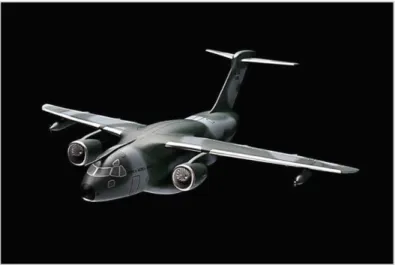
Figure 1 - KC-390 (1) ... 1
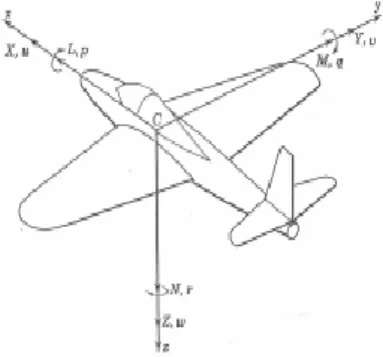
Figure 2 - Standard notation for aerodynamic forces and moments, and linear and rotational velocities in body-axis system (2) ... 3
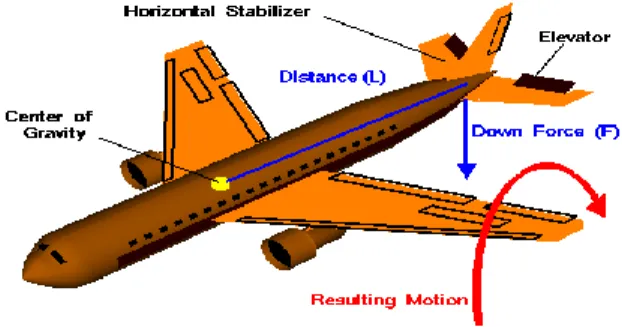
Figure 3 - Illustration of the pitch moment (3) ... 4
Figure 4 - Position and detail of the Elevator ... 4
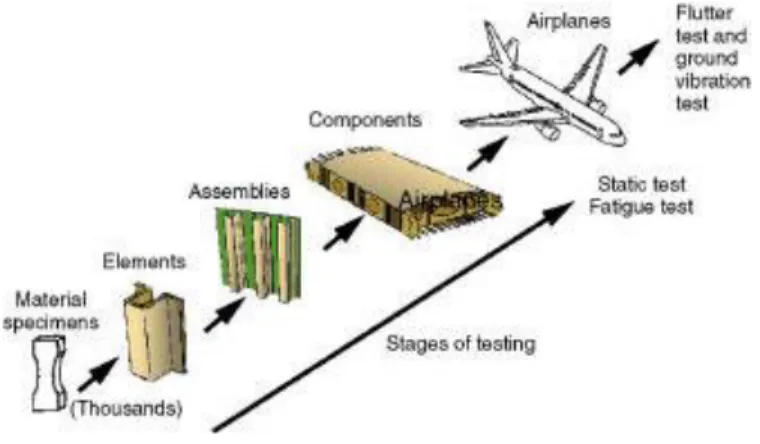
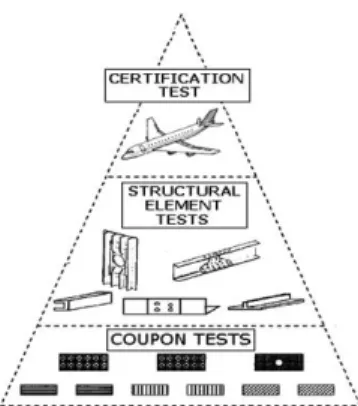
Figure 5 - Levels of structural testing (6) ... 8
Figure 6 - Simplified Three-Level Tests (7) ... 9
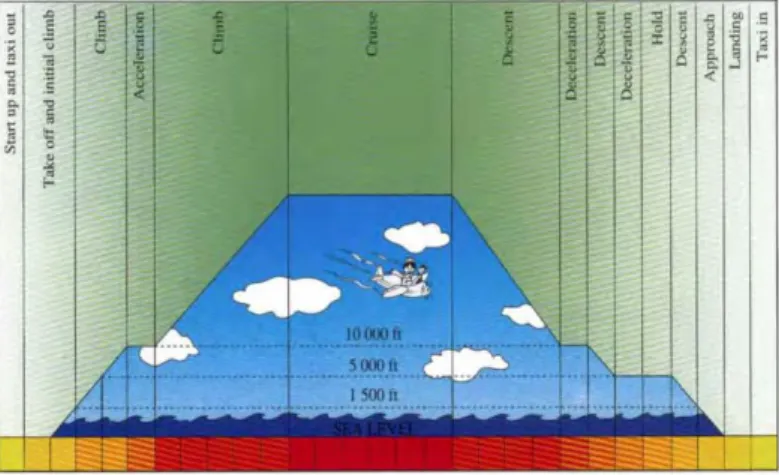
Figure 7 - Typical fatigue mission (8) ... 11
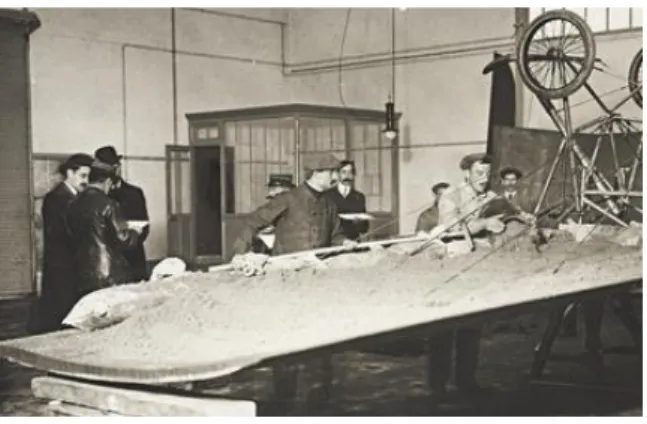
Figure 8 - Test of a wing in 1911 (9) ... 12
Figure 9 - Wing testing with sand bags... 12
Figure 10 - Static Test Facility in NAE (11) ... 18
Figure 11 - A320 Elevator Structural Test (23) ... 21
Figure 12 - View of the cut of the elevator ... 22
Figure 13 - Floor plate measuring 21 x 11.5 m with individual parts measuring 7 x 2 m and 7 x 1.5 m (24)... 23
Figure 14 - Floor with clamping rails (24) ... 23
Figure 15 - Surface Plate installed at Hyundai Technical Center (25)... 24
Figure 16 - Detail of clamping on the floor using nuts ... 24
Figure 17 - Example of a Bridge Crane ... 26
Figure 18 - Example of Actuator from MTS (27) ... 27
ix
Figure 20 – Elevator with blocks located in the root and in the tip... 30
Figure 21 - Solutions proposed for elevator - structure connection ... 30
Figure 22 - Strain Gauge on Specimen (29)... 31
Figure 23 - Circular bar under tension ... 32
Figure 24 - Typical Stress - strain diagram ... 33
Figure 25 - Strain gauges installed in the middle wing section of the left wing on the front spar. Left part show the actual strain gauges photo and the right one is a part of post installation documentation (30) ... 33
x
List of tables
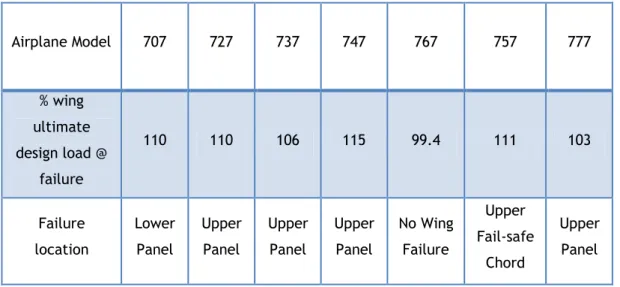
Table 1 - Full scale airplane static test results (2) ... 10
Table 2 - Tests performed in NAE ... 14
Table 3 - Tests performed in DSTO ... 16
Table 4 - Other Examples ... 17
Table 5 - Other examples of test facilities ... 20
Table 6 - T-Slot specifications (16) ... 25
xi
List of Acronyms
C.G. ……… Center of Gravity CEIIA……….……… Centro para a Excelência e Inovação na Indústria Automóvel CFRP ……… Carbon Fiber Reinforced Plastic Technology CS……… Certification Specifications CTA……… Centro De Tecnologias Aeronáuticas DIN……… Deutsches Institut für Normung DSTO……… Defence Science and Technology Organisation EASA……… European Aviation Safety Agency EMBRAER……… Empresa Brasileira de Aeronáutica
EU……… European Union
FAA……… Federal Aviation Administration HB……… Brinell Hardness ICAO……… International Civil Aviation Organization ITS……… Infinity Testing Solutions JAA……… Joint Aviation Authorithies MIT……… Massachusetts Institute of Technology NAE……… National Aeronautical Establishment NIAR……… National Institute for Aviation Research NWTC……… National Wind Technology Center
1
1. Introduction
1.1 Objectives and motivation
In 2006, Embraer, an aerospace conglomerate in Brazil, who participates and develops its functions in various phases like design, development, manufacture, sale and after-sales support in the aviation industry, including commercial aviation and business aviation, began studies on a tactical military aircraft, KC-390, intended to become a substitute to C-130. This kind of important project needs help from all kinds of enterprises and Centro para a Excelência e Inovação na Indústria Automóvel (CEIIA) has the responsibility to develop engineering solutions of the complete set of elevators considered a primary structural component, the central fuselage, that is one of the main components of the airplane and sponson, which is considered a critical structural component for the KC-390. Both products are made from CFRP (Carbon Fiber Reinforced Plastic Technology) as the primary structural material strategically reinforced with metallic parts. CFRP is the name given to a compound material combining carbon fiber and matrix resin. It is light and strong, and is therefore used in a range of applications, from the aerospace industry through to general industrial parts and sports equipment. One of the tasks assigned to this company and included in my master's thesis is to develop a test facility capable of performing static and fatigue tests on the elevator.
Figure 1 - KC-390 (1)
The primary objective of this Master Thesis is to research a much more expeditious and cheaper way to test an aeronautical component. For that, a test facility capable to acclimate to any kind of situation will be needed. The structure must be able to perform full-scale tests in virtually all kind of aeronautical components and also
2 partial-scale tests. Additionally, those tests must comply with the certification applied to these kinds of situations.
3
1.2 Component to be tested
To understand and analyze the component that will be tested and studied in this thesis is necessary to understand the motion of fixed-wing aircraft. Itis characterized by wings that gain lift by the forward movement of the aircraft in relation to relative wind and it is affected by changing natural conditions such as wind, temperature and time of day. As seen in the Figure 2,
there are three axes whose origin corresponds with its centre of gravity (CG), a point where the force of gravity is centered on the aircraft. Its movements are defined by the
rotations around these axes. There are three:
Roll, L, around the x-axis. This movement results from the action of the ailerons, located in the wings;
Yaw, N, around the z axis. This movement results from the action of the rudder located on the vertical stabilizer;
Pitch, M, around the y-axis. This movement results from the action of the elevator located on the horizontal stabilizer.
Figure 2 - Standard notation for aerodynamic forces and moments, and linear and
rotational velocities in body-axis system (2)
If the pilot wishes to pitch up the aircraft, a flight control system is required to rotate the aircraft around the pitch axis (M) in a nose-up sense to achieve a climb angle. Upon reaching the new desired altitude the aircraft will be rotated in a nose-down sense until the aircraft is once again straight and level.
4
Figure 3 - Illustration of the pitch moment (3)
To control the pitch motion on an aircraft it is necessary to change the amount of lift generated by small wings, located on the trailing edge of the tail plane or horizontal stabilizer, called elevators. The elevators are attached by hinges to the stabilizer, which is a fixed wing section whose job is to provide stability to the aircraft, i.e., it prevents up-and-down motion of the aircraft nose. The elevator is the small moving section located at the rear of the stabilizer. Deflecting the elevator generates a moment about the c.g. which causes the airplane to pitch.
5
2. Certification
All aircraft and its components have to be able to fly in safe conditions. The possession of certificates is required to ensure those conditions. The applicable JAA/FAA/EASA airworthiness standards for the certification of aircraft to be internationally recognized are issued in accordance with the ICAO Annexes.
JAA is a European organization, existing since the '70s, responsible for controlling aviation throughout the European Union. This results from the combination of several civil aviation regulatory authorities of several European countries, that have joined together to develop and implement safety standards and procedures to be applied and used in all countries equally.
Later, in 2002, regulations of all countries of the European Union were replaced by the creation of the EC Regulation 1592/2002 (Basic Regulation) of 15 July 2002, that addressed common rules in the field of civil aviation. This situation led to the creation of the European Aviation Safety Agency (EASA, whose rules and regulations imposed are mandatory for each Member State of the European Union. With the publication of the revised EC Regulation 1592/2002 on 19 of March 2008, EASA took over all responsibilities which were previously in the hands of JAA.
In 2008, they decided that the JAA Liaison Office in Cologne would be disbanded by 30 June 2009, but the JAA Training Organization continues to develop their work and their activities in order to contribute and cooperate with EASA.
In order to obtain more information about the regulation of aircraft belonging to countries that are not under jurisdiction of EASA (Europe) or FAA (United States of America), EASA states that:
“An Administrative Arrangement on product certification between EASA and the Brazilian Authorities is in force since February 2004. The Arrangement covers the acceptance of new and used airplanes produced by Embraer. (…)
It is the intention of the Commission to prepare a recommendation to the Council in order to authorize the Commission to open bilateral negotiations with Brazil. EASA will assist the Commission in this task. In the case of Brazil the initial idea is to develop a Bilateral Agreement which establishes the “reciprocal acceptance” of certification findings in the field of civil aviation safety and environmental compatibility, covering the certification of aeronautical products (aircraft, engines and propellers), parts and appliances.” (4)
6 CS-25
In this thesis there is a need to summarize and present the legislation in force for these types of tests. The document to be followed is the CS-EASA 25, equivalent to FAR PART 25 of the FAA.In annex 1 there is an excerpt of CS-25 corresponding to the part of the regulation that fits better in this situation. For this type of tests it is necessary to make a presentation of the most important rules to be respected.
2.1.1 Loads
Loads are forces, deformations, or accelerations applied to a structure or its components. They cause stresses, deformations, and displacements in structures. Excess load or overloading may cause structural failure, and hence such possibility should be either considered in the design or strictly controlled. Mechanical structures, such as aerospace vehicles, marine craft and material handling machinery have their own particular structural loads and actions. The evaluation of structural loads is based on published regulations, contracts, or specifications.
“Strength requirements are specified in terms of limit loads (the maximum loads to be expected in service) and ultimate loads (limit loads multiplied by prescribed factors of safety). Unless otherwise specified, a factor of safety of 1.5 must be applied to the prescribed limit load. According to the limits, these may not exceed the values at which the structure is proven and the values at which compliance with each applicable flight requirement. These loads must be distributed to conservatively approximate or closely represent actual conditions and the methods used to determine load intensities and distribution must be validated by flight load measurement unless the methods used for determining those loading conditions are shown to be reliable.” (5)
2.1.2 Static Tests
The static tests are also important and play a key role in the smooth operation of the aircraft. Thus, it became necessary to investigate more about these and the rules to be respected in relation to them.
“In this kind of test, the structure must be able to support limit loads without detrimental permanent deformation and support ultimate loads without failure for at least 3 seconds. Static tests conducted to ultimate load must include the ultimate deflections and ultimate deformation induced by the loading. “ (5)
7
2.1.3 Damage-tolerance evaluation
Finally, the damage-tolerance evaluation from an airplane other becomes another factor to be considered in the development of this thesis.
“An evaluation of the strength, detail design, and fabrication must show that catastrophic failure due to fatigue, corrosion, or accidental damage, will be avoided throughout the operational life of the airplane. The service history of airplanes of similar structural design must be evaluated having regard of differences in operating conditions and procedures. This evaluation must include a determination of the probable locations and modes of damage due to fatigue, corrosion, or accidental damage. Damage at multiple sites due to prior fatigue exposure must be included where the design is such that this type of damage can be expected to occur. The evaluation must incorporate repeated load and static analyses supported by test evidence.” (5)
8
3. Aircraft Structures Testing
3.1 Need of tests
To assure that a structure will function as expected there is a need for validation which is supported by an extensive test. It is the process by which we gain confidence that the structure will work as customers expect and demand. A detailed analysis of aircraft operations is therefore of crucial importance in the context of structural testing.
The materials and design methods are, as a rule, a mixture of techniques already in use and new. However, it is important to use the most recents materials and the latest and most developed methods, so we can be constantly monitoring them during the tests. Before the design phase progress to the production phase, it is necessary to ensure that the structure will have the expected performance, so the indicated corrections can be made without affecting the program.
During the design phase, structural tests are necessary to reduce the uncertainties due to structural failure. The various components that need to be tested (sample materials, elements, assemblies, components of the aircraft) can be grouped into a pyramid, shown in Figure 6, comprising three levels: test coupon, elements and certification tests. In accordance with the existing methods, the determination of the number of tests is based on previous experience. Since these types of tests are expensive, there is an incentive to reduce these costs without affecting the safety of aircraft.
Figure 5 - Levels of structural testing (6)
Coupon are tested in order to obtain information about their proprieties like Young’s Modulus (is a measure of the stiffness of an elastic material and is a quantity used to characterize materials. It is defined as the ratio of the stress along an axis over the strain along that axis in the range of stress), Poisson’s Ratio (ratio of the relative
9 contraction strain, or transverse strain normal to the applied load, to the relative extension strain, or axial strain in the direction of the applied load), and yield strenght ( stress at which a material begins to deform plastically). Increasing the amount of tests to be carried out, more information will be aquired about these properties of the material, but more expensive becomes this process, so there must be a consensus on the number of specimens to be tested.
It is important to know if coupons, when assembled, continue to be safe and for that structural element tests are needed. Finally, in a third level the aircraft is tested as a final product. These kind of tests also pretend to reduce failures due to errors in structural element tests and coupon tests. The main objective of this type of testing is to reduce the errors relating to failures that could happen.
Figure 6 - Simplified Three-Level Tests (7)
3.2 Types of tests
Tests on aircraft components can be divided into three main types: static tests, dynamic tests and vibrations tests. Since the first tests in the beginning of the 20th
century, the basic principles have not changed, but the way to run them suffered many changes. The most important example of this evolution is recorded in the data acquisition. The first tests were done manually with the people responsible for recording the deflection at certain points. Electronic devices nowadays are used to record position changes on the order of 0.0025 cm.
In addition to the tests mentioned above, which suffered its evolution over time, and adequate monitoring developments in aeronautics, also the utensils used in the load application have changed and there was a gradual evolution, consistent and, therefore, important to in the form as they were applied. We can make a comparison between the beginning and the best gift for observing these developments. Initially, the forces
10 applied were simulated by using sandbags. With the advancement and development of technology, hydraulic pumps, driven manually by some officials are currently controlled by machines evolved and tested properly for your order, thanks to which it is able to handle more than 150 hydraulic servo-hydraulic systems
3.2.1 Test Preparation
Before any kind of tests, it is always necessary to describe all the loads that will be submitted to the component. Information about these loads can come from both the company that designs based on other existing components static, as well as regulatory authorities. The methods for prediction of loads have evolved in conjunction with the increase of knowledge in aero elasticity, finite element methods, computational fluid dynamics as well as the increase of knowledge about computational tools. It is also necessary to establish the properties of the materials and methods of drawing using existing data.
3.2.2 Static Tests
One of the main objectives of this type of testing is to ensure that the material in question keeps on elastic system when subjected to loads below or equal to the load limit calculated at the design stage. These tests are made to bring the structure to its physical limit in order to ensure that this will support at least 150% (ultimate load) of the efforts that will be subject during his lifetime (limit load). Bellow in Table 1 are shown some results of static test of Boeing’s aircraft. We can notice that almost all tests were successful since the components reached the ultimate design load.
Table 1 - Full scale airplane static test results (6)
Airplane Model 707 727 737 747 767 757 777 % wing ultimate design load @ failure 110 110 106 115 99.4 111 103 Failure location Lower Panel Upper Panel Upper Panel Upper Panel No Wing Failure Upper Fail-safe Chord Upper Panel
11
3.2.3 Fatigue Tests
Fatigue tests examines how the aircraft structure responds to stress over a long period of time and during different stages of its operations, such as taxiing on the runway, take-off, cruising and landing. In these stages there are some efforts like bending the wing due to the lift, cabin pressurization or the efforts that the landing gear is subject to each landing/take-off.
It is also necessary to test ability to sustain defects safely until repair is done. The approach to account for damage tolerance is based on the assumption that flaws can exist in any structure and such flaws propagate with usage. This approach is commonly used to manage the extension of cracks in structure through the application of the principles of fracture mechanics.
12
4. History of Aircraft Structures Testing
4.1 Brief Introduction
At the beginning, when it was necessary to test a wing there were not many choices. One of the first methods to be used in this type of test consisted on loading the wing with sand, loose or in bags, to check the maximum weight that this withstands. This method did not involve a lot of costs, since the necessary materials were simple and low cost. Sandbags were placed to simulate at each point of the wing the load caused during a flight.
Figure 8 - Test of a wing in 1911 (9)
Only in 1920, when Donald Douglas set up his company, new methods of testing of wings began to be developed. One of the first Aeronautical Engineers trained at the MIT, Douglas, brought knowledge and mathematical tools for this process.
13
4.2 Testing chronology
Two of the first laboratories devoted to tests of aircraft structures are DSTO (10) and NAE (11). The first belongs to the Australian Government and is called Defense Science and Technology Organization while the other, belonging to the Government of Canada, is called by National Aeronautical Establishment. And for both of them I have found some records that are presented below.
In the follow three tables, tests performed are presented in chronological order. As the most important evolution that there was in this area was the way in which the components were loaded, the tests will be divided into two subgroups.
Aircraft Notes Test Structure Avro 652
1941
One of the first tests carried out on this Laboratory was a static test fuselage of Anson. The loading was simulated by applying sandbags with the help of an operator. Deflections were registered by reading scales. The structure was loaded up to 75% of the ultimate load in both side and down and permanent deflection not seen.
De Havilland
DH-82
1942
This essay had as objective to test a defect in the construction of the wings and was tested for 400, 800 and 1000 hours of flight. The test was also done using sandbags supported by some actuators. Wings were charged up to 120% of the ultimate load without damage.
Beechcraft T-6 Texan
1942
One of the first tests carried out in completely metallic structures was in 1942. The objective was to verify the conditions under which the wings showed evidence of a potential fracture. With the wing root bolted to a face plate, it was charged up to 90% of the ultimate load with sandbags. Deflections were measured with strain gauges.
14
De Havilland
DH 98
1948
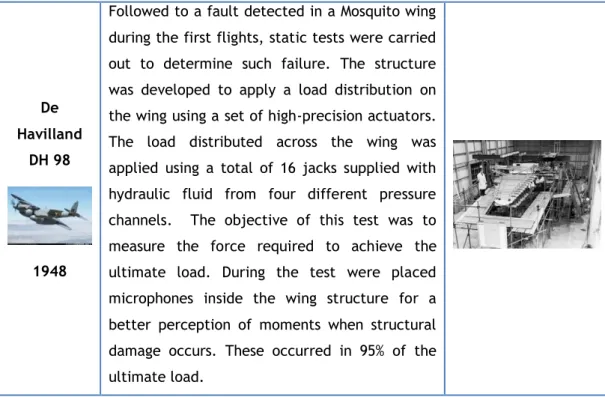
Followed to a fault detected in a Mosquito wing during the first flights, static tests were carried out to determine such failure. The structure was developed to apply a load distribution on the wing using a set of high-precision actuators. The load distributed across the wing was applied using a total of 16 jacks supplied with hydraulic fluid from four different pressure channels. The objective of this test was to measure the force required to achieve the ultimate load. During the test were placed microphones inside the wing structure for a better perception of moments when structural damage occurs. These occurred in 95% of the ultimate load.
15
Aircraft Notes Test Structure
Commonwealth CA-13
1949
An improved version of test structure allowed simulation of a life time of 50000 cycles. These tests were part of an investigation that ended in 1949 and resulted for the first time on a fatigue diagram (S-N) for a full size structure.
B North American P-51
1950 - 1960
To get more information on structures manufactured using aluminum alloys were investigated, after the Second World War, 20 wings of the Mustang P-51.
De Havilland DH.104
1950 - 1960
In order to ensure that this aircraft had a life cycle of more than 100 000 hours, tests were made using the same structure used for the Mustang adding certain differences for best results in vibration testing.
De Havilland DH.100
1960 - 1975
In the case of this aircraft was needed a structure able to test the wings built in the fuselage.
Cessna 180
1960 - 1975
In that aircraft, fatigue tests were performed due to previous fatigue failures, and also due to a catastrophic accident caused by fatigue failures.
Dassault Mirage III
1960 - 1975
Since this aircraft is supersonic, it was decided that before structural tests would be collected data during the various stages of flight.
16
GAF N-22
1976
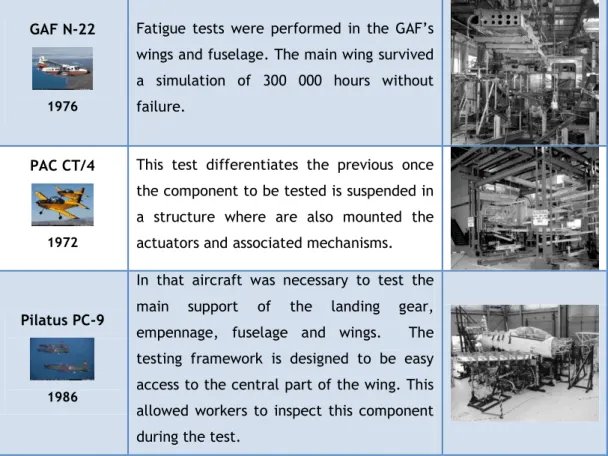
Fatigue tests were performed in the GAF’s wings and fuselage. The main wing survived a simulation of 300 000 hours without failure.
PAC CT/4
1972
This test differentiates the previous once the component to be tested is suspended in a structure where are also mounted the actuators and associated mechanisms.
Pilatus PC-9
1986
In that aircraft was necessary to test the main support of the landing gear, empennage, fuselage and wings. The testing framework is designed to be easy access to the central part of the wing. This allowed workers to inspect this component during the test.
17
Aircraft Notes Test Structure Caiga
HO300
2011
The ultimate load was applied from 10% to 100%, holding for 3 seconds and then released. It has conducted up to 67% of the ultimate static load strength test. The test focuses on the strength of the left and the right wing and the joint area on them. (12)
Airbus A380
2006
After completing limit load tests, progressively greater loads have been applied to the specimen towards the required 1.5 times the limit load. The failure occurred between 1.45 and 1.5 times the limit load at a point between the inboard and outboard engines. The ultimate load trial is an extremely severe test during which a wing deflection of 7.4m was recorded. (13)
Boeing 787 Dreamliner
2010
Started by testing small coupons and elements to characterize the material system, testing small and medium size articles of configured structure and then proceed to full-scale testing. (14)
Boeing 777
1994
Boeing tested the 777 horizontal stabilizer and elevators separately. Engineers computed test loads for each static load condition to match the required shear, moment, and torsion values. These test loads were applied to the stabilizer using hydraulic actuators connected to attachment fittings, mounted on the stabilizer structure. (15)
Airbus A320
1990
In the case of the A320-200 in the fatigue test 120000 cycles were made and half of these had as objective the study of cracks. (8)
18
5. Development of a Testing Facility
5.1 Examples of test facilities
5.1.1 Test Facility at NAE, Canada
In the year 1947, a larger and more sophisticated testing facility was built in the NAE. The test structure consisted on a series of up to 12 frames made up from steel in which holes were drilled at a standard gauge, pitch and assembled by bolting in the required arrangement.
Figure 10 - Static Test Facility in NAE (11)
The structure was anchored using four inverted T-section reinforced concrete beams under the floor with two 15 inch steel channels. The loads were applied by hydraulic reaction jacks suspended. Two hydraulic consoles were available to supply the hydraulic fluid at four different pressures simultaneously. Loads were transmitted to the test article by means of adhesive tension patches.
Deflection was measured using deflection boards. These were simply large sheets of plywood mounted in a vertical plane, with small pulleys, mounted on the top. A small weight was attached to different wires to provide tension and then any vertical displacement of the point of attachment was directly indicated by a similar displacement of the weight.
19
5.1.2 Other examples
In Table 5 we can see static tests performed on wings in MARSHALL, NIAR, CTA, IABG and NWTC. In all the test facilities there are beams used to apply force across the span and also it is found that in all cases there is a floor plate with rails to fit various types of tests.
Enterprise Pictures Marshall (16)
NIAR (17)
20
IABG (19)
ITS (20)
NWTC (21)
21
5.2 Presentation of the test
After an analysis of other tests structures it is necessary to design a new one with the requirements that have been provided. A structure capable of carrying out static and dynamic tests to an elevator is needed. There are several requirements (22) :
A bridge crane with an operating range of 12 meters;
Floor with rails positioned lengthwise with a gauge of 1 meter between them. Must withstand a traction load of 20000 kg/m. Equipped with an appropriate drainage channel;
Actuators fixed in the floor acting vertically; Easy to adapt to other tests;
Easy to assembly and handling;
The test facility that stood is in Spain, at CTA. This structure were usedfor structural tests on the elevator of the Airbus A320, and the component to be tested is the same as in CEIIA and the actuators behave the same way, that is, placed on the ground acting vertically.
Figure 11 - A320 Elevator Structural Test (23)
This structure provides various supports aimed at transferring to the elevator the forces exerted on the actuators. This device will not be necessary, since it was previously established that this transfer of efforts would be made through two structures, one placed at the root and the other on the tip. Another requirement was to reduce the
22 size of the elevator by cutting the tip and the root following the dimensions given by CEIIA. The elevator with approximately 6 meters wingspan have been transformed into another of approximately 2 m conserving central part as shown in the Figure 12.
23
5.3 Ground Anchor
The ground anchor will be made using a steel-plate floor. Those plates are made from a cast iron/steel alloy and offer flexible universal clamping possibilities. The plate chosen is from Stolle, located in Germany, and one of the most recognized manufacturer of these kind of parts and presents a plate with Hardness Brinnel of approximately 180 – 200 N/mm2 and tensile strength between 260 and 300 N/mm2.
Compared with other solutions this is the one with more ease of clamping.
Figure 13 - Floor plate measuring 21 x 11.5 m with individual parts measuring 7 x 2 m and 7 x
1.5 m (24)
Another solution presented by Stolle consist in rails implemented in concrete. This type of structure is cheaper since it is only necessary to build on an existing floor, and another advantage is the ease of choice of the gauge between the rails. This solution is worse than the plate floor, because it has the risk of outside interference tests.
Figure 14 - Floor with clamping rails (24)
So, the most viable solution is a type of ground that is independent of the rest of the floor. For that, plates with t-slots were chosen.
24 Knowing that the width of the component to be tested measures about 5 meters given the structure that will suppor, this dimension of the plate shall be 7 meters so a gap exists where supports of the structure will be and will also allow future tests of other different components. As for the length, since the component measures about 1 meter, we will need a Board with this dimension equal to 4 meters.
Figure 15 - Surface Plate installed at Hyundai Technical Center (25)
So we will use two plates whose reference is 74200 and with a length of 7 meters and width of 2 metres, performing a total size of 7 x 4 meters. Given its specification (24), the density of the material is approximately 2514 kg/m3 since I use a height of 0.350 m
on the plates. So the weight of each plate is 11760 kg. On our plates, the distance between T-slots is 250 mm. When individual plates are combined into a plate field, the T-slot layout is chosen so that the clearance to the edge of the plate is exactly half the slot distance. This provides then a uniform T-slot layout over the entire surface.
A nominal size of 28 mm for M24 bolts was chosen, so with specifications Table 6 we now have plate designed. In order to fix other elements to the ground will be necessary at first T-slot nuts which are elements that are embedded in the plate’s soil. For each set screw nut will need one of these. Since the slots correspond to the chosen hole M24, they have a diameter of 24 mm as well as the screws.
25 Nominal size: a [mm] For bolts b [mm] c [mm] H [mm] e [mm] Dimensions 10 M8 17,5 – 18 8 18 1,0 12 M10 20,5 – 21 9 21 1,0 14 M12 23,5 – 24 10 24 1,0 16 M14 26,5 – 27 11 27 1,0 18 M16 29,5 – 30 12 30 1,5 20 M18 33,5 – 34 14 34 1,5 22 M20 37,5 – 38 16 38 1,5 24 M22 41 – 42 18 42 1,5 28 M24 47 – 48 20 48 1,5 32 M27 54 22 54 1,5 36 M30 60 25 61 2,0 42 M36 70 29 74 2,0
26
5.4 Bridge Crane
Once we have a structure comprised of modular components, it is important that we have a lifting mechanism capable of supporting and assemble them and also the component to be tested. Overhead cranes, sometimes also called bridge cranes, are cranes with a hoist traveling along the bridge between parallel runways. The solution adopted, an overhead crane, consists on two beams laid out horizontally with a bridge spanning the gap. In this bridge there is a hoist, making possible lateral and longitudinal movements.
Figure 17 - Example of a Bridge Crane
To design this type of structure a crane is required with a runway length with 15 meters, wide with 13 meters and the value of the height will be between 5 and 15 meters. The crane also needs to support more than 3 tons given the weight of some beams.
27
5.5 Actuators
Through further studies in this area done in parallel concluded that in the case where the elevator would reach the higher bending strength the resulting force was 107.8 N. For that force, the displacement component was 142.8 mm (26).
Given the safety factor above explained, the amount of force required for the actuators is equal to the resultant force by this factor of 1.5, resulting in 161.7 N. Soon the actuators to be used are hydraulic and need to be able to exert a force greater than or equal to that specified.
28 After the actuator is chosen, it is necessary to select the component which will connect the actuator to the surface to be tested. For this, there are surfaces with holes to be secured to any component by use of screws as can be seen below.
5.6 Load Frames
Apart from servo-hydraulic components like actuators we also need appropriate devices to mount actuators and components simply and safely. In order to keep down investment cost, modular solutions are especially useful when test setups are frequently modified. The first components to be installed should be plates that will withstand the actuators in a vertical position (Small Size T-slot plate). These plates have the purpose of facilitating the change of position during and after these tests since they will be mounted on top of the plate with the respective rails to make an angle of 90 ° with the plate.
Then the frames that will be installed, they support the weight of the wing, along with its respective base. Given their positions and weights, it is important they be handled
29 with care and use of crane. This structure is composed by four vertical beams, two horizontal beams connecting the vertical beams using 4 Stiffener supports.
The following table describes and shows in detail the characteristics of the load frames with a figure to make possible a better visualization of the same.
Description Sizes
Weight [kg]
Reference Picture
Small Size T-slot plate 900x700x90 405 001 565
Bottom flange plate 550x550x40 95 001 644.100
Vertical Beam 3000x350x350 400 001 554
Horizontal Beam 2000x350x350 300 002 278
Stiffener support 350x350x370 85 001 564
30
5.7 Connection Elevator-Test Structure
To make the test of component, it is necessary to know where forces are applied. Knowing that the actuators will exercise the necessary force vertically, the most viable solution would be to place two blocks located in the root and the tip of the wing as seen in Figure 20.
Figure 20 – Elevator with blocks located in the root and in the tip
The actuators will apply the forces in those bocks in order to transfer them to the elevator. Below are two solutions to fix the wing. At first the objective would be to connect the two blocks through two tubes that would pass through the holes of the ribs. This solution has been set aside to the extent that the tubes would lead efforts on ribs that in normal flight conditions would not be present. It could also damage the rib and so, change the properties of the component. Another solution was proposed in which the blocks would fit into the elevator, so efforts to this box and thus avoiding damages that would be present in the previous solution. At the time of delivery of this academic project, the type of fixation was still under study, and therefore it was not possible to present more accurate results or more detailed specifications.
31
5.8 Measurements
Measurements in structural tests will be carried out using strain gauges properly calibrated to measure tension, torsion and bending moment at different strategic points.
In each structure or piece to be tested are placed several strain gauges. These are small sensors glued to the surface of the material. Small variations in the dimensions of the structure, caused by the application of loads, are then mechanically transmitted to the gauges, which transforms these variations in variations of their equivalent electrical resistance. This variation of electrical resistance generates a signal which is then sent through a wire and then computers decode and treat the information through specific software. Based on this information, it is possible to know if the test material resists mechanical stress specified by project and if you are able to receive the qualification. These strain gauges are still used today, for example, in the case of the Boeing 787 Dreamliner, 9000 actuators were used and 2000 are located in each wing.
Basically a strain gauge is a device which measures strain in a single direction at the surface of a component. Though in some applications this strain may be the primary quantity to be determined, in most cases strain measurements are used to obtain information about the stresses that occur in the components to which the strain gauges are bonded or about the forces which act on such components.
Figure 22 - Strain Gauge on Specimen (29)
As stresses cannot be measured directly, they must be derived by calculation from strain measurements. An introduction to the fundamental physical and mechanical laws is essential. Strain gauge behavior can therefore only be understood on the basis of some fundamental knowledge of these physical and mechanical laws. The characteristic feature of an electrical strain gauge is the change in its electrical resistance with the change in strain. It is therefore possible to determine the strain change by measuring this resistance change.
32 Each metallic body shows a specific behavior under the influence of external loads. Up to a certain load elastic deformation takes place, i.e., the deformation disappears after unloading. However, if the load is increased beyond this point, first plastic deformation and then fracture occurs.
First, however, the basic characteristics of a strain gauge measurement system will be described. Knowing the gauge factor k, the relation between the resistance change ΔR of the strain gauge and the strain is expressed by:
.
Figure 23 - Circular bar under tension
If we consider a simple circular bar under tension having a cross-sectional area A and loaded with longitudinal force F, as in Figure 23, assuming a uniform force distribution over the entire cross section , the force divided by the cross-sectional area is defined as the stress:
.
Under load F the length l of the bar changes by Δl from l0 to l1, l1 = l0 + Δl. The change
in length divided by the length l is defined as the longitudinal strain:
.
l
1d
1d
0A
l
0Δl
F
33 Under load F the diameter of the bar changes by Δd from d0 to d1, d1 = d0 - Δd. The
change in diameter divided by the diameter d is defined as the transverse strain or transverse contraction:
.
The relation between transverse strain εt and longitudinal strain εl is a material
constant known as Poisson’s ratio. If the bar is successively submitted to increasing loads and the values of are plotted against the values of ε, the result is a stress - strain diagram as seen in Figure 24.
Figure 24 - Typical Stress - strain diagram
Once the strain has been exactly transferred from the surface of the specimen to the grid of the strain gauge, the quality of the measurement is determined by the accuracy of recording the resistance change.
Figure 25 - Strain gauges installed in the middle wing section of the left wing on the front spar. Left part show the actual strain gauges photo and the right one is a part of post installation documentation
(30)
Stress
34
6. Conclusion
Structural testing is an important procedure for manufacturer companies all over the world. In order to enhance the methods to perform structural testing capable of certify and approve have been presented. With these methods we can certify aeronautical components in a faster way, at the same time all the process becomes more reliable, which can ultimately lead to lower costs and more productivity.
The design of the test facility in CATIA® developed throughout a three month curricular internship at CEIIA provides important information to build a facility capable to perform all kinds of static and dynamics tests. In order to perform a real test facility, an analysis of the elevator was made to determine displacements results. That information was really important to choose what kind of actuator were needed.
Reflecting on the methodology used and its importance for the development of this thesis and tests, I can say that it has become quite useful and appropriate to the situation under study and the literature review and references were quite diverse, which enabled me to have an enlarging view of the panorama aeronautical world from its beginnings to the present. The main objective of this thesis, project a test facility, was achieved, however, more studies are needed to ensure that the solution is cheaper than other existing in aeronautical industry. To obtain a significant reduction in costs it would be important to contact a larger number of companies in order to obtain information on various types of components as well as their costs.
Primarily, I intended to perform a thorough structural analysis, analyzing all its structures and its components down to the smallest detail, however this structure is still at an relatively early stage of project, which is still not possible to obtain a detailed analysis such as desired. Thus, one of the major difficulties encountered in this analysis was that the actual connection elements of the structure itself are not present and thus inappropriate to the situation under study.
In a short time it became difficult to develop a kind of sophisticated structure like this. Several aspects must be studied such as the choice of actuators and position well to the type of fixation of the elevator to the test facility. However, at long term, using the data in this thesis and the project CATIA will become easier to make a viable structural analysis using detailed information of the component in question.
35
36
7. Annexes
7.1 Annex I - Certification Specifications and
Acceptable Means of Compliance for Large
Airplanes
The EASA document that governs large aircraft such as the KC-390 is the CS-25. Here will be presented excerpts of the most important chapters for the case study:
7.1.1 Subpart B
CS 25.21 Proof of ComplianceEach requirement of this Subpart must be met at each appropriate combination (a)
of weight and center of gravity within the range of loading conditions for which certification is requested. This must be shown –
By tests upon an airplane of the type for which certification is (1)
requested, or by calculations based on, and equal in accuracy to, the results of testing; and
By systematic investigation of each probable combination of weight (2)
and center of gravity, if compliance cannot be reasonably inferred from combinations investigated.
Parameters critical for the test being conducted, such as weight, loading (d)
(center of gravity and inertia), airspeed, power, and wind, must be maintained within acceptable tolerances of the critical values during flight testing.
In meeting the requirements of CS 25.105(d), 25.125, 25.233 and 25.237, the (f)
wind velocity must be measured at a height of 10 meters above the surface, or corrected for the difference between the height at which the wind velocity is measured and the 10-metre height.
CS 25.23 Load distribution limits
Ranges of weights and centers of gravity within which the airplane may be (a)
safely operated must be established. If a weight and center of gravity
combination is allowable only within certain load distribution limits (such as span wise) that could be inadvertently exceeded, these limits and the corresponding weight and center of gravity combinations must be established.
The load distribution limits may not exceed – (b)
37 The selected limits;
(1)
The limits at which the structure is proven; or (2)
The limits at which compliance with each applicable flight (3)
requirement of this Subpart is shown.
CS 25.25 Weight Limits
Maximum weights. Maximum weights corresponding to the airplane operating (a)
conditions (such as ramp, ground taxi, take-off, en-route and landing) environmental conditions (such as altitude and temperature), and loading conditions (such as zero fuel weight, center of gravity position and weight distribution) must be established so that they are not more than –
The highest weight selected by the applicant for the particular (1)
conditions; or
The highest weight at which compliance with each applicable (2)
structural loading and flight requirement is shown. The highest weight at which compliance is shown with the noise certification requirements.
- Minimum weight. The minimum weight (the lowest weight at which
compliance with each applicable requirement of this CS–25 is shown) must be established so that it is not less than –
The lowest weight selected by the applicant; (1)
The design minimum weight (the lowest weight at which compliance (2)
with each structural loading condition of this CS–25 is shown); or The lowest weight at which compliance with each applicable flight (3)
requirement is shown.
7.1.2 Subpart C
Cs 25.301 LoadsStrength requirements are specified in terms of limit loads (the maximum loads (a)
to be expected in service) and ultimate loads (limit loads multiplied by prescribed factors of safety). Unless otherwise provided, prescribed loads are limit loads.
Unless otherwise provided the specified air, ground, and water loads must be (b)
placed in equilibrium with inertia forces, considering each item of mass in the airplane. These loads must be distributed to conservatively approximate or closely represent actual conditions. Methods used to determine load intensities and distribution must be validated by flight load measurement unless the
38 If deflections under load would significantly change the distribution of external (c)
or internal loads, this redistribution must be taken into account.
CS 25.303 Factor of safety
Unless otherwise specified, a factor of safety of 1∙5 must be applied to the prescribed limit load which is considered external loads on the structure. When loading condition is prescribed in terms of ultimate loads, a factor of safety need not be applied unless otherwise specified.
CS 25.305 Strength and deformation
The structure must be able to support limit loads without detrimental (a)
permanent deformation. At any load up to limit loads, the deformation may not interfere with safe operation.
The structure must be able to support ultimate loads without failure for at (b)
least 3 seconds. However, when proof of strength is shown by dynamic tests simulating actual load conditions, the 3 second limit does not apply. Static tests conducted to ultimate load must include the ultimate deflections and ultimate deformation induced by the loading. When analytical methods are used to show compliance with the ultimate load strength requirements, it must be shown that –
The effects of deformation are not significant; (1)
The deformations involved are fully accounted for in the analysis; or (2)
The methods and assumptions used are sufficient to cover the effects (3)
of these deformations.
Unless shown to be extremely improbable, the airplane must be designed to (f)
withstand any forced structural vibration resulting from any failure, malfunction or adverse condition in the flight control system. These loads must be treated in accordance with the requirements of CS 25.302.
CS 25.307 Proof of structure
Compliance with the strength and deformation requirements of this Subpart (a)
must be shown for each critical loading condition. Structural analysis may be used only if the structure conforms to that for which experience has shown this method to be reliable. In other cases, substantiating tests must be made to load levels that are sufficient to verify structural behavior up to loads specified in CS 25.305.
When static or dynamic tests are used to show compliance with the (d)
requirements of CS 25.305 (b) for flight structures, appropriate material correction factors must be applied to the test results, unless the structure, or part thereof, being tested has features such that a number of elements
39 contribute to the total strength of the structure and the failure of one element results in the redistribution of the load through alternate load paths.
CS 25.321 General
Flight load factors represent the ratio of the aerodynamic force component (a)
(acting normal to the assumed longitudinal axis of the airplane) to the weight of the airplane. A positive load factor is one in which the aerodynamic force acts upward with respect to the airplane.
Considering compressibility effects at each speed, compliance with the flight (b)
load requirements of this Subpart must be shown –
At each critical altitude within the range of altitudes selected by the (1)
applicant;
At each weight from the design minimum weight to the design (2)
maximum weight appropriate to each particular flight load condition; and
(i) For each required altitude and weight, for any practicable distribution of disposable load within the operating limitations recorded in the Airplane Flight Manual.
CS 25.571 Damage-tolerance and fatigue evaluation of structure
General. An evaluation of the strength, detail design, and fabrication must
(a)
show that catastrophic failure due to fatigue, corrosion, or accidental damage, will be avoided throughout the operational life of the airplane. This evaluation must be conducted in accordance with the provisions of subparagraphs (b) and (e) of this paragraph, except as specified in subparagraph (c) of this paragraph, for each part of the structure which could contribute to a catastrophic failure (such as wing, empennage, control surfaces and their systems, the fuselage, engine mounting, landing gear, and their related primary attachments). For turbine engine powered airplanes, those parts which could contribute to a catastrophic failure must also be evaluated under subparagraph (d) of this paragraph. In addition, the following apply:
Each evaluation required by this paragraph must include – (1)
(i) The typical loading spectra, temperatures, and humidity expected in service;
(ii) The identification of principal structural elements and detail design points, the failure of which could cause catastrophic failure of the airplane; and
40 (iii) An analysis supported by test evidence, of the principal structural elements and detail design points identified in subparagraph (a) (1) (ii) of this paragraph.
The service history of airplanes of similar structural design, taking due (2)
account of differences in operating conditions and procedures, may be used in the evaluations required by this paragraph.
Based on the evaluations required by this paragraph, inspections or (3)
other procedures must be established as necessary to prevent catastrophic failure, and must be included in the Airworthiness Limitations Section of the Instructions for Continued Airworthiness required by CS 25.1529.
Damage-tolerance (fail-safe) evaluation. The evaluation must include a (b)
determination of the probable locations and modes of damage due to fatigue, corrosion, or accidental damage. The determination must be by analysis supported by test evidence and (if available) service experience. Damage at multiple sites due to prior fatigue exposure must be included where the design is such that this type of damage can be expected to occur. The evaluation must incorporate repeated load and static analyses supported by test evidence. The extent of damage for residual strength evaluation at any time within the operational life must be consistent with the initial detectability and subsequent growth under repeated loads.
Fatigue (safe life) evaluation. Compliance with the damage-tolerance (c)
requirements of subparagraph (b) of this paragraph is not required if the
applicant establishes that their application for particular structure is impractical. This structure must be shown by analysis, supported by test evidence, to be able to withstand the repeated loads of variable magnitude expected during its service life without detectable cracks. Appropriate safe-life scatter factors must be applied.
CS 25.603 Materials
The suitability and durability of materials used for parts, the failure of which could adversely affect safety, must –
Be established on the basis of experience or tests; (a)
Conform to approved specifications, that ensure their having the strength and (b)
other properties assumed in the design data and
Take into account the effects of environmental conditions, such as temperature (c)
41
CS 25.613 Material strength properties and Material Design Values
(a) Material strength properties must be based on enough tests of material meeting approved specifications to establish design values on a statistical basis.
(b) Material design values must be chosen to minimize the probability of structural failures due to material variability. Except as provided in subparagraphs (e) and (f) of this paragraph, compliance must be shown by selecting material design values which assure material strength with the following probability:
Where applied loads are eventually distributed through a single (1)
member within an assembly, the failure of which would result in loss of structural integrity of the component, 99% probability with 95% confidence.
For redundant structure, in which the failure of individual elements (2)
would result in applied loads being safely distributed to other load carrying members, 90% probability with 95% confidence.
CS 25.651 Proof of strength
Limit load tests of control surfaces are required. These tests must include the (a)
horn or fitting to which the control system is attached.
Compliance with the special factors requirements of CS 25.619 to 25.625 and (b)
25.657 for control surface hinges must be shown by analysis or individual load tests.
7.1.3 AMC – Subpart C
AMC No. 2 to CS 25.301(b)3. BACKGROUND
CS-25 stipulates a number of load conditions, such as flight loads, ground loads, (c)
pressurization loads, inertia loads and engine/APU loads. CS 25.301 requires methods used to determine load intensities and distributions to be validated by flight load measurements unless the methods used for determining those loading conditions are shown to be reliable. Although this applies to all load conditions of CS-25, the scope of this AMC is limited to flight loads.
The sizing of the structure of the aircraft generally involves a number of steps (d)
and requires detailed knowledge of air loads, mass, stiffness, damping, flight control system characteristics, etc. Each of these steps and items may involve its own validation. The scope of this AMC however is limited to validation of
methods used for determination of loads intensities and distributions by flight load measurements.