Repositório ISCTE-IUL
Deposited in Repositório ISCTE-IUL:
2019-03-07
Deposited version:
Post-print
Peer-review status of attached file:
Peer-reviewed
Citation for published item:
Simões, F. A. M., Calheiros, M. M. D. A., Alarcão e Silva, M. M., Toledo Sousa, A. S. & Lopes da Silva, O. D. (2018). Total and attuned multiple autonomy support and the social development of early adolescents. Journal of Child and Family Studies. 27 (2), 374-386
Further information on publisher's website:
10.1007/s10826-017-0911-5
Publisher's copyright statement:
This is the peer reviewed version of the following article: Simões, F. A. M., Calheiros, M. M. D. A., Alarcão e Silva, M. M., Toledo Sousa, A. S. & Lopes da Silva, O. D. (2018). Total and attuned multiple autonomy support and the social development of early adolescents. Journal of Child and Family Studies. 27 (2), 374-386, which has been published in final form at
https://dx.doi.org/10.1007/s10826-017-0911-5. This article may be used for non-commercial purposes in accordance with the Publisher's Terms and Conditions for self-archiving.
Use policy
Creative Commons CC BY 4.0
The full-text may be used and/or reproduced, and given to third parties in any format or medium, without prior permission or charge, for personal research or study, educational, or not-for-profit purposes provided that:
• a full bibliographic reference is made to the original source • a link is made to the metadata record in the Repository • the full-text is not changed in any way
The full-text must not be sold in any format or medium without the formal permission of the copyright holders.
Serviços de Informação e Documentação, Instituto Universitário de Lisboa (ISCTE-IUL) Av. das Forças Armadas, Edifício II, 1649-026 Lisboa Portugal
Phone: +(351) 217 903 024 | e-mail: [email protected] https://repositorio.iscte-iul.pt
Total and attuned multiple autonomy support and the social development of early
adolescents
THIS IS A PRE-PUBLICATION
COPY
(
BEFORE THE PROOFREADING PROCESS-
IT MIGHT CONTAIN MINOR ERRORS)
Francisco Alexandre Melo Simões
Maria Manuela de Amorim Calheiros
Madalena Moutinho Alarcão e Silva
Áurea Sandra Toledo Sousa
Osvaldo Dias Lopes da Silva
Corresponding author: F. Simões
University Institute of Lisbon, Av das Forças Armadas, 1649-026 Lisboa, Portugal [email protected]
M. M. Calheiros
University Institute of Lisbon, Lisboa, Portugal
M. Alarcão
University of Coimbra, Coimbra, Portugal
A. Sousa & O. Silva
University of The Azores; CEEAplA, Ponta Delgada, Portugal
Funding: The first author has received a research grant from Fundação para a Ciência e Tecnologia (SFRH/BPD/99616/2014).
Conflict of Interest: Francisco Simões, Manuela Calheiros, Madalena Alarcão, Áurea Sousa, and Osvaldo Silva declare that they do not have any conflict of interest to declare.
Abstract
The effects of Multiple Autonomy Support (MAS), meaning the autonomy support provided by two or more sources, is an overlooked topic in social development literature. The aim of this study is to understand how two types of MAS, Total Multiple Autonomy Support (TMAS) and Multiple Autonomy Support Attunement (MASA), are related to early adolescents’ social development indicators (prosocial behavior, self-regulation, antisocial behavior, alcohol use, and 1-year substance use intention). TMAS pertains to the general amount of autonomy support perceived by a MAS recipient, irrespectively of each provider’s contribution to that score. MASA refers to the interindividual patterns of perceived coordination among MAS providers, based on each provider’s autonomy scores. The participants were 818 early adolescent Portuguese (M = 12.15; SD = .81; 54.2% girls) surveyed in a cross-sectional exploratory study about MAS provided by parents, teachers, and mentors. Descriptive analyses revealed levels of low (n = 81; 10.00%), moderate (n = 432; 52.82%), and high (n = 302; 36.91%) TMAS. A k-cluster analysis revealed four MASA groups: low attuned MAS (n = 128; 15.65), misattuned MAS/low attuned parent autonomy support (n = 225; 27.51%), misattuned MAS/low attuned teacher autonomy support (n = 177; 21.64%), and high attuned MAS (n = 288; 32.21%). Ordinal regressions show that, after controlling for age, a pattern of high attuned MAS predicts better prospects of prosocial behavior and self-regulation, as opposed to high levels of TMAS. In addition, MASA involving low teacher autonomy support predicts the worst results on the selected indicators of social development.
Introduction
This study aims to show how two different forms of Multiple Autonomy Support (MAS), Total Multiple Autonomy Support (TMAS) and Multiple Autonomy Support Attunement (MASA), are associated with early adolescents’ social development indicators (prosocial behavior, self-regulation, antisocial behavior, alcohol use, and 1-year substance use intention). Autonomy support corresponds to the set of interpersonal sentiments and behaviors provided in order to promote the identification, nurturance, and development of someone else’s organismic needs of choice, self-regulation, and inner motivational resources (Deci and Ryan 1987; Reeve 2009). Multiple autonomy support (MAS) involves the satisfaction of autonomy needs by two or more autonomy support providers. MAS measurement may consist of comparing the relative influence of each source of autonomy support in a given outcome (Rueger et al. 2010). However, MAS may also be measured according to two types of shared effects. TMAS refers to the general amount of autonomy support perceived by a MAS recipient, irrespectively of each provider’s contribution to that score. MASA pertains to the interindividual differences on the degree of perceived coordination among MAS providers, based on each provider’s autonomy scores, generating different patterns of coordination: low attuned MAS (whenever all MAS providers deliver low levels of autonomy support), misattuned MAS (when some MAS providers deliver different levels of autonomy support), and high attuned MAS (when all autonomy support providers deliver high levels of MAS) (Simões and Simones 2017).
Three main reasons sustain a comparison of TMAS and MASA relationships with social development indicators. First, MAS, seemingly to multiple social support effects in its most different dimensions (e.g. emotional support), has been conceptually delimited as involving only the analysis of the relative or unique influence of each social support source (Rueger et al. 2010). The analysis of MAS shared effects, whether they are conceptualized as a general amount of autonomy support or in the form of coordination between distinct support providers, have been kept outside the boundaries of multiple social support literature, including the social development field of inquiry. As a result, the analysis of such types of effects has received little to no attention in the literature. A recent systematic literature review (Simões and Calheiros 2017) further upholds this idea: among 250 reports, only two documented total social support effects over developmental outcomes, while one depicted social support attunement effects on identical outcomes. More importantly, none of the identified reports focused on TMAS or MASA effects.
Another reason that justifies an analysis of MAS total and attuned associations with social
et al. 2010). In this period, parents become less pivotal, though they are kept as significant others “in reserve” (Cotterell 2007), peers assume greater centrality, despite friendships remaining fluid until early adulthood (Fletcher et al. 2011), and bonding with non-familial significant adults becomes more relevant (Schwartz et al. 2013). The transformations in the structure of early adolescents’ social relationships have implications for MAS. Early teenagers’ access to conflicting perspectives regarding moral and social issues, their struggle to establish a personal domain of decision-making (Smetana and Daddis 2011), as well as a decrease in their perceived parental legitimacy (Darling et al. 2011) shape perceived MAS.
A contrast between MAS total and attuned effects over social developmental indicators in early adolescence seems warranted as well, because it focuses on the pivotal discussion of quantity vs quality of supportive behaviors and relationships and their effects, which remains a candent issue in social development literature (Guay et al. 2013).
A comparison of TMAS and MASA influences on social development requires a clear definition of autonomy support. Autonomy support encompasses interpersonal sentiments and behaviors delivered in order to promote the identification, nurturance, and development of someone else’s intrinsic needs of choice, self-regulation, and inner motivational resources (Deci and Ryan 1987; Reeve 2009). Autonomy support is opposed to control, which is based on the restriction of opportunities and informative feedback, allowing self-initiated actions and choices (Deci and Ryan 1987). Socio-cognitive perspectives have further divided control into physical, psychological, and behavioral or monitoring. Physical control encompasses the use of physical force: yelling, grabbing, pushing, hitting, using tangible expressions of anger, and using physical threats (Akcinar and Baydar 2014). Psychological control includes aspects such as intrusiveness, guilt induction, and love withdrawal. Behavioral control involves rules and the definition of expectations or restrictions that come to define interpersonal exchanges (Smetana and Davis 2011). Behavioral control corresponds, in part, to contextual demands and limits or giving directions, which are more restrictive-driven, while it also involves expressing expectancies or providing feedback, which are more autonomy-driven (Reeve 2009).
Autonomy support and control rely on a conceptual continuum, which is universal across
developmental stages, contexts, and cultures. Some studies have, nonetheless, disputed the idea of a universal opposition between autonomy support and control, because relationships such as parenting render a more complex combination of autonomy support and control strategies (Calafat et al. 2014). Others have contested the autonomy support continuum from a cultural standpoint, arguing that collectivist cultures, with greater
levels of power distance (Hofstede 2011) or societies with fragile democracies tend to value control compared to individualistic cultures and democratic-experienced societies (Akcinar and Baydan 2014).
Following the conceptual definition of autonomy support, MAS literature comprehends three possible avenues, which correspond to three distinct measurement approaches. The first approach complies with prior general definitions of multiple social support analysis. This involves the relative or unique influence of each source of autonomy support on a given outcome, from the autonomy support recipient standpoint (Rueger et al. 2010). According to this perspective, the goal is to understand the effect of each autonomy support provider above and beyond the influence of other sources. A more recent perspective sustains, however, that multiple social support in all its dimensions, including MAS, must encompass the analysis of its shared effects, in order to capture the complexity of support provision (Simões and Simones 2017). From this standpoint, MAS collective shared effects may be divided in two types. TMAS includes the impact of the MAS provided by all sources, by adding their contributions to a composite measure of autonomy support. This composite measure can then be used as a general predictor of a given outcome or further collapsed in different levels of total MAS (e.g. low, intermediate, and high), to analyze how different amounts of general MAS affect an outcome of interest.
In turn, MASA pertains to the interindividual differences on the degree of perceived coordination among MAS providers, based on each provider’s autonomy scores. MASA is based on the concept of attunement as a sense of unity or communion in relationships that goes beyond empathy (Erskine 1998). This attunement definition has been applied to dyadic relationships in contexts such as psychotherapy (Erskine 1998), mentoring (Pryce 2012), or attachment theory (Cohen 2015) and has recently been extended to social support literature to describe the degree of perceived coordination between multiple supportive relationships, irrespectively of the form (perceived or received) or dimension (e.g. autonomy support) of social support. The MASA degree of perceived coordination among MAS providers may generate at least three patterns of coordination. Low attuned MAS involves the provision of low levels of autonomy support from all sources. In turn, misattuned MAS occurs when MAS providers deliver different levels of autonomy support. Finally, high attuned MAS is achieved when all autonomy support providers deliver high levels of MAS (Simões and Simones 2017). These patterns, namely the number of misattuned MAS patterns, may vary depending on some factors, such as the number of regarded autonomy support providers or the research goal.
Autonomy support research has mostly focused on the unique effects associated with each autonomy source of support. Such an option is evident in adolescents’ social development literature, regarding sources such as parents, teachers, or natural mentors. Mixed trends are obvious in this field of inquiry.
Voluntary action intended to benefit others or prosocial behavior (Yoo and Feng 2013) has been associated with autonomy support provision. Parental autonomy support induces greater incidence of altruistic helping behavior among early adults (Roth 2008). Parental control, however, also predicts greater prosociality among early adolescents, when it is associated with parent-children balanced connectedness (Yoo and Feng 2013). In turn, teacher autonomy support promotes greater prosocial orientation among high school students (Roth et al. 2011), while natural mentoring autonomy support predicts early adolescents’ higher rates of prosocial behavior (Lenzi et al. 2012).
Autonomy support has been associated with self-regulation abilities as well. Self-regulation entails flexible regulation of cognition (e.g. the ability to set goals and plan actions), emotions (e.g. adjusting affective states), and behaviors (e.g. replacement of impulsive response by a normative behavior) (Bridgett et al. 2015). Parental (Roth 2008) as well as teacher (Schuithema et al. 2016; Vansteenskiste et al. 2012) autonomy support practices contribute, respectively, to adolescents’ development of more mature forms of self-regulation and to boost specific self-regulation abilities, such as deep-learning strategies and persistence or the ability to delay gratification. Programmed mentoring has been linked to greater self-regulation abilities as well, such as improved classroom effort (Schwartz et al. 2011).
The involvement in social rule breaking, also known as antisocial behavior (Cotterell 2007), has been connected to autonomy supportive practices too. Parental autonomy support has been found to be effective in deterring adolescents’ antisocial behavior, both concurrently and across life-span (Dias et al. 2012). In contrast, greater psychological control has been found to induce adolescents’ lower anger regulation that, in turn, leads to more recurrent delinquent behavior (Cui et al. 2014); while behavioral control, in terms of prohibition or disapproval of friends, leads to an increment of contacts with deviant peers and, as a consequence, to greater recurrence of deviant behaviors (Keijsers et al. 2012). Other evidence points out, nonetheless, that greater parental control can predict lower antisocial behavior rates (e.g. Barber et al. 2012). Autonomy supportive teachers, in turn, seem to contribute to the reduction of adolescents’ levels of verbal and physical aggression (Piko and Pinczés 2015) truancy (Vaansteenkiste et al. 2012), and involvement in bullying (Roth et al. 2011). Moreover, natural mentoring predicts less problematic behaviors (gang
membership, hurting others in physical fights, risk taking) (DuBois and Silverthorn 2005), and longitudinal criminal involvement in the transition to adulthood (Schwartz et al. 2013).
Finally, substance use is also seen as an indicator of social development, as it entails smoking, drinking, and drug use rates among a given group (Perra et al. 2012). In the context of parenting, substance use has been studied in connection with parental autonomy restriction. Some studies sustain that greater parental control reduces the risk of substance use, especially among boys (Becoña et al. 2013) and older adolescents (Piko and Balázs 2012). Others (e.g. Calafat et al. 2014) have depicted that both authorized parenting (which includes aspects of control) and indulgent parenting were associated with lower levels of substance use. However, in some reports (e.g. Kiesner et al. 2010), lower levels of behavioral control were associated with greater substance use. In addition, High quality teacher-student relationships (Perra et al. 2012) as well as natural mentoring (Schwartz et al. 2013) contribute to a reduction of the use of alcohol use, tobacco, and cannabis.
The reviewed literature demonstrates that the impact of autonomy support is mostly contradictory, with a few exceptions (e.g. teachers’ autonomy support on self-regulatory aspects). An important remark is that these mixed findings tend to be associated with two dispositional factors: gender and age. In the case of gender, boys tend to elicit more recurrent and sometimes more restrictive control by adults, both in familial and educational settings (Becoña et al. 2013; Reeve 2009; Smetana and Daddis 2011). Age is another moderator of autonomy support effects. Although autonomy supportive practices may be beneficial from childhood to early adulthood (Reeve, 2009), adolescents’ perceived legitimacy of adults’ controlling behaviors (Darling et al. 2011), as well as the number of areas where legitimate autonomy support
intervention by adults is accepted, especially from parents (Smetana and Daddis 2011) declines throughout adolescence.
The present study intends to explore how MAS collective effects, TMAS and MASA, influence five early adolescents’ social development indicators: prosocial behavior, self-regulation, antisocial behavior, alcohol use, and 1-year substance use intention. Given that the comparison between TMAS and MASA effects is a novel approach, and that the literature of autonomy support unique effects has provided mixed trends, this study is exploratory in nature; thus, no hypotheses were formulated.
Method Participants
A cohort of seventh graders from 19 public schools was invited to participate in the study, in a Portuguese intermediate region according to international standards (between 106 and 201 inhabitants by squared kilometer) (Organization for Economic Cooperation and Development 2011). From a potential group of 1836 adolescents from 16 schools agreeing to collaborate, 1 283 participated in this study (69.88%). Out of these, 818 adolescents (63.75%) aged 12 to 14 years old (M = 12.15; SD = .81; 54.2% girls) were included because they identified a key parental and teaching figure deemed as the most relevant regarding behavioral regulation issues, as well as a natural mentor in their lives that they had known for more than one year. From the remaining participants, 419 (32.66%) did not identify a mentor, and 46 (3.59%) were aged 15 or above and were, thus, excluded. The participants were equivalent to the group of those who were intentionally excluded due to gender, χ2 = (1, 1218) = 2.25, p = .13, and age, t = (1, 1282) = .09, p = .78.
With regard to the professional status of the participants’ fathers, and according to the Portuguese Classification of Occupations (Instituto Nacional de Estatística 2010), 34.10% were non-specialized workers, 19.93% worked in services and sales, 18.22% were specialized workers, 10.51% were middle or higher-level staff, 7.58% were unemployed, 1.47% were administrative staff, 1.34% were military and 1.10% were retired; 5.75% of the participants did not report their fathers’ professional situation. Concomitantly, 39.00% of their mothers were non-specialized workers, 25.55% worked in services and sales, 15.53% were middle or higher-level staff, 7.33% were administrative staff, 5.62% were unemployed, 2.93% were specialized workers, and .37% were retired; 3.66% of the participants did not report their mothers’ professional situation.
Procedures
This study was approved by the Ethics Committee of the University Institute of Lisbon and by the Department of Education of the region where the research took place. All schools of that region were invited to participate. After parental informed consent was obtained, a collective administration of the study’s protocol was conducted by class, in the classroom. Data collection involved explanation of research goals, asking the participants for their consent to participate, and reading the protocol instructions. The participants had 60 minutes to complete the survey. Data collection occurred in November and December of 2015.
Measures
Prosocial behavior
Prosocial behavior was measured using the Portuguese version (Simões and Calheiros 2016) of the Prosocial Tendencies Measure-Revised (PTM-R) (Carlo et al. 2003). This questionnaire encompasses 21 items divided into six subscales. Each subscale depicts a form of prosocial behavior: altruism (four reverse coded items; sample item: “I feel that if I help someone, they should help me in the future”); public (three items; sample item: “I can help others best when people are watching me”); emotional (five items; sample item: “I tend to help others especially when they are really emotional”); compliance (two items; sample item: “I never wait to help others when they ask for it” ); anonymous (four items; sample item: “I prefer to help others without anyone knowing”) and dire (three items; sample item: “I usually help others when they are very upset”). Response options range from 1 (does not describe me at all) to 5 (describes me greatly). Reliability scores for the original subscales of the PTM-R range from α = .62 (compliance) to α = .84 (emotional) (Carlo et al. 2003), while in the Portuguese version these scores range from a minimally acceptable internal consistency value for dire subscale (α = .67) to an adequate rate for the anonymous subscale (α = .78) (Simões and Calheiros 2016). In this study, the PTM-R was used as a whole measure of prosociality, showing an adequate reliability score (α = .83).
Self-regulation
The participants’ self-regulation was assessed using the Portuguese version (Motta et al. in press) of the Abbreviated Dysregulation Inventory (ADI) (Mezzich et al. 2001). This instrument is organized in three subscales: cognitive dysregulation (10 reverse coded items; sample item: “I develop a plan for all my important goals”), affective dysregulation (10 items; sample item: “When I am angry I lose control over my actions”), and behavioral dysregulation (10 items; sample item: “I get into arguments when people disagree with me”). Ratings range from 0 (never true) to 3 (always true).
Higher rates on affective and behavioral dysregulation subscales indicate lower levels of
regulation. Conversely, higher rates on cognitive dysregulation subscales mean higher rates of cognitive self-regulation. Therefore, the original codification of the behavioral and affective subscales was reversed in order to reflect the participants’ self-regulation levels, as well as to facilitate the interpretation of results according to this conceptualization. Reliability scores for the original subscales of the ADI range from α = .63
Portuguese version vary from α = .84 (affective dysregulation) to α = .86 (cognitive dysregulation) (Motta et al. in press). In this study, this instrument was used as a total measure of self-regulation, with a reliability score of α = .83.
Antisocial behavior
Antisocial behavior was assessed using the Portuguese version (Fonseca and Monteiro 1999) of the Antisocial Behavior Subscale of the Youth Self-Report (YSR) (Achenbach and Rescorla 2004). This subscale includes 15 items covering a wide range of antisocial behaviors, from minor rule breaking such as swearing (sample item: I use bad words or improper language) to serious violation of social norms, such as stealing (sample item: I steal things in school). Response options range from 0 (not true) to 2 (true most of the time). The reliability score for the original Antisocial Subscale of the YSR is adequate (α = .81), similarly to the reliability of the Portuguese version (α = .76) (Fonseca and Monteiro1999). In this study, the reliability score for this subscale was acceptable (α = .71).
Alcohol use
The alcohol use subscale of the Health Behavior in School-Age Children (HMSC) (Currie et al. 2001) is part of an international questionnaire developed to produce bi-annual reports on children and youth health indicators. This subscale includes three items that measure beer, wine, and distilled drinks use (sample item: How often do you drink beer?). Ratings range from 1 (daily) to 5 (never), with higher ratings depicting lower rates of alcohol use. In this study, the original codification of these items was reversed to properly reflect the participants’ alcohol use. This questionnaire has not been used for the Portuguese population as a single alcohol use factor; nevertheless, in this study, reliability rates for its use as a single factor were adequate (α = .75).
One-year substance use intention
The 1-year substance use intention was assessed with the Intention to Use Scale (IUS) (Jackson 2002). The questionnaire is composed of four items measuring the one-year intention to use alcohol, tobacco, marijuana, or other illegal substances (sample item: Do you think that in one year from now you will be smoking cigarettes?). Ratings range from 1 (Sure I will) to 4 (Sure I will not). The reliability scores for the original instrument are not available. In this study, the reliability score was acceptable (α= .70).
Autonomy support
Autonomy support was measured using a modified version of the autonomy subscale of the Portuguese version (Sousa et al. 2012) of the Basic Needs Satisfaction in General Scale (BNSGS) (La Guardia et al. 2000). The subscale encompasses five items covering autonomy features such as feeling free to express individual opinions, being provided with choices, or having personal feelings regarded by others (sample item: With my father/mother (or teacher or mentor) I feel free to express my feelings). Ratings range from 1 (never) to 5 (always). Items were slightly reworded to enable the participants to assess AS within each of the accounted relationships, instead of expressing their sense of AS in general. However, the items were identical for all of the assessed relationships. Confirmatory factor analysis sustained that a three-factor solution of correlated factors (parent, teacher, and mentor autonomy support, and was the most appropriate compared to a one- or two-factor solution, χ2 (87, 558) = 8.34, p < .001, CFI = .87, RMSEA = .063, SRMR = .06. According to SDT’s AS continuum, lower total rates depict relationship control perceptions, while higher rates indicate autonomy supportive relationship perceptions.
Adequate reliability scores for the original AS subscale have been found in other studies (α= .76) (Gagné 2003), as well as marginally acceptable reliability scores for its Portuguese version (α= .67) (Sousa et al. 2012). In this study, reliability scores were adequate for parental AS (α= .74), teacher AS (α= .81), and mentor AS (α= .78).
Data Analyses
Cut-off points were set for moderate low, moderate, and high TMAS, considering percentiles intervals 25-49, 50-74, and ≤75 respectively for the distribution of total autonomy scores. Low scores (< 25 points) were not found for TMAS. A k-means cluster analysis was conducted to explore different patterns of MASA among the participants. K-means cluster analysis is recommended when research goals are exploratory and the study involves a large number of observations, as is the case (Johnson & Wichern 2002). K-means cluster analyses were followed by one-way ANOVA post-hoc tests, using Bonferroni test, in order to verify mean differences between each cluster regarding parental, teacher, and mentor autonomy support, for three, four, and five-cluster solutions. This procedure was intended to validate the best cluster solution. TMAS and MASA group differences were controlled for gender and age. Afterwards, means and standard deviations were calculated for all groups of participants according to TMAS and MASA classification.
Multivariate analysis of variance (MANOVA) was tested, setting levels of TMAS and patterns of MASA attunement as factors and the indicators of adherence to social norms as criteria variables, given that some of the criteria variables presented moderate correlations. However, the principle of homogeneity of variances was violated in each of the examined solutions (TMAS and MASA entered in the model separately or together). Thus, independent effects were examined through a series of separate univariate variance analyses (ANOVA) with each of the indicators of adherence to social norms set as criteria variables and the levels of TMAS and clusters of MASA set as factors. Post-hoc tests were conducted to estimate mean differences and confidence intervals using the Tukey test. Given that for self-regulation across both factors and 1-year substance use across different MASA patterns normality was not upheld, in these cases
confidence intervals were calculated using the Games Howell test. Finally, separate regressions for total AS and AS attunement were conducted for each of the criteria variables, controlling for age effects. This analytical approach enabled control for age effects, as well as the comparison between a reference category of total effects and attuned effects that delivered worse outcomes and the remaining categories of total and attuned effects, according to multiple mean comparisons. All analyses were made using SPSS 23.0.
Results
Patterns of total multiple autonomy support and multiple autonomy support attunement
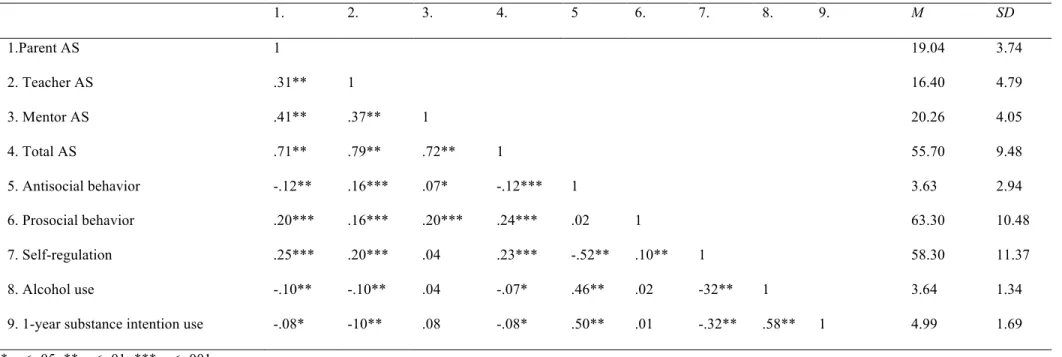
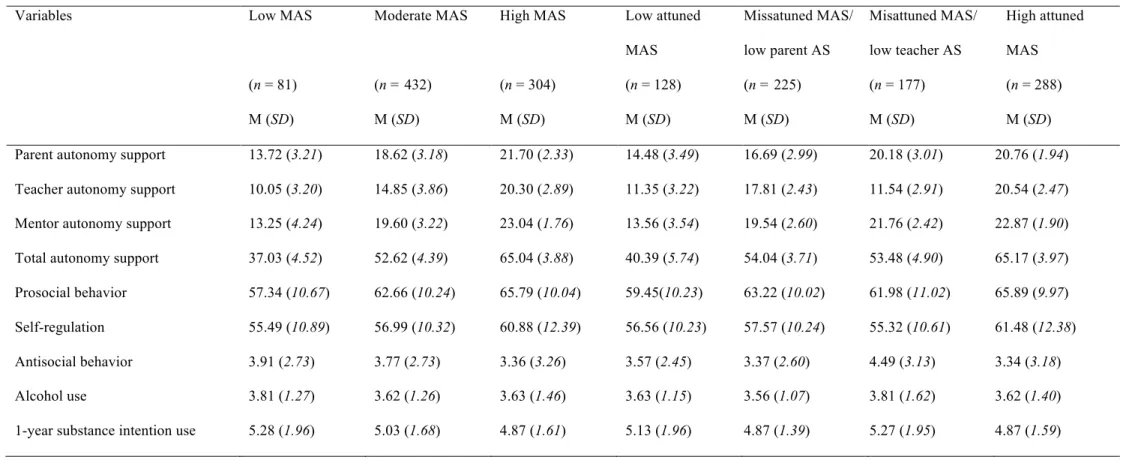
After running general descriptive statistics (means, standard deviations, and correlations) for all variables (Table 1), patterns of TMAS and MASA were set. Levels of low (n = 81; 26-42 points), moderate (n = 432; 43-59 points), and high total AS (n = 304; 60-75 points) were applied according to the selected cut-off criteria.
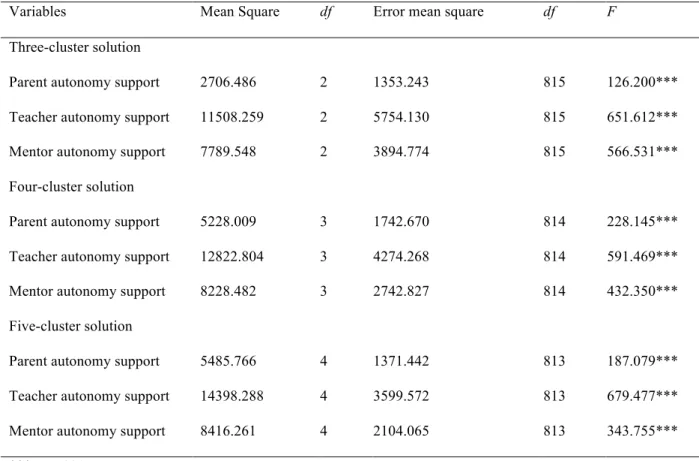
According to k-means method, followed by a cluster validation using one-way ANOVA post-hoc tests, a four-cluster solution seemed the most successful in maximizing differences between cluster centers and parental, teacher, and mentor autonomy support means; as well as in providing the most interpretable solution. Table 2 provides the results for between cluster center differences, which were statistically significant (p < .001) for all the examined solutions. However, follow-up one-way ANOVA tests depicted statistically non-significant differences between cluster one and two regarding teachers autonomy support (p
= 1.00) and between clusters two and three regarding mentors autonomy support mean rates (p = .36) for a
three-cluster solution; statistically non-significant differences between clusters one and four, regarding teachers autonomy support mean rates (p. = 99) for a four-cluster solution; and finally statistically
non-significant differences between clusters one and two and clusters three and four, regarding parental autonomy support mean rates (p = 1.00), and statistically non-significant differences between clusters one and five regarding mentors autonomy support mean rates (p = 1.00), for a five-cluster solution. Thus, a four-cluster solution achieved greater mean differentiation between autonomy support variables.
Cluster 1 was named low attuned MAS (n = 128; 15.65% of the participants). This cluster was characterized by low levels of parent (M = 14.48; DP = 3.49), teacher (M = 11.35; DP = 3.22), and mentor AS (M = 19.54; DP = 2.60). Cluster 2, labeled misattuned MAS/low parent AS (n = 225; 27.51% of the participants), was characterized by low levels of parent MAS (M = 16.69; DP = 2.99) and moderately low teacher (M = 17.81; DP = 2.43) and mentor AS (M = 19.54; DP = 2.60). Cluster 3, labeled misattuned MAS/low teacher AS (n = 177; 21.64% of the participants), was characterized by moderately high parent AS (M = 20.18; DP = 3.01), low teacher AS (M =11.54; DP = 2.91), and moderately high mentor AS (M = 21.76; DP = 2.42). Cluster 4, named high attuned MAS (n = 288; 35.21% of the participants), was characterized by high levels of parent (M = 22.76; DP = 1.94, teacher (M = 20.54; DP = 2.47), and mentor AS (M = 22.87; DP = 1.90). Table 3 depicts descriptive statistics for all variables by TMAS and MASA groups.
The comparisons between TMAS levels based on gender and age revealed no differences between groups regarding gender, χ2 = (2, 816) = 3.75, p = .15. However, a greater proportion of participants aged 12 was included in moderate and high total AS levels (75.23%) and high attuned SS cluster (80.54%), χ2 = (4,
814) = 10.01, p < .05). The comparisons between AS attunement clusters based on gender and age revealed no differences between groups based on gender, χ2 = (3, 815) = 4.75, p = .15. Nonetheless, participants aged
12 years old had a significantly greater chance of being represented in all clusters compared to those of 13 or 14 years old, χ2 = (6, 812) = 14.63, p < .05.
[Insert Tables 1 to 3 approximately here]
Mean comparisons between levels of total multiple autonomy support and multiple autonomy support attunement
Multiple mean comparisons for TMAS presented in Table 4 revealed that high levels of TMAS presented significantly higher mean rates for prosocial behavior compared to moderate and low levels of TMAS (p < .001), similarly to moderate levels of TMAS compared to low levels of TMAS (p <.001). High levels of total AS presented significantly higher mean rates for self-regulation compared to moderate and low
levels of TMAS as well (p < .001), but significant differences were not found between moderate and low levels of TMAS. Mean rates at high levels of total AS did not differ from mean rates at moderate and low levels of TMAS across negative indicators of adherence to social norms.
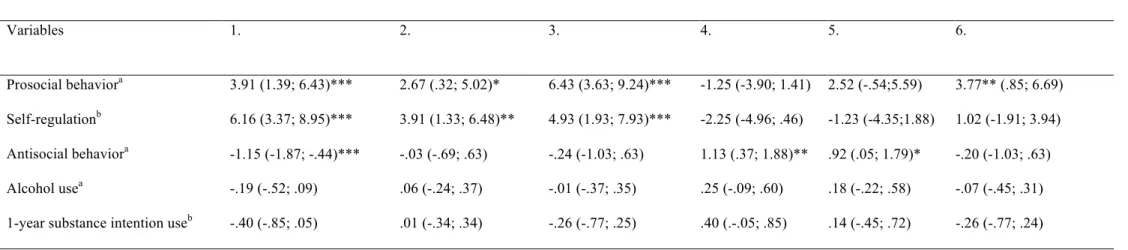
Multiple mean comparisons for MASA presented in Table 5 showed that mean rates of participants’ prosocial behavior showing high attuned MAS were significantly higher compared to misattuned MAS/low teacher autonomy support (p < .001), misattuned MAS/low parent autonomy support (p < .05), and low attuned MAS (p <.001). This was similar to misattuned MAS/low parent autonomy support compared to low attuned MAS (p <.001). Mean rates of participants’ self-regulation showing high attuned MAS were
significantly higher compared to misattuned MAS/low teacher autonomy support (p < .001), misattuned MAS/low parent autonomy support (p < .01), and low attuned MAS (p <.001) as well. Mean rates of participants’ antisocial behavior integrated in the high attuned MAS group were meaningfully lower compared to mean rates of the misattuned MAS/low teacher autonomy support (p <.001). In addition, misattuned MAS/low teacher autonomy support pattern denoted significantly higher antisocial behavior means compared to misattuned MAS/low parent autonomy support (p < .001) and low atunned AS (p < .05).
Relationships between total multiple autonomy support, attuned multiple autonomy support, and social development indicators
Regression analyses results are presented in Table 6. The ordinal regression model for TMAS, including age as a covariate and setting low TMAS as the reference category, were statistically significant for prosocial behavior X2 (3, 815) = 54.80, p = .000, Nagelkerke R2 = .07, self-regulation X2 (3, 815) = 39.88, p =
.000, Nagelkerke R2 = .05, antisocial behavior X2 (3, 814) = 68.63, p = .000, Nagelkerke R2 = .08, alcohol use
X2 (3, 815) = 46.18, p = .000, Nagelkerke R2 = .06, and 1-year substance use intention X2 (3, 815) = 65.00, p =
.000, Nagelkerke R2 = .08. Perceptions of high TMAS, regarding the respective familial and non-familial adults, was associated with higher rates of prosocial behavior (β = 1.49; p < .001) and self-regulation (β = .84; p < .001) compared to low TMAS.
The ordinal regression model for MASA, including age as a covariate and setting low attuned MAS as the reference category, were statistically significant for prosocial behavior X2 (4, 814) = 46.00, p = .000, Nagelkerke R2 = .06, self-regulation X2 (4, 814) = 52.00, p = .000, Nagelkerke R2 = .06, antisocial behavior X2
(4, 814) = 83.11, p = .000, Nagelkerke R2 = .10, alcohol use X2 (4, 814) = 46.80, p = .000, Nagelkerke R2 = .06, and 1-year substance use intention X2 (4, 814) = 66.36, p = .000, Nagelkerke R2 = .08. According to
Table 5, high attuned MAS was associated with higher rates of prosocial behavior (β = .65; p < .001) and self-regulation (β = .98; p < .001), as well as lower rates of antisocial behavior (β = -.77; p < .001), alcohol use (β = -.44; p < .05), and 1-year substance use intention (β = -.46; p < .05), compared to misattuned MAS/low teacher autonomy support. Missatuned MAS/low parent autonomy support was also associated to lower levels of antisocial behavior (β = -.67; p < .01) and 1-year9 substance use intention (β = -.40; p < .01). Low attuned autonomy support was, however, connected to lower prosocial rates (β = -.46; p < .01) and lower antisocial rates (β = -.59; p < .01) compared to misattuned MAS/low teacher autonomy support.
[Insert tables 4 to 6 approximately here]
Discussion
The aim of this study was to understand how two different forms of MAS, TMAS and MASA, are associated with early adolescents’ social development indicators (prosocial behavior, self-regulation, antisocial behavior, alcohol use, and 1-year substance use intention). The adherence to social norms was assessed in terms of prosocial behavior, self-regulation, antisocial behavior, alcohol use, and 1-year substance use intention. Three major findings stem from this research.
First, a four-group cluster solution in terms of the combination of the parents’, teachers’, and mentors’ perceived autonomy support was the most accurate and interpretable. Two groups gathered similar MASA perceptions across the three sources of support (one classified as low attuned MAS attunement and the other as high attuned MAS). Others, however, depicted misattunement patterns of MAS, one due to low rates of parent autonomy support and the other due to low rates of teacher autonomy support, when compared to the remaining sources.
Second, both high levels of TMAS and high attuned MAS perceptions were associated with significantly higher levels of prosocial behavior and self-regulation. Multiple mean comparisons show, however, that participants who were integrated in the high attuned MAS group showed lower antisocial behavior rates compared to those integrated in the misattuned MAS/low teacher autonomy support.
Seemingly, misattuned MAS/low teacher autonomy support group depicted higher antisocial mean rates than low attuned MAS and misattuned MAS/low parent autonomy support, showing that low TMAS and
misattuned MAS/low teacher autonomy support represented the worst conditions for the participants’ selected indicators of social development.
Finally, comparisons between TMAS and MASA associations with the selected social development indicators were further refined through regression analysis. This analytical option enabled control for age confounding effects, as well as the comparison of TMAS levels and MASA patterns with a reference category that delivered poorer results across the selected indicators of adherence to social norms. For TMAS, low TMAS was set as the reference category, while misattuned MAS/low teacher autonomy support was set as the equivalent referent for MASA. Results show that while high TMAS was linked to better positive indicators of adherence to social norms, when compared to low TMAS, high attuned MASA was related to better outcomes across all positive and negative indicators of adherence to social norms, when compared to misattuned MAS/low teacher AS. It was also remarkable that all patterns of MASA were associated with lower levels of antisocial behavior and that misattuned MAS/low parent autonomy support was associated with lower rates of 1-year substance use intention when compared to misattuned MAS/low teacher autonomy support.
In general, these results propose that for these early adolescents, the amount and the coordination of TMAS and MASA in relation to multiple significant adults are important to estimate social development indicators. However, when comparisons are set with the worst condition (low TMAS and misattuned MASA/low teacher autonomy support), MASA delivers better prospects, especially in the case of deviant behaviors. This is a central finding in this study. The importance of MASA across MSS sources may be salient in early adolescence due to a well-documented reconfiguration of social relationships in this period (Rudasill et al. 2010). Socialization in early adolescence is a fluid process, entailing a decrease of parental centrality (Cotterell 2007) and legitimacy (Darling et al. 2011), greater importance of peers (Fletcher et al. 2011), and the establishment of significant bonds with non-familial significant adults (Schwartz et al. 2013). This relational context may uphold a greater influence of perceived MASA, as opposed to the impact of perceived TMAS amount on socially expected behaviors, but it may also pose some challenges. Early adolescence encompasses the definition of personal decision domain as a symbol of individual autonomy (Smetana and Davis 2011), which may create greater difficulties to perceived MASA between significant adults and increase interindividual differences in the patterning of autonomy support attunement.
These findings also reinforce that teachers’ controlling behaviors, which are misattuned from parents’ and mentors’ autonomy supportive practices, increase early adolescents’ degree of behavioral risk. This result is not surprising, considering that parental and mentor relationships tend to be perceived by youths as closer relationships and that higher levels of teacher AS predict greater prosociality (Roth et al. 2011) and
self-regulation (Vansteenkiste et al. 2012), as well as lower rates of antisocial behaviors (Pika and Pinczés 2015) and substance use (Perra et al. 2012). More importantly, these results echo parallel findings showing that teachers are more often seen as controlling than autonomy supportive, possibly due to administrative regulations, demanding learning goals, and educational beliefs (Reeve 2009), especially in countries marked by greater power distance as is Portugal’s case (Hofstede 2011). Alternatively, the negative impact of misattuned MAS based on low teacher autonomy support may suggest that these participants understand teaching relationships as more task-related or instrumental, leading to greater depreciation of teachers’ autonomy supportive efforts (Reeve and Su 2011). It is feasible that bidirectional effects may also be present: early adolescence is marked by a significant decline in academic motivation (Wolters 2003) which, in turn, may lead teachers to adopt more directive styles in their interactions, especially in the case of those teachers with students’ behavior regulation duties.
Implications and limitations
This study has some implications. Research implications are embedded in this study’s limitations. The research design is cross-sectional, which means that causality inferences based on this study cannot be made. It is feasible that greater MASA results in optimal conditions for adolescents’ social and behavioral
development, but bidirectional effects, based on the adolescents’ and autonomy support providers’
temperament may affect both the level of provided autonomy support, as well as its perceptions. The present findings need, thus, to be grounded on more demanding research principles such as longitudinal designs. In addition, this study was exclusively based on the participants’ self-reported autonomy support perceptions and behavior. Although adolescents have been found to be consistent sources of parental practices and of their own behavior (Fletcher et al. 2011), the reliance on a unique source may be a relevant cause of bias, especially when studies are focused on sensitive behaviors, which are subjected to “normalization”, such as drug use (Perra et al. 2012). Finally, other contextual, relational, and cultural sources of moderation, such as participants’ individual and contextual risk, as well as the examination of the same research goal for educational outcomes (e.g. school grades), must be addressed in further studies within the framework of MAS collective effects
Compliance with ethical standards
Funding: This work was funded by a research grant from Fundação para a Ciência e Tecnologia (SFRH/BPD/99616/2014).
Ethical approval: All procedures performed in this study were in accordance with the ethical standards of the involved research institutions and with national research committee and with the 1964 Helsinki declaration and its later amendments or comparable ethical standards.
Informed consent: all the participants provided their informed consent to collaborate in this study.
Author contributions
FS: designed and executed the study, participated in data analyses, and wrote the paper. MMS: collaborated with the design and writing of the study.
MA: collaborated in the writing and editing of the final manuscript. AS: collaborated in data analyses.
References
Achenbach, T. M., & Rescorla, L. A. (2004). The Achenbach system of empirically based Assessment
(ASEBA) for ages 1.5 to 18 Years. The use of psychological testing for treatment planning and
outcomes assessment. Volume 2: Instruments for children and adolescents (3rd Ed.). Mahwah, New
Jersey. Lawrence Erlbaum Associates Publishers.
Akcinar, B., & Baydar, N. (2014). Parental control is not unconditionally detrimental for externalizing behaviors in early childhood. International Journal of Behavioral Development, 38, 118–127. http://doi.org/10.1177/0165025413513701
Barber, B. K., Xia, M., Olsen, J. A., McNeely, C. A., & Bose, K. (2012). Feeling disrespected by parents: Refining the measurement and understanding of psychological control. Adolescence, 35, 273-287.
Becoña, E., Martínez, Ú., Calafat, A., Fernández-Hermida, J. R., Juan, M., Sumnall, H., Mendes, F., &
Gabrhelík, R. (2013). Parental permissiveness, control, and affect and drug use among adolescents.
Psicothema, 25(3), 292–298. http://doi.org/10.7334/psicothema2012.294
Bridgett, D. J., Burt, N. M., Edwards, E. S., & Deater-Deckard, K. (2015). Intergenerational transmission of self-regulation: A multidisciplinary review and integrative conceptual framework. Psychological
Bulletin, 141(3), 602–654. http://doi.org/10.1037/a0038662
Calafat, A., García, F., Juan, M., Becoña, E., & Fernández-Hermida, J. R. (2014). Which parenting style is more protective against adolescent substance use? Evidence within the European context. Drug and
Alcohol Dependence, 138(1), 185–192. http://doi.org/10.1016/j.drugalcdep.2014.02.705
Carlo G., Hausmann A., Christiansen S., & Randall B. A. (2003). Sociocognitive and behavioral correlates of a measure of prosocial tendencies for adolescents. Journal
of Early Adolescence, 23(1), 107–134. http://dx.doi.org/10.1177/0272431602239132
Cotterell, J. (2007). Social networks in youth and adolescence. New York: Routledge.
Cohen, A. (2015). Attunement and the development of strong relationships. In: Cohen, A. (Ed.) Parenting
Made Easy: The Early Years. Samford Valley, Qld: Australian Academic Press.
Cui, L., Morris, A. S., Criss, M. M., Houltberg, B. J., & Silk, J. S. (2014). Parental psychological control and adolescent adjustment: The role of adolescent emotion regulation. Parenting, 14(1), 47–67.
http://doi.org/10.1080/15295192.2014.880018
Currie, C., Samsal, O., Boyce, W., & Smith, R. (2001). HBSC, a WHO cross national study: Research protocol for the 2001/2002 survey. Copenhagen: World Health Organization.
Darling, N., Cumsille, P., & Martínez, M. L. (2011). Individual differences in adolescents’ beliefs about the legitimacy of parental authority and their own obligation to obey: A longitudinal investigation. In M. Killen and R. J. Coplan (Eds.). Social development in childhood and adolescence: A contemporary
reader. Malden: Wiley-Blackwell.
Dias, M. L. V., Martinho, L., Borges, G. F., & Rebelo, P. V. (2012). Estilos educativos parentais e
comportamento antissocial na adolescência [Parenting Styles and antissocial behavior in adolescence].
International Journal of Developmental and Educational Psychology, 1(1), 469-478.
DuBois, D., & Silverthorn, N. (2005). Natural mentoring relationships and adolescent health: evidence from a national study. American Journal of Public Health, 95(3), 518–524.
http://doi.org/10.2105/AJPH.2003.031476
Erskine, R. (1998). Attunement and involvement: Therapeutic responses to relational needs. International
Journal of Psychotherapy, 3(3), 235-244.
Fletcher, A. C., Darling, N. E., Steinberg, L., & Dornbusch, S. M. (2011). The company they keep: Relation of adolescents’ adjustment and behavior to their friends’ perceptions of authoritative parenting in the school network. In M. Killen and R. J. Coplan (Eds.). Social development in childhood and
adolescence: A contemporary reader. Malden: Wiley-Blackwell.
Fonseca, A. C., Monteiro, C.M., (1999). Um inventário de problemas de comportamento para crianças e adolescentes: o Youth Self-Report de Achenbach (YSR) [An inventory of children and youth behavior problems: Achenbah’s Youth Self-Report]. Psychologica, 21, 79-96.
Gagné, M. (2003). The role of autonomy support and autonomy orientation in prosocial behavior engagement. Motivation and Emotion, 27(3), 199-223.
Guay, F., Ratelle, C., Larose, S., Vallerand, R. J., & Vitaro, F. (2013). The number of autonomy-supportive relationships: Are more relationships better for motivation, perceived competence, and achievement?
Contemporary Educational Psychology, 38(4), 375–382.
http://doi.org/10.1016/j.cedpsych.2013.07.005
Hofstede, G. (2011). Dimensionalizing cultures: The Hofstede model in context. Online Readings in
Psychology and Culture, 2(1), 1–26. http://doi.org/http://dx.doi.org/10.9707/2307-0919.1014
Jackson, C. (2002). Perceived legitimacy of parental authority and tobacco and alcohol use during early adolescence. Journal of Adolescent Health, 31, 425-432.
Johnson, R. A., & Wichern, D. W. (2002). Applied multivariate methods for data analysis. Pacific Grove: Brooks/Coole Publishing Company.
Instituto Nacional de Estatística (2010). Classificação portuguesa das profissões 2010. [Portuguese classification of occupations 2010]. Lisboa: Instituto Nacional de Estatística I.P.
Keijsers, L., Branje, S., Hawk, S. T., Schwartz, Hawk, S. T., Frijns, T, Koot, H. M. van Lier, P., & Meeus, W. (2012). Forbidden friends as forbidden fruit: Parental supervision of friendships, contact with deviant peers, and adolescent delinquency. Child Development, 83(2), 651-666.
Kiesner, J., Poulin, F., & Dishion, T. J. (2010). Adolescent substance use with friends: Moderating and mediating effects of parental monitoring and peer activity contexts. Merrill-Palmer Quarterly, 56(4), 529–556. http://doi.org/10.1353/mpq.2010.0002
La Guardia, J. L., Ryan, R. M., Couchman, C. E., & Deci, E. L. (2000). Within-person variation in security of attachment: A self-determination theory perspective on attachment, need fulfillment, and well-being. Journal of Personality and Social Psychology, 79(3), 367–384. http://doi.org/10.1037//0022-3514.79.3367
Lenzi, M., Vieno, A., Perkins, D. D., Pastore, M., Santinello, M., & Mazzardis, S. (2012). Perceived neighborhood social resources as determinants of prosocial behavior in early adolescence. American
Journal of Community Psychology, 50(1-2), 37–49. http://doi.org/10.1007/s10464-011-9470-x
Mezzich, A. C., Tarter, R. E., Giancola, P. R., & Kirisci, L. (2001). The dysregulation inventory: A new scale to assess the risk for substance use disorder. Journal of Child & Adolescent Substance Abuse, 10(4), 35–43
Motta, C., Rijo, D., Petiz, M., Souza, B & Pereira, M. (in press). The abbreviated dysregulation inventory: Dimensionality and psychometric properties for Portuguese adolescents.
Perra, O., Fletcher, A., Bonell, C., Higgins, K., & McCrystal, P. (2012). School-related predictors of smoking, drinking and drug use: Evidence from the Belfast Youth Development Study. Journal of
Adolescence, 35, 315–324. http://doi.org/10.1016/j.adolescence.2011.08.009
Piko, B. F., & Balázs, M. Á. (2012). Authoritative parenting style and adolescent smoking and drinking.
Addictive Behaviors, 37(3), 353–356. http://doi.org/10.1016/j.addbeh.2011.11.022
Pikó, B., & Pinczés, T. (2015). Autonomy support or direct control? High school students’ experience of their teacher’s behavior. European Journal of Mental Health, 10(1), 106–117.
Pryce, J. (2012). Mentor attunement: An approach to successful school-based mentoring relationships. Child
and Adolescent Social Work Journal, 29(4), 285–305. http://doi.org/10.1007/s10560-012-0260-6
Reeve, J. (2009). Why teachers adopt a controlling motivating style toward students and how they can become more autonomy supportive. Educational Psychologist, 44(3), 159–175.
http://doi.org/10.1080/00461520903028990
Roth, G. (2008). Perceived parental conditional regard and autonomy support as predictors of young adults’ self- versus other-oriented prosocial tendencies. Journal of Personality, 76(3), 513–534.
http://doi.org/10.1111/j.1467-6494.2008.00494.x
Roth, G., Kanat-Maymon, Y, & Bibi, U. (2011). Prevention of school bullying: The important role of autonomy-supportive teaching and internalization of pro-social values. British Journal of Educational
Psychology, 81(4), 654-666.
Rudasill, K. M., Reio, T. G., Stipanovic, N., & Taylor, J. E. (2010). A longitudinal study of student-teacher relationship quality, difficult temperament, and risky behavior from childhood to early adolescence.
Journal of School Psychology, 48(5), 389–412. http://doi.org/10.1016/j.jsp.2010.05.001
Ryan, R. M., & Deci, E. L. (1987). The support of autonomy and the control of behavior. Journal of
Personality and Social Psychology, 53(6), 1024–1037. http://doi.org/10.1037/0022-3514.53.6.102
Ryan, R. M., & Deci, E. L. (2009). Promoting self-determinated school engagement: Motivation, learning and well-being. In K. Rientzel & A. Wigfield. Handbook of motivation at school (pp. 171-196). New York: Routledge.
Schuitema, J., Peetsma, T., & van der Veen, I. (2016). Longitudinal relations between perceived autonomy and social support from teachers and students’ self-regulated learning and achievement. Learning and
Individual Differences, 49, 32–45. http://doi.org/10.1016/j.lindif.2016.05.006
Schwartz, S. E. O., Rhodes, J. E., Chan, E. S., & Herrera, C. (2011). The impact of school-based mentoring on youths with different relational profiles. Developmental Psychology, 47(2), 450–462.
Schwartz, S. E. O., Rhodes, J. E., Spencer, R., & Grossman, J. B. (2013). Youth initiated mentoring: Investigating a new approach to working with vulnerable adolescents. American Journal of
Community Psychology, 52(2), 151-159.
Simões, F. & Calheiros, M. M. (2016). The relations between prosocial behaviors and self-regulation: Evidences from the validation of the PTM-R for Portuguese early adolescents, Journal of Spanish
Simões, F., & Calheiros, M. (2017). Have the prospects of multiple social support been addressed? A
systematic review. Manuscript submitted for publication.
Simões, F., & Simones, L. (2017). Multiple social support: A new framework for studying social support
enactment and results involving multiple sources. Manuscript submitted for publication.
Smetana, J. G., & Daddis, C. (2011). Domain-specific antecedents of parental psychological control and monitoring: The role of parenting beliefs and practices. In M. Killen and R. J. Coplan (Eds.). Social
development in childhood and adolescence: A contemporary reader. Malden: Wiley-Blackwell.
Sousa, S. S., Pais Ribeiro, J. L., Palmeira, A. L., Teixeira, P. J., & Silva, M. N. (2012). Estudo da basic satisfaction in general scale para a língua portuguesa [Validation study of basic psychological needs in general scale for the Portuguese language]. Psicologia, Saúde & Doenças, 13(2), 209-219.
Su, Y. L., & Reeve, J. (2011). A Meta-analysis of the effectiveness of intervention programs designed to support autonomy. Educational Psychology Review, 23(1), 159-188. http://doi.org/10.1007/s10648-010-9142-7
Vansteenkiste, M., Sierens, E., Goossens, L., Soenens, B., Dochy, F., Mouratidis, A., Aelterman, A., Haerens, L., & Beyers, W. (2012). Identifying configurations of perceived teacher ASand structure: Associations with self-regulated learning, motivation and problem behavior. Learning and Instruction,
22(6), 431–439. http://doi.org/10.1016/j.learninstruc.2012.04.002
Wolters, C. A. (2003). Regulation of motivation: Evaluating an underemphasized aspect of
self-regulated learning. Educational Psychologist, 38(4), 189–205.
Wong, M. W. (2008). Perceptions of parental involvement and autonomy support: Their relations with self-regulation, academic performance, substance use and resilience among adolescents. North American
Journal of Psychology, 10(3), 497-518.
Yoo, H., Feng, X., & Day, R. D. (2013). Adolescents’ empathy and prosocial behavior in the family context: A longitudinal study. Journal of Youth and Adolescence, 42(12), 1858–1872.
Table 1. Correlations and descriptive statistics 1. 2. 3. 4. 5 6. 7. 8. 9. M SD 1.Parent AS 1 19.04 3.74 2. Teacher AS .31** 1 16.40 4.79 3. Mentor AS .41** .37** 1 20.26 4.05 4. Total AS .71** .79** .72** 1 55.70 9.48 5. Antisocial behavior -.12** .16*** .07* -.12*** 1 3.63 2.94 6. Prosocial behavior .20*** .16*** .20*** .24*** .02 1 63.30 10.48 7. Self-regulation .25*** .20*** .04 .23*** -.52** .10** 1 58.30 11.37 8. Alcohol use -.10** -.10** .04 -.07* .46** .02 -32** 1 3.64 1.34
9. 1-year substance intention use -.08* -10** .08 -.08* .50** .01 -.32** .58** 1 4.99 1.69
Table 2. Significance testing of differences between cluster centers for the K-means cluster analyses
Variables Mean Square df Error mean square df F
Three-cluster solution
Parent autonomy support 2706.486 2 1353.243 815 126.200***
Teacher autonomy support 11508.259 2 5754.130 815 651.612***
Mentor autonomy support 7789.548 2 3894.774 815 566.531***
Four-cluster solution
Parent autonomy support 5228.009 3 1742.670 814 228.145***
Teacher autonomy support 12822.804 3 4274.268 814 591.469***
Mentor autonomy support 8228.482 3 2742.827 814 432.350***
Five-cluster solution
Parent autonomy support 5485.766 4 1371.442 813 187.079***
Teacher autonomy support 14398.288 4 3599.572 813 679.477***
Mentor autonomy support 8416.261 4 2104.065 813 343.755***
Table 3. Means and standard deviations for all variables by level of total multiple autonomy support and multiple autonomy support attunement clusters
Variables Low MAS
(n = 81)
M (SD)
Moderate MAS (n = 432)
M (SD)
High MAS (n = 304)
M (SD)
Low attuned MAS (n = 128)
M (SD)
Missatuned MAS/ low parent AS (n = 225)
M (SD)
Misattuned MAS/ low teacher AS (n = 177)
M (SD)
High attuned MAS (n = 288)
M (SD)
Parent autonomy support 13.72 (3.21)
18.62 (3.18)
21.70 (2.33)
14.48 (3.49)
16.69 (2.99)
20.18 (3.01)
20.76 (1.94)
Teacher autonomy support 10.05 (3.20)
14.85 (3.86)
20.30 (2.89)
11.35 (3.22)
17.81 (2.43)
11.54 (2.91)
20.54 (2.47)
Mentor autonomy support 13.25 (4.24)
19.60 (3.22)
23.04 (1.76)
13.56 (3.54)
19.54 (2.60)
21.76 (2.42)
22.87 (1.90)
Total autonomy support 37.03 (4.52)
52.62 (4.39)
65.04 (3.88)
40.39 (5.74)
54.04 (3.71)
53.48 (4.90)
65.17 (3.97)
Prosocial behavior 57.34 (10.67)
62.66 (10.24)
65.79 (10.04)
59.45(10.23)
63.22 (10.02)
61.98 (11.02)
65.89 (9.97)
Self-regulation 55.49 (10.89)
56.99 (10.32)
60.88 (12.39)
56.56 (10.23)
57.57 (10.24)
55.32 (10.61)
61.48 (12.38)
Antisocial behavior 3.91 (2.73)
3.77 (2.73)
3.36 (3.26)
3.57 (2.45)
3.37 (2.60)
4.49 (3.13)
3.34 (3.18)
Alcohol use 3.81 (1.27)
3.62 (1.26)
3.63 (1.46)
3.63 (1.15)
3.56 (1.07)
3.81 (1.62)
3.62 (1.40)
Table 4. Mean differences and confidence intervals across low, moderate and high levels of total multiple autonomy support Mean Differences (95% confidence intervals)
Variables 1. 2. 3.
Prosocial behaviora
8.45 (5.45; 11.45)*** 3.13 (1.35; 4.91)*** 5.32 (2.27; 8.37)*** Self-regulationb
5.39 (2.06; 8.71)** 3.89 (1.86; 5.93)*** 1.49 (-1.61; 4.60)
Antisocial behaviora
-.55 (-1.41; .31) -.41 (-.92; .11) -.14 (-.98; .69)
Alcohol usea
-.17 (-.56; .22) .01 (-.23; .25) -.19 (-.18; .55)
1-year substance intention usea
-.41 (-.97; .15) -.16 (-.46; .13) -.25 (-.73; .23)
a. Confidence intervals estimated using the Tukey test.
b. Confidence intervals estimated using the Games Howell test.
Table 5. Mean differences and confidence intervals across clusters of multiple autonomy support attunement Mean Differences (95% confidence intervals)
Variables 1. 2. 3. 4. 5. 6.
Prosocial behaviora
3.91 (1.39; 6.43)*** 2.67 (.32; 5.02)* 6.43 (3.63; 9.24)*** -1.25 (-3.90; 1.41) 2.52 (-.54;5.59) 3.77** (.85; 6.69) Self-regulationb
6.16 (3.37; 8.95)*** 3.91 (1.33; 6.48)** 4.93 (1.93; 7.93)*** -2.25 (-4.96; .46) -1.23 (-4.35;1.88) 1.02 (-1.91; 3.94)
Antisocial behaviora
-1.15 (-1.87; -.44)*** -.03 (-.69; .63) -.24 (-1.03; .63) 1.13 (.37; 1.88)** .92 (.05; 1.79)* -.20 (-1.03; .63) Alcohol usea
-.19 (-.52; .09) .06 (-.24; .37) -.01 (-.37; .35) .25 (-.09; .60) .18 (-.22; .58) -.07 (-.45; .31)
1-year substance intention useb
-.40 (-.85; .05) .01 (-.34; .34) -.26 (-.77; .25) .40 (.-.05; .85) .14 (-.45; .72) -.26 (-.77; .24)
a. Confidence intervals estimated using the Tukey test.
b. Confidence intervals estimated using the Games Howell test.
1. High attuned MAS x Misattuned MAS/low teacher autonomy support; 2. High attuned MAS x Missatuned MAS/low parent autonomy support; 3. High attuned MAS x Low attuned autonomy support; 4. Misattuned MAS/low teacher autonomy support x Misattuned MAS/low parent autonomy support; 5. Misattuned MAS/low teacher autonomy support x Low attuned MAS; 6. Misattuned AS/low teacher autonomy support x Low attuned MAS.
Table 6. Ordinal regression analyses for total AS and AS attunement on antisocial behavior, prosocial behavior, self-regulation, alcohol use, and 1-year substance use intention
Predictors Prosocial behavior Self-regulation Antisocial behavior Alcohol use 1-year substance use intention
B SE 95%IC B SE 95%IC B SE 95%IC B SE 95%IC B SE 95%IC
1 .29** .10 (.10, .49) -.31** .10 (-.50, -.12) .77*** .10 (.57, .97) .72*** .11 (.54,.97) .82*** .11 (.61, 1.02) 2 1.49*** .22 (1.05; 1.92) .84*** .22 (.41, .50) -.40 .22 (-.83, .04) -.49 .26 (-.99, .02) -.45 .25 (-.93, .03) 3 .93 .21 (.52; 1.35) .19 . 21 (-.22, .60) -.05 .21 (-.46, .37) -.31 .24 (-.79, .17) -.19 .23 (-.65, .26) a a a a a 4 .31*** .10 (.12, .50) -.30** .10 (-.21, .58) .78*** .10 (.58, .98) .73*** .11 (.52,.95) .83*** .11 (.62, 1.04) 5 .65*** .17 (.32, .98) .98*** .17 (.65, 1.31) -.77*** .17 (-1.10, -.44) -.44* .20 (-.83, -.04) -. 46* .19 (-.83, -.09) 6 .13 .17 (-.21, .47) .29 .17 (-.05, .63) -.67*** .18 (-1.02, -.32) -.31 .21 (-.73, .10) -. 40* .20 (-.79, -.01) 7 -.46* .20 (-.85, -.06) .19 .20 (-.21, .58) -.59** .20 (-.98, -.19) -.30 .24 (-.78, .17) -.29 .23 (-.73, .15) b b b b b
a. Low total AS.
b. Misattuned AS/low teacher AS.
1. Age; 2. High TMAS; 3. Moderate TMAS; 4. Age; 5. High attuned MAS; 6. Misattuned MAS/Low parent autonomy support; 7. Low attuned MAS.