Serpentine bacteria influence metal translocation and
bioconcentration of Brassica juncea and Ricinus communis
grown in multi-metal polluted soils
Ying Ma
1*, Mani Rajkumar
2, Inês Rocha
1, Rui S. Oliveira
1,3,4and Helena Freitas
11
Centre for Functional Ecology, Department of Life Sciences, University of Coimbra, Coimbra, Portugal 2Department of Life Sciences, Central University of Tamil Nadu, Thiruvarur, India
3Centro de Biotecnologia e Química Fina – Laboratório Associado, Escola Superior de Biotecnologia, Universidade Católica Portuguesa, Porto, Portugal 4Research Centre on Health and Environment, School of Allied Health Sciences, Polytechnic Institute of Porto, Vila Nova de Gaia, Portugal
Edited by:
Antonella Furini, University of Verona, Italy
Reviewed by:
Paulo Arruda, Universidade Estadual de Campinas, Brazil
Giovanna Visioli, University of Parma, Italy
*Correspondence:
Ying Ma, Centre for Functional Ecology, Department of Life Sciences, University of Coimbra, Calçada Martim de Freitas, 3000-456 Coimbra, Portugal
e-mail: [email protected]
The aim of this study was to assess the effects of inoculation of rhizosphere or endophytic
bacteria (Psychrobacter sp. SRS8 and Pseudomonas sp. A3R3, respectively) isolated from
a serpentine environment on the plant growth and the translocation and accumulation of Ni,
Zn, and Fe by Brassica juncea and Ricinus communis on a multi-metal polluted serpentine
soil (SS). Field collected SS was diluted to 0, 25, 50, and 75% with pristine soil in order
to obtain a range of heavy metal concentrations and used in microcosm experiments.
Regardless of inoculation with bacteria, the biomass of both plant species decreased with
increase of the proportion of SS. Inoculation of plants with bacteria significantly increased
the plant biomass and the heavy metal accumulation compared with non-inoculated control
in the presence of different proportion of SS, which was attributed to the production of plant
growth promoting and/or metal mobilizing metabolites by bacteria. However, SRS8 showed
a maximum increase in the biomass of the test plants grown even in the treatment of
75% SS. In turn, A3R3 showed maximum effects on the accumulation of heavy metals
in both plants. Regardless of inoculation of bacteria and proportion of SS, both plant
species exhibited low values of bioconcentration factor (
<1) for Ni and Fe. The inoculation
of both bacterial strains significantly increased the translocation factor (TF) of Ni while
decreasing the TF of Zn in both plant species. Besides this contrasting effect, the TFs
of all metals were
<1, indicating that all studied bacteria–plant combinations are suitable
for phytostabilization. This study demonstrates that the bacterial isolates A3R3 and SRS8
improved the growth of B. juncea and R. communis in SS soils and have a great potential
to be used as inoculants in phytostabilization scenarios of multi-metal contaminated soils.
Keywords: phytostabilization, plant growth promoting bacteria, serpentine soils, heavy metals, Brassica juncea, Ricinus communisINTRODUCTION
Remediation of metal contaminated soils using plant based
approaches (phytoremediation) is considered a simple, lower cost,
environmentally friendly technology that can provide full-scale
remediation when compared with existing physicochemical
tech-nologies (
Ali et al., 2013
). The most common phytoremediation
method for soil remediation is phytostabilization, which utilizes
metal tolerant plants to reduce/prevent the mobility of heavy
met-als in soils (
Bolan et al., 2011
). Currently, various plant species
such as Erica australis, E. andevalensis, Globularia alypum L.,
Ros-marinus officinalis L., and Solanum nigrum L. have been used to
reduce the mobility of heavy metals in artificially polluted soils
(
Ferraz et al., 2012
;
Testiati et al., 2013
;
Pérez-López et al., 2014
).
Although these plant species are able to grow on metal polluted
soils, their application in phytostabilization practices in metal
pol-luted fields is limited due to their low ability to adapt to adverse
environmental conditions (
Ma et al., 2011a
). In general, multiple
stresses including low soil pH, high salinity, low essential nutrients,
and high concentrations of metals present in polluted field soils
may limit the growth and survival of plants and thus compromise
the overall phytoremediation process. Therefore, revegetation of
metal polluted soils calls not only for the selection of
appropri-ate plants species that are able to tolerappropri-ate multiple stresses and
accumulate/detoxify heavy metals but also the knowledge on the
interactions among plant, soil, metals, and microbes.
In recent years, microbially enhanced methods of
phytosta-bilization have been proposed as a viable strategy for
remov-ing/inactivating heavy metals in polluted soils (
Grandlic et al.,
2008
). To reach such a goal of enhanced phytostabilization, the
microbial inoculants must alleviate plant toxicity produced by
heavy metals and increase plant tolerance. Metal resistant bacteria,
particularly the rhizobacteria and endophytes, have been the most
common plant associated beneficial microbes used as inoculants
in phytostabilization processes of metal polluted soils (
Rajkumar
et al., 2013a
;
Jebara et al., 2014
). These bacteria are capable of
stim-ulating the plant growth and reducing metal uptake by producing
various metabolites including 1-aminocyclopropane-1-carboxylic
acid (ACC) deaminase, siderophores, and plant growth hormones,
and mobilizing/immobilizing/transforming heavy metals (
Zaidi
et al., 2006
;
Dell’Amico et al., 2008
;
Rajkumar et al., 2012
,
2013b
;
Becerra-Castro et al., 2013
;
Ma et al., 2013
;
Zhu et al., 2014
). For
example,
He et al. (2013)
have recently investigated the potential
of inoculating Brassica napus with ACC utilizing bacteria Rahnella
sp. JN6 to alleviate metal stress in plants and showed that plant
height, root length, above-ground, and root weight were greatly
increased. Similarly,
Srivastava and Singh (2014)
used the metal
immobilizing plant growth promoting bacteria (PGPB)
Acine-tobacter sp. nbri05 isolated from soil collected from an arsenic
contaminated site to improve the plant growth and reduce the
heavy metal translocation into plant shoots, thereby improving
the phytostabilization potential of Cicer aritenum grown in arsenic
contaminated soils. It has also been demonstrated that the use of
such stress adapted microbial strains in phytostabilization
stud-ies is more effective than applying non-adapted strains (
Rajkumar
et al., 2013a
;
Jebara et al., 2014
). Recently,
Rajkumar et al. (2013a)
investigated the phytostabilization potential of Brassica juncea,
Luffa cylindrica, and Sorghum halepense after inoculation of Ni
resistant serpentine isolate Bacillus megaterium SR28C and found
that it was able to alleviate the detrimental effects of Ni by reducing
its uptake and translocation to the plants.
Some progress has been made towards understanding the
ser-pentine microbial diversity (
Mengoni et al., 2004
;
Doherty et al.,
2008
) and their beneficial role on plant growth and
phytoreme-diation in artificially Ni polluted soils (
Ma et al., 2009a
,
b
,
2010
,
2011b
;
Rajkumar et al., 2013a
), however, little is known about
the role of serpentine bacterial isolates on the growth and heavy
metal accumulation potential of plants in multi-metal polluted
field soils. Heavy metals in general and Ni in particular present in
SS were reported to have negative effect on plant mineral
nutri-tion (
Duman and Ozturk, 2010
) and physiological metabolisms
(
Velikova et al., 2011
) and henceforth the overall growth of plants.
With the help of PGPB, the host plants can obtain more
nutri-ents and plant resistance to heavy metal stress can be enhanced
(
Sessitsch et al., 2013
).
In this study using SS as a model for multi-metal polluted
field soils, we assessed the effects of inoculation of the metal
resistant serpentine bacterial isolates Pseudomonas sp. A3R3 or
Psychrobacter sp. SRS8 on the biomass production and Ni, Zn and
Fe accumulation potential of B. juncea and R. communis plants.
The aim was to evaluate the feasibility of using metal
resistant-serpentine bacteria for microbe-assisted phytostabilization of
contaminated soil.
MATERIALS AND METHODS
BACTERIAL STRAINSThe endophytic bacteria Pseudomonas spp. A3R3 (GenBank
acces-sion no. GU550663), and the rhizobacteria Psychrobacter sp. SRS8
(accession no. FM205059) originally isolated, respectively, from
root interior and rhizosphere of Alyssum serpyllifolium grown in
SS in Bragança, north–east of Portugal were obtained from the
Culture Collection of the Center for Functional Ecology,
Univer-sity of Coimbra (
Ma et al., 2009b
,
2011b
). The selection of these
PGPB in this study was based on their ability to tolerate high
con-centrations of Ni and to produce plant growth promoting (PGP)
substances (
Table 1).
EXPERIMENTAL PLANTS
Two crop plants, B. juncea (L.) Czern. and Ricinus communis L.
were selected for this study based on their demonstrated
abil-ity to grow in heavily polluted soil (
Bauddh and Singh, 2012
)
and to accumulate high amounts of heavy metals (
Cecchi and
Zanchi, 2005
;
Ma et al., 2009b
) together with their potential to
produce substantial biomass in a very short time (
Safari Sinegani
and Khalilikhah, 2008
).
MICROCOSM EXPERIMENTS
The SS used in the present study was collected from the Bragança,
north-east of Portugal (
Freitas et al., 2004
), while the pristine soil
(PS) was collected from the Botanical Garden of the University
of Coimbra, Coimbra, Portugal. The physicochemical properties
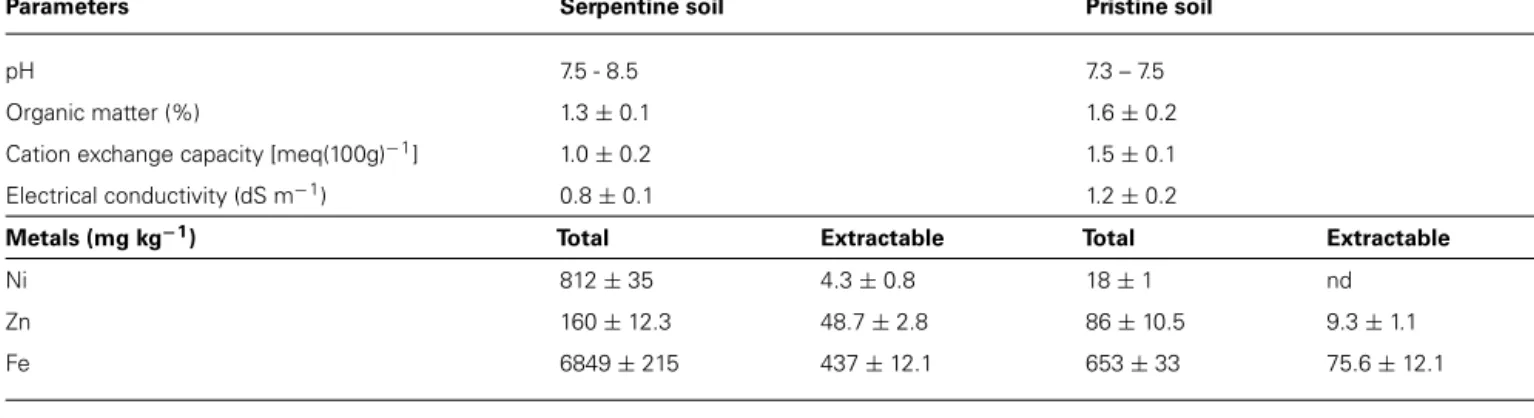
and heavy metals concentrations of the SS and PS are shown in
Table 2. Seeds of B. juncea and R. communis obtained from the
Botanical Garden of the University of Coimbra, Portugal, were
surface sterilized with 2% Ca(OCl)
2during 2 h and rinsed three
times with autoclaved deionized water. The seeds were allowed to
germinate in sterilized non-contaminated PS at 25
◦C under a 16/8
day/night regime. Seedlings were exposed to full sunlight during
the day. The soil collected from the serpentine area was mixed
with the PS at four different proportions: 0% SS (0% SS
+ 100%
PS), 25% SS (25% SS
+ 75% PS), 50% SS (50% SS + 50% PS)
and 75% SS (75% SS
+ 25% PS). The mixture was based on the
dry weights of the soils. 100% SS (100% SS
+ 0% PS) was
omit-ted in this study, since in our preliminary microcosm experiments
both B. juncea and R. communis grown in 100% SS showed signs
of wilting as early as 15 days after the transplantation, and they
died during the experiments (data not shown). For inoculation
of the seedlings, the bacterial strains were grown in Luria Bertani
medium for 18 h at 27
◦C and 200 rpm. The cultures were then
centrifuged at 7000 rpm for 10 min and the pellets were washed
with biological saline (0.85% KCl). The pellet was re-suspended in
biological saline and the colony forming unit (CFU) was adjusted
to 10
9mL
−1. Fifteen-day-old seedlings were inoculated by
soak-ing the root system in the bacterial culture for 2 h. The roots of
control plants were soaked in sterile deionized water. Seedlings
were transplanted into plastic pots with a volume of 0.86 cm
3,
containing 300 g of 0, 25, 50, or 75% SS. The plants were allowed
to grow in a greenhouse with an average temperature of 25
◦C and
a 16:8 h day/night regime and watered as required. All treatments
were performed in three replicates.
SOIL ANALYSIS
Both total and diethylenetriaminepentaacetic acid
(DTPA)-extractable fractions of heavy metals (Ni, Zn, and Fe) were
measured in the soil. To analyze the total metal content, three
repli-cates of 1 g of soil were weighed and 10.5 mL of aqua regia were
added to each sample according to
Kilburn (2000)
. The digestion
tubes were allowed to stand overnight to equilibrate the aqua regia
with the soil and then were put onto a hotplate for 3 h at 110
◦C.
The digests were filtered through Whatman No. 42 filter paper and
mixed with deionized water in volumetric flask reaching 25 mL.
The concentration of heavy metals in soil extracts was measured by
atomic absorption spectrophotometry (AAS; PerkinElmer model
100, MA, USA).
T able 1 |Char act er istic feat ur es of the bact er ial str ains used in this st udy . Plant gr o wth pr omoting tr aits Bact er ial str ain A CC deaminase (μ m α -KB mg − 1h − 1) P solubilization (mg L − 1) IAA pr oduction (mg L − 1) Sider ophor e pr oduction Ni resistance lev el (mg L − 1) Genbank accession no . Sour ce Ref er ence (mg L − 1) Cat ec hol Hy dr o xamat e Pseudomonas sp. A3R3 67 .9 ± 6.2 1 38 ± 21 .4 69.4 ± 3.2 83.3 ± 7.5 60.5 ± 6.3 750 GU550663 R oot of Aly ssum serp yllif olium Ma et al. (20 11b) Psy chrobacter sp. SR S8 nd 1 26 ± 2.2 11 1 ± 1.4 899 ± 30.3 28.0 ± 2.2 1 0 0 0 FM205059 Rhiz osphere of A. serp yllif olium Ma et al. (20 09b) A v erage ± SD from three samples. nd, not detected; A CC, 1 -aminocy clopropane-1 -carbo xylic acid; α -KB ,α -k etobut yrate; IAA, indole-3-acetic acid.
Table 2 | Physicochemical properties of the soils used in this study.
Parameters Serpentine soil Pristine soil
pH 7.5 - 8.5 7.3 – 7.5
Organic matter (%) 1.3± 0.1 1.6± 0.2
Cation exchange capacity [meq(100g)−1] 1.0± 0.2 1.5± 0.1
Electrical conductivity (dS m−1) 0.8± 0.1 1.2± 0.2
Metals (mg kg−1) Total Extractable Total Extractable
Ni 812± 35 4.3± 0.8 18± 1 nd
Zn 160± 12.3 48.7± 2.8 86± 10.5 9.3± 1.1
Fe 6849± 215 437± 12.1 653± 33 75.6± 12.1
Average± SD from three samples. nd, not detected.
Diethylenetriaminepentaacetic acid-extractable metals were
measured by extracting 10 g samples of soil with 20 mL of
extracting solution (0.005 M DTPA, 0.01 M CaCl
2, 0.1 M
Tri-ethanolamine, pH 7.3) according to the procedure of
Lindsay and
Norvell (1978)
. The mixtures were agitated on a horizontal shaker
for 2 h at room temperature and were then through Whatman No.
42 filter paper prior to analysis by AAS.
PLANT ANALYSIS
After 60 days, plants were harvested and the roots were carefully
washed with deionized water and then with 10 mM
ethylenedi-aminetetraacetic acid to remove all attached soil particles. The
growth parameters such as root and shoot weight (fresh and dry)
were determined. To evaluate the heavy metal concentrations, the
washed plant materials were oven dried at 70
◦C for 3 days and
finely ground to a powder. The metal contents (Ni, Zn, and Fe)
in the plant tissues were measured by AAS after digestion in a
mixture of concentrated HNO
3and HClO
4(4:1, v/v;
Ma et al.,
2009a
).
The determinations of the metal concentration in plant
tis-sues and soils were used to estimate the translocation factor
(TF) and the bioconcentration factor (BCF). The TF was
calcu-lated by dividing shoot metal concentration by the root metal
concentration ([Metal]
shoot/[Metal]
root;
Lotfy and Mostafa, 2014
)
and the BCF was calculated by dividing the metal
concentra-tion in the entire plant by the initial soil metal concentraconcentra-tion
([Metal]
plant/[Metal]
soil;
Zayed et al., 1998
). Metal
concentra-tions in all compartments were calculated on a dry weight
basis.
STATISTICAL ANALYSIS
Data were analyzed by analysis of variance (ANOVA) and
treat-ment means were compared using Fisher’s protected LSD test
(p
< 0.05). All the analyzes were performed using SPSS 10.0.
RESULTS AND DISCUSSION
PLANT GROWTH
Although B. juncea and R. communis used in this study have been
reported to grow in heavy metal contaminated soils (
Niu et al.,
2007
;
Bauddh and Singh, 2012
), the adverse environmental
con-ditions particularly the low essential nutrients and the elevated
levels of various metals in SS (
Freitas et al., 2004
) may reduce the
plant growth and biomass production through impairing their
metabolism and interfering with the absorption of essential
nutri-ents (
Duman and Ozturk, 2010
). Soil properties greatly influence
plant growth and root development. The low organic matter
(1.3–1.6%) and cation exchange capacity [1.0–1.5 meq(100g)
−1]
(
Table 2) of the soils used in our study may have contributed
to the limited growth of the tested plants. Thus in this study,
the effect of rhizosphere or endophytic bacteria previously
iso-lated from serpentine environment (
Ma et al., 2009b
,
2011b
) on
the growth and metal accumulation potential of B. juncea and
R. communis in SS was investigated with the objective of using
these species for phytoremediation of multi-metal polluted field
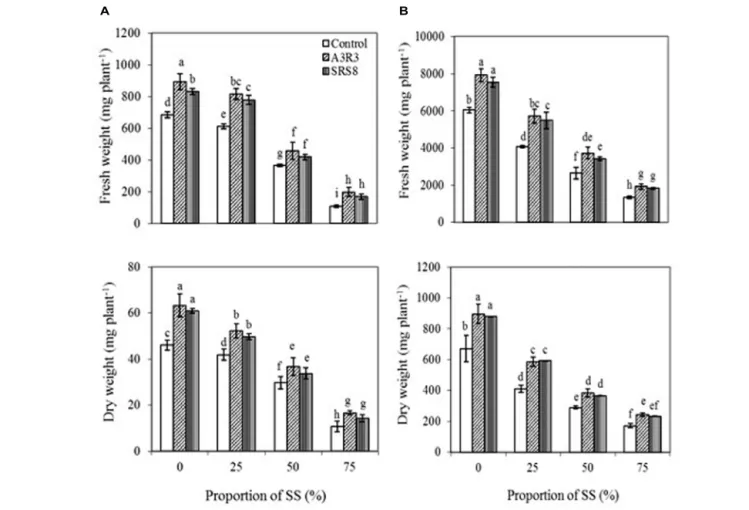
soils. In control soils (0% SS), inoculation of B. juncea and R.
communis with Pseudomonas sp. A3R3 or Psychrobacter sp. SRS8
showed an increase in plant fresh and dry weight (
Figures 1A,B).
However, maximum PGP effect was observed in A3R3. In the
case of B. juncea, inoculation of A3R3 increased plant fresh and
dry weight by 30 and 38%, respectively. Similarly, in R.
commu-nis, the strain A3R3 enhanced the fresh and dry weight by 31
and 34%, respectively. Recent studies on the mode of action of
PGPB have shown that the increase in plant growth is due to
microbial production of various PGP metabolites such as ACC
deaminase (which can reduce stress ethylene production in plants
through hydrolyzing ethylene precursor ACC to ammonia and
α-ketobutyrate, α-KB;
Arshad et al., 2007
); indole-3-acetic acid
(IAA) (which can enhance the plant growth by stimulating plant
cell elongation or affecting cell division;
Rashotte et al., 2000
);
nutrient solubilizing metabolites (which can mobilize nutrients –
e.g., P and Fe in the rhizosphere;
Sessitsch et al., 2013
). The
max-imum plant growth promotion by A3R3 observed in the present
study might have been due to the cumulative effects of the
pro-duction of siderophores, ACC deaminase, IAA and solubilization
of P (
Table 1).
The non-inoculated plants exposed to different levels of SS
(25–75%), showed a marked inhibition in the growth. The fresh
and dry weight of the B. juncea and R. communis generally
decreased with increasing the concentrations of SS. In the
treat-ment with 75% SS, the growth of B. juncea was considerably
decreased (Figure 1A), with an 84% reduction in fresh weight
and 77% reduction in dry weight. Similar responses were also
FIGURE 1 | Influence of Psychrobacter sp. SRS8 and Pseudomonas sp. A3R3 on the fresh weight and dry weight of Brassica juncea (A) and Ricinus communis (B) grown in different proportion of serpentine soil
(SS). Each value is the mean of triplicates. Error bars represent SD. Data of columns indexed by the same letter are not significantly different according to Fisher’s protected LSD test (p< 0.05).
observed in R. communis (Figure 1B), where fresh and dry weight
decreased by 78 and 75%, respectively. The low growth observed
for plants in SS had already been reported by other authors
(
Abou-Shanab et al., 2006
;
Kayama et al., 2006
). Plants inoculated
with Pseudomonas sp. A3R3 or Psychrobacter sp. SRS8 exhibited
an increase in plant growth in the presence of different levels of
SS. However, inoculation with Pseudomonas sp. A3R3, a strain that
showed ACC deaminase activity in addition to other PGP traits,
resulted in higher fresh and dry weight of plants. Pseudomonas
sp. A3R3 increased the fresh and dry weight of B. juncea even in
the treatment of 75% SS by 82 and 55%, respectively, compared
to non-inoculated plants grown with the same treatment of SS.
Similarly, in R. communis, Pseudomonas sp. A3R3 enhanced the
fresh and dry weight by 45 and 42%, respectively at 75% SS.
Sim-ilar results have been previously reported by
Ma et al. (2011b)
,
Zhang et al. (2011)
, and
Srivastava et al. (2013)
, suggesting that
the production of ACC deaminase by strain A3R3, which can
hydrolyze ethylene precursor ACC to
α-KB and ammonia, may
alleviate the Ni stress-mediated impact on plants. Further,
Pseu-domonas sp. A3R3 can also produce catechol and hydroxamate
type siderophores, IAA and solubilize P (
Ma et al., 2011b
),
indi-cating that both B. juncea and R. communis might have benefited
from this strain. Since Pseudomonas sp. A3R3 was originally
iso-lated from the root tissues of A. serpyllifolium (
Ma et al., 2011b
),
the increased plant growth caused by Pseudomonas sp. A3R3 also
implies that the endophytic bacteria with various PGP traits might
be preferable for plant growth promotion in metal polluted soils.
However, this has to be tested with a broader spectrum of
endo-phytes before a general validity can be assumed since the present
study comprised only one endophytic bacterial strain. Based on
the above observations, it was inferred that the inoculation of
serpentine PGPB improved the establishment of B. juncea and
R. communis in Ni rich SS, as reflected by increased growth
performance.
HEAVY METAL CONCENTRATIONS IN SOILS AFTER HARVESTING
Influence of plants and PGPB inoculation on the variation of metal
mobility in soils was determined after harvesting. Regardless of
inoculation with PGPB, a decrease in the total content of all the
three metals was observed in root-adhering soils of both B. juncea
and R. communis, compared to unplanted (
Table 3), as a likely
consequence of metal uptake by plants. However, plants
inocu-lated with PGPB were effective at decreasing the total Ni and Zn
concentrations in soils compared with respective non-inoculated
Table 3 | Heavy metals concentrations in soils before planting and after harvesting of Brassica juncea and Ricinus communis inoculated with Psychrobacter sp. SRS8 and Pseudomonas sp. A3R3.
Treatment DTPA extractable (mg kg−1dry soil) Total (mg kg−1dry soil)
Ni Zn Fe Ni Zn Fe Before planting SS 0% (Pristine soil) nd 1.0± 0.1 35.1± 6.4 21.6± 2.7 38.5± 6.8 556± 24.6 SS 25% (without plants ) nd 18.7± 0.9 159± 10.7 290± 46.2 180± 25.2 2290± 217 SS 50% (without plants) 8.9± 3.3 28.7± 6.8 220± 54.3 367± 58.9 214± 56.4 3664± 190 SS 75% (without plants) 14.8± 3.3 33.9± 9.7 190± 23.6 418± 89.6 235± 17.5 5311± 218 After harvesting of B. juncea
SS 0% nd 2.2± 0.7 g 54.0± 10.5 h 19.2± 1.7 f 34.4± 5.7 e 395± 28.4 i SS 0%+ A3R3 nd 18.6± 4.4 f 73.8± 8.4 g 14.5± 0.9 f 29.4± 2.9 e 468± 68.0 hi SS 0%+ SRS8 nd 62.3± 9.4 c 83.3± 12.6 g 12.6± 1.2 f 22.7± 7.1 e 502± 39.0 h SS 25% 1.6± 0.4 h 21.3± 1.5 f 202± 20.6 f 252± 37.8 d 167± 34.7 c 1992± 367 f SS 25%+ A3R3 15.5± 2.6 f 51.2± 6.4 d 289± 17.3 c 189± 15.3 e 126± 13.0 d 1923± 194 fg SS 25%+ SRS8 28.0± 5.3 e 76.3± 7.9 b 338± 38.5 b 171± 13.5 e 107± 14.1 d 2070± 275 f SS 50% 10.4± 2.6 g 35.4± 5.2 e 281± 31.6 cd 323± 19.3 b 196± 47.2 b 2775± 298 e SS 50%+ A3R3 43.8± 10.0 d 58.4± 9.1 c 378± 23.5 a 271± 12.5 c 153± 18.4 c 2998± 306 d SS 50%+ SRS8 74.2± 10.5 b 85.5± 7.3 a 384± 65.3 a 243± 8.2 d 127± 8.3 d 3284± 271 c SS 75% 16.8± 2.9 f 38.0± 8.0 e 228± 26.1 e 364± 42.2 a 223± 29.1 a 4335± 407 b SS 75%+ A3R3 51.2± 16.2 c 51.8± 8.8 d 267± 37.2 d 309± 13.0 b 190± 10.3 b 4539± 400 a SS 75%+ SRS8 86.5± 7.3 a 73.0± 7.2 b 272± 35.0 cd 261± 15.8 cd 168± 13.3 bc 4416± 278 b After harvesting of R. communis
SS 0% nd 16.5± 1.7 f 26.6± 5.2 g 26.8± 4.3 h 18.6± 3.5 e 290± 42.8 j SS 0%+ A3R3 nd 35.3± 3.3 e 43.0± 10.0 fg 20.6± 1.6 h 15.4± 3.2 e 335± 31.5 ij SS 0%+ SRS8 nd 50.9± 2.6 cd 58.6± 5.6 f 19.1± 1.9 h 11.8± 1.8 e 421± 31.6 i SS 25% 0.9± 0.2 g 33.5± 3.2 e 112± 12.0 e 375± 20.9 d 102± 18.1 c 1242± 90.3 h SS 25%+ A3R3 7.5± 0.7 f 81.8± 5.7 b 218± 26.2 d 305± 37.8 f 79.6± 12.4 d 1387± 155 g SS 25%+ SRS8 13.9± 1.5 e 97.6± 7.3 a 218± 24.4 d 247± 31.0 g 78.4± 6.0 d 1542± 71.9 f SS 50% 8.9± 1.4 f 56.5± 4.4 c 217± 18.0 d 449± 29.3 b 125± 32.6 b 2185± 244 e SS 50%+ A3R3 34.3± 4.5 d 79.2± 3.5 b 298± 47.0 b 350± 38.4 e 103± 20.9 c 2404± 265 d SS 50%+ SRS8 56.5± 3.9 b 96.1± 7.4 a 337± 24.8 a 326± 20.4 f 99.9± 12.5 c 2589± 225 c SS 75% 15.8± 1.5 e 62.7± 3.8 c 218± 27.0 d 477± 31.4 a 151± 18.0 a 3644± 276 b SS 75%+ A3R3 37.7± 4.7 c 85.5± 6.4 b 219± 53.4 d 402± 22.9 c 119± 17.7 b 3836± 199 a SS 75%+ SRS8 67.8± 3.1 a 100± 11.4 a 246± 14.4 c 365± 45.5 de 119± 8.9 b 3707± 146 b Average± SD from three samples. Data of columns within each plant species indexed by the same letter are not significantly different according to Fisher’s protected LSD test (p< 0.05). nd, not detected; DTPA, diethylenetriaminepentaacetic acid; SS, serpentine soil.
control. In the treatment with 75% of SS, inoculation of
Psy-chrobacter sp. SRS8 decreased the total Ni and Zn concentrations
in the soils of B. juncea by 28 and 25%, respectively, whereas in
the soils of R. communis the percentage of decrease was 23 and 22,
respectively. This result suggests that with the help of PGPB both
B. juncea and R. communis can efficiently take up Ni and Zn from
soils and confirm the previous finding that rhizosphere microbes
may stimulate heavy metal uptake by plants (
Chen et al., 2013
;
Pra-pagdee et al., 2013
). On the contrary to total Ni and Zn contents,
plants inoculated with PGPB significantly increased the
concentra-tion of total Fe in soils when compared with the non-inoculated
control plants. This may be attributed to a decrease in plant Fe
uptake, possibly due to the presence of high concentrations of
bioavailable Ni or competition between bioavailable Ni and Fe at
the plant uptake site as a consequence of microbial induced Ni
mobilization. Previously, plant nutritional imbalances in response
to the presence of heavy metals have been reported by
Ouzounidou
et al. (2006)
, suggesting that Ni may compete effectively for specific
binding sites or by other means block the uptake units, leading to
decrease in Fe uptake by plants.
According to
Jackson and Alloway (1991)
,
Singh et al. (1996)
,
the levels of metals in plant tissues are closely related to the
concentrations of DTPA-extractable metals in soils. Therefore,
the bioavailable fraction of metals in the rhizosphere soils of B.
juncea and R communis was determined using DTPA as
extrac-tant. In general, plant roots and rhizosphere microbes strongly
influence the physicochemical characteristics of the soil through
various metabolic actions/activities [e.g., excretion of organic
acids, (phyto)siderophores] resulting in an increase/decrease in
metal bioavailability in soils. In the present study, irrespective
of inoculation of PGPB, the bioavailable fractions in the soils of
all SS treatments increased significantly after the growth of B.
juncea or R communis and this was likely due to the ability of
plant and/or its associated microbes to increase metal
availabil-ity (Table 3). However, this effect was higher when the plants
were inoculated with PGPB, particularly Psychrobacter sp. SRS8.
These results clearly revealed that inoculation of PGPB prompted
the release of unavailable metals into soil. In the treatment of
50% SS, inoculation of B. juncea with Psychrobacter sp. SRS8
increased maximum concentrations of DTPA extractable Ni, Zn,
and Fe in the soils, which were 7.1-, 2.4-, and 1.4-fold higher
than those in the soils of non-inoculated plants, respectively.
Similarly, R communis inoculated with Psychrobacter sp. SRS8
increased the concentrations of DTPA extractable Ni, Zn, and
Fe in the soil by 6.3-, 1.7-, and 1.6-fold, respectively. The increase
in DTPA extractable Ni, Zn, and Fe after bacterial inoculation
might be attributed to solubilization of unavailable forms of heavy
metal bearing minerals due to complexation reaction as a
conse-quence of metabolites (e.g., organic acids, siderophores) release by
PGPB.
METAL UPTAKE BY Brassica juncea AND Ricinus communis
Metal concentrations in roots and shoots of both plants tended to
increase in the treatments with higher proportions of SS (Table 4).
The maximum accumulation of metals was observed in the root
and shoot systems of plants grown in 75% SS. However, the metal
concentrations in the shoots of both plants were much lower than
in the respective roots. A similar finding was recently reported for
B. juncea and R. communis grown on metal contaminated soils
(
Bauddh and Singh, 2012
). Regardless of inoculation of PGPB, B.
juncea took up more heavy metals than R. communis under the
same conditions, except Zn which concentration was higher in
root and shoot tissues of R. communis. Besides, the
concentra-tions of Fe and Zn in the tissues of both plants were found to be
higher than Ni and this could be explained by the fact that Zn
and Fe are an essential element for plant growth (
Desideri et al.,
2010
).
Inoculation of plants with PGPB greatly enhanced the
quan-tity of accumulation of Ni in root and shoot tissues compared
with respective non-inoculated controls (
Table 4). However, the
maximum effect was observed in Psychrobacter sp. SRS8. In the
treatment with 75% of SS, Psychrobacter sp. SRS8 increased the
Ni concentrations in the shoot and root tissues of B. juncea by
16 and 11%, respectively, whereas in R. communis the percentage
of increase was 29 and 20, respectively. The increased Ni
accu-mulation in both plants by Psychrobacter sp. SRS8 might be due
to its efficiency of mobilizing the Ni at the soil-root interface.
Our result is in agreement with the observations of
Chen et al.
(2013)
and
Prapagdee et al. (2013)
who reported enhanced uptake
of metals in B. napus and H. annuus due to inoculation of metal
mobilizing PGPB suggesting that the inoculation of Psychrobacter
sp. SRS8 enhances the heavy metal availability in the rhizosphere
(
Ma et al., 2009b
) and thereby increases the uptake of Ni by plants
(
Table 4).
Zn and Fe concentrations in the roots of both plants
inocu-lated with or without PGPB also showed similar trends to those
described for Ni concentrations (Table 4). This finding is in
accor-dance with other observation reported in
Ma et al. (2010)
and
Babu et al. (2013)
, where Zn and Fe concentrations in the plant
roots were greater than those in the shoots. The non-inoculated
plants grown with various SS treatments showed low Zn and Fe
concentrations, but PGPB inoculation increased Zn and Fe
con-centrations in the shoots and roots of both plant species grown
under the same condition (
Table 4). This may be attributed to the
microbial metabolites/actions such as production of siderophores
and P solubilization. Although both Psychrobacter sp. SRS8 and
Pseudomonas sp. A3R3 showed similar trends on the production
of siderophores and solubilization of P (Table 2), the rhizosphere
isolate Psychrobacter sp. SRS8 was more effective than the
endo-phytic strain A3R3 in stimulating heavy metal accumulation in
the tissues of both plants. Most likely, Psychrobacter sp. SRS8 may
have produced metal mobilizing metabolites in the rhizosphere
and thus may have increased heavy metal availability to plant roots
as they are usually in close contact with the root surface and heavy
metals in the soils, and improved its uptake. Further work is,
however, required to characterize the microbial metabolites and
to elucidate the factors that induce heavy metal accumulation in
plants.
TRANSLOCATION OF METALS FROM ROOTS TO SHOOTS
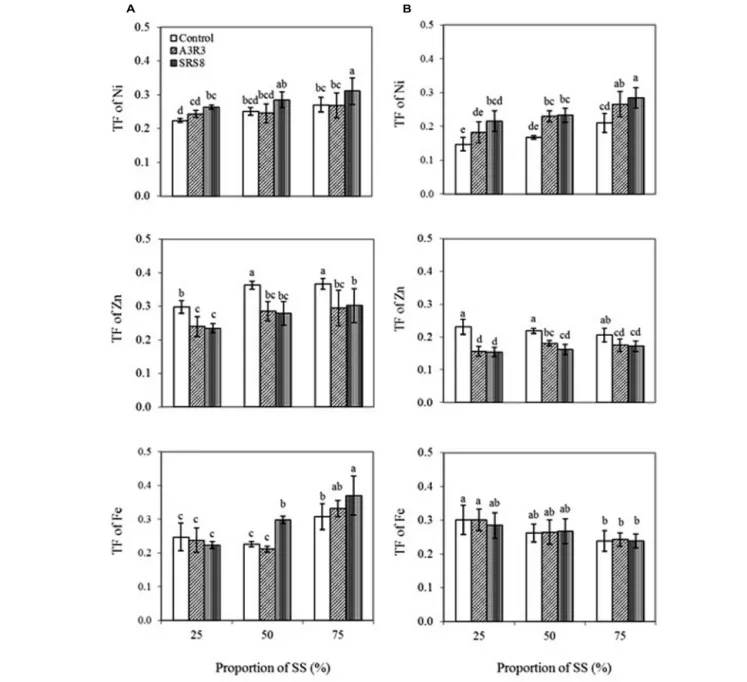
TF was calculated to assess the efficiency of PGPB inoculation
on the translocation of heavy metals from roots to shoots. Plant
species with a TF
> 1 are considered appropriate for
phytoex-traction. The results showed that B. juncea transported relatively
more Ni to the shoots than R. communis (Figure 2). This indicates
that the transfer ability of Ni in B. juncea is better than that in
R. communis, so the B juncea has higher potential for
phytoex-traction. Besides, a slight increase in TF of Ni in both plants was
observed with the increasing proportions of SS. Moreover, the
inoculation of PGPB strains also increased the TF of Ni in both
plants grown in soils with various proportions of SS indicating
that the inoculated PGPB played an important role on Ni
accu-mulation in plant shoots. Although both Pseudomonas sp. A3R3
and Psychrobacter sp. SRS8 led to higher values of the TF, the later
was more effective than the former in stimulating the
translo-cation of Ni from roots to shoots. A recent study by
Prapagdee
et al. (2013)
reported that the inoculation of metal mobilizing
rhi-zobacteria Micrococcus sp. MU1 and Klebsiella sp. BAM1 increased
Cd uptake into the shoot by 25 and 21%, respectively, compared
with non-inoculated plants during the fourth week of plantation
and indicated that heavy metal uptake/accumulation in plants
strongly depended on the heavy metal mobilization potential of
rhizobacteria.
In contrast to Ni, it is apparent that inoculation of PGPB
Table 4 | Heavy metals concentrations in shoots and roots of Brassica juncea and Ricinus communis grown in serpentine soils (SS) and inoculated with Psychrobacter spp. SRS8 and Pseudomonas spp. A3R3.
Treatment Shoot (mg kg−1dw) Root (mg kg−1dw)
Proportion of SS (%) PGPB Ni Zn Fe Ni Zn Fe strain B. juncea 0 Control 2.2± 0.2 i 9.5± 0.6 h 67.0± 5.3 f 13.2± 1.3 e 17.8± 2.7 e 170± 23.3 f A3R3 4.4± 0.5 hi 10.1± 0.8 h 75.3± 4.5 f 14.9± 1.5 e 24.8± 4.5 e 196± 22.2 f SRS8 5.3± 0.3 h 11.1± 1.0 h 75.7± 7.3 f 17.2± 2.0 e 26.0± 3.9 e 215± 34.8 f 25 Control 29.7± 1.3 g 37.6± 1.9 g 86.0± 9.3 e 127± 6.5 d 138± 17.9 d 352± 32.4 e A3R3 34.0± 1.9 f 41.9± 4.6 f 109± 15.5 d 140± 2.1 c 176± 16.8 c 461± 51.8 d SRS8 39.7± 2.1 e 44.3± 5.1 f 117± 12.5 d 147± 8.3 c 189± 11.3 c 525± 37.3 d 50 Control 36.6± 2.0 ef 58.3± 3.4 e 115± 5.3 d 146± 6.5 c 177± 23.4 c 510± 42.9 d A3R3 39.7± 2.8 e 61.7± 5.2 de 135± 15.2 c 163± 14.3 b 219± 21.8 bc 640± 46.1 bc SRS8 42.8± 4.2 d 64.0± 5.5 d 198± 11.0 b 167± 6.5 b 232± 26.8 bc 667± 43.5 bc 75 Control 46.7± 1.7 c 72.3± 6.9 c 188± 17.8 b 173± 8.3 b 261± 12.7 b 615± 44.0 c A3R3 50.0± 1.9 b 83.3± 8.0 b 234± 15.2 a 187± 15.0 ab 287± 35.2 ab 706± 6.4 ab SRS8 54.4± 4.1 a 90.6± 5.1 a 244± 25.0 a 193± 13.1 a 304± 35.2 a 733± 86.8 a R. communis 0 Control 1.7± 0.4 e 11.5± 0.8 f 26.4± 4.2 e 9.5± 0.7 f 28.5± 1.6 f 95.3± 3.1 g A3R3 3.0± 0.9 e 13.1± 1.0 f 34.1± 3.8 e 12.7± 0.8 f 40.0± 3.2 f 116± 8.6 g SRS8 3.3± 0.7 e 14.5± 0.9 f 33.5± 4.2 e 14.2± 0.8 f 44.3± 5.4 f 105± 9.2 g 25 Control 13.2± 1.2 d 23.9± 3.3 e 46.9± 3.9 d 90.4± 6.9 e 184.5± 8.2 e 157± 11.5 f A3R3 19.8± 3.4 c 34.3± 4.1 d 56.3± 5.9 c 109± 8.1 d 220± 24.8 d 187± 7.2 e SRS8 21.5± 3.4 c 35.9± 3.0 d 57.9± 5.0 c 112± 14.2 d 234± 5.4 d 205± 10.9 de 50 Control 22.1± 4.0 c 41.3± 4.9 cd 58.9± 7.9 c 113± 12.3 cd 219± 12.5 d 224± 10.1 d A3R3 29.2± 1.7 b 51.1± 4.0 b 70.0± 8.6 b 127± 4.9 bc 283± 16.6 c 265± 22.4 c SRS8 30.1± 2.9 b 53.2± 3.8 b 72.5± 6.6 b 129± 11.4 b 329± 18.5 b 273± 13.7 c 75 Control 31.4± 4.3 b 52.4± 4.7 b 75.0± 5.8 b 133± 18.2 b 287± 22.1 c 316± 21.9 b A3R3 38.9± 3.7 a 60.4± 8.4 a 92.0± 6.0 a 147± 9.4 ab 344± 16.0 ab 379± 20.3 a SRS8 40.5± 15.2 a 61.7± 8.2 a 93.9± 10.8 a 159± 9.6 a 358± 13.7 a 393± 12.0 a Average± SD from three samples. Data of columns within each plant species indexed by the same letter are not significantly different according to Fisher’s protected LSD test (p< 0.05). dw, dry weight; PGPB, plant growth promoting bacteria.
strain Pseudomonas sp. A3R3 reduced the TF of Zn in B. juncea
and R. communis by 22 and 14%, respectively, at 75% SS, compared
to the corresponding non-inoculated controls (Figures 2A,B).
This result is in agreement with a previous report describing
decreased translocation of Zn in Nicotiana tabacum inoculated
with Sanguibacter sp. S_d2 grown in Cd- and Zn-enriched soil
(
Mastretta et al., 2009
). Similarly,
Rajkumar et al. (2013a)
found
that inoculation of B. juncea, Luffa aegyptiaca, and Sorghum
halepense with the PGPR Bacillus megaterium SR28C had no
effect on or reduced Ni accumulation in the shoot tissues when
compared with those non-inoculated control. They attributed
this effect to a direct dilution of metal concentrations by an
increased shoot biomass. In our study, the significant decrease
in TF of Zn caused by PGPB inoculation is probably due to
the dilution effect since both plants grown with PGPB
inocula-tion had much larger shoot biomass than those grown without
PGPB inoculation. However, in case of Fe TF, the bacterial
inoc-ulation posed different effects on plants (
Figures 2A,B). For
instance, compared with non-inoculated control, inoculation of
Pseudomonas sp. A3R3 and Psychrobacter sp. SRS8 increased the
TF of Fe in B. juncea by 6 and 19%, respectively, when plants
were grown in 75% SS (Figure 2A). On the contrary, in R.
com-munis, both strains had no significant effects on the TF of Fe
(Figure 2B). Similar results were reported by
Li and
Ramakr-ishna (2011)
, where the metal mobilizing PGPB Pseudomonas sp.
TLC 6-6.5-4 was more effective on enhancing the heavy metal
accumulation in maize than in sunflower. It is likely that in the
present study the decrease or variation in the accumulation of
Zn and Fe by the inoculated plants was not only due to the
effect of heavy metals dilution but may have also been
associ-ated with other factors, including microbial populations and their
response to environmental conditions in the rhizosphere, plant,
FIGURE 2 | Influence of Psychrobacter sp. SRS8 and Pseudomonas sp. A3R3 on the translocation factor (TF) of Ni, Zn, and Fe in B. juncea (A) and R. communis (B). Each value is the mean of triplicates. Error bars represent SD. Data of columns indexed by the same letter are not significantly different according to Fisher’s protected LSD test (p< 0.05).
and soil type, since the plants growing in metal polluted soils
may modulate their growth and metal accumulation response
to various physico-chemico-biological properties of the
environ-ment (
Ma et al., 2011a
;
Becerra-Castro et al., 2012
;
Rajkumar et al.,
2013b
;
Sessitsch et al., 2013
;
Cabello-Conejo et al., 2014
). For
instance,
Jiang et al. (2008)
recently reported that different plants,
i.e., Indian mustard, maize and tomato inoculated with metal
mobilizing PGPB vary in their ability to accumulate/translocate
heavy metals, and found that tomato accumulated more heavy
metals than other plant species from the soil. Similarly,
Israr
et al. (2011)
reported that single metal uptake by Sesbania
drum-mondii was affected by the presence of other metals. The authors
attributed this result to competition between the metals for the
plant uptake sites. Further studies, however, as to why these plants
with PGPB have different abilities on the translocation of Fe are
needed.
BIOCONCENTRATION OF METALS
The BCF is commonly used to measure the ability of a plant to
remove metals from soils (
Zayed et al., 1998
). In this study, BCF
of Ni, Zn, and Fe in both plants increased with increasing
pro-portion of SS (
Figure 3), indicating that concentrations of heavy
metals in soils have significant effects on the concentrations in
plant tissues. Besides, inoculation of plants with Pseudomonas
FIGURE 3 | Influence of Psychrobacter sp. SRS8 and Pseudomonas sp. A3R3 on the bioconcentration factor (BCF) of Ni, Zn, and Fe in B. juncea (A) and R. communis (B). Each value is the mean of triplicates. Error bars represent SD. Data of columns indexed by the same letter are not significantly different according to Fisher’s protected LSD test (p< 0.05).
sp. A3R3 or Psychrobacter sp. SRS8 significantly increased the
BCF of the metals in both B. juncea and R. communis compared
with respective non-inoculated control. However, Psychrobacter
sp. SRS8 was more effective on increasing the BCF of Ni, Zn,
and Fe in both plants than Pseudomonas sp. A3R3. Based on
the BCF values, overall Zn was the metal most accumulated in
both plants, followed by Ni, with accumulation of Fe being very
low. The increased BCF value caused by PGPB inoculation could
indicate that both Pseudomonas sp. A3R3 and Psychrobacter sp.
SRS8 played a significant role on heavy metal uptake and
accumu-lation in plants. Actually, the bioavailable fractions of Ni, Zn, and
Fe in SS soils where the inoculated plants grew was significantly
higher than that found in the respective soils from non-inoculated
plants (Table 3), suggesting that the PGPB increased metal
solubi-lization also leading to a subsequent increase in plant metal uptake
and translocation.
In general, plants exhibiting TF and BCF values less than one
are suitable for heavy metal phytostabilization programs (
Shi et al.,
2011
;
Wu et al., 2011
) because low values indicate that a given
species is unable to extract large amounts of metal from the soil
and translocate it to the shoots. In our study, though PGPB
inoc-ulation were capable of stimulating heavy metal accuminoc-ulation in
plants tissues to some extent, both B. juncea and R. communis
indicating that these plant species with serpentine PGPB
inoc-ulation could be used for the revegetation or phytostabilization
purposes.
CONCLUSION
Although the phytoremediation of metal polluted soils is
becom-ing a feasible alternative to physicochemical clean up technologies,
it is still a challenging task because of limited plant growth and
phy-totoxic metal levels in soils (
Kavamura and Esposito, 2010
). Our
study demonstrates that B. juncea and R. communis inoculated
with serpentine PGPB can be potentially used for revegetation
and phytostabilization of metal polluted field soils. Microcosm
experiments demonstrated that inoculation of Pseudomonas sp.
A3R3 or Psychrobacter sp. SRS8 improved plant biomass
pro-duction and heavy metal accumulation. The former had a better
performance on plant biomass production, whereas the latter on
heavy metal accumulation in plants. However, both B. juncea and
R. communis exhibited lower values of TF and BCF (<1) for Ni
and Fe, regardless of inoculation of PGPB and proportion of SS.
Overall, the increased growth response of plants in SS caused by
PGPB indicates that the inoculation of Pseudomonas sp. A3R3
or Psychrobacter sp. SRS8 alleviated the toxicity of heavy
met-als and provided a better environment for plant growth probably
through producing various plant growth beneficial metabolites.
Such serpentine isolates with various PGP traits are therefore
good inoculants for enhancing the phytostabilization process in
metal polluted field soils. Further research will be carried out to
determine the co-inoculation effects of Pseudomonas sp. A3R3
and Psychrobacter sp. SRS8 on the plant growth and heavy metal
phytoremediation in degraded ecosystems.
ACKNOWLEDGMENTS
Ying Ma and Rui S. Oliveira wish to acknowledge the support of
Fundação para a Ciência e a Tecnologia (FCT) through the research
grants SFRH/BPD/76028/2011 and SFRH/BPD/85008/2012 and
Fundo Social Europeu. Mani Rajkumar acknowledges the financial
support received in the form of Ramalingaswami re-entry
fellow-ship from Department of Biotechnology (DBT), Government of
India. Inês Rocha was supported by the FCT grant
BI-EXPL/AGR-TEC/1204/2013. This work was supported by National Funds
through FCT under the project EXPL/AGR-TEC/1204/2013,
financed by Fundo Europeu de Desenvolvimento Regional
(FEDER), Eixo I do Programa Operacional Fatores de
Com-petitividade (POFC) of QREN (COMPETE:
FCOMP-01-0124-FEDER-041572), and the project PEst-OE/BIA/UI4004/2014.
REFERENCES
Abou-Shanab, R. A. I., Angle, J. S., and Chaney, R. L. (2006). Bacterial inoculants affecting nickel uptake by Alyssum murale from low, moderate and high Ni soils. Soil Biol. Biochem. 38, 2882–2889. doi: 10.1016/j.soilbio.2006.04.045
Ali, H., Khan, E., and Sajad, M. A. (2013). Phytoremediation of heavy metals–concepts and applications. Chemosphere 91, 869–881. doi: 10.1016/j.chemosphere.2013.01.075
Arshad, M., Saleem, M., and Hussain, S. (2007). Perspectives of bacterial ACC deaminase in phytoremediation. Trends Biotechnol. 25, 356–362. doi: 10.1016/j.tibtech.2007.05.005
Babu, A. G., Kim, J. D., and Oh, B. T. (2013). Enhancement of heavy metal phytoremediation by Alnus firma with endophytic Bacillus thuringiensis GDB-1. J. Hazard. Mater. 250–251, 477–483. doi: 10.1016/j.jhazmat.2013.02.014
Bauddh, K., and Singh, R. P. (2012). Cadmium tolerance and its phytoreme-diation by two oil yielding plants Ricinus communis (L.) and Brassica juncea (L.) from the contaminated soil. Int. J. Phytoremediation 14, 772–785. doi: 10.1080/15226514.2011.619238
Becerra-Castro, C., Kidd, P., Kuffner, M., Prieto-Fernández, A., Hann, S., Monter-roso, C., et al. (2013). Bacterially induced weathering of ultramafic rock and its implications for phytoextraction. Appl. Environ. Microbiol. 79, 5094–5103. doi: 10.1128/AEM.02268-13
Becerra-Castro, C., Monterrosob, C., Prieto-Fernández, A., Rodríguez-Lamas, L., Loureiro-Viñas, M., Acea, M. J., et al. (2012). Pseudometallophytes colonising Pb/Zn mine tailings: a description of the plant–microorganism–rhizosphere soil system and isolation of metal-tolerant bacteria. J. Hazard. Mater. 217–218, 350– 359. doi: 10.1016/j.jhazmat.2012.03.039
Bolan, N. S., Park, J. H., Robinson, B., Naidu, R., and Huh, K. Y. (2011). Phy-tostabilization: a green approach to contaminant containment. Adv. Agron. 112, 145–204. doi: 10.1016/B978-0-12-385538-1.00004-4
Cabello-Conejo, M. I., Becerra-Castro, C., Prieto-Fernández, A., Monterroso, C., Saavedra-Ferro, A., Mench, M., et al. (2014). Rhizobacterial inoculants can improve nickel phytoextraction by the hyperaccumulator Alyssum pintodasilvae. Plant Soil 379, 35–50. doi: 10.1007/s11104-014-2043-7
Cecchi, C. G. S., and Zanchi, C. (2005). Phytoremediation of soil polluted by nickel using agricultural crops. Environ. Manag. 36, 675–681. doi: 10.1007/s00267-004-0171-1
Chen, Z. J., Sheng, X. F., He, L. Y., Huang, Z., and Zhang, W. H. (2013). Effects of root inoculation with bacteria on the growth, Cd uptake and bacterial communities associated with rape grown in Cd-contaminated soil. J. Hazard. Mater. 244–245, 709–717. doi: 10.1016/j.jhazmat.2012.10.063
Dell’Amico, E., Cavalca, L., and Andreoni, V. (2008). Improvement of Brassica napus growth under cadmium stress by cadmium-resistant rhizobacteria. Soil Biol. Biochem. 40, 74–84. doi: 10.1016/j.soilbio.2007.06.024
Desideri, D., Meli, M. A., and Roselli, C. (2010). Determination of essen-tial and non-essenessen-tial elements in some medicinal plants by polarised X ray fluorescence spectrometer (EDPXRF). Microchem. J. 95, 174–180. doi: 10.1016/j.microc.2009.11.010
Doherty, J. H., Ji, B. M., and Casper, B. B. (2008). Testing nickel tolerance of Sorghastrum nutans and its associated soil microbial community from serpentine and prairie soils. Environ. Pollut. 151, 593–598. doi: 10.1016/j.envpol.2007.04.002 Duman, F., and Ozturk, F. (2010). Nickel accumulation and its effect on biomass, protein content and antioxidative enzymes in roots and leaves of watercress (Nasturtium officinale R.). Br. J. Environ. Sci. 22, 526–532. doi: 10.1016/S1001-0742(09)60137-6
Ferraz, P., Fidalgo, F., Almeida, A., and Teixeira, J. (2012). Phytostabiliza-tion of nickel by the zinc and cadmium hyperaccumulator Solanum nigrum L. Are metallothioneins involved? Plant Physiol. Biochem. 57, 254–260. doi: 10.1016/j.plaphy.2012.05.025
Freitas, H., Prasad, M. N. V., and Pratas, J. (2004). Analysis of serpentino-phytes from northeast of Portugal for trace metal accumulation relevance to the management of mine environment. Chemosphere 54, 1625–1642. doi: 10.1016/j.chemosphere.2003.09.045
Grandlic, C. J., Mendez, M. O., Chorover, J., Machado, B., and Maier, R. M. (2008). Plant growth-promoting bacteria for phytostabilization of mine tailings. Environ. Sci. Technol. 42, 2079–2084. doi: 10.1021/es072013j
He, H. D., Ye, Z. H., Yang, D. J., Yan, J. L., Xiao, L., Zhong, T., et al. (2013). Characterization of endophytic Rahnella sp. JN 6 from Polygonum pubescens and its potential in promoting growth and Cd, Pb, Zn uptake by Brassica napus. Chemosphere 90, 1960–1965. doi: 10.1016/j.chemosphere.2012.10.057 Israr, M., Jewell, A., Kumar, D., and Sahi, S. V. (2011). Interactive effects
of lead, copper, nickel and zinc on growth, metal uptake and antioxidative metabolism of Sesbania drummondii. J. Hazard. Mater. 186, 1520–1526. doi: 10.1016/j.jhazmat.2010.12.021
Jackson, A. P., and Alloway, B. J. (1991). The bioavailability of cadmium to lettuce and cabbage in soils previously treated with sewage sludges. Plant Soil 132, 179– 186. doi: 10.1007/BF00010398
Jebara, S. H., Saadani, O., Fatnassi, I. C., Chiboub, M., Abdelkrim, S., and Jebara, M. (2014). Inoculation of Lens culinaris with Pb-resistant bacteria shows potential for phytostabilization. Environ. Sci. Pollut. Res. Int. doi: 10.1007/s11356-014-3510-7 [Epub ahead of print].
Jiang, C. Y., Sheng, X. F., Qian, M., and Wang, Q. Y. (2008). Isolation and characterization of a heavy metal-resistant Burkholderia sp. from heavy
metal-contaminated paddy field soil and its potential in promoting plant growth and heavy metal accumulation in metal-polluted soil. Chemosphere 72, 157–164. doi: 10.1016/j.chemosphere.2008.02.006
Kavamura, V. N., and Esposito, E. (2010). Biotechnological strategies applied to the decontamination of soils polluted with heavy metals. Biotechnol. Adv. 28, 61–69. doi: 10.1016/j.biotechadv.2009.09.002
Kayama, M., Choi, D., Tobita, H., Utsugi, H., Kitao, M., Maruyama, Y., et al. (2006). Comparison of growth characteristics and tolerance to serpentine soil of three ectomycorrhizal spruce seedlings in northern Japan. Trees 20, 430–440. doi: 10.1007/s00468-006-0057-3
Kilburn, M. (2000). Aqua regia digestion for soils/sludges. Anal. Methods Manual H 115.
Li, K. F., and Ramakrishna, W. (2011). Effect of multiple metal resistant bacteria from contaminated lake sediments on metal accumulation and plant growth. J. Hazard. Mater. 189, 531–539. doi: 10.1016/j.jhazmat.2011.02.075
Lindsay, W. L., and Norvell, W. A. (1978). Development of a DTPA test for zinc, iron, manganese, and copper. Soil Sci. Soc. Am. J. 42, 421–428. doi: 10.2136/sssaj1978.03615995004200030009x
Lotfy, S. M., and Mostafa, A. Z. (2014). Phytoremediation of contaminated soil with cobalt and chromium. J. Geochem. Explor. 144, 367–373. doi: 10.1016/j.gexplo.2013.07.003
Ma, Y., Prasad, M. N. V., Rajkumar, M., and Freitas, H. (2011a). Plant growth promoting rhizobacteria and endophytes accelerate phytoremediation of met-alliferous soils. Biotechnol. Adv. 29, 248–258. doi: 10.1016/j.biotechadv.2010. 12.001
Ma, Y., Rajkumar, M., Luo, Y. M., and Freitas, H. (2011b). Inoculation of endophytic bacteria on host and non-host plants – effects on plant growth and Ni uptake. J. Hazard. Mater. 196, 230–237. doi: 10.1016/j.jhazmat.2011.08.034
Ma, Y., Rajkumar, M., and Freitas, H. (2009a). Improvement of plant growth and nickel uptake by nickel resistant-plant growth promoting bacteria. J. Hazard. Mater. 166, 1154–1161. doi: 10.1016/j.jhazmat.2008.12.018
Ma, Y., Rajkumar, M., and Freitas, H. (2009b). Isolation and characterization of Ni mobilizing PGPB from serpentine soils and their potential in promoting plant growth and Ni accumulation by Brassica spp. Chemosphere 75, 719–725. doi: 10.1016/j.chemosphere.2009.01.056
Ma, Y., Rajkumar, M., Luo, Y., and Freitas, H. (2013). Phytoextraction of heavy metal polluted soils using Sedum plumbizincicola inoculated with metal mobi-lizing Phyllobacterium myrsinacearum RC6b. Chemosphere 93, 1386–1392. doi: 10.1016/j.chemosphere.2013.06.077
Ma, Y., Rajkumar, M., Vicente, J., and Freitas, H. (2010). Inoculation of Ni-resistant plant growth promoting bacterium Psychrobacter sp. strain SRS8 for the improve-ment of nickel phytoextraction by energy crops. Int. J. Phytoremediation 13, 126–139. doi: 10.1080/15226511003671403
Mastretta, C., Taghavi, S., Van der Lelie, D., Mengoni, A., Galardi, F., Gonnelli, C., et al. (2009). Endophytic bacteria from seeds of Nicotiana tabacum can reduce cadmium phytotoxicity. Int. J. Phytoremediation 11, 251–267. doi: 10.1080/15226510802432678
Meers, E., Du Laing, G., Unamuno, V., Ruttens, A., Vangronsveld, J., Tack, F. M. G., et al. (2007). Comparison of cadmium extractability from soils by commonly used single extraction protocols. Geoderma 141, 247–259. doi: 10.1016/j.geoderma.2007.06.002
Mengoni, A., Grassi, E., Barzanti, R., Biondi, E. G., Gonnelli, C., Kim, C. K., et al. (2004). Genetic diversity of bacterial communities of serpentine soil and of rhizosphere of the nickel-hyperaccumulator plant Alyssum bertolonii. Microb. Ecol. 48, 209–217. doi: 10.1007/s00248-003-0149-1d
Niu, Z. X., Sun, L. N., Sun, T. H., Li, Y. S., and Wang, H. (2007). Evalua-tion of phytoextracting cadmium and lead by sunflower, ricinus, alfalfa and mustard in hydroponic culture. J. Environ. Sci. 19, 961–967. doi: 10.1016/S1001-0742(07)60158-2
Ouzounidou, G., Moustakas, M., Symeonidis, L., and Karataglis, S. (2006). Response of wheat seedlings to Ni stress: effects of supplemental calcium. Arch. Environ. Contam. Toxicol. 50, 346–352. doi: 10.1007/s00244-005-5076-3
Pérez-López, R., Márquez-García, B., Abreu, M. M., Nieto, J. M., and Córdoba, F. (2014). Erica andevalensis and Erica australis growing in the same extreme environments: phytostabilization potential of mining areas. Geoderma 230–231, 194–203. doi: 10.1016/j.geoderma.2014.04.004
Prapagdee, B., Chanprasert, M., and Mongkolsuk, S. (2013). Bioaugmenta-tion with cadmium-resistant plant growth-promoting rhizobacteria to assist
cadmium phytoextraction by Helianthus annuus. Chemosphere 92, 659–666. doi: 10.1016/j.chemosphere.2013.01.082
Rajkumar, M., Ma, Y., and Freitas, H. (2013a). Improvement of Ni phytostabilization by inoculation of Ni resistant Bacillus megaterium SR28C. J. Environ. Manag. 128, 973–980. doi: 10.1016/j.jenvman.2013.07.001
Rajkumar, M., Prasad, M. N. V., Swaminathan, S., and Freitas, H. (2013b). Climate change driven plant–metal–microbe interactions. Environ. Int. 53, 74–86. doi: 10.1016/j.envint.2012.12.009
Rajkumar, M., Sandhya, S., Prasad, M. N. V., and Freitas, H. (2012). Perspectives of plant-associated microbes in heavy metal phytoremediation. Biotechnol. Adv. 30, 1562–1574. doi: 10.1016/j.biotechadv.2012.04.011
Rashotte, A. M., Brady, S. R., Reed, R. C., Ante, S. J., and Muday, G. K. (2000). Basipetal auxin transport is required for gravitropism in roots of Arabidopsis. Plant Physiol. 122, 481–490. doi: 10.1104/pp.122.2.481
Rauret, G., López-Sánduz, J. F., and Sahuquillo, A. (1999). Improvement of the BCR three-step sequential extraction procedure prior the certification of new sediment and soil reference materials. J. Environ. Monit. 1, 57–61. doi: 10.1039/ a807854h
Safari Sinegani, A. A., and Khalilikhah, F. (2008). Phytoextraction of lead by Helianthus annuus: effect of mobilizing agent application time. Plant Soil Environ. 54, 434–440.
Sessitsch, A., Kuffner, M., Kidd, P., Vangronsveld, J., Wenzel, W. W., Fallmann, K., et al. (2013). The role of plant-associated bacteria in the mobilization and phy-toextraction of trace elements in contaminated soils. Soil Biol. Biochem. 60, 182–194. doi: 10.1016/j.soilbio.2013.01.012
Shi, X., Zhang, X., Chen, G., Chen, Y., Wang, L., and Shan, X. (2011). Seedling growth and metal accumulation of selected woody species in copper and lead/zinc mine tailings. J. Environ. Sci. 23, 266–274. doi: 10.1016/S1001-0742(10)60402-0 Singh, D. B., Prasad, G., and Rupainwar, D. C. (1996). Adsorption technique for
the treatment of As (V) rich effluents. Colloid Surf. A Physicochem. Eng. Asp. 111, 49–56. doi: 10.1016/0927-7757(95)03468-4
Srivastava, S., and Singh, N. (2014). Mitigation approach of arsenic toxicity in chickpea grown in arsenic amended soil with arsenic tolerant plant growth pro-moting Acinetobacter sp. Ecol. Eng. 70, 146–153. doi: 10.1016/j.ecoleng.2014. 05.008
Srivastava, S., Verma, P. C., Chaudhry, V., Singh, N., Abhilash, P. C., Kumar, K. V., et al. (2013). Influence of inoculation of arsenic-resistant Staphylococcus arlettae on growth and arsenic uptake in Brassica juncea (L.) Czern. Var. R-46. J. Hazard. Mater. 262, 1039–1047. doi: 10.1016/j.jhazmat.2012.08.019
Testiati, E., Parinet, J., Massiani, C., Laffont-Schwob, I., Rabier, J., Pfeifer, H. R., et al. (2013). Trace metal and metalloid contamination levels in soils and in two native plant species of a former industrial site: evaluation of the phytostabilization potential. J. Hazard. Mater. 248–249, 131–141. doi: 10.1016/j.jhazmat.2012.12.039
Velikova, V., Tsonev, T., Loreto, F., and Centritto, M. (2011). Changes in photo-synthesis, mesophyll conductance to CO2, and isoprenoid emissions in Populus nigra plants exposed to excess nickel. Environ. Pollut. 159, 1058–1066. doi: 10.1016/j.envpol.2010.10.032
Wang, H. L., Magesan, G., and Bolan, N. S. (2004). An overview of the environmental effects of land application of farm effluents. N. Z. J. Agri. Res. 47, 389–403. doi: 10.1080/00288233.2004.9513608
Wu, Q. H., Wang, S. Z., Thangavel, P., Li, Q. F., Zheng, H., Bai, J., et al. (2011). Phy-tostabilization potential of Jatropha Curcas L. in polymetallic acid mine tailings. Int. J. Phytoremediation 13, 788–804. doi: 10.1080/15226514.2010.525562 Zaidi, S., Usmani, S., Singh, B. R., and Musarrat, J. (2006). Significance of Bacillus
subtilis strain SJ-101 as a bioinoculant for concurrent plant growth promo-tion and nickel accumulapromo-tion in Brassica juncea. Chemosphere 64, 991–997. doi: 10.1016/j.chemosphere.2005.12.057
Zayed, A., Gowthaman, S., and Terry, N. (1998). Phytoaccumulation of trace elements by wetland plants: I. Duckweed. J. Environ. Q. 27, 715–721. doi: 10.2134/jeq1998.00472425002700030032x
Zhang, Y. F., He, L. Y., Chen, Z. J., Wang, Q. Y., Qian, M., and Sheng, X. F. (2011). Characterization of ACC deaminase-producing endophytic bacteria iso-lated from copper-tolerant plants and their potential in promoting the growth and copper accumulation of Brassica napus. Chemosphere 83, 57–62. doi: 10.1016/j.chemosphere.2011.01.041
Zhu, L. J., Guan, D. X., Luo, J., Rathinasabapathi, B., and Ma, L. Q. (2014). Characterization of arsenic-resistant endophytic bacteria from
hyperaccumulators Pteris vittata and Pteris multifida. Chemosphere 113, 9–16. doi: 10.1016/j.chemosphere.2014.03.081
Conflict of Interest Statement: The authors declare that the research was conducted in the absence of any commercial or financial relationships that could be construed as a potential conflict of interest.
Received: 09 October 2014; accepted: 09 December 2014; published online: 05 January 2015.
Citation: Ma Y, Rajkumar M, Rocha I, Oliveira RS and Freitas H (2015) Serpentine bacteria influence metal translocation and bioconcentration of Brassica juncea and
Ricinus communis grown in multi-metal polluted soils. Front. Plant Sci. 5:757. doi: 10.3389/fpls.2014.00757
This article was submitted to Plant Biotechnology, a section of the journal Frontiers in Plant Science.
Copyright © 2015 Ma, Rajkumar, Rocha, Oliveira and Freitas. This is an open-access article distributed under the terms of the Creative Commons Attribution License (CC BY). The use, distribution or reproduction in other forums is permit-ted, provided the original author(s) or licensor are credited and that the original publication in this journal is cited, in accordance with accepted academic practice. No use, distribution or reproduction is permitted which does not comply with these terms.