STRENGTHENING
WORKERS’ VOICES
IN CASES OF
WORKERS’ VOICES
IN CASES OF
LIST OF FIGURES
GERMANY
Fig. 1 Number of Corporate insolvencies in Germany from 1999 to 2017 8
Fig. 2 Insolvencies in Germany 9
Fig. 3 Insolvencies by Main Economic Sectors 9
Fig. 4 Development of Insolvencies by Main Economic Sectors, 2010 to 2017 10
Fig. 5 Insolvency Ratios by Main Economic Sector 10
Fig. 6 “Top Ten” Industries at Risk 11
Fig. 7 Corporate Insolvencies by Number of Employees in 2017 11
FRANCE
Fig. 8 Number of Insolvencies in France 27
Fig. 9 Number of Insolvencies (Receivership / Direct Liquidation) 27
Fig. 10 Number of Insolvencies by Main Economic Sectors 28
Fig. 11 Insolvencies by Number of Employees 29
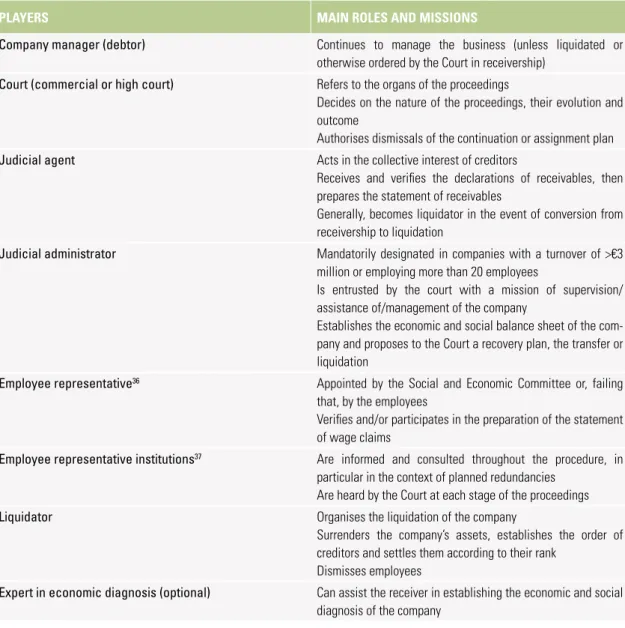
Fig. 12 Players in the Proceedings and their Missions 33
Fig. 13 AGS guarantees in receivership 35
Fig. 14 AGS guarantees in judicial liquidation 35
Introduction 5
Country report #1: GERMANY 7
Country report #2: FRANCE 26
Country report #3: HUNGARY 44
Country report #4: THE NETHERLANDS 63
Country report #5: PORTUGAL 80
Country report #6: SWEDEN 96
Case study #1: GERMANY 112
Case study #2: FRANCE 116
Case study #3: THE NETHERLANDS 120
Main Takeaways/Findings 126 Germany 127 France 128 Hungary 129 The Netherlands 130 Portugal 131 Sweden 132 Concluding Remarks 135
Fig. 17 Number of liquidated companies by size 47
Fig. 18: Most Vulnerable Industries 48
Fig. 19 Less Vulnerable Industries 48
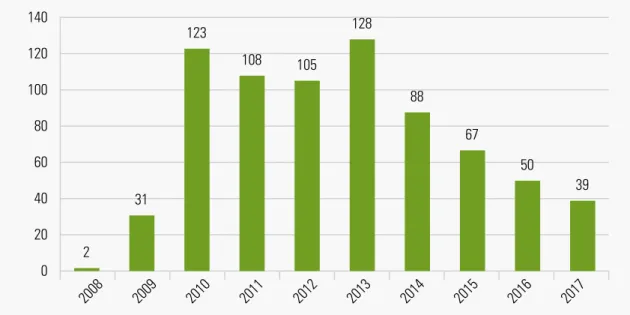
Fig. 20 Number of Newly Registered Economic Organisations 50
THE NETHERLANDS
Fig. 21 Number of Bankruptcies of Enterprises and Institutions 2001-2017 64
Fig. 22 Declared Bankruptcies of Enterprises and Institutions by Industry 2009-2017 65
Fig. 23 Number of Bankruptcies 2007 to 2016 Broken down by Legal Form
and Employment Status 65
Fig. 24 Numbers of Bankruptcies Involving Employees + Total Number
of Employees Involved in Bankruptcy 66
Fig. 25 Top 10 Sectors with Largest Number of Employees Involved
in Bankruptcy, 2007-2016 67
Fig. 26 Number of Bankrupt Companies, Broken down by Restart and Employees
Included after Restart 68
Fig. 27 Percentage of Personnel Taken over and not Taken over among
Business Start-Ups, by Age Group 68
Fig. 28 Percentage of Staff Taken Over and Not Taken Over Among Business
Start-Ups, by Length of Service 69
Fig. 29: Percentage of Personnel Taken Over and Not Taken Over among Business
Start-Ups, by Type of Contract 70
PORTUGAL
Fig. 30: Insolvency, Bankruptcy, Company Recovery and Special Revitalization
Proceedings Terminated in the Courts of First Instance (2000-2016) 81
Fig. 31 Insolvency and Bankruptcy Cases per Type of Person (2012-2017) 82
Fig. 32 Insolvency and Bankruptcy Cases of Legal Persons by Economic Sector
(2012-2017) 82
Fig. 33 Number of Jobs at Risk Due to Bankruptcy and Closure (2007-2017) 83
Fig. 34 Portuguese Legislation on Insolvencies 84
Fig. 35 Other Related Legislation 85
Fig. 36 Extra Judicial Mechanisms for Companies in Difficulties 86
Fig. 37 Institutional Framework to Help Companies in Difficultires (1996-2018) 87
Fig. 38 Accumulation of the Labour Compensation Fund values (2016) 92
SWEDEN
I
n November 2016, the European Commission published its “Proposal for a Directive on Preven-tive Restructuring frameworks, Second Chance and Measures to increase the Efficiency of Restruc-turing”. The rationale behind this policy thrust was to shift the emphasis of insolvency proceedings away from liquidation to pre-insolvency restructuring, giving viable enterprises a second chance in regaining going-con-cern status. Such a directive is particularly important to employees working in crisis-prone or insolvency-threat-ened companies. As such, it has been consistently evaluated by European trade unions with a number of proposals and statements – including this EU-funded “Strengthening workers’ Voice in Cases of Insolvencies” project.The Commission’s policy move was long overdue. As this study shows, the national European insolvency law landscape has been patchy and incoherent at best. The divergences include, among others, the criteria to open an insolvency proceeding, the ranking of creditors, the valuation procedures as well as the role and level of participation of workers during insolvency proceedings. The negative effects of such divergent, and in many cases inadequate, insolvency regimes, are manifold – with workers usually paying the highest price. Across Europe, around 200.000 firms go bankrupt every year, leading to 1.7m job losses. Many of these bankruptcy cases are cross-border, affecting workers from a wide range of EU Member States.
In December 2018, after an agreement between the Commission, Parliament and Council was reached in the
trialogue negotiations, a final text was published, which unfortunately fell short of the expectations of ETUC and its affiliates. As it stands now, most of the rules refer to national legislation. Countries can therefore continue to compete on the lowest standards. The European Par-liament incorporated some of ETUC’s key demands to strengthen workers’ interests, but the final trialogue text leaves Member States with a lot of freedom and room to maneuver. For example, they may choose to introduce a right for creditors or workers’ representatives to ini-tiate a restructuring procedure, but the text does not contain a general right to do so. This could significantly weaken workers’ position across the continent.
A well-functioning European insolvency framework with a focus on preventive restructuring is not only essen-tial to safeguard employment and workers’ interests, but also to support economic growth and cross-border investment. With this context in mind, it is important for the European Trade Union movement to analyse the impact the new EU directive may have on Euro-pean workers’ rights as well as to clarify the scope for national implementation. At present, there is no avail-able study on workers’ participatory rights in cases of insolvency. The existing scholarship has delved exclusively into the legal and administrative aspects of restructuring and insolvency processes; the issue of workers’ voices and rights during such processes has, regrettably, largely been left untouched. This report aims to fill this research gap. It does so by providing an up-to-date, European-wide comparative overview on the (1) insolvency-related legal provisions as well as; (2) workers’ participation rights in cases of insolvencies
the country’s legal framework and second, a summary on the three company case studies that were presented and discussed at the three project-related workshops in Berlin, Amsterdam and Paris in 2018/2019. The findings from the country studies are based on extensive desk-based research that aims at collecting information and complementary perspectives regarding insolvencies and workers’ participation in times of crisis on compa-ny-level.
Each report follows a similar structure. First, a statis-tical overview covering the number of insolvencies in the country analysed is presented. This is followed by a couple of introductory chapters outlining the history and development of the country’s insolvency legal frame-work. Subsequent sections delve into the process of insolvency proceedings, including – but not limited to – the following points:
Requirements for insolvency proceedings (Reasons for Insolvency)
Overview of the course of insolvency proceedings
Actors and their rights and obligations (including, for example, the insolvency administrator, works councils/trade unions, creditors’ committees, etc.)
Application for the opening of insolvency proceedings
Insolvency money regulations, if applicable.
Characteristics of creditor/employee participation throughout the proceedings
Rules concerning distribution of revenues
Treatment of dismissals during insolvencies
Rules regarding social plans, if existing.
Degree of influence from workers’ representatives during proceedings.1 To be provided in the coming weeks.
2 Germany: Praktiker; Netherlands: Imtech N.V.; France: Chocolaterie de Bourgogne.
degree to which employees, workers’ representatives and other relevant stakeholders have been included in the process. Furthermore, such case studies allow us to get a glimpse of the extent to which culture plays a role in the development of insolvency procedures. Ger-many’s Praktiker Case Study, will, additionally, identify the potential implications and opportunities the new EU pre-insolvency Directive would have had on the case.
In short, through its combined approach, this com-parative study will provide valuable insights into the diverging insolvency-related legal provisions currently in place across the six selected countries, focusing on the different approaches they take in dealing with workers’ rights, voices and concerns during cases of insolvency. Issues of labour law, participation rights, as well as the main challenges that Trade Unions, Works Councils and Employee Representatives are confronted with during financial crises and cases of insolvency will also be duly addressed.
In addition to these country studies and the specific case studies, a guideline for employee representatives will also be developed, which will serve as a practical aid in insolvencies, but also in the event of restructur-ing in preventive restructurrestructur-ing procedures, and at the same time formulate central demands by works coun-cils and trade unions on their respective member states with regard to issues to be taken into account within the framework of the transposition of the directive into national law.
COUNTRY REPORT #1
GERMANY
By
CHRISTOPHER SEAGON, INSOLVENCY PRACTITIONER, HEIDELBERG
ROBERT SCHEEL, UNIVERSITY HEIDELBERG
1. STATISTICAL OVERVIEW
3 Source: Statista 2018
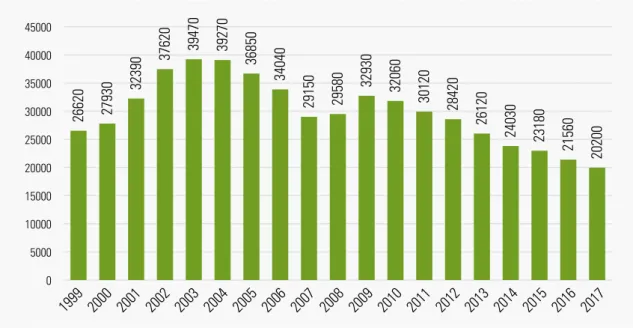
In 2017, the number of insolvencies continued to fall sharply. Across Germany, the Federal Statistical Office registered around 116,000 insolvencies (2016: 122,590). This is the seventh year of declines in a row, and at the same time the lowest level since 2004. Corporate insolvencies went down from 21,560 to 20,200 (-6.3%). Compared to the all-time peak of 2003, when 39,470 corporate insolvencies were registered, the number of cases has almost halved. The lowest recorded number of corporate insolvencies was 23 years ago in 1994, with just 18,820 registered cases. The decline in insolvency figures can be attributed to the favourable macroeconomic climate of the past few years. The financial burden on borrowing companies was much lower than in previous years due to low-cost financing (key-word: low interest rates) and debt rescheduling. Companies have also largely benefitted from a strong and sustained domestic demand.
Whilst the average loss per insolvency for private creditors in 2017 amounted to almost EUR 1 million, the losses for corporate insolvencies were estimated at 26.6 billion euros, slightly below the previous year's figure of 27.5 billion euros. For the insolvent companies this meant the threat – or in certain cases, loss – of around 198,000 jobs, com-pared with 221,000 in the previous year.
Fig. 1: Number of Corporate insolvencies in Germany from 1999 to 20173
0 5000 10000 15000 20000 25000 30000 35000 40000 45000 1999 26620 2000 27930 2001 32390 2002 37620 2003 39470 2004 39270 2005 36850 2006 34040 2007 29150 2008 29580 2009 32930 2010 32060 2011 30120 2012 28420 2013 26120 2014 24030 2015 23180 2016 21560 2017 20200
Fig. 2: Insolvencies in Germany4 YEAR NO. OF INSOLVENCY PROCEEDINGS OPENEND INSOLVENCY PRO-CEEDINGS REJECT-ED – for Lack of As sets SETTLEMEND PRO-CEEDINGS OPENED / DEBT SETTLEMENT PLAN ADOPTED INSOLVENCIES TOTAL OF WHICH COMPANY INSOLVENCIES 2017 104 287 9 456 1889 115 632 20 093 2016 111 197 9 347 1970 122 514 21 518 2015 115 847 9 711 1880 127 438 23 101 2014 123 231 9 924 1716 134 871 24 085 2013 129 269 10 264 1799 141 332 25 995 2012 137 653 10 826 1819 150 298 28 297 2011 145 702 11 798 1918 159 418 30 099 2010 153 549 12 770 2139 168 458 31 998 2009 147 974 12 935 1998 162 907 32 687 2008 140 979 12 107 2116 155 202 29 291 2007 149 489 13 206 1902 164 597 29 160 2006 143 781 15 607 2042 161 430 34 137 2005 115 470 19 279 1805 136 554 36 843 2004 95 035 21 450 1789 118 274 39 213 2003 77 237 22 134 1352 100 723 39 320 2002 61 691 21 551 1186 84 428 37 579 2001 25 230 22 360 1736 49 326 32 278 2000 19 698 21 357 1204 42 259 28 235
In terms of industry affiliation, trade and service providers dominated insolvency activity in Germany in 2017, register-ing around 77.8% of the total number of insolvencies – a similar percentage to the past year. The trade and services group, however, experienced a slight decrease in absolute terms to -4.7 and -4.3 respectively.
The decline in insolvencies was above average in two specific sectors, namely the (1) manufacturing sector, with 1,490 cases (-13.9%); as well as (2) the construction sector with 3,010 cases (-11.7%). Out of 10,000 companies per-taining to this category, 62 insolvencies occurred.
Fig. 3: Insolvencies by Main Economic Sectors*5
TOTAL NUMBER SHARE OF TOTAL INSOLVENCIES % CHANGE COMPARED TO PREVIOUS YEAR
Manufacturing 1490 (1730) 7.4 (8.0) -13.9
Construction 3010 (3410) 14.9 (15.8) -11.7
Trade 4280 (4490) 21.2 (20.8) -4.7
Services 11420 (11930) 56.6 (55.3) -4.3
* Creditreform estimate; ( ) = Previous Year Figures
4 Source: destatis Statistisches Bundesamt (German Federal Office of Statistics) 5 Source: Creditreform
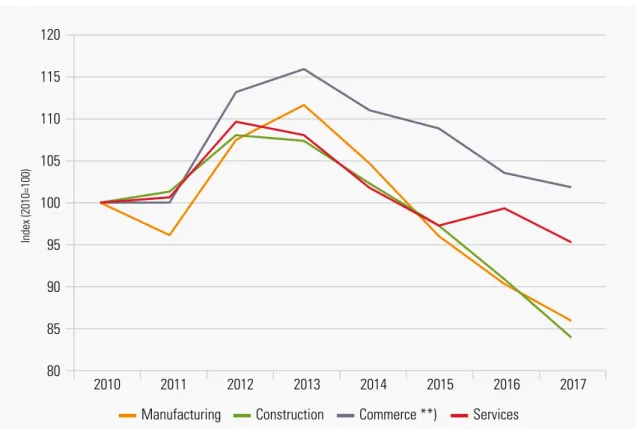
Fig. 4: Development of Insolvencies by Main Economic Sectors, 2010 to 20176 80 85 90 Index (2010=100) 95 100 105 110 115 120
Manufacturing Construction Commerce **) Services 2010
Figure in index point; *) without Ireland or Grecce, **) incl. hotels/catering
2011 2012 2013 2014 2015 2016 2017
Fig. 5: Insolvency Ratios by Main Economic Sector7
52 101 86 81 80 43 96 81 75 74 44 96 79 70 72 42 84 73 65 67 35 83 70 61 62 2013 2014 2015 2016 2017
Manufacturing Construction Commerce Services Total
6 Source: Creditreform 7 Source: Creditreform
Fig. 6: “Top Ten” Industries at Risk8
INSOLVENCIES PER 10.000 COMPANIES
Demolition Works 598
Removal/Relocation Transportation 479
Gastronomy (esp. Beverage-related) 475
Postal, Courier and Express Delivery Services 460
Private Security Companies 425
Bars 408
Insulation against Cold, Heat, Sound and Vibration 408
General Cleaning of Buildings 391
Take-away Fast Food Establishments 389
Pubs 388
Though companies such as Air Berlin or SolarWorld received extensive media coverage, the trend towards smaller insolvencies was confirmed throughout 2017; 82.7% of all insolvent companies fall within the 1-5 employee range.
Fig. 7: Corporate Insolvencies by Number of Employees in 20179
PERCENTAGE OF INSOLVENCIES PER COMPANY SIZE
1-5 People 82.7 (81.9) 6-10 People 7.8 (8.0) 11-20 People 4.8 (5.0) 21-50 People 3.1 (3.3) 51-100 People 0.9 (1.1) + 100 People 0.7 (0.7) 8 Source: Creditreform 9 Source: Creditreform
10 The following explanations are taken from K. Schmidt, Insolvenzordnung, 19th ed. 2016, introduction, sections 1-4.
2. INTRODUCTION
a) Legal developments leading to the Insolvency Code (InsO)
10The origins of German insolvency law can be traced back to the “Gemeine Recht” (Common Law) (reference work: Salgado de Somoza, Labyrinthus creditorum, 1665/1672) as well as the “Partikularrecht” (Particular Laws) of the 19th
century. These acted as the legal foundation to the “Konkursordnung” (Bankruptcy Act) of 1877. This Act was a key component of the so-called “Reichsjustizgesetze” (Judiciary Laws of the Reich), and came into force on 1.10.1879. The Bankruptcy Act rationalised several existing insolvency-related Acts and laws, such as the Prussian Bankruptcy Act of 1855, the Bavarian Court of Procedure of 1807/38 as well as the Code of Commerce of 1807/38.
Throughout the 20th Century, the Bankruptcy Act underwent repeated amendments. Of special importance was the
Bankruptcy Loss Payment Act of 17 July 1974, since it significantly strengthened the employees’ position in
After the German reunification, a new organ called the German Enforcement Ordinance (GesO) came into force in the ex-GDR states, creating a provisional and heavily fragmented legal provision for insolvency court procedures which essentially mixed-and-matched elements from the Bankruptcy Act of 1877, the Rules of Settlement of 1935 and the GesO of 1990. This provisional arrangement would last until 1998.
The reforms to Insolvency law, a process that was not limited to Germany and that started in the 1970s, crystallised in the “Insolvenzordnung” of 1994 – The Insolvency Code (abbreviated as InsO) – which, despite its name, came only into force on 1 January 1999. As early as 1988/89, the Federal Ministry of Justice presented a to-part "Discus-sion Draft Law on the Reform of Insolvency Law", which was followed in 1989 by a draft bill.
b) Significant changes to the InsO before and since its entry into force
11The first amendments to the InsO were already made prior to its entry into force on 1 January 1999. Of particular importance were (1) § 1 KSchG & § 113 BetrVG, which were amended by the Employment Promotion Act of 13.9.1996; as well as (2) §§ 113, 120-122, 125-128, which underwent a number of extensive amendments – predominantly in their wording, i.e. “Konkursverwalter” (insolvency liquidators) – intended for the old West German federal states. Since its entry into force, the InsO has experienced several changes and amendments, which include but are limited to: (1) the simplification of the InsO of 2007; (2) the MoMiG; (3) the Restructuring Act as well as; (4) the ESUG. Other factors contributing to its repeated revisions include the introduction of international insolvency law.
11 The following explanations are taken from K. Schmidt, Insolvenzordnung, 19th ed. 2016, introduction in section 7 et seqq. 12 Cf. on the following Mock, in: Uhlenbruck, InsO, § 16 marginal 5 f.
13 The following paragraphs without legal designation refer all to the InsO.
3. REQUIREMENTS FOR INSOLVENCY PROCEEDINGS
(GROUNDS FOR INSOLVENCY)
12In addition to illiquidity (§ 1713) and over-indebtedness (§ 19), the InsO contains the insolvency reason of imminent
illiquidity (§ 18). The latter entitles the debtor – or the debtor company – to protect itself early enough under judicial
insolvency proceedings, and, in this way, bring about orderly settlement and creditor satisfaction or restructuring. In principle, insolvency proceedings should only start when the applicant/claimant is in a state of
“Zahlungsunfähig-keit” (inability to pay, i.e. illiquidity) (§ 17). Over-indebtedness is only considered a ground for insolvency for legal
entities and partnerships (§ 19 para. 3) as well as “Nachlass” (inheritance estate) (§§ 320 sentence 1, 333 para. 1). The main grounds for insolvency are legally defined under InsO. According to § 17, debtors are insolvent if they are not able to fulfil all due payment obligations. Insolvency is generally assumed the moment the debtor stops making payments. Likewise, the debtor enters a stage of imminent illiquidity if they are unlikely to be able to meet their exist-ing payment obligations in a timely manner (§ 18 section 13). Over-indebtedness occurs when the debtor's assets can no longer cover all existing liabilities, unless under certain circumstances, the continuation of the company is a seen as likely.
The grounds for insolvency are final. However, they are interchangeable in the course of the procedure. Indeed, the insolvency court is entitled to open insolvency proceedings for over-indebtedness even if the creditor has initially only filed for insolvency and vice versa. When it comes to a creditor’s filing for insolvency, however, imminent illi-quidity does not constitute a reason for insolvency proceedings to begin, since it is only a reason for insolvency in proceedings filed by the debtor. Own applications where “imminent illiquidity” has been stated as the main ground for insolvency proceedings to start may well be re-considered by the courts, which may open the case under over-in-debtedness (§ 18 para. 13). The insolvency court must, however, extend its investigations to all admissible insolvency grounds. This is because many debtors or debtor companies that file for insolvency on the grounds of imminent illi-quidity are often cases of over-indebtedness. In these cases, especially if there is an obligation to file an application,
the court must open the case on account of over-indebtedness so that the requirements of Sections §§ 26 (3) and (4), 92 (liability provisions for the delay in insolvency proceedings) are met.
4. INSOLVENCY PROCEEDING PROCESSES – A BRIEF
OVERVIEW
Insolvency requires primarily a civil procedure. Accordingly, the initiation of a procedure requires a complaint (princi-ple of application).
a) Insolvency Application (i.e. filing for insolvency)
Only the debtor (own application) or a creditor (external application) can be the claimant. The application must be based on a reason/ground for insolvency (see above). It must also be provided in writing.
b) Potential establishment of a preliminary creditors' committee
The provisional creditors' committee was included in the law for the first time by the ESUG. In practice, such commit-tees existed well before the ESUG came into force, especially in large-scale proceedings. They had, however, no legal basis. A distinction is made between the compulsory, requested and optional creditors' committee. Only creditors or future creditors may be appointed as members, see §§ 21 para. 2 sentence 1 no. 1a, para. 1, 67 para. 2. Pursuant to § 67 para. 2, key representatives of the creditors shall include: (1) creditors entitled to separation; (2) insolvency credi-tors with the highest claims; (3) small credicredi-tors and an employee representative.
Should a work council exist, it is advisable to appoint the chairman of the works council as the committee chairman. Their tasks include:
Support and supervision of the provisional insolvency administrator.
Right to participate in the appointment of a temporary administrator.c) Expert opinion phase
Upon receipt of the insolvency application, the insolvency court proceeds to examine the general admissibility of the application. If the admissibility requirements are met, the court must then decide whether or not insolvency procedures should start. The decision lies on two essential factors, namely: (1) the existence of a ground for insolvency as well as; (2) the guarantee that the costs of the procedure can be covered. Upon determination of a reason/ground for insolvency and of sufficient assets, insolvency proceedings will open. If not, the opening of insolvency procedures will be cancelled. Insolvency courts often employ experts to examine and determine whether the admissibility requirements are all in order. These submit a written appraisal to the insolvency court, which can influence the court’s final decision.
d) Provisional (insolvency) administration
Aside from an expert’s written appraisal, the court has also the option of ordering measures to secure the “Massverbindlichkeiten” (insolvency liabilities). In these cases, the court typically appoints a so-called provisional insolvency administrator. Such administrators must ensure that the operations of the debtor’s company do not come to a halt until a decision on the opening of insolvency proceedings is met. Indeed, fully or partial closure of a company would have a significant impact on the rights of the debtor, since they would be deprived of the possibility of continu-ing operations at a time when a reason/ground for insolvency has not even yet been established.
If a general ban on disposal is imposed on the debtor, a so-called strong insolvency administrator comes into play. These have the administrative and disposition power over the debtor's assets. If, on the other hand, no general ban on disposal is conferred to the debtor, a so-called weak insolvency administrator comes into play, whose specific duties, rights and obligations are to be decided by the court.
e) Opening of insolvency proceedings
The insolvency court opens proceedings by way of a resolution. At the opening of an insolvency, the debtor’s admin-istrative and disposition powers are transferred to the insolvency administrator. Proceedings pending shall be suspended by operation of law. The insolvency administrator establishes assets liabilities from the time of the open-ing of insolvency.
f) Reporting date (creditors' meeting)
Should insolvency proceedings be opened, the date of the report (the so-called creditors’ meeting report) is decisive. The creditors' meeting will be agreed on by the insolvency court. Creditors entitled to attend the meeting are: (1) all insolvency creditors; (2) the insolvency administrator; (3) the members of the creditors' committee as well as; (4) the debtor. These are expected to report to the insolvency administrator on the economic situation of the debtor, and to explain what the main reasons causing the company’s financial strains are. Likewise, they must confirm whether there are prospects of retaining the debtor's company in whole or in part, and what possibilities exist for an insolvency plan. Based on the insolvency administrator's report, the creditors' meeting decides at the reporting date whether the debt-or's company is to be closed or provisionally continued. It may also instruct the liquidator to draw up an insolvency plan and its objectives. In addition, the creditors' meeting must decide on all significant legal acts.
g) Examination date
On the examination date, the insolvency administrator provides the court with a chart/explanatory note regarding the claims filed. When as a creditor one does not hear from the insolvency administrator after a timely filing of a claim, the claim to the insolvency table is established, § 179 Paragraph 3 Sentence 3 InsO.
h) Settlement phase
During the settlement phase, the insolvency administrator implements the resolutions of the creditors' meeting, liq-uidates the existing assets and adjusts the “insolvency table”. Depending on the size of the process and the specific circumstances, this phase can last from six months to several years.14
i) Final report and deadline
After all assets have been liquidated and all registered insolvency claims have been finally examined, the insolvency administrator submits a final report and the final accounts to the insolvency court.
If the Insolvency Court has no further questions, it shall schedule a closing meeting. In the case of smaller insolvency proceedings, this may also take place in writing. In the closing meeting, the insolvency administrator reports once again conclusively on the insolvency proceedings.
j) Distribution
After the closing date, the Insolvency Court approves the final distribution according to the distribution list submitted, provided no objections are raised. The distribution sequence required by law must be observed.
k) Repeal
Once the insolvency assets have been distributed, the court cancels the insolvency proceedings. In the case of insol-vency proceedings concerning the assets of a GmbH or a GmbH & Co. KG, the insolinsol-vency proceedings have been concluded. The period of good conduct only follows in insolvency proceedings over the assets of natural persons.
l) Residual debt discharge, if applicable (only for natural persons)
14 Special cases apply here for “Massenunzulänglichkeit”– the so-called insolvency inadequacies. In this case, the proceedings shall be terminated by the liquidator after the costs of the proceedings and assets liabilities have been repaid.
5. THE ROLE OF CO-DETERMINATION AND WORKS COUNCILS
IN INSOLVENCIES
15 BVerfG NZI 2009, 641, 642 section 10.
The obligations between employer and works council under the Works Constitution Act are not affected by an insol-vency. The works council remains completely unaltered by the opening of insolvency proceedings for as long as its term of office lasts. Likewise, new elections are also possible during insolvency proceedings, insofar as a works council-compatible business remains. The works council's rights of participation and co-determination are also not restricted by the opening of insolvency proceedings. Rather, they relate to workers’ issues arising during insolvency. During the insolvency proceedings, the employer remains a party under Works Constitution law. Nevertheless, they lose the authority to manage and dispose of all assets belonging to the insolvency estate upon the opening of insol-vency proceedings (§ 80 para. 1 of the InsO). Thus, the insolinsol-vency administrator alone must exercise the rights and obligations of the employer under the Works Constitution. In doing so, the insolvency administrator is bound by the legal framework under Works Constitution law. However, if the insolvency court orders the debtor to manage the assets themselves (Eigenverwaltung), the debtor largely retains their position as employer.
The insolvency administrator must comply with and implement the existing work agreements, considering their ter-mination option pursuant to § 77 (5) BetrVG in conjunction with § 120 (1) sentence 2 InsO (§ 77 (1) BetrVG). Insofar as the termination of a works agreement is possible, the after-effect of § 77 (1) BetrVG must be considered, whereby the InsO provides for a special notice period of three months for the termination of an onerous works agreement in § 120 (1) InsO – provided a longer period has been agreed. The administration must also adhere to the general principles for cooperation with the works council in accordance with Sections 74 et seq. of the German Stock Corporation Act. BetrVG. It must also observe the special participation and co-determination facts in social, personnel and economic affairs of §§ 87 ff., 92 ff., 106 ff. BetrVG. Therefore – aside from the special regulations under insolvency law for oper-ational changes – the statutory or contractually agreed competence of the conciliation body, pursuant to § 76 BetrVG, will not be affected by the opening of insolvency proceedings.
According to § 21 II No. 1 InsO, the debtor employer shall only continue to exercise and fulfil their rights under Works Constitution law during the period between filing of an application and opening of procedures when the administra-tive and disposition authority is not passed onto a provisional administrator. If a ban on disposal is imposed on the debtor, the provisional insolvency administrator is entitled to initiate or take the necessary measures under the Works Constitution already in the opening proceedings (§ 22 I InsO to). Therefore, it is important for provisional insolvency managers to bear § 121 BetrVG in mind, especially if the duty to provide information to the Economic Committee and the Works Council pursuant to Sections 106, 111 BetrVG has not been properly fulfilled.
6. APPOINTMENT AND SELECTION OF THE INSOLVENCY
ADMINISTRATOR
§ 56 para. 1 sentence 1 explains that a natural person – this may be an expert in business and independent from the creditors and the debtor – must be appointed as the insolvency administrator during the proceedings. Besides the creditors' meeting, the insolvency administrator is a key player in insolvency proceedings. Verifying its qualification is regulated under § 56, a complicated task that makes this appointment of the most complex procedural decisions of the court. A distinction must be made here between the pre-selection of the insolvency administrator and the subsequent appointment in the specific individual case. Ensuring equal access to the office of administrator requires a procedural design which enables the judge to conduct quick aptitude test for urgent cases.15 This is guaranteed by
appointed experts, trustees, administrators or insolvency administrators during future insolvency proceedings. The pre-selection list must be kept by the court.
16 See also Hunold, NZI 2015, 785 ff.
17 A precondition for the receipt of the insolvency payment is that the employee is employed in Germany – in practice, however, employees abroad are regularly included.
7. “INSOLVENZGELD” (INSOLVENCY MONEY) AND
PRE-FINANCING OF INSOLVENCY MONEY
16The starting point is usually the outstanding wages and salaries of employees for the month when the filing of the insolvency application has taken place. The insolvency money is a wage replacement payment from the Employment Agency. § 614 of the German Civil Code (BGB) obliges the employee to perform their work in advance on a regular basis without having any means of security at their disposal. The employer, on the other hand, pays the remuneration afterwards – once the work has been performed by the employee, i.e. at the end of the month. In order to protect employees’ pay claims, the pay-as-you-go insurance (§§ 358 to 361 SGB III), financed by the employers as a whole, secures their outstanding pay and contribution claims in the event of employer insolvency. Although this protection was not originally created for the benefit of insolvent companies, it is a positive side effect that has emerged in practice, since insolvency money has created an effective means of creating liquidity. Employees are also prepared to continue working for up to three months if their wages and salaries are outstanding due to insolvency payments. In addition to providing security for employees, this also makes the restructuring of a company possible (insolvency money as a restructuring subsidy). Furthermore, it helps with the preservation of jobs and the protection of social insurance carriers from loss of contributions (§ 175 SGB III). All insolvency proceedings also serve the creditor's interest as reorganisation proceedings. The use of the insolvency money as a state instrument for restructuring is a Germany-specific peculiarity that does not constitute state aid contrary to European law.17 The fact that money flows
into the insolvency proceedings from outside is unique in this respect. An undesirable side effect must, however, be pointed out: insolvent employer could theoretically use the insolvency money to delay insolvency proceedings. According to § 165 Paragraph 3 of the Third Book of the Code of Social Law (SGB III), an “Insolvenzereignis” (Insol-vency Event) is a prerequisite for the insol(Insol-vency money claim of an employee employed in the Germany. Likewise, a loss of pay and a timely filing of an application are mandatory for an insolvency money claim (§ 324 Paragraph 3 Sentence 1 SGB III). In accordance with § 167 (1) of the Third Book of the Code of Social Law (SGB III), insolvency money is paid in the amount of the net remuneration. The claim to insolvency money exists for remuneration claims of the last three months of the employment relationship (insolvency money period) preceding the insolvency (§ 165 Paragraph 1 S. 2 SGB III). It is important to note that the day when insolvency procedures start is not regarded as part of the insolvency money period.
Practical problems, however, tend to arise. This is partly because the insolvency money can only be applied for by the employee after the “insolvency event” has occurred and is only paid out afterwards, especially since wages and salaries generally were already left unpaid before the filing of the insolvency application. According to § 337 III 2 SGB III, insolvency money is only paid retrospectively for the period for which it has been applied for. This means that the employees of an insolvent company would have to spend three months, if not longer, without due salary payments. Thus, the average employee would be in need of social assistance. Furthermore, regular payment of the insolvency money regularly comes too late to meet the pension interests of the employees. In addition to the demotivation of the workforce, the absence of remuneration entitles the employee to exercise a right of retention up to extraordinary (personal) termination (§ 626 BGB). Consequently, the debtor company would again run a deficit due to the lack of per-sonnel and ultimately endanger a potential successful restructuring. The possibility of continuing operations stands or falls with the financing of the current wages of the workforce.
The period between filing for insolvency and payment of the insolvency money can be bridged by pre-financing. With-out pre-financing, the temporary administrator would be required to use up the last liquid assets. The pre-financing of pay claims serves, among other things, to persuade employees to continue working in the event of the employer's insolvency. It is also key in the preservation of jobs, thus increasing the chances of restructuring, or at the very least, the chances of opening insolvency proceedings. Pre-financing is carried out in such a way that the bank buys the employee's wage claim against the employer at the nominal value (debt purchase procedure). In return, the employee receives a payment (purchase price) corresponding to the net wage as insolvency money. After the “insolvency event” has occurred, the pre-financing bank completes the insolvency money claim accessory to the acquired remuneration claims in accordance with § 170 Paragraph 4 SGB III. According to the criteria of § 170 Paragraph 4 SGB III, two conditions must be fulfilled for the pre-financing of insolvency money: firstly, an effective assignment of the right to remuneration and second, the consent of the Employment Agency to the transfer and pledging to the third party. Once the insolvency event has occurred, approval is no longer required.
18 See Pape/Uhlenbruck/Voigt-Salus, Insolvency Law, 2nd edition 2010, Chapter 16 section 1 ff. 19 Explanatory statement on RegE, BT-Drucks. 12/2443
20 All regulations concerning creditor participation can be found in §§ 67 to 79 InsO.
21 The purpose of this is to clarify the monitoring and support obligations of the Committee to the Administrator.
8. CREDITOR AND EMPLOYEE PARTICIPATION DURING
INSOLVENCY PROCEEDINGS – CHARACTERISTICS
18One of InsO’s main aims is to expand and strengthen creditor rights within insolvencies.19 Previous experience has
shown that creditor participation is rather weak, especially since only major creditors attend creditor meetings. Despite this, the legislative changes brought about by the introduction of InsO have incentivised creditors to exercise their rights during insolvency proceedings. This becomes particularly evident during the following processes: (1) the decision on the type of settlement to be taken by creditors at the reporting date in accordance with §§ 156, 157 InsO; (2) the decision on whether to grant the debtor self-management under trustee supervision and; (3) the adoption of an insolvency plan. Thanks to this, creditors are now forced to make much greater use of their participative rights than under previous laws.20 Among other things, creditors now have the power to decide on the adoption of an insolvency
plan if they consider this form of settlement to be more sensible and effective than the dismantling of the debtor’s assets for the sole purpose of claim settlement. The extended scope of action granted to the debtor by the Insol-vency Code (pursuant to §§ 286 ff. InsO) also leads to an increased need of information by the creditors, a need that can be best satisfied through “Gläubigerselbstverwaltung”, the so-called creditor self-administration agencies. The question of the cost-benefit analysis of participation in the creditor self-administration agencies remains even after the insolvency regulations have come into force. However, even the reformed insolvency law does not necessarily offer a guarantee that the creditors’ prospects of settlement will considerably improve. Settlement rates in corporate insolvency remain, at around 5%, rather poor. Participation continues to be supported by separated creditors such as “house banks” as well as other institutionalised creditors such as the tax authorities and the pension protection association, each of whom pursue their own interests. Incidentally, a participation of unsecured creditors is hardly noticeable.
The InsO differentiates between the creditors’ committee regulated in §§ 67 to 73 InsO and the creditors’
meet-ing regulated in §§ 74 to 79 InsO. The creditors’ meetmeet-ing is the basic organ of creditor self-administration. Essentially,
the creditors’ committee is the central supervisory body of creditors for insolvency proceedings and in its function, it resembles a supervisory board.21 The relationship between the creditors’ committee and the insolvency administrator
is characterised by the committee’s duty to support and monitor the administrator in accordance with § 69 Paragraph 1 InsO. Paragraph § 21 (2) No. 1a InsO, § 69 InsO also applies to the provisional creditors’ committee in the opening proceedings. The rights and obligations of the creditor’s committee include the following:
pursuant to § 69 S. 2 InsO, they must be informed about the course of business, inspect books and business papers, have the monetary transactions and holdings checked,
rights also include the participation in the appointment of the provisional insolvency administrator/special administrator (§ 57a Paragraph 2 InsO)
the right to file an application to dismiss the administrator (§ 59 Paragraph 1 Sentence 2 InsO) as well as the organization of the creditors’ meeting, to be convened in accordance with § 75 Paragraph 1 No. 2 InsO. Furthermore, the Committee’s duties include the filing of an application to cancel the meeting when the prospect of a successful restructuring vanishes (§ 270b Paragraph 4 No. 2 in conjunction with No. 1 InsO)
the right to information vis-à-vis the debtor (§ 97 Paragraph 1 InsO)
the right of consent for legal acts of the administrator (§ 160 Paragraph 1 Sentence 1, Paragraph 2 InsO)
the right to participate in the distribution of proceeds, the discontinuation or cancellation of proceedings, in the preparation and execution of the insolvency plan and in the self-administration.The importance of the creditor’s meeting has been further strengthened by the Insolvency Code. The fundamental decisions on the way the proceedings are to be handled are now also taken at the meeting. Section 157 of the InsO stipulates that there can no longer be any delay in entering into liquidation against the creditors’ will. The debtor only has a chance of reorganisation if they convince the creditors that their reorganisation concept will bring about a better settlement than the liquidation of his assets.
The importance of creditor participation in insolvency proceedings is reflected in the final resolutions, which are sub-ject to the decision of the meeting.
The creditors’ meeting makes decisions on:22
the dismissal and re-election of the insolvency administrator (§ 57 InsO),
the filing of an application to dismiss the insolvency administrator (§ 59 InsO),• this results in a strengthened position of the employees, since, pursuant to § 67 Paragraph 2 Sentence 2
InsO, they must be represented in the creditors’ meeting and, in view of the unanimity requirement for the enforcement of an administrator, have a large influence on the proceedings.
the establishment of a creditors’ committee and, if necessary, its composition and powers (§ 68 Paragraph 1 InsO),
the question of whether the insolvent company should be closed down or provisionally continued (§ 157 InsO),
numerous measures if a creditors’ committee has not been appointed (e.g. whether the company or a busi-ness is to be sold, § 160 Paragraph 2 No. 1 InsO).The creditors’ meeting may also, among other things:
require the insolvency administrator to provide individual information and a report on the current state of affairs (§ 79 InsO),
demand information from the debtor about all circumstances relating to the proceedings (§ 97 InsO),
have all monetary transactions and stock of the administrator checked,
apply for continued liquidation despite insolvency plan (§ 233 InsO)22 A more detailed list of the task can be found on Hess, Großkommentar Insolvenzrecht, Volume I, §§ 1-112 InsO, 2nd ed. 2013, § 74 marginal 23 f.m.w.N.
9. WHAT RULES APPLY FOR REVENUE DISTRIBUTION?
HOW ARE CREDITORS’ CLAIMS AND RIGHTS CLASSIFIED?
HOW ARE EMPLOYEE CLAIMS TREATED?
23 Please refer to Beck, in: Beck/Depré, Praxis der Insolvenz, 3rd ed. 2017, § 1 section 113 ff.
Insolvency proceedings serve to satisfy the creditors of a debtor jointly. This is usually done by liquidating the debtor’s assets and distributing the proceeds (§ 1 sentence 1 InsO). The insolvency assets are distributed in various ways – in accordance with the legal quality of the creditor’s claim:23
a) Adjustment of assets liabilities
Assets liabilities are the costs of insolvency proceedings and other liabilities (§§ 53 ff. InsO). The administrator is obliged to pay all insolvency assets known to them in advance and in full. Only then will the claims of the insol-vency creditors (§§ 38-46 InsO) be corrected. Insolinsol-vency liabilities are neither included in the insolinsol-vency table nor does the course of distribution (§§ 187-205 InsO) influence their correction.
If the existing assets cover the costs of the proceedings, but not the other assets, the assets are then insufficient, as § 208 InsO stipulates. If the liquidator reports this to the insolvency court, the settlement of the assets creditors is based on the ranking order of § 209 Paragraph 1 InsO. In principle, after the costs of the insolvency proceedings, the new assets liabilities must be adjusted before the old assets liabilities. If asserted claims of insolvency liabilities are not recognised by the administrator, the creditors can assert their claims in litigation.
b) Security Creditors Satisfaction
Creditors entitled to separation (§§ 49-51 InsO) are entitled to preferential settlement from the liquidation
(Verw-ertung) of the assets belonging to the insolvency estate – which serve as security for them, breaching the principle of
equal treatment. The creditor can register the claim for the default (with regard to the collateral) in the table and have it determined accordingly. However, they shall only receive pro rata satisfaction for the personal claim in the amount of the loss that remains after the security has been liquidated. If, conversely, excess proceeds can be achieved from the sale/liquidation of the object, they shall flow into the body of creditors. Hence, insolvency creditors may be satisfied/settled.
c) (Proportional) settlement of insolvency creditors
i. General
The distribution of insolvency assets within §§ 187 ff. of the InsO means that the liquidation proceeds are dis-tributed to the insolvency creditors after the assets liabilities and claims of the “abgesonderungsberechtichte Gläubiger” (separated creditors) have been adjusted. In order to provide creditors with the liquidation pro-ceeds as quickly as possible, the Insolvency Code in § 187 para. 2 provides for a so-called partial distribution. The final distribution determines the ratio through which all individual creditors are satisfied. If liquidation proceeds are still available for distribution after completion of the final distribution or even after cancellation of the insolvency proceedings, it may be distributed in accordance with Sections 203 et seq. of the German Stock Corporation Act under a co called “Nachtragsverteilung.” (AktG).
ii. Distribution list
In principle, only insolvency creditors (§ 38 InsO) participate in the distribution. The distribution is based on a
distribution list drawn up by the insolvency administrator in accordance with § 188 InsO. This is ultimately
the updated insolvency table. It shall take into account all established claims, such as (1) titled claims; (2) claim for which proof is furnished to the administrator within a cut-off period of two weeks after the public announcement (§ 188 S. 3 InsO) that a declaratory action has been filed or a pending lawsuit has been commenced, § 189 InsO; (3) claims for which collateral exists – these are only taken into account when the insolvency administrator has the authority to liquidate, or only when if it is clear that the proceeds from the liquidation of the collateral are not sufficient to redeem the claim.
The inclusion in the distribution list is not equivalent to their (proportional) satisfaction. Payouts are only made to creditors with established claims and to the extent that the available assets are sufficient. Claims subject to suspensive conditions as well as default claims not yet determined are retained for later distribution. How-ever, these receivables are included in the calculation of the distribution quotas and are therefore taken into account within the meaning of § 188 S. 1 InsO.
iii. Budget billing distribution
According to § 187 Paragraph 2 of the Insolvency Act, the insolvency administrator can make as many partial
distributions as there are sufficient cash funds in the insolvency estate/assets. If proposed by the insolvency
administrator, the creditors’ committee determines the fraction to be paid, otherwise the administrator alone, § 195 Paragraph 1 InsO.
iv. Final distribution
If the assets have been liquidated, the final distribution is made in accordance with § 196 Paragraph 1 InsO. It may only be carried out with the consent of the insolvency court, as this effectively brings the proceedings to a conclusion. Corresponding amounts are to be provided for receivables included in the distribution list but not yet disbursable. The final distribution finally determines which receivables are taken into account (also in subsequent supplementary distributions). At this stage of the proceedings, the insolvency administrator submits their final statement of account (income/expenditure statement) and a final report to the insol-vency court. Finally, the Insolinsol-vency Court sets a deadline in accordance with § 197 (1) sentence 1 InsO. This serves a variety of purposes, namely: (1) to discuss the final account of the administrator; (2) to raise objec-tions against the final register as well as; (3) to inform the creditors on the unusable assets of the insolvency estate, § 197 Paragraph 1 Sentence 2 InsO. After the closing date, the final distribution takes place with the administrator transferring the quota to the creditors.
v. Supplementary distribution
A “Nachtragsverteilungsverfahren” or supplementary distribution procedure (§§ 203 ff. InsO) may be con-sidered if, after the final distribution and after the cancellation of the procedure, further free funds or other assets arise. This is the case when retained amounts become free for distribution (e.g. an insolvency creditor loses the declaratory proceedings), or amounts paid out of the assets flow back (e.g. after the occurrence of a condition subsequent). The supplementary distribution shall also be arranged if assets arising from the insol-vency are subsequently determined. The distribution is made to the insolinsol-vency creditors in accordance with the final register, § 205 InsO.
vi. Employee claims in insolvency24
If insolvency proceedings have been opened against the employer’s assets, the classification of the respective claims (insolvency liability or simple insolvency claim) is of decisive importance. The key factor for the classi-fication is the time allocation. Though the time at which the receivables arise is usually decisive, the time at which they fall due is irrelevant. In an employment relationship, therefore, the classification is determined by the time of the work performed (or owed).
(1) Period before insolvency application and opening of insolvency proceedings
Payment claims that arise in the period before insolvency application and opening of insolvency proceedings are always only simple insolvency claims according to § 38 InsO. They are processed in accordance with the procedures described above. The filing of the claim has some effects in terms of employment law. It suspends the statute of limitations, §204 Paragraph 1 No. 10 BGB. From the opening of insolvency proceed-ings, the assertion of claims for payment is no longer based on exclusion periods under collective bargaining agreements, but exclusively on the provisions of the InsO. This also applies to contractual exclusion peri-ods. However, these claims may not have lapsed at the time of the opening of the proceedings, otherwise the insolvency administrator can contest them by invoking the exclusion period stipulated in the collective agreement. However, this “privilege” does not apply to subsequent insolvency liabilities. When it comes to insolvency claims, limitation and exclusion periods must be observed.
(2) Period after filing for insolvency and before opening of insolvency proceedings
The classification of employees’ claims to remuneration from the date when the application for the opening of insolvency proceedings was filed must be considered in more detail. The decisive factor here is whether the court appoints a strong or a weak provisional insolvency administrator.
According to § 55 Paragraph 2 Sentence 2 InsO, claims for remuneration belong to the insolvency liabilities if the strong provisional insolvency administrator has accepted the employee’s performance for the assets they manage. However, if the provisional insolvency administrator does not accept the work performance, i.e. they release the employee, the claims to default in acceptance of wages are only simple insolvency claims (§ 108 Paragraph 2 InsO).
§ 55 (2) sentence 2 InsO, on the other hand, is not applicable either directly or to the legal acts of a weak pro-visional insolvency administrator. The weak propro-visional insolvency administrator cannot therefore justify any claims on assets by accepting the work performance. The claims for payment acquired during this period are therefore simple insolvency claims in accordance with § 38 InsO.
(3) Period after the opening of insolvency proceedings
The legal situation is simpler if insolvency proceedings have been opened. Employee compensation claims arising after this date are assets liabilities, § 55 Paragraph 1 No. 2 InsO. As already explained, the due date is largely irrelevant. The decisive factor is whether the employee owed the work for the period after the opening of insolvency proceedings. It is not necessary for the insolvency administrator recall the work, which is why default in acceptance is sufficient. However, the employee’s claims in the event of indemnification after the opening of insolvency proceedings regularly constitute subordinated assets in accordance with § 209 Para-graph 1 No. 3 InsO. Classification as an insolvency liabilities is of enormous importance for the employee: this gives them a considerably greater prospect of full realisation of claims, because their claims are satisfied from the insolvency assets/estate immediately after those entitled to separation and after payment of the costs of the insolvency proceedings.
25 For the following explanations please refer to Hergenröder, in: MüKoBGB, 7th edition 2016, Appendix § 622, § 1 KSchG section 59 ff.
10. TERMINATIONS DURING EMPLOYER INSOLVENCIES
25As previously mentioned, the existence of the employment relationship will not change if insolvency proceedings are opened against an employer’s assets. This results from § 108 Paragraph 1 Sentence 1 InsO. The impending open-ing of insolvency proceedopen-ings or the openopen-ing of insolvency proceedopen-ings themselves do not necessarily constitute a reason for termination, according to Act. Section 626 para. 1 BGB (German Civil Code). If the appointed insolvency administrator fires the employee, the KSchG remains applicable. As for the redundancy for operational reasons and social selection, § 125 InsO contains a provision that deviates in detail from § 1 (5) KSchG. Special features for
ter-mination during insolvency proceedings also arise regarding the notice period from § 113 S. 1 InsO. Thereafter, the employment relationship may be terminated by the insolvency administrator irrespective of the agreed contract term. According to § 113 S. 2 InsO, a maximum period of three months applies, unless a shorter period is specified. If necessary, the insolvency administrator may terminate an employment relationship that has already been terminated in accordance with § 113 sentence 1 InsO (so-called “Nachkündigung”).
On the other hand, a weak provisional insolvency administrator may only give notice of termination if this authority has been expressly assigned to them by the insolvency court in accordance with § 21 para. 2 no. 1 InsO in conjunction with § 22 para. 2 InsO.26 A limited reservation of consent according to § 21 Abs. 2 Nr. 2 Alt. 2 InsO leaves the
contrac-tual employer the right to terminate the contract but binds this to the consent of the provisionally weak administrator. Even the strong provisional insolvency administrator cannot rely on § 113 InsO.
In the opinion of the FOPH, the (“release”) declaration pursuant to § 35 (2) InsO should give the insolvency administra-tor the power of administration and disposal over the employment relationships existing at the moment back to the debtor and thus release the insolvency estate. The contractual employer is thus once again entitled to terminate the contract. This case law raises serious concerns.27
26 Cf. § 21 Paragraph 2 No. 2 Old. 2 InsO in conjunction with § 22 (1) sentence 1 InsO
27 Näher Hergenröder, DZWIR 2013, 251; cf. also Lindemann, ZInsO 2014, 695; Windel, RdA 2012, 366 each with w.w.N.
28 Refer to Hamacher, in: Nerlich/Römermann, Insolvenzordnung, 33rd EL September 2017, promulgated before §§ 121 to 124 InsO marginal notes 55 f. and § 123 marginal notes 5 ff.
11. SOCIAL PLAN IN INSOLVENCIES
28According to the legal definition in Section 112 (1) sentence 2 BetrVG, the social plan is an agreement between the parties to the Works Constitution Act on the compensation or mitigation of the economic disadvantages suffered by employees as a result of the planned change of business (Section 111 BetrVG). The social plan has the effect of a
works agreement pursuant to § 112 (1) sentence 3 BetrVG, i.e. it mandatory pursuant to § 77 (4) BetrVG. According
to court rulings, the social plan is a genuine works agreement within the meaning of the BetrVG. The social plan thus gives rise to direct legal claims against the insolvency administrator. In contrast to the reconciliation of interests, the ruling of the conciliation body replaces the agreement between the insolvency administrator and the works council;
the social plan is therefore enforceable. This applies irrespective of whether a reconciliation of interests has
been achieved between the parties to the operation.
The scope of the social plan to be drawn up after the procedure has been opened is regulated in § 123 InsO. 124 InsO contains provisions on the “preinsolvency” social plan, which was drawn up no earlier than three months before the opening of insolvency proceedings. Sections 123, 124 do not create an independent legal institution of an “insolvency social plan”. Rather, the general provisions of §§ 111 ff. BetrVG. The company partners are limited in their regulatory power by the regulations in § 123 when drawing up a social plan in insolvency proceedings.
The existence of a planned operational change is a prerequisite for any social plan in accordance with § 112 Para. 1 S. 2 BetrVG. The opening of insolvency proceedings alone does not in itself constitute a change in business operations. A business change in insolvency will regularly take the form of a restriction or closure of the entire business or of some of its essential parts (§ 111 S. 3 No. 1 BetrVG).
§ 123 primarily regulates the limits of the volume of social compensation plans in the event of insolvency. In all other respects, i.e. procedure, closure and effect, general principles apply, which are not dealt with separately here. Dis-criminatory social plans are invalid pursuant to § 7 (2) AGG. In insolvency proceedings, § 121 must be observed. This can speed up the conciliation procedure. The resolution procedure under § 122 only applies to the reconciliation of interests. The social plan can therefore also be enforced by the works council in insolvency proceedings. The excep-tion of Secexcep-tion 112a (2) sentence 1 BetrVG, according to which a social plan is not enforceable in the first four years
after the formation of a company, also applies in the context of insolvency. In all other respects, the arbitration board shall make a binding decision in the event of non-agreement. A social plan can still be enforced after the business change has been implemented.
The obligation to have a social plan approved by the creditors’ committee in accordance with § 160 InsO only exists if the insolvency administrator agrees a social plan with the works council; a binding ruling by the conciliation body does not require approval. In this case, however, the insolvency administrator may be obliged to initiate resolution proceedings against an incorrect decision. According to § 164 InsO, a violation of the insolvency administrator’s duty to obtain approval does not affect the effectiveness of the social plan. However, they may be liable for damages. Insolvency administrators may act as assessors themselves under § 76 para. 2 BetrVG. They are not obliged to appoint creditors as assessors for the conciliation body. The interests of the creditors are sufficiently secured by the regula-tions in §§ 123, 124. In its decision within the framework of Section 112 para. 5 sentence 1 BetrVG, the conciliation body shall not focus on the economic justifiability for the company, but on the interests of the insolvency creditors. If, during the conciliation procedure it becomes clear that no more funds are available, the procedure must be termi-nated. If the insolvency administrator wishes to make several operational changes, the works council may obtain the drafting of several social plans. If several companies are affected by a uniform change of business, the general works council may be responsible.
29 See Bertram, in: Gottwald, Insolvency Law Manual, 5th edition 2015, § 108 marginal 15 ff.
12. WORKS COUNCIL PARTICIPATION IN INSOLVENCY
PROCEEDINGS
29The occurrence of insolvency as well as the opening of insolvency proceedings do not affect the validity of the BetrVG. Employees need collective protection, especially in the insolvency of a company. However, the guiding principle of the BetrVG is not limited to the fulfilment of protective functions, since it guarantees employee participation in the organization of the operational order directly affecting them. The involvement of employee representatives in the decision-making process and in decisions and measures taken by the employer is part of the principle of democratiza-tion. It also claims its validity in the event of insolvency. With the opening of insolvency proceedings, the insolvency administrator replaces the previous employer under Works Constitution law. Therefore, the insolvency administrator is legally obliged to fully observe the co-determination rights of the works council and to involve the employees in its decision-making process. This can delay decision-making and lead to less economic effectiveness. The advantage of this is that those concerned usually support it after hearing and including their arguments. Co-determination does not just mean interfering, rather, it means taking responsibility. The works council must ensure that the decisions and measures taken together are accepted by the workforce and that their implementation is facilitated and promoted to strengthen harmony among all parties. However, this presupposes that the insolvency administrator does not present the employee representatives with a fait accompli, but that their concepts are well-founded.
From the first day of taking office, the insolvency administrator must exercise all rights and obligations of the employer under the Works Constitution. They are bound to the principles of trusting cooperation in accordance with § 74 BetrVG and must hold the monthly meeting with the works council in accordance with § 74 Paragraph 1 BetrVG. They must continue to implement the existing works agreements and regulation agreements in accordance with § 77 Paragraph 1 BetrVG. They are responsible for the information and advice obligations pursuant to §§ 80, 81 and 90 BetrVG. The observance of co-determination rights according to §§ 87, 91 BetrVG is particularly important. If the insolvency admin-istrator wishes to change the working hours, release part of the workforce, order short-time work, company leave or proceed with overtime, they must obtain the approval of the works council or, if necessary, have the conciliation body decide in cases relating to § 87 Para. 2 BetrVG.
Of particular importance are the co-determination rights of the works council in personnel matters during insolvency proceedings, particularly regarding staff dismissals. Displacements iSv. § 95 exp. 3 BetrVG are subject to the code-termination with individual personnel measures in accordance with § 99 BetrVG. The work council must be informed about the transfer in advance and has a right of refusal of consent limited to the reasons mentioned in § 99 exp. 2 BetrVG. If the works council refuses its approval, the insolvency administrator can apply to an employment court to replace the approval in accordance with § 99 Paragraph 4 BetrVG. In the event of dismissals, the works council must be consulted beforehand in accordance with § 102 BetrVG. This also applies if a reconciliation of interests with a list of all names that have been agreed on.
In economic matters, the insolvency administrator must, above all, inform the Economic Committee regularly in accordance with Section 108 of the German Works Constitution Act (BetrVG) about economic matters, even if they are specific to insolvency, in a comprehensive and timely manner and advise it on the relevant matters. Special impor-tance is to be attached to the participation and co-determination facts of the work council with planned changes of operation, even if these changes of operation are even necessary outflow of insolvency-legal decisions. Under the Works Constitution, it is irrelevant whether it concerns changes to operations, staff reductions or the closure of parts of operations in connection with insolvency.
If the insolvency administrator intends to change operations in accordance with § 111 BetrVG within the scope of insolvency proceedings, in particular to restrict or close down the entire operations or essential parts of operations, they must inform the works council of their plans in a timely and comprehensive manner and discuss the planned changes in operations with the works council. They must also try to reach a reconciliation of interests with the works council. In principle the insolvency manager remains bound to the regulations of §§ 111-113 BetrVG, i.e. they must not only draw up a reconciliation of interests and conclude a social plan, but they can also make claims for compensation of disadvantages according to § 113 BetrVG.
30 The Commission’s name is used here in draft Directive COM 723/2016. The term “pre-insolvency reorganisation proceedings” is also used synonymously in legal literature.
31 Cf. on this and in detail on the preinsolvency corporate restructuring of Schluck-Amend, ZRP 2017, 6 ff.
32 More in-depth info on Seagon, NZI Supplement 2017, 12 ff.; Naumann, NZI Supplement 2017, 35 ff.; Schmoll, Sanierung ohne Stakeholder?, in: «Eine Branche im Wandel – Sonderveröffentlichung Handelsblatt», 2018, p. 14 f.
13. PREVENTIVE RESTRUCTURING PROCEDURES
30IN GERMANY
31The introduction of a preventive restructuring procedure32 has been discussed intensively in Germany since 2009. The
main factors contributing to the introduction of such a procedure were (1) the global banking and capital market crisis and; (2) the reform of the Bond Act in 2009. Both factors led to the introduction of new restructuring possibilities, such as the application of the majority principle outside bond issues.
The topic of “promotion of extrajudicial restructuring measures” was included in the coalition agreement of the 17th legislative period. When the law to further facilitate the restructuring of companies (ESUG) was announced in the Federal Law Gazette, it was clear that the legislator had initially dispensed with the introduction of a preventive
restructuring procedure. Instead, the ESUG strengthened self-management (§ 270 a InsO), introduced the so-called
protective shield procedure (§ 270 b InsO) and increased the functionality of “debt-to-equity swaps” through the pos-sibility of including shareholder rights in the insolvency plan (§ 225 a InsO) and strengthened the practice of corporate restructuring within and outside insolvency. Five years after the introduction of the ESUG, an evaluation is now to be presented in order to identify its success to date and possible areas for improvement. A deeper reform towards a “pre-insolvency” restructuring process is pending to the implementation of the EU directive on preventive restructur-ing frameworks.