UNIVERSIDADE DE ÉVORA ARCHMAT
(ERASMUS MUNDUS MASTER IN ARCHaeological MATerials Science) Mestrado em Arqueologia e Ambiente
Morphological and chemical characterization of
tintypes and ambrotypes
Leonor Costa 34314
Supervisors:
Professor Teresa Ferreira, Universidade de Évora Professor Catarina Miguel, Universidade de Évora
Évora, September 2016
ii
Acknowledgements
I want to acknowledge my supervisors, Professor Teresa Ferreira and Doutora Catarina Miguel, for their much prised advice, guidance and support. I am very thankful to Margarida Nunes for her precious help, patience and availability to clarify (a lot) of things I struggled with. Also, Sónia Costa for the technical photography and Milene Trindade for handling the conservation issues.
I also want to thank my friends and fellow Archmatians, Milan Marković for his kindness and wholehearted friendship; Whitney Jacobs, Diego Badillo and Dauren Adilbekov for their friendships and wide-ranging conversations, sometimes, though rarely, even about our projects; and everyone else for sticking together and having fun wherever we went.
Finally, and most vitally, I want to thank my parents. For so many things they wouldn’t fit.
ii
Table of Contents
Acknowledgements ... i Table of Contents ... ii List of figures ... ii List of tables ... v Abstract ... ii Chapter I: Introduction 1.1. Introduction to the subject ... 11.2. The basic elements of photography ... 1
1.3. Historical context ... 3
1.4. The wet collodion process ... 4
1.4.1. The Ambrotype ... 8
1.4.2. The Tintype ... 11
1.4.3. Retouched photographs ... 15
1.4.4. Finishing varnishes ... 17
1.5. Degradation of photographic objects ... 18
1.5.1. General degradation ... 18
1.5.2. Degradation of the image forming particles ... 18
1.5.3. Degradation of the collodion ... 19
1.5.4. Degradation of the support ... 20
1.6. Review of the analytical techniques used in the characterization of photographic items .. 22
1.6.1. Working principles of the analytical techniques used in this work ... 23
1.6.1.1. Technical photography ... 23
1.6.1.2. Optical Microscopy (OM) ... 24
1.6.1.3. Scanning Electron Microscopy coupled with Energy Dispersive Spectroscopy (SEM-EDS) ... 25
iii
1.6.1.5. Micro-Raman Spectroscopy (µ-Raman) ... 27
1.6.1.6. Micro X-ray Diffraction (µ-XRD) ... 28
Chapter II: Materials and Methods 2.1. Sample selection ... 32
2.2. Methodology ... 35
2.2.1. Technical photography ... 36
2.2.2. Optical Microscopy (OM) ... 36
2.2.3. Scanning Electron Microscopy coupled with Energy Dispersive Spectroscopy (SEM-EDS) ... 37
2.2.4. Micro-Fourier Transform Infrared Spectroscopy (µ-FT-IR) ... 37
2.2.5. Micro-Raman Spectroscopy (µ-Raman) ... 38
2.2.5. Micro X-ray Diffraction (µ-XRD) ... 38
Chapter III: Results and Discussion 3.1. Morphological and chemical characterization ... 40
3.1.1. Technical photography ... 40
Ambrotypes ... 40
Tintypes ... 43
3.1.2. Optical Microscopy (OM) ... 45
Ambrotypes ... 45
Tintypes ... 51
3.1.3. Scanning Electron Microscopy coupled with Energy Dispersive Spectroscopy (SEM-EDS) ... 56
Ambrotypes ... 56
Tintypes ... 66
3.1.4. Micro-Fourier Transform Infrared Spectroscopy (µ-FT-IR) ... 73
Ambrotypes ... 73
iv
3.1.5. Micro-Raman Spectroscopy (µ-Raman) ... 75
Ambrotypes ... 75
Tintypes ... 77
3.1.6. Micro X-ray Diffraction (µ-XRD) ... 79
Ambrotypes ... 79
Tintypes ... 81
Brass mats ... 83
Chapter IV: Conclusions ... 85
References ... 87
v
List of figures
Figure 1: steps in the formation of a silver halide image. ... 2
Figure 2: Niépce's first photograph. Source: hrc.utexas.edu ... 3
Figure 3: iodized collodion being poured onto the plate (top) and the excess being poured back into the bottle (bottom). Source: americanhistory.si.edu ... 5
Figure 4: example of a thumb mark left on a wet plate collodion negative. Source: graphicatlas.org ... 5
Figure 5: example of an ambrotype with drip lines. Source: graphicatlas.org ... 6
Figure 6: scheme of the disposition of the elements of a cased daguerreotype, identical to cased tintypes and ambrotypes. Source: www.phototree.com ... 7
Figure 7: example of a cased ambrotype (front and back). Source: americanantiquarian.org ... 8
Figure 8: thin section of an ambrotype on which varnish was applied as background. ... 9
Figure 9: example of an ambrotype with the black varnish applied on the opposite side of the collodion. Source: graphicatlas.org ... 9
Figure 10: ambrotype with a dark fabric as background. Source: graphicatlas.org ... 9
Figure 11: example of an ambrotype made on a dark glass, substituting the dark background. Positive image (left) and negative image (right). Source: graphicatlas.org ... 10
Figure 12: cross-section of a tintype. Source: graphicatlas.org... 11
Figure 13: example of pinholes. Source: graphicatlas.org ... 12
Figure 14: example of a tintype in a case (left) and in a paper mat (right). ... 13
Figure 15: example of a tintype presented in a frame (left) and in a passe-partout (right). ... 13
Figure 16: example of a bon ton tintype, with two clipped corners (left) and of a vignetted bon ton tintype with clipped corners (right). Source:graphicatlas.org ... 14
Figure 17: a four lens camera used to produce bon tons. Adapted from [7] ... 14
Figure 18: example of a retouched tintype. Source: graphic atlas.org ... 16
Figure 19: example of a painted ambrotype. Source: graphicatlas.org ... 17
Figure 20: example of a photograph with silver mirroring. Source: notesonphotographs.org .... 18
Figure 21: example of an ambrotype with reticulation of the collodion. Source: graphicatlas.org ... 19
Figure 22: Example of mould on a collodion based object (50x specular light). Source: graphicatlas.org ... 19
Figure 23: example of the phenomenon of bleaching of the glass. Source: graphicatlas.org ... 20
Figure 24: example of cracking of the background varnish. Source: graphicatlas.org ... 21
Figure 25: example of abrasion and detachment of the binder and formation of rust. ... 22
Figure 26: the electromagnetic spectrum showing the different regions, measured in nanometres. Source: www.nailsmag.com ... 24
Figure 27: Scheme of the dark-field and bright-field modes on a microscope. ... 25
Figure 28: Structure of a scanning electron microscope (SEM). Adapted from [42] ... 25
Figure 29: interaction zone of electrons and specimen atoms below a specimen surface. Source: [42] ... 26
Figure 30: optical diagram of a simple specular reflectance accessory for FTIR instrument. .... 27
Figure 31: Optical diagram of a Raman microscope. Source: [42] ... 28
Figure 32: Bragg's diffraction by crystal planes. Source: [42] ... 29
vi
Figure 34: ambrotype A (AA) and ambrotype B (AB); tintype A (TA) and tintype B (TB) before
the removal of the frame. ... 32
Figure 35: two ambrotypes from 1859 (estimated date). Source: phototree.com © ... 33
Figure 36: ambrotype dated from 1856 (estimate) (left) and tintype dated from 1858 (estimate) (right). Source: phototree.com© ... 34
Figure 37: Stereomicroscopic images of the inscriptions on the mat of Tintype A. ... 34
Figure 38: [Union Soldier and Barber] (American) 1861–1865 (left) and Unidentified Photographer, ca. 1863, United States (right). Source: icp.org ... 35
Figure 39: Tintype dated from 1862 (estimated). Source: phototree.com© (left) and Unidentified Photographer, ca. 1863, United States. Source: icp.org (right) ... 35
Figure 40: mapping of the areas observed with optical microscopy on ambrotypes A (AA) and B (AB)... 45
Figure 47: mapping of the areas observed with optical microscopy on tintypes A and B. ... 51
Figure 42: mapping of the analysed areas with SEM-EDS on ambrotypes A and B. ... 57
Figure 43: mapping of the areas analysed with SEM-EDS on tintypes A and B. ... 66
Figure 44: µ-FTIR spectrum of ambrotype A. The inset, detail from the analysed spot. ... 74
Figure 45: µ-FTIR spectrum of ambrotype B. The inset, detail from the analysed spot. ... 74
Figure 46: µ-FTIR spectrum of tintype A. The inset, detail from the analysed spot. ... 75
Figure 47: µ-FTIR spectrum of tintype B. The inset, detail from the analysed spot. ... 75
Figure 48: mapping of the areas analysed with μ-Raman spectroscopy on ambrotypes A and B. ... 76
Figure 49: µ-Raman spectrum of ambrotype A (areas 1 and 2). ... 76
Figure 50: µ-Raman spectrum of ambrotype B. The inset, detail from the analysed spot. ... 77
Figure 51: mapping of the areas analysed with µ-Raman spectroscopy on tintypes A and B. ... 77
Figure 52: µ-Raman spectra of tintype A. The inset, detail from the analysed spots. ... 78
Figure 53: µ-Raman spectra of tintype B (areas 1 and 2). The insets, details from the analysed areas... 78
Figure 50: μ-XRD diffractogram of the analysis of ambrotype A. The inset, detail of the analysed spot. ... 79
Figure 51: μ-XRD diffractogram of the analysis of ambrotype B. The inset, detail of the analysed spot. ... 80
Figure 52: μ-XRD diffractogram of the analysis of tintype A. The inset, detail of the analysed spot. ... 81
Figure 53: μ-XRD diffractogram of the analysis of tintype B. The inset, detail of the analysed spot. ... 82
Figure 54: μ-XRD results of the analysis of the four brass mats. ... 83
Figure 59: stick patterns of Cu (reference code: 0836) and Zn (reference code: 00-004-0831). ... 84
vii
List of tables
Table 1: Daguerreotype typical formats. Adapted from [19]. ... 10
Table 2: typical tintype formats. Source: graphicatlas.org ... 13
Table 3: finishing varnishes used for collodion images, adapted from [33] ... 17
Table 4: normal and raking light, ambrotypes. ... 41
Table 5: transmitted light and UV radiation, ambrotypes. ... 42
Table 6: normal light, tintypes. ... 43
Table 7: raking light and UV radiation, tintypes. ... 44
Table 8: red pigment particles on the cheeks. Ambrotypes A and B, areas 2 and 2. ... 46
Table 9: image forming particles and the interface between highlights and a dark areas on ambrotypes A and B, areas 3 and 3. ... 46
Table 10: abrasion caused by the frames on ambrotypes A and B, areas 1 and 1. ... 47
Table 11: cracks (a) and gaps (b) on the varnish and the emulsion on ambrotype A, area 3. ... 48
Table 12: drip line and degraded areas on ambrotype A, area 4. ... 49
Table 13: cracks on the varnish and emulsion (a), varnish layers of different thickness (b) on ambrotype A, area 5. Gaps (c) and cracks (d, transmitted mode) on the dark varnish on the back side of ambrotype B. ... 50
Table 14: drip line with cracks, tintype A, area 1. Abrasion and gaps on the varnish, tintype B, area 2. ... 52
Table 15: abrasion and green degradation compound on tintype A, area 2 and tintype B, area 5. ... 53
Table 16: gold retouch on tintype A, area 3. Red pigment on tintype B, area 3 ... 54
Table 17: drip lines on tintype A, area 5 and tintype B, area 1. ... 55
Table 18: back sides of the tintypes, showing a red degradation compound and varnish layers. 56 Table 19: VP-SEM images of highlights on ambrotype A (A and B) and on ambrotype B (C and D); dark areas on ambrotype A (E and F) and on ambrotype B (G and H). ... 58
Table 20: VP-SEM images interfaces on ambrotype A (A and B) and on ambrotype B (C and D). ... 59
Table 21: VP-SEM image of the areas 1, 2 and 3 showing the points analysed (a, b, c and d); elemental point analysis of a particle showing the presence of silver on the image forming particles (a); of the glass surface (b), showing the support to be a soda-lime-silica (Na-Ca-Si) glass; of a particle of the red pigment, probably iron oxide (c); and of a particle containing Ba and S (d). ... 60
Table 22: VP-SEM images of areas 1 and 2 showing the points analysed (a, b and c); elemental point analysis of a particle showing the presence of silver on the image forming particles (a); of a particle on a tarnished area with Ag and S, suggesting the presence of silver sulphide (b); on the dark area, showing that the support is a soda-lime-silica glass (c). BSE, backscattered electrons; elemental maps (Ag, S). ... 62
Table 23: VP-SEM images of area 2 showing the points analysed (d and e); elemental point analysis of a particle containing Ag and I (d); and of a particle containing Na and S. ... 63
Table 24: VP-SEM image of area 3 showing the points analysed (a and b); elemental point analysis on a particle containing Ag and Cl (a); and on a particle containing Cu, S and Cl (b). 64 Table 25: BSE, backscattered electrons; elemental maps (Cu, S, Cl and Ag). VP-SEM image of area 4 showing the point analysed (c); elemental point analysis on a pigment particle containing Fe (c). ... 65
viii
Table 26: VP-SEM images of highlights on tintype A (A and B) and on tintype B (C and D); dark areas on tintype A (E and F) and on tintype B (G and H). ... 67 Table 27: VP-SEM images interfaces on tintype A (A and B) and on ambrotype B (C and D). 68 Table 28: VP-SEM images of areas 1 and 2 showing the points analysed (a, b and c) and of the golden particles (i); elemental point analysis on a particle containing Ag (a); on a particle containing Au (b); and on particle containing Ag and S (c). ... 69 Table 29: VP-SEM images of area 3 showing the points analysed (a and b); elemental point analysis on a particle containing Ag and I (a) and on a particle containing Fe (b). ... 70 Table 30: VP-SEM images of areas 1 and 2 showing the points analysed (a and b); elemental point analysis on a particle containing Ag (a); and on a particle containing Ag, S and Na (b). . 71 Table 31: VP-SEM images of area 3 showing the point analysed (a); elemental point analysis on a particle containing Fe (a). BSE, backscattered electrons; elemental maps (C, Fe). ... 72
ix
Abstract
The present work was done on two ambrotypes and two tintypes. It aimed evaluate their chemical and physical characteristics, especially their degradation patterns. Moreover, to understand the materials used for their production and cross-check analytical and historical information about the production processes. To do so multi-analytical, non-destructive methods were applied. Technical photography highlighted the surface morphology of the objects and showed the distribution of the protective coatings on their surfaces through UV radiation, which were very different between the four pieces. OM allowed for a detailed observation of the surfaces along with the selection of areas of interest to be analysed with SEM-EDS. SEM-EDS was the technique used most extensively and the one that provided the most insightful results: it allowed to observe the morphology of the image forming particles and the differences between highlights, dark areas and the interfaces between them. Also, elemental point analysis and elemental maps were used to identify the image forming particles as silver and to detect the presence of compounds related to the production, particularly gold used to highlight jewellery, iron as the red pigment and traces of the compounds used in the photographic process containing Ag, I, Na and S . Also, some degradation compounds were analysed containing Ag, Cu, S and Cl. With μ-FT-IR the presence of collodion was confirmed and the source of the protective varnishes was identified, particularly mastic and shellac, in either mixtures of the two or only one. μ-Raman detected the presence of metallic silver and silver chloride on the objects and identified one of the red pigments as Mars red. Finally, μ-XRD showed the presence of metallic silver and silver iodide on both ambrotypes and tintypes and hematite, magnetite and wuestite on the tintypes.
x
Resumo
O presente estudo foi desenvolvido sobre dois ambrótipos e dois ferrótipos. O propósito consiste em estudar as suas características químicas e físicas, dando particular ênfase aos padrões de degradação. Também é pretendido compreender os materiais usados na sua produção e relacionar esta informação analítca com dados históricos de manuais técnicos contemporâneos à produção dos objectos. Para tal foram utilizadas técnicas multi-analíticas e não destrutivas. O uso da fotografia técnica permitiu uma observação da morfologia das superficies dos objectos e da distribuição das camadas de verniz através da radiação UV, muito diferente entre os quatro. A microscopia óptica proporcionou uma observação detalhada das superfícies assim como a selecção de pontos de interesse para serem analisados com SEM-EDS. SEM-EDS foi a técnica usada mais extensivamente e a que proporcionou os resultados mais detalhados: observação da morofologia das partículas formadoras da imagem e as diferenças entre zonas de altas luzes, baixas luzes e as interfaces entre elas. A análise elemental e os mapas elementares foram usados para detectar prata nas partículas formadoras da imagem e a presença de compostos relacionados com a produção, em particular ouro utilizado para realçar joalharia, ferro no pigmento vermelho e vestígios de compostos utilizados no processo fotográfico incluindo Ag, I, Na e S. Do mesmo modo, alguns compostos de degradação foram analisados contendo Ag, Cu, S e Cl. Com μ-FT-IR a presença de colódio foi confirmada e identificada a origem dos vernizes, mástique e goma-laca, tanto em misturas dos dois como apenas um. Com μ-Raman foi detectada a presença de prata metálica e de cloreto de prata e identificado um dos pigmentos vermelhos como Mars red. Finalmente, µ-DRX revelou a presença de prata metálica e iodeto de prata tanto nos ambrótipos como nos ferrótipos e hematite, magnetite e wuestite nos ferrótipos.
1
1.1. Introduction to the subject
Since its discovery, photography has gained an increasing importance in cultural heritage. Although disregarded as an actual art form on the first decades of its existence, it is now solidly established as one. Archives, museums and private collections comprise large amounts of photographs, which can be a testimony of our ancestors and their lifestyles as well as objects of artistic expression. Thus the importance of this medium and the keenness to study and understand these objects. Although photography had a profound social presence and influence in the last 150 years, the conservation of photographic objects has been developed relatively recently in the last 30 years. This has been done through the chemical characterisation and historical research of photographic objects [1]. Regarding the subjects of this study, tintypes and ambrotypes, the scientific literature is still rare. During the period of their production, a great variety of materials was used, because photographic processes were evolving very quickly and a lot of materials were being tried to achieve better results. Also, sometimes materials were used besides the ones documented on manuals of the time. Therefore, when analyzing these objects, different materials can be encountered, with different chemical and physicochemical characteristics. They are multilayered items, composed of organic and inorganic compounds and their degradation phenomena are strictly related to the composition of their layers: hence the importance of their physical and chemical analysis.
1.2. The basic elements of photography
Photographic objects are composite items, typically composed of three layers: the support, which can be glass, metal or paper, or another; the emulsion, which comprises a binder and the image forming particles; and additional layers such as colour particles and finishing coatings [2].
Black and white photographic images, in particular, are usually made up of an emulsion which includes silver particles embedded in a thin layer of binder, a transparent compound such as gelatine, collodion or albumen. This emulsion rests on a support, which can be made out of glass, paper, metal or film, among others. The image is obtained through several steps. First, a support with a light sensitive emulsion has to be acquired. This emulsion typically contains crystals of a soluble silver halide salt, such as silver
2
bromide, suspended on the binder. Then, this film is exposed to light. During the exposure, a latent image is formed by a group of silver particles over the emulsion. These are usually formed by a small number of atoms, undetectable by optical means. The interaction between the light and the silver halide grains induces the photo reduction of AgX:
𝐴𝑔𝑋 (𝑐𝑟𝑦𝑠𝑡𝑎𝑙) + ℎ𝜗 (𝑟𝑎𝑑𝑖𝑎𝑡𝑖𝑜𝑛) → 𝐴𝑔++ 𝑋 + 𝑒−
Then, the image is developed. The developer bath is composed of a developing agent, a base (e.g. sodium carbonate, Na2CO3), an anti-oxidizing agent (e.g. sodium sulphite,
Na2SO3) and a restrictor (e.g. potassium bromide, KBr). When the plate is immersed, the
reaction that formed the latent image is amplified in the order of 109, so that it becomes
visible by naked eye. This is achieved through the reduction of the Ag+ ions to metallic silver: redox reaction in which the silver ions are reduced and the developing agent, ionized in a basic environment, is oxidized:
𝐴𝑔++ 𝑑𝑒𝑣𝑒𝑙𝑜𝑝𝑖𝑛𝑔 𝑎𝑔𝑒𝑛𝑡 (𝑟𝑒𝑑𝑢𝑐𝑒𝑑 𝑓𝑜𝑟𝑚)
→ 𝐴𝑔0+ 𝑑𝑒𝑣𝑒𝑙𝑜𝑝𝑖𝑛𝑔 𝑎𝑔𝑒𝑛𝑡 (𝑜𝑥𝑖𝑑𝑖𝑧𝑒𝑑 𝑓𝑜𝑟𝑚)
After the development, a stop bath is used to stop the developing process. Because the non-sensitive crystals that contain silver halides are still active after the developing step, they might slowly react with the developing agent. The bath consists of a water solution with a weak acid, such as acetic acid (CH3COOH). After, a fixing bath is used to remove
the active silver ions from the emulsion. Usually potassium cyanide (KCN) is used, which reacts with the silver halides forming complexes ([Ag(S2O3)2]3− and [Ag(CN)4]3−) that
are easily washed with water. It can also contain sodium sulphite, acetic acid and boric acid (H3BO3). Lastly, the image is washed and dried and the final product is obtained
(Figure 1) [3, 4].
Figure 1: steps in the formation of a silver halide image. Source: MRV Sahvun J. Chem. Educ., 1974, 51 (2), p 72
3
1.3. Historical context
The interest in exploring light sensitive compounds to produce images begun in the late 1700s. The first photographic processes were published in 1839, one in Paris and another in London: the daguerreotype and the calotype [5]. The daguerreotype is a monochromatic image on a metal plate, unique and not duplicable. It was first published in January 1839 in the French Academy of Sciences bulletin, by Louis Jacques Mande Daguerre. It was the outcome of a research led by Daguerre and Joseph Nicephore Niépce since 1920. In 1827, Niépce managed to produce an image by exposing a treated metal plate to light in a camera obscura for over 8 hours, using bitumen, a varnish ingredient that hardens and becomes insoluble once exposed to light (Figure 2). Through a common goal, Niépce and Daguerre started working together, and after Niépce’s death in 1833, Daguerre continued the work. His definite step towards the creation of the daguerreotype was taken in 1835, when he discovered latent development, i.e., the fact that the images formed by exposure can be chemically developed after a relatively short exposure time. In this case he used mercury vapour as developer. He also found that the action of light could be stopped after the development of the image, using a bath of sodium thiosulphate to wash the unexposed silver salts. The daguerreotype process was logistically challenging as well as expensive and time consuming. Despite this, it attracted numerous operators and the news of its discovery spread around Europe. It was published in foreign scientific papers, but was not significantly commercially successful anywhere except for France, England and the USA [6].
Figure 2: Niépce's first photograph. Source: hrc.utexas.edu
The calotype or talbotype, is a monochromatic image on paper, laterally reversed, i.e., a negative. It can be placed in contact with another photo sensitive surface to transfer the reversed image, obtaining one with normal spatial and tonal values. It was made
4
public in February 1839, in London, by William Henry Fox Talbot. He used paper treated with a solution of silver nitrate and gallic acid, which was also used to develop the image. His process had advantages over the daguerreotype but it was neglected by the public, possibly because the process of replication seemed hard to grasp. Despite this possibility of reproduction offered by the negative, the paper support had limitations regarding sharpness, definition and fading. Thus, succeeding attempts in replacing the paper for a glass support were conducted by various researchers. A process using albumen as the binder was published both in France and in the USA, in 1847. It produced images without grain but the process was complicated and the exposure time too long. The definite alternative came in 1850, both from Robert Bingham’s Photogenic Manipulation and Gustave Le Gray’s formula for iodized collodion in his photographic method on paper and glass. However, it was Frederick Scott Archer who introduced formulas with practical results in The Chemist, in London 1851. The process was cheap, had a short exposure time and produced high quality images. This opened doors for an era of commercial expansion of photographic portraiture and the beginning of amateur photography [6]. In 1871, Richard Leach Maddox introduced the use of gelatine as a binder, which had advantages over the previous materials. In fact, after the First World War, the production of albumen and collodion papers was discontinued and silver bromide gelatin on paper lead the market until the Second World War, after which resin-coated papers and chromogenic materials were introduced [7].
1.4. The wet collodion process (1851-1885)
Collodion is a solution of nitrocellulose in ether and alcohol. It was discovered independently in 1847 by Louis Menard, in France, and by John Parker Maynard, in Boston [8]. The first recipes to produce nitrocellulose, or nitrated cotton, used a mixture of potassium nitrate or nitric acid, sulphuric acid and pure cotton, at 140ºC. Then, collodion could be made by mixing nitrocellulose with ether and alcohol, as mentioned above [9]. When applied to several materials, collodion adheres firmly in a thin and clear film. The compound was originally used as a consolidant for medical cloths but was soon adopted to photography, having ideal functions as a binder for light-sensitive silver halides: is transparent and clear; does not turn yellow with aging; does not swell when in contact with water; and is waterproof after drying [10, 11].
5
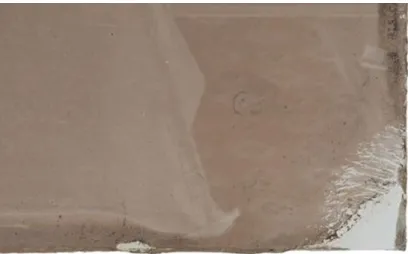
The general photographic formula consists of a 2% solution of collodion with small amounts of potassium, cadmium, ammonium or zinc halides (usually iodides or bromides) and hydrochloric acid, applied directly on a glass plate, forming a thin and clear film [12, 13]. The steps for the wet collodion process are typically the following: preparing the plate, coating it with collodion, sensitizing, exposing, developing and fixing the image [14]. The plate was cleaned with a solution of water, alcohol and calcium carbonate in equal proportions, or a mixture of nitric acid with a thin powder like calcined lamp black [8]. Then, the collodion solution was applied on the plate, holding it between the thumb and forefinger, tilting it until an even coating was obtained and pouring the excess collodion into a bottle (Figure 3). This process left thumb marks in one of the corners of the plates (Figure 4). It is also common to observe bluish or whitish lines, drip
lines, in the corners of the images, as a consequence of the accumulation of collodion
when it was poured back into the bottle (Figure 5) [15].
Figure 3: iodized collodion being poured onto the plate (top) and the excess being poured back into the bottle (bottom). Source: americanhistory.si.edu
6
Figure 5: example of an ambrotype with drip lines. Source: graphicatlas.org
After the application of the collodion solution, the plate was immersed in an aqueous solution of silver nitrate (AgNO3), to precipitate silver halides from the salts
within the upper layer of the plate. Consequently, the collodion enclosed light-sensitive silver iodide and, sometimes, silver bromide. Then, the plate was exposed while still wet (hence the term wet collodion) for 20 seconds to 3 minutes, depending on the light. The exposure induced a photo reduction of the silver halides, creating a latent image. After, the image was developed under red light with a solution of a silver salt (silver nitrate e.g.) and a reducing agent (pyrogallic acid C6H6O3 e.g.), which reduces the silver salt to
metallic silver. The acid was washed off with water and the plate exposed to sunlight and sodium thiosulphate (Na2S2O3), a fixator that solubilizes the unexposed light sensitive
silver salts [8, 16]. Then, the plate was washed to remove the compounds used during the fixing process, and dried. After that, it could be coated with a protective varnish, such as gum sandarac or shellac, for protection and to prevent oxidation [8]. The varnish was applied in the same way as the collodion layer. Sometimes, it is possible to observe exposed collodion areas, usually along the edges and corners of the plates, when the photographer did not even the varnish coverage [15].
The wet collodion method underwent some developments, which perfected the technique. First, it was found that using smaller amounts of bromides improved the sensitivity to blue-green hues. The introduction of a ferrous sulphate (FeSO4)developer
rather than pyrogallic acid reduced exposure times, making studio portraiture easier. By the end of the 1850s, all studio photographers were using ferrous sulphate. Also, by this time potassium cyanide was being used as the fixing agent, instead of sodium thiosulfate. The combination of the iron development and the cyanide fixing produced a light yellowish brown image that contributed to spectral density when making negatives [10]. In conclusion, for the development, pyrogallic acid or ferrous sulphate could be used, the
7
first giving a darker and the second a lighter hue. As fixating agents, sodium thiosulphate or potassium cyanide were used, the first giving a darker brownish-grey image and the second a lighter, milky tone [8]. In the 1850s, dry collodion plates were introduced, due to some difficulties associated with the wet collodion method, particularly when working outdoors [17]. First, these were done by coating the sensitized plate with hygroscopic materials such as beer, honey or glycerine. Then, in 1856, the practice of sealing the sensitized wet-plate with albumen was introduced, which allowed photographers to sensitize the plate several weeks before use. Dry collodion plates, however, were substantially less sensitive than wet plates and were used almost exclusively in outdoor photography [15].
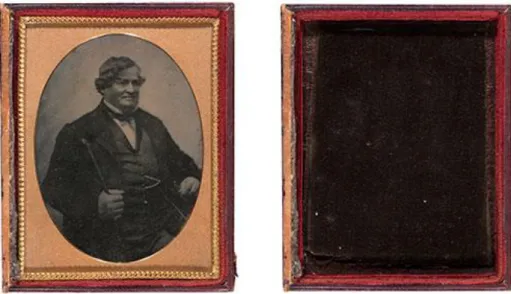
As for additional layers, collodion images were easier to paint than daguerreotypes, accepting several dry and wet materials. The images could be painted with dry powdered, oil- or water-based paints, applied on top of the emulsion [18]. The images made with this process include ambrotypes, on glass, and tintypes, on japanned iron [10]. These could be presented in cases, such as the ones used for daguerreotypes. The cases were made with wood covered in leather, and velvet on the inside. They typically enclose the photograph covered with a glass and a brass mat, enclosed by a thin preserver frame (Figure 6 and Figure 7) [15].
Figure 6: scheme of the disposition of the elements of a cased daguerreotype, identical to cased tintypes and ambrotypes. Source: www.phototree.com
8
Figure 7: example of a cased ambrotype (front and back). Source: americanantiquarian.org
1.4.1. The Ambrotype (1852-1880)
Ambrotypes are wet collodion images on glass. They are direct positives, i.e., deliberately underexposed negative images that appear as positives when placed against a dark surface. This effect occurs because the areas of the collodion which were not impressed by light are transparent and appear dark when laid on a dark background. These contrast with the areas impressed, which reflect light and appear bright [7]. Ambrotypes could be mounted in different ways: with the collodion layer facing downwards, without the need for a protective glass; or with the collodion layer facing upwards, with a protective glass on top of it, with or without a case [11]. The dark background could be in the form of a black varnish applied directly on the collodion layer or on the opposite side of it (Figure 8 and Figure 9) [9]. Instead, it could also be a dark paper, metal or fabric on the back of the picture (Figure 10). Also, a dark glass could be used without the need of a background to achieve the positive effect (Figure 11) [11]. The ambrotypes which used the black varnish as background were cheaper than the other options. Although they were negatives, the image was not necessarily reversed from right to left: if the image was mounted with the image facing downwards, it would represent the actual order.
9
However, this way of mounting the picture made it loose brightness and detail, so most photographers preferred to lay the image side facing upwards, although it was inverted [7].
Figure 8: thin section of an ambrotype on which varnish was applied as background. Source: graphicaltas.org
Figure 9: example of an ambrotype with the black varnish applied on the opposite side of the collodion. Source: graphicatlas.org
10
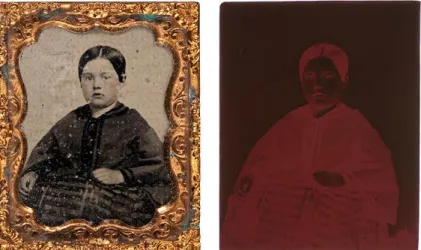
Figure 11: example of an ambrotype made on a dark glass, substituting the dark background. Positive image (left) and negative image (right). Source: graphicatlas.org
Regarding the support, the glass used for photography in the 19th century was
made with sodium or potassium/sodium silicates and produced with an excess of fluxing agents, which made them chemically unstable [11]. The formats used for ambrotypes correspond to the ones used for daguerreotypes, which are the following, being the sixth and the fourth the most popular [7]:
Table 1: Daguerreotype typical formats. Adapted from [19].
Designation Inches Centimetres
Whole 6 ½ x 8 ½ 16.5 x 21.5 Half 4 ¼ x 6 ½ 10.5 x 16.5 Quarter 3 ¼ x 4 ¼ 8.3 x 10.5 One-sixth 2 ¾ x 3 ¼ 7.0 x 8.3 One-eight 2 1/ 8 x 3 ¼ 5.3 x 8.3
According to photography manuals of the time, the back varnish could be made using a mixture of turpentine, asphaltum and Canada balsam; benzole, asphaltum and India rubber; camphene, white wax, bitumen and lampblack; camphor, shellac, alcohol and Canada balsam; or sandarac, lavender oil, alcohol and chloroform. Also, a clear varnish used on top of the image, for a finishing effect could be applied [14, 20]. The technique was introduced in 1852, but the process was first published in 1854 by James Anson Cutting through a patent for an Improved Process of Taking Photographic Pictures
upon Glass. It consisted on a method for adding camphor to the nitrocellulose used for
the collodion, and sealing the image with a balsam and a cover glass. Once the process was understood and perfected, it was quickly adopted as a popular studio portrait technique, replacing the daguerreotype. Although ambrotypes were produced in the same
11
size and with similar treatment (hand coloured, framed with glass, and encased), they had the advantage of being cheaper, having shorter exposure times and being less reflective and easier to see than the daguerreotype, which was made on a polished silver plate [10]. Whereas by definition a true ambrotype would be made by the Cutting technique, the word quickly became a generic term for all collodion direct positives on glass that were made in the camera, most of them produced without the sealing [21]. In fact, the Cutting method was found to be unnecessary because the finishing varnish provided the needed protection to the picture. Also, ambrotypes made with the Cutting method typically exhibit a yellowish-green hue presumably caused by the balsam [15]. Although the ambrotype was produced until 1880, its most popular period was between 1856 and 1858, from when they substituted the daguerreotypes until they were replaced by the tintype, cheaper and more resistant.
1.4.2. The Tintype (1856-1930)
Tintypes, or ferrotypes, are also direct positives. They are positive wet collodion images on a metal support coated with a black varnished layer on which the emulsion was applied (Figure 12). In this case, the positive effect is obtained by applied the collodion on a dark support, which will make the transparent areas of the collodion appear black [10].
Figure 12: cross-section of a tintype. Source: graphicatlas.org
The first mention of the process was in 1855, by the French photographer Adolphe A. Martin, but had little impact. In the same year, a similar experiment was conducted by Hamilton Smith of Gambier, in Ohio, USA. He patented his product in 1856, introducing a new method to obtain “[…] positive impressions upon a jappaned surface previously prepared upon an iron or other metallic or mineral sheet or plate by means of collodion
12
and a solution of a salt of silver and a camera […] “ [22]. Contemporarily, the process was also patented in England by William Kloen and Daniel Jones [10]. The technique is virtually the same as for the ambrotypes, but with a metal plate as support. Specifically, both The Ferrotype and How to Make it (1880) and Practical Ferrotyper (1872) mention the use of iodide of ammonium and cadmium as well as cadmium bromide for the preparation of the collodion solution [17, 23]. The base varnish layer, called japan or jappaned, was made with a mixture of “one quart of raw linseed oil […] two ounces of asphaltuin and sufficient umber or lamp-black to give the desired shade” but other ingredients could be used, such as “mastic, lac or copal varnish – and other shades of coloring-matter […]” The term comes from a popular Asian technique of lacquer work [24]. Regarding the exposure, tintypes require a very specific light, about the double amount than what is required for other negatives, otherwise the image is dull and smoky. The manuals also mention metallic stains on plates, a problem encountered on tintypes. These are composed of metallic silver transformed from the silver nitrate by some agent. This agent could be iron or copper; iron oxide (rust) in particular will cause a rapid transformation of silver nitrate to metallic silver. Another defect reported are pinholes in the picture, black spots caused by the presence of impurities on the plate before the application of the collodion layer (Figure 13) [23].
Figure 13: example of pinholes. Source: graphicatlas.org
Early ferrotypes were presented in the same style of protective cases used for daguerreotypes and ambrotypes [23]. Around 1863 and until 1866, they were presented in paper mats (Figure 14). They could also be put in frames, which were used between 1865 and the early 1870s, and passe-partouts (Figure 15) [15].
13
Figure 14: example of a tintype in a case (left) and in a paper mat (right). Source: ohiohistory.files.wordpress.com
Figure 15: example of a tintype presented in a frame (left) and in a passe-partout (right). Source: ohiohistory.files.wordpress.com
The formats were variable, because they could be made in any size, but the following were the most popular:
Table 2: typical tintype formats. Source: graphicatlas.org
Designation Inches Method
Bon tons 2 ½ x 3 ½ 2 ½ x 4 or 4 ¼ 2 x 2 ½ 1 ¾ x 2 ½ 4 images on a 5x7 in plate 8 images on a 8x10 in plate 16 images on an 8x10 in plate 8 images on a 5x7 in plate Gems ¾ x 1 1 3/8 x 1 2/3 and smaller Large plates 5x7 8 ½ x 6 ½ 8x10
14
Alternatively, these large plates could be used in multiplying cameras, obtaining multiple images in one plate, which were then cut into individual images. This resulted in sharp and irregular edges, which the photographers clipped (Figure 16). Typically, four-lens cameras were used, producing four images, or 8x10 multiplying boxes (Figure 17) [10, 15, 23]. In the case of the four-lens cameras, the images produced were called bon tons (Figure 16). Finally, vignetting was popular technique used in tintypes and other processes, which consisted in gradually fading the edges of the image. In tintypes, it was done by placing a mask in front of the lens (Figure 16) [15]. In the 1880s, dry gelatine tintypes were introduced. These were sold already sensitized and ready to use [17]. Subsequently, street photography emerged with the creation of a camera that allowed the operator to take the plate out of the package inside and place it into the focal plane. After the exposure, the plate was dropped through a slit into the developer/fixer bath [10].
Figure 16: example of a bon ton tintype, with two clipped corners (left) and of a vignetted bon ton tintype with clipped corners (right). Source:graphicatlas.org
Figure 17: a four lens camera used to produce bon tons. Adapted from [7]
Tintypes became so popular that they turned into a mass production industrial product: the plates were produced in factories and sold to the photographers already coated on both sides. Because they were so easy to make, tintypes were sold by many
15
photographers, some of which itinerant, most unknown. This makes their production process hard to standardize: the ingredients used for sensitizing, developing and fixing could vary a lot [25]. According to manuals of the time, developers used in tintypes included: ferrous sulphate, sugar and lead nitrate; ferrous sulphate, potassium nitrate, acetic acid and alcohol; ferrous sulphate and barium nitrate; pyrogallic acid, nitric acid and alcohol; sulphite of soda, carbonate of potash, ammonium bromide, hydroquinone, potassium carbonate, sodium sulphite, glycine and hypo [26, 27].The finishing varnishes were similar to those used in ambrotypes, such as copal, sandarac, dammar and amber [14]. The tintype was the easiest and cheapest photographic process at the time, because iron plates were less expensive than sheets of glass. They were also more resistant, so they could be easily transported sent through the mail, thus the occasional term letter
types for them. Both these factors contributed to the commercial success of the product,
making it the most popular photographic technique in the USA between 1865 and 1900 [16]. In fact, this process had huge impact, allowing access to portraiture to virtually everyone. It was a definite step in the democratization of photography, extending the cultural possibilities of portraiture to a mass audience, witnessing the true American lifestyle. The individual portrayed on a tintype likely belongs to the low or middle income part of the population, due to the circulation of this medium mainly among the working class. In fact, the process was established as the opposite of the daguerreotype, a typically bourgeois item. Furthermore, tintypes were popular during the industrial era and can be considered evidences of America’s industrial history, comprising social and economic proof. Overall, they present a panorama of modernization and are a testimony of a democratic culture that challenges the bourgeoisie – an all-inclusive medium, with which any citizen created a self-image that affirms their equality [25].
1.4.3. Retouched photographs
The fact that photography could not reproduce colours was one of the main criticisms it faced. Although attempts were done to achieve colour photography, while this was not possible colours were hand-painted with dry pigments, watercolours, oil paints, crayons, and pastels [28]. They could be painted lightly and on specific spots, or completely over painted [29]. Hand colouring kits could be purchased in shops and comprised brushes, mixing plates, binders and dry pigments. The pigments could be
16
labelled as to where they should be applied [30]. After the application, the excess of dry pigments was removed with a rubber air bulb and a transparent varnish was applied on top. This procedure could be repeated if necessary, on top of the varnish layer [18].
Tintypes were one of the most painted photographic processes and the prices varied according to how long it would take to colour them (Figure 18) [31]. Although there is a good record of the techniques used to apply paint on daguerreotypes, there is a lack of documentation when it comes to tintypes. There is some information about colouring tintypes in the book Practical Ferrotyper (1872), in which the author refers the use of “[…] equal part of dry carmine and flesh color […]” [23]. From the information found on contemporary studies, tintypes are mainly painted with oil paints, which have a good adherence to the surface. Watercolours and gouache could be used for details on the face, due to their transparency [31]. Also, crayon and pastel were applied, but needed to be protected with a glass due to their fragility [29]. The metal plate could also be coloured by coating it with India red and linseed oil via electrolytic processes, or chemical
colouring, before the paint was applied; chocolate, blue and yellow tones could be
achieved [32].
Figure 18: example of a retouched tintype. Source: graphic atlas.org
Regarding ambrotypes (Figure 19), the book The Photograph and the Ambrotype
Manual: a Practical Treatise (1861) gives some information about the types of paints
used to colour these images. Chinese vermillion, chrome green and yellow, Chinese blue and a mixture of venetian red and blue for purple. The colours were applied on top of the emulsion, after drying. Because sometimes a white varnish was applied, the colouring had to be done intensely as to avoid the removal of colour by the varnish. If needed, the colour could be applied once again on top of the varnish. Additionally, to remove an
17
excess of brightness sometimes found on highlights, lampblack could be applied on these spots with a wet brush [9].
Figure 19: example of a painted ambrotype. Source: graphicatlas.org
1.4.4. Finishing varnishes
As mentioned above, images were often covered with a white, clear varnish for protection purposes. Photographic manuals from the collodion era mention the used of shellac, sandarac, or a mixture of these two compounds; and white copal, gum dammar, amber, benzoin, india rubber and lavender. These were diluted in turpentine, chloroform or alcohol [14, 17, 20]. These can be divided into glossy, matt or durable varnishes:
Table 3: finishing varnishes used for collodion images, adapted from [33]
Glossy Matt Durable
White shellac Castor oil Sandarac resin Benzoin gum Ether Benzol Sandarac resin Ether Benzol Mastic Benzol Oil of lavander Rubber
The finishing varnish could be omitted and the image left unprotected because the varnish darkened the final image [9]. It is important to notice that this data was published at the time, but there probably were other recipes used that were not published.
18
1.5. Degradation of photographic objects
1.5.1. General degradation
The degradation of photographs can be divided in three types: physical, chemical and biological. Physical degradation involves structural and mechanical damages and is usually caused by poor handling, storage or display. Chemical degradation is usually due to either intrinsic characteristics of the materials used to produce the photograph or external agents present in the atmosphere or in the surrounding materials. If related with the production process, it can occur due to insufficient fixing time or spoiled fixing solution, for example, or to improper washing, which leaves residues of the fixer on the image, these residues will alter the tone of the image to yellow or brown, and fade the image. Biological degradation can be active or inactive and refers to the action of animals, fungi or bacteria, and depends on the composition of the object [2, 5]. Below, the most relevant degradation phenomena for this study are described.
1.5.2. Degradation of the image forming particles
One of the most common types of degradation of the silver image forming particles is silver mirroring. It appears as a bluish iridescent metallic deposit on the surface of the emulsion, with a mirror-like effect (Figure 20). It tends to appear on the darker areas of the image or in certain patterns, related to external agents, such as the case on which the object is stored. It has been defined as a four-step process, starting with the oxidization of the image forming silver particles. Then, the migration of the silver ions towards the top of the binder, their reaction with atmospheric sulphur compounds, and their growth in size creating a deposit formed by silver sulphide, metallic silver and other products. Its exact chemical composition, however, is still a subject of debate [11, 34].
19
1.5.3. Degradation of the collodion
Collodion is unstable in high humidity conditions, where free nitrogen oxides can attack the cellulose chain and the silver imaging particles. This makes the collodion turn yellow and gradually crumble [33]. The lack of varnish makes the collodion layer more fragile and susceptible to degradation, especially abrasion and oxidation [8]. Another pattern observed in this kind of photographs is the reticulation of the collodion. It is characterized by the shrinkage of the collodion layer which becomes more fragile and develops capillary fissures (Figure 21). It can also lead to detachment, abrasion, chipping or loss of material. This phenomenon can be caused by several factors such as the loss of solvents in low relative humidity conditions; the presence of impurities on the glass where the collodion is applied, which lead to a loss of its adherence to the support; or the loss of plasticizers added to the collodion solution to improve flexibility (ricin oil and glycerine). Finally, because collodion is organic it can suffer biological attack, especially through the formation of mould (Figure 22) [11].
Figure 21: example of an ambrotype with reticulation of the collodion. Source: graphicatlas.org
Figure 22: Example of mould on a collodion based object (50x specular light). Source: graphicatlas.org
20
1.5.4. Degradation of the support
The degradation of ambrotypes differs from tintypes when it comes to the support. The most typical glass degradations are loss of transparency, milky appearance and roughening of the surface (Figure 23). Usually these occur on the side of the emulsion, making it detach from the support. This happens due to the process of bleaching, i.e., the formation of a very thin hydrated layer on the surface: the glass surface exchanges K+ and
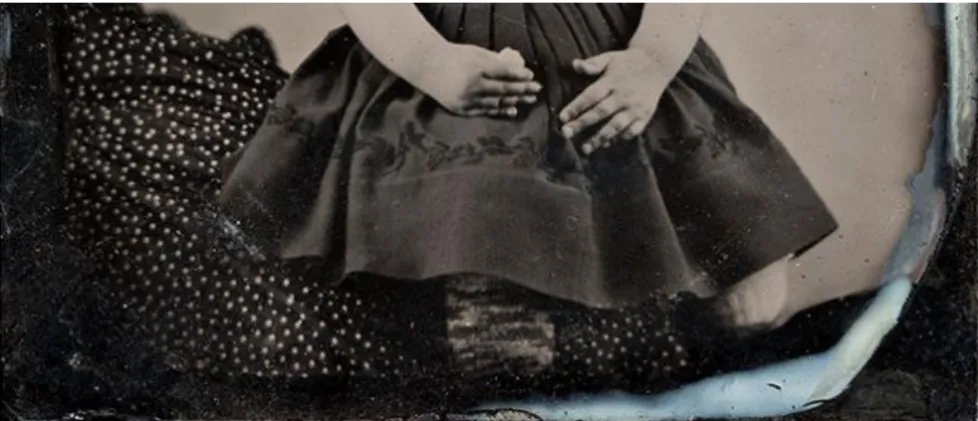
Na+ ions, which are dragged onto the glass surface, with the H+ ions from water on the atmosphere. When humidity drops, an alkaline deposit is left on the glass surface. These make the glass look less bright and less transparent. This process is catalytic, because the deposits are hygroscopic, absorbing water and triggering more bleaching [11]. In particular, during the collodion era, some glasses had high proportions of sodium and/or potassium oxide. This made them more susceptible to chemical decay resulting in a softening of the binder and loss of adherence of the emulsion to the glass. This loss of adherence can also be caused by incorrect production methods, particularly the improper cleaning of the glass surface before the setting of the collodion layer [8]. When a black varnish was applied on the glass, it is common to observe cracking (Figure 24) or loss of this layer, revealing the negative image. Alternatively, if the support was separated from the glass, such as a metal plate, it can suffer degradation. Regarding the finishing varnish, unvarnished ambrotypes will have a higher tendency to exhibit silver oxidation in the form of fading and mirroring.
21
Figure 24: example of cracking of the background varnish. Source: graphicatlas.org
Glass is a non-crystalline amorphous material, made of three main components: network formers, modifiers and stabilisers, fired at temperatures between 1000ºC and 1500ºC. Silica, used in the form of amorphous silicon dioxide (SiO2), is the network
former, and can come from potassium, sodium or calcium silicates. Modifiers are sodium and potassium oxides, used to lower the melting temperature of silica; and stabilizers are magnesium and calcium oxides, used to make the glass more stable chemically. Upon cooling, the components do not crystallize, unlike metals, thus glass is not a crystalline material but amorphous. Glass properties can be modified by varying the fusion temperatures or by adding different materials to its composition [19].
As stated above, the degradation patterns of tintypes and ambrotypes differ according to the support. In the case of tintypes, the most frequent degradation is the formation of rust, which can cause the collodion binder or the black varnish to blister, lift and detach (Figure 25). Also, because tintypes often lack protective housing and were handled frequently, they typically present mechanical damages, such as abrasion, bending and deformation [11].
22
Figure 25: example of abrasion and detachment of the binder and formation of rust. Source: graphicatlas.org
1.6. Review of the analytical techniques used in the
characterization of photographic items
When it comes to the morphological and chemical characterization of photographic objects, the tendency is to focus either on daguerreotypes, silver gelatine prints or negatives. In fact, only three papers were found specifically about tintypes and one on ambrotypes. However, because these objects have the same image formation process as daguerreotypes, some of the papers on daguerreotypes can be used as references for this study. Regarding the papers that focus specifically on tintypes and ambrotypes, A. Chipman conducted the study Inexcusable but Appropriate: The Technical Analysis of
Hand-painted Tintypes (…) presented in 2011 [28]. This, however, is more focused on
the hand-painted elements rather than on the tintype as a whole. C. Rogge published the paper The varnished truth: The recipes and reality of tintype coatings (2012) [35], which focuses on the types of varnishes used on tintypes and how they correlate to the recipes published at the time of their production. E. Carretti et al published the paper
Non-invasive physicochemical characterization of two 19th century English ferrotypes (2009)
[16] which deals with the evaluation of the conservation status of the objects and the chemical composition of their constituent materials. Finally, a technical study of five ruby ambrotypes was found, by L. Duncan in 2009 [36], focusing on the characterization of the constituting materials of the ambrotypes. Other papers of relevance to this study include the use of FTIR techniques for the study of the composition and degradation of photographic materials [37], the use of non-invasive micro-Raman spectroscopy for the investigation of historical silver salt gelatine photographs [38], micro-Raman
23
characterisation of silver corrosion products [39], and a SEM-EDS study on the formation of chlorine-induced alterations in daguerreotypes [40]. Most papers use optical microscopy, ultraviolet induced visible fluorescence, X-ray fluorescence (XRF) spectroscopy, Fourier-transform infrared spectroscopy (FT-IR), Raman spectroscopy, scanning electron microscopy with energy-dispersive spectroscopy (SEM-EDS) and pyrolysis gas chromatography-mass spectroscopy (Py-GC/MS).
Optical microscopy is used to observe the surface of the object, analyse surface defects and understand the stratigraphy. Ultraviolet induced visible fluorescence shows which parts of the surface of the object fluoresce, emphasising the presence of organic compounds and some types of degradation. The colour and type of fluorescence can give clues about the type of organic compound. It is particularly useful to detect the presence of varnishes, for example Chipman (2011) found the presence of a varnish in one of the tintypes. It was selectively applied (the fluorescence was present in only some parts of the image) and the colour of fluorescence (bright orange) suggested that the varnish was shellac based. SEM-EDS and XRF can be used for elemental analysis. SEM-EDS backscattering mode can also be used for imaging and surface analysis. Raman can be used to complement the chemical analysis, especially when it comes to inorganic compounds, e.g. silver degradation compounds. FT-IR and GC/MS are typically used for the identification and characterization of organic compounds, mainly coatings.
1.6.1. Working principles of the analytical techniques used in this
work
1.6.1.1. TECHNICAL PHOTOGRAPHY
Technical photography is used for the photographic documentation of the samples. It can be done with several illumination settings and light sources, to gather different information about the surface of the samples. Among these, the ones used for this work were: reflected natural light, artificial, transmitted and raking lights and reflected ultraviolet (UV) radiation. Reflected natural light allows to observe the object as it can be seen with the naked eye; raking light allows to observe the morphology of the surface of the object; and transmitted light to understand which parts of the object are opaque and emphasise losses of material. UV radiation allows to observe and register
24
surface phenomena not visible to the human eye. On the electromagnetic spectrum (Figure 26), visible light radiates between 400 and 700 nm and UV between 180 and 400 nm. It can be divided into three regions: UVA or longwave UV (320-400 nm); UVB or middle wave UV (280-320 nm); UVC or shortwave UV (180-280 nm). In the study of cultural objects, the observation under UV radiation has been a common procedure since 1925 and the most common UV radiation source is long-wave. In the study of photographic objects, in particular, it can be helpful to identify different compounds present on the surface, because non-fluorescent materials will appear black under radiation of this wavelength, while fluorescent materials display different colours and intensities. By varying the wavelength of the UV radiation used to illuminate the samples, different materials phenomena will be observed [41].
Figure 26: the electromagnetic spectrum showing the different regions, measured in nanometres. Source: www.nailsmag.com
1.6.1.2. OPTICAL MICROSCOPY (OM)
Optical microscopy is used for the microstructural examination of materials: the different ways the samples reflect or transmit light allow the observation of their morphology. Light microscopes are composed essentially by an illumination system, an eyepiece, objective lenses and a holder for the specimen (Figure 27). Also, a photo micrographic system is used to obtain the images observed. They have two illumination modes, transmitted or reflected light. Transmitted light is used for transparent or semi-transparent samples and reflected light for opaque or semi-transparent samples. There are also different examination modes available on this kind of equipment: bright-field and
dark-field. With the bright-field mode the specimen is evenly illuminated by a light source,
while with the dark field mode a device blocks the core of the light source, producing a hollow cone of light. This uneven beam of light illuminates the sample causing light to
25
scatter as it hits the specimen, and only this light scattered by the sample enters the objective lens [42].
Figure 27: Scheme of the dark-field and bright-field modes on a microscope. Source: http://public.wsu.edu
1.6.1.3. SCANNING ELECTRON MICROSCOPY COUPLED WITH ENERGY DISPERSIVE
SPECTROSCOPY (SEM-EDS)
Scanning electron microscopy has much higher resolution and magnification than regular optical microscopy. Also, it offers a wider depth field which allows for a tri dimensional aspect of the images obtained. When coupled with an X-ray energy dispersive spectrometer, it can give elemental analysis of the specimen along with the microstructure. A scanning electron microscope is composed of an electron gun and electromagnetic lenses and apertures (Figure 28).
Figure 28: Structure of a scanning electron microscope (SEM). Adapted from [42]
The image is formed by scanning the surface of the specimen with the focused electron beam. When the electrons interact with the surface of the sample, secondary electrons (SE) and backscattered electrons (BSE) are produced, both used for imaging. SE and BSE escape from different locations of the specimen and thus provide different
26
information (Figure 29). The intensity of SEs depends on the surface topography of the specimen, so these produce an image that shows the surface morphology, while BSE provide information about the elemental distribution within the sample. SEs are a product of inelastic scattering and have an energy level of several keV; they escape from under the surface of the specimen, at a depth of about 5-50 nm. BSEs result from elastic scattering and an energy closer to the incident electrons, escaping from a deeper level under the surface, between 50-300 nm.
Figure 29: interaction zone of electrons and specimen atoms below a specimen surface. Source: [42] The interaction of the electrons with the sample also generates the emission of characteristic X-rays. From the energy of these characteristic X-rays, chemical elements can be identified with energy dispersive spectroscopy (EDS). The intensity of these X-rays is plotted against their energy range in a spectrum. The EDS is equipped with a software capable of identifying the possible elements from a spectrum. By coupling EDS with an electron microscope, elemental analysis can be obtained while examining the microstructure of the sample. Typically, SEM is operated at high vacuum and only works on conductive specimens. So, variable pressure SEM has been developed in order to work with nonconductive specimens, such as biological samples.
1.6.1.4. MICRO-FOURIER TRANSFORM INFRARED SPECTROSCOPY (µ-FT-IR)
FT-IR is a vibrational spectroscopy that analyses the structure of molecules through their interaction with electromagnetic radiation, particularly infrared radiation [43]. The energies of infrared radiation match the vibrational energies of molecules allowing the FT-IR spectrometer to detect the molecular vibrations that occur from the absorption of infrared light by the sample. It can be used on gas, liquid or solid samples and on inorganic and organic materials. It cannot be used on metallic materials because they strongly reflect electromagnetic waves. The FT-IR system, or interferometer, is composed of one beam-splitter and two mirrors (Figure 30). The beam-splitter transmits
27
half of the infrared beam from the source and reflects the other half. These two beams strike a fixed mirror and a moving mirror, combine at the beam-splitter again, irradiate the sample and are finally received by the detector. The moving mirror changes the optical path lengths to generate light interference between the two split beams. When it is located at the same distance from the beam splitter as the fixed one, the optical paths of the two split beams are the same and there is zero path difference. Path difference (δ) occurs when the moving mirror moves away from the beam splitter. This leads to something like what happens in diffraction by crystalline structures. The two beams will show constructive and deconstructive interference along with the changing of the δ value. Completely
constructive interference will occur when δ = 𝑛𝜆 and completely destructive whenδ = (1
2+ 𝑛) 𝜆. The light interference is plotted as a function of optical path difference in an
interferogram. The Fourier transform method is used to obtain an infrared spectrum from an interferogram, plotting the light intensity versus wavenumber instead of intensity versus optical path difference. The optical path difference can be considered in the time domain because it is obtained by multiplying time with the speed of a moving mirror and the wavenumber can be considered frequency domain because it is equal to frequency divided by the light speed [42].
Figure 30: optical diagram of a simple specular reflectance accessory for FTIR instrument. Source: [42]
1.6.1.5. MICRO-RAMAN SPECTROSCOPY (µ-RAMAN)
Micro-Raman spectroscopy works coupled with a microscope by focusing a laser beam, in the order of micrometres, directly on the sample surface (Figure 31), without the need of sample preparation. It has resolution of 1-2 µm and a spectral range of 4000-50 cm-1. Like FT-IR, the working principle of Raman spectroscopy is based on vibrational spectroscopy and identifies functional groups based on their characteristic vibrational energies.
28
Figure 31: Optical diagram of a Raman microscope. Source: [42]
The technique is dispersive, requiring a spectrum at each wavenumber separately. The equipment is composed of a monochromatic, continuous-wave laser source, such as Ar+, Kr+ or He-Ne; a microscope for sample illumination and collection; a spectral analyser; and a detection and computer control and processing system. The laser generates beams with wavelengths in the range of visible light, exciting valence electrons in the molecules of the sample. It passes through a filter to become a single wavelength beam and is then focused onto the sample surface. Then, the scattered light is collected by the microscope and sent to the detector. The purpose is to analyse only Raman light, which results from inelastic scattering, and not elastic scattering. So, a notch filter is used to prevent the elastic scattered radiation from entering the detector. Also, a diffraction grating system is used to select the wavelength before entering the detector [42].
1.6.1.6. MICRO X-RAY DIFFRACTION (µ-XRD)
X-ray diffraction is used in the identification of materials through the determination of their crystalline structure. Thus, only crystalline materials can be analysed with this technique. It allows to distinguish different compounds with the same mineralogical structure. Crystalline materials have orderly periodic arrangements of atoms, defined by unit cell, a repeating pattern. The wavelength of X-rays is about equal to interatomic distances, so crystals act as scattering graters for X-rays, scattering them in a pattern that shows the positions of their atoms. The diffraction from different planes of atoms produces a diffraction pattern which contains information about the atomic arrangement of the crystal. The working principle of an X-ray diffractometer is based on the phenomenon of wave interference: two X-ray beams incident on a crystalline material will be diffracted by the crystallographic planes of the material and they will not be in phase except when Bragg’s Law is satisfied:
29
For parallel planes of atoms, with d space between them, constructive interference occurs only when Bragg’s Law is satisfied (Figure 32). In diffractometers, 𝜆 is fixed, so a family of planes will produce diffraction only at a certain angle θ. X-ray diffractometers are usually constructed according to the Bragg-Brentano geometry (Figure 33). Where the incident angle (ω) is defined by the X-ray tube and the sample and the diffracted angle (2θ) between the diffracted beam and the detector. The incident angle is always ½ of the diffracted angle.
Figure 32: Bragg's diffraction by crystal planes. Source: [42]
Figure 33: Scheme of an X-ray diffractometer that follows the Bragg-Brentano geometry. Source: http://nptel.ac.in
By plotting the intensity versus the position of the detector (2θ), the position, intensity, width and shape of the peaks can be analysed to identify the compounds present. The space between the planes determines the peak position and the atoms on the planes determine the intensity [42].