CECAV-UTAD Publications
Institutional Repository of the
University of Trás-os-Montes and Alto
Douro
Found at:
http://repositorio.utad.pt/
This is an author produced version of a
paper published in
[Rangeland Ecology and Management]
This paper has been peer-reviewed but does
not include the final publisher
proof-corrections or journal pagination.
Citation for the published paper:
[Osoro, K., Frutos, P., Moreno-Gonzalo,
J., Ferreira, L.M.M., Garcia, U., Celaya,
R., Ortega-Mora, L.M., Ferre, I.]
[Effects of stocking rate and heather
supplementation on gastrointestinal
nematodes infections and host performance
in naturally-infected Cashmere goats]
[Rangeland Ecology and Management, 2009,
62, 2, 127-135]
Published in final form at:
http://dx.doi.org/10.2111/08-184.1
Effects of Stocking Rate and Heather Supplementation on Gastrointestinal Nematode
1
Infections and Host Performance in Naturally-Infected Cashmere Goats
2 3
Koldo Osoro,1 Rafael Celaya,1 Javier Moreno-Gonzalo,2 Luis M.M. Ferreira,3 Urcesino
4
García,1 Pilar Frutos,4 Luis M. Ortega-Mora,2 and Ignacio Ferre2
5 6
1
Área de Sistemas de Producción Animal, Servicio Regional de Investigación y Desarrollo 7
Agroalimentario (SERIDA), 33300 Villaviciosa, Asturias, Spain 8
2
SALUVET, Departamento de Sanidad Animal, Facultad de Veterinaria, Universidad 9
Complutense de Madrid, Ciudad Universitaria s/n, 28040 Madrid, Spain 10
3
CECAV, Departamento de Zootecnia, Universidade de Trás-os-Montes e Alto Douro, PO 11
Box 1013, 5000-911 Vila Real, Portugal 12
4
Estación Agrícola Experimental, Consejo Superior de Investigaciones Científicas (CSIC), 13
Finca Marzanas, 24346 León, Spain 14
15
Research was funded by the National Institute of Food and Agricultural Research of Spain 16
(INIA) under project RTA2007-00098-C03. 17
18
Correspondence: Koldo Osoro, Sistemas de Producción Animal, Servicio Regional de 19
Investigación y Desarrollo Agroalimentario (SERIDA), Apdo. 13, 33300 Villaviciosa, 20
Asturias, Spain. Email: [email protected] 21
22 23
Abstract
24 25
The aim of this study, performed on 62 adult dry Cashmere goats grazing upland perennial 26
ryegrass-white clover pastures and naturally infected with gastrointestinal nematodes, was to 27
investigate the effects of stocking rate (SR: 24 vs. 38 goats/ha) and tannin-containing heather 28
supplementation (H: Calluna vulgaris (L.) Hull, Erica spp. vs. non-supplementation) on 29
parasite burden, fecal egg counts (FEC), and live weight (LW) changes. Goats were randomly 30
assigned to four treatments in a 2 x 2 factorial arrangement and grazed continuously from 31
May to October. Six goats per treatment were slaughtered at the end of the grazing period, 32
with adult worms in the abomasum and small and large intestines of each animal recovered, 33
counted, and identified. FEC was affected by SR (P < 0.01) but not for H.However, the SR x 34
H interaction was significant (P < 0.05). FEC increased (P < 0.001) along the grazing season 35
in all treatments, and the SR x Time interaction was significant (P < 0.001). In general, mean 36
total worm counts in abomasum and small intestine tended to be higher under high SR, 37
although the differences were only significant (P < 0.01) in Trichostrongylus spp counts. In 38
goats managed under the high SR, the mean of total Teladorsagia circumcincta counts was 39
lower (P < 0.01) in supplemented animals, but no differences were recorded for 40
Trichostrongylus spp., Chabertia ovina, Oesophagostomum columbianum and Trichuris ovis. 41
The goats gained more LW (P < 0.001) under low SR and when they were heather-42
supplemented. No significant SR x H interaction was found for LW change. In conclusion, 43
high stocking rate increases the infectivity risk of pasture and the supplementation of grazing 44
goats with heather contribute to improve animals’ performance. Notwithstanding, the effect of 45
heather availability on nematode FEC reduction could be highly dependent on the climatic 46
conditions. 47
Resumen
49 50
Con el fin de estudiar el efecto de la carga ganadera (CG: 24 vs. 38 cabras/ha) y de la 51
suplementación con brezo (SB: Calluna vulgaris (L.) Hull, Erica spp. vs. no brezo) en las 52
parasitosis por nematodos gastrointestinales del ganado caprino y su repercusión en las 53
variaciones de peso, se manejaron 62 cabras cachemir adultas sin cría en pastoreo continuo de 54
mayo a octubre en pastos de raigrás-trébol. Las cabras se distribuyeron en cuatro grupos 55
según un diseño factorial 2 x 2. Al finalizar el pastoreo se sacrificaron seis cabras por 56
tratamiento para contar el número de vermes en abomaso e intestino delgado y grueso, e 57
identificarlos. El recuento fecal de huevos de nematodos estaba afectado (P < 0,01) por CG, 58
pero no por SB; sin embargo la interacción CG x SB resultó significativa (P < 0.05). La 59
cantidad de huevos se incrementó (P < 0,001) durante la estación de pastoreo en todos los 60
tratamientos y la interacción CG x Tiempo resultó significativa (P < 0,001). En general, el 61
recuento de vermes en abomaso, intestino delgado y grueso tendió a ser mayor en los 62
animales manejados en carga alta, aunque las diferencias fueron significativas (P < 0,01) solo 63
para Trichostrongylus spp. En carga alta, la media total de Teladorsagia circumcincta fue 64
menor (P < 0,01) en las cabras suplementadas, pero no se observaron diferencias para 65
Trichostrongylus spp., Chabertia ovina, Oesophagostomum columbianum y Trichuris ovis. 66
Las ganancias de peso fueron mayores (P < 0,001) en las cabras en carga baja y en las 67
suplementadas, no observándose interacción CG x SB. En conclusión, en carga alta se 68
observa un mayor riesgo de infección parasitaria, y la suplementación con brezo contribuye a 69
mejorar las variaciones de peso de las cabras, aunque su efecto sobre los nematodos 70
gastrointestinales podría depender de las condiciones climáticas. 71
Key words: anthelmintic, grazing, live weight, parasite, tannin
72 73
INTRODUCTION 74
75
Conventional methods to control gastrointestinal nematode (GIN) infections of grazing 76
ruminants have widely included the use of anthelmintic drugs. However, the resistance to all 77
the major groups of broad-spectrum anthelmintics throughout the world (Jackson and Coop 78
2000) and the increasing demand by consumers for organic livestock products have prompted 79
the investigation of alternative non-chemical control methods (Waller 2006). Stear et al. 80
(2007) divided the possible non-chemical methods in five categories: grazing management, 81
biological control, nutrition, vaccination and genetic approaches. These authors indicated that 82
no method can be recommended to the exclusion of all the others, and that there may be a role 83
for a combination of methods. 84
Among grazing management methods, management decisions may modify the extent 85
and severity of GIN infections (Morley and Donald 1980). Within these strategies, stocking 86
rate, which affects sward height availability, is an intrinsic factor of the grazing systems that 87
could be considered to be the main management factor affecting also biodiversity and systems 88
sustainability (Milne and Osoro 1997). It is commonly assumed that increasing the stocking 89
rate increases the level of parasitism in grazing animals. However, experimental evidence to 90
support this view is rather limited in sheep, especially in temperate regions (Le Jambre 1984; 91
Thamsborg et al. 1996), and is unknown in goats. The studies carried out in sheep 92
(Thamsborg et al. 1996; Thamsborg and Hauge 2001) showed a very complex relationship 93
between stocking rates and levels of infection by different parasites. Moreover, Osoro and 94
Martínez (1995) observed that the percentage of improved pasture may affect parasite 95
dynamics in goats managed on heathlands. 96
Within biological methods, a number of reports have been published in the last few 97
years on the anthelmintic effects of tannin-rich plants on GIN infections in small ruminants 98
(Hoste et al. 2006). In naturally-infected goats, these studies showed a decrease in the 99
establishment of third-stage nematode larvae or reductions in worm fertility and egg output 100
when a moderate concentration of tannin-rich plants was consumed (Hoste et al. 2006; Shaik 101
et al. 2006; Osoro et al. 2007b). 102
Surprisingly, there is a lack of research on the combination of different non-chemical 103
methods, despite the idea that an integrated approach should achieve a better and more 104
complete control of GIN infections (Barger 1999; Hoste et al. 2005, 2006). The objective of 105
the present study was therefore to investigate the combination of two alternative methods: 106
grazing management (stocking rate) and biological control (condensed tannins-heather 107
supplementation) on GIN infections and animal performance in Cashmere goats grazing 108
upland perennial ryegrass-white clover pastures. The study was conducted under practical 109
conditions in a less-favored area where grazing animals are extensively raised and included in 110
the natural ecosystem dynamics. 111 112 METHODS 113 114 Experimental site 115
The study was carried out in a mountainous area (1 000 m a.s.l.) in the northwest of Spain (lat 116
43º21’N, long 6º53’W, Sierra de San Isidro, Illano, Asturias), where shrubby heather-gorse 117
vegetation is dominant. Four plots of 5 000 m2 each were established in which the vegetation 118
had been improved in 2001 by soil ploughing and dressing and sowing perennial ryegrass 119
(Lolium perenne L.) and white clover (Trifolium repens L.). 120
Annual rainfall in the experimental year was 1 253 mm. During the grazing season, 121
mean monthly rainfalls ranged from 11 mm in July to 166 mm in October. Mean average 122
temperatures ranged from 11.3ºC in May to 16.9ºC in June. 123
124
Goats
125
A total of 62 adult non-lactating and non-pregnant Cashmere goats, reared outdoors under 126
pasture conditions not excluding GIN infections, were used in this study. The mean live 127
weight (LW) of the goats at the beginning of the experiment was 31.2 kg ± 0.88 SE. Three 128
weeks before the experiment started all goats were dosed orally with ivermectin (OramecTM, 129
Merial, Lyon, France). The efficacy of the anthelmintic treatment was assessed at 21 d post-130
treatment by means of individual examination of fecal egg counts (FEC) and inspection of 131
clinical signs to confirm that animals did not show patent infection. 132
The experiment was carried out in accordance with Spanish Royal Decree 1201/2005 133
for the protection of animals used for experimental and other scientific purposes. 134
135
Experimental design
136
Sixty-two goats were balanced for LW and body condition and randomly assigned to one of 137
four treatment groups in a 2 x 2 factorial arrangement. The main effects were two stocking 138
rates (24 vs. 38 goats/ha) and two feeding treatments (supplementation with heather vs. non-139
supplementation). Supplemented groups were offered freshly cut heather ad libitum in a cage 140
in the field twice a week in the morning, whereas the others received no supplement. All goats 141
grazed continuously throughout the whole experiment (there was not night confinement). The 142
trial extended from 6 May to 21 October. 143
144
Sampling procedures
145
Pasture. In order to control grass availability, sward surface height was measured
146
weekly using a HFRO swardstick (Barthram 1986), with 100 measurements taken at random 147
in each plot. The botanical composition of the pasture was assessed during the summer (21 148
July) using a point quadrat (Grant 1981) and recording 100 vertical hits at random in each 149
plot. 150
Ash and nitrogen (N) of pasture sampled in June, August, and October were analyzed 151
following the procedures of the Association of Official Analytical Chemists (AOAC 2006). 152
Crude protein (CP) was calculated as N x 6.25. Neutral and acid detergent fibre (NDF and 153
ADF) and acid detergent lignin (ADL) were analyzed by the method of Goering and van 154
Soest (1970) and van Soest et al. (1991). 155
Heather. The species composition of the heather offered to the goats was assessed in
156
July by recording 1 000 random contacts with the HFRO swardstick throughout the area 157
where the heather was cut. Samples of the green shoots (less than 3 mm in diameter) of the 158
heather offered to the goats were collected in June, August, and September for chemical 159
composition. The nutritive quality (ash, CP, NDF, ADF, and ADL) of the green shoots was 160
analyzed following the same procedures mentioned for the pasture. Heather offered to the 161
supplemented goats was also analyzed for total tannins using the Folin-Ciocalteu assay in 162
combination with polyvinyl-polypyrrolidone, as described by Makkar et al. (1993). Total 163
tannin content was expressed as tannic acid equivalents. 164
Diet selection. The percentage of heather in the diet of each individual goat was
165
estimated on 19 August using the n-alkane method (Mayes et al. 1986), as modified by Oliván 166
and Osoro (1999). Samples of pasture, heather, and feces from individual animals were 167
collected, and calculations performed using a least squares optimization procedure (Dove and 168
Moore 1995), which minimizes the discrepancies between the actual concentration of alkanes 169
in feces (adjusted for incomplete fecal recoveries, using the recovery values obtained in 170
previous studies by Ferreira et al. 2005) and the estimated proportion in the diet. 171
Parasitological procedures. Throughout the six-month trial, fecal samples were
172
collected monthly from individual animals for fecal egg count (FEC) analysis. Feces were 173
collected directly from the rectum, with ova counted using a modified McMaster procedure 174
(MAFF 1978) with sodium chloride as the flotation medium, in which 1 egg counted is 175
equivalent to 15 eggs per gram (epg) fresh feces. Fecal cultures were prepared monthly for 176
each group by pooling samples from individual goats as described by MAFF (1978) to allow 177
identification of third-stage nematode larvae genera according to van Wyk et al. (2004). In 178
each sample 200 third-stage larvae were identified. 179
At the end of the trial, six goats of each treatment were slaughtered and adult worms 180
were recovered from the abomasum and intestines. After slaughter, the abomasum and small 181
and large intestines of each goat were ligated and opened, and the contents washed on a mesh 182
screen (60 μm) with tap water. For abomasum and small intestine, the contents were brought 183
up to 500 mL with tap water and thoroughly mixed, and then one 10% aliquot (50 mL) was 184
moved into 100-mL storage containers. Approximately 100 mL of alcohol 70º was added to 185
each aliquot as a preservative. For both abomasal and small intestinal samples, the worms in 186
the aliquot were washed on a mesh screen (No. 270) with tap water, the formalin discarded, 187
and the nematodes recovered into a 50-mL centrifuge tube. All large intestine contents were 188
examined for GIN recovery. Afterwards, the nematodes were counted and identified 189
according to species and sex using a phase contrast microscope. 190
In order to assess the nematode development, the lengths of 20 male and 20 female 191
worms of each species were measured using a microscope at 10x magnification. Fertility per 192
female worm of each species was determined by direct counting of the eggs in utero after 193
clearing of each female worm with lactophenol for Teladorsagia circumcincta and 194
Trichostrongylus spp. according to the method described by Kloosterman et al. (1978) for 195
Haemonchus contortus. Counts were performed on at least 20 female worms per goat. 196
Live weight and body condition score. All animals were weighed at the beginning
197
and the end of the experimental grazing season and also at monthly intervals. At the same 198
time, the body condition score (BCS) was assessed on a scale of 1 to 5 (1 = emaciated, 5 = fat; 199
Russel 1990). To study LW changes and the possible relationship with FEC and heather 200
percentage in the diet, the grazing season was divided into two periods: period 1 from the 201
beginning to 19 August (high sward availability), and period 2 from 19 August until the end 202
of the grazing season on 21 October (low sward availability). 203
204
Statistical analyses
205
All analyses were performed using SAS System software (SAS Institute 1999). FEC data 206
from individual animals were analyzed using a Mixed Model procedure (PROC MIXED) for 207
repeated measures (Littell et al. 1998; Wang and Goonewardene 2004), including in the 208
model the fixed effects of stocking rate (SR), heather supplementation (H), sampling time (T, 209
with six repeated measures), and the interactions SR x H, SR x T, H x T and SR x H x T, with 210
the first measure in May as covariate. 211
Sward height data (plot means) were subjected to PROC MIXED, with 12 repeated 212
measures in time (T) across the grazing season, examining the effects of stocking rate and 213
heather supplementation independently, and the interactions SR x T or H x T, respectively. 214
Data on goat LW and BCS changes in periods 1 and 2, and GIN measurements 215
(parasite burden, sex ratio, fecundity in utero, body length) on euthanized goats at the end of 216
the trial were analyzed with a General Linear Model procedure (PROC GLM) for the effects 217
of the two main factors, SR and H, and their interaction. Pasture botanical composition in July 218
(hit percentages from each plot) was analyzed by 1-way ANOVA to test for SR or H effects 219
independently. Diet composition of supplemented goats in August was analyzed by 1-way 220
ANOVA for the SR effect. 221
FEC data and worm counts were log transformed (log10 x + 1) to normalize their
222
distribution. 223
Correlation coefficients between heather percentage in the diet, FEC, and LW changes 224
were studied by Spearman rank-order correlation. The mortality rate of goats in the different 225
treatments was analyzed by chi-square test. 226 227 RESULTS 228 229 Pasture 230
Sward height. Sward height achieved maximum values in June (19.7 cm and 15.5 cm
231
at low and high stocking rates, respectively) and decreased until August, remaining constant 232
during period 2 (Fig. 1). Significant differences (P < 0.01) in the mean sward height across 233
the grazing season were observed between low and high stocking rates (11.2 cm and 9.2 cm, 234
respectively). The mean sward heights during period 1 were 13.4 cm under the low stocking 235
rate and 11.2 cm under the high stocking rate. During period 2, the means were 7.7 cm and 236
6.2 cm under the low and high stocking rate, respectively. No significant differences in sward 237
height were observed as a consequence of heather supplementation. 238
Botanical composition. No significant differences were found in the sward
239
composition, studied in July, between high and low stocking rates or between supplemented 240
and non-supplemented treatment plots. Green ryegrass accounted for a mean percentage of 241
27% ± 1.0 SE, while the percentage of the natural grass Agrostis capillaris L. was 26% ± 3.9. 242
White clover accounted for a mean of 4% ± 1.2. The percentage of dead matter was high 243
(43% ± 3.1) as a consequence of the summer drought. The percentage of grass flower stems 244
was also high (21% ± 2.5) compared to the percentage of grass green foliage (32% ± 3.8). 245
Chemical composition. As shown in Table 1, pasture chemical composition changed
246
from the beginning of the grazing period (June) to summer-autumn. The protein content 247
decreased from 161 g·kg DM-1 to 118 g·kg DM-1, and the cell wall components (NDF and 248
ADF) increased from 595 g·kg DM-1 to 709 g·kg DM-1 and from 288 g·kg DM-1 to 389 g·kg 249 DM-1, respectively. 250 251 Heather 252
Botanical composition. Among the offered heather species, C. vulgaris attained the
253
highest percentage (57%), while Erica umbellata L., Erica cinerea L., Erica tetralix L. and 254
Daboecia cantabrica (Hudson) C. Koch accounted for 26%, 13%, 3%, and 1%, respectively. 255
Chemical composition. Heather protein content during the experimental season
256
ranged between 57 g·kg DM-1 and 71 g·kg DM-1 (Table 1). Cell wall components did not 257
change significantly along the experimental season, with the exception of NDF, which 258
increased from August (573 g·kg DM-1) to October (686 g·kg DM-1). Tannin content ranged 259
from 97 g·kg DM-1 in June to 61 g·kg DM-1 in August (Table 1). 260
261
Diet composition
262
The proportion of heather in the diet of supplemented goats was not affected by the stocking 263
rate (0.201 ± 0.023 and 0.198 ± 0.018 for low and high stocking rate, respectively). 264
265
Fecal egg counts and coprocultures
266
The FECs increased significantly (P < 0.001) across the grazing season and a significant (P < 267
0.01) interaction was found between stocking rate and time (Fig. 1). In September and 268
October samplings, the animals from plots under the high stocking rate showed significant (P 269
< 0.01) higher mean FECs than those on the lower stocking rate. No differences in FEC were 270
detected between goats supplemented with heather and non-supplemented. However, a 271
significant (P < 0.05) interaction was found between stocking rate and heather 272
supplementation for the overall mean values across the grazing season. 273
Nematode genera, identified based on third-stage larvae obtained from coprocultures, 274
were Teladorsagia, Trichostrongylus and Chabertia (Fig. 2). Teladorsagia was the most 275
frequently identified in June and July (60-93%) in the four plots, decreasing sharply 276
afterwards. In contrast, Trichostrongylus was predominant from August to October (33-277
100%). Chabertia was detected in all plots but at a lower percentage (0-31%), except in 278
August sampling on goats not supplemented with heather under the higher stocking rate 279
(52%). 280
281
Adult nematode burden
282
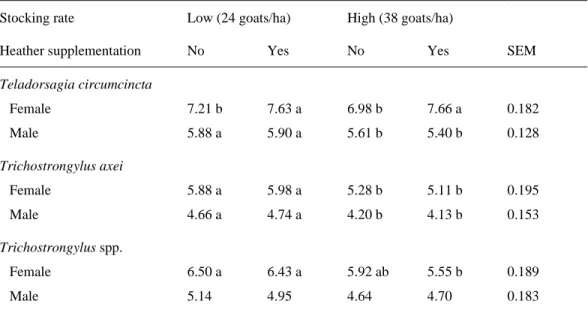
Table 2 shows the mean worm burden, sex ratio, and fecundity in utero of female nematodes. 283
In general, mean total worm counts in abomasum and small intestine tended to be higher in 284
animals from plots with 38 goats/ha, although the differences were only significant (P < 0.01) 285
for Trichostrongylus spp. counts. In plots with 38 animals/ha, mean Teladorsagia 286
circumcincta counts were significantly (P < 0.01) lower in goats supplemented with heather 287
than in non-supplemented animals. Teladorsagia trifurcata was also identified in some goats 288
but with a very low prevalence rate (< 2%). Mean Trichostrongylus axei counts in goats from 289
plots with 38 animals/ha were significantly (P < 0.01) higher when compared with goats 290
under the lower stocking rate. Although Trichostrongylus colubriformis and T. vitrinus were 291
identified in the small intestine on the basis of male identification, the results are shown 292
together. No significant differences were found between treatments for large intestine worm 293
counts, but Chabertia ovina was more numerous (P < 0.01) in non-supplemented goats 294
managed at the high stocking rate. 295
The female worm fertility (estimated by the numbers of eggs in utero, Table 2) and 296
development (estimated by the total length, Table 3) were significantly (P < 0.05) lower for T. 297
axei and Trichostrongylus spp. in nematodes from goats under the higher stocking rate. The 298
fertility of Teladorsagia circumcincta tended to be higher in worms from goats under the high 299
stocking rate, particularly in those from supplemented goats. In general, the number and 300
length of male worms tended to be lower in goats under the higher stocking rate and 301
supplemented with heather. 302
303
Mortality of goats
304
A total of nine goats died between September and October, eight animals corresponding to 305
plots with 38 goats/ha (three supplemented and five non-supplemented with heather) and one 306
supplemented goat from the plot with 24 goats/ha. Although the mortality rate tended to be 307
higher (P = 0.057) in goats under the high stocking rate, no significant differences were 308
associated with heather supplementation (P > 0.10). 309
310
Live weight and body condition changes
311
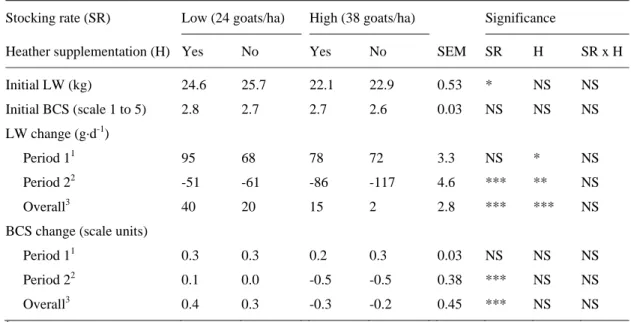
The effect of stocking rate on LW changes was only significant (P < 0.001) for the second 312
period of the grazing season (Table 4). In the first period, goats under the low stocking rate 313
gained only 7 g·d-1 more than goats under the high stocking rate, whereas they lost 46 g·d-1 314
less in the second period. On the other hand, heather supplementation significantly affected 315
LW changes, both in the first (P < 0.05) and second (P < 0.01) grazing periods. Goats 316
receiving heather supplementation gained 17 g·d-1 more in the first period and lost 21 g·d-1 317
less in the second period than non-supplemented goats. 318
LW changes for the overall grazing season were significantly (P < 0.001) affected by 319
the stocking rate (gains of 30 vs. 9 g·d-1 for low and high, respectively) and heather 320
supplementation (gains of 28 vs. 11 g·d-1 for supplemented and non-supplemented goats). The 321
interaction of stocking rate x heather supplementation was not significant, although a 322
tendency (P < 0.10) was observed in the second period, with non-supplemented goats under 323
the high stocking rate showing the greatest weight loss (-117 g·d-1). 324
Body condition was affected by stocking rate in a similar way to LW changes (P < 325
0.001). However, the effect of heather supplementation was not statistically significant in any 326 period (Table 4). 327 328 Correlations 329
The study of the relationships between the heather consumption by goats and their parasite 330
burden and performance showed a significant positive correlation (r = 0.39, P < 0.01) 331
between LW changes during the grazing season and the percentage of heather in the diet, 332
which ranged from 10% to 45% in the supplemented goats. The correlations were significant 333
for both low (r = 0.56, P < 0.01) and high (r = 0.47, P < 0.01) stocking rates. On the contrary, 334
significant negative correlations (r = -0.59, P < 0.001) were found between LW changes and 335
FEC in October. No significant relationship between the percentage of heather in the diet and 336
FEC was observed. 337
338
DISCUSSION 339
340
Although the results reported in the literature are not consistent, a significant effect of the 341
stocking rate on GIN infection was observed in this study. In the second half of the grazing 342
season (period 2), FEC increased considerably under the high stocking rate (from 360-470 343
epg in August to 4 100-4 800 epg in October) while the increase was more limited at the low 344
stocking rate (from 300 epg to 1 500 epg). This effect of stocking rate on FEC was in 345
accordance with previous results obtained in Angora goats naturally infected with 346
Teladorsagia circumcincta and Haemonchus contortus (Le Jambre 1984) and in grazing 347
sheep (Thamsborg et al. 1996). Hansen et al. (1989) also found in beef heifers that the lowest 348
stocking rate groups continuously had the lowest GIN egg output and serum pepsinogen 349
levels. Animals at higher stocking rates are forced to graze closer to the manure, and they 350
inevitably ingest a larger number of infective nematode larvae. In general, a higher stocking 351
rate means higher GIN egg output and dispersion and therefore higher pasture contamination 352
and infection risk. In addition, mountain pastures have a higher density than those in 353
lowlands, and the development and persistence of third-stage trichostrongylid larvae is higher 354
in denser pastures (Moss and Bray 2006). A high stocking rate also means a shorter palatable 355
sward height, less options to select grazing areas when rejecting those contaminated by feces, 356
lower intake, and even negative nutritive balances (Morley and Donald 1980). 357
Contrary to previous studies in the same experimental farm (Osoro et al. 2007a, 358
2007b), in the present trial no significant differences in FEC were detected between goats 359
supplemented with tannin-containing heather and those non-supplemented. The lack of 360
significant differences in the current study could be due to the lower nematode burden when 361
compared to previous grazing seasons, which was probably caused by an anomalous dry year. 362
In previous studies (Osoro et al. 2007b), the mean FEC at the end of the grazing season in the 363
non-supplemented group, which was managed under a lower stocking rate, was 8 600 epg 364
compared to 1 500 epg and 4 500 epg observed in the present trial under low and high 365
stocking rates, respectively, in non-supplemented goats. Climatic conditions are known to 366
affect GIN larvae survival and migration in the environment and subsequently the intensity of 367
infection. The dispersal of larvae from feces is largely dependent on sufficient water from 368
dew or rainfall to allow migrating (Stromberg 1997). 369
The FEC kinetics over the grazing season and GIN genera identified in coprocultures 370
confirmed previous epidemiological data obtained in the same goat research farm (Osoro et 371
al. 2007b). 372
Our results showed a significant effect of stocking rate on Trichostrongylus spp. but 373
not on Teladorsagia circumcincta worm burdens. These results are in agreement with those 374
reported by Thamsborg and Hauge (2001), who observed higher FEC and worm burdens in 375
grazing weaned lambs naturally infected with T. circumcincta and Trichostrongylus vitrinus 376
at a high stocking rate when compared with animals at low or medium stocking rates. In the 377
current work, heather supplementation reduced T. circumcincta burden, but this effect was 378
only significant in goats under the high stocking rate. It is also noteworthy that fecundity in 379
utero and length of T. circumcincta females in supplemented goats were higher than those 380
observed in non-supplemented animals, probably indicating a long term established 381
population. Thus, heather could affect the development of the incoming third-stage T. 382
circumcincta larvae. A reduction of 70% in worm numbers was observed by Paolini et al. 383
(2003) in goats receiving condensed tannins before being infected with third-stage larvae of T. 384
circumcincta. 385
In this trial, heather supplementation had a positive effect on LW changes and reduced 386
GIN effects when animals were managed under the high stocking rate. Previous studies have 387
reported the effect of protein on host resilience to GIN infection (van Houtert and Sykes 388
1996; Chartier et al. 2000). However, contrarily to other protein-rich tannin-containing 389
legumes, such as Lotus corniculatus L., used in other studies (Marley et al. 2003, 390
Athanasiadou et al. 2006), heather has a low protein content (approx. 70 g CP·kg DM-1), and 391
therefore the positive responses to its supplementation cannot be attributed to the effect of a 392
dietary protein increase. Nevertheless, heather supplementation could have a positive 393
influence on other aspects of protein metabolism such as reducing ruminal protein 394
degradation through the action of tannins (Frutos et al. 2000). 395
The positive effect of supplementation of heather and forage containing condensed 396
tannins on animals’ performance was previously observed in grazing Cashmere (Osoro et al. 397
2007a, 2007b) and Angora goats (Min et al. 2005). In the current study, goats under the high 398
stocking rate had significantly worse live weight changes in the second half of the grazing 399
season when the available mean sward height was below 8 cm. These results are consistent 400
with the linear relationship observed between green sward height and LW changes in 401
Cashmere goats grazing pastures with sward height between 3 cm and 11 cm (Merchant and 402
Riach 1994; Osoro et al. 2000), or between 6 cm and 11 cm in feral x Angora goats (Radcliffe 403
et al. 1991). A restriction of goats’ performance in pastures with sward height lower than 7 404
cm was reported by McCall and Lambert (1987). The absence of significant differences in 405
LW changes during the first period would be a consequence of the high sward height (13.1 406
cm ± 1.08) not limiting herbage intake. The higher LW gains (68-95 g·d-1) observed in this 407
study during the first period in comparison with a previous work carried out in the same farm 408
(Osoro et al. 2007b), where goats had higher sward height available (19.5 cm ± 3.10) but 409
lower LW gains (17-50 g·d-1), is an indicator of the effect of pasture quality and climatic 410
conditions on LW changes. It is known that, according to pasture dynamics, there is an 411
increase of pasture senescence associated with the increase in sward height (Bircham and 412
Hodgson 1983; Hodgson 1985), with goats showing preference for green pastures (Merchant 413
and Riach 1994). 414
The interaction between nutrition, GIN infection, and LW changes has been well 415
discussed both in sheep (Houdijk and Athanasiadou 2003) and goats (Hoste et al. 2005). It has 416
been suggested that the severity of disease and the loss of production depend upon the 417
intensity of infection, the host immunity, and the host´s relative nutritional status (Coop and 418
Kyriazakis 2001). 419
The positive correlation coefficient between the heather percentage in the diet and the 420
LW changes during the experimental grazing season in both stocking rates would be in 421
agreement with our previous results (r = 0.54; Osoro et al. 2007b), and would point again to 422
the beneficial effects of heather availability on goats’ performance. 423
424
IMPLICATIONS 425
426
The high stocking rate increased the infection risk at pasture, and the supplementation of 427
grazing goats with tannin-containing heather improved the animals’ performance, but was not 428
able to reduce the FEC under the dry climatic conditions of the study year. Practical 429
application of this knowledge in temperate areas would support the management of plots 430
integrating productive improved pastures with high nutritive value (ryegrass-white clover) 431
with natural vegetation communities including tannin-containing plants, such as heather 432
species, as previously suggested (Osoro et al. 1999; Kahiya et al. 2003). Improved pastures 433
would be used to improve protein and energy intake, and natural vegetation for fibre, 434
minerals, and secondary compounds (condensed tannins) that contribute to improve animal 435
welfare and performance to achieve sustainable goat production systems. 436
437
ACKNOWLEDGEMENTS 438
We thank the staff of the experimental farm for their work in the management of the animals 439
and field sampling, and A. Mateos for her technical assistance. 440
441
LITERATURE CITED 442
443
[AOAC] Association of Official Analytical Chemists. 2006. Official methods of analysis, 444
18th edition (1st revision). Gaithersburg, MD, USA: AOAC. 445
Athanasiadou, S., I. Kyriazakis, and F. Jackson. 2006. Can plant secondary metabolites have a 446
role in controlling gastrointestinal nematode parasitism in small ruminants? In: C. A. 447
Sandoval-Castro, F. D. De B. Hovell, J. F. J. Torres-Acosta and A. Ayala-Burgos [EDS.].
Herbivores: the assessment of intake, digestibility and the roles of secondary compounds. 449
Nottingham, United Kingdom: British Society of Animal Science. p. 197-207. 450
Barger, I. A., 1999. The role of epidemiological knowledge and grazing management for 451
helminth control in small ruminants. International Journal of Parasitology 29:41-47. 452
Barthram, G. T. 1986. Experimental techniques: the HFRO swardstick. In: The Hill Farming 453
Research Organisation Biennial Report, 1984–85. Bush Estate, Penicuik, Midlothian, 454
Scotland, United Kingdom: HFRO. p. 29-30. 455
Bircham, J. S., and J. Hodgson. 1983. The influence of sward condition on rates of herbage 456
growth and senescence in mixed swards under continuous stocking management. Grass and 457
Forage Science 38:323-331. 458
Chartier, C., E. Etter, H. Hoste, I. Pors, M.-P. Mallereau, C. Broqua, S. Mallet, C. Koch, and 459
A. Massé. 2000. Effects of the initial level of milk production and of the dietary protein intake 460
on the course of natural nematode infection in dairy goats. Veterinary Parasitology 92:1-13. 461
Coop, R. L., and I. Kyriazakis. 2001. Influence of host nutrition on the development and 462
consequences of nematode parasitism in ruminants. Trends in Parasitology 17:325-330. 463
Dove, H., and A. D. Moore. 1995. Using a least-squares optimisation procedure to estimate 464
diet composition based on the alkanes of plant cuticular wax. Australian Journal of 465
Agricultural Research 46:1535-1544. 466
Ferreira, L. M. M., M. Oliván, U. García, M. A. M. Rodrigues, and K. Osoro. 2005. 467
Validation of the alkane technique to estimate diet selection of goats grazing heather-gorse 468
vegetation communities. Journal of the Science of Food and Agriculture 85:1636-1646. 469
Frutos, P., G. Hervás, F. J. Giráldez, M. Fernández, and A. R. Mantecón. 2000. Digestive 470
utilisation of quebracho treated soya bean meals in sheep. Journal of Agricultural Science 471
134:101-108. 472
Goering, M. K., and P. J. van Soest. 1970. Forage fiber analysis (apparatus, reagents, 473
procedures and some applications). Washington D.C., USA: US Department of Agriculture, 474
Agricultural Research Service, Agricultural Handbook No. 379. 19 p. 475
Grant, S. A. 1981. Sward components. In: J. Hodgson, R. D. Baker, A. Davies, A. S. Laidlaw 476
and J. D. Leaver [EDS.]. Sward measurement handbook. Hurley, Maidenhead, Berkshire,
477
United Kingdom: British Grassland Society. p. 71-92. 478
Hansen, J. W., A. M. Zajac, D. E. Eversole, and H. J. Gerken. 1989. The effect of stocking 479
rate and parasite control on the performance of replacement beef heifers on pasture. 480
Veterinary Parasitology 34:103-113. 481
Hodgson, J. 1985. The control of herbage intake in the grazing ruminant. Proceedings of the 482
Nutrition Society 44:339-346. 483
Hoste, H., J. F. Torres-Acosta, V. Paolini, A. Aguilar-Caballero, A. Etter, Y. Lefrileux, C. 484
Chartier, and C. Broqua. 2005. Interactions between nutrition and gastrointestinal infections 485
with parasitic nematodes in goats. Small Ruminant Research 60:141-151. 486
Hoste, H., F. Jackson, S. Athanasiadou, S. M. Thamsborg, and S. O. Hoskin. 2006. The 487
effects of tannin-rich plants on parasitic nematodes in ruminants. Trends in Parasitology 488
22:253-261. 489
Houdijk, J. G. M., and S. Athanasiadou. 2003. Direct and indirect effects of host nutrition on 490
ruminant gastrointestinal nematodes. In: L. ’t Mannetje, L. Ramírez-Avilés, C. Sandoval-491
Castro and J. C. Ku-Vera [EDS.]. Matching herbivore nutrition to ecosystems biodiversity. VI
492
International Symposium on the Nutrition of Herbivores. Mérida, Yucatán, México: 493
Universidad Autónoma de Yucatán. p. 213-236. 494
Jackson, F., and R. L. Coop. 2000. The development of anthelmintic resistance in sheep 495
nematodes. Parasitology 120:95-107. 496
Kahiya, C., S. Mukaratirwa, and S. M. Thamsborg. 2003. Effects of Acacia nilotica and 497
Acacia karoo diets on Haemonchus contortus infection in goats. Veterinary Parasitology 498
115:265-274. 499
Kloosterman, A., G. A. A. Albers, and H. Van Den Brink. 1978. Genetic variations among 500
calves in resistance to nematode parasites. Veterinary Parasitology 4:353-368. 501
Le Jambre, L. F. 1984. Stocking rate effects on the worm burdens of Angora goats and 502
Merino sheep. Australian Veterinary Journal 61:280-282. 503
Littell, R. C., P. R. Henry, and C. B. Ammerman. 1998. Statistical analysis of repeated 504
measures data using SAS procedures. Journal of Animal Science 76:1216-1231. 505
[MAFF] Ministry of Agriculture, Fisheries and Food. 1978. Manual of veterinary 506
parasitological techniques. London, United Kigdom: MAFF, Technical Bulletin No. 18. 507
Makkar, H. P. S., M. Blummel, N. K. Borowy, and K. Becker. 1993. Gravimetric 508
determination of tannins and their correlations with chemical and protein precipitation 509
methods. Journal of the Science of Food and Agriculture 61:161-165. 510
Marley, C. L., R. Cook, R. Keatinge, J. Barret, and N. H. Lampkin. 2003. The effect of 511
birdsfoot trefoil (Lotus corniculatus) and chicory (Cichorium intybus) on parasite intensities 512
and performance of lambs naturally infected with helminth parasites. Veterinary Parasitology 513
112:147-155. 514
Mayes, R. W., C. S. Lamb, and P. M. Colgrove. 1986. The use of dosed and herbage n-515
alkanes as markers for the determination of herbage intake. Journal of Agricultural Science 516
107:161-170. 517
McCall, D. G., and M. G. Lambert. 1987. Pasture feeding of goats. In: A. M. Nicol [ED.].
518
Livestock feeding on pasture. Hamilton, New Zealand: New Zealand Society of Animal 519
Production, Occasional Publication No. 10. p. 105-109. 520
Merchant, M., and D. J. Riach. 1994. The intake and performance of cashmere goats grazing 521
sown swards. Grass and Forage Science 49:429-437. 522
Milne, J., and K. Osoro. 1997. The role of livestock in habitat management. In: J.P. Laker and 523
J. A. Milne [EDS.]. Livestock systems in European rural development. Proceedings of the 1st
524
Conference of the LSIRD network, Nafplio, Greece. Craigiebuckler, Aberdeen, Scotland, 525
United Kingdom: Macaulay Land Use Research Institute. p. 75-80. 526
Min, B. R., S. P. Hart, D. Miller, G. M. Tomita, E. Loetz, and T. Sahlu. 2005. The effect of 527
grazing forage containing condensed tannins on gastro-intestinal parasite infection and milk 528
composition in Angora does. Veterinary Parasitology 130:105-113. 529
Morley, F. H. W., and A. D. Donald. 1980. Farm management and systems of helminth 530
control. Veterinary Parasitology 6:105-134. 531
Moss, R. A., and A. R. Bray. 2006. Effect of sward density and size of faecal deposit on the 532
development and persistence of third-stage Trichostrongylid larvae of sheep. New Zealand 533
Journal of Agricultural Research 49:475-481. 534
Oliván, M., and K. Osoro. 1999. Effect of temperature on alkane extraction from faeces and 535
herbage. Journal of Agricultural Science 132:305-312. 536
Osoro, K., and A. Martínez. 1995. Grazing behaviour and performance of goats and sheep on 537
natural and improved vegetation. In: J. P. Laker, and A. J. F. Russel [EDS.]. The nutrition and
538
grazing ecology of speciality fibre producing animals. Craigiebuckler, Aberdeen, Scotland, 539
United Kingdom: Macaulay Land Use Research Institute, European Fine Fibre Network 540
Occasional Publication No. 3. p. 109-125. 541
Osoro, K., J. M. Vassallo, R. Celaya, and A. Martínez. 1999. Livestock production systems 542
and the vegetation dynamics of Less Favoured Areas (LFAs): developing viable systems to 543
manage semi-natural vegetation in temperate LFAs in Spain. In: J. P. Laker and J. A. Milne 544
[EDS.]. Livestock production in the European Less Favoured Areas: Meeting future economic,
545
environmental, and policy objectives through integrated research. Proceedings of the 2nd 546
conference of the LSIRD network, Bray, Dublin, Ireland. Craigiebuckler, Aberdeen, Scotland, 547
United Kingdom: Macaulay Land Use Research Institute. p. 133-143. 548
Osoro, K., R. Celaya, and A. Martínez. 2000. The effect of grazing management of sheep and 549
goats on animal performance and vegetation dynamics in partially improved heath-gorse 550
vegetation. In: A. J. Rook and P. D. Penning [EDS.]. Grazing management. Reading, United
551
Kingdom: British Grassland Society, Occasional Symposium No. 34. p. 135-140. 552
Osoro, K., A. Benito-Peña, P. Frutos, U. García, L. M. Ortega-Mora, R. Celaya, and I. Ferre. 553
2007a. The effect of heather supplementation on gastrointestinal nematode infections and 554
performance in Cashmere and local Celtiberic goats on pasture. Small Ruminant Research 555
67:184-191. 556
Osoro, K., A. Mateos-Sanz, P. Frutos, U. García, L. M. Ortega-Mora, L. M. M. Ferreira, R. 557
Celaya, and I. Ferre. 2007b. Anthelmintic and nutritional effects of heather supplementation 558
on Cashmere goats grazing perennial ryegrass-white clover pastures. Journal of Animal 559
Science 85:861-870. 560
Paolini, V., A. Frayssines, F. De la Farge, P. H. Dorchies, and H. Hoste. 2003. Efficacy of 561
condensed tannins on established populations and on incoming larvae of Trichostrongylus 562
colubriformis and Teladorsagia circumcincta in goats. Veterinary Research 34:331-339. 563
Radcliffe, J. E., R. J. Townsend, and D. B. Baird. 1991. Mixed and separate grazing of sheep 564
and goats at two stocking rates. New Zealand Journal of Agricultural Research 34:167-176. 565
Russel, A. J. F. 1990. Body condition scoring of goats. Scottish Cashmere Producers 566
Association Newsletter 10:3. 567
SAS Institute. 1999. SAS/STAT user’s guide, V8. Cary, NC, USA: SAS Institute, Inc. 568
Shaik, S. A., T. H. Terrill, J. E. Miller, B. Kouakou, G. Kannan, R. M. Kaplan, J. M. Burke, 569
and J. A. Mosjidis. 2006. Sericea lespedeza hay as a natural deworming agent against 570
gastrointestinal nematode infection in goats. Veterinary Parasitology 9:150-157. 571
Stear, M. J., M. Doligaska, and K. Donskow-Schmelter. 2007. Alternatives to anthelmintics 572
for the control of nematodes in livestock. Parasitology 134:139-151. 573
Stromberg, B. E. 1997. Environmental factors influencing transmission. Veterinary 574
Parasitology 72:247-264. 575
Thamsborg, S. M., and E. M. Hauge. 2001. Osteopenia and reduced serum alkaline 576
phosphatase activity in grazing lambs naturally infected with gastrointestinal nematodes. 577
Journal of Comparative Pathology 125:192-203. 578
Thamsborg, S. M., R. J. Jørgensen, P. J. Waller, and P. Nansen. 1996. The influence of 579
stocking rate on gastrointestinal nematode infections of sheep over a 2-year grazing period. 580
Veterinary Parasitology 67:207-224. 581
Van Houtert, M. F. J, and A. R. Sykes. 1996. Implications of nutrition for the ability of 582
ruminants to withstand gastrointestinal nematode infections. International Journal of 583
Parasitology 26:1151-1167. 584
Van Soest, P. J., J. B. Robertson, and B. A. Lewis. 1991. Methods for dietary fiber, neutral 585
detergent fiber, and nonstarch polysaccharides in relation to animal nutrition. Journal of 586
Dairy Science 74:3583-3597. 587
Van Wyk, J. A., J. Cabaret, and L. M. Michael. 2004. Morphological identification of 588
nematode larvae of small ruminants and cattle simplified. Veterinary Parasitology 119:277-589
306. 590
Waller, P. J. 2006. Sustainable nematode parasite control strategies for ruminant livestock by 591
grazing management and biological control. Animal Feed Science and Technology 126:277-592
289. 593
Wang, Z., and L. A. Goonewardene. 2004. The use of MIXED models in the analysis of 594
animal experiments with repeated measures data. Canadian Journal of Animal Science 84:1-595
11. 596 597
FIGURE CAPTIONS 598
599
Figure 1. Sward height (means ± SEM) during the experimental grazing period and fecal egg
600
counts (FEC, means ± SE) in goats grazing perennial ryegrass-white clover pastures under 601
two stocking rates (Low: 24 goats/ha, High: 38 goats/ha) and supplemented or non-602
supplemented with heather. 603
604
Figure 2. Nematode genera identified on third-stage larvae obtained in coprocultures from
605
goats grazing perennial ryegrass-white clover pastures under two stocking rates and 606
supplemented or not with heather. A, Low stocking rate (24 goats/ha). B, High stocking rate 607
(38 goats/ha). Black: Teladorsagia; grey: Trichostrongylus; white: Chabertia. 608
609 610
Table 1. Chemical composition (mean ± SE) of pasture and heather across the grazing period.
611 612
Pasture Heather
(g·kg DM-1) June August October June August September
OM 932 ± 3.3 957 ± 15.0 945 ± 9.1 977 ± 0.3 968 ± 11.4 977 ± 7.9 NDF 595 ± 51.2 690 ± 48.5 709 ± 27.0 565 ± 28.9 573 ± 5.3 686 ± 14.7 ADF 288 ± 34.6 389 ± 52.6 388 ± 51.4 508 ± 10.8 510 ± 11.5 506 ± 9.8 ADL 35 ± 8.4 86 ± 22.0 61 ± 13.5 347 ± 7.5 333 ± 15.7 352 ± 7.9 CP 161 ± 28.1 118 ± 31.7 123 ± 20.1 71 ± 28.8 71 ± 2.9 57 ± 5.7 Tannins1 97 ± 5.9 61 ± 4.4 79 ± 4.9 1
Expressed in tannic acid equivalents.
613
OM: organic matter; NDF: neutral detergent fibre; ADF: acid detergent fibre; ADL: acid detergent lignin; CP:
614
crude protein.
615 616
Table 2. Mean worm burden (counts/goat), sex ratio (male/female) and fecundity in utero
617
(eggs/female) of abomasal and intestinal nematodes in goats under different stocking rates 618
and supplemented or non-supplemented with heather. 619
620
Stocking rate Low (24 goats/ha) High (38 goats/ha)
Heather supplementation No Yes No Yes SEM
Abomasum (total) 4 477 ab 3 476 b 6 998 a 3 693 b 1 003 Teladorsagia circumcincta Worm burden 4 129 ab 3 172 b 6 209 a 3 099 b 922 Sex ratio 0.76 a 0.78 a 0.66 b 0.68 b 0.044 Fecundity in utero 6.6 b 5.6 b 7.7 ab 9.5 a 0.78 Trichostrongylus axei Worm burden 348 b 304 b 789 a 594 a 173 Sex ratio 0.10 b 0.76 a 0.14 b 0.92 a 0.094 Fecundity in utero 15.4 a 13.1 a 10.0 b 9.4 b 1.08
Small intestine (total) 7 671 b 7 077 b 24 733 a 24 592 a 3 538
Trichostrongylus spp.
Worm burden 7 671 b 7 077 b 24 733 a 24 592 a 3 538
Sex ratio 0.91 a 0.90 a 0.85 ab 0.80 b 0.036
Fecundity in utero 18.8 a 14.8 a 11.2 b 9.6 b 1.30
Large intestine (total) 24.8 25.6 26.6 28.5 8.22
Chabertia ovina Worm burden 0.4 b 0.8 b 17.6 a 6.5 b 2.07 Oesophagostomum columbianum Worm burden 10.8 7.0 4.6 6.8 3.06 Trichuris ovis Worm burden 13.6 17.8 4.1 15.2 7.83
Means followed by different letters in the same row are significantly different (P < 0.05).
621 622
Table 3. Mean length (mm) of abomasal and intestinal nematodes in goats under different
623
stocking rates and supplemented or non-supplemented with heather. 624
625
Stocking rate Low (24 goats/ha) High (38 goats/ha)
Heather supplementation No Yes No Yes SEM
Teladorsagia circumcincta Female 7.21 b 7.63 a 6.98 b 7.66 a 0.182 Male 5.88 a 5.90 a 5.61 b 5.40 b 0.128 Trichostrongylus axei Female 5.88 a 5.98 a 5.28 b 5.11 b 0.195 Male 4.66 a 4.74 a 4.20 b 4.13 b 0.153 Trichostrongylus spp. Female 6.50 a 6.43 a 5.92 ab 5.55 b 0.189 Male 5.14 4.95 4.64 4.70 0.183
Means followed by different letters in the same row are significantly different (P < 0.05).
626 627
Table 4. Effects of stocking rate and heather supplementation on goat live weight (LW) and
628
body condition score (BCS) changes during the grazing season. 629
630
Stocking rate (SR) Low (24 goats/ha) High (38 goats/ha) Significance
Heather supplementation (H) Yes No Yes No SEM SR H SR x H
Initial LW (kg) 24.6 25.7 22.1 22.9 0.53 * NS NS Initial BCS (scale 1 to 5) 2.8 2.7 2.7 2.6 0.03 NS NS NS LW change (g·d-1) Period 11 95 68 78 72 3.3 NS * NS Period 22 -51 -61 -86 -117 4.6 *** ** NS Overall3 40 20 15 2 2.8 *** *** NS
BCS change (scale units)
Period 11 0.3 0.3 0.2 0.3 0.03 NS NS NS
Period 22 0.1 0.0 -0.5 -0.5 0.38 *** NS NS
Overall3 0.4 0.3 -0.3 -0.2 0.45 *** NS NS
1
From 6 May to 19 August.
631
2
From 19 August to 21 October.
632
3
From 6 May to 21 October.
633
* P < 0.05, ** P < 0.01, *** P < 0.001, NS indicates not significant (P > 0.05).
634 635
S w a rd height ( c m) FEC (eggs/g)
Low stocking rate High stocking rate 20 15 10 5 0 6000 5000 3000 1000 0 4000 2000
May June July August September October
Low High
FEC Stocking rate
Non-suppl. With heather
no heather 0% 25% 50% 75% 100%
Jun Jul Aug Sep Oct
heather supplemented
A
B
Month
Jun Jul Aug Sep Oct
Percentag e 0% 25% 50% 75% 100% Percentag e no heather
Jun Jul Aug Sep Oct
0% 25% 50% 75% 100%
Jun Jul Aug Sep Oct
Month 0% 25% 50% 75% 100% heather supplemented