
Collapse of zostera noltii seagrass beds effects on nematode community structure in the Mira estuary (southwest coast of Portugal): analysis of estuarine nematodes assemblages in early recovery
239
0
0
Texto
(2) . This thesis was supported by:. PhD grant attributed to Patrick Materatski SFRH / BD / 65915 / 2009. IMAR – Institute of Marine Research. School of Sciences and Technology University of Évora. CO – Centre of Oceanography. .
(3) . ‘It's very important to transcend places that hold us.’ Rubin ‘Hurricane’ Carter.
(4) Acknowledgments. The present study was carried out at the Laboratory of Nematology from the University of Évora, CO-CIEMAR (Centre of Oceanography) and to the IMAR (Institute of Marine Research) which I would like to thank for providing all the logistics and support. I would also like to thank to FCT (Fundação para a Ciência e a Tecnologia) for funding my PhD fellowship (SFRH / BD / 65915 / 2009). I would also like to thank my supervisors, Professors Helena Adão and Rui Ribeiro, for providing me the guidance, motivation and knowledge on the nematode communities, functioning of estuarine ecosystems and ecotoxicology. Thank you for believing in my capacities, despite knowing that I had a long way to go and mainly thank you for being a personal and professional example for me as a young student and researcher. I would also like to thank Doctor Matilde Moreira Santos for giving me the opportunity to work with her and for being a strong influence on my development as a researcher. I also thank Prof. Dr. Tom Moens and Anna-Maria Vafeiadou, for their valuable contribution to this thesis. A special thanks to everyone who participated directly or indirectly in this thesis, and that works or worked at the NEMALAB, especially to Sofia Ramalho, Cláudia Vicente, Margarida Espada, Francisco Nascimento, Pedro Barbosa, Sara, Inácia, Marco Machado and Professor Manuel Mota; at the IMAR, Gabi, João Neto, Nelson Martins, Isabel, Olimpia, Julia Niemeyer, João Rito, Nuno Leite, Joana Patrício, Aranzázu, Filipe Martinho, João Franco, Professor João Carlos Marques, and my dear friends Marina Dolbeth, Lilita Teixeira, Adriana and Ivan Viegas; and at the CIEMAR, Teresa Cruz, Teresa Silva and João Castro.. . Acknowledgments | VII.
(5) Thank you to those whose friendships began during the Master course and continue today; Nuno, Inês, Masha, Rita Rosa, Joana Oliveira, Daniel Crespo and Diego. To my Coimbra friends, “Mano” Almir, Marco Matos, Tiago Teixeira, Elisabete Augusto, João Soeiro, Zito, Fernando Ludwig, Veranice, Ofélia and family and Celso. To my family from Curitiba, Andres family: The “Matriarca” Vó Rosa; Vandir, Eliane and Gabi; Odete; Pedro, Bea and João; Dinho, Indianara and Marina; Flávia, Rodrigo and “Piazada”; Benato family; Hamilton and Marlene; Beto, Dani and “Piazada”; Caro, Sandro and “Piazada”; my childhood friends, Alessandro Tineu, Fernando and Fabiano Ferreira, Nando and Rui, Mauricio and their families. To the Queiroz Family, a very special thanks to my aunts, uncles and families, but mainly to some people who have always been with me in difficult times, Germano, Suely, Adriano, Fatima and Indianara. To my new Family, Horácio, Isabel, Jacinta, Ana, Rui, João and Pedro, thank you for letting me belong to your family. To my father Alfredo Materatski who taught me to always be honest. Also thanks to my aunt Anita Materatska and to Jeferson Materatska. To my very special friend Triny, anybody near a dog becomes children again. Thanks for giving me back my childhood with each look of yours. Finally and most importantly, I would like to thank my wife Carla Varanda and my mother Ana Luiza de Queiroz. Mother, you were the greatest example of honesty and love of life to those around you, but mostly you showed me that social barriers can always be overcome if we never give up. Therefore, here I am, I never gave up! I dedicate this work to you. To my “Pequena”, this path would not be possible without your company, thanks for your love and companionship. Thank you for being here, for sharing all your life’s moments with me, you have made me a better person.. . Acknowledgments | VIII.
(6) Contents. Abstract. 1. Resumo. 3. General Introduction. 5. Estuary: definition and general features. 5. Seagrasses: definition, world distribution and losses. 10. Benthic Fauna: definition and meiofauna features. 16. Nematodes: definition, classification, reproduction and trophic relations. 17. Nematodes as bioindicators, their abundance and distribution. 21. Anthropogenic pressures that affect nematodes. 28. Nematode communities on seagrass beds of Zostera. 29. References. 31. General aims. 53. Thesis outline and Publications. 57. Chapter I: Benthic nematode assemblage composition and diversity during a natural recovery process of Zostera noltii seagrass beds. 61. Abstract. 61. Introduction. 62. Material and Methods. 65. Results. 71. Discussion. 84. Conclusion. 91. References. 91. Chapter II: A comparative analysis of benthic nematodes assemblages before habitat loss and during the early recovery of Zostera noltii seagrass beds in Mira estuary (Southwest Coast of Portugal). . Contents | IX. 105.
(7) Abstract. 105. Introduction. 106. Material and Methods. 110. Results. 117. Discussion. 134. Conclusion. 141. References. 142. Chapter III: Biomass and morphometric attributes of nematodes in Mira estuary (Southwest Portugal) before Zostera noltii disappearance and during early recovery. 157. Abstract. 157. Introduction. 158. Material and Methods. 161. Results. 168. Discussion. 183. Conclusion. 190. References. 190. General Conclusion. 205. Future Perspectives. 210. Appendix I: Food sources of macrobenthos in an estuarine seagrass habitat (Zostera noltii) as revealed by dual stable isotope signatures. 211. Appendix II: Resource utilization and trophic position of nematodes and harpacticoid copepods in and adjacent to Zostera noltii beds.. . Contents | X. 219.
(8) Abstract. This research focuses on the benthic nematode assemblages response during a natural recovery of the habitat, after a major collapse of the Zostera noltii, in Mira estuary (SW coast, Portugal). The main aim was attained by comparing nematode assemblages distribution patterns of density, diversity, trophic composition, biomass and morphometric attributes, between the stable ecological condition of the seagrass habitat and the early recovery process. During the early recovery no evident temporal patterns of the assemblages were observed, and a high density and diversity was registered. However, in comparison to the stable ecological condition, during the early recovery, the nematodes density decreased, while the diversity, biomass and morphometric attributes increased. The dual stable isotopes allowed to determine that carbon inputs associated with seagrass beds extend well beyond the vegetation boundaries. The essence of ecological functioning was maintained after the habitat loss, being possible to predict that a “good ecological state” can be achieved.. Abstract | 1.
(9) Abstract | 2.
(10) Efeito do colapso da planta marinha Zostera noltii na estrutura de uma comunidade de nemátodes no Estuário do Mira (Sudoeste de Portugal): Análise de Nemátodes Marinhos no Início do Processo de Recuperação. Este trabalho centra-se na resposta das comunidades de nemátodes bentónicos durante a recuperação natural do habitat, após um grande colapso de Zostera noltii, no estuário do Mira (Costa Sudoeste de Portugal). O principal objetivo foi alcançado através da comparação de padrões de distribuição das comunidades de nemátodes em termos de densidade, diversidade, composição trófica, biomassa e atributos morfométricos, entre a condição ecológica estável da pradaria marinha e o processo de recuperação inicial. Durante o início da recuperação não foram observados padrões temporais evidentes das comunidades e foi observada uma alta densidade e diversidade. No entanto, comparando com o estado ecológico estável, durante o início da recuperação, a densidade de nemátodes diminuiu, enquanto a diversidade, biomassa e atributos morfométricos aumentaram. Os isótopos estáveis permitiram determinar que as adições de carbono associados às pradarias marinhas estendem-se bem além dos limites da vegetação. A essência do funcionamento ecológico foi mantida após a perda do habitat sendo por isso possível prever que possa ser alcançado um "bom estado ecológico”.. Resumo | 3.
(11) General Introduction. Estuary: definition and general features The term ‘estuary’, with its origin in the 16th century, is derived from the Latin word ‘aestuarium’, itself derived from ‘aestus’ that means tide (Elliott & McLusky 2002; Hardisty 2007). The first definition of estuary accepted by most scientists was provided in 1967 (Pritchard 1967). According to Pritchard, an estuary could be defined as ‘a semi-enclosed coastal body of water, which has a free connection with the open sea, and within which sea water is measurably diluted with fresh water derived from land drainage’. In 1980, a new estuary definition consisted on ‘an inlet of the sea reaching into a river valley as far as the upper limit of tidal rise, usually being divisible into three sectors: a) a marine or lower estuary, in free connection with the open sea; b) a middle estuary subject to strong salt and freshwater mixing; and c) an upper or fluvial estuary, characterized by freshwater but subject to strong tidal action. The limits between these sectors are variable and subject to constant changes in the river discharges’ (Fairbridge 1980). Fairbridge considered that the upper limit of the estuary is the upstream limit of tidal penetration whereas Pritchard considered that it is the upstream limit of salt penetration. This new definition added tidal freshwater areas to the estuary. These definitions however do not explicitly mention the existence of tides, they are basically based on a salinity distinction and do not seem to take into account estuaries located in the southern hemisphere. While in northern hemisphere most rivers flow all year and estuaries remain open to tidal influence at all times, in the more southern estuaries, there is an extended period of dry weather in the summer (Elliott & McLusky 2002). In this case, the inflowing fresh water cease for many months and tidal connection with the open sea may be lost. As a consequence, salinity may increase in. General Introduction |5 .
(12) summer due to evaporation and decrease significantly in winter. This intermittent feature of estuaries was not included in Pritchard’s and Fairbridge’s definitions but it is in Day’s (1989) definition: ‘an estuarine system is a coastal indentation that has a restricted connection to the ocean and remains open at least intermittently. The estuarine system can be subdivided into three regions: a) a tidal river zone, a fluvial zone characterized by lack of ocean salinity but subject to tidal rise and fall of sea level; b) a mixing zone (the estuary proper) characterized by water mass mixing and by the existence of strong gradients of physical, chemical, and biotic quantities reaching from the tidal river zone to the seaward location of a river mouth bar or ebb-tidal delta; c) a nearshore turbid zone in the open ocean between the mixing zone and the seaward edge of the tidal plume at full ebb tide.’ However Day’s definition lacks the mention of the salinity regime. In 2010, Potter et al. studied the effects of water loss due to evaporation on salinity and proposed the definition: ‘an estuary is a partially enclosed coastal body of water that is either permanently or periodically open to the sea and which receives at least periodic discharge from a river(s), and thus, while its salinity is typically less than that of natural sea water and varies temporally and along its length, it can become hypersaline in regions when evaporative water loss is high and freshwater and tidal inputs are negligible’ (Potter et al. 2010). This high range of salinity has consequences in terms of the variety of species present. The estuarine ecosystem will not only include species that cannot tolerate wide fluctuations in salinity (stenohaline) and species that tolerate wide ranges of salinity (euryhaline) but will also include species that tolerate high salinity situations. These last were recently included in the Remane diagram, which describes species diversity and dominance according to their salinity tolerance, until a salinity value of 60 (Whitfield et al. 2012). However hipersalinity does not seem to be included in the recent definition by Whitfield and Elliot (2012): ‘An estuary is a. General Introduction |6 .
(13) semi-enclosed coastal body of water which is connected to the sea either permanently or periodically, has a salinity that is different from that of the adjacent open ocean due to freshwater inputs, and includes a characteristic biota’. The European Union Water Framework Directive (2000/60/EC, European Union) considered that estuaries are included in the term ‘Transitional Waters’ defined as ‘bodies of surface water in the vicinity of river mouths which are partially saline in character as a result of their proximity to coastal waters but which are substantially influenced by freshwater flow’. This definition is less restrictive and encompasses tidal estuaries and non-tidal brackish water lagoons (Elliott & Whitfield 2011; McLusky & Elliott 2007). This term is widely used by several countries, although not always as defined by the EU Water Framework Directive (McLusky & Elliott 2007). There are still needed further discussions to reach a detailed and widely appropriate definition. Estuaries are among the most productive and complex ecosystems, providing different habitats such as shallow open waters, river deltas, tidal flats, saltmarshes and seagrass beds offering favorable conditions for a variety of flora and fauna such as invertebrates, fish and birds (McLusky & Elliott 2004). They are also among the most valuable ecosystems, due to the wide range of goods and services they provided such as tourism, sediment and nutrient cycling, protection against floods, etc (Costanza et al. 2007). One of the most important features of estuaries is the salinity gradient, ranging from a low salinity upstream to euhaline downstream areas, or even hipersaline areas. Salinity is the main responsible for the distribution of estuarine species in the waters (Whitfield 1999). Water circulation due to tidal and freshwater currents transports sediments and organisms and is responsible for nutrient and oxygen cycling (Gibson 2003). Estuaries are one of the most important paths for the transfer of sediments between land and sea or ocean. Sediment sizes vary from less than 2 µm to over 4 mm. Fine sediments, such. General Introduction |7 .
(14) as clay and silt, frequently called mud, dominate in most estuaries. The deposition of the particles along the estuary depends on the currents, on the particle size and composition and on cohesion. When currents are very strong most particles are transported, however, when waters start to slack, the heavier particles, such as sands, gravel and cobbles begin to deposit while fine particles remain in suspension. The deposition of mud is mostly dependent on cohesion, a physical property that consists on the ability of fine sediments to bind together, aggregate or flocculate, resulting in an increase of their weight and consequent deposition (Uncles et al. 2006). This process occurs especially in the upper part of the estuary where lower salinity regimes are found (Biati et al. 2010). Estuary substrate is rich in organic matter and due to bacteria associated in decomposition that consume oxygen, conditions few centimeters below the surface become anoxic. Estuaries are increasingly being influenced by the effects of anthropogenic activities contributing to their deterioration (Dauvin & Ruellet 2009). These include the removal of native vegetation from the catchments of some estuaries resulting in habitat destruction; the stock impoverishment due to overfishing or bivalve harvesting (Figure 1); the disturbance on the sediment water interface that increase stress levels and affect local animal communities; the decrease on water quality due to effluent discharges from agriculture or industries and nutrient enrichment (Cloern 2001; Austen et al. 2002). Large inputs of nutrients is the main reason for eutrophication in estuaries. This problem increases in estuaries where the tidal water movement is limited and therefore has less ability to wash out the overload nutrients to the sea. Effects of eutrophication include the development of opportunistic macroalgae and reduction of seagrass beds, development of anoxia and hypoxia events, mortality of fish and invertebrates (Cloern 2001).. General Introduction |8 .
(15) Figure 1. Bivalve harvesting in Mira estuary (Photo: P. Materatski, 2010). One is to note that estuaries are highly variable habitats and naturally stressed ecosystems. This natural stress is not always distinguished from anthropogenic stresses but is of major relevance to determine the Ecological Quality Status for transitional waters (Elliott & Quintino 2007). The human activities, together with the effects of climate changes, require that managers get a good understanding of the physicochemical characteristics of estuaries so that they can develop measures for preventing their further degradation and for maintaining their biodiversity. The Driver-PressureState-Impact-Response (DPSIR) is a framework that has been introduced in order to evaluate human and ecological impacts in estuarine and coastal ecosystems and that together with the existing legislation for the protection of water resources such as the EU Water Framework Directive (2000/60/EC) and the Marine Strategy Framework. General Introduction |9 .
(16) Directive (2008/56/EC) and other directives worldwide, will contribute for an integrated management of estuarine ecosystems (Borja & Dauer 2008).. Seagrasses: definition, world distribution and losses Seagrasses are flowering plants, or angiosperms, that developed several adaptations that allow them to live their full lifecycle submersed in marine environments. Such adaptations include internal gas transport, epidermal chloroplasts and marine pollination and dispersal (Robertson 1984; Orth et al. 2006). Seagrasses have evolved from a single lineage of monocotyledonous flowering plants about 100 million years ago. They have a very low taxonomic diversity, comprising ca. 0.02 % of the total angiosperm species, in contrast to other marine species such as salt marsh plants, mangroves and marine algae which have evolved from multiple evolutionary lineages and are highly diverse (Orth et al. 2006; Short et al. 2007). They maintained their ability to produce flowers, fruits and seeds (Ackerman 2006). Seagrass species can reproduce asexually, through horizontal rhizome growth that becomes physiologically independent but genetically identical to the mother plant, or sexually, through the seeds (Kuo & Kirkman 1987). Seeds of most seagrass species are poorly adapted for dispersal, however some species can form banks of seeds which is a major survival advantage for plants when subjected to disturbed environments. Despite their low diversity, seagrass beds deeply influence the environments in coastal waters, and are frequently called as ‘ecological engineers’ due to their important role in structuring pelagic and benthic assemblages (Bos et al. 2007). They are economically extremely important, providing high-value ecosystem services when compared with other marine and terrestrial habitats (Costanza et al. 1997). They are among the world’s most productive coastal ecosystems (Duarte & Chiscano 1999). They provide food for marine herbivores and serve as nursery and refuge habitat for. General Introduction | 10 .
(17) several species of invertebrates and fish with high economical impact (Beck et al. 2001; Heck & Valentine 2006). Their proximity to other habitats such as salt marshes, mangroves or coral reefs promotes trophic transfers and a cross-habitat utilization by these animals contributing to their abundance (Beck et al. 2001; Valentine & Heck 2005). Seagrass stimulates nutrient cycling, produces large quantities of organic carbon, stabilizes water flow and promotes sedimentation, contributing to the minimization of coastal erosion and to the filtration of nutrient inputs to the coastal ocean (Hemminga & Duarte 2000; Heiss et al. 2000; Boström et al. 2006). Moreover, seagrasses are considered as biological sentinels, or ‘coastal canaries’ (Orth et al. 2006) mostly because they are highly sensitive to environmental deterioration and widespread geographical distribution. They require high levels of light to provide oxygen to their roots and rhizomes, due to their large amounts of non photosynthetic tissue (Terrados et al. 1999), making them highly sensitive to variations in environmental changes involving water clarity. Changes in seagrass distribution are reflected on benthic assemblages densities, species composition and trophic composition and may influence spatial and temporal patterns distribution (Boström & Bonsdorff 1997; Boström et al. 2006). There are currently about 60 species of seagrasses belonging to five different families: Hydrocharitaceae, Cymodoceacea, Posidoniaceae, Zosteraceae and Ruppiaceae distributed in coastal areas across the world (Green & Short 2003; Duarte & Gattuso 2010). In contrast to other coastal habitats such as salt marshes, mangroves and corals, seagrasses can be found either in tropical and in temperate regions. In the north Atlantic temperate region there is a low seagrass diversity, dominated by Zostera and Ruppia species, being Zostera marina the main species. In the north Pacific temperate region there is a high seagrass diversity dominated by the temperate species of Zostera and. General Introduction | 11 .
(18) Phyllospadix genera. The Mediterranean region has diverse temperate and tropical seagrass flora, dominated by Cymodocea, Zostera and Posidonia species, being P. oceanica the prevalent species. The temperate southern coastlines of Australia, Africa and South America show a low to high diversity of temperate seagrasses, dominated by Posidonia, Zostera, Amphibolis and Halophila species. The tropical Atlantic and tropical Indo-Pacific regions have high diversity of seagrasses including Cymodocea, Enhalus, Halodule, Halophila, Syringodium, Thalassia and Thalassodendron, being the most dominant species Thalassia testudinum (Green & Short 2003; Short et al. 2007). Among Zostera species, Zostera noltii Hornem is distributed along the coasts of the Atlantic ocean, from the south of Norway to the south of the Mauritanian coast (den Hartog 1970; Cunha & Araújo 2009). It is also present in the Mediterranean, Black, Baltic, Caspian and Aral Seas and in Canary islands (Diekmann et al. 2010; Short et al. 2007). The Portuguese coast is dominated by three seagrass species: Cymodocea nodosa, Zostera marina and Zostera noltii. These were found in 18 different portuguese estuaries, being Z. noltii the most widely distributed (15,74 km2) appearing in 10 of these sites (Cunha et al. 2013). Seagrasses are being threatened all over the world (Hughes et al. 2009). The abundance and distribution of seagrasses are a response to a wide variety of natural stresses but most important of all, to human pressures that degrade water quality (Orth et al. 2006). Seagrass populations have been decreasing since 1879, when the first records were made. Between 1879 and 2006, the measured area of seagrass loss was 3370 km2, and currently the total area of seagrass is estimated as being of ca. 177000 km2 (Waycott et al. 2009). Loss rates varied from 0.9% per year prior to 1940, to 7% per year since 1990, clearly showing an increase in the last decades. In the 1930’s, the ‘wasting disease’ caused by a marine slime mold like, Labyrinthula zosterae (Rasmussen 1977;. General Introduction | 12 .
(19) Muehlstein 1989), destroyed over 90% of all eelgrass (Zostera marina) along North Atlantic coast of America and Europe. There are several other direct or more indirect threats that seagrasses are subjected to, such as climate changes, which are responsible for the increase of sea level and temperature; alterations in water quality; increased loading of nutrient and sediments; introduction of non-native species, among others (Waycott et al. 2009). Seagrasses are vulnerable to any conditions that reduce light, such as eutrophication and turbid conditions caused by land disturbance. Seagrasses constitute areas often used as subsistence fisheries due to their easily accessible locations and therefore susceptible to overexploitation. They are also subjected to destruction due to urbanization of coastal zones or other direct human impacts. In particular, Z. noltii has a very thin rhizome (0.5-2 mm) which unables it to grow vertically, making this species susceptible to burial. Z. noltii biomass varies during the year, reaching higher values when temperatures and light are high (Adão 2003). This seagrass is typically found on the interface between marine and terrestrial environments, in the intertidal zone (Moore & Short 2006) where it is particularly vulnerable to climate changes and anthropogenic stresses (Valle et al. 2014). In addition, the red alga A. armata and Caulerpa racemosa are also a threat to these populations (Cabaço & Santos 2007; Cunha et al. 2013). The Mira estuary is located in southwest of Portugal. In the 1980-90’s, when the first studies were made, seagrass (Z. noltii and Z. marina) covered an area of ca. 0.8 km2 (Andrade 1986; Cunha et al. 2013) (Figure 2A). After a flood event, in 2008, Z. noltii disappeared completely in the Mira estuary, leaving a muddy area full of dead rhizomes (Adão personal communication) (Figure 2B). This estuary is included in a protected area subjected to low human stresses (Adao et al. 2009) and the causes of such a seagrass loss are not yet clear. Change in sedimentation dynamics is one possible. General Introduction | 13 .
(20) hypothesis. These are known as one of the most common causes of seagrass loss (Orth et al. 2006) and have been observed in Mira estuary in the last decade (Adão personal communication). In 2009 the seagrass bed in Mira estuary start presenting signs of natural recovery consisting in small patches with an irregular spatial and temporal distribution (Cunha et al. 2013) (Figure 2C). The most recent studies, dated from 2009, show that Z. marina was very rare and Z. noltii covered an area of ca. 0.075 km2 (Cunha et al. 2013). At present, these values may be lower as since 2009 there were several periods that no Zostera species were observed (Adão personal communication) (Figure 2D).. Figure 2. Zostera noltii presence in Mira estuary: A- before Z. noltii disappearance (1995); B – after Z. noltii disappearance (2009); C – dense patch of Z. noltii in early recovery process (2010); D – sparse Z. noltii in early recovery process (2011). (Photos: H. Adão and P. Materatski) General Introduction | 14 .
(21) Despite of all the threats Z. noltii is subjected all over the world, this species is currently listed as least concern on the International Union for the Conservation of Nature (IUCN) Red List of Threatened Species. In fact, impacts to seagrasses in general have received limited public attention (Waycott et al. 2009). However, disturbances that affect seagrasses, not only have impact on seagrass itself but also have impacts in the flora and fauna communities associated with the seagrass, leading to changes in estuarine food webs, species population biomass, abundance and diversity, and representing high economic losses. The loss of seagrass has also a great influence in the physical environment such as the water quality, erosion, specially of fine particles, and sediment resuspension (Baeta et al. 2011; Grilo et al. 2012). Several measures promoting favourable growing conditions have been implemented in recent decades in several places. Seagrass re-establishment through transplantation has been attempted worldwide with different levels of success (Fonseca et al. 1998; Green & Short 2003). In Tampa Bay, Florida, the effort to reduce nutrient inputs over the past 2 decades have resulted in a recovery of a seagrass area of 27 km2. In Mondego estuary, Portugal, after a severe period of eutrophication, the alteration of estuarine hydraulics and control of fishery, increased the seagrass area in over 1.5 km2 from 1997 to 2002 (Cardoso et al. 2005). The numerous complex changes that occur due to seagrass loss make the natural recovery of seagrass beds often a very slow process, that can take from decades to centuries. For this reason, efficient monitoring and management strategies together with public awareness, are of great importance to prevent and reverse the loss of seagrass beds (Ganassin & Gibbs 2008; Grilo et al. 2012).. General Introduction | 15 .
(22) Benthic fauna: definition and meiofauna features ‘Benthos’ comes from a Greek word that means ‘depth of the sea’. The benthic community comprehends the organisms that live on (epifauna) or in (infauna) the bottom of a water body. It includes a highly diverse range of organisms from bacteria to plants (phytobenthos) and animals (zoobenthos). The classification of benthic organisms is generally made according to the organisms size. Macrobenthos includes the larger organisms, over 0.5 mm in size (e.g. bivalves, crustaceans and gastropods). Meiobenthos includes organisms less than 0.5 mm in size but are retained on a 39 µm mesh size sieve (e.g. nematodes) and microbenthos comprises organisms smaller than 39 µm (e.g. bacteria, flagellates and diatoms). Exact dimensions vary among researchers. Meiobenthos are highly diverse. They can occur in both freshwater and marine habitats, from shallow waters to deep sea. They can be found living in all kinds of sediments from mud to coarse gravel, as well as in rooted vegetation, moss, macroalgae, sea ice and animal structures (Higgins & Thiel 1988). Meiofauna abundance values frequently range from 105 to 107 ind/m2 with 105 to 205 ind /m2 in estuaries and shallow coastal environments. Biomass generally ranges from 1 to 2 g C/m2 in shallow waters with estuarine mud flats presenting the highest values (Coull 1988). The abundance, diversity and distribution of meiofaunal organisms depend mainly on the sediment particle size, temperature and salinity. However, they are also influenced by other factors such as food resources, oxygen, turbidity, hydrodynamic regime (Coull 1999; Shabdin 2006). All these factors make these organisms to be heterogeneously spatially distributed. A large scale (m to km) variability has been suggested as due to changes in physical factors, such as those involving sediments and small scale (cm to m) variability due to biological interactions (Findlay 1981). Some macrobenthos organisms are, during their. General Introduction | 16 .
(23) juvenile stages, part of the meiobenthos, called temporary meiofauna. Permanent meiofauna, i.e. species that are meiobenthic throughout their life cycle, include, among others, members of the phyla Mystacocarida, Rotifera, Nematoda, Polychaeta, Copepoda, Ostracoda and Turbellaria (Higgins & Thiel 1988). Within estuaries, meiofauna, namely nematodes have a very important role, they support several higher trophic levels and they also facilitate the process of biomineralization. In addition, these organisms have a high sensitivity to stresses especially due to their small sizes and low mobility, which together with their high diversity, short generation times and ubiquitous distribution, make them excellent bio indicators for monitoring environmental changes (Coull 1999; Kennedy & Jacoby 1999).. Nematodes: definition, classification, reproduction and trophic relations Nematodes are usually the most abundant group in most marine sediments, comprising 60 to 90% of the total meiofauna with the highest values observed in sediments sized < 330 µm (Coull 1999; Shabdin 2006). They can reach densities of up to several million individuals per m2, that, although low, corresponds to a higher total carbon input than any other meiofauna (Moens & Vincx 1997). Nematodes are also highly diverse, especially in muddy sediments (Heip et al. 1985). Among other factors, nematode success in estuarine sediments is due to 1) their burrowing capacity that, in combination with their small sizes allow them to occupy the interstitial spaces in sediments; 2) their tolerance to environmental stresses; and 3) their diversification in buccal structures that enable them to exploit a broad range of food (Bouwman 1983). Phylum Nematoda is divided into two classes: Secernentea and Adenophorea. About 4000 of the 20000 nematode species are free-living marine forms and from these only 2, both belonging to genus Rhabditis, are from the Class Secernentea. Most nematodes. General Introduction | 17 .
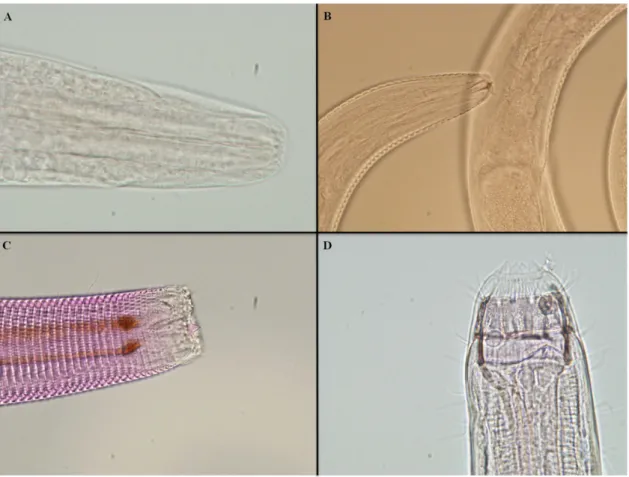
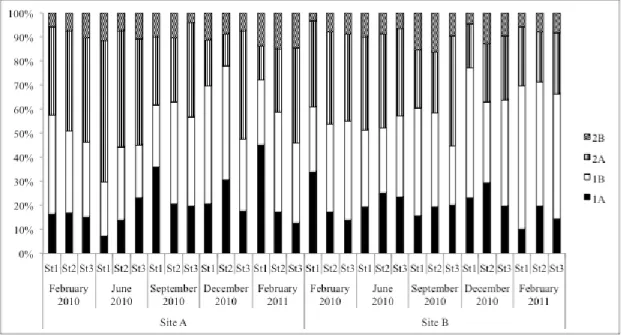
(24) belonging to Class Adenophorea present caudal glands, bristles and conspicuous amphids as opposition to members of Class Secernentea (Riemann 1989). Most marine nematodes vary in size from 1 to 3 mm and most nematodes are dioecious, i.e. have separate male and female individuals with males being usually smaller than females. Reproduction is usually by copulation. Some species are ovoviviparous, embryos develop inside eggs within the mother’s body before they hatch. From the egg to adult nematodes suffer developmental changes and pass through four juvenile stages that are sometimes impossible to identify morphologically in terms of species (Warwick 1981). Nematodes have a relatively long fertile period causing an overlap of generations (Woombs & Laybourn-Parry 1986). Nematodes are highly diverse with respect to size, shape and type of food. Based on that, Wieser (1953) classified nematodes in four trophic groups according to the size of their buccal cavity structure and to the presence of teeth: 1A – selective deposit feeders and 1B – non-selective deposit feeders (both without teeth, and with small and large buccal cavities, respectively); 2A – epistrate feeders and 2B – omnivores or predators (with small teeth and powerful mandibles, respectively) (Figure 3).. General Introduction | 18 .
(25) Figure 3. Four genera of nematodes belonging to four feeding types: A - Selective deposit feeder, Terschellingia sp.; B- Non-selective deposit feeder, Camacolaimus sp.; C- Epistrate feeder, Euchromadora sp.; D-Predator/omnivor, Sphaerolaimus sp. (Photos: P. Materatski). Moens and Vincx (1997) proposed modifications to Wieser classification based on observations of the feeding behaviours of living nematodes in estuary, establishing six trophic groups: 1) microvores, that feed exclusively on bacteria; 2) ciliate feeders, that feed mostly on ciliates but also on bacteria; 3) deposit feeders, that feed on bacteria, diatoms and other microalgae; 4) epigrowth feeders, that feed on diatoms and other microalgae; 5) facultative predators, that feed on several items, including detritus and other nematodes; and 6) predators, that feed mainly on nematodes. The abundance of each trophic group varies according to site and environmental conditions. Nematodes are opportunistic feeders and that means they may change their feeding strategy as an adaptation to available food. General Introduction | 19 .
(26) One way to study food web trophic relations is by using stable isotopes (Peterson & Fry 1987). Isotopes are forms of an element with the same number of protons and electrons but with a different atomic mass due to number of neutrons (Fry 2006). Stable isotopes of carbon and nitrogen ratios have been commonly used in marine ecosystems (Lepoint et al. 2004; Baeta et al. 2009; Carlier et al. 2009; Lebreton et al. 2011; Ouisse et al. 2012). Naturally occurring carbon and nitrogen stable isotope characteristics of consumers reflect the isotopic characteristics of their diet and the nutrient source at the base of the food web (Fry & Sherr 1984; Fry 2006). Ratio of carbon isotopes (δ13C) of consumers and resources are usually very similar and can be used to evaluate the ultimate sources of carbon for an organism when the isotopic signature of the sources are different. The nitrogen isotope ratios (δ15N) of consumer tissues (a measure of a substance‘s isotope ratio relative to atmospheric nitrogen) is influenced by trophic interactions and also by the basal food web isotopic composition (Vander Zanden & Rasmussen 1999; Post 2002). The δ15N of a consumer is typically enriched by 3 to 4 ‰ relative to its diet, showing a measurable offset between different trophic levels (Vander Zanden & Rasmussen 2001; Post 2002) and allowing the estimation of the trophic position. Dual stable isotopes may therefore be used to study both resources and trophic position of consumers (Moens et al. 2005). The use of stable isotopes however requires a minimum of biomass, which in the case of very small animals, such as nematodes, usually means the use of hundreds of individuals (Moens et al. 2005). Because of that, dual stable isotopes of nematodes has been reported for nematodes on a community level (Riera et al. 1996; Riera et al. 1999; Riera & Hubas 2003), which may lead to inaccuracy since nematode species have ecological different behaviours (Moens et al. 2005). To date, studies concerning nematode at species level are scarce, Carman and. General Introduction | 20 .
(27) Fry (2002) and Moens et al. (2005) are the few concerning nematode diet studies using dual stable isotopes and none of these were made on seagrass habitats. Studying trophic interactions within nematode communities can help in achieving a better understanding on the importance of these communities on benthic systems and contribute to a better knowledge of the ecosystem functioning.. Nematodes as bioindicators, their abundance and distribution The use of nematodes as indicators of the environmental conditions has been supported due to their variety of characteristics that make them representative of overall ecosystem status (Coull 1999). Nematodes are ubiquitous, they occur in any environment, polluted or not. They are usually in greater density and diversity than other members of meiofauna which makes them suitable for the detection of different types and levels of stress. They have short generation times and sublethal effects of pollutants on reproduction, growth rates, longevity and behaviour can be determined in days. They are smaller and easier to sample when compared to macrofauna. They are typically relatively sedentary, do not rapidly migrate from stressful conditions and respond rapidly to various environmental gradients from macro to microscale ranges (Coull & Chandler 1992). Among the most important environmental factors that affect nematodes, namely their distribution, density and diversity, are: the size of the sediment particle, salinity and temperature (Coull 1999). Other factors such as oxygen and food availability, turbidity, hydrodynamic regime, topography, seagrass distribution, as well as anthropogenic pressures, may also explain nematodes spatial (vertical and horizontal) and temporal distribution (Heip et al. 1985; Fleeger & Decho 1987).. General Introduction | 21 .
(28) Seasonal variations in nematode abundance and diversity have been mostly attributed to the influence of temperature, but also to seasonal rainfalls, food abundance, anoxic depth levels, bioturbation and disturbance. Nematode densities are usually higher in the spring/summer when temperatures are higher (Tietjen 1969) and are lower at low temperatures mostly because of the increase of generation times of estuarine nematode species at lower temperatures as well as because of the decrease on the rates of nutrient assimilation (Heip et al. 1985; Moens & Vincx 2000). There are few studies that show higher densities in winter seasons however in these studies, it is stressed that the seagrass canopy may have an important effect in food supply (Alongi 1987). Nematode communities from temperate and sub-tropical habitats have shown changes in their feeding type from season to season (Alongi 1990). Several studies have shown that the annual pattern of total abundance and species composition is repeatable from year to year and that annual patterns vary within sites in an estuary (Coull 1999; Fisher 2003). Spatial distribution of nematodes is mostly heterogeneous and is influenced by factors at a scale from centimetres to metres (e.g. food availability) to a scale from metres to kilometres (e.g. variation in physical gradients) (Hall et al. 1994; Montagna 1991). Horizontal distribution depends mainly on sediment composition, salinity and temperature. The density of marine nematodes is higher in fine sediments and lower in coarse sediments, however in terms of diversity it is the opposite, it tends to exist a higher diversity in coarse sediments than in fine sediments (Heip et al. 1985). In addition, nematodes species in coarse sediments tend to be more robust, which is probably an adaptation to unstable coarse sediments (Warwick 1971; Heip et al. 1985). Remane’s model shows the effect of a salinity gradient on the density of benthic invertebrate species in the Baltic Sea. It shows that densities are higher in marine waters, moderate in fresh water and lower in water with salinity between 5 and 8. To. General Introduction | 22 .
(29) include estuarine conditions, in 2002, Attrill related the species density with the variation in salinity over time, rather than with average salinity, and found that species diversity was lower where salinity was most variable and higher in stable marine and freshwaters (Attrill 2002; Ferrero et al. 2008). Nematode densities have shown to present the same behaviour (McArthur et al. 2000). The diversity of nematodes has also shown to be influenced by latitude. A higher diversity was observed in temperate areas than in equatorial or polar regions (Boucher 1990; Lambshead et al. 2000; Mokievsky & Azovsky 2002). However, salinity and sediment characteristics on the scale of metres to kilometres, proved to be more important in explaining community structure than latitudinal differences on the scale hundreds of kilometres (Soetaert et al. 1995). Subtidal, intertidal and supratidal zones have different physicochemical properties and therefore influence nematodes distribution and abundance (Hourston et al. 2005). Changes in tidal amplitude and current velocity change the distribution and accumulation of sediments and consequently the meiofauna communities (Smol et al. 1994). Nematodes are the most abundant meiobenthic organisms in intertidal zones. Nematode densities have shown to be lower in water depths greater than 200 m than in shallow waters however these differences have been attributed to other variables such as food availability and sediment characteristics (Grémare et al. 2002; Lambshead 2003; Udalov et al. 2005). On a vertical scale of centimetres, near de surface, factors that affect horizontal distribution have an as important role as in vertical distribution. Nematodes vertical distribution depends on a variety of biological, physical and chemical factors: penetration of oxygen, water content, sediments, temperature, biogenic structures such as seagrass roots, food sources, proximity to surface (Escaravage et al. 1989; Giere 1993; Steyaert et al. 1999). Meiofauna has mostly been found in the 2 cm near the. General Introduction | 23 .
(30) surface depending mainly on the type of sediment and oxygen (Smith & Coull 1987; Vincx 1996), factors that are related. The finer the sediments, the more near the surface the nematodes are and that seems to happen because in fine sediments, such as silt and clay, the oxygen decreases more rapidly with depth. Due to the fact that most meiofaunal organisms need oxygen, they are limited by the Redox Discontinuity Layer (RDL) which divides aerobic and anaerobic sediments (Coull 1999). Besides the type of sediment, oxygen level is also affected by water pumping caused by macroinvertebrates and wave action and therefore these variables may also affect vertical distribution of benthic species (Cullen 1973). Changes in vertical distribution of nematodes have also been shown in relation to tidal cycles (Steyaert et al. 2001). Certain nematode species migrate towards the sediment surface during inundation of tidal flat and returned when the tidal was low. Vertical separation may reduce predatory interactions which explains the high number of species found in a restricted patch (Joint et al. 1982). Several assessment tools based on diversity (Margalef Index, d; Shannon-Wiener diversity, H′) or on ecological strategies (Index of Trophic Diversity and Maturity Index), are used to highlight the distributions of nematode communities and their responses to environmental changes. The two ecological indicators based on diversity (Margalef Index, d; Shannon-Wiener diversity, H′) can indicate loss of biodiversity and also suggest a reduction in functional biodiversity when presenting low values, especially in stressed environments that are subjected to organic enrichment, human disturbance and physical stressors (Mirto & Danovaro 2004; Fraschetti et al. 2006; Bianchelli et al. 2008; Danovaro et al. 2008; Gambi et al. 2008). However, in natural stressed environments a higher biodiversity may mean the adaptation or ability of benthic systems to perform the key biological and biogeochemical processes that are crucial for their sustainable functioning (Danovaro et al. 2008). The Index of Trophic General Introduction | 24 .
(31) Diversity (ITD) is based on the density contribution of each feeding-type as classified by Wieser (1953) (Heip et al. 1985). ITD ranges from 0.25 (highest trophic diversity, i.e., each of the four trophic guilds accounts for 25% of the nematode density), to 1.0 (lowest trophic diversity, i.e., one trophic guild accounts for 100% of the nematode density). Recently it has been used the reciprocal value of the trophic index (𝜃-1), so that the highest values of the index correspond to the highest trophic diversity. The ITD is generally used to correlate the trophic diversity of nematodes with pollution levels (Heip et al. 1985; Mirto et al. 2002). Changes in ITD are usually only highlighted when strong variations in the assemblage structure occur, which means that its use as the only tool in monitoring programs may sometimes be questionable (Vincx & Heip 1987). The general principle of the Maturity Index (MI) is based on the different strategies of nematode assemblages in relation to different disturbances (Bongers 1990; Bongers et al. 1991). The MI assigned to nematode genera on the c–p scale, ranges from 1 (colonizers) to 5 (persisters), where taxa with rapid growth and reproduction and usually high tolerance to disturbance are considered colonizers, whereas slow-growing and more sensitive taxa which thrive well in fairly stable and pristine environments are considered persisters (Bongers 1990; Bongers et al. 1991). Thus, the c–p scores reflect life-history characteristics associated with r- and K- selection for colonizers and persisters, respectively (Bongers & Bongers 1998; Bongers & Ferris 1999). As happens with the ITD, the use of the MI as the only tool in monitoring programs is questionable, since it can sometimes only distinguish the extreme conditions of disturbance (Moreno et al. 2011). The classical nematode community analysis in terms of density, diversity, genera composition and functional diversity is well documented (Castel et al. 1989; Guerrini et al. 1998; Ndaro & Olafsson 1999; Fisher & Sheaves 2003; Fonseca et al. 2011; Alves et General Introduction | 25 .
(32) al. 2013). More limited information exists in terms of nematodes morphometry (length, width and length/width ratio) and biomass. Nematodes show a wide range of different sizes and body proportions that result from environmental adaptations. These indicators reflect specific modes of life in terms of feeding strategies, life history and diversity may therefore be used to study nematodes ecosystems (Warwick & Price 1979; Vidakovic & Bogut 2004; Moens et al. 2007; Leduc et al. 2010; Quang et al. 2014). The study of biomass and allometric attributes for monitoring changes, in comparison with taxonomic identification, is easier, not requiring high taxonomic skills, less timeconsuming and has a lower cost, with obvious implications in environmental management (Vanaverbeke et al. 2003). Total biomass may be estimated from numerical abundance, and mean individual biomass can be measured based on length and width measurements. The Andrassy’s formula has been widely used for biomass calculations, W=(LxD2)/(1.6x106) where W is the mass (µg wet weight), L is the length (µm) and D is the body diameter (µm) (Andrassy 1956). A ratio of 0.25 may then be assumed to convert wet weight into dry weight (Heip et al. 1985). The length/width (L/W) ratio is a measure of nematodes body shape. According to this ratio, nematodes have been classified into categories. Nematodes with a low L/W ratio < 6 were classified as short or stout and nematodes with a L/W ratio > 14 were classified as long/slender (Ratsimbazafy et al. 1994; Soetaert et al. 2002). In 2007, Schatzberger et al. classified as stout, nematodes with a low L/W ratio < 18; as slender, nematodes with a L/W ratio of 18-72 and as long/thin, nematodes with a high L/W ratio > 72 (Schratzberger et al. 2007). Slender and long nematodes move fast through the sediment and are more representative of the feeding type of predators/omnivores and epistrate feeders whereas stout nematodes have a more reduced mobility and are more representative of the non selective and selective deposit feeders groups, having a more. General Introduction | 26 .
(33) opportunistic behavior (Warwick 1971; Soetaert et al. 2002; Quang et al. 2014). Other studies comparing nematodes body size and trophic groups have been done, showing however different results, suggesting that there is not such a linear relation and that other factors may be involved (Tita et al. 1999). Longer nematodes have high generation times and high maturity indexes. They invest more in growth than in reproduction (Bongers 1999; Ferris & Bongers 2006; Vanaverbeke et al. 2007). Nematode lengths and consequently L/W ratios are affected by several factors such as dissolved solids in water and nitrate concentrations in sediments; sediment particle size, chlorophyll a and total pigment concentration and oxygen concentrations. High nematode length and high L/W ratio (longer and thinner nematodes) have shown a positive correlation with: total dissolved solids in the water and nitrate and nitrite concentrations in the sediment as well as coarser sediment particles; and a negative correlation with oxygen concentrations and chlorophyll a and total pigment concentration. The decrease of chlorophyll a and total pigment concentrations may be explained by the decrease on the number of deposit feeders (and therefore decrease of average lengths) that mainly feed on detritus and microalgae (Warwick 1971; Heip et al. 1985; Soetaert et al. 2009; Losi et al. 2013; Quang et al. 2014). Nematode widths have shown to be affected by coliform concentrations, nitrite concentrations in sediment and dissolved oxygen. Nematode widths show a positive correlation with coliform concentrations and negative correlation with nitrite concentrations and dissolved oxygen (Atkinson 1973). Individual and total biomass are negatively correlated with dissolved oxygen. Nematodes with a higher dry weight require lower oxygen consumptions, suggesting that nematodes are well adapted to conditions of low oxygen. Total biomass has shown a negative correlation with coarser sediments, increasing when the percentage of sand decreases and when percentage of silt increases in opposition to. General Introduction | 27 .
(34) individual biomass that increases with the increase of coarser sediments (Quang et al. 2014). This can be explained due to the higher density of nematodes found in finer sediments. Other studies however have shown higher individual biomass in muddy sediments than in sandy sediments (Tita et al. 1999). These differences may be explained because many other sediment characteristics other than grain size, such as organic content, water content, redox potential, porewater oxygen concentrations, among others, may affect nematodes body size (Fleeger et al. 2011).. Anthropogenic pressures that affect nematodes Nematodes abundance and distribution may also be affected due to anthropogenic pressures. Several studies have focused on the effects of global warming, organic enrichment, hydrocarbon spills and other contaminants such as copper, lead, zinc, iron and cadmium. Since the industrial revolution carbon dioxide (CO2) and other greenhouse gases (GHG) have been increasing, mostly due to the use of fossil fuels, with a direct effect in global warming. Among global warming consequences are the increase of the frequency and magnitude of extreme weather events, ocean acidification, rise of sea level, increase of air temperature. In estuaries, the most important impacts are associated with flood or drought events with important effects in nematodes (Attrill & Power 2000). Man’s activities have resulted in high inputs of nutrients and organic matter creating an unbalanced ecosystem (Austen & Warwick 1995). Nematodes increase in abundance along a gradient of increasing organic enrichment, until a point where conditions deteriorate so much that nematodes are absent. Although nematode assemblages from muddy estuaries are not affected with low inputs, high inputs result in a decrease of species diversity (Schratzberger & Warwick 1998). This knowledge may have management implications for the marine environment in that if the same amount of. General Introduction | 28 .
(35) organic matter is administrated in low inputs it has a lower effect on nematode communities. The high concentrations of polycyclic aromatic hydrocarbons (PAHs) in aquatic environments are usually associated with discharges of petroleum and its derivatives, due to shipping and coastal activities such as land-based industrial inputs and domestic discharges (Burns & Saliot 1986; Louati et al. 2001). PAHs concentrate in sediments and pass to benthos through direct contact or ingestion, that subsequently pass them to their predators (Marshall & Coull 1996; DiPinto & Coull 1997). Impacts of pollutants on benthic communities have been studied (Lee et al. 1981; Coull & Chandler 1992). Nematodes diversity has shown to decrease in presence of such pollutants however, in terms of abundances, there have been shown different results. Different dosages and toxicity of pollutants, sedimentary conditions, different species susceptibility and the fact that benthic communities from more contaminated areas are more tolerant to pollutants may help to explain the different abundance variations (Di Toro et al. 1991; Millward et al. 2004). Response of nematodes to anthropogenic pressures such as disappearance or decrease of some species may significantly influence interactions among other benthic taxa (Carman et al. 1997). It may lead to food limitation for animals that have nematodes as their obligatory food source and, on the other hand, nematode food sources such as microalgae may increase as a consequence of reduced feeding. All these changes in the food web may have serious implications for the functioning of the whole marine ecosystem (Attrill & Power 2000).. Nematode communities on seagrass beds of Zostera. General Introduction | 29 .
(36) Several studies show that vegetated sediments support higher abundances, biomass and diversity of infauna in general than surrounding unvegetated sediments (Edgar et al. 1994; Boström & Bonsdorff 1997; Webster et al. 1998; Hemminga & Duarte 2000). The vegetation reduces water movement and increases sedimentation of fine particles thus altering particle size structure and the availability of food (Castel et al. 1989). It allows the creation of complex habitats and substrates for several organisms, offering them shelter from predation, as well as feeding and nursery areas (Neckles et al. 1993; Boström et al. 2006; Fredriksen et al. 2010). In nematodes communities some studies demonstrated highest abundances and diversity in seagrass beds (Escaravage et al. 1989; Alongi 1987; Fisher & Sheaves 2003), though other results obtained did not show that evidence (Castel et al. 1989; Danovaro 1996; Leduc & Probert 2011; Fonseca et al. 2011) suggesting that more complex interactions may be involved. More studies are needed to understand which and how nematode species respond to the complex environment created by seagrasses. The recovery processes focused on biological interactions, are an important baseline to an emerging field in aquatic ecology such as “Restoration Ecology” (Verdonschot et al. 2012). It is however difficult to assess where an ecosystem is positioned along a trajectory of recovery (Latimer et al. 2003) and when a coastal ecosystem can be declared recovered (Elliott et al. 2007). The increase of the ecosystem quality by structural and functional “natural recovery” implies a passive ongoing process, and may not result in a return to the original state but instead, in a newly created ecosystem regaining quality (Elliott et al. 2007).. General Introduction | 30 .
(37) References. Ackerman, J.D., 2006. Sexual reproduction of seagrasses: pollination in the marine context, in Seagrasses: biology, ecology and conservation, ed. O.R. In: Larkum AWD, Duarte CM (Eds.).The Netherlands: Springer, pp 89-109. Adao, H., A. Alves, J. Patricio, J. Neto, M. Costa & J. Marques, 2009. Spatial distribution of subtidal Nematoda communities along the salinity gradient in southern European estuaries. Acta Oecologica-International Journal of Ecology, 35(2), 287-300. Adão, M., 2003. Dinâmica das comunidades de meiofauna em sedimentos associados aos povoamentos de Zostera noltii no estuário do rio Mira, Évora, Portugal: Universidade de Évora. Alongi, D., 1987. Intertidal zonation and seasonality of meiobenthos in tropical mangrove estuaries. Marine Biology, 95, 447-58. Alongi, D., 1990. Community dynamics of free-living nematodes in some tropical mangrove and sandflat habitats. Bulletin of Marine Science, 46, 358-73. Alves, A., H. Adao, T. Ferrero, J. Marques, M. Costa & J. Patricio, 2013. Benthic meiofauna as indicator of ecological changes in estuarine ecosystems: The use of nematodes in ecological quality assessment. Ecological Indicators, 24, 46275. Andrade, F., 1986. O estuário do Mira: caracterização geral e análise quantitativa da estrutura dos macropovoamentos bentónicos, Lisbon, Portugal: Faculty of Sciences of the University of Lisbon. Andrassy, I., 1956. The determination of volume and weight of nematodes. Acta Zool (Hungarian Academy of Science), 2, 1-15.. References | 31 .
(38) Atkinson, H., 1973. The influence of oxygen tension and body size. The respiratory physiology of the marine nematodes Enoplus brevis (Bastian) and E. communis (Bastian). Journal of Experimental Biology, 59, 255-66. Attrill, M., 2002. A testable linear model for diversity trends in estuaries. Journal of Animal Ecology, 71, 262-9. Attrill, M. & M. Power, 2000. Effects on invertebrate populations of drought induced changes in estuarine water quality Marine Ecology Progress Series, 203, 13343. Austen, M., P. Lambshead, P. Hutchings, G. Boucher, P. Snelgrove, C. Heip, G. King, I. Koike & C. Smith, 2002. Biodiversity links above and below the marine sediment-water interface that may influence community stability. Biodiversity and Conservation, 11, 113-36. Austen, M. & R. Warwick, 1995. Effects of manipulation of food supply on estuarine nematodes. Hydrobiologia, 311, 175-84. Baeta, A., N. Niquil, J. Marques & J. Patrício, 2011. Modelling the effects of eutrophication, mitigation measures and an extreme flood event on estuarine benthic food webs. Ecological Modelling, 222, 1209-11. Baeta, A., I. Valiela, F. Rossi, R. Pinto, P. Richard, N. Niquil & J. Marques, 2009. Eutrophication and trophic structure in response to the presence of the eelgrasss Zostera noltii. Marine Biology, 156, 2107-20. Beck, M., K. Heck Jr, K. Able, D. Childers, D. Eggleston, B. Gillanders, B. Halpern, C. Hays, K. Hoshino, T. Minello, R. Orth, P. Sheridan & M. Weinstein, 2001. The identification, conservation, and management of estuarine and marine nurseries for fish and invertebrates. BioScience, 51, 633–41.. References | 32 .
(39) Bianchelli, S., C. Gambi, A. Pusceddu & R. Danovaro, 2008. Trophic conditions and meiofaunal assemblages in the Bari Canyon and the adjacent open slope (Adriatic Sea). Journal of Chemical Ecology, 24, 101-9. Biati, A., F. Moattar, A. Karbassi & A. Hassani, 2010. Role of saline water in removal of heavy elements from industrial wastewaters. International Journal of Environmental Research, 4, 169-76. Bongers, T., 1990. The Maturity Index: an ecological measure of environmental disturbance based on nematode species composition. Oecologia, 83, 14-9. Bongers, T., 1999. The Maturity Index, the evolution of nematode life history traits, adaptive radiation and cp-scaling. Plant and Soil, 212, 13-22. Bongers, T., R. Alkemade & G. Yeates, 1991. Interpretation of disturbance-induced maturity decrease in marine nematode assemblages by means of the maturity index. Marine Ecology Progress Series, 76, 135-42. Bongers, T. & M. Bongers, 1998. Functional diversity of nematodes. Applied Soil Ecology, 10(3), 239-51. Bongers, T. & H. Ferris, 1999. Nematode community structure as a bioindicator in environmental monitoring. Trends in Ecology & Evolution, 14(6), 224-8. Borja, A. & D. Dauer, 2008. Assessing the environmental quality status in estuarine and coastal systems: Comparing methodologies and indices Ecological Indicators, 8, 331-7. Bos, A., T. Bouma, G. de Kort & M. van Katwijk, 2007. Ecosystem engineering by annual intertidal seagrass beds: Sediment accretion and modification. Estuarine Coastal and Shelf Science, 74(1-2), 344-8.. References | 33 .
(40) Boström, C. & E. Bonsdorff, 1997. Community structure and spatial variation of benthic invertebrates associated with Zostera marina (L.) beds in the northern Baltic Sea. Journal of Sea Research, 37, 153-66. Boström, C., E. Jackson & C. Simenstad, 2006. Seagrass landscapes and their effects on associated fauna: A review. Estuarine Coastal and Shelf Science, 68, 383-403. Boucher, G., 1990. Patterns of nematode species diversity in temperate and tropical subtidal sediments. Marine Ecology, 11, 133-46. Bouwman, L., 1983. A survey of nematodes from the Ems Estuary. Part 2. Species assemblages and associations. Zoologische Jahrbucher (Syst. Oekol. Geogr. Tiere), 110, 345-76. Burns, K. & A. Saliot, 1986. Petroleum hydrocarbons in Mediterranean sea: a mass balance. Marine Chemistry, 20, 141-57. Cabaço, S. & R. Santos, 2007. Effects of burial and erosion on the seagrass Zostera noltii. Journal of Experimental Marine Biology and Ecology, 340, 204-12. Cardoso, P., A. Brandão, M. Pardal, D. Raffaelli & J. Marques, 2005. Resilience of Hydrobia ulvae populations to anthropogenic and natural disturbances. Marine Ecology Progress Series, 289, 191-9. Carlier, A., P. Riera, J. Amouroux, J. Bodiou, M. Desmalades & A. Grémare, 2009. Spatial heterogeneity in the food web of a heavily modified Mediterranean coastal lagoon: stable isotope evidence. Aquatic Biology, 5, 167-79. Carman, K., J. Fleeger & S. Pomarico, 1997. Response of a benthic food web to hydrocarbon contamination. Limnology and Oceanography, 42, 561-71. Carman, K. & B. Fry, 2002. Small-sample methods for delta C-13 and delta N-15 analysis of the diets of marsh meiofaunal species using natural-abundance and. References | 34 .
(41) tracer-addition isotope techniques. Marine Ecology Programme Series, 240, 8592. Castel, J., L. PJ, V. Escaravage, I. Auby & M. Garcia, 1989. Influence of seagrass beds and oyster parks on the abundance and biomass patterns of meiobenthos and macrobenthos in tidal flats. Estuarine, Coastal and Shelf Science, 28, 71-85. Cloern, J., 2001. Our evolving conceptual model of the coastal eutrophication problem. Marine Ecology Progress Series, 210, 223-53. Costanza, R., R. d’Arge, R. de Groot, S. Farber, M. Grasso, B. Hannon, K. Limburg, S. Naeem, R. O’Neill, J. Paruelo, R. Raskin, P. Sutton & M. van den Belt, 1997. The value of the world’s ecosystem services and natural capital. Nature, 387(15), 253-60. Costanza, R., B. Fisher, S. Ali, C. Beer, L. Bond, R. Boumans, N. Danigelis, J. Dickinson, C. Elliott, J. Farley, D. Gayer, L. Glenn, T. Hudspeth, D. Mahoney, L. McCahil, B. McIntosh, B. Reed, S. Rizvi, D. Rizzo, T. Simpatico & R. Snapp, 2007. Quality of life: An approach integrating opportunities, human needs, and subjective well-being. Ecological Economics, 61, 267-76. Coull, B., 1988. The ecology of marine meiofauna, in Introduction to the study of meiofauna, ed. R.a.T. Higgins, H (Eds).Washington: Smithsonian Institute Press. Coull, B., 1999. Role of meiofauna in estuarine soft-bottom habitats. Australian Journal of Ecology, 24(4), 327-43. Coull, B. & G. Chandler, 1992. Pollution and meiofauna: field, laboratory and mesocosm studies. Oceanography and Marine Biology Annual Review, 30, 191271.. References | 35 .
(42) Cullen, D., 1973. Bioturbation of superficial marine sediments by interstitial meiobenthos. Nature, 242, 323-4. Cunha, A. & A. Araújo, 2009. New distribution limits of seagrass beds in West Africa. Journal of Biogeography, 36, 1621-2. Cunha, A., J. Assis & E. Serrão, 2013. Seagrass in Portugal: a most endangered marine habitat. Aquatic Botany, 104, 193-203. Danovaro, R., 1996. Detritus–bacteria–meiofauna interactions in a seagrass bed (Posidonia oceanica) of the NW Mediterranean. Marine Biology, 127, 1-13. Danovaro, R., C. Gambi, A. Dell'Anno, C. Corinaidesi, S. Fraschetti, A. Vanreusel, M. Vincx & A. Gooday, 2008. Exponential decline of deep-sea ecosystem functioning linked to benthic biodiversity loss. Current Biology, 18(1), 1-8. Dauvin, J. & T. Ruellet, 2009. The estuarine quality paradox: Is it possible to define an ecological quality status for specific modified and naturally stressed estuarine ecosystems? Marine Pollution Bulletin, 59(1-3), 38-47. Day, J., C. Hall, W. Kemp & A. Yanez-Arancibia, 1989. Estuarine Ecology, New York: Wiley-Interscience. den Hartog, C., 1970. The seagrasses of the world. Verhandelingen der Koninklijke Nederlandse Akademie van Wetenschappen, afd, Natuurkunde, Tweede Reeks, 59, 1-275. Di Toro, D., C. Zarba, D. Hansen, W. Berry, C. Cowan, S. Pavlou, H. Allen, N. Thomas & P. Paquin, 1991. Technical basis for establishing sediment quality criteria for nonionic organic chemicals using equilibrium partitioning. Environmental Toxicology and Chemistry, 10, 1541-83.. References | 36 .
(43) Diekmann, O., L. Gouveia, J. Perez, C. Gil-Rodríguez & E. Serrão, 2010. The possible origin of Zostera noltii in the Canary Islands and guidelines for restoration. Marine Biology, 157, 2109-15. DiPinto, L. & B. Coull, 1997. Trophic transfer of sediment-associated polychlorinated biphenyls from meiobenthos to bottom-feeding fish. Environmental Toxicology and chemistry, 16, 2268-75. Duarte, C. & C. Chiscano, 1999. Seagrass biomass and production: a reassessment. Aquatic Botany, 65(1-4), 159-74. Duarte, C. & J.P. Gattuso, 2010. Seagrass Meadows, in Encyclopedia of Earth Washington DC, ed. E.C.J. Cleveland.Environmental Information Coalition, National Council for Science and the Environment. Edgar, G.J., C. Shaw, W. GF & L. Hammond, 1994. Comparisons of species richness, size structure and productions of benthos in vegetated and unvegetated habitats in Western Port, Victoria. Journal of Experimental Marine Biology and Ecology, 176, 201-26. Elliott, M., D. Burdon, K. Hemingway & S. Apitz, 2007. Estuarine, coastal and marine ecosystem restoration: Confusing management and science - A revision of concepts. Estuarine, Coastal Shelf Science, 74, 349-66. Elliott, M. & D. McLusky, 2002. The need for definitions in Understanding Estuaries. Estuarine Coastal and Shelf Science, 55, 815-27. Elliott, M. & V. Quintino, 2007. The estuarine quality paradox, environmental homeostasis and the difficulty of detecting anthropogenic stress in naturally stressed areas Marine Pollution Bulletin, 54, 640-5. Elliott, M. & A. Whitfield, 2011. Challenging paradigms in estuarine ecology and management. Estuarine, Coastal and Shelf Science, 94, 306-14.. References | 37 .
(44) Escaravage, V., M. Garcia & J. Castel, 1989. The distribution of meiofauna and its contribution to detritic pathways in tidal flats (Arcachon Bay, France). In: Ros JD (ed) Topics in marine biology. Scientia Marina, 53, 551-9. Fairbridge, R., 1980. The estuary: its definition and geo-dynamic cycle, in Chemistry and Biochemistry of Estuaries, ed. E. Olausson, Cato, I. (Eds.).New York: John Wiley and Sons, pp. 1–37 Ferrero, T., N. Debenham & P. Lambshead, 2008. The nematodes of the Thames estuary: Assemblage structure and biodiversity, with a test of Attrill's linear model. Estuarine, Coastal and Shelf Science, 79, 409-18. Ferris, H. & T. Bongers, 2006. Nematode Indicators of Organic Enrichment. Journal of Nematology, 38, 3-12. Findlay, S., 1981. Small-scale spatial distribution of meiofauna on a mud- and sandflat. Estuarine, Coastal and Shelf Science, 12, 471-84. Fisher, R., 2003. Spatial and temporal variations in nematode assemblages in tropical seagrass sediments. Hydrobiologia, 493, 49-63. Fisher, R. & M. Sheaves, 2003. Community structure and spatial variability of marine nematodes in tropical Australian pioneer seagrass meadows. Hydrobiologia, 495, 143-58. Fleeger, J. & A. Decho, 1987. Spatial variability of intersticial meiofauna: a review. Stygology, 3, 35-54. Fleeger, J., M. Grippo & S. Pastorick, 2011. What is the relative importance of sediment granulometry and vertical gradients to nematode morphometrics? Marine Biology Research, 7, 122-34.. References | 38 .
(45) Fonseca, G., P. Hutchings & F. Gallucci, 2011. Meiobenthic communities of seagrass beds (Zostera capricorni) and unvegetated sediments along the coast of New South Wales, Australia. Estuarine, Coastal and Shelf Science, 91, 69-77. Fonseca, M., K. WJ & G. Thayer, 1998. Guidelines for the conservation and restoration of seagrasses in the United States and adjacent waters, Silver Spring (MD): National Oceanic and Atmospheric Administration (NOAA) Coastal Ocean Office. NOAA Coastal Ocean. Program Decision Analysis Series. Fraschetti, S., C. Gambi, A. Giangrande, L. Musco, A. Terlizzi & R. Danovaro, 2006. Structural and functional response of meiofauna rocky assemblages to sewage pollution. Marine Pollution Bulletin, 52, 540-8. Fredriksen, S., A. De Backer, C. Boström & H. Christie, 2010. Infauna from Zostera marina L. meadows in Norway. Differences in vegetated and unvegetated areas. Marine Biology Research, 6, 189-200. Fry, B., 2006. Stable isotope ecology, New York: Springer Science and Business Media. Fry, B. & E. Sherr, 1984. Delta-C-13 measurements as indicators of carbon flow in marine and fresh-water ecosystems. Contributions to the Marine Sciences, 27, 13-47. Gambi, M., F. Barbieri & C. Bianchi, 2008. New record of the alien seagrass Halophila stipulacea (Hydrocharitaceae) in the western Mediterranean: a further clue to changing Mediter ranean Sea biogeography. Biodiversity Records, 2, 84. Ganassin, C. & P. Gibbs, 2008. A Review of Seagrass Planting as a Means of Habitat Compensation Following Loss of Seagrass Meadow. ISSN: 1449-9967. NSW Department of Primary Industries e Fisheries Final Report Series, 96, 41 pp. Gibson, R., 2003. Go with the flow: tidal migration in marine animals. Hydrobiologia, 503, 153-61.. References | 39 .
(46) Giere, O., 1993. Meiobenthology: the microscopic fauna in aquatic sediments, Berlin, Germany: Springer-Verlag. Green, E. & F. Short, 2003. World atlas of seagrasses, California: California University Press. Grilo, T., P. Cardoso & M. Pardal, 2012. Implications of Zostera noltii recolonization on Hydrobia ulvae population structure success Marine Environmental Research, 73, 78-84. Grémare, A., L. Medernach, F. deBovée, J.M. Amouroux, G. Vétion & P. Albert, 2002. Relationships between sedimentary organics and benthic meiofauna on the continental shelf and the upper slope of the Gulf of Lions (NW Mediterranean). Marine Ecology Progress Series, 234, 85-94. Guerrini, A., M. Colangelo & V. Ceccherelli, 1998. Recolonization patterns of meiobenthic communities in brackish vegetated and unvegetated habitats after induced hypoxia/anoxia. Hydrobiologia, 375/376, 73-87. Hall, S., D. Raffaelli & S. Trush, 1994. Patchiness and distribution in shallow water benthic assemblages, in Aquatic Ecology, Scale, Pattern and Process, ed. P.S. Giller, Hildrew, A. G. & Raffaelli, D. G. (eds).Oxford: Blackwell Scientific, 333-75. Hardisty, J., 2007. Estuaries: Monitoring and Modeling the Physical System USA: Blackwell Publishing. Heck, K. & J. Valentine, 2006. Plant-herbivore interactions in seagrass meadows. Journal of Experimental Marine Biology and Ecology, 330, 420-36. Heip, C., M. Vincx & G. Vranken, 1985. The ecology of free-living nematodes. Oceanographic Marine Biology Annual Review, 23, 399-489.. References | 40 .
Imagem


+7



Documentos relacionados