Niedja
da Silva Santos
Efeitos crónicos de carbamazepina em Danio rerio:
uma avaliação multi-paramétrica
Chronic effects of carbamazepine on Danio rerio: a
multi-parametric evaluation
DECLARAÇÃO
Declaro que este relatório é integralmente da minha autoria, estando
devidamente referenciadas as fontes e obras consultadas, bem como
identificadas de modo claro as citações dessas obras. Não contém, por
isso, qualquer tipo de plágio quer de textos publicados, qualquer que
seja o meio dessa publicação, incluindo meios eletrónicos, quer de
trabalhos académicos.
Ano 2017
Niedja
da Silva Santos
Efeitos crónicos de carbamazepina em Danio rerio: uma
avaliação multi-paramétrica
Chronic effects of carbamazepine on Danio rerio: a
multi-parametric evaluation
Dissertação apresentada à Universidade de Aveiro para cumprimento dos requisitos necessários à obtenção do grau de Mestre em Toxicologia e Ecotoxicologia, realizada sob a orientação científica da Doutora Paula Inês Borralho Domingues, Bolseira de Pós-Doutoramento do Departamento de Biologia da Universidade de Aveiro e sob coorientação do Doutor Marcelino Miguel Oliveira, Bolseiro de Pós-Doutoramento do Departamento de Biologia da Universidade de Aveiro e do Doutor Cesar Koppe Grisólia, Professor Titular do Departamento de Biologia da Universidade de Brasília.
À minha mãe com todo amor, pela força e garra que representa e pelos ensinamentos que me disponibilizou ao longo da vida.
O júri
Presidente Professor Doutor Fernando José Mendes Gonçalves
Professor associado do Departamento de Biologia da Universidade de Aveiro
Doutora Carla Patrícia Quintaneiro Antunes
Investigadora de Pós-Doutoramento do Departamento de Biologia da Universidade de Aveiro
Doutora Paula Inês Borralho Domingues
Agradecimentos Agradeço a Deus porque a pesar de parecer sorte acredito muito que foi ele quem me deu excelentes condições de trabalho em um momento não favorável da minha vida. Foi melhor que ganhar no euro milhões ou mega-sena, pois recebi a dádiva de ter maravilhosos seres humanos sob o pseudónimo de: orientadores (obrigada Universidade de Aveiro), coorientadores, um oficial e outro extraoficial (obrigada Universidade de Brasília), e diversos colegas durante a elaboração deste trabalho, assim sem mais delongas vamos aos nomes 😊.
Agradeço primeiramente à minha orientadora Dra. Inês Domingues, que com muita sabedoria, dedicação e paciência tem conduzido este trabalho. Agradeço por todo o seu arsenal de conhecimento que inspira confiança. Agradeço porque a Dra. Inês esteve sempre disponível e com boa vontade para me corrigir os erros e me ensinar. Inês, agradeço porque tu és um grande ser humano, estejas certa de que, além do reconhecimento da tua dedicação, em termos científicos, tenho muitíssimo respeito e admiração por si.
Agradeço ao Dr. Miguel Oliveira que sempre demonstrou empenho, força de vontade e disponibilidade em me apoiar neste trabalho, muitas vezes fazendo críticas e me conduzindo a reflexões científicas. Dr. Miguel, obrigada por todo o cuidado e dedicação que desprendestes, foste incansável como orientador e quando eu mesma desacreditavas tu estavas lá 😊. Por fim, agradeço a Dra. Inês e ao Dr. Miguel em conjunto, que não mediram esforços em me ajudar quando sérios problemas de saúde e pessoais atingiram a minha família e mesmo distante mantiveram os olhos em mim com reuniões periódicas, acompanhando de perto aquilo que eu estava a fazer, o meu muitíssimo obrigada aos dois por todo o acompanhamento e, por nunca me terem deixado caminhar sozinha nesta etapa. O meu muito obrigada vai também ao meu coorientador Dr. César Grisólia que com muito carinho me recebeu no seu laboratório, me dando plena liberdade para trabalhar e aos poucos me permitiu estar inserida no seu grupo de trabalho. Por muitas vezes ouviu “professor preciso de kit disso ou daquilo“ e nunca reclamou, muito pelo contrário, foi mais que solicito. Professor, agradeço por todas as vezes que, juntamente com outros colegas, o senhor nos levou à estação de ónibus/autocarro quando os experimentos terminavam mais tarde que o esperado, o meu muito obrigada sei que não cabia ao senhor tal função foi simplesmente zelo da sua parte para connosco, sinceramente torço por mais parcerias assim. Ao meu coorientador extraoficial Dr. Rhaul Oliveira que de início estava desconfiado e sem muitas alegrias em me ver, mas que com o tempo deu o seu melhor e mostrou que quando está envolvido em algo não oferece nada além do seu melhor. Dr. Rhaul obrigada pelo apoio científico que foi indispensável para este trabalho. Rhaulzito, meu muito obrigada por todas as vezes que fostes para a bancada pôr a mão na massa juntamente comigo, pelos lanches que me oferecestes todas as vezes que eu era parte da experiência, pelas nossas aventuras até a estação de ónibus/autocarro após longas horas de trabalho quase madrugada e, pela companhia agradabilíssima que me oferecestes, muitíssimo obrigada.
Sinceramente, espero que hajam incontáveis Inês, Miguel, Cesar e Rhauls na vida académica distribuídos mundo a fora.
Agradeço a minha mãe, que é simplesmente a melhor mãe do mundo, agradeço por sua parceria e por seus incentivos em todos os sentidos, pois me permitiu cumprir mais esta etapa académica, te desejo saúde e nada além. Agradeço à minha irmã, por ser o meu apoio, afinal “a faxina deste fim de semana é tua” (taurina reage 😊).
Agradeço aos colegas de laboratório porque sempre que precisei contei convosco, só aos melhores brasileiros: Vitória Perillo obrigada pelo apoio nas trocas de água e pelas vezes que me apoiaste na coleta de ovos, por comprares o nosso almoço e pela companhia, estava escrito e o universo conspirou nos dando o 30/09, portanto és a minha libriana preferida, depois de mim mesma; Diego, Carol, Bryan, Pedro, obrigada pelo apoio inicial na leitura dos FETs foi de suma importância, Juliana (técnica do laboratório) obrigada por me ajudares com os peixes, por me ouvir sempre que precisei e pelas orações; Alisson, obrigada pela tentativa do cometa (teste que fracassam também contam); Muriel, Naty e Ana meu muito obrigada pela companhia. As melhores colegas portuguesas: Sara Esteves obrigada por todos os momentos partilhados na biblioteca, cafés e jantares, és chata, mas te perdoo 😊 afinal foste minha dupla estes 2 anos. Obrigada às três mais giras: Beatriz Cruz, Marta Fraga e Maria Inês (em ordem alfabética), este último período se tornou mais leve na vossa companhia, vocês fazem parte da surpresa boa deste mestrado. E não esquecendo, o ser mais fofo do Dbio, Ângela Barreto, obrigada pelo apoio que sempre me oferecestes, serás uma excelente orientadora. Obrigada a Daniela Correia, Joana Santos e Rita Almeida pela companhia no curto período de laboratório.
Palavras-chave Carbamazepina, peixe-zebra, contaminantes emergentes, ecossistema aquático, toxicidade crónica, efeitos biológicos, comportamento alimentar, marcadores bioquímicos, genotoxicidade, stress oxidativo, reprodução, propranolol, efeitos transgeracionais.
Resumo Os fármacos são atualmente considerados contaminantes ambientais emergentes, devido à sua constante deteção nos ecossistemas aquáticos, consequência do aumento na sua produção, diversificação e consumo. A carbamazepina (Cbz) é um fármaco humano utilizado para tratamento de epilepsia, distúrbios bipolares e neuralgia trigeminal estando entre os fármacos mais prescritos no mundo e sendo considerado um marcador de poluição antropogénica. Para uma correta avaliação de risco ambiental é essencial avaliar os efeitos a longo termo dos compostos em vários níveis de organização biológica. Assim, os objetivos deste trabalho foram: i) avaliar a toxicidade crónica da Cbz para o peixe-zebra (Danio rerio) adulto, numa gama de concentrações que inclui uma concentração ambientalmente relevante (10 µg.L−1) e uma concentração correspondente a 5% do valor de concentração letal
mediana (CL50) (10000 µg.L−1). Foram estudados efeitos no crescimento,
comportamento alimentar, reprodução (número total de ovos e viabilidade), defesas antioxidantes (atividade da catalase - CAT e Glutationa S- transferase - GST), neurotransmissão (atividade da acetilcolinesterase - AChE), atividade metabólica (atividade da lactato desidrogenase - LDH) e anomalias nucleares eritrocíticas nos adultos expostos a Cbz; ii) avaliar a toxicidade aguda do propranolol (Prop) (um fármaco cardiovascular utilizado no controlo da hipertensão, angina pectoris e arritmia após enfarte agudo do miocárdio) para adulto D. rerio após previa exposição a Cbz, iii) avaliar alterações na suscetibilidade de embriões decorrente da exposição aguda ao Prop após exposição parental a Cbz. A exposição crónica do peixe-zebra a Cbz induziu alterações no tempo total de ingestão de alimento nas duas concentrações testadas e induziu inibição da CAT no fígado e brânquias (10 e 10000 µg.L−1). A GST apresentou uma resposta dependente do órgão, com um aumento
de atividade nas brânquias (10 e 10000 µg.L−1) e fígado (10000 µg.L−1) e diminuição
no intestino (10000 µg.L−1). A atividade da AChE aumentou na cabeça (10 e 10000
µg.L−1) e músculo (10000 µg.L−1), enquanto a atividade da LDH apresentou-se
aumentada no fígado (10000 µg.L−1) e diminuída no músculo e brânquias na
concentração de Cbz mais elevada (10000 µg.L−1). Em termos reprodutivos, a Cbz
(10 e 10000 µg.L−1) diminuiu o número de ovos viáveis produzidos por peixe-zebra.
A prévia exposição de adulto D. rerio a baixas concentrações de Cbz (0 e 10 µg.L−1)
induziu 100% de mortalidade quando os organismos foram expostos ao Prop (1000 e 5000 µg.L−1) enquanto, organismos expostos a maior concentração de Cbz (10000
µg.L−1) apresentaram capacidade para tolerar o Prop. A exposição crónica a Cbz
não teve no entanto efeitos significativos na taxa de crescimento dos organismos, não tendo igualmente sido detectadas anomalias nucleares eritrocíticas, indicadores de cito e genotoxicidade. Os descendentes não demonstraram alterações na susceptibilidade ao Prop, quando comparados com os organismos controlo. De uma forma geral, os dados obtidos neste trabalho sugerem que a exposição crónica a baixas concentrações de Cbz afeta o comportamento e processos bioquímicos no peixe-zebra com possíveis consequências a nível da reprodução.
Keywords Carbamazepine, zebrafish, emerging contaminants, aquatic ecosystem, chronic toxicity, biological effects, feeding behavior, biochemical markers, genotoxicity, oxidative stress, reproduction, propranolol, transgenerational effects.
Abstract Pharmaceuticals are emerging environmental contaminants due to their constant detection into aquatic ecosystems, as a response to the increase in the rate of production, high diversity, and high consumption. Carbamazepine (Cbz) is used to epilepsy treatment, bipolar disorders, trigeminal neuralgia, being among the most prescribed drugs in the world and is considered a marker of anthropogenic pollution. For a correct environmental risk assessment, it is essential to evaluate the long-term effects of the compounds in various levels of biological organization. The objectives of this study were: i) evaluate the chronic toxicity (63 days) of Cbz for adult Danio rerio at an environmentally relevant concentration (10 μg.L-1) and at a concentration close
to 5% of the median lethal concentration (LC50) value (10000 μg.L-1). Effects were
studied on growth, feeding behavior, reproduction (total number of eggs and viability), antioxidant defences (Catalase - CAT and Glutathione-S-Transferase - GST), neurotransmission (acetylcholinesterase activity – AChE), metabolic activity (lactate dehydrogenase - LDH) and nuclear abnormalities in adults exposed to Cbz; ii) to evaluate the acute toxicity of propranolol (Prop) (a cardiovascular pharmaceutical used to hypertension control, angina pectoris and arrhythmia after acute myocardial infarction) for adult D. rerio after chronic exposure to Cbz, iii) to evaluate changes in offspring susceptibility to acute exposure to Prop after parental exposure to Cbz and, in offspring. Chronic exposure of zebrafish to Cbz induced changes in total time for food intake at the two concentrations tested. Cbz exposure induced changes in enzymatic activity: CAT was inhibited in the liver and gills (10 and 10000 μg.L-1); GST
presented an organ-dependent response with increased activity in the gills (10 and 10000 μg.L-1) and in the liver (10000 μg.L-1) and a decrease in enzyme activity in the
intestine (10000 μg.L-1); the activity of AChE was increased in head (10 and 10000
μg.L-1) and muscle (10000 μg.L-1); while LDH showed increased activity in the liver
and decreased in muscle and gills, these effects were observed in the highest concentration of Cbz (10000 μg.L-1). The number of eggs produced did not suffer
changes; however, the number of viable eggs produced by zebrafish, exposed to Cbz was reduced (10 and 10000 μg.L-1). The previous exposure of adult D. rerio to low
concentrations of Cbz (0 and 10 μg.L-1) induced mortality of 100% when these
organisms were exposed to Prop (1000 and 5000 μg.L-1) while organisms exposed to
a higher concentration of Cbz (10000 μg.L-1) were able to tolerate the Prop.The chronic exposure to Cbz did not induced significant effects in growth rate of the organisms and no erythrocytic nuclear abnormalities, cito and genotoxicity indicators were detected. The offspring did not show changes in Prop susceptibility, when compared with the control organisms. Overall, the data obtained in this work suggest that chronic exposure to low concentration of Cbz affects feeding behaviour and biochemical processes in zebrafish with possible consequences at reproduction level.
General index
Chapter 1: General Introduction ... 1
1.1. Contamination of the aquatic environment ... 2
1.2. Emerging contaminants ... 4
1.2.1. Carbamazepine ... 10
1.2.4. Propranolol ... 13
2. Biomarkers ... 15
2. Fish ecotoxicity tests ... 16
2.1. Zebrafish (Danio rerio)... 16
3. Objectives ... 17
References ... 18
Chapter 2: Chronic exposure of adult Danio rerio to carbamazepine ... 26
Reference ... 52
Chapter 3: General discussion ... 59
List of abbreviations and acronyms
AChE – acetylcholinesterase ANOVA – analysis of variance Cbz – carbamazepine Ca+2 – calcium ion CAT – catalase DDT – dichlorodiphenyltrichloroethane DTNB – 5,5–dithiobis–2–nitrobenzoic acid
ERA – environmental risk assessment EMEA – European medicines agency EC50 – median effect concentration
EROD – ethoxyresorufin–O–
deethylase
FET – Fish Embryo Acute Toxicity
g - grams
GPx – glutathione peroxidase GR – glutathione reductase GST – glutathione–S–transferase h – hours
Hpf – hours post fertilization K+ – potassium ion
LC50 – median lethal concentration
LPO – lipid peroxidation LDH – lactate dehydrogenase
LOEC – lowest observed effect
concentration M – mol mM – millimolar min – minute (s) mL – milliliters MN – micronucleus
mg.L-1 – milligrams per liter
NA – nuclear abnormalities ng.L-1 – nanograms per liter
nm – nanometer Na+ – sodium ion
NADH – nicotinamide adenine
dinucleotide (reduced)
NOEC – no observed effect
concentration
OECD – Organization for Economic Co–
operation and Development
PEC – predicted environmental
concentration
PBS – phosphate–buffered saline PE – stands for parental exposure PNEC – predictive no effect
concentration
PMS – post – mitochondrial
supernatant
r- specific growth rate
3Rs – refinement, reduction and,
replacement
ROS – reactive oxygen species SOD – superoxide dismutase
Sec – seconds
U – amount of enzyme that catalyzes
the reaction of 1 nanomoles of substrate per minute per milligrams of protein
WWTP – wastewater treatment plant µg.L – 1 – micrograms per liter
List of Figures
CHAPTER 2
FIGURE 1.ENDPOINTS ASSESSED ALONG THE EXPERIMENT.THE REPRODUCTIVE OUTCOME OF FISH WAS ASSESSED AFTER 21 DAYS EXPOSURE AND THEREAFTER WEEKLY.FETS MEAN “FISH EMBRYO ACUTE TOXICITY (FET)TEST”. ... 32 FIGURE 2.“PSEUDO” SPECIFIC GROWTH RATES (R) OF D. RERIO MALES (GREY BARS) AND FEMALES (BLACK BARS) DURING EXPOSURE
TO CBZ.RESULTS ARE EXPRESSED AS MEAN ± STANDARD ERROR... 37
FIGURE 3: FEEDING BEHAVIOR OF ADULT D. RERIO RECORDED AFTER 21 (A), 42 (B) AND 63 DAYS (C) OF EXPOSURE TO CBZ. THE RESULTS
ARE SHOWN AS TIME FOR FIRST FEEDING ACTION (GREY BARS) AND TIME FOR TOTAL FOOD INGESTION (WHITE BARS). ASTERISKS (*) ABOVE THE BARS REPRESENTS SIGNIFICANT DIFFERENCES RELATIVE TO THE CONTROL (DUNNETT’S METHOD; P<0.05)……….38 FIGURE 4:ENDPOINT OF CYTOTOXICITY AND GENOTOXICITY AFTER CHRONIC EXPOSURE OF ADULT D. RERIO TO CBZ (0,10 AND
10000 µG.L-1).VALUES REPRESENT MEAN ± STANDARD ERROR OF MICRONUCLEUS AND OTHER NUCLEAR ABNORMALITIES
(NOTCHED NUCLEI, BLEBBED NUCLEI, BINUCLEATED CELLS, LOBED NUCLEI) FOUND PER TREATMENT GROUP. ... 39 FIGURE 5:ENZYMATIC ACTIVITIES OF ADULT D. RERIO AFTER 63 DAYS EXPOSURE TO CBZ (MEAN VALUE ± STANDARD ERROR):A -ACHE ACTIVITY,B-CAT ACTIVITY;C-GST ACTIVITY AND D-LDH ACTIVITY.ASTERISKS MEAN SIGNIFICANTLY DIFFERENT FROM CONTROL TREATMENT (ACHE,CAT,LDH,DUNNETT`S TEST P<0.05 AFTER 1-WAY ANOVA, AND GST LIVER DUNN'S TEST AFTER ONE-WAY ANOVA ON RANKS ). “U” MEAN 1 NANOMOL OF SUBSTRATE PER MIN PER MG OF PROTEIN. ... 41
FIGURE 6: TOTAL PRODUCTION OF EGGS (A) AND PERCENTAGE OF VIABLE EGGS (B) FROM D. RERIO EXPOSED TO DIFFERENT CBZ
TREATMENTS AT THE DIFFERENT REPRODUCTIVE CHECK POINTS ALONG THE EXPOSURE PERIOD. RESULTS ARE EXPRESSED AS MEAN ± STANDARD ERROR………...42 FIGURE 7:LC50 VALUES AT 48 H (A) AND 96 H (B) OF PROP ON ZEBRAFISH EMBRYOS AFTER EXPOSURE OF PARENTS TO SEVERAL
CONCENTRATIONS OF CBZ .”PE” STANDS FOR PARENTAL EXPOSURE. ... 43
FIGURE 8: SUSCEPTIBILITY OF EMBRYOS TO PROP AFTER PREVIOUS EXPOSURE OF PARENTS TO CBZ. COMBINATION OF ALL THE DATA
ACQUIRED IN 8 FETS FOR THE PARAMETERS: SURVIVAL RATE AFTER 2 (A) AND 4 DAYS (B) AND NUMBER OF EMBRYOS HATCHED (C) AT 3 DAY OF EXPOSURE TO PROP (0, 0.6, 1.9, 5.6, 16, 7.50 MG.L-1)……….43
List of Tables
CHAPTER 1
TABLE 1. LIST OF SUBSTANCES CONSIDERED ENVIRONMENTALLY DANGEROUS ACCORDING TO EUROPEAN ENVIRONMENTAL LEGISLATION ADAPTED FROM THE DIRECTIVE (2012). ... 4 TABLE 2.LIST OF PRIORITY PHARMACEUTICALS FOUND THE SURFACE AND GROUND WATERS.ADAPTED FROM SVENSSON (2008). 8 TABLE 3:LIST OF COUNTRIES WHERE LEVELS OF PHARMACEUTICALS WERE REPORTED IN AQUATIC ENVIRONMENTAL. ... 9 TABLE 4:LC50 OF CBZ FROM DIFFERENT AQUATIC ORGANISMS ... 14 TABLE 5:EC50 AND LC50 TO PROP IN ORGANISMS OF DIFFERENT ... 14
CHAPTER 2
C
HAPTER
1
General introduction
1.1.CONTAMINATION OF THE AQUATIC ENVIRONMENT
Water is essential to life, nonetheless, several anthropogenic activities lead to the production of large amounts of substances that are intentionally or accidently released into the environment and eventually reach water systems (e.g. underground waters, rivers, and sea) where they may have pernicious effects to the biota and ultimately to humans. The consequences of the presence of these foreign substances (xenobiotics) to the aquatic systems may include direct effects on the biota and/or alterations on the environment where they live. Taking into account that the presence of these substances may alter physical, chemical and biological characteristics, these parameters can be used to assess the overall quality of aquatic systems (Tyagi et al., 2013).
The anthropogenic pressure in the aquatic environment (e.g. release of pollutants) has been increasingly studied in the last decades due to the need to promote the conservation of aquatic species and the protection of water systems (European Commission, 2008). Among the main known sources of environmental pollution are industries (which release a variety of chemicals such as metals, polycyclic aromatic hydrocarbons, and persistent organic pollutants); agriculture (contributing with pesticides input) and human and animal health protection activities (responsible for the input of pharmaceuticals residues in the aquatic environment and others). Although sewage treatment plants can reduce the input of certain types of contaminants in the aquatic systems, many of them are able to remain in the water systems for decades, affecting flora and fauna (OECD, 2005). On account of this situation, the European Union established the Directive 96/61/CE (European Union Council 1996), a set of rules aiming to prevent, control or eliminate dangerous substances from the environment. To attain a classification of good condition in terms of chemical status of water, it is necessary to comply with established maximum allowed levels of substances that may pose high risk to the aquatic environment (Commission of the European Communities, 2006) .
Among chemical substances currently identified as a risk factor to the aquatic environment, according with their persistence, bioaccumulation, and toxicity, are aromatics hydrocarbons and polycyclic aromatics hydrocarbons, chlorinated hydrocarbons, organochlorine pesticides and metals (Table 1). But more recently, several types of
micropollutants have been found in aquatic systems such as nanomaterials, pharmaceuticals, industrial additives, personal care products, water treatment by-products, flame/fire retardants, some hormones, caffeine and nicotine (Alvarez-Cohen and Sedlak, 2003).
Many compounds may affect biota directly by leading to a reduction on the abundance of species and increased infertility or indirectly by inducing effects on tolerant species (Fleeger et al., 2003). Such effects may vary according to the concentration of the chemical, its persistence in the environment, presence of other substances and physical-chemicals characteristics of the water.
Currently, environmental risk assessment (ERA) is required for the authorisation of new substances like pharmaceuticals. The knowledge of the properties and chemical structure of compounds is highly important in the ERA. The process involves hazard identification, characterization, exposure assessment and risk characterization (Kroes, 2005). ERA involves two phases. The first one consists in the estimation of the environmental exposure to the chemical by calculating a predicted environmental concentration- PEC, considering the persistence, bioaccumulation, and toxicity. PEC values below 0.01 µg.L-1 are considered as representing insignificant risk to aquatic environment. PEC values higher than 0.01 µg.L -1 involve a Phase 2 analysis that takes into account the value of PEC and a predictive no-effect concentration (PNEC), calculated by dividing the lowest short-term or long term no observed effect concentration (NOEC) by an appropriate factor (Long et al., 1995). A risk quotient is calculated by dividing PEC by PNEC. Therefore, estimated risk and permissible levels of contamination are defined according to the response of various organisms such as fish (early life stage toxicity test) , Daphnia sp (reproduction test) and algae (growth inhibition test) to the tested compound (Long et al., 1995).
Table 1. List of substances considered environmentally dangerous according to European environmental legislation adapted from the Directive (2012).
Chemical Class Compounds
Aromatic hydrocarbons Anthracene, Benzene, Naphthalene
Chlorinated hydrocarbon Dichloromethane
Drugs Cybutryne, Diclofenac
Hormones 17 α-Etinilestradiol, 17β-Estradiol
Metals
Lead and its compounds, Cadmium and its compounds; Mercury and its compounds; Nickel and its compounds
Organic compounds Bromoorganic Hexabromocyclododecanes Triclorobenzenes; Brominated diphenylethers Chloroorganic
Heptachlor and Hepatachor apoxide; Chloroalkanes; Trichol; Trichloromethane (chloroform); Dioxins and dioxin-like compounds; C10-13
Fluoro Perfluorooctane, Sulfonic acid and its
derivatives
Others Tributyltin compounds; Nonylphenols X6;
Octylphenols7 Pesticides Organophosphastes Dicofol (e.g.Dichlorodiphenyltrichloroethane-DDT), Dichlorvos
Fungicide Hexaclorobenzene, Pentachlorobenzene,
Pentachlorophenol, Quinoxyfen. Herbicides Alachlor, Atrazine, Aclonifen Diuron,
Isoproturon, Simazine, Trifluralin, Bifenox, Terbutryn. Insecticides and acaricide Chlorfenvinphos, Chlorpyrifos (Chlorpyrifos-ethyl), 1,2-dichloroethane, Endosulfan, Hexaclorociclo-hexano, Cypermethrin11 1.2.EMERGING CONTAMINANTS
In recent years, new contaminants have been detected in water systems (e.g. microplastics, nanoparticles and pharmaceuticals), due to ineffective removal by the conventional water treatment plants. Thus, there is a high concern on how these contaminants may affect aquatic environment in the short- and long-term. Although a considerable amount of research has been performed with “classical contaminants”, the
available research for these emerging contaminants may be considered scarce, particularly in terms of long term exposures and combined exposures (Arnold et al., 2013).
Emerging contaminants are compounds that were not considered dangerous attending to their distribution and concentration in the environment but that are now increasingly detected (Alvarez-Cohen and Sedlak, 2003). Nanomaterials, pharmaceuticals, industrial additives and by products, fragrances and personal care products, food additives, water treatment by products, flame/fire retardants, surfactants, hormones are organics pollutants with difficult removal efficacy in conventional drinking water treatment plants using filtration granulated active carbon, due to their size (small molecules) and polarity.
Pharmaceuticals have emerged in the past decade as emerging contaminants (Sauvé and Desrosiers, 2014). The development of sensitive analytical technique allowed their detection in the range of nanograms per liter (ng.L-1) and micrograms per liter (µg.L-1) (Santos et al. 2010) as well as the distinction of parent compounds and metabolites (Fent et al., 2006; Ternes, 1998). Once administered, pharmaceuticals absorbed by humans are excreted through urine or faeces and reach the wastewater treatment plants. Although some pharmaceuticals may be degraded in sewage treatment plants, for most of them an incomplete or inadequate treatment results in their release into the environment (Almeida
et al., 2014; Carter et al., 2014; Arnold et al., 2014; Kotchen et al., 2008). Thus, parent
compounds and their metabolites (Clara et al., 2004) reach in this way the different ecosystem compartments such as streams, rivers, underground waters, surface waters, sea, soil (Oetken et al., 2005) and even drinking waters (Stackelberg et al., 2004). Once in the environment, they may induce a variety of effects such as alterations in reproduction, growth and may cause endocrine disruption (Brausch et al., 2012).
Pharmaceuticals have been classified as contaminants of emerging concern, due to
their increased annual production, high consumption (hundreds of tons per year), diversity
(Santos et al., 2010) and the fact that they are designed/used to interact with biological systems and have specific mechanisms in the target organisms (Oliveira et al., 2015). They are classified as persistent compounds due to its continuous release into the environment
(Ferrari et al., 2003). The Directive 93/67/EEC classified pharmaceuticals according to their
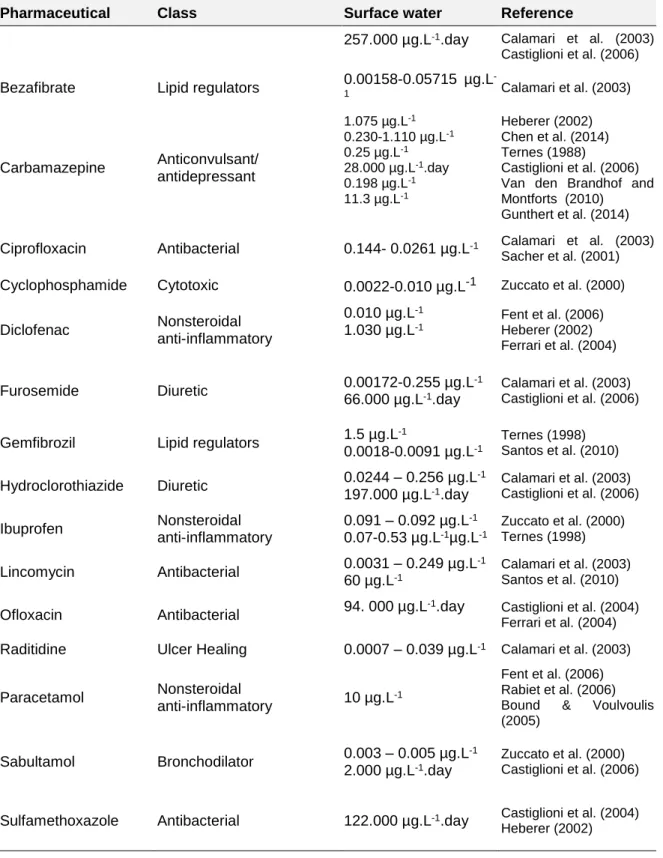
milligrams per liter (mg.L-1)); toxic to aquatic organism (1 – 10 mg.L-1) and harmful to aquatic organism (10-100 mg.L-1) (Cleuvers, 2003; European Union Council, 1996). Effects on biota at the individual or population level may then be expected due to their capacity to induce biological effects even at small concentrations (Arnold et al., 2013). Some of the pharmaceutical classes with higher consumption are analgesics and anti-inflammatory drugs, contraceptives, antibiotics, beta-blockers, lipid regulators and neuroactive drugs (Fent et al., 2006). Table 2 presents a list of priority pharmaceuticals found in the surface and ground waters.
Although an increasing number of studies have focused on the effects of pharmaceuticals to non-target organisms the actual risk of pharmaceuticals to aquatic environments is still unknown (Fent et al., 2006; Oliveira et al., 2015). Harmful effects of chemicals are usually evaluated through acute toxicity tests which assess effects of a single short exposure. However, effects of low concentrations of pharmaceuticals, such as the ones found in the environment, are better evaluated using chronic toxicity tests where longer exposures are used and sublethal effects are evaluated. Some effects elicited include carcinogenicity (formation of tumours), mutagenicity (alterations in the genetic material) and teratogenicity (embryo development) (Alvarez-Cohen and Sedlak, 2003).
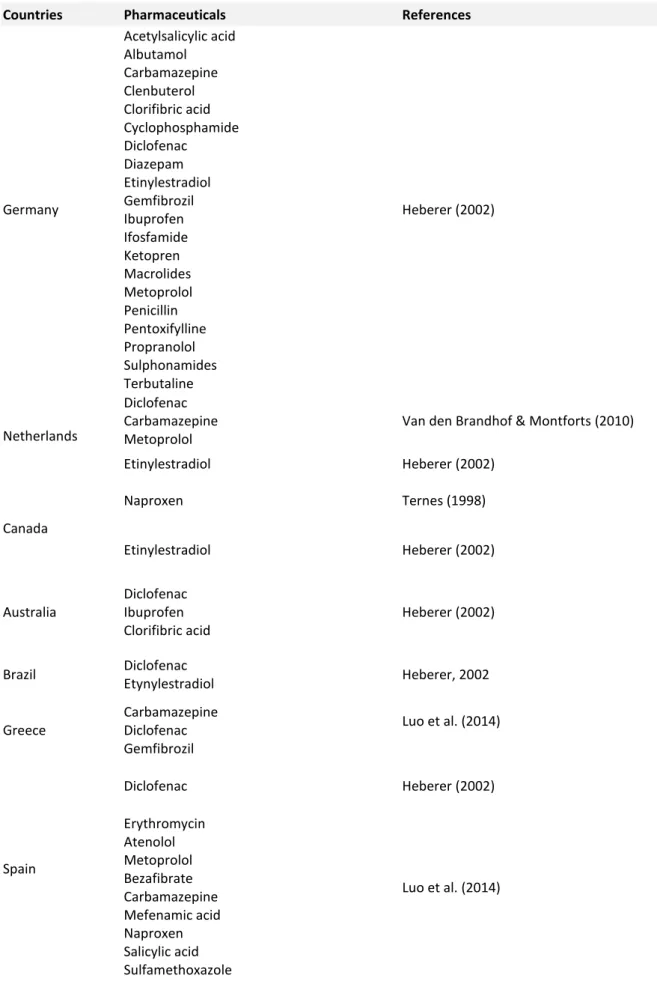
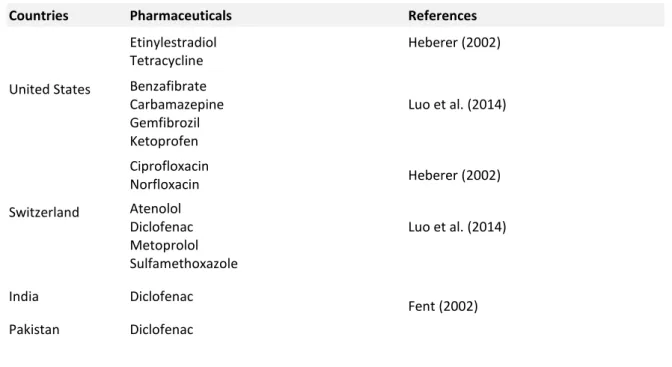
The monitoring of pharmaceuticals in the environmental has been conducted in different countries (Table 3). For instance, in the United Kingdom, despite of a restriction in the use of sulphonamide since 1995, it is still detected in the environment (Luo et al., 2014; Svensson, 2008) and its presence has been associated with bacterial resistance to antibiotics (Svensson, 2008). In Germany, 60 pharmaceuticals and metabolites were detected in wastewater and groundwater and in the Netherlands, carbamazepine (Cbz) was detected at concentrations of 0.87 µg.L-1 in sewage treatment plants and of 0.198 µg.L -1 in surface waters (van den Brandhof and Montforts, 2010).
Table 2. List of priority pharmaceuticals found the surface and ground waters. Adapted from Svensson (2008).
Pharmaceutical Class Surface water Reference
Atenolol Anti-hypertensive
0.24 µg.L-1
0.241 µg.L-1
0.00344 – 0241 µg.L-1
Cleuvers (2005) Fraysse & Garric (2005)
Table 2. List of priority pharmaceuticals found the surface and ground waters. Adapted from Svensson (2008).
Pharmaceutical Class Surface water Reference
257.000 µg.L-1.day Calamari et al. (2003)
Castiglioni et al. (2006)
Bezafibrate Lipid regulators 0.00158-0.05715 µg.L
-1 Calamari et al. (2003) Carbamazepine Anticonvulsant/ antidepressant 1.075 µg.L-1 0.230-1.110 µg.L-1 0.25 µg.L-1 28.000 µg.L-1.day 0.198 µg.L-1 11.3 µg.L-1 Heberer (2002) Chen et al. (2014) Ternes (1988) Castiglioni et al. (2006) Van den Brandhof and Montforts (2010) Gunthert et al. (2014)
Ciprofloxacin Antibacterial 0.144- 0.0261 µg.L-1 Calamari et al. (2003)
Sacher et al. (2001)
Cyclophosphamide Cytotoxic 0.0022-0.010 µg.L-1 Zuccato et al. (2000)
Diclofenac Nonsteroidal anti-inflammatory 0.010 µg.L-1 1.030 µg.L-1 Fent et al. (2006) Heberer (2002) Ferrari et al. (2004) Furosemide Diuretic 0.00172-0.255 µg.L-1 66.000 µg.L-1.day Calamari et al. (2003) Castiglioni et al. (2006)
Gemfibrozil Lipid regulators 1.5 µg.L-1
0.0018-0.0091 µg.L-1 Ternes (1998) Santos et al. (2010) Hydroclorothiazide Diuretic 0.0244 – 0.256 µg.L-1 197.000 µg.L-1.day Calamari et al. (2003) Castiglioni et al. (2006) Ibuprofen Nonsteroidal anti-inflammatory 0.091 – 0.092 µg.L-1 0.07-0.53 µg.L-1µg.L-1 Zuccato et al. (2000) Ternes (1998) Lincomycin Antibacterial 0.0031 – 0.249 µg.L-1 60 µg.L-1 Calamari et al. (2003) Santos et al. (2010)
Ofloxacin Antibacterial 94. 000 µg.L-1.day Castiglioni et al. (2004)
Ferrari et al. (2004)
Raditidine Ulcer Healing 0.0007 – 0.039 µg.L-1 Calamari et al. (2003)
Paracetamol Nonsteroidal
anti-inflammatory 10 µg.L
-1
Fent et al. (2006) Rabiet et al. (2006) Bound & Voulvoulis (2005)
Sabultamol Bronchodilator 0.003 – 0.005 µg.L-1
2.000 µg.L-1.day
Zuccato et al. (2000) Castiglioni et al. (2006)
Sulfamethoxazole Antibacterial 122.000 µg.L-1.day Castiglioni et al. (2004)
Heberer (2002)
Different levels may be found among compounds of the same class. A good example can be presented by beta-blockers (propranolol, metoprolol, and atenolol). Propranolol is
detected in sewage discharges at concentrations between 0.01 µg.L-1 and 1.9 µg.L-1 and in surface waters in the range of 0.01 µg.L-1 to 0.5 µg.L-1. Metoprolol levels in sewage discharges are in a similar range of propranolol, 0.1 µg.L-1 to 2.2 µg.L-1 whereas in surface waters levels have been detected up to 2.2 µg.L-1 (Owen et al., 2007). Although beta-blockers have been detected at high concentration in sewage discharges, in surface waters they are found at low concentrations (e.g., acebutolol: 0.01-0.13 µg.L-1 betaxolol: 0.19 µg.L -1) (Owen et al., 2007).
In Netherlands the pharmaceutical most frequently detected in drinking water has been Cbz with values up to 0.025 µg.L-1 (van den Brandhof and Montforts, 2010).
Table 3: List of countries where levels of pharmaceuticals were reported in aquatic environmental.
Countries Pharmaceuticals References
United Kingdom
Ibuprofen
Metformin hydrochloride Paracetamol
Bound & Voulvoulis (2005)
Naproxen Fent et al. (2006)
Aspirin Atenolol Carbamazepine Diclofenac Erythromycin
Alvarez & Seldak (2003)
Oxytetracycline Sulphonamide Svensson (2008) Colorphobic acid Erythromycin Metoprolol Sulfamethoxazole Luo et al. (2014)
Table 3: List of countries where levels of pharmaceuticals were reported in aquatic environmental.
Countries Pharmaceuticals References
Germany Acetylsalicylic acid Albutamol Carbamazepine Clenbuterol Clorifibric acid Cyclophosphamide Diclofenac Diazepam Etinylestradiol Gemfibrozil Ibuprofen Ifosfamide Ketopren Macrolides Metoprolol Penicillin Pentoxifylline Propranolol Sulphonamides Terbutaline Heberer (2002) Netherlands Diclofenac Carbamazepine Metoprolol
Van den Brandhof & Montforts (2010)
Etinylestradiol Heberer (2002) Canada Naproxen Ternes (1998) Etinylestradiol Heberer (2002) Australia Diclofenac Ibuprofen Clorifibric acid Heberer (2002) Brazil Diclofenac Etynylestradiol Heberer, 2002 Greece Carbamazepine Diclofenac Gemfibrozil Luo et al. (2014) Spain Diclofenac Heberer (2002) Erythromycin Atenolol Metoprolol Bezafibrate Carbamazepine Mefenamic acid Naproxen Salicylic acid Sulfamethoxazole Luo et al. (2014)
Table 3: List of countries where levels of pharmaceuticals were reported in aquatic environmental.
Countries Pharmaceuticals References
United States Etinylestradiol Tetracycline Heberer (2002) Benzafibrate Carbamazepine Gemfibrozil Ketoprofen Luo et al. (2014) Switzerland Ciprofloxacin Norfloxacin Heberer (2002) Atenolol Diclofenac Metoprolol Sulfamethoxazole Luo et al. (2014) India Diclofenac Fent (2002) Pakistan Diclofenac 1.2.1.CARBAMAZEPINE
Cbz is an anticonvulsant pharmaceutical used in the treatment of trigeminal neuralgia and to control epilepsy and bipolar disorders (Ambrósio et al., 2002). Its mechanism of action has been associated with effects on voltage-dependent sodium channels in humans (Ambrósio et al., 2002; Macdonald and Kelly, 1995). There is also evidence that Cbz interacts with other types of channels and receptors, such as voltage-gated sodium (Na+) channels, leading to channel switching from inactivated to closed state, it may inhibit calcium (Ca+2) channel with reversible voltage, suppressing the Ca+2 current and inhibiting the secretion of catecholamine. Cbz may act on the glutamatergic system by suppressing glutamate release, may interact with the serotonergic system by increasing the level of serotonin in the extracellular environment, decreasing the basal level of cyclic adenosine monophosphate and may lead to inhibition of potassium (K+) (Ambrósio et al., 2002).
In humans, Cbz has been reported to cause adverse effects such as sedation, ataxia, nausea and, in longer administration periods, modify plasma lipids, levels of sex hormones, and reduce the number of blood cells (Luis et al., 2016). This pharmaceutical is metabolised in the liver to Cbz 10,11- epoxide which still has pharmacological activity. Only 2% to 3% is eliminated in an unchanged form (Clara et al., 2004). The Cbz 10,11-epoxide inhibited the
catecholamine production in bovine cells culture through its interaction with N-type voltage-sensitive Ca+2 channels. Cbz presents a low biodegradability and high persistence (Oetken et al., 2005), its solubility, dissolution and bioavailability depends on its crystalline forms, Cbz may bind to other groups through its amine group thus facilitating its solubility; in water, it is found in the dehydrate form which is less soluble than the anhydrate form (Shayanfar et al., 2014) making it one of the most commonly detected pharmaceutical in water systems (Luis et al., 2016). Regardless of the time spent in water treatment stations, the removal of Cbz is around 10%. Thus, it can be found in effluents at high concentrations (e.g., 0.12 µg.L-1 and 0.250 µg.L-1 in Canada and Germany, respectively) (Mcdowell et al., 2005). In surface water, collected at 100 places in the United States, the average concentration of Cbz reached 0.35 µg.L-1 in surface water and in China, levels between 0.23 to 1.11 µg.L-1 have been found (Chen et al., 2014). The widespread distribution of the pharmaceutical in the water system led to its classification as marker of anthropogenic contamination in aquatic environment (Clara et al., 2004).
The highest environmental concentration of Cbz have been found in effluents at 0.98-1.20 µg.L-1 in France and 6.3 µg.L-1 in Germany (Ferrari et al., 2004).
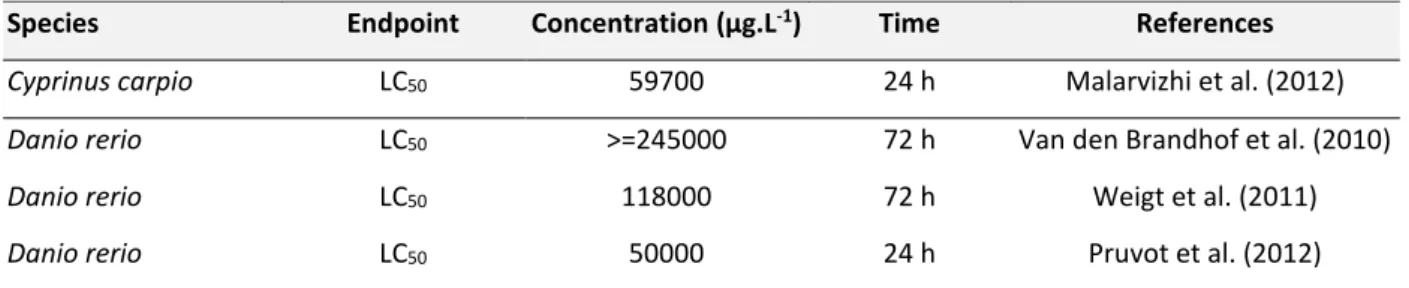
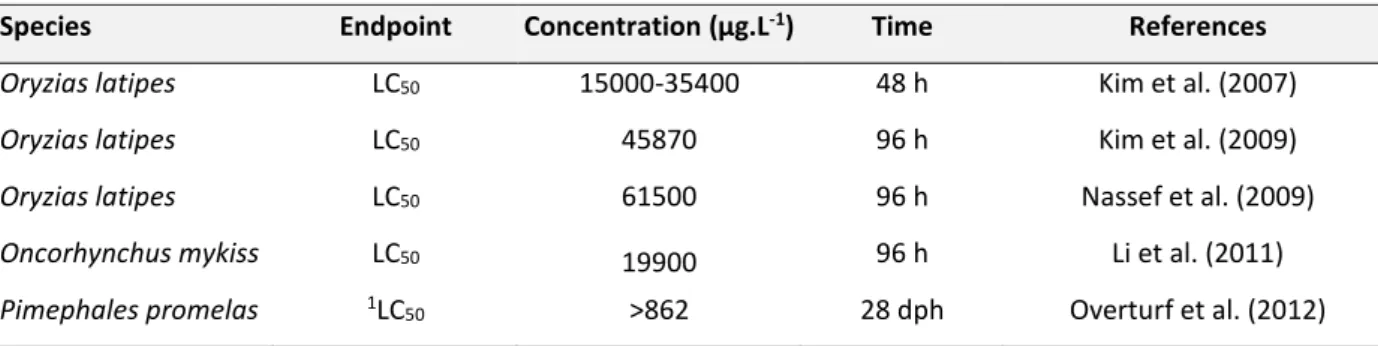
The LC50 of the Cbz on aquatic organisms vary according to the tested species (Cleuvers, 2003) (table 4). Cbz has been reported to induce chronic effects in non-target organisms even at environmentally relevant concentration (Chen et al., 2014). Nassef et al. (2010) evaluated the effects of Cbz in the embryonic development of Japanese medaka (Oryzias latipes) through eggs nanoinjection. One-day post fertilization survival was affected and embryos haemorrhage was observed. After 4 days, development was delayed. All changes were found at the concentration of 0.012 μg.L-1 per egg, and the estimated median effective concentration (EC50) value after incubation was 0.131 μg.L-1 per egg.
Table 4: LC50 of Cbz from different aquatic organisms
Species Endpoint Concentration (µg.L-1) Time References
Cyprinus carpio LC50 59700 24 h Malarvizhi et al. (2012)
Danio rerio LC50 >=245000 72 h Van den Brandhof et al. (2010)
Danio rerio LC50 118000 72 h Weigt et al. (2011)
Table 4: LC50 of Cbz from different aquatic organisms
Species Endpoint Concentration (µg.L-1) Time References
Oryzias latipes LC50 15000-35400 48 h Kim et al. (2007)
Oryzias latipes LC50 45870 96 h Kim et al. (2009)
Oryzias latipes LC50 61500 96 h Nassef et al. (2009)
Oncorhynchus mykiss LC50 19900 96 h Li et al. (2011)
Pimephales promelas 1LC
50 >862 28 dph Overturf et al. (2012)
1 Effect observed: Survival
In a study looking at the acute toxicity of the most used pharmaceuticals in Korea, Kim et al. (2007) reported 52500 µg.L-1 as the EC
50 value of Cbz to Vibrio fischeri after 5 minutes (min) of exposure, 76300 µg.L-1 as the 96 h-EC
50 to Daphnia magna.
Triebskorn et al. (2007) analysed ultrastructural effects of Cbz in Cyprinus carpio liver, kidney, and gills after 28 days exposure. This study reported an increased number of macrophages and cytoplasm membrane material in liver, without a clear concentration-effect response. In kidney vesiculation, and dilation of endoplasmic reticulum, increased number of macrophages and of cell debris into the intracellular medium was found in fish exposed to 50 µg.L-1 of Cbz. In gills, epithelial lifting and oedema were observed at 5 µg.L -1; in mucus cells hyperplasia and hypertrophy was observed at 20 µg.L-1 Cbz.
Li et al. (2010) in a study with spermatozoa of common carp (Cyprinus carpio) reported reduction on the motility and velocity of sperm after 2 hours (h) exposure to 2000 and 20000 µg.L-1 of Cbz respectively. Lipid peroxidation increased between the concentrations of 200 at 20000 µg.L-1 whereas carbonyl protein increased at the highest concentration. Superoxide dismutase (SOD) activity was induced at 200 µg.L-1 of Cbz but was inhibited at 20000 µg.L-1. Glutathione reductase (GR) was inhibited at 20000 µg.L-1 and the glutathione peroxidase (GPx) activity was reduced with increasing concentrations.
In a study performed with zebrafish (D. rerio) embryos exposed to Cbz for 72 h, a NOEC of 30600 µg.L-1 and EC
50 of 86500 µg.L-1 were calculated. After 72 h exposure to Cbz no hatching and a growth delay occurred in embryos exposed to 122000 µg.L-1 of Cbz. Moreover at 244500 µg.L-1 of Cbz heart abnormalities (pericardial oedema) were observed (van den Brandhof and Montforts, 2010).
Madureira et al. (2011) showed that D. rerio males exposed to 1780 µg.L-1 of Cbz had an increase in hepatic mass and suggests an increase of metabolic demand. On the other hand, fish exposed to Cbz (10 and 50 μg.L-1) for 14 days, showed a significant reduction in mean speed compared to control group and in the time spent in the bottom (10 μg.L-1) although at the highest concentration (200 μg.L-1) in Jenynsia multidentatathis behavior is not maintained (Calcagno et al., 2016).
1.2.4.PROPRANOLOL
Propranolol (Prop) is a cardiovascular pharmaceutical used in the treatment of hypertension, angina pectoris and arrhythmia after acute myocardial infarction (Fent et al., 2006; Oetken et al., 2005). Prop assists in reducing the cardiac frequency (Fraysse et al., 2006) once it has the ability to stabilize the cell membrane and as consequence reduce its permeability to several ions like Na+, k+ and Ca+2 (Fonseca, 2010; Fraysse and Garric, 2005). Prop is a beta-blocker; this class of compounds is divided in two principal categories, pharmaceuticals that are metabolise in the liver (e.g. Prop, metoprolol) and those eliminated predominantly in unchanged form (e.g. atenolol, nadolol) (Owen et al., 2007). Prop, atenolol and metoprolol can interact with carbohydrate and lipids metabolism (Fonseca, 2010). Beta-blockers can bind to the proteins according to their hydrophilicity. Prop, for example, has high capacity (96%) to bind to proteins whereas metoprolol presents a much lower ability 12% (Owen et al., 2007).
Prop has short half-life into the organism remaining available between 2 to 4 h. Its metabolites are eliminated through the urine (Owen et al., 2007) while 1-4% of Prop is excreted through faeces as parent compound (Alder et al., 2010).
Increasing usage of the beta-blockers has been reported and hence they are now, e.g.: Prop has been found in influents of sewage treatment plants at 520 000 000 µg. day (Cleuvers, 2005). The Prop can be detected in surface and ground water at concentrations up to 0.59 µg.L-1 (Ternes, 1998). The removal of Prop in sewage treatment plant is relatively high (around 96%) (Fent et al., 2006). It is considered photodegradable and its transformation products are considered less toxic due to high polarity and hydrophilicity (Liu et al., 2009).
The presence of beta-blockers in aquatic ecosystem can trigger physiological responses on species that have adrenergic receptors similar to the mammalian (e.g. fish) thus potentiating the hazards on non-target organisms(Brooks et al., 2009).
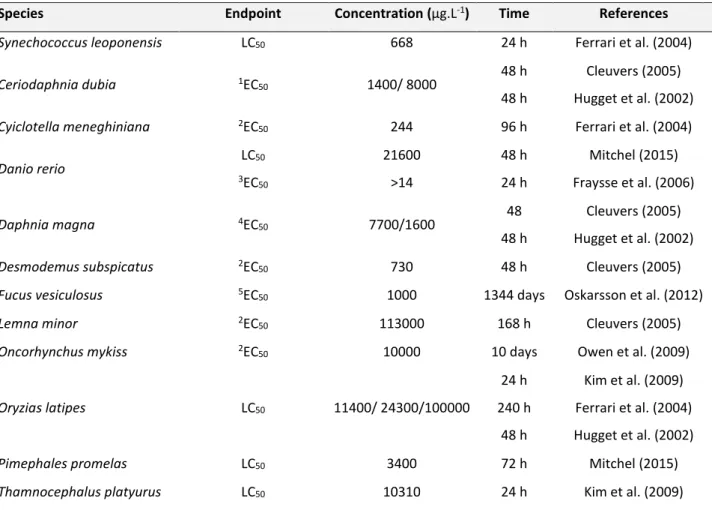
The effects of Prop on aquatic organisms is described for fresh and salt water organisms in table 4.
Table 5: EC50 and LC50 to Prop in different organisms
Species Endpoint Concentration (µg.L-1) Time References
Synechococcus leoponensis LC50 668 24 h Ferrari et al. (2004)
Ceriodaphnia dubia 1EC 50 1400/ 8000 48 h 48 h Cleuvers (2005) Hugget et al. (2002) Cyiclotella meneghiniana 2EC 50 244 96 h Ferrari et al. (2004) Danio rerio LC50 3EC 50 21600 >14 48 h 24 h Mitchel (2015) Fraysse et al. (2006) Daphnia magna 4EC 50 7700/1600 48 48 h Cleuvers (2005) Hugget et al. (2002) Desmodemus subspicatus 2EC 50 730 48 h Cleuvers (2005) Fucus vesiculosus 5EC
50 1000 1344 days Oskarsson et al. (2012)
Lemna minor 2EC
50 113000 168 h Cleuvers (2005)
Oncorhynchus mykiss 2EC
50 10000 10 days Owen et al. (2009)
Oryzias latipes LC50 11400/ 24300/100000 24 h 240 h 48 h Kim et al. (2009) Ferrari et al. (2004) Hugget et al. (2002)
Pimephales promelas LC50 3400 72 h Mitchel (2015)
Thamnocephalus platyurus LC50 10310 24 h Kim et al. (2009)
1Effect observed: Immobilization 2Effect observed: Growth inhibition
3Effect observed: Decrease movements (embryos) 4Effect observed Immobilization and /or Survival 5Effect observed: Photosynthesis Inhibition
Liu et al. (2009) observed mortality of 100% in Brachionus calyciflorus after exposure for 48 h at 10000 µg.L-1 of Prop. Fraysse et al. (2006) reported decrease of spontaneous movements in zebrafish after 24 h exposure to 32000 µg.L-1 of Prop; tail shortening, lack of circulation caudal, reduced of pigmentation and pericardial oedema in
40% of the embryos exposed to 32000 µg.L-1 in 48 h, and at 80 h reduction of pericardial area after exposure to 1500 µg.L-1.
Diatom and fish have been considered the most sensitive organisms to Prop with risk ratio values for surface water around 0.244 µg.L-1 (PNEC
acute) and 0.01 µg.L-1 (PNECchronic), respectively (Ferrari et al., 2004).
Nonetheless the number of studies about Prop effects in aquatic organism and risk assessment are limited (Cleuvers, 2005).
2.BIOMARKERS
Biomarkers are selected biological endpoints, measured in species of interest and may be biochemical (e.g. AChE inhibition), physiological, biomarkers of oxidative stress, histological indicators or adverse health effects evaluated after exposure to an environmental contaminant (Forbes et al., 2006; Hook et al., 2014). Correspond to primary responses of a biological system after exposure to a chemical or other stressor that anticipate responses at higher hierarchical levels. Thus, biological responses may contribute to understand mechanisms of chemical impacts (Forbes et al., 2006).
For example, pharmaceutical compounds may induce an increase in the production of reactive oxygen (ROS) and result in oxidative damage to aquatic organisms (Nunes et al., 2008). ROS are produced under normal conditions by living organisms as result of cellular metabolism, however are highly reactive molecules and may damage cell structures (e.g. carbohydrates, nucleic acids, lipids, and proteins) (Birben et al., 2012). Thus, aerobic organisms have antioxidant systems with enzymatic (SOD, CAT, GST and GPx) and non-enzymatic antioxidants (e.g. vitamins C and E, beta carotene and glutathione (GSH)), and under stress conditions use the antioxidant system as a mechanism to adapt to environmental stress (Birben et. al, 2012; Gravato et al. 2006) and LDH is evaluated as an enzyme important in red-ox maintenance. Among the most investigated biomarkers are enzymes involved in the detoxification of xenobiotics and their metabolites (biotransformation enzymes, antioxidant enzymes) (van der Oost et al., 2003). Besides indicators of oxidative stress, behavioural changes are also toxicity indicators, since provide integrative measures of neurotoxicity (AChE). Generally, behavioural changes are linked to disturbances at the biochemical level (e.g. altered neurotransmitters and thyroid
hormones) and may induce effects at the population level, such as direct effects linked to the search for a sexual partner, avoidance of predators or pollutants, or indirect effects such as altered reproductive success due to compromised feeding and thus to energy metabolism (Amiard-Triquet, 2009).
2.FISH ECOTOXICITY TESTS
Studies on the occurrence and fate of micropollutants in aquatic environment have been performed with the purpose of assessing the presence of substances in water with the potential to generate harmful effects on biota. Standard tests using fish, daphnia and algae can be conducted to determine safe concentrations for non-target organisms (European Medicines Agency (EMEA), 2006).
Due to similar physiological and developmental characteristics to mammals (Owen et al., 2007), fish have been introduced in the laboratory routines all over the world to replace mammals models(Parker, 2015).Therefore, Oncorchynchus mykiss (rainbow trout),
Pimephales promelas (fathead minnow), Brachydanio rerio (zebrafish) and Oryzias latipes
(ricefish) are standard freshwater fish species while Cyprinodon variegatus (sheepshead minnow) standard saltwater fish species (Parker, 2015). Moreover, fish embryos are experimental models considered as an alternative to experimental animals replacing very often adult testing (Braunbeck et al., 2005).
2.1.ZEBRAFISH (DANIO RERIO)
The zebrafish is a benthopelagic cyprinid freshwater fish original from South Asia (Truong et al., 2011; Weigt et al., 2011). It can be kept in laboratory with easy and cheap maintenance. It has an average size between 3 and 5 cm, short reproductive cycle and females can to produce hundreds of eggs per week (high fecundity). Zebrafish eggs are optically transparent which allows monitoring throughout the stages of development (Kimmel et al., 1995). This allows observation of all cells and instantaneous analysis of tissues (Chakraborty et al., 2016). Zebrafish has a quick growth at 26 ºC, it has neuronal plate formed 10 h post fertilization (Braunbeck et al., 2005; Truong et al., 2011) and its organs are fully developed after 5 and 6 days after fertilization (Chakraborty et al., 2016).
Zebrafish is considered one important vertebrate model in genetics, developmental biology and neurophysiology (Spence et al., 2007). It has cardiovascular system, nervous system and digestive system similar to mammals (Chakraborty et al., 2016). Moreover it has a sequenced genome (Zhang et al., 2008) and high similarity to human (about of 75% of the genome are homologous genes), a characteristic that allows its use in the genetic evaluation of specific functions and in the study of various human diseases (Chakraborty et al., 2016). Zebrafish embryos allow the analysis of various endpoints of acute and chronic toxicity and have a wide literature scientific base available (Braunbeck et al., 2005; Zhang et al., 2008).
Although there are a considerable number of studies on the ecotoxicological effects of pharmaceuticals, there is a lack of studies concerning long term exposures, combined exposure, and sequential exposures. Thus, the evaluation of long term exposures and epigenetic responses in the offspring of parents exposed to a chemical compound can be a realistic scenario, since it allows us to evaluate the changes in the descendants, acquired by the creation of memory signal after parenteral exposure to chemical products, for example changes in the ability to adaptation and susceptibility of offspring to pharmaceuticals.
3.OBJECTIVES
Many fish studies tend to investigate acute effects of pharmaceuticals at high concentrations but low environmental relevance. However, in the environment, fish are exposed over their life time to xenobiotics to much lower concentrations than those commonly used in laboratory assays.Although chronic trials are more realistic for health assessment of populations present in aquatic ecosystems, the available studies are extremely scarce, particularly are few studies on the effects of Cbz on health fish in environmentally relevant concentrations. Thus, this work aimed at evaluating:
1. Chronic effects of Cbz on adult D. rerio during 63 days of exposure evaluating different endpoints like growth rate, feeding behaviour, alterations in reproduction, biochemical responses, and histological alterations.
2. Acute effects of Prop on adult D. rerio after 63 days of exposure a Cbz.
3. Susceptibility of the progeny to Prop assessed through ontogenetic development alterations and survival rate.
REFERENCES
Alder, A.C., Schaffner, C., Majewsky, M., Klasmeier, J., Fenner, K., 2010. Fate of β-blocker human pharmaceuticals in surface water: Comparison of measured and simulated concentrations in the Glatt Valley Watershed, Switzerland. Water Res. 44, 936–948. doi:10.1016/j.watres.2009.10.002
Almeida, Â., Calisto, V., Esteves, V.I., Schneider, R.J., Soares, A.M.V.M., Figueira, E., Freitas, R., 2014. Presence of the pharmaceutical drug carbamazepine in coastal systems: Effects on bivalves. Aquat. Toxicol. 156, 74–87. doi:10.1016/j.aquatox.2014.08.002 Alvarez-Cohen, L., Sedlak, D.L., 2003. Emerging Contaminants in Water. Environ. Eng. Sci.
20, 387–388. doi:10.1089/109287503768335887
Ambrósio, A.F., Soares-da-Silva, P., Carvalho, C.M., Carvalho, A.P., 2002. Mechanisms of action of carbamazepine and its derivatives, oxcarbazepine, BIA 2-093, and BIA 2-024. Neurochem. Res. 27, 121–130. doi:10.1023/A:1014814924965
Amiard-Triquet, C., 2009. Behavioral Disturbances: The Missing Link between Sub-Organismal and Supra-Sub-Organismal Responses to Stress? Prospects Based on Aquatic Research. Hum. Ecol. Risk Assess. An Int. J. 15, 87–110. doi:10.1080/10807030802615543
Arnold, K.E., Boxall, A.B.A., Brown, A.R., Cuthbert, R.J., Gaw, S., Hutchinson, T.H., Jobling, S., Madden, J.C., Metcalfe, C.D., Naidoo, V., Shore, R.F., Smits, J.E., Taggart, M.A., Thompson, H.M., 2013. Assessing the exposure risk and impacts of pharmaceuticals in the environment on individuals and ecosystems. Biol. Lett. 9, 20130492. doi:10.1098/rsbl.2013.0492
Arnold, K.E., Brown, A.R., Ankley, G.T., Sumpter, J.P., 2014. Medicating the environment: assessing risks of pharmaceuticals to wildlife and ecosystems. Philos. Trans. R. Soc. Lond. B. Biol. Sci. 369, 20130569-. doi:10.1098/rstb.2013.0569
Birben, E., Murat, U., Md, S., Sackesen, C., Erzurum, S., Kalayci, O., 2012. Oxidative Stress and Antioxidant Defense. WAO J. 5, 9–19.
Bound, J.P., Voulvoulis, N., 2005. Household Disposal of Pharmaceuticals as a Pathway for Aquatic Contamination in the United Kingdom. Environ. Health Perspect. 113, 1705– 1711. doi:10.1289/ehp.8315
Braunbeck, T., Boettcher, M., Hollert, H., Kosmehl, T., Lammer, E., Leist, E., Rudolf, M., Seitz, N., 2005. Towards an alternative for the acute fish LC(50) test in chemical assessment: the fish embryo toxicity test goes multi-species -- an update. ALTEX 22, 87–102. doi:10.1007/s10811-007-9297-x
Brausch, J.M., Connors, K. a, Brooks, B.W., Rand, G.M., 2012. Reviews of Environmental Contamination and Toxicology. Volume 218, Reviews of Environmental Contamination
and Toxicology. doi:10.1007/978-1-4614-3137-4
Brooks, B.W., Huggett, D.B., Boxall, A.B.A., 2009. PHARMACEUTICALS AND PERSONAL CARE PRODUCTS: RESEARCH NEEDS FOR THE NEXT DECADE. Environ. Toxicol. Chem. 28, 2469. doi:10.1897/09-325.1
Calcagno, E., Durando, P., Valdés, M.E., Franchioni, L., Bistoni, M. de los Á., 2016. Effects of carbamazepine on cortisol levels and behavioral responses to stress in the fish
Jenynsia multidentata. Physiol. Behav. 158, 68–75.
doi:10.1016/j.physbeh.2016.02.025
Carter, L.J., Harris, E., Williams, M., Ryan, J.J., Kookana, R.S., Boxall, A.B. a, 2014. Fate and Uptake of Pharmaceuticals in Soil - Plant Systems. J. Agric. Food Chem. doi:10.1021/jf404282y
Calamari, D., Zuccato, E., Castiglioni, S., Bagnati, R., Fanelli, R., 2003. Strategic survey of therapeutic drugs in the rivers Po and lambro in Northern Italy. Environ. Sci. Technol. 37, 1241–1248. doi:10.1021/es020158
Castiglioni, S., Bagnati, R., Fanelli, R., Pomati, F., Calamari, D., Zuccato, E., 2006. Removal of pharmaceuticals in sewage treatment plants in Italy. Environ. Sci. Technol. 40, 357– 363. doi:10.1021/es050991
Castiglioni, S., Fanelli, R., Pomati, F., Calamari, D., Bagnati, R., Zuccato, E., 2004. Methodologicalapproaches for studying pharmaceuticals in the environment by comparing predicted and measured concentrations in River Po, Italy. Regul Toxicol. Pharmacol. 39, 25-32
Chakraborty, C., Sharma, A.R., Sharma, G., Lee, S.-S., 2016. Zebrafish: A complete animal model to enumerate the nanoparticle toxicity. J. Nanobiotechnology 14, 65. doi:10.1186/s12951-016-0217-6
Chen, H., Zha, J., Liang, X., Li, J., Wang, Z., 2014. Effects of the human antiepileptic drug carbamazepine on the behavior, biomarkers, and heat shock proteins in the Asian clam Corbicula fluminea. Aquat. Toxicol. 155, 1–8. doi:10.1016/j.aquatox.2014.06.001 Clara, M., Strenn, B., Kreuzinger, N., 2004. Carbamazepine as a possible anthropogenic marker in the aquatic environment: Investigations on the behaviour of Carbamazepine in wastewater treatment and during groundwater infiltration. Water Res. 38, 947– 954. doi:10.1016/j.watres.2003.10.058
Cleuvers, M., 2005. Initial risk assessment for three β-blockers found in the aquatic environment. Chemosphere 59, 199–205. doi:10.1016/j.chemosphere.2004.11.090 Cleuvers, M., 2003. Aquatic ecotoxicity of pharmaceuticals including the assessment of
combination effects. Toxicol. Lett. 142, 185–194. doi:10.1016/S0378-4274(03)00068-7
Commission of the European Communities, 2006. Proposal for a DIRECTIVE OF THE EUROPEAN PARLAMENT AND OF THE COUNCIL
Directive, P. for a, 2012. Proposal for a DIRECTIVE OF THE EUROPEAN PARLIAMENT AND OF THE COUNCIL amending Directives 2000/60/EC and 2008/105/EC as regards priority substances in the field of water policy, Proposal for a DIRECTIVE
European Commission, 2008. Directive 2008/105/EC of the European Parliament and the Council of 16 December 2008. Off. J. Eur. Union
European Medicines Agency (EMEA), 2006. Guideline on the environmental risk assessment of medicinal products for human use EMEA/CHMP/SWP/4447/00 corr 2* 1–12
European Union Council, 1996. Directiva 96/61/CE do Conselho de 24 de Setembro de 1996 relativa à prevenção e controlo integrados da poluição 3878–3879
Fent, K., Weston, A.A., Caminada, D., 2006. Ecotoxicology of human pharmaceuticals. Aquat. Toxicol. doi:10.1016/j.aquatox.2005.09.009
Ferrari, B., Mons, R., Vollat, B., Fraysse, B., Paxéus, N., Lo Giudice, R., Pollio, A., Garric, J., 2004. Environmental risk assessment of six human pharmaceuticals: are the current environmental risk assessment procedures sufficient for the protection of the aquatic environment? Environ. Toxicol. Chem. 23, 1344–1354. doi:10.1897/03-246
Ferrari, B., Paxéus, N., Giudice, R. Lo, Pollio, A., Garric, J., 2003. Ecotoxicological impact of pharmaceuticals found in treated wastewaters: Study of carbamazepine, clofibric acid, and diclofenac. Ecotoxicol. Environ. Saf. 55, 359–370. doi:10.1016/S0147-6513(02)00082-9
Fleeger, J.W., Carman, K.R., Nisbet, R.M., 2003. Indirect effects of contaminants in aquatic ecosystems. Sci. Total Environ. 317, 207–233. doi:10.1016/S0048-9697(03)00141-4 Fonseca, V. A, 2010. Effects of β-blockers on glucose and lipid metabolism. Curr. Med. Res.
Opin. 26, 615–629. doi:10.1185/03007990903533681
Forbes, V.E., Palmqvist, A., Bach, L., 2006. The use and misuse of biomarkers in ecotoxicology. Environ. Toxicol. Chem. 25, 272–280. doi:10.1897/05-257R.1
Fraysse, B., Garric, J., 2005. Prediction and experimental validation of acute toxicity of beta-blockers in Ceriodaphnia dubia. Environ. Toxicol. Chem. 24, 2470–6.
Fraysse, B., Mons, R., Garric, J., 2006. Development of a zebrafish 4-day embryo-larval bioassay to assess toxicity of chemicals. Ecotoxicol. Environ. Saf. 63, 253–267. doi:10.1016/j.ecoenv.2004.10.015
Gravato, C., Teles, M., Oliveira, M., & Santos, M. (2006). Oxidative stress, liver biotransformation and genotoxic effects induced by copper in Anguilla anguilla L. - the influence of pre-exposure to β-naphthoflavone. Chemosphere, 1821-1830
Gunthert, F.W; Freitas , V; Neder, K; Obermayer, S; Faltermaier, S; Tocha, C., 2014. Developing the urban water system towards using the Paranoá Lake in Brasília as receptor and water resource, in: Integrated Water Resource Management in Brazil. IWA Publishing, pp. 109–124.
Heberer, T., 2002. Occurrence, fate, and removal of pharmaceutical residues in the aquatic environment: a review of recent research data. Toxicol. Lett. 131, 5–17. doi:10.1016/S0378-4274(02)00041-3
Huggett, D.B., Brooks, B.W., Peterson, B., Foran, C.M., Schlenk, D., 2002. Toxicity of select beta adrenergic receptor-blocking pharmaceuticals (B-blockers) on aquatic organisms. Arch. Environ. Contam. Toxicol. 43, 229–235. doi:10.1007/s00244-002-1182-7
Hook, S.E., Gallagher, E.P., Batley, G.E., 2014. The role of biomarkers in the assessment of aquatic ecosystem health. Integr. Environ. Assess. Manag. 10, 327–341. doi:10.1002/ieam.1530
Kim, Y., Choi, K., Jung, J., Park, S., Kim, P.G., Park, J., 2007. Aquatic toxicity of acetaminophen, carbamazepine, cimetidine, diltiazem and six major sulfonamides, and their potential ecological risks in Korea. Environ. Int. 33, 370–375. doi:10.1016/j.envint.2006.11.017
Kim, J.-W., Ishibashi, H., Yamauchi, R., Ichikawa, N., Takao, Y., Hirano, M., Koga, M., Arizono, K., 2009. Acute toxicity of pharmaceutical and personal care products on freshwater crustacean (Thamnocephalus platyurus) and fish (Oryzias latipes). J. Toxicol. Sci. 34, 227–232. doi:10.2131/jts.34.227
Kimmel, C.B., Ballard, W.W., Kimmel, S.R., Ullmann, B., Schilling, T.F., 1995. Stages of embryonic development of the zebrafish. Dev. Dyn. 203, 253–310. doi:10.1002/aja.1002030302
Kotchen, M., Kallaos, J., Wheeler, K., Wong, C., Zahller, M., 2008. Pharmaceuticals in wastewater: Behavior, preferences, and willingness to pay for a disposal program. J. Environ. Manage. 90, 1476–1482. doi:10.1016/j.jenvman.2008.10.002
Kroes, R., 2005. The Threshold of Toxicological Concern Concept in Risk Assessment. Toxicol. Sci. 86, 226–230. doi:10.1093/toxsci/kfi169
Li, Z.-H., Zlabek, V., Velisek, J., Grabic, R., Machova, J., Randak, T., 2009. Responses of antioxidant status and Na+–K+-ATPase activity in gill of rainbow trout, Oncorhynchus
mykiss, chronically treated with carbamazepine. Chemosphere 77, 1476–1481.
Li, Z.H., Li, P., Rodina, M., Randak, T., 2010. Effect of human pharmaceutical Carbamazepine on the quality parameters and oxidative stress in common carp (Cyprinus carpio) spermatozoa. Chemosphere 80, 530–534. doi:10.1016/j.chemosphere.2010.04.046 Li, Z.H., Zlabek, V., Velisek, J., Grabic, R., Machovaa, J., Randaka, T., 2011. Physiological
condition status and muscle-based biomarkers in rainbow trout (Oncorhynchus
mykiss), after long-term exposure to carbamazepine. J. Appl. Toxicol. 30, 197–203.
doi:10.1002/jat.1482
Liu, Q.-T., Williams, T.D., Cumming, R.I., Holm, G., Hetheridge, M.J., Murray-Smith, R., 2009. Comparative aquatic toxicity of propranolol and its photodegraded mixtures: algae and rotifer screening. Environ. Toxicol. Chem. 28, 2622–2631. doi:10.1897/09-071.1 Long, E.R., Macdonald, D.D., Smith, S.L., Calder, F.D., 1995. Incidence of adverse biological
effects within ranges of chemical concentrations in marine and estuarine sediments. Environ. Manage. 19, 81–97. doi:10.1007/BF02472006
Luis, L.G., Barreto, Ângela, Trindade, T., Soares, A.M.V.M., Oliveira, M., 2016. Effects of emerging contaminants on neurotransmission and biotransformation in marine organisms - An in vitro approach. Mar. Pollut. Bull. 106, 236–244. doi:10.1016/j.marpolbul.2016.02.064
Luo, Y., Guo, W., Ngo, H.H., Nghiem, L.D., Hai, F.I., Zhang, J., Liang, S., Wang, X.C., 2014. A review on the occurrence of micropollutants in the aquatic environment and their fate and removal during wastewater treatment. Sci. Total Environ. 473–474, 619–641. doi:10.1016/j.scitotenv.2013.12.065
Macdonald, R.L., Kelly, K.M., 1995. Antiepileptic Drug Mechanisms of Action. Epilepsia 36. Madureira, T.V., Rocha, M.J., Cruzeiro, C., Galante, M.H., Monteiro, R.A.F., Rocha, E., 2011.
The toxicity potential of pharmaceuticals found in the Douro River estuary (Portugal): Assessing impacts on gonadal maturation with a histopathological and stereological study of zebrafish ovary and testis after sub-acute exposures. Aquat. Toxicol. 105, 292–299. doi:10.1016/j.aquatox.2011.06.017
Mcdowell, D.C., Huber, M.M., Wagner, M., Von Gunten, U., Ternes, T.A., 2005. Ozonation of carbamazepine in drinking water: Identification and kinetic study of major oxidation products. Environ. Sci. Technol. 39, 8014–8022. doi:10.1021/es050043l
Mitchell, K.M., Moon, T.W., Behavioral and biochemical adjustments of the zebrafish Danio
rerio exposed to the β-blocker propranolol, Comp. Biochem. Physiol. B (2015),
http://dx.doi.org/10.1016/j.cbpb.2015.10.009
Nassef, M., Kim, S.G., Seki, M., Kang, I.J., Hano, T., Shimasaki, Y., Oshima, Y., 2010a. In ovo nanoinjection of triclosan, diclofenac and carbamazepine affects embryonic development of medaka fish (Oryzias latipes). Chemosphere 79, 966–973. doi:10.1016/j.chemosphere.2010.02.002