The influence of intangible incentives
on Generation Z:
A self-concept based approach
LAURA SEITZ
Dissertation written under the supervision of Teresa Oliveira
Dissertation submitted in partial fulfilment of requirements for the MSc in Management with Specialization in Strategic Marketing, at the Universidade Católica Portuguesa
I Title: The influence of intangible incentives on Generation Z: A self-concept based approach Author: Laura Seitz
ABSTRACT
As by today, Generation Z prepares to enter the job market. Therefore, companies will be facing a new set of challenges. With the youngest generation being part the labor force, four different generations will impact the formation of the organizations, all of them carrying different beliefs, values and ambitions. Gaining influence in the economic world the question arises: What does Generation Z expect from their future employer, what do they desire and how can a firm appeal more attractive to them? This empirical study aims to identify the perceived importance levels of Generation Z towards different intangible dimensions of employer attractiveness. Moreover, the research pursues to frame how the self-concept of Generation Z individuals, examined through the trait self-esteem, moderates the values attributed to different intangible incentives. Findings of this study provide evidence that Training & Development, Flexibility and Working Environment are among the most attracting factors for Generation Z individuals. Furthermore, the results revealed that self-esteem positively impacts the value attributed with Autonomy & Empowerment, Working Environment, Flexibility and Training through different tasks. The comparisons regarding gender, nationality and employment status revealed distinguished perception of those valued attributes among German and Portuguese nationals and among male and female members of the Generation Z.
II
SUMÁRIO
A partir de hoje, a Geração Z prepara-se para entrar no mercado de trabalho. Deste modo, as empresas estarão a enfrentar um novo conjunto de desafios. Com a geração mais jovem fazendo parte da força de trabalho, quatro gerações diferentes terão impacto na formação das organizações, todas elas com diferentes crenças, valores e ambições. Ao ganhar influência no mundo económico, a pergunta surge: O que é que a Geração Z espera do seu futuro empregador, o que eles desejam e como uma empresa pode parecer mais atrativa para eles? Este estudo empírico visa identificar os níveis de importância que a Geração Z dá a diferentes dimensões intangíveis do empregador. Além disso, a pesquisa procura enquadrar como o autoconceito dos indivíduos da Geração Z, examinados por meio do traço da autoestima, modera os valores atribuídos aos diferentes incentivos intangíveis. Os resultados deste estudo dão provas de que Treino e Desenvolvimento, Flexibilidade e Ambiente de Trabalho estão entre os fatores mais atrativos para os indivíduos da Geração Z. Além disso, ficou provado que o traço da auto-estima tem impacto positivo no valor atribuído com Autonomia & Poder, Ambiente de Trabalho, Flexibilidade e Treino por meio de diferentes tarefas. As comparações relativas a sexo, nacionalidade e situação de emprego revelaram uma percepção distinta dos atributos valorizados entre alemães e portugueses e entre os membros masculinos e femininos da Geração Z.
III
ACKNOWLEDGEMENTS
I want to thank Teresa Oliveira for always listening carefully and reaching out with inspiring ideas that sometimes changed my whole perspective. She is the true representation of a supportive supervisor, enabling me to think further. Her constructive criticism and challenging questions helped me to foster good ideas and to develop my dissertation. I am very happy about the valuable advices she gave me throughout the entire process.
Moreover, I am very thankful for my family, in particular my mother Beate Strinz and sister Elena Seitz who made it possible for me to stay in Lisbon in the most comfortable conditions. They motivated me throughout this journey to always go further and achieve my goals. Thank you for your deep trust in my abilities and for pushing my confidence.
Also, I am really grateful for Joao Sousa who always made me laugh and encouraged me to stay optimistic and motivated. A special thanks goes to my friends Melissa Lindt and Christiane Rinke for their moral support and for being there for me when I needed them the most. Thanks to my friend Pascal Rostetter who used his valuable time to proof-read my dissertation. Their friendship and understanding were crucial to overcome the obstacles during the composition of this dissertation.
IV
TABLE OF CONTENTS
List of Tables ... VI List of Figures ... VI List of Abbreviations ... VII
1 Introduction ... 1
1.1 Problem Statement and Research Question ... 1
1.2 Scope of Analysis ... 3
1.3 Dissertation Outline ... 4
2 Literature Review ... 5
2.1 Intangible incentives ... 5
2.1.1 Definition intangible incentives and differentiation to tangible incentives ... 5
2.1.2 Conceptual framework intangible incentives ... 6
2.1.3 Intangible incentives and its motivational factor ... 10
2.1.4 Intangible incentives as a factor to raise employer attractiveness... 11
2.2 Generation Z ... 12
2.2.1 Generational Cohorts ... 12
2.2.2 Definition of Generation Z ... 13
2.2.3 Generation Z in the working environment and research framework ... 14
2.3 Self-Concept ... 17
2.3.1 Definition of self-concept and its role for vocational choice ... 17
2.3.2 Self-esteem as an aspect of self-concept and its role in an organization ... 18
3 Methodology ... 21
3.1 Research Design ... 21
3.2 Questionnaire ... 22
3.3 Procedures ... 24
V
4 Analysis of Results ... 26
4.1 Reliability analysis ... 26
4.2 Hypothesis testing ... 27
5 Conclusions and limitation ... 32
5.1 Discussion and Conclusion ... 32
5.2 Managerial Implications ... 35
5.3 Limitations and Future Research ... 36
Bibliography ... 38
Appendix ... 45
Appendix 1 – Questionnaire ... 45
Appendix 2 - Descriptive Statistics: Demographics ... 53
Appendix 3 - Variable analysis and aggregation... 54
Appendix 4 – Descriptive Statistics: Demographics and Dimensions ... 57
Appendix 5 – Example of verification of Mann-Whitney U and Kruskal-Wallis Test ... 58
Appendix 6 - Example of verification of Linear Regression assumptions... 59
VI
LIST OF TABLES
Table 1: Generations evolution according to Williams and Page ... 13
Table 2: Variables measurement ... 23
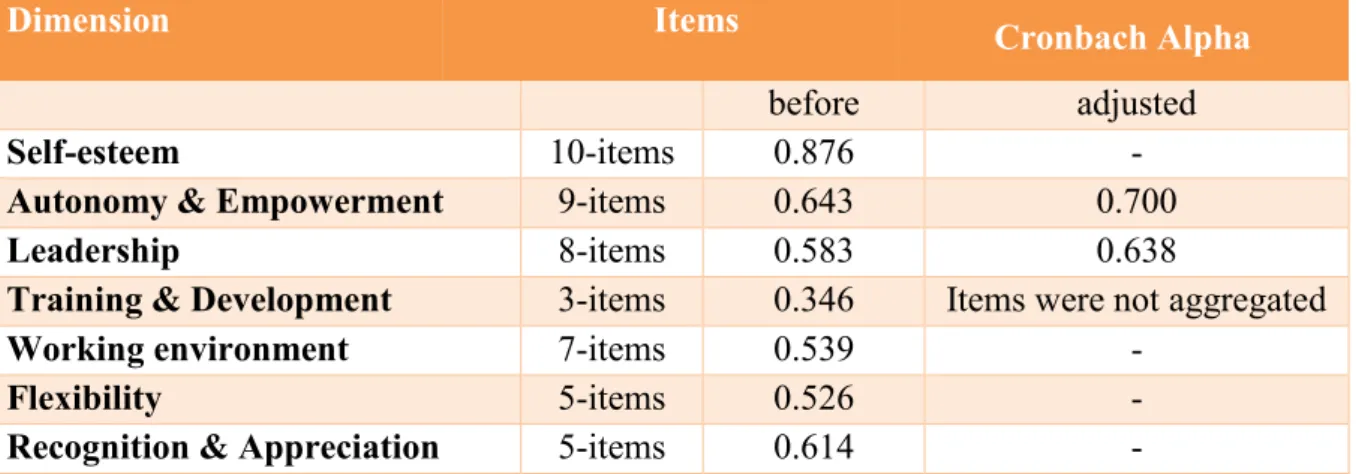
Table 3: Reliability analysis of all variables ... 26
Table 4: Descriptive Statistics and Intercorrelations (Spearman) ... 28
Table 5: Linear Regression results ... 31
LIST OF FIGURES
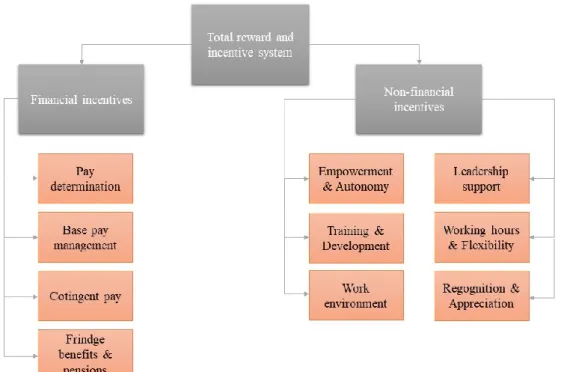
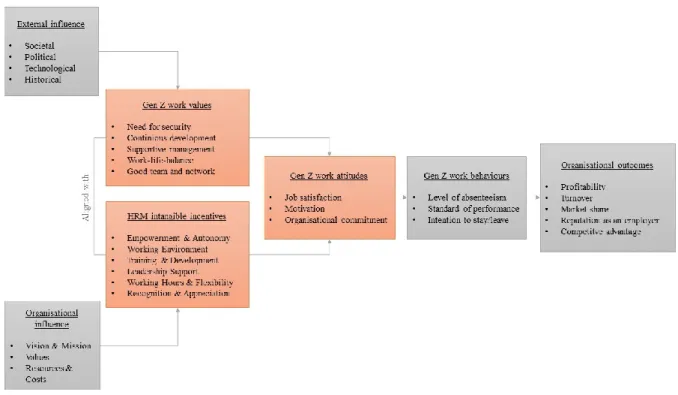
Figure 1:Total incentive and reward system ... 6Figure 2: Research Framework Generation Z and intangible incentives ... 16
VII
LIST OF ABBREVIATIONS
A&E – Autonomy & Employment CA – Career Advancement
CA – Cronbach´s Alpha Gen Z – Generation Z
HRM – Human Resource Management M – Mean
OBSE – Organization-based self-esteem R&A – Recognition & Appreciation RQ – Research Question
RSES – Rosenberg’s Self-Esteem Scale SD – Standard Deviation
SL – Supportive Leadership TC – Training courses TT- Training through tasks WE – Working Environment
1
1 INTRODUCTION
1.1 Problem Statement and Research Question
The world’s youngest generation, the so called “Generation Z” (Gen Z), is currently entering their formative years. As this cohort will soon outnumber their Millennial predecessors they will become the next most influential generation. Born after 1994, device in-hand, Gen Z is the first generation of true “digital-natives” (Boroujerdi & Wolf, 2015).
As by today, Generation Z prepares to enter the job market. Therefore, companies will be facing a new set of challenges. With the youngest generation being part the labor force, four different generations will impact the formation of the organizations, all of them carrying different beliefs, values and ambitions (Bencsik et al., 2016). Firms that cannot keep up with the pace of change will face major problems in the future (Iorgulescu, 2016). Gaining in influence they will impact the labor market on a vast scale as this generation is characterized to be very self-confident with a clear understanding of their future professional life (Williams & Page, 2011).
There is a growing sense among social scientists, consultants and management gurus that there are substantive and impactful differences among individuals belonging to different generations in today’s workplaces. Work related outcomes such as commitment, satisfaction, motivation, risk-taking, and leadership style, are among the most cited ones in the literature (Armstrong & Taylor, 2014, Gursoy, Maier, & Chi, 2008).
A study deducted by the Center of Kinetics found that 77% of Gen Z (people aged 14 to 24) currently earn their own spending money through a full-time job, a part time job, freelance work or earned allowance. Discovering that Gen Z is actively working to earn money at a young age, whether through chores, employment, side jobs, or freelancing has become reality (Villa, 2017). Therefore, employers have to prepare to engage Generation Z addressing them efficiently, to fit them into the community, the organizational culture and to make them effective employees in the digital age (Elmore, 2014). By understanding this generation and by satisfying employee’s needs, leaders can do more to increase productivity, morale and employee retention (Armstrong & Taylor, 2014).
2 Gaining influence in the economic world the question arises: What does Generation Z expect from their future employer, what do they desire and how can a firm appeal more attractive? One strategy could be to provide potential candidates with intangible incentives according to their preference, needs and expectations. Therefore, firms may require knowledge about the following:
RQ1: What kind of intangible incentives raise the firms’ attractiveness for members of the Generation Z?
Generation Z represents a generational cohort that is being characterized by similar attitudes, value systems, believes and thoughts. In order to make a generation more assessable in an organization for the Human Resource practises and the management, generalizations about their behaviour pattern are concluded and strategies are being adapted towards it.
Nevertheless, this generation is represented by individuals growing up with different cultural backgrounds, experiencing diverse formative events in a varying intensity depending on the regional affiliation. Those external influences shape each person’s attitudes and values differently. Within the studied context, an individual belonging to the Generation Z (generalized through their belonging to a certain age group) might attribute different values with an intangible incentive compared to an individual within the same generation. What can be a variable that impacts an individual’s value system more precisely?
One of the major influencing concepts determining an individual’s ´self``, originates in the human psychology. The self-concept is a dynamic system of learned beliefs, opinions and attitudes that each human being holds to be true about their personal existence (Rogers, 1951). Self-concept in theory comprises multiple aspects of the self, one of them being the self-esteem. Self-esteem is defined as a person’s attitude of personal worth and includes the individual’s self-evaluation of their competencies (Pilarska, 2018). Within the research scope to examine the attitudinal difference an individual of the Generation Z has towards various intangible incentives; the factor self-esteem will be used as a variable to operationalize the different attributed value. Therefore, the second research question is proposed:
RQ2: How does the concept of Generation Z, examined through the trait self-esteem, moderate the values attributed to different intangible incentives?
3 1.2 Scope of Analysis
This dissertation is based on a framework of assumptions to narrow down the research topic and better structure the possible assertions within the research scope. This causes the research to be limited in its topic of study. Due to the field of study being future oriented (present attitudes towards a potential future employer are measured) participants were asked for attitudes in the future being measured in the present. Therefore, derived conclusions from the analysis of the results have to be viewed due to consideration.
Moreover, a firm’s attractiveness is a multidimensional variable. Through its various possible research directions this dissertation is focusing on the non-financial components. Thereby it is assumed that multiple other factors which contribute to the attractiveness of a firm and influence the selection process, such as field of activities, financial compensation and other framework provisions are given to the optimal of the individual’s needs. Furthermore, the focus of the study lies within six selected intangible incentive dimensions that are being viewed as possible attraction factors for Generation Z when they are seeking for a job. The definition of these will be derived in Chapter 2.1.2.
Additionally, literature sources provide several possible age ranges for defining Generation Z members. Therefore, this study is based on the definition of Williams and Page (2011) ranging them to be born after 1994. It is assumed that participants below the age of 15 find it difficult to verbalize the attraction factors for a future employer and thus only data from individuals entering the labour market in up to 3 years was gathered (15-24 years old).
Further limitations caused by the defined scope of the analysis will be examined within Chapter 5.3.
4 1.3 Dissertation Outline
The dissertations outline comprises the description of five chapters, aiming to cover the response to the initially proposed research questions in Chapter 1. The first chapter provides an introduction to the topic and research area leading to the description of the problem statement including the research questions and its managerial relevance.
Chapter 2 covers the theoretical foundation of the dissertation where existing literature about intangible incentives, Generation Z and the self-concept is reviewed, analysed and compared. The outline of all three topics build the basis for the proposed research framework, leading to the presentation of the two Hypothesis that are being validated in Chapter 4.
Chapter 3 gives an introduction to the explanatory part of the research by describing the methodology including the data collection process and the sample characterization.
In Chapter 4 the quantitative research part of the analysis is being addressed. It comprises of the examination of the reliability of the tests, the statistical evaluation of the survey results and the testing of the proposed hypothesis.
In the final Chapter 5 conclusions are drawn and discussed within the context of the stated literature and managerial relevance. Through a critical review of the conducted research a limitation statement is being derived. Chapter 5 closes with an outlook to further topics for the subject area of concern.
5
2 LITERATURE REVIEW
2.1 Intangible incentives
2.1.1 Definition intangible incentives and differentiation to tangible incentives
Incentives are instruments that an organization can use to positively influence the employees willingness to perform (Nicolai, 2006).Nerdinger (2012) argues that companies utilize specific incentives to motivate employees, with the primary goal to increase their performance. Incentives can be used as mediator between motives and motivation1 of a person. Therefore,
the selected incentives must be tailored to the needs of the employees in order to be able to motivate and retain them (Loffing & Loffing, 2010). Literature distinguishes between two types of incentives - tangible and intangible. Both types help an organization to build up the motivational level of the employees, when being executed and designed in the appropriate balance (Saqib, Abrar, Sabir, Bashir, & Baig, 2015).
Intangible incentives focus on the needs people have to varying degrees for appreciation, accomplishment, personal development, and an adequate working environment. They include the non-financial recognition of attainments, giving employees the opportunity to develop their expertise and careers and providing good working conditions that offer a high quality of work-life-balance (Armstrong & Taylor, 2014). According to Ellis & Pennington (2004) intangible incentives provide opportunities to enable authority, to participate in management decisions, to provide clear promotion possibilities, to create a better working atmosphere (air-conditioning, less noise, etc.) and to enhance the sense of belonging. Intangible incentives are for example social communication, contribution possibilities within the decision making process and the aspiration for self-fulfillment (Jung, 2011). Other scholars summarize the possible intangible incentives that can be offered into three main categories: Empowerment and Autonomy, Recognition and Appreciation and Challenging Tasks (Hafiza, Shah, & Jamsheed, 2011).
On the contrary tangible incentives are monetary rewards that are viewed as a return for retendered services of the employee as part of the operational value added. They can comprise of multiple factors such as wage and salary payment, profit-sharing and voluntary social
1 An incentive is defined as a situational element, which is applied to achieve the activation of a person’s motive. Thus,
incentives are necessary for the behavioral realization of motives. They activate the motives of a person by giving him/her the outlook to realize their personal objectives. Therefore, incentives can work as a behavioral trigger, because they prompt an individual to act (Loffinger/Loffinger, 2010).
6 contribution (Jung, 2011). Tangible incentives can comprise “payment in kind” or so called “fringe benefits” as for example laptops, mobile phones, exclusive office furniture or a company car. Intangible benefits do not necessarily have to be traced back to the job or activity itself. Examples for such incentives are a company kindergarten, company pensions, payed travel expenses or subsidized company lodging (Wickel-Kirsch, Janusch, & Knorr, 2008). Erbasi and Arat (2012)list financial incentives as payment raise, premiums, economic rewards, profit share, payment packages etc.
2.1.2 Conceptual framework intangible incentives
As listed above many scholars and the Human Resource Management literature provide multiple suggestions for different tangible and intangible incentives and rewards. Summarized on the reviewed literature the following framework will be providing the basis for the theoretical part of the thesis:
Figure 1:Total incentive and reward system
Source: Own representation based on Armstrong & Taylor, 2014.
The framework divides the total incentive system into the financial and the non-financial rewards that can be provided by the organization within the company’s goals and resources -aligned with the human resources management strategy. The financial reward dimension comprises of job- and person -based payments which involve: pay determination (value of the
7 job regarding market price and job evaluation), base pay management (group jobs into comparable relativities e.g. levels and develop operating pay structure), contingent pay (pay regression related to competence, skills, performance), fringe benefits and pension. Whereas the non-financial reward dimension consists of intangible incentives such as empowerment and
autonomy, training and development, work environment, leadership support, working hours and flexibility, recognition and appreciation (Armstrong & Taylor, 2014). As the research
scope is within the study of the intangible incentives the following section will examine the six selected non-financial incentives more closely.
Empowerment is defined as a motivational concept of self-efficacy (Conger & Kanungo, 1988).
Thomas and Velthous (1990) contributed to the theory of empowerment by pointing out its multifacetedness and thereby difficulty to capture its essence by a single concept. The authors enriched the definition by defining four dimensions that would reflect an active orientation in which an individual feels able to design their own work role and context. These four cognitions - meaning, competence, self-determination and impact2, build the framework to fully
understand empowerment, which ultimately results in an increased intrinsic motivation to execute a task (Spreitzer, 1995). Spreitzer also highlights the disruption of felt empowerment if one of the four cognitions deflate. The definition of empowerment assumes the reflection of a constant change of a person’s self-perception in the context of his or her working environment. As empowerment is a continuous variable individuals can be viewed as highly empowered or less empowered depending on the work place, as it is not a construct that portrays a global view (Spreitzer, 1995).
Autonomy has initially been viewed as the independence an individual has in designing and
carrying out their assigned work and their range of freedom within their given tasks (Campion, 1988). In subsequent literature it is being defined as “the degree of discretion employees have over important decisions in their work, such as the timing and methods of their tasks” (Parker, Axtell, & Turner, 2001). Being one of the most widely studied dimensions in work characteristics it holds an important position within the motivational work design approaches. Autonomy comprises three interrelated aspects that were identified in the work environment.
2 Zhang & Bartol, 2010: “Specifically, meaning concerns a sense of feeling that one's work is personally important. Competence refers to self-efficacy, or belief in one's ability to successfully perform tasks. Self-determination indicates perceptions of freedom to choose how to initiate and carry out tasks. Impact represents the degree to which one views one's behaviors as making a difference in work outcomes”
8 Centered on the aspect of freedom they include (1) work methods, (2) work scheduling and (3) decision making (Morgeson & Humphrey, 2006).
Leadership support originates from research in the field of leadership (e.g. House, 1971) and
has gained significant attention in the areas of occupational stress (e.g. Kahn& Byosiere, 1992) and mentoring (e.g. Allen, Eby, Poteet, Lentz, & Lima, 2004). House (1981) as one of the major contributors to the research area of leadership, defined a supportive leader as a provider of instrumental, emotional, informational and appraisal support to his or her employees. Emphasizing on the dimension of emotional support, a supportive leader is required to show sympathy through caring, listening and liking. Later scholars extend this definition by calling a supportive leader a person who expresses concerns and takes account of the employees preference and needs when making a decision (Rafferty & Griffin, 2006). Moreover, a well-executed leadership support helps facilitate a subordinate goal accomplishment by guiding them to be effective and develop in their roles. A supportive leader behavior would therefore evoke self-confidence, self-efficacy and a positive attitude of the followers, which in return has a positive influence on their performance (Banai & Reisel, 2007).
Training and development. According to Noe (2002) training is a planned effort by an
organization to enhance employees´ learning of competencies related to their job such as skills, knowledge and attitude. Furthermore, the goal is to gain competencies in behaviors that are critical for an efficacious job performance. The aim of training is to equip each employee with the tools (knowledge, behavior, skills) necessary to master his or her job on a daily basis. Obisi (2011) states that the purpose of training and development within and organization is to foster the creativity and initiative of each employee to enhance his or her performance. Training is a vital human resource tool to enable employees to develop and earn power over their activities which in return gives them a sense of security within their job. Some scholars (Obisi, 1996; Aguinis & Kraiger, 2009; Salas, Tannenbaum, Kraiger, & Smith-jentsch, 2012) use the terms training and development in their research interchangeably, nevertheless Obisi (2011) points out differences between the two concepts. In his opinion development focuses more on a long-term education with the purpose to foster the growth of the employees´ personality into a managerial position. Whereas training refers to a short-term process utilizing a systematic procedure to enhance the knowledge and skills for specific job purposes.
9
Recognition and appreciation within an organization are described as showing admiration and
respect for ones’ achievements. Applied consistently and frequently informal and formal3 social
rewards (recognition and appreciation) found to have a positive impact on employee performance. Therefore it can provide the management of a company with a powerful tool to guide and influence employees (Luthans, 2000). Brun and Dugas (2008) outline four recognition practices within a company (a) recognition of work practices, (b) recognition of results, (c) personal recognition and (d) recognition of job dedication. On the one hand these practices appreciate and recognize the individual employee as worker capable of being committed to the job and on the other hand as full-fledged individual.
Working time describes the dimension of how much an employee works in a year, day or week.
Reflecting the determination of longer/shorter time off, vacations, sabbaticals and lunchtime regulations. The working time incudes two issues: standard and flexible working hours. Whereas the “standard” describes the fixed standard hours regulated in the contract that the employee is supposed to accomplish (weekly, daily, etc.) (Burgoon & Raess, 2009). The flexible work-time arrangements are designed to give the employee a certain control over where and when they want to engage in work-related tasks, besides the usual workday (Lambert, Marler, & Gueutal, 2008). The dimension when refers to work-related task flexibility such as flextime, compressed work weeks or schedule flexibility. The dimension where to concepts such as flexplace, telecommuting, home-office, virtual office, mobility, etc. (Hill, Erickson, Holmes, & Ferris, 2010). Literature provides evidence that employees prefer a reduction of standard hours in exchange for a flexible working schedule to gain independence and autonomy over their available time to better balance work and family demands (McNall, Masuda, & Nicklin, 2010).
A social work environment is represented by the social climate shared among employees in the same work setting. It maintains independence as common environment and is not influenced by the characteristics of an individual employee. The quality level of the working environment may vary across different organizational levels, as well as by work-setting components and variables such as location, architectural features (e.g. single offices vs. open-space office),
3 Formal Recognition - structured/scheduled activities or events with specific criteria used to recognized employee contributions (i.e. Staff Appreciation Awards).
Informal Recognition - the acknowledgement of day-to-day accomplishments in the workplace through gestures of appreciation, communication and/or feedback (i.e. thank you, verbal complement at a staff meeting, etc.)
10 people within the work group (e.g. homogeneity vs. diversity), managerial style (e.g. transparent vs. closed-up) and equipment (Repetti, 1987).
2.1.3 Intangible incentives and its motivational factor
As mentioned in 2.1.1 incentives are instruments of organizations that are being deployed purposefully as a tool to motivate employees and to positively influence their willingness to perform. The selected incentives in the framework must be adapted to the needs of the employees and only then they can motivate and retain. In the operational practise intrinsic and extrinsic motives interplay in most of the cases. Accordingly, different incentives (financial and non-financial) have to be applied to activate the intrinsic or extrinsic motivation respectively (Comelli & Rosenstiel, 2011).
Intrinsic motivation is characterized through the feelings that nourish one’s aspiration to perform and to achieve. This motivation can be triggered without any external stimulus and is motivated by the need for self-esteem and self-determination (Deci, Koestner, & Ryan, 2001). Whereas extrinsic motivation is generally stimulated by external incentives and influences the work itself (Reilly, 2004). Extrinsic motivation serves the indirect satisfaction of needs and is most commonly compensated through financial incentives and rewards (Frey Bruno S., 2000).
Saqib et al. argue that the use of non-finical rewards are a cost effective4 tool for a company to
increase the motivation of a worker and therefore their commitment with the organization. Moreover they state that motivated and satisfied employees have a higher retention rate within the organization which in conclusion lowers the hiring costs (Saqib et al., 2015). Frey (1997) states that intrinsic motivational factors, such as - a job transmitting a sense of doing something worthwhile, have a higher importance once the financial reward exceeds the personal need of an individual. Although financial incentives play a vital role in the rewarding system in the organization, they have a short-term effect on the motivational level of the employees (Hafiza et al., 2011).
4 This accounts for non-financial rewards such as verbal appreciation or empowerment and autonomy, which are dimensions of intangible rewards that are not appearing as a cost factor within the accounting.
11 2.1.4 Intangible incentives as a factor to raise employer attractiveness
The aforementioned dimensions as part of the research framework can be integrated in an organizations strategy to appeal more attractive to potential employees. By definition, employer attractiveness arises within a candidate due to a positive expressed attitude towards an organization, by viewing it as a desirable entity to work for. It refers to the advantage that a future employee envisages to get by being a member of a particular organization (Reis & Braga, 2016). Although employer attractiveness has become a popular research topic in recent years (Reis & Braga, 2016; Alnıaçık & Alnıaçık, 2012; Breaugh, James A., Starke, 2000; Boswell, Roehling, LePine, & Moynihan, 2003; Aiman-Smith, Bauer, & Cable, 2001), investigations about the factors that influence the attractiveness and the strategies to pursue in order to increase employer attractiveness is still scarce (Biswas & Suar, 2016). The scholars Breaugh, James and Starke (2000) differentiate in their contribution between the development of an employer’s attractiveness and the stage of attraction during the recruitment process. While the development of attractiveness is an ongoing process within the firm that must be continuously worked on, the goal in the initial stage of the recruitment process is to appeal most attractive to the desired employee for a specific available position. Being recognized by a firms employees as an attractive employer, will increase its reputation in the labor market and in return, enhance future recruitments (Collins & Stevens, 2002). The attractiveness of an employer can be measured through factors, which would be considered as ´attractive attributes´ for a potential candidate (Berthon, Ewing, & Hah, 2005). Therefore the selected factors will be prioritized by potential candidates according to their preference, needs and expectations (Reis & Braga, 2016). Different authors have proposed various attributes in order to fully or partially operationalize the employer attractiveness. Lievens and Highhouse (2003) suggested to measure through instrumental (e.g. salary package, flexible schedule, location, etc.) and symbolic intangible aspects (e.g. business innovation degree, culture, prestige, etc.). Whereas Berthon et al. (2005) later developed an Employer Attractiveness Scale, assessing the value candidates attribute with a firm within the following five categories: Interest value, Social value, Economic value, Development value and Application value. Although there are commonly used factors and scales proposed by the literature to assess a firm’s attractiveness, the dissertations research scope lies within the validation of the six selected intangible incentives (Chapter 2.1.2) as potential attributes to determine a company’s attractiveness.
12 2.2 Generation Z
2.2.1 Generational Cohorts
To understand the major different motivational drivers and attitudes between people, social scientists divide the global markets into generational cohorts to be able to define the target samples more precisely (Schewe & Meredith, 2004). A generational cohort is defined as a group of individuals that were born in the same period of time and that share vital important societal and historical life events during critical developmental stages (Solnet, Kralj, & Kandampully, 2012). The external influence of those key life experiences effects the development of a shared value system and therefore differs from one generation to the next. Consequently, each generation develops characteristics that differ from those that follow and form unique similar personality traits, attitudes, motivations and work values (Macky, Gardner, & Forsyth, 2008). Gursoy et al. (2008) highlight that distinct generational personalities will influence what individuals demand from their work including the task, the environment and the leadership. Therefore, the management must be aware that different organisation practises will satisfy distinct desires that vary from generation to generation.
Most authors define the generational cohorts through the description of the same life stage, their current conditions and the cohort experience. Whereas a usual generation is defined by a lifetime period of 20-25 years, a cohort varies in its length based on the external influence and the events that define it (Schewe & Meredith, 2004). Nevertheless, the use of cohorts in the generational research is to be seen critical. Literature is not consistent regarding the temporal periods to which the generations have been segregated into (e.g. Macky et al., 2008; Oblinger & Oblinger, 2005; Palfrey & Gasser 2008; Kitchen et al, 2015). Moreover, there is a concomitant lack of agreement on the common external experience for each generation (for example key socioeconomic, sociocultural, political events) as one cannot assume that all members share those defining life events globally (Solnet et al., 2012).
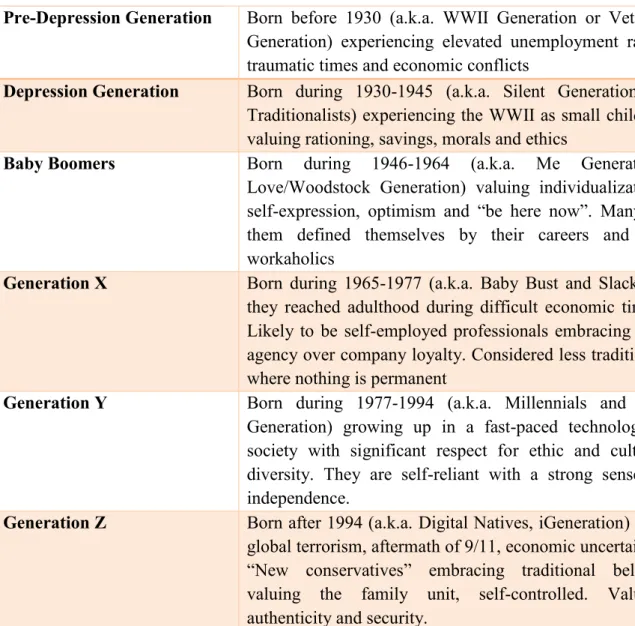
The thesis will be based on the generational evolution defined by Williams and Page (2011) that identified six generations, from 1930 onwards, according to the following table:
13 Pre-Depression Generation Born before 1930 (a.k.a. WWII Generation or Veteran
Generation) experiencing elevated unemployment rates, traumatic times and economic conflicts
Depression Generation Born during 1930-1945 (a.k.a. Silent Generation or Traditionalists) experiencing the WWII as small children valuing rationing, savings, morals and ethics
Baby Boomers Born during 1946-1964 (a.k.a. Me Generation, Love/Woodstock Generation) valuing individualization, self-expression, optimism and “be here now”. Many of them defined themselves by their careers and are workaholics
Generation X Born during 1965-1977 (a.k.a. Baby Bust and Slackers) they reached adulthood during difficult economic times. Likely to be self-employed professionals embracing free agency over company loyalty. Considered less traditional where nothing is permanent
Generation Y Born during 1977-1994 (a.k.a. Millennials and Net Generation) growing up in a fast-paced technological society with significant respect for ethic and cultural diversity. They are self-reliant with a strong sense of independence.
Generation Z Born after 1994 (a.k.a. Digital Natives, iGeneration) face global terrorism, aftermath of 9/11, economic uncertainty. “New conservatives” embracing traditional beliefs, valuing the family unit, self-controlled. Valuing authenticity and security.
Table 1: Generations evolution according to Williams and Page Source: Own representation aligned to Williams & Page, 2011.
Having defined the generations this study intends to examine the Generation Z to understand its difference from other generations regarding their motivational drivers and attitude towards work.
2.2.2 Definition of Generation Z
According to the US Census Bureau, Generation Z comprises the biggest population share in the US with over 25%. Whereas in most of the European countries the Baby Boomer Generation is still the majority and the new Generation lies yet within under 20%. Contrary to African countries in which over 40% of the population is categorized as Generation Z and in Asia representative with over 30% (United States Census Bureau, 2018). The young members of the Generation Z are a unique group, rapidly gaining economic power and according to a meta-study by Triple-a-Team they influence the consumption patterns of all present age groups
14 already by today (Triple-a-Team AG, 2016). The major events that shaped their set of values were the repercussions of 9/11, global terrorism, school violence and economic uncertainty (Williams & Page, 2011). They are the first generation that was born into a fully developed digital world, not being familiar with a time without the internet or smart-phone. They are accustomed to a fast-paced information environment in a high-tech era (Kitchen & Proctor, 2015). By growing up in uncertain social, political and environmental conditions they value security more than ever. Being accepted by their peers and reaching out for a sense of belongingness is even more important for them as for the previous Generation Y. Interacting in the social media networks they look out for “realness” and authenticity. Generation Z is called to be a new generation of conservatives embracing traditions, the importance of family and acting more responsible (Williams & Page, 2011). With a global and diverse mind-set, they originate from a broader mix of backgrounds brought up with unique ideas and experiences which determines their viewpoint about the world, studying and work (Bencsik et al., 2016). Summed up by multiple authors, this generation is characterizes to be self-confident, very optimistic, brave, impatient, highly impulsive, fast learning, able to work productively on several tasks at the same time and imaginative (Williams & Page, 2011, Bencsik et al., 2016, Ozkan & Solmaz, 2015, Kitchen & Proctor, 2015, Villa, 2017, Iorgulescu, 2016).
2.2.3 Generation Z in the working environment and research framework
As this new generation will take over the work places in the next years, management and especially the human resource practises must adapt to the needs and the abilities of the new generation, by simultaneously serving the interests of the previous generations in the organisations. A study by Iorgulescu (2016) examined the data of 154 members of the Generation Z and their expectations regarding their workplace and professional life and concluded that Gen Z has a strong need for security and therefore a strong desire for a secure job and generous salary. Scholz supports this finding and specifies that Generation Z individuals strive for security especially within the work environment structure (Scholz, 2014). Moreover, they tend to prefer working in teams in open-space offices rather than isolated. Furthermore, it confirms the conclusion of other studies that Generation Z expect constant development of themselves, healthy working relationships and a professional network. Hence, they require to be supported by a good mentor. Research indicates that the Generation Z is characterized to be very ambitious and striving for a successful professional life. While organisations can expect the technical and linguistic skills to be on a top level of future applicants they will also face this generations need of intrinsic motivation and their confidence in being able to change the world.
15 Arising from their nature and background a recent study found out that their most important career goal is work-life balance and a secure workplace (Bencsik et al., 2016). Whereas a study by the Center of Generational Kinetics gathered 1.004 opinions of Gen Z individuals on their attribute that they find most exciting when applying for a job favouring two attributes which were first a fun work place and second a flexible work schedule (Center of Generational Kinetics, 2017).
The research scientist Scholz discovered four main reasons that make an employer appeal attractive for the future generation. Firstly, Gen Z demands clear structures in an organization. A well-defined entry program that prepares them precisely for the future workflow and the company used systems account for an inevitable factor for them. Secondly, contrary to previous generations Gen Z disregards a performance-oriented pay. The basis of the salary should be comprised of the quality of the education and the allocated task area. Thirdly, the attractiveness of the future employer is influenced through the working schedule that the organization provides. Gen Z individuals have a strong desire for regulated working hours, primarily referred to a fixed core time and the possibility to carry out a home office day occasionally. As last point, Scholz highlights that the company is asked to provide a professional and clearly structured training and development plan as they are certain not to remain in the organization for the rest of their lives Gen Z individuals wish for definable, communicable and transportable learning content. Scholz argues that Human Resource management needs to be aware of providing Generation Z workers with a close leadership support, guiding them throughout their career. This need originates from the very close and protected upbringing by their parents that Generation Z experienced (Scholz, 2014). Being the next Generation that starts to value the family unit to a greater extent than Generation Y (Williams & Page, 2011) they demand a better reconciliation between work, family and private life. Representatives of the Gen Z show less interest in taking leadership responsibility. They clearly separate between work and life but nevertheless strive for contribution and engagement within their company (Scholz, 2014).
To provide a link between the work values of Generation Z and the variable intangible incentives, a framework is being proposed to show how the relationship between the two themes and variables might be empirically tested. The following framework involves multiple dimension that potentially could be tested on how they interact with each other in a variety of ways.
16
Figure 2: Research Framework Generation Z and intangible incentives Source: Own representation aligned to Solnet & Hood, 2008.
The basic assumption of the framework is that external influence5 shapes the work values of
Gen Z which consequently activates their work attitudes. With the implementation of intangible incentives by the HRM, which are influenced by the organisational vision, mission, values, resources and costs the company has the ability to attract individuals of Generation Z by aligning the offered incentives with the work values of Gen Z. The dynamic interplay between Gen Z´s work values and attitudes together with the HRM intangible incentives will ultimately impact the work behaviour of Gen Z employees and thereby have a resulting impact on the organisational outcomes like turnover, profitability, reputation as an employer and competitive advantage.
Nevertheless, the thesis will primarily concentrate on the interplay of the variable “Generation Z work values” and the variable “intangible incentives” and propose the following Hypothesis:
H1: Distinct intangible incentives of employer attractiveness have different levels of perceived importance for Generation Z.
5 A generational cohort such as Generation Z is defined through their birth in the same period of time, sharing vital important societal, historical, political and technological life events during critical developmental stages that shapes their commonly defined attitudes and values (Solnet et al., 2012)
17
H1a: Generation Z strongly values the intangible incentive Training & Development. H1b: Generation Z strongly values the intangible incentive Supportive Leadership. H1c: Generation Z strongly values the intangible incentive Flexibility.
H1d: Generation Z strongly values the intangible incentive Working Environment.
2.3 Self-Concept
2.3.1 Definition of self-concept and its role for vocational choice
The self-concept is used as one of the first constructs in psychology to describe a subset of human characteristic adaptation in the literature. With its central position in many personality theories it is commonly used among many disciplines (Marsh, 1990). As one of the first authors, the psychologist Rogers (1951)defined the self-concept as the totality of an organized, complex and dynamic system of learned beliefs, opinions and attitudes that each human being holds to be true about their personal existence. Rosenberg (1979) later defines the self-concept in a narrower sense by describing it as: “…the totality of the individual’s thoughts and feelings
having reference to himself as an object.” The personal assessment of one’s self can be either
way positive or negative. This view inherits multiple facets including a person’s ability, experience and what they predict for their future. Moreover, the self-concept is built by others, how they see and judge a person and by the environment surrounding them (Nasir & Lin, 2013). As a predictor of sequential behaviour, the self-concept predicts a person’s motivation, performance and emotions and thereby plays a vital role in determining the individual’s development and further growth. Therefore different courses of action are being chosen depending on the picture a person construes of oneself, what roles they play, what role they are expected to presume, how they are viewed by others and the position they occupy in comparison to others (Bong & Skaalvik, 2003).
Connecting the self-concept with the subsequent behavioural outcomes originates from the expectancy-value model that proposes a direct and indirect relationship between one´s self-concept and its future choices (Nasir & Lin, 2013). One of the future choices of a person lies within the decision which profession he or she would like to execute and which career path to pursue (Nwachukwu, 1992). Super was one of the first theorists that suggested that self-concept plays a vital role in choosing a career path. He provided significant results linking the two concepts with each other stating that: “tracing the process of making a vocational choice and
18
adjusting to an occupation is, essentially, describing two processes- that of developing a picture of the kind of person one is trying to make that concept a reality.” (Super, 1953)
Many research studies conducted after Super´s theory supported aspects of the influence of a person’s self-concept on the vocational choice and proved a substantial significant relationship between the two factors (Bujold, 1973; Davis, 1969; Ziegler, 1973). As people develop themselves over time, they simultaneously form a view of their roles, abilities and personality traits. With the existents of multiple career opportunities accessible to cater to the myriad different individual character traits, people compare the view of themselves with the various vocational concepts (Nwachukwu, 1992).
2.3.2 Self-esteem as an aspect of self-concept and its role in an organization
Self-concept in theory comprises multiple aspects of the self, one of them being the self-esteem. To make the self-concept in practice more accessible the trait self-esteem has been chosen as an evaluative aspect of the self. Self-esteem is defined as a person’s attitude of personal worth and includes the individual’s self-evaluation of their competencies. In this sense it describes an individual’s picture of what they think of themselves. It serves various functions such as the monitoring of the social inclusion-exclusion degree, the buffering of anxiety and the goal achievement promotion (Pilarska, 2018). A low self-esteem degree is connected to numerous emotional and behavioural problems like depression, loneliness and aggression (Pilarska, 2018) whereas a high self-esteem degree is associated with achievement and great performance. High self-esteem individuals like who and what they are (Pierce & Gardner, 2004). Scholars worked throughout the past years with multiple levels of specificity of self-esteem, commonly seen aspects are the global, the task and the situation-specific self-esteem (Simpson & Boyle, 1975), others developed around several other dimensions such as social, academic, physical and moral-self (Korman, 1970; Shavelson, Hubner, & Stanton, 1976). Past literature on the origins of global self-esteem (cf. Brockner, 1988; Franks & Marolla, 1976; Korman, 1970, 1971, 1976) identified three forces that effect and determine an individual’s self-esteem. Those external forces are categorized as (1) implicit signals through environmental structures, (2) communication through important others from one´s social environment, (3) individual´s emotions and feelings of competence derived from personal experience.Brockner (1988) who worked with the concept of global self-esteem proposed that it influences to a great extend the attitude of an employee and serves as an explanation of their motivation, job satisfaction and performance.
19 More specific research on the dimension of organization-based self-esteem (OBSE) contributed to understand the environmental influence of a company on a person’s self-esteem. Pierce defined the OBSE as a self-evaluation of an individual’s adequacy as a member of the organization evaluated by the degree to which a person believes to be worthy, capable and significant within their employing organization (Pierce & Gardner, 2004). On his review of organization-based self-esteem literature he differentiates between individuals with a high and a low self-esteem and connects them to different modes of actions that work environment structures have upon high or respectively low self-esteem individuals. The above mentioned three forces that influence a person self-esteem were applied in an organizational context.
Regarding, (1) the implicit signals through environmental structures, they note that people working in mechanistically designed social systems tend to develop a lower self-esteem. Therefore, organizations with a stiff hierarchy, a high level of standardization and centralization diminish an individual’s self-esteem by executing high-level of system-imposed control over them. On the contrary side, companies that are organically designed with complex job-designs and non-routine tasks let their workers self-esteem flourish. Through the high involvement social system surrounding them they are being provided with greater chances to regulate and express themselves in their organizational roles. By that the likelihood increases that the organizational members will connect positive events with their accomplished work which in return increases their organization-based self-esteem. To conclude one could argue that through the increase of work environment structure personal control decreases and individuals will see themselves as more dependent and thereby reduce self-esteem. With respect to the influence dimension (2) communication through important others from one´s social environment, individuals OBSE is shaped through the message about one’s self, passed on by supervisors, mentors and other significant third parties that evaluate the person’s performance and work. The transmitted message will become part of the individual’s self-concept once a person integrates and internalizes this image into their self-conceptualization. Moreover, the third dimension: (3) individual´s emotions and feelings of competence derived from personal experience, influence the development of self-esteem. Employees who feel impactful and knowledgeable, derived from personal experience (e.g. achievement of acquiring an important customer), hold a greater value of themselves. Therefore, it can be assumed that the experience of a good performance boosts a person’s OBSE, while the experience of a poor performance will affect the individuals OBSE negatively. Low self-esteem individuals rely much more on a role model or supervisor to guide them as their level of confidence is low and they are uncertain
20 about their competence. Consequently, they respond to external events much more sensible and even actively seek out for cues to guide them within their organizational environment. Receiving approval and acceptance from others is necessary for them to confirm their behavioural act and their correctness of thoughts and feelings. On the opposite high self-esteem individuals tend to react upon external cues (e.g. recognition of a completed task) with a much lower intensity, as they are confident in their ability, thoughts and feelings (Pierce & Gardner, 2004).
Spreitzer (1995) provided significant results on her hypothesis that self-esteem positively impacts psychological empowerment within the organization. She proposes that individuals with a high self-esteem are likely to connect their sense of work-related competence with their self-worth. On the contrary, individuals with a low self-esteem are unaware of their value contribution and do not see themselves as an influencing unit within their work and organization. Through self-esteem people tend to see themselves as a talented and valuable member, contributing to the success of a company, thus they are more likely to take an active role in their work unit.
With the basis of the review on organizational-based self-esteem and their influential dimension one might assume that individuals with two different levels of self-esteem (high and low) react different upon external cues such as non-financial rewards within the company. The attributed value with different non-financial rewards might therefore increase or decrease depending on the persons level of self-esteem, which will be studied as possible moderator variable in the value on intangible incentives.
Thus, one can assume that:
H2: Self-esteem will impact the value attributed to different intangible incentives within the organization.
H2a: Self-esteem will positively impact the value attributed to Autonomy & Empowerment. H2b: Self-esteem will positively impact the value attributed to Leadership support.
H2c: Self-esteem will positively impact the value attributed to Working Environment. H2d: Self-esteem will positively impact the value attributed to Flexibility.
H2d: Self-esteem will positively impact the value attributed to Recognition & Appreciation. H2e: Self-esteem will positively impact the value attributed to Training & Development.
21
Figure 3: Moderation Effect of Self-concept Source: Own representation.
3 METHODOLOGY
3.1 Research DesignThe theoretical foundation of the methodology was developed in the exploratory part, where a research framework was designed based on the collection of information in the existing literature, such as in academic articles, journals and specialist books.
Proceeding with the explanatory research, an online questionnaire was developed and launched. The survey was generated to receive primary data to test the hypothesis created in chapter 2 to find a significant relevance for the research questions proposed in the problem statement in chapter 1. According to the problem statement, the main objective of the research was to analyse the influence of non-financial incentives on the companies’ attractiveness for members of Generation Z. Furthermore, the study aimed to examine how the self-concept of individuals of Generation Z, accessed through the trait self-esteem, moderated the values attributed to different non-financial incentives. In order to ascertain these relations, it is crucial to understand the following main aspects: the importance of the six selected non-financial rewards for
22 Generation Z individuals, the trait self-esteem and its level of expression and if the trait would impact the preference for different non-financial incentives.
The survey was generated through the online platform “Qualtrics” and distributed across social media platforms (mainly Facebook, Whatsapp and Instagram). This allowed an easy to track procedure where responses could be retrieved and analysed from a great number of individuals in a short time period (Aaker, Kumar, Day, 1998). Moreover, answers were collected anonymously as the content of the survey regarding the aspects of self-esteem were most sensitive for the probands to answer.
3.2 Questionnaire
The online survey was structured into two main blocks. Before being exposed to the question blocks, an introduction question was presented, asking for the participants’ age. As the research was only conducted within the Generation Z the maximum age to be forwarded to the first question block was 24 years. Participants indicating an age above 24 were redirected to the end of the survey with a notification explaining the age limitations of the research.
The first question section of the survey measured the trait self-esteem based on Rosenberg’s ten-item Self-esteem Scale (RSES). The construct validity of the scale was examined by applying it to the Generation Z sample. In accordance to previous studies using the scale, a Cronbach Alpha of 0.86 has been detected to proof its reliability. The ten questions include negative and positive formulations that the individual is being exposed to in an alternately order “to reduce the effect of respondent set” (Rosenberg, 1965). Unlike Rosenberg, the answers of the respondents could vary from strongly disagree to strongly agree on a 5-point Likert scale, instead of the initially proposed four-point scale, allowing the proband a chance to take a neutral position. As the question section of the research accessing self-esteem is a rather sensitive topic and therefore difficult to verbalize the opportunity was given to choose a neutral middle. This adaptation has been selected due to a low threshold dropping out of surveys being conducted online.
The second section of the questionnaire measured the attitude of the respondents towards the six proposed intangible incentives being: empowerment and autonomy, training and
23
and appreciation. For each category different questions have been mixed across five different
question blocks. The goal of the rearrangement of the questions was to avoid associations between questions and certain incentives assessed. Not being able to identify a category reduced the chance of a biased answer of the respondent. The attitudes of the respondent, which effectively influences the employer attractiveness among job seekers was measured on a 5-point Likert scale ranging from strongly disagree to strongly agree. Respondents had to evaluate each item in the questionnaire through the following statement: “When choosing a new job, I want my future employer/my future supervisor to […]”. The following table gives an overview with what kind of topics the variables were assessed:
Variables Measurement Explanation
Autonomy 5 Questions: Personal judgement to make changes; autonomous decision making for own work; decisions without consent of supervisor; trust from supervisor and peers; responsibility for own goals
Empowerment 4 Questions: Clear guidance of supervisor; working in a team with clearly defined methods; possibility to disagree and give upwards feedback; permanent consulting of supervisor Work environment 7 Questions: Work reality with diverse people; open space
office; isolated office; office with ´home atmosphere´; colleagues that are friends; fun work place; company being socially responsible
Training & Development 3 Questions: Update skills through different tasks; clear path for career advancement; support for training courses
Supportive Leadership 8 Questions: Consideration of personal feelings; thoughtfulness of personal needs; consult employee for important decisions; concern for private life problems; help focusing on goals; criticism regarding quality of performance; track working hours; teach to solve problems autonomously Working hours and
Flexibility
5 Questions: Telecommuting; trust-based working schedule; core working time; fixed working hours, sabbatical
Recognition & Appreciation
5 Question: acknowledgement for daily accomplishments; recognition events; personal congratulation; personal note; recognition during team meetings
Table 2: Variables measurement
Moreover an “attention check” item was implemented in the third section of the question block with the purpose to detect low-effort responses. Low-effort responses influence the quality of the survey output negatively and can appear when the cognitive demands of a survey exceed
24 the motivation or ability of a respondents (Vannette & Krosnick 2014). In order to increase the experimental efficacy, the data set output was filtered subsequently by the low-quality responses.
The last question block rounded up the data collection by measuring the demographic characteristics of the participants. Questions regarding gender, country of origin, country of residence, employment status and education have been asked. The data conducted was used to characterize the sample and to observe geographical differences within the Generation Z to phrase further statements apart from the formulated hypothesis (Appendix 1).
3.3 Procedures
For the comprehensibility of the questions and statements, the language, the structure flow and the measurement of the time required, a pre-test was conducted ex ante with three peers. Further advantages of launching a pre-test is to uncover ambiguity, existing biases in question wording and lack of clarity. To gain a realistic evaluation the questionnaire was simulated in the preview version of Qualtrics. The probands of the install experiment were representatives of the sample. Their answers were not considered subsequently for result analyses and are not included in the main data collection as multiple conduction of one questionnaire causes answer biases. Through the pretesting phase minor structural changes in the question blocks and in the wording of the statements could be adjusted. All modifications were performed in favour of the user-friendliness.
The survey was launched and distributed online where the data was gathered for a pre-defined period of time. After the data collection, the reports were imported to SPSS to execute the statistical analysis. The items were labelled consistently, reversed when required and some variables were aggregated into indices (Appendix 3). The main tools used were the Cronbach Alpha to perform the reliability analysis, frequencies and descriptive statistics to contextualize the first hypothesis, Spearman rank-order correlation to understand the relationship between the variables, linear regressions to test the second hypothesis, non-parametric Mann-Whitney-U test and the Kruskal-Wallis test to compare the means of the different variables regarding the demographics.
25 3.4 Sample
During the data ascertainment phase, 176 surveys have been accessed. Responses that have been completed only partially or failed the attention check were eliminated from the dataset. Moreover, data obtained from participants indicating an age above 24 were also cleared as they are not part of the aimed statistical sample. Leaving a total sample of 135 valid completions6
for further analysis this indicates a response rate of 76,7%.
The sample constituted of 73% female participants compared to 27% male respondents. The age span ranged from 17 years representing the youngest proband to 24 years being the maximum age of a respondent excepted in the Generation Z sample. 2% of the participants were aged between 17-18, 16% between 19-20 and 33% between 21-22. The biggest sample with 48% portrayed the age group between 23-24 years. The majority of the probands completed a higher diploma (48% Bachelor’s degree and 13% Master’s degree). Although the greatest sample with 40% indicated being a student currently, the second largest sample with 38% stated to work and study at the same time. Together with the 18% that indicated to be employed, the sample represents a greater proportion with respondents having experienced a work environment.
Looking at the data obtained about the samples country of origin and country of residence, 82 people are German nationals, whereas the second biggest sample with 15 people have a Portuguese nationality. 24% of the participants do not resident in their country of origin, giving a great variety of cultural backgrounds and international experience (Appendix 2).
6 All items in the online survey were backed up by a `forced response´ function, leaving no space for further missing data.
26
4 ANALYSIS OF RESULTS
4.1 Reliability analysis
Before testing the hypotheses all scales were tested upon their internal consistency. Having used a 5-point Likert scale across all queried items in the questionnaire, a Cronbach´s Alpha (CA) reliability test was calculated for all scales and subscales to assess the internal consistency of aggregated items. The coefficient of the widely-accepted reliability measure CA lies within the range of 0 and 1. George and Mallery (2003) provided the following rules of thumb to evaluate the consistency:
AC > .9 – Excellent AC > .8 – Good AC > .7 – Acceptable AC > .6 – Questionable AC > .5 – Poor AC < .5 – Unacceptable
The Cronbach Alpha was analyzed for the esteem scale (derived from Rosenberg’s self-esteem scale and adapted) and for all the aggregated variables representing the scales of the six intangible incentive dimensions. After the first evaluation all scales were checked upon improvement possibilities using the SPSS’s function “Alpha if item deleted”. In a second step the indices were computed with the adjusted compilation of the variables. The results of the first test and its re-evaluation are summarized in Table 3.
Dimension Items Cronbach Alpha
before adjusted
Self-esteem 10-items 0.876 -
Autonomy & Empowerment 9-items 0.643 0.700
Leadership 8-items 0.583 0.638
Training & Development 3-items 0.346 Items were not aggregated
Working environment 7-items 0.539 -
Flexibility 5-items 0.526 -
Recognition & Appreciation 5-items 0.614 -
Table 3: Reliability analysis of all variables
Bearing in mind the rules of thumb, two of the scales (Self-esteem, Autonomy & Empowerment) can be considered as good and acceptable internally consistent and
27 consequently be used without concern to perform statistical analysis and derive conclusions. The variables Leadership, Working Environment, Flexibility and Recognition & Appreciation were indicating questionable or even poor internal consistency. Therefore, all further statistically performed tests and their derived results have to be interpreted with cautious.
The variable Training & Development indicated an inacceptable AC of 0.346. After a re-evaluation the AC would increase to an insufficient coefficient of 0.412. As this dimension proves a lack of internal consistency it will be excluded as an index for further analysis. To provide an indication of the perceived importance of training and development for Generation Z, the three variables were treated as single items. Therefore, subsequent results including the three variables related to training and development should be viewed with cautious as they could lead to a distortion of the data obtained. Individually the items measured the value attributed to “Training through different tasks”, “Training Courses” and “Career advancement/development”.
4.2 Hypothesis testing
The first hypothesis and sub-hypothesis were:
H1: Distinct Intangible incentives of employer attractiveness have different levels of perceived importance for Generation Z.
H1a: Generation Z strongly values the intangible incentive Training & Development. H1b: Generation Z strongly values the intangible incentive Supportive Leadership. H1c: Generation Z strongly values the intangible incentive Flexibility.
H1d: Generation Z strongly values the intangible incentive Working Environment.
To test the sub-hypothesis H1a-H1d the means of each category and the three single variables concerning Training and Development have been computed. Moreover, Spearmans rang-correlation has been computed to detect significant rang-correlations between the variables. Result in Table 4 indicate the preference for individuals across the Generation Z sample.