MASTERS DEGREE
ECONOMICS AND HUMAN RESOURCES MANAGEMENT
COGNITIVE BIASES AND
HEURISTICS IN RECRUITMENT
AND SELECTION
Diogo Lopes Amaral
M
FA C U LD A D E D E EC O N O M IA
COGNITIVE BIASES AND HEURISTICS IN RECRUITMENT AND
SELECTION
Diogo Lopes Amaral
Dissertation
Master’s in economics and Human Resources Management
Supervised by
Maria Teresa Campos Proença
i
Biographical Note:
Diogo Lopes Amaral was born in Portugal in the end of the year 1990. Since early age, displayed an analytical and inquisitive aptitude which led to the enrolment in Technology and Information Systems at University of Aveiro. In 2010, changed the field of study to Psychology in order to pursue a career in Human Resources. This proved to be the best decision he could make and put him towards a fast track to job market and impacting others.
Professionally, he began to work as a Human Resources Consultant at Randstad in the year 2015. In order further develop his knowledge of both business-concepts and different recruitment approaches led to joining Experis in end 2016. At the same time, he’s admitted in Economics and Human Resources Manager Masters at Faculty of Economics of University of Porto. Character and a striving towards success attitude led to assuming a Consultant position at Michael Page where he has been since October 2017.
ii
Acknowledgments
"Alone we can do so little; together we can do so much." - Helen Keller
Many people contributed towards achieving this dream which culminates in this work, some of them unknowingly. Managing a work-life-study life balance is hard and, in my opinion, only achievable when you have both support, respect and understanding towards every challenge we’ll need to face. A special note...
To my wife, who never let me give up no matter how hard or how difficult the math was. A true inspiration and role model.
To my parents, for trusting and supporting every decision I’ve made. A long distance will never break what trust and love create.
To Professor Teresa Proença for the guidance, assistance and knowledge passed through in each class and guidance provided.
To Prof. Carlos Fernandes and Pedro Bem-Haja of University of Aveiro for all the inspiration and for working to inspire psychology students to a structured and analytical approach.
To the friends I made at Michael Page, Randstad and Experis. With your help, I know I can achieve.
iii
Abstract
Recruitment and selection is an important process for organizations. Attracting and selecting the right talent is crucial in order to achieve growth and path the future. Decision-making studies in a wide variety of fields have shown the effects of cognitive biases and potential inefficiency towards making a sound judgment. This research aims to analyse the effect of heuristics during a simulated recruitment process.
An experimental study was developed in order to study the outcomes provided in a simulated recruitment process between experienced and inexperienced recruiters. A total of 86 volunteer participants contributed to the development of this research. A pool of 10 pre-validated candidates was present to participants in control groups which them had to accept, and rank, or reject each candidate recurring only to the CV information - triage. The experimental groups had the same task but the pool was altered to induce a favourable position towards the candidate. After this phase, interview reports for the accepted candidates, were provided. Participants were then asked to reject the candidate or accept and rank towards a final selection.
Results allowed us to observe overconfidence and anchoring biases. Although heuristics used in experimental conditions did not show significant differences between experienced and in recruiters, the data still provide us with some evidence that expertise effect still prevails over heuristics used in CV modelling.
Keywords: Recruitment and Selection, Cognitive Bias, Overconfidence bias, Expertise, Anchoring.
iv Index Biographical Note: ... i Acknowledgments ... ii Abstract ... iii Table index ... vi Figure index ... vi Introduction ... 1
Part 1 - Theoretical Background ... 4
1.1 - Decision-Making and Dual-Cognitive Processing ... 4
1.2 - Heuristics ... 5
1.2.1 - Anchoring and Adjustment ... 5
1.2.2 - Overconfidence bias ... 6
1.3 - Experts ... 7
1.4 - Recruitment and Selection ... 8
1.5 - Research Hypothesis ... 9
Part 2 - Experimental Study - Methodology ... 11
2. 1 – Experimental Design ... 11
2.2 – Participants ... 11
2.3 – Materials ... 11
2.4 – Induced Heuristics ... 12
v
Part 3 - Results ... 14
3.1 - Heuristics do influence judgment and decision-making ... 17
3.2 - Heuristics have less influence in inexperienced recruiters ... 17
3.3 – Experts have an higher rejection rate ... 18
3.4 – Anchoring effect was present in both sets of participants ... 19
Part 4 – Discussion ... 20
References ... 22
Appendix 1: Job Profile ... 25
Appendix 2: CVs – Control Group ... 27
Appendix 3: CVs – Experimental Group ... 45
Appendix 4: Interview Reports ... 63
vi
Table index
Table 1: Group distribution regarding experimental condition. ... 14
Table 2: Average percentages results during triage. ... 15
Table 3: Average percentages results for selection results after triage. ... 15
Table 4: Average percentages regarding final selection and the initial sample. ... 15
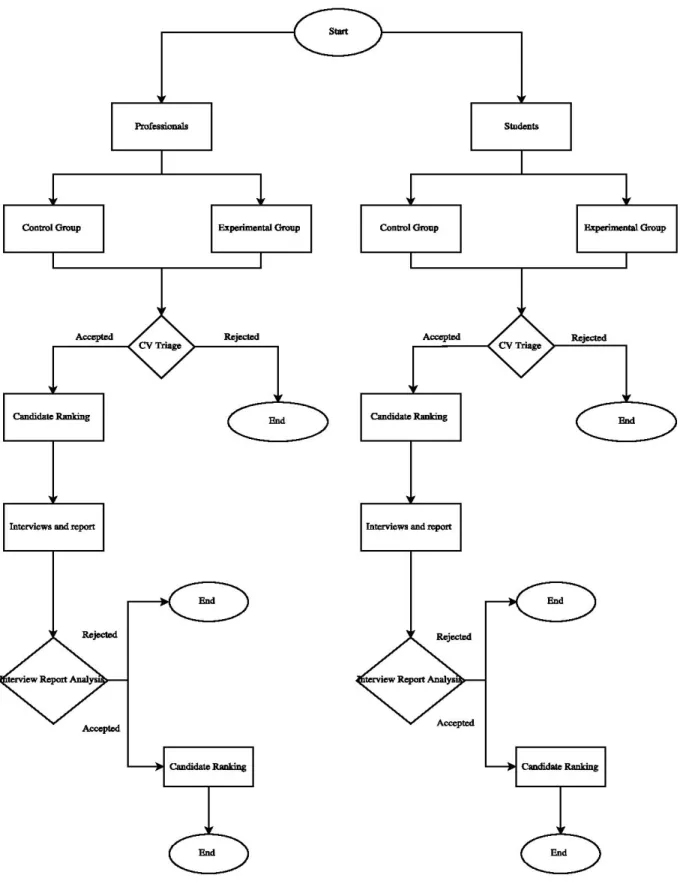
Figure index Figure 1: Flowchart describing the study experimental design. ... 13
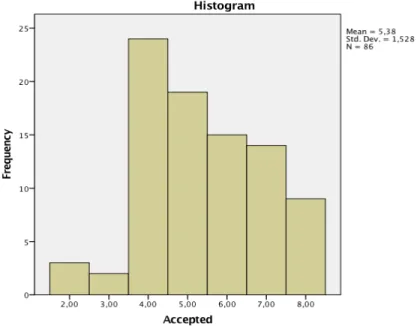
Figure 2: Distribution of the number of CV accepted. ... 16
Figure 3: Normality test. ... 16
Figure 4: Kruskal-Wallis test results obtained on SPSS. ... 17
Figure 5: Kruskal-Wallis result for Experienced group. ... 18
Figure 6: Kruskal-Wallis result for inexperienced group. ... 18
Figure 7: Kruskal-Wallis result rejection rates during triage. ... 19
1
Introduction
Our previous experiences and learning capacities prove to be vital to our species survival. We have learnt to quickly recognize dangerous or hazard situations, to recognize familiar faces at a glance and even recognize patterns from previous non-related experiences. This experience let us take shortcuts in our cognitive processes in order to function and not overdrive our brain. Although, as humans, we take pride in our rationality and our capacity to judge options and make choices. In science, we distinguish these two ways of thinking, the first one being intuitive thinking, and the other deliberative thinking. These two cognitive processes have been defined by some authors as dual-system, type 1 and 2, and so on. Kahneman (2011), proposed in his book “Thinking, Fast and Slow”, a designation for this dual-cognitive process, as Systems 1 and 2. Because of Kahneman contribution and relevance in many of the topics developed in this paper, this definition will be adopted and further developed.
When it comes to recruitment and selection, a fundamental activity in Human Resources Management, the judgment capacity and expertise are put to the test. It is indeed a difficult task to assess and judge the best candidate for a role (Rego et al., 2015). The nature of this processes involves a great amount of subjective analysis, non-structured evaluations and such prone to biases and heuristics utilization. Research has shown that even strangers, interacting for just a few seconds, perceived and judge a great amount of information, which is applicable in interviews during the recruitment processes (Evans, 2016; Gigerenzer & Todd, 2014; Rabin & Schrag, 1999). Asch described this phenomenon as first impressions, but how does it impact our perception and decision making while identifying the best fit for a role at our company? Are the Judgement and Decision-Making process prepared to cope with the ambiguity and subjectivity from the interviewer and aware of the
2
potential effects in their organization itself? Are we, as professionals, aware of these effects and develop strategies in order to mitigate them?
Decisions are typically made under conditions of uncertainty. The limited human cognitive capacity coupled with combined decision situations characterized by high levels of complexity, ambiguity, and uncertainty leads to subjects often using heuristics in making decisions. These heuristics are subject to a set of subconscious, systematic errors known as cognitive biases (Keil, Depledge, & Rai, 2007). As Kahneman and Tversky (1979) advocated, these biases implicate our decision-making capacities. Thus, when looking at the recruitment scope, this phenomenon may cause a negative impact on the subjects and in obtaining an optimal decision.
What about the expertise role? It is true that, no matter what is the field of study, we trust the expert’s opinion. From them, we expect accuracy and feel reassured in their competence. Although as Connolly et al (2000) noted, that the evidence provided by many years and studies on judgment and decision making are mixed regarding this topic. When a more complex judgment is at stake, it is easy to sort out the real experts from mere claimants but many judgments for which feedback is delayed, imperfect or non-existent it is harder to provide conclusive evidence about the expertise role (Connolly, Arkes, & Hammond, 2000). Kahneman insight about his own experience in the Israeli army regarding his overconfidence when evaluating young cadets was a stepping stone towards the conception and idealization of this study.
This study intends to analyse the utilization of specific heuristics, confirmatory, overconfidence, anchoring and adjustment, in CV triage and report analysis during the recruiting process, identifying cognitive biases impact in the decision-making process. Although it is important
3
to note that, like Kahneman (2011) referred in his book, “the focus on error does not denigrate human intelligence” so the main contribution of this work intends to provide, human resources and other individuals that develop this particular activity, with better tools to improve their decision making.
4
Part 1 - Theoretical Background
Organizations often put to use several resources in order to hire employees who fit a determined position that need to be filled. Substantial costs associated with hiring, training and discharge of unsatisfactory employees make this a complex scenario for hiring managers and HR professionals (Baron & Kreps, 1999). The decision in hiring a candidate instead of other needs to be precise and as solid as possible. There have been several studies regarding decision-making processes in humans in several contexts.
One known fact to influence judgement is heuristics. Tversky and Kahneman were pivotal in introducing heuristics defining them as simple processes that are automatically executed providing useful quick and useful responses to certain situations with fewer resources but also imperfect. This results in an automated response that can take different forms including urges, behaviours, thoughts, emotions or impressions (Tversky & Kahneman, 1979).
1.1 - Decision-Making and Dual-Cognitive Processing
Decision-making his fundamental in any human being life. At some point, career, personal life or other, we are bound to face choices and make decisions based on the information gathered. Payne, Bettman, & Johnson (1993) explain that individuals are adaptative decision makers, often trading off the desire to make a good decision with the desire to minimize cognitive resources. Heuristics prove to be a valuable tool for decision makers in order to simplify a complex world and obtain more efficient judgments. When under pressure, decision makers often undermine more thorough processes and fail to consider whether heuristics compromise their judgment quality. “Heuristics become detrimental when relied upon inappropriately or unconsciously, leading to suboptimal or less than high-quality decisions” (Kahneman, 2011).
5
In order to discuss the decision-making process, we need to understand the cognitive processes associated. The dual-cognitive process consists of the coexistence of two types of reasoning. The system 1 – the intuitive system – quick and automatic that requires minimum or no effort and the system 2 – or what we call rational thinking – slow, sequential and controlled that requires effort (Kahneman, 2011). Kahneman and Tversky are considered the precursors of the system 1 and system 2 definitions.
System 1 is regarded as a set of subsystems operating with some autonomy, independently of work memory and/or cognitive capacity. The processes associated with this type of thinking are fast, unconscious, parallel, automatic, have high capacity proven to be a valuable ally in the species survival and adaption (Derous, Buijsrogge, Roulin, & Duyck, 2016; Evans, 2008; Kahneman, 2011). As for the System 2 which is considered to be unique to the human species, is a type of thinking which is slow, conscious, sequential, deliberative and functions using work memory, allowing for abstract thinking that cannot be developed by System 1 (Derous et al., 2016; Evans, 2008; Kahneman, 2011).
1.2 - Heuristics
“Heuristics are efficient cognitive processes that ignore information”(Gigerenzer, Hertwig, & Pachur, 2011). When the question comes to heuristics the common answer is the principle of
accuracy-effort trade-off. Although this might be seen as a proof of a lesser quality process, heuristics can lead to
more accurate inferences than strategies that use more information in Gigerenzed 2011.
More than a psychologic concept, heuristics have been studied in several fields, especially in artificial intelligence and machine learning for problem-solving (Gigerenzer et al., 2011).
1.2.1 - Anchoring and Adjustment
Anchoring and adjustment is defined by the process in which an “information searcher ‘‘anchors’’ an estimate on a specific point of reference/data and subsequently makes insufficient
6
adjustments from the anchored point” (Fay & Montague, 2015). This is one of the most studied processes in cognitive psychology. This process is composed by two phases.
First the Anchoring effect, whereby the decision maker considers a particular number or position as the starting point for an unknown problem – the anchor. While solving the problem, adjustments to the original consideration are made in order to arrive at the answer. Studies show us that these adjustments tend to be insufficient due to the person incapacity to move away from the first answer (Epley & Gilovich, 2006; Fay & Montague, 2015; Furnham & Boo, 2011; Kahneman, 2011; Thaler, 2008; Tversky & Kahneman, 1979).
When it comes to the recruitment process, many of the decisions are based on beliefs and estimates on the likelihood for that person to succeed. This is made through comparison between other subjects and previous experiences which may lack evidence towards an effective judgment.
1.2.2 - Overconfidence bias
A phenomenon associated with interviewers is (over)confidence bias where the decision maker overestimates his own capacity to judge a certain situation or evaluation dismissing information or other tools that can help strengthen his judgment. Observed in several experiments, one of the first to report and analyse this bias was Kahneman through is experience in the Israeli army. He observed that both he and his fellow colleagues had great confidence in their own perceived ability to foretell the performance of each candidate and the powerful conviction in their judgments. Although he had data supporting that the validity of their judgment was unfounded, they kept confiding in this capacity (Buijsrogge, Derous, & Duyck, 2016; Kahneman, 2011). Even though Kahneman developed his research among these subjects and most of his contributions came from his personal experience in the military he never extended his research to topics regarding human resources fields focusing on economics and financial sectors instead.
7
In a study regarding overconfidence bias in interviews (Buijsrogge et al., 2016) it is described starting when the interviewer first observes an applicant. The interviewer attends to cues that are immediately observable such as appearance. If any strong cues, such as distinguishing visual marks, is present a cognitive response is triggered. If these cues are absent, the interviewer will require additional information, like verbal cues, before categorizing the applicant in a meaningful social category.
1.3 - Experts
We are in an age of increasing specialization, in many fields - business, industry, services, etc. - in order to provide an added value or contribution to the work developed people expect focus and specialized solutions to their needs. But what are the conditions that produce or enable one to become and expert? Chess players, musicians, race car drivers, software writers are some examples on which is easy to identify true expertise from luck or a mere claim to be (Connolly et al., 2000). Einhorn (1974) work was a pioneer in attempting to provide a guideline of necessary conditions for defining expertise within a given situation.
He hypothesized that the expert must identify information or cues, which are diagnostic about the final diagnosis, from the multidimensional stimulus he encounters, although the experiment was inconclusive, it provides insight into this question and proof that an individual track record determines his expertise. Previous studies, shown that “the expert’s ability to identify these cues can be seen as a problem of extracting weak signals from a background of noise” (Einhorn, 1974).
8
1.4 - Recruitment and Selection
The operationalization of a process of Recruitment and Selection is a result of organizational goals, financial resources and position alignment. Recruitment is the process of attracting candidates for a defined position and Selection is the process of deciding on the best person for the job regarding a set of competencies and the responsibilities to undertake (Rego et al., 2015). A traditional approach focuses on finding instruments capable of measuring and predict candidate characteristics and performance in a given function with the ultimate goal of finding the right person for the right place (Proença, 2007; Proença & Oliveira, 2009). It is expected that, when selecting candidates, ethical and fair criteria must be used alongside with organization needs and candidate knowledge, skills and capacities. So in the recruitment and selection process, it is expected the definition of criteria that candidates must possess and the process we will undergo (Rego et al., 2015).
Candidate attraction can be done from several tools, from online/offline advertising, head-hunting, to referrals. No matter the source, CV is still pivotal in the recruiting process and, normally, are the source of the first contact between a candidate and an organization. It is considered a filter allowing recruiters to reject a candidate that does not meet the criteria established for the job in question (Rego et al., 2015).
This study will take in consideration the process proposed by Rego et al (2015) where a framework is proposed – by their relevance to this study, the first 4 steps will be focused on this section. The function analysis starts the process, followed by the definition of competencies, skills, aptitudes, and qualifications required to perform a function/career - job profile. The next step is to select the recruitment methodologies, adjusted to the function/career specifications. Selection is the next phase. Those who do not match the minimal requirements are rejected and the accepted candidates are further evaluated in order to identify the appropriate candidate for the function. Recruiters judge the future performance of the candidate through CV information analysis (Proença
9
& Oliveira, 2009). This process involves the coexistence of the dual-cognitive process previously discussed. System 1 makes intuitive and automatic judgments while system 2 involves more effort, controlling the impulses – associated with System 1 - through a deliberate cognitive process. This indicates that, when using System 1, recruiters are more susceptible to heuristics and potential cognitive biases.
1.5 - Research Hypothesis
Heuristics have an important role in decision-making process but, when they fail to produce a correct judgment, it may result in a cognitive bias, which is the tendency to draw incorrect conclusions in a certain circumstance based on cognitive factors. Recruiters and hiring managers decisions are pivotal to the organization’s performance as a “poor” recruitment may prove costly to the organization. It is a fact that, in order to measure the recruitment process success, we are highly dependent on feedback, we never get information to support that the rejected candidate would be a better fit than the selected one, so we need to rely on the judgment of the decision makers and mitigate risk via a different set of tools.
From our research, it is found that, to the best of our knowledge, there were no studies of this nature. Therefore, we consider relevant to evaluate the potential effects of heuristics in a recruitment and selection process.
With the information gathered regarding the state of art on this subject leads to the formulation of the following hypothesis:
• H1: Heuristics do influence judgment and decision-making in Recruitment and Selection. It is expected that in triage, CVs which were altered to induce heuristics will provide significant differences between the control groups and the experimental
10
groups both experienced and inexperienced recruiters, thus influencing the decision-making process;
• H2: Inexperienced participants judgment and decision-making are significantly less influenced by heuristics than experienced recruiters. It is expected that during triage differences between experimental and control groups will be more evident among experienced recruiters as inexperienced, with no previous hiring track-record or familiarity with such task, will support the decision-making process by the brains System 2 reducing the effect from the experimental condition;
• H3: During triage, professional will have a significantly higher reject percentage than inexperienced. The confidence bias is often associated with highly trained experienced recruiters. It is expected that professionals, with a track record on the hiring process, will take more risks and allow a lesser number of participants to advance to the next phases of the process;
• H4: There is no significant change form decision-making between triage and report analysis of the two sets of participants. Participants will order their accepted candidates in both phases. We hypothesize that, although participants had less quantity and quality information in triage, there will be no significant changes in candidate selection alignment.
11
Part 2 - Experimental Study - Methodology
2. 1 – Experimental Design
This study was conceived with an experimental design of 2X2. The independent variables were CV with levels (heuristics induction and non-induction) and recruiters experience with two-levels (experienced and initiate). The dependent variable was the CV rate of acceptance and rejection.
2.2 – Participants
To study, whether experienced recruiters and inexperienced are prone to the presented biases and whether it leads to poorer judgment and decision-making, it was chosen as an experimental study design consisting of decision tasks. This experienced used a convenience sample composed of 86 adult volunteer participants, of which, 49 were professionals with 6 or more months of recruitment experience and the remaining 37 had no prior experience or less than 6 months of it. The experiment was composed by two tasks. The first one consisted on a decision task developed towards CV screening and another towards report analysis.
2.3 – Materials
In order to develop the tasks, a profile to be recruited had to be developed. By convenience, it was chosen and developed a job profile for a “Production Manager”. Then, 30 Curriculum Vitae were selected from professionals matching basic keywords associated with the Job Profile. With the help from 3 senior recruiters experienced in the development of recruitment and selection processes for such a profile, 10 Curriculum were selected to develop the task taken into account the job profile defined for the experiment.
12
2.4 – Induced Heuristics
The original CVs were altered to contain cues (words), in order to induce a favourable rank towards acceptance for the position they were being considered. Alongside the 3 volunteer senior recruiters, a set of keywords were chosen from the job profile previously defined. The selected cues were – “liderança”, “multinacional”, “Diretor”, “Planeamento”. These cues were adjusted into the original CVs pool creating the experimental pool.
2.5 – Procedure
The recruitment and selection process followed the model presented in the flowchart in figure 1. Subjects were instructed to analyse a function, the respective job profile and then on the tasks, they will intervene, namely triage and report analysis. The experience took place in individual rooms with a laptop with a 15inch display. A set of instruction was developed in order to promote the same conditions for each participant.
On the first task, each group on both sets of subjects had to evaluate the CV of 10 equivalent candidates, rejecting the less qualified/fit candidates for the position and rank the accepted candidates. The CVs in the experimental groups had cues, induced a more favourable rank than others but with the same meaning.
Next, on the second task, subjects evaluated interview reports from the previously accepted candidates proceeding into a new decision stage, reject the candidate or accept and rank to end the process. The interview reports detailed more of the candidate’s professional history and provided more information to support the data present on the CV.
13
14
Part 3 - Results
In this part, its present the analysis of data retrieved from the experiment. As previously noted, the sample was composed of 86 volunteer adult participants, 49 of them experienced recruiters and 37 with no previous relevant experience in this task. The division between experimental and control group was made via random draw function.
Group Control Experimental Total
Experienced 26 23 49
Inexperienced 17 20 37
Total 43 43 86
Table 1: Group distribution regarding experimental condition.
For a better understanding of the data provided after the experiment, the information was split in three tables (Table 2, 3 and 4) representing Triage, Selection based after triage and Selection based on the starting candidate pool.
In table 2, we compare the acceptance and rejection rate during triage for Experienced and Inexperienced recruiters split by each experimental condition. As expected, for both conditions, the rejection rate was higher for Experienced recruiters. This suggests that probably an effect of expertise or overconfidence occurred. It is noteworthy that, although the participants were allowed to accept all candidates cv and knew they would receive further complementary information, no participant had an Acceptance rate of 100% neither there was any CV that was not picked at least once. This again encourages to believe that there is an overconfidence effect occurring in both sets of participants.
15
Experienced Inexperienced
Control Experimental Control Experimental
Triage %Accepted 40,77% 51,30% 58,24% 70,00%
%Rejected 59,23% 48,70% 41,76% 30,00%
Table 2: Average percentages results during triage.
Regarding the Selection stage, the data was split into two tables (3 and 4). The first represents the acceptance and rejection rate of candidates selected after the triage, which meant a lower candidate pool. As table 3 shows us, in this stage Experienced Recruiters had a higher acceptance rate. This is due to the fact has shown on triage stage where Experienced Recruiters rejected a higher number of candidates thus having a smaller pool in the selection stage which led to a higher acceptance rate. In turn, Inexperienced had a larger pool of CVs to analyse after acquiring more information and could now support their decision-making being able to either accept or reject based on it.
Experienced Inexperienced
Control Experimental Control Experimental
Selection %Accepted 72,29% 60,34% 59,15% 54,64%
%Rejected 27,71% 39,66% 40,85% 45,36%
Table 3: Average percentages results for selection results after triage.
The second analysis of the selection stage is seen in table 4. On it, we can see the acceptance and rejection rate for each set of participants and conditions compared to the initial candidate pool. These final results allow us to again note a higher rejection rate on Experience Recruiters on both conditions and differences between conditions in each set of participants.
Experienced Inexperienced
Control Experimental Control Experimental Final
Selection %Accepted %Rejected 28,46% 71,54% 30,00% 70,00% 32,94% 67,06% 36,50% 63,50% Table 4: Average percentages regarding final selection and the initial sample.
16
After understanding the general data retrieve from the descriptive analysis, we move towards analysing the hypotheses formulated in the first section.
Figure 2: Distribution of the number of CV accepted.
Figure 3: Normality test.
The statistical analysis was conducted using SPSS 24. In order to test the distribution of the sample, Kolmogorov-Smirnov test was applied which revealed that the data collected does not comply with a normal distribution. In order to comply, non-parametric tests were used to test the hypothesis. For the hypothesis 1, 2 and 3, Kruskal–Wallis test was applied. This test, allows us to study the intended hypothesis as the groups were independent and we had both categorical and numerical variables. As hypothesis 4 requires the analysis of repeated measures, Friedman test was chosen to analyse the data.
Tests of Normality
Kolmogorov-Smirnova Shapiro-Wilk
Statistic df Sig. Statistic df Sig.
17
3.1 - Heuristics do influence judgment and decision-making
Regarding Hypothesis 1, Kruskal–Wallis test result was, χ2(2) = 13.69, p = 0.00. As p<0.05 we refute H0 which means there are differences between experimental and control groups. We therefore validate the hypothesis 1.
Figure 4: Kruskal-Wallis test results obtained on SPSS.
3.2 - Heuristics have less influence in inexperienced recruiters
In order to validate this assumption, we have to split the analysis for both groups. It is expected that results between experimental and control group in experienced participants will be significantly different, on the other hand, inexperienced participants groups are expected to show less difference between study conditions.
For the experienced participants, Kruskal–Wallis test result was, χ2(1) = 12.91, p = 0.00. As p<0.05 we refute H0 and establish that there are significant differences between experimental and control group in experienced participants.
18
Figure 5: Kruskal-Wallis result for Experienced group.
For the experienced participants, Kruskal–Wallis test result was, χ2(1) = 7.404, p = 0.007. As p<0.05 we refute H0 and establish that there are also significant differences between experimental and control group in inexperienced participants. With both conclusion taken in consideration, we refute hypothesis 2.
Figure 6: Kruskal-Wallis result for inexperienced group.
3.3 – Experts have an higher rejection rate
Regarding Hypothesis 3, Kruskal–Wallis test result was, χ2(1) = 34.53, p = 0.00. As p<0.05 we refute H0 which means there was statistically significant differences between the rejection rate in experienced and inexperienced participant. Therefore we validate the hypothesis 3.
19
Figure 7: Kruskal-Wallis result rejection rates during triage.
3.4 – Anchoring effect was present in both sets of participants
Friedman test indicated that, χ2(7) = 14.33, p = 0.446. The p value indicates that we can refute h0, and assume that the effect of anchoring between the triage and analysis phase. Hypothesis 4 is also validated.
20
Part 4 – Discussion
The literature review showed what possibilities heuristics create regarding human decision-making and judgment processes. Although they might lead to biases and inefficiencies, they also allow us to save energy and speed up processes. So, it comes to understanding the benefits trade-off between the upsides and imperfect decisions. In order to do this, we consider that we need to understand and be aware of the potential risk.
The hypothesis evaluated in this study did not try to evaluate whether the final conclusions were right or wrong, but instead on how this shortcuts may affect the process of recruitment and selection.
We were able to validate through hypothesis 1 that, heuristics do influence judgment and decision-making during triage. The heuristics induced in the experimental condition allowed for a more favourable evaluation towards the candidates, shown by the higher acceptance rate on the experimental groups.
Hypothesis 1 and 2 share some similarities although the object of study differs and, in our opinion, the effect confirmed in hypothesis 1 may be linked to the reasons for refuting hypothesis 2. Differences between experimental and control group among experienced recruiters were significant although the same could be found for the inexperienced recruiters. The induced heuristics were expected to produce effects in both groups and, although there are observable differences that point that this effect was less clear on the inexperienced participants, the results difference wasn’t statistically significant. This, alongside the pool size of 10 cv to either accept or reject, might be the underlying reason for disproving hypothesis 2. We can still retrieve some conclusion from this hypothesis by analysing the qui-square for both sides of the equation. The larger chi-square value found for experienced recruiters indicates larger differences between the groups we're comparing which encourage us and might lead the path for further studies.
21
Expertise role in decision-making and tendencies towards a faster decision was corroborated in hypothesis 3. Being familiarized with the task at hand, allowed experience recruiters to detect cues that led to a higher reject rate. As explored during the literature review, expertise is difficult to quantify but previous experience with the task at hand is a key factor. We concluded that experienced participants were able to detect cues that inexperienced participants couldn’t, which led to a higher rejection rate. It is nonetheless important to point we do not infer or tried to prove that a higher rejection rate is associated with a better decision making, although this may be a point to analyse in further studies.
Anchoring is one of the most studied heuristics and may be present in a wide variety of day-to-day task in any profession. This probably makes us less aware of how does it affects our decisions and how we interpret the world around us. Typically studies regarding anchors infer an anchor before the experience itself. We opted to analyse the effect created by the triage task itself. During this phase, participants had to access each candidate, accept or reject if they were fit for the position and then rank them. This created a preference rank for each candidate which we expected to impact the selection phase where the participant had to rank the final selection and establish preferences. When selecting a candidate, even with less information we create a standard and expectation which, in this case, leads preferences for one over the other candidate. We expected that the information provided in the selection phase would provide no significant change to the first decision and, as demonstrated by Friedman test. Although this proved our hypothesis, it would be interesting to analyse if the same effect is present if there was a candidate rank to be expected and how it would relate to the participant’s final decisions.
22
References
Baron, J. N., & Kreps, D. M. (1999). Strategic human resources : frameworks for general managers, 602.
Buijsrogge, A., Derous, E., & Duyck, W. (2016). Often biased but rarely in doubt: How initial reactions to stigmatized applicants affect interviewer confidence. Human Performance, 29(4), 275–290. https://doi.org/10.1080/08959285.2016.1165225
Connolly, T., Arkes, H. R., & Hammond, K. R. (2000). Judgment and Decision Making: An
interdisciplinary reader. Handbook of Social Psychology. https://doi.org/10.1146/annurev.psych.49.1.447
Derous, E., Buijsrogge, A., Roulin, N., & Duyck, W. (2016). Why your stigma isn’t hired: A dual-process framework of interview bias. Human Resource Management Review, 26(2), 90–111. https://doi.org/10.1016/j.hrmr.2015.09.006
Einhorn, H. J. (1974). Expert judgment: Some necessary conditions and an example. Journal
of Applied Psychology, 59(5), 562–571. https://doi.org/10.1037/h0037164
Epley, N., & Gilovich, T. (2006). The anchoring-and-adjustment heuristic : Why the adjustments are insufficient. Psychological Science, 17(4), 311–318. https://doi.org/10.1111/j.1467-9280.2006.01704.x
Evans, J. S. B. T. (2008). Dual-Processing Accounts of Reasoning, Judgment, and Social Cognition. Annual Review of Psychology, 59(1), 255–278.
https://doi.org/10.1146/annurev.psych.59.103006.093629
Evans, J. S. B. T. (2016). Reasoning, biases and dual processes: The lasting impact of Wason (1960). Quarterly Journal of Experimental Psychology, 69(10), 2076–2092.
23
Fay, R. G., & Montague, N. R. (2015). Witnessing your own cognitive bias: A compendium of classroom exercises. Issues in Accounting Education, 30(1), 13–25. https://doi.org/10.2308/iace-50919
Furnham, A., & Boo, H. C. (2011). A literature review of the anchoring effect. Journal of
Socio-Economics, 40(1), 35–42. https://doi.org/10.1016/j.socec.2010.10.008
Gigerenzer, G., Hertwig, R., & Pachur, T. (2011). Heuristics. (R. Hertwig, U. Hoffrage, & A. Research Group, Eds.). Oxford University Press.
https://doi.org/10.1093/acprof:oso/9780199744282.001.0001
Gigerenzer, G., & Todd. (2014). Simple heuristics that make us smart. Igarss 2014, (1), 1–5. https://doi.org/10.1007/s13398-014-0173-7.2
Kahneman, D. (2011). Thinking, Fast and Slow. (Penguin, Ed.).
Keil, M., Depledge, G., & Rai, A. (2007). Escalation: The role of problem recognition and cognitive bias. Decision Sciences, 38(3), 391–421. https://doi.org/10.1111/j.1540-5915.2007.00164.x
Payne, J. W., Bettman, J. R., & Johnson, E. J. (1993). The adaptive decision maker. The
Adaptive Decision Maker, 45(7), 352. https://doi.org/10.1057/jors.1994.133
Proença, T. (2007). A (IR)RACIONALIDADE NA DECISÃO DE SELECÇÃO DE PESSOAL. Economia, (2002).
Proença, T., & Oliveira, E. (2009). From normative to tacit knowledge: CVs analysis in personnel selection. Employee Relations, 31(4), 427–447.
https://doi.org/10.1108/01425450910965469
Rabin, M., & Schrag, J. L. (1999). First Impressions Matter: A Model of Confirmatory Bias.
The Quarterly Journal of Economics, 114(1), 37–82. https://doi.org/10.1162/003355399555945
Rego, A., Cunha, M. P. e, Gomes, J. F. S., Cunha, R. C. e, Cabral-Cardoso, C., & Marques, C. A. (2015). Manual de Gestão de Pessoas e do Capital Humano.
24
Thaler, R. H. (2008). Mental Accounting and Consumer Choice. Marketing Science, 27(1), 15– 25. https://doi.org/10.1287/mksc.1070.0330
Tversky, A., & Kahneman, D. (1979). Judgment under Uncertainty: Heuristics and Biases,
25
Appendix 1: Job Profile
Diretor(a) de Produção (m/f)
Contexto da Empresa e do Recrutamento:
Indústria de manufatura de componentes em metal, integrada em estrutura multinacional. Conta nos quadros da sua unidade industrial na região norte de Aveiro com 254 pessoas, 170 das quais em posições de produção (operadores, manutenção, supervisores). O Diretor de Produção deu a conhecer à administração a sua intenção de iniciar o processo de reforma, prevendo término da relação contratual para 31 de dezembro de 2018. Foi iniciado o processo de recrutamento externo de um profissional para substituição do atual Diretor de Produção.
Descritivo de funções:
• Analisar e interpretar informações variadas referentes à produção (número de produtos fabricados, refugos, quebras), aos stocks (matérias-primas, materiais e produtos acabados), à tecnologia (manuais técnicos) e à mão-de-obra.
• Avaliar a capacidade de produção em função das quantidades do produto a fabricar e dos prazos de entrega a cumprir, podendo propor alterações às encomendas.
• Definir objetivos de produção e hierarquização de prioridades em função do histórico e da previsão de vendas.
• Definir os materiais e os meios tecnológicos e humanos.
• Definir a distribuição equilibrada de cargas de trabalho por equipamentos e por posto de trabalho e entre os vários setores da produção.
• Calcular as quantidades de materiais e de meios tecnológicos e humanos a utilizar para atingir os objetivos de produção.
• Definir sequências e métodos de trabalho.
• Adaptar o planeamento da produção à programação diária, tendo em conta os constrangimentos técnicos, humanos e materiais da produção.
• Introduzir parâmetros relativos às características dos produtos.
• Interpretar o significado dos diferentes sinais luminosos, sonoros e símbolos. • Identificar e selecionar os diversos componentes da máquina e respetivas funções.
• Organizar o fluxo de trabalho em função da mão-de-obra e da tecnologia disponível, do seu estado e das intervenções de manutenção previstas, procurando otimizar a capacidade produtiva.
• Ler e interpretar informações relativas à programação da produção e às ordens de fabrico. • Hierarquizar o lançamento das ordens de fabrico, com o objetivo de otimizar os recursos
disponíveis.
• Determinar as datas de início e conclusão das ordens de fabrico e transmiti-las às áreas intervenientes no processo de fabrico.
• Assegurar que os materiais necessários a cada ordem de fabrico sejam distribuídos pelos respetivos postos de trabalho.
26
• Comparar os objetivos programados e os realizados por forma a examinar os desvios de consumos de materiais e componentes, de tempos de preparação e de execução
(tempos/FTE e tempos/máquina), de produtos fabricados com defeito e o montante de materiais inutilizados.
• Avaliar as consequências das anomalias verificadas no fluxo de produção, no cumprimento dos programas definidos e na distribuição das cargas.
• Estudar ações corretivas convenientes e propor, se necessário, alterações na programação da produção e/ou distribuição das cargas de trabalho.
• Registar informações de natureza vária (número e tempo de execução por produto, tempos de preparação da máquina, número de postos de trabalho, operações, ...).
• Identificar os postos de trabalho envolvidos no processo.
• Gerir e animar uma equipa com o objetivo de assegurar o fluxo de produção e os níveis de satisfação dos trabalhadores.
• Definir e avaliar o desempenho e as necessidades de pessoal e de formação. • Recolher informações de natureza variada das diferentes atividades da produção
(quantidades produzidas, refugo, matérias primas utilizadas, ...). • Interpretar mapas de índices de produtividade.
• Identificar e analisar os desvios, desencadeando ações corretivas.
• Calcular e analisar custos de produção, tendo como referência o planeado. • Detetar necessidades de formação.
• Ensinar métodos e técnicas de trabalho. • Analisar dossiês de fabrico.
• Identificar em cada fase do processo e para cada produto os parâmetros de qualidade a controlar, em colaboração com a área da Qualidade.
• Analisar, selecionar, sintetizar e manter atualizada informações de ordem técnica para a Direção.
Competências Técnicas e Comportamentais:
• Formação Superior em Engenharia (Mecânica ou similar); • Experiência mínima de 5 anos na função em contexto industrial; • Planeamento e Gestão da Produção;
• Experiência comprovada em implementação de metodologias de melhoria contínua; • Gestão de Equipas;
• Sólidos conhecimentos de ferramentas informáticas (PHC ou SAGE); • Elevada capacidade na resolução de problemas;
27
Appendix 2: CVs – Control Group CV nº1
MARIA
GONÇALVES
MARGONC AL V ES @ G MAIL.C O M +351 91234567 LINKEDIN.COM/F122AS_1 IDIOMAS Inglês – Fluente Francês - Avançado FERRAMENTAS Microsoft Word, Excel, PowerPoint, Solid works e VisualBasic
Business Objects, Space Navigator, Operator Work Space
EXPERIÊNCIA PROFISSIONAL INDÚSTRIA AERONÁUTICA DE PORTUGAL
JUNHO 2016 – NOVEMBRO 2017 HEAD OF PRODUCTION
• RESPONSÁVEL DE UMA EQUIPA DE TÉCNICOS ESPECIALIZADOS DE
MANUTENÇÃO AERONÁUTICA, INCLUINDO, SUPERVISORES E TEAM LEADERS
• RESPONSÁVEL PELA IMPLEMENTAÇÃO DE RPO E KPI´S DA ÁREA DE
ACORDO COM O NEGÓCIO E PLANO ESTRATÉGICO DEFINIDO
• RESPONSÁVEL PELA GESTÃO DA MELHORIA CONTÍNUA NO
SENTIDO DE OPTIMIZAÇÃO DOS RECURSOS, REDUÇÃO DOS CUSTOS, AUMENTO DE MARGENS E SEGUIMENTO DOS RÉDITOS.
• ASSEGURAR O CUMPRIMENTO DE TODOS OS REQUISITOS DAS
AUTORIDADES REGULADORAS DA ACTIVIDADE DE MANUTENÇÃO AERONÁUTICA
• RESPONSÁVEL, EM CONJUNTO COM EQUIPAS DE SUPORTE, DA
IMPLEMENTAÇÃO DE METODOLOGIAS PARA DIMINUIÇÃO DE RECLAMAÇÕES DE CLIENTE, OTD, PRODUTIVIDADE, PROJECTO BOA IDEIA
• RESPONSÁVEL PELA DEFINIÇÃO E IMPLEMENTAÇÃO DO PLANO DE
INVESTIMENTOS DA ÁREA
INDUSTRIA DE FABRICO COMPONENTES AUTOMÓVEL MARÇO 2015 – ABRIL 2016
UAP MANAGER
• RESPONSÁVEL DE UMA EQUIPA DE VÁRIOS SUPERVISORES E
COORDENADOR DE MANUTENÇÃO, GERINDO UMA ÁREA COM O TOTAL DE 150 OPERADORES
• RESPONSÁVEL PELOS INDICADORES DE QUALIDADE, CUSTOS,
ENTREGAS E PESSOAS
• RESPONSÁVEL POR DEFINIR COM CADA SUPERVISOR OS
INDICADORES QCDP DE CADA LINHA E TRAÇAR GUIAS DE DESENVOLVIMENTO DOS MESMOS
• RESPONSÁVEL PELA GESTÃO DA MELHORIA CONTINUA, DEFINIÇÃO
DE ESTRATÉGIAS SEGUNDO O PLANO DE DESENVOLVIMENTO DA FÁBRICA E ADAPTAÇÃO DOS RECURSOS PARA OS MESMOS (TRS)
• LIDERAR EQUIPA PARA UM TRABALHO EM EQUIPA JUNTAMENTE
COM AS FUNÇÕES DE SUPORTE QUE VISAM OS OBJECTIVOS DE EFICIÊNCIA (DLE)
• DEFINIR PLANO DE SMED, HOSHIN, TPM… DA UAP (UNIDADE
AUTÓNOMA DE PRODUÇÃO
INDUSTRIA DE PRODUÇÃO ROUPA DESPORTIVA SET. 2010 – MARÇO 2015
INDUSTRIALIZATION AND QUALITY PRODUCTION LEADER
• GESTÃO DE FORNECEDORES NA ÁREA DA SOLDADURA A PINTURA :
QUALIDADE, LOGÍSTICA, PRODUÇÃO E NOVOS PROCESSOS/PRODUTOS ATRAVÉS DE UM DESENVOLVIMENTO SUSTENTÁVEL/PRODUTIVO SEGUNDO UMA PERSPECTIVA DE MELHORIA CONTINUA.
• GESTORA PROJECTOS: ASSEGURAR O DESENVOLVIMENTO DE
NOVOS PROJECTOS QUE INCLUEM NOVOS PRODUTOS E SOLUÇÕES TÉCNICAS NA ÁREA DA SOLDADURA
28
INDUSTRIA CONSTRUÇÃO - SETOR ENERGÉTICO NOV. 2008 - JULHO 2010
PRODUCTION MANAGER
• COORDENADORA DE 3 ÁREAS DE PRODUÇÃO (SOLDADURA MANUAL, SOLDADURA SEMI-AUTOMÁTICA, SERRALHARIA) COM UM TOTAL DE 70 COLABORADORES:
• ENGENHARIA DE PROCESSO E DE QUALIDADE
• PLANEAMENTO E CONTROLO DE PRODUÇÃO, RECURSOS HUMANOS E FORMAÇÃO
• ACÇÕES DE MELHORIA CONTINUA: IMPLEMENTAÇÃO E SEGUIMENTO, DE ACORDO METODOLOGIA LEAN MANUFACTURING • DEFINIÇÃO E IMPLEMENTAÇÃO DE PLANOS DE
MELHORIA/AUMENTO DA PRODUTIVIDADE [PRODUTIVIDADE (AUMENTOU 30%), NÍVEL DE QUALIDADE (DE 10% TAXA DE REJEIÇÃO PARA 2%) E REDUÇÃO DE CUSTOS (OPTIMIZAÇÃO DE RECURSOS)]
INDUSTRIA CONSTRUÇÃO - SETOR ENERGÉTICO AGO. 2008 - NOV. 2008
PROCESSO ENGINEER
• DEFINIÇÃO E IMPLEMENTAÇÃO DE INSTRUÇÕES DE TRABALHO, EQUIPAMENTO, DE CONTROLO E FMEA
• APLICAÇÃO DE 5S E SISTEMA KPI • MELHORIA CONTINUA
INDUSTRIA CONSTRUÇÃO OUT. 2007 - JULHO 2008
QUALITY ASSURANCE
• ANALISE/SEGUIMENTO/REPORT DAS NÃO-CONFORMIDADES NA LINHA DE PRODUÇÃO
• ASSEGURAR SPC E FMEA
UNIVERSIDADE DO MINHO – DEP DE POLÍMEROS OUT. 2006 A JULHO 2007
INVESTIGADORA
UNIVERSITY OF TEXAS AT AUSTIN – USA ABRIL 2005 A NOV 2005
INVESTIGADORA
FORMAÇÃO ACADÉMICA
PÓS GRADUAÇÃO EM LEAN MANAGEMENT OUTUBRO 2014 – JUNHO 2015
TECHNOLOGIC CENTRE AIMEN (2009) INSPEÇÃO VISUAL DE SOLDADURA – NÍVEL II INSTITUTO DE SOLDADURA E QUALIDADE - ISQ (2009) TECNOLOGIAS DE SOLDADURA
FACULDADE DE ENGENHARIA DA UNIVERSIDADE DO PORTO (FEUP) SET. 1999 A JAN. 2006
LICENCIATURA EM ENGENHARIA METALÚRGICA E DE MATERIAIS
29 CV nº2
PEDRO
COSTA
[email protected] +351 91234567LINKEDIN. C O M/F SA PEDR O_E2
IDIOMAS Inglês – Fluente Espanhol - Fluente FERRAMENTAS Excel EXPERIÊNCIA PROFISSIONAL 09/01/2017–PRESENTE PLANEAMENTO DA PRODUÇÃO
EMPRESA DE CONFEÇÕES, S.A.
• PLANEAMENTO E CONTROLO DA PRODUÇÃO DE MALHAS E
TECIDOS NOS PROCESSOS DE TINGIMENTO E ACABAMENTOS.
07/10/2012–07/01/2017 GESTOR DE PRODUÇÃO
INDUSTRIA DE COMPONENTES AUTOMÓVEL - ESTOFOS
• ARRANQUE DA NOVA UNIDADE PRODUTIVA. LIDERANÇA. GESTÃO
DE EQUIPAS. PLANEAMENTO E CONTROLO DA PRODUÇÃO. ANÁLISE E CONTROLO DE STOCKS. GESTÃO DA QUALIDADE. MELHORIA CONTÍNUA.
07/01/2012–07/07/2012
ESTÁGIO ENGENHARIA E GESTÃO INDUSTRIAL INDUSTRIA DE COMPONENTES AUTOMÓVEL - PNEUS
• ANÁLISE E MELHORIA DO PROCESSO DE EXTRUSÃO DE PISOS.
• REVISÃO BIBLIOGRÁFICA E APLICAÇÃO DE FERRAMENTAS DO LEAN
MANUFACTURING E DO SIX SIGMA. RECOLHA DE DADOS PARA QUANTIFICAR CAUSAS, TRATAMENTO DA INFORMAÇÃO E DEFINIÇÃO DE AÇÕES COM INTUITO DE MELHORAR A PRODUTIVIDADE E QUALIDADE.
FORMAÇÃO ACADÉMICA
01/09/2007–07/07/2012
MESTRADO INTEGRADO EM ENGENHARIA E GESTÃO INDUSTRIAL -UNIVERSIDADE DO MINHO
• ESTATÍSTICA, ANÁLISE DE CUSTOS, INVESTIGAÇÃO OPERACIONAL,
LOGÍSTICA, ANÁLISE DE PROJECTOS, ENGENHARIA E GESTÃO DA QUALIDADE, FABRICO ASSISTIDO POR COMPUTADOR, PLANEAMENTO E CONTROLO DE PRODUÇÃO, HIGIENE E SEGURANÇA OCUPACIONAIS, INOVAÇÃO.
30
CV nº3
JOÃO SANTOS
EXPERIÊNCIA PROFISSIONALJOHN_SA N T OS @GMAIL. C O M +351 91234567 LINKEDIN.COM/J_SANTOS3 IDIOMAS Inglês – Avançado Alemão – Básico Espanhol - Intermédio FERRAMENTAS Lean e Qualidade Autocad Office SAP AS400 DESDE OUTUBRO DE 2013
COORDENADOR DE PRODUÇÃO – ÁREA DA SOLDADURA
• COORDENAR E GERIR EQUIPAS DE CERCA DE 160 PESSOAS
• INCENTIVAR E IMPLEMENTAR A FILOSOFIA LEAN NO SISTEMA
PRODUTIVO
• IMPRIMIR E INCENTIVAR O ESPÍRITO DE MELHORIA CONTÍNUA
• DEFINIR OBJECTIVOS PARA A ÁREA TENDO EM CONTA OS
OBJECTIVOS ESTRATÉGICOS DA EMPRESA
• GERIR E DEFINIR O ORÇAMENTO DA ÁREA DE PRODUÇÃO
EMPRESA DE COMPONENTES AUTOMÓVEL – ESTRUTURAS METÁLICAS
DESDE 2006 ATÉ SETEMBRO DE 2013 CHEFE DE PRODUÇÃO
• GESTÃO E COORDENAÇÃO DOS RECURSOS HUMANOS (CERCA DE
200 PESSOAS) E EQUIPAMENTOS CUMPRINDO OS
• OBJECTIVOS DE PRODUTIVIDADE, QUALIDADE E DISPONIBILIDADE
• MONITORIZAÇÃO DO ARRANQUE DE PRODUTOS PRÉ-SERIE
• LIDERANÇA NA GESTÃO DE RESOLUÇÃO DE PROBLEMAS
• IMPRIMIR E INCENTIVAR UM ESPÍRITO DE MELHORIA CONTÍNUA
• IMPLEMENTAÇÃO DE SISTEMAS DE MELHORIA CONTÍNUA,
SEGUIMENTO DE INDICADORES, OBJECTIVOS E PLANOS DE
• ACÇÃO (NO ÂMBITO DA FILOSOFIA LEAN)
• TRANSFERÊNCIA DE LINHAS DE PRODUÇÃO E PRODUTOS (DA CASA
MÃE)
EMPRESA DE COMPONENTES ELETRÓNICOS AUTOMÓVEL
MAIO/2004 A JUNHO/2006 ENGENHEIRO DE PRODUTO/PROCESSO
• DESENVOLVIMENTO DE PRODUTOS (INCLUINDO 2 MESES NOS
ESTADOS UNIDOS DA AMÉRICA)
• INSTALAÇÃO E ARRANQUE DE LINHAS DE PRODUÇÃO (INCLUINDO
4 MESES NA ÍNDIA)
EMPRESA DE COMPONENTES AUTOMÓVEL - CABLAGENS
SETEMBRO/2002 A MAIO/2004 ENGENHEIRO DE LABORATÓRIO
• REALIZAÇÃO E IDEALIZAÇÃO DE TESTES DE ACORDO COM AS
ESPECIFICAÇÕES DO CLIENTE
EMPRESA DE COMPONENTES AUTOMÓVEL - CABLAGENS
31
FORMAÇÃO ACADÉMICA 1997 A 2002
ENGENHARIA MECÂNICA, OPÇÃO DE AUTOMAÇÃO
FACULDADE DE ENGENHARIA DA UNIVERSIDADE DO PORTO ABRIL 2014
CERTIFICAÇÃO INTERNACIONAL EM PRACTIONER EM PNL LIFETRAINING
2011
COACHING ORIENTADO PARA A LIDERANÇA E EXCELÊNCIA PESSOAL
INTERNATIONAL SCHOOL OF PROFESSIONAL COACHING 2008
PÓS-GRADUAÇÃO EM LEAN MANAGEMENT - LEAN PRODUCTION
- LEAN SERVICES
- SUPPLY CHAIN MANAGEMENT - GESTÃO DE PESSOAS
- ESTRATÉGIA E LIDERANÇA
IDT, INSTITUTO PARA O DESENVOLVIMENTO TECNOLÓGICO CLT, COMUNIDADE LEAN THINKING
MUITO BOM 2007
PROFICIÊNCIA NO CONTACTO COM OS CLIENTES AQUISIÇÃO DE COMPETÊNCIAS NAS RELAÇÕES INTERPESSOAIS E NAS NEGOCIAÇÕES COM O CLIENTE INTERNO E EXTERNO
MANUEL FIRMINO E ASSOCIADOS, LDA
32
CV nº4
JOÃO COSTA
EXPERIÊNCIA PROFISSIONAL[email protected] +351 91234567 LINKEDIN. C O M/C OS TA_ 2124 IDIOMAS Inglês – Fluente Espanhol – Básico Francês – Básico FERRAMENT AS CAP HACCP FMEA 8D DESDE JANEIRO DE 2015
FABRICA DE COMPONENTES DE BORRACHA S.A. ADJUNTO DA DIRECÇÃO INDUSTRIAL
• Adjunto de Direcção Industrial:
- Gestão de compras: matérias-primas e equipamentos; - Participação em projectos relacionados com indústria automóvel; - Custeio de operações de produção e projectos;
• Técnica:
- Suporte e interligação com os departamentos de produção, manutenção e qualidade;
- Gestão, implementação e acompanhamento de novos produtos e processos e projectos de melhoria contínua;
-Contacto com fornecedores para acompanhamento de matérias-primas e equipamentos;
• Produção:
- Gestão da área de produção de compostos de borracha: planeamento e gestão de produção, equipas, equipamentos e stocks e compra de matérias-primas; - Supervisão de todos os sector produtivos da unidade fabril, com acompanhamento de planeamentos, gerida com indicadores; • Logística:
- Assegurar a expedição, com contacto com cliente, de todo o produto acabado; - Assegurar o levantamento de matérias-primas e outros materiais;
- Elaboração e garantia da manutenção dos registos de receções de matérias-primas;
DESDE MAIO DE 2013
EMPRESA PRODUTORA DE PRODUTOS QUIMICOS Supervisor de Produção, Manutenção e Logística
• Supervisor de produção:
- Elaboração do plano de trabalho diário, com distribuição de colaboradores pelas tarefas necessárias a executar;
- Acompanhamento e intervenção em todo o processo de produção; • Supervisor de manutenção:
- Garantia do cumprimento do plano individual de manutenção estipulado para todos os equipamentos da unidade fabril;
- Coordenação, com as necessidades do sector de produção, das intervenções necessárias para o bom funcionamento da unidade fabril;
- Acompanhamento e intervenção em todos os processos de manutenção; - Elaboração de novos projetos de melhoria para a instalação fabril. • Supervisor de Logística:
- Responsabilidade pela encomenda de todas as matérias-primas para o correto funcionamento da unidade fabril, atendendo às necessidades da produção;
33
- Assegurar a expedição, com contacto com cliente, de todo o produto acabado;
MARÇO DE 2009 - MAIO DE 2013
EMPRESA PRODUTORA DE PRODUTOS QUIMICOS Técnico de Laboratório, Engenheiro de produção, Chefe de Turno • Técnico de laboratório:
- Execução de ensaios laboratoriais ao produto em decurso de fabrico e final, conforme plano de ensaios;
• Engenheiro de produção:
- Execução das instruções diárias para a produção; - Cumprimento dos boletins/ordens de produção; • Chefe de Turno:
- Elaboração do planeamento de todas as funções a serem executadas pela equipa do turno, no sentido de cumprir com o planeamento de produção existente; -wDistribuição dos colaboradores pelas diferentes funções mediante as necessidades de produção;
- Elaboração do planeamento das matérias-primas necessárias para o turno; - Coordenação, acompanhamento e atuação, com a equipa de manutenção em todas as intervenções de carácter urgente (impeditivas do normal decurso da produção);
34
CV nº5
ANTÓNIO SÁ
EXPERIÊNCIA PROFISSIONAL[email protected] +351 91234567 LINKEDIN. C O M/F EN GSÁ 5 IDIOMAS Inglês FERRAMENTAS SAP, Office DESDE MARÇO 2016 INDÚSTRIA AERONÁUTICA
(30 OPERADORES DISTRIBUIDOS POR TURNOS)
• GERIR PRODUÇÃO DIÁRIA, EM TERMOS DE PRODUCTIVIDADE,
QUALIDADE E CUSTOS DE ACORDO COM O PLANEADO.
• DEFINIR/GERIR INDICADORES PRIMÁRIOS (SEGURANÇA, QUALIDADE,
PRODUTIVIDADE E CUSTOS);
• DESENVOLVER PLANO DE CONTINGÊNCIA PARA A PRODUÇÃO,
QUALIDADE;
• GARANTIR ROTINAS DIÁRIAS DE PRODUÇÃO / PROCEDIMENTOS /
CONFORMIDADES (RPO,GEMBA WALKS,EDP, BREIFINGS,TOMADA DE POSTO, TRABALHO STANDARD);
• ASSEGURAR ROTINAS REGULARES DE AUDITORIAS (AUDITORIAS DE
QUALIDADE, PROCESSO, 5S, ORGANIZAÇÃO & LIMPEZA, FOD);
• GARANTIR/CONTROLAR A RENTABILIDADE DO PROJECTO DE
MANUTENÇÃO (HORAS HOMEM E MATERIAIS);
• GESTÃO DE OUTSOURCING;
• NEGOCIAÇÃO DE CARTAS DE TRABALHO COM CLIENTE;
• GESTÃO DE MATERIAIS DE CLIENTE;
• REPORT DO STATUS DO PROJECTO PARA O CLIENTE;
• EMISSÃO DE DRAFT DE FATURA APÓS PROCESSO DE MANUTENÇÃO;
• PLANEAR E PREPARAR INFORMAÇÃO PARA AS REUNIÕES DE
COMUNICAÇÃO;
• ASSUMIR FUNÇÕES DE CHEFE DE SECÇÃO SE NECESSÁRIO;
SUPERVISOR DE PRODUÇÃO – PROJETO 2
(34 OPERADORES DISTRIBUIDOS POR PROJECTOS)
SUPERVISOR DE PRODUÇÃO – PROJETO 1 (48 OPERADORES DISTRIBUIDOS POR TURNOS/PROCESSOS)
• GERIR PRODUÇÃO DIÁRIA, EM TERMOS DE PRODUCTIVIDADE,
QUALIDADE E CUSTOS DE ACORDO COM O PLANEADO.
• DEFINIR/GERIR INDICADORES PRIMÁRIOS (SEGURANÇA, QUALIDADE,
PRODUTIVIDADE E CUSTOS);
• DEFINIR/GERIR INDICADORES SECUNDÁRIOS (VERSATILIDADE,
ORGANIZAÇÃO&LIMPEZA,COMPRAS);
• DEFINIR/PLANEAR/SEGUIR ROTINAS DE TPM;
• DESENVOLVER PLANO DE CONTINGÊNCIA PARA A PRODUÇÃO,
QUALIDADE;
• GARANTIR ROTINAS DIÁRIAS DE PRODUÇÃO / PROCEDIMENTOS /
CONFORMIDADES
• ( GEMBA WALKS,EDP, BREIFINGS,TOMADA DE POSTO, TRABALHO
STANDARD);
• ASSEGURAR ROTINAS REGULARES DE AUDITORIAS
(AUDITORIAS DE QUALIDADE, PROCESSO, 5S, ORGANIZAÇÃO&LIMPEZA, TPM);
• DEFINIR/GERIR A3 PDCA NAS DIVERSAS AREAS (QUALIDADE,
PRODUÇÃO, MANUTENÇÃO)
• OPTIMIZAR PROCESSOS DE PRODUÇÃO NO AMBITO DE
PROGRAMAS ESPECIFICOS.
• PLANEAR E PREPARAR INFORMAÇÃO PARA AS REUNIÕES DE
COMUNICAÇÃO;
• ASSUMIR FUNÇÕES DE TEAM-LEADER SE NECESSÁRIO;
• ASSUMIR FUNÇÕES DE CHEFE DE SECÇÃO SE NECESSÁRIO;
35
SERVIÇOS DE INSPEÇÃO DE QUALIDADE RESPONSÁVEL DE OPERAÇÕES - DIVISÃO DE BRAGA • RENTABILIDADE DO CENTRO
• GESTÃO DA FROTA DA EMPRESA;
• LIDERANÇA DE EQUIPAS OPERACIONAIS NO TERRENO EM DIVERSOS LOCAIS;
• CONTROLO DE PROJECTOS (CUSTOS / QUALIDADE / UPTIME); • ANÁLISES DE VIABILIDADE;
• GESTÃO DE INVENTÁRIOS DE PRODUTO DE CLIENTE;
• PLANEAMENTO DIÁRIO DE TODOS OS MEIOS NECESSÁRIOS PARA A EXECUÇÃO DOS TRABALHOS.
• ACOMPANHAMENTO E VERIFICAÇÃO DO PROCESSO DE SERVIÇO; • COMUNICAÇÃO COM O CLIENTE;
• PREPARAÇÃO DE DOCUMENTAÇÃO DE SUPORTE AOS TRABALHOS A EXECUTAR;
OPERAÇÕES EM 3 TURNOS: 30 OPERADORES FIXOS + 20 OPERADORES TEMPORÁRIOS /DIA
DE JANEIRO 2006 ATÉ JANEIRO2015 EXTRUSÃO DE ALUMÍNIO
RESPONSÁVEL DEPARTAMENTO DE QUALIDADE \ RESPONSÁVEL DE PRODUÇÃO \ RESPONSÁVEL DO
DEPARTAMENTO DE MANUTENÇÃO
FORMAÇÃO ACADÉMICA
LICENCIATURA EM ENGENHARIA ELECTRÓNICA INDUSTRIAL E COMPUTADORES – UNIVERSIDADE DO
MINHO
DE SETEMBRO 1998 ATÉ OUTUBRO 2004
36 CV nº6
JOANA
PEREIRA
CV_ENGJO @GMAIL.C O M +351 91234567 LINKEDIN. C O M/F 222A L-6 IDIOMAS Inglês – Fluente Espanhol – Básico FERRAMENTAS MRP, Office, Autocad EXPERIÊNCIA PROFISSIONAL 2017 JUNHO- ACTUALRESPONSÁVEL DE UNIDADE PRODUÇÃO DE FABRICO DE PEÇAS METÁLICAS
INDUSTRIA AERONÁUTICA
- GESTÃO DE PRODUÇÃO E PROGRAMAÇÃO, EFICIÊNCIA DO PROCESSO PRODUTIVO NUMA EQUIPA DE 100 PESSOAS
NA UNIDADE DE PRODUÇÃO METÁLICOS E TRATAMENTOS DE SUPERFÍCIES. CONTROLO DE BUDGET DA UNIDADE
(2M€/ANO) E IMPLEMENTAÇÃO DE METODOLOGIAS E MÉTRICAS PARA MELHORAR RESULTADOS FINANCEIROS E OPERACIONAIS
- RESULTADOS:
IMPLEMENTAÇÃO DE REUNIÕES DE PILOTAGEM OPERACIONAL E GEMBA WALKS; MOTIVAÇÃO DA EQUIPA; REDUÇÃO DE
HORAS EXTRA COM AUMENTO DA PRODUTIVIDADE; MUDANÇA ORGANIZACIONAL COM IMPLEMENTAÇÃO DE
MONOTORIZAÇÃO DA PRODUÇÃO ATRAVÉS DE SISTEMA DE GESTÃO VISUAL. - APRENDIZAGEM:
RESILIÊNCIA; CAPACIDADE DE MOTIVAR, LIDERAR E IMPLEMENTAR MUDANÇAS EM EQUIPAS MULTIDISCIPLINARES COM
CULTURAS OBSOLETAS E TIDAS COMO GARANTIDAS; GESTÃO DE BUDGET; IMPLEMENTAÇÃO DE MÉTODO DE SEGUIMENTO E
RESOLUÇÃO DE PROBLEMAS ATRAVÉS DE A3;
2014 DEZEMBRO- 2017 MAIO RESPONSÁVEL DE PLANEAMENTO E
APROVISIONAMENTO INDUSTRIA AERONÁUTICA
- GESTÃO DE EQUIPA DE PLANEADORES E APROVISIONADORES (EQUIPA DE 20 PESSOA); COORDENAÇÃO DO
PLANEAMENTO E APROVISIONAMENTO DE PRODUÇÃO DE TODA A FÁBRICA (3 ÁREAS DE PRODUÇÃO: FABRICOS,
MONTAGENS E COMPÓSITOS); RESPONSÁVEL PELA CRIAÇÃO DO PDP E PROGRAMAÇÃO DAS ÁREAS PRODUTIVAS;
GESTÃO DO ORÇAMENTO DA ÁREA; SEGUIMENTO DE KPI’S (ROTAÇÃO DE STOCKS; PROVISÕES; CUMPRIMENTO DE
ENTREGAS); COORDENAÇÃO E IMPLEMENTAÇÃO DE MELHORIAS EM SEMANAS KAIZEN A ( COORDENAÇÃO DE 4
EVENTOS KAIZEN); - RESULTADOS:
IMPLEMENTAÇÃO DE REUNIÕES DE PILOTAGEM OPERACIONAL, VISIBILIDADE PARA A ORGANIZAÇÃO DA IMPORTÂNCIA DO
PLANEAMENTO DE PRODUÇÃO, IMPLEMENTAÇÃO DE FERRAMENTAS PARA MELHORAR PLANEAMENTO E PROGRAMAÇÃO EM
SISTEMA SIGMA (ORACLE), GANHOS 200 000€ EM PROJETO KAIZEN. - APRENDIZAGEM:
CONSTRUIR DE EQUIPA E DEPARTAMENTO QUE DETINHAM POUCA VISIBILIDADE E IMPORTÂNCIA NA ORGANIZAÇÃO
2012 SETEMBRO- 2014 NOVEMBRO
DIRECTORA DE OPERAÇÕES E RESPONSÁVEL LEAN EMPRESA DE FABRICAÇÃO DE BICICLETAS
- GESTÃO DE PRODUÇÃO, COMPRAS E LOGÍSTICA (LINHA DE MONTAGEM E PINTURA COM UM TOTAL DE 200 OPERADORES); GESTÃO DO SUPLLY CHAIN, NEGOCIAÇÃO COM FORNECEDORES E CLIENTE; COORDENAÇÃO E
37
IMPLEMENTAÇÃO DE MELHORIA CONTINUA ATRAVÉS DE FERRAMENTAS LEAN;
- RESULTADOS:
DUPLICAÇÃO DA FACTURAÇÃO EM 1 ANO; REDUÇÃO DE 3 DIAS DE STOCK PARA PRODUÇÃO ON TIME NA LINHA DAS
RODAS; REDUÇÃO DE 4% NO TEMPO DE CICLO DE MONTAGEM; IMPLEMENTAÇÃO DE SISTEMA MRP; FIABILIDADE DE
INVENTÁRIO DE 99%.
- APRENDIZAGEM:
GESTÃO DE CONFLITOS; COMUNICAÇÃO ASCENDENTE E DESCENDENTE; IMPLEMENTAÇÃO DE SISTEMA DE GESTÃO DE
QUALIDADE.
2007 MARÇO- 2012 SETEMBRO
RESPONSÁVEL DE PRODUÇÃO, COMPRAS E LOGÍSTICA INDUSTRIA AUTOMÓVEL
- GESTÃO DA PRODUÇÃO E COORDENAÇÃO DAS EQUIPAS DE PRODUÇÃO (3 TURNOS), RESOLUÇÃO DE PROBLEMAS E APLICAÇÃO DE MELHORIAS NOS PROCESSOS DE PRODUÇÃO. GESTÃO DA CADEIA LOGÍSTICA, GESTÃO DE TODAS AS COMPRAS E NEGOCIAÇÃO COM FORNECEDORES
2006 JULHO- 2007 FEVEREIRO
GESTÃO DE TRANSPORTES E APROVISIONAMENTOS INDUSTRIA AUTOMÓVEL
- RESPONSÁVEL PELA GESTÃO E MONOTORIZAÇÃO DOS TRANSPORTES (CARGAS E DESCARGAS EM FORNECEDORES (MILK RUN SYSTEM – LOAD AND UNLOAD)
2001 SETEMBRO- 2006 JUNHO
RESPONSÁVEL PELO DEPARTAMENTO COMERCIAL E LOGÍSTICA
INDUSTRIA AUTOMÓVEL
GESTÃO DE ENCOMENDAS DE CLIENTE E FORNECEDORES, COTAÇÃO DE PEÇAS, E RESPONSÁVEL PELO PROCESSO DE AMOSTRAS INICIAIS (FMEA, PLANO DE CONTROLO E OPERAÇÕES STANDARD
FORMAÇÃO ACADÉMICA
2011 Outubro - 2012 Setembro Pós Graduação “ Lean Management” na Comunidade Lean Thinking
2009 Janeiro - 2010 Janeiro Pós Graduação “ 6 Sigma Black Belt” na ESTG- Instituto Politécnico de Leiria
1992 Setembro - 2000 Dezembro Licenciatura em Engenharia Física na Universidade de Aveiro
38
CV nº7
PAULO LOPES
EXPERIÊNCIA PROFISSIONAL+351 91234567
LINKEDIN. C O M/PA U L O_7
IDIOMAS Inglês – Fluente Francês – Básico Espanhol – Básico
FERRAMENTAS Office, SPSS, Arena, SAP
DIRETOR FABRIL
DESDE MAIO DE 2015 À PRESENTE DATA EMPRESA FABRICAÇÃO COMPONENTES METÁLICOS
• GESTÃO DE PRODUÇÃO E PLANEAMENTO, BEM COMO DA
QUALIDADE DO PRODUTO ACABADO;
• GESTÃO DE RECURSOS HUMANOS (CERCA DE 70 COLABORADORES
NO TOTAL);
• GESTÃO E MONITORIZAÇÃO DE KPI`S DA FÁBRICA (REFUGO,
ABSENTISMO, RENDIMENTO OPERACIONAL, GASTOS COM CONSUMÍVEIS, ENTRE OUTROS);
• GESTÃO DOS CENTROS DE CUSTO;
• ORGANIZAÇÃO E GESTÃO DE ARMAZÉNS DE MATÉRIA-PRIMA E
PRODUTO INTERMÉDIO;
• GESTÃO DE MANUTENÇÃO.
SUPERVISOR DE PRODUÇÃO DE JUNHO 2014 A ABRIL DE 2015
INDÚSTRIA AERONÁUTICA
• IMPLEMENTAÇÃO E SUSTENTAÇÃO DE FERRAMENTAS DE MELHORIA
CONTÍNUA (LEAN MANUFACTURING), TAIS COMO, 5S, GESTÃO VISUAL, TPM, SMED, SW, VSM, ENTRE OUTRAS;
• PLANEAMENTO DE PRODUÇÃO;
• GESTÃO DE PRODUÇÃO DIÁRIA;
• GESTÃO DE EQUIPAS (NO TOTAL CERCA DE 350 COLABORADORES
EM DIFERENTES TURNOS – OPERADORES DE PRODUÇÃO, SUPERVISORES E MECÂNICOS DE CÉLULA);
• GESTÃO DE FARDAMENTO E EPI´S;
• GESTÃO DE QUALIDADE DO PRODUTO ACABADO;
• GESTÃO DE RECURSOS HUMANOS;
SUPERVISOR DE PRODUÇÃO DE MARÇO 2011 A NOVEMBRO DE 2013 INDUSTRIA DE COMPONENTES AUTOMÓVEL
• IMPLEMENTAÇÃO E SUSTENÇÃO DAS FERRAMENTAS LEAN
EXISTENTES NA EMPRESA;
• ACOMPANHAMENTO E REALIZAÇÃO DE AUDITORIAS FES A OUTRAS
ÁREAS DA EMPRESA;
• ELABORAÇÃO DE PLANOS DE ACÇÃO PARA RESOLUÇÃO DE
ANOMALIAS DETECTADAS NO DECORRER DAS AUDITORIAS;
• ARRANQUE DO PROJECTO SMED PARA REDUZIR TEMPO
DISPENDIDO PARA TROCA DE MOLDES;
• GESTÃO DA PRODUÇÃO, QUALIDADE, H&S E RH (30% DO TEMPO
DEFENIDO PARA ESTA FUNÇÃO).
CELL LEADER
DE FEVEREIRO 2008 A MARÇO 2011 INDUSTRIA DE PRODUÇÃO DE AEROSOIS
• IMPLEMENTAÇÃO E SUSTENTAÇÃO DE FERRAMENTAS DE MELHORIA
CONTÍNUA (LEAN MANUFACTURING), TAIS COMO, 5S, GESTÃO VISUAL, TPM, SMED, SW, VSM, ENTRE OUTRAS;
• PLANEAMENTO DE PRODUÇÃO PARA AS LINHAS DE ENCHIMENTO;
• PROGRAMAÇÃO SEMANAL/MENSAL DE LINHAS DE ENCHIMENTO;