FACULDADE DE CIÊNCIAS
DEPARTAMENTO DE BIOLOGIA ANIMAL
PREDATOR-PREY INTERACTIONS BETWEEN AN INVASIVE
CRAYFISH PREDATOR AND NATIVE ANURANS:
ECOLOGICAL AND EVOLUTIONARY OUTCOMES
ANA LUÍSA SUMARES DA CRUZ NUNES
DOUTORAMENTO EM BIOLOGIA
ESPECIALIDADE DE ECOLOGIAFACULDADE DE CIÊNCIAS
DEPARTAMENTO DE BIOLOGIA ANIMAL
PREDATOR-PREY INTERACTIONS BETWEEN AN INVASIVE
CRAYFISH PREDATOR AND NATIVE ANURANS:
ECOLOGICAL AND EVOLUTIONARY OUTCOMES
ANA
LUÍSA
SUMARES
DA
CRUZ
NUNES
TESE ORIENTADA POR:
DR.
RUI
MIGUEL
REBELO
DR. ANSSI LAURILA
DOUTORAMENTO EM BIOLOGIA
ESPECIALIDADE DE ECOLOGIAThis study was funded by Fundação para a Ciência e a Tecnologia (FCT) through a PhD grant (SFRH/BD/29068/2006) and by the research project POCI/BIA-BDE/56100/2004.
This dissertation should be cited as:
Nunes AL (2011) Predator-prey interactions between an invasive crayfish predator and native anurans: ecological and evolutionary outcomes. PhD Thesis, Universidade de Lisboa, Portugal.
Nota Prévia
A presente tese apresenta resultados de trabalhos já publicados ou em preparação para publicação (capítulos 2 a 5), de acordo com o previsto no nº 1 do artigo 41º do Regulamento de Estudos Pós-Graduados da Universidade de Lisboa, publicado no Diário da República II série nº 209 de 30 de Outubro de 2006. Tendo os trabalhos sido realizados em colaboração, a candidata esclarece que participou integralmente na concepção dos trabalhos, obtenção dos dados, análise e discussão dos resultados, bem como na redacção dos manuscritos.
Lisboa, Novembro de 2011
After almost five years of hard work, finally this thesis comes to an end. I guess one of the things that it made me realise is my unbelievable capacity of never being able to achieve deadlines. However, it also allowed me to become a mini-scientist and to get to experience things that will forever be in my mind and that make me who I am today.
I start by thanking my supervisors, Rui Rebelo and Anssi Laurila. To Rui, for convincing me to apply for a PhD grant, even though I was very reluctant to start a life as a researcher at the time. I turned out to be right, science is way too scientific for me, but I cannot be happier for having done this PhD. Thank you for teaching me so many things about the natural world, for going with me to the field every time I needed, for your constant good mood but especially for, other than a supervisor, being a true good friend. To Anssi, the nicest Finnish person I have ever met, thank you for promptly accepting me as your half PhD student and for allowing me to work in Uppsala for two years. Thank you for all the chats in your office about work and many other things, from wolves and bears to the horrible Swedish weather. And for always being so patient about me handing in work late.
Thank you both so much for helping me make this thesis a nice scientific work, but especially for being always present, available and extremely funny supervisors. Throughout the
discussion of the thesis I use the personal pronoun “I”, but this work is really “ours”.
To Fundação para a Ciência e Tecnologia I thank for my PhD grant (SFRH/BD/29068/2006) and for funding through the Project POCI/BIA-BDE/56100/2004. I also thank Stiftelsen för Zoologisk Forskning for funding.
To Dr. Miguel Tejedo for having received us so well in Seville and having allowed us to perform fieldwork in Doñana.
To my master students, Erika, Susana and Cátia, for making the huge experiment in the Herdade a doable thing and for going to Grândola, even at weekends, to change waters and feed the predators. Thank you for all your help in the field and in the lab.
To Pedro Andrade, the best field assistant ever, for keeping me company in Grândola so many times, for being so good in fixing problems and in building weird necessary things and for talking about crazy nonsense sometimes. You made my fieldwork extremely pleasant and easy. To Sandra Amaral for making me go to Rui’s office many years ago and help trace a way into studying amphibians. For going with me through the hard process of learning about amphibian larvae (“Is this an Alytes or a Pelobates?”). To Maria João, for teaching me almost everything I know about amphibians and for calling me to Sweden when I needed help with statistics. Both you and Mário have been really nice friends.
To Helder, an amphibian companion, for the help with the phylogenetic trees, but mostly for sharing the love for amphibians and always being ready to talk about them. Thank you for always being ready to help and for hosting me in Seville during the congress.
nice and different situations and to live the real grad student life.
To everyone in the department, thank you for making work a very nice place, filled with
friends. Thank you for the thursday pancakes, sushi lunches, friday fikas and Christmas dinners. To Marianne, for all the help in solving ‘money issues’, you were great!
To Jan L, for always asking me about the thesis and for giving me nice hints on how a paper should be written.
To the frog group, Emma, Björn, Magnus, Rike, Sandra H, Katja, German and Alex, thanks for sharing your knowledge with me and for being nice friends. To Rike, thanks for being such a lovely office mate and for letting me feed your snails.
To the people from the Iberian (not Spanish) office, Violeta, Maria, Germán and Alex, for always speaking in english with me and for all the healthy gossip. To Germán and Alex, thank you for all the help in my papers and for showing me the wonders of doing fieldwork with frogs in Sweden. To Alex, for all the chocolates in the fika room (no more oranges for you!), for the company in the office when no one else was there and, especially, for having become a very good friend.
To the Costa Rica crew, Biao, Jonathan, Jenny and Caro, for an amazing trip to the other side of the world. Thank you, Biao, for being such an easy going person and for always being in a good mood. Thank you, Jonathan, for being my friend, despite I though you didn’t like me in the beginning and for showing me so many birds in Costa Rica. You are lovely! Jenny, the atypical Swedish girl, thank you for teaching me how to do kannelbulle and for all the shared lunches outside. To Caro, thank you for all the time spent together, during and after work, for always liking the things I cooked, for letting me get to see a black grouse (or many) and, especially, for the very nice friendship that we have.
To other people from EBC, Jürg, Maria, Omar, Yoshi, Christina, Kasia, Anna, Richard and Andreas for all the dinners, parties and beers in the Nations. To Kasia, the fortunately more PopBio than AnimEcol girl, thanks for being so nice and caring and for making me understand how much a real scientist can love her job.
To my Portuguese family in Uppsala, Tiago and Vanda, for being very close and good friends and for allowing me to not forget my mother tongue while I was away.
To my ‘Colombian’ family, Daniel C, Daniel O, Tobias, Angie, Caro, Jessica, Ricardo, Manda, Tanai, Sahar, Tobi, Anna, Ola, Claire and Sara for all the friendship and for making my stay in Uppsala much better than I could wish for. Thanks for all the shared moments, especially in our amazing trips to Sälen and Colombia. Muitossshhh obrigadossshhh, from radiosssshh portuguessshhhh. To Caro, Angie and Tobias, for always being there for me.
this thesis (especially when it was a cake day). Thank you for giving me all the strength I needed to finish this, you were the ones who made it possible for me to hand this in now. I especially thank you for constantly asking if I needed help and for the last minute reviewing of the thesis.
To all my korfball people, for often making me think of things other than work, for all the holidays spent together and for, after all these years, still not understanding what my job was. Ralha and David, now you can finally see what ‘your’ money was used for. To my twins, Sara and Ana, thank you for coming to Grândola to help me in the field. Xiquinho, thank you for, even when I was far, always being close through the internet.
To Joana Vinagre, Henrique, Natércia and Sónia for coming all the way from Portugal to experience the ‘warm’ Swedish summer, making my first year in Uppsala much nicer, at a time I wanted to come back to Portugal. To Natércia, for always asking me about the thesis and for being there, even if through a phone call, every time I needed. To Sónia, thank you for your help changing waters and feeding tadpoles and for all the times you stayed at home keeping me company while I had to work.
To Joaninha and Ricardo, the ever present university friends, for the solid friendship and for always encouraging me to finish this fast. To Lena for, even far, still asking how the thesis was going and for chatting with me about phenotypic plasticity.
To Joana Vinagre, our long time friendship, with its highs and lows, says it all. Thank you for your constant presence in my life.
Aos meus padrinhos, Augusta e Rufino, por todos os fantásticos almoços e por sempre estarem presentes na minha vida.
Aos meus pais e à minha irmã, por serem uma fonte de inspiração de vida e por me terem feito quem sou hoje. Por me terem deixado invadir a cave deles com milhares de girinos e lagostins e ainda me terem ajudado no trabalho. Por sempre me terem apoiado em todas as fases deste doutoramento, e por nunca me terem pressionado para o terminar. Mamã, obrigada por tudo teres feito para estar aqui hoje e não te preocupes que vou poder repetir a mesma palavra duas vezes quando defender a tese.
To all the people I did not mention, but that I met through this journey, be it in congresses, in the field, in trips or in the university, thank you for being a part of this work.
Abstract
i
Resumo
ii
CHAPTER 1. General Introduction
1
1.1.
Predator-prey interactions
3
Defensive antipredator strategies
3
- Cues used to assess predation risk
8
1.1.2.
Unsuccessful predation attempts and nonlethal prey injury
10
1.2.
Invasive alien species
12
1.3.
Inducible responses in the presence of invasive alien predators
16
1.4.
Species in focus
20
1.4.1.
The invasive predator: red swamp crayfish (Procambarus clarkii)
21
1.4.2.
The native prey: anurans from the Southwest of the Iberian Peninsula
24
1.5.
P. clarkii and the anurans from Southwestern Iberian Peninsula
27
1.6.
Goals and outline of the thesis
28
1.7.
Papers presented
31
1.8.
References
32
CHAPTER 2.
53
Nunes AL, Cruz MJ, Tejedo M, Laurila A, Rebelo R
Nonlethal injury caused by an invasive alien predator and its consequences for
an anuran tadpole.
CHAPTER 3.
77
Nunes AL, Richter-Boix A, Laurila A, Rebelo R
Do anuran larvae respond behaviourally to chemical cues from an invasive
crayfish predator? A community-wide study.
CHAPTER 4.
109
Nunes AL, Orizaola G, Laurila A, Rebelo R
Morphological and life-history responses and integration of defensive traits
in an anuran community invaded by an exotic predator.
CHAPTER 5.
145
Nunes AL, Orizaola G, Laurila A, Rebelo R
Population divergence in antipredator defences against an invasive predator:
does coexistence time promote the evolution of adaptive responses?
CHAPTER 6. General Discussion
173
6.1.
Crayfish as an agent of tail injury in anurans
175
6.2.
Phenotypic variation in Iberian tadpoles
176
6.3.
Plastic responses of Iberian anurans to a native and an exotic predator
178
6.4.
Implications of P. clarkii invasion for anuran communities
184
6.5.
Control and management of P. clarkii and conservation of native amphibians
187
6.6.
Final considerations
189
i
The introduction of exotic species, particularly invasive aquatic predators, is a pervasive phenomenon worldwide, largely implicated in amphibian declines. As native prey do not share a co-evolutionary history with exotic predators, they often lack effective antipredator defences, which may endanger their populations. Alternatively, due to their strong predation pressure, invaders may induce rapid evolutionary changes in invaded communities.
The red swamp crayfish Procambarus clarkii is a widespread invasive predator abundant in freshwater habitats in Southwestern Iberian Peninsula. It is an efficient predator of Iberian amphibian larvae and it can exert strong impact upon them. The main goal of this thesis was to assess the impacts of P. clarkii in fitness components of larval Iberian anurans in order to better understand variation in vulnerability of native prey to novel predators. This was done by performing a series of laboratory experiments.
P. clarkii incurred tail injury in tadpoles at very high rates, which affected tadpole morphology
and survival, and may have delayed fitness costs. Seven out of nine anuran species showed predator-induced behavioural plasticity in the presence of P. clarkii, but only two showed morphological plasticity. Life-history responses, elicited by four species, were very variable and species-specific, contrarily to behavioural defences that were similar across species. More studies are needed to settle the adaptive value of these responses. Populations of Pelophylax
perezi differed in antipredator defences according to coexistence time with crayfish and it is suggested that P. clarkii may have selected for rapid evolution of defences in a long-term invaded population.
Since there are no easy solutions to cope with this invasion, understanding interactions between P. clarkii and native species is critical for predicting how this invasion may alter the dynamics of natural communities and for directing conservation efforts towards the most vulnerable species, as is the case of Pelodytes ibericus, an Iberian endemic.
Keywords: Biological invasions, aquatic invasive predator, inducible defences, nonlethal injury,
ii
A introdução de espécies exóticas, fenómeno que actualmente ocorre a um ritmo muito elevado, é considerada uma das principais ameaças para a biodiversidade global. Quando novas espécies de predadores são introduzidas fora da sua área de distribuição original podem causar impactos negativos na estrutura e funcionamento dos ecossistemas invadidos. Em particular, a invasão de ecossistemas aquáticos por grandes predadores tem sido apontada como uma das causas que mais tem contribuído para o declínio de populações de anfíbios, fenómeno que está a acontecer a nível global. Muitas vezes isto pode dever-se ao facto de as espécies de anfíbios não reconhecerem o predador introduzido e, como tal, não terem a capacidade de responder com os seus mecanismos antipredatórios naturais, que podem consistir em alterações comportamentais, morfológicas ou de parâmetros da história vital. Estas defesas naturais aumentam a probabilidade de sobrevivência das espécies-presa perante predadores nativos e o facto de muitas vezes não serem utilizadas na presença de predadores exóticos aumenta grandemente a sua vulnerabilidade.
Grande parte dos estudos que documentam impactos negativos para espécies de anfíbios decorrentes da introdução de predadores exóticos diz respeito à introdução de peixes não nativos. No entanto, já foram também documentados os impactos negativos da introdução de lagostins exóticos. O lagostim-vermelho-americano, Procambarus clarkii, é uma espécie nativa do Centro-Sul dos Estados Unidos da América e do Nordeste do México que, com fins comerciais, foi introduzida em vários países de todo o mundo, estando actualmente estabelecida em todos os continentes, excepto na Austrália e na Antártida. Esta espécie foi introduzida pela primeira vez em território europeu em 1973, na área de Badajoz (Espanha), e no ano seguinte na zona de Sevilha, nas marismas do rio Guadalquivir. Através das bacias hidrográficas do Guadiana e do Tejo a espécie rapidamente se expandiu para Portugal, sendo actualmente muito comum e abundante em praticamente toda a Península Ibérica, sobretudo no Sul. No Sudoeste da Península Ibérica, uma região sem espécies de lagostim de água doce
iii
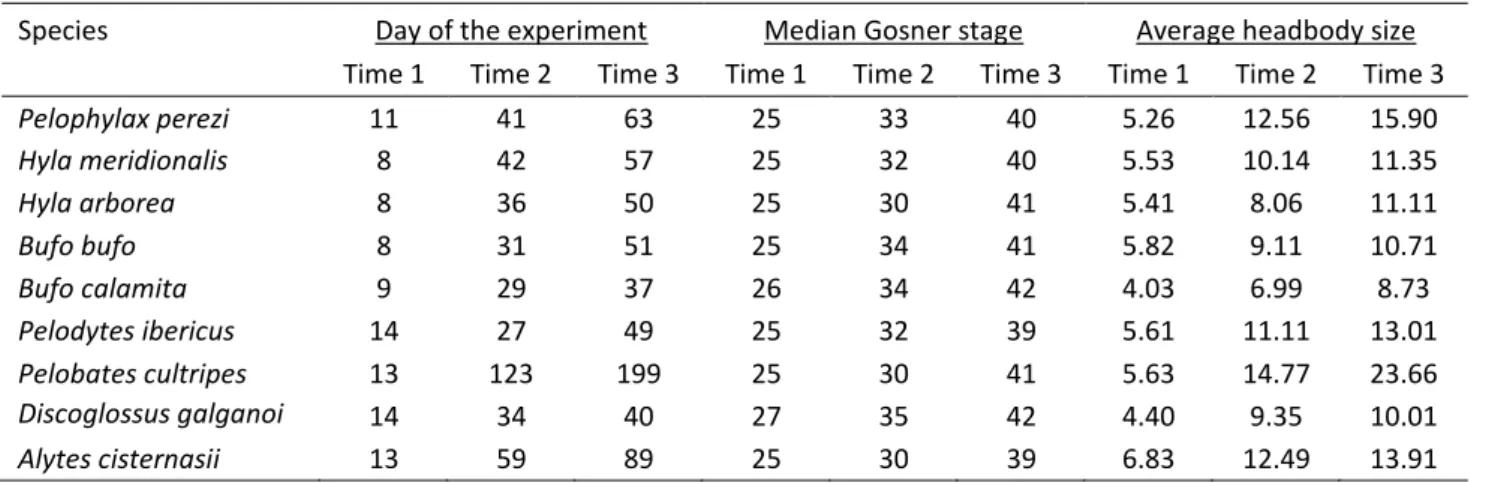
efémeros, muitas vezes coexistindo com várias espécies de anfíbios. Nesta área existem catorze espécies de anfíbios, dez das quais são anuros. São estes a rã verde (Pelophylax perezi), a rela meridional (Hyla meridionalis), a rela comum (Hyla arborea), o sapo comum (Bufo bufo), o sapo corredor (Bufo calamita), o sapinho de verrugas verdes ibérico (Pelodytes ibericus), o sapinho de verrugas verdes (Pelodytes punctatus; não estudado aqui), o sapo de unha negra (Pelobates cultripes), a rã de focinho pontiagudo (Discoglossus galganoi) e o sapo parteiro ibérico (Alytes cisternasii). Sabe-se que o P. clarkii é um predador eficaz de ovos e larvas de todas as espécies de anfíbios existentes nesta área, podendo também infligir-lhes danos sub-letais, como cortes nas caudas. A sua presença parece ter fortes consequências negativas para estas comunidades de anfíbios, tendo sido registada uma diminuição da riqueza específica de anfíbios em diversas áreas invadidas.
Embora existam estudos anteriores que já demonstraram alguns dos efeitos negativos que a introdução de P. clarkii acarreta para as comunidades de anfíbios do Sudoeste da Península, nenhum deles examinou os possíveis impactos indirectos que a presença de P. clarkii pode ter sobre larvas de anfíbios desta área. Assim, esta tese teve como principal objectivo avaliar que tipo de efeitos não letais pode o lagostim exercer nas formas larvares de nove das dez espécies de anuros existentes no Sudoeste da Península Ibérica e que consequências podem os mesmos ter para a fitness dos indivíduos. Os resultados permitirão entender melhor que espécies de anuros são mais vulneráveis a invasões deste predador.
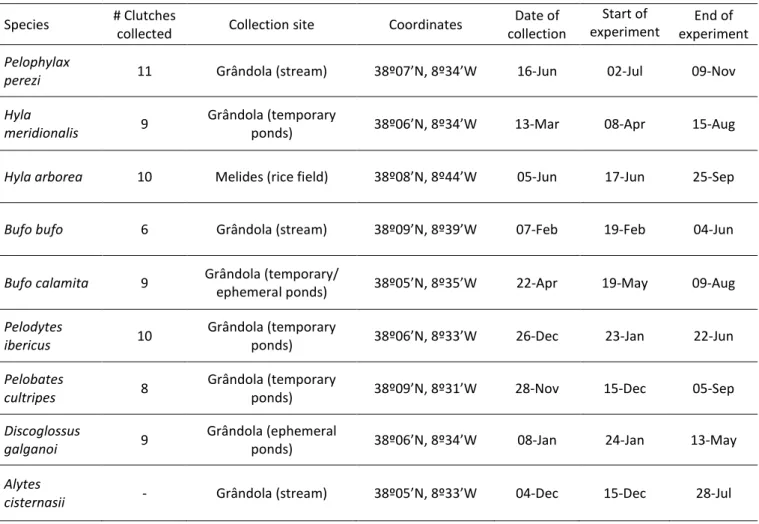
Foi avaliado o papel do P. clarkii como agente causador de elevadas frequências de cortes na cauda em girinos de Pelobates cultripes e investigado em laboratório que tipo de consequências podem esses danos ter para um girino nas suas taxas de mortalidade, crescimento e desenvolvimento. Foi também realizada uma experiência em laboratório na qual larvas de todas as espécies de anuros do Sudoeste da Península foram sujeitas à presença de pistas químicas de P. clarkii, associadas ou não a cheiros de conspecíficos predados, com o
iv
(comportamentais, morfológicas ou na história vital) a este predador exótico. Estas respostas foram comparadas com as apresentadas face a um predador nativo, larvas de libélula (Género
Aeshna). Foi ainda efectuada uma outra experiência, na qual girinos de cinco populações de Pelophylax perezi com diferentes histórias de coexistência com o P. clarkii foram expostos à
presença deste predador, de modo a testar se em populações com uma mais longa história de contacto com o P. clarkii são induzidas respostas antipredatórias diferentes das induzidas em populações com menor ou nenhum tempo de coexistência com este predador.
No Parque Natural de Doñana, a frequência média de girinos de P. cultripes capturados com cortes na cauda foi significativamente maior em locais onde o P. clarkii estava presente. A perda de porções de cauda causou uma ligeira diminuição na sobrevivência dos girinos, mas não afectou as suas taxas de crescimento e desenvolvimento, embora possa haver custos tardios que não foram aqui detectados. As lesões na cauda causaram uma alteração na morfologia caudal dos girinos após a regeneração, com os girinos lesionados a desenvolverem músculos caudais mais altos e barbatanas caudais mais baixas. Estes efeitos variaram com a frequência de corte e disponibilidade de alimento, tendo tido maior expressão nos indivíduos mais alimentados.
A presença de lagostim, sobretudo quando associada a pistas químicas de conspecíficos predados, induziu alterações no nível de actividade e na distância ao predador em girinos de sete das nove espécies estudadas. Quatro espécies alteraram parâmetros da sua história vital, enquanto apenas duas apresentaram alterações morfológicas em resposta ao predador exótico. Enquanto as respostas comportamentais apresentadas pelas várias espécies foram muito semelhantes, as alterações observadas na história vital variaram muito de espécie para espécie, indicando respostas específicas a este predador consoante a espécie-presa em causa. Por outro lado, quando expostas ao predador nativo, oito das nove espécies mostraram plasticidade fenotípica em vários dos parâmetros estudados. Foi também encontrada uma
v do predador nativo do que do exótico.
As populações de P. perezi com diferentes histórias de contacto com o P. clarkii diferiram nas respostas antipredatórias apresentadas. Enquanto os girinos de populações que nunca coexistiram com este predador diminuíram os níveis de actividade na sua presença, os girinos de populações com mais de trinta anos de coexistência não o fizeram. Em vez disso, alteraram a sua morfologia para uma forma que melhora a sua capacidade de fuga à predação por P.
clarkii, o que parece indicar que houve, neste caso, evolução rápida de respostas ao lagostim e
adaptação local à sua presença.
Este trabalho permitiu concluir que em sete das nove espécies de anuros do Sudoeste da Península Ibérica aqui estudadas foram induzidas respostas antipredatórias na presença não letal de um lagostim exótico. Assumindo que as respostas são efectivas na redução da vulnerabilidade ao lagostim, estas sete espécies parecem estar mais aptas a sobreviver e resistir à invasão dos habitats aquáticos por P. clarkii. De qualquer forma, é essencial a realização de estudos futuros que permitam entender se as respostas aqui apresentadas conferem, de facto, vantagens para a sobrevivência a este predador. Por outro lado, as espécies que não responderam a P. clarkii serão potencialmente mais vulneráveis à predação por este lagostim e estarão, a longo prazo, sujeitas a declínios populacionais ou mesmo extinções locais. Pelodytes ibericus é um destes casos, o que a torna numa espécie cujas populações deveriam ser monitorizadas, tendo em conta o seu estatuto endémico no Sudoeste da Península Ibérica e a sua distribuição relativamente limitada.
Uma vez que P. clarkii se encontra actualmente largamente distribuído pela Península Ibérica e que a sua erradicação é impossível com os meios actuais, a implementação de medidas que permitam a coexistência entre este predador exótico e as comunidades nativas de anfíbios é uma das poucas opções que resta. Neste sentido, estudar a dinâmica das interacções entre
vi
invasões e com diferentes potenciais para evolução rápida de defesas antipredatórias podem ser ferramentas fundamentais para que as populações-presa persistam em áreas invadidas.
Palavras-chave: Invasões biológicas, predador aquático introduzido, plasticidade fenotípica,
1
CHAPTER 1
3
1. GENERAL INTRODUCTION
1.1. Predator-prey interactions
Predation is a major selective force influencing the dynamics, structure and evolutionary processes of prey communities (Lima and Dill 1990, Johnson and Agrawal 2003). Predators affect dynamics of prey populations not only by direct predation, but also by imposing direct or indirect nonlethal effects upon them (Lima 1998, Preisser et al. 2005, Sih et al. 2010). Direct nonlethal effects result from prey employing costly defensive antipredator strategies (Lima 1998, Preisser et al. 2005) or from consequences of injury caused by incomplete or unsuccessful predation attempts (Morin 1985, Harris 1989). Predators may also impact prey communities via indirect effects propagated through the trophic web that end up impacting the focal prey species (Wilbur 1997, Peacor and Werner 2001, Werner and Peacor 2003). In fact, nonlethal predatory effects have been suggested to exert as strong or stronger effects than direct consumption in the dynamics of prey populations, and this seems to be particularly evident in aquatic ecosystems (Preisser et al. 2005, Werner and Peacor 2006).
Defensive antipredator strategies
In order to evade predation risk, prey have developed a variety of predator avoidance defences. These defences can be constitutive and expressed at all times, or inducible and only expressed when predators are present. Constitutive defences, which are permanently expressed, are elicited when predation risk is stable over time (Clark and Harvell 1992, Edgell et al. 2009). On the contrary, inducible defences are expressed in response to spatially or temporally variable predation risk and depend on the existence of cues that allow prey to accurately detect the risk of predation. Further, inducible defences often incur fitness costs in
4
the absence of predators, which prevents them from becoming constitutive (Harvell 1990, Clark and Harvell 1992, Tollrian and Harvell 1998).
Inducible defences are a widespread form of phenotypic plasticity, the capacity of an individual to alter its phenotype in response to alterations in environmental biotic or abiotic factors (Pigliucci 2001, DeWitt and Scheiner 2004, Whitman and Agrawal 2009). Phenotypic plasticity is ubiquitous and has been documented in many organisms (reviewed in Tollrian and Harvell 1998, Sultan 2000, Pigliucci 2001, DeWitt and Scheiner 2004, Whitman and Agrawal 2009). Through predator-induced plasticity prey express phenotypic alterations in behaviour, morphology, life-history or physiology which, by reducing vulnerability to predators, often act as adaptive antipredator defences (Tollrian and Harvell 1998, Agrawal 2001). Inducible antipredator defences are very variable and occur in a diversity of taxa. Some of the best known examples include the production of defensive chemicals in plants (Berenbaum and Zangerl 1998), diel vertical migration in cladocerans (e.g. Bollens et al. 1992, Boersma et al. 1998), formation of defensive structures such as helmets and neck teeth in cladocerans (e.g. Spitze 1992, Boersma et al. 1998), changes in shell shape and thickness in molluscs (e.g. Trussell and Smith 2000, Hoverman and Relyea 2007), alterations in body shape in fish (e.g. Brönmark and Pettersson 1994) and alterations in behaviour and morphology in anuran tadpoles (e.g. McCollum and Van Buskirk 1996).
Many experimental studies show that predator-induced phenotypic plasticity is widespread in larval amphibians (reviewed in Lima and Dill 1990, Kats and Dill 1998, Benard 2004). In response to strong predation pressure, many amphibian larvae alter their behaviour, morphology, physiology or life-history. While little attention has been devoted to the study of physiological plasticity (but see Steiner and Van Buskirk 2008), plasticity in behaviour, morphology and life-history in response to predator cues has been thoroughly explored in this group.
5
Behavioural defensive strategies in tadpoles may consist in aggregation and formation of schools (e.g. Watt et al. 1997, DeVito 2003, Spieler 2003), a shift to safer microhabitats (e.g. Cruz and Rebelo 2005), spatial avoidance of the predator (e.g. Laurila et al. 1997, Relyea 2001, Nicieza et al. 2006) or a reduction in activity level (e.g. Skelly and Werner 1990, Skelly 1992, Griffiths et al. 1998, Anholt et al. 2000, Relyea 2001, 2004, Richardson 2001, Van Buskirk 2002, Richter-Boix et al. 2007, Laurila et al. 2006, 2008). All these behavioural alterations benefit tadpoles, as they reduce the frequency of predator-prey encounter rates or of predator attacks, which increases their odds of survival (Lima and Dill 1990, Kats and Dill 1998, McPeek 2004). Specifically, a decrease in activity level is one of the most commonly reported behavioural defences against predators and seems to be an important mechanism decreasing predation rates (Lima and Dill 1990, Van Buskirk and McCollum 2000a). This defence may be so widespread because movement is generally used by predators to detect prey, usually causing a positive correlation between activity level and mortality risk (Werner and Anholt 1993, Skelly 1994). As such, there should be strong selection against tadpoles having high activity levels in the presence of predators, in order to minimize the chances of prey detectability and of predators incurring fatal attacks.
Plastic alterations in morphology are also pervasive responses to predation risk in larval amphibians (e.g. McCollum and Van Buskirk 1996, McCollum and Leimberger 1997, Van Buskirk et al. 1997, Van Buskirk and McCollum 2000a, Lardner 2000, Relyea and Werner 2000, Relyea 2001, 2004, Van Buskirk 2002, LaFiandra and Babbitt 2004, Laurila et al. 2006, 2008, Richter-Boix et al. 2007, Van Buskirk 2009, Hettyey et al. 2010). These usually consist in an increase in tadpole’s tail depth, an enhancement of distal tail coloration, and the development of smaller headbodies. Although the functionalities of these traits are not completely understood, smaller headbodies and deeper tails may enhance swimming ability, enable tadpoles to generate faster swimming bursts and improve manoeuvrability (McCollum and Leimberger 1997, Dayton et al. 2005; but see Van Buskirk and McCollum 2000b, Johnson et al.
6
2008). Deeper and more brightly coloured tails may lure predator strikes away from the headbody into the more regenerable tail and may also facilitate membranous tail ripping when a predator attack takes place (Doherty et al. 1998, Van Buskirk et al. 2003). These predator-induced alterations in morphology increase the ability to escape from attacking predators and enhance the probability of survival under predation risk (McCollum and Van Buskirk 1996, Van Buskirk et al. 1997, Van Buskirk and McCollum 2000a, Dayton et al. 2005, Álvarez and Nicieza 2006, Johnson et al. 2008, Hettyey et al. 2010).
Frequently, the expression of behavioural and morphological defences entail growth and development costs for prey, due to either low foraging rates or a high investment in production and maintenance of defensive structures (e.g. Skelly 1992, McCollum and Van Buskirk 1996, Van Buskirk 2000, Relyea 2002, LaFiandra and Babbitt 2004, Steiner 2007a). This leads to the growth/predation risk trade-off hypothesis, which states that increasing defences in order to avoid predation risk often comes at the expense of reduced growth (e.g. Werner and Anholt 1993, Werner 1986, Lima and Dill 1990, Lima 1998, McPeek 2004, Stoks et al. 2005). Further, this often results in reduced body size and/or delayed metamorphosis which can decrease future fitness by reducing viability during harsh conditions, especially in seasonal environments, delaying maturity and reducing size at first reproduction and reproductive success (Smith 1987, Semlitsch et al. 1988, Berven 1990).
In the presence of predators, phenotypic plasticity in prey life-history may either derive from predator-induced alterations in behaviour or morphology or may result from direct responses to predation risk (Beckerman et al. 2007, Relyea 2007, Steiner 2007b, Higginson and Ruxton 2009). In organisms with complex life histories, such as amphibians, predation risk can alter the timing of major life-history transitions, by shaping both hatching and metamorphic decisions. Amphibians have been shown to alter the timing of hatching in order to reduce the risk of predation, either by accelerating or delaying it (e.g. Johnson et al. 2003, Warkentin 2011). Both time to and size at metamorphosis can also experience plastic adjustments in
7
response to predation pressure (reviewed in Benard 2004, Relyea 2007, Tejedo et al. 2010). These traits are critical life-history attributes that greatly determine post-metamorphic fitness in amphibians (Smith 1987, Semlitsch et al. 1988, Berven 1990). In response to predatory cues, amphibians can shorten their time to metamorphosis and, by leaving the risky predator environment earlier, increase their chances of survival (Babbitt and Tanner 1998, Benard 2004, Moore et al. 2004, Higginson and Ruxton 2009). Nevertheless, a reduced time to metamorphosis seems to be a quite rare response, maybe because shorter larval periods may induce smaller metamorphic sizes which, in turn, can lead to reduced post-metamorphic fitness (Relyea 2007). Increasing larval growth rate and size at metamorphosis can also be a direct and effective response to predation, since large size can provide a safe refuge from gape or size-limited predators (Urban 2007). This can also be advantageous because larger sizes at metamorphosis are associated with larger sizes at maturity, increased fecundity and/or reproductive success (Smith 1987, Semlitsch et al. 1988, Berven 1990).
A number of theoretical studies have predicted how predation risk should alter the time and size at which prey metamorphose (e.g. Wilbur and Collins 1973, Werner 1986, Rowe and Ludwig 1991, Abrams and Rowe 1996, Higginson and Ruxton 2010) but, except for the most recent study, their predictions (metamorphosis earlier and at a smaller size) rarely match with empirical results (Benard 2004, Relyea 2007). This indicates that predator-induced alterations in life-history traits are complex and highly variable, which probably reflects the fact that these alterations are often costs of plastic behavioural or morphological defences (Relyea 2007, Steiner 2007b).
Often, behavioural and morphological defences, as well as life-history trait alterations, are not just direct and independent responses to predation, but occur simultaneously and largely influence each other (Lima 1998, Van Buskirk and McCollum 2000a, Steiner 2007b). These traits are often functionally correlated and express complex patterns of association, indicating phenotypic trait integration (Relyea 2001, Steiner 2007b). The degree of phenotypic
8
integration will then depend on the magnitude of the functional relationships among traits (Relyea 2001). Many different and complex associations between activity, tail depth, growth rate, body size and larval period are possible and these relationships are frequently not linear (Relyea 2001, Benard 2004, Steiner 2007b, Laurila et al. 2008, Higginson and Ruxton 2009). For example, behavioural and morphological defences may complement each other, but they may also augment each other, since a reduction in activity may save energy, which can then be used to develop morphological defensive structures (Johansson and Andersson 2009). Further, although inducible defences may incur fitness costs, other studies have, in contrast, shown that either reducing activity or inducing morphological defences in the presence of predators may also result in increased growth rates (Spitze 1992, Peacor 2002, Johansson and Andersson 2009). As a result, relationships between different traits are very variable and several different outcomes may result from predator-induced plastic trait alterations.
In amphibians, antipredator defences induced by prey can change through ontogeny (e.g. Kats and Dill 1998, Eklöv and Werner 2000, Relyea 2003, Laurila et al. 2004, Hettyey et al. 2010). During development, larvae experience periods of different vulnerability to predation - due, for instance, to ontogenetic changes in body size - which may require different types and magnitudes of antipredator defenses (Werner and Anholt 1993, Relyea 2003). Generally, prey vulnerability and intensity of responses to predators decrease as prey size increases, the strongest responses being elicited early in tadpole development (Eklöv and Werner 2000, Relyea 2003, Laurila et al. 2004).
Cues used to assess predation risk
In order for prey to accurately assess predation risk and to elicit adequate antipredator defences, reliable cues providing information on the potential predator have to be available. In aquatic systems, prey use a variety of visual, tactile or chemical cues separately or in different
9
combinations to evaluate and adjust to predation risk (Lima and Dill 1990, Smith 1992, Kats and Dill 1998). In these environments, chemical cues acquire special relevance as a reliable source of information, because they allow prey to detect predators from a safe distance and because they are effective in low-visibility conditions, such as at night, in turbid waters, or in densely vegetated habitats (Kats and Dill 1998, Petranka and Hayes 1998, Ferrari et al. 2010). Chemically-mediated predator detection is widespread among aquatic animals, such as invertebrates, fish and amphibians (reviewed in Chivers and Smith 1998, Kats and Dill 1998, Wisenden 2003, Ferrari et al. 2010). The chemical cues to which prey respond may arise from predator-specific odours (predator kairomones), may be cues actively or passively released by disturbed or injured prey (disturbance or alarm cues) or may be digestive by-products released after predators consume prey (diet cues) (Chivers and Smith 1998, Wisenden 2003, Schoeppner and Relyea 2005, 2009, Fraker et al 2009, Ferrari et al. 2010).
Predator kairomones are chemical signals resulting from the predator’s scent itself, which are received by and favour prey, but do not benefit the predator (Kats and Dill 1998, Ferrari et al. 2010). They are important for prey to obtain information about predation risk and often allow for antipredator responses to be elicited in order to evade predators (e.g. Petranka and Hayes 1998, Pettersson et al. 2000, Bryer et al. 2001, Gallie et al. 2001, Van Buskirk and Arioli 2002, Vilhunen and Hirvonen 2003). Disturbance cues consist in chemical signals released by disturbed or distressed prey prior to being captured, and seem to be quite widespread among aquatic taxa (reviewed in Ferrari et al. 2010). When these cues are detected by other prey, they usually induce weaker antipredator responses than alarm cues do, because they indicate less risk (Chivers and Smith 1998, Gonzalo et al. 2010). Alarm cues are chemicals released by prey upon mechanical damage caused by a predator during a predation event (Chivers and Smith 1998, Ferrari et al. 2010). They are produced by specialised skin cells and/or released through a regulated secretory process, inform other (conspecific or not) prey about the presence of an active and dangerous predator in the environment and invoke antipredator
10
responses (Chivers and Smith 1998, Fraker et al. 2009, Ferrari et al. 2010). Several aquatic organisms have been shown to respond to damage-released alarm cues, probably because they provide an early warning of a predator’s presence and facilitate responses to a wide array of predators (reviewed in Chivers and Smith 1998, Wisenden 2003, Ferrari et al. 2010). Diet cues are post-digestion chemicals released by the predator’s digestive system during defecation, most likely resultant from prey tissues or prey alarm cues modified by the predator’s digestive enzymes (Wisenden 2003, Schoeppner and Relyea 2009, Ferrari et al. 2010). Diet cues also induce plastic alterations in prey and several studies have shown that many prey species only elicit antipredator responses if the predator has been fed conspecifics of the focal prey species (e.g. Stirling 1995, McCollum and Leimberger 1997, Slusarczk 1999, Schoeppner and Relyea 2005, 2009). Nevertheless, many of these studies cannot distinguish if prey are responding to either damage-released alarm cues, to a combination of alarm cues and predator-specific odours or to diet-released cues; they can only assure that cues from predation events mediate the responses (but see e.g. LaFiandra and Babbitt 2004, Schoeppner and Relyea 2009). Still, cues resulting from digestion seem to be very important for some prey species to induce complete and effective antipredator defences (Schoeppner and Relyea 2009). Further, by using cues that provide information about both the identity of the predator and of the consumed prey species, prey will more finely assess predation risk, which can be beneficial, since overresponding to non dangerous threats would divert energy away from other fitness-related activities.
Unsuccessful predation attempts and nonlethal prey injury
Predators are often unsuccessful in their attempts to capture prey (Morin 1985, Abrams 1989). Most often these failed or incomplete predation attempts result in sublethal damage being inflicted to the attacked prey. Nonlethal injury is conspicuous in nature and can, in the long
11
term, depress prey survival (Harris 1989). A particular and common form of predator-inflicted injury consists in autotomy, the self-induced release of a body part as an escape strategy to predator attacks, a phenomenon observed in animals such as damselflies, salamanders and lizards (Maginnis 2006).
In freshwater habitats, it is common to find amphibian prey injured due to ineffective predation attempts (Wilbur and Semlitsch 1990, Bowerman et al. 2010). Specifically, anuran larvae are often found with heavily damaged tails and the pattern and severity of damage seems to vary from species to species (Wilbur and Semlitsch 1990, Tejedo 1993, Axelsson et al. 1997, McCollum and Leimberger 1997, Blair and Wassersug 2000, Nyström et al. 2001). In fact, tail loss in larval anurans may be an important mechanism in reducing the effects of predation, because the high fragility of their tail fin allows it to be easily torn by predators, helping tadpoles survive otherwise lethal attacks (Wilbur and Semlitsch 1990, Doherty et al. 1998, Van Buskirk et al. 2003).
Still, caudal injury may incur substantial short and long term costs to amphibians. Short term costs consist in a decreased tail length and consequent reduced swimming ability, since tail length affects tadpole swimming speed (Wassersug and Sperry 1977, Figiel and Semlitsch 1991, Teplitsky et al. 2005; but see Van Buskirk and McCollum 2000b). The diminished swimming capacity may affect escape abilities and increase vulnerability to predation and the odds of tadpoles suffering further damage (Semlitsch 1990, Figiel and Semlitsch 1991, Teplitsky et al. 2005). Tail loss may also significantly reduce fitness in the short term, because the process of tail regeneration that follows increases energetic expenditure and diverts energy away from growth and development into the repair of the damaged tissues (Wassersug and Sperry 1977, Semlitsch and Reichling 1989, Van Buskirk and McCollum 2000b). Nonlethal caudal injury may also potentially incur long term costs in terms of reduced larval growth, development and survival (Morin 1985, Semlitsch and Reichling 1989, Semlitsch 1990, Wilbur and Semlitsch 1990, Parichy and Kaplan 1992). As the tadpole tail is resorbed and its materials
12
reinvested during metamorphosis, delayed costs of the loss of tail tissue may only arise at metamorphosis. Tadpoles with injured tails may emerge later and at a smaller size, which can have severe consequences for post-metamorphic fitness (Smith 1987, Semlitsch et al. 1988, Berven 1990). Still, consequences of tail injury seem to be quite variable and depend on both resource availability and injury frequency and severity (Parichy and Kaplan 1992).
1.2. Invasive alien species
Invasive alien species are species introduced outside their natural range, which populations grow successfully and get established in the new habitat and that often become a nuisance and a threat to native biota (Parker et al. 1999, Mack et al. 2000, Richardson et al. 2000, Lockwood et al. 2007). The rate at which novel species are introduced into new environments has reached an unprecedented rate and is continuously increasing (Vitousek et al. 1997, Thompson 1998, Strauss et al. 2006). While spread of invasive species may be due to natural processes, most dispersion across biogeographical barriers is a direct consequence of human activities such as agriculture, aquaculture, recreation and global commerce (Lodge 1993, Vitousek et al. 1997, Mack et al. 2000, Sakai et al. 2001, Lockwood et al. 2007).
The introduction and spread of non-native species into new regions is of global concern, because it poses a threat to natural ecological communities and is nowadays one of the major challenges facing global biodiversity (Lodge 1993, Vitousek et al. 1997, Mack et al. 2000, Sala et al. 2000). Invasive species may alter native communities in many ways, acting as novel predators, vectors of pathogens, parasites and competitors of natives or by promoting hybridization with indigenous species (Mack et al. 2000, Sakai et al. 2001, Mitchell et al. 2006). By creating novel ecological contexts, introduced species alter the structure and functioning of invaded ecosystems, often causing irreversible environmental damage which results in the displacement or extirpation of native species (Vitousek et al. 1997, Parker et al. 1999, Mack et
13
al. 2000, Sakai et al. 2001, Clavero and García-Berthou 2005, Schlaepfer et al. 2005, Mitchell et al. 2006, Salo et al. 2007). Examples of invasions causing decline or extinction of local native species have been documented worldwide. Among the most ecologically destructive are the introduction of the Asian chestnut blight fungus (Cryphonectria parasitica) in eastern United States, water hyacinth (Eichornia crassipes) in tropical lakes and rivers all around the world, crayfish plague (Aphanomyces astaci) in Europe and cane toad (Rhinella marina) in Australia, all considered by the IUCN Invasive Species Specialist Group to be among the 100 worst invaders in the world (http://www.issg.org/database/welcome).
The introduction of alien predators, in particular, can have significant negative impacts on native prey, not only at an individual or population levels, but often at community and ecosystem levels (e.g. Townsend 1996, Mack et al. 2000, Kats and Ferrer 2003, Salo et al. 2007). Predator introductions are most dramatic on island ecosystems, where prey often lack historical coexistence with certain predator archetypes (sensu Cox and Lima 2006). The major declines and extinctions of native mammals in Australia caused by the introduction of red foxes (Vulpes vulpes) and feral cats (Felis catus) illustrate this well (Dickman 1996). Also, the introduction of the exotic brown tree snake (Boiga irregularis) on the island of Guam has had an enormous negative impact on native reptiles, birds and mammals (Rodda et al. 1997). Freshwater ecosystems seem to be especially vulnerable to introduced predators, which may reflect multiscale widespread prey naiveté towards invasive predators in these habitats (Sala et al. 2000, Cox and Lima 2006). These systems have been particularly affected by predator invasions, one reason for that being the stocking of freshwater habitats throughout the world with non-native fish predators for recreational purposes or elimination of pests and which often result in serious negative impacts for native biota (Mooney and Cleland 2001, Cox and Lima 2006, Gherardi 2007a).
14
Crayfish have also been reported as high-impact freshwater invaders which, due to their omnivorous diet (on detritus, algae, plants, invertebrates, amphibians and fish), act as keystone species, often having severe negative effects at multiple trophic levels in freshwater food webs (Lodge et al. 1994, Nyström et al. 1996, Nyström et al. 2001, Dorn and Wojdak 2004, Rodríguez et al. 2005, Gherardi and Acquistapace 2007). In Europe, there are only five native crayfish species, all from the family Astacidae; however, several other crayfish species, mostly indigenous from North America (mainly family Cambaridae), have been introduced into European inland waters (Lodge et al. 2000, Holdich and Pöckl 2007, Holdich et al. 2009). These introductions were often deliberate and due to commercial reasons (stocking or aquaculture) or pet trade (Lodge et al. 2000, Gherardi 2006, Holdich et al. 2009). Invasive crayfish have greatly contributed to marked declines in European crayfish species because they have facilitated the spread of the crayfish plague in Europe, a disease caused by an oomycete (Aphanomyces astaci), which does not affect North American species, but causes severe kill offs in native species and also because of their superior competitive abilities (Lodge et al. 2000, Holdich et al. 2009). Nowadays the invasive crayfish species with the widest distribution and of most concern in Europe are Orconectes limosus (spiny-cheek crayfish), Pacifastacus leniusculus (signal crayfish) and Procambarus clarkii (red swamp crayfish) (Holdich et al. 2009).
Amphibians are very vulnerable to aquatic invasions and the introduction of exotic predators has been implicated in many amphibian declines (reviewed by Kats and Ferrer 2003). In fact, alongside habitat destruction, pollution and the emergence of infectious diseases, this is one of the main factors contributing to the worldwide amphibian declines and extinctions (reviewed in Alford and Richards 1999, Blaustein and Kiesecker 2002, Collins and Storfer 2003). The introduction of non-native amphibians and reptiles outside their native range, even though often overlooked, has been shown to have negative consequences for native amphibian populations (Scalera 2007, Polo-Cavia et al. 2010, Shine 2010). American bullfrogs (Lithobates catesbeianus) are of special interest because, despite originating from the United
15
States, they are now widespread all over the world and, where introduced, have been implicated in declines or displacement of indigenous amphibian species (Kiesecker and Blaustein 1997, 1998, Kats and Ferrer 2003, Pearl et al. 2004, Adams and Pearl 2007).
In most cases, however, impacts have been caused by fish predators, recognized as major contributors to drastic reductions and, at times, extirpation of native amphibian populations (reviewed by Kats and Ferrer 2003; e.g. Finlay and Vredenburg 2007). For example, the introduction of mosquitofish has contributed to the strong reduction of several amphibian species around the world: Taricha torosa in Southern California (Gamradt and Kats 1996),
Lissotriton helveticus and Mesotriton alpestris in Europe (Denoël et al. 2005) and Litoria aurea
in Australia (White and Pyke 1996, Hamer et al. 2002). Amphibians from mountainous areas seem to be particularly affected by fish invasions, since many studies have shown that the introduction of exotic fish into montane lakes for recreational purposes has caused a decrease in amphibian abundance and diversity in several regions (e.g. Spain: Braña et al. 1996; North America: Pilliod and Peterson 2001, Knapp 2005, Pearson and Goater 2008, Pope 2008, Pilliod et al. 2010).
Crayfish have also been reported as important contributors to declines of native amphibians (Kats and Ferrer 2003). The introduced signal crayfish (Pacifastacus leniusculus) predates on embryonic and larval amphibians and its presence seems to have caused negative impacts in invaded amphibian populations in southern Sweden (Axelsson et al. 1997, Nyström and Abjörnsson 2000, Nyström et al. 2001, Nyström et al. 2002). The introduction and spread of the exotic red swamp crayfish (Procambarus clarkii) in mountain streams in California has been indicated as the most likely cause for the declines in populations of the California newt Taricha
torosa. These declines were probably due to efficient predation by crayfish on newt eggs and
larvae, increased rates of tail injury and decreased amphibian breeding activity in sites colonized by the crayfish (Gamradt and Kats 1996, Gamradt et al. 1997). Laboratory experiments have shown P. clarkii to consume eggs and larvae of several native European
16
amphibians (Gherardi et al. 2001, Renai and Gherardi 2004, Cruz and Rebelo 2005, Cruz et al. 2006b). Further, many field studies have documented a negative association between the presence of some amphibian species and this exotic crayfish in Europe (Beja and Alcazar 2003, Rodríguez et al. 2005, Cruz et al. 2006a,b, 2008, Ficetola et al. 2011).
1.3. Inducible responses in the presence of invasive alien predators
For prey to detect and recognise predators and elicit adequate antipredator mechanisms there needs to be a shared evolutionary history between predator and prey (Strauss et al. 2006, Sih et al. 2010). When invasive predators colonise areas outside their historical geographic range, new predator-prey interactions are established and the lack of evolutionary experience with the invader may render native prey unable to recognise the novel predator as a dangerous threat. Prey evolutionary naïveté may then either cause a failure to respond to novel predators or result in inappropriate antipredator defences, compromising their ability to avoid predation by exotic predators (Cox and Lima 2006, Strauss et al. 2006, Sih et al. 2010). The degree of such naïveté can be higher if the phylogenetic and ecological similarity between the invader and native predators is low, which may increase the impact that the introduction has in the invaded ecosystem (Cox and Lima 2006, Strauss et al. 2006, Sih et al. 2010). Hence, a novel predator very distantly or not at all related to native predators is very likely to cause a high impact in native prey communities (Ricciardi and Atkinson 2004, Strauss et al. 2006, Sih et al. 2010).
Several studies have reported an inability of native prey to elicit antipredator responses when exposed to cues from introduced predators (e.g. Gamradt and Kats 1996, Hutson et al. 2005, McLean et al. 2007, McEvoy et al. 2008, Polo-Cavia et al. 2010, Gomez-Mestre and Diaz-Paniagua 2011). This lack of responses is especially likely to occur when exotic predators invade systems that have historically lacked predators, such as some oceanic islands or alpine
17
lakes (Braña et al. 1996, Rodda et al. 1997, Blackburn et al. 2004, Knapp 2005). At times, animals also show ineffective or inappropriate responses towards exotic predators (Sih et al. 2010). This is the case of the native European water vole Arvicola terrestris, which responds to the introduced American mink Neovison vison by taking refuge in a burrow, which results as an ineffective response against the exotic predator (Macdonald and Harrington 2003). Surplus killing events of native mammals and birds by foxes (Vulpes vulpes) in Australia have been also suggested to be largely the result of ineffective antipredator defences (Short et al. 2002). This lack of or maladaptive responses to invaders may be a major contributor to heavy native prey mortality in the face of non-native predators and to the dramatic impacts often observed following invasions (Cox and Lima 2006, Sih et al. 2010).
In contrast, some prey species are able to identify alien predators as potential threats and elicit effective antipredator avoidance responses when exposed to their cues. This ability of responding with defences to unnatural predators probably plays a key role in enabling native prey and invasive predators to successfully coexist in the same environment. Alterations in prey behaviour, morphology and life-history in response to exotic predators have been documented in a wide variety of organisms, such as cladocerans (e.g. Cousyn et al. 2001, Fisk et al. 2007), bivalves (e.g. Freeman and Byers 2006, Whitlow et al. 2003, Whitlow 2010), snails (e.g. Trussel and Smith 2000, Edgell et al. 2009), fish (e.g. Nannini and Belk 2006, McLean et al. 2007, Stuart-Smith et al. 2008, Rehage et al. 2009), amphibians (e.g. Kiesecker and Blaustein 1997, 1998, Griffiths et al. 1998, Pearl et al. 2003, Marquis et al. 2004, Moore et al. 2004, Bosch et al. 2006, Epp and Gabor 2008, Gall and Mathis 2010), birds (e.g. Peluc et al. 2008) and mammals (e.g. Russel and Banks 2007, Sündermann et al. 2008). Although many of these studies do not clearly address which process allows for prey to induce phenotypic alterations in the presence of novel predators, this can be achieved through innate, learned or evolved mechanisms.
18
Prey may innately detect unnatural threats and elicit suitable avoidance mechanisms against introduced predators in the absence of a common evolutionary history when the exotic predator is sufficiently similar to a native predator, if prey show generalized antipredator responses or if they rely on general predation cues to evaluate and respond to predation risk (Rehage et al. 2009). An invasive alien predator which is closely phylogenetically or phenotypically similar to native predators, may also be ecologically similar (e.g. in terms of cues or predation technique), which promotes prey responses to the novel predator (Ferrari et al. 2007, Epp and Gabor 2008, Rehage et al. 2009, Sih et al. 2010, 2011). Innate responses to non-native predators may also occur if prey exhibit generalized antipredator responses, whereby exposure to different types of predation risk induce the development of the same defences. Examples of this include avoidance responses to any large moving animal or to a general fish odour (Magurran 1990, Gherardi et al. 2011). Probably many times this is verified because some prey rely on general predation cues to evaluate and respond to predation risk. In aquatic systems, general cues usually consist in disturbance or damage alarm cues released by stressed or captured prey or in chemicals resulting from the predator’s digestion (reviewed in Chivers and Smith 1998, Ferrari et al. 2010). If, in the face of predation events, the presence of an invasive predator is associated with these general cues, predators may become chemically ‘labelled’ by their diet, facilitating detection of and responses to the novel potential threat (Marquis et al. 2004, Sündermann et al. 2008, Sih et al. 2010, 2011).
Even if animals do not innately respond to a novel predator they may, through time and due to experience, learn the identity of the invader. Learning may play a key role in allowing native prey species to evoke appropriate antipredator defences against unknown predators (reviewed in Ferrari et al. 2010). In aquatic systems learning occurs through the coupling of conspecific alarm cues with specific-predator odours and often only requires a single conditioning event (Mirza et al. 2006). After this conditioning period, prey learn to elicit antipredator responses to the predator odour alone, allowing for subsequent recognition of
19
the novel predator stimuli. Learned recognition of predator odours has been widely reported among freshwater organisms, especially in fish (e.g. Korpi and Wisenden 2001, Kelley and Magurran 2003, Kristensen and Closs 2004, Ferrari et al. 2005, Ferrari and Chivers 2006) and amphibians (e.g.Mandrillon and Saglio 2005, Mirza et al. 2006, Gonzalo et al. 2007, Ferrari et al. 2008, Shah et al. 2010), but also in other taxa (e.g. crustaceans: Bool et al. 2011). Nevertheless, it is to notice that, even though learning can be highly beneficial for recognising novel predators, it does not necessarily mean that the responses elicited will be effective in evading that specific predator (Sih et al. 2010, 2011).
Since invasive predators are agents of novel selection, native species may evolve in response to biological invasions. Given enough time, the strong selection pressure imposed by invaders may induce evolutionary changes in native prey, promoting the evolution of predator recognition and adaptive antipredator defences (Schlaepfer et al. 2005, Strauss et al. 2006, Sih et al. 2010). This evolutionary process frequently occurs in contemporary timescales, often within decades, being called as rapid (Reznick and Ghalambor 2001). For rapid evolutionary changes to occur a particularly strong and consistent selection pressure has to be imposed by the novel predator and there has to be a differential genetic susceptibility of individuals to the predator. Further, native prey populations have to be large enough to withstand the negative ecological effects incurred by the invader in the short term (Reznick and Ghalambor 2001, Strauss et al. 2006). Several studies have documented rapid directional adaptive evolution in native organisms following invasions (reviewed in Thompson 1998, Reznick and Ghalambor 2001, Strauss et al. 2006; e.g. Shine 2011), and introduced predators are often the selective agent involved. Rapid evolution of behavioural, morphological or life-history adaptations in response to exotic predators is pervasive and has been reported in prey such as bivalves (e.g. Freeman and Byers 2006), snails (e.g. Trussel and Smith 2000, Edgell et al. 2009), crustaceans (e.g. Cousyn et al. 2001, Fisk et al. 2007), fish (e.g. O’Steen et al. 2002) and amphibians (e.g. Kiesecker and Blaustein 1997). Specifically in amphibians, animals with a generation time much
20
longer than the other abovementioned taxa, tadpoles of the native red-legged frog (Rana
aurora) have evolved the ability to detect and respond with adaptive avoidance behaviours to
chemical cues of the introduced bullfrog (Rana catesbeiana) in a period of time as short as 70 years (Kiesecker and Blaustein 1997). The evolution of adaptive responses in native prey populations is the most effective mechanism in enhancing the probability of long term prey population persistence.
Finally, within the same community, species may greatly vary in their ability to perceive and elicit responses to invasive predators. For instance, Pearl et al. (2003) found different responses in two native anurans to cues from two introduced predators, the bluegill sunfish (Lepomis macrochirus) and the red swamp crayfish (P. clarkii): no evidence of predator recognition was found in the Pacific treefrog (Pseudacris regilla), while the northern red-legged frog (Rana aurora aurora) responded behaviourally to both introduced predators. As such, it is not easy to predict how a certain prey species will react to the presence of an exotic predator. Some features that may help explain variation in the ability of prey to respond to novel predators may be the type of cues that prey use to gauge risk (use of broad, general cues as opposed to specific predator cues), the existence of natural traits that facilitate escape to predators and the extent of phenotypic plasticity that species present (Sih et al. 2011). Many more factors will surely affect this and, in the end, all of them will influence a species ability to survive and, in the long term, thrive in invasion altered environments.
1.4. Species in focus
The Iberian Peninsula currently maintains over 70 non-indigenous freshwater species. These species include a wide variety of invertebrate and vertebrate taxa, flatworms, molluscs, crustaceans and fish being the most common ones (García-Berthou et al. 2007, Cobo et al. 2010). In this area, the most abundantly spread invasive decapod crustacean is the red swamp
21
crayfish, Procambarus clarkii (Gherardi 2006, García-Berthou et al. 2007). At the same time, there is only one native species of crayfish (Austropotamobius pallipes), which is currently thought extinct in Portugal, and which has recently been proposed as being non-native to the Iberian Peninsula (Holdich et al. 2009). The introduction of invasive aquatic species, especially large predators, into the Iberian Peninsula acquires special relevance, since this area is a hotspot of freshwater biodiversity comprising, among others, several endemic and nearly-endemic amphibian species (Loureiro et al. 2008).
The invasive predator: red swamp crayfish (Procambarus clarkii Girard, 1852)
P. clarkii is a crayfish species originally endemic to northeastern Mexico and southcentral USA
that, due to its commercial value, has been largely introduced outside its natural range. It has proven a successful invader, being now present in all continents except Australia and Antarctica, making it the most cosmopolitan crayfish species in the world (Hobbs et al. 1989, Gherardi 2006, Holdich et al. 2009). P. clarkii was first introduced into Spain (and Europe) in 1973 near Badajoz and one year later near Seville, for aquaculture purposes and with the aim of supplementing crayfish stocks, after many native crayfish populations had been devastated by the crayfish plague (Habsburgo-Lorena 1983, Gherardi 2006, Holdich et al. 2009). P. clarkii easily managed to escape the sites of release, soon colonising and expanding into new areas, which was aided by the spread of live specimens by fishermen (Geiger et al. 2005, Gherardi 2006). Both this, and the fact that environmental characteristics in the Iberian Peninsula seem to be highly suitable for the establishment of this invader, allowed for its subsequent expansion all through the Peninsula, where it is currently extremely widespread and abundant (Correia 2002, Gil-Sánchez and Alba-Tercedor 2002, Gherardi 2006, Holdich et al. 2009, Capinha and Anastácio 2011). Probably through common hydrographic basins and with the help of fisherman it invaded Portugal, where its presence was first registered in 1979, in the
22
Caia River, located quite close to Badajoz (Ramos and Pereira 1981). By 1984 it had arrived to the Mondego region and, by 1990, it was already abundant in the Sado River basin (Southwest Portugal) (Anastácio et al. 1995, R. Rebelo, pers. comm.).
Numerous biological and ecological characteristics of P. clarkii allow this crayfish to be such a successful invader (reviewed in Geiger et al. 2005). P. clarkii exhibits rapid growth, high fecundity, high reproductive potential, early maturity and it may, sometimes, have multiple generations in a single year (Hobbs et al. 1989, Anastácio and Marques 1995, Gutiérrez-Yurrita and Montes 1999). It is capable of plastically adjusting its reproductive life cycle to the specific habitat conditions, allowing it to adapt to a diversity of environments (Gutiérrez-Yurrita and Montes 1999). Further, it has a generalist and opportunistic diet, feeding on detritus, as well as on diverse plant and animal resources, such as algae, macrophytes, macroinvertebrates, amphibians and fish, according to their availability (e.g. Gherardi et al. 2001, Correia 2002, 2003, Renai and Gherardi 2004, Correia et al. 2005, Gherardi and Acquistapace 2007, Correia and Anastácio 2008). P. clarkii is also capable of learning the identity of new unknown predators, which may contribute to its adaptation to novel environments (Gherardi et al. 2011). This crayfish inhabits a wide variety of freshwater habitats including rivers, lakes, ponds, canals and marshes and it has a high tolerance to adverse and extreme environmental conditions, namely drought, high temperatures, low oxygen and pollution (Gutiérrez-Yurrita and Montes 1999, Ilhéu et al. 2007, Capinha and Anastácio 2011). Finally, it has a high dispersal ability, since overland dispersal over long distances seems to be a frequent phenomenon (Gherardi and Barbaresi 2000, Barbaresi et al. 2004, Aquiloni et al. 2005, Kerby et al. 2005, Cruz and Rebelo 2007). All these traits allow crayfish to quickly build extremely large populations and promote its high invasive potential.
P. clarkii exerts wide environmental impacts in invaded communities, and often affects the
structure and functioning of aquatic ecosystems, being considered an ‘ecosystem engineer’ (Gherardi 2007a). By consuming and destroying aquatic macrophytes and decreasing