University of the Algarve
Faculty for Sciences and Technology
ACTIVE VISION IN ROBOT COGNITION
M ´ARIO ALEXANDRE NOBRE SALEIRO
THESIS
PhD in Informatics Engineering
Work developed under the orientation of:
PROF. DOUTOR JOHANNES MARTINUS HUBERTINA DU BUF PROF. DOUTOR JO ˜AO MIGUEL FERNANDES RODRIGUES
University of the Algarve
Faculty for Sciences and Technology
ACTIVE VISION IN ROBOT COGNITION
M ´ARIO ALEXANDRE NOBRE SALEIRO
THESIS
PhD in Informatics Engineering
I hereby declare to be the author of this work, which is original and unpublished. Authors and works consulted are properly cited in the text and appear in the included reference list.
Declaro ser o autor deste trabalho, que ´e original e in´edito. Os autores e tra-balhos consultados est˜ao devidamente citados no texto e constam da listagem de referˆencias inclu´ıda.
COPYRIGHT
The University of the Algarve has the perpetual right, unbounded by geo-graphic limits, to archive and publicize this work through printed reproduc-tions, by paper, digital form, or other known or yet to be invented form; to divulge it through scientific repositories and to allow its copy and distribution for educational and research purposes, of non-commercial nature, as long as proper credit is given to its author and editor.
A Universidade do Algarve tem o direito, perp´etuo e sem limites geogr´aficos, de arquivar e publicitar este trabalho atrav´es de exemplares impressos reproduzidos em papel ou de forma digital, ou por qualquer outro meio conhecido que venha a ser inventado, de o divulgar atrav´es de reposit´orios cient´ıficos e de admitir a sua c´opia e distribui¸c˜ao com objectivos educacionais ou de investiga¸c˜ao, n˜ao comerciais, desde que seja dado cr´edito ao autor e editor.
Faro, 2016
the proper conditions and motivation to get to this point, for teaching me how to define my objectives, for teaching me how to work hard to accomplish them, and for giving all the education that made me the person I am today. I would also like to thank my brother for teaching me how to program when I was still in elementary school, which probably contributed a lot to my interest
in electronics and computer science. A big thank you to my girlfriend, Bruna for being so supportive and so patient during these 4 years. A very special
thank you to all of you.
I would also like to thank my supervisors, Prof. Dr. Jo˜ao Rodrigues who has been supervising and teaching me since I started my MSc. and to Prof. Dr. Hans du Buf, who provided me with all the lab conditions I needed to develop
my work and helped turning my publications much more interesting to read. Also, a big thank you to my lab colleagues Miguel Farrajota, Jaime Martins,
David Lobato and especially to Dr. Kasim Terzi´c, who was like a third supervisor to me and from whom I learned a lot.
Also, a thank you to all my previous professors, to all the people at eLab Hackerspace with whom I had great moments and learned a lot and to all my
friends who have been supporting me all the time.
Acknowledgements
The research published in this thesis was supported by the Portuguese Foundation for Science and Technology (FCT) through ISR/LARSyS pluriannual funding (UID/EEA/50009/2013), FCT PhD grant to M´ario Saleiro (SFRH/BD/71831/2010) and EU project NeuralDynamics (FP7-ICT-2009-6. PN:270247).
I would also like to thank immensely for their contributions:
• Dr. Kasim Terzi´c, for writing part of the introduction of Chapter 3 and developing the code for visual saliency mentioned in Chapter 4 (Section 4.5).
• Miguel Farrajota for the work done in Chapter 2 (optical flow, face and hand detection, in Section 2.2.4).
• Sai Krishna for the work done in Chapter 2 (visual saliency, in Section 2.2.3).
• Prof. Dr. Jo˜ao M. F. Rodrigues and Prof. Dr. Hans du Buf, for reviewing my publications and this thesis, making them much more interesting to read.
Abstract
As technology and our understanding of the human brain evolve, the idea of creating robots that behave and learn like humans seems to get more and more attention. However, although that knowledge and computational power are constantly growing we still have much to learn to be able to create such machines. Nonetheless, that does not mean we cannot try to validate our knowledge by creating biologically inspired models to mimic some of our brain processes and use them for robotics applications.
In this thesis several biologically inspired models for vision are presented: a keypoint descriptor based on cortical cell responses that allows to create binary codes which can be used to represent specific image regions; and a stereo vision model based on cortical cell responses and visual saliency based on color, disparity and motion. Active vision is achieved by combining these vision modules with an attractor dynamics approach for head pan control.
Although biologically inspired models are usually very heavy in terms of pro-cessing power, these models were designed to be lightweight so that they can be tested for real-time robot navigation, object recognition and vision steering. The developed vision modules were tested on a child-sized robot, which uses only visual information to navigate, to detect obstacles and to recognize objects in real time. The biologically inspired visual system is integrated with a cognitive architecture, which combines vision with short- and long-term memory for simultaneous localiza-tion and mapping (SLAM). Motor control for navigalocaliza-tion is also done using attractor dynamics.
KEYWORDS: Keypoint Descriptors; Stereo Vision; Active Vision; Cogni-tive Robotics; Object Recognition; SLAM.
Resumo
`
A medida que a tecnologia e a nossa compreens˜ao do c´erebro humano aumenta, a ideia de criar robˆos que se comportam e aprendem como os seres humanos come¸ca a ganhar mais e mais aten¸c˜ao. Contudo, apesar de esse conhecimento e do poder computacional estarem constantemente a aumentar, ainda temos muito para apren-der at´e sermos capazes de criar tais m´aquinas. No entanto, isso n˜ao nos impede de tentar validar o nosso conhecimento ao criar modelos biologicamente inspirados que imitem alguns dos processos do nosso c´erebro e us´a-los para aplica¸c˜oes rob´oticas.
Nesta tese s˜ao apresentados diversos modelos biologicamente inspirados para vis˜ao: um descritor de keypoints baseado em respostas das c´elulas da ´area V1 do c´ortex visual que permite a cria¸c˜ao de c´odigos bin´arios que podem ser usados para representar regi˜oes espec´ıficas das imagens; um modelo de vis˜ao est´ereo tamb´em baseado em respostas de c´elulas da zona do c´ortex visual V1 e um modelo de saliˆencia visual baseado em cor, disparidade e movimento. Combinando estes modelos de vis˜ao com um modelo de atractores dinˆamicos para controlo da rota¸c˜ao da cabe¸ca criou-se um sistema de vis˜ao activa.
Apesar de os modelos computacionais biologicamente inspirados serem geral-mente bastante pesados em termos de processamento, os modelos apresentados foram concebidos para que fossem suficientemente leves em termos de poder de processamento de maneira a poderem ser usados em robˆos para navega¸c˜ao, recon-hecimento de objectos e para foco-de-aten¸c˜ao em tempo real. Os modelos de vis˜ao desenvolvidos foram testados num robˆo com o tamanho de uma crian¸ca, que usa apenas informa¸c˜ao visual para navegar, detectar obst´aculos e reconhecer objectos em tempo real. O sistema de vis˜ao biologicamente inspirado ´e ainda integrado com uma arquitectura cognitiva, que combina os processos visuais com estruturas de mem´oria a curto e longo prazo para SLAM. O controlo dos motores para navega¸c˜ao tamb´em ´e feito utilizando atractored dinˆamicos.
PALAVRAS-CHAVE: Descritores de Keypoints; Vis˜ao Stereo; Vis˜ao Ac-tiva; Rob´otica Cognitiva; Reconhecimento de Objectos; SLAM.
Publications
Some of the thesis contents and figures have appeared previously in the follow-ing publications (or are befollow-ing prepared for submission):
• PUBLISHED IN CONFERENCE PAPERS
– Saleiro, M., Rodrigues, J. and du Buf, J.M.H. (2009) Automatic hand or head gesture interface for individuals with motor impair-ments, senior citizens and young children. In Proc. Int. Conf. on Software Development for Enhancing Accessibility and Fighting Info-exclusion (DSAI 2009), Lisbon, Portugal, June 3-5, pp. 165– 171.
– Saleiro, M., Rodrigues, J.M.F. and du Buf, J.M.H. (2010) Cognitive robotics: a new approach to simultaneous localisation and mapping, In Proc. 16th Portuguese Conf. on Pattern Recogn. (RECPAD 2010), Vila Real, Portugal, October 29, 2 pp.
– du Buf, J.M.H., Barroso, J., Rodrigues, J.M.F., Paredes, H., Far-rajota, M., Fernandes, H., Jos´e, J., Teixiera, V., Saleiro, M. (2010) The SmartVision navigation prototype for the blind, In Proc. Int. Conf. on Software Development for Enhancing Accessibility and Fighting Info-exclusion (DSAI 2010), Oxford, United Kingdom, 25-26 November, pp. 167–174.
– Saleiro, M., Rodrigues, J.M.F. and du Buf, J.M.H. (2012) Minimalis-tic Vision-based Cognitive SLAM, In Proc. 4th Int. Conf. on Agents and Artificial Intelligence, Special Session Intelligent Robotics (ICAART-SSIR2012), Vilamoura, Portugal, 6-8 Fev., Vol. 1, pp. 614–623
– Farrajota, M., Saleiro, S., Terzi´c, K., Rodrigues, J.M.H, du Buf, J.M.H (2012) Multi-scale cortical keypoints for realtime hand track-ing and gesture recognition, In Proc 1st Int. Workshop on Cogni-tive AssisCogni-tive Systems: Closing the Action-Perception Loop (ISBN 978-972-8822-26-2), in conjunction with IEEE/RSJ Int. Conf. on
Intelligent Robots and Systems (IROS2012), Vilamoura, Portugal, 7-12 Oct., pp. 9–15
– Terzi´c, K., Lobato, D., Saleiro, S., Martins, J., Farrajota, F., Ro-drigues, J. M.F., du Buf, J. M. H. (2013). Biological Models for Active Vision: Towards a Unified Architecture. In M. Chen, B. Leibe, & B. Neumann (Eds.), Computer Vision Systems SE - 12, vol. 7963, pp. 113–122. Springer Berlin Heidelberg.
– Saleiro, M., Farrajota, M., Terzi´c, K., Rodrigues, Jo˜ao M.F., du Buf, J.M.H (2013) A biological and realtime framework for hand gestures and head poses, In C. Stephanidis and M. Antona (Eds.) Universal Access in Human-Computer Interaction. Design Methods, Tools, and Interaction Techniques for eInclusion SE – 60, vol. 8009, pp. 556-565
– Terzi´c, K. and Lobato, D. and Saleiro, M. and du Buf, J.M.H. (2014) A fast neural-dynamical approach to scale-invariant object detec-tion, Proc. Int. Conf. On Neural Information Processing, LNCS vol. 8834, pp. 5611-518.
– Saleiro, M., Terzi´c, K., Lobato, D., Rodrigues, J.M.F., du Buf, J.M.H. (2014) Biologically inspired vision for indoor robot naviga-tion, In Campilho, Aur´elio, Kamel, Mohamed (Eds.): Image Analy-sis and Recognition, Part II, vol. 8815, pp 469–477, Springer Inter-national Publishing
– Cardoso, P.J.S., Rodrigues, J.M.F., Carlos, L., Mazayev, A., Ey, E., Corrˆea, T., Saleiro, M. (2015) A freehand system for the man-agement of orders picking and loading of vehicles, In M. Antona and C. Stephanidis (Eds.): Universal Access in Human-Computer Interaction 2015, Part IV, LNCS 9178, pp. 422–431
– Saleiro, M., Farrajota, M., Terzi´c, K., Krishna, S., Rodrigues, J.M.F., du Buf, J.M.H. (2015) Biologically inspired vision for human-robot interaction, In M. Antona and C. Stephanidis (Eds.): Universal Ac-cess in Human-Computer Interaction 2015, Part II, LNCS 9176, pp.
505–517.
• PUBLISHED IN JOURNALS:
– du Buf, J.M.H., Barroso, J., Rodrigues, J.M.F., Paredes, H., Farra-jota, M., Fernandes, H., Jos´e, J., Teixiera, V., Saleiro, M. (2011) The SmartVision navigation prototype for blind users, JDCTA: Interna-tional Journal of Digital Content Technology and its Applications, Vol. 5, No. 5, pp. 351–361
• SUBMITTED OR IN FINAL PREPARATION FOR SUBMISSION: – Saleiro, M., Terzi´c, K., Rodrigues, J.M.F., du Buf, J.M.H. (2016)
BINK: Biological Binary Keypoint Descriptor. Submitted to Biosys-tems (Ref: BIO_2016_D134)
– Saleiro, M., Terzi´c, K., Krishna, S., Rodrigues, J.M.F., du Buf, J.M.H., Biologically Inspired Active Vision for Robot Head. In final preparation for Biologically Inspired Cognitive Architectures, Else-vier.
– Saleiro, M. Terzi´c, Rodrigues, J.M.F., du Buf, J.M.H., A cognitive robot with biological vision for SLAM. In final preparation for Cog-nitive Systems Research, Elsevier.
Acknowledgments I Abstract III Resumo V Publications IX List of figures XV 1 Introduction 1
1.1 Scope of the thesis . . . 1
1.2 Human visual system . . . 4
1.2.1 Visual attention models . . . 5
1.2.2 Object recognition . . . 7
1.2.3 Object recognition by humans . . . 8
1.2.4 Object recognition methods . . . 10
1.3 Cognitive robotics . . . 12
1.3.1 Simultaneous localization and mapping . . . 13
1.3.2 Cognitive memory . . . 16
1.3.3 Types of memory . . . 18
1.3.4 Cognitive memory in robotics . . . 18
1.3.5 Task realization and management . . . 20
1.4 Overview of the thesis . . . 21
2 Biologically inspired vision for human-robot interaction 25 2.1 Introduction . . . 25
2.2 Biologically inspired HRI system . . . 27
2.2.1 Keypoint descriptors for gesture recognition . . . 27
2.2.2 Stereo vision for robot navigation and obstacle detection 30 2.2.3 Visual saliency . . . 31
2.2.4 Face and hand detection . . . 33
2.2.5 Gesture recognition . . . 36
2.3 Tests and results . . . 37
2.4 Discussion . . . 39
3 Learning biological binary keypoint descriptors 41 3.1 Introduction . . . 42
3.2 Related work . . . 45
3.3 Method . . . 47
3.3.1 Training and evaluation . . . 48
3.3.2 V1 cortical cells . . . 49
3.3.3 Learning the projection matrix . . . 50
3.3.4 Learning the optimal binarization thresholds . . . 51
3.4 Evaluation . . . 51
3.4.1 Cell selection: even simple, odd simple or complex? . . . 52
3.4.2 Scale comparison . . . 55
3.4.3 Pooling region size . . . 56
3.4.4 Pooling step selection . . . 57
3.4.5 Dimensionality of the descriptor . . . 58
3.4.6 Combining different scales . . . 59
3.4.7 Testing HMAX features . . . 60
3.4.8 Comparison with other biologically inspired local de-scriptors . . . 61
3.4.9 Comparison with the SIFT-based LDAHash local de-scriptor . . . 63
3.4.10 Computation time . . . 64
3.5 Applications . . . 64
3.5.2 Stereo vision . . . 67
3.5.3 Object recognition . . . 68
3.6 Conclusions . . . 69
4 Biologically Inspired Active Vision for Robot Head 71 4.1 Introduction . . . 72
4.2 Related work . . . 74
4.3 Biologically inspired architecture of the active vision system . . 79
4.4 Multiscale binocular stereo cells . . . 81
4.4.1 LAB image resizing . . . 83
4.4.2 Binary masks . . . 84
4.4.3 Binary pixel descriptors . . . 84
4.4.4 Pixel correspondence . . . 86
4.4.5 DoG filtering . . . 86
4.4.6 Disparity map . . . 87
4.5 Saliency . . . 89
4.6 Object Recognition . . . 91
4.7 Attractor dynamics for robot head pan control . . . 92
4.8 Evaluation and tests . . . 97
4.8.1 The robotic platform . . . 97
4.8.2 Middlebury dataset for stereo evaluation . . . 98
4.8.3 Test results of the active vision system . . . 100
4.9 Discussion . . . 104
5 A cognitive robot with biological vision for SLAM 107 5.1 Introduction . . . 108
5.2 Cognitive robot framework . . . 109
5.2.1 Robotic platform . . . 111
5.2.2 Active vision system . . . 113
5.3 Memory and mapping . . . 116
5.3.1 Short- and long-term memory . . . 117
5.3.2 Task management . . . 120
5.5 Conclusions . . . 123
6 Concluding Remarks 127 6.1 Summary . . . 127
6.2 Integrated architecture . . . 129
6.3 Achievements . . . 129
6.4 Final considerations for future research . . . 130
1.1 Example of a cognitive model. . . 17
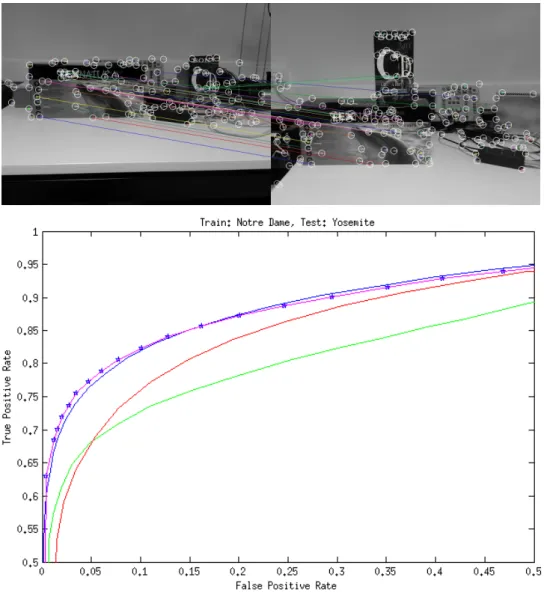
2.1 Example of descriptor matching and descriptor comparison. . . 29 2.2 Disparity and Saliency maps. . . 32 2.3 Person coded by HOG-like features and with detected face and
hands. . . 34 2.4 HOG-like feature parameter performance. . . 37 2.5 Robotic platform, gesture recognition and hand and head
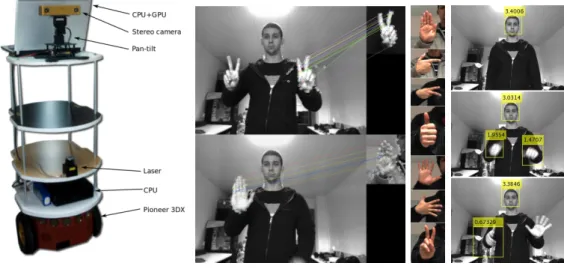
de-tection. . . 38
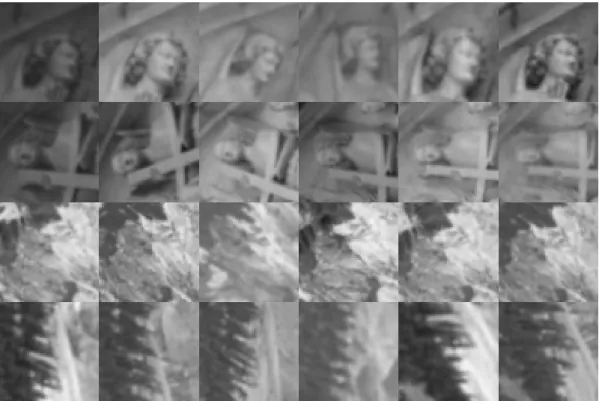
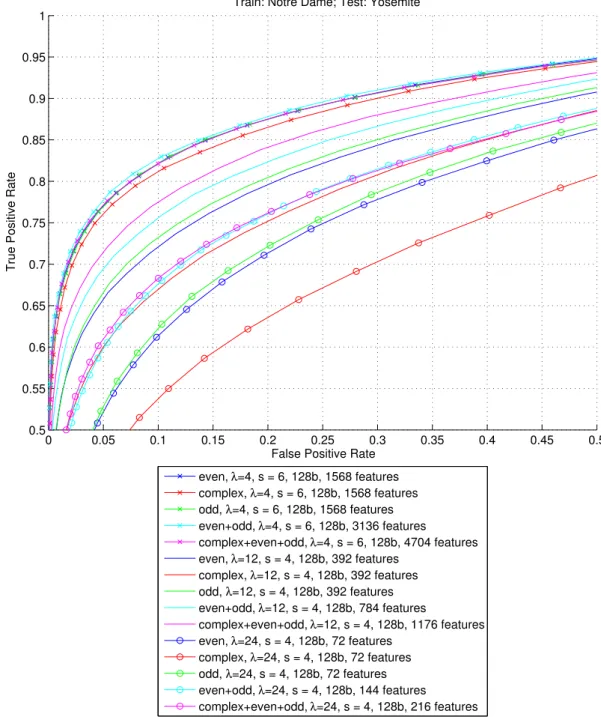
3.1 Sample patches from the Notre Dame and Yosemite datasets. . . 47 3.2 Comparison of results using different types of cells. . . 54 3.3 Comparison of the best results for each of the scales tested. . . . 55 3.4 Evaluation of performance for pooling regions with different
sizes. . . 56 3.5 Evaluation of performance of 128-bit descriptors generated
from even simple cell responses . . . 57 3.6 Comparison of results using 4 different numbers of bits at
scales λ = 4 and λ = 6 . . . 58 3.7 Comparison of results between the best 128-bit single-scale
results . . . 59 3.8 Testing HMAX features. . . 61 3.9 Comparison of our descriptor performances with the other
bio-logically inspired descriptors BRIEF and BRISK . . . 62 XV
3.10 Comparison of our descriptors with the non-biological
descrip-tor LDAHash . . . 63 3.11 Example of optical flow determination using cortical keypoints
and keypoint descriptors. . . 66 3.12 Example of stereo matching using our descriptor . . . 67 3.13 Example of object recognition using our keypoint descriptors . . 69 4.1 System architecture . . . 80 4.2 Vision component overview . . . 81 4.3 Descriptor sampling pattern . . . 85 4.4 Example showing the use of the DoG to model the inhibition
and excitation interactions between cells tuned to different dis-parities . . . 87 4.5 Examples of saliency maps . . . 90 4.6 Example of object recognition . . . 92 4.7 Example of vision steering using attractor dynamics . . . 96 4.8 Child-sized robot used for the active vision tests. . . 97 4.9 Middlebury Stereo evaluation . . . 99 4.10 Playtable image from Middlebury training dataset (version 3)
and Djembe image from Middlebury the testing dataset. . . 100 4.11 Sequence of images showing the movement of the head to focus
the salient regions on the table top setup . . . 101 4.12 Sequence of images showing the movement of the head to focus
the salient regions on the corridor setup . . . 102 4.13 More examples of the robot recognizing objects. . . 103 4.14 Sequence example of a tracked object. . . 104 5.1 Child-sized robot used for the active vision tests and robot
monitoring panel . . . 112 5.2 Example of images captured during navigation: disparity map,
saliency map and object recognition . . . 116 5.3 STM and LTM maps . . . 118 5.4 LTM map acquired during navigation . . . 119
5.5 Task management system. . . 121 5.6 Example of attractor dynamics during robot navigation . . . 124
Introduction
Abstract: This chapter introduces the scope of this thesis, namely, an integrated cortical architecture for robot vision and cognitive robotics, relying on biological vision principles and properties.
1.1
Scope of the thesis
Throughout history, humans have created tools, and later machines, to improve and accelerate daily tasks. In the same way that the human being has evolved, its creations have also evolved to the point where we find ourselves today, where most of the harder, longer and repetitive tasks could be performed by robots. However, the robots that have been developed in the past decades were dedicated to industrial environments, where they realize specific tasks under human supervision. The term “autonomous robot” is used many times but the truth is that truly autonomous robots still hardly exist. They are autonomous only in the sense that they are able to execute a previously programmed task on their own. They are not quite able to adapt to changes in the workspace. In some cases, very small changes in the workspace may be enough to make a robot fail in its task.
There has been much research and advances in artificial intelligence to in-crease the autonomous component of robots so that they can learn by
selves while interacting with the surrounding environment. A big part of that research can provide good solutions for specific cases but there may still fail when the changes in the workspace increase. However, we know of a system in nature that is capable of learning and solving a large number of highly complex problems: the human brain. This system is capable of processing the various stimuli (sounds, images, smells, etc.) of the surrounding environment in an extremely fast and efficient way. On the other hand, we must take into account that the creation of a computational model that is able to simulate the human brain in all its components and with all its capabilities is extremely complex. Although some are optimistic [Kurzweil, 2006], this will certainly take many more years since we do not even completely know how our brain works.
Considering the human brain as a model when we think of autonomous robots, it is important to focus on one of its features: cognition. The word “cognition” generally refers to the faculty of mental activities of human beings dealing with abstraction of information from the real world, their representation and storage in memory, as well as automatic recall [Patnaik, 2007]. It is believed that through cognition we may overcome the limitations of classical artificial intelligence, hence allowing us to create cognitive robots: robotic systems that, instead of being pre-programmed to execute a task, are able to execute it by learning from its past experiences and emotions [Ratanaswasd et al., 2005].
Cognition implies an apprenticeship and any process of learning begins with the acquisition of information. In the case of human beings, that acquisition of information begins in the senses. Concerning the five human senses, we may consider vision as the most important one in the cognitive process. Using only the visual system we are able to immediately identify objects, places, other people and other animals. Vision also allows us to have notions of distance and size. Another factor that leads us to consider vision as one of the most important senses is the fact that it is closely connected to memory: it is much easier to recognize someone by the face than by the voice; it is also easier to recognize an object by looking at it than by what we feel when we touch it. Doing this analysis in a reverse direction, when we think about someone we know, we easily remember the face. However, although we can easily remember
some things and create mental representations of objects, places and people, we cannot remember everything to the very finest detail. Some things remain in our memory for our entire life whereas other things may not even remain there for a few seconds. This duality in the storage of information in our brain has been studied by researchers and cognitive psychology scientists for a very long time. They usually consider the existence of two main types of memory: short-term memory and long-short-term memory [Patnaik, 2007]. Some even consider the existence of a third type of memory: sensory memory, which consists of the immediate perception of the surrounding environment [Brady et al., 2008].
A very simple example of the distinction between the several types of mem-ory is the observation of an image. In the immediate moment in which we observe it, we are able to describe everything to the finest detail, since all the captured information is still present in sensory memory. After a few seconds we are able to describe less details, since only the most important details were moved to short-term memory. Finally, if we are going to describe the same image after a few days, we are only able to give a short description of the scene without many details when compared to the descriptions based on the short-term and sensory memories. In this triadic memory system there is a process of filtering the information in such a way that only important things remain in memory. However, we may not say that visual long-term memory cannot have a high degree of detail: apart from being able to remember spe-cific scenes, we are also able to remember details that allow us to distinguish objects of the same type and their states. The detail of the stored information depends on our attention and concentration while observing the world around us. Although we normally suppress most of the details, we are able to store lots of detailed information when we have to [Brady et al., 2008].
In the same way that we are naturally capable of selecting and storing only the relevant information that comes from perceptions, we are also able to direct our attention to regions that are relevant, discarding the rest. This ability to filter out important information is something that reflects our brain’s efficiency. If our brain would analyze all the information provided by our senses it would be constantly busy [Rensink, 2000]. As an example, when we observe
a scene we easily identify several objects without analyzing everything in our field of view. The same does not happen when we analyze images using classical computer vision algorithms. In these, the images are normally processed pixel by pixel, which makes the processing extremely heavy and slow when compared to human capabilities.
Another problem that emerges when we try to model human cognition is object recognition. This topic has been widely studied but, as for most of the problems already described, it does not have a solution that allows for generalization. Most used recognition methods can only deal with objects which already exist in training databases [Forss´en et al., 2008].
The implementation of cognitive systems in robots, even if only very rudi-mentary, may yield a new generation of robots that may, in a certain way, adapt to changes in the workspace and interact with humans. By implement-ing a cognitive system, human-machine interaction may become much more dynamic and would allow the system to evolve.
There are countless applications for cognitive robots, such as assistance robots for elderly or handicapped people. From tasks that may seem simple, like navigation in dynamic environments, other applications may emerge like guid-ing robots for blind people in airports or shoppguid-ing malls, surveillance robots, etc. Despite the countless applications, the pursuit of cognition in robots is still in its first steps. However, the increasing exchange of information between engineers, psychologists and neuroscientists, among others, certainly will result in the creation of biological models that will get closer and closer to the cog-nitive system of which we know that it works but still not how it works: our own brain.
1.2
Human visual system
For a better comprehension of the text, in this section we briefly introduce some main aspects of the Human Visual System (HVS), namely, the visual attention models and object recognition. The state-of-the-art about each chapter topic in done within the chapter.
1.2.1
Visual attention models
Most of the scenes that we observe are too complex to be totally perceived. The human brain, although being extremely complex and having great capa-bilities, also has its limitations and it is not able to instantly process all the sensory information. Hence, we may say that its great capabilities are also due to the ability of selecting and using only the necessary and essential sensory information. In this process, humans must select the essence of the scenes they observe – gist – and process this sequentially [Martins et al., 2009].
This selection process is not only performed by humans. It is also a very important process for the survival of animals, allowing them to quickly detect their preys and their predators. However, although this process is just a small part of the visual system, when combined with other processes it allows us to draw some conclusions on how it works [Martins et al., 2009]: (1) very quick extraction of the essence of the perceived scene, (2) also very fast extraction of the essence of some objects and drafting a spatial layout map, in parallel with (3) the construction of a saliency map for Focus-of-Attention (FoA), and finally (4) sequential analysis of different regions of the observed scene for precise object recognition, using peaks and regions of the saliency map with Inhibition-of-Return (IoR), in order not to process the same region more than once.
The last step (4) may occur in a conscious (directed or overt) or unconscious (covert) way [Martins et al., 2009]. Focus-of-Attention [Itti and Koch, 2001] is a cognitive process that may be described as the ability to focus one or more senses on a specific object or sound. FoA is directly related to the saccadic movements of the eyes (saccades), which occur countless times per minute without us being aware of this. However, the existence of information about the place where something is going to happen may influence our movements [Masciocchi et al., 2009]. When we look at an image, our eyes will sequentially focus the most salient regions by descending order of conspicuity, because some regions will have a bigger concentration of salient points than others.
The regions with higher concentration of points usually correlate with the detected salient regions. The grouping of these salient and spatially organized
regions we call a saliency map. Saliency maps represent the instantaneous saliency of the different parts of the visual input. Such maps can be built from several features, such as color, orientation, intensity, among others [Itti and Koch, 2001].
The identification of salient regions in the periphery of the field of view may also cause movements of the head, for directing the field of view towards regions of higher interest. The fact that visual attention guides our field of view towards areas with higher saliency makes it one of the most important mechanisms for perceiving the surrounding environment [Ruesch et al., 2008].
As already mentioned, saliency maps may be built from several features, such as keypoints, contours, color, texture, orientation, movement, disparity, etc. However, each of these features results in a different saliency map, making it necessary to combine multiple saliency maps into one “master” map. The result can be the intersection of the multiple maps or their union [Martins et al., 2009]. However, in some cases it is possible to obtain good results using only a small amount of features. An example of this is the saliency and segregation algorithm proposed by Martins et al. [2008] which is based on color, one of the most relevant features.
One of the reasons of the above algorithm is the fact that the color re-gions are normally very well defined because of differently colored objects and backgrounds. This makes it easy to delimit them and segregate them from the rest of the image. Later, Martins et al. [2009] presented a biologically plau-sible method to obtain a saliency map not only based on color but also on texture. The combination of color saliency with texture saliency makes the method more complete, since it can highlight other types of features in images, therefore making it more robust to multiple environments.
A very different attention algorithm for a robot was developed by Meger et al. [2008]. Their algorithm uses stereo vision to determine the depth of the field in order to highlight objects that are not in the ground plane. This method implies the use of a stereo camera to generate the disparity maps. Apart from the saliency map obtained from disparity, a color-based saliency map is also created and merged with the previous one. The combined saliency map is
obtained by the intersection of the two maps.
Another algorithm to create saliency maps was proposed by Butko et al. [2008]. Their algorithm applies an approximation to a Bayesian model, opti-mized to be used in real time with low computational cost, to direct the cameras of a robot for the development of social robots.
In general, visual attention algorithms are very similar with some common aspects, even if they are based on different features or combinations of multiple features. Color is one of the most used features due to its relevance and to the good results that can be obtained. However, other aspects such as texture, ori-entation or disparity may also provide very interesting and useful results. Once a saliency map is computed we can then apply object recognition algorithms to the most salient regions.
1.2.2
Object recognition
Object recognition is one of the major topics in computer vision since it is connected to all the branches of computer vision. Throughout times significant research has been done to develop representation methods and algorithms to recognize images captured under multiple conditions (different points of view, different illumination conditions, occlusions, etc.). In some cases of very specific objects, such as fingerprints, faces and traffic signs, substantial success rates have been accomplished. One of the objectives of object recognition is also to perform categorization.
In most applications involving artificial vision it is necessary to make a distinction between the detection and the recognition of one or several objects. As an example, in an industrial environment the objects to detect are previously well defined and sometimes the position where they will appear is also known. This makes the recognition task much easier and straight-forward [Ohali, 2011]. If the objects can appear in any position, the task becomes a lot more difficult. In the case that many different objects may appear and that they may appear with different views and in different backgrounds, it becomes extremely hard to perform object recognition using the methods from classical computer vision. An aspect that makes it even harder is if the objects are partially occluded.
Many object recognition methods are based on the use of big image data sets, containing multiple views of each object to be detected [Meger et al., 2008]. However, the efficiency of the algorithms decreases and the processing time increases with the increase of the number of objects in the data sets, since the number of comparisons to be made between the objects from the data set and the captured image grows. Another problem emerges from the small variations that objects may have, even if they belong to the same type of objects, i.e. class or category. Taking all of this into account, it is not hard to conclude that we are still far away from having an object recognition system which comes close to our visual system.
We, human beings, are able to detect and recognize an infinity of objects almost instantly, regardless of the variations caused by illumination, position or occlusion [Al-Absi and Abdullah, 2009]. By peeking into a room in a house we instantly realize whether it is a living room, a bedroom or an office, since we immediately recognize the kinds of objects in that room. This allows us to draw conclusions about the type of room that we are looking at [Vasudevan et al., 2007] or even predict which other objects we may expect in that room, even if we have not yet seen them.
In the next section we will focus on the human visual system component that relates to object recognition. After that some object recognition methods will be described.
1.2.3
Object recognition by humans
Object recognition is an ability that we possess since early childhood. With a simple observation of an object, we are able to identify and categorize it irrespective of the countless changes that may occur due to illumination, posi-tion, orientation or occlusion. It is therefore a great challenge to develop vision systems that may get close to the cognitive capabilities of human beings. The main difficulties in the development of such methods lie in the variations men-tioned above and in the challenge of creating a generalization of an object from a group of sample images.
has been the object of many studies from which some theories about its inner workings have arisen. Some of the studies were made by recurring to expensive equipment [Rodrigues, 2008] which allowed researchers to measure the activity levels in certain brain regions when objects or scenes were shown to the test subject.
On the other hand, other studies were a lot simpler, consisting of the anal-ysis of certain human behaviors in an attempt to understand which features have the biggest importance in the recognition of objects and how they are stored in memory. One of those studies was done by Vasudevan et al. [2007]. It allowed to conclude that the structure of the objects was a fundamental aspect to perform recognition. The structure of an object may be represented by points, lines and contours. There are some methods that use this kind of information to perform object recognition. These will be described in the next section.
Regarding the recognition process, for some time we used to think that our vision system applies a sequence of processes (detection, segregation, catego-rization and recognition). According to recent research [Bar et al., 2006] these processes cannot be completely sequential. They must occur in “parallel,” at least partially. It was a common habit to think that to recognize an object we first had to isolate it from the background. However, recent research suggests that the categorization of objects occurs before their segregation. In other words, when we realize what the object that we observe is, the brain already knows which object it is [Rodrigues and du Buf, 2009a].
Apart from all these breakthroughs and research, we still do not know the exact order in which processes occur, as well as in which cases there is parallel processing. We are only certain that object recognition cannot be seen as a simple task. This process must be seen as a task with several levels [Rodrigues and du Buf, 2009a], and it is possible that at each level multiple processes occur simultaneously.
The breakthroughs that have been achieved have inspired the creation of several biological models which try to mimic human vision. However, these models demand a large processing power, making it mandatory to use high
performance multi-core processors. These processing demands make it difficult to apply this type of models in real-time applications, such as in robotics.
1.2.4
Object recognition methods
There are several methods for object recognition that can be split into two main types: dedicated object recognition methods and general object recognition methods. The dedicated methods are developed with the goal of recognizing a limited number of objects and, as such, they are optimized to detect those specific objects. These methods are usually applied in industrial environments to inspect products and to monitor processes [Ohali, 2011]. General object recognition methods may work on a vast majority of applications, despite of having a bigger computational cost [Lowe, 1999; Evans, 2009].
Object recognition methods rely on the extraction and recognition of image regularities taken under different illuminations and positions. In other words, most algorithms use certain representations and models to capture those char-acteristics, making it easier to execute procedures to identify the objects [Lowe, 2004]. The representations may be 2D or 3D geometric models. After the ex-traction of the fundamental features of the image the recognition procedure is performed. It is based on the comparison of the models or object representa-tions with the test image [du Buf et al., 2010].
The most common features on which object recognition algorithms are based are geometry, aspect and interest points. To analyze object geome-try, some perspective invariant geometric primitives (lines, circles, etc.) are extracted. Algorithms devoted to aspect are based on patterns of the ob-jects (features, textures, histograms, etc.) [Shotton et al., 2008]. Finally, the methods based on interest points search for certain points in images that are invariant to changes provoked by illumination or scaling. One of the most used representation methods for vision applications is SIFT (Scale-Invariant Feature Transform), proposed by Lowe [1999].
Using the SIFT representation, a recognition system was developed which consists of transforming an image into a collection of vectors of scale- and rotation-invariant keypoints. These keypoints are also partially invariant to
changes in illumination and 3D projections. The fact that keypoints are invari-ant to a wide range of changes resulted in the creation of a robust method for object recognition, even in cases of occlusion of parts of the objects or in clut-tered environments and with complex backgrounds. In the keypoint matching process, every cluster of keypoints with at least three matches can be accepted as a detected object [Ramisa et al., 2008].
The enhanced SIFT method, proposed by Lowe [2004], was tested and an-alyzed by Ramisa et al. [2008]. It was compared with the “bag of features” method proposed by Nist´er and Stew´enius [2006]. From the results obtained by Ramisa et al. [2008], it was verified that for textured objects, being the texture uniform or not, the results are similar for both algorithms. However, we must note that the SIFT method was not able to detect untextured objects in the experiments.
There is another type of descriptors based on SIFT, called SURF (Speeded-Up Robust Features) [Bay et al., 2008]. The SURF algorithm was developed with the purpose of being more efficient in terms of processing cost, therefore more suitable for real-time applications. According to the authors, the SURF algorithm is faster, more robust and more precise than SIFT.
Another method that is not only suitable for object recognition, but also for categorization, is the one proposed by Rodrigues and du Buf [2009a]. This one is biologically inspired, it is a cortical model. The method is based on multi-scale features: lines, edges and keypoints are extracted by using the responses of simple, complex and end-stopped cells in cortical area V1. The keypoints are used to build saliency maps that are then used for Focus-of-Attention.
The latter algorithm allows us to obtain 2D translation, rotation and scale invariance through the dynamic mapping of saliency maps based on information provided by the multi-scale keypoints. The model is functional and is split into two parts: keypoints are used for object recognition and lines and edges for categorization. Apart from this division in two parts, there is also a progression of detail in the data flows, starting in both cases with a coarse scale (less detail) and progressively using finer scales (more detail).
SURF, which are floating-point descriptors, most of these are binary. The interest in binary descriptors was powered by the increase of mobile devices, which had limitations in terms of processor and memory, and which needed faster and lightweight descriptors for mobile applications. Binary descriptors are much faster to match than floating-point descriptors because the match-ing is done by calculatmatch-ing the Hammmatch-ing distance. Some of these descriptors are simple binarizations of existing floating-point descriptors (e.g. LDAHash is based on SIFT features [Strecha et al., 2012]). With the growing interest in binary descriptors came some that have a biological inspiration, like BRISK [Leutenegger et al., 2011], FREAK [Alahi et al., 2012] or BRIEF [Calonder et al., 2012]. However, their performance lags behind non-biological binary de-scriptors, even though the biological ones use more bits than the non-biological descriptors.
1.3
Cognitive robotics
Cognitive robotics is an approach to robotics that is still in its initial steps. Most of the research in robotics focuses on the realization of specific tasks, not implying a need for an architecture that allows the robot to learn and evolve while performing several tasks. Most of the time, robots use several types of sensors (infra-red, ultrasonic, laser, odometric, etc.) which allow them to precisely perform tasks that they are specifically programmed to perform. However the kind of data used with those types of sensors has not much to do with the type of data that we use to perceive the world around us [Montemerlo et al., 2002].
Although our visual system allows us to make coarse estimations of distances and to know if the objects that we detect and recognize are close or far away, it does not provide us with very precise distances.
If we consider these limitations when trying to program a robot to solve the classical problem of SLAM (Simultaneous Localization and Mapping) we realize that it becomes a really difficult task to accomplish [Davison et al., 2007]. Without precise metrics it becomes difficult to build a map of the surrounding
environment.
To solve this problem we have to make the robot proceed as a human and perceive the surrounding environment using vision to recognize objects in order to create references in space, so that the robot can calibrate its position. However, in an attempt to mimic the human visual system, before performing object recognition it becomes necessary to apply a visual saliency model [Itti et al., 1998] in order to select the regions of the image that may contain the most relevant objects and to recognize them fast, and ignore the non-relevant information.
Another problem to be solved is to create a system that allows a robot to adapt to changes in the surrounding space, like we do, due to the way our memory works [Deco and Rolls, 2004; Brady et al., 2008]. Although we have a great ability to store information in our brain, we only remember the most important information. In classical robotics, enormous amounts of data are stored in electronic storage devices, and traditional SLAM systems make use of all that information [Montemerlo et al., 2002]. However, when we consider the case of a robot that may be able to adapt to changes of the surrounding environment, the continuous storage of information becomes unreliable since many of the stored data may become redundant or obsolete after some time.
It is also necessary to conceive a way to make the robot’s architecture scal-able. When thinking about cognition, we must consider to implement several action levels, so that the robot may build complex tasks by combining simpler ones, which may be common to several other tasks [Ratanaswasd et al., 2005]. In non-cognitive robotics, robots are only provided with predefined, complex operation cycles.
In short, there are five major distinct problems that, however, are connected to each other: (a) SLAM; (b) memory organization; (c) attention models; (d) object recognition and (e) multi-level task scheduling.
1.3.1
Simultaneous localization and mapping
The ability to simultaneously localize the robot and map the surrounding near space is a fundamental pre-requisite to develop truly autonomous robots [Se
et al., 2001; Montemerlo et al., 2002]. In order to navigate in unknown locations, the robot must be able to perceive them well enough to navigate safely.
Mapping in mobile robotic applications is something that has often been applied and resulted in many different models of maps [Thrun et al., 2000; Davison et al., 2007]. The models may differ in several ways, such as the number of dimensions or the quantity and type of used references. The types of mapping may be classified according to several features, but there are two main features. (a) The number of dimensions (2D or 3D) [Dellaert and Stroupe, 2007; Davison et al., 2007]. Each type has its advantages and disadvantages. The 2D maps are simpler, but do not allow for a correct localization of specific references in the map since there may be two references in the same spot but at different heights [Se et al., 2001]. On the other hand, 3D maps do not have that issue but they are much more complex. (b) The type of used references (landmarks). A map can be metric or topological [Thrun et al., 1998; Tomatis and Nourkbakhsh, 2001] or, in some cases, hybrid [Buschka and Saffioti, 1998]. In metric maps the representation of the surrounding world is based on a set of coordinates arranged in a Cartesian coordinate system [Thrun et al., 1998]. This kind of mapping is normally used when a robot has an odometry1 system and multiple sensors that allow it to measure distances. An example of this kind of mapping is FastSLAM [Montemerlo et al., 2002], in which the map is built by an odometry system with laser sensors, registering at every point of its path the distances to detected obstacles. However, errors in the odometry system and in the sensors cause loss of precision over time. On the other hand, topological maps are built by establishing connections between reference points, without any precise metrics [Tomatis and Nourkbakhsh, 2001]. As such, these maps cannot provide an exact location, neither of the robot nor of the reference points.
Until here only the basic types of mapping were referred to. However, a large number of variations of the described methods have been implemented. One of those was proposed by Se et al. [2001] and consists of the use of stereo vision computed from a group of scale and rotation invariant keypoints. These
points are acquired using the SIFT descriptors [Lowe, 1999]. Since these points are invariant to several transformations, they provide good references for a mobile robot. Using vertical and horizontal disparity (3-camera system) they were able to know the keypoints’ location in three-dimensional space for their mapping. A very similar approach, also using a 3-camera system was proposed by Saeedi et al. [2003].
Another variant, proposed by Tomatis and Nourkbakhsh [2001], consists of a hybrid architecture which combines topological and metric maps in a SLAM system, creating a compact model which does not require highly consistent information on a global scale. The maps used in this approach consist of a group of nodes (openings) connected with each other, the list of reference points (corners) being placed between each pair of two nodes. The nodes may be transitions to another division (room) or a connection to another hallway.
Topological maps also fit in the work of Vasudevan et al. [2007], who con-firmed the existence of a hierarchical sequence of structural elements when people describe how to go from one place to another. They also verified the use of reference points such as doors and walls which delimit a place or a room.
Another hybrid concept, presented by Kawamura et al. [2002] considers ego-centric navigation. This concept possesses a metric component very different from most methods. In this case, at the beginning of navigation the robot already has a sketch of the map in its memory, with reference points placed at their corresponding locations. The initial sketch does not require precise metrics since the robot’s navigation is done in a topological way. In addition to the sketch, the sequence of reference points that the robot must go through to reach its destination is also placed in memory.
An interesting aspect involved in this method is the sensory egosphere, which consists of the useful information in the environment close to the robot at each moment. This concept is an approach to short-term memory, which will be described in the following sections. One example of this concept can be seen in Fig. 1 from Kawamura et al. [2002]. It shows a sketch of a map without any metric precision that allows the robot to navigate by using the annotated reference points. The path used by the robot to go from point A to point B is
also sketched.
There are also methods which explore a combination of the robot’s “percep-tions” and its motor actions [Zetzsche et al., 2008], creating a hybrid architec-ture which is also related to human behavior, since our movements are directly related to our vision. According to this model, when the robot finds itself ex-ploring the surrounding environment, instead of doing a random exploration, it goes towards the paths where it may find a larger amount of information, which is what we, humans, do. To perform such exploration, the authors combine the mapping system with a model of visual attention, that resembles saccadic eye movements, in order to find regions of interest.
More recently, Ball et al. [2013] released a new SLAM system, OpenRat-SLAM, successor of RatSLAM [Milford and Wyeth, 2010]. They are both based on two types of cells that exist in rat brains, the hippocampus: local view cells and pose cells, which are similar in characteristics to navigation neu-rons found in many mammals, called grid cells. OpenRatSLAM is composed of four nodes: (a) a pose cell network, that manages the energy packet that represents pose in response to odometric and local view connections; (b) local view cells that determine whether a scene given by the current view is novel or familiar by using image comparison techniques; (c) experience map; and (d) visual odometry, which provides an odometric estimate based on changes in the visual scene. Excellent results have been obtained with OpenRatSLAM in different experimental setups: it was successful in mapping the suburbs of St. Lucia, in Australia, using only a laptop on top of a car, and in mapping a small controlled environment using a rat-sized robot.
1.3.2
Cognitive memory
Throughout times, several models for cognition were developed. In a general way, a cognition model is composed of a group of mental states, by their transi-tions and also by cognitive memory which is connected to the various cycles in the model. This interconnection is a fundamental part of the cognition model. An example of a cognitive model was proposed by Patnaik [2007]. It contains a total of seven mental states plus memory: sensoring and acquisition,
reason-ing, attention, recognition, learning and plannreason-ing, action and coordination (see Fig. 1.1).
Figure 1.1: Example of a cognitive model in which it is possible to verify the existence of three cycles: acquisition, perception, and learning and coordina-tion. The main block of the system is long-term memory (LTM), the second main block being the short-term memory (STM). Adapted from Fig. 1.1 in Patnaik [2007].
The central role of cognitive memory is evident in this model, with a stronger emphasis on long-term memory. There are three cycles in the model, the long-term memory being the connection between all three. The acquisi-tion cycle is composed by the short- and long-term memories, by sensoring and acquisition, and by the attention states [Patnaik, 2007]. The perception cycle contains the states of reasoning, attention and recognition, and the long-term memory. Finally, the third cycle is composed by the states of learning, planning, action and coordination, and also by long-term memory.
The process of cognition starts in the acquisition cycle, in which a human being acquires information by using its senses and puts it in short-term memory. The information will then be processed and will be sent, or not, to long-term memory. In the perception cycle the brain processes previously acquired in-formation, performing the recognition of information and creating higher level information which is also stored in long-term memory. At last, the cycle of learning and coordination uses the information stored in long-term memory in
order to proceed to learning, action and coordination.
Taking into account the evident importance of memory in the cognitive process, it becomes necessary to study it more deeply in order to find out how to implement a similar structure on a mobile robot.
1.3.3
Types of memory
The human brain has an enormous capacity for storing information [Brady et al., 2008]. However, some of the acquired information is stored only for a short time while the rest may be stored for a very long time. This duality evidences the existence of more than one type of memory in the human brain. Much research has been done to identify how many types exist and what their purpose is.
We can say that there are three main types of memory in our brain [Brady et al., 2008; Smith et al., 2008]. They can be distinguished by the duration that the information may remain in them, and also by their source of infor-mation. Sensory memory is only used to store information provided by the senses, quickly fading unless that information is being focused by the attention system. Short-term memory consists of our brain’s working memory and con-tains only the information that is being processed. Long-term memory stores all persistent information. The information stored in this last type of memory may remain there for a very long time, even if it is not regularly used [Smith et al., 2008]. The capacity of short-term memory is very small if we take into account the complexity of the tasks that we perform. Recent research suggests that the information stored in short-term memory consists only of references to information stored in long-term memory [Smith et al., 2008].
1.3.4
Cognitive memory in robotics
The use of multiple types of memory (sensory, STM and LTM) in robotics is not something common. In most applications information is accumulated over time, disregarding its importance for the task that the robot must perform. An example of this is reflected in the work of Lowe [1999], where a large number
of keypoints must be stored to allow the robot to navigate in an unknown environment. However, there are a few attempts to model the inner workings of human memory in robotic applications.
An example of an implementation of a memory management system was proposed by Kawamura et al. [2002]. The authors considered the existence of two types of similar storage structures: the robot’s sensory egosphere and the sensory egosphere of the landmarks that the robot uses to locate itself. The first one corresponds to STM and the second to LTM. While the robot roams around, STM will constantly be changing, in contrast to what happens to the landmarks’ egospheres that are stored in LTM for later use. This storage is done spatially, in order to create a map with relative positions of landmarks. The dual memory structure is simple but it was mainly designed for the localization and mapping problem, therefore lacking some other features which are required for the cognitive process.
Another, more complex, approach to cognitive memory was developed by Ratanaswasd et al. [2005]. The authors used memory structures to keep in-formation for immediate tasks and also to store experiences that may be used during a decision process. Again, two memory structures were used: STM and LTM.
STM consists of the storage of sensory information in a sensory egosphere. The amount of information stored in the sensory egosphere is very small, con-taining only simple information like keywords or colors. Another feature of STM is the fact that the stored information will fade over time, which also happens in our brain. In turn, LTM stores information that may be used in the future. In this case, LTM can be considered to be split into three parts: process memory, which stores primitives of movement and behavior; seman-tic memory, which is a database with information about the existing objects in the surrounding environment; and episodic memory, that stores past experi-ences, such as objectives or sequences of tasks that have been performed before. The grouping of these memory structures and the inherent flow of information between them is called Working Memory System.
1.3.5
Task realization and management
Another feature of human cognition is the fact that we can plan and execute sequences of actions in order to achieve an objective. Even in cases when the sequence of actions is not consciously accessible, often we are able to infer the sequence of actions to be realized, taking into account previous experiences [Meinert, 2008]. A relevant characteristic is the capacity of building complex sequences of actions by aggregating simpler tasks which, in turn, are built from even simpler tasks. We can say that there are several levels of complexity involved in our actions. Taking these features into account, we may conclude that it is necessary to implement a task management system that consists of multiple complexity levels and the aggregation of already known, simple tasks into more complex ones.
There has not been a lot of effort in the development of systems of this kind: it is still a big challenge. In traditional robotics, the execution of predefined procedures was enough for most tasks. The remaining cases could be solved by using artificial intelligence methods which could provide the ability to learn to realize the requested task. However, that kind of learning would always be based on probabilities and mathematical calculus that have no resemblance with the human way of learning. Another problem of this type of learning is that it is not appropriate for dynamic environments which are constantly changing.
According to Ratanaswasd et al. [2005], any actions must be carefully se-lected using information from past experiences, from the task itself and from the workspace. The authors presented a cognitive control model that joins the short- and long-term memories with a procedural memory (also with long term characteristics) in which the procedures of some tasks to be realized are stored. The stored procedures can then be combined with other tasks to realize more complex tasks. The management of the planning and the execution of tasks is done by a Central Executive Agent. The choice of tasks to be realized is then made through a reward system: the chosen tasks to be executed are the ones that are expected to provide the biggest rewards.
pro-posed by Alami et al. [2006]. This system has also a component which is re-sponsible for controlling and monitoring the behavior of the robot. Also in this case, there is a series of simple tasks that are chained together to accomplish other tasks.
A slightly different way of trying to solve this problem was developed by Jung et al. [2007]. The authors created a database of knowledge and rules in specific scripts. The bigger the amount of stored scripts, the more flexible the robot will be and more tests can be executed. Flexibility comes from the fact that a task can be decomposed into basic scripts which can be recombined to perform a different task. However, there is also flexibility in the insertion of scripts in the robot’s memory, making it easier to increase the robot’s knowl-edge base. Besides that, by using this kind of system it becomes possible to contextualize the knowledge. All scripts include a pre and a post condition which allow the management system to start or terminate them. There is also a condition related to the workspace, so that the robot can select the informa-tion accordingly.
Apart from these three characteristics, the scripts also have sequences of scenes with pre and post conditions which, in turn, result in actions that also have their own pre and post conditions. Actions consist of sequences of primi-tive actions. This way of structuring the task realization is very versatile and allows the robot to have a behavior that follows some sort of narrative or a logic chain of causes and effects.
1.4
Overview of the thesis
This thesis is divided into six chapters, each one corresponding to a specific subject. It is important to stress, that some sections inside the chapters may be slightly repeated because they were based on publications that are already published or will be published soon.
The chapters are organized as follow:
• Chapter 2 (page 25) presents the initial studies, describing the use of biologically inspired vision for human-robot interaction that makes use
of the stereo vision algorithm for robot navigation and obstacle/human detection and the initial approach to the biological descriptor presented in Chapter 3, in this case for gesture recognition. We also integrate head and hand detection models using SVMs trained on head and hand datasets. It also describes an improved saliency algorithm that integrates motion. The whole system is tested on a mobile robot platform that was used for testing all the work described in this thesis. This chapter was partially published in Saleiro et al. [2013b] and fully published in Saleiro et al. [2015].
• Chapter 3 (page 41) describes the process of learning binary biological local descriptors (improving the descriptor presented in Chapter 2). It ex-plores how we can use cortical cell responses from cortical area V1 to code image areas around keypoints, which can also be extracted using the same cell responses. This allows for a completely biologically inspired keypoint extraction and description. The performance of the obtained descriptors is very promising, outperforming, by far, any other biologically inspired keypoint descriptor and also outperforms a SIFT-based non-biological de-scriptor. We also explore how the binary descriptors can be used for early vision processes like optical flow, stereo vision or object recognition. This chapter has been submitted to BioSystems international journal.
• Chapter 4 (page 71) describes a fast biological active vision model com-prising stereo vision, saliency and object recognition. The included bi-ologically inspired stereo model was specifically designed for real-time robotics applications and when evaluated using stereo testing datasets proved to outperform other biologically-inspired stereo models. The re-sulting disparity maps are also used as input for the saliency algorithm described in Chapter 2 that also uses color and motion as input. The saliency algorithm is used to select interesting image regions for fur-ther object recognition using the state-of-the-art biological descriptor presented in Chapter 3. Motor control of the robot head is done us-ing attractor dynamics. The whole system is successfully tested in a
child-sized robot in a real environment. An initial version of this chapter was fully published in Saleiro et al. [2014], and now is being prepared an updated version for a journal.
• Chapter 5 (page 107) describes a cognitive robot architecture with the bi-ologically inspired active vision system presented in Chapter 4 for SLAM. It explores the use of cognitive robot framework that comprises the inte-gration of biological vision models with motor control for active vision. The cognitive robot framework also includes a memory management tem that mimics the human memory model and a task management sys-tem. Motor control of the mobile robot platform is made using attractor dynamics. An initial version of this chapter was partially published in Saleiro et al. [2012] and Terzi´c et al. [2013a] and is being prepared for publication in an international journal.
• Chapter 6 (page 127) provides a summary of major achievements, con-cluding remarks and ideas for future research.
Biologically inspired vision for
human-robot interaction
Abstract: Human-robot interaction is an interdisciplinary research area that is becoming more and more relevant as robots start to enter our homes, work-places, schools, etc. In order to navigate safely among us, robots must be able to understand human behavior, to communicate, and to interpret instructions from humans, either by recognizing their speech or by understanding their body movements and gestures. We present a biologically inspired vision system for human-robot interaction which integrates several components: visual saliency, stereo vision, face and hand detection and gesture recognition. Visual saliency is computed using color, motion and disparity. Both the stereo vision and gesture recognition components are based on keypoints coded by means of cortical V1 simple, complex and end-stopped cells. Hand and face detection is achieved by using a linear SVM classifier. The system was tested on a child-sized robot.
2.1
Introduction
It is expected that, in the future, robots will employ a growing number of roles in society. Currently robots are mainly used in factory automation, but they are also deployed in service applications, medical assistance [Messias et al., 2014],
schools [Saleiro et al., 2013a] and entertainment, among other application fields. As they start to roam among us, there will be a need to interact with them in easy and natural ways. Human-robot interaction (HRI) research is therefore attracting more and more attention. Researchers are trying to develop new, easy and natural ways of programming robots, either by teaching them by manipulating a robot’s hardware manually [Kronander and Billard, 2014] or by creating programming interfaces so simple that even children can use them at school [Saleiro et al., 2013a]. However, programming a robot still requires some skill that must be learned. In a world where robots navigate next to us, it will be necessary to be possible to interact with them effortlessly, using voice commands or gestures. In an ideal situation, robots should even be able to perceive some of our intentions by analyzing the motions of our body.
The analysis and recognition of static hand gestures for HRI has been an interesting research area for some time and there have been many approaches. Some are intrusive, requiring the user to use specially designed gloves [Kumar et al., 2012], while others are less intrusive, but still require specific hardware like Leap Motion [Han and Gold, 2014] or Microsoft Kinect [Qian et al., 2013]. Other approaches rely on simple cameras and computer vision methods. A simple solution can be based on skin color segmentation and matching of pre-viously stored gesture templates [Saleiro et al., 2013b]. More complicated is to extract the skeleton of the hand [Ionescu et al., 2005] and use this for matching. For dynamic gestures there are methods that perform tracking and motion de-tection using sequences of stereo color frames [Ghaleb et al., 2014], or gestures are characterized by using global properties of trajectories described by a set of keypoints [Suk et al., 2010]. Although many solutions may work quite well for a specific type of application, they are too simple for more complex ges-tures. In addition, they are often limited by fixed hardware devices or lighting conditions. In order to use gesture analysis and recognition for human-robot interaction, a system that is able to work under most lighting conditions and almost anywhere is needed.
In our previous work [Saleiro et al., 2013b] we developed a biological and real-time framework for detecting and tracking both hand and head gestures.