Livelihoods and Sustainable Pathways of Land Lost Farmers in
China: A Study on Xingwen County
SHEN Jun
Thesis submitted as partial requirement for the conferral of
Doctor of Management
Supervisor:
Professor Nelson Santos António, Professor Catedrático, ISCTE-IUL, Departamento de Marketing, Operações e Gestão Geral
Co-supervisor:
Professor TENG Ying, Full Professor, University of Electronic Science and Technology of China, School of Management and Economics
January 2012
Spine –
L
iv
el
ih
oo
ds
a
nd
S
us
tai
na
bl
e
Pat
hw
ay
s
of
L
an
d
L
os
t F
armer
s
in
Ch
in
a:
A
St
ud
y
on
X
in
gw
en
C
ou
nt
y
SH
E
N
Ju
n
Livelihoods and Sustainable Pathways of Land Lost Farmers in
China: A Study on Xingwen County
SHEN Jun
Thesis submitted as partial requirement for the conferral of
Doctor of Management
Supervisor:
Professor Nelson Santos António, Professor Catedrático, ISCTE-IUL, Departamento de Marketing, Operações e Gestão Geral
Co-supervisor:
Professor TENG Ying, Full Professor, University of Electronic Science and Technology of China, School of Management and Economics
January 2012
Abstract
In process of China’s industrialization and urbanization, how to realize the sustainable livelihoods of land lost farmers has become an urgent problem in society transformation. The thesis constructs Land Lost Farmer Households’ Sustainable Livelihoods Framework;; defines the sustainability of livelihood pathway from perspective of behavior pattern;; studies their livelihood conditions and selection mechanism of livelihood pathways;; and proposes suggestions for compensation policies for land expropriation. It concludes that the problems of policies included low standard of compensation, low coverage of social security, and lack of employment support, which led to relatively high dissatisfaction with policies and dependence on the government. For land lost farmers households, faced with land lost shocks, the asset-and-goal-based livelihood behavior is the most important factor to affect livelihood pathway and finally determine livelihood outcome. The livelihood assets base determines the capability to adjust livelihood behaviors, and the goals-oriented livelihood attitude determines the intention of adjusting behaviors. Because of the relatively good base of livelihood assets before land lost, the whole matching rate between assets and behaviors and income increased after land lost, showing the overall improvement of livelihood pathways’ sustainability, but the gap among households was widen and livelihood demands were different. Some suggestions are proposed as: to meet diversified demands of households by policy portfolio package to enhance base of livelihood assets;; to fully exert the leverage function of policies to motivate active livelihood behaviors;; and to optimize external livelihood environment to create more of employment or entrepreneurial opportunities for land lost labors.
Key words: land lost farmers;; livelihood behavior;; sustainable livelihoods;; pathway JEL Classification: J33 - Compensation Packages;; Payment Methods;; I31 - General Welfare;; Living Standards
Resumo
No processo de industrialização e urbanização vivido nas últimas décadas na China, milhares de camponeses perderam as suas terras, o que fez com que o debate sobre a sustentabilidade de vida destas pessoas se transformasse num assunto urgente para a sociedade chinesa. Esta tese constrói um modelo de Sustentabilidade das Vidas dos Camponeses Expropriados;; define a sustentabilidade da trajetória de vida tendo em consideração os seus comportamentos (adaptação entre o comportamento e os ativos disponíveis);; estuda as vidas dos camponeses expropriados e a escolha da trajetória de vida utilizando dados provenientes de investigação no terreno, nomeadamente “Casos de Estudo”. Esta tese faz também sugestões para as políticas compensatórias da expropriação das terras. A tese conclui que os principais problemas das políticas atuais, são os seguintes: baixa compensação, pouca segurança, insuficiente apoio para obter novos empregos. Estes problemas provocam insatisfação nos expropriados. De acordo com as políticas de compensação, o comportamento baseado nos ativos e objetivos constitui um importante factor influenciador da trajetória de vida e dos resultados. Os ativos e os objectivos de vida determinam a capacidade e a intenção de ajustar os comportamentos. Contudo pequenas diferenças provocam grande diferenciação entre os diferentes tipos de famílias. A tese apresenta algumas sugestões para lidar com os problemas dos camponeses expropriados, por exemplo: aumentar a base dos ativos diversificando o portfólio;; exercer plenamente a função de motivar comportamentos ativos de vida;; optimizar a envolvente externa e proporcionar mais oportunidades de emprego, incluindo a criação de empresas.
Palavras Chave: Camponeses expropriados;; Comportamento de vida, Comportamento de vida sustentável.
JEL Classification: J33 - Compensation Packages;; Payment Methods;; I31 - General Welfare;; Living Standards
Acknowledgements
First of all, I would like to express my profound appreciation to my supervisors, Professor Nelson António and his wife, Professor Virginia Trigo. They are experts on Chinese issues as they once worked at Macao for a long time and they have kept academic cooperation with the School of Management and Economics, University of Electronic Science and Technology (UESTC) for a long time. By their encouragement, I have started my doctoral study since the winter of 2008. Therefore, I have got the chance to explore further on those aspects that I am interested in. During the process of this study, their amicability has touched me all the time especially when I was invited to taste delicious Atlantic fish barbeque and Portuguese wine at the beach located at the westernmost part of Europe.
Secondly, I would like to show my deep thanks to Professor Teng Ying. She is my Chinese supervisor, Vice Dean of School of Management and Economics, UESTC. She gave me many helpful suggestions in my academic study.
Thirdly, many thanks to professors and teachers from School of Management and Economics, UESTC: Professor Zeng Yong (Dean of School of Management and Economics, UESTC), Dr. Xiao Wen (Director of DBA ISCTE-UESTC Joint Education Program), Dr. Sun Ping (Deputy Director of DBA ISCTE-UESTC Joint Education Program), and all the professors who gave courses and guidance to me during my doctoral study. Owing to their understanding and support, all the study works could be finished. They were kind and generous to give their helping hands when they were needed.
Also, I would like to express very special acknowledgements to the co-supervisor of my doctoral thesis, Dr. Ju Qingjiang (School of Management and Economics, UESTC). She helped me dealing with the statistical works on questionnaire. In addition, Ms. Shen Ruichen (School of Management and Economics, UESTC) did the proof reading on this thesis especially on English writing. Certainly, after daily work, this kind of reading is not enjoyable. Her kind help gave me invaluable confidence. I would like to express my appreciation to her.
Last but not least, my family gave me much support in my study. My wife, Ms. Xiao Yuling always supports me to reach higher. She also encouraged me a lot on finishing this study.
Contents
Chapter 1: Introduction...1
1.1 Background of the Research ...1
1.1.1 Land Utility to Farmers in Binary Household Registration System of China...1
1.1.2 The Emergence of Land Lost Farmers under Land Expropriation System...4
1.1.3 Livelihood Shocks Confronted by Land Lost Farmer Households ...6
1.2 Main Research Work ...7
1.3 Theoretical Significance and Practical Value of the Research...8
1.4 Limitations of the Research ...9
Chapter 2: Literature Review ...11
2.1 Livelihoods of Land Lost Farmers in China...11
2.1.1 Compensation Policies for LLFs ...11
2.1.2 Livelihood Conditions and Suggestions...12
2.1.3 Livelihood Behaviors of LLFs...13
2.2 Sustainable Livelihoods Approaches...14
2.2.1 Livelihoods Approaches ...14
2.2.2 Comparison of Sustainable Livelihoods Frameworks ...15
2.3 Application of Sustainable Livelihoods Framework...21
2.4 Conclusions of Literature Review...23
Chapter 3: Research Design and Methodology...25
3.1 Research Framework...25
3.1.1 Land Lost Farmer Households’ Sustainable Livelihoods Framework...25
3.1.2 Definition of Sustainable Livelihood Pathways: Based on Behavior Pattern ...27
3.2 Factors of Livelihoods Framework ...29
3.2.1 Livelihood Environment...29 3.2.2 Livelihood Assets...32 3.2.3 Livelihood Goals...35 3.2.4 Livelihood Behaviors ...37 3.2.5 Livelihood Outcomes ...39 3.3 Methodology ...40 3.3.1 Theoretical Research ...40 3.3.2 Questionnaire ...40
3.3.3 Descriptive Statistics and Regression Analysis ...42
3.3.4 Case Studies...42
Chapter 4: Survey on Land Lost Farmer Households’ Livelihoods in Xingwen County...43
4.1 Introduction to Xingwen County ...43
4.1.1 Location and Population Distribution ...43
4.1.2 Economic and Social Development Situation ...45
4.1.3 Compensation Policies for Land Expropriation...47
4.2 Design of the Questionnaire...53
4.2.1 Contents of the Questionnaire...53
4.2.2 Regions and Objects in Survey...54
4.3 Description of the Sample...56
4.3.1 Basic Conditions of Respondents ...56
4.3.2 Implementation of Compensation Policies for Land Expropriation ...57
4.3.3 Expectations and Evaluations to Land Compensation Policies...62
4.3.4 Livelihoods Conditions of LLFHs Surveyed...67
4.4 Conclusions of the Questionnaire ...81
Chapter 5: Statistic Studies on Land Lost Farmer Households’ Livelihood Pathways...85
5.1 Measurement and Comparison of LLFHs’ Livelihood Assets...85
5.1.1 Measuring Method and Indicators of Livelihood Assets...85
5.1.2 Comparison of LLFHs’ Livelihood Assets Value ...86
5.2 Evaluation on Sustainability of LLFHs’ Livelihood Pathways ...90
5.2.1 Judgement Method of the Matching ...90
5.2.2 Evaluation of the Matching ...91
5.2.3 Evaluation of the Sustainability...92
5.3 Regression Analysis on Factors of LLFHs’ Livelihood Pathways...94
5.3.1 Variables and Data...94
5.3.2 Effect of Livelihood Assets on Household Income...94
5.3.3 Effect of Livelihood Behaviors on Household Income...99
Chapter 6: Case Studies ...103
6.1 Three Typical Projects of Land Expropriation in Xingwen County...103
6.2 Old City Transform: Malanwan Community Project ...103
6.2.1 Introduction to Malanwan Community ...103
6.2.2 Conditions of Land Expropriation and Compensation...104
6.2.3 Typical Cases of Land Lost Farmer Households ...107
6.3.1 Introduction to Guanming New City... 111
6.3.2 Conditions of Land Expropriation and Compensation... 111
6.3.3 Typical Cases of Land Lost Farmer Households ...113
6.4 Industrial Development: Taiping Industrial Park Project ...116
6.4.1 Introduction to Taiping Industrial Park ...116
6.4.2 Conditions of Land Expropriation and Compensation...117
6.4.3 Typical Cases of Land Lost Farmer Households ...118
6.5 Summary and Conclusions of Case Studies...123
Chapter 7: Conclusions and Suggestions...133
Bibliography...139
Appendix 1 Terminology ...145
Appendix 2 Questionnaire ...147
Appendix 3 Standard of Endowment Insurance for Land Lost Farmers (2010)...153
Appendix 4 Photos of Malanwan Community Project...155
Appendix 5 Photos of Guangming New City Project ...156
List of Tables
Table 4-1 Main Development Indicators of Xingwen County in 2006-2010 ...46
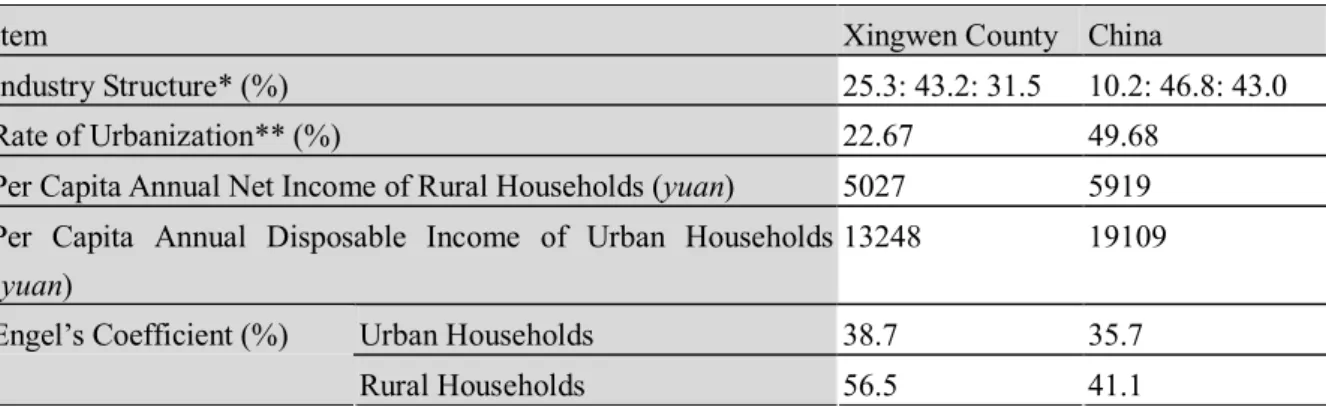
Table 4-2 Main Development Indicators of Xingwen County and China in 2010 ...47
Table 4-3 Indicators on Land Expropriation and Compensation of Xingwen (2006-2010)...52
Table 4-4 Basic Statistics on LLFs Surveyed ...56
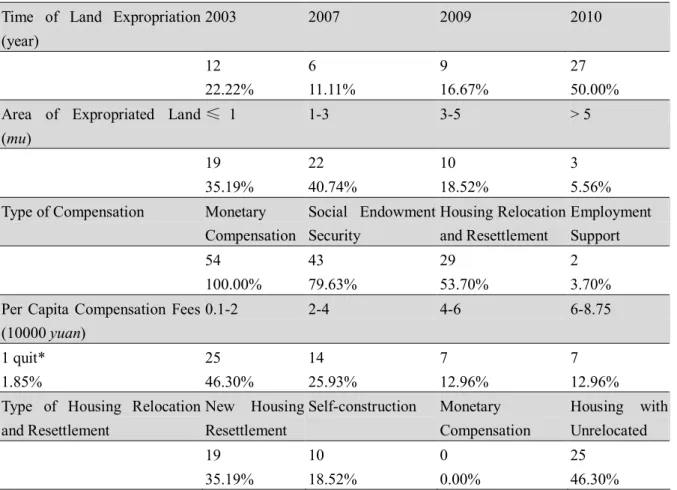
Table 4-5 Conditions of Land Expropriation and Compensation of LLFHs Surveyed...58
Table 4-6 Opinions of Respondents on Compensation Policies ...63
Table 4-7 Livelihood Assets Conditions of LLFHs Surveyed ...69
Table 4-8 Expectation and Opinions to Future Life of LLFHs Surveyed ...72
Table 4-9 Composition of Livelihood Behaviors of LLFHs Surveyed ...75
Table 4-10 Income Conditions before and after Land Lost ...78
Table 4-11 Respondents’ Evaluation on Livelihood Conditions...80
Table 5-1 Measuring Indicators and Affecting Weights of Livelihood Assets ...86
Table 5-2 Data of Livelihood Assets Value of LLFHs Surveyed...86
Table 5-3 Livelihood Assets Value of Different Types of LLFHs Surveyed ...89
Table 5-4 Evaluation of the Matching Conditions before and after Land Lost ...92
Table 5-5 Matching Rate and Income before and after Land Lost...93
Table 5-6 Variables and Definitions in Regressions...95
Table 5-7 Effect of Livelihood Assets on Income of LLFHs Surveyed ...96
Table 5-8 Effect of Livelihood Assets on Income before and after Land Lost...98
Table 5-9 Effect of Livelihood Behaviors on Income of LLFHs Surveyed ...100
Table 6-1 Indicators on Land Expropriation and Compensation in Malanwan Project ...105
Table 6-2 Plans of Housing Relocation and Resettlement in Malanwan Project...106
Table 6-3 Indicators on Land Expropriation and Compensation of Guangming Project ...112
Table 6-4 Indicators on Land Expropriation and Compensation of Taiping Project...117
List of Figures
Figure 2-1 IDS’s Sustainable Rural Livelihoods Framework...16
Figure 2-2 DFID’s Sustainable Livelihoods Framework ...17
Figure 2-3 CARE’s Sustainable Livelihoods Framework ...19
Figure 2-4 Khanya’s Sustainable Livelihoods Framework...20
Figure 3-1 Land Lost Farmer Household’s Sustainable Livelihoods Framework ...25
Figure 4-1 Geographic Location of Xingwen County...44
Figure 4-2 Age Composition of Population in Xingwen County ...44
Figure 4-3 Educational Attainments of Population in Xingwen County...45
Figure 4-4 Types of Compensation for Land Expropriation...58
Figure 4-5 Desired Types of Compensation for Land Expropriation...64
Figure 4-6 Satisfaction Degree of Respondents on Compensation Policies...64
Figure 4-7 Reasons of Respondents’ Satisfaction with the Policies ...65
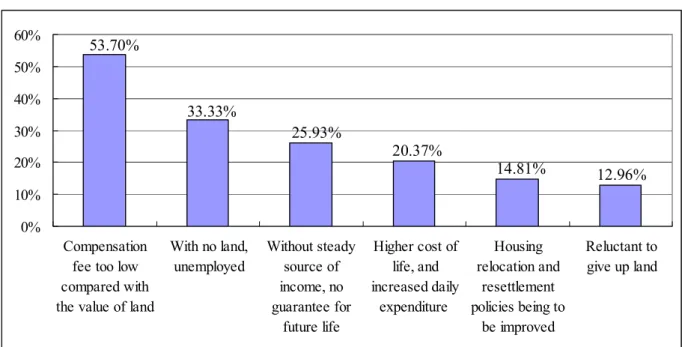
Figure 4-8 Reasons of Respondents’ Dissatisfaction with Policies ...66
Figure 4-9 First Livelihood Goal of Respondents...73
Figure 4-10 Reasons of Being Optimistic for the Future...74
Figure 4-11 Reasons of Being Pessimistic for the Future ...74
Figure 4-12 Main Reasons of Staying at Home after Land Lost ...77
Figure 4-13 Respondents’ Evaluation on Change of Living Standard after Land Lost ...80
Figure 5-1 Livelihood Assets Value of LLFHs Surveyed before Land Lost ...87
Figure 5-2 Changes in Livelihood Assets Value of LLFHs Surveyed...88
List of Acronyms
CPC Communist Party of China
CPLE Compensation Policies for Land Expropriation DFID Department for International Development IDS Institute of Development Studies
LEF Land Expropriated Farmer LLF Land Lost Farmer
LLFH Land Lost Farmer Household
LLFHSL Land Lost Farmer Households’ Sustainable Livelihoods SL Sustainable Livelihood
Chapter 1: Introduction
Since 1990s, in the process of China’s industrialization and urbanization, the non-agricultural demand for land has increased rapidly such as for highways and industries. Substantial suburban land has been expropriated by the government, and more and more farmers have lost their land and become an enormous group of land lost farmers (hereinafter LLFs). Under land lost shocks, changes occurred in the structure and value of their livelihood assets, and the uncertainties increased in their livelihood pathways. However, with the imperfect compensation policies for land expropriation (hereinafter CPLE), sustainable livelihoods (hereinafter SLs) in long run of LLFs might not be guaranteed. It has led to increasing social conflicts and, to some extent, hindered the progress of urbanization. Therefore, how to realize LLFs’ sustainable livelihoods has become an urgent problem in the transformation of Chinese society.
1.1 Background of the Research
1.1.1 Land Utility to Farmers in Binary Household Registration System of China
Since 1958, China has established rigid residence management system to control the migration of rural population to urban districts, the binary household registration system of rural and urban division thus formed. According to this system, residents were divided into urban residence and rural residence with unequal employment opportunities and welfare systems. On one hand, the urban non-agricultural residents enjoyed low-priced food, basic supplies as housing, fuel, water, and electricity, as well as secured employment and pension system. On the other hand, rural agricultural residents could not work in urban districts and had to make their living with scanty earnings from land. In this way, land has multiple functions as providing employment, welfare, and social security. As shown in study of Han Jun (2009a: 6), 82.1% Chinese population lived in rural areas in 1978, and the agricultural gross product only accounted for 22.9% of the whole society gross product in that year;; the rural residents’ per capita net income was 133.57 yuan and per capita consumption expenditure was 69.63 yuan with food expenditure accounting for 65.8%. Based on Engel's Coefficient①
, farmers were in extreme poverty. In this binary system, farmers would enjoy the urban welfare only after they changed their rural residence to urban residence (in short,
rural-to-urban). However, such identity change was very difficult. The rural youth could usually become urban residence and obtain urban working positions only by accepting higher education or joining in the army.
Since China’s reform and opening-up in 1978, with the introduction of market mechanism and the rise of agricultural productivity, the surplus of agricultural labors appeared. In addition, industrial development produced keen demand for labors. Chinese government relaxed the limitations on rural-urban migration policies by allowing farmers to work in urban districts, but on the premise of unchanged rural household registration and urban supply system. Thereafter, substantial rural surplus labors flooded to urban districts and became the main body of industrial workers in the process of China’s industrialization. They were called “migrant workers”, referring to labors with rural residence, engaged in non-agricultural production, and living on wage income. In 2007, the quantity of China’s migrant workers was over 220 million, accounting over 40% of agricultural employees. They provided important income source for rural households. However, as the residence system of rural and urban division was unchanged, the migrant workers could not enjoy equal employment opportunities and urban welfare. While they living on the wages, land was still their ultimate guarantee for long-term livelihood. “With land in hand, no worry in heart” is the main support for them to work in urban districts. In recent years, Chinese government has started the strategy conversion of “nursing the Agriculture by the Industry, helping the countryside by the city” and implemented farmer-favoring policies. However, owing to the divided rural and urban social security systems, the income gap between rural and urban residents is great. For agricultural households, land has become the carrier of social security endowed to farmers by the government.
Under China’s binary system of rural and urban residence, land has multiple utilities to farmers. It not only provides livelihood guarantee, employment opportunities, and direct economic benefits;; it also has utilities of offspring inheriting, land value increment, and avoiding high cost for repossession (Wang Keqiang, 2000;; Kong Xiangzhi, 2008). To be specific, the six aspects of land utility are as follows:
First, provide basic livelihood guarantee: As basic agricultural production material, land can produce necessities as grains and vegetables to meet basic needs of living. This kind of guarantee is low in level and high in uncertainty.
Second, provide employment opportunities: Agricultural production on land is one of the employment options for farmers. Thus, land provides employment opportunity to realize
labor value and obtain income. Although after China’s reform and opening-up, the free flow of rural labors to urban districts increased many non-agricultural employment opportunities, migrant workers still face many problems because of the long-term implemented binary system of rural and urban division. With poor education and lack of skills, most of them were usually engaged in occupations with low reputation and low technology, and had low social status and lack of social network (Wu Zili, 2001).Therefore, most farmers have limited resources and weak ability to live in urban district. Once they lose their land, the shocks to their livelihood pathways will be great.
Third, provide direct economic benefits: Agricultural output from land can not only meet farmer households’ consumption needs, but also bring cash flow in market exchange. If rented, land can bring rental income too.
Fourth, incremental value of land: In addition to the normal agricultural earnings, farmers can obtain the incremental earnings from land reformation, usage transform, or other external economic effects. For example, for the incremental value from land transfer, farmers, as owners of collective land, are entitled to obtain corresponding compensation.
Fifth, avoid high payment for repossession: In China’s collective ownership system of rural land, due to unclear property right of land, farmers, as collective members, cannot obtain corresponding compensation when they temporarily abandon the right of using land, but they have to pay high expenses when they repossess the land. Therefore, even the land is not farmed to provide direct earnings, keeping the right of using land is a low-cost common practice considering the high opportunity cost of abandoning the right. This is the land utility of avoiding high payment for repossession.
Sixth, offspring inheritable utility: In China’s land system, rural land is collectively possessed and the collective members obtain right of using land by sighed contracts with the collective organization (self-operation with a contract of farming). For property rights and use rights of collective land, offspring of collective members have the right of inheritance. They can also enjoy the above-mentioned utilities related to rights of land, which brings the offspring inheritable utility (Kung, 1994).
China’s binary system of rural and urban division leads to the multiple utilities of land to farmers. These utilities form the foundation of analyzing the land lost shocks to farmers’ livelihoods, determine the scope and extent of the influence to farmers’ livelihoods after land lost, and therefore provide the basis of evaluating compensation policies.
1.1.2 The Emergence of Land Lost Farmers under Land Expropriation System
Since 1990s, in the process of China’s industrialization and urbanization, the non-agricultural demand for land has increased rapidly such as building highways or industrial factories. The suburban land was expropriated in large scale, and more and more farmers lost their land to become land lost farmers (LLFs). LLFs here refers to the registered agricultural residents who lose entire or partial of their collective rural land with contracted rights when the land is expropriated by Chinese government. As indicated in the study of Pan Jiahua et al. (2011:156), the total quantity of LLFs in China has reached 40-50 million with the growth rate of 3 million per year, and the predicted number will reach 110 million in 2030.
Under China’s existing land ownership system, land expropriation is compulsory to the group of LLFs. According to China’s Land Administration Law, as to the property rights, land is divided into state-owned land in urban areas and collectively-owned land in rural areas, and farmers are given the legal rights of land contracts, land use and collective income distribution. Land is classified as agricultural land, construction land, and unexploited land①
. To effectively protecting cultivated land, Chinese government severely restricts the change of agricultural land to construction land. If any individual or organization not belonging to rural collectives wants to use the land for construction, “he must apply for the use of state-owned land according to law”, that is, the government has the right of land expropriation to transfer collectively-owned land to state-owned land. In this way, the government is endowed the exclusive right to acquire rural land and re-allocate it to users, while the rural collectives and farmers hardly have a voice on land expropriation and compensation.
For the loss caused by land expropriation, whether expropriated for public use or commercial use, China’s Land Administration Law requires that “compensation should be paid according to the original usage of the expropriated land”. In details, the attachments to and green crops on the land should be compensated according to their actual value. The standard of land compensation fees and resettlement fees is that the combined total should not exceed 30 times the average output value of the three years prior to the expropriation of
① Agricultural land refers to the land directly used for agricultural production. It includes arable land, woodland,
lawn, irrigation and water conservancy land, and cultivation surface. Construction land refers to land for constructing buildings and structures. It includes land used for rural and urban habitation and public facilities, factories and mines, transportation facilities and water conservancy, tourism destination, and military facilities. Unexploited land refers to land except agricultural land and construction land.
cultivated land, regardless of the location difference and land value increment revenue from changing of land use. With the little compensation, the basic living of most LLFs was affected, and their SLs were challenged (Han Jun, 2009b). Meanwhile, as the government had not provided perfect supporting policies in employment and social security, many LLFs faced with employment difficulties and high livelihood risks. Some of them even turned into the new poor in urban areas. The rural and urban social stability was threatened in China (Gao Yong, 2004). As shown in sampling study of Pan Jiahua et al. (2011: 263), 60% LLFs have difficulties in living;; 81% LLFs worry about future life, with 72.8% worrying about pension, 63% worrying about inadequate financial resources, and 52.6% worrying about medical care.
In China, the land is the carrier of social security endowed to farmers by the state government, so when the LLFs lose their land, what they lose is not only the physical entity of land, but also a series of rights attached to land. Corresponding to the multiple utilities of land, farmers’ losses includes: basic living guarantee, low cost living method, essential employment positions, stable source of income, and highly valued properties and property rights inheritable by offspring. However, for these losses, the compensation in most regions was with single type (mainly monetary compensation) and low amount, and did not reflect the value of land utilities to farmers and substitute the roles of land. For LLFs, lump sum monetary compensation was insufficient to offset the value losses caused by land lost in employment, income and food security (Han Jun, 2009b). Therefore, land expropriation triggered serious social contradiction and conflicts. As indicated by research data, about 60% farmers’ appeals to higher authorities for help were related to land, and 30% were related to land expropriation (Pan Jiahua et al., 2011). Another social problem caused by low standard compensation was that it stimulated the waste and low efficient exploitation of land. According to Outline of the National Overall Plan of Land Use issued in 2008 by China National Ministry of Land and Resources, the total quantity of expropriated but unused land was nearly 2667 square kilometers (about 4 million mu①).
To solve these problems, some scholars propose to change the government’s monopoly in land expropriation market and compensate farmers at market price (Huang Zuhui et al., 2002;; Zhou Qiren, 2004;; Qu Futian et al., 2004;; Chang Xiongjin, 2004). However, from the realities of China, the central government takes land as an important means of macro-control and takes cultivated land as strategic resource closely related to grain
security, so it is not possible in the near future for Chinese government to abandon the control over the land expropriation market (Kong Xiangzhi, 2008). Therefore, in the thesis, we regard the land expropriation system as an external variable, and aim to study the compensation mechanism in existing system background. From this research perspective, there has greater practical significance in solving livelihood problems of LLFs. To improve the performance of CPLE, the key point is to take LLFs as behavior actors in sustainable livelihood framework (LLF). It is only to examine their possessions, thoughts and actions before and after land lost, to understand the land lost shocks to LLFs, and to identify the livelihood needs of LLFs, can we ultimately propose operative policy portfolio package.
1.1.3 Livelihood Shocks Confronted by Land Lost Farmer Households
LLFs are a special group appearing in the process of China’s urbanization and industrialization, whose livelihood pathways are influenced by the land expropriation of government. The livelihood pathways mean the paths that LLFs, based on internal livelihood conditions and external environment, choose certain activities to pursue some goals and lead to certain outcomes. We call the change of livelihood pathways resulted from land lost as “livelihood shocks” or “land lost shocks”. For land lost farmer households (hereafter LLFHs), these shocks include:
1. Great Changes in Structure and Value of Livelihood Assets
Land expropriation makes the households’ original land capital from possession to lost (or majority lost), and brings great change in structure and value of LLFHs’ livelihood assets. Under CPLE, the land value is transformed to other capital by various types of compensation.
With the decrease or total loss of land (natural capital), the value of originally land-attached human capital decreased (owing to the exclusiveness of the capital). Original rural-community-dependent social capital was shocked (owing to the change of social network). Cash compensation and pension income obtained from land expropriation might increase family deposit or cash flow (financial capital). Housing resettlement might improve habitation condition and environment (physical capital) ①
. These changes in structure and value of livelihood assets will lead to a series of reactions to urge LLFHs to adjust livelihood goals and behavior choices, and thus produce different changes in livelihood outcomes as income level and livelihood safety.
2. Increased Uncertainty in Livelihood Pathways
In the binary household registration system of rural and urban division, land has multiple utilities to farmer households. Therefore, land is the livelihood dependence to either agricultural households, or agricultural combined occupations households and non-agricultural households. However, as the land expropriation by government causes land lost shocks and changes livelihood environment of LLFHs, they are facing both opportunities and challenges and the uncertainty in livelihoods pathways increased.
As to opportunities, the land expropriation makes LLFHs abandon traditional agricultural production and rural life, and enter into cities. They face more market opportunities and more behavior choices. It is helpful to widen diversified sources of family income and makes it possible for LLFHs to share the fruits of urban economic development. As to challenges, on one hand, the low cost living style depending on land products is compelled to change and household consumption expenditure increases greatly;; on the other hand, agricultural production activities have to be ceased with agricultural income decreasing to zero. Therefore, livelihood behaviors are urgently to be adjusted and sources of non-agricultural income are urgently to be explored. Confronted these opportunities and challenges, owing to differences in internal and external environment, LLFHs have higher uncertainty in livelihood behavior choices, which will increase the uncertainty in livelihood outcomes and lead to fluctuation of livelihood pathways. For example, diversified source of income might be accompanied with greater gap of income.
With the above-mentioned shocks, what changes have happened to LLFHs’ livelihood conditions? How can we evaluate the sustainability of LLFHs’ livelihood pathways? What are the key influencing factors? The thesis is to give some theoretical and empirical answers.
1.2 Main Research Work
By constructing SL Framework for LLFHs, this thesis studies livelihood conditions and pathway selection issues of “livelihood assets and goals—livelihood behaviors—livelihood outcomes”. Owing to the lack of official data, we made questionnaire survey and depth interview in Xingwen County, Sichuan Province in China, and acquired first-hand data. By research methods of descriptive statistics, regression analyses, and case studies, this thesis discovers livelihood conditions of LLFHs under CPLE, estimates the sustainability of their livelihood pathways, identifies the key influencing factors of livelihood pathways, and proposes some suggestions for the improvement of CPLE.
The thesis has seven chapters. The first chapter is introduction. The second chapter is literature review. It reviews the studies of LLFs’ problems in China and SL approaches. The third chapter is research design and methods. Based on literature review, it proposes LLFHSL Framework, proposes hypotheses on the interrelations of factors in livelihood pathway, defines the sustainability of livelihood pathway from perspective of behavior pattern (the matching between livelihood behavior and livelihood capital), and provides intermediate indicator for evaluation of livelihood pathway. The fourth chapter is the survey and data analysis on LLFHs’ livelihoods in Xingwen County. Based on actual regional situation and research framework, it explains the design of questionnaire survey, makes descriptive statistical analysis on sample data from three typical projects of land expropriation, discovers LLFHs’ livelihoods and policy appeals, and identifies their livelihood behavior features and reasons. The fifth chapter is the statistic study on LLFHs’ livelihood pathways. It measures the value of LLFHs’ livelihood assets, analyzes the type characteristics of livelihood behaviors, and then evaluates the sustainability of livelihood pathways before and after land lost. Further, by using econometric models, it makes regression analysis on influencing factors of livelihood pathways, and identifies the impacts of livelihood assets and behaviors on income. The sixth chapter is case studies. Based on questionnaire survey, this chapter makes depth interviews with typical LLFHs to obtain detailed data and materials, and further verifies the hypotheses by case studies. The seventh chapter concludes the research results, and proposes corresponding policy suggestions.
1.3 Theoretical Significance and Practical Value of the Research
This thesis has important theoretical significance and practical value. The theoretical significance lies in the following three aspects. First, the research field of SL approaches is extended to the special group of LLFs in China. On the bases of general SL frameworks and livelihood features of LLFHs, the thesis put forward the improved SL framework for LLFHs and studies the changes of livelihood pathways under land lost shocks from the perspective of livelihood assets, behaviors, outcomes and policy influences. Second, in the improved SL framework, the thesis defines the sustainability of livelihood pathway from perspective of behavior pattern (the matching between livelihood behavior and livelihood capital). Comparing with the final indicator of livelihood outcomes, it provides an intermediate indicator for evaluation of the sustainability. By using both of them, we can describe the livelihood conditions of LLFHs more accurately. The indicator of the matching also provides
basis by behavior research for explaining differences in livelihood outcomes.
The practical application value of the thesis is as following: by using survey data of LLFHs in Xingwen County and methods of regression analysis and case studies, the thesis studies the sustainability and key influencing factors of LLFHs’ livelihood pathway, reveals the change of livelihood pathways before and after land lost and the reasons, evaluates CPLE based on the sustainability of livelihoods, providing micro basis for policy analysis. Conclusions and suggestions of the thesis are helpful to improve the performance and satisfaction of CPLE.
1.4 Limitations of the Research
The research of the thesis has the following limitations.
First, the realization of SL for LLFHs in China has the general and specific character. The research framework and design are the same, but the contextualization is different. For LLFHs in different regions, their livelihood conditions and pathways are different with the influence of various livelihood environments. Therefore, our conclusions and suggestions based on research of Xingwen County are typically distinctive, and they need to be further verified by enlarging sampling regions.
Second, the valid sample in our questionnaire is only 54, and corresponding pooled data including two groups of cross-section data, before and after land lost respectively, is 108. It is comparatively small to apply econometric models to make regression analysis. Therefore, a larger sample should be used to testify the empirical results.
Chapter 2: Literature Review
2.1 Livelihoods of Land Lost Farmers in China
Under binary household registration system of rural and urban division of China and the government monopoly of land expropriation market, little compensation and no guarantee for long term livelihoods of LLFs have caused wide attention of Chinese scholars. Early studies focus on land system and policy suggestions for guarantee of LLFs’ rights and interests. Later researches switch to statistical analysis on livelihoods before and after land lost, and further specified on employment behaviors and their influencing factors.
2.1.1 Compensation Policies for LLFs
Due to rapid and large-scale expropriation of rural collective land by governments, the group of LLFs has come in being in the process of urbanization. Early studies in China mainly focused on system arrangements of land expropriation (Huang Zuhui et al., 2002;; Zhou Qiren, 2004;;Qian Zhonghao, 2004;; Han Jun, 2005;; Qu Futian et al., 2005;; Wang Dingxiang et al., 2006) and protection of rights and interests for LLFs (Bao Haijun et al., 2002;; Zhu Mingfen, 2003;; Lu Haiyuan, 2003;; Chang Jinxiong, 2004). Policy recommendations included reforming land expropriation system, increasing compensation standards, providing employment resettlement and social security system, mainly by qualitative research methods and focusing on system analysis and suggestions.
For example, by analyzing the infringement of farmers’ land development rights by expropriations not for public purposes, Huang Zuhui et al., (2002) named two routes options of compensation for land development rights. By the method of equilibrium analysis on China’s land expropriation policies, Qian Zhonghao (2004) thought that it is necessary to regulate government expropriation activities, to increase the land compensation standards, to construct social security system and to grant farmers national treatment. The reason is that although there might be rationality in land expropriation institution, policy failures might happen and thus bring loss to the social welfare. As revealed by Qu Futian et al. (2005), the main reasons of low efficiency of land resources allocation were basic institutional defects characterized by the missing of land property rights’ owners and abuse of land expropriation rights as well as governance defects featured by non-cooperative game
between the central government and local governments on allocation of land resources. Based on comparisons among urban residents, farmers, and LLFs on social security, Bao Haijun, et al., (2002) proposed that resettlement fees and land appreciation earnings after expropriation should be the main source of funds for building the social security system for LLFs with retirement, medical care, legal aid services, opportunities of education and training, and the minimum living standard. According to questionnaire data of 255 LLFs from 5 cities of Zhejiang Province in China, Zhu Mingfen (2003) pointed out that the geographical locations, expropriation time, compensation levels and allocation methods were different from place to place, but problems like low compensation standard, distribution chaos, employment difficulty, inadequate social security existed everywhere. Lu Haiyuan (2003) suggested that employment policies suitable to LLFs and social security system should be established in order to let them share the achievements of industrialization, urbanization and modernization.
2.1.2 Livelihood Conditions and Suggestions
Due to a lack of official data, Chinese researchers collected first hand data through field investigation to understand the livelihoods of LLFs. Such researches include: the living standard of LLFs (Lou Peimin, 2005;; Han Jun, 2009);; cognition and welfare situation (Gao Jinyun, et al., 2007;; Chen Ying, et al., 2007;; Lin Lefen, et al., 2010);; willingness for land expropriation (Qian Zhonghao, et al., 2007;; Kang Lan, 2009;; Mu Xiangli, et al., 2009;; Zhao Xiaoqiu, et al., 2009);; willingness to accept compensation (Kong Xioangzhi, et al., 2008 );; and implementation of CPLE involving monetary compensation, employment, and social security (Chen Ying, et al., 2009;; Han Jun, 2009;; Ye Jianping, et al., 2010;; Lin Lefen, et al., 2010;; Jin Jin, 2010). Corresponding suggestions had been proposed based on data analysis. Research methods are mainly questionnaire survey and statistical analysis with focus on livelihood outcomes without systematic analysis to livelihood assets, behaviors and outcomes.
For example, Han Jun (2009) pointed out that, although most LLFs’ family income increased, the living standard of some LLFHs (mainly pure farming households in traditional agricultural regions) dropped;; owing to difficult employment and low social security, long term livelihoods could not be guaranteed;; and the government should improve relative systems in employment and social security. Gao Jinyun et al. (2007) discussed the change of farmers’ welfare during transfer of farm land with the Capability Approach of Sen. He
claims that transfer of farm land had caused a slight decline in the welfare level. Except for the housing condition improvement, the farmers’ economic state, social security, community life, environment, and psychological status had deteriorated in varying degrees. The numbers of dependent members in farmers’ households, education and social and economic development level in the region were primary factors causing the differences of households’ welfare. Based on three sampling villages and according to differences in dependency on land, Lin Lefen et al. (2010) conducted a comparative research on LLFs’ satisfaction towards the government’s compensation policies, employment situation after becoming urban residents, adaptation to the city life, and self-recognition. Kong Xiangzhi (2008) borrowed Contingent Valuation Method, “CVM” in short, widely adopted in environmental economics to make survey for Willingness to Accept, WTA in short, that is, LLFs’ willingness to accept compensation. He made empirical analysis to influencing factors of LLFs’ WTA and influencing extents of different factors, and proposed the direction to improve CPLE. Chen Ying et al. (2009) argued that no matter the land expropriation was in public interests or not, compensation should relate to damage from which the farmers suffer, which was affected by factors like the distance between the land and the city center, abundance of land resources and the proportion of labors.
2.1.3 Livelihood Behaviors of LLFs
Researches on LLFs’ employment behavior include land lost labor supply (Cheng Deli et al., 2004), LLFs’ informal employment (He Jingxi et al. 2007), land lost females’ employment (Li Qin et al., 2007;; Sun Liangyuan et al., 2007), voluntary unemployment, involuntary unemployment and employment intention (Li Qin et al., 2009), and influencing factors of employment behaviors (Xie Yong et al., 2009). Research methods adopted were mainly empirical verification by econometric models.
Only a few papers dealt with livelihood activities of LLFs from the perspective of employment behaviors. The behaviors include different types of employment or unemployment behaviors (such as informal employment, female employment, voluntary unemployment and involuntary unemployment), their influencing factors, employment willingness, and behavior options (Sun Liangyuan, 2007;; He Jingxi et al., 2007;; Li Qin et al., 2009;; Xie Yong et al., 2010).
By using Logistic Model to verify the influences of factors as human capital, family burdens, and social security level, Cheng Deli et al. (2004) studied influencing factors of
LLFs’ labor supply intention in rural and urban intersection region of Beijing. He Jingxi et al. (2007) analyzed some cases of informal employment of elder LLFs with low education level in Chengdu City and regarded that present guidelines and rules increased the cost of informal employment and were not beneficial to the sustainability of LLFs’ livelihood. Li Qin et al. (2007) made empirical studies on issues as land lost females’ employment, influencing factors on income, and selection of employment patterns. Using the Maddala effect model and survey data of rural landless women from the Pearl River Delta area, Sun Liangyuan et al. (2007) analyzed the main factors influencing women employment and training attendance. They concluded as follows: 1. both education and training could improve the employment rate for land lost females;; 2. training contributed more to employment, and family incomes did not significantly change the employment conditions of female members of LLFs. With the Logit model and Multinomial Logit model and survey data of LLFs’ employment situation in the Pearl River Delta areas, Li Qin et al. (2009) did empirical analysis on LLFs’ voluntary unemployment, involuntary unemployment and off-farm employment behaviors. It concluded that family incomes and high earnings from sources other than laborer such as collective enterprise dividends were the main reason why LLFs exit the labor market. As for those LLFs of involuntary unemployment, they failed in obtaining jobs mainly because of their age, health, non-farming experience. According to Xie Yong et al. (2009), the human capital such as education levels, vocational training, and health conditions, had significant positive impact on the LLFs’ employment, while non-labor incomes especially the land compensation fees had a negative effect on employment. There were not significant correlations between the usage of land expropriated, degree of land lost and the employment of LLFs.
2.2 Sustainable Livelihoods Approaches
2.2.1 Livelihoods Approaches
How poverty is understood determines the way policy makers and planners respond to it. Livelihoods mean more than income, encompassing the capabilities, assets (including both material and social resources) and activities for a means of living. A livelihood is sustainable when it can cope with and recover from stresses and shocks;; maintain or enhance its capabilities and assets, while not undermining the natural resource base (Chambers and Conway, 1992;; Scoones, 1998;; Carney et al., 1998, 1999).
Livelihoods approaches are a way of thinking about the objectives, scope and priorities for development. They place people and their priorities at the centre of development. They focus poverty reduction interventions on empowering the poor to build on their own opportunities, supporting their access to assets, and developing an enabling policy and institutional environment. In efforts to apply this rationale, SL approaches work at two levels acting as an overall development objective and an analytical tool (Farrington et al., 2001). The development objective is to enhance the sustainability of people’s livelihoods, with a particular focus on the livelihoods of households. The framework aims to improve development activity through systematic – but manageable – analysis of poverty and its causes;; taking a wider and better-informed view of the opportunities for development activity, their impact and “fit” with livelihood priorities;; and placing people and the priorities they define firmly at the centre of analysis and objective-setting (Ashley and Carney, 1999)
Therefore, core to livelihoods approaches are a set of principles: people matter, contexts are important, a focus on capacities and capabilities, rather than needs, a focus on the responsive and participatory, and a normative emphasis on poverty and marginality (Scoones, 2009).
2.2.2 Comparison of Sustainable Livelihoods Frameworks
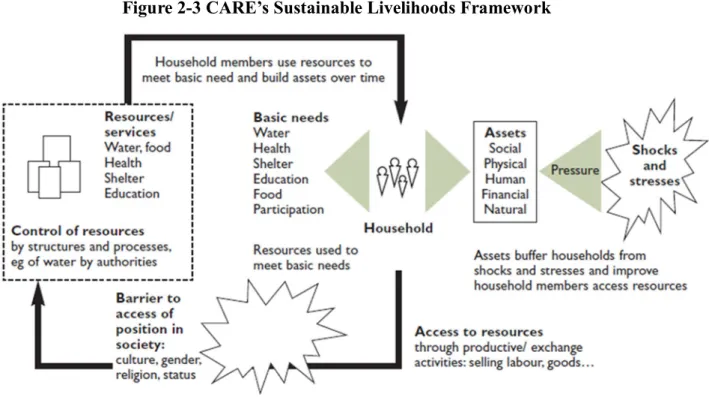
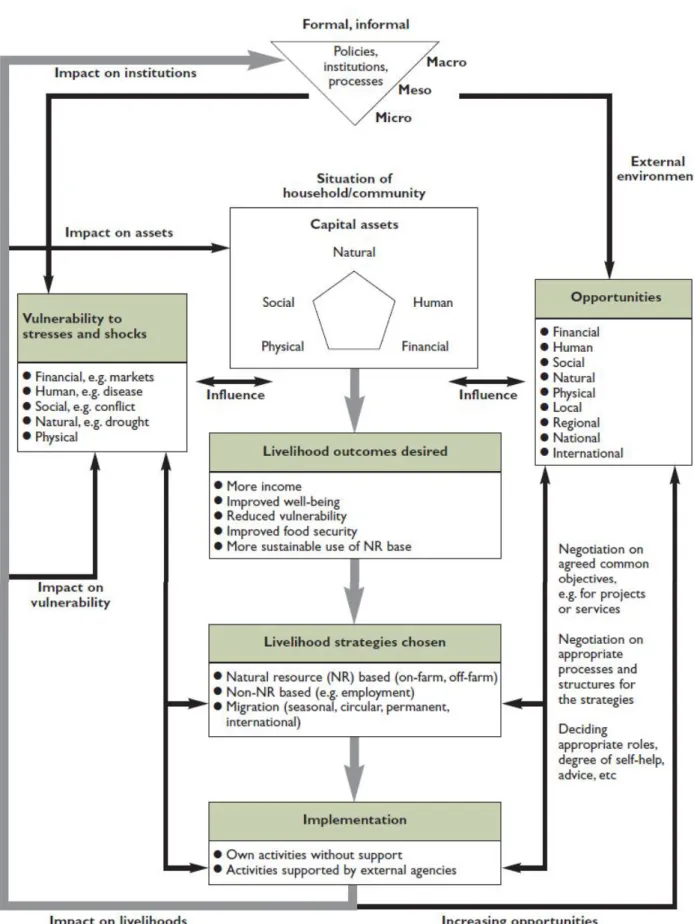
From viewpoint of SL, poverty is not permanent and unchanged. It is determined by poverty group’s internal conditions and behavior selections in the impact of external environment (Moser, 1996;; Chambers, 1995). On this basis, the SL research framework focusing on “assets-availability-activities” is applied in studies of poverty and sustainability by many international institutions. The following comparison is made among research frameworks of Institute of Development Studies (IDS), UK Department for International Development (DFID), CARE and Khanya.
1. IDS’ Sustainable Livelihoods Framework
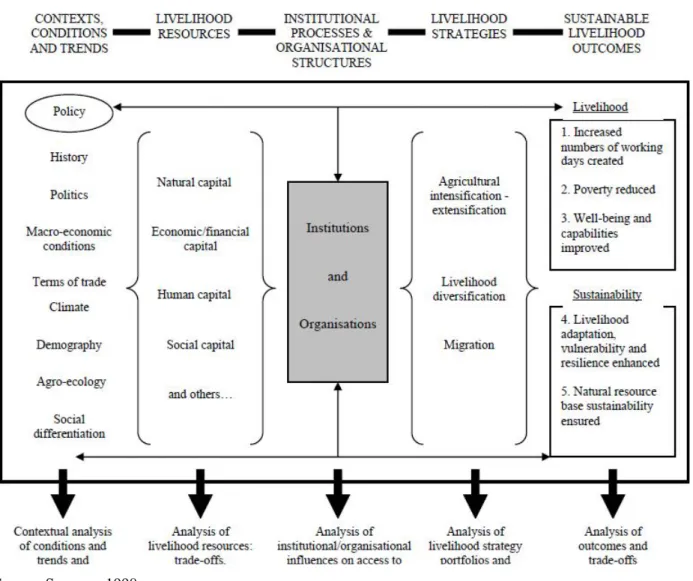
In 1998, IDS published a Working Paper providing an analytical framework for sustainable rural livelihoods that highlighted five interacting elements including contexts, resources, institutions, strategies and outcomes (see Figure 2-1).
What the framework expressed was the question: Given a particular context (of policy setting, politics, history, agroecology and socio-economic conditions), what combination of livelihood resources (different kinds of capital) result in the ability to follow what combination of livelihood strategies (agricultural intensification/ extensification, livelihood
diversification and migration) with what outcomes? Of particular interest in this framework are the institutional processes (embedded in a matrix of formal and informal institutions and organizations) which mediate the ability to carry out such strategies and achieve (or not) such outcomes (Scoones, 1998: 3, italics in original).
Figure 2-1 IDS’s Sustainable Rural Livelihoods Framework
Source: Scoones, 1998
2.DFID’s Sustainable Livelihoods Framework
Building on work by IDS and others, DFID published a conceptual framework to aid analysis of the factors affecting peoples’ livelihoods (Carney, 1998). In this framework, there are five factors affecting peoples’ livelihoods, including livelihoods assets, livelihood strategies, livelihood outcomes, vulnerability context and the policies, institutions and processes (see Figure 2-2). In detail, they are: their access to social, human, physical, financial and natural capital or assets, and their ability to put these to productive use;; the different strategies they adopt (and how they use their assets) in pursuit of their priorities;; the
priorities that people define as their desired livelihood outcomes;; the context in which they live, and factors affecting vulnerability to shocks and stresses;; the policies, institutions and processes that shape their access to assets and opportunities①
.
Figure 2-2 DFID’s Sustainable Livelihoods Framework
Source: Carney, 1998
People and their access to assets are at the heart of DFID SL framework. Assets can be destroyed or created because of the trends, shocks and seasonal changes in the vulnerability context within which people live. Policies, institutions and processes can have a great influence on access to assets - creating them, determining access, and influencing rates of asset accumulation. Those with more assets are more likely to have greater livelihood options with which to pursue their goals and reduce poverty. The human assets are at the heart of ‘asset pentagon’. Drawing on Sen’s classic work (1997), Bebbington (1999) developed a ‘capitals and capabilities’ framework for looking at rural livelihoods and poverty.
Livelihood strategies are the combination of activities that people choose to undertake in order to achieve their livelihood goals. They are also classified as coping and adaptive strategies. Coping strategies have been defined as “often a short-term response to a specific shock such as drought”, and adaptive strategies as “a long-term change in behavior patterns as a result of a shock or stress” (Singh and Gilman, 1999: 541). Adaptive strategies may be most relevant to understanding a peri-urban setting, as people and households change their
① Livelihoods Connect.