Fibrodysplasia ossificans progressiva: diagnosis in primary care
Fibrodisplasia ossificante progressiva: diagnóstico em atenção primáriaFibrodisplasia osificante progresiva: diagnostico desde la atención primaria
Jesus Garcia-Pinzas1, Jose Eduardo B. Wong2, Miguel Angel P. Fernández3, María Angélica Rojas-Espinoza4
Instituição: Universidad Nacional Hermilio Valdizán de Huánuco, Huánuco, Peru 1Cirurgião do Posto de Saúde Chinchao, Red de Salud Huanúco, Universidad Nacional Hermilio Valdizán de Huánuco, Huánuco, Peru 2Pediatra do Centro de Salud Carlos Showing Ferrari, Huánuco, Peru 3Epidemiologista do Hospital II Salud Huánuco, Huánuco, Peru
4Estagiária de Medicina pela Universidad Nacional Hermilio Valdizán de Huánuco, Huánuco, Peru
ABSTRACT
Objective: To show that it is possible to diagnose
fibro-dysplasia ossificans progressiva in the primary health care.
Case description: A 10-year-old female patient that
has developed, since the age of 4, progressive stiffness of the joints and spine and ossification of soft tissues, often associated with trauma. The hallux valgus deviation of both toes was present from birth. X-ray showed the presence of heterotopic ossification.
Comments: This disease is likely to be diagnosed with
the resources available in primary health care, since it is based on clinical findings. Currently, there is no cure for this disease, but high doses of corticosteroids and the use of nonsteroidal anti-inflammatory drugs, which are available in the primary care level, may limit the development of new calcifications and mitigate the pain, improving the quality of life of these patients.
Key-words: myositis ossificans; heterotopic ossification;
primary health care.
RESUMO
Objetivo: Buscou-se demonstrar ser possível diagnosticar
a fibrodisplasia ossificante progressiva na atenção primária à saúde.
Descrição do caso: Paciente de dez anos que, desde os
quatro anos, mostrava rigidez progressiva nas articulações e na coluna vertebral, além de ossificações de partes moles, muitas vezes associadas a traumatismos. Havia desvio de
hálux valgo dos primeiros artelhos de ambos os pés, presente desde o nascimento. Por meio de radiografias, demonstrou-se a presença de ossificações heterotópicas.
Comentários: É possível realizar o diagnóstico desta
do-ença com recursos disponíveis em atenção primária à saúde, uma vez que se baseia fundamentalmente em critérios clíni-cos. Atualmente, não existe cura para a doença, mas é possível limitar o desenvolvimento de novas calcificações, assim como mitigar a dor causada pelos recrudescimentos da doença, melhorando a qualidade de vida dos pacientes. Para isso, são utilizadas altas doses de corticoides e anti-inflamatórios não esteroides, disponíveis nos níveis primários de atenção.
Palavras-chave: miosite ossificante; ossificação
hetero-tópica; atenção primária à saúde.
RESUMEN
Objetivo: Se buscó demostrar que es posible
diagnosti-car la Fibrodisplasia Osificante Progresiva (FOP) desde la atención primaria de Salud.
Descripción del Caso: Se describe el caso de una paciente
de 10 años que desde los 4 años, desarrolla rigidez progresiva en las articulaciones y en la columna vertebral, además de osificaciones de partes blandas, muchas veces asociada con traumatismos; un rasgo importante fue la desviación en Hallux Valgus de los primeros dedos de ambos pies, presente desde su nacimiento; por medio de radiografías se demostró la presencia de osificaciones heterotópicas.
Comentarios: el diagnóstico de esta enfermedad es
fac-tible de realizarse con recursos disponibles en la Atención
Endereço para correspondência: Jesús García-Pinzás
Jr. Mayro, 725 Huánuco – Peru
E-mail: [email protected]
Conflito de interesse: nada a declarar
Primaria de Salud ya que se basa fundamentalmente en criterios clínicos. Actualmente no existe cura para esta enfermedad, pero es posible limitar el desarrollo de nuevas calcificaciones, y así como mitigar el dolor que causan las reagudizaciones de la enfermedad, mejorando la calidad de vida de los pacientes, utilizando para ello altas dosis de corticoides y antiinflamatorios no esteroideos, disponibles en el primer nivel de atención.
Palabras-clave: miositis osificante; osificación
heterotó-pica; atención primaria de salud.
Introduction
In Peru and throughout Latin America, many medical professionals work in the Primary Health Care sector, i.e., provide “Essential care, based on practical, scientiically sound and socially acceptable methods and technology made universally accessible to individuals and families in the community”(1). In this context, clinical skills are
indispens-able due to the lack of technological resources to support or rule out diagnostic suspicions. These very clinical skills are the ones that will help to ight against a disease as rare as Fibrodysplasia Ossiicans Progressiva (FOP).
FOP was described for the irst time by Guy Patin in 1693 (“the woman who turned into wood”), but it was only in 1736 that, in a communication to the Royal Society of Medicine in London, dr. John Freke described it in scientiic terms, reporting the case of a 14-year-old male with swellings on his back(2). In 1924, Noble
pro-posed to divide the disease into three categories: myositis ossiicans progressiva, myositis ossiicans circumscripta progressiva, and myositis ossiicans circumscripta. In 1969, Munchmever changed the designation to FOP, which encompasses the involvement of more soft tissues besides that of muscles(2,3).
FOP is a rare condition of skeletal malformations such as bilateral hallux valgus and progressive heterotopic ossiica-tion of soft tissues; in other words, a new non-neoplastic bone is produced in places where it should not be, leading to per-manent immobility throughout the years(3,4). This disease is
produced by a mutation in one of the copies of the gene that encodes the Receptor I of the bone morphogenetic protein, called Activin type 1 receptor or ACVR1(5). It affects men
and women equally, with a current worldwide prevalence of approximately 1 case in 2 million individuals .
Case report
At a primary health care center in the Region of Huánuco (one of the poorest in Peru), a region characterized by es-sentially comprising a rural population living in poverty and extreme poverty, there was the case of a 10-year-old girl suffering from multiple swellings in her back along with progressive stiffness in the left elbow for approximately 6 months and complaining of severe pain, predominantly in the joints and back, especially at night. She points out that there was no previous history of a similar condition in her family, and the mother reported that her daughter was born at home and that the only remarkable event at the girl’s birth was the presence of a bilateral deformity of both great toes, and then she had a “normal” growth and development until the age of 4, when she presented with painful, soft and mobile swellings in the neck that disappeared with time. Similarly, as years passed by, swellings appeared in her back, but they changed from being soft and mobile at
Figure 2 - A. Multiple painless and immovable swellings of stony consistency. B. Radiographic image (posteroanterior view)
showing soft tissue heterotopic ossiication, predominantly on
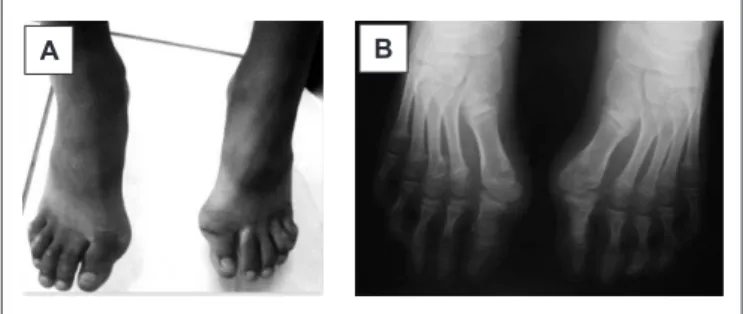
Figure 1 - A. Physical Evaluation. B. Radiographic image.
Abnormal irst metatarsal bone angulation, with an angle higher than 20 degrees in relation to irst phalanxes, indicating bilateral hallux valgus. Radiopacity in the third metatarsal of the right foot
A B
the beginning to being hard and immobile, causing pain during their appearance, and some of them were associated with trauma.
Physical examination showed the presence of multiple asymmetric swellings in her back, which had a stony consistency, adhered to deep planes, were immobile and painless to palpation, and showed no inlammatory signs; an immobile and painless swelling of stony consistency and measuring nearly 10-cm long by 5-cm wide was also identiied in the upper third of the right arm; an increase in volume and lexion stiffness in the left elbow joint was ob-served, causing pain when the patient attempted to perform active or passive movements; stiffness in the entire spine was also found, affecting from cervical to lumbar vertebrae and constituting a case of severe axial stiffness; her hands showed mild cubital deviation, particularly in the left hand; the shortening and deviation of both great toes were also worth of attention, constituting a case of bilateral hallux valgus; additionally, it was found that the patient had no fever or feeling of increased body temperature during the progress of the disease.
X-rays showed heterotopic calciications, and labora-tory tests such as blood cell count, C-reactive protein (PCR), rheumatoid factor, non-treponemal tests (RPR), and complete urine examination showed normal results, except for a mild eosinophilia, whose cause could not be determined. Considering these results, and analyzing the signs and symptoms presented by the patient, the clini-cal diagnosis of Fibrodysplasia Ossiicans Progressiva was
conirmed. The management of the disease was started with the use of NSAIDs for the treatment of chronic pain and high doses of corticosteroids to limit the duration and the sequelae of disease lare-ups and exacerbations. At 6 month follow-up, it was observed that the patient’s ranges of motion had improved, she moved with more conidence, her pain has been reduced, and her quality of life has improved.
Discussion
FOP is a genetic disease that in most cases is caused by a spontaneous new mutation in the ACVR1 gene; in the remaining cases, it might have been inherited from one of the parents through a dominant autosomal pattern, since an affected patient has a 50% chance of having a child with FOP. This mutation causes a deregulation of the bone mor-phogenetic protein signaling pathway(7,8). Previous studies
have demonstrated that there was no ethnic, racial, gender or geographic predisposition for the development of the disease(3,4). It is known that both genetic and environmental
factors determine FOP phenotype, the irst during prenatal development and the latter in the progression of heterotopic ossiications(5,7,8).
During the course of the disease, according to what was described in cases reported worldwide(9- 11) and to the
analy-sis of the present case, FOP lesions may appear suddenly and cause severe inlammation within few hours. If a biopsy is performed in the early lesion, it could be confounded with several types of cancer, because a new bone is being formed through an endocondral process with massive cell proliferation(7,8). It should make it clear that, if a biopsy is
performed in a healing fracture, it would show exactly the same images, which would make one think of cancer if not aware of what is being observed. A careful retrospective analysis reveals that FOP lesions grow much faster than any cancer would do(8).
Because FOP diagnosis is made clinically, it is possible to establish it in the primary health care setting, based on the clinical features that deine the disease: malformation of the great toes and progressive heterotopic ossifica-tion(3,4,6,9-11). Individuals with FOP appear normal at birth
except for the characteristic malformation of the great toes(3,4,10,11), which was noticed by the parents of the girl
reported in the present study, but they did not pay much attention to this, since it did not cause functional changes. Figure 3 - Patient’s right arm. A. Posterior view of the swelling.
B. Extensive ossiication of soft parts affecting the humerus and
spreading out towards the right scapular region. Cortical thinning
of the right distal humeral epiphysis, remarkable lytic lesions
As for treatment, there are anecdotal reports on the eficacy of corticoids in limiting inlammation and progression of heterotopic ossiication during lare-ups, which means that if prednisone is administered at a 2mg/Kg/d dose during 4 days, starting within the irst 24 hours after the lare-up, the intense inlammation and tissular edema observed in the irst stages of ossiication will be reduced. When prednisone is discontinued, a NSAID or a cox-2 inhibitor can be used for the symptomatic treatment of the lare-up and the pain(4,12).
These therapeutic elements are available in most primary health care establishments; therefore, the management of the disease and the prevention of major sequelae can be implemented in this level.
The diagnosis of this disease usually goes unnoticed due to the fact that it is often diagnosed incorrectly, including in high level centers; it is reported that this entity is commonly misdiagnosed as cancer, ibromatosis, ossifying hematomas, or even scleroderma(6,9,13). Delayed and incorrect diagnosis
cause much pain and suffering for patients and their fami-lies throughout the world, besides usually worsening their clinical picture(13). Therefore, it is extremely important to
suspect of this diagnosis since the irst contact with patients presenting these features. Although there are conirmatory genetic tests for the mutation responsible for the disease, they are not available in primary health care; in fact, several Latin American countries do not have these tests available. These circumstances should not limit nor delay the management of the disease, since it was demonstrated that FOP diagnosis is essentially clinical.
Although it is known that bone formation in FOP is episodic, the disability it produces is cumulative, conin-ing patients to a wheelchair by the third decade of life, and stiffness makes them dependent on assistance in performing activities of daily living. Many of them will experience severe weight loss resulting from ankylosis of the jaw and might develop pneumonia or heart failure as a result of chest wall stiffness, thus their survival is approximately 45 years, and death often results from complications of thoracic insuf-iciency syndrome(15).
Finally, it is important to intervene in the development of this disease, due to the disability it causes for the affected patients and the burden it represents to their families and the society, which is possible to be done in the primary health care setting, since the deinite diagnosis can be made by clinical evaluation(4,9) that associates progressively ossifying
soft tissue lesions with malformation of the great toes. This malformation was reported in almost all newborns
affected by FOP, meaning that congenital hallux valgus malformation is the earliest and most typical phenotypic characteristic(3,4,9). Ossiication occurs in exacerbations of
the disease, i.e., heterotopic ossiication is manifested by the appearance of large and painful swellings of highly vascular-ized ibroproliferative tissue, often associated with trauma. These swellings begin to appear during the irst decade of life, at 4 years on average(10,11), coinciding with what was
observed in the present case; children with FOP develop swellings formed from connective soft tissue, including fascia, ligaments, tendons, and skeletal muscle. These swellings progress until being ossiied, irstly and typically affecting neck and upper back, making them stiff(4,9,12); in
the case that motivated this report, axial stiffness was the irst functional change experienced by the patient.
According to what has been presented and to reports from other investigators, joint malformations and soft tissue os-siication are the characteristic radiographic features of FOP. Malformations of great toes and cervical spine, along with the presence of tibial osteochondromas, help to conirm the diagnosis(9) As for laboratory analysis, biochemical values
are usually found to be normal, but it is possible to observe an increase in alkaline phosphatase activity during hetero-topic ossiication lare-ups(4,9). The incidence of fractures is
not increased in patients with FOP, although fracture heal-ing is characteristically accelerated in heterotopic bone(8).
Several skeletal muscles, including the diaphragm, tongue, and extra-ocular muscles are enigmatically spared from FOP. Cardiac muscle and smooth muscle are not classically involved in the process of FOP(13).
It is important to take into account and inform the pa-tients suffering from this disease that minor trauma such as intramuscular immunizations, mandibular blocks, muscular trauma, falls, or colds could trigger a new episode of inlam-matory swellings that will result in the ossiication of these soft tissues (disease lare-up)(4,14). Surgical attempts to obtain
samples using biopsy or to remove a heterotopic bone could lead to episodes of explosive bone growth, which could be even much more severe that those caused by disease lare-ups(14). Therefore, it is necessary to control the environment
1. World Health Organization [homepage on the Internet]. Declaration of Alma-Ata. Proceedings of International Conference on Primary Health Care; 1978 Sep 6-12; Alma, Ata, USSR [cited 10 Nov 2011]. Available from: http://www. who.int/publications/almaata_declaration_en.pdf
2. Kaplan FS. Fibrodysplasia ossiicans progressiva: an historical perspective. Clin Rev Bone Mineral Metab 2005;3:179-82.
3. Connor JM, Evans DA. Fibrodysplasia ossificans progressiva. The clinical features and natural history of 34 patients. J Bone Joint Surg Br 1982;64:76-83.
4. Kaplan FS, Le Merrer M, Glaser DL, Pignolo RJ, Goldsby RE, Kitterman JA
et al. Fibrodysplasia ossiicans progressiva. Best Pract Res Clin Rheumatol 2008;22:191-205.
5. Kaplan FS, Xu M, Seemann P, Connor JM, Glaser DL, Carroll L et al. Classic and atypical ibrodysplasia ossiicans progressiva (FOP) phenotypes are caused by mutations in the bone morphogenetic protein (BMP) type I receptor ACVR1. Hum Mutat 2009;30:379-90.
6. Sferco A. Fibrodisplasia osiicante progresiva: pautas para su reconocimiento. Arch Argent Pediatr 2001;99:249-52.
7. Shore EM. Fibrodysplasia ossiicans progressiva (FOP): A human genetic disorder of extra-skeletal bone formation, or -How does one tissue become another? Wiley Interdiscip Rev Dev Biol 2012;1:153-65.
8. Shafritz AB, Shore EM, Gannon FH, Zasloff MA, Taub R, Muenke M et al. Overexpression of an osteogenic morphogen in ibrodysplasia ossiicans progressiva. N Engl J Med 1996;335:555-61.
9. Kaplan FS, Xu M, Glaser DL, Collins F, Connor M, Kitterman J et al. Early diagnosis of fibrodysplasia ossificans progressiva. Pediatrics 2008;121:el295-300.
10. Gonçalves AL, Masruha MR, de Campos CC, Delai PL, Vilanova LC. Fibrodysplasia ossiicans progressiva: case report. Arq Neuropsiquiatr 2005;63:1090-3. 11. Forero Melo JF, Vargas Bazurdo MC, Alarcón F. Fibrodisplasia Osiicante
progresiva: reporte de caso. Rev Colomb Radiol 2011;22:3113-6.
12. Kaplan FS, Shore EM, Pignolo RJ. The medical management of ibrodysplasia ossiicans progressiva: current treatment considerations. Clin Proc Intl Clin Consort FOP 2011;4:1-100.
13. Saldivar AC, Cruz BC. Fibrodisplasia osiicante progresiva. Reporte de un caso y revisión de la Bibliografía. Med Int Mex 2009;25:245-7.
14. Kitterman JA, Kantanie S, Rocke DM, Kaplan FS. Iatrogenic harm caused by diagnostic errors in ibrodysplasia ossiicans progressiva. Pediatrics 2005;116:e654-61.
15. Kaplan FS, Zasloff MA, Kitterman JA, Shore EM, Hong CC, Rocke DM. Early mortality and cardiorespiratory failure in patients with ibrodysplasia ossiicans progressiva. J Bone Joint Surg Am 2010;92:686-91.