Case Study: Facebook In Face of Crisis.
Raquel Pita Guerreiro Marcelino Duarte
Dissertation written under the supervision of Daniela Langaro
Dissertation submitted in partial fulfilment of requirements for the MSc in
Management with Specialization in Strategic Marketing, at the Universidade
Case Study: Facebook In Face of Crisis.
Raquel Pita Guerreiro Marcelino Duarte
Abstract
Created to connect people in a limited academic environment, Facebook rapidly became the world’s largest social media network, containing numerous, and highly valued features. Despite its rapid growth and outstanding performance, Facebook has seen better days. In March 2018, the giant was caught up in a large-scale data breach scandal, in which the British political consulting firm Cambridge Analytica acquired the personal data of around 87 million users without their consent and used it for political purposes, namely in the 2016 U.S. Presidential elections but also in the Brexit Vote Leave campaign.
The scandal caused Facebook to face the wrath of all those affected by the privacy breach but also of those who were indirectly, in some way, concerned by what happened. Several challenges confronted the company afterwards, such as legal actions for the lack of users’ privacy protection. Nevertheless, even if Facebook put in place several measures to prevent such an event from happening again, the biggest challenge was definitely to regain stakeholder’s trust and to rebuild the organization’s reputation.
The crisis response strategies adopted by Facebook were considered not enough to reassure users and all those troubled by the breach. This case study provides appropriate data that allows students to assess the crisis situation and to put themselves in a position of Facebook’s CMO, in order to come up with crisis management path suggestions, through the combination of theories and real-life facts.
Keywords: Crisis, Crisis Management, Reputation Management, Data Breach, Data Privacy,
Crisis Management: The Facebook - Cambridge Analytica Data
Breach Case
Raquel Pita Guerreiro Marcelino Duarte
Resumo
Criado para interligar pessoas num meio académico limitado, o Facebook rapidamente se tornou na maior rede social do mundo, contendo inúmeras características muito valorizadas pelas pessoas. Apesar do seu rápido crescimento e performance distinguível, o Facebook já viu melhores dias. Em Março de 2018, o gigante foi apanhado num escândalo de violação de dados em larga escala, no qual a empresa britânica de consultoria política Cambridge Analytica adquiriu os dados de cerca de 87 milhões de utilizadores sem o seu consentimento e usou-os para fins políticos, nomeadamente nas eleições presidenciais dos E.U.A em 2016, mas também na campanha Vote Leave do Brexit.
O escândalo fez o Facebook enfrentar a ira de todos os afetados, mas também daqueles que estavam indiretamente, de alguma forma, preocupados com o que aconteceu. Vários desafios confrontaram a empresa posteriormente, como ações judiciais por falta de proteção da privacidade dos utilizadores. Contudo, mesmo com as medidas aplicadas pelo Facebook para evitar a recorrência deste tipo de eventos no futuro, o maior desafio foi definitivamente recuperar a confiança das partes interessadas e reconstruir a reputação da organização.
As estratégias de resposta à crise adotadas pelo Facebook foram consideradas insuficientes para tranquilizar os utilizadores e todos os afetados. Este estudo de caso fornece dados apropriados que permitem que os alunos avaliem a situação de crise e se posicionem como CMO do Facebook, para apresentar sugestões de caminhos para a gestão de crises, através da combinação de teorias e acontecimentos reais.
Palavras-chave: Crise, Gestão de Crise, Gestão de Reputação, Violação de Dados, Violação
Ackowledgements
I would like to thank the support and constructive feedback from my Dissertation supervisor Daniela Langaro, without whose help this work would never have been possible.
Ackowledgements are also due to Sara Oliveira and Catarina Alves, who have me much valuable suggestions and advice in early stages of this work.
Moreover, I am particularly grateful to my parents, who invested so much in my education, and
whose unconditional support motivated me to reach this final step of my academic path. Finally, I would like to show my appreciation to my family and closest friends, who somehow
contributed to my emotional support and to the outcome of this work.
Lisbon, January 2020
TABLE OF CONTENTS
Abstract ... I Resumo ... II Ackowledgements ... III Case Appendices ... VI List of Tables ... VII List of Figures ... VIII List of Abbreviations ... IX
1. Introduction ... 1
2. The Case Study: Facebook & Cambridge Analytica Data Scandal ... 2
2.1. Zuckerberg starts out. ... 2
2.2. Facebook: the beginning of an era. ... 2
2.3. Facebook Privacy Controversies ... 4
2.4. Cambridge Analytica Data Privacy Scandal ... 5
2.4.1. What is the Facebook data privacy scandal? ... 5
2.4.2. Cambridge Analytica and the uses of the data. ... 6
2.4.3. Going back to 2014, where it all began. ... 6
2.4.4. Facebook learns about the situation. ... 7
2.4.5. The worst is yet to come… ... 7
2.4.6. Breach Consequences ... 8
2.4.7. Facebook’s reaction ... 9
2.4.8. The Congress ... 11
2.4.9. Facebook under fire, again… ... 14
2.5. Conclusion ... 14 2.6. Case Appendices ... 16 3. Teaching Note ... 35 3.1. Teaching Objectives ... 35 3.2. Introduction ... 35 3.3. Synopsis ... 36
3.5. Literature Review ... 37 3.5.1. Crisis ... 37 3.5.2. Crisis Management ... 37 3.5.3. Reputation management ... 39 3.5.4. Information breaches ... 40 3.5.5. Crisis classifications ... 40
3.5.6. Impact of crisis on publics ... 42
3.5.7. Crisis recovery ... 43
3.5.7.1 Crisis response strategies ... 43
3.5.7.2. Select the correct crisis response strategy ... 45
3.5.7.3 Online response tools ... 48
3.6. Answers to Assignment Questions ... 49
3.6. Suggestions for the Animation of the Case Study ... 56
4. Reference List ... 57
Case Appendices
Appendix 1. Number of monthly active Facebook users worldwide (Statista, 2019). .. 16 Appendix 2. Mark Zuckerberg post on the controversy of the News Feed (Facebook, 2006).
... 17
Appendix 3. Mark Zuckerberg post on the controversy of Beacon (Facebook, 2007). 18 Appendix 4. Mark Zuckerberg post on FTC settlement (Facebook, 2011). ... 19 Appendix 5. Mark Zuckerberg post on the system malfunction (Facebook, 2013). ... 23 Appendix 6. Number of Facebook user accounts that may have been compromised in the
Cambridge Analytica scandal as of April 2018, by country (Statista, 2018). ... 25
Appendix 7. Mark Zuckerberg’s first Facebook post after data breach scandal (Facebook,
2018a, March 21). ... 26
Appendix 8. Sheryl Sandberg’s first Facebook post after data breach scandal (Facebook,
2018b, March 21). ... 29
Appendix 9. Blog post on Facebook Newsroom after data breach scandal (Facebook
Newsroom, 2018, March 21). ... 30
Appendix 10. Blog post on Facebook Newsroom announcing audit (Facebook Newsroom,
2018, March 19). ... 32
Appendix 11. Facebook's annual revenue and net income from 2007 to 2018 (in million U.S.
dollars) (Statista, 2018). ... 33
Appendix 12. “Document Holds the Potential for Confusion”, Facebook blog post (Facebook
List of Tables
Table 1. Types of Crisis (Coombs, 1995) ... 41 Table 2. Crisis-Response Strategies (Coombs, 1995) ... 45
List of Figures
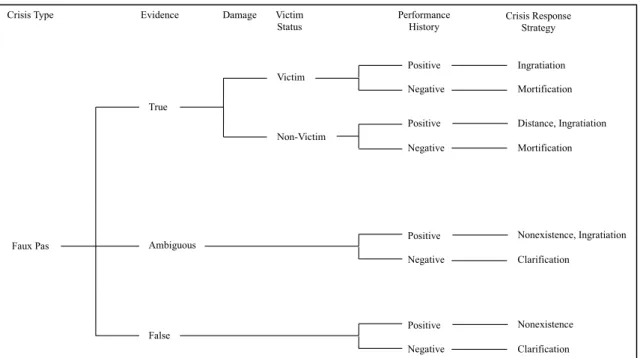
Figure 1. Faux Pas decision flowchart (Coombs, 1995, p.463) ... 46
Figure 2. Accident decision flowchart (Coombs, 1995, p.465) ... 46
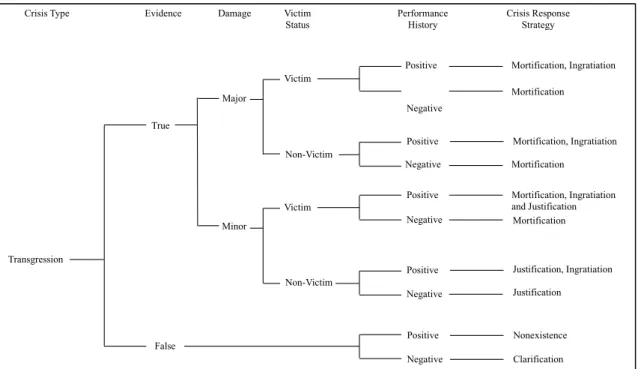
Figure 3. Transgression decision flowchart (Coombs, 1995, p.467) ... 47
List of Abbreviations CA – Cambridge Analytica CU – Cambridge University FB – Facebook
GSR – Global Science Research FTC – Federal Trade Commission RBT – Resource Base Theory DS – Distance Strategy
1. Introduction
No organization, in whatever place, is immune from a crisis, even if it is vigilant and actively seeks to prevent such an event. To worsen, the news go viral almost instantaneously and fake news spread like never before. This reality cultivates a need for preparation, and promptness to respond to any crisis, which can briefly be termed of “Crisis Management”. The way the organization communicates, in the aforementioned unstable context, is a critical part of the crisis management process and has a compelling effect on the payoffs of the crisis. The absence of adequate internal and external communications will make interested parties unaware of circumstances, and quickly become confused, angry and negatively reactive. Organizations may be seen as inept at best and negligent in the worst-case scenario, besides the severe impact on financial results and the strength of the reputational harm. Hence, improved crisis management cooperates in protecting both an organization and its stakeholders. Every crisis is a crisis, and every crisis has its own way of being addressed. Therefore, response strategies must be built upon each situation-specific traits, in order to diminish the damage caused.
The present case study is intended to be studied at a Master or MBA level, in a Brand Management and Strategy course, or even Brand communications and Digital Marketing disciplines. It aims providing students with a real-life organizational crisis situation, Facebook’s 2018 data breach, and leading them to discuss crisis and reputation recovery initiatives.
The current case study is structured as follows. The first chapter gives a brief overview of the company and its performance, followed by a story of how the data breach situation occurred and the strategies embraced by Facebook to react to such a crisis, as well as a presentation of the challenges faced by the brand thereafter. The next chapter is a teaching note for the instructor(s), embodying a literature review of the topics and a group of discussion questions, including guidance on how to handle the case study in order to coordinate the flow of in-class dialogue successfully. The final chapter provides recommendations to the proposed case questions, including a PowerPoint slide deck to be used in class. The suggested arguments are based upon a repertoire of crisis response strategies, built on well-known theory.
2. The Case Study: Facebook & Cambridge Analytica Data Scandal
On February 5, Facebook will turn 16 years old. Born in a young American student’s dorm, it is now one of the most important and influential tech firms in history. Nonetheless, a black cloud began to hang over the company in recent years. It was March 16, 2018, and Mark Zuckerberg was quietly working at his Silicon Valley headquarters, when all of a sudden, all phones started ringing and moods got heated. What happened?
2.1. Zuckerberg starts out.
Mark Zuckerberg hit the coding road at a very early stage of his life. Motivated by his father, who taught him some programming bases, Mark had already a coding tutor by the age of 11.
Even though he pursued his studies in an elite boarding school, where other of his talents were highlighted, such as fencing and literature, Zuckerberg remained absorbed by the programming world. He created a software named Synapse that learned users’ music taste and listening habits in order to generate personalized music playlists. At the time, AOL and Microsoft, two of the biggest tech companies in the world, showed interest in buying that software and hiring Mark, but the latter declined and decided to enroll at Harvard University instead, where he got accepted in the class of 2002.
In college, he built his reputation as the go-to software developer on campus. Among the software he built was “CourseMatch”, that aided students to select their courses based on what other users selected. One of his most popular creations was “Facemash”, a website that let students judge the attractiveness of each other to create rankings. Nevertheless, the school administration shut it down as it was considered inappropriate. The last project Zuckerberg worked on, before moving on with his lifetime project, was “Harvard Connection”, a site designed to collect data from the university students’ networks to create a dating website for the Harvard elite.
2.2. Facebook: the beginning of an era.
The origins of Facebook date back to February 2004, when “Thefacebook” was created. It consisted of a social media website that allowed users to create a personal profile, upload photos, share interests, and connect with other people. Immediately after its launch, Zuckerberg
was accused, by his previous Harvard Connection co-workers, of using their ideas to build a competing product. Years later, he was sued after proven that he had broken an “oral contract” with the accusers, who ended up receiving million worthy company shares.
Initially, Thefacebook was only open to Harvard students but, by the end of 2004, it expanded the membership to all universities in the US and Canada, gathering around 1 million users (Appendix 1). In the meantime, in June 2004, Zuckerberg had moved the company’s operations from his college dorm to Palo Alto, California. In August 2004, Peter Thiel, co-founder of PayPal, invested $500 000 in the company and joined the board. This was the first outside investment, followed by a huge one in the following year, from the venture capital firm Accel, equaling an amount of $12.7 million.
In August 2005, Thefacebook suffered a slight change in its name, becoming officially “Facebook”. By the end of 2005, the network had around 6 million users. After opening to high-school students and expanding to Mexico, UK, Australia, New Zealand and Ireland, Facebook finally freed it to everyone aged 13 and over, on September 26, 2006. Thereon, the company knew nothing but growth. Zuckerberg focused on expanding the social network, opening the gates of his project to outside developers by launching the Facebook Platform1 in May 2007, and adding more and more features every year.
In 2007, Facebook announced its presence in the Mobile Web, promising an optimized experience in a small screen. By 2009, Facebook apps were available on mobile phones, with some exceptions. With all these new easy accesses, Facebook had gathered an amount of 500 million users, by July 2010. By December, the company was valued at $50 billion (Techcrunch, 2011). Facebook was now the third-largest American Web company, behind Google and Amazon. According to a Nielsen study, in 2011, the social media had become the second-most visited site in the U.S., following Google (BBC News, 2012).
2012 was a year of major events for Facebook. Among the most important FB’s acquisitions was Instagram, which the company acquired for an amount of $1 billion. In May of that year, Zuckerberg took Facebook public, through the company’s first initial public offering, which raised $16 billion, making in the biggest IPO ever (The New York Times, 2012). The IPO was
1 Facebook Platform: set of application programming interfaces and tools provided by Facebook to third-party
controversial and caused immediate price declines (Yahoo!, 2012) and was the subject of lawsuits. The CEO announced in October that FB had 1 billion active users (CNN, 2012).
2.3. Facebook Privacy Controversies
A variety of privacy concerns has caused Facebook to be scrutinized over time. Even if repeatedly adjusting its privacy settings and policies, the company has been experiencing a continuous stream of controversies over how it safeguards users’ privacy.
Problems regarding user privacy started emerging in 2006, when the News Feed was launched, a feature that would spot recent friend activity and which shared personal details without user’s consent. The intrusive nature of the News Feed upset students (the only users allowed at the time), which organized themselves to protest against it. Zuckerberg responded to it with a post titled “Calm Down. Breathe. We Hear You.” (Appendix 2), in which he acknowledged the users’ reactions, reiterated the privacy features and promoted the new feature as “cool” way to keep up with their friends’ life events, etc. (Time, 2006).
In late 2007, the Beacon system, which formed part of Facebook’s advertisement system, tracked users’ online purchases from third-party partner websites, once again without their knowledge, and shared it on their News Feed. Zuckerberg issued an apology speech (Appendix 3), in which he announced that the Beacon program would now be optional. Two years later, the company was forced to shut down Beacon following legal action and ended up paying $9.5 million to resolve the privacy concerns (The Telegraph, 2009). Two-thirds of the amount were used to establish a foundation called “Digital Trust Foundation”, aiming to “fund and sponsor programs designed to educate users, regulators and enterprises regarding critical issues relating to protection of identity and personal information online”, and the other third was allocated to lawyers (NBC News, 2013).
At the end of the year 2011, Facebook agreed to settle Federal Trade Commission charges. As stated by the regulators, the company was failing to comply with its users’ expectation of data privacy, making public to third-party apps and sharing with advertisers, all of the users’ personal information (FTC, 2011). Due to these violations, the firm was required to take various steps to make sure it delivered on its promises for at least the following 20 years, namely by warning and getting users’ approval before making any changes in the way it shared their data.
In the FTC proposed settlement, Facebook agreed to be subjected to a privacy audit every two years. Zuckerberg admitted on his apology post that his company has made a “bunch of mistakes” (Appendix 4) but stated that it had already solved some of the privacy problems mentioned by the Commission. Moreover, he wrote that transparency and control were the company’s priorities, listing control features that the network has made available to its users over that year and presenting two new corporate officer privacy roles (The New York Times, 2011).
In 2013, FB acknowledged the existence of a bug that had exposed personal details of six million users over nearly a year. This malfunction allowed a user’s contact information (email address and phone number) to be shared with anyone having some contact information about that user or some type of connection to it (ZDNet, 2013). In a statement (Appendix 5), Facebook guaranteed that the bug was fixed the day after it was discovered. Moreover, the company said that the user’s contact information was only exposed to one or two other users with whom it had a connection with, and that no other data, such as financial data, was breached. Facebook announced it had already notified regulators and that it would inform those affected, one by one, via email.
These were just some examples of how hard it has been for the tech company to keep up with good data privacy practices, but the worst is yet to come.
2.4. Cambridge Analytica Data Privacy Scandal 2.4.1. What is the Facebook data privacy scandal?
The Facebook data privacy scandal fluctuates around the collection of the personal information of around 87 million users worldwide (Appendix 6), by a political consulting firm named Cambridge Analytica. The latter, in collaboration with Global Science Research, owned by Aleksandr Kogan, was able to gather data through a personality test app, called “thisisyourdigitallife”. Millions of users were paid to carry a personality test, agreeing that their data could be used just for academic purposes. The information collected allowed to build the users psychographic profile according to their openness, conscientiousness, extraversion, agreeableness and neuroticism levels (the OCEAN model). By adding the app to the Facebook account to answer the questionnaire, the people behind it could easily compile profile
information, such as age and status updates, likes and, in some cases, private messages. And this happened not only to the people that took the test but also to all their Facebook friends. The idea was that, by gleaning people’s Facebook likes, the company could begin to understand one’s personality, and then more effectively target political advertising at that person. The app was downloaded around 270 000 times.
2.4.2. Cambridge Analytica and the uses of the data.
Cambridge Analytica was an offshoot of the SCL (Strategic Communication Laboratories) group. SCL was behavioral research and strategic communication company, based in the UK. CA was itself created in 2014 and maintained offices in London, New York and Washington. There were three key people involved: the U.S. billionaire Robert Mercer (investor), Steve Bannon (VP) and Alexander Nix (CEO). CA marketed itself as a provider of “consumer research, targeted advertising and other data-related services to both political and corporate clients” (Reuters, 2018).
Soon after its creation, a Cambridge data professor, Aleksander Kogan, approached the company, with its recent app “thisisyourdigitallife”. This app allowed a much cheaper and faster way of collecting data of Facebook users, but also their whole network of friend’s data. The data was then used for political purposes to support several campaigns. These included the Ted Cruz and Donald Trump campaign for the 2016 presidential elections and also the Vote Leave campaign, which acted in favor of Brexit (The Guardian, 2018, March 18)
The company closed its doors on May 1st, 2018, after the scandal.
2.4.3. Going back to 2014, where it all began.
To really undermine what is behind the famous Facebook data breach, it is necessary to go back to the year of 2014. In February, a series of reviews were made on the Turkopticon2 website, a third-party review website for users of Amazon Mechanical Turk3 (MTurk). These reviews detailed a task ordered by Aleksander Kogan, asking users to complete a survey in the
2 In this platform, workers are allowed to give reviews on their employers. It aims to help potential workers by
providing recommendations of the best employers and this way, avoid shady jobs (Turkopticon)
3 MTurk is a crowdsourcing website, available for individuals and businesses, to outsource their processes and
jobs to a distributed workforce who can perform these tasks virtually. These tasks may include survey participations, answering questions, conducting data validation, etc. (Amazon Mechanical Turk)
“thisisyourigitallife” app. First of all, the survey required them to add the app to the Facebook account, which violated MTurk’s terms of service. Second, one of the reviews transcribed the implications of participating in the survey: “provide our app access to your Facebook so we can download some of your data, some demographic data, your likes, your friends’ list, whether your friends know one another, and some of your private messages." (TechRepublic, 2019).
2.4.4. Facebook learns about the situation.
The Guardian revealed the scheme in December 2015 (The Guardian, 2015) and Facebook took notice that all the gathered data from the Kogan’s app had been shared with CA. At the time, Facebook users were not notified by the social network that their data had become the property of another company. Zuckerberg only commented on the subject when the scandal surfaced again in 2018. He stated: “we immediately banned Kogan's app from our platform and demanded that Kogan and CA formally certify that they had deleted all improperly acquired data. They provided these certifications." (Facebook, 2018a, March 21). In August of 2016, Facebook took legal action against GSR, the company owned by Kogan, for passing along illegally collected data.
(The Guardian, 2015)
2.4.5. The worst is yet to come…
On March 2018, Christopher Wylie, a GSR former employee, came upfront and reported the scheme behind the collection of the data. On March 17, two big journals, The Guardian and The New York Times, made publications on the subject, with big revelations. They exposed
that 50 million Facebook profiles were harvested by CA, this figure being later revised to “up to 87 million” profiles. Wylie, who worked on the data collection through the “thisisyourdigitallife” app, alleged that the data was sold to CA, which then used it to build “psychographic” profiles of the users in order to posteriorly target them with specific advertising. The whistleblower told the Observer: “We exploited Facebook to harvest millions of people’s profiles and built models to exploit what we knew about them and target their inner demons. That was the basis the entire company was built on” (The Guardian, 2018, March 17). CA denied the allegations made by Christopher.
A day before the publication of these news, on March 16, Facebook threatened to sue The Guardian over the disclosure of the story. Carole Cadwalladr, a journalist of the Observer and author of the articles, announced it through a Tweet (Twitter, 2018) and later addressed the topic in a Ted Talk (TED, 2018). By the same token, the data-mining firm, CA, also threatened to bring legal charges against The Guardian for defamation (The Guardian, 2018, March 18).
(Twitter, 2018)
2.4.6. Breach Consequences
Suddenly, all eyes were on the social media giant and on CA. People were not pleased with what they heard and read on the news. Many users were worried and wanted increased regulations around their personal data, while others were even investigating on how to delete their Facebook account. Indeed, a growing movement to delete Facebook rapidly moved across the world (Independent, 2018), namely through the viral hashtag #deletefacebook. Financially,
the day after the scandal, Facebook’s share price went down by 7%, and its market value fell more than $36 billion (CNBC, 2018, November 20).
Facebook and CA were now object of an investigation, by the British Information Commissioner’s Office. Likewise, the Electoral Commission also started investigating what role the political consulting firm had in the EU referendum (The Guardian, 2018, March 17). The Guardian was able to get a testimony for an information commissioner, named Elizabeth Denham, which stated: “We are investigating the circumstances in which Facebook data may have been illegally acquired and used. It’s part of our ongoing investigation into the use of data analytics for political purposes which was launched to consider how political parties and campaigns, data analytics companies and social media platforms in the UK are using and analyzing people’s personal information to micro-target voters.”.
2.4.7. Facebook’s reaction
On the day Wylie’s revelations became public, Facebook’s primary reaction was refuting the way the news framed the incident. Paul Grewal, the company’s deputy general counsel, wrote on the network’s blog (Facebook Newsroom, 2018, March 17) that “Aleksandr Kogan requested and gained access to information from users who chose to sign up to his app, and everyone involved gave their consent.”, thus defending the soft policies of the social media. Later, the company seemed to recognize that blaming users for not understanding its complex privacy terms would not be the best way forward, especially because of all the public fuss (The Guardian, 2018, March 22).
Mark Zuckerberg broke his silence on the CA data scandal five days after its revelation, on March 21 (The Guardian, 2018, March 22). He made a public statement on his Facebook page, saying “We have a responsibility to protect your data, and if we can’t then we don’t deserve to serve you” (Appendix 7). The leader of Facebook briefly reviewed critical past events, starting in 2007 until the moment they learned that CA had not deleted the data extracted, as requested years before. He reminded that in 2014, the platform announced changes in its privacy policies, including limiting abusive apps to aggregate data on users’ and friends, without their consent. By the same token, he addressed the scandal that involved Facebook, recognizing that its policies that allowed an improper use of data caused users’ trust in the company to be broken. He wrote: “(…) it was also a breach of trust between Facebook and the people who share their
data with us and expect us to protect it”. At the time, Sheryl Sandberg, Facebook’s COO, shared the CEO’s post and communicated to people through her own comment: “We know that this was a major violation of people’s trust, and I deeply regret that we didn’t do enough to deal with it.” She added “You deserve to have your information protected — and we’ll keep working to make sure you feel safe on Facebook. Your trust is at the core of our service. We know that, and we will work to earn it.” (Appendix 8).
Besides acknowledging that his company has failed to keep up with its users’ expectations, by not notifying them that the personal data of 87 million among them had been harvested and improperly shared, Zuckerberg noted that, up to that moment, the social media giant had made important changes in the way its shared data with third-party applications. In his written speech, the Facebook founder said it would enlighten the users that were affected by the data reaping but also, that the company would put in place several measures that would favorably prevent such incidents from happening again (CNBC, 2018, March 21). One of the measures that were promised to be implemented was an investigation of all apps with a connection to Facebook and thorough audits to any app with dubious activity. Furthermore, the company also announced it would create strong data access restrictions to developers, in order to block privacy intrusions. Moreover, to facilitate users’ access to which apps they have allowed to collect their data and easily remove those apps’ permissions, Facebook would provide a tool at the top of the News Feed that would enable a faster approach to manage privacy settings.
More measures were outlined in another post made by the company in the Facebook Newsroom blog, on March 22 (Appendix 9). Namely, the company showed intention to increase the bug bounty program, for people to report cases of security vulnerability, namely developers misusing their data, and get rewards for it.
Zuckerberg was also interviewed by a few media channels to communicate to users his side of the story. Among these, a televised interview with CNN’s Laurie Segall, in which he once again regretted the incident, acknowledging that it was an enormous breach of trust: “I’m really sorry that this happened”. Moreover, he provided an explanation of why Facebook did not make any effort to communicate with the concerned users back in December 2015. Indeed, the company had trusted the data-mining firm when the latter legally certified to have deleted all the data, believing that the problem would be solved. “It was a mistake”, declared Zuckerberg. He tried to rest people by claiming “I’m serious about doing what it takes to protect our community.”
(CNN, 2018). In resembling conversations with the New York Times, Wired magazine and Recode, a tech news website, he showed openness to clarify any issue related to the case and showed agreement with some existing changes needed in the company’s policies (The Guardian, 2018, March 22). The fact that no higher executive made earlier comments with respect to the incident was not by mistake. In fact, they wanted to wait for the company to be audited on the compromising handling of the users’ data. They hired a digital forensics firm to conduct an audit of CA, which agreed to submit to it, and to other key people involved, namely Aleksandr Kogan and Christopher Wylie. The first one showed willingness to participate in it, but Wylie refused. On a blog post (Appendix 10), Facebook said: “We are moving aggressively to determine the accuracy of these claims. We remain committed to vigorously enforcing our policies to protect people’s information,”. However, the audit, which started on March 19, was obstructed by lawmakers from U.K. which started their own investigation and advised Facebook to back out from their own inspection (CNBC, 2018, March 21). Zuckerberg’s words came days after tech insiders, lawmakers and even employees from his own company demanded explanations on the most recent privacy scandal. Even an online petition was created, in order to call for the disclosure of all the people that were affected by the breach, which gathered more than fifteen hundred signatures (The Guardian, 2018, March 22).
2.4.8. The Congress
In the following month after the CA story broke in newspapers, Facebook’s CEO presented himself before Congress, in a two-day testimony, to address the data-sharing scandal (The Guardian, 2018a, April 11). He travelled to Washington, to Capitol Hill, for the scheduled meetings on the April 10 and 11, 2018.
In the first day of hearings, Zuckerberg testified before a five-hour joint hearing of the U.S. Senate commerce, science and transportation committee and the Senate judiciary committee. The young executive was wearing a suit, white shirt and a sky-blue tie, rather than his usual t-shirt. During the session, he adopted a silent and regretful posture, while senators asked him several questions. His confidence increased as the afternoon advanced, but he always showed himself willing to cooperate. “The most important thing I care about right now is making sure no one interferes in the various 2018 elections around the world,” he declared, which gave awareness of how influential Facebook is in many democratic societies. A senator mentioned some images, supposedly spread online by Russians during the presidential elections of 2016,
which included Donald Trump. In this context, Zuckerberg was asked if he could guarantee that those kinds of images would not come out on the social media again. The CEO replied “Senator, no, I can’t guarantee that because this is an ongoing arms race,” and added, “As long as there are people sitting in Russia whose job it is to try and interfere with elections around the world, this is going to be an ongoing conflict.”. With this in consideration, he recognized that one of his “greatest regrets in running the company” was being passive in acting against the disinformation campaigns by the Russians during election time.
Moreover, when confronted with the 2015 facts, the moment they learned that CA was gathering massive amounts of users’ data, Zuckerberg admitted that the company did not inform the FTC about the situation of the data collection. He claimed, in his defense: “In retrospect, that was a mistake. We shouldn’t have taken their word for it. We considered that a closed case.”. Under interrogation, he pledged that his company was handling a “full investigation” into all the thousand apps that had access to user’s info. “If we find they’re doing anything improper, we’ll ban them from Facebook,” he communicated.
Still regarding CA, he stated that the company had not been an advertiser in 2015. However, after consulting his staff, he rectified his statement, claiming that the data marketing firm had been indeed and advertiser later that year and thus, could have been banned by Facebook once it discovered that it was harvesting data from people. Indeed, advertising was and is the core source of the giant’s revenues. During the U.S election of 2016, online advertising played a major role, which was reflected in the company’s financial statements (Appendix 11)
Furthermore, when asked if Facebook would embrace regulation, Zuckerberg said: “If it’s the right regulation, then yes.”. On the whole, Zuckerberg and Facebook admitted “It’s clear now that we didn’t do enough to prevent these tools from being used for harm. That goes for fake news, foreign interference in elections, and hate speech, as well as developers and data privacy.”. Taking responsibility for the company’s actions was always clear in Zuckerberg’s mind: “I started Facebook, I run it, and I’m responsible for what happens here.”.
In the second day of hearings, before the U.S. House energy and commerce committee. This time, he ran into tougher questions about privacy, surveillance, censorship and politics, which Zuckerberg struggled to respond (The Guardian, 2018b, April 11). During his testimony, Zuckerberg revealed that his data had also been sold to CA. Facebook’s privacy terms and conditions were accused of being a “minefield”, and the young entrepreneur was asked if he
was willing to change his business model to protect user’s privacy. He replied, evasively: “Congresswoman, I’m not sure what that means.”. Also, regarding CA, the CEO was asked if his company was planning to sue Kogan, Cambridge University or the consulting firm that had stolen the data of its users. He responded that legal action was on the table and said: “What we found now is that there’s a whole program associated with CU where … there were a number of other researchers building similar apps. We do need to understand whether there is something bad going on at CU overall that will require a stronger action from us.”. He declared that the company had to figure out whether “something bad” was happening inside CU, and if so, they would be considering bringing legal charges against it.
Another representative raised the CA topic and accused Facebook to close its eyes to the situation and asked: “When the Guardian made the report, was that the first time you heard about it?” and claimed “There is a real trust gap here. This developer data issue is just one example. Why should we trust you to follow through on these promises?”. Zuckerberg argued: “Respectfully, I disagree with that characterization. We’ve had a review process for apps for years. We’ve reviewed tens of thousands of apps a year.”.
Furthermore, Zuckerberg was requested to commit to making changes in all Facebook’s default settings in order to reduce possible collections of personal information. He refused to simply answer with a “yes” or “no”, because of all the complexity behind it: “Congressman, this a complex issue that I think deserves more than a one-word answer”.
Several members of the House committee questioned the young CEO on his company’s transparency about the quantity of information it collects on users and non-users. Tech specialists found discrepancies in Zuckerberg’s speech, accusing of merging dissimilar points on the topic if whether users own and control their personal data. Indeed, when interrogated about who owns “the virtual you”, Zuckerberg’s chosen response was to indicate that each user owns all the “content” he uploads and can delete it at will. But, in fact, besides not directly answering the question, it is known that the advertising profile that the social network builds up about each user cannot be eliminated, and the latter has no control over it.
With respect to better regulation, Zuckerberg stated: “The internet is growing in importance around the world in people’s lives, and I think that it is inevitable that there will need to be some regulation. So, my position is not that there should be no regulation, but I also think that you have to be careful about the regulation you put in place.”
2.4.9. Facebook under fire, again…
Zuckerberg statements, regarding what and when they knew that CA was improperly using Facebook users’ data, were proven to be fallacious. Indeed, the CEO claimed that the company learned about the situation in December 2015, when in reality, communications between Facebook employees showed that the company knew about CA as early as September 2015, way before The Guardian revealed that the political research firm was using the data collected to profile and target voters. This information was obtained through emails, that were released by Facebook, in the context of a SECcomplaint on the misleading statements. In the emails, employees discussed that they had been warned that CA and other third parties were using Facebook’s data, violating the company’s policies, and that they were reaching out to those companies to investigate the situation. For instance, one employee spoke: “my hunch is that these app’s data-scraping activity is likely non-compliant,” mentioning various Facebook Platform Policies that these firms could have defied, namely, “Don’t sell, license or purchase any data obtained from us or our services.” (CNBC, 2019). Once these emails turned public, Facebook made a blog post on Facebook Newsroom, in a defensive tone, stating the company was standing by its initial position, that it was not aware that Kogan had sold the data to CA until December 2015. Stating the post: “In September 2015, a Facebook employee shared unsubstantiated rumors from a competitor of CA, which claimed that the data analytics company was scraping public data. (…) An engineer looked into this concern and was not able to find evidence of data scraping. Even if such a report had been confirmed, such incidents would not naturally indicate the scale of the misconduct that Kogan had engaged in.” (Appendix 12). Again, how trustworthy are these words?
2.5. Conclusion
Facebook is the world’s largest social media network, but, in recent years, its success has been harmed by critical privacy concerns. Since 2006 that Zuckerberg’s company has been involved in controversies over the protection of its users’ data. The March 2018 revelations of a major data breach, involving the data of more than 87 million people, were at the origin of a crisis that Facebook was not prepared to face. The CEO had a very hard time during this crisis, whose severe consequences could have been mitigated by a good communication strategy.
The way a company communicates to its stakeholders in a crisis scenario is key for softening the impact of its negative outcomes. To properly manage communications, it is important to establish ways-of-doing in the three communication phases.
It is important to maintain good Issues Management (Coombs, 2010b), in order to prevent issues from developing into major problems. Facebook needs to review its management of issues so to avoid any data breaches and improper data sharing in days to come.
Moreover, during the crisis itself, it is crucial to respect and act accordingly to stakeholders’ expectations of the way managers should deal with the situation, which are based on the attributions they made regarding the origins of the crisis. There are numerous strategies that can be selected, depending on the type of crisis, the veracity of evidence, the damage and a company’s past performance (Coombs, 1995). Also, it is crucial to cover all media channels in which information could erroneously spread, namely social media. Facebook should have made an analysis a priori of the most appropriate response strategy to follow, which it has not, thus leading to a rapid reputation loss. When the CA story broke years ago, Mark Zuckerberg’s initial response was a long and deafening silence. It took five days for the founder and CEO of Facebook, to emerge from his Menlo Park quarters and talk to the public. When he finally did, he did so with great enthusiasm, addressing several talking points, from his own Facebook page to the conventional press to Congress. He announced several initiatives in order to prevent such data leaks in the future. The young entrepreneur kept apologizing in what seemed to create a huge list of regrets, but the company’s reputation was and is still at stake.
After the crisis, it is important to follow up with everyone involved, outside the company as well as inside, in an attempt to learn from previous mistakes. At this stage, Facebook has to look to what they’ve have done, determine mistakes and find ways to strengthen its communication strategy.
2.6. Case Appendices
3. Teaching Note
3.1.Teaching Objectives
The present case study is designed to present Master or MBA students with a real crisis event scenario, in the context of a Brand Management and Strategy course or, in less broad disciplines, for instance, Brand Communications and Digital Marketing. The mission is to trigger their analytical and problem-solving capabilities and to make them apply their theoretical expertise in practice.
The case study was outlined to fit in one academic hour lecture with length of up to three hours, which can be adapted depending on the questions chosen for discussion. For students to be able to participate in the in-class discussion actively, students should do their own preparation at home, starting by reading the case and make an attempt of answering to the suggested assignment questions, which intend to help meet the following objectives:
1. To familiarize students with a reputation crisis event.
2. To present the notion of “Crisis communication” and encourage the understanding of
the three phases that integrate it.
3. To present the topic of “Attribution Theory”.
4. To present students with different types of corporate crisis response strategies.
5. To introduce a crisis communication tool – crisis teams, which should facilitate
communication between companies and their stakeholders.
6. To highlight the importance of “Issue management” and identify paths to avoid future
crisis events.
3.2.Introduction
The Facebook case study was prepared by Raquel Duarte, under Professor’s Daniela Langaro supervision, within the scope of the Brands in Digital and Social Media Marketing seminar at Católica-Lisbon School of Business and Economics.
The case was written for teaching purposes, aiming to assist instructors to achieve a set of learning goals, by placing each of their students in the role of a CMO of one of the largest companies worldwide, confronted with an intriguing marketing dilemma.
Even though all the events related in the case study are real, it should not be used as a source of primary data or as a reference.
3.3.Synopsis
Facebook’s is a free social network that allows people to create profiles, upload image and video content, send messages and keep in touch. It was born in 2004 and since then has known nothing but growth. Nonetheless, due to the lack of regulations and inaccurate privacy policies, it has been the object of several controversies regarding its capability of protecting users’ data. Recently the social media giant has faced one of the biggest reputation crises ever and was faced with a declining reputation and trust from stakeholders. Zuckerberg, the company’s CEO, apologized innumerous times for what happened but there was a need to resort to stricter measures in order to respond to such an event.
3.4. Suggested assignment questions
The proposed assignment questions aim at leading students through their analysis of the case, in order to generate an in-class debate on crisis-related topics. To that end, students are expected to deal with the following questions:
1. How did Facebook manage communications along the crisis?
2. What was the level of Damage associated with this crisis? Who are the stakeholders
affected, and how was the crisis perceived by them?
3. How would you react if you were the CMO of Facebook?
4. Who should be the spokesperson in this case?
3.5. Literature Review 3.5.1. Crisis
Various definitions of organizational crisis have been proposed by authors. Gillespie and Dietz (2009) describe an organizational crisis as an “organization-level failure, as a single major incident, or cumulative series of incidents, resulting from the action of organizational agents that threatens the legitimacy of the organization and has the potential to harm the well-being of [...] the organization’s stakeholders”. Similarly, crisis is defined as “the perception of an unpredictable event that threatens important expectancies of stakeholders and can seriously impact an organization’s performance and generate negative outcomes” (Coombs, 2014). Accordingly, crisis are negative events that can pollute the positive aspects of an organization’s image (Coombs, 1995).
3.5.2. Crisis Management
In the literature, crisis management refers to a “a set of factors designed to combat crisis and to lessen the actual damages inflicted”. Moreover, it is a process that aims to prevent or mitigate the bad outcomes of a crisis and by that protect the stakeholders, organization and even the industry from possible damage (Coombs, 2014). One of the many tasks of the crisis manager is to do its best to protect the existent positive facets of an organization’s image (Sturges, 1994).
A very important theory in conceptualizing the concept of “crisis management” is Attribution Theory. The latter postulates that individuals make judgements about the causes of crisis events based upon three dimensions: locus, stability and controllability (Weiner, 1974). Locus concerns the locus of control, whether the crisis was caused by an internal or external player. As for stability, it takes into consideration the permanence of the event. Regarding controllability, it refers to the ability of the actor to control or not the cause of the event.
The crisis management process can be organized around three phases: pre-crisis, crisis, and post-crisis. Good crisis communication is at the heart of an effective process, as any crisis event rises a need for information. The term has been used by Coombs (2010a) to refer to the “(…) collection, processing, and dissemination of information required to address a crisis situation.”.
Pre-crisis communication includes efforts to prevent, detect and prepare for crisis, such as the collection of information about crisis risks and training people who will be involved in the process (e.g., crisis spokespersons) (Coombs, 2010a). In this phase, another concept that pops up is “Issues management”, which has a reciprocal relationship with crisis management. It involves “a strategic set of functions used to reduce friction and increase harmony between organizations and their publics in the public policy arena” (Heath, 2005). As indicated by this definition, effective issues management is a form of crisis prevention (Coombs, 2014). By identifying embryonic issues, crisis managers can act before it develops into a mature crisis. “Risk Management” is another important concept in this phase, as it can help prevent a crisis. The majority of the analysis done by crisis managers is conceived to detect risks before they convert into something massive. On its side, crisis preparation is guided by risks assessments (Williams & Olaniran, 1998). Communicating risks among the organization is also a crucial element in the pre-crisis phase as organizations can demonstrate to risk bearers that they are taking responsibility for it and putting efforts on managing it (Coombs, 2010b).
The crisis communication phase is the recognition of the trigger event and the actual response to it (Coombs, 2010a). Risk communication is also needed in the crisis response phase (Coombs, 2010b), to enlighten all the involved players about the current situation. At this point, the goal is to act fast, to be accurate and consistent (Coombs, 2010a). Indeed, experts highlighted that a quick response is given within the first hour after the publics get knowledge of the crisis event (Barton, 2001). Moreover, the Web has only intensified the need for the rapid spread of news and information. A failure to comply with this opens space for others to control and frame the crisis event in their own way, affecting the perceptions of the stakeholders (Brummett, 1980). Likewise, research has validated that when the organization is the information source, there is less reputational harm that if media step in first in delivering the facts. This is called the “stealing thunder” effect (Arpan & Roskos-Ewoldsen, 2005) and proves that silence is not a way out. Moreover, providing accurate information and being consistent creates credibility and protects stakeholders.
As for post-crisis communication, it involves efforts to follow-up with stakeholders and learning from the crisis (Coombs, 2010a). Risk information and concerns are, here again, a part of the communicative needs after the crisis (Coombs, 2010b). Mitroff et al. (1996) have highlighted the need to learn from the crisis, but others have reported that organizations are averse to learn from these negative events (Roux-Dufort, 2000). In fact, people tend to get
watchful and to resist crisis investigations for the simple reason that they feel threatened by a possible attribution of blame or punishment. Thus, learning must not be blame oriented and be rewarded (Coombs, 2010a).
Besides the three mentioned phases, there are two types of crisis communication that are helpful to distinguish: crisis knowledge management, that is all about creating knowledge, going from identifying the crisis sources to decision making, and stakeholder reaction management, that involves communicative efforts (words and actions) to influence the perceptions of stakeholders about the crisis event (Coombs, 2010a).
3.5.3. Reputation management
Reputation is the “aggregate evaluation constituents make about how well an organization is meeting constituent expectations based on its past behaviors” (Wartick 1992). An organization is rewarded with a strong reputation depending on how well it meets certain criteria and/or stakeholder’s expectations. All interactions with an organization, whether in person or any other communication channel are integrated into stakeholder’s mind creating an album of memories that weight in their vision in unexpected events such as crisis. Therefore, reputation is a critical resource for any organization.
Maintaining a good reputation is thereby one of any organization’s main concerns. That is why Reputation Management is so important. In broad, it involves efforts to shape how stakeholders perceive the organization with the purpose of creating benign impressions. It may involve advertising “the good points” about an organization, for instance (Coombs, 2010b).
Any crisis menaces an organization’s reputation (Barton 2001). Part of the crisis phase is dedicated to reputation repair, the latter being a vital resource that must be protected. A persuasive crisis communication minimizes a crisis’ consequent reputational damage and sets the base for repairing the caused damage (Coombs, 2010b). Also, reputation building prior to a crisis is beneficial to an organization in this kind of scenario (Coombs & Holladay 2002). Indeed, a prior negative reputation just slows down the eventual positive outcomes of the reputation repair efforts. This reaction is called the Velcro effect (Coombs & Holladay, 2006). The inverse situation may also occur, a positive reputation favoring the recovery of an organization’s after the event. Here, the organization is given the benefit of the doubt.
3.5.4. Information breaches
Information breaches are here concerned. An information breach can be defined as the “malpractice of unauthorized access to personal information of a group of individuals” (Culnan & Williams, 2009). A recent review of literature on this matter found that from 2006 to 2015, according to the DatalossDB.org database, the number of breaches increased from 643 to over 1500 annually (Rasoulian et al., 2017).
Any stakeholder’s basic expectation is that it can trust an organization to protect its data (Carroll 1991). Besides, data privacy protection is a key element of every organization’s service quality (Yang & Fang 2004). A gap in these expectations can lead to a huge service crisis, with substantial media attention. Due to its intangibility, it may take some time to figure out the nature of a breach, and once the information is revealed, there is no way back on restoring the loss of privacy (Malhotra & Malhotra, 2010), taking down an organization’s legitimacy and reputation.
Information breaches have enough magnitude to influence responses of investors (Campbell et al. 2003), one of the most important capital sources of an organization. An important concept is idiosyncratic risk (or unsystematic risk), which stands for the firm-specific volatility of stock return. This volatility is influenced by micro firm-level factors, such as marketing strategies (Goyal et al., 2003). Hence, besides being reflective of the effectiveness of an organization’s marketing strategies (Rust et al. 2004), idiosyncratic risk leads to understanding the financial impact of service crisis recoveries in investors’ investment portfolios.
3.5.5. Crisis classifications
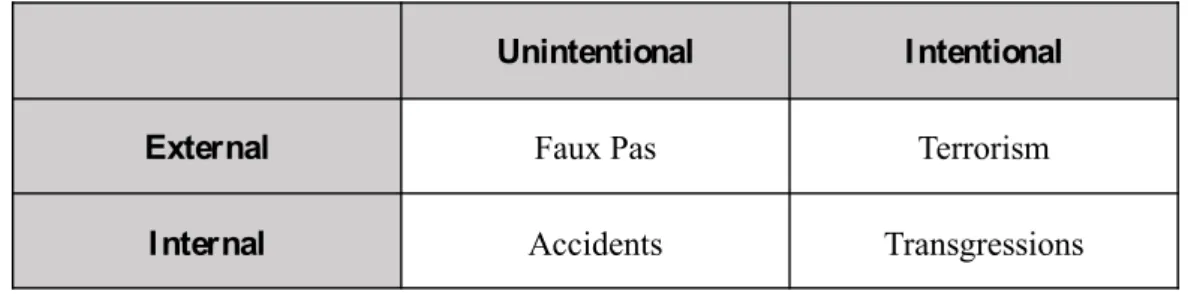
In his paper of 1995, Coombs noted the existence of several elements that influence the way publics, i.e., the parties involved, react and perceive a crisis situation: the crisis type, the veracity of evidence, the damage, and the performance history. In broad, there are four types of crisis, that lean on two dimensions. The first dimension regards the internal or external origin of the crisis, meaning if it was caused by the organization itself or by a person or group outside it. The internal-external dimension relates to the locus of control dimension of AT. As for the second dimension, it encompasses whereas the crisis event was committed intentionally or unintentionally. The intentional-unintentional dimension relates to the controllability
dimension of AT. To summarize this, a matrix with the types of crisis was elaborated (Table 1.).
Table 1. Types of Crisis (Coombs, 1995)
The “Faux Pas”, is an unintentional action that an external agent tries to transform into a crisis (e.g., a company is challenged by an outside group concerning the appropriateness of its products’ advertising). Accidents are another type of unintentional acts, that happen during the course of day-to-day operations and therefore lead to minimal organizational responsibility (e.g., employee injuries, natural disasters, product defects). On the other hand, transgressions are intentional actions incurred by an organization, placing publics at risk or harm (e.g., manipulating products in order to avoid governmental tests). Finally, there is “Terrorism”, which has the intentional side, except that the action is taken one or several external actors, with the objective of harming the organization directly (e.g., hurt employees) or indirectly (Ex: reduce sales) (Coombs, 1995).
As stated before, the type of crisis is not sufficient to affect the attribution publics make about a crisis. The term “veracity of evidence” (Coombs, 1995) usually refers to the proof of the actual existence of the crisis event. Such evidence can be either true, indicating that a crisis did happen, false (rumors), explained by the possible public circulation of crisis reports, and ambiguous. This last kind of evidence can only be found with faux pas, when questions of ethics and morality are at stake. For example, protests against an organization that legally conducts product testing on animals could create a faux pas. Here, there may be a disagreement on whether it is or is not acting appropriately and according to moral standards.
Another aspect that weights in crisis situations is the amount of damage associated with it, whether severe or minor (Coombs, 1995). Publics tend to ascribe more responsibility to the organizations when the level of damage is higher. This goes along with the notion that people hold others more personally responsible for negative actions than for positive ones (Griffin,
Unintentional Intentional
External Faux Pas Terrorism
1997). Here, it is relevant to make a distinction between victims (those who suffer physically, mentally, or financially) and nonvictims.
Lastly, the organization’s performance history (Coombs, 1995) is also an important factor in a crisis. An organization is worthy of trust if its past performance has been positive. Indeed, images are hard to change as publics attach to them (Grunig, 1993). Furthermore, publics are less likely to see the organization as guilty for the event since positive past actions make the cause of the crisis appear unstable (Griffin et al., 1991).
3.5.6. Impact of crisis on publics
The impact of the crisis should vary according to the importance publics give to the three AT dimensions. Depending on the level of responsibility each one gives to the organization, different feelings and behaviors will emerge among the ones that were affected by the crisis (Weiner, 1974). If larger responsibility is attributed to the organization, publics will have more negative images of it, and this will affect their actions towards it (Coombs, 1995). Therefore, it is crucial to identify who are the ones affected and define priorities concerning their importance and valence for the issue.
More and more, organizations collect and use customer data, but there is a growing resistance to these practices. This is because people feel vulnerable and this results in negative outcomes for organizations, such a negative stock performance and harming customer behaviors (e.g., faking information, disseminating negative word-of-mouth, switching behaviors, etc.) (Martin et al., 2017). In the context of a data breach, there is a complete violation of stakeholders’ trust. The “Gossip Theory” may be introduced here. In broad, when people learn they are the target of gossip, they tend to react negatively (Baumeister et al., 2004). In the business context, applying this theory suggests that customer data vulnerability may lead to feelings of betrayal, emotional violation (Richman & Leary, 2009) and decreasing levels of trust (Turner et al. 2003). Transparency, i.e. the target’s awareness of which information is being shared, and control, i.e. the extent to which the target believes (s)he can manage the flow of information, are two methods identified by the Gossip Theory, that help to eliminate the negative outcomes of unsanctioned transmissions of information.
Coombs and Holladay (2005) analyzed several crises and correlated the events with the generation of some feelings: anger, sympathy, and schadenfreude (taking joy in the pain of others). As expected, anger rises with attributions of crisis responsibility. The authors also examined the effect of these emotions on behavioral intentions, such as purchase intension and negative WOM. The latter is a troublemaker because its effects are very long-lasting. Messages posted online, for instance, can remain for years, while people’s memory of a crisis fades after a few months.
3.5.7. Crisis recovery
There are a lot of difficulties associated with recovering from a service crisis. Crisis recovery can be broadly defined as an organization’s attempts to amend and repair inconveniences to all the publics affected by the crisis. These will reassess the organization’s trustworthiness, reputation and legitimacy based on their level of satisfaction with the recovery process (Aaker et al. 2004).
3.5.7.1 Crisis response strategies
Conforming to the RBT, effective crisis recoveries improve an organization’s key resources, that is its relationships with its stakeholders, and/or enhances its capabilities (i.e., processes to protect data confidentiality). In turn, these stronger resources and capabilities balance the organization’s future performance and cash flow.
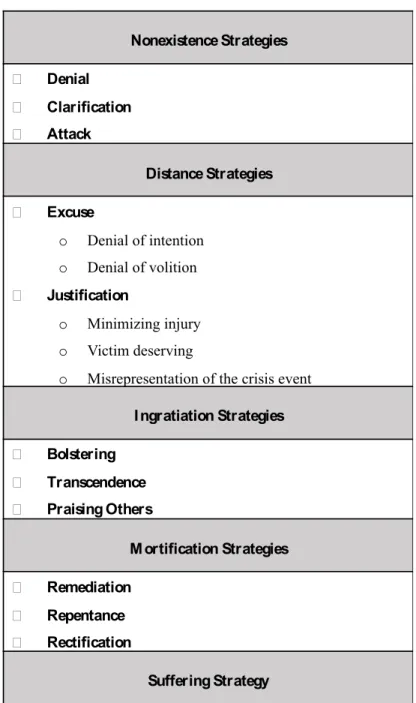
Crisis situations diverge depending on how publics believe an organization is acting in the three dimensions of AT. Crisis response strategies aim to repair the damage caused by these attributions. A repertoire of crisis-response strategies, composed of messages that aim to repair organizational images, was mainly built on the works of Allen and Caillouet (1994). It is comprised of five categories: non-existence strategies, distance strategies, ingratiation strategies, mortification strategies and suffering strategies. Each of these strategies is composed of sub-strategies (Table 2.) that will be described below.
Non-existence strategies attempt to eliminate the crisis. Denial, clarification, attack and
intimidation are sub-types of non-existence strategies. Denying a crisis simply means
stating that nothing happened, that there is no crisis at all (Coombs, 1995; Marcus & Goodman, 1991; Sharkey & Stafford, 1990). As for clarification, it undertakes the same
steps as in denial except that there an attempt of explaining why there is no crisis (Allen and Caillouet, 1994). With a more aggressive side, “attack” stems from confronting those who erroneously report that the non-existing crisis exists (Coombs, 1995; Metts & Cupach, 1989). Finally, intimidation is the most hostile strategy, knowing that it threatens to use organizational power (Ex: lawsuits or even physical violence) against the confronting players (Allen and Caillouet, 1994).
Distance strategies recognize the crisis and attend to create public acceptance of the crisis while softening the connection between the organization and the crisis. “Excuse” is considered a DS as the organization minimizes its responsibility for the crisis through denial of intention and denial of volition (Coombs, 1995). On the same token, the justification strategy consists in minimizing the damage associated with the crisis (Metts & Cupach, 1989; Sharkey & Stafford, 1990). It may include denying the severity of an injury, alleging that the victim deserved what happened or that the event has been misinterpreted (Allen and Caillouet, 1994).
Ingratiation strategies aspire to win public approval for the organization (Allen and Caillouet, 1994). Bolstering is about reminding publics of existing positive organization’s deeds (Ice, 1991), namely past charitable donations or a history of fair worker treatment.
Transcendence strategy places the crisis in a preferable context (Coombs, 1995), appealing
to values that the publics identify with (Allen and Caillouet, 1994). At last, praising others is also an IS as it refers to winning approval from publics, leading them to like the organization (Allen and Caillouet, 1994).
Mortification strategies’ goal is to win forgiveness and create acceptance for the crisis.
Remediation is one way of pursuing this, that is offering some form of compensation or
helping victims (money, goods, aid) (Marcus & Goodman, 1991; Sharkey & Stafford, 1990). Repentance implies asking for forgiveness (Sharkey & Stafford, 1990) and rectification means taking action to hinder a reoccurrence of the crisis in the future (Coombs, 1995).
The Suffering strategy does not have any sub-strategy. The idea is to gain empathy from publics. Suffering represents the organization as an arbitrary victim of some malicious portrays the organization as an unfair victim of some outside actors.
Table 2. Crisis-Response Strategies (Coombs, 1995)
3.5.7.2. Select the correct crisis response strategy
Crisis response strategies are a very important source for crisis managers, they must select the most appropriate one. The decision process begins by identifying the crisis type, then the evidence, followed by the damage caused (victim status) and ending by analyzing the organization’s performance history. In his work (Coombs, 1995), Coombs has provided a series of flowcharts for selecting crisis response strategies for each specific crisis situation (Figures 1, 2, 3, 4). Nonexistence Strategies • Denial • Clarification • Attack Distance Strategies • Excuse o Denial of intention o Denial of volition • Justification o Minimizing injury o Victim deserving
o Misrepresentation of the crisis event
Ingratiation Strategies • Bolstering • Transcendence • Praising Others M ortification Strategies • Remediation • Repentance • Rectification Suffering Strategy