M
ESTRADO
MARKETING
T
RABALHO
F
INAL DE
M
ESTRADO
DISSERTAÇÃO
RISK
PERCEPTION
IN
SKINCARE
COSMETICS
AND
RISK-REDUCTION
STRATEGIES:
AN
EXPLORATORY
STUDY
OF
YOUNG
CHINESE
WOMEN
YIFAN TANG
M
ESTRADO
MARKETING
T
RABALHO
F
INAL DE
M
ESTRADO
DISSERTAÇÃO
RISK
PERCEPTION
IN
SKINCARE
COSMETICS
AND
RISK-REDUCTION
STRATEGIES:
AN
EXPLORATORY
STUDY
OF
YOUNG
CHINESE
WOMEN
YIFAN
TANG
S
UPERVISOR:
PROF
.ª MARGARIDA
DUARTE
ABSTRACT
With the saturation of cosmetic markets in developed countries, international companies increasingly seek new opportunities and growth in emerging markets. As the most populated country in the world, China is a key target. With increasing disposable income and consumer awareness of the importance of skincare, the Chinese skincare cosmetic market is very attractive for both national and international players. Perceived risk is an influential factor in consumer purchase decisions, and skincare in no exception. Thus, it is critical for enterprises to have a deep understanding of Chinese consumers’ risk perceptions in skincare cosmetics in order to increase market share and take the lead.
The purpose of this study is to understand young Chinese women’s perceptions of risk in skincare cosmetics (performance, financial, physical, social, and psychological) and their risk-reductions strategies. Some other issues affecting risk perception are also investigated. Furthermore, this study addresses Chinese female’s perceptions of organic cosmetics and testing skincare products on animals. The approach selected for this research is qualitative and the method of data collection is the semi-structured face-to-face interview. The sample consists of 12 Chinese female consumers of skincare products.
KEYWORDS: Perceived risk, Skincare cosmetics, Chinese female, Risk-reduction strategy,
RESUMO
Com a saturação dos mercados de cosmética nos países desenvolvidos, as empresas internacionais procuram cada vez mais novas oportunidades e crescimento nos mercados emergentes. Como o país mais populoso do mundo, a China é um alvo-chave. Com o aumento do rendimento disponível e a consciencialização do consumidor para a importância dos cuidados da pele, o mercado chinês de produtos de cuidado da pele é extremamente atraente, tanto para os players nacionais como internacionais. O risco percebido é um fator influente nas decisões de compra do consumidor, e os produtos para cuidado da não são exceção. Portanto, é fundamental que as empresas tenham um profundo entendimento das perceções de risco dos consumidores chineses em cosméticos para a pele, a fim de aumentar a presença neste e assumir a liderança. O objetivo deste estudo é entender as perceções de risco de jovens mulheres chinesas em cosméticos para a pele (desempenho, financeiro, físico, social e psicológico) e suas estratégias de redução de risco. Alguns aspetos que afetam a perceção de risco são também investigados. Além disso, este estudo aborda as perceções das mulheres chinesas sobre cosméticos orgânicos e testes de destes produtos em animais. A abordagem selecionada para esta pesquisa é a qualitativa e o método de coleta de dados é a entrevista semiestruturada presencial. A amostra é composta por 12 consumidoras chinesas de produtos para a pele.
PALAVRAS-CHAVE: Risco percebido, Produtos de cuidados da pele, Mulheres chinesas,
ACKNOWLEDGEMENTS
First of all, I would like to express my gratitude for all the valuable guidance and patience of Professor Margarida Duarte who helped me to define research direction and provided meaningful research tools and valuable guidance to me. Thank you for sharing your knowledge and experience to me. It was a great honor for me to have the opportunity to complete my dissertation under your guidance and accompany. If it hadn't been for your help and support, I would not have completed my dissertation successfully.
In addition, I would like to thank my parents for always being so supportive to my study and always being there for me. Finally, I would like thank my friends who were being so generous to help me and provided me great help during the most difficult part of the dissertation.
Content
ABSTRACT ... I RESUMO ... II ACKNOWLEDGEMENTS ... III CHAPTER 1 - INTRODUCTION ... 1 1.1 Background ... 11.2 Relevance of the Study... 2
1.3 Increased Availability of Information of Skincare Cosmetics in China ... 4
1.4.4 Cosmeceuticals Development in China ... 4
1.3 Research Objectives ... 6
CHAPTER 2 - LITERATURE REVIEW ... 6
2.1 Perceived Risk ... 6
2.2 The Five Dimensions of Overall Perceived Risk ... 7
2.2.1 Physical Risk ... 7 2.2.2 Performance Risk ... 8 2.2.3 Social Risk ... 8 2.2.4 Financial Risk ... 9 2.2.5 Psychological Risk ... 9 2.3 Animal Testing ... 10
2.4 Organic Skincare Cosmetics ... 11
2.5 Risk Perception Impact Factors ... 12
2.5.1 Self-Efficacy ... 12
2.5.2 Wealth and Risk Perception ... 12
2.6 Risk-Reduction Strategies ... 13
2.7 Risk-Reduction Strategies in Empirical Research ... 14
2.7.1 Repetitive Purchase... 14
2.7.2 Purchase of Well Known Brands ... 15
2.7.3 Search for Information ... 15
2.8 Chinese Female Characteristics ... 16
CHAPTER 3 - METHODOLOGY AND DATA COLLECTION ... 17
3.1 Introduction ... 17
3.2 Research Methods and Data Collection Approaches ... 18
3.4 Semi-Structured Interviews ... 18
3.5 Sampling ... 19
CHAPTER 4 - ANALYSIS AND DISCUSSION OF RESULTS ... 19
4.1 Introduction ... 19
3.3 Sample Description ... 20
4.2 Analysis of Introductory Questions ... 20
4.3 Physical Risk and Physical Risk-Reduction Strategies ... 22
4.4 Performance Risks and Performance Risk-Reduction Strategies ... 23
4.5 Social Risks and Social Risk-Reduction Strategies ... 24
4.7 Financial Risks and Financial Risk-Reduction Strategies ... 27
4.7.1 Perceptions of Financial Risk ... 27
4.7.2 Financial Risk-Reduction Strategies ... 28
4.8 Perceptions of Testing Skincare Products on Animals ... 29
4.9 Perceptions of Organic Skincare Products ... 30
4.10 Perception of Efficacy and Self-Efficacy of Respondents ... 31
4.10 Respondents’ Subjective Income ... 31
CHAPTER 5 – CONCLUSIONS ... 32
APPENDICES ... 40
Appendix 1 – Interview Guide ... 40
Appendix 2 – Perception of Efficacy and Self-Efficacy ... 41
Appendix 3 – Demographic Questions ... 42
LIST OF FIGURES Figure 1- Risk-Reduction Strategies ... 14
Figure 2 - Subjective Knowledge of the Skincare Cosmetic Category ... 31
CHAPTER 1 - INTRODUCTION
1.1 Background
The cosmetic industry has been a profitable industry and still presents strong growth potential. With increasingly consumer awareness of the latent dangers from external environment to the skin, and the desire to maintain beauty, the consumption of skincare products is expected to grow further.
Despite of the rapid development, there are some areas of concern for the skincare cosmetic industry. The world economy has not yet completely recovered from the recession of the 2008 financial crisis. Economy slowdown in the world wide makes the future of global economy uncertain. As consumers in developed countries tighten their expenses in the face of unpredictable future, the spending on cosmetics is also affected. Further, with Brexit the relationship between Great Britain and European countries became sourer, and international cosmetics companies may be negatively affected by trade tariffs in the near future. In spite of the trade protectionism on the rise, the skincare cosmetics market in developed countries is close to saturation, and competition is quite stiff. It seems the growth potential of the cosmetics industry in developed markets has deteriorated due to these non-controllable external risks.
On the other hand, the cosmetics market is springing up in developing countries. As the development of skincare cosmetic market in emerging economies has lagged behind compared with developed countries, the business of skincare shows tremendous potential for growth in developing countries. Therefore, international cosmetics companies are now shifting their focus from developed countries to developing countries in order to explore a preemptive opportunity. Along with the increase of income, consumers of developing countries are demonstrating a growing interest demand for cosmetics. Increased income means higher discretionary income for cosmetics consumption. Consumers in developing countries demand cosmetic products with not only more diversity, but also better quality. Despite the price of
cosmetics, product effectiveness and quality have becoming key factors in the decision-making process to buy cosmetics.
With the setting of The Belt and Road policy in China with other countries, the physical and psychological distance between Chinese market and international enterprises has narrowed. With trade barriers being softened, international cosmetics companies are facing a great opportunity to set further foot in Chinese market and make the utmost use of their strengths.
Competition between local and international brands of skincare cosmetics also become fierce. Even though international companies have advantages in lower average overall production costs and range/reputation of their products over local brands, the lack experience with the Chinese market and the lack of knowledge concerning the perceptions, attitudes and behaviors of the Chinese consumer can negatively affect both growth and future development. Therefore, being well acknowledged of Chinese consumer’ behaviors and comprehend Chinese consumers’ perceptions of skincare cosmetic have becoming increasingly important for not only international brands, but also local cosmetic companies. According to the literature review, the topic of consumer’s perception of risks in skincare cosmetic deserve further research. Further, the risks perceived by the Chinese consumer of skincare cosmetics and the corresponding risk-reduction strategies are still to be investigated.
1.2 Relevance of the Study
With the saturation of cosmetic markets in developed countries, international companies are increasingly forced to seek new opportunities and growth in emerging markets. As the most populated country in the world, China is a key target. With increasing disposable income and consumer awareness of the importance of skincare, the Chinese skincare cosmetic market is very attractive for both national and international players.
high growth rate in the past decade. It has increased from 170 billion Chinese Yuan in 2016 to 200 billion Chinese Yuan in 2018. It is predicted that sales will reach 240 billion Chinese Yuan in the next five years. Beyond the current importance of this market, the Chinese skincare market reveals an enormous growth potential. For international cosmetics companies seeking for consistent business growth and future development, China is a strategic market that cannot be neglected. With an increasing number of foreign players joining the competition, Chinese local brands also need to fight for market share and for profits.
The concern with skin protection has increased in China. Many industry reports reveal that Chinese consumers are more concerned with skin health and longevity at present than in the past. As a result, the demand for skincare cosmetics is steadily increasing in China. According to HKTDC (2019, 12 July, p 2) “China’s skincare-products market is becoming more high-end” and “Consumers favour major international brand skincare products, and spending habits are switching from being price-focused to being driven by quality and brand.”
Perceived risk has been considered an influential factor that has impact on consumer purchase decisions, and skincare in no exception. Thus, it is critical for enterprises to comprehend Chinese consumers’ perceptions of risks for skincare cosmetics to better address this market’s needs.
Shen Weiliang, vice president of the Osmun Group, consider young people (25-36 years of age) to be the core consumers of skincare products and argue that “The number and purchasing power of China's young consumers is impressive. The demand for skincare products in the China market will steadily increase as consumers become more sophisticated" (HKTDC 2016, p. 1). According to reports, Chinese young females are willing to spend a considerable share of their disposable income in beauty maintenance, and they do not hesitate in spending money in skincare cosmetics. Therefore, young female consumers can act as a key to open up the door for deep insights of perceptions of skincare cosmetics in China.
The profound changes mentioned above concerning the importance of skincare in China are calling for deeper insights in the field of consumer behavior. There is a lack of empirical research about Chinese female consumers’ perceptions of risk in skincare cosmetics, which is not only academically important but also essential for practitioners.
1.3 Increased Availability of Information of Skincare Cosmetics in China
We are now living in an information era, with a rapid increase in the amount of published information or data. With more available information and development of information access, it seems that everyone can easily access abundant information concerning skincare products. Owning to the development of social media and online forums, consumers nowadays can diversify his/her information sources with little effort. Despite the advantages, it may also lead to information overload.
Chinese Internet environment is quite different from other countries because of the internet censorship policy in China. Internet censorship in mainland China affects both publishing and viewing online material. Some of the most commonly used online forums and social media websites in other countries are actually not available to access in mainland China. Many foreign independent third-party institutions for rating and reviewing are not available either. Therefore, information sources and information access in mainland China have its own specificities.
There is more available information for consumers in China than in the past, yet not exactly the same sources of information as other countries have. Since most reviewing and rating from third-party institutions are not within Chinese female’s reach, it is crucial to investigate which third-party institutions and rating websites are widely used in China for skincare cosmetics evaluations.
1.4.4 Cosmeceuticals Development in China
According to HKTDC (2019, p 2), in China “consumers are increasingly aware of products that combine cosmetic and pharmaceutical features, such as spot lightening
cream, acne treatment lotion and acne ointment” with “young consumers beginning to concern themselves more about the ingredients and quality, the age at which they start to purchase cosmeceuticals is becoming increasingly lower.”
Although cosmeceuticals have medical properties, they are classified as cosmetics since there are neither an official definition for the concept on the mainland, nor any regulations (HKTDC, 2019, 12 July). There are different definitions of cosmeceuticals. Even though the term “cosmeceuticals” is widely used in daily life, the Food and Drug Administration of the United States doesn’t recognize its use. According to MedicineNet, it is defined as cosmetic products claiming to have medicinal or drug-like benefits. However, cosmeceuticals are not equivalent to a drug in medicine, and consumers do not need a prescription for purchase.
Although the cosmeceuticals market has developed rapidly in China in recent years, the booming of this market is predicted to slow down. According to a report of Qianzhan.com, it was estimated that the cosmeceuticals market in China was nearly 62.5 billion Chinese yuan in 2017, with an annual growth rate of about 20%. By the year of 2023, it is predicted that the cosmeceutical market size in China will reach 81.1 billion yuan. However, there are some concerns, as the National Medical Products Administration in China declared that there is no legal term for “cosmeceuticals” in the country.
According to Article 12 of the “Regulations Concerning Hygiene Supervision over Cosmetics,” for cosmeceuticals: “No curative effect shall be advertised can be inserted on the packaging of cosmetics.” Since early 2019, the Chinese government changed the attitude towards cosmeceuticals, and pretended to lay down laws and regulations to regulate cosmeceuticals. At present, there is no result showed under the search for key word “cosmeceuticals” in TAOBAO, the biggest online shopping website in mainland China. Stores that sell cosmeceuticals online in China have eliminated the key word “cosmeceuticals” from their original names. However, consumers can still purchase so-called “cosmeceuticals” from online stores in China. One of the biggest online
cosmeceutical stores in TAOBAO, called SENTIAN (森田), still has more than one million followers on its store page and sells tens of thousands of cosmeceuticals products monthly. It is estimated that cosmeceuticals still take up to 20% of total cosmetics market in China, compared to the 50% of developed countries, cosmeceuticals are predicted with capacity to growth, but more uncertainty on its development in mainland China (Data from the Hong Kong Trade Development Council).
1.3 Research Objectives
This research attempts explore in depth the perception of risks by female consumers of skincare products in China in different dimensions. In addition, this study investigates the relationship between perceptions of risks in skincare cosmetics and consumer’s behavioral responses to reduce perceived risk.
CHAPTER 2 - LITERATURE REVIEW
2.1 Perceived Risk
Perceived risk is not new in the field of consumer behavior research. Actually, there have been a considerable number of academic studies investigating perceived risk, since its introduction to better understand the consumer. Unlike other disciplines, research on perceived risk in marketing mainly focuses on negative outcomes, rather than considering both positive and negative ones.
There is still no consensus in the definition of perceived risk. The most commonly used definition of perceived risk is "consumer's perceptions of the uncertainty and adverse consequences of buying a product or service" (Dowling & Staelin, 1994, p. 119). However, there is widespread agreement that thanks to the ongoing updates of definition by different researchers, the theory of perceived risk has been enriched.
behavior. According to his findings, there were risks involved in the purchase decision-making process. This researcher argued that perceived risk has two components: “uncertainty” and the “seriousness of the consequence of the purchase.” In addition, he pointed out that when lacking information, consumers were motivated to develop decision-making strategies to reduce the perceived uncertainty and seriousness of the consequences related to the purchase. The research of how perceived risk affects consumer behavior has grown rapidly since then. Later studies found that perceived risk strongly affects the way consumers collect and search for information in the early stage of the purchase decision-making process (Cox, 1967; Dowling & Staelin, 1994).
In summarizing early works on perceived risk, Cunningham (1967) conceptualized the “consequence of purchase” as involving two dimensions: performance and psychosocial consequences. Soon after, Roselius (1971) distinguished psychological risk from social risk, and identified two other types of risks, namely physical safety and financial risk. Later, Jacoby and Kaplan (1972) came up with a typology to study perceived risk considering five dimensions: financial risk, performance risk, physical risk, psychological risk, and social risk.
2.2 The Five Dimensions of Overall Perceived Risk
Jacob and Kaplan (1972) proposed an operational definition for the five dimensions of perceived risk. From the results of their research, overall perceived risk could be well explained and forecasted by five dimensions, namely: functional risk (equivalently to performance risk), physical risk, social risk, psychological risk and financial risk. They demonstrated that these five dimensions are independent from each other, and one dimension would not necessarily be affected by change in other dimensions.
2.2.1 Physical Risk
the product harming the consumer her/himself or others. The other description emphasizes how “the store in which the product is purchased could potentially cause physical damage to the purchaser.” Physical risk can also be defined as the “physical efforts that the shopping trip implies” (Mitchell, 1998, p. 172). In addition to theoretical definitions, physical risk has another operational definition as “the chances that an unfamiliar brand may not be safe or be harmful to consumer’s health” (Jacob & Kaplan, 1972, pp. 382-).
2.2.2 Performance Risk
Functional Risk, also called performance risk, refers to the risks associated with the functioning of the product and related to the features of the product. Jacob and Kaplan (1972) defined it as the “likelihood that there will be something wrong with an unfamiliar brand or that would not work properly.”
The developments in science and technology are associated with more multi-functional cosmetics available in market. With the increasing stress in the fast-paced society, discretionary time and energy of everyone have been largely cut back. Along with insufficient time and energy, consumers seem to favor multi-functional cosmetics as a one-time solution.
Different from westerners, beauty concerns for most Chinese is more likely to be about facial features, and foremost about white skin. Whitening skin care has become routine for a large number of Chinese females. The whitening effect is one of the most desired outcomes of the purchase of skin care products by Chinese female consumers. Many so-called multifunctional products claim that their products include whitening, as one of the key attributes.
2.2.3 Social Risk
Jacob and Kaplan (1972) pointed out that psychological risk reflected “how the consumer perceives himself” while the social risk refers to “the consumer's perception
of how others will react to his purchase.”
Compared with garments, shoes, or other products, cosmetics possess characteristics relatively more intangible. Especially for skincare cosmetics, it is a challenge to decide which brands of skincare cosmetics to buy, based on the physical appearance of the product. It is also hard to tell one’s social status based on his/her skincare cosmetics. However, one’s skin condition and the maintenance of youth and beauty do represent part of social status. Generally, people who have a better maintained skin are more likely to be from high income social class in China. It is more obvious when it comes to middle age women, while this fact starts to fade in the young Chinese generation, as this generation includes those born after China's reform and opening-up in 1978. This generation, between twenty and thirty years old are those who actually enjoy great achievement due to political reforms, is clearly different from the previous generation, not only in patterns of consumption, but also in the level of their households’ financial income.
2.2.4 Financial Risk
Financial risk represents “the chance that consumer stands to lose money when tries an unfamiliar brand” (Jacob & Kaplan, 1972). Consumer’s financial status affects the level of perceived financial risk.
2.2.5 Psychological Risk
Jacob and Kaplan (1972) developed an operational definition for psychological risk as “the chances that an unfamiliar brand not fit well consumer’s self-image or self-concept.”
1) Self-Perception
Many purchase decisions made by consumers can reflect their self-perception. The usage of skincare cosmetics can be related to self-concept in seven different social situations, as following: self-esteem, perception of incompetence,
masculinity-femininity, social desirability, anxiety, fear of negative evaluation, private self-consciousness (Brdar, Tkalcic, & Bezinovic, 1996). With the increase of income and awareness of importance of self-appearance, consumers are investing more financial resources to improve their appearance.
2) Self-Concept
“Self-concept exists for the purpose of both protecting and enhancing a person's ego” (Onkvisit & Shaw, 1987). When a person’s self-image is threatened by others' criticisms, the individual becomes defensive and perhaps angered. Therefore, marketing programs should try to avoid direct criticism of consumer’s self-image. Otherwise, perceived offensive marketing program may result in consumer’s defensive behavior.
Nauert (2018) also stated that “consumer satisfaction is greatest when the cosmetics brand helps to strengthen positive emotions through the perception of 'caring for oneself' and removing feelings of worry and guilt about not taking care of one's appearance.”
2.3 Animal Testing
Forte and Lamont (1998) indicated that the role of an enterprise in society could affect consumers’ purchase behavior. “Not tested on animals” an “cruelty-free” brands are regarded by many as ethical in the context of cosmetics. Creyer and Ross (1997) also found that a firm’s ethical behavior could affect consumer’s final purchase decision of its products. A brand that produces cosmetics “not tested on animals” usually gains a better brand image in society. However, Carrigan and Attalla (2001) indicated that even though unethical behaviors of an enterprise are expected to have negative impacts on brand image in society, ethical behavior does not motivate consumers to make purchase decisions. Skincare cosmetics brands without animal testing are perceived to possess a better social image in many countries.
There are numerous campaigns to ban animal testing widely spread on the Internet. However, campaigns against animal testing for skincare cosmetics is not commonly
seen in China. One of the reasons is that the perceptions of animal protection between western countries and China are quite different. Traditional Chinese cultures consider that society is human oriented and put human well-beings before the welfare of animals. In contrast, animal testing is connected with guilt in many developed nations. Many campaigns are using marketing messages like “buy without guilt” to promote their “not tested on animals” cosmetics in response to the growing awareness of ethical and social responsibility of consumers.
The fact is that animal testing in cosmetics is not a central issue for quality and safety, as there is no evidence that skincare cosmetics with animal testing are safer than the ones without.
Therefore, it is important to investigate Chinese perception of animal testing in skincare cosmetics purchase decisions and how it relates to consumers’ risk perception in skincare cosmetics. Animal testing could be related to perceived physical risk and also social and psychological risk.
2.4 Organic Skincare Cosmetics
Organic beauty market has been considered to have a huge potential for grow in the future. Profits and rapid growth in recent years have attracted the attention not only of skincare cosmetics international giants, but also domestic companies.
It is difficult to find a formal and widely accepted definition for “organic cosmetics.” Some consider that the main difference between organic and non-organic products probably lies on their ingredients. Yet organic cosmetics do not necessarily mean 100% safety or no harm to health as organic products might be harmful to consumers. For instance, when a consumer is allergic to a specific substance contained in the ingredients, even though the ingredients are 100% organic, it could impact negatively on consumer’s health. Further, some plants can be toxic to human being, and if used in products may pose a risk to physical safety of consumers. To conclude from above, the ingredients of cosmetics can have a tremendous impact on consumers’ physical
well-being and health.
There is not a consensual definition for organic cosmetics in China either. In China there is a generalized belief that organic cosmetics are the ones that only contain plant ingredients and pure plant extracts. How organic cosmetics are defined would influence their related perceived risks. The ambiguity in definition of organic cosmetics in China affect the way Chinese consumers perceive potential risks in purchase decisions. Absence of regulation of organic cosmetics also affect the development of organic cosmetics market in China, especially local brands. Some Chinese consumers consider international brands more reliable than local brands in China, as international brands meet the specification of regulations from developed countries, which are considered stricter. Therefore, many Chinese consumers feel safe and relieved.
2.5 Risk Perception Impact Factors
Consumers handle risk differently from one another, and their selection of risk-reducing strategy are affected by many factors. For instance, to minimize the possible negative consequences of purchase, some consumers may choose the cheapest product among all the alternatives. Cho and Lee (2006) pointed out that self-efficacy and wealth are the factors most likely to affect consumer’s evaluations of risk.
2.5.1 Self-Efficacy
Self-efficacy refers to one’s perception of how competent he or she is in organizing and executing actions needed to manage a prospective situation (Bandura, 1977). A consumer with high self-efficacy is more likely to feel confident in his/her ability to process and analyze available information.
2.5.2 Wealth and Risk Perception
perceive (Barsky, et al. 1997). Wealthy consumers are less vulnerable to monetary loss, thus purchase may have relatively smaller consequence in perceived financial risk than on other consumers with fragile conditions.
For the same skincare cosmetic, consumers comfortably wealthy are less sensitive to financial risk and less vulnerable to potential monetary loss. Despite the financial resources possessed by consumers, dependent family members should also be taken into consideration. Chinese consumers bear the obligations to support their parents, and it is illegal not to provide financial support to parents. Due to China’s One-Child policy, many of the Chinese who were born after the implementation of this national policy are the only child in their family, especially the ones born after 1990. Those Chinese born between 1990 and 2000 are now adults ranging from 19 to 29 years old.
2.6 Risk-Reduction Strategies
Previous research in consumer behavior found that consumers attempt to be involved in activities to reduce the perceived risk, if the purchase is perceived as too risky. Folkman and Lazarus (1988) argue that consumers usually use problem-focused coping strategy. More explicitly, distressed state of a consumer can lead to problem solving activities. When consumers feel uncomfortable about perceived risks, they tend to get involved in activities aiming to reduce the uncertainty level and perceived seriousness of the potential consequences of the purchase. Research on risk-reduction strategies plays a critical role in the understanding of purchase decisions, for both marketers and researchers.
According to Stigler (1961), in the consumer’s selection process both benefit and loss perceived by the consumer will be evaluated. Based on the search models of Stigler (1961), Dowling and Staelin (1994) risk-reduction involve: (1) normal level of risk-reduction activities and (2) extra activities to reduce risk. They indicated that the perceived risk of consumer can be reduced by the acquisition of some specific information.
2.7 Risk-Reduction Strategies in Empirical Research
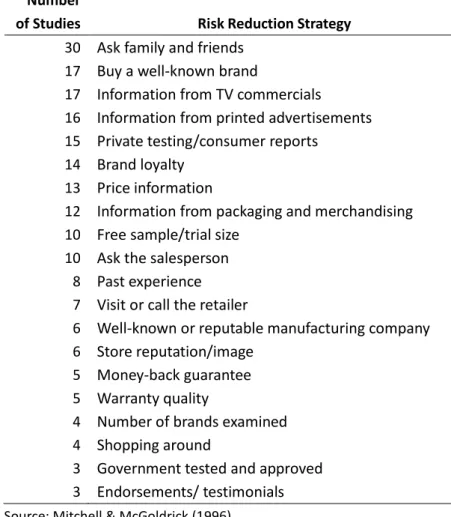
In a review paper Mitchell and McGoldrick (1996) identified from the literature thirty-seven risk reduction strategies, with 10 strategies accounting for more than 60% of the strategies adopted in the studies reviewed. Table 1 presents the top 20 major strategies mentioned by those researchers.
Table 1- Risk-Reduction Strategies
Number
of Studies Risk Reduction Strategy
30 Ask family and friends
17 Buy a well-known brand
17 Information from TV commercials
16 Information from printed advertisements
15 Private testing/consumer reports
14 Brand loyalty
13 Price information
12 Information from packaging and merchandising
10 Free sample/trial size
10 Ask the salesperson
8 Past experience
7 Visit or call the retailer
6 Well-known or reputable manufacturing company
6 Store reputation/image
5 Money-back guarantee
5 Warranty quality
4 Number of brands examined
4 Shopping around
3 Government tested and approved
3 Endorsements/ testimonials Source: Mitchell & McGoldrick (1996)
2.7.1 Repetitive Purchase
Taylor et al. (1996) proved that past experience and previous outcomes could affect one’s present risk propensity and perception. Consumers seem more likely to repeat their purchase when they had positive outcomes from previous purchases.
2.7.2 Purchase of Well Known Brands
Purchasing well-known brands has been found to be a risk-reduction strategy for many years. Consumers give credit to the value of brands, especially Chinese consumers (HKTDC Report, 2019). It is relevant to investigate which brands have higher awareness and strong image among Chinese female for the purpose of assessing their potential to reduce perceived risk in skincare products. Euromonitor indicated that Chinese consumers have a taste for major international brands of skincare products (HKTDC Report, 2019). According to this research, seven out of 10 top-ranking players in China are international brands. Further, it is important to research Chinese consumers’ perceptions of skincare cosmetics for both international and domestic ones.
2.7.3 Search for Information
Taylor (1974) stated that uncertainty about the outcome can be reduced by acquiring and handling information. Dowling and Staelin (1994) believed that a consumer will only complete his/her search for information after acquiring enough information to reduce the product-specific risk to an acceptable level.
Consumers feel the need to search for additional information when circumstances of the purchase decision create (a) feelings of uncertainty, (b) discomfort and/or anxiety (Dowling and Staelin, 1994), (c) conflict aroused in the consumer (Bettman, 1973), (d) concern, (e) psychological discomfort, (f) making the consumer feel uncertain, (g) pain due to anxiety, and (h) cognitive dissonance.
There are several commonly used strategies to search for information, for instance, seek the data for position in rankings; ratings of skincare cosmetics from third-party independent organizations; suggestions and recommendations from friends, families or acquaintances; online reviews or endorsements from celebrities.
Due to strong collectivism orientation, Chinese consumers are more likely to choose the brands their friends and colleagues use. Pao (2010) argue that “The power of word
of mouth in China is huge. Forty percent of respondents cited friends and family as their primary source of information about beauty products. Many mainland Chinese prefer to keep their thoughts, opinions and personal information private. They find it difficult to trust outsiders because of their long history and previous experience where information was used against them. Chinese culture is centered on the family and many find it difficult to trust those outside this inner circle.”
2.8 Chinese Female Characteristics
The strategies selected and utilized by Chinese female consumers are influenced by their personal characteristics. Thus, to investigate Chinese female consumers’ risk perceptions and risk-reduction strategies, it is critical.
Chinese female consumers are quite different from western female consumers. For international brands in China, marketing strategies constructed based on selling in western markets cannot be indiscriminately replicated in the Chinese market. It is vital for foreign brands to have a comprehensive and in-depth knowledge of Chinese consumers, including their purchase habits, world outlook, life values, culture, and so on.
For Pao (2010) “The definition of beauty has become homogenized by the globalization of media, but there are cultural and societal differences that affect the way women in different countries view and use beauty products, especially in China.” First, Chinese women’s skin ages differently from that of many of western counterparts: “Chinese women's skin ages differently than that of their American counterparts too. As a result, they require different product attributes. While western complexions show their age through fine lines and wrinkles, Asian skin ages through dark spots. As a result, Chinese women are demanding that their skin care products lighten these spots and even out skin tone. (Lightening products are not the same as whitening products that also have become popular throughout Asia.).” The same author highlights that Chinese women are much heavier users of skincare products than American women
and that their skin care starts early. Chinese women value a radiant and glowing complexion and believe that the effectiveness of skincare products is higher when good skin care habits start early. Further, the Chinese beauty consumer favor the use of big well-known global brands. Pao (2010) also consider doctor-created or endorsed brands to have great potential in the Chinese skincare market. This might be an interesting risk reduction strategy.
Chinese women have a reputation for being dedicated to youth maintenance. Chinese women feel obligated to try their best to maintain youth and beauty, even with a high cost. On most cases, nowadays it seems pretty hard to tell a Chinese woman’s age by her appearance. Many consider this expenditure in skincare as an investment for the future. As many of them say, it will cost even more if they only start to take care of their skin after being thirty years old, when those damages from younger age may become irreparable.
Thus, it seems quite common for Chinese female start to utilize anti-aging skincare to delay senescence even at a relatively young age. Chinese female consumers take for granted the need to contribute time and financial resources in maintaining skin youth even when they are in their early twenties. The probable reason is that China is traditionally long-term oriented, as a Chinese proverb says “in fair weather prepare for foul.” Chinese females consider skincare as a long-term investment for life, and skincare at a young age is regarded as an investment with high return.
CHAPTER 3 - METHODOLOGY AND DATA COLLECTION
3.1 Introduction
The main purpose of this chapter is to describe the research methods and data collection procedures adopted in this research. The structure of this chapter is as follows: justification of the research approach, description of instruments for data collection, sampling method, procedures used for data collection, working sample and
preparation for data analysis.
3.2 Research Methods and Data Collection Approaches
This study aims to investigate Chinese young women’s risk perceptions in skincare products and also their risk-reduction strategies. The approach selected for this research is exploratory and qualitative and the method of data collection is the semi-structured face-to-face interview.
The focus of the interviews is to identify and explore in depth Chinese women’s perception of risks in skincare products and corresponding risk-reduction strategies. Open-ended questions will be utilized in the semi-structured interviews guide.
As skincare cosmetic is a broad category, it is not realistic to investigate Chinese female consumers’ perceptions of risks and risk reduction strategies for each sub-category and every product. Thus, this study mainly investigates perceptions of risk in the skincare cosmetic category and selected products in this category (anti-aging skincare cosmetics, cosmeceutical, and DIY skincare cosmetics).
3.4 Semi-Structured Interviews
The interviews were supported by a semi-structured interview guide (Appendix 1). This guide covered a list of open questions and probing questions, and these open questions are designed to “encourage the interviewee to provide an extensive and developmental answer” (Grummitt, 1980).
Both open questions and probing questions were arranged logically. Besides, some probing questions were used when the researcher was not sure about some answers of the participants and provided a way to rephrase the original questions (Torrington, 1991).
The interview starts with a brief introduction of the topic and the purpose of the study, allowing the interviewee to have a brief idea about the content of the interview. The interview was organized in eight parts. The first involved 5 introductory questions
to explore general perceptions in skincare products, interviewee’s preference for products and brands and the reasons why they use and buy, and also negative experiences with skincare products. The others five parts were developed to investigate the five dimensions of perceived risk (physical, performance, social, psychological and financial). The last two parts are designed to explore the perceptions of organic skincare products and testing skincare products on animals.
3.5 Sampling
The sampling method adopted in this research is the non-probabilistic, convenience approach (Saunders, et al., 2012). Women from the researcher’s social circle who were willing to participate in this research, all met the following profile requirements: be a Chinese female, age ranging from 18 to 30 years old, and be economically independent.
Non-probabilistic, convenience sampling involves the researcher’s subjective judgement and also the purpose of the study. Patton (2002) argued that the sample size depends on the research questions and objective. There is no strict restriction about the size of the sampling, and sample size may vary from one research to another. Different researchers may have different preference and subjective judgements based on their investigation purposes. According to many researchers, ideal sample size for non-probability sampling is from ten to twelve participants.
CHAPTER 4 - ANALYSIS AND DISCUSSION OF RESULTS
4.1 Introduction
This chapter aims to present the analysis of 12 semi-structured interviews focused on perceived risks considering five dimensions derived from the literature review and, then, the in-depth exploration of the risk-reduction strategies adopted by the participants in this study. Further, this chapter also explores perceptions of testing
skincare products on animals and the perceptions of organic products.
3.3 Sample Description
The subjects of this research are 12 Chinese young women from 18 to 30 years old. The sample profile is presented in Appendix 3. The reason for the focus on this age range is that before 1978 China was a planned economy and most Chinese had no discretionary income; money was just for indispensable food, let alone any cosmetics. After 1978, the Chinese economy started to prosper. People who were born after this economic revolution were raised in a totally different way, compared to their parents. Those Chinese who were born after 1990 were actually the ones benefited the most from the booming economy and most of them are “only-child” because of One-Child policy, which means that they were raised with abundant resources. Thus, these consumers from the 90’s not only have a better awareness of skincare, but are also comfortable financially. At present, their age range is from 19 to 29 years old
The reason why this research selected women instead of men as study subjects is that women are still the main target for skincare cosmetic companies. Even though the skincare market for male consumers has huge growth potential, women have an overwhelming lead in market share of skincare cosmetic, not only in number of consumers, but also in overall spending in skincare.
4.2 Analysis of Introductory Questions
The opening question of the interview is “Do you usually use skincare cosmetics?” The answer of this question was positive for every respondent, which led to the followed question “How important are skincare products to you? Why? Can you give specific examples?” Nine out of 12 respondents considered skincare products “very important” to them. Among these nine, 4 respondents explained the reason why skincare products can “improve/maintain skin condition.” Wang felt the incentive to
use skincare products when “arriving at a certain age”, and 5 participants said because of the dry condition of skin, and the word “dry” appeared 10 times in this answer section. Two respondents think skincare products are “relatively important.” The reasons are “arriving at a certain age” and “only use when the skin is dry.” Only Cui considered “not that important,” even though she continues using skincare products, as she explained that skincare products have “psychological effects” on her.
The second question is “How do you assess the benefits of skincare cosmetic? Can you give an example?” There is only one respondent who doesn’t think skincare products “have bought [her] any significant changes” and she added “if I don’t use any skincare product, I am concerned that my skin condition might be even worse.” All other 11 confirmed the positive benefits of skincare products, and the most important benefit is “moisturizing,” which is mentioned by 5 respondents and the world appeared 10 times and is the most frequent. The second most frequent word is “acne,” and removing acne is considered as a benefit by 4 respondents. Two respondents considered “maintain the balance of water and oil” of skin as an important benefit. The most frequently mentioned benefits are related to “skin problem solving,” followed by “delay the degeneration of skin,” which is mentioned by 3 respondents.
The second question is “What skincare cosmetics do you use? Which are your favorites? For each one, please tell me why do you like it?” According to the benefits referred above, most of the products used by respondents are expected to satisfy a specific skin need, and nearly every product they use has a specific problem-solution. In product performance the majority of respondents look for “moisturizing,” “oil control” and “anti-acne” resorting to the descriptions of the products participants prefer and are commonly used by them. Two respondents have sensitive skin, thus they consider being gentle and not making skin allergies are crucial selection criteria. Only 5 respondents mentioned domestic brands of China when they answered this question. The other 7 respondents didn’t mention any domestic product or domestic brands at all; the products they prefer and usually use are all of foreign brands, mostly
European. There is only one domestic brand which is used by 3 respondents, called ZHIBEN, which is considered “cost-effective” (“high quality” and “reasonable priced”).
The forth question is “Do you have skincare brands/products that you would never purchase? If yes, why?” Five out of 12 said no, and 7 respondents said they had. The reasons why they would never purchase are because of being “too oily,” “fragrance,” “not effective,” “insecure ingredients,” “allergic” and “packaging bottle” being heavy.
The fifth question is “5. What would make you stop using a specific skincare product that you used before? Why? The reasons are “allergic,” “not effective” and being “too oily.” In additions, 3 respondents said “better substitutes” would make them stop using the previous products.
4.3 Physical Risk and Physical Risk-Reduction Strategies
The first question to explore the physical risk perceived by target consumers is “Can you recall any negative impact of a skincare product on your skin? If yes, can you give details? If not, are you concerned it may happen?”
Nine out of 12 respondents shared their negative experiences and 3 interviewees said they never had one. The most common negative impact of a skincare product is “skin allergy,”; the word “allergic/allergy” appeared 10 times in the answers to this question. Three participants shared their experience of having skin allergy by using some skincare products on their skin, and one interviewee expressed concerns for the risk of skin allergy. The word “acne” appeared 9 times in their answers to this question, followed by “redness” which was mentioned 6 times. Besides, “skin irritation,” “clogged pores” and “oily” were mentioned as negative potential physical impact caused by skincare products. The most mentioned brand was “INNISFREE” (3 times), followed by “KIEHL’S.” All products and brands mentioned are foreign brands. Apart from these common skin problems, an interviewee expressed her concern that skincare products might “lead to cancer.” There is another word “ingredients,” which appeared 8 times. Thus, it seemed that the type and quality of ingredients are highly
related to the perception of physical risk.
The second question is “When you purchase a skincare product, how do you try to avoid such negative impact?” The physical risk reduction strategies adopted by respondents are as following: 1) Be aware of your own skin type; 2) Suggestions from cosmetologist; 3) Repurchase the products that have used before; 4) Test on small skin area; 5) Purchase product samples to try out; 6) Purchase name/famous brands that have a good reputation; 7) Use application which provides detailed information of the product. One participant, Shi, usually searches for information about ingredients contained in the skin care products on the mobile application “MEILI XIUXING.” This APP not only provides “details of ingredients contained,” but also gives her “warnings about the ingredients.”
4.4 Performance Risks and Performance Risk-Reduction Strategies
The first question is “What general selection criteria do you use for purchasing skincare products?” The most frequent word is “price”, which was mentioned 7 times. Respondents consider “acceptable price” important. Respondent Zou said that she was “sensitive to price.” Many of them use “cost-performance” as a selection criteria. Four out of 12 respondents consider “texture” as being important to selection, and 3 respondents use “famous brands” as criteria. The word “ingredients” appeared 3 times and two respondents who assess “whether the ingredients suitable for sensitive skin type” both have sensitive skin.
As mentioned above “problem solving” is the most frequently used selection criteria, and the premise is be aware of their own “skin type,” which was mentioned 24 times in 12 interviews; every respondent new their skin type. Different skin types are associated with different features and requirements for skincare products. As one respondent explained “Since I have combination skin type, the skin of my cheeks is very dry, on the contrary, the T-zone of my face is very oily.”
guaranteeing the performance of skincare product on your skin? Why each of those criteria?” According to respondents’ answers, “ingredients,” “texture,” “price” and “evaluations of others” are considered key to guarantee the performance of products. One respondent believed in “you get what you pay for,” which indicates that she perceive a direct relationship between performance and price. Respondents often considered that expensive skincare products are less likely to fail in performance, and the more expensive the skincare products are, the less performance risk is perceived by consumers. Respondents seemed to use the “price” as a strategy to reduce performance risk of skincare products, and they try to eliminate or reduce perceived performance risk by purchasing relatively expensive skincare products.
The third question is “Do you have any negative experience concerning the performance of skincare product? Could you give details?” Three out 12 respondents didn’t have any negative experience with the performance of skincare products and one explained “not have much concern if I buy skincare products of qualified brands,” and “purchase famous brands” as risk reduction strategy. Nine respondents said they had problems. Being “too oily” is the performance failure that most by respondents complained about. Those four products being identified as performance failures are “sun cream of NIVEA,” “tea toner of THE BODY SHOP,” and “Radiance Serum Complexion Correcting of CAUDALIE.”
4.5 Social Risks and Social Risk-Reduction Strategies
The first question is “Do you discuss with your colleagues or friends about the skincare cosmetics you use?” All twelve respondents usually discuss skincare cosmetics with friends. As for “colleagues,” one respondent denied that she would ever discuss this with colleagues. There was another respondent who emphasized the fact that she usually discusses with colleagues, and not only with female colleagues, but also with male colleagues. She discusses about “which skincare products are effective” with her colleagues and “recommend products to each other.”. She claimed that “skincare
products” is a “popular topic” between colleagues.
The second question is “Do you think their opinions are important to your purchase decision? Why?” The answer to this question is “yes” for every respondent. The most frequently words they used to classify the “recommendations and evaluations” of friends are “trustworthy” and “reliable,” which appeared 6 times and 4 times respectively. Besides, the “trust” also appeared twice. When they tried to explain why they considered friends’ opinions important, the most used phase is “skin type,” which appeared 6 times. Four respondents explained that since their friends/colleagues know about their skin type, they would “not recommend me products randomly or some products that I don’t need at all,” and their “recommendations/evaluations” are “trustworthy” and “reliable.”
The third question is “What about your family? What do they think of the skincare products you use?” Seven out of 12 respondents considered the opinions of their family important, and 5 not important. Among these 5 respondents, there were two respondents who considered opinions of her parents “not important,” because they do “not know about skin care [products].” There was one respondent who said that her family did “not interfere with the choice of skincare products.” Another respondent said “No matter whether they are supportive to my use of skincare products, I will insist on my consumption habits of skincare products.”
There was a respondent who considered her mother’s opinion important to her. Her mother purchases skincare products from “beauty salons,” which she thinks “suitable” for her. On the contrary, another respondent considers her parents’ opinions not important; usually she purchase skincare products for her mom. The reason why she will do this is that she is afraid that her mom would “be deceived by some products,” as her mom doesn’t “have much knowledge about skincare cosmetics and the price level of these products.” Two respondents who considered important their family’s opinions said they would take family’s opinions as a reference, but were less likely to be affected on their purchase decisions, since their family have “different skin types”
4.6 Psychological Risks and Psychological Risk-Reduction Strategies
The first question is “Could you tell me whether skincare cosmetics is important to the way you look at yourself? Why?” Four out of 12 respondents thought skincare products as not important to the way they look at themselves, 2 respondents considered “a little important,” and 6 out of 12 considered skincare products being important to the way they look at themselves.
The reasons why 4 respondents considered skincare products not important are “*she does] not bother that much with the beauty appearance,” “*I get] to know about myself from the results of what I have done,” and another respondent didn’t explain her rationale. Even though the forth respondent thought skincare products were not important to the way she looked at herself, she added that “skincare products make me feel that I am going to a better direction.”
Two respondents consider skincare as important, because when they do not use any skincare product that makes them feel “sloppy,” “not delicate,” or “lazy”, which is “fear of negative evaluation.” One of them said if she doesn’t take care of her skin, and therefore she feels “too different from the people around me,” and her psychology risk-reduction strategy is to “use some basic skincare products” to make her less different from others.
The word “confident” appeared 10 times in the answers from participants who think skincare products can affect the way they look at themselves, and 5 respondents admitted that using skincare products makes them more “confident.” They also highlighted that using skincare products can improve their skin condition, which consequently made them “happy,” “delight” or “content”.
The second question is “Could you give me an example about how skincare cosmetics affect the way you perceive yourself?” They said that using skincare products “improves/maintain skin condition, which made them “more confident.” There was one respondent who perceived expensive skincare products as “recognition of social status and personal achievements.”
Another respondent said that when she uses skincare products, she feels that she is “pursuing a better me” and “pursuing for perfection.” She added that “the economic costs, time costs and energy costs are reminding me that I am spending these costs to pursuit or exchange for a better me.” She considered these “expenditures” as “a way of self-improvement,” and consider to be “on my *her+ way to meet the current social aesthetic standards in China.” She gave an example of the outcome of using “an essence of good quality,” and she said that when she gets “psychological hint” from “using a good product” Further, she feels that she is “doing something meaningful” and “doing an effective thing to improve her skin condition.”
4.7 Financial Risks and Financial Risk-Reduction Strategies 4.7.1 Perceptions of Financial Risk
The question is “Do you usually look for bargains when you purchase skincare cosmetics? Why?” All 12 participants that they would look for bargains, and the reason is to save money.
Interestingly, they look for bargains for products and brands they already known. Eight of 12 respondents said they first decide which skincare products to purchase and then look for discounts and promotions. Only one (Huang) said that she would consider “’taking the current discount as an incentive to try out a new brand.” On the contrary, Zhang considered that purchasing a product she may never use, because of the promotion is “a disguised way of wasting money.” Another respondent, Li, also said that she only “looks for promotions and discounts of the brands that I have already used.”
The second question designed to investigate financial risk is “Could you give me an example of one purchase that you consider didn’t provide the value for the money you spent? Why?” Ten out of 12 said they had this experience, and two respondents said that it never happened to them.
financial risk reduction strategies. According to analysis, seven risk reduction strategies are identified, which are described next.
4.7.2 Financial Risk-Reduction Strategies
1) Seek for Evaluations and Recommendations from Friends/Online Reviews
Seven out of 12 interviewees mentioned that they would turn to friends for recommendations and evaluations. Lu said she would “look for the evaluations of people who have similar skin type to mine,” and so does Zhao. They also mentioned online reviews and evaluations as being important to them.
2) Buy from Purchase Agents
Skincare products of foreign brands are more expensive in China than in other countries. According to analysis, Zhang who adopted a strategy to reduce financial burden of skincare products.
Zhang said that she “rarely purchase skincare products in physical stores” in mainland China, and most of the time she contacts with purchasing agents, who usually live abroad and buy products in bulk in foreign countries and then ship them back to China to their individual customers. Zhang also explained that the purchase agents from whom she buys skincare products of foreign brands are usually her friends. She thinks they are trustworthy and purchasing from friends who are working as purchase agents makes her feel “safe and free from counterfeits” or other types of financial defrauds. Furthermore, Zhang said that buying from her agent friends also has an advantage of guaranteeing a competitive price in comparison with the price of the same skincare products in mainland China.
Another respondent also buys skincare products from purchase agents. Instead of buying from friends who work as purchase agents, she buys her products from purchase agents who are not necessarily friends.
3) Ask friends who happen to go abroad to Purchase Products
duty-free stores,” which is her strategy to achieve a lower price.
4) Seek Discounts on E-Commerce Platforms
One respondent said she would “seek for discounts on some e-commence platforms”, another interviewee would “compare the price of TMALL GLOBAL and KAOLA of NETEASE,” which are both popular overseas shopping platforms in mainland China.
5) Look for Recommendations of Bloggers online
One respondent said she would “watch videos of some beauty bloggers.” There are many beauty bloggers who have large number of followers in social media in China. Many of them do some cosmetics evaluations and recommend products and brands to their followers.
6) Purchase Name/Famous Brands
One respondent called Quan said she would purchase “brands with a good reputation” because their products are “guaranteed with quality,” which protects her from money loss, and she also purchase less expensive products as a risk reduction strategy. Another respondent (Cui) said that “You get what you pay for” and she believed that expensive brands have superior performance and value.
4.8 Perceptions of Testing Skincare Products on Animals
The first question is “What do you think about testing skincare products on animals?” Five out 12 interviewees said “don’t know much about it,” and they expressed no interest in this topic. The word “cruel/cruelty” was mentioned 5 times when interviewees tried to explain how they perceive testing skincare products on animals.
The second question is “Does it have any impact on your purchase decision of skincare products? Why?”, which intended to investigate the influence of animal testing on skincare purchase decisions. None of 12 interviewees considered animal testing would affect their purchase decisions, and it is not an “influential factor of purchase decision.” Five of them explained that it was because “animal skin is so
different from human skin.”
Even though nobody thought it would affect their purchase decisions, there were 3 interviewees who see positive outcomes of animal testing in the skincare industry. Two 2 out 3 thought it would could guarantee the health of human skin and reduce “potential risk,” another participant thought it was essential and “within medical ethics.”
4.9 Perceptions of Organic Skincare Products
The question is “What is your opinion about organic skincare products”. Nine out of 12 interviewees have a positive perception of organic skincare products. On the contrary, Wang thought organic products didn’t “have the effects they claimed,” for her organic skincare is “only a marketing gimmick” and “not very credible.” Lu said she was neutral on this, as she believed this concept was “marketing gimmick.” Furthermore, she believed that even though “pure plant extracts sound safer, chemical components are the ones that improve your skin condition.”
The most frequently mentioned word when interviewees explained their perceptions of organic products is “ingredients”, and it was mentioned 8 times. Another high-frequency word is “safe,” which was mentioned 4 times, followed by “trustworthy”. Nevertheless, they said organic skincare products “sounds safe,” rather than using a confirmative expression like “organic is safe.” It seemed that they only thought organic products were safer because its name contains the word “organic.”
Respondents thought that compared with non-organic products, organic skincare products are more “natural,” “without complex components” and contain “less synthetic chemical composition.” The expected effects of organic skincare products are: “have less side-effect on health” and “minimize the damage possibly caused by products,” which are both related to physical risk.
4.10 Perception of Efficacy and Self-Efficacy of Respondents
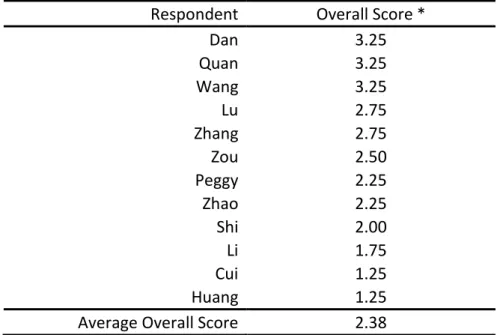
TABLE 2 - Subjective Knowledge of the Skincare Cosmetic Category
*Assessed 5-point scale from 1 (I don’t have knowledge of skincare cosmetics) to 5 (I have a good knowledge of skincare cosmetics).
4.10 Respondents’ Subjective Income
The reason why many of respondents have a less satisfying economic status (Table 3) is that when the interviews done, they were students or recently graduated and unemployed. As for education level, 10 out of 12 have successfully completed a bachelor degree, only one respondent has completed a master degree, and one undergraduate student is on her last year. For current occupation, 2 out of 12 have full-time jobs, one works in a languages operations department, while the other works for an Internet company. Two respondents are currently unemployed and looking for a new job. The other 8 respondents are full-time students. The average age is approximately 24.6 years old.
TABLE 3 – Subjective Income of Respondents Subjective Knowledge of the Skincare Cosmetic Category
Respondent Overall Score *
Dan 3.25 Quan 3.25 Wang 3.25 Lu 2.75 Zhang 2.75 Zou 2.50 Peggy 2.25 Zhao 2.25 Shi 2.00 Li 1.75 Cui 1.25 Huang 1.25