Mosquito (
Aedes albopictus
) in Northeastern USA:
Implications for Public Health Practitioners
Ilia Rochlin1*, Dominick V. Ninivaggi1, Michael L. Hutchinson2, Ary Farajollahi3,4
1Suffolk County Vector Control, Yaphank, New York, United States of America,2Division of Vector Management, Pennsylvania Department of Environmental Protection, Harrisburg, Pennsylvania, United States of America,3Mercer County Mosquito Control, West Trenton, New Jersey, United States of America,4Center for Vector Biology, Rutgers University, New Brunswick, New Jersey, United States of America
Abstract
The Asian tiger mosquito,Aedes albopictus(Skuse), is an invasive species with substantial biting activity, high disease vector potential, and a global distribution that continues to expand. New Jersey, southern New York, and Pennsylvania are
currently the northernmost boundary of establishedAe. albopictuspopulations in the eastern United States. Using positive
geographic locations from these areas, we modeled the potential future range expansion ofAe. albopictusin northeastern
USA under two climate change scenarios. The land area with environmental conditions suitable for Ae. albopictus
populations is expected to increase from the current 5% to 16% in the next two decades and to 43%–49% by the end of the century. Presently, about one-third of the total human population of 55 million in northeastern USA reside in urban areas
whereAe. albopictusis present. This number is predicted to double to about 60% by the end of the century, encompassing
all major urban centers and placing over 30 million people under the threat of denseAe. albopictusinfestations. This
mosquito species presents unique challenges to public health agencies and has already strained the resources available to mosquito control programs within its current range. As it continues to expand into areas with fewer resources and limited organized mosquito control, these challenges will be further exacerbated. Anticipating areas of potential establishment, while planning ahead and gathering sufficient resources will be the key for successful public health campaigns. A broad effort in community sanitation and education at all levels of government and the private sector will be required until new control techniques are developed that can be applied efficiently and effectively at reasonable cost to very large areas.
Citation:Rochlin I, Ninivaggi DV, Hutchinson ML, Farajollahi A (2013) Climate Change and Range Expansion of the Asian Tiger Mosquito (Aedes albopictus) in Northeastern USA: Implications for Public Health Practitioners. PLoS ONE 8(4): e60874. doi:10.1371/journal.pone.0060874
Editor:Pedro Lagerblad Oliveira, Universidade Federal do Rio de Janeiro, Brazil
ReceivedDecember 22, 2012;AcceptedMarch 4, 2013;PublishedApril 2, 2013
Copyright:ß2013 Rochlin et al. This is an open-access article distributed under the terms of the Creative Commons Attribution License, which permits unrestricted use, distribution, and reproduction in any medium, provided the original author and source are credited.
Funding:This study was conducted by government agencies, with the financial support provided by the state and the county taxpayers. Partial funding for this project was provided by a USDA grant (USDA-ARS-58-6615-8-105) entitled "Area-wide Pest Management Program for the Asian Tiger Mosquito in New Jersey". The funders had no role in study design, data collection and analysis, decision to publish, or preparation of the manuscript.
Competing Interests:The authors have declared that no competing interests exist.
* E-mail: [email protected]
Introduction
Mosquitoes are the single most important taxon of arthropods affecting human health globally [1] and are also amongst the most prolific invasive species contributing to the spread of endemic or exotic diseases [2]. The Asian tiger mosquito, Aedes albopictus
(Skuse), is a highly invasive container-inhabiting species that has dispersed widely from its native range in Southeast Asia and is now found on all continents but Antarctica [3,4]. In many parts of its expanded range, this species has been implicated as a significant vector of re-emerging arthropod-borne viruses such as chikungu-nya, dengue, and West Nile (WNV). The recent outbreaks and reemergence of chikungunya in the Indian Ocean basin were driven primarily byAe. albopictusand attributed to a viral mutation which enhanced the vector competency and transmission efficien-cy by this species [5]. Autochthonous transmissions of chikungu-nya in temperate northern Italy and southeastern France [6,7] and dengue in France and Croatia [8] were made possible by locally established Ae. albopictus populations. Similarly, Ae. albopictus was implicated in the resurgence of both chikungunya and dengue in Central Africa [9].
In North America, Ae. albopictus is among the most efficient bridge vectors of WNV [10–12]. In addition to vectoring exotic arboviruses, this species can also transmit the endemic eastern equine encephalitis and La Crosse viruses in the laboratory and in the field [13–16] creating a potential for the resurgence of mosquito-borne diseases native to North America [17]. Since this species is commonly associated with human habitation and urbanized environments, highAe. albopictuspopulations represent an important public health problem in many parts of the world due to severe human biting activity [4,8].
Previous global modeling studies have predicted the extent of this species’ range in northeastern USA under current climatic conditions [3,24]. These approaches have coarse resolution which is less useful for planning on the regional or local level. Moreover, global climate change is expected to affect the future weather patterns in northeastern USA, especially winter temperatures, which are predicted to rise by between 1.7uC to 5.4uC in this century [25]. Thus, this study’s goals were (a) to model future expansion ofAe. albopictusin northeastern USA based on known geographic locations at the present and future climate projections until 2099, and (b) to discuss the implications for local public health and vector control professionals asAe. albopictuscontinues to expand its range.
Materials and Methods
No specific permits were required for the collections of adult mosquitoes, which were conducted with homeowners assent by professional county mosquito control personnel. This study did not involve endangered or protected species.
Data sources
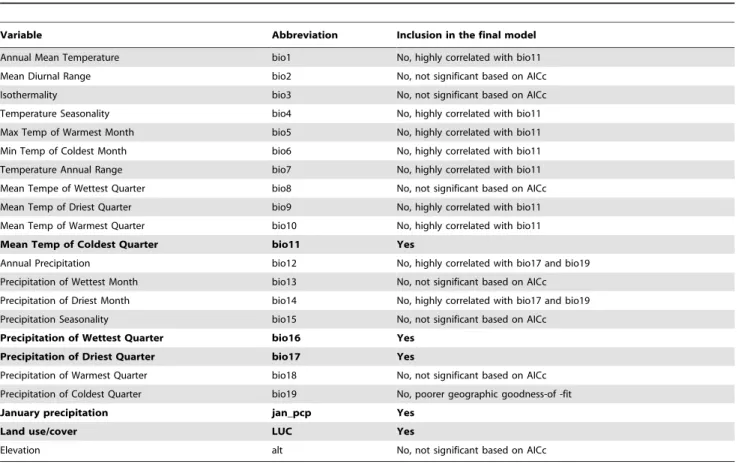
Environmental layers. Climatic and landscape variables used in this study are listed in Table 1. The baseline (1950–2000) temperature and precipitation layers were obtained from World-Clim global climate data repository (www.worldclim.org). Future climatic data integrated two CO2 emission scenarios, moderate
(B2) and high (A2), detailed in the Special Report on Emissions Scenarios by the Intergovernmental Panel on Climate Change [26]. The climate layers created using CCCma second generation coupled global climate model (CGCM2) were acquired from the International Center for Tropical Agriculture (www.ccafs-climate. org) for three time periods: 2020s (2010–2039), 2050s (2040– 2069), and 2080s (2070–2099). Elevation and 2006 Land use/ cover (LUC) data were obtained from the WorldClim and the National Landcover Database (www.mrlc.gov), respectively. The 2006 LUC data were reclassified to Level I and resampled at the native WorldClim 30 arcsec (approximately 161 km) resolution. The northeastern USA coverage was extracted from the global or national datasets to include the states of Connecticut, Maine,
Massachusetts, New Jersey, New York, Pennsylvania, Rhode Island, and Vermont (Figure 1). Urban area information and shapefiles for 2010 Census were acquired from the US Census Bureau (www.census.gov).
Mosquito collections. Aedes albopictusadults were collected in three states (Pennsylvania, New Jersey, New York) covering most of the known geographic range of this species in northeastern USA. Collections were conducted using mostly CDC miniature light traps and gravid traps supplemented by other methods (aspiration, mosquito magnet, BG Sentinel traps, Zumba trap) during 2001–2011 in Pennsylvania, 2002–2011 in New Jersey, and in 2004 (first detection)-2011 in Suffolk County, Long Island, New York. The surveillance database contained a total of 11,632Ae. albopictuspresence records, with 5,361 unique geographic locations (Supplemental Table S1). For all locations,Ae. albopictuspresence in the traps during any period of time was mapped to the native WorldClim 30 arcsec (approximately 161 km) grid. Additional known locales where this species has been collected in New York City and its northern and eastern suburbs, southern Connecticut, and isolated southern New England areas were not included in model development, but were useful for model validation.
Statistical Modeling
Statistical modeling was conducted using Maxent v3.3.3 k, a machine learning algorithm for modeling species distribution estimated from the presence data-only and from the environmen-tal variables [27,28]. Thus, it is especially suited for mosquito surveillance since these records typically represent a reliable presence, but only an unreliable absence data for a particular mosquito species. In addition to modeling current species distribution, Maxent has built-in capabilities to predict the future range by using two sets of environmental variables using the MESS analysis tool [28]. Current environmental conditions generate the model, and a set of altered environmental variables is then used to project the future changes.
Compared to other available algorithms, Maxent performance consistently ranked among the best [29]. However, when used to predict areas climatically suitable for invasion by non-native species, Maxent was found to be overly sensitive to the choice of modeling parameters with model over-fitting, multicollinearity, and data-dredging (i.e using large number of environmental layers) negatively affecting the prediction’s accuracy [30]. To address these statistical issues, a model selection procedure based on Akaike information criterion (AICc) was proposed [30,31]. Comparative analysis of different models generated by Maxent was done using ENMTools v1.3 software [32].
The modeling for this study was conducted in two steps. The first model was created with a small number ofa prioridefined and best fitted climatic variables to avoid data-dredging [30]. Specifically, winter temperature and precipitation were shown as the most critical climatic factors limitingAe. albopictus abundance and distribution in northeastern USA and other areas close to its northernmost boundary distribution [21,23]. Landscape variables were then entered in the model and retained if the goodness-of-fit was improved. Elevation was selected because it defines different climatic conditions and provides physical barriers to dispersion. Land use/cover (LUC) was selected becauseAe. albopictusreaches the highest densities in urbanized environments in northeastern USA [21].
Minimum convex polygons (MCP, [30]) were used to define the region of Ae. albopictus presence encompassing the most of the current geographic distribution of the species with good surveil-lance coverage (Figure 1). Coordinate-based locations enabled fine geographic scale of the analysis at the highest resolution (30 arcsec Figure 1. Study area and minimum convex polygon (MCP)
aroundAe. albopictuscollection locations delineating general ‘‘presence’’ region for Maxent modeling.
or approx. 161 km), which corresponded to the limited flight range (,1 km) ofAe. albopictus[33]. The MCP MaxEnt model was run 25 times, withholding a different 10% of the localities each time to estimate the parameters and the precision. The model was then projected into the baseline and the three future climatic conditions (2020s, 2050s, and 2080s) to identify areas suitable for
Ae. albopictus. Model overfitting protection (i.e., increased regular-ization parameter [30]) were explored using AICc. Default MaxEntauto feature setting (linear, quadratic, product, threshold and hinge) were used.
Results
MCP model selection
WorldClim temperature variables (bio1-bio11; Table 1) were highly correlated with each other (|r|$0.86, ENMTools) with the exception of bio2, bio3, and bio8. To avoid multicollinearity and data-dredging, bio2, bio3, bio8 and bio11 (see Table 1 for details) were selected for inclusion in the model based on the strength of association and previous research [20,21,23]. Precipitation vari-ables (Table 1) were highly intercorrelated (|r|$0.85, EN-MTools). Bio15, bio16, bio17, bio18, bio19, and jan_pcp (see Table 1 for details) were included in the initial model given the importance of winter precipitation (i.e., snow cover) and precip-itation regularity (i.e., dry/wet periods) [23,34]. Model selection using AICc (ENMTools) resulted in the best-fitted model containing bio11 and bio19 and the second best model containing bio11, bio16, bio17, and jan_pcp. Entering elevation did not contribute any additional information to either model, while entering LUC significantly improved the goodness-of-fit for both
models. While the model containing bio11, bio19, and LUC had the best goodness-of-fit (AICc = 64500.47), it did not predict suitable Ae. albopictus habitat along the southern New England coast when projected into current climatic conditions (data not shown). The second best model (AICc = 65189.36) containing bio11 (mean temp of coldest quarter), bio16 (precipitation of wettest quarter), bio17 (precipitation of driest quarter), jan_pcp (January precipitation), and LUC had a better geographic fit to known Ae. albopictus range in northeastern USA and was thus selected as final.
The final MCP model had AUCtest= 0.919 indicating very good
model performance and the omission rate (proportion of test points not predicted) = 0.012, which was significantly better than random prediction at p,0.001 by binomial test. Mean temper-ature of coldest quarter was the most significant environmental factor defining the current range of Ae. albopictus (85.0% importance, higher temperatures more suitable). Mean tempera-tures below -2.0uC had near zero probability of Ae. albopictus
presence, while those between 0uC and+1.0uC had the highest probabilities. LUC contributed 9.6% of the information in the model, with response dependent on each category. Developed urban areas were the most likely to supportAe. albopictuspresence (probability = 0.65), while forested areas and open agricultural areas were the least likely (probability = 0.10 and 0.12, respective-ly). Combined precipitation contribution to the model was 5.4%. January precipitation (3.0%, higher precipitation more suitable) was more important followed by precipitation of driest quarter (2.0%, higher precipitation more suitable) and precipitation of wettest quarter (0.4%, lower precipitation more suitable). Table 1.Environmental variables used in the analysis and model selection. Variables included in the final model are indicated in bold.
Variable Abbreviation Inclusion in the final model
Annual Mean Temperature bio1 No, highly correlated with bio11
Mean Diurnal Range bio2 No, not significant based on AICc
Isothermality bio3 No, not significant based on AICc
Temperature Seasonality bio4 No, highly correlated with bio11
Max Temp of Warmest Month bio5 No, highly correlated with bio11
Min Temp of Coldest Month bio6 No, highly correlated with bio11
Temperature Annual Range bio7 No, highly correlated with bio11
Mean Tempe of Wettest Quarter bio8 No, not significant based on AICc
Mean Temp of Driest Quarter bio9 No, highly correlated with bio11
Mean Temp of Warmest Quarter bio10 No, highly correlated with bio11
Mean Temp of Coldest Quarter bio11 Yes
Annual Precipitation bio12 No, highly correlated with bio17 and bio19
Precipitation of Wettest Month bio13 No, not significant based on AICc
Precipitation of Driest Month bio14 No, highly correlated with bio17 and bio19
Precipitation Seasonality bio15 No, not significant based on AICc
Precipitation of Wettest Quarter bio16 Yes
Precipitation of Driest Quarter bio17 Yes
Precipitation of Warmest Quarter bio18 No, not significant based on AICc
Precipitation of Coldest Quarter bio19 No, poorer geographic goodness-of -fit
January precipitation jan_pcp Yes
Land use/cover LUC Yes
Elevation alt No, not significant based on AICc
Current and future Ae. albopictus range in northeastern USA
The MCP model was projected into current and future climatic conditions (Figure 2). The lowestAe. albopictuspresence threshold to predict and map the areas suitable for this species was set at the equal sensitivity and specificity (probabilitypresence= 0.29). This
value was very similar to the probabilitypresence= 0.31,which
included 90% of mapped Ae. albopictusoccurrence records, and was close to one half of the maximum Ae. albopictus presence probability value of 0.65 calculated by the MaxEnt model. Using the threshold probabilitypresence= 0.29, the model identified the
current range suitable for Ae. albopictusclosely corresponding to known surveillance records from southeastern Pennsylvania through southern and central New Jersey, New York City and Long Island (Figure 2). Smaller suitable areas were identified along the southern Connecticut coast and isolated areas in coastal Rhode Island and Massachusetts. The model performed less well in western Pennsylvania, identifying smaller suitable areas than that suggested by the existing surveillance records. Overall, about 5% of the total area in the Northeast was classified as suitable. Among major urban areas, most of the greater New York City metropolitan area (pop. 12.2 M) with the exception of northern suburbs, Philadelphia metropolitan area (pop. 3.8 M), Harrisburg and Lancaster, PA (pop. 850,000), Trenton, NJ (pop. 300,000), and Atlantic City, NJ (pop. 250,000) are currently within theAe. albopictussuitable range.
Under both B2 and A2 CO2 emission scenarios, significant
expansions of the currentAe. albopictusrange was predicted for the period of 2010–2039 (Figure 2A,B: 2020s). The suitable range territory would increase by the factor of three from 5% to 16% of the entire northeastern USA under both scenarios. The most expansion would occur in southern New England where this species was predicted to occupy extensive areas in Connecticut, Rhode Island, and eastern Massachusetts including major urban centers of Boston metropolitan area (pop. 4.1 M), Harford-Waterbury, CT (pop. 1.1 M), Providence, RI (pop. 930,000), Bridgeport-Stamford, CT (pop. 880,000), New Haven, CT (pop. 560,000), and Barnstable Town, MA (pop. 250,000). In New York, New Jersey, and Pennsylvania the suitable conditions would expand north to northwest, to include the entire metropolitan New York City, Pittsburgh metropolitan area, PA (pop. 1.7 M.), and Allentown (pop. 630,000), Scranton, PA (pop. 380,000). Suitable habitat would also exist along the south shore of Lake Erie in Erie, PA (pop. 200,000) and in parts of Buffalo, NY (pop. 936,000).
The models’ outputs for the middle to last parts of the century were somewhat different in spatial extent, but showed similar trends of decelerating rates of expansion. The moderate CO2
emissions model B2 predicted the suitable Ae. albopictus range expanding to 27% of the total area in 2040–2069 (Fig. 2A: 2050s), most notably along the coast of Lake Erie and Ontario into New York’s urban centers of Buffalo, Rochester (pop. 720,000), and Syracuse (pop. 412,000). Suitable conditions would further expand in 2070–2099 to include 43% of the total area of northeastern USA, especially in rural western Pennsylvania and New York (Fig. 2A: 2080s). In New England,Ae. albopictusrange was predicted to extend into New Hampshire (Dover-Rochester-Portsmouth, pop. 150,000) and southern Maine (Portland, pop. 204,000) along the coast, and more inland in Connecticut and Massachusetts (Springfield, pop. 531,000; Worcester, pop. 453,000), and New York (Albany, pop. 595,000; Binghamton, pop. 155,000).
Under higher CO2emissions model A2, similar changes would
occur but at a more rapid pace. Aedes albopictusrange under A2 model would expand to 32% of the total area of northeastern USA by the middle of this century, 2040–2069 (Fig. 2B: 2050s). Many
areas characterized as suitable under A2 model in 2050s were also predicted to become suitable under B2 model, but later on in 2080s (Fig. 2A: 2080s). The suitable climatic conditions would exist in extensive areas in western Pennsylvania and New York, along the coast of the Great Lakes in Buffalo, Rochester, Syracuse, and in lower Hudson valley including Albany. In New England, the range will expand in eastern and central Massachusetts, and coastal New Hampshire into coastal southern Maine. Under A2 model in 2070–2099, suitable range would occupy almost one-half (49%) of the total Northeast area extending into most of Massachusetts and the southernmost parts of Vermont, further inland in New Hampshire and extensively in coastal Maine. In New York, further expansion will occur in Hudson and Mohawk valleys. Thus, under A2 model,Ae. albopictusis predicted to occur in all major urban centers and in all but the northernmost urban areas in northeastern USA by the end of the 21stcentury.
Discussion
Modeling Aedes albopictus current and future range in northeastern USA
Climatic factors likely represent the major constraints on the extent ofAe. albopictus expansion northward [35]. A number of studies have confirmed the inability of diapausingAe. albopictuseggs to survive extreme cold temperatures in the winter. In laboratory, temperateAe. albopictuseggs’ long-term survival threshold was close to -12uC in North America [19] and210uC in Europe [22] for up to 24 hr exposure time. These thresholds were below the25uC January isotherm first used to modelAe. albopictusdistribution in North America based on the native temperate Asian localities [20]. The discrepancy is not surprising sinceAe. albopictus’ niche shifted in the invaded regions making predictions employing the original range less accurate [24]. In our study, mean winter temperature resulted in slightly better model goodness-of fit than minimum coldest month (January) temperature, with which it was highly correlated (Pearson’s r = 0.99). Switching mean winter with minimum January temperature displayed null presence probability below 29uC (roughly corresponding to 22uC mean winter temperature), close to the thresholds identified under laboratory conditions. Winter temperature was the most crucial factor in this study accounting for 85% of the model similarly to the previous study of Ae. albopictus populations in New Jersey where winter temperature explained about 99% of the variability in the adult production [21].
Despite its importance, winter temperature might not be sufficient to define the range ofAe. albopictusin its entirety. Under field conditions, the correlation between winter temperature and
Ae. albopictusegg survival was not linear, being moderated by the snow cover that insulated the eggs and allowed successful overwintering at much lower temperatures [23]. In our study, snow cover was assumed to be correlated with the amount of January precipitation that mostly falls as snow in northeastern USA. Inclusion of January precipitation in the model improved the geographic goodness-of-fit indicating increased Ae. albopictus
Figure 2. PredictedAe. albopictusrange expansion in the northeastern USA under two climate change scenarios. (A) Moderate increase in CO2 emissions (B2 scenario). (B) Higher increases in CO2emissions (A2 scenario). Predicted present range based on 1950–2000 climate
data. Three future time periods: 2020s (years 2010–2039), 2050s (years 2040–2069), and 2080s (years 2070–2099). Urban areas are indicated (2010 US Census Bureau).
addition to snow cover, another potentially important climatic factor is precipitation variability, with increased drying inducing higherAe. albopictusmortalities [34]. This factor was demonstrated especially significant in warmer subtropical climates, but less so under more temperate conditions. In agreement with the results of their study, the contribution of variability (i.e. amount of precipitation during the driest and the wettest quarters) in our model was low; nevertheless the overall geographic fit of the model was improved when those two variables were included.
Apart from climatic factors, landscape features also play an important role in mosquito distributions, especially weak fliers with very short dispersal distances such as Ae. albopictus [33]. While elevation was not significant when entered in the model, likely because it was accounted for by other variables, land use was the second most important variable. Specifically, three categories (urban areas, forested areas, and open agricultural areas) showed strong positive or negative associations withAe. albopictuspresence. Urban areas increased the probability of presence, which was in agreement with a previous study demonstrating strongAe. albopictus
affinity to urbanized environments in northeastern USA [21]. Forested areas might be less susceptible toAe. albopictusinvasions, whereas agricultural areas are mostly open crop or pasture fields with little protective cover and lack of container habitats for Ae. albopictus larval production. Urban areas with the surrounding suburban envelopes were, therefore, considered the future ‘‘hot-spots’’ of highAe. albopictusactivity if located within the predicted range. It is difficult to make predictions on future changes in urban environments, which were held constant at the 2010 level for the modeling purposes. However, these changes will likely occur within the already existing urban environs, and thus remain largely incorporated in our models.
Two recent global modeling studies included predictions of the currentAe. albopictusrange extent in North America. The first by Benedict et al. [3] employed a different algorithm (GARP) using a different dataset of 11 environmental layers at coarser spatial resolution making direct comparison between the models difficult. However, it appears that the currentAe. albopictussuitable habitat in northeastern USA identified by Benedict et al. [3] was overrepresented, being more similar to the range predicted by the middle of this century (i.e. 2050s) in our models. Specifically, most of Connecticut and eastern Massachusetts, as well as the areas along the Great Lakes were classified as highly suitable under the GARP model, but do not provide current presence records to support these predictions. Our current model predicted a much smaller range in New England (coastal southern Connecticut and Massachusetts) where Ae. albopictus has been detected repeatedly over the last few years. Those discrepancies might be due to coarser resolution of the GARP model, lower accuracy of GARP generated models compared to those by Maxent [29], and differences in underlying environmental variables.
The second global modeling study by Medley [24] used Maxent with a similar set of environmental variables, resulting in Ae. albopictusrange estimates in northeastern USA closer to our model, albeit at coarser spatial resolution. Similarly to our model, the extent of the current Ae. albopictus range in southwestern Pennsylvania was underestimated, suggesting additional variables not captured by the models as important for delineating suitable
Ae. albopictus habitat in that area. It is possible that repeated summer reintroductions from the mid-Atlantic states immediately to the south of this region is mostly responsible for these discrepancies between the predicted established range and the actual range reflecting the leading edge ofAe. albopictusexpansion. Similarly to Benedict et al. [3] but different from our model,
Medley [24] overestimated the currentAe. albopictusrange in New England. One reason for this difference might have been Maxent sensitivity to multicollinearity [30], which was not captured by Medley [24], but specifically addressed in our study by using a more stringent AIC-based selection procedure for the environ-mental layers inclusion in the model.
Our study differed from both Benedict et al. [3] and Medley [24] in using (a) precise geographic locations whereAe. albopictus
was collected as opposed to the county centroids, (b) minimum convex polygons [30] to delineate the areas of Ae. albopictus
presence more accurately, (c) information criterion (AIC) based model and variable selection process, and (d) sampling points from the same region to create a model that inherently provides more accurate estimates at a regional level [36]. We then projected the current model into the future climate change scenarios and identified winter temperature as the most crucial factor in the model. Incidentally, warming winters are the most significant outcomes of climate change in northeastern USA, far exceeding other potential changes such as warming summers or increases in winter precipitation [25].
Rising winter temperatures will drive the expansion of Ae. albopictus’ suitable range from the current 5% (approximately 36,000 sq. km) to about 16% (107,000 sq. km) of the total northeastern USA area in the next three decades, regardless of the climatic model used. The proportion of people residing in urban areas most susceptible to highAe. albopictuslevels [21] will increase from the current 32% of the total population to just over one-half (about 53%). After the rapid range expansion period in the coming decades, the rate is expected to slow becoming more gradual under both models. The estimates vary from 27% (B2) to 32% (A2) of the total area of northeastern USA in the 2050s, and from 43% (B2) to 49% (A2) by the end of the century. Under both models, most major urban areas of northeastern USA situated in coastal areas (either along the Atlantic or the Great Lakes) will support suitable climate for Ae. albopictus by the middle of this century. Afterwards, the bulk of the range expansion is expected occur into more rural areas. Western Pennsylvania is a good example where a combination of increased winter temperatures and significant snow cover during the coldest part of the year might create climatic conditions suitable for Ae. albopictus establishment. However, the rural environment of this area is unlikely to support significantAe. albopictus populations. By the end of the century, almost one-half of the northeastern USA with all major urban areas containing over 60% of the total population will be suitable forAe. albopictus, further exacerbating resources of vector control officials tasked with protection of public health and comfort.
Implications for public health practitioners
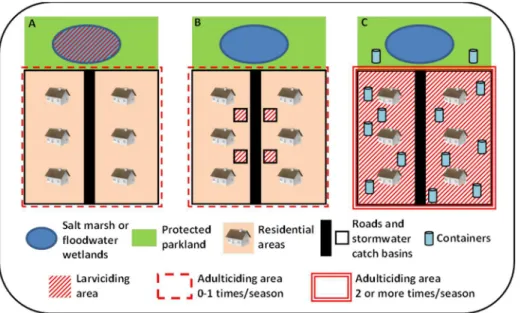
(Figure 3A). With the introduction of WNV, mosquito control programs were upgraded in many areas to focus on the primary vectors (Culex spp.) important in the transmission cycle of this pathogen, thereby shifting the emphasis to ‘‘urban’’ habitats high in organic material such as wastewater treatment facilities and stormwater catch basins (Figure 3B). While these habitats are numerous, they are also easily delineated and remain largely unchanged from year to year even in highly dynamic tidal wetlands [40]. The response, therefore, can be planned accord-ingly and efficaciously following environmental conditions such as rains, floods, and tides. Alternatively, known urban larval habitats such as catch basins can be treated with well-developed methods providing long term relief for the entire mosquito season.
Compared to these more traditional mosquito control habitats, the rise ofAe. albopictuspresents a very different and difficult set of problems for public health practitioners in the northeastern USA (Figure 3C). Unlike mosquito species traditionally encountered in the Northeast,Ae. albopictuslarvae prefer small, artificial container habitats which are ubiquitous and diffusely distributed in urban areas and nearby parkland. Additionally, many of these container habitats are located within private residential backyards that might be inaccessible to mosquito control personnel. A problem area is often not identified until the impacted residents are overwhelmed and begin requesting service. Surveillance efforts are made difficult by the large quantity of potential habitats as well as their ephemeral nature, increasing and decreasing on a continual basis. When sources (containers) are found, they must be abated or treated one by one, and even when they are eliminated, new ones frequently appear [41].
If larval control becomes impractical in an area, adulticiding may be required. However, effective adulticiding ofAe. albopictus, is difficult at best and may require multiple applications to be effective [42]. While new methods of dispersing larvicides through areawide truck-mounted methods can make control of larvae less
labor-intensive, the entire community must be treated, compared to small targeted sites typical of floodwaterAedes spp. or urban
Culex spp.; adulticiding is still likely to be required (Figure 3). Combined with the need to treat a larger portion of the community than is the case for saltmarsh and floodwater mosquitoes, or urbanCulexspp., both surveillance and control of
Ae. albopictus are more labor intensive and accrue significantly higher costs.
Measures to control this species, therefore, can easily outstrip the resources available to mosquito control programs, especially since they are already stretched to deal with their traditional problem set. The problems faced by local public health agencies in many urban and rural areas of northeastern USA with no organized mosquito control programs will be even more challenging. Ae. albopictus range expansion in the Northeast threatens to present challenges far exceeding the resources likely to be available to combat them unless new and effective control strategies are developed. A key factor in determining the success of these strategies will be whether they can be implemented at reasonable cost to very large areas. Until they are developed, more and more communities in the Northeast will have to adapt to the presence of this species in significant numbers.
Anticipating areas of potential establishment while planning ahead and gathering sufficient resources will be the key for successful public health campaigns. A broad effort in community sanitation and education at all levels of government and the private sector is required. It may be appropriate to increase the role of private pest control operators offering mosquito control services to provide barrier treatments or other specialized and localized control that is currently beyond the means of public entities. The groundwork for possible large-scale adulticiding needs to be implemented as well, both in terms of identifying resources and putting plans in place to determine under what circumstances such control would be initiated. None of this will be
easy, but unless improved strategies are developed to prevent infestations ofAe. albopictus, these measures will be necessary on an increasing scale in the near future.
Conclusions
The Asian tiger mosquito,Ae. albopictus, is poised to significantly expand its range in the northeastern United States in the next few decades primarily due to warming winter temperatures. By the end of the 21st century, the climatic conditions suitable for Ae. albopictuswill exist to cover roughly one-half of the land area in the northeastern USA. More than 30 million people, especially those in urbanized environments, will reside within the Asian tiger mosquito range, and will be potentially subjected to high biting populations of this species and impending arboviral threats. Currently, there are no cost effective options for control of
Ae.albopictus. Thus, its range expansion will present serious challenges to the local public health agencies, particularly in the areas with weak or non-existent mosquito abatement infrastruc-ture. Better planning and improved control methods will be the key to dealing with this public health threat.
Supporting Information
Table S1 Aedes albopictuscollection locations. (XLS)
Acknowledgments
This work would not have been possible without a large group of dedicated public health and vector control professionals who led the surveillance and control efforts. We are deeply indebted to the New Jersey State Mosquito Control Commission, the Center for Vector Biology at Rutgers University, personnel of all 21 county mosquito control programs in New Jersey, Scott R. Campbell and all Suffolk County Arthropod-Borne Disease Laboratory and the Division of Vector Control staff, and numerous mosquito control professionals in Pennsylvania who submitted specimens used in the analysis. We are also indebted to the primary investigators and review board of the Area-wide Management of the Asian tiger mosquito project for valuable input and discussions
Author Contributions
Conceived and designed the experiments: IR DVN MLH AF. Performed the experiments: IR DVN MLH AF. Analyzed the data: IR DVN. Contributed reagents/materials/analysis tools: IR DVN MLH AF. Wrote the paper: IR DVN MLH AF.
References
1. Gubler DJ (1998) Resurgent vector-borne diseases as a global health problem. Emerg Infect Dis 4: 442–450.
2. Lounibos LP (2002) Invasions by insect vectors of human disease. Annu Rev Entomol 47:233–66.
3. Benedict MQ, Levine RS, Hawley WA, Lounibos LP (2007) Spread of the tiger: global risk of invasion by the mosquitoAedes albopictus. Vector Borne Zoonotic Dis 7: 76–85.
4. Enserink M (2008) Entomology. A mosquito goes global. Science 320: 864–866. 5. Tsetsarkin KA, Vanlandingham DL, McGee CE, Higgs S (2007) A single mutation in chikungunya virus affects vector specificity and epidemic potential. PLoS Pathog 3: e201.
6. Grandadam M, Caro V, Plumet S, Thiberge JM, Souares Y, et al. (2011) Chikungunya virus, southeastern France. Emerg Infect Dis 17: 910–913. 7. Rezza G, Nicoletti L, Angelini R, Romi R, Finarelli AC, et al. (2007) Infection
with chikungunya virus in Italy: an outbreak in a temperate region. Lancet 370: 1840–1846.
8. Medlock JM, Hansford KM, Schaffner F, Versteirt V, Hendrickx G, et al. (2012) A review of the invasive mosquitoes in Europe: ecology, public health risks, and control options. Vector Borne Zoonotic Dis 12: 435–447.
9. Paupy C, Ollomo B, Kamgang B, Moutailler S, Rousset D, et al. (2010) Comparative role ofAedes albopictusandAedes aegyptiin the emergence of Dengue and Chikungunya in central Africa. Vector Borne Zoonotic Dis 10: 259–266. 10. Turell MJ, Dohm DJ, Sardelis MR, Oguinn ML, Andreadis TG, et al. (2005) An
update on the potential of North American mosquitoes (Diptera: Culicidae) to transmit West Nile Virus. J Med Entomol 42: 57–62.
11. Turell MJ, O’Guinn ML, Dohm DJ, Jones JW (2001) Vector competence of North American mosquitoes (Diptera: Culicidae) for West Nile virus. J Med Entomol 38: 130–134.
12. Farajollahi A, Nelder MP (2009) Changes inAedes albopictus(Diptera: Culicidae) populations in New Jersey and implications for arbovirus transmission. J Med Entomol 46: 1220–1224.
13. Gerhardt RR, Gottfried KL, Apperson CS, Davis BS, Erwin PC, et al. (2001) First isolation of La Crosse virus from naturally infectedAedes albopictus. Emerg Infect Dis 7: 807–811.
14. Hughes MT, Gonzalez JA, Reagan KL, Blair CD, Beaty BJ (2006) Comparative potential ofAedes triseriatus,Aedes albopictus, andAedes aegypti(Diptera: Culicidae) to transovarially transmit La Crosse virus. J Med Entomol 43: 757–761. 15. Mitchell CJ, Niebylski ML, Smith GC, Karabatsos N, Martin D, et al. (1992)
Isolation of eastern equine encephalitis virus fromAedes albopictus in Florida. Science 257: 526–527.
16. Turell MJ, Beaman JR, Neely GW (1994) Experimental transmission of eastern equine encephalitis virus by strains of Aedes albopictus and A. taeniorhynchus
(Diptera: Culicidae). J Med Entomol 31: 287–290.
17. Leisnham PT, Juliano SA (2012) Impacts of climate, land use, and biological invasion on the ecology of immatureAedes mosquitoes: implications for La Crosse emergence. Ecohealth 9: 217–228.
18. Sprenger D, Wuithiranyagool T (1986) The discovery and distribution ofAedes albopictusin Harris County, Texas. J Am Mosq Control Assoc 2: 217–219. 19. Hanson SM, Craig GB Jr (1994) Cold acclimation, diapause, and geographic
origin affect cold hardiness in eggs ofAedes albopictus(Diptera: Culicidae). J Med Entomol 31: 192–201.
20. Nawrocki SJ, Hawley WA (1987) Estimation of the northern limits of distribution ofAedes albopictusin North America. J Am Mosq Control Assoc 3: 314–317.
21. Rochlin I, Gaugler R, Williges E, Farajollahi A (2012) The rise of the invasives and decline of the natives: insights revealed from adult populations of container-inhabitingAedesmosquitoes (Diptera: Culicidae) in temperate North America. Biol Invasions. Published online first. Available: http://link.springer.com/ article/10.1007/s10530-012-0345-3/fulltext.html. Accessed 2013 Feb 7. 22. Thomas S, Obermayr U, Fischer D, Kreyling J, Beierkuhnlein C (2012)
Low-temperature threshold for egg survival of a post-diapause and non-diapause European aedine strain,Aedes albopictus(Diptera: Culicidae). Parasites & Vectors 5: 100. Available: http://www.parasitesandvectors.com/content/5/1/100. 23. Hanson SM, Craig GB Jr (1995)Aedes albopictus(Diptera: Culicidae) eggs: field
survivorship during northern Indiana winters. J Med Entomol 32: 599–604. 24. Medley KA (2010) Niche shifts during the global invasion of the Asian tiger
mosquito,Aedes albopictusSkuse (Culicidae), revealed by reciprocal distribution models. Global Ecology and Biogeography 19: 122–133.
25. Hayhoe K, Wake C, Huntington T, Luo L, Schwartz M, et al. (2007) Past and future changes in climate and hydrological indicators in the US Northeast. Climate Dynamics 28: 381–407.
26. IPCC (2007) Climate Change 2007: Synthesis report. Contribution of working groups I, II and III to the fourth assessment report of the intergovernmental panel on climate change.
27. Phillips SJ, Anderson RP, Schapire RE (2006) Maximum entropy modeling of species geographic distributions. Ecological Modelling 190: 231–259. 28. Elith J, Phillips SJ, Hastie T, Dudak M, Chee YE, et al. (2011) A statistical
explanation of MaxEnt for ecologists. Diversity and Distributions 17: 43–57. 29. Elith J, Graham H, Anderson P, Dudak M, Ferrier S, et al. (2006) Novel
methods improve prediction of species distributions from occurrence data. Ecography 29: 129–151.
30. Rodda GH, Jarnevich CS, Reed RN (2011) Challenges in identifying sites climatically matched to the native ranges of animal invaders. PLoS One 6: e14670.
31. Warren DL, Seifert SN (2011) Ecological niche modeling in Maxent: the importance of model complexity and the performance of model selection criteria. Ecol Appl 21: 335–342.
32. Warren DL, Glor RE, Turelli M (2010) ENMTools: a toolbox for comparative studies of environmental niche models. Ecography 33: 607–611.
33. Niebylski ML, Craig GB (1994) Dispersal and survival ofAedes albopictusat a scrap tire yard in Missouri. J Am Mosq Control Assoc 10: 339–343. 34. Alto BW, Juliano SA (2001) Precipitation and temperature effects on populations
ofAedes albopictus(Diptera: Culicidae): implications for range expansion. J Med Entomol 38: 646–656.
35. Teng HJ, Apperson CS (2000) Development and survival of immatureAedes albopictus andAedes triseriatus(Diptera: Culicidae) in the laboratory: effects of density, food, and competition on response to temperature. J Med Entomol 37: 40–52.
37. Nasci RS, Savage HM, White DJ, Miller JR, Cropp BC, et al. (2001) West Nile virus in overwinteringCulexmosquitoes, New York City, 2000. Emerg Infect Dis 7: 742–744.
38. Nayar JK (1985) Bionomics and physiology of Aedes taeniorhynchus andAedes sollicitans, the salt marsh mosquitoes of Florida. Fla Agric Exp Sta Bull 852: 1– 148.
39. Komar N, Spielman A (1994) Emergence of eastern encephalitis in Massachusetts. Ann N Y Acad Sci 740:157–68.: 157–168.
40. Rochlin I, Iwanejko T, Dempsey M, Ninivaggi D (2009) Geostatistical evaluation of integrated marsh management impact on mosquito vectors using
before-after-control-impact (BACI) design. Int J Health Geogr 8: 35. Available: http://www.ij-healthgeographics.com/content/8/1/35.
41. Bartlett-Healy K, Hamilton G, Healy S, Crepeau T, Unlu I, et al. (2011) Source reduction behavior as an independent measurement of the impact of a public health education campaign in an integrated vector management program for the Asian tiger mosquito. Int J Environ Res Public Health 8: 1358–1367. 42. Farajollahi A, Healy SP, Unlu I, Gaugler R, Fonseca DM (2012) Effectiveness of