Original Article
Copyright © 2015 Revista Latino-Americana de Enfermagem
This is an Open Access article distributed under the terms of the Creative Commons Attribution Non-Commercial License (CC BY-NC).
This license lets others distribute, remix, tweak, and build upon your work non-commercially, and although their new works must also acknowledge you and be non-commercial, they don’t have to license their derivative works on the same terms.
Corresponding Author: Erick Alberto Landeros Olvera 25 poniente, 1304 Colonia Volcanes Puebla CP 72410, Puebla, México
E-mail: [email protected]
1 Master´s student, Facultad de Enfermería, Benemérita Universidad Autónoma de Puebla, Puebla, Mexico. 2 RN, Hospital Universitario, Benemérita Universidad Autónoma de Puebla, Puebla, Mexico.
3 MSc, Professor, Facultad de Enfermería, Benemérita Universidad Autónoma de Puebla, Puebla, Mexico. 4 PhD, Professor, Facultad de Enfermería, Benemérita Universidad Autónoma de Puebla, Puebla, Mexico.
A comparison of the level of fear of death among students and nursing
professionals in Mexico
Edna Johana Mondragón-Sánchez
1Erika Alejandra Torre Cordero
2María de Lourdes Morales Espinoza
3Erick Alberto Landeros-Olvera
4Objective: to compare the level of fear of death in nursing students and professionals. Method:
this was a comparative-transversal study examining 643 nursing students and professionals
from a third-level institution. A random sampling method was employed, and the sample size
was calculated by power analysis. The study was developed during three stages: the first stage
consisted of the application of a pilot test, the second stage involved the recruitment of the
participants, and the third stage measured the participants’ responses on the Collett-Lester
Fear of Death Scale. Results: the average fear of death was moderate-high (X–=3.19±0.55), and the highest score was observed for the fear of the death of others (X–=3.52±0.20). Significant differences in the perceptions of fear of death were observed among the students of the first
three years (p<.05). However, no significant differences were observed among the first- and
fourth-year students and professionals (p>.05). Conclusions: it is possible that first-year
students exhibit a reduced fear of death because they have not had the experience of hospital
practice. Students in their second and third year may have a greater fear of death because they
have cared for terminal patients. However, it appears that greater confidence is acquired over
time, and thus fourth-year students and professionals exhibit less fear of death than second-
and third-year students (p<.05).
Descriptors: Fear; Death; Nursing. Rev. Latino-Am. Enfermagem
2015 Mar.-Apr.;23(2):323-8
Introduction
Talking about death necessarily implies talking
about life; a man begins the process of death from
the very moment he is born. Life-death processes are
integrated in a universal rhythm; life is an impulse, it is
the engine that keeps us going, it is the condition that
allows action and interaction(1).
Death and dying constitute concerns that deeply
oppress the subject rooted in human life; thus, thinking
about death can sometimes provide a motive for
relection but can also generate fear. In Mexican culture,
the feelings about death are to frequent it, mock it,
cherish it, sleep with it, and celebrate it; it is one of
the favorite playthings in Mexican culture and the most
steadfast love of many Mexicans(2). People often end up
evading the conversation when death is spoken of, until
it becomes classiied as an alien, impersonal and distant
event. Although most individuals do not want to, many
put up protective barriers to avoid confronting it (1).
Preparing to experience one’s own death and the death
of others with human sensitivity within the framework
of care in the nursing discipline is a taboo subject in
units where death is present. However, death can be,
and often is, a motive for relection, but it can also
generate fear and anxiety when facing concerns about
the termination and fragility of human life.
The death of a sick person while being provided
healthcare services, be it in the emergency room, the
intensive care unit or the internal medicine department
(to name a few), is assumed by nursing personnel as a
failure. Consequently, many professionals pray “that s/ he does not die on my rotation” and thereby alleviate fear, worry, suffering, pain, sayings, misfortunes and
sensations of failure within the practice of nursing(1).
Mexican nurses have been known to tease their
colleagues by calling them “jinxed,” which means that patients frequently “will die” on his or her work rotation. A nursing professional should be able to resolve his
or her own fears, beliefs and convictions when facing
death, especially given that death is a part of nursing
care. However, some nurses have to ight internally
against the sense of failure that is associated with
death, and all have to live or experience the sensation
of seeing their patients die. In many cases, nurses have
to handle death with limited psychological knowledge,
little institutional support and a lack of awareness
regarding the therapeutic techniques and strategies
for confrontation and self-help that they should have
acquired in their professional training.
An ideal curriculum for nursing programs would
include learning units that relate to managing one’s
own death and the deaths of others, which would make
professionals more eficient. Therefore, it is important to
know the extent of the fear of death that nursing students
and professionals have. This knowledge could contribute
to understanding how nurses are actually being prepared
to attend, understand, accompany, help and care for any
human being in the dificult moments that precede their
own death or the death of others. Using the Collet-Lester
Fear of Death Scale (CL-FODS) in the adapted Spanish
version appears to be ideal for the current study given
that it provides multidimensional information regarding
an individual’s fear of his or her own death, the fear of
one’s own dying process, the fear of the death of others
and the fear of the dying process of others.
The literature regarding this phenomenon shows
that the average fear of death score in Spanish and
Chilean nursing students is moderate-high. The thought
that students exhibit the least fear of is one’s own death,
and the highest level of fear corresponds to fearing the
death of others (3-8). Outside of these Latin American
countries, the level of fear of death in nursing students
is unknown, and no other published reports have
recognized the perceptions of professionals and made
comparisons of the averages between both groups. For
this reason and based on the published evidence, the
purpose of this study was to compare the level of fear
of death in nursing students and professionals in Mexico
and to make statistical comparisons according to the
participants’ academic level.
Methods
This study was descriptive and comparative, and
it featured a cross-sectional design. The participants
were nursing students from the Meritorious Autonomous
University of Puebla (Mexico) and nursing professionals from
a third-level institution. Random sampling was performed,
and the sample size was calculated by power analysis at
0.99 with an effect size of 0.25 and a level of signiicance
of 0.05, which produced a required n of 589 participants.
To counteract the effects of attrition(5), 10% was added,
resulting in a target study population of n = 643.
The study was developed during three stages. The
irst stage consisted of the application of a pilot test to
30 participants, which was conducted to test not only the
instrument but also the application conditions and the
procedures involved. This stage also served to eliminate any
the recruitment of 786 students and 142 nursing graduates
who were selected using a simple random technique. For
the third stage, the Collet-Lester Fear of Death Scale was
applied to the inal sample of 643 participants, which consisted of students in their irst, second, third and
fourth year of nursing as well as nursing graduates from
the emergency department, the adult and neonatal ICU,
the surgery unit, the internal medicine department, the
hospitalization department, and the maternity and pediatric
units from a third-level institution. All subjects provided
informed consent prior to participating in the study.
Instrument
The adapted Spanish version of the Collet-Lester
Fear of Death Scale (CL-FODS)(3) is a self-administered
multidimensional instrument that contains a total of
28 items and four dimensions (seven items for each):
a) fear of one’s own death, b) fear of one’s own dying
process, c) fear of the death of others and d) fear of
the dying process of others. The response options are of
a Likert type, with respondents being asked to provide
answers on a scale from one (none) to ive (very much).
The total score and the score for each sub-dimension
are obtained, and these are then divided by 28 (i.e., the
number of items) to ind the average of all responses. Individuals are then classiied according to their scores
in the following manner: low fear of death (0-1),
moderately low fear of death (1-2), moderate fear of
death (2-3), moderately high fear of death (3-4) and
high fear of death (4-5). Higher average scores indicate
a greater fear of death or of the process of dying.
Ethical considerations
This research was conducted according to the
regulations of the General Health Law of Mexico(6). It relied
on the favorable opinion of the Secretary of Research from
the Faculty of Nursing at the Meritorious Autonomous
University of Puebla with registration A-2012-0039-CIP.
Statistical analysis
A descriptive analysis of the study sample and the
dimensions of scale were obtained. Measurements of the
reliability of the scale were determined using Cronbach’s
alpha coeficient. The data were also subjected to
Kolmogorov-Smirnov tests. The total scores were
obtained and separated according to the academic
year of the participant to allow for comparisons of the
independent groups (irst-, second-, third- and
fourth-year nursing students and nursing professionals). The
results of this statistical analysis revealed values of Z = 0.944 and p= 0.335, which show a normal distribution.
Based on these indings, analysis of variance (ANOVA)
was used to perform the statistical comparisons.
Study hypothesis
If the level of fear of death is associated with the
level of academic training and the experience of nursing
students and professionals, then the comparisons will
reveal signiicant differences in the fear of death among
nursing students and professionals of different academic
status.
Results
The sample consisted of 643 participants, 558
of whom were women (91%). The average age was
22.8±3, with a range of 18-55 years. Regarding the
academic level of each participant, 88 of the study
participants were in their irst year (13.68%), 139 were
in their second year (21.61%), 176 were in their third
year (27.31%), 139 were in their fourth year (21.61%)
and 100 were qualiied nursing professionals (15.55%).
Table 1 - Descriptive statistical features of the Collett-Lester Fear of Death Scale (CL-FODS), Puebla, Mexico, 2013
(n=643)
FOD* FODP† FDO‡ FDPO§ General Average
Average 2.71 3.21 3.52 3.28 3.19
Standard deviation 0.14 0.19 0.20 0.24 1.41
Minimum value 2.57 2.88 3.23 2.87 1.85
Maximum value 3.93 3.40 3.76 3.76 4.69
The average fear of death score in the overall
sample was moderate-high (X=– 3.19 ±0.55). The item that the participants reported fearing the least was
one’s own death (X–=2.71±0.14). The highest score by dimension corresponded to the fear of the death
of others (X–=3.52±0.20). The averages of all of the dimensions are shown in Table 1.
Table 2 shows the alpha coeficients associated with
each dimension and the overall scale with an acceptable
value (>0.70)(5).
Table 2 - General Cronbach’s alpha coeficient and the
dimensions of the Collett-Lester Fear of Death Scale
(CL-FODS), Puebla, Mexico, 2013
Dimension Alpha
Fear of one’s own death 0.85
Fear of one’s own dying process 0.85
Fear of the death of others 0.86
Fear of the dying process of others 0.88
General Alpha 0.86
Analysis of variance (ANOVA)
The following steps were performed in the ANOVA:
1) to describe each of the groups to be compared, 2)
to perform the analysis of variance and then apply
Tukey’s HSD test, 3) to interpret the tests of the multiple
comparisons and 4) to observe the differences in the
groups in graphical form. Additional details for all of
these steps are shown below.
The sample data matrix shows ive groups corresponding to the irst-, second-, third-, and
fourth-year students and the nursing professionals. The study
variable is the level of fear of death for a total of 643
participants.
When describing the arithmetic averages of the
groups (irst-, second-, third-, and fourth-year nursing
students and nursing professionals), statistically
signiicant differences were observed, p = 0.17.
However, Tukey’s HSD tests revealed that there were no
signiicant group differences among the second-, third-
and fourth-year students and nursing professionals (p =
0.79). (Table 3).
Table 3 - Tukey’s HSD homogeneous subsets, Puebla,
Mexico, 2013.
Academic level N
Subset for alpha = 0.5
1 2
First Year* 28 2.89794
Second Year† 28 3.32554
Third Year‡ 28 3.34943
Fourth Year§ 28 3.20863
Nursing Professionals|| 28 3.18857
Sig. 1.000 0.79
*First Year (Semesters 1 and 2) † Second Year (Semesters 3 and 4) ‡ Third Year (Semesters 5 and 6) §) Fourth Year (Semesters 7 and 8) || Nursing professionals.
In the multiple comparison test comparing each group to the irst-year students (Table 4), statistically signiicant differences were observed for the second-
and third-year students (p< .05). However, no
signiicant differences were observed between the irst-year students and the fourth-year students or the
professional nurses (p > 0.05).
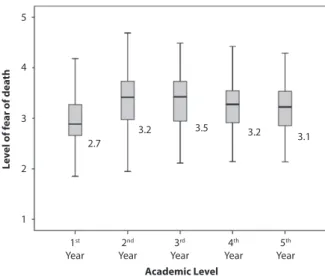
Figure 1 demonstrates that the average of the
irst-year students is not at the level of any conidence
interval of the second-, third- or fourth-year students
or at the level of the nursing professionals. The
average fear levels were indistinguishable between
the students in the second and third year, and these
values do not differ statistically. The averages of the
students in the fourth year and nursing professionals
overlap and are highly similar to those observed in
irst-year students.
Table 4 - Tukey’s HSD multiple comparisons, Puebla, Mexico, 2013
(I) Academic Level (J) Academic Level Difference in means (I-J) Standard error Sig.
Confidence interval at 50%
Lower limit Upper limit
First Year* Second Year† -0.427597 0.143633 0.028 -0.65741 -0.19778
Third Year‡ -0.451490 0.143633 0.017 -0.68130 -0.22167
Fourth Year§ -0.310691 0.143633 0.200 -0.54051 -0.08088
Nursing Professionals|| -0.290629 0.143633 0.260 -0.52044 -0.06081
1st
Year 1
2 3
2.7
3.2 3.5
3.2 3.1
4 5
2nd
Year
4th
Year 5th
Year 3rd
Year
L
e
v
el of f
ear of dea
th
Academic Level
Figure 1 - Box-and-whisker plot for the ive groups
Discussion
The results of the current study reject the
hypothesis that academic training and experience in
hospital practice would determine a greater fear of death
in students compared to professionals. Speciically, the indings demonstrate that irst-year nursing students
do not have a greater fear of death compared to the
other grades. This result is possibly due to the fact
that these students do not yet have clinical experience.
Alternatively, these indings may result from a lack of
practical experience in intensive therapy, emergency
medicine or with terminally ill patients. In contrast,
second- and third-year nursing students have higher
fear of death scores.
However, the level of fear of death decreases by the
fourth year, and it remains low in professional nurses.
Consequently, the relationship between experience and
fear of death appears to have an inverted U-shape,
with irst-year students and professionals performing similarly. In this group of participants, the primary reason
for the similarity in the trends observed between the
extreme groups may result from the fact that increased
professional experience is associated with practices of
palliative care for terminal stage patients, people who
have died as the result of an accident or illness. Thus,
they acquire greater conidence, and the fear of death
decreases, as shown by the levels observed in the
fourth-year nursing students and nursing professionals.
Explaining this result could generate several new
hypotheses. First, it is possible that the students have
acquired the skills required to handle these types of
situations, such as facing the death of others. Second,
this could relect a routine, which would suggest that it
does not matter what they witness when working with
terminal patients.
Overall, the levels of fear of death reported here
are not signiicantly different from the results of other
authors(3-8). However, in these participants, the fear of
one’s own death is less worrisome than the fear of the
death of others (patients and family), which includes
the loss of a loved one, having to see a dead body,
regretting not getting along better with the person when
he or she was still alive and feeling guilty regarding the
relief provoked by his or her death. Alternatively, it can
be interpreted that for nursing students, the greatest
dificulty occurs during the development of the grieving
process that is produced by the loss of a family member
or a patient. In a hospital setting, the loss of a patient
generates greater anxiety given that there is a preamble
of accompanying and caring for the dying patient, which
is a speciic component of nursing care for terminally
ill patients. The majority of students have not yet been
prepared for these types of situations, but it has also
been shown that these types of situations generate fear
even in professionals, despite their experience.
The results of this investigation should be taken with
some reservations due to the following study limitations.
First, despite being a sample of a pre-calculated size,
the sample size is considered to be small and may not
be generalizable to other populations. However, given
the methodological rigor with which this research was
conducted, the results should be considered reliable.
The current results suggest that it may be useful to
evaluate the perceptions of fear of death in nursing
professionals from other levels of health care and to
determine their academic level and years of experience
to assess whether the tendency that was demonstrated
in this work is also observed in other groups.
Conclusions
It can be concluded that students at lower academic
levels and professionals with greater clinical experience
exhibit a reduced fear of death. However, second- and
third-year students report a greater fear of death when
compared to the extreme groups (i.e., irst-year students,
fourth-year students and nursing professionals).
Students and nursing professionals show greater fear of
the death of others compared to the fear of one’s own
death. Finally, the current results demonstrate that the
Spanish adapted version of the Collett-Lester Fear of
Death Scale (CL-FODS) allows for studies examining the
References
1. Aguinaga B. Enfermería, muerte y duelo: Un teto de
reflexión académica. Editorial Universidad Nacional de
Colombia. Bogotá; 2010
2. Paz O. El Laberinto de la Soledad. México: Editorial
Fondo de Cultura Económica; 2008.
3. Sábado T, Limonero J, y Abdel-Khalek A. Spanish
adaptation of the Collett Lester fear of death scale. Rev
Death Stud. 2007;31-60.
4. Gual M, Sábado J, Aradilla A. Miedo a la muerte
en estudiantes de enfermería. Rev Enferm Clín.
2011;16:177-88.
5. Polit B. Investigación Científica en Ciencias de la Salud. 6.ed. México: Editorial Mc Graw Hill Internacional; 2011. 6. Ley General de la Salud en Materia de Investigación
para la salud 1987, revisión 2013. Disponível em:
http://www.salud.gob.mx/unidades/cdi/nom/compi/
rlgsmis.html. Acesso: 12 out 2013.
7. Limonero T, Sábado J, Fernández J, Cladellas R,
Gómez J. Competencia personal percibida y ansiedad
ante la muerte en estudiantes de enfermería. Ansiedad
y estrés. Rev Invest Salud. 2010;16:28-36.
8. Espinoza V. Maritza, Sanhueza A. Olivia. Miedo a la
muerte y su relación con la inteligencia emocional de
estudiantes de enfermería de Concepción. Acta Paul
Enferm. 2012;25(4):607-13.
Received: Oct 31st 2013