Ana Rita Lemos Costa e Silva
Repository of Cases about Information
Systems and Technology Professional
Acts: Supporting Practice, Research
and Teaching
Master Thesis
Integrated Master’s in Engineering and Management of
Information Systems
Work developed under the orientation of
João Álvaro Brandão Soares de Carvalho, Ph.D.
João Eduardo Quintela Alves de Sousa Varajão, Ph.D.
DECLARAÇÃO
Nome: Ana Rita Lemos Costa e Silva
Endereço eletrónico: [email protected] Telefone: +351 967741282 Bilhete de Identidade/Cartão do Cidadão: 14043263
Título da dissertação: Repository of Cases about Information Systems and Technology Professional Acts: Supporting Practice, Research and Teaching
Orientadores:
Professor Doutor João Álvaro Brandão Soares de Carvalho Professor Doutor João Eduardo Quintela Alves de Sousa Varajão
Ano de conclusão: 2017
Mestrado Integrado em Engenharia e Gestão de Sistemas de Informação
É AUTORIZADA A REPRODUÇÃO PARCIAL DESTA DISSERTAÇÃO, APENAS PARA EFEITOS DE INVESTIGAÇÃO, MEDIANTE DECLARAÇÃO ESCRITA DO INTERESSADO, QUE A TAL SE COMPROMETE.
Universidade do Minho, ___/___/_______
Acknowledgments
Concluir esta importante etapa da minha formação académica não seria possível sem o estímulo, colaboração e empenho de diversas pessoas. Quero expressar toda a minha gratidão e apreço a todos que contribuíram para a tornar realidade. Os meus sinceros agradecimentos.
Aos meus orientadores, o Professor Doutor João Álvaro Carvalho e o Professor Doutor João Varajão por toda a paciência, disponibilidade, conhecimento transmitido, críticas construtivas e conselhos na elaboração desta dissertação.
À Universidade do Minho, “mui nobre academia minhota” por me ter acolhido e pela excelência do seu ensino.
Aos colegas, em particular ao Flávio pelas “dicas” quando me sentia incapaz de prosseguir. À Optimizer, em especial aos que me deram a oportunidade, compreenderam e compadeceram do desafio que era conciliar o meu percurso escolar com o meu percurso profissional.
Aos amigos do Curso e à minha checa Tereza Marianová, pelas experiências que partilhámos e que tornaram o meu percurso académico e estudantil ainda melhor.
Ao Prata e às “meninas” do Rugby pela identidade do grupo e partilha de valores em todos os momentos porque passámos, em particular à Fi, com quem compartilhei a casa durante estes cinco anos.
Ao meu irmão, Rui Pedro, e companheira Sara, por me aconselharem a não sofrer por antecipação. À minha irmã gémea, Teresa, por toda a telepatia estudiosa e determinação que me transmitiu quando o desatino era maior.
Aos meus pais, Ana e Carlos, pela educação que me deram, por acreditarem em mim e fazerem-me acreditar nas minhas capacidades. Aos meus avós, Albano, Isaura, António e Lina (†) pelo carinho e preocupação. À Lá (Célia) e Ferreira por me aturarem.
ix
Abstract
Repositories have been affirmed in the last decades as a solution for the use, preservation and dissemination of the increasing scientific knowledge.
The presented master thesis proposes the planning, development and consequent implementation of a repository of cases based on three fundamental perspectives: practice, research and teaching.
With this repository, the practitioners will be able to find in the cases the description of situations that have already occurred which will serve them whether an aid in decision making before an act of profession, or as an improvement of their working practices and techniques.
Researchers may accumulate cases in order to establish greater confidence in the efficacy of a method or technique or even in relation to a theory and its constructs.
Teachers will be able to use cases to promote Information Systems and Technology teaching so that their students can learn to acquire scientific knowledge, develop new competences, and improve their skills.
The presented research followed a Design Science Research methodology, in which the concepts of software engineering and project management were inherent to the conception and construction of this informatic platform, while the focus group technique was useful in the evaluation of the same application.
All in all, the proposed repository has as objective the provision of cases whose content allows the benefit of those who use it, presenting itself as an innovative and contributory solution for the scientific area in question.
xi
Resumo
Os repositórios têm-se afirmado nas últimas décadas como uma solução para o uso, preservação e disseminação do crescente conhecimento científico.
A dissertação de mestrado que se apresenta propõe o planeamento, desenvolvimento e consequente implementação de um repositório de casos assente em três perspetivas fundamentais: prática, investigação e ensino.
Com este repositório, os profissionais poderão encontrar nos casos a descrição de situações já ocorridas que lhes servirão quer de auxílio na tomada de decisão perante um ato de profissão, quer numa melhoria das suas práticas e técnicas de trabalho.
Os investigadores poderão acumular casos com o intuito de estabelecer maior confiança quanto à eficácia de um método ou técnica, ou mesmo, em relação a uma teoria e seus construtos. Os professores poderão proceder a utilização de casos para a promoção do ensino em Tecnologias e Sistemas de Informação, de modo a que os seus alunos possam aprender a adquirir conhecimento científico, desenvolver novas competências e ainda, aprimorar as suas habilidades. O presente trabalho de investigação seguiu a metodologia Design Science Research, no qual os conceitos de engenharia de software e gestão de projetos foram inerentes à concepção e construção desta plataforma informática, enquanto a técnica de grupo de focos foi útil na avaliação da mesma aplicação.
Em suma, o repositório proposto tem como objectivo a disponibilização de casos cujo conteúdo permita o benefício daqueles que o venham a utilizar, apresentando-se como uma solução inovadora e contributiva para a área científica em questão.
Palavras-Chave: Repositório de Casos; Tecnologias e Sistemas de Informação; Conhecimento
xiii
Table of Contents
Abstract ... ix
Resumo ... xi
List of Figures ... xvii
List of Tables ... xix
List of Acronyms ... xxi
Chapter 1. Introduction ... 1
1.1. Research Problem ... 1
1.2. Goals and Expected Results ... 2
1.3. Work Plan Overview and Justification ... 3
1.4. Structure of the Report ... 4
Chapter 2. Literature Review ... 7
2.1. Repository of Cases ... 7
2.2. Practice Perspective ... 9
2.3. Research Perspective ... 13
2.4. Teaching Perspective ... 16
2.5. Search for Repositories of Cases... 20
2.6. Discussion ... 22
Chapter 3. Software Engineering ... 25
3.1. Software Development Process Models ... 25
3.2. Scrum ... 33
Chapter 4. Project Management... 41
4.1. Software Development Project Models ... 41
xiv
Chapter 5. Research Methodology ... 51
5.1. Research in Information Systems and Technology ... 51
5.2. Design Science Research ... 55
5.3. Focus Groups ... 60
Chapter 6. Work Plan... 67
6.1. Activities Description ... 67
6.2. Scheduling ... 68
Chapter 7. Artifact Conception ... 71
7.1. Software Conception ... 71
7.2. Design Model ... 75
Chapter 8. Artifact Construction ... 85
8.1. Software Construction ... 85
8.2. Prototype ... 90
Chapter 9. Artifact Evaluation ... 105
9.1. Software Evaluation ... 105
9.2. Use of Focus Group ... 107
Chapter 10. Conclusion ... 111
10.1. Project and Final Remarks ... 111
10.2. Analysis and Discussion Results ... 112
10.3. Future Work ... 113
References ... 115
Appendices... 121
Appendix A - Project Charter ... 123
Appendix B - More Functionalities ... 125
B1 - Add Case (Researcher) ... 125
xv
B3 - Delete Case (Researcher) ... 139
B4 - Manage Users (Administrator) ... 141
B5 - Manage General Attributes (Administrator) ... 144
B6 - Manage Case Type Attributes (Administrator) ... 147
B7 - Manage Case Types (Administrator) ... 152
B8 - Manage Action Types (Administrator) ... 154
B9 - Manage Profession Acts (Administrator) ... 159
B10 - Manage Theories and Constructs (Administrator) ... 164
xvii
List of Figures
The figures displayed in this master thesis were either created, adapted or retrieved. The figures retrieved from public documents, were properly referenced, instead of being replicated by the author of the presented master thesis.
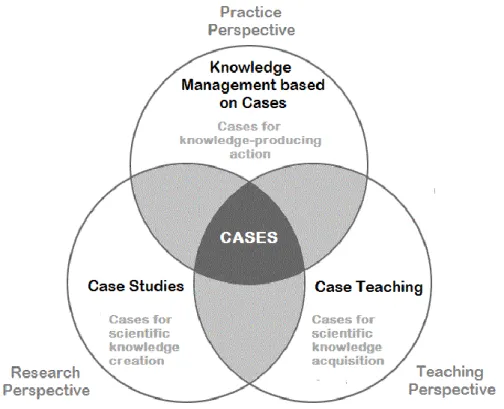
Figure 1 - Relation between Cases and Perspectives ... 23
Figure 2 - Waterfall Model ... 27
Figure 3 - Incremental Model ... 28
Figure 4 - Spiral Model ... 29
Figure 5 - RUP Overview ... 31
Figure 6 - Scrum Life Cycle ... 34
Figure 7 - Process Groups ... 42
Figure 8 - PRINCE2 Structure ... 45
Figure 9 - PRINCE2 Processes ... 46
Figure 10 - PMBOK Process Groups ... 47
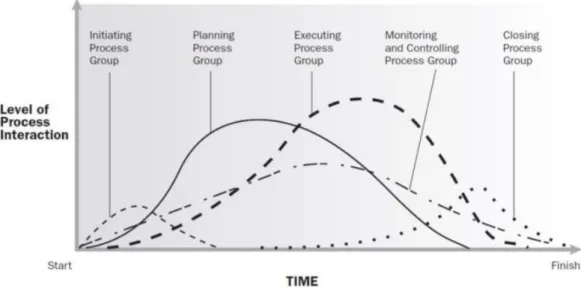
Figure 11 - Process Groups Interact in a Phase or Project ... 48
Figure 12 - IS Design Science Research Framework ... 52
Figure 13 - Two-phased Research Cycle ... 53
Figure 14 - Design Science Research Cycles ... 56
Figure 15 - DSR Methodology Process Model ... 57
Figure 16 - Focus Groups in DSR ... 62
Figure 17 - Focus Group Steps ... 63
Figure 18 - Gantt Diagram... 69
Figure 19 - Repository of Cases Representation ... 72
Figure 20 - Database Schema (entities and relationships) ... 75
Figure 21 - Database Schema (partially extended) ... 77
Figure 22 - Insertion Example (USER entity) ... 78
Figure 23 - Actors ... 78
xviii
Figure 25 - Researcher Use Case diagram ... 80
Figure 26 - Teacher Use Case diagram ... 81
Figure 27 - Student Use Case diagram ... 81
Figure 28 - Administrator Use Case diagram ... 82
Figure 29 - Application Static Structure... 86
Figure 30 - Handling Requests Workflow ... 89
Figure 31 - Application Architecture ... 91
Figure 32 - R-CASUM Homepage ... 92
Figure 33 - User Sign Up... 92
Figure 34 - User Login ... 93
Figure 35 - User Working Area ... 94
Figure 36 - Search Results ... 95
Figure 37 - Cases Results ... 96
Figure 38 - Case Details ... 96
Figure 39 - Action Details ... 97
Figure 40 - Profession Act Details ... 98
Figure 41 - Document Details ... 98
Figure 42 - Result Details ... 100
Figure 43 - Evidence Details ... 100
Figure 44 - Theories and Constructs Details ... 101
Figure 45 - Researcher Working Area ... 102
xix
List of Tables
Table 1 - Knowledge Areas and Process Groups Mapping Matrix. ... 50
Table 2 - Work Sessions ... 74
Table 3 - Database Entities and its Descriptions... 76
xxi
List of Acronyms
In this master thesis are used the following acronyms.
CFG Confirmatory Focus Group
DRY Don't Repeat Yourself
DSR Design Science Research
DT Development Team
EFG Exploratory Focus Group
ERD Entity-Relationship Diagram
IS Information Systems
IST Information Systems and Technology
IT Information Technology
MVC Model-view-controller
OGC Office of Government Commerce
PB Product Backlog
PHP Hypertext Preprocessor
PMBOK Project Management Body of Knowledge
PMI Project Management Institute
PO Product Owner
RUP Rational Unified Process
SM Scrum Master
UML Unified Modelling Language
WBS Work Breakdown Structure
Chapter 1 | Introduction
1
Chapter 1. Introduction
This introductory chapter describes the problem of this research work as well as the goals and expected results on its development. Moreover, it presents an overview and consequent justification of the work plan and, last but not least, the structure of this report.
1.1. Research Problem
Over the years, the technological evolution and consequent development in several scientific areas, led to a considerable increase in the volume and variety of the existing information. Thus, arises the need of implementing specific and adequate repositories to a particular area of interest, not only because they are central locations that allow the collection, storage and manage that information, but also because it serves as support to users, facilitating their understanding and acquisition of knowledge.
The implementation of such repositories, in several scientific areas, had contributed over time for a myriad of practices and theories leading to successful cases. Nevertheless, the unsuccessful ones are not obsolete cases to be forgotten since that creation can be beneficial for other purposes than those it was built. For instance, professionals can learn through past situations without committing the same mistakes or even come up with a solution, answering why those cases were not well succeeded.
Consequently, these particular cases are preponderant once they assist the experts, conducting to an improvement in the performance of certain actions by looking at those supportive references. Moreover, the content of each repository is respective to the concerned field of study.
Although information can be collected, stored and managed on these central locations which enables different types of users accessing resources in a better well thought-out search, the development as well as the usage of these tools are anything less than an ordinary procedure.
2
This project entails the planning, development and implementation of a repository of cases in the area of Information Systems and Technology (IST), based on three different perspectives, in which all of them are involved in professional acts.
The first perspective is for the IST practitioners, who can seek past situations that can facilitate on the process of decision making in some professional work, which they are involved; secondly, will be IST researchers who will not only empower the repository by adding new cases, as they will also collect cases in order to establish confidence in effectiveness and efficiency of any method or technique, as well as trust relative to some theory and, finally, the IST teachers, where they can promote learning to students in this area of interest by the use of such cases. Lastly, the stored cases in the repository should be arranged so that some layers of cases (mini cases), can be associated with relevant theories as well as its constructs.
It is presumed a lack of repositories in this particular area, once the complexity of elaborating these platforms is not a trivial process when compared to other scientific areas that are historically much older and more feasible to apply this concept.
This master dissertation takes further developed in a doctoral thesis. The doctoral thesis held by a Ph.D. student of the Information Systems Department, at University of Minho (Rito, 2015), entailed the adoption and diffusion of Information Technologies (IT) according to initiatives launched in the scope of implanted applications in the organizations. A supporting tool that would be able to assist professionals in the context previously referred, was considered in its work.
Finally, it is possible to infer that the research problem in the context of this master thesis was better understood in the light of the above mentioned doctoral thesis. A repository of cases which describes IST professional acts, supporting the perspectives of practice, research and teaching.
1.2. Goals and Expected Results
The main objective of this dissertation project is the creation of a repository of cases that describe professional acts, to be used by practitioners, researchers, teachers and students.
Chapter 1 | Introduction
3
Despite those perspectives being defined under the same aim, the resulting actions taken after the observation, analysis and evaluation of cases differ not only according to the type of users themselves, but also in different factors or characteristics that can condition the success of adopting such guidelines.
If the implementation of this repository leads to a more feasible and organized way of receiving information then, in reality, it should conduct to an improvement in decision-making, in effectiveness and efficiency of the actions taken, in comprehension and acquisition of knowledge about cases studies, and also in improvement or creation of theories or practices.
Moreover, it is expectable that the use of this repository of cases, supporting professional acts taken by practitioners, researchers, teachers and students, promotes a better communication and connection between these three perspectives in the IST area.
1.3. Work Plan Overview and Justification
Since this research problem involves planning, developing and implementing a repository of cases about IST area, supporting professional acts in practice, research and teaching, this master dissertation will follow the general process of Design Science Research methodology.
This methodology, which will be further explained in this document, is adequate to situations that involve the construction of artifacts (practices, theories, methods, models, approaches, etc.) for a specific purpose. Once the artifact elaborated in this research work is the production of a software (a repository of cases), then it is important to refer that we are facing a Software Engineering situation, also being described later. Additionally, it is considered to be an iterative process to prototyping, producing and refining the software according to the requirements and continuous feedback provided by the Focus Group technique, to yield a quality and successful product. Finally, the Project Management domain is also extremely preponderant for this research work, once it embraces all these terms and concepts that serve as theoretical foundation for what is seen as an outcome, without forgetting people, resources, and time management, or any other variable which significantly influences the course of the project and its phases.
4
The work plan is intended to be a guideline for the following phases that concerns the development and consequent implementation of this software. Moreover, it defines a set of activities or actions to be taken during a given period, which adds certainty to its approval and the continuous justification during the process of producing such repository. Such work plan will be particularly detailed later on this document.
1.4. Structure of the Report
The present document is structured in ten chapters, which are following enumerated. Chapter 1 identifies the research problem and the motivation in which it arises, the goals and expected results of its development, the work plan overview and continuous justification of the research work.
Chapter 2 presents the literature review tied with the research problem that is characterized through the three perspectives of practice, research and teaching. A research about the possibility of other repositories of cases, either as an object of study or as an available platform, is conducted and, ultimately, a general discussion is carried through the presented objective on this research work.
Chapter 3 addresses the software engineering concept in terms of the existent software development process models and the approach taken for this research work, Scrum.
Chapter 4 clarifies the project management term explicating the software development project models as the selected one for the research work, PMBOK.
Chapter 5 contextualizes some matters in the IST research, explaining why Design Science Research methodology is considered adequate for this project, and justifying the use of focus group for the purpose of evaluating the resulting artifact.
Chapter 6 addresses the work plan for this master dissertation, with relevant variables that can influence the justification of moving forward in this work, more specifically, it is referred the activities to execute and its duration.
Chapter 1 | Introduction
5
Chapter 7 covers the conception of the repository of cases, in terms of its requirements and the design models that involves it.
Chapter 8 approaches the construction of the repository of cases, referring not only the development tool used throughout this process, but also the demonstration of the final outcome.
Chapter 9 concerns the evaluation of the repository of cases, while using a research technique above indicated, called focus group.
Chapter 10 concludes this document with the final remarks of this dissertation project, an analysis and discussion of the results, and finally, the future work perspectives.
Chapter 2 | Literature Review
7
Chapter 2. Literature Review
In this chapter are presented several concepts considered fundamental for the research problem. Serving as a theoretical foundation for the following work, this chapter starts by addressing a general definition of what is a repository, being further detailed in the subsequent perspectives of practice, research and teaching. Consecutively, it is explained what a case is and in which terms it is assumed as the content of this type of repository. Hereinafter, a research is conducted to understand the possibility of other existent other repositories of cases, either as an object of study or as an available platform and, finally, a general discussion about the proposed repository of cases in the context of this master thesis.
2.1. Repository of Cases
Repositories had emerged in a stronger and frequently way in the last decades, mainly because of two reasons: the first one is the exponential increase of the information and the ease of access mainly due to the technological evolution, secondly, the modern ways of use, store and disseminate the information, had created the necessity of replace several traditional systems into digital repositories (Rodrigues & Rodrigues, 2012).
In fact, the term “repository” has been used among many areas with different connotations by society, becoming a buzzword. For this motive, such concept is commonly characterized according to the purpose for which it was built and the content that it possesses. Therefore, in an overview, a repository can be considered as a place where something may be deposited, saved and managed.
Regardless of their type or designation, repositories should satisfy two basic functions: the preservation and reuse of the digital objects (Minguillón, 2010). Repositories, as information systems, besides storing those digital objects, may support users to the creation of knowledge. In addition, this knowledge that arises may as well be shared through the communities in the area that the repository assists.
8
Likewise, repositories are commonly referred as “spaces of production and transfer of scientific knowledge” (Leite & Costa, 2006, p. 206).
As previously introduced in the first chapter, the research objective stands for the undertaking of a repository of cases. Therefore, a significant and valid question arises: if it is already known that repositories are generally mentioned by its nature and the content of what they possess, then in reality, what the term "cases" means and what they represent?
To answer this question in the context of this dissertation, cases are descriptions of real situations that happened in a certain background of an organization, about IST professional acts, which were executed by some professional in the area. Cases, as digital objects, are reused and preserved in the repository, to fulfil users of creating and be also able to disseminate scientific knowledge, thus contributing for the IST area.
The accumulation of cases into this repository is intended to contribute to reinforce or mitigate the trust in theories and its constructs, relevant to one or more professional acts. By looking through those cases, initiatives and/or actions can be taken by the practitioners, researchers, teachers or students which leads to two important matters: firstly, the repository will manage the scientific knowledge at one specific point while being functional for all these three perspectives, which avoids information bias, while the second is due to the fact this is a cyclic process flow where knowledge is captured, created, stored and shared by someone, and then by another IST professional and so on, contributing to the IST area and enriching continuously the repository with digital objects such as cases are.
Briefly, the research objective entails the conception, construction and evaluation of a repository of cases which describes IST professional acts by assisting users (practitioners, researchers, teachers or students) when taking initiatives or actions, and consequently, ensure certainty to relative theories and its constructs in this scientific area. These three perspectives of practice, research and teaching, are following described in this chapter.
Chapter 2 | Literature Review
9
2.2. Practice Perspective
A fundamental characteristic of the human being is the incessant search for knowledge it is, indeed, the engine for development and progress. Knowledge is assumed as something inexhaustible, evolutive and heterogeneous, an intangible well that organizations use to add value and differentiate themselves from others (Alavi & Leidner, 2016).
An “intelligent” organization, is the one that uses knowledge on its favour to align the core of its existence and activity, but most importantly, to be able to learn from the past and project itself in the future (Bhatt, 2001).
Moreover, the people, that are considered to be one of the most valuable resources in the organization, have the capability of transforming data into information, which generates knowledge. However, the knowledge has more impact when shared, than propriety of few (Choo, 2000).
According to Robbins and Judge (2013), knowledge management is a “process of the organization and distribution of the collective knowledge of the organization, so that the right information reaches the right person at the right time” (p. 242). Briefly, knowledge management is the practice of adding value to the information and distributing it quickly so that communities can benefit from it.
In the past years, the organizations have been treating knowledge in a more meaningful way, considering it as a significant organizational resource. However, when it comes to manage it, organizations need first to understand what is the structure and nature of the organizational knowledge, and what makes it distinct from other forms of knowledge, since it evolves from different origins and is engaged in different ways (Alavi & Leidner, 2016).
Organizations still believe that most of the knowledge they need exists inside the organization, which means that, from this perspective, the concept of open access is not clearly evident, since quite frequently the organizational knowledge is kept only for internal purposes. Instead, the creation, storage, retrieval and transfer of knowledge does not enhance directly the organizational performance, but effective knowledge application does. In fact, organizational performance often depends on the ability to turn knowledge into effective action rather less on the knowledge itself (Choo, 2000).
10
Spender (1996) argues that “to know is to be able to take part in the process that makes the knowledge meaningfully” (p. 59). Likewise, knowledge “consumers” also have the opportunity to do their work, which means they are able to access, use and manage the extant knowledge, but at the same time to contribute with their knowing’s for a certain knowledge base in the organization. Moreover, a knowledge management application is effective if it creates a system capable of sustaining the knowledge base and support users on its daily work through manage, create, gather, transfer and apply the knowledge, regarding the business needs of the organization. Obviously, there is not a universal solution for how the knowledge can be implemented, managed and effectively applied to an organization or type of organizations or even the most suitable technology to develop such system (Litvaj & Stancekova, 2015).
It is possible to infer that a handy solution is the one that searches for implications where the interactions between people, technologies and techniques has profound consequences in the knowledge and its management within organizations (Bhatt, 2001). Bhatt (2001) also refers that “an organization is not an exclusive artifact of technological system, nor does it represent a social system. It is a system of personal experience, social relations, and technologies that enable coordination between practice communities” (p. 74).
Another concern in knowledge is the fast dynamicity of the information environment we lived in, which forces professionals within organizations to invest the time and energy to update their skills and knowledge, and to network with other experts in their own profession.
So, what organizations learn as they gain experience? Where is this knowledge embedded within organizations? What are the consequences of where knowledge is embedded for organizational performance? This are a few questions that organizations must be concerned with, while implementing a solution for manage knowledge (Argote & Ingram, 2000).
By answering the question of how organizations can create, use and preserve knowledge, that is managing it, repositories are one of the existing solutions that may represent the information that derives at work (Davenport & Prusak, 1998).
In fact, an organization itself would not “remember” things by its own, therefore the necessity of retain the “organizational memory” connotes as a metaphor, which describes information and
Chapter 2 | Literature Review
11
represents all the knowledge that is created, acquired, resided and shared by people (Kogut & Zander, 1992; Nonaka & Lewin, 1994).
According to Walsh and Ungson (1991), organizational memory is “the faculty of retaining and recalling things past (…) the acquisition, retention, retrieval of knowledge and experience from work retained into repositories, influencing subsequent individual behaviour” (p. 3).
Therefore, repositories, as the “memory” of the organizations, represent the knowledge that comes from the interactions between the different resources within organizations (people, technologies and techniques). This knowledge management application, when successful, allows a better organizational performance, and consequently, a competitiveness advantage.
Regarding the literature in this discipline, many authors argue that knowledge comes predominantly from people’s mind and by the work they perform inside organizations (Argote & Ingram, 2000; Bhatt, 2001; Davenport & Prusak, 1998; Kogut & Zander, 1992; Polanyi, 2015). However, knowledge may also emerge from roles and organizational structures, organization’s standard operating procedures and practices, its culture, and the physical structure of the workplace (Walsh & Ungson, 1991).
People within organization firstly, constantly and continuously pursue sharing, learning and knowing to enhance work performance, secondly, propagate what they know throughout the organization, and lastly, marshal it into a repository (Argote & Miron-Spektor, 2011).
Thus, considering the research work, it is possible to envision that practitioners, people within the organizations, can seek for past situations that are stored into the repository, thus acquiring knowledge about a specific professional act, and subsequently taking actions or initiatives to their current work. A repository of cases that describes professional acts in IST area is a solution that will assist practitioners in their working practices. A knowledge management application where processes of acquisition, creation or transfer, organizational memory, sharing, retrieval, and finally leverage may be possible. Thus, is intended for this perspective, a knowledge management based on cases, where these cases allow knowledge for actions or practices taken by practitioners.
This can enhance certainty in decision-making, once practitioners can have informational objects, such as cases, that somehow can guide them at their practices. Through its actions or initiatives, practitioners can as well rely on the experience of others. As a cyclic process, the
12
produced knowledge from what they did can be preserved into the repositories, allowing other people or even newcomers within organization to benefit with such contribution, when looking through similar professional acts.
Besides these cases represent past situations, failure stories or unsuccessful occurrences are also important so that practitioners prevent the same mistakes from happening again, when leading their own practices.
The repository and all its cases are closely related with the knowledge management discipline, once it allows the process of collecting and identifying useful information (knowledge acquisition), transferring organizational knowledge (knowledge creation or transfer), storing new knowledge into the repository (organizational memory), disseminating it through the whole organization (knowledge sharing), enabling practitioners to easily retrieve it (knowledge retrieval) and exploiting and usefully applying knowledge (knowledge leverage) (Nonaka & Lewin, 1994).
Still, in all organizations, managing knowledge is not such a trivial process, due to two particular problems. Some organizations find difficult to locate knowledge centred at one point to be, after, reused, and therefore practitioners may be unware that the knowledge they need is already available. Moreover, repositories can be used for different purpose than the one it should do, for example, dealing with internal management processes instead of having the essential information to guide practitioners so that they can be able to increase their work performance (Dalkir & Liebowitz, 2011).
Finally, practitioners should be able to find out what they need in order to access, understand, and apply experience and expertise of the organizations. In this way, they can focus on doing their actual work and not loose precious time trying to find all the bits and pieces of knowledge and know-how that have already been captured, coded, vetted, and made available to them (Argote & Ingram, 2000). Repositories are then one of the most commonly solutions for organizations and consequently beneficial in many positive aspects, when seen from the practice perspective.
Chapter 2 | Literature Review
13
2.3. Research Perspective
Universities carry with them two fundamental principles: the research and teaching. These two principles are as well the core functions in all institutional entities. Thus, in higher education institutions, the information is used to perform the research and teaching, but also on for its strategic planning and management (Amante & Segurado, 2009). Although, these two principles are intimately connected, in this subchapter it will only be addressed to the research perspective.
According to Rodrigues and Rodrigues (2012), “scientific knowledge is based mostly on an effective diffusion of research results by scholarly communication” (p. 100).
It comprehends the set of all activities that involve production, dissemination and use of the information, since the beginning of the scientific creation process where the ideas are generated, until the moment of the approval of the results as part of the scientific knowledge body.
It is in the higher education institutions, which are large, complex, and adaptive social systems, where the scientific knowledge represents one of its principal academic products, being at the genesis of their raison d’être (Cassella, 2010).
Therefore, institutional repositories are information systems which serve to store, preserve, and diffuse the intellectual production of a certain institution, normally a university community. In other words, it is “a set of services that a university offers to the members or its community for the management and dissemination of digital materials created by the institution and its community members” (Lynch, 2003, p. 2).
The development of institutional repositories is intimately tied and interconnected with two key issues – the technological evolution and exponential increase of the information as well as the open access movement (Jantz & Wilson, 2008).
The first one allows universities to implement new digital and informational systems, such as institutional repositories are, that somehow has been revolutionise not only the traditional approaches of the scientific knowledge and the research and teaching activities, but also challenging scholarly communication.
14
On the other hand, the concept of open access, as the name suggests, means that scholarly communication should be kept accessible, through internet or any digital system, where it serves as a theoretical foundation for the dissemination of scientific knowledge, and also free from severe constraints imposed by scientific content publishers (Creaser et al., 2010; Cullen & Chawner, 2011). Jantz and Wilson (2008) refer that the open access principle is “an elegant argument that stresses the responsibility of researchers to share their scientific knowledge as widely as possible, particularly in the growing digital environment” (p. 188).
So, and in accordance with Rumsey (2006), an “institutional repository is an open access (i.e. freely accessible by anyone with internet access), searchable, digital archive of materials emanating from an institution, usually scholarly but not limited to journal articles, which are usually (but not always) available in their entirety” (p. 181).
When this digital solution, such as repositories are, is inserted in such informational environment, it allows the enhancement of visibility in higher education institutions and all those who work there, it serves as a tangible indicator of quality and scientific, economic, and social relevance of activities of teaching and research. It enhances the impact and the visibility of the results of such activities, it defines the trends and research lines undertaken, it contributes to an improvement in the intern communication, it preserves the intellectual memory avoiding its dispersion, and finally, it contributes progressively to the traditional academic communication system reform (Aparício & Henriques, 2012).
Thus, repositories represent a new “strategy” for the universities, which allows them to influence in a serious and systematic way the accelerated changes that have been occurring in the production of knowing and scholarly communication.
So far, one of the concepts already addressed was institutional repositories, becoming perceivable how repositories or any space for deposit and storage of digital information can provide benefits when implemented within universities. However, the focus of this perspective is intended to answer the question of how the proposed repository in this research work can assist researchers, through its cases. This means, that the repository of cases is built for other purposes than the ones institutional repositories normally possess when they are used by universities for its own benefit.
Researchers, the ones that have as a major responsibility the process of creating scientific knowledge, are empowered to populate the repository with cases, under a certain cases’ guide.
Chapter 2 | Literature Review
15
This guide, should contain the policies and rights for validate cases to be contained within the repository. Therefore, the research work allows researchers to have an informational system in where the scientific knowledge that was produced by them, can be as well disseminated.
The same knowledge process is repeated sequentially, in which other researchers can as well see and use one or more cases for their own research work, and posit new scientific knowledge into the repository, preserving and diffusing it. Thus, is intended for this perspective that the cases within the repository, can assist researchers to create scientific knowledge, by studying them.
Despite the existence of other research methods, case studies are commonly used by researchers. This research method produces a research report that will be stored in the repository. The occurrence of a phenomenon about an IST professional act, is described through these cases, which are revealed into the repository.
Gerring (2004) states that “case studies always employ more than one case” (p. 342), therefore researchers, while having in mind certain professional act, should search for those cases and accumulate them for an upfront study during their research. Moreover, this author defines case studies as “an intensive study of a single unit for the purpose of understanding a larger class of (similar) units” (Gerring, 2004, p. 342).
By clarifying the terms in the above definition and compare it with the proposed research work, we have the term population (all the cases within the repository), which is comprised of a sample as well as unstudied cases. A sample, (the cases selected by researchers to be studied), which is comprised of several units (mini-cases) and each unit is observed at discrete points in time, comprising cases. A case is comprised of several relevant dimensions or variables (circumstantial factors), each of which is built upon an observation or observations (describing IST professional acts).
After study through those cases, researchers can ensure not only the certainty about one or more theories and its constructs, but also in the effectiveness of some techniques or method by their actions or initiatives, and consequently acquire scientific knowledge. Researchers, then, can produce cases while using an empirical method research through the study and observation of accumulative cases. Moreover, cases are characterized by its circumstantial factors (professionals, organization, country, year, types of technologies, dimension, activity sector, among others) and should be organized in the repository in order to some extracts from the cases (mini-cases) can be
16
associated to relevant theorizations. Empirical research, as the name suggests, is research using an empirical evidence – the cases. It is a way of researchers gain knowledge by means of direct and indirect observation or experiment. In this particular work, the experiment is not always a feasible approach, therefore the observation of those cases will contribute directly to researchers driving means to an end – create scientific knowledge (Walsham, 1995).
Finally, researchers, as integrated part of universities or other research institutions, are able to take advantage of these repository to produce and support scientific knowledge, contributing to their own recognition given its research work, as well as the visibility of the entity in which they are members.
2.4. Teaching Perspective
Besides improving the processes of knowledge creation by researchers, another key issue within universities is the knowledge transfer by the teachers, and consequently, the learning by students.
As previously stated, the increase of volume and variety of the information, as well as it eases of access, potentially reinforced by new communication and information technologies, has been changing the nature of knowledge, and even the processes themselves when it concerns teaching and learning.
Over time, the role of teachers “tends to evolve from the principal and practically unique resource of learning in the classroom, to the one of guiding and facilitating the practices and processes of knowledge construction, in a teaching based on different types of educational resources and in new learning environments” (Aparício & Henriques, 2012, p. 378).
Teaching through cases or case teaching is one of the opportunities that some higher education students have, when examining real-life problems in all their complexity and uncertainty. Students attempt to solve those problems settled with their learning areas, with the ability to analyse, synthesize, evaluate, and apply the knowledge they have learned, when they are engaged in the process of a particular context or authentic situations (Guess, 2014).
Chapter 2 | Literature Review
17
Thus, students learn to bring all their knowledge, skills, and experience, not just only from IST field of study, but also from all areas of knowledge, to these problems posed in cases. Moreover, students study and learn through these cases, where they may acquire knowledge that, in their future work, can be ensured by this theoretical foundation when applied into their practical career as well (Leonard & Cook, 2010).
According to Anderson, W. Schiano and B. Schiano (2014), “case teaching is an underused, but very effective way of teaching in a number of contexts (…) the students learn not only from the teacher but from each other by bringing their collective experience to bear on the problem” (p. 2). To develop judgement or critical thinking about something, you need not only to read theory but also apply it, so students should answer the question of what should they do if they were at that specific situation.
This method has been the hallmark of Harvard University for many years, being adopted as the most effective teaching and learning method. They have determined that cases are best used to teach people about realistic decision-making situations (Barnes, Christensen, & Hansen, 1994). In fact, teaching through cases has a long tradition in law schools, hence the term “case”.
Generally, the cases simulate actual proceedings and illustrate prior realistic occurrences. Instead of students pass directly into practice, they first need to acquire the knowledge, the theoretical foundation. For example, in areas such as law, business and medicine, where theory comes at first place in comparison with practice, is quite frequent the use of such educational approach.
A case tells a story: what happened, who was involved, what they contended with, and, sometimes, how it came out. Cases recount, as objectively and meticulously as possible, real occurrences or problems so that students experience the complexities, ambiguities, and uncertainties confronted by original participants in the case. As they inhabit a case, students must tease out key components from the real messiness of contradictory and complicated information (Barnes et al., 1994; Lynn & Laurence, 1999).
On the other hand, teachers as mentors and facilitators who aid the learning process, hope, above all, for students to practice the kind of thinking a particular discipline calls for. When using such method as teaching through cases, teachers find a more interesting time preparing and doing
18
the classes, rather than feeling that they are repeatedly performing the “same” lectures. Moreover, teachers believe that students learn more when they are in the centre of the educational process. Teachers may choose a specific case if the one shows that is relevant to the topic, is it substantial and complex enough to reflect a real situation, and it is stimulating enough to invoke discussion and subsequent learning by the students while studying it (Hackney, McMaster, & Harris, 2007). These authors also refer that this method “is clearly not the easiest method of teaching, but it can be immensely rewarding and valuable when used properly and when good teaching cases are available” (Hackney et al., 2007, p. 230).
While comparing teaching through cases with the traditional approach, it is assumed that both are alike, and the objectives are largely the same. No matter what pedagogy is used to trigger education, most higher education institutions want their students to learn significant disciplinary content, to refine their critical thinking and communication skills, and to gain in self-confidence and social awareness. The differences between case and traditional teaching derive from the underlying assumptions about how to achieve these goals most effectively (Barnes et al., 1994; Guess, 2014; Merseth, 1991).
Considering the research problem, the repository may assist teachers and students in the educational process, while both using cases. It can be said that these two roles go hand in hand. Although this perspective is more concerned with the teaching part, the educational process concerns not only the teachers and the teaching, but also to the people whom is to learn, the students.
Teachers can use these cases, which describe IST professional acts and are intrinsically associated with certain theories and its constructs, by taking initiatives or actions to enrich their way of teaching. Hence, being more effective and efficient when it comes to motivate students at their current discipline. On the other side, those cases and the respective relations they possess with this scientific area can better understood by students, either learning through these cases, or the knowledge that teachers are trying to provide.
As facilitators, teachers enable students to learn what they need, by helping them to acquire knowledge and creating curiosity, critical reflection, and recognition of their responsibilities as professionals they will become one day.
Chapter 2 | Literature Review
19
Moreover, they can assume the role of researchers and creating their own cases as a contribution for the repository and, consequently, to the community of the area it concerns.
Students, may acquire knowledge, competences, and skills, by looking through the cases that were provided by the teachers, or even going further by searching for cases to confirm their perception about one or more theories and its constructs associated with some professional act that instigates them.
Cases assume a major goal in higher education of empowering students to think critically and act responsibly in their various roles at work, at home, at their communities, that students must be able to apply a collection of concepts and facts they learned to new situations, and finally, to integrate knowledge from classes and life experiences for their training.
Furthermore, cases describe real occurrences, past stories no matter if they were successful or not, students should still be able to sharpen their qualities, enhance their ability to use new concepts and information to substantiate their arguments, improve their soft skills, develop hypothetical solutions and examine the consequences of the decisions they make. All the theory they gathered in this learning process, should then be applied to practice, for instance, at their professional work.
Good cases are chock-full of information and require students to apply theory to analyse complicated, real world events. The difference is that active learning promotes deeper understanding and improved retention. Running cases helps build interpersonal skills that find significant resonance with life after the university (Anderson et al., 2014; Leonard & Cook, 2010). Educational objectives focus on qualities of mind (curiosity, judgement, wisdom), qualities of person (character, sensitivity, integrity, responsibility), and the ability to apply general concepts and knowledge to specific situations, where case teaching may well be very effective. It puts the students in an active learning mode, challenges them to accept substantial responsibility for their own education, and gives them first hand appreciation of, and experience with, the application of knowledge to practice (Barnes et al., 1994).
20
2.5. Search for Repositories of Cases
A research was conducted in the phase of this work with the objective of searching for an already existent proposal of a repository of cases either as an object of study or as an available platform. It intended to understand if the repository of cases is considered to be something new and, consequently, if what is proposed in this master thesis can lead to a contribution in the IST area, reaching the communities and its professionals.
Following this line of thought, the adopted strategy has begun with searching through scientific documents in several scientific databases and search engines. In this approach was possible to identify a few books, articles and journals.
Some examples of research journals, are mentioned below:
European Journal of Information Systems;
Information Systems Journal;
Information Systems Research;
Journal of the AIS;
Journal of Information Technology;
Journal of Management Information Systems;
Journal of Strategic Information Systems;
Management Information Systems Quartely.
Relatively to the databases and respective search engines, the ones used were:
Google Scholar;
ScienceDirect;
Scopus;
WebOfScience;
IEEE Digital Library;
Springer;
RepositoriUM;
Chapter 2 | Literature Review
21
Although there are other resources for the act of research considering the scientific area, only the ones mentioned above were undertaken for this specific research. During this process, several terms and keywords where used to trigger any potential reference to a repository of cases, being following referred:
“Repository of Cases”;
“Repositories”;
“Repository of Cases in IST”;
“Cases usage, storage and preservation”;
“Cases for IST professionals”;
“Repositories in IST”;
“Open Access repositories”;
“Digital Repositories”;
“Scientific Knowledge Repositories”.
All the scientific documents were gathered based on their title and abstract, which allowed boundaries and restriction to the research goal. Some of those documents, which were considered more relevant, were read at their entirety, once it had stimulating a further interest and proximity with the research focus. However, all the scientific documents did not literally address a repository of cases as an object of study.
In terms of possible available platforms, the results were a little bit different. It was found a platform that contains case studies on IT implementation projects. The case studies were written by experts in collaboration with the project managers, possessing the first-hand information without any commercial interest. The cases are based on the eXperience Method, successfully applied to the documentation of project experiences, and even providing the name for the application of "eXperience Cases" (Schubert, 2002). It allows software applications for research and teaching, studies on the technology use, cases on business software implementation and use and, finally, publications such as books, papers or articles where most of the authors are professors, lecturers and Ph.D. students. Although this Web tool has its resemblances, the entire purpose in which is built and the users it supports is not quite the same as the proposed repository of cases in the context of the presented dissertation.
22
It is believed by the quality of the research made, while perceiving and deciding about the novelty of the artifacts or any existing contributions, specifically, in the IST area. All the selected documents and founded platforms have shown to be mismatched with the focus of this research work, having some similarities but nothing more that ensures that this repository of cases is already an existent artifact or a contribution in this domain.
Finally, it is possible to infer through the analysis of the captured information, the adopted strategy, and performed techniques, that the proposed repository in this research work might be considered something new that will contribute for such scientific area, through the support that gives to IST professionals at their daily working routines, while using its own cases.
2.6. Discussion
The proposed repository of cases for this research work, concerns the three perspectives of practice, research, and teaching, as elucidated above in this chapter. The planning, development and implementation of such repository, centred and focused on cases, should be able to support its users and the roles they represent – practitioners, researchers, teachers and students.
In accordance to what has been said before, this repository of cases aims two different objectives:
1. Accumulate cases that will contribute to reinforce or reduce the effectiveness of certain theories and its constructs, that serve as relevant theoretical foundation for the actions or initiates occurred and involving one or more professional acts; 2. An instrument based on cases that will support the actions or initiatives taken by
practitioners, researchers, teachers and students, by searching through a specific IST professional act.
Desirably, the undertake of this repository and its effective use in the above perspectives, implies that it may be open and accessible to whom it may concerns, and obviously, in accordance with the conditions it possess for its use. However, the inclusion of new cases in the repository can be only empowered by researchers, who makes it under a respective cases’ guide with its rules and acceptance policies.
Chapter 2 | Literature Review
23
Another long-term benefit that can emerge while using such repository is the possibility of serving as an aggregator of a community for practice, research and teaching. That means the practitioners within organizations could be more tied with the academic professionals, such as researchers, teachers and students, through a driving force that this repository allows.
The figure below represents the relation between the three perspectives and it demonstrates that the purpose of using the cases, which are preserved within the repository, may differ according to the user and the role that assumes (Figure 1).
Figure 1 - Relation between Cases and Perspectives
It is possible to observe that cases are the focus of the repository and, in fact, is what motivate any type of user while accessing to this digital and informational platform. An ideal scenario for this repository of cases, would be the chance of a single case be able to address all these perspectives and aid the context in which they exert their profession.
In short, the repository of cases in its perspectives, may be used by:
1. Practitioners, IST professionals who can seek for past situations that can help them make decisions about an act of profession in which they are involved. If the
24
knowledge is well managed within the organization, they are able to apply good practices at their work, that is based on cases as well as their know-how;
2. Researchers, who can accumulate cases for the purpose of establishing confidence in the efficacy of some method or technique, or even, in confidence regarding some theory and its constructs. They attempt to study cases in order to create scientific knowledge and assume the responsibility of contribute and add more cases into repository;
3. Teachers, who can use a case method to foster the IST education. They are able to teach students through cases so that they can learn and also acquire scientific knowledge, gain other competences and sharpen their skills.
How can the actions that IST professionals have, regarding this repository, be proceed by efficacy and contribute to the related theories and its constructs? How effective are these actions? What are the key factors if they succeed? How can these cases contribute to the professional work? How can these three perspectives be grouped and communicate between themselves while using the same repository of cases?
These questions are preponderant for the conception, construction, and subsequent evaluation of the repository. If this research work will be successfully undertaken, then the production of a repository of cases, withstanding all these IST professionals that use this cases as a reference to move forward at their work, contributes directly to the progress in this area.
Chapter 3 | Software Engineering
25
Chapter 3. Software Engineering
This chapter focuses on the concept of software engineering. Besides the research problem has been explained in the prior chapters, it is now important to adopt an engineer approach once this repository of cases is also a software that will be planned, developed and implemented. Therefore, an elucidation will be made regarding the software development process models. More specifically, it is described the agile Scrum since it was used in this master thesis.
3.1. Software Development Process Models
According to Sommerville (2010), “software engineering, is an engineering discipline that is concerned with all aspects of software production” (p. 24). An application of engineering to the design, development, implementation, testing and maintenance of software.
The objective in software engineering is the cost-effective development of high-quality software. A software process is seen as a set of activities structured and documented for the development of such applications, that can be able to satisfy the needs of the clients (Pressman, 2009).
Nonetheless, the production of a software does not mean an integral development, once it is more frequent that it emerges from the expansion or modification of an already existent software. That is mainly because these processes are not always something trivial that can be applied in a transversal way to support organizations and people inside them.
As a result, there is not an ideal software process. This means that quite often, a software process must be adapted to the reality of each project that comes up. However, when it comes to creating or improving a software, it must be justified until the software development process is finished, while taking into consideration the characteristics of a specific project.
26
As evolution dictates, these processes suffered changes over the time while researchers were attempting, not only to explain the capability of people inside the organizations, but also the characteristics and the impact of adopting or developing a given software (Kan, 2002).
Although there are several approaches which are used in the software development process, it is important to understand that each process model represents the software process from a particular perspective. So, independently of the software development process selected, four fundamental activities are generally included:
Software requirements specification – this activity is concerned in defining of the functionality of the software as well as the constraints on its operation;
Software design and development – it is intended that the software is produced, meeting the specifications prior defined;
Software validation – the software is subject to comparison between what it actually does with the requirements that were specified;
Software evolution – the software must be capable of changing to attend customers’ needs or alterations.
Briefly, process models are representations of abstract software processes. Software process models define the activities during development, and how those activities should be done, working as a guide for software development projects.
There are several process models, those that were created from scratch, the ones that emerge from failures of other models, and those that combine several models into one. Some of the existent software development process models are explained, as examples, in the following paragraphs.
At first, the Waterfall Model is the oldest and most used process model. It was introduced by Winston Royce in 1970, and its name derives from the type of process it represents. That is mainly because the software development flows systematically and sequentially through the activities, in which the outputs of each task are used in the following task, as it can be observed in Figure 2.
Chapter 3 | Software Engineering
27
Figure 2 - Waterfall Model [retrieved from (Sommerville, 2010, p. 30)].
In the beginning of the project, requirements are defined accordingly with the problem to be solved, in terms of its functionalities, design and performance, where this output is used in the following activity. Regarding the requirements prior defined, a design is formulated to be applied in the software. After the design of the software, the implementation is ready to start, where the product is finally developed. Besides implementing the software, it must be used for verification tests where issues that are detected can be changed. Finally, the maintenance phase ensures that the system is working as planned (Scacchi, 2001; Sommerville, 2010).
The Waterfall Model was a pioneer in software development, inspiring several process models in benefit through few changes from this original model. One of this process models is the Incremental Model (Figure 3). This model entails an iterative development process be divided into smaller parts and used in repetitive cycles, as it can be seen in the following figure.
28
Figure 3 - Incremental Model [retrieved from (Sommerville, 2010, p. 33)].
This process model begins with a subset of requirements, from iteration to iteration, where new functionalities are being added until the solution is concluded. This model addresses different issues in the original Waterfall Model. For example, the fact of being divided into several increments, makes it not only possible to create software rapidly, but the possibility of the client intervenes, shortening the risk and uncertainty of the project. At last, is perceivable that any problem during the phases of the process model may be identified and treated in any iteration (Scacchi, 2001; Sommerville, 2010).
Another process model is the Spiral Model, proposed by Boehm in 1988. As the name suggests, this model is represented as a spiral, where each loop represents a phase in the software development process. Once more, this model has emerged from several experiences and modifications to the original Waterfall Model. The subsequent figure illustrates this particular model that combines change avoidance with change tolerance. The Spiral Model can be seen as a more sophisticated view of the Incremental Model (Figure 4).
Chapter 3 | Software Engineering
29
Figure 4 - Spiral Model [retrieved from (Sommerville, 2010, p. 49)].
As it can be seen, the innermost loop is concerned with the system feasibility, the next loop with requirements definition and the succeeding loop with system design. Changes in this model are a result of project risks and includes risk management activities to reduce them, so one of the major focus in this process model is risk analysis.
Moreover, this process model is splitted into four sections. The objective setting determines not only the objectives of the project, but also the constraints and alternatives which are dependent from the project risks. Then, the sector of risk assessment and reduction allows the analysis of each identified project risk and evaluation of the alternatives, previously planned, in order to reduce the risk impact and probability. The third section represents the development and evaluation of the product, where prototyping is one of the most common approach. At last, the planning section is concerned with the project review and decides whether to continue with a further loop of the spiral or not. If the answer is yes, then plans are drawn for the next phase (Scacchi, 2001; Sommerville, 2010).
Although the software development process models are planned for completely specifying the requirements and then designing, building and testing the system, these processes are not geared to rapid software development. As the requirements change, or problems are discovered,
![Figure 2 - Waterfall Model [retrieved from (Sommerville, 2010, p. 30)].](https://thumb-eu.123doks.com/thumbv2/123dok_br/17375574.798241/49.892.139.746.103.466/figure-waterfall-model-retrieved-from-sommerville-p.webp)
![Figure 3 - Incremental Model [retrieved from (Sommerville, 2010, p. 33)].](https://thumb-eu.123doks.com/thumbv2/123dok_br/17375574.798241/50.892.153.724.134.448/figure-incremental-model-retrieved-from-sommerville-p.webp)
![Figure 4 - Spiral Model [retrieved from (Sommerville, 2010, p. 49)].](https://thumb-eu.123doks.com/thumbv2/123dok_br/17375574.798241/51.892.145.744.114.526/figure-spiral-model-retrieved-from-sommerville-p.webp)
![Figure 5 - RUP Overview [adapted from (Kroll & Kruchten, 2003)].](https://thumb-eu.123doks.com/thumbv2/123dok_br/17375574.798241/53.892.170.714.108.477/figure-rup-overview-adapted-from-kroll-kruchten.webp)
![Figure 6 - Scrum Life Cycle [retrieved from ("Scrum Alliance," 2016)].](https://thumb-eu.123doks.com/thumbv2/123dok_br/17375574.798241/56.892.165.763.117.393/figure-scrum-life-cycle-retrieved-scrum-alliance.webp)
![Figure 8 - PRINCE2 Structure [retrieved from (OGC, 2009, p. 6)].](https://thumb-eu.123doks.com/thumbv2/123dok_br/17375574.798241/67.892.164.740.124.531/figure-prince-structure-retrieved-ogc-p.webp)
![Figure 9 - PRINCE2 Processes [retrieved from (OGC, 2009, p. 113)] .](https://thumb-eu.123doks.com/thumbv2/123dok_br/17375574.798241/68.892.129.765.284.533/figure-prince-processes-retrieved-ogc-p.webp)
![Figure 10 - PMBOK Process Groups [retrieved from (PMI, 2013, p. 31)].](https://thumb-eu.123doks.com/thumbv2/123dok_br/17375574.798241/69.892.132.761.492.774/figure-pmbok-process-groups-retrieved-pmi-p.webp)