IUL School of Social Sciences
Department of Social and Organizational Psychology
(Mal) adjustment to societal crisis: a case study from the analysis of coping expressions on Social Media
Cláudia Mariana Dias Silva
Dissertation submitted as partial requirement for the conferral of Master in Social and
Organizational Psychology
Supervisor:
Doctor Rui Gaspar de Carvalho, Assistant Professor/Research Fellow
ISCTE - Instituto Universitário de Lisboa
III
IUL School of Social Sciences
Department of Social and Organizational Psychology
(Mal) adjustment to societal crisis: a case study from the analysis of coping expressions on Social Media
Cláudia Mariana Dias Silva
Dissertation submitted as partial requirement for the conferral of Master in Social and
Organizational Psychology
Supervisor:
Doctor Rui Gaspar de Carvalho, Assistant Professor/Research Fellow
ISCTE - Instituto Universitário de Lisboa
IV
Acknowledgements
I would like to primarly thank Professor Rui Gaspar for having accepted being my Thesis supervisor and for all the guidance he provided to me. I would also like to thank Professor Elizabeth Collins who, although not my official supervisor, helped me a lot through the process.
Participants from different countries (USA, UK, Mozambique and Portugal) who showed themselves available to help me with the research, by filling in the questionnaires, are also very much appreciated.
At last but not least, I want to thank the support of friends and family that have given me the encouragement I needed along my academic path.
«For every action, there’s an equal and opposite reaction. Plus a social media overreaction»
V Abstract
The present research had the goal to explore how individuals perceived, reacted to and coped with the Ebola virus outbreak in 2014, which was considered to be a health epidemic. When confronted with public health events perceived as threats, people tend to adapt to them by individually and collectively make sense of them (e.g. concerning the source of contagion) and manage resources to best cope with the demands posed. One of the maladaptive side-effects of this sense making process occurs when individuals associate the epidemic and its related features to specific social groups, for example by blaming them for the outbreak and ultimately, stigmatizing. In the specific case of the Ebola epidemic, we aimed to comprehend whether it was 1) more associated to the African continent and its related social groups (Africans; African countries; …) than to other countries, as evidence of a Symbolic Othering effect; and 2) if there were natural manifestations of this othering, by means of coping with the perceived threat, in the form of escape and opposition coping strategies.. Hence, we aimed to demonstrate the Symbolic Othering effect by means of a web-based questionnaire in which participants estimated the percentage of cases of human contamination, in non-contaminated African and non-African countries. Secondly, we aimed to present evidence of naturally occurring instances of Symbolic Othering in the form of coping expressions collected on social media, namely Twitter. This multi-method approach allowed both a qualitative and quantitative analysis. Results showed a strong association between the Ebola epidemic and the African continent, with more human contamination cases identified in African countries, even though they had an actual zero percentage of cases. Moreover, the qualitative analysis of twitter data showed direct and indirect mentions to the social group – Africa/Africans/African countries – in addition to the identification of other groups to blame for the epidemic and its social amplification, such as the government, media and other targets. Overall, these results present themselves as a relevant for health crisis managers and communicators, given that Symbolic Othering effects may be found when people perceived health related events as threats, which may eventually lead into social stigmatization processes.
VI Resumo
A presente investigação teve como objetivo explorar de que forma os indivíduos percepcionaram, reagiram e lidaram com o surto do vírus Ébola em 2014, o qual foi considerado uma epidemia de saúde. Quando confrontadas com eventos de saúde pública avaliados enquanto ameaças, as pessoas tendem adaptar-se às mesmas, de forma individual e coletiva, de modo a conferir-lhes um sentido (por exemplo, em relação à fonte de contágio) e gerir recursos para melhor lidar com as exigências. Um dos efeitos colaterais deste processo de procura de sentido é desadaptativo, dado que consiste em associar a epidemia e as suas características a grupos sociais específicos, por exemplo, culpando-os e, eventualmente, estigmatizando-os. No caso específico da epidemia do Ébola, o nosso objetivo foi compreender se: 1) esta estaria mais associada ao continente Africano/países africanos (em comparação a outros países), como evidência de um efeito de othering simbólico; e 2) se existiam expressões naturais deste othering, através de estratégias de enfrentamento como o escape e a oposição. Deste modo, procurámos demonstrar o efeito de othering simbólico através da aplicação de um questionário online, no qual os aprticipantes estimavam a percentagem de casos de contaminação humana em países africanos e não-africanos, todos não contaminados. Segundo, procurámos apresentar evidências de othering simbólico refletidas em estratégias específicas de enfrentamento, extraídas dos media sociais, nomeadamente, do Twitter. Esta abordagem multi-método permitiu uma análise qualitativa e quantitativa. Os resultados mostram uma forte associação entre a epidemia do Ébola e o continente Africano, com mais casos de contaminação humana identificados nos países africanos, apesar da percentagem real ser de zero casos. A análise qualitativa dos dados recolhidos no Twitter demonstrou menções diretas e indiretas ao grupo social – África / Africanos / países africanos – bem como identificação de outros grupos sociais – por exemplo, o governo, os meios de comunicação e outras entidades – que foram alvos de culpabilização não só pela epidemia em si, como também pela sua amplificação social. De um modo geral, estes resultados são relevantes para gestores e comunicadores de crises de saúde, tendo em conta que os efeitos do othering simbólico podem ser encontrados quando as pessoas percecionam eventos relacionados com saúde enquanto ameaças e que podem, eventualmente, resultar em processos de estigmatização social.
Palavras-chave: Ebola; estratégias de enfrentamento; media sociais; Twitter; crise
VII
Index
Acknowledgements ... IV Abstract ... V Resumo ... VI CHAPTER I - Introduction ... 1Health crises as perceived by individuals ... 2
Crises appraisal: threat vs. challenge... 3
Coping with threats and challenges ... 4
Why is the Ebola epidemic a health crisis? ... 7
Distancing from and blaming out-groups as ways of coping: the Symbolic Othering effect ... 9
Coping on social media ... 13
CHAPTER II – Empirical Studies ... 15
Study 1 – Web-based survey ... 16
Study 2 – Social media analysis ... 18
CHAPTER III – Study 1 ... 21
Sample ... 21
Procedure ... 21
Results & Discussion ... 24
CHAPTER IV - Study 2 ... 31
Data extraction and management ... 31
Data analyses procedure ... 31
Results & Discussion ... 33
Escape and Symbolic Othering ... 39
Opposition and Symbolic Othering ... 41
Shared representations of Ebola – results from Studies 1 and 2 – descriptive analyses ... 44
Forced association/Recognition task ... 44
Free association/recall task ... 46
Twitter’s word frequency analysis ... 48
CHAPTER V – Discussion ... 49
Symbolic Othering – quantitative and qualitative analysis ... 49
The in-group vs. out-group effect and the psychological contamination effect ... 51
Symbolic Othering - the effect of factual information about Ebola ... 54
Verbal associations and semantical representations of Ebola ... 55
VIII
Conclusions and implications for crisis management and communication ... 57
REFERENCES ... 61
ANNEX ... 65
ANNEX A - Theoretical framework for qualitative data analyses ... 66
ANNEX B – Surveys ... 67
English Version ... 67
Portuguese Version... 84
ANNEX C – final list of words mentioned by participants in the free association task ... 104
IX Table Index
Table 3.1 - Average values and standard deviations for Portugal vs. USA samples of ratings on world
regions ... 26
Table 3.2 - Countries perceived as being the origin of the Ebola epidemic ... 28
Table 3.3 - Countries perceived as being more contaminated by the Ebola virus ... 28
Table 4.1 - Sample of tweets coded within the categories of Escape and Opposition ... 34
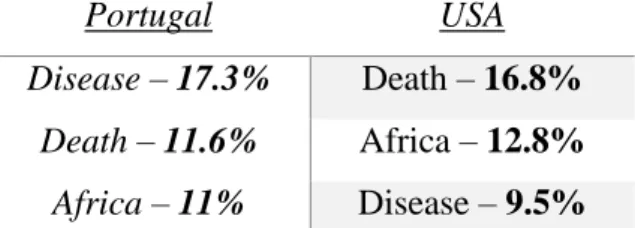
Table 4.2 - Frequency and percent of words selected by participants in each country, in the recognition task ... 45
Table 4.3 - top three words mntioned in the first place ... 46
Table 4.4 - top three words mentioned in the second place ... 47
Table 4.5 - top three words mntioned in the third place ... 47
Table 4.6 - Descriptive analyses of words and their categories, within tweets Study 1 and 2 free recall word frequency ... 48
1
CHAPTER I - Introduction
Human beings are biologically programmed to face the adversities that arise throughout their lives, adapting to them in the best way possible, in order to survive. Our mind and body are constantly trying to adapt to events that pose external environmental demands, by engaging in psychosocial complex processes in various degrees of consciousness. These events may involve health threats (e.g. epidemics), environmental threats (e.g. climate change effects), social threats (social rejection, loneliness, …), and so forth. When in the presence of a demanding event(s) and dependant on existant resources, people may attempt to cope with the goal of adapting to it, through both physiological processes (e.g. increased heart rate), and/or psychosocial processes (e.g. using humor and sarcasm when faced with a stressful situation). When demands are higher than the persons perceived and actual resources to cope, a threat is appraised; differently, a challenge is appraised when the resources are sufficient for coping with it (Blascovich & Mendes, 2001). Based on this, people’s coping efforts may be maladaptive when they do not have the necessary resources to cope and therefore, appraise the event(s) as a threat(s). Given this, the focus of this thesis was to study the expression of maladaptive coping strategies, identified in the literature (Skinner, Edge, Altman, & Sherwood, 2003) as resultant of perceiving a threat to the self and others, under a low resources/high demands situation.
One area in which these maladaptive coping expressions are evident, is the health domain. In accordance, the present research focused on how people cope with perceived health threats, considering specifically the Ebola outbreak in 2014 as a case study, being the biggest recorded epidemic in history (WHO, 2014). Given this, we designed two studies. The first study allowed to assess implicit evidence of one specific maladaptive form of coping with health epidemics, in which people blame out-groups for the epidemic and its associated features – othering – and protect the in-group, with potential negative consequences for the society as a whole. The second study, allowed identifying naturally occurring specific instances of this othering, based on a qualitative analysis of people’s expressions of coping with the health epidemics on social media, namely Twitter. This focused on two families of coping that may co-occur with (direct or indirect) mentions of the out-group blamed for the epidemics that emerged: avoidance and opposition. It is our contention that this may lead to secondary impacts from an epidemic, that may be as serious as the original health epidemics
2
itself, such as the stigmatization of the socially blamed groups. Further details will be presented and discussed in the following sections.
Health crises as perceived by individuals
In order to discuss how people appraise and cope with health epidemics that may be associated with health crises, it is an important to first make a distinction between the biological and social dimensions of public health epidemics. Whilst the former is seen as impliying an assessment of the objective risk evaluation of an event(s) and its associated features (likelihood of contagion, mortality rate, etc.), the latter implies individuals and groups of individuals perception of that event(s) and associated features, and the perceived risk involved. This can be determined not only by individual characteristics of the perceiver, but also by the surrounding context, as for example the effect of media exposure, discussions with other people (family, friends, etc) and other aspects (Slovic, 1987). Based on this social dimension of health crisis, Gaspar and colleagues (2014, pp. 240), defined crisis as «one or
more perceived threatening events that go beyond what is “normal” or expected, demanding non-routine organizational and individual responses.». This definition is at the core of what Gaspar, Barnett and Seibt (2015) named the Norm Deviation Approach. This is a theoretical and conceptual framework that aims to explain how crisis are perceived at the individual level in interaction with the social context, which may have practical implications for risk communication. According to this approach, when there is an event that changes the “status quo” or “normal” template is appraised as a threath, and requires individual and organizational coping responses that would not be necessary in the absence of the event, then a crisis situation emerges, from an individual’s perspective. Despite the focus on the individual level of crisis perception, this cannot be separated from the social context in which events occur. Therefore, for a crisis to be perceived at the social level, a social validation of the individual’s perceptions is also necessary (Gaspar, Barnett, & Seibt, 2015). This is the case for example, with the social media1 that may act as a natural environment for people to search for information about a health issue, seek support, express emotions (e.g. surprise; fear; anger) and other processes resulting from contact with other individuals’. Moreover, this validation, although important for the individual to appraise and cope with the events, may
1Social Media is a group of Internet-based applications that build on the ideological and technological
foundations of Web 2.0, and that allow the creation and exchange of User Generated Content (Kaplan & Haenlein, 2010)
3
also facilitate secondary negative impacts, such as for example maladaptive expressions of anger and blame direct towards social groups, and even their stigmatization. Further ahead, we will discuss evidence of these latter processes during health epidemics, in the form of out-group othering.
Given this, in order to understand the psychosocial processes that characterize health threats in general and specifically, the processes involved in the Ebola epidemics, it is important to understand first the processes that may lead a health epidemic to be seen as a threat at the individual level and as a health crisis, at the social level.
Crises appraisal: threat vs. challenge
As previously mentioned, the way an individual appraises/evaluates a given situation may determine his/her way to cope with it. Blascovich and Mendes (2001) make an important distinction between these two states. People perceive an event as a threat to cope with, when they appraise that the available (social and individual) resources are not enough to handle the demands posed by the situation. The opposite occurs when the person appraises having enough resources, in which case the event is perceived as a challenge. Thus, the perception of the situation/event(s) as a threat or challenge, is determined by the individual’s: demand appraisal – perception or assessment of danger, uncertainty, required effort inherent to the situation; and resource appraisal – perception or assessment of one’s knowledge, skills to perform and one’s resources. These appraisals are accompanied by biological processes, such as increased blood pressure and heart rate, and other effects in which the body reflects the state of the mind one is experiencing. Thus, in line with Blascovich and Mendes’s (2001) empirical findings, when the person appraises a given situation as a threat, the body responds differently (increased blood pressure and vasoconstriction) than when the person appraises it as a challenge (in which the heart performance mimics a performance during aerobic exercise, and there is a vasodilatation). These results suggest that a threat event evokes fear and panic, whereas a challenge event evokes readiness to act.
The threats vs. challenge appraisals do not have merely physiological effects, as they have emotional consequences as well. In their studies, Blascovich and Mendes (2001) concluded that subjects that appraised a situation as a challenge, performed better at tasks they had to perform, assessing them as less demanding, when compared with subjects that appraised the situation as a threat. The emotional dimension is so strong, that some people use emotional cues, on purpose, to appraise a situation as a challenge, such as lucky charms,
4
amulets or lucky numbers. In sum, affective cues play a great role in the way one appraises situational demands and resources (e.g., a student may feel more confident about an exam if he/she believes having a “lucky object” will influence their performance or luck, thus appraising the situation as a challenge; whereas if this same person forgot his/her “lucky object” at home, he/she may feel less confident and thus perceive this situation as a threat). Most of the times, though, this process is unconscious.
Skinner and Brewer (2002) also explored the ways in which individuals appraise events and its association with expressing positive or negative emotions. Based on the premise that each person has his/her own cognitive appraisal style, this will have an actual impact on one’s performance at a given task. Thus, the main conclusions of these authors suggest that a threat appraisal style is often associated with negative emotions – such as anxiety and low coping expectancies (one feels like not being able to cope with) – whereas a challenge appraisal style is usually associated with positive emotions – such as confidence and high coping expectancies. The authors’ findings and empirical evidences mentioned above only reflect situations in which individuals are expected to perform actively, i.e., to execute specific tasks or actions, or are under a context of stressful events, such as having a university exam, a public presentation or a job interview. Nonetheless, it provides us with some clues about how people cope with situations depending on how they evaluate them, or how they evaluate themselves as capable of dealing with them. So far, empirical evidence suggests that the appraisal of a situation through positive lens, as a challenge, rather than a threat, leads to better performing, higher self-esteem on one’s own abilities, more functional coping processes and better actual performance. However, not only emotional expressions have an effect on how people cope with the demands, but also cognitive and behavioral expressions can be found to underly this process. In this regard, coping strategies are reflections of how individuals deal with stressful events, in different cognitive, emotional and beahvioural dimensions.
Coping with threats and challenges
The definition that best fits the concept of coping is, as Skinner (2003, pp. 245) referred, to «fight back», which means that people are biologically and psychologically prepared to confront anything that deviates from the normal state of things. Thus, coping has an adaptive function and value. In agreement with Folkman and Moskowitz (2003), coping consists of a set of thoughts and behaviors that are put into practice when people are faced
5
with situations that they appraise as stressful, or, as discussed above, when they are demanding in some way (Blascovich & Mendes, 2001). Consistent with this and based on his proposal of Conservation of Resources Theory (COR), Hobfoll (2010) claims that this stress occurs when one’s resources are threatened or perceived as not being enough.
Although there is currently a consensus with regard to this definition, the same has not been the case with regard to what constitutes or is classified as a coping response. Some authors such as Folkman and Lazarus (1980) for example, divided coping actions into two different categories – problem-focused (directly addressing the problem causing distress) vs. emotion-focused (ameliorating negative emotions associated with the problem, or mental/cognitive restructuring). In accordance, they defined the first category as “good” and adaptive and the latter as “bad” and maladaptive. Nevertheless, more recent literature (e.g. Skinner et al., 2003) claims that coping is neither “good” or “bad” and what makes it adaptive or maladaptive much depends on the demands that are posed, the individual and social resources available, and the individual’s and situational characteristics in which the event(s) and associated features occur. Thus, some may be effective in certain situations and ineffective in others; some strategies are better suited for one person but not for another. Moreover, what may be adaptive for an individual, may be maladaptive for the society as a whole, whenever coping is effective in adapting to a threat at the individual level but has negative consequences for the society, as for example when there are consequences for certain social groups (see e.g. Gilles et al., 2011). All of these aspects make coping an extremely complex and dynamic process and for many decades, difficult to operationalize and classify the diverse ways of coping (Skinner et al., 2003). As a result from many decades of widespread disagreement over coping conceptualization and classification, Skinner and colleagues (2003) made a critical and extensive review of the existing coping classifications in the literature, thus suggesting best practices (both methodological and conceptually) that translated into a new and integrative classification of ways of coping. These authors gathered and assessed a total of more than 400 ways of coping, identifying best methodological practices, and dividing coping sets of lower and higher categories.
The authors conserved the existence of lower order categories, including specific actions and behaviors (e.g., “I look for support in friends/family”, “I wash my hands very thoroughly”, “I try to think more positively about the situation”, etc.), that may be incorporated and “nested” into higher-order categories. To create the higher categories,
6
functional homogeneity and distinctiveness were used as criteria. Hence, ways of coping within the same family should serve the same adaptive function, while different families imply different adaptive functions. Based on this, they organized and classified ways of coping into 12 main families, with three groups of fourbelonging to three different adaptive function categories (relatedness, autonomy and competence). The four core families identified by the authors help the understanding of how people find ways to coordinate their behaviors, emotions and cognitions with the demands they are faced with, using resources from the environment, others around and oneself, in order to produce a desired outcome – in this case would be, to efficiently cope with the stressful event. The 12 core families consisted of: Self-reliance; Problem solving, Support Seeking, Escape, Delegation, Accomodation, Helplessness, Isolation, Submission, Information seeking, Negotiation, Opposition, and Delegation.
One important and novel contribution these authors provide to the coping literature is the link between coping families and their adaptive processes and purposes. Thus, one of the top criteria for a family of coping to be constructed is the functional homogeneity among families and functional distinctiveness between families, in a way that the ways of coping inserted in the same family serve the same adaptive functions among them, but different ways that belong to different families must serve distinct adaptive functions. So, for example, if problem solving and self-reliance serve the same functions (direct attempts and instrumental action to deal with the event), they should belong to the same family. Hence, it is the authors’ contention that every coping action serves an adaptive function. For example, self-reliance and support seeking serve the adaptive process of “coordinating reliance and social resources available”, be it through approach (caring for others, seeking for support of others or offering support to others) or avoidance/isolation (distancing from the stressor source; loneliness). Another example refers to problem solving and information seeking, which serve the adaptive process of “coordinating actions and contingencies in the environment”, making use of one’s own competence, such as seeking information on the stressor and/or on how to cope with it, engaging in specific instrumental actions to cope with it. Finally, a set of ways of coping serve the adaptive process of “coordinating preferences and available options in the context”, which may range from the acceptance of the situation – accomodation- to blaming others for the event to have occurred - opposition. The complete table with Skinner and colleagues (2003) coping classification framework may be found in the Annex A. This table served as
7
the basis for our qualitative analysis, to be described in the method section. Specifically, our focus was on the coping families of escape and opposition.
According to Skinner and colleagues (2003), escape is an avoidance-oriented coping family that «includes efforts to disengage or stay away from the stressful transaction» (Skinner et al., 2003, pp. 242). This family encompasses feelings of fear, pessimism and despair, behaviors of flight and avoidance and procrastination, the latter referring to a cognitive/orientation dimension. At the basis of individuals engagement in escaping is their perception of the situation as a threat to their surrounding context and, thus, engage in active attempts to avoid it. Opposition is, likewise, a coping family that implies the perception of the situation as a threat to the context. This family of coping includes externalization of feelings such as anger, projection, blaming others, explosion and venting, behaviors such as direct or indirect aggression and reactance and revenge, the latter two within a cognitive dimension. An individual who tries to escape from a situation will, for example, express fear over the situation and/or withdraw from the situation itself or cues that draw the individual to it (whether physically – for example, isolating oneself, avoiding behaviors that may imply a threat – or psychologically – for example, refusing to hear or talk about it); whereas an individual who engages in opposition to the situation, may express him/herself as being angry and/or wanting revenge (i.e., wanting someone to “pay” for the situation), and/or blaming something or someone for it (i.e., wanting someone to be held responsible), therefore opposing the “status quo”, or particular individuals and/or organizations. Ways of coping associated with each of these two coping families, were sought in study 2, to be presented further ahead. This took into consideration the Ebola 2014 outbreak as a case study. Next we will present a justification of why this case study was selected and why it can be considered a health crisis (based on Gaspar et al’s 2014 definition), given the perception of its associated events as a health threat.
Why is the Ebola epidemic a health crisis?
The present research focuses on the Ebola outbreak that took place in 2014. We chose this event, since it was a widely debated and “hot” topic on traditional media and social media. Similarly, Ebola is a epidemic that was initially circumscribed to a specific geographical area, which made clear its association with a specific social group.
Ebola is a recent event that registered, until now (July 2015) approximately 11 222 deaths and 27 479 cases in total (WHO, available in:
http://apps.who.int/ebola/ebola-8
situation-reports), having been declared as a «an ‘extraordinary event’ and a public health risk
to other States. » (WHO, available in:
http://www.who.int/mediacentre/news/statements/2014/ebola-20140808/en/). Also, because it fits the criteria to be a Norm Deviation (Gaspar, Barnett, & Seibt, 2015) - triggered by the media, which raised people’s attention and perception that a deviation from the status quo was present, demanding unusual and extraordinary measures and raising the need to implement individual and collective coping actions – it can be defined as a public health crisis. Nevertheless, perceptions of the Ebola outbreak as a crisis may significantly vary across countries and/or cultures due to the different social and individual resources available to cope with demands and the perception of the demands itself, as it will be assessedin the present research, which collected data from different countries. Thus, although it may have not been perceived as a threat by everyone, in the present research, our focus will be upon people that appraised it as such, and consider two coping expressions that are based on this appraisal – escape and opposition (Skinner et al., 2003).
Indeed, there are empirical evidence that Ebola is associated with specific cultural actions. Researchers Joffe & Haarhoff (2002) analyzed traditional media messages in Britain concerning the Ebola outbreak in Africa that took place in the mid 90’s; the analyses revealed a general social representation of Ebola as associated with African practices. Although, at the time, it was perceived as posing little or no threat to the public health in Britain, this epidemic was associated with Africa (as a whole, and not specific countries), in the public discourse. It was also shown that, during this time, in Britain, although the media represented Ebola outbreak as a harmful epidemic which had the potential to spread worldwide, laypeople felt detached from it, not perceiving any danger, and on the contrary, perceiving it as being something distant and “from outside”. There was a clear distancing between the two realities, although «the tabloids and their readers tend to refer to Ebola as intrinsically African, spread
by the particularly African practice of having contact with (including eating) monkeys.»
(Jofee & Haarhoff, 2002, pp. 967).
These findings seemingly reflect other literature regarding cognitive process known as “psychological contagion” (Nemeroff & Rozin, 1994; Rozin, 2001). This theoretical approach suggests that, under certain conditions, a cognitive association between a given object and the characteristics of another object it has been in contact with, takes place. Specifically, when an object is in direct contact with another object, the properties of one are automatically
9
transmitted to the other, such as the “essence” of it. Although this is an abstract concept, it can be applied in a broader sense. In this case, one possible explanation for people associating a epidemic with a country or a continent is the fact that the properties of this epidemic were “magically” (transmitted what Rozin, 2001, refers to as the “spiritual” or non-material essence of an object) to the country or the continent, making it intrinsically associated with that place. This notion and beliefs of contagion may have an adaptive function/value, namely allowing defending one-self against microbial contamination that often comes from outside or “not-self” entities. These represent danger or harm, due to the potential contact that lets “inside”, things that are from the “outside” (and can be harmful) (Nemeroff & Rozin, 1994). In agreement with this, the law of Psychological Contagion may explain why in Britain, in the years 2000, most tabloids and individuals referred to Africa as a whole associated to Ebola – in some cases the virus was actually portrayed as a «killer African virus», or an «African
disease» (Joffee & Haarhoff, 2002, pp. 960). This may explain why people were aware of the
epidemic and its severity, but nonetheless felt detached from it. The fact that it was a “problem from outside”, created an “us vs. them” distancing situation, where people did not feel they could be affected by something that was intrinsically from outside. This “us vs. them” phenomenon that may take place when under health epidemics contexts, will be discussed in greater detail ahead. This leads us to argue that, in times of epidemics, there is a priority to defend oneself from external harm, and a part of this process may include identifying potential contaminated sources as being intrinsically from outside, from “them” and not from “us”, in order to avoid and protect oneself from them.
The present research was conducted based on the premise that Ebola, in particular, was associated with the African continent, as well as with African cultural practices, as shown by Joffee and Haarhoff (2002); and the premise that a public health threat emerges and the “I have a crisis” turns into “we have a crisis” (Gaspar, Barnett, & Seibt, 2015), a set of collective symbolic sense making and coping actions also emerges, implying distancing “them” from “us”.
Distancing from and blaming out-groups as ways of coping: the Symbolic Othering effect
With regard to adaptive and maladaptive ways of coping as referred to before, there is a considerable large body of research that suggests that, when people are faced with health epidemics, one form of (socially) maladaptive coping is refelected in people’s tendency to
10
distance themselves from the out-groups that they perceive as the source of threat. This can imply stigmatizing those out-groups and, in more “active” forms of coping, direct anger towards them and blame them for the demands posed and for contributing to the stressful situation. There is also a social dimension associated to coping actions, which refers to the distinction that is often made between “us” (the healthy ones) and “them” (the ones with a disease/contagious) (Lima, Serrado, Falcão, & Correia, 2014). For example, it has been demonstrated (Sutterheim, Pryor, Boos, Hoogendijk, Muris, & Schaalma, 2009) that people with HIV report to experience stigmatization, psychological distress and awkward social interactions with others, due to their condition.
There are two possible explanations for this phenomenon. One is based on an evolutionary approach: the fear of contamination (e.g. Kurzban & Leary, 2001). This perspective claims that humans are evolutionarily prepared to avoid any source that may be contaminated with pathologic agents which may challenge/threat one’s health and well-being. From a natural selection perspective (Darwin, 1832 – 1844), one of the critical problems which may impede species’ survival over time is contagion with parasites and disease development. In agreement, there is evidence from studies with human and nonhuman subjects, showing that species’ evolved with a set of adaptations conceived to prevent contact with those who are potentially carriers of pathogens (Kurzban & Leary, 2001). Given this, some authors consider that the processes of social stigmatization and exclusion may have evolutionary origins, translated into a set of psychological mechanisms that evolved to solve particular adaptive problems, being contact avoidance one of them, when health/diseases are considered (Kurzban & Leary, 2001). In this regard, social exclusion and stigmatization may serve the function of avoiding parasite infection and/or contamination.
A second possible explanation is based on a social representations approach. In accordance to this, the individual tends to activate a collective self when faced with health events they perceive as threats (e.g. Gaspar et al., 2015). When this collective self is salient, in-group vs. out-group categorizations may become the most important basis for judging others. In agreement, Fritsche, Jonas and Kessler (2011), argue that when a threat is perceived not only at the individual level but also at the collective and societal level, this potentially leads to ethnocentrism and intergroup conflict. An explanation offered by the authors is that emphasizing group membership in times of crisis helps individuals gain a sense of control and safety, as evident in the following quote: «Often, this ingroup favoritism may go hand in hand
11
with increased derogation of outgroups. This process could explain why intergroup conflict, ethnocentrism, or social discrimination proliferate as a consequence of societal crises and personal threat.» (Fritsche, Jonas & Kessler, 2011, pp. 101-102). Similarly to the idea
defended by Gaspar and colleagues (2015), integrating the “I (have a crisis)” onto “we (have a crisis)” is a powerful tool individuals use in order to cope with the threat, by strengthening ingroup bonds, in detriment of outgroups – which may create ethnocentrism as a possible threat response. In an attempt to explain the psychosocial processes underlying coping at the social level, Fritsche, Jonas and Kessler (2011) suggested a model of group-based control restoration, which states that a threat to a global sense of control leads to ethnocentric tendencies, with this being mediated by salience and relevance of group membership. Hence, the higher the ingroup identification and collective self salience , the more likely are the influence of ethnocentric attitudes and expressions of outgroup derogation, specially in times of crisis. On a concluding note, these authors suggested that « in order to restore a subjective
sense of global control, people under threat increase their identification with ingroups, their conformity to ingroup norms, and the tendency to support and defend the ingroup» (Fritsche,
Jonas & Kessler, 2011, pp. 40). This has serious implications at the social level. It has been already empirically demonstrated that people tend to blame and persecute specific groups such as minorities or foreigners for a epidemic spread and dissemination, as a strategy to protect in-group and make sense of a disease-related threat (Green et al., 2010). This in turn, may also originate negative attitudes towards immigrants, as well as xenophobic attitudes towards out-groups in general, that may maintain overtime (Faulkner, Schaller, Park, & Duncan, 2004)
Considering specifically health threats such as epidemics, Gilles et al. (2013) showed that these situations may lead to social distancing between social groups . In this regard, these authors proposed the concept of Symbolic Othering, a symbolic in-group protection, implemented through actions such as blaming or attributing responsibility for the outbreak of an infectious disease to a specific outgroup (e.g. their cultural habits and behaviors and/or avoidance of that group, for example through social exclusion. Through the longitudinal application of a two-wave repeated cross-sectional survey, these authors examined the relationship between the different phases of representations of a threatening event in the mass media and the phenomena by which people blamed outgroup actions for the outbreak of avian influenza (AI). Based on the already empirically shown abundant evidence that disease
12
epidemics may originate or promote avoidance and/or stigmatization of out-groups (e.g. Joffe, 1999, as cited in Gilles et al., 2013), these authors concluded that when under high uncertainty environments people try to reduce this uncertainty by blaming out-groups: «Othering operates to reduce this uncertainty by symbolically associating the disease with
out-groups» (Gilles et al., 2013, pp. 100). Moreover, this link between uncertainty perception
and tendency to blame out-group actions or engaging in opposition as a way of coping with the perceived health threat (Skinner et al., 2003), has been also empirically demonstrated by Gaspar and colleagues (2014), with regard to health crisis such as the 2011 European EHEC outbreak associated with the contamination of food products. In this study, the authors showed that particular countries were blamed for the outbreak origin and products from these avoided by consumers, which was subsequently disconfirmed by evidence.
In the case of Ebola, we hypothesize in the present research, in agreement with was demonstrated in this regard by Joffee and Haarhoff (2002), that this is often depicted as an African disease. This may translate into xenophobic attitudes and behaviors, in which the outgroup becomes a synonym of danger, disease, contagion and, therefore, to avoid or confront (e.g. by blaming or directing anger towards members of this group). These attitudes may also become reinforced through policies that imply the borders monitoring and international flights control, as existed during the period in which epidemic control measures were implemented (Center for Disease Control (CDC), available at: http://www.cdc.gov/quarantine/air/managing-sick-travelers/ebola-guidance-airlines.html). These measures may inadvertedly have the ironic effect of inducing a differentiation between “we” (the healthy ones) and “them” (the sick / infected /sources of danger that we must protect from at all costs).
Although stigma and prejudice are different concepts, being that the first one refers to the negative mental representation one holds about a specific group, whereas prejudice implies specific actions of exclusion (Phelan, Link & Dovidio, 2008), both have serious consequences at the societal level, ultimately in the long-run. This is also why it is crucial that risk communication is made in an informed and effective way, in order to avoid the non-health effects of non-health crisis, such as the emergence of social stigma and prejudice. It is our contention that the manifestations of othering and of social stigmatization as referred, may serve an adaptive function in face of demands posed by health related events. From this point
13
of view, it can be associated with an adaptive system implemented through coping strategies. This will be discussed next.
Coping on social media
Social networks have existed long before the emergence of Internet, and they have always been a part of the human reality, through family, friends, colleagues, etc. With the onset of the Internet in the last decades, it is clear that our presence in the virtual world has increased to a point in which, nowadays, makes a part of our daily lives and on how we get, process and express information with the ones around us.
Through the internet and the use of social media, and among many other actions, people look for information, validate their opinions or expectations, and share information with others. We believe it is safe to state that one may find and gather a considerable large body of data and usuful information in order to use it for research purposes.
More precisely, and when it comes to emotions expressions and coping, these environments may provide a rich data source (Gaspar, Pedro, Panagiotopoulos & Seibt, in press), as it allows collecting natural and spontaneous expressions based on an event-centered approach (see Gaspar et al, in press), namely people’s reactions to events, that would be less natural and spontaneous if other data collection methods were used (as for example, questionnaires). This is even more evident on the social media channel Twitter, when compared with other social media such as Facebook or blogs, where comments and posts tend to be more deliberated and cognitively processed before the individual expresses it (Gaspar, Barnett, & Seibt, 2015). Moreover, because there is a shared influence and meaning construction between the individual and the others around him/her, data collected in this way provides a “psychosocial window” to how the person is responding without detaching it from her/his surrounding context (news stories, other people’s opinions through retweets, etc.). Hence, data can be collected at the “border” between the individual and social level of reactions to events. Finally, since Twitter only allows 140 character long posts, people tend to express themselves in a more synthetic manner, which makes analyses simpler and easier to address and induces expressions to be faster and more spontaneous in their production.
Therefore, this data collection source is appropriate to collect reactions from people when faced with a situation potentially appraised as a health threat, such as the Ebola outbreak in 2014. In agreement, it had been previously demonstrated that in times of health crisis, people tend to express an heterogenous set of coping expressions on social media, more
14
specifically on Twitter.. In this regard, Gaspar and colleagues (2014; in press), presented a
qualitative analysis of over 1000 tweets collected during the 2011 EHEC/Escherichia coli bacteria outbreak in Europe associated with the contamination of food products. This implied a theory-driven content analysis of data extracted form Twitter, based on the ways of coping classification framework proposed by Skinner et al. (2003). Main conclusions suggested that, «people creatively deal with crises, using coping flexibly, by implementing it not only based
on a wide variety of families of coping and ways of coping, but also on different instances of the same way of coping» (Gaspar et al., pp. 250). In addition to using various different ways
of coping, it was also concluded that these expressions may also co-occur.
Similar findings were obtained by Gaspar and colleagues (in press) to what concerns sentiment analyses of content gathered on Twitter. Whilst previous research focused on specific and objective ways of coping, their research focused on coping in the affective dimension and their underlying goals. Diverging from traditional sentiment analysis, which classify people’s reactions in terms of valence, i.e.positive/negative, the main premise for this research in line with Psychological literature, was that emotions also serve adaptive functions, which go beyond valence. For example, a negative emotion such as anger is not only classifiable in terms of valence – negative – but also in terms of its adaptive function. This may serve the function of removing constraints from the situation and providing the resources the individual does not experience having; in this case, the individual feels he/she cannot do much about the situation, so he/she feels the need to “release” the tension onto someone or something else.
Evidence of these negative affect expressions was sought in the present research, on the twitter data collection study. The negative expressions we sought for, although negative, serve an adaptive function, as discussed above. So, for example, the emotion of fear (of Ebola, or of being contaminated by it) may serve the adaptive function of avoiding contact with the perceived source of contamination (i.e., fear leads the individual to avoid the target he/she perceives as the source of the perceived threat); on the other hand, the emotion of anger may serve to realease the tension one is experiencing in the situation, directly towards a target, and, attempting to achieve psychological comfort.
15
CHAPTER II – Empirical Studies
The literature has shown that people use a heterogenous and dynamic set of coping strategies when faced with perceived threats (e.g. Skinnner et al., 2003) in times of health crises, which may include for example opposition in the form of blaming others and escape in the form of avoidance expression (Gaspar et al., 2014; 2015). Likewise, there is scientific research showing that, in crisis situations, people may blame out-groups for the emergence and spread of a stressor such as a virus, more specifically when it comes to threats to public health such as epidemics (e.g. Gilles et al., 2013 on the Avian Flu epidemic; Sutterheim, 2009, on the HIV case). Moreover, out-groups may be perceived as contaminated (Rozin et al., 1994), inducing a tendency for the in-group to distance from them and eventually stigmatize them (Kurzban & Leary, 2001).
Despite the clear overlap between the health psychology coping literature and the social psychology literature with regard to othering and stigmatization, more studies that empirically integrate these, as exemplified by Gilles and colleagues (2013), are still lacking. In addition, evidence in the form of natural expressions of othering or ways of coping that may evidence these, are even more infrequent. Therefore, one of the contributions of the present study is a the goal of integrating the two literatures, by 1) presenting evidence of Symbolic Othering as a collective way of coping (Gilles et al., 2013) under a health crisis situation and 2) identifying natural expressions of othering, expressed through coping strategies such as avoidance (e.g. arguing in favour of borders’ control; monitoring of international flights, travel bans from and to affected countries) and opposition (e.g. blaming others, aggression, projection, anger), as presented in Skinner’s and colleagues (2003) coping classification framework. The present research focused on the Ebola outbreak in 2014, as an event that triggered a coping process and associated reactions and therefore, as a health crisis case study. Also, as it was declared as an international health emergency by the World Health
Organization (WHO, available in:
http://www.who.int/mediacentre/news/statements/2014/ebola-20140808/en/) concentrated on a specific geaographical location – Africa - that overlaps with a broad social group category – Africans, it was clear that it could provide evidence for assessing individual and collective coping processes both at the individual and social levels.
16
In order to achieve the first goal of this research - presenting evidence of Symbolic Othering as a collective way of coping (Gilles et al., 2013) under a health crisis situation, we devised Study 1 based on a web-based questionnaire, that allowed a quantitative analysis to empirically demonstrate it. This implied finding evidence that Africa/Africans/African countries as the out-group(s) blamed for the epidemic.
To achieve the second goal - identify natural expressions of othering, expressed through coping strategies such as avoidance and opposition – Study 2 implied an extraction of social media data, namely from Twitter, to allow for a qualitative analysis of coping expressions as naturally occurring manifestations of othering. This implied finding evidence of Africa/Africans/African countries as target of blame for the epidemic, of anger, and other forms of opposition, and as a group(s) to avoid, through various manifestations of escape.
Study 1 – Web-based survey
A survey was designed using the Qualtrics online platform, both in an English version and a Portuguese version . These surveys’ main goal was to demonstrate through a quantitative data analysis methodology, whether individuals tended to blame an out-group for the dissemination of a disease. Specifically, the main general research question of Study 1 was:
RQ1 - Do people assign blame to Africa/Africans/African countries for the dissemination of Ebola? (the process of Symbolic Othering, Gilles et al., 2013). Related with this question, we aimed to explore:
RQ 1.2 - Which countries are perceived as the ones where Ebola was originated, and which countries are perceived as being more contaminated?
In association with this questions, we also aimed to test the following hypothesis: H1: individuals will identify more cases of Ebola in African countries, rating those as being more likely to carry the virus, compared to the other countries in different world regions;
Gilles and colleagues (2013) empirically demonstrated that people tend to symbolically blame foreign countries for the outbreak of epidemics, even if these countries did not effectively had any official cases. Accordingly to these authors, this is so because «Assigning human cases to foreign countries can be interpreted as a way of distancing
oneself from such countries and its inhabitants, labeling them as ‘contaminated» (Gilles et al.,
17
country which had not registered human cases, would constitute a sort of “us” vs. “them” differentiation, and an implicit manifestation of a way of collective coping.
In this study, Symbolic Othering was operationalized by replicating these authors’ method, i.e. by presenting participants with a list of African and non-African countries, that had not experienced human cases of Ebola, and asking them to indicate, in terms of percentage, how likely they thought each country was to have human cases of Ebola. The selection of a higher percentage of human contamination cases in African countries with no official cases than in non-African countries with no official cases, would indicate the presence of Symbolic Othering. In sum, this task was designed to explore if there were, indeed, any evidence of “objectification” of Ebola through geographical perceptions bu attributing more cases to African countries (Gilles et al., 2003). According to Gilles and colleagues (2003) , the reason why only “non-infected” countries (even African) were presented was to have a “pure” measure of othering. Hence, in case officially affected countries were presented,
othering would not be measured but rather factual knowledge, as people could be aware of
that and selected the country for that reason. Thus, as in Gilles and colleagues’s (2003) study, we included countries chosen for no particular reason other than to be part of each world region. In addition, by selecting African countries other than the actually affected, could also be evidence of Psychological Contagion, as Rozin (2001) empirically shown. Thus, a certain disease that had occurred in a small set of African countries could have also been psychologically transferred to other countries within the affected continent. In addition to the Symbolic Othering replication method, two questions were posed to participants, which intented to measure Symbolic Othering with an explicit measure: (1) “In which country (or countries) did Ebola have its origins?” and (2) “Which country (or countries) is (are) more contaminated?”. Participants were asked to write at least three countries, as an answer to each
question.
In the Ebola outbreak of 2014, there were some cases outside of the affected African countries, being that one of the first non-African affected country was the USA. Moreover, these cases were people who flew from the affected area, into the country. Whereas, in Portugal, no cases were identified. Therefore, we believed there was a greater perception of threat in the USA, compared to Portugal. We expected, due to these events, that North American participants would show more Symbolic Othering manifestations.
18
RQ2: does the fact that a country had official cases of Ebola, reduces or increments the Symbolic Othering effect?
H2: North American participants show more Symbolic Othering manifestations due to the existence of official of Ebola within the USA, than Portuguese participants .Study 1 had an additional exploratory goal: to determine whether making Africa/African countries more salient to the subject (through the presentation of an informational video) would lead to a higher identification of human cases of Ebola in African countries, compared to the other countries. It was our intention to explore whether the presentation of the video would focus the participants attention to Africa being the oigin of the outbreak and thus, if this would increase or decrease othering effects, since the video presented factual information about the origins of Ebola – West Africa.
RQ3: does making factual information about Ebola and its origins more salient, have an effect on Symbolic Othering?
H3: the presentation of factual information about Ebola and its origins will decrease the percentage of estimated human cases of Ebola in non-African and African contries in the surve list, i.e., participants will attribute less cases to all word regions, as it will be more salient that the countries in the list were not affected .
Besides the main goals of measuring Symbolic Othering effects applied to the Ebola case, the survey also had the general goal to collect individuals’ free recall associations and explore these as manifestations of social representations of Ebola, based on the patterns found in the top three associations.
RQ4: which social and semantical representations do individuals hold about Ebola?
Study 2 – Social media analysis
The use of data gathered through social media is an emergent method of research on the field of qualitative and sentiment analyses, revealing itself as a rich fond of abundant natural and spontaneous expressions people produce when they are concerned about a specific event (e.g. Gaspar et al., in press).
Similarly, in these environments people tend to express, whether consciously or unconsciously, how they are dealing and/or coping with specific events (Gaspar et al., 2014). Similar to what Gaspar and colleagues (2014) explored, in this study, it was our intention to explore whether people expressed coping with the 2014 Ebola outbreak on Twitter. Based on the premise that individuals tend to blame out-groups for the dissemination of an epidemics, a
19
process labeled as Symbolic Othering (Gilles et al., 2003), and based on the assumption that this process is reflected on specific coping strategies by Skinner et al. (2003), the exploratory research question for Study 2 was:
RQ5: is Symbolic Othering manifested in coping expressions such as escape and
opposition (Skinner et al., 2003). Namely, we aimed to assess if the Symbolic Othering
process would be expressed in these specific ways of coping (avoidance/escape and
opposition, in which other-blame is included) in association with the explicit (manifested) or
21
CHAPTER III – Study 1
Study 1 was of a confirmatory nature, centered on a quantitative analyses of previously established hypotheses.
Sample
The sample for the English version of the survey was attained through a snow-ball technique; for the Portuguese version of the survey, students from University of Evora were offered university credits (ECTS) in exchange for their participation.
A total of 352 participants filled in both English and Portuguese versions of the survey, being 179 from the USA and 173 from Portugal. The average of age was of 28 years old for the Portuguese sample, of which 35.8% male subjects and 64.2% female subjects. For the USA sample, the average of age was 38 years old, of which 10.1% male and 21.1% female; for the latter sample, there were 123 missing responses on the age variable.
Procedure
The survey was applied between February and June 2015. Upon reading the introduction and providing the informed consent, the participants filled a first section of the web-survey consisting on a free-association task: participants were first given an example of words that would be associated with a neutral stimulus, Football (e.g. playing, ball, fun), and then asked to write which words, concepts or behaviors came to their mind when thinking of another neutral word, Summer. This had the goal of providing an example of what would be requested next, in a similar task. In the main task, participants were asked to quickly write the first thoughts that came to their minds when thinking of Ebola (a minimum of three items were required). The goal of this task was to obtain a list of words, concepts or behaviors that people freely associated with Ebola, with no previous stimulus and spontaneously. According to some authors (e.g. Dany et al., 2015), this sort of method has numerous advantages, namely the access it provides to automatic semantic representations about a certain object/target. Thus, we found it to be useful to apply this kind of task when exploring which semantical meanings could be associated to Ebola.
In the second section of the survey, participants were presented with a recognition task in which a list of 26 pre-selected words (e.g. “Far-flung illness”, “Immigrants”, “Africa”, “Disease”, “Worry”). In this list, they were asked to select those that came to mind when thinking of Ebola, with the requirement of a minimum of one response. The list was built
22
based on Joffe and Haarhoff’s (2002) research on the associations between Ebola and African practices in Britain, as well as common-sense associations (e.g. “death”, “epidemics”, “worry”). These authors suggested that lay people tend to associate Ebola to specific African practices and behaviors (such as eating raw monkey flesh), and African-related words, describing the disease as almost intrinsically African. In addition, this list included the names of the first official cases of infected people in the USA, as reported by official authorities.
Due to the possibility of the occurrence of a negativity carry-over effect following from the presentation of the 26 item list, which consisted of mainly negative words, a distractor task was introduced after the forced-association task. The distractor task entailed a word search task, including non-words nonexistent in Portuguese or English.
After the distractor task, the third section of the survey offered a set of questions assessing the participants perception of percentage of cases of human contamination with Ebola, in various countries/world regions. These questions were:“In which country (or countries) did Ebola have its origins?” Which country (or countries) is (are) more contaminated?”; participants were asked to identify at least one country for each question. These questions were followed by a task which the main goal was to implicitly2 measure Symbolic Othering, replicating Gilles et al.’s (2013) measures in this regard. As aforementioned, this task consisted of a list of random countries, from various geographical areas in the world, which had not officially register human cases of Ebola in the 2014 outbreak at the time the survey was implemented. In this task, participants were asked to choose the countries were more likely to be contaminated with Ebola, by identifying the percentage of cases in each (in which zero, would mean nobody was affected in that country, and 100% that the whole country was affected). Among the countries presented on the list, were African countries - Angola, Cape Verde, Ghana, and Mozambique - who had not registered human cases of Ebola. Based on the selection of a certain percentage of human contamination cases in one of these countries, would indicate a presence of Symbolic Othering. In sum, this task was designed to explore if there were, indeed, any evidence of “objectification” of Ebola through geographical perceptions, constituting a measure for Symbolic Othering (Gilles et al., 2003). According to the same authors, the reason upon which only “non-infected” countries were presented was that, in case effectively affected
2 Although the countries were explicitly identified in this measure and participants were aware of them, given that they were not counscious of the main goal of this task, i.e. what was actually being assessed, we consider this measure to be implicit (see De Houwer, 2006).
23
countries were also presented, othering would not be measured in a pure way, but instead factual knowledge, insofar as if a country had had human cases of the virus, people could be aware of that and tick the country for that reason only. Countries were randomly chosen for no particular reason other than to be representative of each world region. We considered relevant and appropriate to replicate these authors’ method for the web-based survey, insofar as objectifying geographical areas as an association with a certain epidemic may be a cue that the process of Symbolic Othering may be occurring.
Subsequently, participants were presented with an informational video, titled “Outbreak of Ebola Virus Disease in Western Africa”, which had been promoted by the European Commission earlier that year. This video contained an image of Africa with a red dot on it. After the video, the task with the previously presented list of non-infected countries was again presented, and participants were asked to rate, once more, how likely they thought each country was of having human cases of Ebola.
Finally, a list of socio-demographic and control questions were presented: age, gender, education, occupation, years/months of residence in the USA, ethnicity or ethnic origins, whether English/Portuguese was their native language; and, finally, whether they had recently heard any news about the Ebola virus and, if so, how long ago did they hear about it (in days). The researcher’ e-mail was given in case participants had any further doubts. Both the Portuguese and English versions of the survey can be found in Annex B.