Contents lists available atScienceDirect
Cancer Epidemiology
journal homepage:www.elsevier.com/locate/canep
Alcohol intake and gastric cancer: Meta-analyses of published data versus
individual participant data pooled analyses (StoP Project)
Ana Ferro
a, Samantha Morais
a, Matteo Rota
c,d, Claudio Pelucchi
d, Paola Bertuccio
d,
Rossella Bonzi
d, Carlotta Galeone
d, Zuo-Feng Zhang
e, Keitaro Matsuo
f, Hidemi Ito
f, Jinfu Hu
g,
Kenneth C. Johnson
h, Guo-Pei Yu
i, Domenico Palli
j, Monica Ferraroni
d, Joshua Muscat
k,
Reza Malekzadeh
l, Weimin Ye
m, Huan Song
m,n, David Zaridze
o, Dmitry Maximovitch
o,
Nerea Fernández de Larrea
p,q, Manolis Kogevinas
q,r,s,t, Jesus Vioque
u, Eva M. Navarrete-Muñoz
u,
Mohammadreza Pakseresht
l,v,w, Farhad Pourfarzi
l,x, Alicja Wolk
y,H, Nicola Orsini
y,
Andrea Bellavia
y, Niclas Håkansson
y, Lina Mu
z, Roberta Pastorino
A, Robert C. Kurtz
B,
Mohammad H. Derakhshan
C,l, Areti Lagiou
D, Pagona Lagiou
E,F, Paolo Bo
ffetta
G, Stefania Boccia
A,
Eva Negri
c, Carlo La Vecchia
d, Bárbara Peleteiro
a,b, Nuno Lunet
a,b,⁎aEPIUnit - Instituto de Saúde Pública, Universidade do Porto, Rua das Taipas, nº 135, 4050-600, Porto, Portugal
bDepartamento de Ciências da Saúde Pública e Forenses e Educação Médica, Faculdade de Medicina, Universidade do Porto, Al. Prof. Hernâni Monteiro, 4200-319, Porto,
Portugal
cDepartment of Biomedical and Clinical Sciences, University of Milan, Milan, Italy
dDepartment of Clinical Sciences and Community Health (DISCCO), University of Milan, Milan, Italy
eDepartment of Epidemiology, UCLA Fielding School of Public Health and Jonsson Comprehensive Cancer Center, Los Angeles, CA, USA fDivision of Molecular Medicine, Aichi Cancer Center Research Institute, Nagoya, Japan
gDepartment of Epidemiology, Harbin Medical University, Harbin, China
hSchool of Epidemiology, Public Health and Preventive Medicine, Faculty of Medicine, University of Ottawa, Ottawa, Ontario, Canada iMedical Informatics Center, Peking University, Peking, China
jMolecular and Nutritional Epidemiology Unit, Cancer Research and Prevention Institute - Istituto per lo Studio e la Prevenzione Oncologica (ISPO), Florence, Italy kDepartment of Public Health Sciences, The Pennsylvania State University College of Medicine, Penn State Hershey Medical Center, Hershey, PA, USA
lDigestive Oncology Research Center, Digestive Disease Research Institute, Tehran University of Medical Sciences, Tehran, Iran mDepartment of Medical Epidemiology and Biostatistics, Karolinska Institutet, Stockholm, Sweden
nCenter of Public Health Sciences, Faculty of Medicine, University of Iceland, Reykjavík, Iceland
oDepartment of Epidemiology and Prevention, Russian N.N. Blokhin Cancer Research Center, Moscow, Russia
pEnvironmental and Cancer Epidemiology Unit, National Center of Epidemiology, Instituto de Salud Carlos III, Madrid, Spain qCIBER Epidemiología y Salud Pública (CIBERESP), Madrid, Spain
rISGlobal, Centre for Research in Environmental Epidemiology (CREAL), Barcelona, Spain sIMIM (Hospital del Mar Medical Research Institute), Barcelona, Spain
tUniversitat Pompeu Fabra (UPF), Barcelona, Spain
uMiguel Hernandez University and ISABIAL-FISABIO Foundation, Campus San Juan, Alicante, Spain vDepartment of Agricultural, Food and Nutritional Sciences, University of Alberta, Edmonton, Alberta, Canada wNutritional Epidemiology Group, Centre for Epidemiology and Biostatistics, University of Leeds, Leeds, UK xDigestive Diseases Research Center, Ardabil University of Medical Sciences, Ardabil, Iran
yUnit of Nutritional Epidemiology, Institute of Environmental Medicine, Karolinska Institutet, Stockholm, Sweden
zDepartment of Epidemiology and Environmental Health, School of Public Health and Health Professions, University at Buffalo, Buffalo, NY, USA
ASection of Hygiene - Institute of Public Health; Università Cattolica del Sacro Cuore, IRCCS Fondazione Policlinico“Agostino Gemelli”, L.go F. Vito, 1 – 00168, Rome,
Italy
BDepartment of Medicine, Memorial Sloan Kettering Cancer Centre, New York, NY, USA CInstitute of Cardiovascular & Medical Sciences, University of Glasgow, Glasgow, United Kingdom
DDepartment of Public Health and Community Health, School of Health Professions, Athens Technological Educational Institute, Athens, Greece EDepartment of Hygiene, Epidemiology and Medical Statistics, School of Medicine, National and Kapodistrian University of Athens, Athens, Greece FDepartment of Epidemiology, Harvard T.H. Chan School of Public Health, Boston, MA, USA
GThe Tisch Cancer Institute, Icahn School of Medicine at Mount Sinai, New York, NY, USA HDepartment of Surgical Sciences, Uppsala University, Uppsala Sweden
https://doi.org/10.1016/j.canep.2018.04.009
Received 21 August 2017; Received in revised form 16 April 2018; Accepted 17 April 2018
⁎Corresponding author at: Departamento de Ciências da Saúde Pública e Forenses e Educação Médica, Faculdade de Medicina, Universidade do Porto, Alameda Prof. Hernâni
Monteiro, 4200-319, Porto, Portugal.
E-mail address:[email protected](N. Lunet).
1877-7821/ © 2018 Elsevier Ltd. All rights reserved.
A R T I C L E I N F O Keywords:
Gastric cancer
Individual participant data Meta-analysis
Pooled analysis Alcohol Publication bias
A B S T R A C T
Background: Individual participant data pooled analyses allow access to non-published data and statistical re-analyses based on more homogeneous criteria than meta-re-analyses based on systematic reviews. We quantified the impact of publication-related biases and heterogeneity in data analysis and presentation in summary esti-mates of the association between alcohol drinking and gastric cancer.
Methods: We compared estimates obtained from conventional meta-analyses, using only data available in published reports from studies that take part in the Stomach Cancer Pooling (StoP) Project, with individual participant data pooled analyses including the same studies.
Results: A total of 22 studies from the StoP Project assessed the relation between alcohol intake and gastric
cancer, 19 had specific data for levels of consumption and 18 according to cancer location; published reports
addressing these associations were available from 18, 5 and 5 studies, respectively. The summary odds ratios [OR, (95%CI)] estimate obtained with published data for drinkers vs. non-drinkers was 10% higher than the one
obtained with individual StoP data [18 vs. 22 studies: 1.21 (1.07–1.36) vs. 1.10 (0.99–1.23)] and more
het-erogeneous (I2: 63.6% vs 54.4%). In general, published data yielded less precise summary estimates (standard
errors up to 2.6 times higher). Funnel plot analysis suggested publication bias.
Conclusion: Meta-analyses of the association between alcohol drinking and gastric cancer tended to overestimate
the magnitude of the effects, possibly due to publication bias. Additionally, individual participant data pooled
analyses yielded more precise estimates for different levels of exposure or cancer subtypes.
1. Introduction
Systematic reviews have the potential to settle controversies arising from apparently conflicting findings and to answer questions not di-rectly addressed by single studies, as well as to enhance the precision of effect measures [1–4]. Individual participant data pooled analyses are considered more capable of overcoming some of the limitations of systematic reviews and meta-analyses of published data [5], since they allow access to data not previously published and statistical reanalysis based on more homogeneous criteria [3]. However, individual partici-pant data pooled analyses require much more complex and costly management of data, as well as coordination of the underlying con-sortium of research groups, and the gains in terms of precision and validity of the results may be expected to vary with the topic being addressed. Comparisons of individual participant data pooled analyses with meta-analyses based on the published data from the same studies contribute to understand the extent to which conventional meta-ana-lyses may be biased or lack statistical power, and different results may be expected for distinct research questions.
The World Cancer Research Fund reported evidence of a probable association between alcohol drinking and gastric cancer in April 2016. There were no individual participant pooled analyses for this exposure in that update [6]. The Stomach Cancer Pooling (StoP) Project [7] has recently published a pooled analysis assessing the association between alcohol intake and gastric cancer, based on information from more than 10,000 cases and 26,000 controls evaluated in 20 studies conducted in 10 countries. Heavy drinkers, defined as those drinking more than six drinks per day, had a significant excess risk of gastric cancer of ap-proximately 50%, compared to never drinkers [8]. That study includes results from studies that never addressed this topic before and was based on more homogeneous methodological approaches, namely re-garding the definition of alcohol intake and control of confounding. Therefore, it adds to previous evidence supporting a potential role of alcohol as a probable risk factor for gastric cancer [9–14], specifically for three or more drinks per day [6].
In the present study, we provide quantitative estimates of the im-pact of publication biases and heterogeneity in data analysis and pre-sentation, in the summary estimates of the association between alcohol drinking and gastric cancer obtained from conventional meta-analyses. We used data available in previously published reports from studies that take part in the Stomach Cancer Pooling (StoP) Project, for com-parison with individual participant data pooled analyses including the same studies.
2. Methods
2.1. Individual participant data meta-analysis
The StoP Project is a consortium of case-control studies (including nested case-control within cohort studies), including at least 80 in-cident, histologically confirmed, gastric cancer cases [7]. The StoP Project received ethical approval from the University of Milan Review Board.
Thefirst release of the StoP Project dataset included 23 case-control studies, comprising 10,290 cases (6,804 men, 3,486 women) and 26,145 controls (15,600 men, 10,545 women) from Greece [15], Italy (four studies) [16–19], Portugal [20], Russia [21], Spain (two studies) [22,23], Sweden (three studies, two of which were nested in cohort studies) [24,25], China (four studies) [26–29], Iran (three studies) [30–32], Japan [33], Canada [34] and the United States of America (USA) (two studies, one of them unpublished) [35].
The association between alcohol drinking and gastric cancer was estimated through a two-stage modeling approach [8]. Briefly, in the first stage, the association between alcohol drinking and gastric cancer for each study was assessed through multivariable logistic regression models that included, whenever available, terms for age, sex, educa-tion/social class, smoking, fruit and vegetable consumption, study center (for multicenter studies), as well as terms for the matching variables, when applicable. In the second stage, the pooled effects es-timates were computed using a random-effect models, through the DerSimonian and Laird method [36]. This was performed for the comparison of the following levels of exposure: 1) drinkers vs. non-drinkers; 2) drinkers of less than one drink per day vs. non-non-drinkers; 3) drinkers of one to four drinks per day vs. non-drinkers; 4) drinkers of over four drinks per day vs. non-drinkers. Heterogeneity was quantified using the I2statistic [37].
2.2. Meta-analysis of published data 2.2.1. Search strategy
The strategy to identify all published reports from the 23 studies included in thefirst version of the StoP Project database is depicted in Supplementary Fig. 1.
We searched PubMed, from inception to December 31, 2016, and conducted forward citation tracking of the reference provided in the StoP Project presentation paper to identify papers based on the same dataset, through Google Scholar and Web of ScienceTM. The responsible investigators for each study were then asked to confirm if all published reports of results from their study had been included, and no additional
articles were identified.
2.2.2. Data extraction and meta-analysis
Two investigators (AF, SM) evaluated independently the selected studies to extract the following data from the original reports: first author, publication year, country, geographic area, number of cases and controls, period of data collection, definition of alcohol consumption, stratification variables and relative risk estimates (odds and hazard ratios) for the association between alcohol drinking and gastric cancer, along with the corresponding confidence intervals. Preference was given to estimates adjusted for the largest number of confounders, al-though crude estimates or data to compute them could also be extracted when only these were available.
The assessment of alcohol consumption was mainly done through questionnaires, with cases and controls describing frequency and total amount of alcohol intake. However, the description of alcohol drinking habits varied substantially among the reports. When possible, we chose non-drinkers as the reference category, described in the original reports as“non-drinkers”, “alcohol drinking: no”, “alcohol drinking: never”. In several studies, occasional drinkers or drinkers of small quantities of alcohol (defined according to quintiles of consumption) were included in the reference category. In the case of the study Italy 3 [17], non-drinkers included“individuals whose alcohol intake was less than seven grams per day”, and in the study Spain 2 [23] never drinkers were those who consumed less than one drink per month; the studies China 1 [26] and 4 [29], Greece [15] and Italy 2 [19] had a category of low con-sumption, either defined by the lowest quintile or the lowest amount of alcohol intake, as reference.
Different units were used to express alcohol drinking: grams per day, grams per week, kg per year, times per day, times per week, drinks per day, servings per week, glasses per week and ml per month. We
converted them to drinks per day assuming the following equivalences: 1 drink = 12 g of pure ethanol and 1 ml = 0.8 g of ethanol [38]. In order to identify categories of current alcohol consumption corre-sponding to the exposure closest to less than one drink per day, one to four drinks per day and more than four drinks per day, we assumed that each category corresponded to an exposure equal to the midpoint of the respective category range and that the open-ended categories had the amplitude of the preceding stratum (e.g.: for surveys reporting≤ 2, 2–4, 4–6, ≥6 drinks per day, 1 and 7 were the midpoints assigned to the lowest and highest category, respectively).
Data were also extracted according to cancer location within the stomach. For the purpose of analyses, results referring to“cardia’’ or “esophagus and gastric cardia” cancers were taken as equivalent to cancer of the gastric cardia, and“distal’’, “non-cardia” or “all others” as equivalent to cancers not located in the cardia.
Meta-analyses were conducted following as close as possible the analyses described for the individual participant data pooled analyses. The DerSimonian and Laird method [36] was used to pool the estimates calculated for each study. Heterogeneity was quantified using the I2 statistic [37].
2.3. Comparison between meta-analyses of published data and of individual participant data
The meta-analyses of published data and individual participant data were compared regarding the number of studies included, the estimates obtained and corresponding precision, as well as heterogeneity of re-sults. For each of these items, the ratios of the values obtained in conventional meta-analysis and individual participant data pooled analyses (ratio MA/StoP) were computed, assuming the latter as the gold standard.
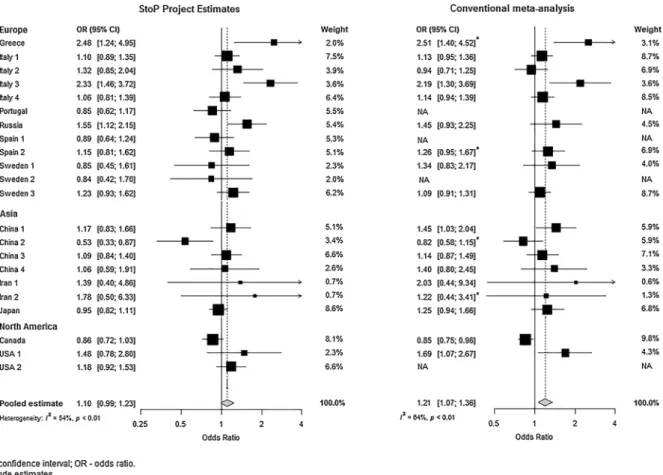
Fig. 1. Forest plots describing the association between alcohol drinking and gastric cancer, with non drinkers as reference, using the estimates from the Stomach Cancer Pooling (StoP) Project database and from the published reports of the same studies.
Table 1 Comparison between meta-analyses performed with data from the published reports of the Stomach Cancer Pooling (StoP) studies and individual partic ipant data meta-analyses regarding the number of studies, summary estimates, and corresponding precision and heterogeneity. Meta-analysis (MA) of published data Individual participant data pooled analysis of (StoP) Ratio MA/StoP Drinking category Number of studies (N) OR (95% CI) SE I 2 % Number of studies (N) OR (95% CI) SE I 2% Number of studies OR SE I 2 Drinkers vs Non-drinkers a All Estimates 18 1.21 (1.07-1.36) 0.06 63.6 22 b 1.10 (0.99-1.23) 0.05 54.4 0.82 1.10 1.20 1.17 Crude Estimates 4 c 1.29 (0.82-2.01) 0.23 72.9 Adjusted Estimates 14 d 1.19 (1.05-1.36) 0.07 62.8 Cardia All Estimates (Adjusted) 5 e 1.10 (0.77-1.58) 0.18 58.3 15 f 1.10 (0.90-1.33) 0.10 0.0 0.33 1.00 1.80 0.0 Non-cardia All Estimates (Adjusted) 5 e 1.07 (0.86-1.34) 0.11 67.0 18 g 1.09 (0.93-1.28) 0.08 66.9 0.28 0.98 1.38 1.00 < 1 drink/day vs Non-drinkers All Estimates (Adjusted) 5 h 0.95 (0.80-1.14) 0.09 58.7 19 i 0.98 (0.83-1.15) 0.05 67.3 0.26 0.97 1.80 0.87 1-4 drinks/day vs Non-drinkers All Estimates (Adjusted) 4 j 1.17 (0.90-1.52) 0.13 70.8 18 k 1.13 (1.02-1.24) 0.05 5.7 0.22 1.04 2.60 12.42 > 4 drinks/day vs Non-drinkers All Estimates (Adjusted) 3 l 1.16 (1.00-1.34) 0.09 0.0 15 m 1.37 (1.19-1.58) 0.07 22.0 0.20 0.85 1.29 0.0 CI – Con fi dence Interval; OR – Odds Ratio; SE – Standard Error. a Reference category includes occasional/light drinkers. b Corresponding to all StoP Project studies, except Iran 3. c Corresponding to studies China 2, Iran 2, Greece and Spain 2 providing crude estimates or the necessary information to compute them. d Corresponding to studies Italy 1, Italy 2, Italy 3, Italy 4, Russia, Sweden 1, Sweden 3, China 1, China 3, China 4, Iran 1, Japan, Canada and USA 1. e Corresponding to studies Italy 4, Russia, Sweden 3, Canada and USA 1. f Corresponding to studies Canada, Iran 1, Italy 1, Italy 2, Italy 3, Italy 4, Japan, Russia, Portugal, Spain 1, Spain 2, Sweden 1, Sweden 3, USA 1 and USA 2. g Corresponding to all StoP studies except China 1, China 2, China 3 and China 4. h Corresponding to studies Canada, Italy 2, Italy 4, Sweden 1 and Sweden 3. i Corresponding to all StoP Project studies except Iran 2, China 3 and China 4. j Corresponding to studies Canada, Italy 2, Italy 3 and Italy 4. k Corresponding to all StoP Project studies except Iran 2, China 2, China 3 and China 4. l Corresponding to studies Japan, Italy 1 and Italy 2. m Corresponding to studies China 1, Canada, Greece, Italy 1, Italy 2, Italy 3, Italy 4, Japan, Russia, Portugal, Spain 1, Spain 2, Sweden 2, Sweden 3 and US A2 .
Funnel plots and Egger’s regression asymmetry test were used for the assessment of publication bias [4].
All statistical analyses were performed using STATA® statistical software package version 11.2 (StataCorp., College Station, Texas, USA).
3. Results
3.1. Individual-participant data pooled analysis
Twenty-two out of the 23 studies included in thefirst version of the StoP Project database had information to compute an estimate of the risk of gastric cancer for drinkers vs. non-drinkers [Odds Ratio (OR) (95% Confidence Interval (CI)): 1.10 (0.99–1.23)] (Fig. 1and Supple-mentary Table 1).
An excess of gastric cancer risk was observed in drinkers compared to non-drinkers (Table 1), with the strongest association being observed for drinkers of more than four drinks per day [1.37 (1.19–1.58)]. 3.2. Meta-analysis of published data
A total of 192 reports from the set of 23 studies included in thefirst release of the StoP Project dataset were identified in the systematic literature search: two from Greece, 86 from Italy, eight from Portugal,
four from Russia, four from Spain, 29 from Sweden, 22 from China, three from Iran, 18 from Japan, 10 from Canada and six from the USA (Supplementary Table 2).
The analyses were performed using information extracted from 21 reports, providing data for 18 of the 23 original studies from StoP. Five studies (Iran 3, Portugal, Spain 1, Sweden 2 and USA 2) had no pub-lished data on the relation between alcohol drinking and gastric cancer. The reports from four studies (Greece, Spain 2, China 2 and Iran 2) provided only crude estimates of the association between alcohol drinking and gastric cancer, or the necessary information to compute them. A detailed description of each study and corresponding results included in the conventional meta-analysis is provided in Supplementary Table 2. The corresponding summary OR estimates for the comparison of drinkers vs. non-drinkers are presented in Supplementary Table 1 and depicted inFig. 1; study specific estimates obtained from published reports more often supported a stronger as-sociation between alcohol drinking and gastric cancer.
3.3. Comparison between conventional meta-analyses and individual participant data pooled analyses
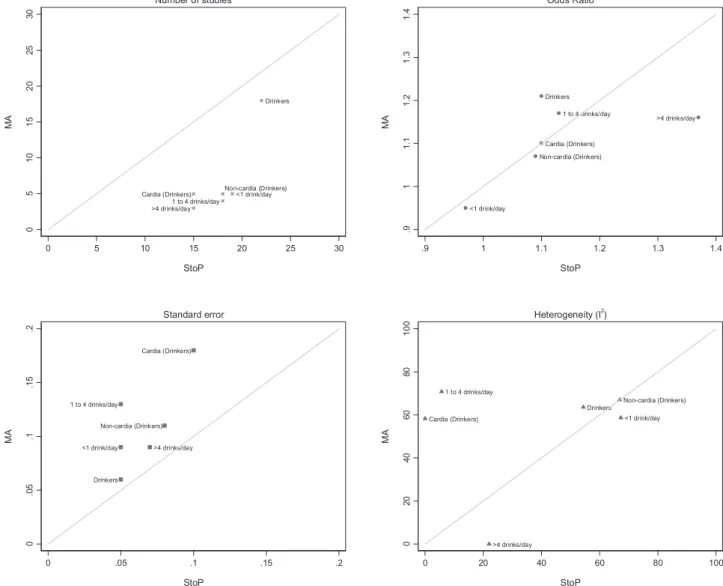
Table 1 and Fig. 2 show the comparison between conventional meta-analyses and individual participant data pooled analyses.
Data on the comparison between drinkers and non-drinkers were
Fig. 2. Graphic representation of the results of conventional meta-analyses (MA) and individual participant data pooled analyses (StoP) for the number of studies and
available for a larger number of studies (18 of 22). The summary OR obtained with published data was about 10% higher than the one ob-tained with the StoP data (1.21 vs. 1.10) with a higher standard error (ratio MA/StoP = 1.20) and greater heterogeneity (ratio MA/ StoP = 1.17). Sensitivity analyses conducted by removing each study at a time did not meaningfully change the results obtained with the StoP data or the meta-analyses of published data. Among the published re-ports there were 14 studies providing adjusted estimates; the corre-sponding summary estimates were also higher than those obtained with the StoP data from the same studies (1.19 vs 1.14).
For specific cancer locations and levels of exposure, the differences between meta-analyses were mainly regarding the number of studies and the precision of the estimates. For gastric cardia and non-cardia cancers, the ratios MA/StoP were 0.33 and 0.28, for the number of studies, respectively, and the standard error was 80% and 38% higher, respectively, than the ones from the individual participant data pooled analyses. Regarding the number of drinks per day, only around one-fifth of the StoP studies had published reports with this information, re-sulting in more imprecise estimates than the ones from the individual participant pooled analyses. For example, only four out of 18 studies had published data for drinkers of one to four drinks per day.
The visual inspection of the funnel plot and Egger’s test (P = 0.001) are suggestive of publication bias only for the meta-analysis of pub-lished data (Fig. 3).
4. Discussion
We observed that, for the comparison between drinkers and non-drinkers, the use of published data overestimated the association with gastric cancer. For various categories of exposure considered, the esti-mates obtained with both published and individual participant data were similar, although the latter were generally less heterogeneous and more precise.
Most previously published meta-analyses addressing the relation between heavy alcohol drinking and gastric cancer reported significant positive associations, particularly with an increasing number of drinks per day [9–11,13,14], although with lower magnitude than the esti-mates obtained in the present individual participant pooled analyses. Tramacere et al [9], using information from 10 case-control studies,
estimated a 1.22 (95% confidence interval: 0.98–1.52) OR for heavy drinkers (defined as those drinking more than four drinks per day) and Bagnardi et al [11], with 11 case-control studies, estimated a similar estimate [Relative risk (RR) (95% CI): 1.22 (0.97–1.54)] for the same amount of drinks. Meta-analyses that assessed the association using information from cohort studies obtained summary estimates lower than the ones from the present analyses, [9,11,12] though in the most recent meta-analysis a statistically significant association was observed only among cohort studies, for categories of heavy drinking [11].
The differences between the summary estimates obtained in the previous meta-analyses and in the present pooled analysis may be ex-plained by differences in the characteristics of the original studies in-cluded and by avoidance of publication bias and improved homo-geneity. However, comparisons between published and unpublished data reflect essentially publication biases and heterogeneity in data analysis and presentation, and therefore the differences may vary across different sets of studies, according to the extent to which less favorable results are not published or made available with less detail.
For the present study, we obtained the most complete data possible from all the eligible studies of the StoP Project and we were able to set the results based on a reanalysis of the original studies, using uniform criteria, as the reference for comparison with a conventional meta-analysis. Our results could overestimate the differences between the two strategies of synthesis, because authors of a conventional meta-analysis may contact the authors of the original studies seeking addi-tional data to complement those available in the published reports. However, a large proportion of systematic reviews are based only on published data, and attempts to retrieve additional data by contacting the authors from the original studies are often unsuccessful [39,40]. When comparisons between meta-analysis and pooled analysis are based on a different number of studies, disagreements may also reflect differences in the characteristics of the studies considered for each of these strategies of synthesis. In the present study, the OR estimates were very similar for the meta-analysis and the pooled analysis, and the most important differences were in terms of enhanced precision and homo-geneity among the pooled analysis.
The definition of non-drinkers varied substantially across studies; in some cases they included infrequent drinkers [15,19,23,41,42], while in others the term non-drinker was not further defined [43,44]. As it
Fig. 3. Funnel plot of the Stomach Cancer Pooling (StoP) Project studies evaluating the risk of gastric cancer for drinkers vs. non-drinkers, using published data (one estimate per study) and individual participant data from the StoP Project database.
was not possible to organize, from the published data, all individuals into a common definition of non-drinker, the specific definition from each study was used, which may have contributed to the observed heterogeneity. This is a common issue when analyzing the effect of alcohol intake and is discussed in several meta-analyses for the asso-ciation between alcohol and cancer [14,45,46]. Such a lack of a common definition should have led to an underestimation rather than an overestimation of the association with alcohol in the meta-analyses as compared to the pooled analyses. In addition, the latter are expected to yield more precise and valid RR estimates, namely by accounting for the potential confounding effect of socioeconomic status, fruit and ve-getables consumption and tobacco smoking, [36] while also decreasing heterogeneity [2,47].
Studies comparing the results from published literature vs. in-dividual participant data [48,49] concluded that, although the direc-tion and magnitude of the associadirec-tions may differ between methods, the main difference and advantage of pooled analyses is the number of individuals/studies available, allowing for more precise and statistically significant estimates [49]. We have previously compared the same set of reports with the individual data present in the StoP Project database regarding the association between smoking and gastric cancer, and observed that, for all exposure categories considered, StoP included a larger number of studies and had more information available to per-form stratified analyses, particularly regarding cancer location and amount of cigarettes smoked per day [50]. The same pattern was ob-served in the present work, namely regarding the number of drinks consumed per day, with the StoP database including a larger number of studies with this information and, therefore, allowing for a dose-re-sponse analysis, as previously shown [36]. In conclusion, the di ffer-ences between the estimates obtained from published and individual participant data highlight the importance of individual participant pooled data for a more comprehensive and valid appraisal of the evi-dence available.
Funding
This study was funded by FEDER through the Operational Programme Competitiveness and Internationalization and national funding from the Foundation for Science and Technology – FCT (Portuguese Ministry of Science, Technology and Higher Education) under the Unidade de Investigação em Epidemiologia – Instituto de Saúde Pública da Universidade do Porto (EPIUnit) (POCI-01-0145-FEDER-006862; Ref. UID/DTP/04750/2013); the PhD Grants PD/BD/ 105823/2014 (Ana Ferro) and SFRH/BD/102585/2014 (Samantha Morais) and the Postdoc grant SFRH/BPD/108751/2015 (Bárbara Peleteiro) co-funded by FCT and the “Programa Operacional Capital Humano” (POCH/FSE), the Fondazione Italiana per la Ricerca sul Cancro (FIRC), the Associazione Italiana per la Ricerca sul Cancro, project no. 16715 (Investigator Grant) and the Italian Ministry of Health (Young Researchers, GR-2011-02347943 to SB). Matteo Rota was supported by a fellowship from the FIRC.
The authors thank the European Cancer Prevention (ECP) Organization for providing support for the project meetings. We also thank all MCC-Spain study collaborators (CIBERESP, ISCIII, ISGlobal, ICO, University of Huelva, University of Oviedo, University of Cantabria, University of León, ibs. Granada, Instituto Salud Pública de Navarra, FISABIO, Murcia Regional Health Authority and cols). Conflict of interest
There are no conflicts of interest to disclose. Authorship contribution statement
The author contributions were as follows: AF collected, performed the statistical analysis and interpreted the data, drafted and revised the
manuscript. SM collected and interpreted the data and revised the manuscript. MR, CP, PB, RB, CG harmonized the data, as part of the Stomach Cancer Pooling (StoP) Project. ZFZ, KM, HI, JH, KCJ, GPY, DP, MF, JM, RM, WY, HS, DZ, DM, NFL, MK, JV, EMNM, MP, FP, AW, NO, AB, NH, LM, RP, RCK, MHD, AL, PL, PB, SB, EN, BP supplied the data, as part of the StoP Project. CLV and NL supervised the analysis and interpretation of data, and reviewed the manuscript. NL defined the study hypotheses and designed the investigation. All authors con-tributed to the discussion of the results. All authors read and approved thefinal version of the manuscript.
Appendix A. Supplementary data
Supplementary material related to this article can be found, in the online version, at doi:https://doi.org/10.1016/j.canep.2018.04.009. References
[1] M. Egger, G.D. Smith, K. O’Rourke, Rationale, potentials and promise of systematic reviews, in: M. Egger, G.D. Smith, D. Altman (Eds.), Systemic Reviews in Health Care - meta-analysis in Context, BMJ Publishing Group, 2001, pp. 3–21. [2] M. Blettner, W. Sauerbrei, B. Schlehofer, T. Scheuchenpflug, C. Friedenreich,
Traditional reviews, meta-analyses and pooled analyses in epidemiology, Int. J. Epidemiol. 28 (1) (1999) 1–9.
[3] C.M. Friedenreich, Methods for pooled analyses of epidemiologic studies, Epidemiology 4 (4) (1993) 295–302.
[4] J.A. Sterne, D. Gavaghan, M. Egger, Publication and related bias in meta-analysis: power of statistical tests and prevalence in the literature, J. Clin. Epidemiol. 53 (11) (2000) 1119–1129.
[5] M. Simmonds, G. Stewart, L. Stewart, A decade of individual participant data meta-analyses: a review of current practice, Contemp. Clin. Trials 45 (Pt A) (2015) 76–83. [6] World Cancer Research Fund International, American Institute for Cancer Research, Continuous Update Project Report: Diet, Nutrition, Physical Activity and Stomach Cancer, (2016).
[7] C. Pelucchi, N. Lunet, S. Boccia, Z.F. Zhang, D. Praud, P. Boffetta, F. Levi, K. Matsuo, H. Ito, J. Hu, K.C. Johnson, M. Ferraroni, G.P. Yu, B. Peleteiro, R. Malekzadeh, M.H. Derakhshan, W. Ye, D. Zaridze, D. Maximovitch, N. Aragones, V. Martin, M. Pakseresht, F. Pourfarzi, A. Bellavia, N. Orsini, A. Wolk, L. Mu, D. Arzani, R.C. Kurtz, P. Lagiou, D. Trichopoulos, J. Muscat, C. La Vecchia, E. Negri, The stomach cancer pooling (StoP) project: study design and presentation, Eur. J. Cancer Prev. 24 (1) (2015) 16–23.
[8] M. Rota, C. Pelucchi, P. Bertuccio, K. Matsuo, Z.F. Zhang, H. Ito, J. Hu, K.C. Johnson, D. Palli, M. Ferraroni, G.P. Yu, J. Muscat, N. Lunet, B. Peleteiro, W. Ye, H. Song, D. Zaridze, D. Maximovitch, M. Guevara, T. Fernandez-Villa, J. Vioque, E.M. Navarrete-Munoz, A. Wolk, N. Orsini, A. Bellavia, N. Hakansson, L. Mu, R. Persiani, R.C. Kurtz, A. Lagiou, P. Lagiou, C. Galeone, R. Bonzi, P. Boffetta, S. Boccia, E. Negri, C. La Vecchia, Alcohol consumption and gastric cancer risk-a pooled analysis within the StoP project consortium, Int. J. Cancer 141 (10) (2017) 1950–1962.
[9] I. Tramacere, E. Negri, C. Pelucchi, V. Bagnardi, M. Rota, L. Scotti, F. Islami, G. Corrao, C. La Vecchia, P. Boffetta, A meta-analysis on alcohol drinking and gastric cancer risk, Ann. Oncol. 23 (1) (2012) 28–36.
[10] I. Tramacere, C. Pelucchi, V. Bagnardi, M. Rota, L. Scotti, F. Islami, G. Corrao, P. Boffetta, C. La Vecchia, E. Negri, A meta-analysis on alcohol drinking and eso-phageal and gastric cardia adenocarcinoma risk, Ann. Oncol. 23 (2) (2012) 287–297.
[11] V. Bagnardi, M. Rota, E. Botteri, I. Tramacere, F. Islami, V. Fedirko, L. Scotti, M. Jenab, F. Turati, E. Pasquali, C. Pelucchi, C. Galeone, R. Bellocco, E. Negri, G. Corrao, P. Boffetta, C. La Vecchia, Alcohol consumption and site-specific cancer risk: a comprehensive dose-response meta-analysis, Br. J. Cancer 112 (3) (2015) 580–593.
[12] G.X. Tong, H. Liang, J. Chai, J. Cheng, R. Feng, P.L. Chen, Q.Q. Geng, X.R. Shen, D.B. Wang, Association of risk of gastric cancer and consumption of tobacco, al-cohol and tea in the Chinese population, Asian Pac. J. Cancer Prev.: APJCP 15 (20) (2014) 8765–8774.
[13] H. Mahjub, G. Sadri, Association between alcohol consumption and gastric cancer: a meta-analysis, J. Res. Health Sci. 7 (2) (2007) 63–72.
[14] V. Bagnardi, M. Blangiardo, C. La Vecchia, G. Corrao, A meta-analysis of alcohol drinking and cancer risk, Br. J. Cancer 85 (11) (2001) 1700–1705.
[15] P. Lagiou, E. Samoli, A. Lagiou, J. Peterson, A. Tzonou, J. Dwyer, D. Trichopoulos, Flavonoids, vitamin c and adenocarcinoma of the stomach, Cancer Causes Control: CCC 15 (1) (2004) 67–72.
[16] E. Buiatti, D. Palli, A. Decarli, D. Amadori, C. Avellini, S. Bianchi, R. Biserni, F. Cipriani, P. Cocco, A. Giacosa, et al., A case-control study of gastric cancer and diet in Italy, Int. J. Cancer 44 (4) (1989) 611–616.
[17] E. De Feo, B. Simone, R. Persiani, F. Cananzi, A. Biondi, D. Arzani, R. Amore, D. D’Ugo, G. Ricciardi, S. Boccia, A case-control study on the effect of apolipo-protein E genotypes on gastric cancer risk and progression, BMC Cancer 12 (2012) 494.
stomach cancer in northern Italy, Int. J. Cancer 60 (6) (1995) 748–752. [19] E. Lucenteforte, V. Scita, C. Bosetti, P. Bertuccio, E. Negri, C. La Vecchia, Food
groups and alcoholic beverages and the risk of stomach cancer: a case-control study in Italy, Nutr. Cancer 60 (5) (2008) 577–584.
[20] N. Lunet, C. Valbuena, A.L. Vieira, C. Lopes, C. Lopes, L. David, F. Carneiro, H. Barros, Fruit and vegetable consumption and gastric cancer by location and histological type: case-control and meta-analysis, Eur. J. Cancer Prev. 16 (4) (2007) 312–327.
[21] D. Zaridze, E. Borisova, D. Maximovitch, V. Chkhikvadze, Aspirin protects against gastric cancer: results of a case-control study from Moscow, Russia, Int. J. Cancer 82 (4) (1999) 473–476.
[22] G. Castano-Vinyals, N. Aragones, B. Perez-Gomez, V. Martin, J. Llorca, V. Moreno, J.M. Altzibar, E. Ardanaz, S. de Sanjose, J.J. Jimenez-Moleon, A. Tardon, J. Alguacil, R. Peiro, R. Marcos-Gragera, C. Navarro, M. Pollan, M. Kogevinas, M.C.-S.S. Group, Population-based multicase-control study in common tumors in Spain (MCC-Spain): rationale and study design, Gac Sanit. 29 (4) (2015) 308–315. [23] M. Santibanez, J. Alguacil, M.G. de la Hera, E.M. Navarrete-Munoz, J. Llorca,
N. Aragones, T. Kauppinen, J. Vioque, P.S. Group, Occupational exposures and risk of stomach cancer by histological type, Occup. Environ. Med. 69 (4) (2012) 268–275.
[24] H. Harris, N. Håkansson, C. Olofsson, B. Julin, A. Åkesson, A. Wolk, The Swedish mammography cohort and the cohort of Swedish men: study design and char-acteristics of 2 population-based longitudinal cohorts, OA Epidemiol. 1 (2) (2013) 16.
[25] W. Ye, A.M. Ekstrom, L.E. Hansson, R. Bergstrom, O. Nyren, Tobacco, alcohol and the risk of gastric cancer by sub-site and histologic type, Int. J. Cancer 83 (2) (1999) 223–229.
[26] S. Deandrea, R. Foschi, C. Galeone, C. La Vecchia, E. Negri, J. Hu, Is temperature an effect modifier of the association between green tea intake and gastric cancer risk? Eur J. Cancer Prev. 19 (1) (2010) 18–22.
[27] L.N. Mu, Q.Y. Lu, S.Z. Yu, Q.W. Jiang, W. Cao, N.C. You, V.W. Setiawan, X.F. Zhou, B.G. Ding, R.H. Wang, J. Zhao, L. Cai, J.Y. Rao, D. Heber, Z.F. Zhang, Green tea drinking and multigenetic index on the risk of stomach cancer in a Chinese popu-lation, Int. J. Cancer 116 (6) (2005) 972–983.
[28] V.W. Setiawan, G.P. Yu, Q.Y. Lu, M.L. Lu, S.Z. Yu, L. Mu, J.G. Zhang, R.C. Kurtz, L. Cai, C.C. Hsieh, Z.F. Zhang, Allium vegetables and stomach cancer risk in China, Asian Pac. J. Cancer Prev.: APJCP 6 (3) (2005) 387–395.
[29] V.W. Setiawan, Z.F. Zhang, G.P. Yu, Y.L. Li, M.L. Lu, C.J. Tsai, D. Cordova, M.R. Wang, C.H. Guo, S.Z. Yu, R.C. Kurtz, GSTT1 and GSTM1 null genotypes and the risk of gastric cancer: a case-control study in a Chinese population, Cancer Epidemiol. Biomark. Prev. : Publ. Am. Assoc. Cancer Res. Cosponsored Am. Soc. Prevent. Oncol. 9 (1) (2000) 73–80.
[30] M.H. Derakhshan, R. Malekzadeh, H. Watabe, A. Yazdanbod, V. Fyfe, A. Kazemi, N. Rakhshani, R. Didevar, M. Sotoudeh, A.A. Zolfeghari, K.E. McColl, Combination of gastric atrophy, reflux symptoms and histological subtype indicates two distinct aetiologies of gastric cardia cancer, Gut 57 (3) (2008) 298–305.
[31] M. Pakseresht, D. Forman, R. Malekzadeh, A. Yazdanbod, R.M. West,
D.C. Greenwood, J.E. Crabtree, J.E. Cade, Dietary habits and gastric cancer risk in north-west Iran, Cancer Causes Control: CCC 22 (5) (2011) 725–736.
[32] F. Pourfarzi, A. Whelan, J. Kaldor, R. Malekzadeh, The role of diet and other en-vironmental factors in the causation of gastric cancer in Iran–a population based study, Int. J. Cancer 125 (8) (2009) 1953–1960.
[33] K. Matsuo, I. Oze, S. Hosono, H. Ito, M. Watanabe, K. Ishioka, S. Ito, M. Tajika, Y. Yatabe, Y. Niwa, K. Yamao, S. Nakamura, K. Tajima, H. Tanaka, The aldehyde dehydrogenase 2 (ALDH2) Glu504Lys polymorphism interacts with alcohol drinking in the risk of stomach cancer, Carcinogenesis 34 (7) (2013) 1510–1515. [34] Y. Mao, J. Hu, R. Semenciw, K. White, G. Canadian, Cancer registries epidemiology
research, active and passive smoking and the risk of stomach cancer, by subsite, in
Canada, Eur. J. Cancer Prev. 11 (1) (2002) 27–38.
[35] Z.F. Zhang, R.C. Kurtz, D.S. Klimstra, G.P. Yu, M. Sun, S. Harlap, J.R. Marshall, Helicobacter pylori infection on the risk of stomach cancer and chronic atrophic gastritis, Cancer Detect Prev. 23 (5) (1999) 357–367.
[36] R. DerSimonian, N. Laird, Meta-analysis in clinical trials revisited, Contemp. Clin. Trials 45 (Pt A) (2015) 139–145.
[37] J.P. Higgins, S.G. Thompson, Quantifying heterogeneity in a meta-analysis, Stat. Med. 21 (11) (2002) 1539–1558.
[38] C. Turner, How much alcohol is in a’ standard drink’? An analysis of 125 studies, Br. J. Addict. 85 (9) (1990) 1171–1175.
[39] S.J. Nevitt, A.G. Marson, B. Davie, S. Reynolds, L. Williams, C.T. Smith, Exploring changes over time and characteristics associated with data retrieval across in-dividual participant data meta-analyses: systematic review, BMJ (Clin. Res. Ed.) 357 (2017) j1390.
[40] J.R. Polanin, Efforts to retrieve individual participant data sets for use in a meta-analysis result in moderate data sharing but many data sets remain missing, J. Clin. Epidemiol. (2017).
[41] J.F. Hu, S.F. Zhang, E.M. Jia, Q.Q. Wang, S.D. Liu, Y.Y. Liu, Y.P. Wu, Y.T. Cheng, Diet and cancer of the stomach: a case-control study in China, Int. J. Cancer 41 (3) (1988) 331–335.
[42] C.M. Gao, T. Takezaki, J.H. Ding, M.S. Li, K. Tajima, Protective effect of allium vegetables against both esophageal and stomach cancer: a simultaneous case-re-ferent study of a high-epidemic area in jiangsu Province, China, Jpn. J. Cancer Res. : Gann 90 (6) (1999) 614–621.
[43] G.P. Yu, C.C. Hsieh, L.Y. Wang, S.Z. Yu, X.L. Li, T.H. Jin, Green-tea consumption and risk of stomach cancer: a population-based case-control study in Shanghai, China, Cancer Causes Control: CCC 6 (6) (1995) 532–538.
[44] S.L. Park, D. Bastani, B.Y. Goldstein, S.C. Chang, W. Cozen, L. Cai, C. Cordon-Cardo, B. Ding, S. Greenland, N. He, S.K. Hussain, Q. Jiang, Y.C. Lee, S. Liu, M.L. Lu, T.M. Mack, J.T. Mao, H. Morgenstern, L.N. Mu, S.S. Oh, A. Pantuck, J.C. Papp, J. Rao, V.E. Reuter, D.P. Tashkin, H. Wang, N.C. You, S.Z. Yu, J.K. Zhao, Z.F. Zhang, Associations between NBS1 polymorphisms, haplotypes and smoking-related can-cers, Carcinogenesis 31 (7) (2010) 1264–1271.
[45] J. Key, S. Hodgson, R.Z. Omar, T.K. Jensen, S.G. Thompson, A.R. Boobis, D.S. Davies, P. Elliott, Meta-analysis of studies of alcohol and breast cancer with consideration of the methodological issues, Cancer Causes Control: CCC 17 (6) (2006) 759–770.
[46] C. Zeisser, T.R. Stockwell, T. Chikritzhs, Methodological biases in estimating the relationship between alcohol consumption and breast cancer: the role of drinker misclassification errors in meta-analytic results, Alcohol. Clin. Exp. Res. 38 (8) (2014) 2297–2306.
[47] M. Egger, M. Schneider, G. Davey Smith, Spurious precision? Meta-analysis of ob-servational studies, BMJ (Clin. Res. Ed.) 316 (7125) (1998) 140–144.
[48] L. Stewart, M. Parmar, Meta-analysis of the literature or of individual patient data: is there a difference? Lancet 341 (8842) (1993) 418–422.
[49] C. Tudur Smith, M. Marcucci, S.J. Nolan, A. Iorio, M. Sudell, R. Riley, M.M. Rovers, P.R. Williamson, Individual participant data analyses compared with meta-analyses based on aggregate data, Cochr. Datab. Syst. Rev. (2016) Mr000007. [50] A. Ferro, S. Morais, M. Rota, C. Pelucchi, P. Bertuccio, R. Bonzi, C. Galeone,
Z.F. Zhang, K. Matsuo, H. Ito, J. Hu, K.C. Johnson, G.P. Yu, D. Palli, M. Ferraroni, J. Muscat, R. Malekzadeh, W. Ye, H. Song, D. Zaridze, D. Maximovitch, N. Aragones, G. Castano-Vinyals, J. Vioque, E.M. Navarrete-Munoz, M. Pakseresht, F. Pourfarzi, A. Wolk, N. Orsini, A. Bellavia, N. Hakansson, L. Mu, R. Pastorino, R.C. Kurtz, M.H. Derakhshan, A. Lagiou, P. Lagiou, P. Boffetta, S. Boccia, E. Negri, C. La Vecchia, B. Peleteiro, N. Lunet, Tobacco smoking and gastric cancer: meta-analyses of published data versus pooled meta-analyses of individual participant data (StoP Project), Eur J. Cancer Prev. 27 (3) (2018) 197–204.