School of Social Sciences
Department of Social and Organizational Psychology
Can I have a life outside my job?
A model for work-life conflict predictors and outcomes
Catarina Vicente e Pereira
A dissertation presented in partial fulfilment of the requirements for the Degree of Master in Social and Organizational Psychology
Supervisor:
PhD Sara Ramos, Assistant Professor ISCTE-IUL: Lisbon University Institute
ii
Acknowledgements
Gostaria de agradecer a todos os que de alguma forma me ajudaram a concluir este projecto, nomeadamente:
À Professora Doutora Sara Ramos pela partilha de ideias, pelo apoio, incentivo e simpatia sempre presentes ao longo deste processo, e ao Professor Doutor Nelson Ramalho pela discussão construtiva de ideias.
Aos meus irmãos, avós e pai pelo apoio e por compreenderem todos os momentos de ausência, e à minha mãe por ter lido e ouvido as mesmas ideias vezes sem conta e por todas as apostas de gelados que ficaram por cumprir.
À Ana Rita, por estar sempre presente, por todos os almoços, telefonemas, e conversas recheadas de ideias claramente loucas e de conselhos potencialmente sábios, por todo o apoio e acima de tudo pela amizade constante.
Ao Tiago Pinto, por ter acompanhado sempre de perto este projecto, pelas ideias e comentários, pela disponibilidade e incentivos, e sobretudo pela amizade always there.
À Raquel Rodrigues, pela companhia online durante todo o processo, pela amizade, pela troca de ideias sérias, e sobretudo pelo nonsense ocasional.
E ainda à Raquel António, Sara Gorjão, Joana Aurélio e Andreia Pinto, pela amizade, companheirismo e partilha de amarguras e alegrias.
Last but not least, ao João Antunes por estar sempre lá, por me apoiar sempre, por acreditar em mim, por me incentivar a continuar, pela paciência infinita, e por ser o meu braço direito ou esquerdo conforme é preciso.
iii
Abstract
Employees assume several commitments in their work and personal lives, which are likely to become somehow incompatible. These issues are usually addressed as work-family conflict however the present study aimed to contribute to the development of a broader concept: work-life conflict, which does not narrow the study to employees who are married or to those with children. Therefore, a model of predictors and outcomes of work-life conflict was tested, and the potential moderator effect that employee’s life priorities may have between the experience of conflict and its negative outcomes was explored. Data was gathered from 325 full-time employees of different occupations and organizations with an online questionnaire. The model was tested via hierarchical multiple regression analysis and results indicate that the number of hours worked per week and the perceived organizational support only predicted the experience of conflict based on time constrains, while being engaged in extra-work activities predicted strain-based work-life conflict. On the other hand, job involvement and perceived pressure to overtime predicted both types of work-life conflict. Regarding consequences of work-life conflict, strain-based conflict was significantly related to psychological symptoms and to affective organizational commitment, while time-based conflict was only positively connected to psychological symptoms. Moreover, results failed to support the moderation hypothesis of life priorities.
Keywords: Work-life conflict; perceived pressure to overtime; psychological symptoms; life
priorities.
PsycInfo Codes:
3600 Industrial & Organizational Psychology 3670 Working Conditions & Industrial Safety
iv
Resumo
Os trabalhadores assumem vários compromissos no seu trabalho e na sua vida pessoal, que são passíveis de se tornarem de alguma forma incompatíveis. Estas questões são geralmente abordadas enquanto conflito trabalho-família, no entanto o presente estudo teve como objectivo contribuir para o desenvolvimento de um conceito mais abrangente: conflito trabalho-vida pessoal, que não restringe o estudo a trabalhadores que sejam casados ou que tenham filhos. Neste sentido, foi testado um modelo de antecedentes e consequência do conflito trabalho-vida pessoal, bem como foi explorado o potencial efeito moderador que as prioridades de vida do trabalhador podem exercer entre a experiência do conflito e os seus resultados negativos. Os dados foram obtidos através de um questionário online a 325 trabalhadores a tempo inteiro de diferentes profissões e organizações. O modelo foi testado através de análises de regressão hierárquica múltipla, e os resultados obtidos indicam que o número de horas de trabalho semanal e o suporte organizacional percebido apenas predizem a experiência de conflito com base em constrangimentos temporais, enquanto o envolvimento em actividades extra-trabalho predizem somente o conflito baseado no stress. Por outro lado, o envolvimento com o trabalho e a percepção de pressão para trabalhar horas extraordinárias predizem os dois tipos de conflito trabalho-vida pessoal. Relativamente às consequências do conflito trabalho-vida pessoal, o conflito baseado no stress demonstrou estar significativamente relacionado com os sintomas psicológicos e com a implicação afectiva organizacional, enquanto o conflito baseado no tempo apenas se encontrou positivamente associado aos sintomas psicológicos. Adicionalmente, os resultados não suportaram a hipótese de moderação através das prioridades de vida.
Palavras-chave: Conflito trabalho-vida pessoal; percepção de pressão para horas
extraordinárias; sintomas psicológicos; prioridades de vida.
Códigos PsycInfo:
3600 Industrial & Organizational Psychology 3670 Working Conditions & Industrial Safety
v
General Index
Abstract ... iii
Resumo ... iv
1. Introduction ... 1
1.1 Study Main Goals ... 3
1.2 Study Structure ... 3
2. Theoretical Background ... 4
2.1 Work- Family Conflict ... 4
2.1.1 Work- Family Conflict Theories ... 5
2.1.2 Predictors and Outcomes of Work- Family Conflict ... 7
2.2 Work- Life Conflict ... 10
2.3 Work-Life Conflict Predictors and Outcomes ... 11
2.3.1 Long Work Hours and Pressure to Overtime ... 12
2.3.2 Perceived Organizational Support for work-life issues ... 16
2.3.3 Extra-Work Activities... 18
2.3.4 Life Priorities ... 19
2.3.5 Affective Organizational Commitment ... 21
2.3.6 Psychological Health ... 22
2.4 Model of Work-Life Conflict ... 24
3. Method ... 26
3.1 Sample ... 26
3.2 Procedure ... 26
3.3 Data Analysis Strategy ... 27
3.4 Measures ... 28
3.4.1 Control Questions ... 28
vi
3.4.3 Long Work Hours and Pressure to Overtime ... 30
3.4.4 Perceived Organizational Support for Work-Life issues ... 31
3.4.5 Extra-Work Activities... 32
3.4.6 Life Priorities ... 33
3.4.7 Affective Organizational Commitment ... 34
3.4.8 Psychological Health ... 34 4. Results ... 38 4.1 Descriptive Statistics ... 38 4.2 Control Variables ... 39 4.3 Model Test ... 40 4.4 Moderation Test ... 44 4.5 Results Overview ... 45
5. Discussion of Results and Conclusion ... 47
5.1 Work-life Conflict ... 47
5.1.1 Work-life Conflict Predictors ... 47
5.1.2 Work-life Conflict Outcomes ... 50
5.1.3 Work-Life Conflict Moderator ... 51
5.2. Limitations and Future Research ... 52
5.2.1 Sample and Procedure ... 52
5.2.2 Measures ... 53
5.3 Research Implications for Theory and Practice ... 55
vii
Figures index
Figure 2.1: Work-family conflict main predictors and outcomes ... 8
Figure 2.2: Work-life conflict proposed model ... 25
Figure 4.1: Obtained model for mediation with strain-based conflict ... 46
viii
Tables Index
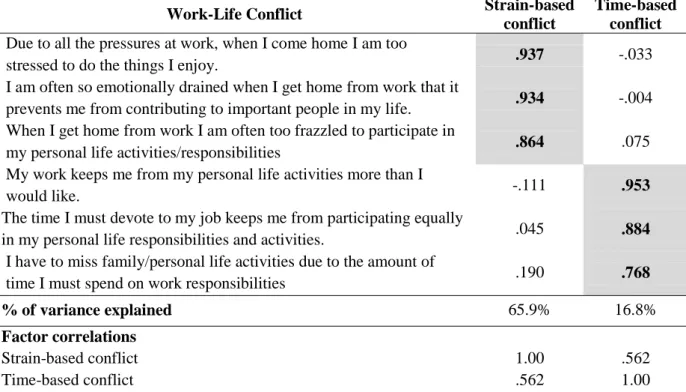
Table 3.1: Oblimin pattern matrix of work-life conflict ... 30
Table 3.2: Varimax rotated matrix for perceived pressure to overtime ... 31
Table 3.3: Varimax rotated matrix for perceived organizational support for work-life issues ... 32
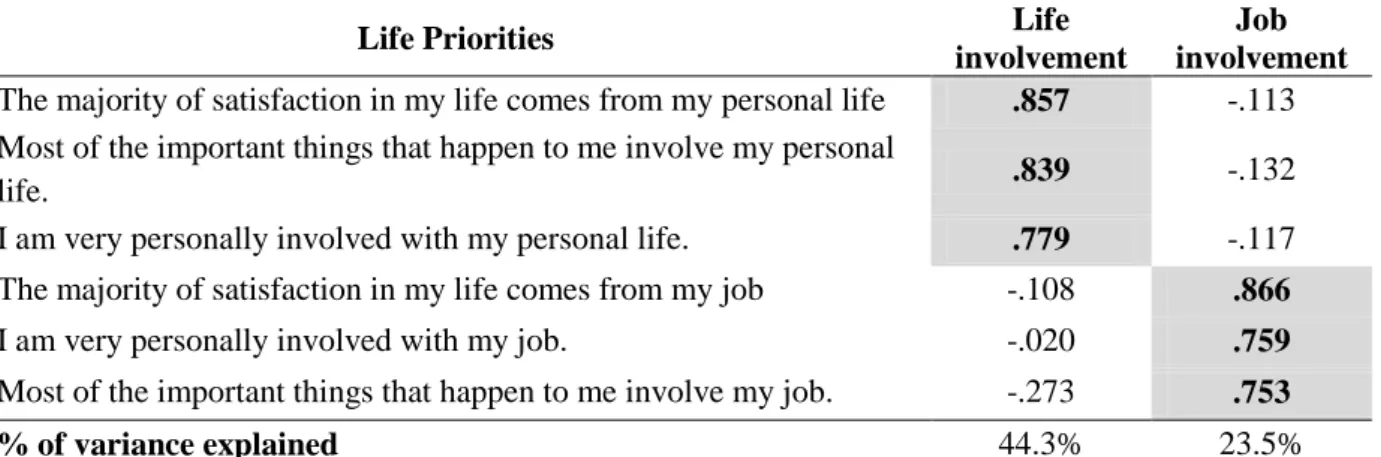
Table 3.4: Varimax rotated matrix for life priorities ... 33
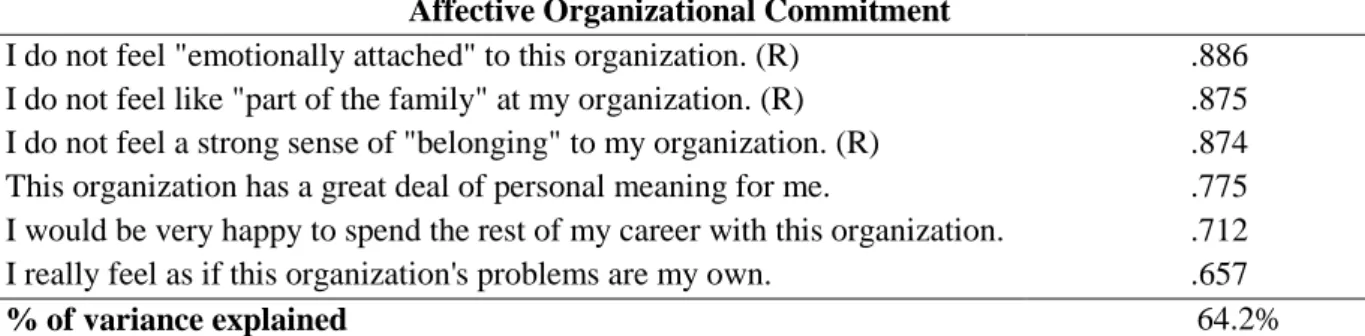
Table 3.5: Varimax rotated matrix for affective organizational commitment ... 34
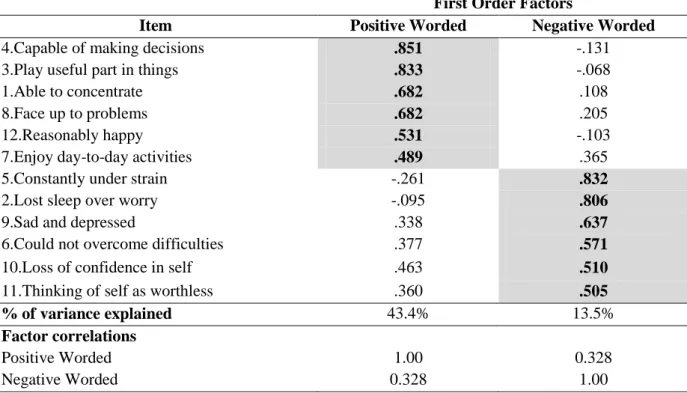
Table 3.6: Oblimin pattern matrix of GHQ-12 (first-order factor analysis) ... 36
Table 3.7: Oblimin pattern matrix of GHQ-12 (second-order factor analysis) ... 36
Table 3.8: Schmid–Leiman solution results ... 37
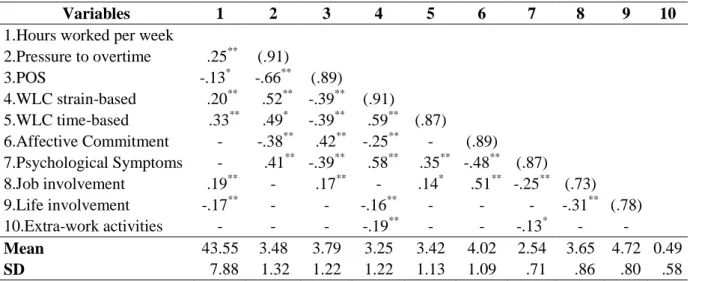
Table 4.1: Means, standard deviations, correlations and scale reliabilities ... 38
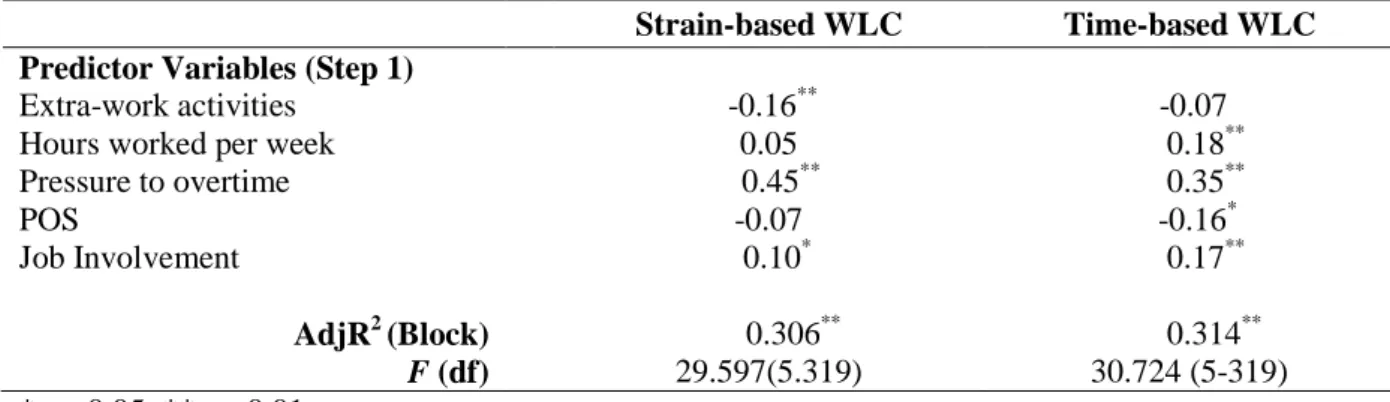
Table 4.2: Regression analysis of strain-based and time-based work-life conflict on predictor variables ... 41
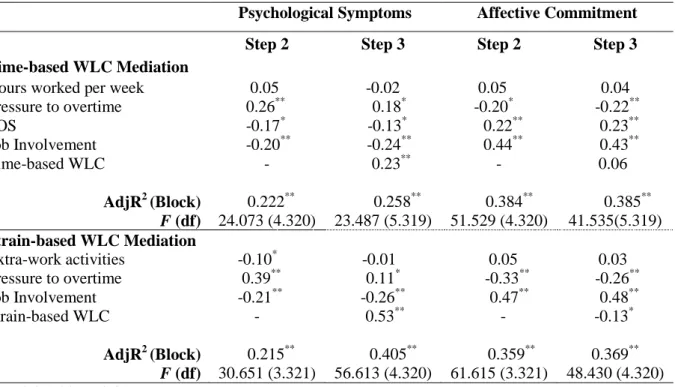
Table 4.3: Regression analysis of affective commitment and psychological symptoms on predictor and mediator variables ... 43
1
1. Introduction
People do not work in a vacuum; their job behaviour is highly influenced by experiences in other role domains, and simultaneously their life outside work is likely to be greatly influenced by the work experiences. Among life situations, the workplace stands out as a potentially important source of stress, purely because of the amount of time that is spent in it. One of the first models of occupational stress proposed by Cooper and Marshall (1976) considered that sources of occupational stress could fall into six broad categories: factors intrinsic to the job; role in the organization; relationships at work; career developments; organizational structure and climate; and extra-organizational sources of stress such as home-work interference.
An ongoing global trend of social changes is usually indentified as the reason why the issues surrounding work and family/personal life interactions have received increasing attention over the past twenty-five years. The impact of these social changes can be grouped into changes in the workforce and changes in work itself.
The increase of female labour force participation, the raise of life expectancy and newer values related to improve quality of life, are pointed as the most salient workforce changes that make employees more likely to find themselves struggling to manage the competing demands of work and personal/family domains. In fact, for the last two decades the world has assisted to increasing women participation in the work force that led to a prevalence of dual earner couples, instead of traditional single earner families. Moreover, the shift from traditional families to modern ones raised the number of single parent households. In Portugal, the percentage of woman in the labour force raised considerably in the past two decades, increasing from 49,2% in 1986 to 56,1% in 2010 (Pordata, 2011), most Portuguese families with children, around 60%, are composed by dual-earner couples who work full-time (Organisation for Economic Co-operation and Development (OECD), 2011), and there has also been a raise of single-parent families in the last years - in 1992 there were 203.654 single-parent families and in 2010 the number increased to 346.104 families (Pordata, 2011).
Advances in medicine and the overall quality of life that raises life expectancy in the elderly population, are other social changes contributing for the experience of work and family conflict, since employees, in some cases, need to take care of their parents in addition to their children. Resident population in Portugal has been ageing continuously for the past decades and the average life expectancy kept a positive trend, during the 2007-2009 period
2
life expectancy at 65 years old reached 18 years and life expectancy at birth was estimated at 78 years (INE, 2010).
There is also a change in attitudes towards what constitutes a successful career: having a highly paid job and a career no longer emerges as the most important and central purpose of individuals’ lives. A complete life must now include a successful professional life linked to a successful personal life. According to Inglehart (1990) and Abramson and Inglehart (1995) in many westerns societies, including Portugal, it is possible to register a shift from more traditional values (e.g. economical and job security) to newer values related to improve quality of life, need for freedom and self-expression, which represents a higher importance given to quality of life and subjective well-being as core values of individuals’ lives.
In parallel with these changes in the workforce, work itself has undergone major changes over the last years. New technologies made it possible to perform job tasks from anywhere at any time, and have increased the expectations of quick replies, affecting the organizational productivity. Additionally, the recent trend of downsizing and restructuring organizations, as a response to global competitive pressures and global economical crises, carried profound changes in the nature of careers. There seems to be a sense of uncertainty of continuous employment allied to extensive work pressures that lead employees to feel increasingly pressure to work faster and to work longer hours (Poelmans, Odle-Dusseau & Beham, 2009). The number of Portuguese dissolved companies reached is top in 2010 with a total of 30.135, a much higher number when compared to the 4.062 dissolved companies in 2000 just before the global economical crises begin (Pordata, 2011). In addition, long hours of work (45 to 60 of work hours per week) were reported by 15% of Portuguese workers in 2005 (Parent-Thirion, Macías, Hurley & Vermeylen, 2007) and there was an increase tendency in the use of new technologies in Portuguese companies, the computer and internet use raised, respectively, from 81% and 70% in 2003 to 97.2% and 94.1% in 2010 (Pordata, 2011).
Along with social changes the studies on this subject are also driven by the concern that conflict between work and family/life domains can result in reduced performance and poorer health for employees. In fact, different studies demonstrated that the experience of this type of conflict is associated with different negative consequences at organizational and individual levels, such high levels of absenteeism and symptoms of anxiety and depression (see Allen, Herst, Bruck & Sutton, 2000).
Since social changes are still occurring nowadays, especially those related to population ageing, attitudes shift and changes in how work is done, they will certainly impose challenges for those who desire to balance their work and personal life. In addition, the consequences of
3
the experienced conflict are real and affect employees’ lives in different domains, thus the study of this subject is currently relevant since a deeper comprehension of this phenomenon may contribute to reduce the levels of conflict experienced and subsequently reduce its negative impacts.
1.1 Study Main Goals
Research related to this subject typically defines the difficulties to balance the work and personal domains as work-family conflict, and despite being a widely accepted concept it often narrows the studies to employees who are married and/or have children. Therefore in this work we aim to contribute to the consolidation of a broader and emergent concept, the work-life conflict concept, by demonstrating that it has similar predictors and outcomes as the work-family conflict concept. This broader concept, by not restricting extra-work life to family, allows the study of employees’ who feel conflict between their work and their personal life commitments and demands, regardless of whether they are married or have children.
Moreover, most studies also tend to explore the predictors and outcomes of conflict separately, which may limit the comprehension of the links established between the variables contributing for this phenomenon. For this reason, another goal of this study is to explore a model of predictors and outcomes of work-life conflict so that different possible paths of influences may be considered.
1.2 Study Structure
The present study is divided in five sections, being the first one the current introduction. In section 2 it is presented the theoretical background regarding work-family conflict and it is further argued the importance of studying the emergent concept of work-life conflict. Additionally, a model of predictors and outcomes of work-life conflict and its underlying hypotheses are summarized.
Section 3 concerns this study method, and therefore sample characteristics, the procedure of gathering data and the measures used in this study are described. Section 4 presents the study results regarding descriptive statistics and the results of the hypotheses test through the mediation and moderation tests.
Finally, in section 5 the main findings achieved with the current study are discussed. Furthermore, some limitations and contributions of this study are considered, and different suggestions for further researches are drawn.
4
2. Theoretical Background 2.1 Work- Family Conflict
The broadly cited definition of work-family conflict states that it is “a form of interrole conflict in which the role pressures from the work and family domains are mutually incompatible in some respect. That is, participation in the work (family) role is made more difficult by virtue of participation in the family (work) role” (Greenhaus & Beutell, 1985, p.77). According to this definition, the conflict between work and family is bi-directional: work can interfere with family and family can interfere with work. For example, a parent may feel that family interferes with work when it is necessary to stay home with a sick child, and conversely, may feel that the work is interfering with family when late work hours make it impossible to arrive home in time to spend time with family members. Empirical researches demonstrated that these are two distinct, but related, constructs which have different antecedents and outcomes (Frone, Russell, & Cooper, 1992a; Frone, Yardle, & Markel, 1997; Netemeyer, Boles & MacMurrian, 1996).
In addition, work-family conflict can be divided into time-based, strain-based and behaviour-based conflict (Greenhaus & Beutell, 1985). Time-based conflict might occur when the roles pressures from the two domains (work and family) compete for a person´s time. Strain-based conflict happens when the stress created by one role domain makes it difficult to accomplish the requirements or demands of another role. At last, behaviour-based conflict is possible to occur when specific behaviour patterns of one role are incompatible with behavioural expectations in another role, to clarify this last type of conflict we can call upon a stereotyped example of a military officer commanding his/her children as if they were soldiers. Some researchers have found evidences for the distinctiveness of these three types of conflict and for their occurrence in both conflict directions: work-to-family and family-to-work, subsequently raising a six-factor structure (Carlson, Kacmar & Williams, 2000; Lapierre et al., 2000; Lapierre & Allen, 2006).
Regarding the comparison between the amount of work-to-family versus family-to-work conflict experienced, results consistently show that work-to-family is reported to occur more frequently than family-to-work conflict (e.g. Bellavia & Frone, 2005; Frone, 2000; Frone, Russell & Cooper, 1992b; Frone, Yardley et al., 1997; Grant-Vallone & Ensher, 2001; Grzywacz & Marks, 2000). Thus, it appears that work has a stronger impact on family life that family life has on work. For this reason, the present study only addresses the impact that work may have on an individual’s personal life.
5
Besides the notion of conflict between work and family domains, recently many researchers have focused their attention on the need of examining how work and family experiences can enrich individuals’ lives, hence assuming that there is a positive side of the work-family interface. Frone (2003) defines work-family facilitation as “the extent to which participation at work (or home) is made easier by virtue of the experiences, skills, and opportunities gained or developed at home (or work)” (p.145), while Greenhaus and Powell (2006) definition of work-family enrichment concerns “the extent to which experiences in one role improve the quality of life in the other role”. Frone (2003) further proposes a fourfold taxonomy of work-family interface with two dimensions: direction of influence (work-to-family vs. (work-to-family-to-work) and type of effect (conflict vs. facilitation), which has received evidence for its discriminate validity (e.g. Ayree, Srinivas & Tan; Grzywacz & Butler, 2005). Thus, similar to work-family conflict work-family enrichment may occur in two different directions, and contrary to what happens in conflict, family-to-work enrichment is substantially stronger than work-to-family enrichment (Greenhaus & Powell, 2006). Despite the increasing number of researches related to work and family facilitation, the focus of this work is on conflict and for that reason the facilitation argument will not be further developed nor considered.
2.1.1 Work- Family Conflict Theories
There are different theories that have been evoked in the study of work-family conflict; however we will focus on the two theories that have been central to the development of work-family research, which have simultaneously been the most consensual ones: the ecological systems theory and the role theory.
Ecological Systems Theory
According to Bronfenbrenner (1978) the ecological systems theory offers a model of human development that includes feedback loops between the person and his/her environment. The environment is described as being a hierarchy of four interconnected systems: microsystem, mesosystem, exosystem and macrosystem. The microsystem is the most proximal to the individual and reflects a pattern of activities, roles and interpersonal relations that a person may experience in a given context that includes other people (Bronfenbrenner, 1978). In sequence, the mesosystem is formed by the connection between two or more microsystems, while the microsystem linkages’ that form the exosystem must
6
include at least one that does not contains the individual. At last, the macrosystem can be described as the culture or subculture pattern that is created by the combination of the three previous systems (Bronfenbrenner, 1978). For the study of work-family conflict the most relevant miscrosystems are the home and the workplace, and consequently the most frequent mesosystem studied includes the linkage between those two microsystems. The majority of work-family conflict research is conducted at this level, which implies that the data obtained essentially examines the effects that a person’s home and work life have one each other and how these effects occur (e.g. Byron, 2005). At the exosystems level, one example could be the effect of one partner’s work experience on the other partner’s home experience (e.g. Westmen & Etizion, 1995) however this level is not very frequently studied. The macrosystem level is usually examined through the socio-demographic variables or through comparisons of work-life conflict processes in different countries (e.g. Aryee, Fields & Luck, 1999).
The level of analysis considered in this study, is situated at the mesosystem level, since we are interested in the effects between the work life and the personal life of the individual.
Role Theory
The roots of work-family research lie in role theory, which can be rationally driven from the ecological system theory. A role can be described as a set of activities or behaviours that others expect an individual to perform (King & King, 1990), and for that reason they can be placed at the microsystem level of the ecological system framework.
The formal recognition for introducing role concepts into organizational research is usually given to Kahn, Wolfe, Quinn, Snoek, and Rosenthal (1964), with the publication of their book, Organizational Stress: Studies in Role Conflict and Ambiguity. The role theory assumes that people spend much of their lives participating as members of different groups and organizations (different microsystems) in which they occupy different positions that, in turn, entail distinct roles. These roles are composed by rules or norms that function as blueprints to guide people’s behaviour throughout different daily situations. These sorts of blueprints also define what goals and tasks should be accomplished and what type of performance should be pursued. The role theory also assumes that groups often formalize these role expectations and that individuals usually perform in accordance with prevailing norms. For this reason a considerable amount of observable day-to-day social behaviour might be regarded as people carrying out their roles. Moreover, the maintenance of these roles is done by the anticipation that others will apply sanctions if the performance does not conform to the established norms for a given role (Biddle, 1986; King & King, 1990).
7
Since an individual has different roles to fulfil throughout the several microsystems that he/she takes part on (e.g. friend; brother; son/daughter, mother/father, spouse, worker; human rights activist, volunteer; member of a religious community; etc.), it is almost impossible to meet all the expectations of all roles because these expectations will certainly conflict in some way (Greenhaus & Beutell, 1985). These situations rise what is called role conflicts, meaning that there is conflict between different roles when an individual encounters tensions as the result of their incompatibility. This type of conflict has been defined as interrole conflict (King & King, 1990), which is experienced when pressures arising in one role are incompatible with pressures arising in another role. Greenhaus and Beutell (1985) developed their definition of work-family conflict out of this interrole conflict concept. Their definition, already cited, has guided the majority of research regarding the interference between work and family life, and will also guide the present study.
2.1.2 Predictors and Outcomes of Work- Family Conflict
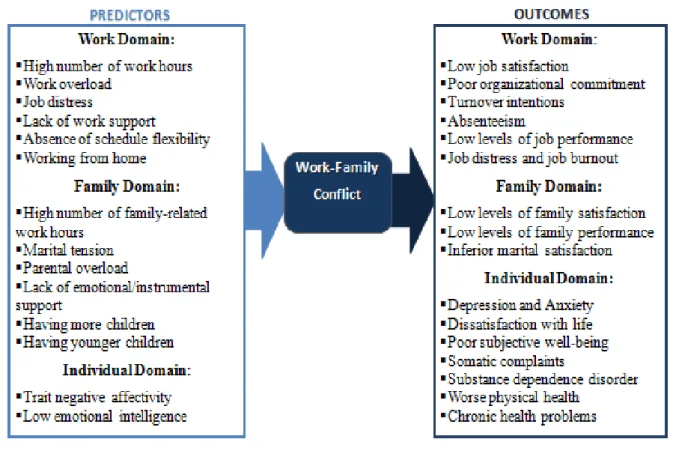
Many of the researches conducted throughout the last two decades focused on finding which variables might enhance or diminish the conflict felt between work and family domains, and also which are the consequences that conflict holds. The literature refers to these variables as predictors and outcomes, and Figure 2.1 shows the most consistent relationships found between them and work-family conflict. Although some of the links may vary according to the two different types of conflict (work-to-family and family-to-work), for a matter of parsimony the figure only demonstrates a general idea of the associations found, and a more detailed description of the different relationships is further developed.
8 Predictors of work-family conflict
The researched antecedents of work-family conflict can be grouped into three different categories: work domain variables, family domain variables and individual factors (adapted from Byron (2005) and from Bellavia & Frone (2005)). Work related variables primarily predict the work-to-family conflict as opposed to family-to-work conflict (Byron, 2005). The most consistent predictor is the amount of time spent working, with results, not surprisingly, showing that higher number of work hours lead to higher levels of work-to-family conflict (e.g. Frone, Yardley et al., 1997; Gallie & Russell, 2009; Geurts, Beckers, Taris, Kompier & Smulders, 2009; McGinnity & Calvert, 2009). Other work stressors, such as job distress, work overload, lack of work support and absence of schedule flexibility, also consistently predict higher levels of WIF (e.g. Byron, 2005; Foley, Hang-Yue & Lui, 2005; Frone, Russel & Cooper, 1992a; Frone, Yardley et al., 1997; Kinman & Jones, 2008; Warner & Hausdorf, 2009). In addition, the use of more forms of technology which allow working from home, also increase the levels of work-family conflict, since the boundaries between the two domains become more permeable (e.g. Lapierre & Allen, 2006; Russell, O’Connell & McGinnity, 2009).
9
The family related variables have a tendency to predict more family-to-work conflict than work-to-family conflict (Frone, 2003), however the meta-analyses carried out by Byron (2005) showed that these variables have similar relationships with both types of conflict. Spending more time on family-related work, such as childcare and household chores, has been associated with higher levels of family-to-work conflict (e.g. Frone, Yardley et al., 1997). Following the same pattern, family stressors like marital tension, parental workload, lack of emotional and instrumental support from family members, having more children and having younger children, are related to higher levels of family-to-work conflict (e.g. Frone, Russel & Cooper, 1992a; Frone, Yardley et al., 1997; Grzywacz & Marks, 2000; Lapierre & Allen, 2006). There seems to be some scarcity regarding the studies which examine the individual factors that can predict work-family conflict. Nonetheless, the personality characteristic of trait negative affectivity has been found to be positively related to both types of conflict (e.g. Grzywacz & Marks, 2000) and emotional intelligence has been negatively associated with levels of work-to-family and family-to-work conflict (Biggart, Corr, O’Brien & Cooper, 2009; Justino & Santos, 2010; Marques, 2008).
Outcomes of work-family conflict
There are real costs related to work and family conflict for employees and their organizations. Similar to predictors of work-family conflict, the outcomes can be also divided into three main categories: work related outcomes, family related outcomes and individual related outcomes (adapted from Allen et al., 2000 and from Bellavia & Frone, 2005). Regarding work related outcomes, both directions of conflict have a negative influence on affective reactions to one’s job (Allen et al., 2000). Some of the most consistent results demonstrate that work-family conflict is related to lower job satisfaction, poorer organizational commitment, turnover intentions, higher rates of absenteeism, lower levels of job performance and higher levels of job distress and job burnout (e.g. Anderson, Coffey & Byerly, 2002; Aryee et al., 2005; Frone et al., 1992a; Frone, Yardley et al., 1997; Netemeyer et al., 1996). Additionally, a Portuguese study demonstrated that work-to-family conflict was positively associated with organizational negative behavioural strategies (Marques, 2008).
In the family domain, some of the most consistent results show that both forms of conflict are associated with lower levels of family satisfaction, decreased performance in the family role and inferior marital satisfaction (Carlson & Kacmar, 2000; Frone, Yardley et al., 1997; Netemeyer et al., 1996). Most of the individual related outcomes involve mental and physical health of those who experience work-family conflict. Both types of conflict have been shown
10
to negatively affect mental health and well-being, specifically they are associated with depression, general psychological distress, dissatisfaction with life, poor subjective well-being, somatic complaints (e.g. poor appetite, fatigue, trouble sleeping), clinical mood and anxiety disorders, drinking problems and substance dependence disorders (Anderson et al., 2002; Frone et al., 1992a; Frone, Russell et al., 1997; Grant-Vallone & Ensher, 2001; Grzywacz, & Bass, 2003). Research also shows that higher levels of work-family conflict are related to worse physical health especially with chronic health problems such as hypertension, obesity and high cholesterol. In addition, it is also related to less physical activity and less healthful diets (Allen & Armstrong, 2006; Allen et al., 2000; Grzywacz, & Bass, 2003; Frone, Russell et al., 1997).
2.2 Work- Life Conflict
Although the work-family conflict is a widely accepted concept with a solid and well-established definition, it assumes a rather restricted view of the conflict in people lives, by limiting the non-work activities to family ones. Despite all results obtained with this concept, more recently there has been an effort to define and measure a new and broader definition of the conflict between the work domain and the life domain. This emergent concept is usually defined as work-life conflict, assuming that employees who are not parents and/or are not married, may feel the conflict between their work demands and their personal life demands (Kalliath & Brough, 2008). From this point of view, the work-life conflict concept allows the study of all employees who desire to balance their work with the non-work aspects of their lives, such as their family, friends, hobbies, sports, community service, leisure time, etc. Since this concept is more ample, it makes possible to study all of those who have been put aside of research, simply because they were unmarried or childless.
From our point of view, it is necessary to include the study of employees who are not married or do not have children, and also include other aspects of personal life that are not limited to the family roles, since people’s lives, interests and choices are not restricted to these two domains (work and family). Departing from the role theory and from the ecological systems theory, people spend much of their lives being part of different groups and organizations (different microsystems), hence assuming a wide variety of different roles, which are not narrowed to work and family ones, there is much “live” beyond those two microsystems. Therefore it is essential to consider that the demands driven by the work role
11
may interfere with a broader variety of other roles demands of employees’ lives (other than family roles).
The emphasis on family is justified in that family life is generally the most important aspect of a person’s life, and thatfamily roles may be more time-consuming, more demanding and more salient in peoples’ lives and for that reason it is only worth to study the interference that work may exert on family. Despite this argument seems logical and most research focuses on family life, recent evidence suggests that even employees without families experience conflict between their roles demands and should be included in research, see for example Galinsky, Bond and Friedman (1996), Grant-Vallone and Ensher (2001), Hsieh, Pearson and Kline (2009), Siegel, Post, Brockner, Fishman and Garden (2005).
In order to define the work-life conflict concept for this study we opted to adapt the definition offered by Greenhaus and Beutell (1985) related to work-family conflict. Therefore, work-life conflict in this study is presented as a form of interrole conflict in which the fulfilment of role demands emanating from work domain interferes or is incompatible with fulfilling role demands from personal life domain, and vice-versa. Additionally, this definition is in line with definitions adopted by different authors in their researches, for example, Hsieh, Pearson and Kline (2009), Kinam and Jones (2007), Siegel et al. (2005).
Since we consider the broader concept of work-life conflict, which includes other aspects of personal life not restricted to family issues, the number of microsystems in which individuals are engaged may be higher, hence increasing the number of roles to perform and the level of conflict felt. In fact, if we do not restrict the analysis only to the work and family microsystems and admit that people assume more roles according to their personal interests, such as hobbies, sports, volunteering, religion, politics, etc., it is possible that individuals may feel more antagonistic pressures to fulfil the demands from the all different roles.
Similar to work-family conflict, we assume that conflict between work and other life domains may assume different forms, nonetheless conflict derived from time devoted to the work role (time-based conflict) and conflict derived from the strains produced by this role (strain-based conflict) can be considered the most salient ones, and so they will be consider in this study.
2.3 Work-Life Conflict Predictors and Outcomes
Since the concept of work-life conflict is similar to the work-family conflict definition, it seems likely that some of the most consistent antecedents and outcomes of work-family conflict might also occur with the work-life conflict concept. Thus, the first goal of the
12
present study is to establish the importance of studying this broader concept of conflict by demonstrating that it can be associated with similar predictors and outcomes.
As previously stated a great amount of research on work and family domains has been focused on potential organizational and individual/familiar predictors of conflict, with the purpose of identifying variables that can lead to conflict and therefore reduce conflict by acting on those variables. Given that we use a broader definition of conflict that does not restrict the non-work activities to family ones, it would be a lack of coherence trying to explore the family related variables usually associated with work-family conflict. In addition, individual factors that can predict work-family conflict have received little attention and results are not well consolidated. For these reasons, this study aims to examine the potential influence that some organizational variables, usually linked to work-family conflict concept, can have on work-life conflict, namely, long working hours and perceived organizational support. Additionally, we explore predictive power of two original variables: perceived pressure to overtime and being engaged in extra-work activities.
Besides the identification of possible predictors of work and family conflict research on this domain has been also precipitated by the negative consequences of conflict on individual an organizational outcomes. For this reason, this study also aims to examine the influence that work-life conflict may exert on two well-established outcomes that have serious costs at the organizational and individual level: affective organizational commitment (organizational outcome) and psychological health (individual outcome). At last, another goal of this study is to investigate the possible influence that employees’ life priorities might exert between the experience of conflict and subsequent negative outcomes.
2.3.1 Long Work Hours and Pressure to Overtime
As stated previously, work-life conflict may arise when work demands absorb time that makes it difficult to balance the personal life. From this perspective, time is a limited resource and the work conditions may place competing demands on an individual's time, raising time-based work-life conflict. Therefore, and although the work-life conflict has many potential determinants, the amount of time occupied by the job is one of the most obvious ways for occupational life to affect personal life. From the role theory perspective it seems rather logical to expect that a person who spend more time in a role (job) that overloads him/her with responsibilities (work overload), will have less available time to spend in other personal life roles. This work overload occurrence also raises an important concern about how long working hours affect employees’ well-being, namely their psychological and physical health.
13
Long working hours or overtime are rather common in Europe. Results from the fourth European working conditions survey revealed that, in 2005, about 20% of European employees report long working hours - more than 45 hours per week (Parent-Thirion et al., 2007). In Portugal, long working hours are reported by 15% of workers, who have 45 to 60 hours of work per week. Results from the same survey also indicate that those who work more than 48 hours a week are more likely to consider their health and safety at risk because of their work and that their long working hours affects their health. Moreover, almost three times as many workers working long hours compared to other workers, state that their working hours negatively affect their social and family commitments (Parent-Thirion et al., 2007).
Literature results indicate that long working hours have been associated with: i) health problems such as cardiovascular disease, diabetes, disability retirement, fatigue, physiological changes regarding cardiovascular and immunologic parameters, reduced sleep hours; ii) poor lifestyle habits, for example heavy smoking, lack of exercise, inadequate diet; iii) psychological symptoms of distress, depression and burnout (for meta-analytical reviews see: Caruso, Hitchcock, Dick, Russo & Schmit, 2004; Sparks, Cooper, Fried & Shirom, 1997; Van der Hulst, 2003). These negative health outcomes are usually explained through the effort-recovery model (Meijman & Mulder, 1998), which postulates that the possible negative consequences of long working hours for health and well-being depend on the possibilities for recovery in the course of the working day (internal recovery) and after work (external recovery), thus working overtime implies that the duration of effort investment is prolonged, while the time left for external recovery is shortened.
In the work-family research, overtime demands have been recurrently studied as antecedents of the work interference with family. For example, Geurts and Demerouti (2003) provided empirical support that long working hours (long regular work hours and overtime hours) are associated with higher levels of work interference with family. In the same line of results, the meta-analytic review conducted by Byron (2005) also revealed that employees who spend more time at work experience more work-to-familyconflict. Evidence drawn from European Social Survey studies shows that professional workers are those who work longer hours and experience more work pressure and work-family conflict (MacGinnity & Calvert, 2009) and that work long hours is the working condition that has the most negative impact in balancing work and family demands (Gallie & Russell, 2009).
Although cited studies offer results regarding the work-family conflict concept, given its similarity with the work-life conflict definition presented in this study, similar results are
14
expected. Thus, we hypothesized that a higher number of weekly working hours will increase the conflict between work and other life domains, and more specifically we expect that the influence of long working hours will be higher for time-based work-life conflict than for strain-based work-life conflict:
H1: The number of hours worked per week will be more positively associated with
time-based work-life conflict, than with work-life strain time-based conflict.
The impact that work hours have on employees’ well being is likely to be influenced by their reasons for working the hours that they do. Long working hours can be due to long contractual hours or overtime hours. Contractual hours refers to the number of hours worked according to one’s contract, which means that it refers to the time that employees have reserved to work responsibilities (Geurts, Beckers, Taris, Kompier, & Smulders, 2009). On the other hand, overtime hours are those hours worked on the time that was initially reserved for personal life domains and thus for non-work obligations (Geurts et al, 2009). In Portugal, contractual hours are fixed on 40 hours per week by the Portuguese Labour Code (Bettencourt, 2007), and following the European Worktime Directive, that all EU countries must follow, the average working week (including overtime) should not exceed 48 hours per week (European Commission, 2003).
Although Geurts and colleagues (2009) study demonstrated that high number of contractual hours had the same consequences as overtime hours, for the purpose of this study we will only focus on overtime, since we are interesting in the potential damage that working more hours than what was contractually predetermined might have on employees’ well-being. Depicting from different studies, overtime work can assume different forms. As a direct consequence of the worktime control (employee possibility to control the duration, position and distribution of worktime), Beckers and colleagues (2008) distinguish between two opposite poles of control over overtime work: voluntary and involuntary overtime work. They also differentiate between overtime work that is rewarded (receiving compensations for extra work hours) or not rewarded. The results obtained with their study provided evidence that involuntary overtime work was related to high levels of fatigue and low satisfaction, especially for those employees’ who work involuntary overtime without rewards, a group considered by the authors as being in burnout risk. This interaction between autonomy and compensation was also found in other studies: working overtime in combination with a high pressure to work overtime in low rewarded jobs was associated with adverse psychological
15
symptoms (e.g. burnout, poor recovery) and to work-family conflict (Van der Hulst & Geurts, 2001); fatigued overtime employees reported more adverse work characteristics (high demands in combination with low autonomy and low job variety) than non-fatigued overtime workers (Beckers et al., 2004); overtime hours were related to higher fatigue for employees who experienced high job demands in combination with low autonomy (Van der Hulst, Van Veldhoven & Beckers, 2006); and the positive association between overtime hours and physical health symptoms was higher for employees’ who lacked both schedule autonomy and social support (Tucker & Rutherford, 2005).
It seems rather clear that the lack of control over overtime hours and also the pressures to work extra hours have a negative impact on employees’ well-being and work-family balance, especially when those hours are not rewarded. Nonetheless, studies have only addressed the pressures to work overtime as direct pressures from supervisors in order to complete work tasks (Van der Hulst & Geurts, 2001), and none (as far as we know) has considered a more subtle way of pressure to work extra hours, such as an organizational culture that implicitly assumes that is derisible to overtime in order to succeed (Wharton & Blair-Loy, 2002).
Organizational culture can be defined as a common frame of reference that is shared by employees, and it is composed by values, beliefs and assumptions that are socially developed, learned and transmitted. These core values shape employees’ behaviours, decision making and performance by offering a set of rules and guidelines in terms of perceiving, thinking and feeling the organization (e.g. Quinn & Cameron, 1998; Schein, 1985; Neves, 2001). Given this definition it seems logical to suppose that an overtime organizational culture may exert an implicit pressure to work extra hours, which means that employees may not be formally obliged or asked to work overtime but the consequences of not doing so will be highly undesirable (e.g. poor co-worker relations; sanctions from supervisor; being seen as not committed to the organization; gossiping, etc.). From our perspective this cultural dimension of overtime implies an involuntary overtime work, since employees do not work extra hours because they want to, instead they work extra hours because they feel they are supposed to do so according to their organizational culture.
In addition to actual number of hours worked, we think that the mere perception that it is supposed to work extra hours will lead to the experience of conflict between work and personal life. In fact, employees who feel pressure to overtime against their will (involuntary overtime) may experience a mismatch between actual and desired work hours, and the imposed additional work hours can be considered to induce extra costs (e.g. less leisure and recovery time). Moreover, the sense of lack of personal control over overtime work may
16
cause stress that makes it difficult to fulfil the demands of personal life roles (strain-based conflict). For the purpose of this study we will refer to this cultural dimension of overtime as perceived pressure to overtime: employees’ perception that there is an underlying culture of overtime in their organization, which they ought to follow in order to succeed.
Considering this definition it is expected that the more an employee feels that he/she is pressured to work overtime hours, the more he/she will experiences conflict between his/her work and personal life domains:
H2: The perceived pressure to overtime will be positively associated with time-based and
strain-based work-life conflict.
2.3.2 Perceived Organizational Support for work-life issues
Perceived Organizational Support (POS) has been commonly defined as “employee beliefs concerning the extent to which the organization values their contributions and cares about their well-being” (Eisenberger, Huntington, Hutchison & Sowa, 1986, p. 501), and translates a common concern of employees regarding the organization’s commitment to them. The underlying logic behind POS can be driven from social exchange theory (Homans, 1958; Blau, 1964) that predicts that when one person treats another well, the reciprocity norm obliges the return of favourable treatment. In an organizational context, when both the employee and the employer apply the reciprocity norm into their relationship, favourable treatment received is reciprocated, leading to beneficial outcomes for both. In simple terms, if employees believe that organization values their contributions and cares about their well-being, then they will feel an obligation to reciprocate with commitment to the organization (Eisenberger et al, 1986; Rhoades & Eisenberger, 2002). Apart from the reciprocity norm, the organizational support theory presented by Eisenberger et al. (1986) also expects POS to fulfil socio-emotional needs, leading workers to incorporate organizational membership and role status into their social identity, and to strengthen employees’ beliefs that the organization recognizes and rewards increased performance.
A meta-analysis concerning POS consequences conducted by Rhoades and Eisenberger (2002) revealed that it predicted affective commitment, job satisfaction, desire to remain in the organization, job involvement, turnover intentions, absenteeism and positive mood at work. Regarding work and family studies it has been established that organizations and supervisors who are generally supportive can reduce work-family conflict (e.g. Byron, 2005; Frone, 2002; Frone, Yardley et al., 1997; O’Driscoll et al., 2003) and this effect seems to be
17
consistent across different contexts. Grant-Vallone and Ensher (2001) showed, with an expatriate’s sample, that POS was negatively related to employee’s work-to-family conflict. With a sample of hospitality employees, supervisor support was also found to diminish work-family conflict (Karatepe & Uludag, 2008), and Foley, Hang-Yue and Lui (2005) demonstrated that POS was negatively related to work-family conflict, and can act as a moderator between role overload and work-family conflict, in a Chinese sample.
In addition, some studies have extended this relationship to specific support for work-family/life issues, following Thompson, Beauvais, and Lyness (1999) definition of organizational support for work-life issues: “the shared assumptions, beliefs, and values regarding the extent to which an organization supports and values the integration of employees’ work and family lives” (p. 392). Allen (2001) found that employees who perceived their organization as more family supportive made more use of the work-family available benefits, moreover, they experience less work-family conflict and less turnover intentions, felt more job satisfaction and organizational commitment, than those employees who perceived the organization as less supportive. Following the same pattern of results, Warner and Hausdorf (2009) showed that POS for work-life issues was negatively related to work-family conflict, and that work overload and job control partially mediated the relationship between POS for work-life issues and work-family conflict.
For the purpose of this study we opt to use the concept of Perceived Organizational Support for work-life issues. Since our definition of work-life conflict is similar to the concept of work-family conflict we expect to have the same result’s pattern. Employees’ who perceived high levels of POS for work-life issues are likely to report lower levels of work-life conflict, since their supportive organization may offer flexible work arrangements or policies that help balance work and personal life (reducing time-based conflict), or may be comprehensive regarding the difficulty of managing all life demands and thus reducing stress associated with the work role (decreasing strain-based conflict). On the other hand, if employees’ feel that organization is not accomplishing the reciprocity agreement by not caring about their work and life balance, employees’ may experience increasing conflict and ultimately fail to meet the reciprocity norm. For these reasons we expected that POS for work-life issues will decrease the experience of work-life conflict:
H3: POS for work-life issues will be negatively related to time-based and strain-based
18
2.3.3 Extra-Work Activities
From a daily observation, employees seem to able to conciliate their professional life with other demands in their lives, including activities such as sports, hobbies, volunteering, religion and so on. It is clear that although employees may find difficulties in managing all these activities, they somehow are able to harmonize time pressures. Another aspect that stands out is that employees who are able to maintain activities outside their jobs seem to suffer from less psychological strains and also seem to be less fed up with their jobs. Since in this study we face employees as complex individuals whose outside work life is not limited to family roles, it seemed relevant to better understand the influence that being engaged in other activities could have upon conflict between work and life domains.
From a role theory perspective, being engaged in several roles will lead to higher levels of conflict since the fulfilment of all demands is likely to become to some extent incompatible. From this point of view, trying to conciliate the work role with several life-domain roles, for instance family, friend, hobbies, community activities, etc., will certainly contribute to experience strains since employees will feel more opposed pressures to accomplish the demands from all different roles.
However, the relationship between the performance of multiple roles and the experience of conflict does not seem to be as linear as the theory suggests. In fact there are evidences that performing multiple roles may actually contribute to ameliorate employees’ lives. Literature regarding work-family enrichment has demonstrated the positive outcomes that playing different roles, work and family ones, may have on employees (e.g. Carlson, Kacmar, Wayne & Grzywacz, 2006; Greenhaus & Powell, 2006). Additionally, even in conflict literature there is evidence that family role may contribute to the prevention of work-family conflict through emotional and instrumental social support (Adams, King & King, 1996; Lapierre & Allen, 2006).
From a social support framework, the social environment is not only a major source of stress given that it also provides vital resources for individuals to adapt and cope with potential stressful events. Social support can be seen as a set of personal transactions that involve i) emotional support, which consists of encouragement, understanding, trust and empathy that contributes to the feeling of being loved and cared about; ii) instrumental support, including tangible assistance aimed at solving problem such as doing a job or a chore, loans, gifts and services; and iii) informational support, providing information, advice or feedback about how a person is doing (e.g. Schaefer, Coyne & Lazarus, 1982; Lazarus & Folkman, 1984). Additionally, research investigating the effects of social support
19
demonstrated that it is indeed related to increased health and well-being (e.g. Beehr & McGrath, 1992).
From this social support perspective it is possible to consider that being engage in extra-work activities may act as an emotional sustenance. For example, members of sports club, volunteering groups, etc, may take time to listen to employee’s concerns and encourage him/her and help him/her to feel better. Consequently this emotional support, available because employee is engaged in social groups besides work, will not cause strain; on the contrary it will have an overall “calming” effect on work-life conflict. For this reason is legitimate to believe that being engage in different activities that are in line with employee’s personal preferences and interests may offer emotional support, which in turn instead of enhancing the conflict between the multiple roles, may act as a protective factor that help prevent strain-based conflict.
Since there are two competing frameworks that predict different outcomes for the extra-work activities effects on extra-work-life conflict, we will not presuppose any specific hypotheses. Instead we assume a more explorative analysis of the effects of this specific variable on work-life conflict.
2.3.4 Life Priorities
According to identity theory, the self consists of a collection of identities each of which is linked to role-related behaviours (Stets & Burke, 2000). Identities usually try to respond the question “who am I” and most answers are strictly related to roles that individuals engage, for instance, mother/father, friend, employee, manager, etc., (Stryker & Burke, 2000). Since these identities are directly linked to roles, they give individuals a set of associated meanings and expectations and also provide them behavioural guidance, ideas that are in line with the role theory assumptions already described. The most notable feature of this theory is the concept of identity salience. It is assumed that the salience that an individual attach to his/her identity influences how much effort he/she puts into each role, and also influences how well he/she performs in each role (Stets & Burke, 2000). This assumption is based on the idea that the multiple identities within the self exist in a hierarchy of salience, thus identities ranked higher are most likely to be invoked in different situations (Stryker & Burke, 2000). Obviously, there are individual differences in the salience of a particular role/identity as a determinant of self-concept, and this importance assigned to a particular role will be referred in the present study as life priorities.
20
In simples terms, life priorities can be defined as the extend an individual is more involved with his/her career, or is more involved with his/her family or personal life. For instance, an employee whose life priority is his/her career views it as central to his/her self-concept or sense of identity (Frone & Rice, 1987). The priority given to one role may increase the likelihood of interrole conflict, such as work-family conflict. In fact, high involvement in one role (e.g. work role) may increase the amount of time and mental concern devoted to that role, making it more difficult to fulfil the demands and expectations of another role (e.g. a personal life role) (Greenhaus & Beutell, 1985).
Different studies demonstrated that job involvement was positively related to work-to-family conflict, while work-to-family involvement was positively associated with work-to-family-to-work conflict (Adams, et al., 1996; Frone & Rice, 1985; Frone et al., 1992a). In addition, Tavares, Caetano e Silva (2007) found that the higher the level of employee’s organizational identification (that can be seen a form of job involvement) the more the job is perceived as interfering with the family, due to employees’ increased job dedication behaviours such as higher number of extra working hours. Given the similarity between work-family conflict concept and the definition of work-life conflict and since we will only address the conflict direction of work interference with personal live, it is expectable that higher levels of job involvement will lead to greater work-life conflict.
H4: Job involvement will be positively associated with time-based and strain-based
work-life conflict.
Besides this notion of being an antecedent of conflict, life priorities have been studied as a potential moderator of the relationship between work-family conflict and organizational outcomes (e.g. Carlson & Kacmar, 2000). The underlying logic is that conflict outcomes may not only depend on the level of conflict experienced, instead their expression varies according to the employee life priority. For instance, career-involved employees may tolerate extensive interference of work with their personal live in order to achieve carer success. Therefore the possible consequences of the conflict experienced will not be as significant as for those who career is not their priority in life.
This logic seems to have received some empirical evidence. Greenhaus, Parasuraman and Collins (2001) found that the relationship between work-to-family conflict with withdrawal intentions and behaviours was stronger for those employees who were weakly involved in their careers than for those who were highly involved in their careers. Similar results were
21
obtained by Hsieh, Pearson and Kline (2009): work-to-life conflict had more impact in intention to quit among employees who were highly involved with their personal life. Following this reasoning, we expect that employee’s life priorities will moderate the relationship between work-life conflict and its consequences. More precisely, we expected that the influence of work-life conflict on affective organizational commitment, and possibly on psychological symptoms, will be weaker when there is high job involvement, and by the contrary to become stronger when personal life is more valued.
H5: Employee’s life priorities will moderate the relationship between work-life conflict
and affective organizational commitment and psychological symptoms.
2.3.5 Affective Organizational Commitment
Organizational commitment can be described “as the psychological state that (a) characterizes the employee’s relationship with the organization and (b) has implications for the decision to continue or discontinue membership in the organization” (Meyer & Allen, 1991, p.67). This definition implies that committed employees are more likely to remain in the organization than uncommitted employees. The most well established, studied and accepted model of organizational commitment is the three-component model proposed by Meyer and Allen (1991) which identifies commitment as i) an affective attachment to the organization (affective commitment), ii) a perceived cost associated with leaving the organization (continuance commitment) and iii) an obligation to remain in the organization (normative commitment). The nature of the psychological state for each form of commitment is quite different, and is described by the authors in very simple and illustrative way: employees with a strong affective commitment remain with the organization because they want to, those with a strong continuance commitment remain because they need to, and those with a strong normative commitment stay because they feel they ought to.
Organizational commitment has been associated with several organizational outcomes. Evidence reveals that all three forms of commitment are related to withdrawal cognition, turnover and absenteeism. However, affective commitment has the strongest correlations with the outcomes stated, and also with job performance, organizational citizenship behaviour, and with employee-relevant outcomes, such as stress and work–family conflict. Moreover, correlations between affective commitment and overall job satisfaction and job involvement were quite strong (Meyer, Allen & Smith, 1993; Meyer, Stanley, Herscovitch & Topolnytsky, 2002). Given these results one can conclude that affective commitment has stronger linkages
22
to organizational-related outcomes than continuance or normative commitment, at least in more individualist cultures, such as European and U.S.A. cultures (Meyer & Allen, 1997). Following this conclusion the present study will only focus on the affective component of organizational commitment.
Different antecedents have been identified for affective commitment, including personal characteristics, organizational related characteristics, and work experiences (Meyer & Allen, 1991). Work-family conflict can fall into the work experiences category and its relationship to affective commitment has received empirical support: as work-family conflict increases, affective commitment decreases (e.g. Allen et al, 2000; Ayree et al., 2005; Siegel et al, 2005). A possible explanation of the negative effects that conflict has on affective commitment can be drawn from exchange theory (Homans, 1958). Based on the principle of reciprocity, the theory conceives that individuals will give back what they perceived to have or have not received from the other party in the relationship. Therefore, the greater the work-family conflict the more employees may conclude that the organization is not treating them well or that the organization does not support or care about employees. As a consequence, employees may reciprocate became less committed to their organization and ultimately manifest their commitment reduction through absenteeism, turnover, reduced effort and performance, etc.
This reciprocity logic is also suitable for the concept of work-life conflict. Again, if employees experience conflict between their work and other domains of their lives, they may assign it to a lack of organizational care, and consequently became less emotional attached and involved with the organization:
H6: Time-based and strain-based work-life conflict will be negatively associated with
affective organizational commitment.
2.3.6 Psychological Health
Experiencing conflict between work and family domains has real costs for employees and their organizations. In fact, mental and physical health symptoms are common outcomes related to work-family conflict, as mention previously.
Different studies have demonstrated that increased levels of conflict are associated with poor general psychological health, as well as poor physical health (Allen et al., 2000). In a 4-year longitudinal study, Frone, Russel et al. (1997) provided initial evidence that work-family conflict may be a causal antecedent of poor employee health. In fact, they found that work-family conflict predicted higher levels of psychological distress (e.g depression), poor