Carina Adelaide da Costa e Silva
Evaluation of sustainable technologies
for the production of
recycled asphalt mixtures
Car
ina Adelaide da Cos
ta e Silv a Ev aluation of sus tainable tec hnologies f or t he production of r ecy
cled asphalt mixtur
Tese de Mestrado
Ciclo de Estudos Integrados Conducentes ao
Grau de Mestre em Engenharia Civil
Trabalho efetuado sob a orientação do
Professor Doutor Joel Ricardo Martins de Oliveira
Professor Doutor Hugo Manuel Ribeiro Dias da Silva
Carina Adelaide da Costa e Silva
Evaluation of sustainable technologies
for the production of
ACKNOWLEDGEMENTS
The completion of this dissertation was only possible due to a set of conditions and resources provided by the Transport Infrastructures laboratory of the Department of Civil Engineering of the University of Minho, and to the dedication, commitment and willingness of various persons, whom I wish to express here, my sincere thanks.
To my supervisor Prof. Dr. Joel Oliveira, for his guidance and dedication to this project, for the availability over several months and the training and teaching he provided.
To my co-supervisor Prof. Dr. Hugo Silva, for the availability and encouragement in all work necessary for the completion of this thesis.
To the lab technicians of the Transport Infrastructures laboratory, Eng. Carlos Palha and Hélder Torres, for the teaching and technical support in all laboratory work needed for this project.
To the companies that provided the material supply for this project, namely the RAP, the new aggregates, the new bitumens and the additives: MonteAdriano Engenharia e Contrução SA,
Pedreira Bezerras, Cepsa, Galp and Korea Institute of Construction Technology.
Here I express in a special way my deep gratitude to my family,
To my parents, António and Alexandrina for their love, the education they’ve given me and supporting all the dreams and plans that have emerged throughout my life.
To my grandparents, my second parents, Adelino and Adelaide, the love, affection and willingness to receive me as a daughter.
To my sister Ana and my cousin Anita for their support and encouragement and especially for always believing that I would be capable.
To my university partner Carla Mendes, for the companionship, the encouragement and motivation throughout this course.
Lastly, I would like to thank to all my friends and all those who in one way or another contributed to this project. And that during these academic years, despite many difficulties, have put a smile on my face.
Evaluation of sustainable technologies for the production of recycled
asphalt mixtures
ABSTRACT
The concept of "Sustainable Development" has been on the agenda, acquiring an increasing importance on a global scale. This fact results from an environmental awareness among citizens in general, and particularly of entities able to enhance and contribute on a larger scale for their development.
The need for a more effective response to the topic of sustainability, namely in the Civil Engineering area, has stimulated the development of new constructive techniques that take into account the specifications necessary for construction and simultaneously obtaining acceptable values of sustainability. Thus, recycling of materials is currently gaining popularity, as one of the possible solutions for the rehabilitation of all types of constructions. In particular, the techniques used for the rehabilitation of road pavements have increasingly been the target of innovative recycling processes. One of the latest goals is to develop recycling procedures that incorporate higher rates of RAP material, maintaining the quality and the performance of the mixtures, when compared with conventional new asphalt mixtures.
In the present work, a recycling rate of 50% was used in order to increase the sustainability of the resulting asphalt mixture. This led to the need of a rejuvenating agent that would recover part of the original properties of the aged binder. The selected additive also had the capability of reducing the production temperature of the mixture, improving the energy efficiency of the process.
Based on the results obtained in the present work, it was possible to confirm that recycled mixtures with 50% RAP incorporation can be produced with a performance similar to that of a conventional new mixture.
Avaliação de tecnologias sustentáveis para produção de misturas
betuminosas recicladas
RESUMO
A temática da sustentabilidade tem estado na ordem do dia, adquirindo cada vez uma maior importância à escala global. Este facto resulta de uma consciencialização ambiental por parte dos cidadãos em geral, e particularmente das entidades capazes de valorizar e contribuir em maior escala para o seu desenvolvimento.
A necessidade de dar uma resposta mais eficaz ao tema da sustentabilidade, nomeadamente na área da Engenharia Civil, tem vindo a estimular o desenvolvimento de novas técnicas construtivas que têm em conta as especificações necessárias à construção e simultaneamente a obtenção de valores de sustentabilidade aceitáveis. Assim, a reciclagem de materiais tem vindo a ganhar popularidade, assumindo-se como uma das soluções possíveis para a reabilitação de todos os tipos de construções.
No que se refere à reabilitação de pavimentos rodoviários, em particular, estes tem sido cada vez mais alvo de processos de reciclagens inovadores. Um dos objetivos é o desenvolvimento de processos de reciclagem que incorporem taxas de reciclagem elevadas, mantendo a qualidade e o desempenho das misturas, por comparação com misturas betuminosas novas. No presente trabalho foi utilizada uma taxa de reciclagem de 50% de modo a aumentar a sustentabilidade da mistura betuminosa resultante, o que resultou na necessidade da utilização de um agente rejuvenescedor para recuperar parte das propriedades originais do betume envelhecido. O aditivo selecionado tem também a capacidade de reduzir a temperatura de produção da mistura, permitindo uma melhoria da eficiência energética do processo.
Com base nos resultados obtidos no presente trabalho conseguiu confirmar-se que é possível produzir misturas com 50% de material fresado, cujo desempenho se assemelha ao de uma mistura betuminosa nova convencional.
Palavras-chave: Misturas betuminosas recicladas; Rejuvenescedor; Aditivo redutor de
TABLE OF CONTENTS
1. INTRODUCTION ... 1
1.1. Background ... 1
1.2. The purpose of the dissertation ... 3
1.3. Organization of the dissertation ... 3
2. LITERATURE REVIEW ... 5
2.1. Structure of road pavements ... 5
2.2. Production of bituminous mixtures ... 7
2.3. Mix design process of recycled asphalt mixtures ... 7
2.4. Techniques for recycling of asphalt mixtures ... 10
2.4.1. Cold in-situ recycling ... 12
2.4.2. Cold recycling with bitumen emulsion ... 15
2.4.3. Warm recycled bituminous mixtures ... 16
2.4.4. Hot in-place recycling ... 17
2.4.5. Hot in-plant recycling ... 18
2.5. Behaviour of recycled asphalt mixtures ... 20
2.6. Materials used to improve the performance of recycled asphalt mixtures ... 21
2.6.1. Anti-stripping and temperature reduction additives ... 21
2.6.2. Crumb rubber recycled from used tires ... 22
2.6.3. Rejuvenating agents ... 23
2.6.4. Foamed bitumen ... 24
3. MATERIALS AND METHODS ... 27
3.1. Materials ... 27
3.1.1. Characterization of new aggregates ... 28
3.1.2. Characterization of the new binders ... 29
3.1.3. Characterization of reclaimed asphalt pavement ... 32
3.1.4. Characterization of the additives ... 34
3.2. Methods ... 36
3.2.1. Production of the bituminous mixture ... 36
3.2.2. Optimum additive content ... 37
3.2.3. Marshall mix design method ... 38
3.2.5. Optimum bitumen content ... 42
3.2.6. Affinity between aggregates and bitumen ... 42
3.2.7. Compactability ... 44
3.2.8. Indirect Tensile Strength Test ... 45
3.2.9. Water Sensitivity Test ... 46
3.2.10. Wheel Tracking Test ... 48
3.2.11. Stiffness Modulus Test ... 49
3.2.12. Fatigue Resistance Test ... 50
4. RESULTS AND DISCUSSION ... 53
4.1. Determination of the optimum additive content ... 53
4.2. Marshall Mix Design Study ... 55
4.2.1. Study of the aggregates particle size distribution ... 55
4.2.2. Temperatures of the bituminous mixtures ... 57
4.2.3. Marshall Test – Optimum bitumen content ... 57
4.3. Affinity between aggregates and bitumen ... 61
4.4. Compactability ... 62
4.5. Indirect Tensile Strength Test ... 64
4.6. Water Sensitivity Test ... 65
4.7. Wheel Tracking Test ... 66
4.8. Stiffness Modulus Test ... 68
4.9. Fatigue Resistance Test ... 70
5. CONCLUSIONS AND RECOMMENDATIONS ... 73
5.1. Conclusions ... 73
5.2. Recommendations for future work ... 75
LIST OF TABLES
Table 1 – Type of pavements depending on the materials and the deformability ... 6
Table 2 – Gradation of aggregates for use in conventional bituminous mixtures ... 28
Table 3 – Types of paving bitumen, properties and compliance requirements ... 29
Table 4 – Test results of characterization of bitumen ... 30
Table 5 – Characterization of penetration and softening temperature of recovered bitumen ... 34
Table 6 – Test results of the rejuvenation study ... 53
Table 7 – Percentage of each aggregate fraction and filler used in the production of the conventional bituminous mixture ... 55
Table 8 – Percentage of aggregates, filler and RAP for the recycled asphalt mixtures... 56
Table 9 – Temperature of different production stages of the studied bituminous mixtures .. 57
Table 10 – Bulk density for each sample of conventional bituminous mixture ... 58
Table 11 – Summary of non-destructive testing results of initial characterization of Marshall specimens ... 58
Table 12 – Summary of Marshall Stability test results ... 59
Table 13 – Results of the Marshal Test for optimum binder content for the recycled bituminous mixture from Palha et al. (2013) ... 61
Table 14 – Air voids content of the mixtures after compactability tests ... 63
Table 15 – Results of indirect tensile strength test ... 65
Table 16 – Results of the water sensitivity test according to the EN 12697-12 ... 65
Table 17 – Results of the test moisture susceptibility according to the AASHTO T 283-89 .. 66
Table 18 – Average results of the wheel tracking test ... 67
Table 19 – Average Stiffness Modulus of the studied mixtures (MPa)... 68
Table 20 – Average phase angle values of the studied mixtures (º) ... 68
Table 21 – Results of the fatigue test (according to standard AASTHO TP8-34) ... 70
LIST OF FIGURES
Figure 1 – First part of the mix design process of recycled asphalt mixtures ... 9
Figure 2 – Second part of the mix design process of recycled asphalt mixtures ... 10
Figure 3 – Control of in-situ pavement recycling with foamed bitumen (adapted from Wirtgen (2013)) ... 14
Figure 4 – Control of in-situ pavement recycling with bitumen emulsion (adapted from Wirtgen (2013)) ... 16
Figure 5 – Example of a hot in-situ recycling operation (adapted from adapted from Wirtgen (2013)) ... 18
Figure 6 – Classification system for incorporation of recycled material in continuous plant (adapted from Fonseca (2005)) ... 19
Figure 7 – Production of foamed bitumen on the expansion chamber (adapted from Wirtgen (2013)) ... 25
Figure 8 – Optimizing foam properties (Muthen, 1999) ... 26
Figure 9 – Aggregates used for the conventional bituminous mixture... 28
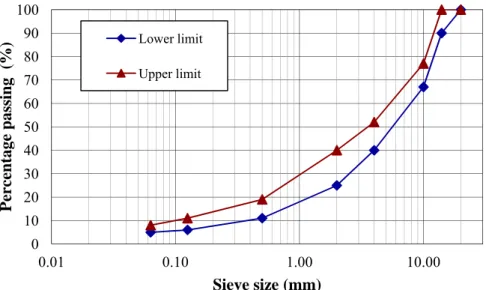
Figure 10 – Limits of the aggregates grading envelope for a conventional AC14 Surf mixture ... 29
Figure 11 – Rotational (“Brookfield”) viscometer ... 30
Figure 12 – Dynamic viscosity (Pa.s) of 50/70 and 70/100 bitumens ... 31
Figure 13 – Dynamic shear rheometer ... 32
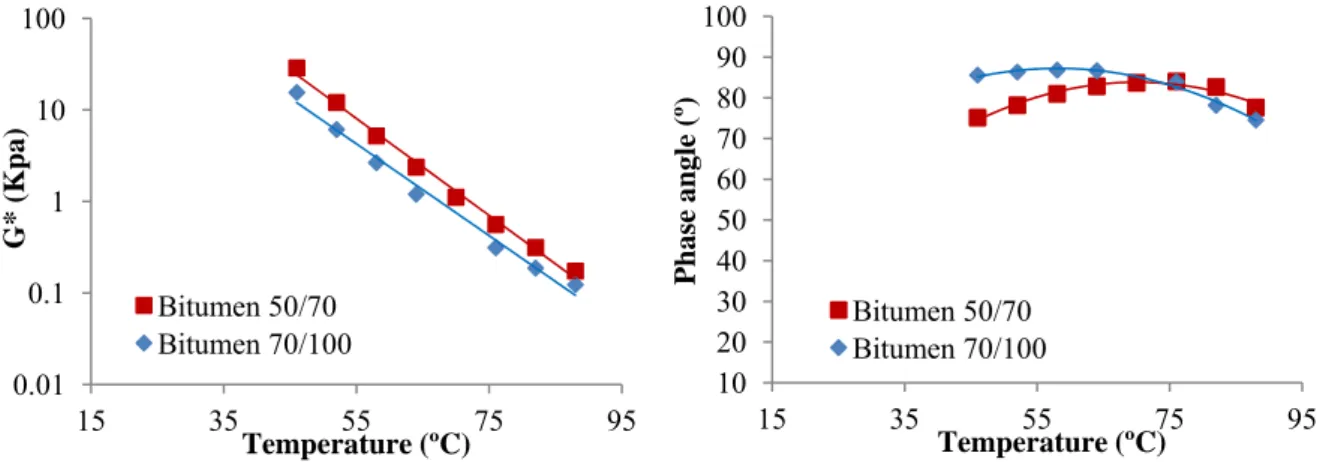
Figure 14 – The rheological analysis of 50/70 and 70/100 bitumen ... 32
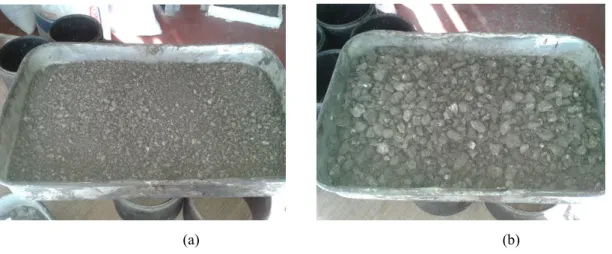
Figure 15 – Visual aspect of RAP material: (a) – RAP 0/6; (b) –RAP 6/12 ... 33
Figure 16 – Particle size distribution of fine and coarse RAP fractions... 33
Figure 17 – Dynamic viscosity of the recovered bitumen ... 34
Figure 18 – Complex modulus and phase angle of the recovered bitumen ... 34
Figure 19 – Samples of A and B additives, respectively ... 35
Figure 20 – Dynamic viscosity of additive A ... 35
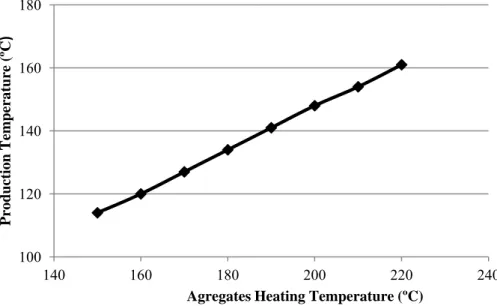
Figure 21 – Relationship between the mixture production temperature and the aggregates heating temperature ... 37
Figure 22 – Envelope of the aggregates particle size distribution used in studied surface course mixtures ... 38
Figure 23 – Five groups of specimens used in the Marshall test to determine the optimum binder content ... 39
Figure 24 – Processes of measuring and weighing the specimens ... 40
Figure 25 – Pycnometer used in the determination of the maximum theoretical density ... 41
Figure 26 – Preparation of the aggregates covered with bitumen for the affinity test ... 43
Figure 27 – Flasks with samples for the affinity test ... 43
Figure 28 – Flasks in rotation for 6 hours ... 44
Figure 29 – Marshall Compactor with LVDT device... 45
Figure 30 – Equipment used for the indirect tensile test ... 45
Figure 31 – Phases of the water sensitivity test according to the American Standard ... 47
Figure 32 – Procedures use to produce an asphalt mixture and to compact a slab ... 48
Figure 33 – Equipment used in the wheel tracking test ... 49
Figure 34 – Beams used in the stiffness modulus test ... 50
Figure 35 – Four-point bending equipment used in the fatigue resistance test ... 51
Figure 36 – Average Penetration of the different blends of bitumen and rejuvenator ... 53
Figure 37 – Average Softening point temperature of the different blends of bitumen and rejuvenator ... 54
Figure 39 – Complex modulus and phase angle of binders with additive A ... 55
Figure 40 – Particle size distribution of the aggregates used in the conventional bituminous mixture ... 56
Figure 41 – Particle size distribution of the aggregates used in the recycled bituminous mixture ... 56
Figure 42 – Influence of the binder content on the bulk density of the conventional mixture ... 59
Figure 43 – Influence of the binder content on the air voids content of the conventional mixture ... 59
Figure 44 – Influence of the binder content on the VMA of the conventional mixture ... 60
Figure 45 – Influence of the binder content on the deformation of the conventional mixture ... 60
Figure 46 – Influence of the binder content on the stability of the conventional mixture ... 60
Figure 47 – Surface of the aggregates covered by bitumen before and after the affinity test .. 62
Figure 48 – Evolution of the air voids content of the mixture with rejuvenator during compactability tests ... 63
Figure 49 – Evolution of the air voids content of different bituminous mixtures during compactability tests ... 64
Figure 50 – Images from the samples after the wheel tracking test: (a) Conventional bituminous mixture; (b) Recycled bituminous mixture without additive; (c) Recycled bituminous mixture with additive ... 67
Figure 51 – Variation of rut depth of all bituminous mixtures during the WTT ... 67
Figure 52 – Stiffness modulus of the studied bituminous mixtures at 20ºC ... 69
Figure 53 – Phase angle of the studied bituminous mixtures at 20ºC ... 69
LIST OF ABBREVIATIONS
AASHTO – American Association of State Highway & Transportation Officials AR – Asphalt rubber
ASTM – American Society for Testing and Materials
CIR – Cold in-place recycling EN – European Standard HIR – Hot in-place recycling HMA – Hot Mixture Asphalt
ITSR – Indirect Tensile Strength Ratio
ITSw – Average indirect tensile strength of the specimens conditioned in water ITSd – Average indirect tensile strength of the dry specimens
LVDT – Linear Variable Differential Transformer
MACOPAV – Manual de Concepção de Pavimentos (Portuguese Pavement Design Manual) MORT&H – Ministry of Road Transport and Highways (India)
OBC – Optimum Bitumen Content RTFOT – Rolling Thin-Film Oven Test RAP – Reclaimed Asphalt Pavement
SHRP – Strategic Highway Research Program TFOT – Thin-Film Oven Test
VMA – Voids in Mineral Aggregate WMA – Warm Mix Asphalt
1. INTRODUCTION
1.1. Background
Due to increasing changes in the environment over the past few years there has been a great environmental awareness (Barbosa, 2012). It is therefore necessary to recognise the importance of the means of production used in construction nowadays, since this sector is one of the most responsible for the consumption of raw materials and energy worldwide. Thus, the production processes will have an increasing impact on the planet and its inhabitants.
According to what is to be addressed in this dissertation, it is important to point out the notion of sustainability, which can be seen as the capacity of Man interacting with the Earth, saving the environment in a manner as not to compromise the general resources for future generations.
Thus, the need to adapt the techniques required for the construction arises, in general, in order to respect the concept mentioned above. Relating this factor to the topic addressed in this master dissertation, recycling is assumed as one of the possible solutions for degraded pavement rehabilitation as well as the reuse of materials from the pavements in service, which are damaged, having lost most of their initial properties (Baptista, 2006).
Regarding road pavements, which will be the most important object of study of this thesis, their main function is to guarantee a free and levelled surface, which allows the circulation of vehicles in adequate safety, comfort and economic conditions (Gomes, 2005). To this end, the pavement surface must have certain characteristics that can be grouped into functional characteristics (related to the comfort and safety of the users) and structural characteristics (related to the structural behaviour of the entire pavement) (Branco et al., 2005).
The loads that road pavements are subjected to due to traffic have increased in terms of volume and in terms of their wear factor. The requirements of the users have also grown over time. Thus, in parallel with the construction of new roads comes the need to rehabilitate an important part of the already built network (Gomes, 2005).
According to Nguyen (2009), recycling of pavements has been used for many years as a rehabilitation technique in the highway industry. The first recorded asphalt pavement
recycling project was in 1915 (Epps et al., 1980 apud, Nguyen, 2009). Since that moment, there has been a wide range of recycling methods regarding the equipment and procedures. The recycling of road pavement materials arises in the 1970’s in the United States, in the days of the oil crises. The prices of road paving materials were affected by crude oil at that time, as nowadays, and have led the road transport sector administrations to take into account the rising costs of asphaltic binder and fuel that directly influence the cost of manufacturing, transportation and application of mixtures (Batista and Antunes, 2012). When the recycling rate is high (over 30% of reclaimed asphalt pavement), it is essential to control the properties of the final binder, in order to guarantee the mechanical performances of the recycled asphalt concrete (Dony et al., 2013).
The recycling of asphalt pavements is a production process with environmental and economic benefits that can be seen as a sustainable option for the paving industry. The use of high Reclaimed Asphalt Pavement (RAP) ratios in asphalt mixtures prevents the disposal of the RAP material in landfills, while reducing the amount of new resources used (aggregates and bitumen), thus being an effective technology at environmental and energy levels. In most countries, the total amount of reclaimed asphalt and the production of recycled asphalt continue to grow regularly, as well as the percentage of RAP used in recycled mixtures (Oliveira et al., 2012b).
The asphalt mixtures may be comprised of many different materials, recycled or not. Since this thesis will be dealing with recycled materials this topic will be addressed in order to understand the process used in the application of these materials in asphalt mixtures. Therefore, the two main constituent materials are aggregates and binders. In relation to these aggregates, they make up about 90% to 100% of the pavement layers and may be natural, artificial, and recycled. This is definitely an important factor in the production of asphalt mixtures since they influence the physical properties of the layers.
As for the recycled aggregates, they are mostly construction and demolition waste, recycled crushed concrete aggregate, recycled asphalt pavement aggregates and other aggregates of urban solid waste, catalogued in the European waste list (Santos, 2010).
Regarding the binders (bituminous or hydraulic), it is known that they are products whose characteristics allow them to perform a mixing operation with other materials (generally
stony), under specific conditions. When hardened, these binders stabilize the mixture, making it able to resist to traffic and weather actions.
In summary, the materials used in the construction of a road pavement are the key to its adequate performance (Santos, 2010). If these also contribute positively to the environment, it results in the perfect combination of those two objectives. Related to these, the sustainable asphalt mixtures production maximizes the reduction of costs, reduction of raw materials and energy, also positively contributing to the production.
1.2. The purpose of the dissertation
New road infrastructure projects are important and constitute of large investments that have to serve the society for a long time. The investments have to be durable at the lowest life cycle cost and the pavements have to withstand loads from increasing traffic intensity and heavy traffic loads (Söderqvist, 2006).
So, with the elaboration of this dissertation, it is intended to contribute towards the development of techniques that are able to give an answer to the topic of sustainability in the production of recycled asphalt mixtures. This should be achieved by using higher percentages of RAP incorporation and/or by using additives that improve the performance of the mixtures and reduce the production temperatures. Thus, various production techniques were reviewed, including cold, warm and hot recycling, in situ or in plant, in order to support the choices that were made for the production of the mixtures studied in this dissertation.
Taking the abovementioned into consideration, and based on the facilities available at the laboratory, it was decided to study the effect of a rejuvenating agent on the properties of an asphalt mixture produced with 50% reclaimed asphalt pavement.
The main objectives of this dissertation are the determination of the mechanical properties of a warm-recycled asphalt mixture, comparing them with those of a hot-recycled and a conventional asphalt mixture.
1.3. Organization of the dissertation
To organise the information gathered about of all the subjects covered in this thesis and present the results obtained from the laboratory study, the dissertation was divided in five chapters, according the order listed below.
Chapter one provides an introduction and purpose of the evaluation of sustainable technologies for the production of recycled asphalt mixtures as well as an overview of topic. Chapter Two presents a synthesis of the knowledge gained during the research previously carried out by other researchers, which served as a first approach to the subject and to acquire the foundation for the development of this study. So in this chapter basic and technical concepts related to recycling of bituminous mixtures are included. Techniques are described for the production of asphalt pavements, including their advantages and disadvantages. Later in this chapter, materials used to improve the performance of bituminous mixtures are also mentioned.
Chapter Three describes the Materials and the Methodologies used specifically in each production process of conventional and recycled bituminous mixtures and their constituents. The testing methods used to characterise the mixtures are also described in this chapter.
In Chapter Four, the results obtained in this study are presented, which are separated by different phases of each test. Thus the analysis of the results is based on a comparison of recycled bituminous mixtures, produced with and without a specific rejuvenator agent, with a conventional bituminous mixture.
The Fifth Chapter presents the conclusions obtained with this dissertation, based on the results obtained in Chapter Four, and points towards specific points on which further work can be based.
2. LITERATURE REVIEW
With the concern of not depleting natural resources that still exist on the earth, and with the implementation of the idea of reusing and recycling materials, several sustainable techniques have been developed in the last few years, which add both economic and environmental benefits.
Recycling reduces the environmental impact associated with road maintenance operations, in particular, on the need for local storage of waste resulting from degraded pavements. Recycling is also advantageous because with the current shortage of material resources, it becomes an alternative technique to reduce the need for new materials (Oliveira et al., 2013b, Silva, 2010).
Specifically, within the past twenty years, recycling asphalt has taken off - with highway construction leading the way (Herman, 2010). The pavement recycling is a technique which fundamental objective is to transform a degraded pavement in a homogeneous structure adapted to the traffic predicted to the future. More specifically, it consists in reusing the existing materials milled off from the pavement up to a certain depth, in the construction of a new layer, with the addition of a new binder (cement, bitumen or emulsion), water (if necessary, for hydration for pre-wetting and compaction) possibly aggregates (as correction of the particle size distribution or other purposes) and some additive, with a dosage obtained by previous tests (Fonseca, 2010).
In a global way the processes of reclaiming existing asphalt includes: scraping up the old asphalt, heating the material to a particular temperature (depending on the chosen process), adding aggregates or binders (if required) and then laying down the compacted material to create a new surface (Herman, 2010).
2.1. Structure of road pavements
Asphalt pavement is one of the most utilized highway surfaces. Most highway pavements are designed for a service life of about 20 to 25 years. However, many sections of highways never last that long without major pavement overhauls. Several damage mechanisms contribute to the shortening on pavement life (Boyes, 2011). The pavements can be classified into three types, which are flexible, semi-rigid and rigid, and further based on the association of various types of materials in their constituent layers (JAE, 1995).
According to JAE (1995), the construction of flexible road pavements comprise the overlay of distinct layers. These are generally divided into two types: the bituminous layers and the granular layers. These layers may have different thicknesses, which are based on their location, the proposed life period, road traffic, type of foundation and cost. Other characteristics may also be taken into account in the definition of their thicknesses.
Regarding the bituminous layers, the minimum and maximum thicknesses must be taken into account, as mentioned in the road construction specifications. This is related with the aggregate size and the position of the layer within the pavement structure (generally higher thicknesses are used for the lower layers and lower thicknesses are used for the surface courses).
The unbound layers essentially dependent on the characteristics of the granular materials, namely the nature, shape, physical properties of the aggregates, its particle size and amount applied in each layer, to contribute to the pavement bearing capacity.
According to Branco et al. (2005), the two criteria for the classification of road pavements into flexible, rigid and semi-rigid (Table 1), are the type of materials and the deformability.
Table 1 – Type of pavements depending on the materials and the deformability
Types of pavements Materials (binder) Deformability
Flexible Hydrocarbon and granular High Semi-rigid Hydrocarbon, hydraulic and granular Very low
Rigid Hydraulic and granular Low
Flexible pavements have the upper layers formed by asphalt material that is stabilized by hydrocarbon binders, generally asphaltic bitumen, applied on top of one or two granular layers.
Rigid pavements have a top layer consisting of cement concrete (in other words, granular materials stabilized with a hydraulic binder, usually Portland cement), followed by one or two lower layers also comprising granular material stabilized with hydraulic binder and/or only granular material.
Semi-rigid pavements have characteristics common to both types of pavements mentioned above: with one or two top layers comprising bituminous mixtures, followed by a base layer of aggregate stabilized with hydraulic binder, and may also have a granular sub-base layer.
2.2. Production of bituminous mixtures
Bituminous mixtures have been the primary material used in the application of multiple layers of road pavements not only in Portugal, as elsewhere in the world. Generally these consist of stone aggregates and binder (Barbosa, 2012), so it is important to mention these main constituents, and specify some characteristics.
The aggregates constitute 90 to 95% by mass of asphalt and about 75 to 85% by volume. In this way, they represent the largest component of asphalt and their characteristics are of fundamental importance for the behaviour of bituminous mixtures to which they belong (Gomes, 2005).
The binders or also called by binding substance are the material present in the bituminous mixtures responsible for the agglutination function and the water proofing function. These are to provide an intimate connection between the aggregates, making the bituminous mixtures able of resisting the mechanical disintegration action produced by the traffic. When employed as bituminous binders, they also ensure effective sealing against penetration of water from precipitation, minimizing the harmful effect against this type of weather.
Regarding the production conditions of bituminous mixtures, they may be classified according to the temperature at which they are produced (Ferreira, 2009):
Hot Mix Asphalts (HMA) - temperatures between 150 ºC and 180 ºC; Warm Mix Asphalts (WMA) - temperatures between 120 ºC and 140 ºC; Half-warm Mix Asphalts (HWMA) - temperatures below 120 ºC;
Cold Asphalt Mixtures – ambient temperature, produced with foamed bitumen or bituminous emulsions.
2.3. Mix design process of recycled asphalt mixtures
The recycling of asphalt pavements is the process of re-using a deteriorated asphalt pavement material in a functionally new pavement. An existing asphalt pavement material usually contains a hardened asphaltic binder and a deteriorated aggregate, and has lost its desirable characteristics such as stability, flexibility and durability. The fundamental process of asphalt
pavement recycling involves the addition of rejuvenating agents to soften the hardened old asphaltic binders, and the addition of virgin aggregates to upgrade the aggregates particle size distribution. Basically, it involves removing the old pavement material from the road, remixing it, when necessary with additional virgin aggregate, a virgin binder and/or a rejuvenating agent, and re-compacting it. The process can be carried out either hot or cold, i.e., with or without the application of heat. There are a wide variety of procedures by which asphalt pavements can be recycled. These procedures vary according to the type of equipment used, the type of pavement material to be recycled, the physical location where the process takes place, and the functional purpose of the end-product (Tia, 1982).
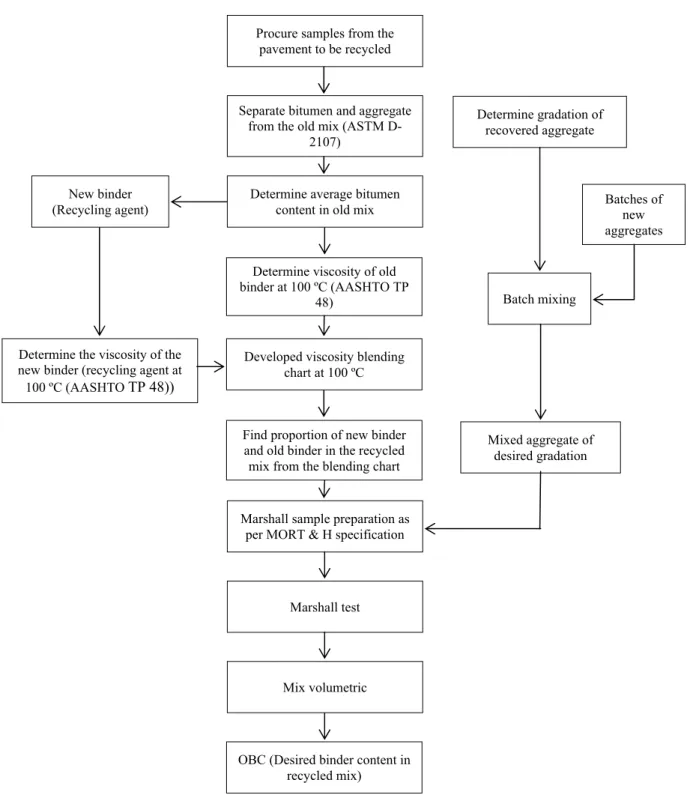
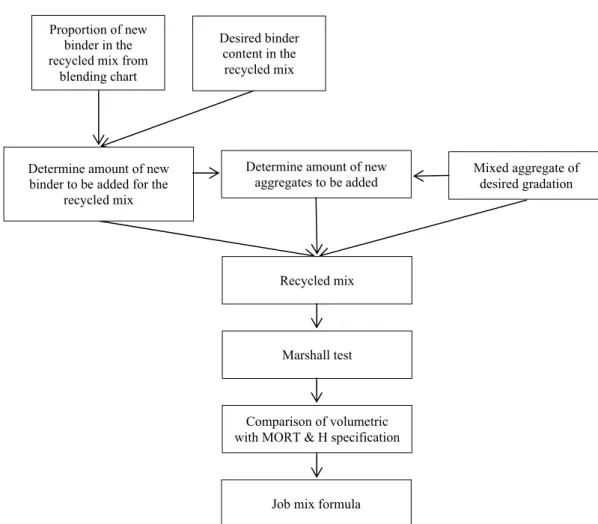
According to Sahu (2004) the proposed design procedure of recycled asphalt mixtures consists of two parts. The first part of the design procedure is to find out the optimum binder content for the recycled mix using the uncoated recovered aggregates obtained from the bitumen extraction test. The second part of the design procedure is to find out the percentage of RAP (old mix) which can be recycled without extracting the bitumen.
Figure 1 – First part of the mix design process of recycled asphalt mixtures
Procure samples from the pavement to be recycled
Separate bitumen and aggregate from the old mix (ASTM
D-2107) Determine gradation of recovered aggregate Batch mixing Batches of new aggregates Determine average bitumen
content in old mix
Determine viscosity of old binder at 100 ºC (AASHTO TP
48) New binder
(Recycling agent)
Developed viscosity blending chart at 100 ºC
Mixed aggregate of desired gradation Find proportion of new binder
and old binder in the recycled mix from the blending chart
Marshall sample preparation as per MORT & H specification
Marshall test
Mix volumetric
OBC (Desired binder content in recycled mix) Determine the viscosity of the
new binder (recycling agent at 100 ºC (AASHTO TP 48))
Figure 2 – Second part of the mix design process of recycled asphalt mixtures
2.4. Techniques for recycling of asphalt mixtures
Due to the steady increase in traffic, more and more roads are deteriorating. The proper strengthening and maintenance of the road network is urgently required. Effective, timely and speedy maintenance is the only way to protect the erosion of huge capital investments which are linked to the road system. Overlaying the distressed pavements with virgin courses had been adopted and continues to be the preferred method for restoration of aged pavements. The continuous application of overlays increases the pavement thickness and approaches the curb line. The conventional methods are responsible for 22 percent of the global energy consumption, 25 percent of fossil fuel burning across the world and 30 percent of global air pollution and greenhouse gases. Recycling, instead of overlaying of asphalt pavements has made a rapid advancement in the developed countries (Sathikumar and Nivedya, 2011).
One such contributor to asphalt pavement destruction is known as moisture damage. Moisture damage is caused by water infiltrating the pavement surface and weakening bonds that hold
Proportion of new binder in the recycled mix from
blending chart
Mixed aggregate of desired gradation Determine amount of new
aggregates to be added
Recycled mix
Marshall test
Comparison of volumetric with MORT & H specification
Job mix formula Determine amount of new
binder to be added for the recycled mix
Desired binder content in the
the mixtures together. Moisture damage provides the opportunity for other forms of pavement distresses as well, further weakening and destroying the pavement (Boyes, 2011).
The availability of proven and efficient recycling technology favoured the adoption of Reclaimed Asphalt Pavement (RAP) Technology in many countries. This method of strengthening and repairing roads was based on their durability rather than their initial cost. The concept of RAP lies in restoring the physicochemical properties of the aged bitumen to its original conditions and at the same time to enhance the mechanical properties and strength of the aged binder. The various ecological and economic advantages which contributed to enhancement of recycling processes throughout the world are conservation of aggregates and binders, reduced cost of transportation, preservation of existing pavement geometrics, preservation of environment, conservation of energy and labour, decrease in pavement thickness/height (Sathikumar and Nivedya, 2011).
Aging of binders is a chemical process that is known to be source-specific; some binders are observed to age faster and become harder than others. Therefore, for proper reuse of the RAP material, there is a need to characterize aged properties and aging performance of binders so that the resistance to aging is taken into account in selecting the fresh binder, and in predicting performance of recycled asphalt pavements (Hussain and Yanjun, 2013).
The oxidized bitumen contained in RAP represents the most noticeable difficulty to overcome for the use of RAP in HMA. The bitumen oxidation is linked to a double aging process: “Short Term Aging” and “Long Term Aging”. The first takes place during paving while the second is caused by the oxidative components of the atmosphere. The reduction in viscosity, caused by the oxidation, leads to a worsening in workability at high temperatures. In addition, the bitumen contained in RAP is particularly stiff, therefore at low temperature it could show brittle behaviour as Thermal Cracking (Leandri et al., 2012).
Recycling of asphalt mixtures is increasing due to higher costs of bitumen, scarcity of quality aggregates and environmental issues related to the disposal of aged asphalt mixtures. Nevertheless, the amount of RAP used is usually limited, due to the reduction on the asphalt plant productivity and on the performance of the mixture (Oliveira et al., 2012a).
Thus, according to Fonseca (2005), based on the various characteristics mentioned above, the following production techniques of recycled asphalt may be used:
Total recycling of bituminous mixtures and eventually part of the granular layers (Full Depth Reclamation): such a strategy is usually performed in situ using a large recycling equipment, including the addition of a binder which may be foamed bitumen or hydraulic binder, depending on the total thickness of the recycled layer;
Cold In-Place recycling: such a strategy essentially involves recycling of the surface layer in order to rejuvenate their properties. In this process, the material is disaggregated and mixed with bitumen emulsion, cement or other rejuvenating agents in order to obtain a mixture having the desired properties. Typically this operation is performed continuously (disaggregation, addition of binder and compaction in a single phase) although there is also the chance to do it in two phases (first joining the binder and later disaggregating, spreading and compacting the recycled material) depending on the equipment used;
Hot Recycling in-situ or in plant: this strategy is also essentially applied to surface layers. When carried out in-situ, it involves heating the material to be removed, the eventual reprocessing of this material (milling and particle size separation), and the mixture of aggregate and new bitumen or rejuvenating agents. Then the recycled material is spread and compacted.
The majority of old asphalt pavements are recycled at central processing plants, asphalt pavements may be pulverized in place and incorporated into granular or stabilized base courses using a self-propelled pulverizing machine. Hot in-place and cold in-place recycling processes have evolved into continuous train operations that include partial depth removal of the pavement surface, mixing the reclaimed material with additives (such as virgin aggregate, binder and softening or rejuvenating agents to improve binder properties), and placing and compacting the resultant mix in a single pass (Sathikumar and Nivedya, 2011).
2.4.1. Cold in-situ recycling
Recycling "in situ" was the first recycling technique to be used in Portugal with the objective of simultaneously rejuvenating and strengthening the distressed road surface. The implementation process consists of milling the existing pavement in a predetermined thickness, in order to, in the same place, mix and homogenize the resulting material with one or more unheated binders, followed by its laying down and compaction, ensuring the desired layer thickness (Azevedo, 2009).
The cold in-situ recycling (CIR) of asphalt pavements is a technique for pavement rehabilitation that uses 100% of the milled or reclaimed asphalt pavement (RAP) from a deteriorated road surface at ambient temperature, and which does not heat any of the mix components. Consequently, CIR has the advantage of reducing gas emissions into the atmosphere. It also cuts fuel consumption since there is no need to transport RAP to an asphalt plant or to convey the mix from the plant to the paving site for spreading and compaction. Nevertheless, one of the weaknesses of this technique is the design of the job mix formula since the densities of laboratory test specimens are generally higher than the densities of the samples obtained at the worksite (Martínez-Echevarría et al., 2012).
According Santos (2010), in-situ recycling is more favourable when it occurs in pavements with thick granular layers and very distressed bituminous layer, where it is possible to:
Use the existing materials;
Reduce or eliminate the use of new aggregates and bituminous binders; Lower energy consumption;
Increased speed of execution;
Avoid changing the RAP or new materials;
Lower the impact on traffic and surrounding pavements.
From the environmental point of view, one of the disadvantages is the pollution produced especially in the hot in-situ recycling. At the technical level there are limitations on the quality of RAP material (aggregate and binder), on the thickness of the cold recycled layers, on the mechanical characteristics of the final recycled layers and on the need for standardization of the production and quality control of the recycled mixtures (Santos, 2010). The cold recycling can be performed "in situ" or in plant, and it can be applied in two ways, with the use of asphaltic binders or with the application of cement.
Cold in-situ recycling with foamed bitumen
About the foamed bitumen, this is a colloidal system, and this recycling technique combines, in general, the advantages of any in-situ recycling process and any cold recycling process, presenting other advantages (Lewis and Collings, 2008):
Easy application - the foamed bitumen is sprayed directly into the recycler's mixing chamber;
Foamed bitumen treated material forms a flexible layer with good fatigue properties that is not prone to shrinkage cracking.
Usually less expensive than bitumen emulsion or a combination of emulsion and cement;
Additional water is not added to the recycled material, as is the case when emulsion is used;
Rapid strength gain - the road can be trafficked immediately after compaction is complete.
According to Lewis and Collings (2008) this technique has the following disadvantages: Requires a supply of hot (180ºC) bitumen. For foamed bitumen treatment, the
material should have between 5% and 15% passing the 75 micron sieve size; If this is not the case, the grading should be rectified by importing and spreading a
layer of suitably graded aggregate over the layer to be recycled.
The production control of this kind of recycling technique is presented in Figure 3.
Cold in-situ recycling with cement
In distressed pavements with high granular layer thickness, recycling with cement may be, in most cases, an economical and technically feasible rehabilitation solution. The recycled layer turns out to be a cement stabilized material and presents much higher resistance than the previous, turning the final structure to be similar to a semi-rigid pavement (Baptista, 2006, Branco et al., 2005, Silva, 2011).
The cold in-situ recycling with cement allows the use of higher depths than when the recycling is carried out with bituminous emulsion. In this way, it is a suitable technique for those situations in which a substantial increase in bearing capacity of the pavement is to be obtained, with a low addition of new layers (Silva, 2010).
Another advantage of recycling with cement compared with recycling with bitumen emulsion is that the mixtures recycled with cement are characterized by a much greater stiffness than that of the mixtures with emulsion. That will be reflected in a very significant increase in the pavement bearing capacity in relation to the initial situation, and also an important decrease of deflections and stresses transmitted to the foundation (Jofré, 2003 apud, Silva, 2010).
2.4.2. Cold recycling with bitumen emulsion
Cold recycling with bitumen emulsion, like recycling with foamed bitumen, can be done in two different ways, in-situ or in-plant. Emulsions are colloidal systems, namely two immiscible liquids, water and bitumen, which coexists by dispersing small droplets of water in the bitumen, which is aided by the introduction of an acidic or basic emulsifier that ensures that dispersion (Baptista, 2006).
According Batista and Antunes (2012), the works of in-situ pavement recycling with cold bitumen emulsion (Figure 4) involve, in a general way, the following constructive stages:
Spreading of correction material (cement, aggregates and/or lime), based on a previously established mix design; currently, modern equipment can be used to the addition of lime or cement immediately before the recycling machine passes on the pavement;
Passage of the recycling machine in the existing:
Breakdown of the existing pavement by milling to a depth established; Continuous addition of bituminous binder, and optionally, water; Mixing disaggregated material with additional materials;
Spreading the final mixture; Compaction of the mixture.
Figure 4 – Control of in-situ pavement recycling with bitumen emulsion (adapted from (Wirtgen, 2013))
2.4.3. Warm recycled bituminous mixtures
In order to reduce the production temperature and, consequently, the energy consumption in the manufacture of asphalt mixtures, a new concept was developed and has been tested and implemented in the last few years. This is the WMA technology which intends to lower the production temperature, but keeping the mechanical and rheological properties of warm asphalt mixtures as close as possible to those of conventional mixtures (Oliveira et al., 2013b).
Nowadays, WMA is a very important technology for the reduction of energy consumption and gas emissions during the production stage of asphalt mixtures, but it becomes significantly more important, when applied to recycled asphalt mixtures. In the road pavement industry, sustainability is often associated to pavement recycling, where part of the demolition
waste (also known as reclaimed asphalt pavement – RAP) is reused and incorporated in the production of new asphalt mixtures (Oliveira et al., 2012a).
WMA technology can significantly reduce the temperatures of mixing and application of the mixture comparatively to the traditional hot mix asphalt (HMA), by 20–30ºC. This reduction of temperature is translated into a reduction on the consumption of energy on the manufacturing process. Moreover, the use of this technology leads to a decrease on the emissions of gases and odours from plants, and an improvement on the personnel working conditions. With respect to gas emissions, there are studies that report reductions of about 30– 40% in emissions of CO2; 35% in emissions of SO2; 50% in emissions of VOC; 10–30% in emissions of CO; 60–70% in emissions of NOx and 20–25% in emissions of dust. Another benefit associated to this technology is the possibility of extending the construction season and the time available for the application of the asphalt mixture during a certain day (Prowell, 2007).
Two technologies have been primarily used for the production of WMA. The first technology is the use of a proprietary mineral or additive blended with asphalt binder which helps in lowering its viscosity value or in improving the workability of the mixture at lower temperatures, such as Sasobit, Rediset WMX, Cecabase, Evotherm, among others. This process can be considered a non-foaming WMA technology. The second technology consists of a physical production process known as foamed bitumen or by using foaming material like
Asphamin. By adding it to the mixture at the same time as the binder, a very fine water spray
is created as all the crystalline water is released, which causes a volume expansion in the binder, thereby increasing the workability and compatibility of the mixture at lower temperatures (Xiao et al., 2012).
2.4.4. Hot in-place recycling
Recycling processes of hot bituminous materials can be performed in plant, making small adaptations to conventional asphalt plant or in-situ using developed equipment for this purpose (Oliveira et al., 2013b, Silva, 2010).
The hot in-place recycling (HIR) consists of heating the existing pavement, facilitating their dissolution, and mixing with a binder or soft rejuvenating bitumen. The binders to use are specific bituminous emulsions or polymer modified bitumen able to regenerate oxidized bitumen aged.
The equipment used in the HIR is extremely large and difficult to move, so the selection depends not only on existing availability, but also the method of transporting them to the construction site. This is one of the disadvantages of hot in-situ recycling, together with the high cost of equipment, and the fact that the technique also causes high energy consumption and pollution (Santos, 2010). Some of that equipment is presented in Figure 5.
Figure 5 – Example of a hot in-situ recycling operation (adapted from adapted from Wirtgen (2013))
Comparing hot in plant recycling with hot in-situ recycling, the latter has some advantages, since there is no need to transport the milled materials to the plant and the recycled material back to the working site, thus making it more economical, and also has the advantage of causing less disturbance to the traffic, making it a less time-consuming operation. As inconvenience is difficult to control the quality control of the final mixture (Oliveira et al., 2013b).
2.4.5. Hot in-plant recycling
Amongst the several techniques available to recycle asphalt mixtures, hot in-plant recycling is one of the solutions most adopted in Europe, especially in countries like the Netherlands, Germany and Denmark, which currently recycle over 75% of the total asphalt mixtures produced. Despite having recognized advantages of an economic and environmental nature, to be used in a significant and standard way in many countries, this technique has been relatively little used in Portugal. This delay was due largely to a certain resistance to change resulting from some fear felt by the road sector (project owners, builders and designers) with respect to both the manufacturing process, and the performance of mixtures when in service (Baptista, 2006).
The in plant recycling, by conventional methods, always involves milling, transportation of the milled material, storage and production and bituminous mixtures and can thus be used as a pavement regeneration process or a recovery of milled materials obtained in other road sections. In these cases the percentage of recycled materials used in the composition of the recycled mixtures do not exceed 40 to 50% and the bitumens used are generally less stiff. Currently, the major development in the field of asphalt plant technology is the appearance of new drum mixers, which allow the use of higher percentages of recycled material (Azevedo, 2009).
The execution of a hot recycled bituminous mixture in plant includes the following operations (Azevedo and Cardoso, 2003 apud, Silva, 2010):
Storage of the material coming from old pavement; Processing of raw bituminous material to be recycled;
Characterization and storage of treated bituminous material to recycle; Study of the mixture and obtain the working formula;
Manufacture of the mixture according to the working formula; Transport of the mixture to the application site;
Preparation of the surface on which the mixture will be spread; Spreading and compacting the mixture.
Figure 6 shows a classification system used to incorporate recycled material in a hot-mix asphalt plant.
Figure 6 – Classification system for incorporation of recycled material in continuous plant (adapted from Fonseca (2005))
The hot recycling presents clear advantages of an economic nature and environmental compared to the production of conventional new asphalt mixtures, due to the economy with the aggregate and bitumen. This last one ismore pronounced with the increase that has been observed in recent years in the price of crude oil. At the environmental level, the lower consumption of natural resources (bitumen and aggregate) and a better application of milled materials can be highlighted (Branco et al., 2005).
The disadvantages normally associated with the production are related to the reduction in the production capacity of the plant and the higher heating of aggregates and, therefore, higher energy costs. However, it should be noted that, although the heating temperature is higher than normal, the amount of new aggregates is also smaller, so in terms of energy costs, since the final temperature of the mixture is equal to the hot bituminous mixtures, consumption is identical (Branco et al., 2005).
2.5. Behaviour of recycled asphalt mixtures
A recycled asphalt mixture generally consists of a blend of old and virgin aggregates, and a blend of old and virgin binders. In a hot recycled mix, the blending of the old binder and the virgin binder (or rejuvenating agent) is relatively more homogeneous. In a cold recycled mix, the virgin binder or rejuvenating agent tends to adhere to the old material (old aggregate coated with old binder), and to form a thin film around it. The diffusion of the virgin binder or rejuvenating agent into the old binder is a function of time, temperature and additional traffic compaction. This diffusion process can greatly influence the behaviour of a recycled material, and thus knowledge of its long-term behaviour is very important in designing a recycled mix (Tia, 1982).
About hot central plant recycling, in this process RAP is combined with required quantity of bituminous binder, and fresh aggregates in a hot mix plant. The resultant mix is heated to an elevated temperature and mixed thoroughly. The hot mix is transported to paving site, placed, and compacted to the required compaction level. The main advantage of this process is that the mix properties and performance is comparable to that of virgin mixtures (Aravind and Das, 2005).
Epps et al. (1980) have noted that the quality control in this process is better when compared to hot in-place recycling. As RAP is susceptible to moisture, care needs to be taken while storing it. Less workspace is required for laying the recycled mixture; hence this is suitable
for the roads where the right-of-way is somewhat restricted. The RAP should not be exposed to extremely high temperature as it causes pollution due to smoke emission (Aravind and Das, 2005).
2.6. Materials used to improve the performance of recycled asphalt
mixtures
Recycling asphalt pavements has the advantages of decreasing the demand for natural resources, decreasing the production of waste material and reducing costs. Desirably the amount of the asphalt pavement that is recycled should be maximized and the amount of new material that is added to the recovered asphalt should be minimized (Nigen-Chaidron and Porot, 2009).
In order to improve the performance of recycled bituminous mixtures, some additives can be used, which may ultimately confer characteristics similar to those of new bituminous mixtures to the recycled mixtures. Thus, it is important to recover some lost properties of the aged bitumen. The additives used in this kind of process are mostly rejuvenating agents that are one of the recycling agents, suitable for either highly oxidized or for mixtures containing a large percentage of RAP (Shen et al., 2007).
2.6.1. Anti-stripping and temperature reduction additives
The techniques more used for the Warm Mix Asphalts are:the organic additives, chemical additives, foamed bitumen with water injection and foamed bitumen with synthetic or natural minerals. This technology aims to reduce the temperature of production and compaction of bituminous mixtures, maintaining an adequate workability of the mixture, in comparison with the hot asphalt mixtures. This improvement comes from additives which increase the characteristics of the blends, such as workability and reduction in volume of voids (Silva, 2011).
According to Boyes (2011), perhaps the most commonly used ant-stripping additives are hydrated lime and liquid amine-based chemicals. More recently however, improving pavement performance through the use of recycled waste materials such as fly ash, cement kiln dust, glass, and used tires has gained interest.
Organic additives
Several processes are available to reduce the mixing and compaction temperature of hot mix asphalt, one of these processes uses waxes to reduce the viscosity of the bituminous binder in the high temperature range. In order to be efficient, this wax should be solid at the highest service temperature, but at temperatures above the highest service temperature the wax should melt, become liquid, lower the viscosity of the mixture and in this way should allow production and compaction of asphalt mixes at reduced temperatures. Literature shows that waxes with a melting point in the range between 100°C and 145°C have been used as viscosity reducers. According to the producers of these waxes, a temperature reduction of 30°C can be achieved compared to standard hot mix applications. Apart from their ability to reduce the production temperature, these waxes are also promoted as performance improvers for rutting (Soenen et al., 2008).
Chemical additives
This type of additive is added directly to the binder, facilitating the coating of aggregates at lower temperatures. The properties of the bitumen are not significantly changed with the use of such additives, since its use does not reduce the viscosity of the bitumen. These additives allow substantially improvements in the workability of the mixture, thus enabling the production of bituminous mixtures at lower temperatures. The improvement in workability of the mixtures is also positive in the case of using RAP material (Silva, 2010).
2.6.2. Crumb rubber recycled from used tires
The rubber-modified binders are obtained by the incorporation of crumb rubber to the conventional asphalt binder under certain temperature and agitation conditions. The resulting asphalt rubber (AR) has both the mechanical properties of the asphaltic matrix and the elasticity of rubber (Huang and Yan, 2000 apud, Neto et al., 2003).
AR binder can be used with asphalt mixtures incorporating new material and recycled material. The use of AR or the use of a conventional binder will depend on the expected performance of the new bituminous mixture and on a cost/benefit analysis. The binders (conventional bitumen) of asphalt incorporating recycled material generally have a penetration in the range of 100 to 150 mm. The use of such bitumen allows obtaining less rigid mixtures, since the binder existing in the RAP tends to become harder in service with time. Considering the high resistance to aging (due to manufacturing, application, and the
action of ultra-violet rays when in service) of AR binders and mixtures, it is expected that this binder is not as oxidized as a conventional binder and still presents good elastic properties and adhesiveness after a longer service life (Fonseca, 2005).
2.6.3. Rejuvenating agents
A rejuvenating agent that is commonly used is a low viscosity product obtained from crude oil distillation. Other alternative products have also been used as rejuvenating agents by different authors, including waste materials from other industries (Oliveira et al., 2013a, Oliveira et al., 2013b) or natural products of plant origin (Nigen-Chaidron and Porot, 2009). Incorporating a plant product instead of a petroleum product offers a potentially more sustainable product, and may lead to price and supply advantages. The natural-product based rejuvenating agent must have the required technical properties and in use should be safe and easy to handle.
These kinds of additives have, as their name indicates, the purpose of rejuvenating the aged bitumens, recovering their properties by reconstituting the chemical composition of bitumen. Bitumens are constituted by asphaltenes and maltenes, and the hard component (asphaltenes) is insoluble and is not affected by oxidation. The maltenes instead are highly reactive and disappear over time, with the aging of the bitumen, which occurs during the production of the mixtures and throughout the life of the pavement. The rejuvenator is a product having the ability to restore part of the maltenes that disappeared due to oxidation of the bitumen. The use of rejuvenating agents is therefore ideal for recycled mixtures, because the bitumen in the milled material is aged. The use of rejuvenating agents allows reducing the viscosity of bitumen and also decreases the stiffness of the asphalt mixture, thereby making it possible to increase the pavement lifetime (Silva, 2010).
The rejuvenator percentage may be crucial to the properties of the blended aged asphalt. The rejuvenator should be properly added so that the binder properties under low temperature are improved while the properties under high temperature are not adversely affected. Traditional methods to determine the percentage of the rejuvenator are predominantly based on blending charts of either a penetration or a viscosity criterion. In addition, a more integrated approach for the determination of the rejuvenator percentage was proposed by considering not only the penetration or viscosity criterion. However, some of these methods do not consider the
performance-based properties of the rejuvenated aged asphalt binders using a rejuvenator as required by SHRP specifications (Shen et al., 2007).
In most mix design methods of hot recycled bituminous mixtures, the selection of the type of a new bitumen and/or rejuvenating depends on the recycling rate of the mixture, the characteristics of the aged binder and the desired properties of the final binder (Bento, 2010).
2.6.4. Foamed bitumen
Despite being a technology developed for over 40 years, the use of foamed bitumen just turned massive in 1991, the year in which the rights to the patent belonging to the company MOBIL Australia expired (Seixas, 2008).
The paving processes always incorporate some variability that comes generally from the diversity of materials used and foamed bitumen are a good example. The properties of the foam varies with various factors such as the properties of the bitumen or features of the device which produces the foam (Teixeira, 2006).
Foamed bitumen is a stabilizing agent that may be used with full depth reclamation. Full depth reclamation involves milling the existing bituminous pavement plus a portion of the base material. The milled material is then graded and compacted. Traffic can use the roadway until a bituminous base and surface course is applied (Marquis et al., 2003).
Foamed bitumen, also referred to as expanded bitumen, is a hot bituminous binder which has been temporarily converted from a liquid to a foam state by the addition of a small percentage of water (typically 2 per cent). The foamed bitumen is characterized in terms of expansion ratio and half-life. The expansion ratio of the foam is defined as the ratio between the maximum volume achieved in the foam state and the final volume of the binder once the foam has dissipated. The half-life is the time, in seconds, between the moment the foam achieves the maximum volume and the time it dissipates to half of the maximum volume (Muthen, 1999). This process of foamed bitumen production is illustrated in Figure 7.
The foamed function is the binder component of the mixture. Initially, it is necessary to consider the presence of water in the form of initial moisture in the aggregates since this affects how the foam disperses in the aggregates. In a second phase the water needed for the production of the foam has to be considered. And in a third phase, the moisture content of the
Figure 7 – Production of foamed bitumen on the expansion chamber (adapted from Wirtgen (2013))
The optimum mixing temperature of the aggregates for foamed asphalt mixes lies in the range of 13° C to 23° C, depending on the type of aggregate. Temperatures below this range result in poor quality mixes (Bowering and Martin, 1976). Foamed asphalt mixes may also be prepared with heated aggregates which will increase the binder dispersion within the mix and aid in the coating of the larger aggregates (Muthen, 1999).
Brennen et al. (1983) found that the half-life and expansion ratio of the foam produced from any particular bitumen was affected by the volume of foam produced, the quantity of water used and the temperature at which the foam was produced. Higher foaming temperatures and increased quantities of water both resulted in increased expansion ratios, but resulted in decreased half-lives.
Thus, the expansion and the half-life are related to the percentage of water used in the production of the foam, as shown inFigure 8. The higher the value of the percentage of water used in the production of the foam, the higher the expansion and smaller the half-life of the foam. Once the parameters expansion and half-life are inversely related, it is concluded that the optimization of both is not an easy process (Muthen, 1999).
According Muthen (1999), the following advantages can be mentioned in the use of foamed bitumen in asphalt mixtures:
The foamed binder increases the shear strength and reduces the moisture susceptibility of granular materials. The strength characteristics of foamed asphalt
approach those of cemented materials, but foamed asphalt is flexible and fatigue resistant;
Foam treatment can be used with a wider range of aggregate types than other cold mix processes;
Reduced binder and transportation costs, as foamed asphalt requires less binder and water than other types of cold mixing;
Saving in time, because foamed asphalt can be compacted immediately and can carry traffic almost immediately after compaction is completed;
Energy conservation, because only the bitumen needs to be heated while the aggregates are mixed in while cold and damp (no need for drying);
Environmental side-effects resulting from the evaporation of volatiles from the mix are avoided since curing does not result in the release of volatiles;
Foamed asphalt can be stockpiled with no risk of binder runoff or leeching. Since foamed asphalt remains workable for very extended periods, the usual time constraints for achieving compaction, shaping and finishing of the layer are avoided;
Foamed asphalt layers can be constructed in adverse weather conditions, such as in cold weather or light rain, without affecting the workability or the quality of the finished layer.
3. MATERIALS AND METHODS
To comply with initial objectives of the present study, a laboratory work on the physical characteristics and mechanical properties of various binders, aggregate materials and finally the bituminous mixtures was established.
The study is divided into three stages; the first stage is the production of a conventional bituminous mixture, the second stage comprises the production of recycled bituminous mixtures, with 50% of new aggregates and bitumen and 50% reclaimed asphalt pavement, and the third and last stage, includes the production of a recycled bituminous mixture with 50% of new materials and 50% RAP, but with a rejuvenating and WMA additive in its composition.
3.1. Materials
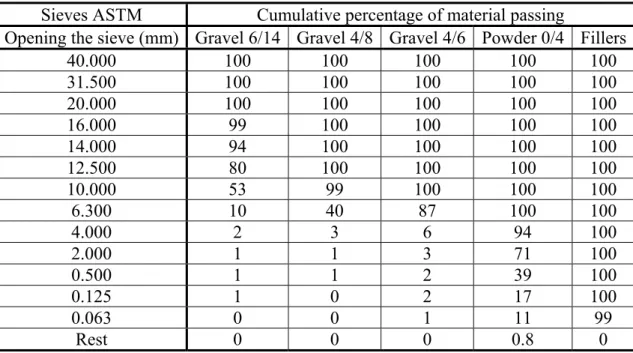
The first stage of this study involves the characterization and study of a conventional AC14 surf asphalt mixture, usually used in surface courses. Thus a conventional 50/70 bitumen and new granite aggregates were used. The study started by the definition of the percentage of each aggregate fraction that would result in a particle size distribution that would fulfil the Specifications for a conventional surface course bituminous mixture. The production of this bituminous mixture will aim at serving as a basis of comparison for the analysis of the performance of the recycled bituminous mixtures that were also studied in the present work.
In the second stage, a recycled bituminous mixture was produced with 50% of RAP material and 50% of new materials (granite aggregates and a 70/100 bitumen), without any rejuvenating agent.
In order to assess the influence of a rejuvenating agent in the performance of a recycled mixture with 50% RAP incorporation, a third stage was established, where two newly developed additives (from Korea Institute of Construction Technology, named additive A and B and for this dissertation) were studied; the additive showing the most promising results in terms of binder modification and cost was selected for the remainder of the investigation carried out in this dissertation. Subsequently, the laboratory tests were carried out to determine the optimum additive content, in order to obtain a final binder with properties similar to those of a conventional 35/50 bitumen (since the hard binder present in the RAP makes it difficult to obtain softer final binders, like a 50/70 binder).