EVALUATING CSR PERCEIVED IMAGE IN BRAZIL AND
PORTUGAL IN THE FOOD AND DRUG RETAIL INDUSTRY
William Saung Woo Kang
Project submitted as partial requirement for the conferral of Master in Marketing
Supervisor:
Prof. Ana Brochado, Assistant Professor, ISCTE Business School, Departamento de Marketing
Evaluating CSR Perceived Image In Brazil And Portugal II
E
V
A
L
U
A
T
IN
G
CSR
PE
RCE
IV
E
D
I
M
A
G
E
IN BRA
Z
IL
A
N
D
PO
RT
U
G
A
L
IN
T
H
E
FO
O
D
A
N
D
D
RU
G
RE
T
A
IL
IN
D
U
ST
RY
Wi
ll
ia
m
S
a
un
g
Wo
o
Kan
g
III
Resumo
O modelo de negócios baseado na “teoria da agência” se mostrou ultrapassado e sinaliza que necessita de alguns ajustes, especialmente após o observado nos escândalos de 2002 que envolveram a Enron e a Worldcom, que descreditaram parte da confiança dos investidores nas Bolsas de Valores ao redor do mundo (Snider, 2003).
Nesse momento, assuntos como “ética empresarial” e “responsabilidade social corporativa” ganharam ainda mais expressão entre as grandes empresas, facto este observado pelas actividades das grandes companhias listadas na “fortune 500”, das quais 90% delas possuem algum tipo de actividade relacionada a proteção e progresso da posicão social e ambiental em que nos encontramos ( Homburg et al, 2013).
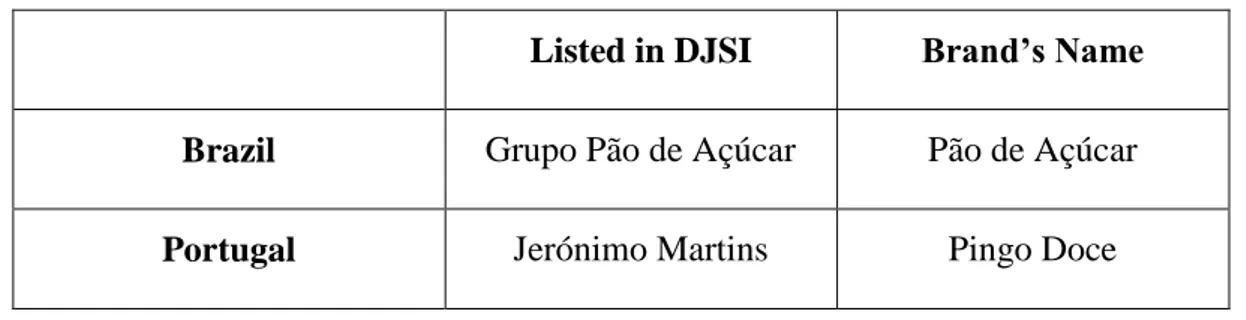
Essa tendência não é observada somente em grandes economias de países desenvolvidos, mas também em países como Portugal e Brasil. Dentro do “Dow Jones Sustainebility Index”, observa-se que 62 companhias brasileiras e 4 empresas portuguesas estão listadas nas categorias “World Universe” e “World Enlarged Universe”, demonstrando que empresas desses países possuem actividades de responsabilidade social e ambiental de grande relevância e expressão global.
Entretanto, nem todas as empresas listadas se beneficiam das vantagens competitivas que essas estratégias podem trazer, principalmente na imagem transmitida ao cliente final, e consequentemente aos seus resultados financeiros, já que os consumidores muitas vezes estão dispostos a recompensar as corporações por seus esforços sociais e ambientais. Esse estudo vai analisar o retalho alimentar de Portugal e Brasil, e verificar se as companhias estão a internalizar esses ganhos na imagem percebida e, consequentemente a aumentar seu potencial de negócio através da conquista de vantagens competitivas.
Palavras chave: Responsabilidade social corporativa; Imagem; Brasil; Portugal; Retalho; Comparação entre países.
JEL classification system:
- M14: Corporate Culture; Social Responsibility - M31: Marketing
IV
Abstract
The business model based on the “agency theory” might be outdated and demanding some adjustments, especially after the accounting scandals that happened in 2002 involving Enron and WorldCom, that discredited a part of the confidence that investors had on the stock markets worldwide (Snider, 2003).
These events brought into light with a stronger relevance subjects such as business ethics and corporate social responsibility inside the management world, indeed this can be observed by the fact that 90% of the fortune 500 companies have some kind of activity in protecting and improving the current social and environmental condition (Homburg et al, 2013).
This trend is not only observed developed countries, but also in countries under development such as Portugal and Brazil. In the Dow Jones Sustainability Index, it is observed that 62 Brazilian companies and 4 Portuguese companies are listed under the categories “World Universe” and “World Enlarged Universe”, giving evidence that those countries have corporate social and environmental activities of great global relevance.
However, not all of those listed companies get strategic benefits from those activities, leveraging the image that they have among their final consumers and thereafter improving their financial results, since consumers in the other hand are willing to reward the companies that engage in social and environmental activities. This study will analyze the food and drug retailers of Brazil and Portugal and verify if they are incurring these gains in image and therefore are leveraging their business potential, by conquering competitive advantages.
Key words: Corporate Social Responsibility; Image; Brazil; Portugal; Retail; Cross-Country study
JEL Classification system:
- M14: Corporate Culture; Social Responsibility; - M31: Marketing
V
Acknowledgements
First and Foremost, I want to thank my supervisor, Professor Dr. Ana Margarida Brochado, for all her knowledge, time, and experience deposited in me and in the elaboration of this study. Thank you for all your patience, and for the support even in tough times, I could have not asked for a better Master thesis supervisor than you, and for that I am very thankful.
A very special thanks goes to Dr. Lucia Guilhoto, that sparked my curiosity in the Marketing field, for being an exceptional professor not only inside, but also outside classes. Hope to carry the knowledge and the curiosity that you‟ve given me throughout life. Thank you for being there even after my graduation and for all the kind words that pushed me to be better.
To my Portuguese family, Faviane Teixeira,Bradley Richards, Angelica Caceres, Beatriz Guimarães, Tarsila Lampert, Greicy Silva, Clara Laso, Juan José Varea, Daniela Lopes, Izabela Lamounier, Luiz Arruda, Soraia Moreira, Luis Tavares, Daiane Lopes, Manuel Pereira, Pedro Barbosa. Thank you for making my Portuguese life an upmost pleasure, for all the nights studying, and for giving me the moral support that I needed during the elaboration of this study.
Finally, I want to thank my family Yong Kang, Kyung Min and Grace Kang, I would be nothing without you guys, and I definitely wouldn‟t be in this position if it wasn‟t for all your support and love.
VI
Index
1 Introduction ... III 2 Background, Concepts and Strategies ... V 2.1 Key concepts ... VIII 2.1.1 Business Ethics ... VIII 2.2 Corporate Social Responsibility (CSR) ... IX 2.3 Corporate Philanthropy ... IX 2.4 Sustainability and Sustainable development ... X 2.5 Green Marketing ... XI 2.6 General Strategies for CSR and Environmental Management ... XII 2.6.1 The Triple Bottom Line ... XII 2.6.2 Bottom of the Pyramid (BoP) ... XIII 2.6.3 From Green to Blue ... XIV 2.6.4 Strategic CSR and Creating Shared Value (CSV) ... XV 2.6.5 Stakeholder Management Theory ... XVI 3 Characteristics of Interest ... XVIII 3.1 The other side of CSR ... XVIII 3.2 Advantages of adopting a CSR strategy ... XX
3.2.1 Corporate Social Responsibility (CSR) and Corporate Financial
Performance (CFP) ... XX 3.2.2 CSR strategies and Consumer Behavior ... XXII 3.2.3 Other positive aspects of CSR ... XXIV 3.3 Boundaries ... XXVI 4 Methodology ... XXVII 4.1 Index Selection ... XXVII 4.2 Analyzed companies ... XXIX
VII 4.2.1 Pão de Açúcar (PdA) ... XXX 4.2.2 Pingo Doce (PD) ... XXXI 4.3 Target population and sample design ... XXXIII 4.4 Questionnaire ... XXXIII 5 Data analysis ... XLI 5.1 Defining Social and Environmental responsibility ... XLI 5.2 Sample descriptive characteristics ... XLIII 5.3 First Study: Differences in the image for companies with a CSR certification in each country ... XLIX 5.4 Study 2 ... LI 6 Conclusion, discussion and implications ... LV 6.1 Theoretical Implications ... LVI 6.2 Research Implications ... LVII 6.3 Managerial implications ... LVIII 7 Limitations and Further Investigation ... LIX 8 Bibliography ... LX 9 Key Terms Glossary ... LXV 10 ATTACHMENTS ... LXVI
1
Executive summary
Esse estudo possui dois objectivos, o primeiro é identificar se as companhias reconhecidas como responsáveis por uma das maiores instituições financeiras, a Dow Jones em parceria com a RobecoSAM também transparecem uma imagem mais responsável aos seus consumidores, e portanto, também recebem uma vantagem competitiva por sua certificação. O segundo objectivo é identificar se o consumidor consciente sobre atividades de Responsabilidade Social avalia diferentemente as empresas, ou se há algum viés na avaliação deles, tanto para as empresas certificadas como para as empresas não certificadas.
Para isso, esse estudo vai analisar a literatura e expor os termos técnicos relacionados à responsabilidade social corporativa e verificar que empresas social e ambientalmente responsáveis possuem vantagens competitivas ao se engajar nessas atividades, não só no âmbito financeiro, como também na qualidade do relacionamento entre a empresa e o cliente final.
A Metodologia foi aplicada no sector do mercado “retalho alimentar”, e as companhias listadas na “Dow Jones Sustainability Index” desse setor do Brasil e Portugal foram “Pão de Açúcar” e “Pingo Doce”, respectivamente. Desse modo, algumas análises estatísticas multivariadas vão ser aplicadas em uma base de dados coletada para esse fim, a fim de atingir os objectivos propostos.
O questionário foi elaborado de modo que os Stakeholders mais relevantes do sector estudado sejam mapeados e selecionados, e a imagem seja medida através da percepção que o consumidor possui em relação à interdependência de cada Stakeholder com a empresa.
Primeiramente, foi comparado se as empresas selecionadas possuem imagens diferentes do que seus competidores em cada país, e concluí-se que somente a empresa Pão de Açúcar possui uma imagem de responsabilidade superior aos concorrentes. O mesmo não foi observado para a empresa Pingo Doce. No entanto, foi observado que a imagem do Pão de Açúcar somente foi superior em relação aos funcionários, sociedade e consumidores.
No segundo estudo, foi verificado se as pessoas mais conscientes avaliavam as empresas de maneira diferente, no entanto, o segundo estudo não foi conclusivo, mas
2 deu evidências de que algum viés cognitivo ou de mercado possa ter afetado o resultado final. Embora, o segundo estudo inicialmente mostre que a imagem positiva de responsabilidade social deriva da média geral dos consumidores, e não só dos mais conscientes. Foi sugerido então que novos estudos nesse sentido sejam realizados para verificar a origem dessas vantagens competitivas.
Finalmente, conclui-se que esse estudo propõe uma nova maneira dinâmica de avaliação da imagem de responsabilidade social da empresa, no qual os stakeholders variam de acordo com a necessidade do estudo, e que há diversas oportunidades de avanço e ganhos de vantagens competitivas pelas empresas analisadas, no entanto, as atividades de responsabilidade social devem ser explicadas ao consumidor final a fim de gerar conhecimento e engajamento, que, por sua vez, gera vantagens competitivas.
3
1 Introduction
Literature in corporate social responsibility (CSR) usually faces this issues in two different approaches: a) CSR as a strategic tool, in order to boost business and social gain, also called as corporate philanthropy; or b) Stress the ethical duties towards society, facing then CSR as a drive for corporate competitiveness (also known as strategic CSR) (Cranenburg and Arenas, 2013).
Strategic CSR focuses on the strategy of the company and possibilities of gaining competitive advantage through CSR strategies; Burke and Logsdon (1996) and Porter and Kramer (2006 and 2011), in their study, cites ways in which companies can get strategic benefits, even though it is not directly measurable. Consumers, in the other hand are prone to punish companies that engage in social actions, if they judge there are reasonable alternatives for consumption, also, they increasingly believe that companies should engage in CSR activities, and they also think that those social actions would not only benefit society, but would also bring advantages for the company itself (Becker-Olsen et. al, 2005).
But there are fewer results on the perception of these same customers regarding those issues, e.g. there are fewer studies in the literature that analyzes if companies are perceived or not as responsible by the final customer, regardless of having a sound and plausible CSR strategic policy.
This study will tries to differentiate the CSR perceived Image from companies from a given sector of the economy that are recognized as being benchmarks in the implementation of CSR strategies and measures if they are also perceived as responsible (CSR perceived Image). This may enable us to identify the most effective communication strategies for those issues, or identify if the current communication strategies used by the analyzed companies are ineffective in changing their corporate image and should be restructured.
As a second study, it will be analyzed if there are some differences in the perception of the companies between consumers that claim to be responsible in their purchase decisions and those who don‟t; in order to verify if different results are observed when it comes to the profile of consumer itself. Hence, the results of this study
4 might be directly applicable to companies that already have a structured CSR strategy, exposing some success cases of the current effective communication strategies for this issue, since it will explore some forms of communication strategies targeted to the general population and/or to the self proclaimed responsible consumers.
Accordingly, this study aims to have impacts in three different areas of CSR: 1) The Literature, 2) The managerial area and 3) The society. This could be observed, once this is a different approach when it comes to the study of CSR communication strategies, that analyzes the direct impact that communication strategies has in consumers (both self-proclaimed “responsible” or not), and may incentivize or guide effective ways for companies to engage in such activities.
It is proven that there is a positive correlation between corporate social responsibility and corporate financial performance (Loureiro et al, 2012; Miras Rodrigues et al, 2011), and that there are positive impacts of CSR strategies in consumer behavior aspects (Barone et al, 2000; Beckmman, 2007; Loureiro et al, 2012; Porter and Kramer, 2006, 2011), and also that there are opportunities to generate social and economical gain to firms through Social Marketing, by enhancing the consumer‟s image perception on with the company (Inoue and Kent, 2013).
But, an opportunity was identified when it comes to the literature analysis regarding CSR strategies, once there are fewer studies that analyze the implication and direct impact that those strategies have in the consumer‟s perception of the company when engaging in social actions. This study then, aims to elucidate an area of CSR that is not studied in depth, which is evaluating the used communication strategies regarding some CSR aspects of a benchmark company in this field, and its real impact in the perceived image of the company.
This study will observe which strategies are used by some relevant companies in the food retail industry regarding CSR and their effect on the perception that consumers have regarding these companies‟ CSR actions. If proven that there is a direct correlation in the perception of consumers regarding these benchmark companies, and their engagement in such activities, this study could create opportunities of investment in social marketing, benefitting both companies, by leveraging their communication strategies, and society; by creating new opportunities for investments in social gain.
5 Managers than, can use this study as a base of observation of the impacts that corporate social responsibility could have in the CSR image perception of their companies, and analyze if they should or should not communicate those strategies to generate gains in image perception. Social actors, in the other hand can benefit from this study since it highlights the importance of a sound CSR strategy for a sustainable company, highlighting ways in which both corporations and society can insure sustainable win-win situations on a symbiotic relationship, as well as benefit from the company‟s better knowledge of this relevant issue.
2 Background, Concepts and Strategies
The global scenario is increasingly changing, and now, companies have more power to influence the economic, political and social scenario of a nation. Although the Sovereignty concept for a nation‟s government is mostly theoretical, it is hard to argue that the globalization is impacting on a nation‟s administration, forcing countries to share power with each other and even with non-state actors (Weiss, 2003, as cited by Mikler, 2003). The result of this effect is a loss of Sovereignty of States, undermining the power of the governments to act in their national‟s interest, reducing this way the varieties of political and policy alternatives to impact the society (Milker, 2011).
In another perspective, companies can also work as powerful tools for governments in building better administrative systems, i.e. The United Nations (UN)
1
millennium goals report (2012), values and set objectives for public-private partnerships in order to achieve their objectives for the millennium goals scenario related to problems regarding human rights. Some examples of problems that the UN are trying to solve with the assistance of the private sector is that 28 percent of the population was leaving with US$1.75 or less per day in 2008; although primary education levels were increasing until 2004, these numbers reduced again after this period and more than half of the children without school are in Sub-Saharan Africa; 7.6 million of under-fives died in 2010; among other problems, as said in the conclusion of the UN report: “Working together, governments, the United Nations family, the private sector and civil society can succeed in tackling the greatest challenges” (UN, 2012).
1 United Nations (2012) “The millennium development Goals”, available at: http://www.un.org/millenniumgoals/pdf/MDG%20Report%202012.pdf
6 Therefore, the boundary between what is public versus what is private is becoming blurred, affecting how the power relation between state and market actors interacts (Mikler, 2011). In order to do that, some authors argue that companies are investing, even if subconsciously, in discursive power, which involves shaping perceptions to increase legitimacy. In doing so, actors achieve their ends by influencing, shaping or determining the wants of others, through „naming, framing and campaigning‟ (Fuchs, 2007) as cited by Milker (2011). This movement explains why governors are now judged by indexes and rates created by the private companies, but most importantly, it explains why Corporate Social Responsibility (CSR) is becoming more and more important to the market place, once companies are now being more recognized as important social actors, accountable for not only for the negative externalities that they create, but also for the positive ones that they should be creating.
Besides that, it is observed that companies and the government were created in order to satisfy the population‟s demands, but the relationship between user and provider is different in both cases, since companies have, in many scenarios, a closer relationship with the society, in addition the modern consumer has higher expectations in regard to the company‟s bottom line, expecting this way that the organization bring not only profit for their shareholders, but also act honestly and socially responsible (Kreng and Huang, 2011).
All of these responsibilities though, are not given only to the governments and customers, but activists, and even media, are holding companies as accountable for the social consequences of their activities (Porter and Kramer, 2006). Understanding the effects and the importance of those issues, by introducing thoughts and actions into the strategy of the business is an important factor to the organizations, within this paradigm shift.
This way, companies and State have to coexist in the global scenario creating a symbiotic relationship in order to reconcile with each other‟s interests (Milker, 2011). In this same scenario, it is observed that companies are held responsible for the negative externalities that they are causing in the society. CSR Policies than, are usually faced by companies as, a moral obligation, sustainability, license to operate, or even reputation (Porter and Kramer, 2006).
7 The Result of this interaction, according to Kreng and Huang (2011), is that the government imposes social regulations on companies in terms of public policies, to get more control of the market functions and to increase economic efficiency. With this observation, it is clear that a cycle of symbiotic relationship between corporations and government is formed having as one of their main interaction components the CSR strategies and public policies. The accountability directed to those companies, nonetheless, can enhance or distort behavior, incentivizing companies to make believe that they are having responsible actions, instead of achieving them in a sustainable and ethical manner (Margolis and Walsh, 2003).
Besides, although companies are held responsible for their negative externalities, some authors argue that organizations can leverage their business by attracting and retaining qualified employees, lowering costs of production, increase demands for products with reduced price sensitivity, better marketing strategies, attract a segment of the market composed by socially conscious consumer and by leveraging your business strategy and competitiveness by correlating these strategies with the organization‟s core business (Loureiro, et al., 2012; Porter and Kramer, 2006).
Furthermore, in one hand, companies might have an organizational goal of creating and maximizing wealth, but in the other hand, they may represent the last resource into achieving social objectives (Margolis and Walsh, 2003); hence the importance of this issue on nowadays marketplace scenario.
Business are increasingly being faced as a major cause of social, environmental and economic problems, once there is a perception that the companies‟ prosperity is being traded for the well being of the general community (Porter and Kramer, 2011). In parallel, it is observed that the number of firms with social responsibility program grew significantly in the last 10 years, in 2013; more firms started communicating those strategies to the public using specially the internet i.e. 90 % of the fortune 500 companies has some strategy in CSR announced to their stakeholders (Homburg 2013); consumers are more aware of the company‟s wrongdoing and are increasingly punishing them economically when those practices are enlightened (Snider, 2003; Becker-Olsen et al 2005).
In order to reach the goal proposed in the introduction, it will be presented a literature review with an analysis of some key terms regarding sustainability and CSR
8 and some of the studies that led me into the problem in hand. Besides that, it will be analyzed some of the strategies that companies are embracing regarding those issues. After this analysis, a listing of advantages and disadvantages of the CSR strategies will be given, by listing some of the studies that tries to correlate CSR strategies with financial performance, aspects of consumer behavior, and some other advantages from this issue. This analysis is intended to provide to the reader a base of knowledge for the study in hand with theoretical proven statements and analysis, which verifies if these strategies are beneficial for the company‟s traditional bottom line, and how they could influence them.
2.1 Key concepts
Before going to the direct statistical results of this study, it is important to give some definitions that will be used further ahead in this study once it is necessary to define the key terms of it, in order to give directions and base it in a solid scientific base. In this case, the definitions that will be given here are: Business Ethics, Corporate Social Responsibility, Corporate Philanthropy, Sustainability and Sustainable Development, and Green Marketing.
2.1.1 Business Ethics
Ethics was described in the literature in various ways, but in a combined interpretation of it, it is possible to observe that this term assigns value to the actions taken by an individual or an entity, so the author can decide whether or not to engage in such activities; business ethics then is the interaction between business and ethics (Joyner and Payne, 2002).
In the past, the terms “business” and “ethics” were two issues that did not come together very often, since the standards of differentiation between companies was the quality of products, but nowadays, a larger number of companies can deliver quality products, so the point of differentiation may be changing, making these two terms come together in a way that, nowadays, it is practically required to be like that (Stodder, 1998; Joyner and Payne, 2002).
Understanding that business ethics is an important issue, not only for this study, but also for the competitiveness of companies in the marketplace, is the base of this study, since it will deliver tools to identify and evaluate some of the analysis that will be
9 made further ahead, as well as it serves as a base of understanding why companies engage in such activities.
2.2 Corporate Social Responsibility (CSR)
When it comes to Corporate Social responsibility, we are exclusively talking about companies, and their strategic actions regarding social and environmental issues. Some of the most common strategies and new trends of this concept will be discussed further ahead in this study.
ISO 26000 (no date)2 describes social responsibility as the responsibility of an organization for the impacts of its decisions and activities on society and environment that contributes to sustainable development, takes into account the expectations of stakeholders, is in compliance with the law and consistent with international norms of behavior, is integrated throughout the organization and practiced in its relationship, practiced through transparent and ethical behavior.
When it comes to the European Commission (EC), they used to describe CSR as being “a concept whereby companies integrate social and environmental concerns in their business operations and in their interaction with their stakeholders on a voluntary basis”, but in 2011 the definition of CSR has changed to: “the responsibility of enterprises for their impacts on society”, broadening the concept even more (European Commission, 2011)3.
In terms of analysis, we‟ll use in this study the EC (2011)‟s most recent definition to study CSR, since it has a broader view of the issue in hand and fits the study‟s purpose.
2.3 Corporate Philanthropy
Corporate philanthropy, also described as Corporate giving in the Literature, has been describes in many ways (Kabongo et. al., 2011), but broadly, this theme can be described as an act of allocating a part of the corporation financial gains and resources to non-profit organizations, which may include cause related marketing, sponsorship of
2
ISO26000 defines social responsibility as. Avaliable at:
http://www.iso.org/iso/home/store/publication_item.htm?pid=PUB100331
3 European Comission, 2011, “communication from the commission to the European parliament, the
council, the European economic and social committee and the committee of the regions. Avaliable at:
10 nonprofit events, volunteering of workforce for NGO‟s, and donations, concluding this way that corporate philanthropy requires monetary or monetary-value exchanges that requires no quid pro quo (Burlingame, 2011).
One of the biggest arguments against corporate philanthropy is that, when it is not well managed, it creates a vicious cycle in which the more companies gives to charitable causes; the more it is expected from them to keep benefitting those entities in equal or superior value , especially when it comes from donations of goods or services. Besides that, there is a high difficulty level in explaining to shareholders how this donation helps the firm increase their bottom line (Porter and Kramer, 2002).
Porter and Kramer (2002), believes that this problem is avoided when companies stops focusing their charitable donations in an unfocused and diffuse manner, and starts focusing their philanthropic efforts that have more correlation to the company‟s core business, such as cause related marketing, combining this way social and economical gain in the same strategy. The author also argues that in the long run social and economical goals, when using this strategy, will be integrally connected in a way that the better the social improvement that is provided by company is, the better is the benefit for the ones who t invested in this structural change.
Another problem with that strategy though, is the “free rider” one, basically, this means that, if a company invests in social gains strategically and generate gains by improving to the society better conditions, the companies that are also included in this society, will have also those economical gains, this may include competitors, for example. This problem, although true, have some limitations which are: 1) The social gain will only benefit companies that shares the same location; 2) Not all contextual advantages are equal to all competitors and 3) The company that practices these philanthropic strategies will have a larger share of the gains, since it will create a superior relationship with these segments (Porter and Krame 2002).
2.4 Sustainability and Sustainable development
There are numerous definitions for sustainability in the literature, since it is very wide and reaches large areas of the population and the marketplace. But common ground can be identified in all of those definitions of sustainability, since all of them also include the discussion of: Living in the limits of what environment can provide;
11 understanding the many interconnections between economy, society and environment; and finally, equality on the distribution of resources and opportunities (NSW, 2013)4.
The study of sustainable development (SD), is very much confused with the term of sustainability, since they overlap in various aspects, but this term became even more popular when a report by the World commission on sustainable Development published their article “Our common Goal” (1987), defining this issue as being a: “development which meets the needs of the present without compromising the ability of future generations to meet their own needs.”.
Dam and Trijp (2011), in their study, argues that different parts chooses to describe SD and sustainability in different ways, since it have different implications and focus i.e. NGOs and Government, chooses to follow the World Commission on Environmental Development definition, that defines sustainability as being a balance of the current customers with the future generations, defining this way the concept as a tradeoff between the known present customer, with the unknown future one.
But when it comes to the management area, in average, this concept is faced in the triple bottom line concept that will be described further ahead. But in short words, Sustainable Development is the concept of balancing the needs of economical returns, social and environmental factors as well.
2.5 Green Marketing
Peattie (2001), proposes a three step evolution in the green marketing concept, indicating that the development of the knowledge about the interaction between the economic and environmental field has evolved, and with them, the concept of green market should evolve as well. All of these stages proposes one percpective that firms maybe facing those strategies and represents stages with various implications to the marketing department of firs.
In the first level, called “ecological green marketing” Peattie (2001) argues that companies focused in specific environmental issues such as recycling, or air pollution. Firms then, focused in strategies to comply with the legislation, facing green strategies as a constraint to business. The second level, also known as “environmental green
4 NSW Defining sustainability (2013), available at: http://www.cleartheair.nsw.gov.au/sustainability/index.htm
12 marketing”, initiated with the emergence of the concept of sustainability, in the 1980‟s (in which the definition was already addressed), and the evolution of green technology allowed companies to cut costs by decreasing waste and pollution.
Also, in the second level, it was observed the emergence of a green consumer, who avoided purchasing products that harmed the environment somehow, thus, companies could use those green marketing strategies as a competitive advantage; therefore, facing the green marketing issue with only the compliance perspective, in some industries, may be faced as a risky strategy.
Finally, the third stage, the “sustainable green marketing”, companies should stop focusing in reducing environmental damage and start moving their efforts in order to create a sustainable operation. This third level though, according to the author, is not fully reached, since it requires a big structural change in the relationship between companies and consumers, that will only be possible with the cooperation between companies (even competitors), and a combination between legislation, taxation, consumer action, innovation and corporate leadership.
Successful Marketing strategies has always been about recognizing trends and positioning products, sustainable business in the other hand, moved from a simple trend to a mindset of business model. This concept reached such level that some companies incorporate those practices into their core business and are offering solutions for consumers that are sensible to this issue (Veluri, 2012).
The term Green marketing then, denotes the activities intended to generate or facilitate the exchange products that satisfies need of the consumers, with a minimal impact on the environment (Karupaasamy, 2012).
2.6 General Strategies for CSR and Environmental Management 2.6.1 The Triple Bottom Line
In the simplest terms, the Triple Bottom Line (TBL) focuses on corporations, but goes beyond the economic value that they add, but also focuses on environmental and social value that the organization brings or destroy. According to Elkington (2004), companies pass through a chrysalis evolution process, when it comes to the triple bottom line insertion, from corporate Locust, to caterpillars, butterflies and finally, honeybees.
13 A corporate Locust is the most destructive one, and they act like this throughout their entire lifecycle, those companies are the responsible for destroying social and environmental value and undermining the value of long term growth. Those companies are incapable to foresee negative system effects and tend to overwhelm the capacity of social systems, ecosystems or economies, trading off long run gains with higher short term financial, social and economical benefits.
When it comes to corporate caterpillars, they are also destructive, but their impacts are more localized. These companies are also operating under a business model that is unsustainable over the long run, but shows some potential for transformation into a more sustainable state.
The corporate butterflies are usually smaller companies such as Ben & Jerry‟s or the Body Shop. Those companies have a strong commitment to CSR and sustainable development agendas, and are increasingly creating symbiotic relationships with other social actors, creating value by improving the social and environmental conditions of their stakeholders.
Last but not least, the corporate Honeybees are the most common one and are the ones that usually entrepreneurs and investors will tend to become in the future years. Although the honeybee has the capability to attack like a locust, the impact caused by this company is not only sustainable, but also regenerative, since it based on a sustainable business model with a long term focused production of natural, human, social, institutional and cultural capital.
In other words, the triple bottom line defines that companies should act in planned ways to obtain long term success, by avoiding thinking in the short term actions that creates worse social and environmental harm. But this principle is in its best use, if the corporate strategies of profit maximization overlap with the social and environmental protection needs of the society (Porter and Kramer, 2006).
2.6.2 Bottom of the Pyramid (BoP)
Idealized and conceptualized by Prahalad and Hammond, this strategy focused on offering solutions in forms of products and services to the bottom of the economical pyramid. The authors argue that there is an untapped Potential in those markets, since the majority of firms focuses in servicing customers from the middle or upper classes
14 (Prahalad and Hammond, 2002). The authors explains that, because of this, the barriers in entry on this market is lower, since the competition is lower, also this market, although represents a share of the society with lower purchase power, can consume products or services as a group in scale and generate wealth for companies.
This is an opportunity for companies to “doing well by doing good”, since in its essence, the operations of the company that targets to the BoP will be related to the most deprived layer of the society, and their products could be used by this population for enhance their quality of life.
But there is an ethical issue that must be taken into consideration when analyzing this strategy, since this is a vulnerable market, with less access to information and education; these issues should be embedded in the company‟s mindset from the conceptualization of the product (producing appropriate products for this segment), until the purchase moment (considering fair pricing and accessibility of them), furthermore, this strategy could represent large sums of profit for companies and a general improvement of the well being of the society (Davidson, 2009).
2.6.3 From Green to Blue
The “from green to blue” strategy, is based on the premise that changing the values of the companies and integrating sustainable practices into their core business, value, and everything that is related to the company, from the supplier management to the communication strategies, can create a composed and coherent sustainable business strategy (Anon, 2010).
The name was inspired by the Bob Isherwood, who described as the “blue innovation” these movements that companies are making towards sustainability. The explanation of the “Blue color” regards the ocean and the expansion and power that it has. This metaphoric expression explains this way, the reach that the sustainability theme has within the market place, and the impact that it could have in all of its stakeholders.
The major idea of this concept is based on the proposition of rethinking the entire strategy and values of the company, and interacting in a sustainable way with all the players of the market, capacitating suppliers, employees and managers to offer a product with a sustainable approach. Hence, the entire supply chain and all of their
15 stakeholders, such as customers and the employees of the company, would be intertwined in this strategy, creating value in the entire production and commercialization process.
2.6.4 Strategic CSR and Creating Shared Value (CSV)
The strategic CSR and CSV are concepts created by Porter and Kramer (2006 and 2011). Both are related to integrating the sustainable and CSR practices into the core business of the company, using those CSR Strategies as a competitive advantage. The authors argues that a healthy society creates an expanding demand for business, but at the same time, society needs healthy companies to generate jobs, wealth and innovation, creating this way a mutually dependant relationship between them.
This strategy proposes a change of paradigm in which leaders from the managerial and civil society stop focusing on the friction between each other and starts focusing on their points of intersection and their capability to generate win-win scenarios. This way, the basis of the relationship between corporations and society, should follow the principle of shared value, in other words, it should benefit both sides therefore, including a CSR approach in the company‟s general strategy and operations, should not only generate social and environmental benefits, but also financial gains at the bottom line (Porter and Kramer, 2006 and 2011).
An example of that issue, exposed by the authors, is that companies begins to understand that marginalized suppliers cannot sustain economically in the long run, and much less, improve the quality of the offered products. But if there is a combined action between the company and supplier, in which technologies are shared, trainings are given, financial support is offered, among others; This investment could transform the relationship between company and supplier, since these actions can improve the supplier‟s productivity and the quality of their products, hence, the company would be collecting a higher quality raw material for their final products, as well as engaging in a healthier relationship with one of their key stakeholders and securing their long term productivity.
A prepared manager should follow these steps to achieve the strategic CSR: a) Identify points of intersections between the company and the society; b) Chose which social issue to address; c) create a corporate social agenda and d) integrate those practices.
16 There are three types of social issue according to the authors, and two respective types of CSR strategies; the table above illustrates them according to the framework proposed by the authors.
Image 2.1: CSR types and Strategic CSR
Source: Porter and Kramer 2006, pp. 85 and 89
Not all the issues of the society can be solved in this framework, but the authors argue that through this tool, they can use their skills, resources and management capabilities to lead social progress on the issues in which the companies have some kind of intersection with the activities of the society (Porter and Kramer, 2011), using in their advantage their improved capability of generating better results, since it uses the corporation‟s knowhow and competencies towards solving those issues.
Concluding this line of thought, Porter and Kramer (2011) argues that not all the profits are equal, and enhances the importance of the long term ones in detriment of the destructive short term financial gains. Therefore, this framework, according to the authors, represents a higher form of capitalism in which society can advance more rapidly while companies can grow in a faster and more sustainable way, creating this way a positive cycle of mutual growing.
2.6.5 Stakeholder Management Theory
Stakeholder theory in their broader significance represents a model that describes what the corporation is in its essence, which is, a constellation of interests from different actors that possesses intrinsic mutual value (Donaldson and Preston, 1995). Hence, the primary definition of stakeholder management is “any group or individual who can affect or is affected by the achievement of the organization‟s
17 objective” (Freeman 1984: 46 as cited by Margolis et al 2003). This theory came as a response to the principal theory, which argued that the manager‟s fiduciary duty is to act in stakeholder‟s interests exclusively, therefore, allocating time, effort and resources from the principal to other causes, is equivalent to wasting the principals capital (Joyner and Payne, 2002).
As companies are embedded in a society and does not act and influences exclusively the stakeholders, it is natural, that the most ethic approach, is not the principal‟s theory one. Companies should cooperate with the society and environment in an ethically symbiotic manner; therefore, the various groups of interests that cooperate with the company should be taken into consideration, when it comes to managing a company (Joyner and Payne, 2002).
The stakeholder definition on the literature though, has an instrumental approach and helps the reader to visualize the bottom line of stakeholder management and also gives an applicable overview of this tool: “The stakeholders in a corporation are the individuals and constituencies, either voluntary or involuntary, to its wealth-creating capacity and activities, and are, therefore its potential beneficiaries and/or risk bearers.” (Post et. al., 2002 pp.19).
Stakeholders management is an important part of CSR strategies in companies, because this definition provides managers with a tool to not only identify what are the needs and wants from the society, but also, helps managers identifying which of these issues could be embodied in the form‟s products or services. But this tool requires constant analysis, of the market and the opportunities, because the scenario in which each stakeholder is embodied changes constantly with new technologies, economical development or even a societal priority shift; and analyzing constantly those issues may help companies to discover new opportunities for repositioning their CSR actions (Porter and Kramer, 2011).
Therefore, the most useful approach of this theory in regards to this study is not a descriptive one, but managerial. The descriptive approach is very general, and helps understand some of the managerial implications, which is a base of creating recommendations of attitudes structures and practices, that together forms the basis of stakeholder management. And so, managers should be alert and acknowledge the validity of these stakeholders, not only for the strategic value that this framework has,
18 but also for the moral requirement and for the legitimacy of them (Donaldson and Preston, 1995).
One common critic about the Stakeholder management is that, lots of groups of interest can be affected by a company‟s operation, making it hard to manage and identify all of them. Along this study, a framework proposed by Mitchell et. al (2011) will be presented, in order to ease this process of mapping and selecting the most relevant stakeholders for a specific company in a given scenario.
3 Characteristics of Interest
3.1 The other side of CSRThe common sense tells us that the bottom line of an organization is creating wealth for the shareholders, and CSR may be a divergent strategy when it comes to this bottom line. Since the economic account says that there should not be any CSR strategies, since it contradicts the company‟s bottom line at first sight, (Margolis and Walsh, 2003), this approach from the CSR issue will be analyzed in this study.
Margolis and Walsh (2003), in “Misery Loves companies” exposes in their analysis that CSR strategies can be contested in two different central concerns: Misappropriation and Misallocation of resources.
When it comes to misappropriating resources, the authors demonstrates that managers, when engaging in such activities, may be diverting reserves from their legitimate place (in hands of shareholders or employees) and investing in activities that are not related to them.
And when it comes to misallocating resources, they expose the idea that the best investment for companies may not be social initiatives and that they would be better allocated somewhere else, claiming that companies, when investing in CSR are “using the dishwasher to wash clothes”.
One of the most influential and analyzed articles written against CSR activities is Friedman‟s (1970) “The social responsibility of business is to increase its profits”. In this article, the author severely criticize CSR strategies for companies, arguing that the only stakeholder that a manager have to be concerned is the employees, stockholders and customers, since those are the ones that establishes the corporation.
19 The author also argues that managers have to take into consideration the legality that is imposed by the State, and use that as a basis for ethical behavior; allocating resources towards CSR actions might not be acting accordingly to the company‟s benefit, but it is equivalent to spending someone else‟s money into a social cause.
If managers have the desire to help and improve the social scenario, they should do it with their personal reserves, acting as a principal in social change and not an agent, in actions that he regards as worthy. Since companies are artificial beings, they should not have responsibilities in the social area; this type of action therefore should be exclusive for individuals, and not business.
Concluding this way, that if a manager is being responsible at the eyes of the market, he is not necessarily servicing the most important parts of a company (customers, stockholders and employees) in a rightful way, since he is spending their money, in a way that they might not necessarily do.
Porter and Kramer (2002) question Friedman‟s argument by stating that he had two assumptions that are not necessarily true, which are: a) economical and social activities are unrelated, so social gain will always come from the expense of some economical loss for the company and b) Charitable donations from individual donors have the same impact as donations from corporations.
The authors, concludes that these assumptions are valid for some organizations, and they are held true if only their social strategies are unfocused and fragmentary. In order to avoid this result in social investments, the author suggests that companies uses charitable efforts in the competitive context, creating a win-win relationship between social and economical goals; thus, contradicting Friedman‟s statements.
Also, when Friedman argues that investing in social actions is, ultimately, investing in something that a stakeholder wouldn‟t; it can be concluded that, although their view is very important to the company, this group not always can understand the corporation capabilities, such as positioning strategies, trade-offs, and corporate image (Porter and Kramer, 2003).
Another aspect that has to be taken into consideration, when it comes to the negative approach of CSR, is that these strategies sometimes are not entirely voluntary, and that companies are force to implement those strategies when surprised by the public reaction to issues that, in the traditional business model, were not their responsibility.
20 Then, once these companies are conscious about those issues, sometimes, their actions are cosmetic, influencing activities such as “green washing” (Porter and Kramer, 2006).
3.2 Advantages of adopting a CSR strategy
According to Porter and Kramer (2006), there are 4 justifications for CSR actions in companies: The moral obligation; sustainability; license to operate; and reputation. The Moral obligation justification argues that companies should “do the right thing” by achieving commercial success using ethical values and respecting the society and the environment. The sustainability reason, argues that environmental and community stewardship should be implemented in organization‟s daily operations. License to operate derives from the notion that all companies need some kind of authorization from authorities and society in order to do business; and finally, reputation is tightly related to the company‟s image, giving strength to the brand and raising the value of the stock (Porter and Kramer 2006).
Those justifications, although important might serve only as a starting point for a deeper study of the advantages of adopting or not a CSR strategy. Thereafter, in this study, some proof of the importance and the advantages of a well implemented CSR strategy will be briefly described by 1) verifying if there are any positive correlations between a firm‟s social and environmental bottom line with their corporate financial performance; 2) Analyzing the impact of CSR strategies in the purchase decision process; and 3) Explaining some other advantages that companies can obtain, by adopting social strategies.
3.2.1 Corporate Social Responsibility (CSR) and Corporate Financial Performance (CFP)
One of the most important bottom lines of the organization is related to the fact that companies should organize themselves to create strategies and actions that will bring financial return for shareholders; otherwise, the organization cannot survive.
Given this fact, this is a theme that is deeply studied by the academy, with a very wide variety of studies that tries to correlate CSR with CFP, if there is a proven positive correlation between both variables, it opens up the possibility to study and to understand the business role that each one of those companies have within the market regarding CSR; besides that, if there is a proven positive correlation between those variables, there
21 is a scientifically proven basis to explain and justify the adoption of CSR strategies inside companies. Furthermore, it is important to understand that even though CSR actions have a positive impact on the Reputation and/or the operations of the company, once the enterprises that use those strategies must express in their financial reports to shareholders positive results and growth in order to survive the marketplace and continue their daily operations.
Naturally then, there is a curiosity to understand and analyze if there is any relationship between the company‟s financial performance with their social and environmental ones. This way, there is the possibility to reach and understand if this social performance can actually impact positively in the company‟s results, given the scenarios shown before.
In the literature, there are extensive studies that verify this relationship, so, in order to reach a more powerful result, some authors realized some meta-studies (compilation of different statistical analysis into one) of different articles, and reached positive conclusions.
There is a relevant meta analysis in the literature that testes if there is any positive relationship between corporate environmental performance (CEP) and CFP, that found a positive mean correlation of 0.062 (Dixon-Fowler et al, 2013). Another relevant study, found a positive simultaneous correlation between corporate social performance (CSP) and CFP, suggesting that the results are highly influenced by the reputation caused by the relationship between the two explained variables (Orlitzky, Schmidt and Rynes, 2003).
In order to verify as many studies as possible, the third meta analysis that will be analysed is from Sevilla‟s university (Miras Rodriguez, et al. 2011), which analyzes 3 different meta-studies that tests the correlation between CSR and CFP, this study consolidates some of the most relevant meta-analysis in the field, regarding the European market, and tries to link these variables, using CSR as the dependant variable.
The studies analyzed by the authors were: Table 3.1: Revised Meta-Analysis
22 Number of studies Time frame Location
Orlitzky et al. (2003) 52 1972 – 1997 EE.UU.
Allouche and Laroche (2005)
82 1972 – 2003 EE.UU. and UK
Wu (2006) 121(39) 1975-1999 EE.UU.
Source: Mira Rodríguez, M., et al. (2011) pp.125
The Authors then found that all of the meta-studies performed found some kind of direct or indirect positive correlation between the two variables, considering the CFP as the explained variable. The author also found out that if CFP is considered as a dependant variable, the same results are not observed.
In conclusion, there is a positive correlation between the company‟s financial performance and their social en environmental efforts, justifying this way that CSR strategies can be beneficial not only for the society, but also for the company, and that the symbiotic relationship between them can be established in a win-win scenario.
3.2.2 CSR strategies and Consumer Behavior
There are diverse studies that correlate CSR and various aspects of consumer behavior. As a starting point, we can observe that a company‟s support for a social cause can influence positively consumer‟s choice (Barone et. Al. 2000). But understanding the relationship that CSR strategies has with the customer and their purchase process can give insights of why CSR can be positive for a company.
Loureiro et al (2012) i.e., exposes that although some elements such as “empathy of sellers, support staff and perceived quality” are crucial to consumer satisfaction, the company‟s actions towards a social cause has a positive correlations regarding consumer‟s choice in the automobile industry in Portugal.
A meta analysis that should be highlighted in this study is Beckmanns (2007)‟s; the author gathers diverse studies that relates CSR and Consumer Behavior theories and inserts them in a framework of the stages in the consumer decision making process: Need recognition – information search – Evaluation of alternatives – purchase – post purchase – disposal.
23 In the “need recognition level” it was concluded that the majority of consumers has some level of interest in CSR strategies, although they do not have that much knowledge in the activities that each company practices.
When it comes to “information search” it is observed that consumer‟s have a favorable attitude towards responsible companies, and will give them more credit when considering the purchase of a product or service, those aspects however, are weighted with other aspects of this step of the process, such as price quality relationship.
On the “purchase” moment, it was observed by the author that previous studies indicate that consumers are not willing to compromise on core product attributes, such as price and quality, but they are more willing to commit to a brand, when they practice CSR activities.
Finally, on “post-purchase experiences”, a negative experience with the product will prevent the customer from re-purchasing the product or service regardless of the company‟s CSR activities.
Those discoveries, although important to understand the relationship between CSR and consumer behavior should be balanced with some situational variables that customer‟s take into consideration when purchasing their products. Those variables are “perceived corporate motive” and “perceive corporate fit” ( Becker-Olsen et al, 2005).
Becker-Olsen et al (2005), in their research, stated that companies that has little similarities between corporate mission and their social actions (“low fit”) have a higher probability of having their corporate credibility perception, corporate position and purchase intention jeopardized. In the other hand, forms that are perceived as focused on corporate traditional interests (i.e. profits and cost reduction) do not suffer from this bias. This statement confirms Anon (2010) in “Beyond Green” and Margolis and Walsh (2003)‟s studies in the importance of embedding social actions into the corporate mission and values.
The second variable proposed by Becker-Olsen et al (2005) is the “timing”. The author proposes that customers, punishes “high and low fit” companies according to the timing of these actions in the first place e.g. when customer assign blame to one company only after an social or environmental issue takes place, they are more inclined to question the reason of that action, arguing that companies should have acted earlier in
24 order to avoid the occurred problem, by questioning the motives that led the company to choose to engage in those responsible actions in the first place.
As described previously, CSR is a multidimensional and complex field of study, because it involves a great range of interests, definitions and strategies. Also, CSR challenges some of the basic management concepts, such as focusing attention and resources exclusively on customers, employees and shareholders as well as the Agency theory. Another aspect that might influence the customer purchase decision process when choosing a product or service is the image that the company transfers to their customers.
CSR actions suggest structural changes and embedment of organizational changes on values, and mission of a company, in order to act responsibly in the market place. Inoue and Kent (2013), tries to identify the influences that corporate social marketing (CSM) have in corporate financial performance, measuring then, the influences that CSM credibility and value congruence has on customer loyalty; And the authors reached the conclusion that consumer formulate their perceptions of CSM accordingly to the credibility based on marketing strategies, cause and corporate attributes.
Also, Inoue and Kent (2013), reached the conclusion that CSR credibility increases the ability of the company to persuade consumers and generate engagement from them into a social cause, hence, the authors conclude that there are opportunities in CSR actions that would implicate in social and economical gain, not only through their operations, but also through the image created with the customers.
This study will focus on communication strategies in companies that already passed through this embedding process and practices proven effective CSR strategies, also this might be useful to identify some of the communication strategies that are used by them, in order to gain competitive advantage (Porter and Kramer, 2006 and 2010), by being recognized by the public as a responsible company, and receiving an advantage on the consumer behavior level of interaction as described above.
3.2.3 Other positive aspects of CSR
In order to evaluate if the CSR strategy is not only beneficial in the long run, but also in the short term, it will be analyzed some of the trends that the market have been
25 expressing, especially in a time of crisis. Flatters and Wilmott (2009), in their trend study, argues that some movements will change in the recession surrounding, such as the “green consumerism” that, once it is deeply rooted in consumer‟s mindset, will continue to grow, but slowly; and the “ethical consumerism” (fair trade, locally produced products, among others) may stop growing in this scenario, but as soon as the recession is over, it will continue to grow. This information is important to the analysis of the project since it may have influences in the differences between Portuguese and Brazilian Scenarios, once Portugal was affected by the economical crisis in a larger scale than Brazil.
Another aspect that should be taken into consideration when analyzing CSR strategies, is that businesses now a days, are seen as a major player in addressing social problems, such as lack of infrastructure and services (Valente and Crane, 2010; UN 2012), this way it is observed that there is an attention focus on companies in light of this public responsibility.
Having a structured CSR strategy could be an advantage for the company as stated in this study, putting together this fact with the constantly changing scenarios in which new technologies emerges and new stakeholders are identified. This means that companies, if investing in CSR, can discover new CSR opportunities and, therefore, new advantages in the competitive scenario.
One example of this advantage is that companies by investing in environmental performance can enhance resource utilization reducing this way some fixed costs for the company. This optimized resource utilization, on the other hand, reduces the speed in which the landfills get full, creating this way some shared value for the company (Porter and Kramer, 2011).
Finally, we can observe that there are a lot of positive incentives for a company to engage in social and environmental activities, if only those activities are related to their core business and operations, since it was observed that consumers may not respond positively if the they do not have the perception that those actions are truly altruistic (Becker-Olsen et al ,2005).
26
3.3 Boundaries
After the analysis of the positive aspects of CSR, it is possible to create a misconception that efforts and capital must be allocated in the same intensity to CSR and to the economical outlook from a company. Although companies have obligations and responsibilities that go beyond generating positive economical outcomes to shareholders, this does not mean that managers should be focusing the same amount of effort and resources to those issues, once the survival of the average company depends fully in their capability of generating wealth (Margolis and Walsh, 2003).
According to Margolis and Walsh (2003), there are two sets of boundaries that have to be taken into consideration when analyzing the tradeoffs between CSR and direct wealth generating investments, the first one, protecting the recipient of the aid, and the second one, protecting the firm‟s capacity to perform their primary functions.
The first boundary proposed by the authors, is related to the protection of the groups of interests that are receiving an aid. The authors argue that, for example, companies should be able to reduce the dependence that those groups have towards the firm, by capacitating them, to be sustainable and survive without the company‟s intervention in the long run, instead of generating a scenario in which the dependency from the society towards the company increases, by providing this way assistance to those stakeholders in an unsustainable manner.
The second boundary, protects the firm, by prioritizing the capacity of the firm to perform their primary function (i.e. producing goods, providing services and generating wealth), yet, only the capability of performing those activities is protected, since if companies, by reducing their productivity, can impact positively in society, managers should take into consideration this aspect under consideration and evaluate the best alternatives for all of the involved stakeholders and the company.
In the other hand, if reducing social and environmental impact, affects the firm‟s capability to be profitable or productive, there is no point in having the relationship in the first place, undermining this way the possible interdependence connection created by them. Although there is the call for a firm to look beyond profit maximization and compliance, and target their actions in a more responsible way because “it‟s the right thing to do”, if a win-win scenario cannot be created, there is no approach to this issue