Business Research Unit (BRU-IUL)
Universidade Europeia
Hospitality as a Tool for Service Improvement:
A Hospital Case Study
Ana Sofia Almeida Lopes
Thesis special presented for the fulfilment of the degree of Doctor of
Tourism Management
Supervisor: Doctor Frédéric Vidal
Assistant Professor, Universidade Autónoma de Lisboa
Invited Assistant Professor,Instituto Universitário de Lisboa, ISCTE-IUL, Department of History
Co-Supervisor:
Doctor Ana Brochado, Assistant Professor with Habilitation, Instituto Universitário de Lisboa, ISCTE-IUL,
ISCTE Business School
Business Research Unit (BRU-IUL)
Universidade Europeia
Hospitality as a Tool for Service Improvement:
A Hospital Case Study
Ana Sofia Almeida Lopes
Thesis special presented for the fulfilment of the degree of Doctor of
Tourism Management
Presidente:
Doutora Maria de Lurdes Reis Rodrigues, Reitora do ISCTE-IUL Por delegação:
Doutora Fátima Salgueiro, Professora Associada com Agregação do ISCTE-IUL Vogais:
Doutora Fernanda Maria Duarte Nogueira, Professora Associada com Agregação, Instituto Superior de Ciências Sociais e Políticas Ulisboa
Doutor Ivo Dinis de Oliveira, Professor Coordenador, Insituto Superior de Línguas e Administração, Gaia Doutora Ana Isabel Barros Pimentel Rodrigues, Professora Adjunta do Instituto Politécnico de Beja
Doutora Antónia Correia, Professora Catedrática, Universidade Europeia
Doutor Frédéric Jean Marc Vidal, Professor Auxiliar, Universidade Autónoma de Lisboa e Professor Auxiliar Convidado, Departamento de História, ISCTE-IUL (Orientador)
Resumo
Objetivos: A qualidade da prestação de serviços, os recursos humanos e as interações
verbais são componentes fundamentais dos serviços, como por exemplo nos setores do turismo e saúde. O estudo da hospitalidade como instrumento para a melhoria dos serviços, em particular nos hospitais, é o principal objetivo desta investigação. Analisar a hospitalidade, o seu significado e, a importância do contéudo e nível de formalidade das interações verbais são, também, objetivos deste estudo.
Desenho da tese: Este estudo tem como base uma abordagem qualitativa que inclui
observações presenciais e entrevistas.
Contribuição teórica: Este estudo contribui para o conhecimento teórico sobre a
importância da hospitalidade nos hospitais. A presença de hospitalidade não depende somente da componente médica e dos fatores ambientes e físicos num hospital, mas também, da qualidade das interações verbais, isto é, do seu conteúdo e nível de formalidade.
Contribuição prática: Este estudo destaca a relação entre os hospitais e os hotéis ao
nível das dimensões de hospitalidade e destaca a utilidade dos profissionais de saúde na implementação e desempenho da hospitalidade nomeadamente na forma de interagir com os pacientes.
Originalidade: Este estudo identifica novas temáticas que exploram a perspetiva dos
profissionais de saúde sobre a hospitalidade; a influência das interações verbais; alerta para os pontos que necessitam ser abordados pela literatura e praticados pelos profissionais para melhorar a experiência dos pacientes; e a relação entre a hospitalidade nos hospitais e na hotelaria de uma forma social e não unicamente física.
Palavras-chave: Hospitalidade; hospitalidade nos hospitais; interações verbais;
Abstract
Purpose: The quality of service delivery, human resources and verbal interactions are
key components of service providers’ success, including those in the tourism and health sectors. This study’s main objective is to examine how hospitality functions as atool for service improvement, especially in hospitals. The additional goals are to analyse hospitality, its meaning and the importance of verbal interactions’ content and level of formality.
Design: The research was based on qualitative methods including participant observation
and interviews.
Theoretical contributions: The results contribute to a deeper theoretical understanding
of hospitality’s significance in hospitals. Whether hospitality is present depends not only on hospitals’ medical staff and facilities and environmental and physical factors but also on the quality of verbal interactions and, more specifically, their content and level of formality.
Practical contributions: The findings highlight both the parallels between hospitals and
hotels in terms of hospitality dimensions and health professionals’ central role in the implementation and performance of hospitality through the ways they interact with patients.
Originality: This study focused on new topics within hospitality by exploring health
professionals’ perspectives on this strategy and the effects of hospital staff’s verbal interactions with patients. The results highlight the aspects that still need to be addressed by researchers and emphasised by health professionals to improve patients’ experiences, as well as the similarities between hospitality in hospitals and hotels in terms of social rather than just physical dimensions.
Acknowledgements
I would like to extend a special thanks to my supervisor, Professor Frédéric Vidal, and my co-supervisor, Professor Ana Brochado. I cannot emphasise enough how deeply I appreciate all their effort, commitment, dedication and guidance over the past years. I will be forever indebted to them for their help.
In addition, I will never forget my parents’ support, love and sacrifice. They have always made me believe that I can achieve my goals and dreams. They are the rock of my life, and their belief in me has been unwavering. I also want to thank my sister Inês for patiently encouraging me to follow my dreams and always being there for me in the worst moments. I am proud to be her sister.
Finally, I will forever remember my professors and colleagues for providing support and sharing their knowledge with me. I have been truly privileged to experience their vision.
Table of Contents
Resumo ... III Abstract ... IV Acknowledgements ... V List of Figures ... VIII List of Tables ... IX List of Appendixes ... X
1. Introduction ... 1
1.1 Background ... 1
1.1.1 Tourism ... 1
1.1.2 Tourism and Hospitality ... 3
1.1.3 Healthcare and Hospitality ... 4
1.2 Purpose of Research ... 6
1.3 Relevance of Topic ... 6
1.4 Aims of Thesis ... 7
1.5 Presentation of the Literature Review ... 9
1.6 Organisation of Thesis ... 10
2. Theoretical Background ... 11
2.1 Tourism as a Multidimensional Phenomenon ... 11
2.1.1 Hotel Service Provision ... 15
2.1.2 Hotel Human Resources ... 16
2.1.3 Hotel Verbal Interactions ... 17
2.2 Hospitality Concept ... 17
2.3 Healthcare: Hospitality in Hospitals ... 20
2.3.1 Hospital Service Provision ... 23
2.3.2 Hospital Human Resources ... 27
2.4 Interactions in Service Provision ... 28
2.4.1 Hospital Verbal Interactions ... 31
2.5 Hospitality as an Element of Healthcare Service Assessments ... 36
2.5.1 Patients’ Expectations of Experiences ... 38
2.5.2 Patients’ Evaluations of Experiences ... 39
2.6 Research Summary ... 41
2.7 Conceptual Framework ... 43
3. Methodology ... 45
3.1 Qualitative Analysis ... 45
3.1.1 Qualitative Analysis: Observations ... 47
3.1.2 Qualitative Analysis: Interviews ... 48
3.2 Research Design ... 49
3.2.1 Data Collection ... 49
3.2.2 Data Treatment ... 53
3.3 Methodology Research Summary ... 60
4. Results ... 61
4.2 The Importance of Verbal Interactions for Hospitality in Hospitals ... 77
4.3 The Importance of Hospitality for the Services Improvement ... 89
5. Discussion ... 104
6. Conclusion ... 115
6.1 Summary of Major Findings ... 121
6.2 Theoretical Contributions ... 123
6.3 Practical Implications ... 124
6.4 Limitations and Suggestions for Future Research ... 126
7. Bibliography ... 129
List of Figures
Figure 1. Presentation of the Literature review ... 9
Figure 2. Research summary ... 42
Figure 3. Conceptual framework ... 44
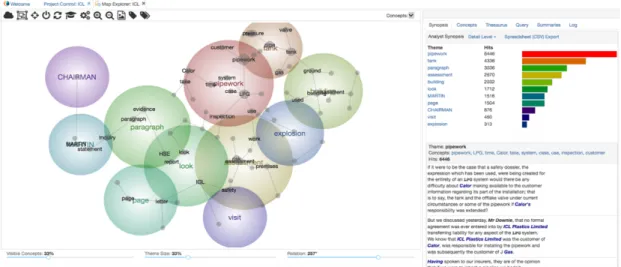
Figure 4. Example of Leximancer concept map and analyst synopsis panel ... 56
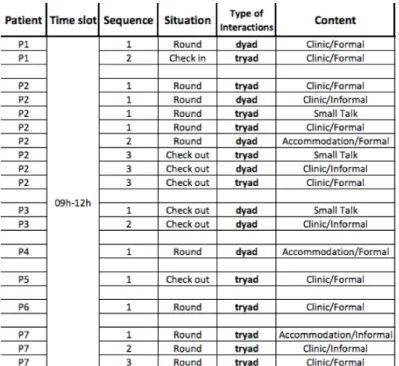
Figure 5. Spreadsheet with classification and categorisation of interactions ... 58
Figure 6. Main steps of qualitative research ... 61
Figure 7. Concept map of hospitality from actors’ point of view ... 63
Figure 8. Perceptual map of dyads and triads ... 83
List of Tables
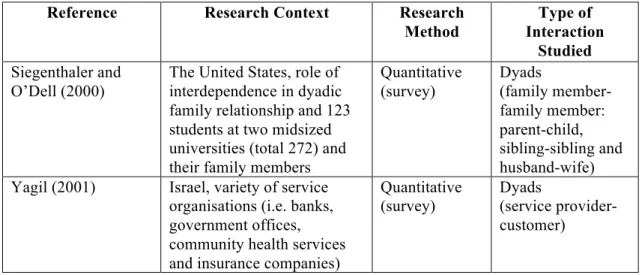
Table 1. Selected studies: dyads and triads ... 30
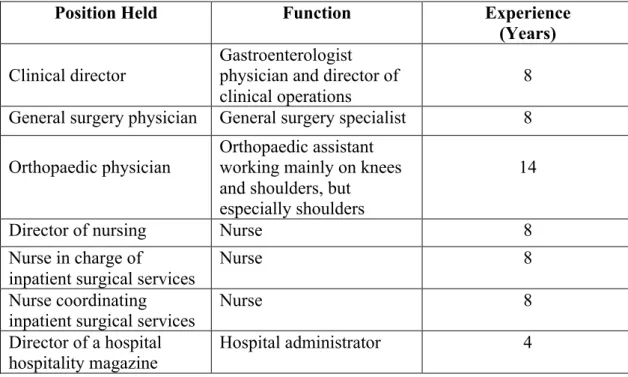
Table 2. Interviewees’ profile ... 52
Table 3. Some examples of verbal interactions observed and recorded in field notebook...60
Table 4. Actors’ point of view ... 77
Table 5. Percentage of types and participants in interactions ... 78
Table 6. Percentage of dyads and triads in each situation ... 80
Table 7. Percentage of each content ... 80
Table 8. Percentage of dyads and triads for each content ... 81
Table 9. Percentage of different content in each situation ... 82
Table 10. Percentage of shifts from content (1) to content (2) in the same transaction . 87 Table 11. Spreadsheet of main words in interviewees’ answers for each item ... 104
List of Appendixes
Appendix A. Interview Guide……….150 Appendix B. Hospitality Dimensions……….152 Appendix C. Participant Observations………....157
1. Introduction
1.1 Background
1.1.1 Tourism
Tourism is a complex phenomenon that includes varied services and comprises a set of activities and attractions offered by service providers to meet customers’ needs and expectations, thereby creating value and benefits for them (Darbellay & Stock, 2012; Echtner & Jamal, 1997; Lovelock & Wright, 1999). Tourism services have specific characteristics: intangibility, inseparability, heterogeneity and perishability (Moeller, 2010; Reisinger, 2001; Taherdoost, Sahibuddin & Jalaliyoon, 2014; Vargo & Lusch, 2004).
1.1.1.1 Intangibility
Services are intangible, which means that they are not physical and cannot be physically owned since they cannot be observed, touched, heard or smelled before their acquisition (Fisk, Grove & John, 2008; Kotler, Hayes & Bloom, 2002; Reisinger, 2001; Taherdoost et al., 2014). Service providers must thus offer tangible representations of their services (Kotler et al., 2002).
1.1.1.2 Inseparability
Specific intrinsic conditions characterise services, for example, the simultaneous purchase and consumption of products. Providers, consumers and interactions between service providers and customers are also essential features, among other key components (Hill, 1999; Javalgi & Martin, 2007; Moeller, 2010).
1.1.1.3 Heterogeneity
Services vary from client to client. That is, services with identical characteristics can be provided in different ways since each individual is different and consumers make unique demands (Moeller, 2010; Reisinger, 2001; Taherdoost et al., 2014).On the one hand, this
heterogeneity facilitates customisation, personalisation and the provision of differentiated services to customers. On the other hand, heterogeneity makes establishing a single service and standardised performance and avoiding mistakes quite difficult (Reisinger, 2001). In addition, clients show great subjectivity when evaluating services (Fisk et al., 2008;Kotler et al., 2002).
1.1.1.4 Perishability
This characteristic means that services cannot be stored for future use. Therefore, if they are not utilised within a certain period, they cannot be preserved, returned or resold (Hoffman & Bateson, 2003; Järvinen & Lehtinen, 2004; Reisinger, 2001; Taherdoost et al., 2014; Vargo & Lusch, 2004). Beside these characteristics, services in tourism, as in any sector, require human resources (Baum, 2007, 2015) not only to create products, goods and activities but also to distribute them to clients directly or indirectly.Service providers are fundamental to service quality.
1.1.1.5 Human Resouces and Verbal Interactions
In tourism organisations, human resources are placed according to their function. Those working in the back office provide services unobserved by clients, but this staff’s work influences the final result. Front-office workers are in direct contact with clients, so these staff members can probably be considered the strongest determinant of customers’ perceptions of services (Kandampully & Suhartanto, 2000; Rao & Sahu, 2013; Watt, 2007).
When staff are in contact with clients, their interactions are the main vehicle of communication. Even non-verbal interactions, such as postures and gestures, and verbal interactions, as well as looking into people’s eyes, influence customers’ perceptions and generate value judgments of experiences (Gabott & Hogg, 2001; Islam & Kirillova, 2020; Kelly, Losekoot & Wright-StClair, 2016; Moon, Miao, Hanks & Line, 2019; Pinto et al., 2012; Roberts & Bucksey, 2007). Interactions’ quality has thus become a key component of tourism-related service quality, which helps improve clients’ experiences. Interactions’ content and their level of formality condition relationships between providers and
customers. Given the importance of cultural, social, political, religious, gender and other issues, staff must adjust how they communicate and adapt services to take into account different contexts (Islam & Kirillova, 2020).
The necessary conditions for positive experiences are created by the relationships established between tourism service managers and their employees. These conditions are also shaped by providers’ competence and the quality of the products offered and interactions between providers and clients, which thus contribute to customer loyalty (Berry, Carbone & Haeckel, 2002; Budianto, 2019; Stauss & Seidel, 2019). Hospitality is also a fundamental dimension of professionals’ interactions with clients within service provision. Hospitality conditions and unites the previously mentioned elements (i.e. services, human resources and verbal interactions), which means that service management, professionals and interactions are connected in specific ways through hospitality (Garavan, 1997; Kaminakis, Karantinou, Koritos & Gounaris, 2019; Noe, Hollenbeck, Gerhart & Wright, 2017; Secchi, Roth & Verma, 2019).
In addition, tourism organisations’ management must be oriented towards not only making a profit but also ensuring staff members’ satisfaction. This condition is fundamental for these individuals to perform their functions in more positive ways (Borralha, 2018). When service providers base their work on hospitality, they also receive benefits. These include higher satisfaction with their job performance (i.e. workers can directly perceive the results of their efforts), better relationships with people (i.e. staff members, care providers and clients) and a sense of responsibility for their organisation’s image (Quevedo, 2004). Thus, hospitality emerges as a dimension that makes positive interactions possible between all the actors in service provision and that contributes to a better workplace environment (Borralha, 2018).
1.1.2 Tourism and Hospitality
Although tourism can be defined in various ways, most researchers agree that tourism is to some extent fragmented. It comprises multiple spheres including, among others, transport, lodging, attractions, facilities, catering services and entertainment, as well as eating and drinking establishments (Chon & Maier, 2009; Lee & Yuan, 2018; Reisinger,
2013). Tourism is, as a result, a blend of services and products that different subsectors offer to tourists.
Hotels are one of the main tourism service providers. Currently, hotels invest not only in physical components (e.g. design, products and services) but also in personal components, which hotel managers have realised are a crucial element in their organisation’s success. Hotels professionals receive guests and interact with a variety of people from different cultures and age groups, so employees’ competence, as well as the way they receive, interact and welcome guests, has becoming key to improving hotel services.
These services range from reception to room service, from restaurant to breakfast service and from laundry service to concierge and security, so they involve many different professionals and their interactions with guests. Hospitality is thus vital to hotel service improvements (Rao & Sahu, 2013) as it can be used to support and develop different services (Lashley, 2000). Examining the quality of hotel services without measuring the presence of hospitality is now considered impossible (Rao & Sahu, 2013). The health sector similarly offers – and subdivides into – different services that are mostly quite specific and complex. In these two sectors, hospitality can also be understood as a fundamental factor in service quality.
1.1.3 Healthcare and Hospitality
The philosophy of hospitality is based on exchanges of services, products and goods and the way service providers receive and interact with customers. Thus, hospitality can be studied in varied contexts, including in healthcare provision (Bunkers, 2003; Dickson, Severt, Aiello & Noland, 2008; Gilje, 2004; Kelly et al., 2016). The health sector’s competitiveness and supply chain have grown as the average life expectancy has risen. Patients have further become more demanding because their choices are currently more varied. In this setting, hospitality functions as an essential connection between healthcare services, professional caregivers and patients (Taylor & Edgard, 1996). In addition, hospitality’s importance is magnified in healthcare contexts because caregivers treat and care for sick guests (Severt, Aiello, Elswick & Cyr, 2008).
However, because the concept of hospitality can have various meanings, researchers have experienced much difficulty understanding how hospitality can be applied in healthcare settings such as hospitals and which areas need to be included or which aspects are more important. Hospitality can be treated as an outcome (i.e. patients’ response after healthcare services are provided) or as a process to be evaluated (i.e. the form in which services are provided) (Coulter, Fitzpatrick & Cornwell, 2009; Ottenbacher, Harrington & Parsa, 2009; Quader, 2009).
1.1.3.1 Human Resources and Verbal Interactions
In hospital settings, hospitality affects hospitals’ everyday routines, and studies have shown that related aspects such as hospital conveniences and personal exchanges have an impact on how well patients’ wishes and expectations about outcomes are satisfied (Kelly et al., 2016). Hospital experiences can be emotionally charged, so personal interactions are important to improving these experiences (Hartwell, Edwards & Symonds, 2006). Verbal interactions are the main means of communication, thus these interactions’ content and level of formality and staff members’ capacity for listening to patients are fundamental to building patients’ trust and improving clients’ experiences (Fleischer, Berg, Zimmermann, Wüste & Behrens, 2009; Rashid, 2009; Stanyon, Griffiths, Thomas & Gordon, 2016).
Healthcare professionals (e.g. doctors and nurses) are crucial because of not only their performance of medical services but also their interactions with patients. Hospitals’ human resource managers need to encourage healthcare professionals and other front-office (e.g. reception) and back-front-office (e.g. cleaning and security) staff to implement hospitality strategies as this is also important to improving healthcare service quality (Berry et al., 2002; Cunningham et al., 2012). Service providers can significantly enhance the quality of patients’ experiences by expressing positive attitudes. Patients’ satisfaction levels are influenced by health professionals’ emotional support and in-person interactions. However, the way that each patient gets pleasure from the same hospital experiences is always different since satisfaction has been shown not to be a universal phenomenon. The hospital staff’s perceptions of patient satisfaction thus may or may not correspond to the reality of each situation (Hartwell et al., 2006).
Satisfaction is generated by both core services and peripheral features surrounding services. The resulting hospitality experiences are satisfactory only when all products and services’ individual elements converge to create positive experiences (Hartwell et al., 2006). Taking into account patients’ requests and desires appears to have become essential to any healthcare system’s success. Consequently, health service providers have given increasing support to using patients’ assessments and reports to supplement other ways of evaluating and checking healthcare quality (Cleary et al., 1991). Similar to hotels, hospitals include different services, human resources and multiple verbal interactions between different actors. This means that these three elements are connected and influenced by hospitality (Garavan, 1997; Kaminakis et al., 2019; Noe et al., 2017; Secchi et al., 2019), which contributes to better hospital experiences.
1.2 Purpose of Research
The present study’s goal was to assess hospitality as a tool for service improvement. Hospitality is an important dimension of service provision in tourism and healthcare, but the literature reveals a gap in research contributing to a deeper understanding of hospitality in healthcare. Therefore, this study conducted a case study of a hospital setting to examine healthcare professionals’ perceptions of hospitality’s meaning and importance to service provision and the significance of verbal interactions – specifically in hospitals. The results help fill the gap left by the limited research on these topics and, more particularly, on healthcare professionals’ perspectives on hospitality.
1.3 Relevance of Topic
Hospitality has already been investigated in hospital contexts. Prior studies have revealed that, besides healthcare’s technical quality and clinical results, an essential characteristic of hospitals that affects patients’ satisfaction is the quality of daily interactions in which a variety of individuals participate in different ways (Henke et al., 2018). Hospitality in hospitals thus contributes to satisfying human needs (Oliveira, Gomes, Racaneli, Velasquez & Lopes, 2013). However, few researchers have focused on the way hospitality is implemented and its current use as a practical resource in daily hospital operations. In addition, studies have neglected to examine the actual role played by
hospitality in hospitals and the significance of interactions between healthcare professionals and patients.
In addition, many researchers have concentrated on patients’ experiences in hospital contexts and their perspectives on these (Ahlenius, Lindström & Vicent, 2017; Andaleeb, 2001; Cleary et al., 1991; Price et al., 2014; Richter & Muhlestein, 2017; Zaim, Bayyurt & Zaim, 2010), but the literature on health professionals’ views is still incomplete (Turner, Eccles, Elvish, Simpson & Keady, 2017). Given that healthcare providers are essentially in charge of service quality, investigations are needed of the way these professionals interact with patients, these caregivers’ experiences and their views regarding the importance of hospitality in hospitals. Finally, hospitality function as a tool for service improvement from a healthcare professional perspective is still underresearched.
Therefore, this study’s results are expected to help not only hospital-related organisations but also other sectors such as tourism to achieve a deeper understanding. This includes how to use hospitality as way to improve services, which hospitality practices to adopt and how to ensure verbal interactions become the best vehicle for hospitality. This thesis is especially relevant because it focuses on a topic that is currently being explored and because parallels can be drawn with different contexts due to the hospitality concept’s transferability.
1.4 Aims of Thesis
Although the concept of hospitality has been extensively studied in the hospitality and tourism industries, research on hospitality in the healthcare sector is still limited. The present study thus concentrated on understanding the importance of hospitality to service improvement and, more specifically, hospitality’s presence and significance in hospitals, by examining hospital professionals’ experiences and perceptions. Before the research could be conducted, the best way to address the following questions needed to be identified:
- RQ2: How important are verbal interactions to hospitality in hospitals? - RQ3: How important is hospitality as a tool for service improvement?
To define the research topic, the study’s relevance and its main research questions, specific objectives had to be defined for each question. Regarding RQ1, the objectives were to examine hospitality’ meaning and significance from healthcare professionals’ perspective, as well as whether this strategy is perceived and interpreted in the same way by all individuals. To find out if hospitality has the same meaning for and importance to any sector, a comparison needed to be made between hospitality in tourism (i.e. hotels) and healthcare (i.e. hospitals). Hospitality’s main components also had to be identified, including which can be implemented in hospitals. To achieve these objectives based specifically on healthcare professionals’ perspectives, semi-structured interviews were conducted.
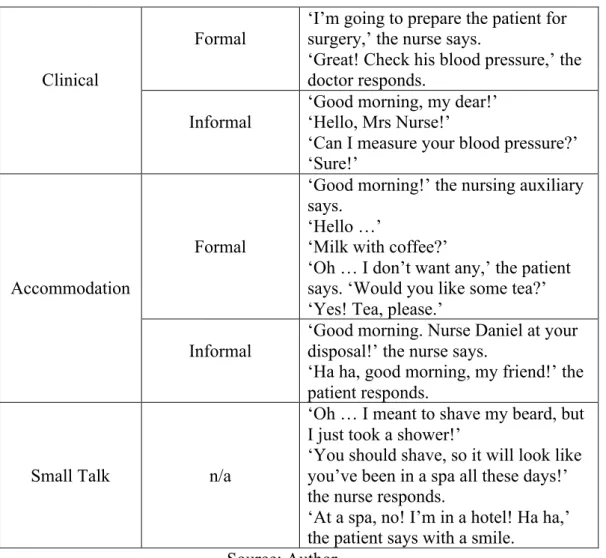
For the second research question (i.e. RQ2), the following objectives were delineated. The main types and contents of verbal interactions needed to be examined in inpatient hospital settings, along with the participants in these interactions. In addition, this research required developing an understanding of how informality is used as a hospitality strategy by hospital organisations. Finally, to evaluate verbal interactions between healthcare professionals and patients, data were collected using participant observation.
The objectives related to the third research question (i.e. RQ3) were defined. Hospitality was examined as an element of healthcare service assessments, especially its relationship with clients’ satisfaction. Hospitality’s importance to patients’ experiences was investigated, as well as the significance of interactions in hospitals’ daily operations. Further objectives were to determine the main participants and positive and negative factors that condition these interactions’ quality. The final objective was to identify which improvements are needed to ensure better hospital experiences to allow conclusions to be drawn about the importance of hospitality as a tool for service improvement. To achieve the objectives proposed, semi-structured interviews were conducted.
1.5 Presentation of the Literature Review
This study started with a review of the literature on tourism as a multidimensional, complex phenomenon in order to explore its relationship with hospitality and the relevance of hospitality in other contexts such as healthcare. Next, the review focused on exploring the hospitality concept and its connection and importance to healthcare services, especially in hospitals, and the significance of verbal interactions as a way to transmit hospitality.
Subsequent analyses focused on how hospitality can be a tool for service improvement and implemented in practice and which practical resources can be adopted by other sectors. This part of the study concentrated on three elements: service provision, human resources and verbal interactions. The three elements are relevant in different sectors, including tourism and healthcare, and they are connected through hospitality (see Figure 1).
Figure 1. Presentation of the literature review Tourism Hospitality Healthcare Verbal Interactions Hospitality • Service Provision • Human Resources • Verbal Interactions
1.6 Organisation of Thesis
This thesis is organised into six major chapters. The first is the introduction, which is followed by two chapters discussing the general literature review and methodology applied, respectively. Chapter four details the results, while chapter five presents a discussion of the results. The last chapter offers the conclusions, including theoretical and practical implications, the study’s limitations and suggestions for future research. The thesis ends with a bibliography and appendixes.
The above introduction identified tourism services’ characteristics and the importance of human resources and provider-client interactions to services, with hospitality as the main link between them. In addition, the relationship between hospitality and healthcare was introduced. Because the health sector is also complex, diverse services are offered, and they have some points in common with tourism services. Next, the research’s purpose was presented, as well as the research topic’s relevance, the study’s aims, a brief review of the literature and the thesis’s sequence and organisation.
The following chapter covers the theoretical background, which includes a review of the relevant literature on tourism research. More specifically, the review covers the study of tourism as a multidimensional phenomenon, which is due to its economic, commercial, cultural and social dimensions. The discussion covers tourism’s characteristics, service provision, human resources and verbal interactions, as well as this sector’s relationship with hospitality. The chapter then reviews the hospitality concept as an important dimension of service provision in both tourism and healthcare, revealing a gap in researchers’ understanding of hospitality in hospitals. The significance of hospitals’ service provision, their human resources, the quality of verbal interactions and their connection with hospitality is also analysed.
The methodology chapter explains the reasons for using qualitative methods and a hospital setting to conduct the case study. This research focused on health professionals’ perspectives on hospitality in hospital services and the daily routines of inpatient hospital healthcare. The study’s context is presented with an explanation of the environment and details regarding the selection of the hospital and the authorisation process. This chapter
recorded via participant observation and semi-structured interviews over several months. Mixed content analyses of the data were carried out after 84 patients were observed, 241 interactions collected and various interviews recorded.
The results chapter covers the perspectives of health professionals on hospitality’s meaning and importance in hospital contexts. The results include whether hospitality is perceived and interpreted in the same way by all participants and hospitality’s relationship to services differs between sectors, in this case specifically in tourism (i.e. hotels) and healthcare (i.e. hospitals). Both sectors consist of varied services, providers, users and interactions. Other results are hospitality’s main components and dimensions, as well as which can be implemented in hospitals. In addition, this chapter details the influence of verbal interactions’ type, content and level of formality on patients’ experiences, hospitality as part of healthcare service assessments and the importance of hospital experiences and verbal interactions. The final results include which improvements are needed to ensure better patient experiences, thereby revealing how hospitality can be used as a tool for service improvement.
The subsequent chapter presents a discussion of these results, while the final chapter offers the conclusions and discusses the findings’ overall theoretical and practical implications for both academics and practitioners. This study’s limitations are then detailed along with suggestions for future research.
2. Theoretical Background
2.1 Tourism as a Multidimensional Phenomenon
Tourism is a ‘multisectoral industry and a truly multidisciplinary field of study’ (Jafari, 2000, p. 585). Tourism is multisectoral because it includes different types of products (e.g. accommodations, food and beverages and transport) and services (e.g. hotels and travel agencies). Tourism not only conditions and influences other industries but is also influenced by them. Thus, research on this industry is a multidisciplinary field that has involved experts in different areas such as sociology, economics and psychology (Jafari & Ritchie, 1981). However, this industry is primarily given importance as a driver of
economic development (Sinclair, 1998; Tapper, 2001; Visser, 2019).
Because tourism is a multidimensional phenomenon, it is quite complex, presenting diverse services, products and individuals, and multifaceted, taking different forms and comprising varied areas (e.g. health tourism, religious tourism, ecotourism and business tourism). Tourism is also intangible because its services cannot be seen, used and experienced before they are acquired. For example, hotel rooms are only experienced during stays (Fisk et al., 2008; Kotler et al., 2002; Reisinger, 2001; Taherdoost et al., 2014). Furthermore, tourism is heterogeneous since its services are highly variable. That is, they change from client to client, making tourism a complex system dependent on tourists’ subjective evaluations of services (Moeller, 2010;Reisinger, 2001; Silva, 2015; Taherdoost et al., 2014). Finally, tourism is perishable because its services, among other characteristics, cannot be stored for future use, so they must be consumed when produced. Namely, if hotels do not sell any of their rooms each day, their use cannot be stored for the next day, which means that empty hotel rooms do not generate profit (Hoffman & Bateson, 2003; Järvinen & Lehtinen, 2004; Reisinger, 2001; Taherdoost et al., 2014; Vargo & Lusch, 2004).
Tourism includes hospitality as an important dimension that influences its services. This concept is widely incorporated as a subarea of industries oriented towards services, such as tourism (Ariffin, Maghzi & Aziz, 2011). Tourism and hospitality providers are linked in stable patterns (Watson, 2008) since both industries centre their efforts around offering goods and services (Resinger, 2013).
The existing research on both hospitality and tourism shares various essential questions and concepts concerning the ways that hosts and guests relate to each other. These are power relationships because of provider-client interactions’ dynamics. The concepts related to both hospitality and tourism have also been used to represent much wider social and cultural experiences and symbolic practices (Bell, 2009; Molz & Gibson, 2016; Wang, 2013).
Hospitality is necessarily one of tourism’s basic components since the absence of hospitality compromises tourist destinations’ sustainability. For hospitality to be
implemented successfully, tourists must understand and respect the cultural characteristics of the countries visited and their residents’ customs (Besculides, Lee & McCormick, 2002; Doǧan, 1989; Pizam & Jeong, 1996; Smith, 2012). Conversely, the interest and attention given by hosts to tourists’ origins are also important so that they will feel accepted in their destination and that this process of sharing cultures can be positive.
However, the exchange process is jeopardised if the resident population is uncooperative and unreceptive and if tourists also fail to fulfil their duties, which leads to the breakdown of hospitality. Thus, all the actors involved need to realise hospitality’s significance to tourists and host communities. Respect, understanding, acceptance and mutual tolerance strengthen communication skills and interpersonal relationships (Capocchi, Vallone, Pierotti & Amaduzzi, 2019; Martín, Martinez & Fernández, 2018).
In addition, service quality is crucial to achieving success in these areas. When guests are pleased with services, they will visit again and recommend service providers to others (Brochado & Rita, 2016). The best services will be those that, through hospitality, improve guests’ wellbeing (Richie, Crouch & Hudson, 2001). Customer satisfaction and good quality services are much sought after by competing facilities within the hospitality industry (Paryani, Masoudi & Cudney, 2010). In general, the demand for tourism-related services has grown continuously, along with guests’ desire for higher standards, which have increased competition between hospitality service providers.
In this context, key strategies known to promote companies’ provision of services within the tourism sector have been implemented by providers in order to ensure high-level services and increase customer satisfaction (Dominici & Guzzo, 2010). Pleasing guests needs to be considered the minimum standard in tourism, so this industry’s managers should take into account that their service quality depends on generating pleasurable emotions and memorable experiences (Brochado, Rita & Gameiro, 2015). Providing services and products alone is also no longer sufficient as experiences have become essential to guests’ satisfaction. Generating and handling these events can be a challenging task particularly in terms of hospitality (Brochado et al., 2015).
Consumers categorise satisfactory experiences in four ways. The first is sensory – or physical – satisfaction, which arises from the pleasurable sensations felt during experiences. The second is social satisfaction, which occurs when consumers relate to others in positive ways. The third is emotions, which produce ideas, feelings or mental pictures. The last is intellectual satisfaction or consumers’ capacity to understand experiences’ intricate, enriched components (Dubé & Le Bel, 2003; Scott, Laws & Boksberger, 2009).
The experiences offered by tourism and hospitality can be viewed as dynamic, intricate systems within which hosts and guests interact through technical and service features (Checkland, 2000; Scott et al., 2009). Services can be defined as a combination of the actions occurring based on connections established between companies’ staff, customers and other physical features, networks and/or structures. These aspects involve multiple service suppliers and potentially other customers, as the objective is to support routines clients find desirable (Brochado et al., 2015).
What guests hope to obtain from the services provided affects their post-purchase satisfaction, which makes satisfying guests with lower expectations easier than consumers with higher ones. Thus, understanding what guests wish for and want is essential (Wuest, 2001). Extraordinary service overall exceeds the quality and quantity expected by guests (Collier, Barnes, Abney & Pelletier, 2018; Pizam & Ellis, 1999; Wuest, 2001). Enjoyable surprises offered by hosts can increase customers’ fulfilment, and their satisfaction levels will be higher. Guests whose expectations have been met or surpassed can be a bonus for businesses because these clients become excellent adverts (Collier et al., 2018; Wuest, 2001).
Torres and Kline (2006), among other authors, argue that customer satisfaction only shows that service provision was good, which does not imply that guests are enthusiastic about the provider. Highly pleased customers are both enthusiastic and likely to share positive opinions about services to other consumers. Delight with the services provided has been connected to results such as guest loyalty and firms’ higher income, which can generate competitive advantages that other providers find hard to replicate (Crick & Spencer, 2011; Torres & Kline, 2006).
Crick and Spencer’s (2011) study confirmed that the fulfilment of guests’ needs is currently considered just a basic level of service provision. A variety of organisations providing hospitality services consider service quality to be the generation of emotional fulfilment and outstanding experiences. Different hospitality providers of standard services currently use the concept of experience to plan and improve services provided to visitors, guests and customers (Dickson et al., 2008; Pine & Gilmore, 1998). According to Hemmington (2007, p. 17), ‘hospitality organisations that are able to capture this sense of theatre and generosity will gain competitive advantage[s] by providing their guests with experiences that are personal, memorable and add value to their lives.’
2.1.1 Hotel Service Provision
Research on hospitality in tourism has been expanding mainly in the hotel sector (Park, Phillips, Canter & Abbott, 2011; Suess & Mody, 2017). Hotel services have become one of the most visible faces of hospitality. Given the increased competition among hotels, guests can now choose their hotels’ physical appearance, location and variety of services, as well as the way travellers are accommodated and received. Hotels currently bet not only on differences in the services offered but also on the quality of service provision.
The hotel sector thus depends on offering quality services and products, competent employees and meaningful provider-client interactions. As a result, how hosts interact with guests has become a key element in the provision of quality services. The human factor is central to hospitality, and individuals are the essence of hotel businesses’ services. This aspect has remained important regardless of technological developments given that the way in which guests are received in hotels deeply marks consumers’ perceptions of these places upon arrival (Quevedo, 2004). Even the placement of items in rooms or the manner in which guests are greeted can generate a feeling of being in a home when individuals are away from home. The interaction of hotels’ efforts to create a familiar, homelike setting with these businesses’ need to be economically sustainable is what makes the hotel sector unique, as well as stimulating and exciting (Crick & Spencer, 2011; Pizam & Shani, 2009).
2.1.2 Hotel Human Resources
Individuals employed by hotels usually interact with people from different cultural backgrounds, whose views on service quality can be influenced by specific cultural aspects such as power distance (Crick & Spencer, 2011; Tsang & Ap, 2007). Studies of service quality have produced a consensus around the idea that guests are the final decision makers regarding the services provided (Crick & Spencer, 2011; Wuest, 2001). Therefore, the hospitality sector, especially hotels, involves a great deal of competition regarding offering service quality that results in customer satisfaction (Crick & Spencer, 2011; Parayani et al., 2010). Hotel guests’ contentment is mainly based on hotels’ quality services and products and the way clients are received. Mutual long-term guest-host relationships are essential given the largely positive connection found between guests’ overall satisfaction and their likelihood to return to particular hotels (Ariffin et al., 2011).
Hotels must thus more accurately understand what guests actually want to obtain from their service experiences (Cetin & Dincer, 2014; Crick & Spencer, 2011). To prosper in their market, hotels need to not only attract more customers but also focus on keeping the existing ones by applying loyalty and customer satisfaction strategies. In this sector, customer satisfaction goes hand in hand with the service quality provided (Dominici & Guzzo, 2010), but service quality cannot be measured as a stationary goal because standards are constantly changing. The core of client-oriented service provision (i.e. hospitality) is the fulfilment of customers’ expectations. Most research on hotels has shown that this sector is characterised by intense, rising competition regarding service quality and customer satisfaction (Crick & Spencer, 2011; Paryani et al., 2010).
Even though experts have concluded that meeting expectations generates satisfaction and that surpassing these produces pleasure, most studies of this topic have observed hospitality in only its most basic forms. Hotels provide many services over time, so these organisations need to prevent any failures in service provision. The possibility of these occurring is higher in hotels because of their greater volume of interactions. The service quality provided keeps on generating competitive advantages for these businesses since competitiveness has not decreased and the general public is travelling more and becoming more complex as clients. Individuals now expect to have a variety of options and
information available from individual hotels. Hotel managers who bet on hospitality as a tool for service improvement will gain additional advantages (Crick & Spencer, 2011).
2.1.3 Hotel Verbal Interactions
As previously mentioned, hotel services imply many interactions between hosts and guests and between service providers themselves. Hospitality is crucial in any area of hotels, from the front office to the back office.Hospitality starts with guests’ arrival and their interactions with the concierge and continues with check-in and subsequent interactions with other employees. The latter’s gestures and the way they receive and talk with clients are essential (Ariffin, Maghzi, Soon & Alam, 2018; Christou, Avloniti & Farmaki, 2019).
Different services’ quality is crucial, including, among other features, hotels’ design, hygiene, room service, restaurant food, security and many other services (e.g. check-in and check-out). However, physical services are not the only important component in guests’ experiences as service personalisation, human resources’ competence and verbal interactions’ quality are also necessary elements of hospitality (Ariffin & Maghzi, 2012; Buhalis & Amaranggana 2015). The service quality and social environment provided through verbal interactions between all employees and clients contribute to better hotel services that are later reflected in the quality of guests’ experiences (Bitner, Booms & Mohr,1994; Christou et al., 2019).
2.2 Hospitality Concept
Hospitality is understood in different ways by various fields of research such as tourism, management and marketing. Previous studies have found that hospitality has been investigated from different viewpoints and to achieve varied objectives (Lynch, Molz, Mcintosh, Lugosi & Lashley, 2011; O’Gorman, 2007; Still, 2006). However, most studies of hospitality in service provision have sought to examine this concept’s different dimensions (Lynch et al., 2011; O’Gorman, 2007; Still, 2006). These include physical environments (i.e. design and infrastructures) (e.g. Suess & Mody, 2017; Wu, Robson & Hollis, 2013) and amenities (i.e. prices, food, accommodations and security) (e.g. Crick
& Spencer, 2011; Dominici & Guzzo, 2010; Justesen, Gyimóthy & Mikkelsen, 2016). Other dimensions are customer satisfaction (e.g. Paryani et al., 2010; Severt et al., 2008) and social interactions (i.e. host-guest and service provider-client interactions) (e.g. Ariffin et al., 2011; Bell, 2009; Justesen et al., 2016; Lynch et al., 2011; Molz & Gibson, 2016; Severt et al., 2008).
Hospitality usually includes a vast spectrum of elements, such as accommodations, nourishment, leisure, protocols, travel and attractions. A quite broad conceptualisation is needed to facilitate analyses of hospitality activities in terms of social, commercial and private aspects (Lashley, 2000, 2011). The social aspect includes wider social contexts in which hospitality occurs (e.g. cultures and proximity levels) (Lashley, Lynch & Morrison, 2007). The commercial domain covers hospitality services as economic activities (e.g. travel and accommodation). The literature shows a growing interest in the study of hospitality in terms of more private aspects, namely, in its study and evaluation as a social phenomenon related to the establishment of personal relationships (Lashley, 2000, 2011).
Hospitality is defined similarly in academia and mainstream public discourse as related to the provision of food, beverages or accommodations. Defining hospitality this way – although useful at times – excludes part of its essence by narrowing the conceptual framework and hindering further rational options. Hospitality is thus often associated with commercial operations as it plays a fundamental role in boosting service provision’s economic value, but this approach limits the role of personal interactions to commercial relationships (Kunwar, 2017; Lashley, 2011; Lynch et al., 2011; Ottenbacher et al., 2009).
To meet hospitality service standards, this concept’s essential meaning needs to be understood more fully (Kunwar, 2017). The primary question to answer is what hospitality means, to which different answers have been given. These include ‘receiving guests in a generous and cordial manner’, ‘creating a pleasant or nourishing environment’, ‘satisfying a guest’s needs’, ‘anticipating a guest’s desires’ or ‘generating a friendly and safe atmosphere’ (Chon & Maier, 2009, p. 5). Another suggestion is ‘friendly and welcoming behavior towards … guests’(Kunwar, 2017, p. 56). According to the English
Oxford Living Dictionaries (n.d.), hospitality is defined as ‘the friendly and generous
https://en.oxforddictionaries.com/definition/hospitality).
Determining hospitality’s significance and importance has proved a challenge for many researchers in the fields of hospitality and tourism (e.g. Brotherton, 1999; Chon & Maier, 2009; Kunwar, 2017; Ottenbacher et al., 2009). The literature on hospitality shows that many scholars have studied this concept in recent years and that many researchers have contributed a growing number of evaluation instruments used to assess service quality, competitiveness and consumer expectations. Despite the plethora of research, key questions still remain unanswered, and they will likely continue without answers well into the future. While various definitions of hospitality are closely associated with the way guests are received and satisfied, a clear paradigm has not been defined for hospitality’s significance and importance.
Given this lack of consensus among researchers, Jones (1996a, cited in Kunwar, 2017, pp. 6–7) argues that ‘hospitality research exists more in form than in substance’. This has happened probably because hospitality is a subjective concept that is dependent on different contexts (e.g. cultural, social, economic, ethical, religious and political aspects). Various authors have also suggested that hospitality depends on complex relationships between those who engage in relevant acts and those who receive these acts through experiences(Kunwar, 2017; Lashley et al., 2007; Lugosi, 2008, 2009).
Hospitality can be further understood as a process involving the organisation of individuals who do not know each other, in cultural and social settings comprised of duties, obligations and morals (Lynch et al., 2011). This broad conceptualisation can also be used to explain the ways in which individuals behave towards other people (Crick & Spencer, 2011). Thus, a more useful way of looking at hospitality is as a process involving: hosts and guests as the main participants (Lynch et al., 2011).
Typically, hospitality comprises the act of involvement (i.e. welcoming behaviours), certain attitudes (i.e. allowing a free flow of expressions, opening a house door or letting an unknown person use one’s space) and underlying social principles (Lynch, et al., 2011). Brotherton (1999) additionally specifies that hospitality is composed of three main relational exchanges. These are guest-host interactions, provider-receiver exchanges and
diverse features connected to the way in which hosts supply their guests with a sense of security and mental and physical wellbeing.
Establishing relationships or managing existing ones is, therefore, the essence of hospitality. Actions related to hospitality are present during host-guest interchanges of services, products and goods (Lashley, 2000; Selwyn, 2000). Hospitality is how institutions please and keep customers, going beyond their expectations and providing them with the best possible experiences (Chang & Teng, 2017; Kandampully, Zhang & Jaakkola, 2017; Rathore, 2017), which are achieved through personal interactions. These relationships are defined by hospitableness that, although initially shown by hosts to guests, can later become reciprocal (Brotherton, 1999; Paraschivescu, Cotârlet & Puiu, 2011; Severt et al., 2008).
Hospitality further comprises a welcoming attitude and atmosphere that ensure more than just outstanding services and memorable experiences (Severt et al., 2008). Hospitality as a transversal dimension is present across various domains and services in different sectors. It influences the service quality provided by employees and the different interactions they initiate. The presence of hospitality acts is important in day-to-day services (Kelly et al., 2016).
However, Taylor and Edgard (1996) argue that the scope of hospitality research must be defined more clearly in order to create a coherent theoretical framework that can more objectively reflect all functions and perceptions of hospitality. Researchers must, therefore, examine how service providers understand hospitality’s meaning and importance and how hospitality is used as a tool for service improvement.
2.3 Healthcare: Hospitality in Hospitals
Hospitality has mainly been investigated in business contexts within the tourism and hospitality industry, for example, hotels, restaurants and transport (Dickson et al., 2008; Suess & Mody, 2017), but many insights can also be obtained from studying hospitality in different contexts not associated with these facilities. More specifically, hospitality needs to be studied within the health sector because its fundamental philosophy includes
the exchange of goods and services and interactions among service receivers and providers (Bunkers, 2003; Dickson et al., 2008; Gilje, 2004; Kelly et al., 2016). The literature on hospitality in healthcare contexts has been expanding, particularly regarding health tourism. Individuals have begun to engage in this type of tourism in places other than their own community, receiving treatments that do not exist in their region and/or country while simultaneously getting to know new places. Satisfying the need to get specific treatments and to visit new locations simultaneously reduces patients’ stress on a mental and physical level.
Hospitality is important not only in health tourism but also as a part of routine healthcare services, so hospitality needs to be integrated into the relevant institutions’ service philosophy. Hospitality has also been found to be relevant in different healthcare services (Bunkers, 2003; Gilje, 2004; Kelly et al., 2016). Hospitals are a prime example of organisations providing these services, which means that research on hospitality in hospitals has developed into an important topic in the literature. Nonetheless, the information available on this subject is still incomplete even though this field of study has grown in recent years.
Research on hospitality in hospitals has become crucial due to the growing importance patients give to the quality of their experiences in routine healthcare provision. According to Pizam (2007, p. 500), ‘the difference between hospital and hospitality is “ity”, but that “ity” can make a significant difference in the recovery and stay of hospital patients.’
Hospitals need to provide patients with a hospitable atmosphere when they are ill (Dickson et al., 2008). Given that life expectancy is higher and more individuals will potentially require medical care, social welfare systems and hospitals will have to meet new standards in healthcare provision. The general public, potential patients and competitors, for instance, are beginning to assess their satisfaction with hospitals through publicly accessible online reviews. Extremely positive results could come from this public information (DeMicco, 2017; Dickson et al., 2008). Based on related research, Bart and Tabone (1998) concluded that caretakers’ conduct is positively influenced by institutions that line up their structures, practices, internal policies and processes with a clear mission (Bart & Tabone, 1998; Dickson et al., 2008).
Hospitals as organisations mainly focus on management procedures (Kelly et al., 2016; Wensing, Wollersheim & Grol, 2006), medical treatments (Walshe & Rundall, 2001) and clinical and financial results (Walshe & Rundall, 2001; Wensing et al., 2006). While hospital functions are necessarily related to and centred around clinical results (Porter & Lee, 2015), patients do not only evaluate their clinical results but instead assess and remember hospital experiences as a whole rather than as separate services (Kelly et al., 2016; Poksinska, Fialkowska-Filipek & Engström, 2017). The unique experiences of hospitals’ ‘guests’ thus need to be examined because the quality of these experiences is often related to these clients’ emotions, which can be intensified by illness, fear and other factors (Paraschivescu et al., 2011; Severt et al., 2008).
Various studies of patients’ hospital experiences have paid attention to customer service in terms of service provision systems and service quality measured across a variety of structures and procedures (Ahlenius et al., 2017; Cleary et al., 1991; Price et al., 2014; Richter & Muhlestein, 2017; Zaim et al., 2010). Because of hospitality’s importance to the proper management of routine hospital activities, researchers have also verified that various aspects play a part in shaping patients’ expectations, namely, hospital amenities and interpersonal relationships (Kelly et al., 2016). Scholars have had some difficulty determining the exact role of expectations, experiences and satisfaction levels when these are used to measure clinicians or organisations’ healthcare provision. Patients’ viewpoints and questions are most likely affected by their previous experiences with healthcare services and by their understanding of the relationships and dependencies existing among providers. Nonetheless, the feedback obtained is essential to producing positive change (Coulter et al., 2009).
Research on hospital service quality has identified essential dimensions (Kelly et al., 2016; Shirzadi, Raeissi, Nasiripour & Tabibi, 2016): technical care, treatments and medications; hospital facilities’ quality (i.e. reception and room design); and relationships between individuals. The latter personal connections are a non-medical aspect that is crucial to meeting patients’ general expectations. Improving support service provision apparently requires enhancing patients’ safety, care, health recovery and general comfort (Kelly et al., 2016; Suess & Mody, 2018). Hospitals’ atmosphere is also regarded as crucial to patients’ experiences. This has led some hospitals to adopt service design
strategies used by the hospitality industry to provide better services (Kelly et al., 2016; Shirzadi et al., 2016).
2.3.1 Hospital Service Provision
Even though some studies early on confirmed that other hospital services are provided besides medical treatments, hospital staff have viewed patients as clients only in recent decades. These individuals clearly have other needs and wishes that need to be fulfilled in addition to their health, illness or treatment (Quevedo, 2004). A parallel can thus be found between some tourism and healthcare services.
Managing hospitals as hotels is a relatively new research topic, but Sloan (as cited in Wu et al., 2013) considered options and searched for an innovative training programme for new hospital executives already at the beginning of the 1950s. The cited author concluded that a ‘hospital in certain respects is a very specialised hotel’. Sloan (as cited in Wu et al., 2013) believed that hospital administrators could acquire much useful knowledge from hospitality firms’ management perspectives.
Hotels seek to delight their guests as satisfying their needs is only a minimum standard (Dominici & Guzzo, 2010; Torres & Kline, 2006). This goal has led hotels to direct their efforts towards bettering products and management. Hospitals can learn from hotels’ experiences, and patients, hospital staff and employees could greatly benefit from hospitals’ adoption and application of hotel practices to enhance patients’ satisfaction and endorsement (Zygourakis, Rolston, Treadway, Chang & Kliot, 2014).
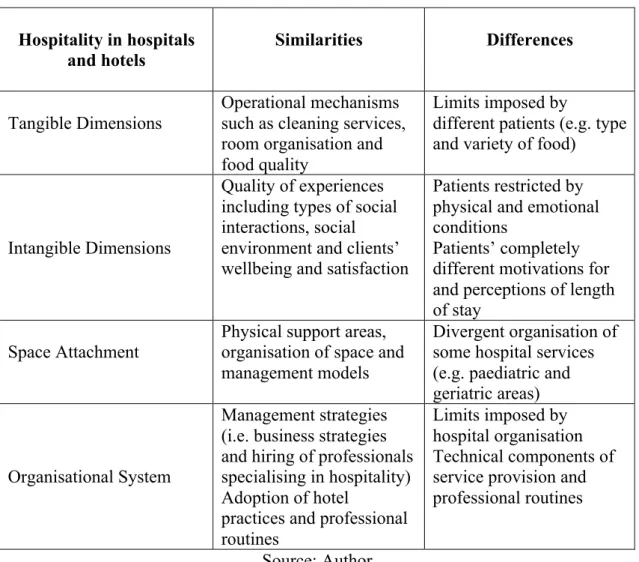
When researchers have observed hospitals closely, a correspondence has been found between these and hotel settings. According to Severt et al. (2008), parallels have been detected in host-guest relationships within both organisations, and these providers have already been compared with regard to the types of services offered. The features in common include the 24-hour service availability of bedding, maintenance, security and nourishment. Another similarity is that, in both settings, various expected or unanticipated changes can occur (Tanner, 2011).
In addition, hotel and hospital staff must offer round-the-clock availability and welcome unknown individuals for diverse reasons, including friends and family members (Dickson et al., 2008). Other shared features of hotels and hospitals are that they assist clients who are knowledgeable and who demand good service and that both types of organisations consist of vast hierarchies with diverse responsibility levels. Hotels and hospitals’ incomes are also connected to customers and/or patients’ assessments. Despite the above similarities, few studies have compared hospitality in the hospital and hotel sectors (Zygourakis et al., 2014).
Hotels have benefited from many years of experience of applying management and market research, which has given their staff extensive practice in how to improve customer satisfaction. Contrary to hotels’ long-term focus on guests and/or customers’ experiences, hospitals are new to paying attention to patients’ satisfaction (Zygourakis et al., 2014). Notably, in hospitals, patients are generally nervous and worried about their treatment. While they might be able to choose the place in which they will receive care, they may not voluntarily seek out that care. Medical treatment might be an unwelcome experience (Zygourakis et al., 2014).
In contrast, hotel guests choose their accommodations, and these individuals are mostly enthusiastic about being there, especially if they are travelling for leisure and not just for business. Hotels are generally selected prior to a stay. Hospitals are, in this respect, at a disadvantage compared to hotels since hospitals need to provide more services to guarantee patients’ wellbeing (Zygourakis et al., 2014). Paraschivescu et al. (2011, p. 126) thus observe that ‘the difference between a patient and a guest is not mutual, [since] a patient can be a guest, but a guest is not always a patient’.
Given the similarities between hospitals and hotels, practices and novel ideas generated in the hotel sector have over time been brought into healthcare in diverse ways (Shirzadi et al., 2016; Wu et al., 2013). When examining conventional hotels, researchers have been able to identify various practices that can be transferred to hospital settings. The most common are preadmission processes, welcome and check-in processes, patients’ stay, discharge procedures, post-stay experiences, food and beverage provision and administrative processes (Quevedo, 2004; Zygourakis et al., 2014). Furthermore,
hospitals can adopt hotels’ practices according to the dimensions discussed in the following subsections.
2.3.1.1 Tangible Dimensions and Space Attachment
Hotel guests consider different dimensions when evaluating the quality of hotel services: hygiene, price, location, security, personal services, places’ general appeal, relaxation opportunities, service level, good image and reputation (Dominici & Guzzo, 2010). Researchers have found proof of hospital physical surroundings’ growing importance, which enhance healing and determine consumer decisions (Shirzadi et al., 2016; Suess & Mody, 2017, 2018; Wu et al., 2013). The hotel industry’s influence on healthcare service provision began with the incorporation of hotel-style facilities into hospitals, as well as supplying services similar to those provided in hotels. Some hospitals’ design has been based on hotels to meet the patients and families’ expectations and satisfy monetary and regulatory requirements (Shirzadi et al., 2016; Wu et al., 2013). This new guest service approach embodies the idea that, when hospitality is combined with healthcare, this affects not only the image projected by spaces and facilities but also the efficacy of processes and staff relationships (Suess & Mody, 2017).
Hospitals that have an atmosphere more closely related to hotels appear to retain their staff longer, and these facilities have higher levels of staff satisfaction than those reported by professionals working in less appealing hospitals (Wu et al., 2013). Essential aspects of the hospitality industry such as good quality food, dedicated employees and an enjoyable atmosphere play an important role in creating demand for hospitals (Shirzadi et al., 2016; Wu et al., 2013). Patients appreciate hotel-like characteristics including, among others, private and family-friendly rooms, views and meals brought in as if they are room service. These aspects are given a similar level of importance as hospitals’ good name and status when patients make their choice of healthcare facilities (Wu et al., 2013).
2.3.1.2 Intangible Dimensions
Hotel staff’s performance as hosts comprises three items – personalisation, comfort and a warm welcome (Ariffin et al., 2011; Ariffin & Maghzi, 2012) – with personalisation
being the most essential feature (Ariffin et al., 2011). Elements of the latter include establishing eye contact with guests and always addressing them with great respect (Ariffin et al., 2011). Hospitals’ hospitality has also inspired applications of the concept of humanisation to the healthcare sector (Oliveira et al., 2013; Severt et al., 2008), resulting in a new image of hospitals as facilities that provide patients with comfort and safety and create a feeling of exclusivity. Humanisation in hospitality means patients are approached as healthcare customers who have special needs. Thus, healthcare institutions have implemented a conceptualisation of service provision that seeks to humanise services (Oliveira et al., 2013).
In practice, hospitality is shown by healthcare providers’ attentiveness to the experiences patients talk about and the emotional links established between caregivers and clients (Kelly et al., 2016; O’Halloran, Worrall & Hickson, 2011). This is at times shown through small details such as a nod of the head or a look straight into someone’s eyes (Kelly et al., 2016). These gestures can happen during medical routines, so adding these details does not require providers to invest more time. When the latter connect directly with patients by giving them attention, hospitals’ users are more content than they would be otherwise, and this probably diminishes patients’ calls for assistance (Kelly et al., 2016; O’Halloran et al., 2011). Healthcare providers (i.e. medical and support staff) need to understand the concept of true hospitality, which allows them to meet patients’ needs better and treat them holistically – focusing on more than just their symptoms (Kelly et al., 2016).
2.3.1.3 Organisational System
The practice of hospital hospitality also requires specific resources to satisfy patients’ needs and provides healthcare institutions with strategies that amplify service options in order to appeal to more potential customers (Oliveira et al., 2013). Hospital administrators are currently becoming more aware that patients are usually involved in the choice of their inpatient care hospital, so these managers are starting to treat patients as consumers. Healthcare services’ quality relies on the combined effects of human components, processes and technology, as well as hospital staff’s professional skills, qualities and hospitality practices (Paraschivescu et al., 2011).