i
HOW DIFFERENT CULTURES RESPOND TO
CONTROVERSIAL ADVERTISEMENTS – A
THREEWAY CROSS-CULTURAL STUDY
António José Marçalo Pires TrigoDissertation submitted as partial requirement for the conferral of the Master in Management
Supervisor:
Prof. Dr. Rui Manuel Vinhas da Silva ISCTE Business School
Department of Marketing, Operation and Management
Cossupervisor:
Prof. Dr. Catarina Maria Valente Antunes Marques ISCTE Business School
Department of Quantitative Methods for Management and Economy
September 2019
HOW DIFFERENT CULTURES RESPOND TO
CONTROVERSIAL ADVERTISEMENTS:
A THREEWAY CROSS-CULTURAL STUDY
i
H
O
W
D
IF
F
E
R
E
N
T
CUL
T
URE
S
RE
S
P
O
ND
T
O
CO
M
T
RO
VE
R
SI
AL
ADVE
RT
IS
E
M
E
N
T
S:
A
T
H
R
E
E
WA
Y
C
R
O
SS
-CUL
T
URAL
S
T
UDY
A
nt
ón
io
Jos
é
M
ar
çal
o
P
ir
es
T
ri
go
ii Abstract
We live in a world full of constant scientific and technological advances; as a result, the world becomes smaller, distances become shorter and cultures become closer – this is globalization. Nowadays, despite their nationality, age, gender, level of education or even income, everyone has easy and instant access to the information they seek and more: people can find themselves being confronted by answers to questions they never asked before, by facts they never considered and by emotions they didn’t expect to feel while browsing the internet, watching television or strolling in the streets. Theoretically, by having access to such great amount of equal, unfiltered information, there come more unexpected encounters with advertisements, rising the need for brands to reconsider theirs marketing strategies.
As emotions are known to be crucial in the response to ads, the more emotions an ad induces, the more effective it is. Offensive propaganda is becoming more and more of a tool by marketers, as it is stimulates several emotions simultaneously.
Taking this into account, the purposes of this study were to (i) test whether offensive propaganda is, in fact, effective as a marketing strategy and (ii) verify if the same strategy can be applied to and has the same effect on different cultures (standardization).
Results showed that, although these considerations, years of cultural influence and costumes still have a greater impact in an individual’s purchase decision and recommendation motivation. As for controversial advertisement, it was proven to be less effective than the non-controversial counterpart.
Keywords: Advertising; Emotions; Culture; Globalization JEL Classification: Marketing (M31) and Advertising (M37)
iii Resumo
Vivemos num mundo de constantes avanços científicos e tecnológicos; como resultado, o mundo torna-se menor, as distâncias encurtam-se e as culturas aproximam-se - isto é a globalização. Atualmente, apesar da nacionalidade, idade, género, nível de escolaridade ou mesmo rendimento, toda gente tem acesso fácil e instantâneo às informações que procuram e muito mais: as pessoas podem ser confrontadas com respostas a perguntas que nunca antes fizeram, por fatos nunca considerados e por emoções que eles não esperavam sentir enquanto navegam na Internet, assistem televisão ou passeando pelas ruas. Teoricamente, ao ter acesso a uma quantidade tão grande de informações iguais e não filtradas, ocorrem mais encontros inesperados com anúncios, aumentando a necessidade das marcas reconsiderarem suas estratégias de marketing.
Como as emoções são conhecidas por serem cruciais na resposta aos anúncios, quanto mais emoções um anúncio induzir, mais eficaz será. A propaganda ofensiva está a tornar-se cada vez mais uma ferramenta dos profissionais de marketing, pois estimula várias emoções simultaneamente.
Tendo isso em conta, os objetivos deste estudo foram (i) testar se a publicidade ofensiva é de fato eficaz como estratégia de marketing e (ii) verificar se a mesma estratégia pode ser aplicada e tem o mesmo efeito em diferentes culturas (standardização).
Os resultados mostraram que, embora estas considerações, anos de influência cultural e hábitos ainda tenham um impacto maior na decisão de compra de um indivíduo e na motivação para recomendar. Quanto à promoção controversa, provou-se que é menos eficaz do que a não controversa.
Palavras-Chave: Publicidade; Emoções; Cultura; Globalização
iv
Table of Contents
Introduction ... 1 Literature Review ... 2 Introduction ... 2 Adaptation vs. Standardization ... 5 Controversial Advertising ... 9Emotions and advertising ... 12
Brand attitude in advertisement ... 14
Purchase intention and recommendation ... 16
Hofstede ... 17
Hofstede for grouping ... 19
Most relevant dimensions ... 20
Forming cultural groups ... 21
Why China vs. Europe ... 25
Hypotheses and conceptual model ... 26
Methodology ... 29 Participants ... 29 Survey ... 30 Measures ... 31 Method of Analysis ... 32 Analysis ... 33 Results ... 35
Branded effect in controversial advertisement ... 35
Branded effect in non-controversial advertisement ... 37
Content effect with no branding ... 39
Content effect with branding ... 41
v
Causal Relationships ... 45
Principal component analysis and linear regression ... 45
Results ... 47
Final considerations ... 53
Discussion ... 53
Implications ... 54
Limitations of the study ... 54
Further research ... 55
References ... 56
Appendix ... 61
Appendix 1: “Emotions in Advertising” survey ... 61
Table 11: Levene Test for ad 1’s emotions ... 71
Table 12: ANOVA Test for ad 1’s emotions ... 71
Table 13: Kruskal-Wallis Test for ad 1’s emotions ... 71
Table 14(1): Post-Hoc Tests for ad 1’s emotions ... 72
Table 14(2): Post-Hoc Tests for ad 1’s emotions ... 73
Table 15: Levene Test for ad 2’s emotions ... 73
Table 16: ANOVA Test for ad 2’s emotions ... 73
Table 17: Kruskal-Wallis Test for ad 2’s emotions ... 74
Table 18(1): Post-Hoc Test for ad 2’s emotions ... 75
Table 18(2): Post-Hoc Test for ad 2’s emotions ... 76
Table 19: Levene Test for ad 3’s emotions ... 76
Table 20: ANOVA Test for ad 3’s emotions ... 77
Table 21: Kruskal-Wallis Test for ad 3’s emotions ... 77
Table 22(1): Post-Hoc Test for ad 3’s emotions ... 78
Table 22(2): Post-Hoc Test for ad 3’s emotions ... 79
vi
Table 24: ANOVA Test for ad 4’s emotions ... 80
Table 25: Kruskal-Wallis Test for ad 4’s emotions ... 80
Table 26(1): Post-Hoc Test for ad 4’s emotions ... 81
Table 26 (2): Post-Hoc Test for ad 4’s emotions ... 82
Table 27: Levene Test for ad 1’s intentions ... 83
Table 28: ANOVA Test for ad 1’s intentions ... 83
Table 29: Kruskal-Wallis Test for ad 1’s intentions ... 84
Table 30(1): Post-Hoc Tests for ad 1’s intentions ... 85
Table 30(2): Post-Hoc Tests for ad 1’s intentions ... 86
Table 31: Levene Test for ad 2’s intentions ... 86
Table 32: Kruskal-Wallis Test for ad 2’s intentions ... 87
Table 33(1): Post-Hoc Tests for ad 2’s intentions ... 88
Table 33(2): Post-Hoc Tests for ad 2’s intentions ... 89
Table 34: Levene Test for ad 3’s intentions ... 89
Table 35: Kruskal-Wallis Test for ad 3’s intentions ... 90
Table 36(1): Post-Hoc Tests for ad 3’s intentions ... 91
Table 36(2): Post-Hoc Tests for ad 3’s intentions ... 92
Table 37: Levene Test for ad 4’s intentions ... 92
Table 38: Kruskal-Wallis Test for ad 4’s intentions ... 93
Table 39(1): Post-Hoc Tests for ad 4’s intentions ... 94
Table 39(2): Post-Hoc Tests for ad 4’s intentions ... 95
Table 40: Coefficients regression of ad 1’s models ... 96
Table 41: Coefficients regression of ad 2’s models ... 97
Table 42: Coefficients regression of ad 3’s models ... 98
vii Graphs
Graph 1: Values of cultural dimensions for Southern European countries ... 22
Graph 2: Values of cultural dimensions for Northern European countries ... 23
Graph 3: Values of Cultural dimensions for China ... 23
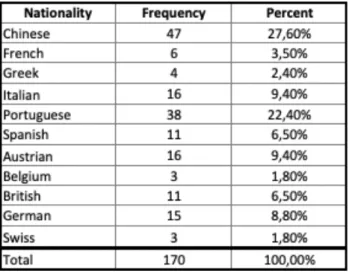
Tables Table 1: Distribution of respondents by nationality ... 29
Table 2: Distribution of demographics by cultural cluster ... 34
Table 3: Significant differences of emotions for brand effect in the controversial ad 36 Table 4: Significant differences of intentions for brand effect in the controversial ad ... 37
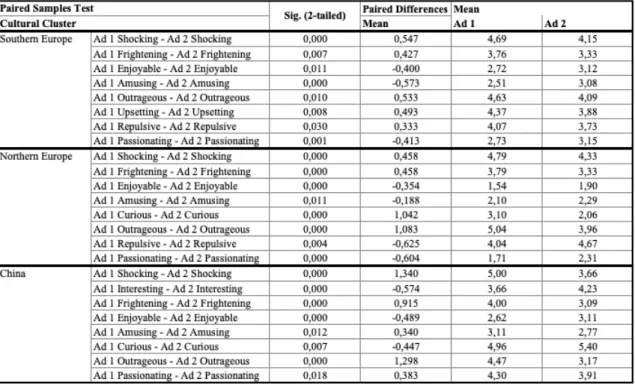
Table 5: Significant differences of emotions for brand effect in the non-controversial ad ... 38
Table 6: Significant differences of intentions for brand effect in the non-controversial ad ... 39
Table 7: Significant differences of emotions for content effect in the non-branding ad ... 40
Table 8: Significant differences of intentions for content effect in the non-branding ad ... 41
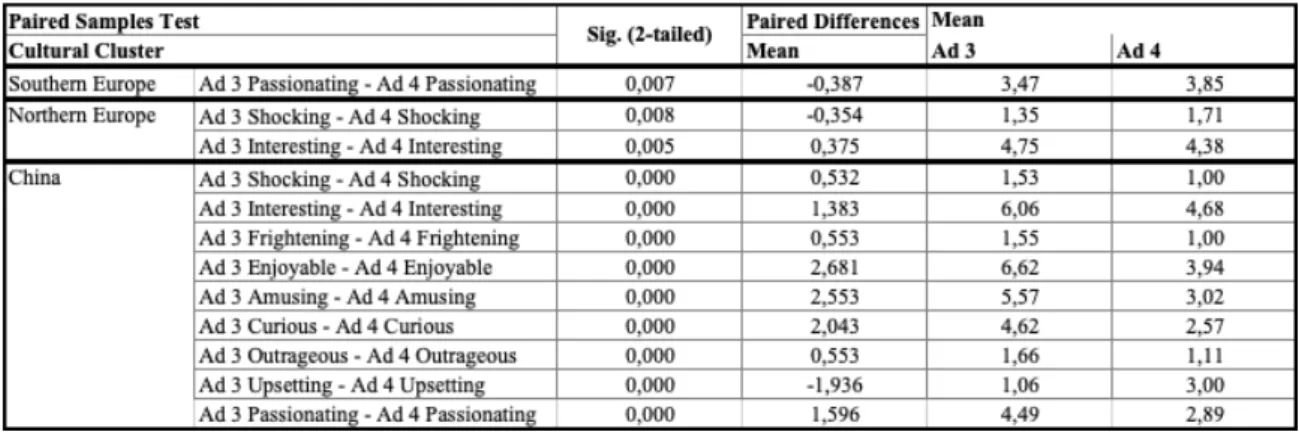
Table 9: Significant differences of emotions for content effect in the branded ad ... 42
Table 10: Significant differences of intentions for content effect in the branded ad . 43 Table 11: Levene Test for ad 1’s emotions ... 71
Table 12: ANOVA Test for ad 1’s emotions ... 71
Table 13: Kruskal-Wallis Test for ad 1’s emotions ... 71
Table 14(1): Post-Hoc Tests for ad 1’s emotions ... 72
Table 14(2): Post-Hoc Tests for ad 1’s emotions ... 73
Table 15: Levene Test for ad 2’s emotions ... 73
Table 16: ANOVA Test for ad 2’s emotions ... 73
viii
Table 18(1): Post-Hoc Test for ad 2’s emotions ... 75
Table 18(2): Post-Hoc Test for ad 2’s emotions ... 76
Table 19: Levene Test for ad 3’s emotions ... 76
Table 20: ANOVA Test for ad 3’s emotions ... 77
Table 21: Kruskal-Wallis Test for ad 3’s emotions ... 77
Table 22(1): Post-Hoc Test for ad 3’s emotions ... 78
Table 22(2): Post-Hoc Test for ad 3’s emotions ... 79
Table 23: Levene Test for ad 4’s emotions ... 79
Table 24: ANOVA Test for ad 4’s emotions ... 80
Table 25: Kruskal-Wallis Test for ad 4’s emotions ... 80
Table 26(1): Post-Hoc Test for ad 4’s emotions ... 81
Table 26 (2): Post-Hoc Test for ad 4’s emotions ... 82
Table 27: Levene Test for ad 1’s intentions ... 83
Table 28: ANOVA Test for ad 1’s intentions ... 83
Table 29: Kruskal-Wallis Test for ad 1’s intentions ... 84
Table 30(1): Post-Hoc Tests for ad 1’s intentions ... 85
Table 30(2): Post-Hoc Tests for ad 1’s intentions ... 86
Table 31: Levene Test for ad 2’s intentions ... 86
Table 32: Kruskal-Wallis Test for ad 2’s intentions ... 87
Table 33(1): Post-Hoc Tests for ad 2’s intentions ... 88
Table 33(2): Post-Hoc Tests for ad 2’s intentions ... 89
Table 34: Levene Test for ad 3’s intentions ... 89
Table 35: Kruskal-Wallis Test for ad 3’s intentions ... 90
Table 36(1): Post-Hoc Tests for ad 3’s intentions ... 91
Table 36(2): Post-Hoc Tests for ad 3’s intentions ... 92
Table 37: Levene Test for ad 4’s intentions ... 92
ix
Table 39(1): Post-Hoc Tests for ad 4’s intentions ... 94
Table 39(2): Post-Hoc Tests for ad 4’s intentions ... 95
Table 40: Coefficients regression of ad 1’s models ... 96
Table 41: Coefficients regression of ad 2’s models ... 97
Table 42: Coefficients regression of ad 3’s models ... 98
Table 43: Coefficients regression of ad 4’s models ... 99
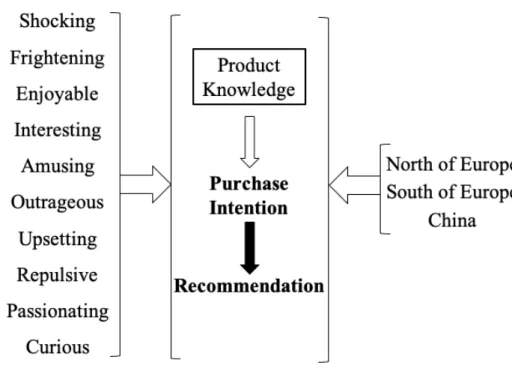
Figures Figure 1: Conceptual model ... 28
Figure 2: Results of Ad 1 conceptual model ... 47
Figure 3: Results of Ad 2 conceptual model ... 48
Figure 4: Results of Ad 3 conceptual model ... 49
1
Introduction
Although the relationship between marketing and consumer’s ethics has developed considerably over the past 20 years, research on some areas of advertisement is still missing. Discussions of offensive advertising are found in the past years, dispersed among topics such as “unmentionables” (Wilson and West, 1981), offensive/intrusive/irritating advertising (Aaker and Bruzzone, 1985; Li et al., 2002; Phau and Prendergast, 2001), advertising ethics (Treise et al., 1994), sex and decency issues, shocking appeals (Dahl et al., 2003), advertising targeting special groups (Zhang and Shavitt, 2003) and feminist criticism. However, research on shocking advertising seems to be quite limited. Not a big number of journals have dedicated specific attention to the ethical issues that come with controversial ads, one exception tough is a 2008 special issue of the Journal of Marketing Communications. This lack of research on this type of ads endures even with the present development of digital technologies, the impact this have on communications media as a whole, and the increasingly usage of online platforms for placing these ads.
Based on the assumption that everyone as more open to the world, that all individual person has more access than ever to information from worldwide, it makes it easier for brands to go international and take advantages of this global planet we live in. Or does it? The big dilemma that we face in this study is whether organizations should standardise advertising campaigns to be more efficient or follow an adaptation strategy for efficacy purposes. As researchers have indicated, consumers nowadays are more homogeneous than ever and basic human needs have become more universal (Kanso and Nelson, 2002), assuming that standardized advertising campaigns can be successfully used in a global context. The most recent studies have included performance criteria and must have showcased that adaptation is the most effective strategy (Dow, 2005; Calantone et al., 2006; Okazaki et al., 2006; Wong and Merrilees, 2007).
Taking into account this first considerations, it is of great interest to add to marketing literature and for practical reasons to understand attitude towards controversial advertising. The propose of this research is to verify how offensive advertising compares with non-offensive advertising, attesting if it is possible to implement the same advertisement strategy in a multi-cultural context, taking into account the emotions that these messages raise and how it affects the consumers’ interest, purchase intention and recommendation motivation.
2
Literature Review
Introduction
More and more advertisers and marketers believe that consumers around the world have similar needs as well as desires and that the global market is growing increasingly homogeneous. Advertising is one of the most important industries in our present society, since it acts as the major source of information for consumers about products. An increasing number of Asian nations have been adapting costumes and habits of Western cultures, and several advertising agencies in those countries have been applying “westernized” procedures (Lin, 2001; Shao et al., 1999). Increasingly, advertisers have seen their target audience as covering entire regions such as east Asia or all Europe (Babyak, 1995), or sometimes even the entire world. While the market grows as a global market, the emergence of international advertising grows parallel. Understanding cultural differences is often considered a prerequisite for successful international advertising (Keegan, 1989)
Some of the earliest definitions of the subject focus on studies of “unmentionables” (likes of female hygiene products, condoms, birth control). In 1981, Wilson and West, discuss the marketing of unmentionables by referring to products, services or concepts that are distasteful, disgusting, offensive or outrageous when shown in public. Dahl et al., in 2003, proposed a more consumer-oriented perspective for understanding offensive advertising, suggesting that offensive advertising is an at and/or a process that violates the norm. Basically, offensive advertising includes messages that transgress laws and customs, breach a moral or social code or outrage the moral or physical senses.
There are also some previous studies suggesting that offensive advertising is assembled of some dimensions (Phau and Prendergast, 2001; Waller, 1999). In 2001, Phau and Prendergast studied “the matter” as products, goods or services being advertised, “the manner” as the execution of advertising, and “the media” as the means and vehicles of offensive advertising. An advertisement can be found as offensive by the consumers if the product is not suitable for public display or open discussion, the execution is considered bad-mannered, obscene or irritation, or even when the type of advertisement is not appropriated for a particular medium (Chan et al., 2007). The dimension that is easily seen as a more controllable by the advertisers is “the manner” and thus the unforgivable if it is the cause of offensiveness for the consumers (Varey, 2002).
Two of the offensive types of ads mostly used in the Western literature are sexism and racial discrimination (Ma, 1996). The first one is related to the discrimination against
3 people based on their gender and specially prejudice towards women. Sexist advertisements include female stereotypes (Ford and LaTour, 1993) and sexual calls. The implementation of this type of ads is seen when women are represented as sexual toys or victims of violence, reinforcing cultural values of subordination, domination and inequality between genders (White, 1990). The second one, racial discrimination, refers to insulting people based on their race, usually in the manner of devaluing the customs, religions and cultures of the minority.
Sexist themes, fear, nudity and cultural insensitivity were the themes most commonly found in the Asian context by empirical studies (Phau and Prendergast, 2001; Prendergast
et al., 2002). Offensiveness of advertising has nothing to do with “hard matters” like
improper substantiation or deception. In 1991, Boddewyn argued that offensive ads contain products, services, concepts, claims and/or imageries that cause reaction of distaste, disgust or outrage.
Moreover, offensive advertising is context sensitive. The word “offensive” is extremely connected with the subtleties of relational and situational context (Ma, 1996). If a word or an image is seen as offensive depends on the relationship between the parties involved and the situation of exposure. It is also specific to each culture (Boddewyn, 1991). Across cultures, it is differently perceived and judged. For instance, in 2001, Waller and Fam found that Chinese consumers found it more offensive advertisements with indecent language, anti-social behaviour, racist images and nudity. Dens et al. (2008) have suggested that beliefs towards controversial advertisement affect consumers’ reactions. Specifically, some consumers might find shocking advertisements socially acceptable and find them entertaining, leading to a better attitude towards the brand, product, and particular ad.
Dens et al. (2008) have found that disgusting advertisements led to significantly more negative attitude towards the product when compared to non-disgusting and did not affect positively one’s perception of the brand, in fact, attitude about advertisement has a direct impact on attitude toward the brand. Those negative reactions were even more marked in individuals with high affect intensity, high sensitivity and high product category involvement.
Time, place and demographics affect the level of perceived offensiveness of an advertisement by consumers (Prendergast et al., 2002). An example are female hygiene products, these sensitive products were once considered indecent to show in public in
4 certain places, but now it as definitely gained acceptance and are frequently advertised in television (Prendergast et al., 2002).
Both the product and the brand can be harmed by offensive advertisements. The consumers’ evaluation of a brand is influenced by the feelings generated by an advertisement. Also, and obviously, negative perceptions lead to lower purchase intention (Burke and Eddel, 1989). When there was a similar advertisement alternative from a “non-offending” company, consumers are more likely to buy products from the last one than from a brand using offensive ads (An and Kim, 2006).
An individual person’s emotional reactions to advertisement can link up to the effectiveness of an ad, being more specific, to the eloquence and persuasion of the ad. Literature as also understood that controversial advertisements affect attitudes of individuals towards messages too. Recent studies have focused on emotions and their impact on the relationship between belief and attitude, related to shocking advertising (Arnaud et al, 2018), making emotions a very important variable in this line of research. Earlier conclusions have shown that shocking advertising is mainly seen as negative, often been described as offensive, intrusive, unmentionable, irritating, sensitive and socially unacceptable (Phau and Prendergast, 2001; Li et al., 2002). It usually refers to an advertisement that brings out reactions such as embarrassment, anger, disgust, shock in a group of people when presented or in front of this ad (Waller, 2005). Such amount of negative perceptions can be harmful and destructive to brands’ marketing effectiveness and the product itself (de Run and Ting, 2014).
Conversely, most recent research points to an increasingly usage of this kind of advertising, both printed and broadcasted (Fam and Waller, 2003). It is even more intensified due to the fast development of communication technologies, especially social media, since advertisements can be seen by more and more people at any time, in any platform, in any part of the world. Offensive advertising has its rise boosted by marketers’ need of fresh ideas with unexpected elements that can successfully obtain awareness and positive attention from the consumers, ultimately leading to increasing profits (Dahl et
al., 2003; Pope et al., 2004.)
With all this, it becomes of major interest among marketing researchers and practitioners comprehending attitude towards controversial advertising. It is of utmost relevance to dive into this research, and find the emotions raised by shocking ads, and how this can affect consumers buying intention.
5 Adaptation vs. Standardization
The understanding of an ad is facilitated by cultural adaptation, as well as it leads to more favourable attitudes regarding a brand, moving consumers closer to the intention of buying (Singh et al., 2006). Those opposing to standardisation have concerns regarding the effectiveness of standardised strategies in culturally divergent countries (Cutler and Javalgi, 1992).
Adaptation can be described as tailoring and adjusting marketing strategies to fit the unique elements of individual markets in the world.
Defenders of this strategy argue that there are huge differences regarding climate, topography, consumer tastes, law, culture, race, technology, disposable income, occupations, literacy and level of education, labour costs, nationalism and society, amongst many more, existing in international markets (Vrontis et al., 2009; Paliwoda and Thomas, 1999).
A globally standardised advertising strategy faces practical difficulties mainly because of cultural differences and language barriers between countries (Nelson and Paek, 2007) as well as different socio-economic markets (Karanden et al., 2006). Examples of this difficulties are when an Italian lipstick ad showing emperor Nero had no reaction when shown to Japanese consumers because Nero was totally unknown by them; as well as Exxon’s famous icon of a tiger failed to have positive reaction in Thailand because tigers are not a symbol of power and strength in that country.
Due to few (or none) markets being exactly alike, supporters of Adaptation argue that it is necessary, or even mandatory, to ensure some degree of marketing programs adjustment in order to guarantee buyers’ needs satisfaction, effectively and maximizing sales (Wills et al., 1991). Culture has a bigger impact on execution that on the creative strategy (Wei and Jiang, 2005), it means that an international advertising campaign can be standardized in creative strategy, but localized in execution.
A localized strategy has strengths that have to be highlighted:
- easy acceptability: tailoring to meet specific needs and desires of a culture makes it more likely to bring easy connection and acceptability by the people; - responsiveness to local needs and market: adaptation is also about letting a market know that the brand understands that there are different needs and wishes. Few markets are exactly alike, some adaptation is necessary to win customers and maximise sales;
6 - expedites local business development: allowing an international organization to quickly and aggressively compete favourably with local competition whilst the brand keeps gaining recognition in the local market; - strengthens local content: has the support of the local market because it helps
to develop local contents.
Although the mentioned positive aspects, some not so positive ones have to be discussed, and are pointed as follow:
- increased operating costs: adapting the marketing mix elements to the needs of different markets will increase operational costs;
- limited control and coordination: if products are customised to each market, it makes it more difficult to implement the same production control processes, product quality standards and same brand awareness;
- lack of uniform global image: localisation of the marketing mix elements to a great degree limits the extent to which a uniform global image can be achieved by an international company. In some markets, the effect of the lack of uniform global image might be more severe due to customers’ preference for brands from countries that are supposed to be leaders in innovation or quality;
- lack of transfer of experience of know-how: faulty integration and coordination of marketing activities across regional areas acts as a barrier to the transfer of experience and know-how built and developed in one national market to another.
“Companies must learn to operate as if the world were one large market, ignoring superficial regional and national differences” (Levitt, 1983, p. 92). Multiple definitions of standardisation have been made: it is defined as a uniform and standard pattern of resource allocation amongst the variables in the marketing mix across national markets (Szymanski et al., 1993); as the creation of a uniform strategy for a product, service or organization for the entire global market, covering several markets (Jeannet and Hennessey, 1998); long after Jain, in 1989, as described this strategy refers to the use of a common product, price, distribution and promotion plan all over the world, or wherever the company is acting, with resultant lower costs and higher margins; while most recently it has been detailed as a common marketing programme applied simultaneously to all
7 markets (Viswanathan and Dickson, 2007). Therefore, and resuming, we can view Standardisation as a conscious practice by an international company to supply uniform products and services, while also a common strategy of marketing mix worldwide (advertising, distribution, price and promotion).
Standardisation responds to the need for consistency; it drives the wish of brands to build a uniform brand image (Duncan and Ramaprasad, 1995). A consistent brand image is wanted, if assumed that being uniform plays a key role in building global brands and in standardised advertising in the making of a global brand image (Taylor 2005, 2007). Studies have found that this strategy is desired because it can increase sales by developing a coherent image of the product through multinational markets, as well as costs will be reduced by moving labour forces to lower-cost locations without reinventing the whole process (Walters, 1986; Yip, 1989). Others have found that international companies that employ a homogeneous pattern of distribution of resources for marketing mix variables in the U.S., U.K., Canada and Western European markets would find that this strategy results in similar performances across those markets (Szymanski et al., 1993).
A high number of benefits come with a standardisation strategy, making this strategy very attractive for global companies and brands. Defenders of the standardised marketing strategy (Levitt, 1983; Yip, 1996, 1997; Quelch and Hoff, 1986) have identified the main and most relevant advantages:
- economies of scale in development, production, distribution, advertising, marketing, brand name, sales, promotion and management: Levitt (1983, 1984) argued that economies of scale enable global companies and businesses to compete favourably and lead to reduction of costs and prices;
- transfer of expertise and know-how: the standardisation of products across national markets facilitates transfer of experience and know-how from one market to another (Douglas and Craig, 1986);
- reduction of costs and therefore price: organizations produce and sell products with great speed as a result of the lower cost of operations and reduced prices. This strategy would assist global brands to gain global market share;
- uniform image: brands that are truly global, such as McDonald’s, Coca-Cola and Pepsi have been able to standardise their products worldwide, gaining a general acceptance;
8 - enhanced customer preference: when products are standardised across multinational markets, it builds up customers’ preference from being uniform worldwide;
- higher quality: if a global company pushes quality and reliability up, while keeping costs and prices down, customers in different countries would prefer its standardised products (Levitt, 1983);
- easier control and coordination: when a uniform product is sold across all markets, monitoring the performance in different localizations is way easier. It is much more effective to control a standardised process than a country-by-country customised one.
But it obviously also brings its negative sides, since it may not achieve its intended objectives due to various limitations to its application:
- government and trade restrictions: including product, pricing and advertising laws and other trade barriers, frequently curb the standardisation of the marketing mix elements (Douglas and Craig, 1986);
- differences in customer interests and response patterns: these may differ significantly from one country to another or from one region to another (Douglas and Craig, 1986). These disparities might be as a result of cultural, social or religious factors;
- the nature of the competitive structure: differ from one country to another, in developing countries being customers more sensitive to prices, the existence of low-cost options may influence this factor policy from global companies entering that market;
- market characteristics: the physical environment of any country, determined by population size, product use conditions and climate, often forces global marketing companies to adjust their products to fit local conditions.
9 Controversial Advertising
One can easily perceive that the existence of shocking ads is increasing and it is one big alarm to businesses and consumer. In Europe, examples of offensive advertising can be found. One of the most noticeable example of these advertising was the campaign by Benetton that was run in various countries. The Benetton campaign showed varying offending visuals, such as blood-covered dirty clothes, an overcrowded boat with refugees jumping into the sea in despair, people with tattoos reading “HIV positive”, or dying people. The campaign was perceived offensive by many consumers and led to many debates, especially among advertising practitioners (Clemens and Stahlschmidt, 1994; Happel, 1995).
Advertisers are seizing every opportunity to draw attention, boldly treading the line between “edgy” and “offensive”. In fact, research has shown that the use of strategically ambiguous responsibility messages might impact both the producers of said products (alcohol, sex products) and consumers purchase intention negatively (Erdogan, 2008). It has been previously documented that emotions are a motivator of behaviour and their role in human behaviour (Keskin and Ayar, 2017). Emotions are defined by the Oxford Dictionary (2019) as “A strong feeling deriving from one's circumstances, mood, or relationships with others” and academic literature points out three universal qualities of emotions (Hill, 2008). Emotions present a feeling component demonstrated by chemical changes in the brain and physical sensations; a thinking component which is manifested by conscious or intuitive judgements; and an action component that is expressed by smiles or stares and coping behaviours. A full emotion embodies an integration of feeling, action, appraisal and wants at a particular time and location (Ortony et al., 2005).
For marketing purposes, it has been shown emotions to play a major role in developing brands, in successful advertising, as determinants of service quality or customer satisfaction (Pandley, 2012). Emotions are used to supply persuasive messages to consumers and affect the way information is processed and ultimately help to explain a positive variance in purchasing behaviour (Keskin and Ayar, 2017).
Shocking advertising associates a surprise and a shock factors to arouse emotions in order to call people to action or change their behaviour. Shock advertisement can be identified when social norms are violated, and it is assumed to capture the attention of the target consumers in a greater way, as well as breaking through competitive advertising cloud. As previously mentioned, these advertises should incite emotions that stimulate a
10 response from the consumers. To achieve a response, tolls such as visual exhibition of obscene sexual references, profanity or unwarranted violence must be included.
However, is has to be kept in mind that if social norms are pushed too far, there is a risk of damaging brands’ reputation and having a negative fallout. These advertisements may also cause problems such as banning, waste of money and resources spent, interventions by regulatory bodies and consumers’ boycotts touching the brand’s equity value, as happened with the Benetton case. Moreover, some evidence points that over time this type of advertising might become less effective, as the general public is increasingly more exposed to traumatic events through news, social media or other means, and therefore become less sensitive.
In 2008, Prendergast et al., have indicated that offensive advertising can be classified in three categories: non-sexual offensive matter, sexual offensive matter and offensive manner.
Offensive advertising categories might also be categorised by two factors, the matter, which is whether the product or service is offensive; and the manner, referencing to the execution and the way the communication is performed.
Offensive matter comprises the marketing of “unspoken” goods, products, services or concepts that rouse reactions of distaste, disgust, offense or outrage, but also considered embarrassing, socially unacceptable or harmful for a significant part of the population. From another point of view, products (personal hygiene, treatments of illness, birth control) can be distinguished from services (abortion, funerals, artificial insemination). Although what is of offensive matter evolves with time; a good example of this are contraceptives, which were a taboo subject for advertising, but have been gaining an uncontroversial presence in mainstream media; ideas such as political morals, palliative care, sexual practices, racial or religious preconception and other examples likely to be conceived a stereotype about are always probable to fall within the classification of offensive.
Offensive manner refers to the type of appeal and its execution, rather than the marketed product it is the way it is communicated. Appeals that are strongly paired with offensive manner are sexuality and fear. The first one that is defined has nudity, erotic stimuli or any other sex related factors, may produce negative feelings. While fear, in a more psychological level, results from a person being exposed to offensive images against their will.
11 After all, marketing companies and brands have more influence over the offensive manner than over the offensive matter (since they cannot choose the product they are advertising). To change the mind of a group of consumers about the perception of a particular product or service being offensive would require a much larger investment than the costs involved in adjusting the manner of the campaign.
12 Emotions and advertising
Emotions are a reaction to stimuli that impact the immediate sensory environment in an individual human (Ramsøy et al., 2012), showing that emotions are essential for human function, and also that emotions are strongly related to attention, decision making and memory. Researchers have found that emotion impact the allocation of resources to the visual system (Estes and Verges, 2008), especially when the stimuli is negative (as in controversial advertising) more attentional resources are recruited. Advertising that evokes a wide range of emotions (Happiness, sadness, love, rage) and has responses to these emotions provoked has a main goal of creating a relationship between consumer and product/brand.
Marketing researchers have tried to identify the type of content that is more likely to “hit the spot” with consumers. With the growing importance of word-of-mouth promotion, more studies have been made in this area, suggesting that pleasant content results in a greater promotion, but there is also conflicting literature reporting that sour content is more probable to go viral, the finding seem to be inconclusive. These inconsistent conclusions may indicate that the level of engagement is what really matters when it comes to going viral or being a successful marketing campaign.
Emotion has been found to substantially impact the response one individual will have towards an ad (Lewinski et al., 2014). The attention of the consumers increases with an emotional message, as well as the attitude toward the advertisement and product, the product attractiveness increases and produces a higher brand recall.
In 2010, Micu and Plummer applied physiological measures to assess emotional responses to advertising. However, the study was not successful on discriminating the attitude of the emotions, suggesting that the for the consumer experience the level of engagement and the intensity of the experience are more important than a specific emotion obtained from the ad and whether it is positive or negative. The success of an advertising campaign might depend on the advertising appeal, as well as the emotions triggered, it should be surprising and evoke thrilling positive or negative emotional responses (Henke, 2013).
The marketing knowledge suggests that viral publicity should feature more emotionally intense content, even though such content has received limiter empirical attention. Also, advertisement agencies already used the power of emotional content to create buzz, as concluded in previous studies, messages sparking stronger emotional feelings (of
13 humour, fear, sadness or inspiration) are more likely to make an impact (Phelps et al., 2004).
From a different point of view, research has showed that pleasant emotions produce the strongest attitude towards an ad, attitude towards the brand and intention to share the ad., being the effects weaker for negative emotional tone (Eckler and Bolls, 2011). However, the use of offensive ads can also offend its audience which will negatively affect attitudes toward the brand and brand purchase intentions (Sabri and Obermiller, 2012).
Besides, emotions influence an individual’s attitude and judgements, swaying then one’s decisions. Moreover, Lerner et al. (2015) have noted that emotions create strong, prevalent, predictable and harmful or beneficial drivers on decision making.
In 2017, Hamelin et al. have studied the differences between low and high emotional advertisement, finding that highly emotional advertisement has a greater impact in the respondents subjected, rather the ones exposed to less emotional, more rational ads. Also, the highly emotional ad leads to a more stable attitude change than low emotional advertisements. During the same year, Rawal and Torres have discovered that emotional appeal has a positive impact on empathy as well as attitude toward ad, that in its turn has a positive effect on engagement.
Emotions have a profound impact in advertising, and it is of major interest of marketers to use these in their clients’ advantage. Provoking emotions in consumers creates a impression in the public, which will affect one’s brand impression, memory of the brand and attitude towards the brand and product advertised. It is of great interest to evoke and be aware of the beliefs and emotions one faces when in front of shocking advertising.
14 Brand attitude in advertisement
Emotions are a key driver for viral marketing campaigns, particularly the emotion of surprise is an important vector for the success. When a brand is presented to the consumer, a certain type of message can already be expected. Outcomes of the advertisement process such as memory of copy points, brand information, brand awareness ant attitude and purchase intention are important antecedents of the ease and extent of a message’s comprehension (Huhmann and Mott-Stenerson, 2008).
As Pope et al. mentioned in 2004, it is a concern for the marketing researchers that the controversial and non-controversial advertisement visuals differ in so many ways (the models, the images, the body copy), but what can really affect one’s perception of a given campaign is the brand and the product featured. Studies have already tried to control some confusing elements by replacing brand names, copy and logos (Grazer and Keesling, 1995). Non the less, research in this area is still missing and is needed.
Brand involvement is probably an important agent of the effect of an advertisement processing and comprehension. One’s level of involvement increases, and makes the processing and attachment with a brand increase as well. As customers involve themselves with brands, the comprehension towards it increases like wise.
In 2008, in an experiment aimed to determine the effect that a controversial ad execution has on elaborative processing and brand message comprehension when potentially containing elements are constant, Huhmann and Mott-Stenerson have established that it depends on the target where it is applied, controversial ads should be more effective in communicating brand information in markets with strong interest in a product category and non-controversial advertising is more effective in communicating in groups without a strong interest in a product category.
Most recently, studies found that the viral medium context does not lead to a more positive attitude toward the entrenched brand or a more positive purchase intention (Sabri, 2017), more over a viral medium context can lead consumers to weaken the level of taboo of viral advertising and subjective norms.
Earlier, it was recognised the negative impact of offensive ads on the sponsored brand (Sabri and Obermiller, 2012), also in the case of controversial ads, consumer attitudes toward the brand are going to be more approving and the perceived subjective norms against acquiring the brand will be lower and weight less, leading to a greater intention to purchase the brand’s product. The same study has found that the context does not
15 influence the attitude toward the brand, if an ad goes viral, even if controversial, it does not affect one’s evaluation of the brand.
According to Vézina and Paul (1997) provoking advertisement is not associated with negative attitude toward the brand. In fact, only a weak relation between the level of provocation and the attitude concerning the brand was found, leading to the conclusion that there is no negative transfer.
Sabri and Obermiller (2012), have hypothesised impact of a taboo themed ad on the perception of the brand attitude, using a fake brand and product. Attitude toward the advertised brand was slightly negative, but found that this result was typical for fictitious brand. The researchers have concluded that strong taboo themes in ads have a strong negative effect in one’s attitude towards the brand, suggesting that an offensive campaign can be a risky one.
With the existing literature, it is possible to say that the presence of a brand is a factor to take into account, as well as the impact the content of an ad has on a consumer’s evaluation and perception of the brand. Therefore, being the content of the ad the main comparative feature in study, the fact that the consumer already has an opinion on existing brands, it is a variable that has to be controlled in the testing phase.
16 Purchase intention and recommendation
Purchase intention can be expressed by a consumer’s objective to buy from a given seller in the market place. None the less, shopping has always been a social activity, and consumers tend to be influenced by social interactions with others when making these decisions, Godes et al. suggested in 2005. The same authors advocate that consumer’s beliefs, attitudes and behaviours tend to be influenced by their social interactions with others when they make purchase decisions. Marketing research also points that when people are recommended or observe others purchase actions, this information outweighs their own private information in shaping their decision and beliefs (Chen et al., 2011). Recommendation has a great role in this study, it can increase perception of other buyers. As far as promotion is concerned, word-of-mouth might be such an effective instrument in acquiring more buyers, since it is so much cheaper than advertising. Recommendation valence indicates the percentage of prior buyers who hole positive or negative opinions, and its volume has an informative function by increasing the level of awareness of the buyers (Chen et al., 2011). Attitude is, besides need, the most important predictor of intention to buy and the relation of it with intention has been found positive and significant.
In their previously mentioned study, Sabri and Obermiller have studied the perception of “tabooness” in an ad and how it affects the consumer’s purchase intention, finding that the purchase intention is low for controversial ads. This rating result advocate a negative effect on consumer’s intentions to purchase the brand when hit by these type of ads, supporting the theory that it is not the ideal strategy. Furthermore, violating taboos in publicity triggers social normative pressure, reducing the intention to purchase the product.
To recommend a product or a brand is even better than just buying it, since it will influence other buyers’ perception of what is advertised, and will impact ones purchase decision (Chen et al., 2011)
On the other hand, other researchers found that offensive messages and images that obtain viewers’ attention arousing negative feelings ant attitudes, transfers to the brand negatively, affecting greatly purchase decisions (Chan et al., 2007). With this, it becomes important to study these factors and make them some of the most important for this research.
17 Hofstede
Now we have to know how to define our study groups, how to group them, what characteristics they have in common between them as well as what differs them from the other groups. Being culture the “collective mental programming” that distinguishes societies from one another (Hofstede, 1983, p. 76), it can be used to build clusters that are culturally similar. This was done with the belief that cultural values influence the consumers’ response to advertising executions in general and offensive specifically. Hofstede’s model provides a rationale for cross-cultural differences in advertising (Moon and Chan, 2003). The cultural theory used was the Hofstede’s theory of cultural dimensions. The Hofstede Model was originally a survey administered to over 119,000 IBM employees in 66 countries, and distinguishes cultures according to 6 dimensions (four in the first version): power distance, individualism, masculinity, uncertainty avoidance, long term orientation and indulgence. Hofstede used 116,00 questionnaires from over 60,000 respondents from several countries in his empirical study (Hofstede, 1984, 1991, 2001). The model supplies scales from 0 to 100 for 104 countries for each dimension, and each country has a position on each scale or index, relative to other countries.
- Power Distance: is the dimension that deals with the fact that all individuals in society are not equal, expressing the attitude of the culture towards these inequalities. It is defined as the extent to which the less powerful members of institutions and organisations within a country expect and accept that power is unequally distributed (Hofstede). That has to do with the fact that a society’s disparity is already settled in all levels of the society;
- Individualism: the central point of this dimension is the degree of interdependence a society maintains among its members (Hofstede). It It has to do with whether one’s self-image is expressed in terms of “I” or “We”. In more individualistic societies, people tend to look only after themselves and their direct family. While in collectivist cultures people are parte of groups that take care of them in trade for loyalty;
- Masculinity: in Masculine societies, people will be driven by competition, achievement and success, being a winner or the “best in the field”. This values usually start in schools, and continue throughout life. On the other hand, Feminine cultures value mostly caring for others and quality of life. In these, quality of life is a sign of success and standing out from the crows is not
18 admirable. The main focus in this dimension is what motivates people, wanting to be the best of liking what you do (Hofstede);
- Uncertainty Avoidance: has to do with how a society handles the fact that the future is unknown. The uncertainty brings with it anxiety and different cultures have learnt to deal with this in different ways. The extent to which the members of a society feel threatened by ambiguous or unknown situations and beliefs and institutions created to try avoiding these (Hofstede);
- Long Term Orientation: it defines how society has to preserve some connections with its own past while dealing with the challenges of the present and future (Hofstede). Societies that score low on this dimension tend to choose to maintain time-honoured traditions while being suspicious about societal change. High scoring societies have a more pragmatic approach, encouraging thrift and efforts in modern education in order to plan for the future;
- Indulgence: the degree to which small children are socialized is one challenge that confronts humanity. Socialization is what makes us “human”. What defines this dimension is the extent to which people try to regulate their desires and impulses (Hofstede), established by the way they were raised. “Indulgence” refers to a weak control, while “Restraint” as to do with a relatively strong control, and cultures can be defined as Indulgent or Restraint.
A reason for Hofstede’s model being so widespread adoption rests in the large number of countries measured and the simplicity of his dimensions, which are straightforward and attractive to both academic researchers and business people. Comparing different models for the purpose of measuring cultural distance for international marketing strategy it is clear that the more recent cultural frameworks only specify limited improvements compared with Hofstede’s original work (Magnusson et al., 2008). The dimensions are allotted to demographic, geographic, economic, and political features of a society, a factor unique to this framework. It is also the most comprehensive and robust when it comes to the number of national cultures sampled. Furthermore, the model is useful in formulating hypothesis for comparing cultures. It was originally formulated applying to human resources management, but is being used increasingly in business and marketing studies (Shamkarmahesh et al., 2003).
19 Hofstede for grouping
It has to be noted that none of the cultural models has been developed for analysing consumer behaviour. Therefore, when using the models, the dimensions have to be selected and interpreted to choose the ones that are more relevant to highlight manifestations of culture (Hofstede and de Mooij, 2010).
The Hofstede’s dimensions have been used to compare cultures, support hypothesis and to formulate a theoretical model to compare cultures. Research has been made, and confirmed the importance of cultural dimensions for marketing in an international level and consumer behaviour. Remarkably, Power Distance influences advertising appeals (Albers-Miller and Gelb, 1996), information exchange behaviour, innovativeness (Yeniyurt and Townsend, 2003; Van Everdingen and Waarts, 2003) and service performance; Individualism affects innovativeness (Yeniyurt and Townsend, 2003; Van Everdingen and Waarts, 2003), service performance (Birgelen et al., 2002) and advertising appeals; Masculinity influences sex role portrays (Milner and Collins, 1998), innovation and service performance; Uncertainty Avoidance impacts information exchange behaviour, innovativeness and advertising appeals; while Long-term orientation influences innovativeness. Not enough nor conclusive research has been made regarding the Indulgence dimensions, once this is a fairly recent on and by far the least studied one.
To assess cultures, multiple methods should be used as no single method is satisfactory enough to fulfil all the methodological and conceptual requirements of a valid identification of cultural groups (Soares et al., 2006). In 2005, in a cross-cultural study of exploratory and risk-taking behaviour, Soares used a three method approach to evaluate culture: Regional Affiliation, Indirect Values, and Direct Value Inference.
Proxies are used to support the Regional Affiliation approach. Here, culture is reflected in nationalities (Soares, 2005). Researchers recommend caution when using this approach, although there is empirical provision for between country differences (Hofstede, 1984 and Steenkamp, 2001). Nationality can be used to cluster countries since some tend to share a similar language, history, religion, understanding of institutional systems, sense of identity, values, tastes (Hofstede, 1984), making nationality a common approach to operationalize culture (Yeniyurt and Townsend, 2003).
Moreover, Soares (2005) used benchmarks, the second approach, Indirect Values, consists of attributing characteristics of cultures built on other studies. In her study, Soares classifies Portugal and the UK as opposite two countries regarding Hofstede’s
20 dimensions. On the one hand, Portugal is a high power distant, collectivistic, feminist, extremely high uncertainty avoidant, short-term oriented and low indulgent culture, on the other hand the UK has a completely opposing profile. Using countries with resemblances across some aspects while being as far apart as possible on others has been recommended to improve reliability and enhance generalizability (Sivakumar and Nakata, 2001).
Lastly, Soares (2005) uses the Direct Value Inference, basing on measured values of subjects in a sample to deduce cultural characteristics. There, though Hofstede’s categorization of cultures provides a good starting point for assessing Cultural Values, the samples were further classified on cultural measurements in a manner adequate to their characteristics (Soares, 2006).
The clustering of countries facilitates an appreciation of cross-national similarities and differences. Cluster analysis is often chosen for the classification technique, because it is merely empirical and it does not make previous assumptions about differences within the population.
Most relevant Dimensions
The way people acquire information varies with the cultural dimensions of Individualism and Power Distance (Hofstede and de Mooij, 2010). As the authors argue, collectivistic and power distant societies will give more importance to interpersonal communication when they acquire information to help them make a purchase decision. On the other hand, individualistic cultures with low power distance, will tend to acquire information in a more active way via media when preparing to buy something. Individualism has been confirmed to influence innovativeness, perceived service performance and advertising appeals, while Power Distance has been shown for advertising appeal, information exchange behaviour, innovativeness and perceived service performance.
Uncertainty Avoidance has clear influence in information exchange behaviour, innovativeness and advertising appeals. The dimension of Masculinity has been found to have impact on sex role portrays, innovation and perceived service performance.
The other two dimensions, Long-Term Orientation and Indulgence, are more recent ones and since data is not available for every country, relevant research on its impact on advertising is still missing.
21 Forming cultural groups
Therefore, with these tools, Cultural groups can be formed and after this, compare the clusters. Using mainly the geographical proximity, since countries that are close tend to share language similarities, costumes, religion, history, sense of identity. The Hofstede’s dimensions, grouping countries with similarities throughout some of the dimensions while being as different as possible on others, as research recommends. Keeping in mind that the dimensions shown to be more relevant for advertising are Power Distance, since it is one of the dimensions that influences the most the way consumers obtain information, as power distant societies give more importance to interpersonal communication when acquiring information to make a better purchase decision, or opposing, low power distant cultures trough media, more actively when they want to make a purchase (Hofstede and de Mooij, 2010); Masculinity, once it shows the preference for products that indicate progress, success and performance, the way brands compare themselves or not directly to competitors is connected with this dimension, as well as the conceptualized roles of males and females in ads; Uncertainty Avoidance is relevant because it refers to how a consumer will react or be open to companies introducing new products in the market, or if they will value more having all the information about a product available to have no surprises; finally, Individualism should be taken into account because it relates to self-gratifying reason in consumption, brands will be evaluated according to its positioning to emphasize more sharing or multi-consumer products or distinctive and unique lifestyle of the user.
Cluster 1 includes France, Greece, Italy, Portugal and Spain. The five countries account for around 193 million people, as per the United Nations prediction for 2020. This cluster is mostly composed by Roman language countries, from Iberia and the Mediterranean region.
These group of countries present a wide variation on the Individualism dimension, with Portugal scoring the lowest (27) while France (71) and Italy (76) score the highest in this dimension, Spain and Greece are rated in the mid-range. For the other cultural measurements, the countries score fairly close: Power distance only varies from 50 (Italy) to 68 (France); and in Uncertainty Avoidance it differs from 75 (Italy) to 100 (Greece). This cluster can be described by its medium Power Distance, strong Uncertainty Avoidance, low to medium Masculinity, and divergences in Individualism. The described dimensions can be found in Graph 1.
22 The second cluster comprises Austria, Belgium, Germany, Switzerland and the United Kingdom. Collectively, the five countries are estimated to represent around 180 millions of European individuals, as of 2020 accordingly to the United Nations. In this group are mostly found Anglo-Saxon and Germanic language countries.
In this cluster, the dimensions seem to be more balanced than in the first cluster, the Power Distance is fairly balanced, with the exception of Austria (11) and Belgium (65); Masculinity is somewhat equalized from 54 (Belgium) to 79 (Austria), which are illustrated in Graph 2.
This cluster can be defined by its medium high Individualism, medium Uncertainty Avoidance, low Power Distance and medium high level of Individualism.
23 Finally, China is the outside of Europe element, and third cultural group. This country is expected to count with 1,44 billion inhabitants, in 2020 as per the United Nations prediction.
China can be defined as a high Power Distant culture, medium-high Masculinity, as well as low Uncertainty Avoidance and Individualism (Graph 3).
Graph 2: Values of cultural dimensions for Northern European Countries
24 Even more relevant than Hofstede’s dimensions should be other determinants such as language, geographical location, history, religion and costumes.
Linguistic wise, the first cluster belongs to the Romanic language, idioms that have evolved from the Latin, and have been spread due to the invasions and expansion of the Roman empires trough the Southern and Western Europe. The second group uses Germanic languages, which have originated in the Pre-Roman Iron Age in Northern Europe, and have then evolved and separated in two bigger languages, the German and the English that still share some evident similarities. Languages have an impact on marketing as well, the brands’ name, the gathering of information, the advertising costumes and the conduct of business relationships.
Another historic factor that has a big weight in separating one culture from the other is religion. Previous work has produced content on how religious beliefs contribute to physical and mental health, interpersonal relationships and intergroup relations (Paloutzian and Park, 2005). Although the European countries studied all follow a Christian religion, the differences between ones and another costumes are obvious. Religion can affect several aspects of life, like the role of women in society, rules about food and beverage consumption or clothing habits.
Historical events’ impact might well persist in today’s cultures, especially if these have transformed the relative costs and benefits of different cultural characteristics, touching their predominance in a society. Moreover, cultural traits are usually passed vertically from parents to children, which will definitely make them persist through time.
In the Medieval European context, the divergent evolution o might come from collectivist and individualist cultures, Greif (1994) has combined insights from game theory and archival evidence showing differences between groups, that originated in strategies undertaken by medieval merchants.
A simple geographical grouping might as well be the most preeminent for this study, supported by the topics previously mentioned. The formed cultural clusters were named “Southern Europe” in the case of the one made by countries located in this region around the Mediterranean Sea; being the second group called “Northern Europe” since it is located mostly in the upper portion of the continent. This naming and geographical division makes sense due to the previously pointed factors, since most of the elements have been in the countries for centuries, and have been spread through a given geography so long ago, the areas of expansion of the prevalent cultures of the time still make sense.
25 Why China vs. Europe
China is one of the biggest consumer markets in the world, making it a very desired place for international advertisers. In the recent years, China has recorded a fast growing economy and changes in society, approximating to a westerner culture.
Trade relationships between China and European Union are close, this are two of the biggest traders in the world, being China the second biggest trading partner of the EU and the EU is China’s biggest partner. An average of over 1€ billion a day is traded between the two, being China EU’s biggest source of importations and its second biggest market of exportations.
Both spaces are committed to open relations, although he EU has to safeguard China trades fairly, respects intellectual property rights and fulfils its obligations to the World Trade Organization since its entrance in 2001, reforming and liberalizing important parts of China’s economy solving partially problems of lack of transparency, policies and non-tariff measures discriminatory against foreign companies, low protection of intellectual rights property, and the high intervention of the government in the economy, making it easier for state-owned companies to have a dominant position, and others to struggle. In 2013, both communities started negotiating for an investment agreement, aiming to provide more predictable and long-term access to investors from both sides, as well as protect them and their investments on the EU and Chinese markets. Most recently, in 2016, the EU have announced what was set to be the strategy regarding the relationships with China for the following five years, promoting cooperation and interchange, a more levelled playing field and candid competition across all shared areas. Also including a trade agenda, with a strong focus on improving market access opportunities, and calling China to engage in a multilateral level and dealing with its overcapacity.
Moreover, with the imminent US tariffs on Chinese imported goods, it is expected for European markets to be the biggest winners. As the US President Donald Trump announced a 10% fare over Chinese goods, aggravating an ongoing disagreement between Washington and Beijing leading to each side throwing more and more punishing taxes at each other. This disagreement between the two largest economies in the world will ultimately end in a gain for the European Union side, as China and the US are damned to cut the trades between them, Chinese economy is expected to point its needle to EU markets. The ifo Institute of Munich predicts that an additional €1.5 billion of income to enter European vaults, being Italy, France and Germany the biggest winners.
26 Hypotheses and Conceptual Model
Previous studies support that the differences in cultural characteristics are an important influence in the purchase and recommendation intention, affecting the acceptability of several appeals that are potentially offensive. In this study, Latin European countries, North European countries and China were selected as representative clusters of different cultures that respond to stimuli in different manners.
In 2006, Poels and Dewitte suggested that emotion is a prophet of advertising effectiveness, measuring consumer emotional response provides a good assessment of the impact the advertisement has on consumer’s attitude, behaviour and recall. It has also been studied that the relationship between the consumer and the brand highly influences one’s buying decision (Lu et al., 2016). Facing the given insides, a second group of hypothesis can be formulated:
H1: The emotions evoked by an ad are affected by the brand presence. And:
H2: The search of knowing more, purchase intention and recommendation are impacted by the presence of the brand.
For the present study, controversial advertising is the object and offensive advertising is the stimuli. The exposure to the offensive ad is related with the formation of attitudes. Arnaud et al. (2018) have found evidence that individual’s beliefs about controversial advertising influence affective attitudes towards offensive ads through the emotions these cause. Facing these and the previously raised arguments, it is well noted the importance of studying the emotions raised by this type of advertising:
H3: The content of an ad has an impact in the emotions felt by the consumer. As well as:
H4: The content of an ad affects buyers’ search for information, purchase intention and recommendation intention.
The emotions that an ad makes the consumers feel already are known to have an impact in the purchase intention and in giving recommendations. None the less, this influence might change when consumers have different views of the world and consuming