THE RELATIVE IMPACT OF CUSTOMER AND TECHNOLOGY ORIENTATIONS ON INNOVATION AND EXPORT PERFORMANCE
Paula Hortinha
Tese submetida como requisito parcial para obtenção do grau de
Doutor em Gestão Especialidade em Marketing
Orientador:
Profª. Doutora Carmen Lages, Professora Auxiliar, ISCTE-IUL
Co-orientador:
Prof. Doutor Luís Filipe Lages, Professor Associado com Agregação, Universidade Nova de Lisboa
I
ACKNOWLEDGEMENTS
Many great people and institutions have contributed in different ways to this research.
First, I would like to thank my supervisors, Carmen Lages and Luís Filipe Lages. I thank Carmen for having believed since the beginning that I could complete this project, despite being working full time; for being so supportive, especially in emotional downturns; and for making me step forward and backward until we got a solid model. I thank Luís for his push to go for the PhD, when this objective was about to become just a dream; for having passed me his pragmatism and passion for research, both key determinants of the completion of this project.
Next, my debt is to IBS/ISCTE, for all the support during these years. I am particularly grateful to Professor Reinaldo Proença, for his kindness and for being always available. I thank Professor Paulo Rita, for his support, especially in the late stages of this work.
I am also indebted to Professor Pedro Pita Barros, Professor Luís Catela Nunes and Professor Clara Costa Duarte, from Universidade Nova de Lisboa, for having taken me “on board” in 2004, as this affected my motivation to pursue the doctoral degree.
I thank Professor Luís Moutinho, for all the time dedicated to me, for the pleasant and fruitful conversations we have maintained.
I am also grateful to over 400 Portuguese managers, whose collaboration was invaluable to the completion of this project. I thank each one of them as well as their organizations for providing the data used in the empirical part of this research. I also thank Marta Bicho and Renato Henriques for their great help in establishing and following up contacts with those managers.
I acknowledge Fundação para a Ciência e Tecnologia that funded the last months of this research.
II
To my PhD colleagues, now my friends: Ana Lisboa, Ana Comporta and Graça Silva. This was a very enriching journey together, I do remember all we have laughed and cried, the ideas we have exchanged. A special thanks to Graça, for her precious help with the data analysis. Finally, I am grateful to my family. It is to them that this dissertation is dedicated: To my parents for their unconditional help; To Joaquim, for his vision, love and encouragement to start this project; To Alfonso, for his dedication, love and patience during these years; To my sons, Guilherme and Duarte, for their love, for so many comforting hugs and kisses and for their inciting daily “good night” question, “Mom, when do you finish the PhD?”.
III
ABSTRACT
Firms are constantly challenged by the trade-off between two types of strategic orientations: customer and technology. Yet, research directly addressing this topic is scarce and few recommendations exist on which orientation to emphasize. Using resource based view and organizational learning theory, this thesis addresses the relative impact of customer and technology orientations on export performance by considering the mediating role of innovation. Two innovation capabilities are considered: exploratory innovation – aimed at developing new product-market domains - and exploitative innovation – aimed at improving existing product-market positions. With the purpose of gaining more insights on those relationships, they are also examined under the influence of internal factors – past financial performance – and external factors – customer turbulence and technological turbulence. An exploratory study supported the survey instrument development. Data was collected through an on-line survey, resulting in a sample of 170 Portuguese exporters operating in technological manufacturing industries. We gathered data from two respondents within the each firm, the export manager and the R&D manager. Data analysis was conducted using Partial Least Squares, a variance-based structural equation modelling technique.
Our results support the mediating role of exploratory and exploitative innovations. Moreover we have found that a customer orientation is as important as a technology orientation to the development of innovation capabilities. However, when past performance is low or the technological environment is highly turbulent, customer orientation plays a greater role. Implications of these findings for international marketing researchers and managers are presented and future research directions are provided.
Keywords: strategic orientations, innovation, export performance, contingency perspective, PLS
V
RESUMO
As empresas são constantemente desafiadas pelo trade-off entre duas orientações estratégicas: cliente e tecnologia. No entanto, a investigação sobre este tema é limitada e poucas são as recomendações existentes sobre qual destas duas orientações reforçar. Com base nas teorias de Resource Based View e Organizational Learning, esta dissertação estuda o impacto relativo das orientações para o cliente e para a tecnologia no desempenho da exportação, através do efeito mediador da inovação. São consideradas duas capacidades de inovação: “exploratory”, destinada a desenvolver novos produtos-mercados – e “exploitative” – destinada a melhorar produtos-mercados existentes. Estas relações são também examinadas sob a influência de factores internos – desempenho anterior da empresa – e externos – turbulência na procura e tecnológica.
A recolha de dados foi feita através de um inquérito on-line que foi desenvolvido com base num estudo exploratório prévio, tendo resultado numa amostra de 170 exportadores Portugueses, produtores em sectores tecnológicos. Foram utilizados dois respondentes, o responsável pela exportação e o responsável pela I&D. Para a análise de dados recorreu-se à modelação com equações estruturais baseada nas variâncias, através do Partial Least Squares. Os resultados confirmam o efeito mediador da inovação. Verificou-se ainda que uma orientação para o cliente é tão importante como uma orientação para a tecnologia no desenvolvimento das capacidades de inovação da empresa. Contudo, em cenários de baixa performance anterior ou elevada turbulência tecnológica, a orientação para o cliente desempenha um papel mais importante.
Finalmente, são apresentadas as implicações deste estudo para investigadores e gestores nas áreas do marketing internacional, bem como sugeridas direcções para investigação futura.
Palavras-chave: orientação estratégica, inovação, desempenho de exportação, perspectiva de contingência, PLS
VII
TABLE OF CONTENTS
Acknowledgements………... I
Abstract………. III
Resumo……….. V
Table of contents………..……. VII
List of tables……….………. XI
List of figures……… XIII
1. INTRODUCTION……….… 1
1.1. Research scope and objectives………. 1
1.2. The context: Portuguese technological exporters……… 5
1.2.1. Exporting and the Portuguese exporters………... 5
1.2.2. Technology and the Portuguese technological firms……… 7
1.2.3. The Portuguese technological exports……….. 8
1.3. Expected research contribution……… 9
1.3.1. Performed research………... 9
1.3.2. Theoretical contributions……….. 9
1.3.3. Managerial contributions……….. 10
1.4. Structure of the thesis……….. 11
2. LITERATURE REVIEW………. 13
2.1. Strategic orientations………... 14
2.1.1. The Resource Based View……… 14
2.1.2. Customer orientation………. 16
2.1.2.1. Conceptualization………. 16
2.1.2.2. Customer orientation and performance………. 19
2.1.2.3. Customer orientation and innovation……… 20
2.1.3. Technology orientation………. 25
2.1.3.1. Conceptualization………. 25
2.1.3.2. Technology orientation, innovation and performance……….. 26
VIII
2.1.4.1. The trade-off between the two strategic orientations……… 27
2.1.4.2. The “ambidexterity” view of the two strategic orientations…………. 29
2.2. Innovation……….…….…….…….…… 31
2.2.1. Definition and typologies……….. 31
2.2.2. Exploratory and exploitative innovation………... 36
2.2.3. Organizational learning theory………. 39
2.3. Export performance………. 40
2.3.1. Research overview……… 40
2.3.2. Conceptualization and measurement……… 43
2.3.3. Determinants………. 46
2.4. The contingency perspective………... 49
2.4.1. Research overview……….……... 49
2.4.2. External factors……….…….…... 49
2.4.3. Internal factors……….. 53
2.5. Conclusions……….. 54
3. MODEL DEVELOPMENT AND HYPOTHESES………... 57
3.1. Conceptual model……….…….……….. 57
3.2. Research hypotheses……….…….…….. 59
3.3. Conclusions……….…….…….…….….. 73
4. METHODOLOGY………... 75
4.1. Research paradigm and methodological options………. 75
4.2. Development of the survey instrument……… 77
4.2.1. Measures……….…….…….…… 78
4.2.2. Final version of the questionnaire……… 82
4.3. Data collection……….…….…….…….. 83
4.3.1. Unit of analysis…….…….…….…….…….…….…….…….…….…….…... 83
4.3.2. Sampling procedures and questionnaire administration ……….. 83
4.3.3. Assessment of non response bias……….. 85
4.3.4. Common method bias………... 86
4.4. Data analysis……….…….…….…….… 87
IX
4.4.2. Measurement model……….……. 89
4.4.3. Structural model……….…….….. 91
4.4.4. Testing mediation……….………. 91
4.4.5. Testing moderation……….…….. 92
4.4.6. Testing relative impacts……….…... 94
4.5. Conclusions……….………. 94
5. FINDINGS AND DISCUSSION……….. 97
5.1. Sample profile……….…….…….……... 97
5.2. Measurement model……….…….……... 101
5.3. Structural model……….…….…….…… 106
5.3.1. Main effects model……….…….. 107
5.3.2. The mediating effects……….…... 111
5.3.3. The moderating effects………. 113
5.4. Conclusions……….…….…….…….….. 121 6. CONCLUSION……… 123 6.1. Research contributions……….…….…... 123 6.1.1. Theoretical contributions……….. 123 6.1.2. Managerial contributions……….. 126 6.2. Research limitations……….…….……... 128
6.3. Directions for future research……….. 129
6.4. Summary……….…….…….…….…….. 131
REFERENCES……… 133
XI
LIST OF TABLES
2. LITERATURE REVIEW
Table 2.1 – Empirical studies relating customer orientation and firm performance……… 21
Table 2.2 – Empirical studies relating customer orientation to innovation………. 24
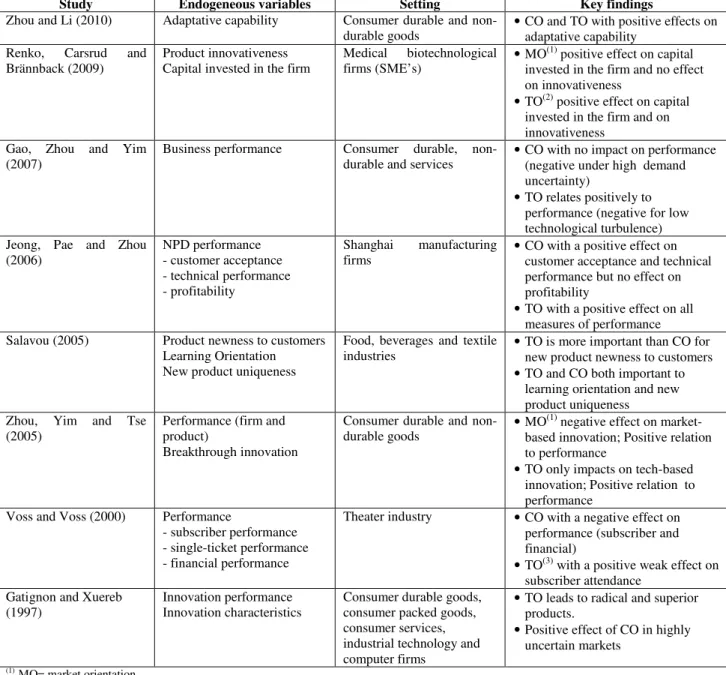
Table 2.3 – Empirical studies relating innovation and/or performance with customer orientation (CO) and technology orientation (TO) in simultaneous………. ... 30
Table 2.4 – Categorizations of innovations in the marketing and management literatures. 34 Table 2.5 – Reviews on export performance from 1987 to 2009... 42
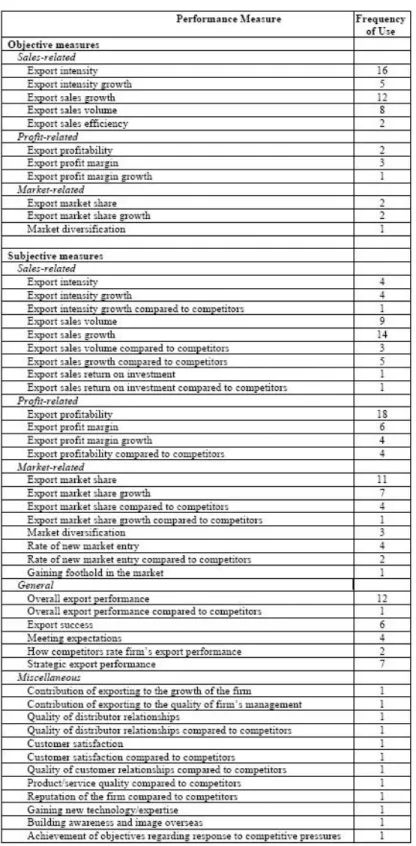
Table 2.6 – Measures of export performance... 45
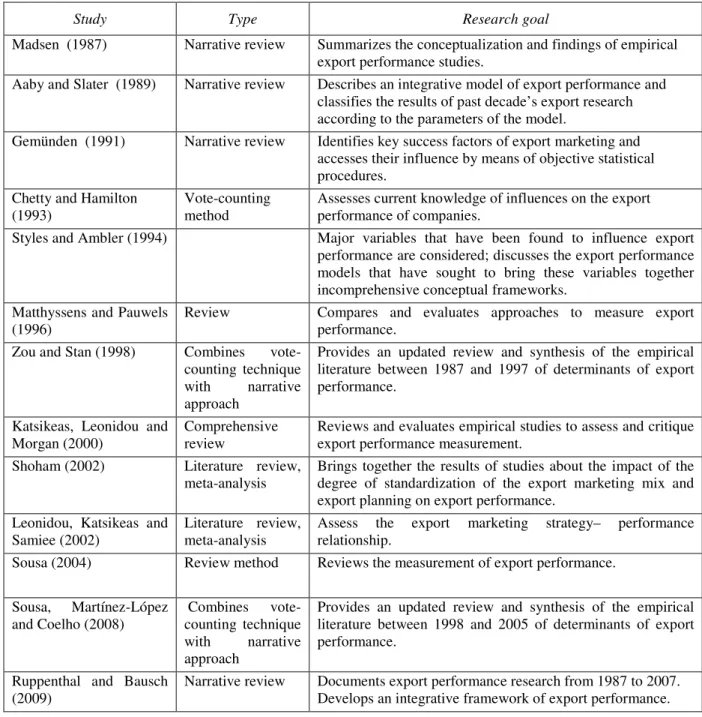
Table 2.7 – Mostly used determinants of export performance... 46
Table 2.8 – Examples of studies from the strategic orientations- or innovation-related literature using contingency factors... 50
3. MODEL DEVELOPMENT AND HYPOTHESES Table 3.1 – Summary of the research hypotheses……… 71
4. METHODOLOGY Table 4.1 – Elements of a research process ……… 76
Table 4.2 – Constructs, items and sources………... 81
Table 4.3 – Control variables………... 81
Table 4.4 - Summary of the two versions of the questionnaire for two types of respondents: export manager and R&D manager……… 82
Table 4.5 Correlations between the objective and the subjective measures……… 87
Table 4.6 – Assessing measurement and structural models………. 90
5. FINDINGS AND DISCUSSION Table 5.1 – Sample composition by industry... 98
Table 5.2 – Sample composition by number of full-time employees... 98
Table 5.3 – Sample composition by total company sales... 99
XII
Table 5.5 – Sample descriptives of number and countries with export operations and
company age... ... 100
Table 5.6 – Respondent’s job titles within the companies... 101
Table 5.7 - Scale Items and Reliabilities... 103
Table 5.8 - Means, Standard Deviations and Correlations between Constructs………….. 104
Table 5.9 – Items loadings and Cross loadings……… 105
Table 5.10 – t-test to β differences in testing H3 and H4……… 109
Table 5.11 - PLS results - mediating effects of exploratory and exploitative innovation.. 112
Table 5.12 - PLS path coefficients – moderator effects……… 114
Table 5.13 – Effect sizes – moderator effects……….. 115
Table 5.14 – Results of sub-group analysis for past performance………... 116
Table 5.15 - Results of sub-group analysis for technological turbulence……… 120
XIII
LIST OF FIGURES
1. INTRODUCTION
Figure 1.1 – Thesis structure... 12
2. LITERATURE REVIEW
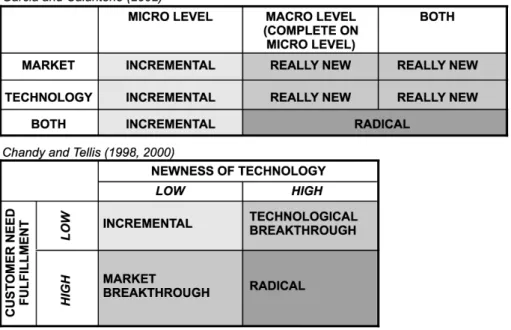
Figure 2.1 – Types of Innovation based on market and technology dimensions... 36
Figure 2.2 – Competence-based innovation types………... 38
3. MODEL DEVELOPMENT AND HYPOTHESES
Figure 3.1 – Conceptual model……… 58
4. METHODOLOGY
Figure 4.1 – Identifying moderator variables………... 93
5. FINDINGS AND DISCUSSION
Figure 5.1 – Complete conceptual model……… 106
1
CHAPTER 1 - INTRODUCTION
________________________________________________________________
The subject of this thesis is the relative impact of customer and technology orientations on innovation and export performance. By relative impact we mean the difference between the strengths of the relationships customer innovation and technology orientation-innovation. The subject of the thesis is addressed by developing and testing an empirical model that links customer and technology orientations to export performance through exploratory and exploitative innovation capabilities. Furthermore, we test the model under external- and internal-to-the-firm contingency factors.
Our main research questions are: 1) What is the relative impact of customer and technology orientations on the firm’s innovation capabilities and export performance? 2) To which extent is this impact affected by environmental and organizational factors?
The first section of this chapter discusses the scope and the objectives of this research. After, we devote a section to introduce the context of our study, the Portuguese technological exporters. Then, we address the research contributions, both at theoretical and managerial levels, as well as the already performed research. Finally, the structure of the thesis is summarized.
1.1 – Research scope and objectives
Researchers agree on the fact that firms need to pursue customer and technological competences simultaneously, as they both provide a foundation to innovation (Danneels, 2002; Gatignon and Xuereb, 1997; Yalcinkaya, Calantone and Griffith, 2007; Zhou, Yim and Tse, 2005). For more than 50 years managers have been told to “stay close to the customer” to increase share and fight off competitors (Drucker, 1954; Day, 1994). Researchers have pointed out the many benefits of being customer oriented (Jaworski and Kohli, 1993; Narver and Slater, 1990) and a considerable amount of research has evidenced the role of innovation
2
as a facilitator of the customer orientation-performance positive relationship (see Kirca, Jayachandra and Bearden, 2005).
More recently, firms have been warned that by being too much customer oriented they might lose innovation competences, because customers are not completely knowledgeable about the latest market or technological trends (Christensen, 2006; Christensen and Bower, 1996; Hamel and Prahalad, 1994). An example is the case of Moto Razr, one of the most successful cell phone models from Motorola (Verma, Momin and Girija, 2008). Launched in 2004, the Moto Razr was an innovative telephone that entered very quickly in a low-end market. Motorola market share went from 15% to 18% in 2005, and the Razr soon became a commodity. After that, Motorola missed out the next-generation technology as it was unable to develop products that could replicate the success of the Razr. Motorola had just become too much customer oriented.
Literature on innovation has showed that the ability to bring new products to the market is also critical to a firm and that this capacity to innovate is influenced by a firm’s technology orientation (Gatignon and Xuereb, 1997; Kleinschmidt and Cooper, 1991; Zhou, Yim and Tse, 2005). A technology oriented firm is committed to R&D and to the acquisition and use of sophisticated technologies in new product development. Therefore, the more technology oriented a firm is, the more it will develop radical innovations. Nonetheless, an excessive emphasis on technology may lead to a failure in marketing the innovations.
For example, Philips was for many years at the vanguard of technology with inventions such as the audiocassette, the CD and the DVD. However, in the 1990s, Philips witnessed a deterioration of its financial health partly because of a lack of customer focus (Georg and Govind, 2007). In 2004, Philips repositioned using the “sense and simplicity” campaign, helping to promote its new products based on an easy access to exciting technological benefits. Innovations were then developed jointly by teams of design, marketing, and technology professionals. Despite some criticism of the campaign, in 2007, Fortune magazine (p.13) commented on the transformation “of a sleepy European electronics company with mediocre margins into a consumer-oriented powerhouse capable of producing both strong earning gains and consistent returns for investors”.
3 Because resources are limited, firms have to make choices about which resources to allocate to what, and to decide the extent to which they will emphasize one strategic orientation over the other. Thus, the trade-off between customer and technology orientations is of utmost importance, as it is intrinsically linked to innovation. While the individual roles of customer and technology orientations on innovation and performance have attracted considerable attention, rare studies have assessed their relative importance. With this study, we seek to enrich this area of research, particularly in an innovation context, answering a recent call from a meta-analysis on the relationship capabilities-performance (Krasnikov and Jayachandran, 2008). Thus, we directly address the relative benefits of emphasizing either a customer or a technology orientation on the performance of the firm.
Furthermore, drawing on the organizational learning literature, we consider the mediating role of innovation on the aforementioned relationships. Noble, Sinha and Kumar (2002) noted that high-performing firms can not only gather and understand market information but also translate this knowledge into learning. They further suggest that a technology orientation also leads to knowledge-learning behaviors. Following recent literature (Atuahene-Gima, 2005; Baker and Sinkula, 2007; Yalcinkaya, Calantone and Griffith, 2007), we use exploratory and exploitative innovation as mediators. These reflect two different organization capabilities, towards developing new, or improving existing, customer and/or technological competences (Benner and Tushman, 2003). Both capabilities are essential to a firm (March, 1991). Choices regarding the balance between exploration and exploitation are related to the choices made about the emphasis on one strategic orientation over the other (Kyriakopoulos and Moorman, 2004; Quintana-Garcia and Benavides-Velasco, 2008). This study also advances the literature by considering the interaction between those two key trade-offs: customer versus technology and exploration versus exploitation.
Research typically addresses these trade-offs in a domestic context. This is quite surprising considering the fact that today innovation and internationalization are two critical, and highly related, drivers of the business. Firms can leverage their innovations by taking business opportunities in international markets (Knight and Cavusgil, 2004). This study intends to explore the topic in the context of exporters, more specifically, technological exporters. While valid for any organization, our topic is particularly important for a technological firm. Because these firms operate in markets characterized by very complex environments, with
4
high technological and demand uncertainties, they have the need for a sophisticated marketing (Dutta, Narasimhan and Rajiv, 1999; Mohr, Sengupta and Slater, 2009; Mohr and Sarin, 2009). Additionally, the fact that a technology orientation is inherent to those firms is no guarantee for success (Workman, 1993).
Finally, we extend our main research question by examining the trade-offs for innovation under the contingency effect of internal and external factors. We use the contingency perspective which asserts that firms should fit their strategic choices with external and internal factors (Schoonhoven, 1981).
As internal factors we consider the past financial performance of the firm. Organizational learning literature has demonstrated that firms tend to rely on their past experience and performance for decision making (Cyert and March, 1963; Lages, Jap and Griffith, 2008; Lant and Mezias, 1992; Levinthal and March, 1981). More specifically, innovation related decisions are affected by past performance due to limitation of resources (Durmuşoğlu et al., 2008). A poor past performance constrains the innovation possibilities by limiting the availability of resources. We follow a different perspective from researchers exploring the impact of past performance on strategy. Thus, we use past performance as a moderator (rather than as an antecedent to firm strategy), following the work of Mizik and Jacobson (2003), as our aim is not to examine the effect of past performance on innovation. Rather, we intend to investigate whether technological exporters have a different response under different past performance scenarios.
We study customer turbulence and technological turbulence as external factors because they represent two of the most significant forces in the market (Kotler, 2002). The influence of these factors as moderators of the relationship between strategic orientations and innovation or performance outcomes is widely acknowledged in prior research (Gatignon and Xuereb, 1997; Han, Kim and Srivastava, 1998; Li and Calantone, 1998; Song et al., 2005). Those types of environmental turbulence are particularly important for technological firms, operating in industries characterized by frequent and unpredictable market and technological changes (Calantone, Garcia and Dröge, 2003).
5
1.2 – The context: Portuguese technological exporters
As a background to the study, we provide a brief introduction to the context of our research, the Portuguese technological exporters.
Thus, in the first section we highlight the importance of exporting to economies and businesses. We outline some of the reasons that drive firms to export and the risks they face in foreign markets. We devote some paragraphs to characterize Portugal with respect to exporting and emphasize the importance of exporting strategies to Portuguese firms.
In the second section we discuss the role of technology in international strategies, particularly exporting. We also explain the importance of technology to Portuguese policy makers as a means to ensure sustainable growth and competitiveness of our economy and businesses. Finally we briefly characterize the Portuguese technological exports.
1.2.1 – Exporting and the Portuguese exporters
Exporting is defined as the selling of goods or services across national boundaries using indirect or direct methods (Cateora and Graham, 2009). During the last decades exporting has been an increasingly important economic activity, having reached, in 2007, 28.9% of the world’s gross domestic product, coming from 19% in 1990 (World Bank, 2010). Exporting is today the most widely used firm strategy for international expansion (Katsikeas, Leonidou and Samiee, 2009).
That popularity is due to a number of reasons. From a macro-national perspective, exporting increases domestic employment and foreign trade levels, supports the development of innovative technologies, and enhances general standards of living (Czinkota and Ronkainen, 2007). At the micro-business level, and compared with other entry modes, exporting has lower levels of risks, implies fewer resources and involves less fixed and operational costs. Furthermore it improves the firm’s financial position, allows firms to use idle operating capacity thus improving production efficiency, assists firms in transferring innovative
6
technologies and knowledge to less advanced markets; improves firm’s market knowledge and competitive position; and also enriches managerial skills (Cateora and Graham, 2009). Despite the many advantages of exporting, the firm’s entry into and operation in foreign markets is not easy. Rather, firms face many serious obstacles, the most common being limited organizational and managerial resources; inappropriate international marketing strategy; restrictive international trade rules and regulations; unfamiliar and/or differing business practices and customer behaviors abroad; dissimilarities between domestic and international environments; and excessive risks and costs due to large geographic and psychological distances separating nations (Miesenböck, 1988). These obstacles can narrow the potential of foreign market opportunities, undermine export financial performance and delay firm’s progress along the internationalization path or even originate its complete withdrawal from overseas markets (Welch and Wiedersheim-Paul, 1980).
The potential for extra growth is an incentive to initiate and/or expand exports, especially for small firms that aim to gradually become larger and play a significant role in the marketplace (Leonidou, Katsikeas, Palihawadana and Spyropoulou, 2008). Exporting can assist in this direction, since the firm will be in a position to increase its assets by exploiting some of the innumerous opportunities existing in overseas markets. This is particularly true in the case of small domestic markets, such as Portugal, where the potential for company growth is restricted (Sousa and Bradley, 2006).
Portugal is an interesting context of research due to the importance of exporting to the
country and its membership of the European Union (Lages, Jap and Griffith, 2008). The European Union is by far, the world’s largest exporter of goods, with a share, in 2008, of 16.6% of the total world exports (Eurostat, 2010). As in many countries in the European Union, economic growth in Portugal depends heavily on the exporting success of its firms. In fact, exporting is viewed as an important means for quickly decreasing the nation’s deficit. Portuguese total exports were 46 873 million Euros in 2009, representing approximately 28% of our GDP and 2.8 % of the EU-27 total exports of goods (Eurostat, 2010).
7
1.2.2 – Technology and the Portuguese technological firms
International markets offer technological firms an opportunity to leverage their technological competences (Autio, Sapienza and Almeida, 2000). Therefore, the development of special technologies by a firm in the domestic market is very likely to stimulate its motivation to go abroad (Leonidou, Katsikeas, Palihawadana and Spyropoulou, 2007). First, because those technologies have already proven successful in the domestic market, thus reducing the perceived risk of failure abroad; and second, because the opportunity costs of exploiting this technology for export purposes is almost negligible, since the costs associated with its development have already been absorbed in the home market. That stimulus is even more significant in the case of high-technology manufacturer companies (Johnston and Czinkota, 1982).
Having a unique and/or patented product may also stimulate the firm to export (Johnston and Czinkota, 1982). Unique products are very likely to attract the attention of new customers and create a competitive advantage in overseas markets with few additional costs. The strength of this stimulus is also higher when the product is internationally patented, thus ensuring a constant flow of revenues to the company for a period of time, until the appearance of other
competing technologies decreases this product advantage.
In 2005, the Portuguese government has assumed technology to be a priority in terms of the implementation of its public policies, through the Technological Plan (Plano Tecnológico, 2005). This plan constituted the pillar for Growth and Competitiveness of the Portuguese National Reform Plan, during the period 2005-2008, and is integrated in the Lisbon Strategy, from European Commission.
Three priority areas were defined by the plan: Knowledge/education, technology/R&D and innovation. As an example, in the area of technology, the proposed target for 2010 was 0.80% of R&D investment in percent of the GDP. In 2007 this indicator was at 0.76%, coming from 0.24% in 2003 (in EU-27 this value was 1.21% in 2008). For the area of innovation one of the indicators defined is related to the number of technological firms created, being the target 12.5% for 2010 and the value, in 2007, 3.28%.
8
1.2.3 – The Portuguese technological exports
The priority of technology as an engine for the growth and competitiveness of the Portuguese economy is also reflected in our exports. The Technological plan defined a target for 2010 of 11.40% of high tech exports as a percent of the total exports. In 2006 that value was at 7%, when in EU-27 it was at 16.6%. Another indicator of the progress of technology in Portugal
is the technological balance of payments1, which is now positive, since 2007 (AICEP, 2010).
Export growth has being driven by new sectors rather than by the traditional industries, and this reflects the structural changes stemming from the impact of foreign investment and the strength of those sectors that incorporated the most technology and value added. The most important groups of products exported in 2009 were machinery and tools (16.2%), vehicles and transport equipment (11.8%), base metals (6.8%), clothing (6.8%), plastics and rubber (6.3%), food products (5.9%), minerals and mineral products (5.7%) and agricultural products (5.3%), all of which represented close to 66% of total Portuguese sales abroad (AICEP, 2010).
For example, machinery and tools is classified as a high-technological industry and is growing in importance. It includes modern companies offering certified products and high technology such as exporters of moulds for the plastics industry and electrical machinery and apparatus, as well as of electric lines and cables, transformers and integrated circuits and electronic microchips (Eurostat, 2009).
As a concluding remark we may say that the context of the Portuguese technological exporters is quite appropriate for studying the trade-off between customer and technology orientations for export performance. First, because Portugal depends significantly on exporting and second, because technology is a priority for export development; therefore, insights on how to achieve superior export performance will be highly valued by technological exporters.
1 The technology balance of payments registers the commercial transactions related to international technology
and know-how transfers. It consists of money paid or received for the use of patents, licences, know-how, trademarks, patterns, designs, technical services (including technical assistance) and for industrial R&D carried out abroad, etc. (OECD, 2010).
9
1.3 – Expected research contribution 1.3.1 – Performed research
During the preparation of this thesis three papers were prepared as listed below. Not only are they a performed contribution to the exiting literature, but also a significant contribution to the improvement of this thesis. The feedback gathered during the presentation of the papers in conferences as well as during their review process was of utmost importance for this work. Hortinha, P., L.F. Lages and C. Lages (2010), Innovation and performance implications of the trade-off between customer and technology orientations, Journal of International Marketing, under (second) review process.
Hortinha, P., L.F Lages and C. Lages (2010), Trading Off Customer and Technology for innovation: Which one leads in good and bad times?, Proceedings of the 39th European
Marketing Academy Conference (EMAC), Copenhagen.
Hortinha, P., L.F. Lages and C. Lages (2009), Technology-Market Transfer Orientation: Matching Technology and Market Orientations, Proceedings of the 38th European Marketing
Academy Conference (EMAC), Nantes.
1.3.2 – Theoretical contributions
We attempt to contribute to the literature in several ways. First, we propose a framework that integrates two theories, the resource based view and the organizational learning theory. Thus, in the field of international marketing, particularly, export marketing, this research offers a new theoretical perspective for the strategy-innovation-performance link.
Second, we seek to contribute to the contingency perspective on the strategy-performance relationship. Particularly, we aim at clarifying mixed findings in the literature about the role of external and internal factors on that relationship.
With respect to the internal factor, the past performance of the firm, we additionally add to the literature a new perspective, by using past performance as a moderator rather than as an antecedent to strategy.
10
Third, we also advance the theory testing and generalization by testing the hypotheses from a cross-sectional sample of technological exporters.
Finally, we contribute at a methodological level: 1) by exploring the relative impact of two strategic orientations rather than studying their individual role; 2) by using two respondents within the same exporting firm, the export manager and the R&D manager ensuring that respondents are knowledgeable about the assessed variables (Leonidou and Katsikeas, 1996); and 3) by using objective data on performance. The use of measures from three different types of sources (two from different types of respondents and one from financial reports) are important to reduce possible common method bias (Podsakoff and Organ, 1986).
1.3.3 – Managerial contributions
This research intends to offer important insights to technological exporters. First, while exporting is becoming increasingly important for the survival and development of firms, they also face higher levels of market uncertainty and risk. Therefore, export managers need to understand the external forces affecting export operations, to improve chances of being successful.
Second, because technological exporters operate in technological industries, they also face high rates of technological turbulence. Often, innovation is the only way for firms to get opportunities in those markets; therefore, it is important for managers to understand customers and technologies in foreign markets jointly with the role of innovation in satisfying customers in those markets, and thus, in driving export performance.
Finally, because export managers’ decisions are affected by the resources available in the firm, knowing the proper strategies to emphasize for future superior performance is of outmost importance.
11
1.4 – Structure of the thesis
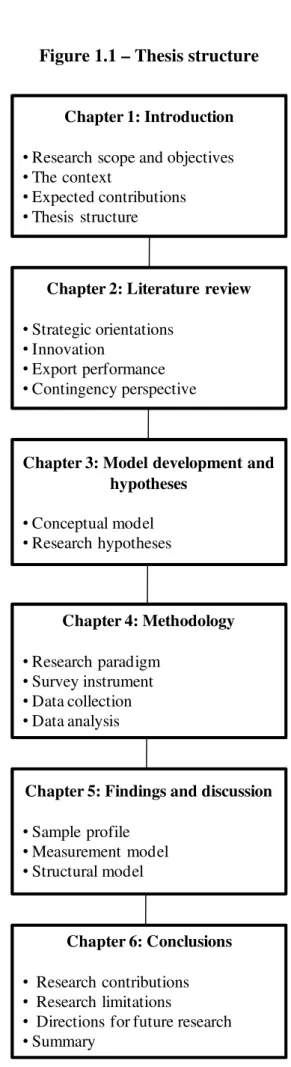
This thesis comprises six chapters, outlined in Figure 1.1. The remainder of this document is organized as explained below.
In this first chapter we introduced the subject of the dissertation, its scope and the objectives. Then, we briefly present the context of this study by giving an overview of the importance of technology and of exporting to the Portuguese companies. Before presenting the structure of this thesis, we outlined the main intended research contributions.
Chapter 2 presents a brief review of the literature on the main concepts underlying this research: strategic orientations, innovation, and export performance. First, the concepts are introduced, after, the state-of-the-art is outlined and then the major gaps in the literature are identified. The chapter ends with a review of the contingency perspective related research. Chapter 3 explains the hypotheses leading to the proposed conceptual framework. Strategic orientations are related to export performance using innovation capabilities as mediators. Hypotheses are mainly based on the relative importance of those strategic orientations. Internal and external factors are hypothesized to moderate those relationships.
In chapter 4 the methodology used to test the hypotheses developed in chapter 3 is described. Steps associated with sampling, survey instrument development, pre-test and administration, data collection and data analysis are discussed in detail.
Chapter 5 shows the findings and examines the extent to which the results support or refute each of the hypotheses. The discussion is supported by the literature.
Finally, in chapter 6, the research contributions are presented, and the key implications for export managers are discussed. Research limitations are indicated suggesting future avenues of research. This chapter ends with a summary of the main conclusions.
12
Figure 1.1 – Thesis structure
Chapter 1: Introduction
• Research scope and objectives • The context • Expected contributions • Thesis structure Chapter 6: Conclusions • Research contributions • Research limitations
• Directions for future research • Summary
Chapter 2: Literature review
• Strategic orientations • Innovation
• Export performance • Contingency perspective
Chapter 3: Model development and hypotheses • Conceptual model • Research hypotheses Chapter 4: Methodology • Research paradigm • Survey instrument • Data collection • Data analysis
Chapter 5: Findings and discussion
• Sample profile • Measurement model • Structural model
13
CHAPTER 2 – LITERATURE REVIEW
________________________________________________________________
The objective of this chapter is to present the main marketing and management literature related to the concepts of this research: strategic orientations, innovation, and export performance. It is not our purpose to review the whole body of literature on those areas. Rather we aim at introducing the concepts by providing an overview of the most relevant research about them. We give particular attention to technological innovation, the focus of our work.
In the first section, dedicated to strategic orientations, we introduce Resource Based View as a supporting theory to the importance of strategic orientations. Strategic orientations are two important firm capabilities linked to innovation and key constructs in this work. Then, we present the concepts of customer orientation and technology orientation and we review the literature on the relationship of these orientations with innovation and performance. To finalize this section we introduce the debate on the trade-off between both customer and technology orientations.
The second section of the chapter looks at innovation; first we define it and present its different typologies. Then, we address specifically two innovation capabilities, exploration and exploitation, which are central constructs of our study. The last topic of the section
focuses on the support theory to the importance of the two capabilities to performance: the
Organizational Learning Theory.
A third section considers the literature on export performance, first through a research overview, then by discussing its conceptualization and measurement, and lastly by outlining its determinants. Export performance is our dependent variable; therefore its deep understanding is crucial here.
In the fourth section we present the contingency perspective. The section starts with a brief introduction to the topic followed by a review of the main organizational and environmental contingency factors covered in the literature. This overview is relevant for this work as we
14
consider our theoretical framework to be contingent upon three of those factors, which are identified and discussed.
We end the literature review chapter presenting our conclusions, by discussing the various knowledge gaps in the literature, and identifying potential research contributions.
2.1 – Strategic orientations
2.1.1 – The Resource Based View
How does a firm achieve and sustain a competitive advantage and performance is a fundamental question in the field of strategic management (Porter, 1985). One of the theories
dominating the explanations of firm performance is the Resource Based View2. According to
this theoretical approach, resources are central to firm performance (Wernerfelt, 1984). Resources are defined as internal attributes, including tangible assets (equipment, location), specific internal capabilities (human skills), processes, routines, and knowledge that are linked to or are controlled by the organization. Firms are conceptualized as a bundle of resources which are heterogeneously distributed across firms, being this difference persistent overtime (Barney, 1991). Accordingly, a sustainable competitive advantage can be achieved when firms have resources that are valuable, rare, inimitable and non-substitutable, because they allow for the implementation of strategies that will not be easily duplicated by competitors.
A distinction is normally made between resources and capabilities, being the resources available factors that are owned or controlled by the organization, and capabilities organizational capacities to deploy resources (Amit and Schoemaker, 1993). Scholars of the RBV argue that it is through the conversion of firm resources into capabilities that the firm obtains competitiveness (Teece, Pisano and Shuen, 1997).
Day (1994: 38) uses the terms “Assets” to define the resources endowments accumulated by the firm and “Capabilities” as the “glue” that brings those assets together and enables them to
15 be deployed advantageously. Assets are the more tangible resources - like economies of scale, brand equity, reputation, location, financial condition – and capabilities are more difficult to quantify monetarily – such as skills underlying innovativeness and the superior quality of the firm’s products. Capabilities are deeply embebbed in organizational routines and practices and, unlike assets, cannot be traded or imitated easily. Capabilities can be thought of in terms of three broad groups: outside-in capabilities, such as market sensing and channel bonding; inside-out capabilities, such as integrated logistics and technology development, and spanning capabilities, such as new product development capabilities and customer order fulfillment processes.
An important firm capability is its strategic orientation, which reflects the strategic direction taken by the firm to lead to the proper behaviours for continuous superior performance (Narver and Slater, 1990). Strategic orientations have a long-term focus, both in relation to profits and in implementing the behaviors leading to the broad strategic choices (Anderson, 1982). A strategic orientation represents the elements of a firm’s culture that guide interactions with the marketplace (Noble, Sinha and Kumar, 2002).
Linked to innovation, two major strategic orientations are customer orientation and technology orientation (Gatignon and Xuereb, 1997; Zhou, Yim and Tse, 2005). Customer orientation is a part of the aggregate concept of market orientation, which has been extensively documented in the literature (for a review see Kirca, Jayachandra and Bearden, 2005). Customer orientation is broadly recognized as essential to a firm’ success and technology orientation is seen, since long, as having a key influence on the performance of the firms (Narver and Slater, 1990) and, more recently, considered as a strategic orientation (Gatignon and Xuereb, 1997).
Technology orientation focuses predominantly on advanced technologies. Therefore, it has direct impact on innovation. Firm’s technological capabilities have been shown to be a source of competitive advantage and superior performance (Lee, Lee and Pennings, 2001). Companies operating in technological industries are inherently technology oriented (Slater, Hult and Olson, 2007).
16
2.1.2 – Customer orientation 2.1.2.1 - Conceptualization
Customer orientation conceptualization is tightly linked to the concept of market orientation, being part of it. Therefore, we introduce market orientation first.
The market orientation concept has gained a lot of importance along the past two decades and is nowadays considered as the central concept in marketing (Kotler, 2002). It is seen as being crucial to the organizational success (see Cano, Carrillat and Jaramillo, 2004). A company that adopts market oriented behaviors will affect in a positive way its profitability (Morgan, Vorhies and Mason, 2009; Slater and Narver, 1994; Webster, 1992). Due to the importance of this concept, there has been extensive research in an attempt to determinate its antecedents and consequences (see Kirca, Jayachandran and Bearden, 2005 for a review).
Researchers have identified three components of the marketing concept: the customer as a focal point for business activities, the necessity of integrating functions and the need for profit orientation. Somehow consistent with this concept, in the late 1980’s the market orientation concept started to be used as a synonymous of the marketing concept (Shapiro, 1988; Webster, 1992).
Market orientation has been conceptualized from both the behavioral and the cultural perspectives (Homburg and Pflesser, 2000). Therefore, different definitions of market orientation emerge from those different perspectives. From a behavioral perspective, Kohli and Jaworski (1990) have defined market orientation as firm’s ability to generate market intelligence pertaining to current and future costumer needs, to disseminate it across departments and, respond to it. From a cultural perspective, Narver and Slater (1990) defined market orientation as an organizational culture that creates the behaviors leading to a superior customer value. Three behavioral components are part of this market orientation definition: customer orientation, competitor orientation and interfunctional coordination.
Customer orientation refers to the understanding and monitoring of customers and their needs. It includes gathering and generating knowledge about current and future customers and
17 disseminating it within the firm (Jaworski and Kohli, 1993; Narver and Slater, 1990). A customer orientation requires the understanding of the complete value chain of the customers as well as of the environmental constrains at every level of the chain (Day and Wensley, 1988). Firms with a strong customer orientation have a competitive advantage because they consider the creation and maintenance of customer value a top priority (Olson, Slater and Hult 2005).
Competitive orientation relates to the understanding of competitor’s strengths and weaknesses, capabilities and strategies to satisfy customers (Porter, 1985). Therefore, it is about generating information about current and future competitors and disseminating it within the firm (Jaworski and Kohli, 1993; Narver and Slater, 1990).
Interfunctional coordination refers to the extent to which all the departments in the firm interact, communicate and coordinate between them to promote the wide use of firm’s resources and the creation of superior customer value (Jaworski and Kohli, 1993; Narver and Slater, 1990). Interfunctional coordination enables the transfer and the integration of current and new knowledge within the firm (Kogut and Zander, 1992).
Despite the fact that Narver and Slater (1990) have conceptualized market orientation as being constituted by three equally important components, scholars have been taking a “component-level” approach by disaggregating market orientation when analyzing performance. Researchers have showed that customer and competitor orientations have differentiated roles over performance (Day and Wensley, 1988; Han, Kim and Srivastava 1998; Im and Workman, 2004; Lukas and Ferrell, 2000; Voss and Voss, 2000; Zhou et al., 2007). Some researchers went further by suggesting that market orientation is essentially customer orientation (Deshpandé, Farley and Webster, 1993), representing the concept of “customer pull” in a firm’s strategic planning and implementation (Day, 1994).
With respect to interfunctional coordination, this construct has been used differently, more as an organizational contingency factor that affects the relationships between strategic orientations and performance (Atuahene-Gima, 2005; Gatignon and Xuereb, 1997). Han, Kim and Srivastava (1998) concluded that both competitor orientation and interfunctional
18
coordination didn’t impact significantly on innovation, except when firms face high environmental uncertainty.
Some researchers (Han, Kim and Srivastava, 1998; Im and Workman, 2004) demonstrated the importance of examining the market orientation construct in a disaggregated way, because this approach offers managers more precise insights on the role of each component over performance. Noble, Sinha and Kumar (2002) argue that the focus on the aggregate market orientation construct may explain some of the inconsistencies found in market orientation research. In this work we follow the disaggregate perspective.
As such, we do not include either competitor orientation or interfunctional coordination. While acknowledging the importance of competitor orientation as a firm strategic orientation, when in the context of exporting firms tend to have a rather limited knowledge of competitors (Lages, Silva and Styles, 2009). Even if export managers are aware of who are their
competitors abroad, they reveal much more difficulty in gathering information about their
strategies3. Because competitive orientation is about gathering competitor’s knowledge, exporter’s competitive orientation would be difficult to assess.
This decision has found further support in the export marketing literature. Market orientation is most often operationalized following Jaworski and Kohli (1993), therefore avoiding a strong focus on the competitor-related dimension. Examples are the studies of Cadogan et al. (2006, 2001), Cadogan, Kuivalainen and Sundqvist (2009) and Rose and Shoham (2002). Other studies, also in the international context, have employed competitor orientation but found out that its impact on performance was not significant (see Zhou et al., 2007).
With respect to interfunctional coordination, as explained before this construct has been seen as intrinsically different from market orientation (Atuahene-Gima, 2005; Gatignon and Xuereb, 1997), and therefore from customer and competitor orientations. We exclude interfunctional coordination because the focus of this study is to directly compare customer orientation with technology orientation. These two strategic are seen as opposite to each
3 These findings are consistent with the information we gathered from export managers and R&D managers
19 other, making it pertinent to examine their relative impact, independently of other orientations or processes of the firm.
2.1.2.2 – Customer orientation and performance
Customer orientation (and, more broadly, market orientation) is widely recognized as driver of business performance (Atuahene-Gima, 1995; Baker and Sinkula, 1999; Day, 1994; Hult and Ketchen, 2001; Hurley and Hult, 1998; Jaworski and Kohli, 1993; Matsuno, Mentzer and Ozsomer, 2002; Narver and Slater, 1990). Firms with a superior customer orientation achieve superior business performance because they understand better than their competitors the customer’s needs, both existing and latent.
In a recent meta-analysis (see Kirca, Jayachandran and Bearden, 2005) the market orientation’s positive impact on performance - both revenue and profit-based – was shown to be consistent across most of the studies. Hult, Ketchen and Slater (2005) also demonstrated that both cultural and behavioral conceptualizations of market orientation contribute to performance.
Nonetheless, contradictory findings exist in the literature – please see Table 2.1. For example, in some studies it was found a negative relationship of customer orientation to performance (Grewal and Tansuhaj, 2001; Voss and Voss, 2000). In other works, weak or non-significant results were reported (Atuahene-Gima, 1996; Han, Kim and Srivastava 1998; Subramanian and Gopalakrishna, 2001).
Table 2.1 presents a summary of the most recent studies that covered the direct relationship between customer orientation and firm performance. The list is not exhaustive and only includes works published after 2000. Examples were selected from different journals (according to Theoharakis and Hirst, 2002). Studies using the aggregate construct of market orientation, thus not providing results at customer orientation level, are distinguished from those that do provide that information or examine customer orientation individually. The objective of this table is to provide a picture of the mixed recent findings related to the relationship between customer orientation and firm performance.
20
Debate on how does market orientation contribute to performance is still evolving. As Hult, Ketchen and Slater (2005: 1179) noted, “market orientation is not typically a lever that can be pulled to directly increase performance”. As such, many different variables have been tested as mediators between customer orientation and performance. The next topic will provide some insights into these mediators. This is an area of contribution of this thesis.
Due to the disparate findings in the literature, researchers have also suggested that the relationship between customer orientation and performance may be contingent upon other variables related to environmental characteristics or organizational factors. These contingencies will be discussed in topic 2.4, later on in this chapter. This is also an area where this research intends to provide additional insights.
2.1.2.3 – Customer orientation and innovation
Customer orientation is an important contributor to new product development4 activities and
performance (see Kirca, Jayachandran and Bearden, 2005). However, the nature of the relationship between market orientation and innovation is still an unresolved issue (Im and Workman, 2004; Lukas and Ferrel, 2000). Researchers argue that being too customer-oriented may lead the firm to overlook knowledge coming from other industries, from non-traditional competitors or related to future markets, thus lowering the possibility of generating innovations for emerging markets (Zhou, Yim and Tse, 2005). An exclusively customer focused firm may risk itself in the “tyranny of the served market”, developing innovations that address existing customers’ unsatisfied needs, and unlikely investing in innovations that departure from the existing market segment (Christensen, 1997; Hamel and Prahalad, 1991). Firms may lose their industry leadership because they listen too much to customers (Christensen and Bower, 1996), a poor source of extreme innovation.
4
New product development, hereafter NPD, is used, in this thesis, interchangeably with innovation. When referring to product innovation (and also technological innovation) it is common in the literature to find both designations, NPD and innovation, used with the same meaning (Henard and Szymanski, 2001). However, it is acknowledged that new product development is an aspect, among others, of the broad topic of innovation (Hauser, Tellis and Griffin 2006).
21
Table 2.1 – Empirical studies relating customer orientation and firm performance
Study MO or CO(1) Effect Profit Market share Sales
De Luca, Verona and Vicari (2008) CO No effect(2)
Gao, Zhou and Yim (2007) CO No effect No effect(3)
Paladino (2007) MO Positive(2)
Jeong, Pae and Zhou (2006) CO No effect
Hult, Ketchen and Slater (2005) MO No effect
Baker and Sinkula (2005) MO Positive
Sin et al. (2003) MO Positive No effect(4)
Singh (2003) MO Positive
Matsuno, Mentzer, and Ozsomer (2002) MO Positive Positive Noble, Sinha and Kumar (2002) CO No effect
Perry and Shao (2002) MO No effect
Rose and Shoham (2002) MO Positive
Shoham and Rose (2001) MO Positive No effect
Deshpande and Farley (2000) MO No effect No effect
Homburg and Pflesser (2000) MO No effect
Matsuno and Mentzer (2000) MO Positive No effect(4)
Sin and Tse (2000) MO No effect
Slater and Narver (2000) MO Positive
Voss and Voss (2000) CO Negative
(1) MO=market orientation; CO= customer orientation
(2) Overall performance
(3) Sales growth
(4) Partial effect
In addition, intelligence generated from existing customers or even lead users may not provide critical guidelines for introducing products that are desired by new markets with new preferences (Hamel and Prahalad, 1994). As von Hippel, Thomke and Sonnack (1999) note, lead users—the most sophisticated and demanding users of current products—can offer insights into existing value systems but not into markets with different values. Im and
22
Workman’s (2004) unexpected finding that customer orientation negatively affects new product novelty provides further support to this logic. Henry Ford, pioneer in the mass production of affordable cars, is known to have said once something like “if I would have asked my consumers what they wanted, they would have said a faster horse, not a car” (Crane, 2009: 9).
Atuahene-Gima, Slater and Olson (2005) tried to counter those criticisms by arguing that market orientation is composed by two dimensions, a responsive and a proactive one, with different effects on performance. The responsive dimension refers to the generation, dissemination, and use of market information related to the current customers and product domains and focuses on expressed customer needs (Jaworski, Kohli and Sahay, 2000; Slater and Narver, 1995). By contrast, the proactive dimension reflects the discovery and satisfaction of the latent, unarticulated needs of customers. Responsive and proactive behaviors are key capabilities that reflect superior skills and processes which cannot be readily imitated by competitors (Hunt and Lambe, 2000). They are therefore sources of competitive advantage.
Those scholars have found a U-shaped relationship between responsive market orientation and new product program performance. This finding suggests that performance benefits from a market-oriented behavior only after a certain point. As the firm gains greater customer knowledge, it reduces the risk of failures and increases productivity in new product development (Levinthal and March, 1993).
The inverted U-shaped relationship between the proactive dimension and new product program performance implies that beyond a certain level of customer orientation becomes harmful to new product program performance. Previous literature suggests that excessive pro-activity in information search may be detrimental because too many exploratory projects reduce the chances of building experience with a specific new knowledge base (Levinthal and March, 1993; March, 1991).
Related to the newness of the products, customer orientation’s impact on new product performance was found to be different for radical and for incremental products (Atuahene-Gima, 1995, 2005). The finding of a weaker influence of customer orientation on the
23 performance of radical products was justified by the fact that there are fewer competitors for those products; therefore, the need for a customer orientation is probably lower in the beginning (Kohli and Jaworski, 1990). Other researchers have found opposite findings (Baker and Sinkula, 2007).
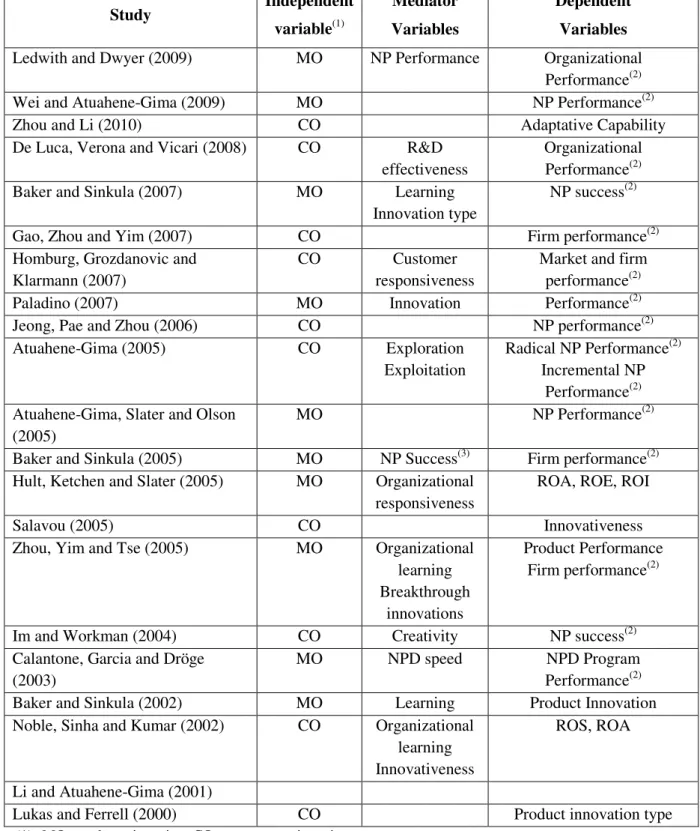
Table 2.2 presents some studies relating customer orientation to innovation-relate constructs. The objective of this table is to provide a brief picture of the main recent research developed on the topic. Studies with the aggregate market-orientation construct are also included.
From the table it is clear that many researchers have been testing different variables as mediators between customer orientation and (new product or firm) performance. For example, organizational responsiveness (firm’s propensity to act based on the acquired knowledge) has been shown to mediate that relationship (Hult, Ketchen and Slater, 2005). Innovativeness has been closely tied to customer orientation and performance in a range of research (Deshpandé, Farley and Webster, 1993; Gatignon and Xuereb, 1997; Han, Kim and Srivastava 1998; Hult and Ketchen, 2001; Hurley and Hult, 1998; Noble, Sinha and Kumar, 2002). Creativity has also been tested by arguing that it is a more concrete construct than innovation (Im and Workman, 2004). Results confirmed the mediating effect of this construct. Baker and Sinkula (2007; 2002) tested learning style (adaptive/generative) and innovation priority (radical/incremental) as mediators between market orientation and new product success. They confirmed learning as a key element in helping market-oriented firms to balance radical and incremental innovation programs.
As a concluding remark to this section (Customer orientation), we may say that the use of innovation-related constructs has been made it possible to better understand the customer orientation-performance relationship.
24
Table 2.2 – Empirical studies relating customer orientation to innovation
Study Independent variable(1) Mediator Variables Dependent Variables
Ledwith and Dwyer (2009) MO NP Performance Organizational
Performance(2)
Wei and Atuahene-Gima (2009) MO NP Performance(2)
Zhou and Li (2010) CO Adaptative Capability
De Luca, Verona and Vicari (2008) CO R&D effectiveness
Organizational Performance(2)
Baker and Sinkula (2007) MO Learning
Innovation type
NP success(2)
Gao, Zhou and Yim (2007) CO Firm performance(2)
Homburg, Grozdanovic and Klarmann (2007)
CO Customer
responsiveness
Market and firm performance(2)
Paladino (2007) MO Innovation Performance(2)
Jeong, Pae and Zhou (2006) CO NP performance(2)
Atuahene-Gima (2005) CO Exploration
Exploitation
Radical NP Performance(2)
Incremental NP Performance(2)
Atuahene-Gima, Slater and Olson (2005)
MO NP Performance(2)
Baker and Sinkula (2005) MO NP Success(3) Firm performance(2)
Hult, Ketchen and Slater (2005) MO Organizational responsiveness
ROA, ROE, ROI
Salavou (2005) CO Innovativeness
Zhou, Yim and Tse (2005) MO Organizational
learning Breakthrough
innovations
Product Performance Firm performance(2)
Im and Workman (2004) CO Creativity NP success(2)
Calantone, Garcia and Dröge (2003)
MO NPD speed NPD Program
Performance(2)
Baker and Sinkula (2002) MO Learning Product Innovation
Noble, Sinha and Kumar (2002) CO Organizational learning Innovativeness
ROS, ROA
Li and Atuahene-Gima (2001)
Lukas and Ferrell (2000) CO Product innovation type
(1) MO=market orientation; CO= customer orientation (2) subjective measure
25
2.1.3 – Technology orientation 2.1.3.1 – Conceptualization
Technology orientation is defined as “the ability and the will to acquire a substantial technological background and use it in the development of new products” (Gatignon and Xuereb, 1997: 78). A technology oriented firm is committed to R&D and is pro-active in acquiring and integrating new and sophisticated technologies in the new product development process (Slater, Hult and Olson 2007); It also promotes openness to ideas that employ state-of-the art technologies, as opposed to market orientation which favors ideas that better satisfy customer needs (Zhou, Yim and Tse, 2005). A technology orientation reflects the philosophy of “technological push”, as opposed to the “customer pull” philosophy of customer orientation.
A technology oriented firm possesses greater technological capabilities, which consists of technological knowledge, patents, trade secrets and other technology-specific intellectual property (Hsieh and Tsai, 2007). Technology oriented firms need to largely invest in R&D to nurture its capability, which is critical, especially in high-tech firms.
Other terms appear in the literature that seem to parallel technology orientation. For example, Srinivasan, Lilien and Rangaswamy (2002) have designated by “technological opportunism” (a form of benign opportunism) the ability of the firm to sense and respond to new technologies. A technology-sensing capability is the ability of the firm to acquire knowledge about new technological developments, being that knowledge developed internally or externally; it implies that a firm is constantly scanning for new technological opportunities and threats. A firm is said to possess a technology-response capability if it is willing and able to respond to the new technological threats or opportunities that may affect it. This response may be through alliance formation, technology adoption in the firm, doing experimentation, etc. However, as those authors point out, technological opportunism does not implicate that technologies are used to develop new products, therefore, it is conceptually different from technology orientation.