Customer Participation in Professional Services
Operations And Its Impacts On Flexibility and Costs
Juliana Barreto †
Universidade Federal de Minas Gerais - UFMG, Minas Gerais, MG, Brazil
Ricardo Silveira Martins Ω
Universidade Federal de Minas Gerais - UFMG, Minas Gerais, MG, Brazil
1. INTRODUCTION
This study sought to contribute to the discussions on the paradox of flexibility and costs in operations, approaching the variability originated from customer participation in the operations of professional services. Since services by nature count on the necessary adherence to the contractor’s interests, often they participate directly in its development, which creates barriers to standardization. Standardization supports better results in capacity management, in direct relation to situations of idleness and the over-use of resources and therefore, it has a strong cost impact as an important element of the strategy and operations management.
At the same time that services are consolidated as the most important sector of income and employment in the economies, such businesses face increasingly challenging situations. While demands are increasingly more customized – more heterogeneous, less predictable and with a high degree of demands, the relationships between organizations and individuals have assumed more volatile and fluid configurations (HUGGINS, 2011; LOVELOCK; WIRTZ; HEMZO, 2011; ROTH; MENOR, 2003). This environment requires flexibility, but the market imposes price limits. Very often, having the client active in the process is key to achieve the best result and not just being close to the customer, however this causes complexities (BABAI; JOUINI,
This article has a Creative Commons License - Attribution 3.0 Not Adapted.
Corresponding author:
† Universidade Federal de Minas Gerais - UFMG, Minas Gerais, MG, Brazil. E-mail: [email protected]
Ω Universidade Federal de Minas Gerais
- UFMG, Minas Gerais, MG, Brazil. E-mail: [email protected]
Received: 07/19/2016. Revised: 08/20/2016. Accepted: 10/13/2016. Published Online: 11/01/2017.
DOI: http://dx.doi.org/10.15728/bbr.2018.15.1.3
ABSTRACT
This study has its contribution to deepen the understanding about the paradoxical relation between flexibility and costs in the field of operations service strategy and management, approaching the customer participation affects on the professional services. Through a multi-case study with four professional services organizations, using data collection through semi-structured interviews and documentary research, we identified four main sources of variability, namely: customer arrival, the diagnosis of needs, production and implementation and the delivery value analysis. We concluded that the professional services firms prioritize customer participation and this implies to accommodate variability in flexible service operations to meet the most different types of customers without an alignment to the strategic plan for business growth.
Keywords: Professional service; Variability; Capacity management; Service operations.
BBR
15,1
34
2013) and variability, which imply losses of resources and increases in costs (FREI, 2006; KANNAN; PROENÇA, 2010). For Johnston and Clark (2002), capacity management is the key element for improving the financial results of these processes.The higher the level of customer contact, the more critical the effects of variability, or lack of standardization, become for the organization. This is the typical case of professional services. Considered as unique environments for the field of Operations Management by Goodale, Kuratko and Hornsby (2008), this type of service is characterized by high levels of labor intensity, customization and coproduction. Thus, the choice of the appropriate capacity for the production of a professional service becomes even more complex due to the intensification of the characteristics inherent to the service systems (LEWIS; BROWN, 2012; NORDENFLYCHT, 2010; ROTH; MENOR, 2003).
Therefore, this study proposes to deepen the discussions of the effect of the variability brought about by the participation of the client in the operation of professional services, guided by the following research question: how does the variability generated by the client’s participation impact the management of capacity for the allocation of resources during the service execution cycle, with emphasis on flexibility and cost performance? Based on this proposal, we hope to contribute to the practice of the management of operations in professional services, in a specific way, and the management of services, in general, from the systematic basis of practices related to the mitigation of effects in the allocation of resources arising from uncertainties of demand behavior.
Recent studies address the discussion on models of customer value, variability, service operation, professional services and related themes, such as Scanfone, Torres Junior and Gosling (2015), Pinho et al. (2014), Ponsignon, Klaus and Maull (2015), McColl-Kennedy,
Cheung and Ferrier(2015), Sampson and Money (2015), Giannakis, Doran and Mee (2014), Lewis and Brown (2012) and Verleye (2015). However, there are research opportunities that consider and relate the adverse effects to the operation from customer participation to organizational responses, considering the discussion of capacity management.
2. PROFESSIONAL SERVICES, VARIABILITY AND CAPACITY
MANAGEMENT
According to Slack, Chambers and Johnston (2002), the management of operations contemplates the management of processes, productive or not, and of the scarce resources involved, with the purpose of producing goods and services according to the needs of the customers, from the dimensions of cost, time and quality. Whilst keeping the discussion under the scope of processes, the management of service operations discusses topics that traditionally are within the scope of more general operations management, such as capacity management, but it considers a specific context, characterized, among other elements, by service meetings and customer experience (ROTH; MENOR, 2003).
Given the diversity of the service sector, it is difficult to define and apply managerial generalizations. However, in order to show shared elements, several authors have developed classification schemes, as Lovelock, Wirtz and Hemzo(2011) and Schmenner (2004). Focusing on professional services, characterized in an equivalent way to knowledge-intensive services (NORDENFLYCHT, 2010), the author defines them as any organization that has a workforce with a high degree of expertise, such as insurers, accounting firms, technology, law firms and consultancies.
BBR
15,1
35
on the professional; and, finally, the professionalized workforce, evidencing the domain of a certain group of professionals who have a monopoly of use of a specific body of knowledge and share ethical codes of ideology.
2.1 VARIABILITY IN SERVICE SYSTEMS
Gomes (2004) reports that consumer service studies suggest, first and foremost, efficiency in the use of resources to the detriment of the quality of service delivery. In fact, this is an allusion
to the existing dilemma between prioritizing costs against other performance criteria. This is
because — although the service production process is a result of collaborative relationships and value creation between organizations and their clients through cooperation, sharing of profits and the conduct of joint initiatives (LAMBERT; ENZ, 2015) — externalities are often not shared in full, which result from variability, are generators of costs and uncertainties of operations (FREI, 2006; KANNAN; PROENÇA, 2010; SAMPSON; FROEHLE, 2006). Frei (2006) identified five sources of variability, considering the client’s involvement in the operation: on arrival; on placing the order; skills; effort; and subjective preferences. As customers usually do not look for the service in a standardized and known way, there is variability on arrival. In addition, customers tend to individualize each order according to their needs, causing variability in the order. On the other hand, the performance in the process varies according to the abilities, limitations and interests of each client, resulting in both the variability of skills and the effort dedicated by the company. Finally, the variability of subjective preference occurs due to the individual interpretation of each client on the results delivered during the process, considering perceived success criteria (FREI, 2006; MAULL, GERALDI; JOHNSTON, 2012; MORRIS; FREI, 2013). It is also good to consider that the variability brought by the client influences both the quality of the service and the loyalty of the customers (YANG, 2011) and can contribute to the reduction of productivity (SCHMENNER, 2004).
In the field of management strategies, Sampson and Money (2015) identified that there is a challenge to manage capacity in the professional services process, since the use of capacity depends on the resources and demand from the client, subject to constant variations. Frei (2006) pointed out a classic trade-off faced by service companies with regard to the treatment of variability and the author discusses two main strategies, termed as “reduction strategy” and “accommodation strategy”. The first is related to low cost and low quality services, since the main objective is linked to the reduction of service options, flexibility and operational complexity. The second one considers internal actions in order to compensate for the variations brought by customers, considering a differentiated offer, with trained professionals.
2.2 MANAGEMENT OF PRODUCTIVE CAPACITY IN SERVICES
BBR
15,1
36
with the majority of perceived value criteria (SANTOS; GOHR; VARVAKIS, 2012). In this
context, two strategies for capacity management in services can be identified: change the capacity, processes and services supply according to fluctuations in demand; and influence customer behavior to match the existing capacity level (FIGUEIREDO; ESCOBAR, 2004; OLHAGER; JOHANSSON, 2012; SASSER, 1976).
Considering the first strategy, the following practices are listed: flexible levels of resources to keep up with variations in demand, increasing or reducing the labor force, for example by encouraging on taking up breaks; third-party subcontracting; training of multifunctional individuals; sharing facilities and equipment; distribution of service hours, as well as the revision or standardization of the processes; introduction of technology and management of queues. On the other hand, to influence demand, the second strategy identified, is essential to understand the patterns and behaviors of demand: to offer price incentives; develop new services or complementary services for periods of low demand; carrying out advertisements; educate clients about the work to be developed; use reservation systems, among others. In general, investing in communication with customers, in order to inform them about the existing capacity, is a relevant point to influence their preferences (FIGUEIREDO; ESCOBAR, 2004; LOVELOCK; WIRTZ; HEMZO, 2011; SASSER,
1976).
In the operation of a professional service, extreme levels of variability, heterogeneity and customization are observed, derived from the active and total participation of the client in the process. By delivering an innovative solution to an identified problem, skills and creativity of professionals are decisive. However, the management of a continuous environment of complexity and uncertainty in the face of a structure that is operationally efficient brings constant challenges, and some reflect in the management of productive capacity. Appropriate workforce dimensioning issues, time of execution of the activities and the programming with differentiated professionals, in terms of competence and experience, become highly complex (SCHEMENNER, 2004; NORDENFLYCHT 2010; ROTH; MENOR, 2003).
For Giannakis, Doran and Mee (2014), one of the main challenges faced by professional services managers is related to the ability to respond quickly to customer’s demands, offering at the same time, a unique and personalized experience. However, the provision of customized services at all times often costs and makes the operation of the provider unfeasible. For Der Laan, Broekhuis and Offenbeek (2014), the application of modularization in the offer of professional services by means of the standardization of a certain set of components, addresses in part this difficulty. This practice is also observed in Giannakis, Doran and Mee (2014). According to Der Laan, Broekhuis and Offenbeek (2014), by means of modularization it is possible to find a balance between efficiency and variability for an extremely volatile, intangible and participative environment found in professional services.
3. METHODOLOGY
BBR
15,1
37
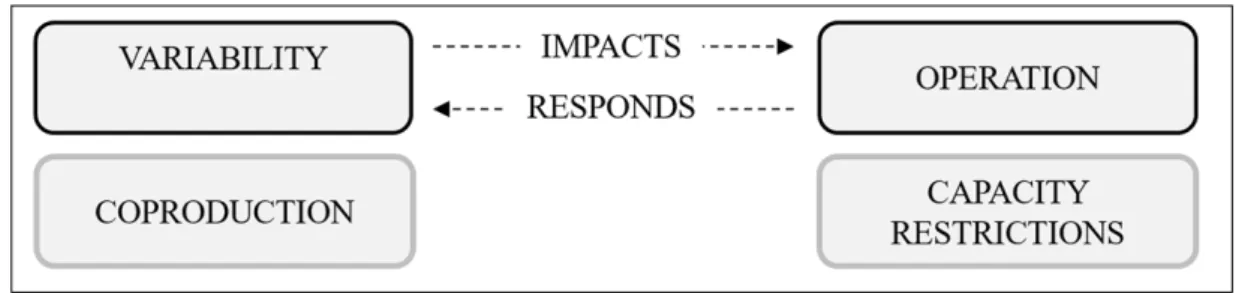
The conceptual framework for research, as Yin (2005) suggests, is illustrated by Figure 1.
Figure 1. Conceptual model of research. Source: Elaborated by the authors.
3.1 STRATEGIES AND RESEARCH TOOLS
We conducted fifteen semi-structured interviews as the main source of data, carried out in person, via video call and via telephone. The letter of presentation of the study was signed by all the participants of the research. To each contact with the individuals, via electronic mail and face-to-face contact, the study proposal was explained in plain language and we informed that in case of any discomfort the participation could be interrupted.
The choice of the respondents, then, considering the criteria discussed, started from the strategy identified as “snowball”, as pointed out by Biernacki and Waldorf (1981) and Noy (2008), in which the participants were indicated from the initial contact in each organization. We interviewed founding members, directors, managers, supervisors and analysts with longest company time. We ended the interviews in each case from the moment the collected content was considered complete and repetitive by the team of researchers (EISENHART, 1989) and the positions relevant to the management of operations had already been contemplated. In addition to interviews, we visited the companies and collected documents, such as organizational charts, mapped processes, institutional information and business descriptions.
To conduct the semi-structured interviews, we developed the interview protocol, as indicated by Yin (2005). In it, broad questions were structured, which allowed to relate, in a structured way, the constructs of the research, in four main sections: described business and organizational information; characteristics of the resources used in the operation, human or not; the process of variability and customer participation; and practices for managing the operation and the results achieved. For each segment of questions, we introduced checkpoints to guide the researcher’s reasoning during the interview. This material, besides being the basis for guidance, was used to collect the perceptions and insights of analysis during field research, as indicated by Miles and Huberman (1994).
The interviews had an average duration of sixty minutes and were recorded, transcribed and stored with confidentiality only for the team of researchers. We based our choice of individuals to be interviewed on the field of operations management of their organization, as well as being directly or indirectly involved with the client, in addition to assuming different positions, considering the interest of collecting different perspectives as data confrontation.
BBR
15,1
38
and categorize the data, export coded segments and offer a wide range of data visualization tools that guided the analysis and study conclusions.3.2 THE CASES
The professional services studied were an Information Technology Company, representing the category of technology developers; a Management Consulting, representing the category of new professional services; a Hospital, for the professional campus category; and a Law Firm, to represent the classic professional services. The Information Technology Company (IT) operates in the telecommunications sector and offers solutions in corporate mobile communication, for access to interactive content and e-commerce solutions. With more than one hundred professionals and more than ten years in the market, it operates nationally and also in Latin America. Its professionals are graduates and specialists, mostly in areas related to technology, such as Computer Science and Information Systems. They can assume positions of trainee, analyst or managers, segmented by levels of seniority (trainee, junior, and senior), according to their experience, company time and performance. The encouragement of formal training practices and shared learning is linked to the relevance of knowledge to the delivery of the service. However, the development through practice and the sharing of experience among colleagues is recognized and promoted, besides individual studies being necessary to keep up with technological changes.
The Law Firm has been operating for more than 50 years in litigation and legal assistance in the most varied disciplines of Law. It operates nationwide, through an alliance with other law firms throughout the country. Requests are received from individuals and legal entities. The law firms, as well as the professionals who are associated with them, are regulated by the Order of Attorneys of Brazil (OAB). The Order, through the Statute of Advocacy and the Code of Ethics and Discipline, aims to discipline and defend legal professionals, accompanying the practice of advocacy. Considering the seniority division, there is the intern, associate lawyer and business partner lawyer, all without employment relationship, and can be remunerated per lawsuit, per hour or fixed salary. The business partners lawyers receive patrimonial quotas on the services performed.
The Hospital, in turn, has operated for more than twenty years in the market and has more than one hundred employees, delivering service through the emergency room, examinations and diagnoses, surgeries and continuous care, considering the specialties of cardiology, general surgery, plastic surgery, medical clinic, neurology, orthopedics and traumatology and pediatrics. With regard to clients, we can identify those who have healthcare plans and private clients. Among the most diverse types of professional, we mention: physicians, nurses, physiotherapists, speech therapists, psychologists and technicians in the health areas, among other assistance professionals. Considering the labor contract, only the nurses and the nursing technicians are contracted under the CLT regime (Consolidated Labor Laws). Doctors operate in the open clinical system, that is, they are outsourced and hired as legal entities, remunerated by work schedules. However, the surveyed Hospital does not only work with professionals. Other features are also considered essential for the operation, from diagnostic equipment, hospital supplies and medicines to the infrastructure for service delivery.
BBR
15,1
39
prepared and qualified, having completed higher education and also degrees, considering MBA, masters and doctorates. The professionals are segmented between junior, senior and senior advisors, managers and managing partners and can be hired with employment or by the participation of quotas. When there is a substitution of consultants from one project to another, there are procedures and strategies that prepare the client for the absence of the consultant and that the loss of knowledge of the project is as least as possible.
4. PRESENTATION AND ANALYSIS OF RESULTS
4.1 THE CASES, THEIR PROCESSES AND THEIR ELEMENTS
The development of solutions in the Information Technology Company (IT) is conducted in six main stages: solution vision construction; design and planning of the solution, in which the allocation of the team is carried out and the necessary technological resources are made available; solution implementation; validation; and the launch of the solution. Cellular operators and other companies, from the most diverse segments, such as energy, insurance, financial institutions and internet companies, as well as individuals can be identified as the main customers. In general, the intensity of customer participation varies. For innovation projects, arising from internal initiatives, the customer is only activated for validation or during the commercialization itself. On the other hand, when the customer demand arrives, the customer participates actively, considering, validation and monitoring of the project. In addition to the possibility of different working methods, there is often a possibility for the client to suggest changes in the proposed scope of the project. Although there is discomfort with rework and efforts to negotiate, customer involvement in the process is recognized as necessary and important.
At the Law Firm, after receiving the claim directly by the client or by legal correspondence, the cases are analyzed and assigned to the responsible staff. During the preparation of pieces and preparation for hearings, there is collaboration and discussion among professionals, due to the complexity of the causes assumed. If it is necessary to replace the professionals during the service delivery, the modification is conducted with care, with respect to the established relationship and trust, in addition to the possible loss of knowledge regarding the case. The customer arrival can be made by various means. One of the main reasons why customers engage with the Office for legal support is due to the recommendation of previous clients, of the legal correspondents themselves or of the OAB, in addition to reading legal articles that are published and read on electronic portals. The participation of the client in the services of contentious type is fundamental for their knowledge of the facts and the context in which the request applies, as well as to guide professionals in relation to the tone used in the piece, since, often, the cases involve personal ties. However, their
participation is restricted by the lack of specific technical knowledge, or it can be expanded, as in the case of organizations that have their own legal body.
BBR
15,1
40
Finally, in the select Management Consulting company, the services take place in the following stages: the framework of the client problem, in which sources of supporting knowledge are used; project planning and team building; execution and final delivery. Executive education assumes a standard structure, considering open courses, while in-company courses have a higher level of customization. Clients arrive by appointment or by contact at events, lectures, courses, books and publications. Necessities emerge, however, many clients do not clearly present what they need and there is the importance of the framework. In a similar way, clients can participate in various ways in the Consulting. Usually, the client is activated in the moments of planning and monitoring of the results of the project and is responsible for providing the information on specific the context of their company to the consultants who bring structuring and method.4.2 THE VARIABILITY INTRODUCED BY CUSTOMER
PARTICIPATION
Professional services are characterized by client coproduction, heterogeneity and complexity of solutions, creativity and innovation in the delivery of the service, due to the greater autonomy of the professional (AARIKKA-STENROOS; JAAKKOLA, 2012; JOHNSTON; CLARK, 2002; NORDENFLYCHT, 2010). The variability brought about by the client’s coproduction becomes an inherent condition for this category of service. It is not possible to predict when customers will arrive at the service system, whatever it may be. However, in terms of demand management, only the Hospital analyzed performs a systematic demand management, considering the history and integrated management in real time that accompanies the entire patient movement, especially for queue points and idle resources.
Considering the diagnosis of needs, the client, in all cases, brings complex and multifaceted needs, whether in project planning meetings of the Information Technology company or the Management Consulting, or in consultations at the Hospital or in a meeting at the Law Firm. In understanding the needs, the client assumes one of his main roles during the delivery of the service: to be the holder of the contextualized information, be it about their health, or about their business. In this regard, the Law Firm and the Consultancy use partners specialized in specific knowledge to expand the scope of care, when necessary, without increasing the capacity of professionals available.
During the delivery of the service, in the stage of design and production of the solution, the client participates in different ways, from the planning of the solution to the final validation. At this point, there are distinctions between cases. For the Information Technology company and for the Consulting, which operate based on projects, customer participation follows the pace of project execution. There is continuous interaction, characterizing the coproduction between the client and the professionals, once the work is discussed, planned and validated by both parties. This is due to the client’s greater familiarity with the technical content. At the Law Firm and Hospital, since familiarity with the specific discipline is reduced, the client’s participation is restricted to the exposure of the facts and the tone of the action of a cause to the lawyer and the treatment options identified by the doctor. However, the client-company can intensify its participation, in the case of the Law Firm, when it has a lawyer body to interact with the Office, discussing legal approaches and theses.
BBR
15,1
41
having the expertise about their needs, their context and the time and effort available to participate in the service.
One relevant point concerns the involvement of the client with the professional. According to Aarikka-Stenroos and Jaakkola (2012), the service provider contributes to the production process by demonstrating specialized knowledge, for example, in the diagnostic activity, by acting with integrity and ethics, which will favor the development of stronger relationships and customer retention. At the Law Firm, Hospital and the Consulting, this phenomenon was identified and makes the substitution of professionals. Development teams, on the other hand, do not deal so intensely with the client in the technology company. Finally, in the analysis of the value of the service delivered, there was no consistent identification of the criteria to be prioritized by the clients, from the perspective of the managers of the organizations considered.
Even considering the sources of variability present, the participation of the client is promoted and potentiated in all cases, evidenced by the excerpts extracted in Table 1. This acknowledgement is established by Kannan and Proença (2010), Pinho et al. (2014), Ponsignon, Klaus and Maull(2015) and McColl-Kennedy, Cheung and Ferrier (2015).
According to the authors, managers need to recognize the importance of working together with clients in co-creating experiences and that, in practice, it means understanding the
Table 1. Examples of excerpts from interviews related to client participation.
Excerpts from interviews
Respondent #8 – Law Firm
"(...) the client always has information to give us. The customer can and should be heard to help us. Not that the work should be done with four hands, but they can advise us so that, with our hands, the work is done the best way. We should not isolate the client at work; we must bring them to work together with us".
Respondent #5 - Law Firm
"(...) They participate earlier in the process, because later we enter into a technical discussion that they can no longer participate (...).While on the factual part, (...) they are a crucial piece. (...)So when you sign it, your responsibility is there, giving the opinion that it is best to follow this path ".
Respondent #15- Manage-ment Consulting
" Usually we work within the client’s premises and end up being very close. We try to create a schedule with the client and try to be as close to them as possible. Of course this varies from client to client, from project to project (...).We do not do the work at home, in the back office and then take it to the client to validate it. We try hard to co-create with the client, because, in a way, we are buying with them the interest and the opening so that it comes to existence ".
Respondent #1 - IT Company
"(...) The customer asking to change several times. It is normal. This is a problem, but also ends up being an advantage. It's an advantage because the customer can give quick feedback on what they want, but it's a problem because we have a lot of rework ".
Respondent #4 - IT Company
"(...) We have to manage it. There are clients that bring many positive contributions, but clients that if you allow them here inside the company they would end the project, nothing will come out of it. So you have to know how to manage what is good and what is bad".
Respondent #13 - Hospital
" Medical science is a business that changes a lot, does it not? It is not an exact science. So we need to be close to the client, understand how they want to receive the kind of service we have. If they are a more reserved client, we will try to serve them more privately; if others like more joy, It's the moment that they’re living their life, Let's try to be more cheerful".
BBR
15,1
42
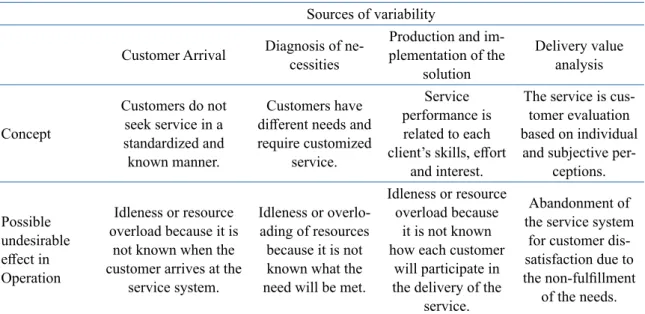
Table 2.Conceptualization of the sources of variability and possible effects on the operation.
Sources of variability
Customer Arrival Diagnosis of ne-cessities
Production and im-plementation of the
solution
Delivery value analysis
Concept
Customers do not seek service in a standardized and known manner.
Customers have different needs and require customized
service.
Service performance is related to each client’s skills, effort
and interest.
The service is cus-tomer evaluation based on individual
and subjective per-ceptions.
Possible undesirable effect in Operation
Idleness or resource overload because it is
not known when the customer arrives at the
service system.
Idleness or overlo-ading of resources
because it is not known what the need will be met.
Idleness or resource overload because
it is not known how each customer
will participate in the delivery of the
service.
Abandonment of the service system
for customer dis -satisfaction due to the non-fulfillment
of the needs.
Source: Elaborated by the authors, based on Frei (2006) and Kannan and Proença (2010).
importance of each point of interaction with the client, considering the entire life cycle and moments of truth.
4.3 OPERATION RESPONSES TO VARIABILITY
In response to variability, organizations adopt practices related to resource allocation, available capacity and customer presence in the system (FIGUEREDO; ESCOBAR 2004; FREI, 2006; KANNAN; PROENÇA, 2010; LEWIS; BROWN, 2012; SASSER, 1976). Considering the four sources of variability considered, we identified two main undesirable effects for the operation, related to the allocation of available resources in capacity, according to Table 2. The lack of predictability of customer arrival time, the possibility of meeting multiple needs that different professionals demand, as well as the non-standardization of the degree of customer involvement during service delivery contribute to the emergence of idleness and resource overload. Failure to meet customers’ needs and expectations, considering the multiple criteria used to evaluate service delivery, can contribute to the momentary or permanent abandonment of the customer of the service system, with this one being identified as the third effect, but which is not the focus of the study in question. These effects may cause loss of profitability of the business and decrease of service quality, affecting the overall result of the organization.
BBR
15,1
43
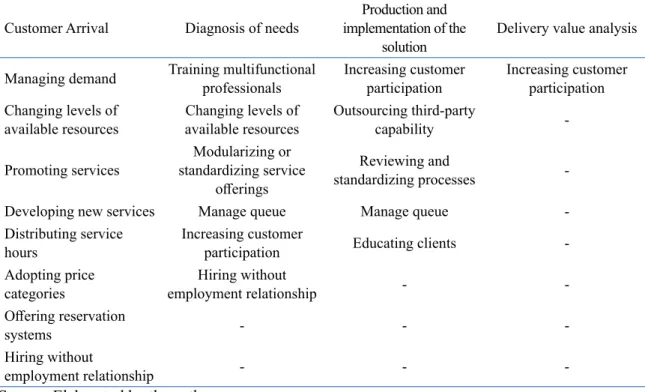
Table 3. Responses of the organization according to sources of variability.
Customer Arrival Diagnosis of needs implementation of the Production and
solution Delivery value analysis
Managing demand Training multifunctional professionals Increasing customer participation
Increasing customer participation Changing levels of
available resources available resourcesChanging levels of Outsourcing third-party capability
-Promoting services standardizing service Modularizing or offerings
Reviewing and
standardizing processes
-Developing new services Manage queue Manage queue
-Distributing service hours
Increasing customer
participation Educating clients
-Adopting price categories
Hiring without
employment relationship -
-Offering reservation
systems - -
-Hiring without
employment relationship - -
-Source: Elaborated by the authors
The increase in customer participation is related to coproduction. Adopting joint planning and specification on projects, holding status meetings, promoting partial deliveries and surveys for satisfaction assessment contributes to and encourages client involvement in the process, as noted in the cases. On the other hand, in order to change the levels of available resources we observed the occurrence of hiring professionals for part time or temporary programs, the incentive to leave on holidays, hiring in periods of high demand and physical expansion to a new unit, such as in the Hospital.
Only in the Hospital we observed the systematic standardization of the processes. For the training of multifunctional professionals, on the other hand, courses and capacities are offered in the company of Information Technology, in the Law Firm and Consulting. However, there is an incentive to the diversified experience in the technology company and in the Management Consulting, enabling more versatile professionals. The promotion of services is done in the cases through events, lectures, meetings and courses offered in the companies considered, with the exception of the Hospital, which uses media dissemination. Finally, the development of new services occurs by partners or internal development, observed in all cases.
BBR
15,1
44
The use of different price schemes at busy times or lack of demand is observed only in the Consulting. The distribution of service hours, the creation of reservation systems and the management of queues were observed in the Hospital and the contracting of extra productive capacity in the IT Company. It is worth mentioning that the Law Firm and Consulting engage in partnerships to complement the delivery of services with specific knowledge, but they do not use the partners as an option for productive capacity, as used by the IT company as a source of knowledge.The impact of idleness can be discussed. In the Law Firm and Hospital, as in both cases the professionals are not formally employed and are paid on demand, in the event of an abrupt drop in demand, they are not triggered and proactively seek out other locations to perform the function. This behavior does not occur in the Consulting. Because it is an organization that works essentially by projects , if there is no project, the consultants are idle and there are unpaid fixed costs, being absorbed by the organization. At this point, practices to reduce negative impact are triggered, such as allocating consultants to other external projects for learning or internal initiatives. Both practices are also adopted in the IT Company.
Most of the tactics and practices identified are described in the literature related to management of capacity (FIGUEIREDO; ESCOBAR, 2004; SASSER, 1976), as well as in studies that specifically discuss variability in services, such as Frei (2006) and Kannan and Proença (2010). The outsourcing and modularization of services to increase the flexibility of the operation are identified by Lewis and Brown (2012) and Giannakis, Doran and Mee(2014). It is worth mentioning that some strategies for capacity management identified in the literature (FIGUEIREDO; ESCOBAR, 2004; SASSER, 1976) they were not observed in any of the cases, such as the sharing of physical facilities, the distribution of service provision geographically considering mobile services, the provision of services for customer lots and revenue management.
5. CONCLUSIONS AND IMPLICATIONS
Based on a multi-stakeholder study involving professional service organizations, the purpose of this article is to understand how professional service organizations deal with the variability brought about by customer participation from the perspective of operations, considering capacity management. In this sense, as a result, a set of practices related to operations management was listed, as well as idleness and resource overload have been identified as adverse effects for which actions are directed to.
Implications can be derived from the comparison between the type of operation and results achieved. A first one, with a strong impact, is that the importance and necessity of the clients’ coproduction during service delivery intensifies the effects of variability. We observed that the positive effects – the reduction of rework, better deliveries, greater adherence and synergy to the real needs of the customers and greater experience – stand out from the negatives that bring increased costs and complexity to the operation – idleness and resource overload. Therefore, customer participation remains a central part of the success of the service, considering the multiple roles and responsibilities assumed in professional services.
BBR
15,1
45
Considering the results, one can identify that the deepening of the understanding of the phenomenon of variability, considering the specific context of professional services, has contributed in an effective way to the maturation of research in this field. Practical implications can be derived from the results achieved. The identification of the sources of variability resulting from the client’s participation contributes to guide the managers about the roles that must be exercised by the professionals and the actions that must be promoted so that the client assumes responsibility.
5.1 LIMITATIONS AND FUTURE STUDIES
Based on a multi-case study, a qualitative approach was adopted considering the complexity of the relations between the client’s presence and the operation in professional services. However, the study methods defined limitations in terms of generalizations that pointed to fragilities and at the same time suggestions for the continuity of the research in this field, for example, the clearest distinction between responses and strategies related to customer presence and capacity management.
Quantitative methods could support later studies, which could favor a more robust analysis and more generalizable assertions, for example, working on a level of consolidation of the operationalization and consolidation of the constructs of variability in professional services. In addition, the deepening of knowledge in each typology of professional service considered seems to have high contributory potential to create a taxonomy of recognized support.
Future research is also desirable to better clarify the impact of high bargaining power, autonomy and technical mastery of the professionals, identified by Nordenflycht (2010) in operations management practices, and not considered by this study. Similarly, other sources of variability can also be investigated, in addition to the client, such as the variability from the professionals themselves and other types of resources, as identified by Kannan and Proença (2010).
6. REFERENCES
AARIKKA-STENROOS, L.; JAAKKOLA, E. Value co-creation in knowledge intensive business services: a dyadic perspective on the joint problem solving process. Industrial Marketing Management,v. 41, p. 15-36, 2012. ARAÚJO, C. A. S.; CARNEIRO, T. J. Fila nosbancos: Por que a tecnologia da informaçãonão resolve? A
percepção dos gerentessobrecausas e prováveissoluções. REAd - Revista Eletrônica de Administração, v. 14, n. 3, p. 569-593, 2008.
BABAI, M. Z.; JOUINI, O.Operations Management in Services Systems. Journal of Management
Mathematics, v. 24, 135-136, 2013.
BIERNACKI, P.; WALDORF, D. Snowball Sampling - problems and techniques of chain referral sampling. Sociological Methods & Research, v. 10, n. 2, p. 141-163, 1981.
DER LAAN, M. E. VAN, BROEKHUIS, M.; OFFENBEEK, M. VAN.Balancing variety and efficiency in professional services by means of modularity.EUROPEAN OPERATIONS MANAGEMENT ASSOCIATION CONFERENCE, Palermo, Italy, 21, 2014.
EISENHARDT, K. M. Building theories from case study research. Academy of Management Review, v. 14, n. 4, p.532-550, 1989.
FIGUEIREDO, K. F; ESCOBAR, D. Gestão de capacidade em serviços. Rio de Janeiro: UFRJ/COPPEAD, 2004. 23 p.
FLYNN, B. B.; SAKAKIBARA, S.; SCHROEDER, R. G; BATES, H. A.; FLYNN, E. J. Empirical research methods in operations management. Journal of Operations Management, v. 9, n. 2, 1990.
FREI, F. Breaking the trade-off between efficiency and service. Harvard Business Review, p. 92-110, 2006. GIANNAKIS, M.; DORAN, D.; MEE, D. The design and delivery of modular professional services:
Implications for operations strategy. EUROPEAN OPERATIONS MANAGEMENT ASSOCIATION CONFERENCE, Palermo, Italy, 21, 2014.
BBR
15,1
46
GOODALE, J. C.; KURATKO, D. F.; HORNSBY, J. S. Influence factors for operational control and compensation in professional service firms. Journal of Operations Management, v. 26, n. 5, p. 669–688, 2008.
HUGGINS, R. The Growth of Knowledge-Intensive Business Services: Innovation, Markets and Networks. European Planning Studies, v. 19, n. 8, 2011.
JOHNSTON, R; CLARK, G. Administração de Operações de Serviço. São Paulo: Atlas, 2002.
KANNAN, P. K.; PROENÇA, J. F. Design of service systems under variability: research issues.Information
Systems and e-Business Management, v. 8, n. 1, p. 1-11, 2010.
LAMBERT, D.; ENZ, M. G. Co-creatingValue: The nextlevel in customer-supplierrelationships. CSCMP’sSupply Chain Quarterly, v. 9, N. 3, p. 22-28, 2015.
LEWIS, M. A.; BROWN, A. D. How different is professional service operations management? Journal of
Operations Management, v. 30, p. 1–11, 2012.
LOVELOCK, C. H.; GUMMESSON, E. Whither Services Marketing? In Search of a New Paradigm and Fresh Perspectives, Journal of Service Research, v. 7, n. 1, p.20-41, 2004.
LOVELOCK, C; WIRTZ, J.; HEMZO, M. A., Marketing de Serviços: pessoas, tecnologia e estratégia, São Paulo: Pearson Hall, 7ª Edição, 2011, Cap.1.
MAULL, R.; GERALDI, J.; JOHNSTON, R. Service Supply Chains: A Customer Perspective, Journal of Supply Chain Management, v. 48, n. 4, p.72-86.
McCOLL-KENNEDY, J.; CHEUNG, L.; FERRIER, E. Co-creating service experience practices, Journal of Service Management, v. 26, n. 2, p. 249-275, 2015.
MILES, M.; HUBERMAN, A. M. Qualitative data analysis: a source book of new methods. Beverly Hills: Sage, 1984. 263p.
MORRIS, A.; FREI, F. Verdade número 4: é preciso administrar os clientes. In: ___. Feitas para servir:
como lucrar colocando o cliente no centro do seu serviço. HSM Editora, 2013. p. 133-173.
NORDENFLYCHt, A. Von. What is a professional service firm? Toward a theory and taxonomy of knowledge intensive firms. Academy of Management Review,v. 35, n.1, 155-174, 2010.
NOY, C. Sampling Knowledge: The Hermeneutics of Snowball Sampling in Qualitative Research,
International Journal Social Research Methodology, v. 11, n. 4, p. 327–344, 2008.
OLHAGER, J; JOHANSSON, P. Linking long-term capacity management for manufacturing and service operations. JournalofEngineering Technology Management, v. 29, p. 22–33, 2012.
PINHO, N.; BEIRÃO, G.; PATRÍCIO, N.; FISK, R. Understanding value co-creation in complex services with many actors, Journal of Service Management, v. 25, n. 4, p. 470 - 493, 2014.
PONSIGNON, F.; KLAUS, P.; MAULL, P. Experience co-creation in financial services: an empirical exploration, Journal of Service Management, v. 26,n. 2, p. 295 - 320, 2015.
ROTH, A.; MENOR, L. J. Insights into service operations management: a research agenda. Production and
Operations Management, v. 12, n. 2, p. 145-163, 2003.
SAMPSON, S, E; FROEHLE, C. M. Foundations and Implications of a Proposed Unified Services Theory,
Production and Operations Management, v. 15, n. 2, p. 329-343, 2006.
SAMPSON, S.; MONEY, B. Modes of customer co-production for international service offerings, Journal of Service Management, v. 26, n. 4, 2015.
SANTOS, L. C.; GOHR, C. F.; VARVAKIS, G. Prioridades competitivas para a estratégia de operações de serviços: Uma análise dos critérios de valor percebidos de uma academia de ginástica, Revista Produção Online, v.12, n. 1, p. 133-158, 2012.
SASSER, E. W. Match supply and demand in services industries, Harvard Business Review, Nov./Dec., p. 133-140, 1976.
SCANFONE, L.; TORRES JUNIOR, N.; GOSLING, M. S. As diversas formas de ofertar valor para o cliente em sistemas de serviços. Revista Pensamento Contemporâneo em Administração (UFF), v. 9, p. 38-53, 2015.
SCHMENNER, R. W. Service Businesses and Productivity, Decision Sciences, v. 35, n.3, p. 33-347, 2004. SLACK, N.; CHAMBERS, S.; JOHNSTON, R. Administração da produção. 2.ed. São Paulo: Atlas, 2002.
747p.
VERLEYE, K. The co-creation experience from the customer perspective: its measurement and determinants, Journal of Service Management, v. 26, n. 2, p. 321 - 342, 2015.
YANG, C. Implementation and effectiveness of strategic actions used to reduce customer variability, The Service Industries Journal, v. 31, n. 4, p. 527-544, 2011.