179 Umile Gianfranco Spizzirri and Giuseppe Cirillo (eds.) Food Safety: Innovative Analytical Tools for Safety Assessment, (179–220) © 2017 Scrivener Publishing LLC
6
Determination of Antioxidant
Compounds in Foodstuff
Amilcar L. Antonio, Eliana Pereira, José Pinela, Sandrina Heleno, Carla Pereira and Isabel C.F.R. Ferreira* Mountain Research Centre (CIMO), ESA, Polytechnic Institute of Bragança,
Bragança, Portugal
Abstract
Phenolic compounds, vitamins and carotenoids are naturally found in differentffff foodstuff . Thffff ese antioxidant compounds play an important role in human health Th and are of interest for the food, pharmaceutical and cosmeceutical industries. Modern chromatographic and spectrometric techniques have made analysis easier than ever before, but their success depends on the extraction method used. In fact, the different antioxidants are identififfff fied using chromatographic techniques coupled to diff erent specififfff fi c detectors according to the characteristics of each molecule. Beyond their well-known health-promoting effects, antioxidant molecules can also ffff be used to functionalize or preserve the freshness, nutritive value, flavor and color fl of foodstuff s, which justify their incorporation into several matrices. In this chap-ffff ter, the most common antioxidant compounds in foodstuff will be described, as ff well as the methodologies involved in their extraction, separation, identificationfi and quantification. Thfi Th e bioactive properties and industrial applications of these compounds through innovative techniques will also be taken into account.
Keywords: Antioxidants, natural sources, extraction, identifi cation, quantififi fi ca-tion, structure elucidation
6.1 Introduction
Free radicals and their reactive metabolites, named as reactive oxygen and nitrogen species (ROS and RNS, respectively), are produced in the natural
metabolism of aerobic cells, being generated from endogenous (metabolic processes, electron transport chain and the nitric oxide synthase reac-tion) and exogenous (pollution, radiation, chemical exposure, smoking, etc.) sources [1]. Ideally, these compounds are posteriorly eliminated by cellular and tissue defenses, but this equilibrium can be compromised by the excessive production of reactive metabolites creating an oxidative stress that can lead to several damages of important biomolecules and organs with potential impact on the whole organism [1]. The complex Th human antioxidant defense system includes endogenous and exogenous antioxidant defenses that must maintain the cellular redox homeosta-sis, minimizing the levels of reactive species while allowing appropriate ROS-mediated biological signaling [2]. Th is system includes endogenous Th antioxidant enzymes such as superoxide dismutase, catalase and glutathi-one peroxidase that catabolize superoxide radicals and degrade hydrogen peroxide and hydroperoxides, respectively; proteins like albumin, trans-portation proteins for iron ions, transferrin and various metallothioneins; and low molecular-weight scavengers such as thioredoxin, α-tocopherol, ascorbate, uric acid, coenzyme Q, and lipoic acid [3–5]. Beyond these endogenous defenses, exogenous antioxidants supplied by dietary sources can support the prevention of oxidative damage, which explains the several changes observed in eating habits. Indeed, the practice of a correct and balanced diet using functional foods has been recruiting more and more followers and numerous scientific studies have been performed not only fi on chemical and nutritional properties of foods, but also on the evalua-tion of their health benefi ts [6]. Many funcevalua-tional foods have antioxidants fi in their composition and, in addition to their basic nutritional function, these foods also help to reduce the risk of cancer, osteoporosis and hyper-tension, improve gastrointestinal and bone health, delay the aging process, enhance the immune system, improve depressive states and the quality of sleep, increase energy levels and improve performance of athletes [7, 8].
In this chapter, the most common antioxidants present in food and their industrial applications will be presented, along with a comparison between conventional and emerging extraction methodologies of antioxidants, and the most suitable identification and isolation techniques. fi
6.2 Common Antioxidants in Foodstuff
The antioxidant molecules present in food are able to directly eliminate Th
form new radicals that are stable through intramolecular hydrogen bond-ing on further oxidation, aft er radical scavengbond-ing [6, 9]. ft
Some examples are vitamins (A, B, C, D, E and K), carotenoids ( lycopene, β-carotene and xanthophylls) and polyphenols (flavonoids such as flfl fl avo-nols, fl avones, flfl flavanones, flfl avanols (flflavan-3-ols), anthocyanins, and iso-flavones, phenolic alcohols, phenolic
fl acids, tannins, stilbenes and lignans)
[10]. Th ere are several foods that contain these molecules in their compo-Th sition, particularly fruits, vegetables, spices, herbs, mushrooms, fish, milk fi products, among others (Table 6.1). This agro-food group highlights the Th spices and herbs as major carriers of antioxidants.
Table 6.1 includes information about the main classes of compounds with antioxidant activity and their natural sources. Vitamins play an important role in human health, since they are a group of essential compounds for normal growth and functioning of the organism. However, since the body does not have the capacity to synthesize vitamins, it is possible to obtain these compounds from food or pharmaceutical products, which are gener-ally converted into more complex molecules that act as co-enzymes when ingested. Th e incorrect ingesting of this micronutrient triggers harmful Th pathological reactions that compromise the normal development of the body [11]. Vitamins are divided into two groups, liposoluble vitamins (A, D, E and K) and hydrosoluble vitamins (B and C) [12]. The sources of these Th two groups are diff erent, as well as their chemical behavior. Thffff The liposoluble vitamins have a chemical structure similar to some lipids (steroids) and are easily stored by the body. However, the process is energetically expensive, since it requires the synthesis of fat reserves, and their elimination is also more complex. Diff erently, water-soluble vitamins are more diffiffff fficult to be stored, requiring constant replacement and are also easily eliminated by the organism, preventing excessive quantities of these vitamins. Almost all the vitamins of this type are essential enzymes or coenzymes [12, 13].
Other antioxidant molecules are the carotenoids that are natural pig-ments responsible for the yellow, orange and red color present in various foods which display a variety of functions in nature, especially in animal diet, since they act in deactivating a wide variety of reactive radicals in biological systems [14].
The natural functions of carotenoids are principally determined by Th
F
o
o
d S
afe
t
: I
nno
v
a
tive
An
al
tical T
o
o
l
s
Table 6.1 Principal classes of compounds with antioxidant activity and their natural sources.
Antioxidant Natural sources References
Vitamins Vitamin A Milk, butter, egg, cod liver oil, fish liverfi [13]
Vitamin B Fruit, milk, meat, rice, wheat, beans, egg, potato, sweet potato [13, 86, 87]
Vitamin C Potato, cabbage, carrots, peas, beans, spinach, tomatoes, peach, orange, lemon, kiwifruit, apple, peach, tomato, peach, citrus, blueberry; spearmint, pep-permint, tangerine, strawberry, pear, garlic, citrus peel, broccoli, bayberry, banana, apple
[13, 88–91]
Vitamin D Cod liver oil, tuna fish liver oil, fifi fish, butter, milk, egg, cheese [13, 86]
Vitamin E Green leafy vegetables, wheat germ oil, barley, egg, milk, butter, peanut oil, olive oil, soybean oil, hazelnut, green tea, olives and olive oil, pumpkin seeds, sunfl ower seeds and sunflfl flower oil
[86, 90, 92–95]
Vitamin K Green vegetables, spinach, broccoli, cabbage, carrots, potatoes, peas, tomatoes, strawberries, beef liver, pork liver, milk, egg, herbs
[13, 96–98]
Carotenoids β-carotene Amaranth, dark green leafy vegetables, gac, olive oil, red carrots, sweet potato. [90, 95, 99] Lycopene Apricots, guava, watermelon, papaya, carrots, tomatoes, gac, watermelon, pink
grapefruit, guava, rosehip, dried apricots, papaya
[90, 100–102]
Xanthophylls Spinach, kale, Zea mays, egg, catfish, corn, spinach, meat, and in the skin of fifi fish (trout, salmon), in the carapace of crustaceans (shrimp, lobster, Antarctic krill, crawfi sh), and in the subcutaneous fat, the skin, the egg yolks, the liver, fi the integuments, and in the feathers of birds (poultry)
D
e
termin
a
tio
n o
f
A
ntio
xid
ant
C
omp
ounds in F
o
o
dstuff
183
celery, chamomile, plant foods, black rice, berry fruits (blueberry, blackberry, mulberry, raspberry, strawberry), purple-fleshed sweet potato, black carrots, fl black rice, blackcurrant, soybean and soybean products, tea (white, green, oolong, black), honey, orange juice
106–119]
Phenolic acids
Mushrooms, food plants, tea (white, green, oolong, black), herbs, whole grain cereals
[116, 120–122]
Tannins Bean seed coats, persimmons, mangosteens, canola, green coffee beans, wine, ffff mango kernels, pomegranates, strawberries, walnuts, whisky, grape, apple
[90, 123–125]
Stilbenes Almonds, chocolate and cocoa, seeds and skins of grapes, red wine, plants, peanuts, mulberries, pistachio
[90, 126–129]
Lignans Food plants, vegetables, non-alcoholic beverages, alcoholic beverages, cereals, spices, oil seeds, fruits (particularly berries), nuts, whole grains, tea and red wine, sweet chestnut fl ours, wheat, oats, rye, barley, legumesfl
passive and parallels that of lipids. Another characteristic of β-carotene is its degradation by exposure to light, heat, and oxygen, which can be converted in a pro-oxidant, causing a negative effect on human health [16]. ffff Another micronutrient belonging to the class of carotenoids is lycopene. This is the most abundant carotenoid and the compound responsible for Th
the red color of various foods (such as tomatoes and tomato products) and is known for its oil solubility and sensitivity to light and heat. It deteriorates easily during processing and storage, and presents low bioavailability. Regarding the conducted studies, this compound benefi cially intervenes fi in health, acting in the prevention of cancer and cardiovascular diseases [17]. Th e xanthophylls are also carotenoids, and their wide distribution Th in the different phylogenetic kingdoms and ffff their broad structural variety, allow multiple functions of these organic molecules in living organisms. It has been demonstrated that the ingestion of this molecule helps in preventing macular degeneration associated with age and the development of cataracts. Th erapeutically, it also acts in reducing the risk of developing Th several types of cancer [18–20].
Finally, another class of molecules with bioactive potential are the polyphenols, which include a large group of biologically active com-pounds (flavonoids, phenolic acids, tanninfl s, stilbenes and lignans). TheTh interest in these compounds has been gradually increasing ever since per-formed scientifi c studies have associated polyphenols with the decrease in fi the risk of several diseases related to oxidative stress [21, 22]. Thus, their Th antioxidant potential has been associated with different therapeutic actions, ffff including anticarcinogenic/antimutagenic, antibacterial, antiviral and anti- infl ammatory [23]. As in the previously mentioned compounds, the fl antioxidant activity of these molecules is also infl uenced by its structure, in fl particular by the required number and position of phenolic hydroxyl and other chemical features.
6.3
Antioxidants for Bioactive or Preservative
Purposes
most widely used chemical antioxidants and have shown similar prop-erties. During the period from 2011 to 2012, the European Food Safety Authority (EFSA) reevaluated all the available information about these two antioxidants, including apparently contradictory information that had been published. EFSA established revised acceptable daily intakes (ADIs) of 0.25 mg/kg bw/day for BHT and 1.0 mg/kg bw/day for BHA and noted that the exposure of adults and children to these antioxidants was unlikely to exceed these intakes [10, 25, 26]. PG (propyl gallate) has a great concentration of activity as an antioxidant and when used at high levels it assumes a pro-oxidant role. Th e TBHQ (terc-butyl-hydroquinone) Th is used to stabilize and preserve freshness, nutritional value, taste and color of food products of animal origin [10, 27].
F
o
o
d S
afe
t
: I
nno
v
a
tive
An
al
tical T
o
o
l
s
Table 6.2 Antioxidant eff ects of natural extracts incorporated in diffffff fffferent matrices.
Matrix of incorporation Antioxidant effectsffff References
Bearberry Raw and cooked pork Decreased lipid oxidation [57]
Chinese red pepper leaf
Silver carp dorsal and ventral muscles Decreased TBARS, hexanal, and LOX activity [49]
Cinnamon Sheep, beef, and pork meat Decreased lipid oxidation and inhibited the release of non-haem iron
[59]
Clove bud Silver carp filletsfi Retard the increase of peroxide value and TBARS
[44]
Cranberry Turkey and cooked ground pork Decreased lipid oxidation [58]
Garlic and onion Pork loin and belly Decreased TBARS, peroxide, and free fatty acids [60]
Grape seeds Silver carp filletsfi Retard the increase of peroxide value and TBARS
[44]
Grape seeds Cooked beef, frankfurters, turkey pat-ties, and turkey meat
Improve the oxidative stability, and decreased TBARS
[45–48]
Green tea Pork meat Preserved lipids and protein thiols [52]
Green tea Turkish dry-fermented sausage Decreased TBARS, putrescine, histamine, and tyramine
[53]
Green tea Lettuce Preserved the ascorbic acid and carotenoid content
D
e
termin
a
tio
n o
f
A
ntio
xid
ant
C
omp
ounds in F
o
o
dstuff
187
Lychee seeds Meat paste Inhibited the adipogenesis and retarded lipid oxidation
[50]
Oleoresin of rosemary Ground beef and cooked patties Decreased TBARS and hexanal [39]
Pomegranate Fresh chicken and cooked chicken patties
Decreased TBARS [61]
Rosemary Cooked pork patties and beef burgers Decreased TBARS, hexanal quantities and pro-tein oxidation
[34– 37]
Rosemary Sea salmon muscle Delayed the development of lipid oxidation secondary products
[40]
Rosemary Flavored cheese prepared with cream cheese base
Decreased lipid oxidation [41]
Rosemary, marjoram, and sage
Ground beef Decreased lipid oxidation [38]
Sage Chicken breast Decreased lipid oxidation [55]
a delay in the development of lipid oxidation secondary products [40], and revealed the capacity to prolong the shelf life of flavored cheese preparedfl with cream cheese base by preventing lipid oxidation [41]. Indeed, in 2010 the European Union authorized the use of rosemary extracts as new food additives for use in foodstuff s under Directive 95/2/EC and assigned it the ffff E 392 number [42, 43].
Nonetheless, there are several other examples of plants with similar anti-oxidant effects in meat and/or fiffff fi sh products. For example, extracts of clove bud and grape seeds have been used to retard the increase of peroxide value and TBARS of silver carp fi llets during chilled storage [44], and were also fi later revealed to improve the oxidative stability of cooked beef [45], frank-furters [46], turkey patties [47], and turkey meat stored cold, especially in air, but also under vacuum [48]. Chinese red pepper leaf extracts were able to decrease the hexanal contents, the TBARS values and the lipoxygen-ase (LOX) activity in salted silver carp dorsal and ventral muscles during processing [49], while water extracts of lychee seeds were added to meat paste to inhibit the adipogenesis and retard lipid oxidation [50]; and lychee flower delayed lipid and protein oxidation of emulsifi
fl fied pork meatballs
Nevertheless, the direct use or incorporation of free bioactives in food-stuff (either as extracts, fractions of extracts, or isolated compounds) has ff several considerable limitations related to the loss and transformation of the antioxidant molecules, and to their interaction with other compounds. Moreover, the processing steps involved in the preparation of food matrices can infl uence the degradation or transformation of the antioxidant com-fl pounds due to factors such as endogenous enzymes action, water activity, oxygen pressure, and also thermal/mechanical energy [62].
In this connection, microencapsulation arises as a suitable option to stabilize the extracts to be incorporated into food; it can be defined fi as a process through which tiny particles or droplets are surrounded by a coating or embedded in homogeneous or heterogeneous matrices with the aim of producing small capsules with many useful properties [63]. This technique was fiTh first used in the early 1930s in order to coat some flavors and, then, ingredients such as antioxidants, preservatives, fl oxidation-reduction agents, enzymes, acids, bases, nutrients, crosslink-ing agents, buffers, flffff flavors, sweeteners, and colors started to be produced worldwide on an industrial scale [64]. In the food industry, microen-capsulation found its application in protecting the core material from adverse environmental conditions and enhancing the shelf life of prod-ucts by controlling the release of the encapsulated materials [65]. Several studies have been performed in this fi eld and there is a signififi ficant use of extracts, followed by polyphenols, essential oils, vitamins, proteins and fat extracts, applied to food. For instance, in regard to dairy products, microencapsulated isoflavones were added to milk and it was verififl fied that an increased absorption in the intestine took place without affecting ffff the taste [66]; phenolic extracts of pomegranate peels were incorporated into ice cream and proved to enhance antioxidant and α-glucosidade inhibitory properties [67]; phenolic extracts from elm leaf blackberry flowers introduced into yogurt revealed a higher antioxidant activ-fl
gum to promote its health properties [72], whereas its derivative was added to bread [73, 74] and pasta [75], showing good sensory and quality attributes. Another application in bread was performed by Pasrija et al. [76] that introduced microencapsulated green tea polyphenols into this matrix to retain the quality characteristics along with its functionality. Moreover, a soup powder was enriched with linseed oil (rich in omega-3 fatty acids) to allow a controlled release of the lipophilic compounds [77], while cheese was enriched with vitamins E, A and CoQ10 [78] to inhibit lipid peroxidation (rancidity).
Beyond microencapsulation, the incorporation of bioactive extracts or isolated compounds into packaging films has been assessed in difffi ffff erent studies [79, 85] and represents a new packaging concept of great interest to the food industry by allowing the preservation of food characteristics and the delay of oxidative processes. In some cases, the incorporation of antioxidants seems to be more effi cient than the direct use of additives on ffi meat surface, and thereby, some packaging systems have been developed with natural extracts (such as cocoa, rosemary, oregano, green tea, oolong tea, and black tea, among others) to increase the stability of meat prod-ucts and extend their shelf life [79–83]. Th is technique was also applied Th to extend cheese shelf life [84] and was eff ective in salmon muscle, using ffff natural antioxidant products containing tocopherols in the development of active packaging [85].
6.4 Analysis of Antioxidants in Foods
Nowadays, several methods are available for analysis of antioxidants. These methods involve the evaluation of total antioxidant activity and the Th
individual identifi cation and quantififi fication of diffffff erent antioxidant com-pounds. Modern chromatographic and spectrometric techniques have made antioxidant compound analysis easier than ever before, but their success depends on previous treatments and extraction steps.
6.4.1 Extraction
of Antioxidant Compounds
Extraction is a very important analytical step in the isolation and identi-fication of compounds from diff
fi fffferent foodstuffffffs prior to chromatographic determination. Th e development of optimal procedures can prove dif-Th fi cult due to the structural diversity of the compounds and their potent fi
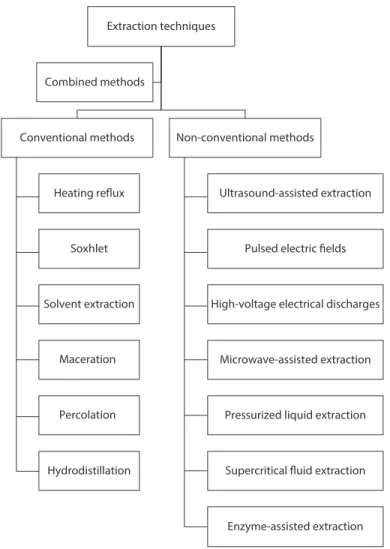
diff erent foodstuffffff ffffs is strongly related to the employed extraction method [134]. Th us, appropriated extraction techniques and conditions should Th be adopted, taking into account the compound to be extracted and the accurate nature of matrix to be studied. This involves using conventional Th extraction methods or innovative technologies (Figure 6.1), including ultrasounds, microwaves, pulsed electric fi elds, high voltage electrical dis-fi charges, pressurized or supercritical fl uids, and enzymes, or combinations fl of these techniques. The basic mechanisms and recent practical examples Th are discussed below.
Extraction techniques
Conventional methods
Heating reflux
Soxhlet
Solvent extraction
Maceration
Percolation
Hydrodistillation
Non-conventional methods
Ultrasound-assisted extraction
Pulsed electric fields
High-voltage electrical discharges
Microwave-assisted extraction
Pressurized liquid extraction
Supercritical fluid extraction
Enzyme-assisted extraction Combined methods
6.4.1.1 Conventional Methods
Conventional extraction of bioactive compounds from foodstuffs is time ffff and solvent consuming, representing a serious energetic and environ-mental issue. Solid-liquid extraction can be defined as a mass transport fi phenomenon where compounds contained in foodstuff structure migrate ff into the solvent up to equilibrium. Examples include heating reflux, fl Soxhlet and solvent extraction, maceration, percolation, and hydrodistilla-tion [135–139]. In plants, bioactive compounds exist enclosed in insoluble structures, such as cell vacuoles, which are not accessible to solvents. TheTh use of heat to enhance mass transfer and reduce the extraction time can have deleterious eff ects, since high temperature can degrade thermolabile ffff compounds [140, 141]. Besides, the use of solvent mixtures containing acetone or methanol, pure or combined with water or an acid, is not in accordance with the green chemistry concept [142]. Because of this, alter-native green solvents and novel extraction technologies based on physical mechanisms are being adopted.
6.4.1.2 Nonconventional Methods
The increasing need to extract bioactive molecules from natural sources Th
has led to a deeper interest in new processes that can reduce the extraction time, processing temperature and solvent consumption, and contribute to higher extraction effi ciency (i.e., yield and quality) and lower energy con-ffi sumption as compared to conventional methods.
6.4.1.2.1 Ultrasound-Assisted Extraction
Ultrasound-assisted extraction (UAE) is one of the most used techniques in industry to enhance the mass transfer phenomena. The mass transfer Th rate is increased by cavitation forces; in this case the bubbles in the liquid-solid extraction can explosively collapse and generate localized hot spots (characterized by high temperature and pressure) causing plant tissue rup-ture and improving the release of intracellular substances into the solvent. UAE has been considered an economic method [143] and has already been applied to extract phenolics from spinach (Spinacea oleracea L.) [137], grape (Vitis vinifera L.) pomace [144], orange (Citrus sinensis L.) peels [145], sugar beet molasses [143] and phenolics and betacyanins from red pitaya (Hylocereus polyrhizus[Weber] Britton & Rose) [140].
6.4.1.2.2 Pulsed Electric Fields The pulsed electric fi
biological material placed between two electrodes. This voltage results Th in an electric fi eld in which intensity depends on the voltage delivered fi and the gap between the electrodes. Th e originated phenomenon, called Th electroporation, consists of the increment of the cell membrane perme-ability to ions and macromolecules [146]. Therefore, PEF increases the Th extraction of high value-added compounds and can replace the enzymatic maceration of the process. PEFs have been applied to extract phenolics from papaya (Carica papaya L.) peels [136], polyphenols from grapes [147] and borage (Borago officinalisffi L.) leaves [146], phenolics and ascor-bic acid from plum (Prunus domesticavar. Casselman) and grape peels [148], as well as phenolics, vitamin C and carotenoids from stevia (Stevia rebaudianaBertoni) leaves [149].
6.4.1.2.3 High-Voltage Electrical Discharges
High-voltage electrical discharges (HVEDs) have physical and mechanical eff ects on the product caused by shock waves. Thffff This technique introduces energy directly into an aqueous solution through a plasma channel formed by a high-voltage electrical discharge between two submerged electrodes [90]. The HVED mechanism is based on the electrical breakdown in water Th [150]. Air bubbles that are initially present in water or formed due to local heating are involved in this phenomenon and accelerate the process. If the electrical field is too intense, the avalanche of electrons becomes a starting fi point of streamer propagation from the high-voltage needle electrode to the grounded one. The electrical breakdown is accompanied by secondary Th phenomena (e.g., high-amplitude pressure shock waves, cavitation, and liquid turbulence) that cause particle fragmentation and cell structure damage, thus facilitating the release of intracellular compounds [142, 150]. When compared to other physical treatments, HVED results in a higher extraction rate than that obtained with PEF and ultrasounds. However, this process can originate very small particles that can lead to a more difficult ffi solid-to-liquid separation step [150]. Th is technology have been used to Th extract phenolics from rapeseed (Brassica napus) [142] and papaya peels [136], anthocyanins from blackberries (Rubus fruticosus L.) [151], and phenolics, vitamin C and carotenoids from stevia [149].
6.4.1.2.4 Microwave-Assisted Extraction
water molecules present inside the materials, resulting in a rapid buildup of pressure within cells, and a pressure-driven enhanced mass transfer of target compounds out of the source material, which causes the rupture of the plant tissue and release of the active compounds into the extracting solvent [133, 152]. During extraction, the solvent volume must be enough to ensure that the solid matrix is entirely immersed. The solvent choice Th is dictated by the solubility of the extracts of interest, by the interaction between solvent and plant matrix, and by the microwave absorbing prop-erties of the solvent determined by its dielectric constant [153]. However, MAE can also be performed without the addition of any solvent [90, 154]. Solvent-free microwave extraction (SFME) is based on a combination of microwave heating and dry distillation. The inherent benefiTh fits of SFME are reduction of pollution and handling costs resulting from the simplified fi manipulation procedure, easy clean-up and labor savings [154]. MAE has been applied to obtain phenolics from myrtle (Myrtus communis L.) leaves [153], horsetail (Equisetum arvense L.) [155], orange peels [145], false daisy (Eclipta prostrata Linn) [156], plum [152], tomatoes (Lycopersium esculen-tum L.) [157] and rice (Oryza sativaL.) grains [133], lycopene from tomato peels [101], and phenolics, vitamin C and carotenoids from stevia [149]. 6.4.1.2.5 Pressurized Liquid Extraction
Pressurized liquid extraction (PLE), also known as accelerated or enhanced fluid extraction, or subcritical water extraction, is increasingly used in the fl
mango (Mangifera indica L.) leaves [141] and roots of Scutellaria pinnati-fida
fi A. Hamilt. ssp. alpina(Bornm) Rech. f. [138], as well as carotenoids from kaki (Diospyros kaki L.), peach (Prunus persicaL.), apricot (Prunus armeniaca L.) [160] and carrots (Daucus carota L.) [159].
6.4.1.2.6 Supercritical Fluid Extraction
Supercritical fluid extraction (SFE) has been used to extract target fl compounds from a variety of matrices at laboratory and commercial scale. Carbon dioxide is the main solvent used in this technique, especially when the target molecule is apolar. At supercritical conditions, above its critical temperature (31.1 C) and pressure (7.4 MPa), CO2presents unique phys-icochemical properties because of its duality between liquid and pure gas [161]. Thus, it acquires very good mass-transfer properties because of its Th high, more gas-like diffusion coeffiffff ffi cients and low viscosity values which provide effective penetration into solid matrices, and preserves the integ-ffff rity and stability of more delicate compounds due to its relatively low sur-face tension [162, 163]. In fact, this technique is adequate for thermolabile and oxidation-susceptible compounds [161]. Solvents other than CO2are not necessarily required and the expense of removing organic solvents can be eliminated. Another advantage is its high selectivity and easy separation process from the extracted compounds without leaving toxic residues in extracts. Although high capital costs are associated with SFE, operating costs are relatively low and it is very simple to be scaled-up to industrial scale.
The SFE process has been used for the isolation of antioxidant com-Th
co-solvent proved to be an efficient extraction method [169]. As an alterna-ffi tive to the addition of polar modifiers, it is possible to increase the pressure fi (and consequently the temperature) to decrease the interaction of polar compounds with the matrix and improve solubility [160].
6.4.1.2.7 Enzyme-Assisted Extraction
Enzyme-assisted extraction (EAE) is an eco-friendly method used to enhance the release and recovery of antioxidant compounds from plant matrices. Enzymes (either alone or in mixtures) can hydrolyze plant cell walls and eventually may enhance the recovery of both bound and free phenolics. The use of enzymes can increase the effTh ffffect of solvent pretreat-ment, and either reduces the amount of solvent needed, or increases the yield of extractable compounds [90, 170]. EAE has been used successfully to increase the release of a variety of antioxidants, including phenolics from lemon balm (Melissa officinalisffi ) [170] and bay (Laurus nobilis L.) leafs [171], polyphenols from ginger (Zingiber officinaleffi Roscoe) [172], polysac-charides from Agaricus blazeiMurrilli [173], and lycopene from tomato [174, 175]. To improve the extractability of target compounds, the use of enzymes can be combined with other technologies [90]. However, the low range of temperatures and high cost is still a weak point of this technology.
6.4.1.3 Extraction
Solvents and Surfactants
The preference of phenolic antioxidants for ethanol and methanol may Th
be caused by their nonpolar part and the aliphatic fragment of alcohols. Bigger molecules prefer ethanol, as it can better “cover” the gaps between the hydrogen bonds [90]. Ethanol possesses GRAS (generally recognized as safe) status and the extracts can be used in the food industry. Aqueous eth-anol off ers many advantages as hydrophilic and lipophilic compounds are ffff recovered together in diff erent proportions and synergistic interactions ffff occur inside the medium. Methanol is cheaper than ethanol but due to its toxicity it is not favored in the food industry [90]. On the other hand, carotenoids such as lycopene are more lipophilic and thereby polar aprotic (e.g., acetone) or nonpolar solvents (e.g., ethyl acetate) are preferred [176]. But, in this case, the solvent should be removed completely from the extract prior to its reutilization in food products. In fact, short-chain alco-hols, especially ethanol and isopropanol, have been proposed as alternative extraction solvents for carotenoids and vitamin E [134].
Th e extraction and separation of phenolics may also be improved by Th
at or above their critical micellar concentration,it leads to the formation of multimodal compartments or micelles, which are capable of establish-ing interactions with either hydrophilic or lipophilic substances. TheseTh properties make surfactants useful in separation sciences and chromato-graphic application.
6.4.2 Analytical Methodologies for Antioxidants
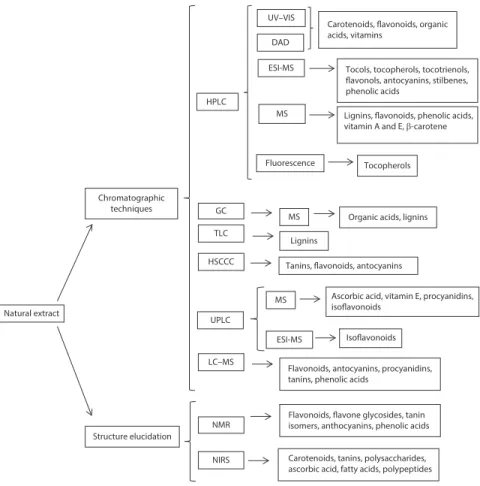
Natural antioxidants have become a topic of great interest in the last decades. Th e chemical characteristics and also the bioactivities displayed Th by these molecules have a very important role in disease treatment and prevention. Thus, the full characterization of these compounds is manda-Th tory for the understanding of their behavior and to establish a relationship between their chemical structure and the bioactivity displayed. Commonly used techniques for the detection, quantification and structure elucidation fi of antioxidant molecules in foodstuffs are schematized in Figure 6.2 and ffff discussed below.
6.4.2.1 Detection
of Antioxidant Compounds
After the optimization of the extraction conditions described in the pre-ft vious sections, the extracts containing the target molecules are subjected to diff erent processes to be isolated, identififfff fied and quantififi ed. ThTh ose pro-cesses are adapted to the characteristics of each class of compounds. As stated before, there are different classes of antioxidants, namely phenolic ffff compounds, vitamins and carotenoids, that are the major antioxidants found in natural matrices [1, 10].
to measure the reducing capacity rather than to determine the phenolic content [10, 178, 179]. Also, to determine ascorbic acid that is known for its reducing capacity, the method 2,6-dichlorophenol indophenol is used, taking advantage of this capacity displayed by ascorbic acid. It consists of a standardized solution of the oxidized dye that is titrated into a sample containing an unknown amount of ascorbic acid. Nevertheless, there is the possibility of error due to the slow reduction of the dye by other substances
Natural extract
HPLC
NMR GC
NIRS
MS UV–VIS
DAD
Fluorescence
TLC
HSCCC
LC–MS UPLC
ESI-MS
Chromatographic techniques
Structure elucidation
MS
Carotenoids, flavonoids, organic acids, vitamins
Tocopherols
Tocols, tocopherols, tocotrienols, flavonols, antocyanins, stilbenes, phenolic acids
Lignins
Lignins, flavonoids, phenolic acids, vitamin A and E, -carotene
Organic acids, lignins
Tanins, flavonoids, antocyanins
Flavonoids, antocyanins, procyanidins, tanins, phenolic acids
Ascorbic acid, vitamin E, procyanidins, isoflavonoids
Flavonoids, flavone glycosides, tanin isomers, anthocyanins, phenolic acids
Carotenoids, tanins, polysaccharides, ascorbic acid, fatty acids, polypeptides
MS
ESI-MS Isoflavonoids
besides ascorbic acid and because of that this is not a specific method for fi the determination of this molecule [180]. Additionally, there are a large number of methods to evaluate the antioxidant activity of foodstuff s, e.g., ffff in-vitro, in-vivo, electrochemical and chemiluminescent methods [90]. They allow measuring the total antioxidant activity conferred by the dif-Th
ferent compounds present in the foodstuff, but do not allow identifying ffff the individual molecules responsible for such activity and the results vary depending on the mechanism of action of the selected assay [10]. TheseTh methods are usually performed as an initial screening, but are not precise and suff er the interference of other molecules present in the mixture, thus ffff specifi c technologies for the determination of each molecule individually fi have been optimized.
6.4.2.2 Determination
of Individual Antioxidant Molecules
6.4.2.2.1 Chromatographic Techniques
The most common techniques to determine individual molecules are Th
high performance liquid chromatography (HPLC), gas chromatography (GC) and mass spectrometry (MS) (Figure 6.2) [10, 181, 182]. The mostTh used technique is HPLC, off ering precision and versatility. In most of ffff the cases the studies are performed using a reversed-phase C18 column, being that the mobile phase usually is composed of two solvents contain-ing methanol or acetonitrile as the polar organic solvents, and acidified fi water. HPLC can be coupled to diff erent specififfff fi c detectors; depending on the chemical features of the target molecules as for the determination of carotenoids and phenolic compounds, the HPLC is connected to UV-VIS and DAD (diode array), respectively [90, 181, 183].
This sophisticated technology is also used to determine vitamins, usually Th
coupled to UV or DAD detectors [184]. With respect to tocopherols, Barros et al. [185] optimized the determination of these sensible molecules by HPLC coupled to a fluorescence detector, verifying that the flfl fl uores-cence detector provided higher sensitivity than the UV detector, especially when the contents of the compounds to quantify are low, to achieve more satisfactory results.
Another chromatographic method is thin layer chromatography (TLC), known for its simplicity, low cost and ability to analyze a large number of samples with respect to the presence of antioxidants. This technique has been Th applied for the detection of lignins [90, 186, 187], and the fractions analyzed by TLC can be further identified by HPLC-MS or GC–MS [90, 188].fi
resolution. The disadvantage of this technique is the need of derivatization Th of the compounds that requires time, retarding the reproducibility of the analysis [189, 190]. Barros et al.[191] optimized the detection of organic acids using HPLC coupled to a diode array detector and verified that the fi method is reproducible and accurate and allowed compound separation in 8 min.
High speed countercurrent chromatography (HSCCC) is one more detection technique that works without any solid stationary phase. This Th technology uses two immiscible liquid phases, one acts as the stationary phase and the other as the mobile phase, allowing soft separation con-ft ditions [192], which are very useful in the isolation of bioactive natural products [193], such as tannins [194], fl avonoids [195] anthocyanins [196], fl allowing complete recovery and separation in large amounts.
In most of the cases, the HPLC is coupled to a specific detector, but also fi to mass spectrometry, allowing a separation of the molecules according to their diff erences in mass since the compounds present diffffff fffferent frag-mentation patterns that are useful in the identification of the present sub-fi stances [197]. Several phenolic compounds have been identified in natural fi matrices with the help of mass spectrometry [90, 198, 199].
Th e use of liquid chromatography coupled to mass spectrometry Th
(LC–MS) has been extensively used due to its high sensitivity in the detec-tion and quantificadetec-tion of several antioxidant compounds in natural matri-fi ces such as flavonoids, anthocyanins, procyanidins, tannins [200] and fl phenolic acids [201]. On the other hand, HPLC-MS/MS is mostly used for the quantification of compounds that are present in very low amounts in fi the sample, such as vitamins A and E or β-carotene [90, 202]. Ultra perfor-mance liquid chromatography (UPLC) also exists, which presents higher sensitivity than HPLC; also, when coupled to ESI and/or MS it is described as being faster, consuming less amounts of eluent, presenting lower costs and taking less time for analysis. It is considered a very powerful tech-nique for the rapid identifi cation of secondary metabolites from natural fi anti oxidants [90].
Several studies describe UPLC as being more sensitive than HPLC in the detection and quantification of antioxidant compounds from natural fi matrices such as ascorbic acid [203], vitamin E [204], procyanidins [205] and isoflavonoids [206].fl
complex sample. Taking advantage of the additional separation capabilities from mass spectrometry, the samples purification and the procedures for fi derivatization usually applied in GC-MS can be simplified [207].fi
Diff erent authors have already used this technique in the identififfff fication and quantification of difffi ffff erent compounds, such as tocols (tocopherols and tocotrienols), in different ffff Triticum spp. [208]; flavonols from fl Hypericum perforatum[209]; and anthocyanins, flavan-3-ols, flfl flavonols, hydroxycin-namic acids, hydroxybenzoic acids, and stilbenes in grape juice [210]. 6.4.2.2.2 Structure Elucidation of Individual Antioxidant Compounds Since natural matrices are very complex, there are a lot of unknown com-pounds present in each plant, vegetable or other natural resources; thus, techniques are needed that can elucidate their chemical features (Figure 6.2) so their chemical structures can be designed and studied according to the chemical groups present in the compound [211, 212]. For this purpose, nuclear magnetic resonance (NMR) is another important technique used for natural product structure analysis. 1H-NMR and 13C-NMR spectros-copy, respectively based on proton and carbon nuclear magnetic resonance, have been of extreme importance for the structure elucidation of natural compounds that allows a precise characterization of all the hydrogen and carbon bonds established between their self [211–213]. Furthermore, it is a rapid and nondestructive technique that can be performed without the use of an internal standard [90, 214]; quick sample preparation, short analysis time and total sample recovery are other important parameters to take advantage of NMR technology, which is why it has been described as a powerful tool for the identifi cation of several compounds in the food fi matrix [211]. In the presence of a magnetic field, the NMR active nuclei fi (1H or 13C) absorb electromagnetic radiation at a frequency characteristic of the isotope. The resonant frequency, energy absorption, and the signal Th intensity are proportional to the magnetic field strength. Thfi The information obtained by the signals is related to the chemical and physical environ-ments surrounding the spins, obtaining different information from eachffff signal [215]. Another important advantage of this technology is that the signals obtained are proportional to the molar metabolite concentration, avoiding the need for calibration curves [90, 216].
There are several reports which describe the combination of NMR with Th
chromatographic techniques as a powerful tool for the structural elucida-tion of compounds [217, 218].
para-hydroxy methyl benzoate glucoside, cycloeucalenol cis-ferulate, cycloeucalenol trans-ferulate, trans-ferulic acid, trans-ferulic acid methyl ester,cis-ferulic acid,cis-ferulic acid methyl ester, methyl caffeate, vanillic ffff aldehyde and para-hydroxy benzaldehyde [223]; 9-O -(3-carboxymethyl-4-(p-formylstyryl))hydroxybutanoic acid, 2–hydroxy-3-methoxycaffeic ffff acid 5-O-β-D-glucopyranoside and 3 -O-methyl-4 -O-(4-O-galloyl-α -L-rhamnopyranosyl) ellagic acid [224].
Near infrared spectrometry (NIRS) is another sensitive technology to help in the structural elucidation of antioxidants. This technique has been Th described as fast, noninvasive, low cost, non-polluting and nondestructive in the analysis of food matrices [90, 225]. It is a spectroscopic method that uses the near-infrared region of the electromagnetic spectrum within the wavelength range of about 700 nm to 2500 nm. Near-infrared spectros-copy is a technique extensively used in agriculture for the determination of the quality of grain, fruits, vegetables, meat, among other agricultural products. Several studies are described in the literature reporting the use of NIRS for the determination of natural antioxidants: total carotenoids [226]; individual carotenoids such as lycopene and lutein [227, 228]; β-carotene [228]; malvidin-3-glucoside and tannins [229]; and polysac-charides [230]. In other studies, Pissard et al. [231] and Blanco-Díaz et al. [232] also determined ascorbic acid using NIRS. Polypeptides, fatty acids, esters and acids were also determined in cheese by this technology [233]; and fucoidan from Malaysian seaweeds [234].
6.5 Conclusion
amount of individual antioxidants. Nevertheless, there is still the need of development more eco-friendly technologies and more specific tools to fi allow the identifi cation of other molecules present in the natural matrices fi that are still unknown, since natural matrices are very complex and possess a large variety of different molecules.ffff
References
1. Ferreira, I.C.F.R., Barros, L., and Abreu, R.M.V., Antioxidants in wild mush-rooms.Curr. Med. Chem., 16, 1543–1560, 2009.
2. Halliwell, B., Free radicals and antioxidants—Quo vadis? Trends Pharmacol. Sci., 32(3), 125–130, 2011.
3. Ďuračková, Z., Some current insights into oxidative stress. Physiol. Res., 59, 459–469, 2010.
4. Ziech, D., Franco, R., Georgakilas, A.G., Georgakila, S., Malamou-Mitsi, V., Schoneveld, O., Pappa, A., and Panayiotidis, M.I., Th e role of reactive oxygen Th species and oxidative stress in environmental carcinogenesis and biomarker development. Chem. Biol. Interact., 188, 334–339, 2010.
5. Poljsak, B., Šuput, D., and Milisav, I., Achieving the balance between ROS and antioxidants: When to use the synthetic antioxidants. Oxid. Med. Cell. Longev., 2013, Article ID 956792, 2013. doi:10.1155/2013/956792.
6. Benzie, I.F.F., Evolution of dietary antioxidants. Comp. Biochem. Physiol. A, 136, 113–126, 2003.
7. Siegrist, M., Shi, J., Giusto, A., and Hartmann, C., Worlds apart: Consumer acceptance of functional foods and beverages in Germany and China. Appetite, 92, 87–93, 2015.
8. Wong, A.Y.T., Lai, J.M.C., and Chan, A.W.K., Regulations and protec-tion for funcprotec-tional food products in the United States. J. Funct. Foods, 17, 540–551, 2015.
9. Embuscado, M.E., Spices and herbs: Natural sources of antioxidants—A mini review.J. Funct. Foods, doi: 10.1016/j.jff.2015.03.005, 2015.ffff
10. Carocho, M., and Ferreira, I.C.F.R., A review on antioxidants, prooxidants and related controversy: Natural and synthetic compounds, screening and analysis methodologies and future perspectives. Food Chem. Toxicol., 51, 15–25, 2013.
11. Campbell, I. and Anaesthesia, Macronutrients, minerals, vitamins and energy. Intensive Care Med., 15, 344–349, 2014.
12. Nimalaratne, C., Sun, C., Wu, J., Curtis, J.M., and Schieber, A., Quantification fi of selected fat soluble vitamins and carotenoids in infant formula and dietary supplements using fast liquid chromatography coupled with tandem mass spectrometry. Food Res. Int., 66, 69–77, 2014.
14. Jomova, K., and Valko, M., Health protective effects of carotenoids andffff their interactions with other biological antioxidants. Eur. J. Med. Chem., 70, 102–110, 2013.
15. Saini, R.K., Nile, S.H., and Park, S.W., Carotenoids from fruits and vegeta-bles: Chemistry, analysis, occurrence, bioavailability and biological activities. Food Res. Int., 76, 735–750, 2015.
16. Kim, J.-Y. and Huber, K.C., Preparation and characterization of corn starch-β-carotene composites.Carbohydr. Polym., 136, 394–401, 2016.
17. Ha, T.V.A., Kim, S., Choi, Y., Kwak, H.-S., Lee, S.J., Wenc, J., Oey, I., and Ko, S., Antioxidant activity and bioaccessibility of size-different nanoemulsions ffff for lycopene-enriched tomato extract. Food Chem., 178, 115–121, 2015. 18. Breithaupt, D.E., Modern application of xanthophylls in animal feeding—A
review.Trends Food Sci. Technol., 18, 501–506, 2007.
19. Lee, K.H., Pre- and co-treatment with xanthophyll enhances the anti-leu-kemic activity of adriamycin. J. Photochem. Photobiol. B, 92, 175–179, 2008. 20. Ruban, A.V. and Johnson, M.P., Xanthophylls as modulators of membrane
protein function.Arch. Biochem. Biophys., 504, 78–85, 2010.
21. Kalantar-Zadeh, K., Leeb, G.H., and Block, G., Relationship between dietary antioxidants and childhood asthma: More epidemiological studies are needed. Med. Hypotheses, 62, 280–290, 2004.
22. Castel, V., Andrich, O., Netto, F.M., Santiago, L.G., and Carrara, C.R., Total phenolic content and antioxidant activity of diff erent streams resulting from ffff pilot-plant processes to obtain Amaranthus mantegazzianus protein concen-trates. J. Food Eng., 122, 62–67, 2014.
23. Tapiero, H., Tew, K.D., Ba, N., and Mathé, G., Polyphenols: Do they play a role in prevention of human pathologies?. Biomed. Pharmacother., 56, 200–207, 2002.
24. Guan, Y., Chu, Q., Fu, L., Wu, T., and Ye, J., Determination of phenolic anti-oxidants by micellar electrokinetic capillary chromatography with electro-chemical detection. Food Chem., 94, 157–162, 2006.
25. EFSA, Scientific opinion on the re-evaluation of butylated hydroxyanisole fi – BHA (E 320) as a food additive. EFSA J., 9(10), 2392, 2011. doi: 10.2903/j. efsa.2011.2392. Available at: http://www.efsa.europa.eu/en/efsajournal/ doc/2392.pdf.
26. EFSA, Scientifi c opinion on the re-evaluation of butylated hydroxytoluene fi BHT (E 321) as a food additive. EFSA J., 10(3), 2588, 2012. doi: 10.2903/j. efsa.2012.2588. Available at: http://www.efsa.europa.eu/en/efsajournal/ doc/2588.pdf.
27. Perrin, C. and Meyer, L., Quantification of synthetic phenolic antioxidants fi in dry foods by reversed-phase HPLC with photodiode array detection. Food Chem., 77, 93–100, 2002.
29. Erkan, N., Ayranci, G., and Ayranci, E., Antioxidant activities of rosemary (Rosmarinus Officinalisffi L.) extract, blackseed (Nigella sativa L.) essential oil, carnosic acid, rosmarinic acid and sesamol. Food Chem., 110, 76–82, 2008. 30. Soyer, A., Ozalp, B., Dalmıs, U., and Bilgin, V., Effects of freezing tempera-ffff
ture and duration of frozen storage on lipid and protein oxidation in chicken meat. Food Chem., 120, 1025–1030, 2010.
31. Everse, J. and Hsia, N., The toxicities of native and modifiTh fied hemoglobins. Free Radic. Biol. Med., 22, 1075–1099, 1997.
32. Alvarado, C.Z., Richards, M.P., O’Keefe, S.F., and Wang, H., The effTh ffff ect of blood removal on oxidation and shelf life of broiler breast meat. Poult. Sci., 86, 156–161, 2007.
33. Medina, I., Gallardo, J.M., and Aubourg, S.P., Quality preservation in chilled and frozen fish products by employment of slurry ice and natural antioxi-fi dants. Int. J. Food Sci. Tech., 44, 1467–1469, 2009.
34. Nissen, L.R., Byrne, D.V., Bertelsen, G., and Skibsted, L.H., The antioxidative Th activity of plant extracts in cooked pork patties as evaluated by descriptive sensory profi ling and chemical analysis.fi Meat Sci., 68(3), 485–495, 2004. 35. Lara, M.S., Gutierrez, J.I., Timón, M., and Andrés, A.I., Evaluation of two
natural extracts (Rosmarinus officinalisffi L. andMelissa officinalisffi L.) as anti-oxidants in cooked pork patties packed in MAP. Meat Sci., 88, 481–488, 2011. 36. Doolaege, E.H.A., Vossen, E., Raes, K., De Meulenaer, B., Verhé, R., Paelinck,
H., and De Smet, S., Effect of rosemary extract dose on lipid oxidation, colour ffff stability and antioxidant concentrations, in reduced nitrite liver pâtés. Meat Sci., 90, 925–931, 2012.
37. Georgantelis, D., Ambrosiadis, I., Katikou, P., Blekas, G., and Georgakis, S.A., Eff ect of rosemary extract, chitosan and a-tocopherol on microbiological ffff parameters and lipid oxidation of fresh pork sausages stored at 4 C. Meat Sci., 76, 172–181, 2007.
38. Mohamed, H.M.H., Mansour, H.A., and Farag, M.D.E.H., The use of natural Th herbal extracts for improving the lipid stability and sensory characteristics of irradiated ground beef.Meat Sci., 87, 33–39, 2011.
39. Hygreeva, D., Pandey, M.C., and Radhakrishna, K., Potential applications of plant based derivatives as fat replacers, antioxidants and antimicrobials in fresh and processed meat products. Meat Sci., 98, 47–57, 2014.
40. Tironi, V.A., Tomás, M.C., and Añón, M.C., Quality loss during the frozen storage of sea salmon (Pseudopercis semifasciata). Eff ect of rosemary ffff (Rosmarinus officinalisffi L.) extract. LWT-Food Sci. Technol., 43, 263–272, 2010.
41. Olmedo, R.H., Nepote, V., and Grosso, N.R., Preservation of sensory and chemical properties in flavoured cheese prepared with cream cheese base fl using oregano and rosemary essential oils. LWT-Food Sci. Technol., 53, 409–417, 2013.
43. Commission Directive 2010/69/EU. Offi cial Journal of the European Union Lffi , 279, 22–31 (23.10.2010), 2010.
44. Shi, C., Cui, J., Yin, X., Luo, Y., and Zhou, Z., Grape seed and clove bud extracts as natural antioxidants in silver carp (Hypophthalmichthys moli-trix) fillets during chilled storage: Efffi ffffect on lipid and protein oxidation. Food Control, 40, 134–139, 2014.
45. Ahn, J.H., Grun, I.U., and Fernando, L.N., Antioxidant properties of natu-ral plant extract containing polyphenolic compounds in cooked ground beef.J. Food Sci., 67, 1364–1369, 2002.
46. Özvural, E.B. and Vural, H., Grape seed fl our is a viable ingredient to improve fl the nutritional profi le and reduce lipid oxidation of frankfurters. fi Meat Sci., 88, 179–183, 2011.
47. Lau, D.W. and King, A.J., Pre- and post-mortem use of grape seed extract in dark poultry meat to inhibit development of thiobarbituric acid reactive substances. J. Agric. Food Chem., 51, 1602–1607, 2003.
48. Mielnik, M.B., Olsen, E., Vogt, G., Adeline, D., and Skrede, G., Grape seed extract as antioxidant in cooked, cold stored turkey meat. LWT-Food Sci. Technol., 39, 191–198, 2006.
49. Li, J., Hui, T., Wang, F., Li, S., Cui, B., Cui, Y., and Peng, Z., Chinese red pep-per (Zanthoxylum bungeanumMaxim.) leaf extract as natural antioxidants in salted silver carp (Hypophthalmichthys molitrix) in dorsal and ventral mus-cles during processing. Food Control, 56, 9–17, 2015.
50. Qi, S., Huang, H., Huang, J., Wang, Q., and Wei, Q., Lychee (Litchi chinen-sis Sonn.) seed water extract as potential antioxidant and anti-obese natural additive in meat products. Food Control, 50, 195–201, 2015.
51. Ding, Y., Wang, S.-Y., Yang, D.-J., Chang, M.-H., and Chen, Y.-C., Alleviative effects of litchi (ffff Litchi chinensis Sonn.) fl ower on lipid peroxidation and fl protein degradation in emulsified pork meatballs. fi J. Food Drug Anal., 23, 501–508, 2015.
52. Jongberg, S., Terkelsen, L.S., Miklos, R., and Lund, M.N., Green tea extract impairs meat emulsion properties by disturbing protein disulfide cross-link-fi ing.Meat Sci., 100, 2–9, 2015.
53. Bozkurt, H., Utilization of natural antioxidants: Green tea extract and Th ymbra spicata
Th oil in Turkish dry-fermented sausage. Meat Sci., 73, 442–450, 2006.
54. Martín-Diana, A.B., Rico, D., and Barry-Ryan, C., Green tea extract as a nat-ural antioxidant to extend the shelf-life of fresh-cut lettuce. Innov. Food Sci. Emerg. Technol., 9, 593–603, 2008.
55. Mariutti, LR.B., Orlien, V., Bragagnolo, N., and Skibsted, L.H., Effect of sageffff and garlic on lipid oxidation in high-pressure processed chicken meat. Eur. Food Res. Technol., 227, 337–344, 2008.
57. Carpenter, R., O’Grady, M.N., O’Callaghan, Y.C., O’Brien, N.M., and Kerry, J.P., Evaluation of the antioxidant potential of grape seed and bearberry extracts in raw and cooked pork. Meat Sci., 76, 604–610, 2007.
58. Lee, C.H., Reed, J.D., and Richards, M.P., Ability of various polyphenolic classes from cranberry to inhibit lipid oxidation in mechanically separated turkey and cooked ground pork. J. Muscle Foods, 17, 248–266, 2006.
59. Jayathilakan, K., Sharma, G.K., Radhakrishna, K., and Bawa, A.S., Antioxidant potential of synthetic and natural antioxidants and its eff ect on ffff warmed-over-fl avour in difffl ffff erent species of meat. Food Chem., 105, 908–916, 2007.
60. Park, S.Y., Yoo, S.S., and Chin, K.B., Physicochemical properties, and anti-oxidant and antimicrobial effects of garlic and onion powder in fresh pork ffff belly and loin during refrigerated storage. J. Food Sci., 73, C577–C584, 2008. 61. Naveena, B.M., Sen, A.R., Kingsly, R.P., Singh, D.B., and Kondaiah, N.,
Antioxidant activity of pomegranate rind powder extract in cooked chicken patties.Int. J. Food Sci. Technol., 43, 1807–1812, 2008.
62. Dias, M.I., Ferreira, I.C.F.R., and Barreiro, M.F., Microencapsulation of bio-actives for food applications. Food Funct, 6, 1035–1052, 2015.
63. Gharsallaoui, A., Roudaut, G., Chambin, O., Voilley, A., and Saurel, R., Applications of spray-drying in microencapsulation of food ingredients: An overview. Food Res. Int., 40, 1107–1121, 2007.
64. Reineccius, G.A., in: Encapsulation and Controlled Release of Food Ingredients, S.J. Risch, G.A. Reineccius (Eds.), ACS Symposium Series, vol. 590, American Chemical Society, Washington, DC, 1993.
65. Shahidi, F., and Han, X.Q., Encapsulation of food ingredients. Crit. Rev. Food Sci. Nutr., 33, 501–547, 1993.
66. Seok, J.S., Kim, J.S., and Kwak, H.S., Microencapsulation of water-soluble isoflavone and physico-chemical property in milk. fl Arch. Pharm. Res., 26, 426–431, 2003.
67. Çam, M., İçyer, N.C., and Erdoğan, F., Pomegranate peel phenolics: Microencapsulation, storage stability and potential ingredient for functional food development.LWT-Food Sci. Technol., 55, 117–123, 2014.
68. Martins, A., Barros, L., Carvalho, A.M., Santos-Buelga, C., Fernandes, I.P., Barreiro, F., and Ferreira, I.C.F.R., Phenolic extracts of Rubus ulmifolius Schott flowers: Characterization, microencapsulation and incorporation into fl yogurts as nutraceutical sources. Food Funct., 5, 1091–1100, 2014.
69. Robert, P., García, P., Reyes, N., Chávez, J., and Santos, J., Acetylated starch and inulin as encapsulating agents of gallic acid and their release behaviour in a hydrophilic system. Food Chem., 134, 1–8, 2012.
71. Ribeiro, A., Ruphuy, G., Lopes, J.C., Dias, M.M., Barros, L., Barreiro, F., and Ferreira, I.C.F.R., Spray-drying microencapsulation of synergistic antioxi-dant mushroom extracts and their use as functional food ingredients. Food Chem., 188, 612–618, 2015.
72. Abbasi, S., Rahimi, S., and Azizi, M., Infl uence of microwave-microencapsu-fl lated citric acid on some sensory properties of chewing gum. J. Microencapsul., 26, 90–96, 2009.
73. Ezhilarasi, P.N., Indrani, D., Jena, B.S., and Anandharamakrishnana, C., Microencapsulation of Garcinia fruit extract by spray drying and its effect on ffff bread quality.J. Sci. Food Agr., 94, 1116–1123, 2013.
74. Ezhilarasi, P.N., Indrani, D., Jena, B.S., and Anandharamakrishnan, C., Freeze drying technique for microencapsulation of Garcinia fruit extract and its eff ect on bread quality. ffff J. Food Eng., 117, 513–520, 2013.
75. Pillai, D.S., Prabhasankar, B., Jena, B.S., and Anandharamakrishnan, C., Microencapsulation of Garcinia cowa fruit extract and effect of its use on ffff pasta process and quality. Int. J. Food Prop., 15, 590–604, 2012.
76. Pasrija, D., Ezhilarasi, P.N., Indrani, D., and Anandharamakrishnan, C., Microencapsulation of green tea polyphenols and its effect on incorporated ffff bread quality. LWT-Food Sci. Technol., 64, 289–296, 2015.
77. Rubilar, M., Morales, E., Contreras, K., Ceballos, C., Acevedo, F., Villarroel, M., and Shene, C., Development of a soup powder enriched with microencapsulated linseed oil as a source of omega-3 fatty acids. Eur. J. Lipid Sci. Technol., 114, 423–433, 2012.
78. Stratulat, I., Britten, M., Salmieri, S., Fustier, P., St-Gelais, D., Champagne, C.P., Lacroix, M., Enrichment of cheese with bioactive lipophilic compounds. J. Funct. Foods, 6, 48–59, 2014.
79. Moore, M.E., Han, I.Y., Acton, J.C., Ogale, A.A., Barmore, C.R., and Dawson, P.L., Effects of antioxidants in polyethylene fiffff film on fresh beef color. J. Food Sci., 68, 99–104, 2000.
80. Nerín, C., Tovar, L., Djenane, D., Camo, J., Salafranca, J., Beltrán, J.A., and Roncalés, P., Stabilization of beef meat by new active packaging containing natural antioxidants.J. Agric. Food Chem., 54, 7840–7846, 2006.
81. Camo, J., Lorés, A., Djenane, D., Beltrán, J.A., and Roncalés, P., Display life of beef packaged with an antioxidant active film as a function of the concentra-fi tion of oregano extract.Meat Sci., 88, 174–178, 2011.
82. Calatayud, M., López-de-Dicastillo, C., López-Carballo, G., Vélez, D., Muñoz, P.H., and Gavara, R., Active films based on cocoa extract with antioxi-fi dant, antimicrobial and biological applications. Food Chem., 139, 51–58, 2013. 83. Yang, H.-J., Lee, J.-H., Wonb, M., and Song, K.B., Antioxidant activities of
distiller dried grains with solubles as protein films containing tea extracts fi and their application in the packaging of pork meat. Food Chem., 196, 174–179, 2016.
85. Barbosa-Pereira, L., Cruz, J.M., Sendón, R., de Quirós, A.R.B., Ares, A., Castro-López, M., Abad, M.J., Maroto, J., and Paseiro-Losada, P., Development of antioxidant active films containing tocopherols to extend the shelf life of fi fish.
fi Food Control, 31, 236–243, 2013.
86. Siró, I., Kápolna, E., Kápolna, B., and Lugasi, A., Functional food. Product development, marketing and consumer acceptance—A review. Appetite, 51, 456–467, 2008.
87. Xu, J., Su, X., Lim, S., Griffi n, J., Carey, E., Katz, B., Tomich, J., Smith, J.S., and ffi Wang, W., Characterisation and stability of anthocyanins in purple-fleshedfl sweet potato P40.Food Chem., 186, 90–96, 2015.
88. Isabelle, M., Lee, B.L., Lim, M.T., Koh, W.-P., Huang, D., and Ong, C.N., Antioxidant activity and profi les of common vegetables in Singapore. fi Food Chem., 120, 993–1003, 2010.
89. Liu, F., Wang, L., Gu, L., Zhao, W., Su, H., and Cheng, X., Higher transcrip-tion levels in ascorbic acid biosynthetic and recycling genes were associ-ated with higher ascorbic acid accumulation in blueberry. Food Chem., 188, 399–405, 2015.
90. Oroian, M. and Escriche, I., Antioxidants: Characterization, natural sources, extraction and analysis. Food Res. Int., 74, 10–36, 2015.
91. Tamasi, G., Cambi, M., Gaggelli, N., Autino, A., Cresti, M., and Cini, R., TheTh content of selected minerals and vitamin C for potatoes (Solanum tuberosum L.) from the high Tiber Valley area, southeast Tuscany. J. Food Comp. Anal., 41, 157–164, 2015.
92. Sen, C.K., Khanna, S., and Roy, S., Tocotrienols: Vitamin E beyond tocoph-erols.Life Sci., 78, 2088–2098, 2006.
93. Do, T.D.T., Cozzolino, D., Muhlhausler, B., Box, A., and Able, A.J., Antioxidant capacity and vitamin E in barley: Eff ect of genotype and storageffff Food Chem., 187, 65–74, 2015.
94. Taş, N.G. and Gökmen, V., Profiling triacylglycerols, fatty acids and tocoph-fi erols in hazelnut varieties grown in Turkey. J. Food Comp. Anal., 44, 115–121, 2015.
95. Vrolijk, M.F., Opperhuizen, A., Jansen, E.H.J.M., Godschalk, R.W., VanSchooten, F.J., Bast, A., and Haenen, G.R.M.M., The shiftTh ft ing percep-tion on antioxidants: the case of vitamin E and β-carotene. Redox Biol., 4, 272–278, 2015.
96. Damon, M., Zhang, N.Z., Haytowitz, D.B., and Booth, S.L., Phylloquinone (vitamin K1) content of vegetables. J. Food Comp. Anal., 18, 751–758, 2005. 97. Suttie, J.W. and Booth, S.L., Vitamin K1.Adv. Nutr., 2, 440–441, 2011.
98. Presse, N., Potvin, S., Bertrand, B., Calvo, M.S., and Ferland, G., Phylloquinone content of herbs, spices and seasonings. J. Food Comp. Anal., 41, 15–20, 2015. 99. Wu, X., Sun, C., Yang, L., Zeng, G., Liu, Z., and Li, Y., β-carotene content in
100. Krinsky, N.I. and Johnson, E.J., Carotenoid actions and their relation to health and disease. Mol. Aspects Med., 26, 459–516, 2005.
101. Ho, K.K.H.Y., Ferruzzi, M.G., Liceaga, A.M., and San Martín-González, M.F., Microwave-assisted extraction of lycopene in tomato peels: Effect of extrac-ffff tion conditions on all-trans and cis-isomer yields. LWT-Food Sci. Technol., 62, 160–168, 2015.
102. Poojary, M.M. and Passamonti, P., Extraction of lycopene from tomato pro-cessing waste: Kinetics and modelling. Food Chem., 173, 943–950, 2015. 103. Tsui, E.M. and Cheryan, M., Membrane processing of xanthophylls in
etha-nol extracts of corn. J. Food Eng., 83, 590–595, 2007.
104. Brulc, L., Simonovska, B., Vovk, I., and Glavnik, V., Determination of egg yolk xanthophylls by isocratic high-performance liquid chromatography. J. Chromatogr. A, 1318, 134–141, 2013.
105. Hu, B., Roy, L.A., and Davis, D.A., Correlations of xanthophylls in cat-fi sh cat-fi
fi fi llets, plankton, shad and snails in catfifish production ponds in west Alabama. Aquaculture, 402–403, 46–49, 2013.
106. Scalbert, A., Manach, C., Morand, C., Rémésy, C., and Jiménez, L., Dietary polyphenols and the prevention of diseases. Crit. Rev. Food Sci. Nutr., 45, 287–306, 2005.
107. Huber, L.S., Hoff mann-Ribani, R., and Rodriguez-Amaya, D.B., Quantitative ffff variation in Brazilian vegetable sources of flavonols and flfl fl avones. Food Chem., 113, 1278–1282, 2009.
108. Hostetler, G.L., Riedl, K.M., and Schwartz, S.J., Effects of food formulation ffff and thermal processing on flavones in celery and chamomile.fl Food Chem., 141, 1406–1411, 2013.
109. Ivanovic, J., Tadic, V., Dimitrijevic, S., Stamenic, M., Petrovic, S., and Zizovic, I., Antioxidant properties of the anthocyanin-containing ultrasonic extract from blackberry cultivar “Čačanska Bestrna”. Ind. Crop. Prod., 53, 274–281, 2014.
110. Li, S., Chen, G., Zhang, C., Wu, M., Wu, S., and Liu, Q., Research progress of natural antioxidants in foods for the treatment of diseases. Food Sci. Human Wellness, 3, 110–116, 2014.
111. Ganzera, M., Supercritical fluid chromatography for the separation of isoflfl fl a-vones. J. Pharm. Biomed. Anal., 107, 364–369, 2015.
112. Gras, C.C., Carle, R., and Schweiggert, R.M., Determination of anthocyanins from black carrots by UHPLC-PDA after ultrasound-assisted extraction. ft J. Food Comp. Anal., 44, 170–177, 2015.
113. Harb, J., Alseekh, S., Tohge, T., and Fernie, A.R., Profiling of primary metab-fi olites and fl avonols in leaves of two table grape varieties collected from semi-fl arid and temperate regions. Phytochemistry, 117, 444–455, 2015.
115. Mølmann, J.A.B., Steindal, A.L.H., Bengtsson, G.B., Seljåsen, R., Lea, P., Skaret, J., and Johansen, T.J., Eff ects of temperature and photoperiod on ffff sensory quality and contents of glucosinolates, flavonols and vitamin C in fl broccoli fl orets.fl Food Chem., 172, 47–55, 2015.
116. Qin, Y., Liang, Y., Ren, D., Qiu, X., and Li, X., Separation of phenolic acids and fl avonoids fromfl Trollius chinensis Bunge by high speed counter-current chromatography. J. Chromatogr. B, 1001, 82–89, 2015.
117. Ruiz, A., Bustamante, L., Vergara, C., von Baer, D., Hermosín-Gutiérrez, I., Obando, L., and Mardones, C., Hydroxycinnamic acids and flavonols infl native edible berries of South Patagonia. Food Chem., 167, 84–90, 2015. 118. Ramirez, J.E., Zambrano, R., Sepúlveda, B., Kennelly, E.J., and Simirgiotis,
M.J., Anthocyanins and antioxidant capacities of six Chilean berries by HPLC-HR-ESI-ToF-MS. Food Chem., 176, 106–114, 2015.
119. Pedro, A.C., Granato, D., and Rosso, N.D., Extraction of anthocyanins and polyphenols from black rice (Oryza sativaL.) by modeling and assessing their reversibility and stability. Food Chem., 191, 12–20, 2016.
120. Jeszka-Skowron, M., Krawczyk, M., and Zgoła-Grześkowiak, A., Determination of antioxidant activity, rutin, quercetin, phenolic acids and trace elements in tea infusions. Influence of citric acid addition on extraction fl of metals.J. Food Comp. Anal., 40, 70–77, 2015.
121. Martini, D., D’Egidio, M.G., Nicoletti, I., Corradini, D., and Taddei, F., Effects ffff of durum wheat debranning on total antioxidant capacity and on content and profi le of phenolic acids. fi J. Funct. Foods, 17, 83–92, 2015.
122. Taofiq, O., Calhelha, R.C., Heleno, S., Barros, L., Martins, A., Santos-fi Buelga, C., Queiroz, M.J.R.P., and Ferreira, I.C.F.R., The contribution of phe-Th nolic acids to the anti-inflammatory activity of mushrooms: Screening in fl phenolic extracts, individual parent molecules and synthesized glucuronated and methylated derivatives. Food Res. Int., 76, 821–827, 2015.
123. Hosu, A., Cristea, V.-M., and Cimpoiu, C., Analysis of total phenolic, flavo-fl noids, anthocyanins and tannins content in Romanian red wines: Prediction of antioxidant activities and classifi cation of wines using artififi ficial neural net-works.Food Chem., 150, 113–118, 2014
124. Muhacir-Gü zel, N., Tü rkyılmaz, M., Yemiş, O., Taği, S., and Özkan, M., Changes in hydrolysable and condensed tannins of pomegranate (Punica gra-natum L., cv. Hicaznar) juices from sacs and whole fruits during production and their relation with antioxidant activity. LWT-Food Sci. Technol., 59, 933–940, 2014.
125. Figueroa-Espinoza, M.C., Zafimahova, A., Alvarado, P.G.M., Dubreucq, E., fi and Poncet-Legrand, C., Grape seed and apple tannins: Emulsifying and antioxidant properties. Food Chem., 178, 38–44, 2015.
127. Kasiotis, K.M., Pratsinis, H., Kletsas, D., and Haroutounian, S.A., Resveratrol and related stilbenes: Their anti-aging and anti-angiogenic properties. Th Food Chem. Toxicol., 61, 112–120, 2013.
128. Silva, F., Figueiras, A., Gallardo, E., Nerín, C., and Domingues, F.C., Strategies to improve the solubility and stability of stilbene antioxidants: A comparative study between cyclodextrins and bile acids. Food Chem., 145, 115–125, 2014. 129. Xie, L. and Bolling, B.W., Characterisation of stilbenes in California almonds aa
(Prunus dulcis) by UHPLC–MS. Food Chem., 148, 300–306, 2014.
130. Th ompson, L.U., Boucher, B.A., Liu, Z., Cotterchio, M., and Kreiger, N., Th Phytoestrogen content of foods consumed in Canada, including isoflavones, fl lignans, and coumestan. Nutr. Cancer, 54, 184–201, 2006.
131. Durazzo, A., Turfani, V., Azzini, E., Maiani, G., and Carcea, M., Phenols, lignans and antioxidant properties of legume and sweet chestnut flours. fl Food Chem., 140, 666–671, 2013.
132. Edel, A.L., Pierce, G.N., and Aliani, M., Age-dependency in the metabolism of flaxseed lignans by healthy adults. fl J. Funct. Foods, 17, 948–957, 2015. 133. Setyaningsih, W., Saputro, I.E., Palma, M., and Barroso, C.G., Optimisation
and validation of the microwave-assisted extraction of phenolic compounds from rice grains. Food Chem., 169, 141–149, 2015.
134. Baiano, A. and Del Nobile, M.A., Antioxidant compounds from vegetable matrices: Biosynthesis, occurrence, and extraction systems. Crit. Rev. Food Sci. Nutr., 2015. DOI: 10.1080/10408398.2013.812059.
135. Pinela, J., Barros, L., Carvalho, A.M., and Ferreira, I.C.F.R., Nutritional com-position and antioxidant activity of four tomato (Lycopersicon esculentumL.) farmer’ varieties in Northeastern Portugal homegardens. Food Chem. Toxicol., 50, 829–834, 2012.
136. Parniakov, O., Barba, F.J., Grimi, N., Lebovka, N., and Vorobiev, E., Impact of pulsed electric fi elds and high voltage electrical discharges on extraction of fi high-added value compounds from papaya peels. Food Res. Int., 65, 337–343, 2014.
137. Altemimi, A., Choudhary, R., Watson, D.G., and Lightfoot, D.A., Effects of ffff ultrasonic treatments on the polyphenol and antioxidant content of spinach extracts.Ultrason. Sonochem., 24, 247–255, 2015.
138. Golmakani, E., Mohammadi, A., Ahmadzadeh Sani, T., and Kamali, H., Phenolic and fl avonoid content and antioxidants capacity of pressurized liq-fl uid extraction and perculation method from roots of Scutellaria pinnatifidafi A. Hamilt. subspalpina (Bornm) Rech. f.J. Supercrit. Fluids, 95, 318–324, 2014. 139. Uribe, E., Delgadillo, A., Giovagnoli-Vicuña, C., Quispe-fuentes, I., and
Zura-bravo, L., Extraction techniques for bioactive compounds and anti-oxidant capacity determination of Chilean papaya (Vasconcellea pubescens) fruit. J. Chem., 2015, Article ID 347532, 2015.