Braz. J. of Develop.,Curitiba, v. 6, n. 8, p. 55144-55160 aug. 2020. ISSN 2525-8761
Effects of natural antioxidants in processing and stability of italian type salami
during storage
Efeitos de antioxidantes naturais no processamento e estabilidade do salame
italiano durante o armazenamento
DOI:10.34117/bjdv6n8-074
Recebimento dos originais:08/07/2020 Aceitação para publicação: 10/08/2020
Karine Cence
Doutoranda em Engenharia de Alimentos pela Universidade Regional Integrada do Alto Uruguai e das Missões
Instituição: Universidade Regional Integrada do Alto Uruguai e das Missões – URI Erechim Endereço: Avenida 7 de setembro, 1621 – Bairro Fátima, Erechim – RS, Brasil
E-mail: [email protected]
Marilia Jordana Vendruscolo
Graduanda em Engenharia de Alimentos pela Universidade Regional Integrada do Alto Uruguai e das Missões
Instituição: Universidade Regional Integrada do Alto Uruguai e das Missões – URI Erechim Endereço: Avenida 7 de setembro, 1621 – Bairro Fátima, Erechim – RS, Brasil
E-mail: [email protected]
Rosicler Colet
Doutora em Engenharia de Alimentos pela Universidade Regional Integrada do Alto Uruguai e das Missões
Instituição: Universidade Regional Integrada do Alto Uruguai e das Missões – URI Erechim Endereço: Avenida 7 de setembro, 1621 – Bairro Fátima, Erechim – RS, Brasil
E-mail: [email protected]
Juliana Steffens
Doutora em Engenharia Química pela Universidade Federal de São Carlos
Instituição: Universidade Regional Integrada do Alto Uruguai e das Missões – URI Erechim Endereço: Avenida 7 de setembro, 1621 – Bairro Fátima, Erechim – RS, Brasil
E-mail: [email protected]
Jamile Zeni
Doutora em Engenharia de Alimentos pela Universidade Regional Integrada do Alto Uruguai e das Missões
Instituição: Universidade Regional Integrada do Alto Uruguai e das Missões – URI Erechim Endereço: Avenida 7 de setembro, 1621 – Bairro Fátima, Erechim – RS, Brasil
E-mail: [email protected]
Eunice Valduga
Doutora em Engenharia Química pela Universidade Federal de Santa Catarina
Instituição: Universidade Regional Integrada do Alto Uruguai e das Missões – URI Erechim Endereço: Avenida 7 de setembro, 1621 – Bairro Fátima, Erechim – RS, Brasil
Braz. J. of Develop.,Curitiba, v. 6, n. 8, p. 55144-55160 aug. 2020. ISSN 2525-8761 E-mail: [email protected]
ABSTRACT
The aim of the study was to elaborate formulations of Italian type salami by adding natural antioxidant of green tea (Camellia sinensis) and to evaluate the stability during the shelf life. Formulations (F1, F2 and F3) were elaborated varying the concentrations of green tea (0.008 to 0.016%), sodium erythorbate (0.048 to 0.097%), sodium nitrite (0 to 0.012%), sodium nitrate (0 to 0.016%), curing salt (0 to 0.189%) and dehydrated glucose (0.589 to 0.959%), keeping fixed the concentrations of swine meat, bacon, water, refined salt, pepper and starter culture. To verify oxidative stability, the moisture, water activity, sodium nitrate and nitrite, pH, acidity, TBARS and product acceptance were evaluated during 120 days of storage. F1 stood out in terms of acceptance, with a higher initial and residual concentration of nitrates and nitrites up to the 80th day of storage and less lipid oxidation, that has 0.016% green tea, 0.012% sodium nitrite, 0.013% sodium nitrate, 0.081% sodium erythorbate and 0.806% dehydrated glucose in its formulation. The results indicated that the addition of green tea, associated with sodium nitrate/nitrite and sodium erythorbate reduced the formation of TBARS and did not affect the sensory quality of the product. Thus, this natural antioxidant can be easily used in Salami to improve quality and provide safer products.
Keywords: green tea, oxidation, matured meat product, shelf life.
RESUMO
O objetivo do estudo foi elaborar formulações de salame tipo italiano, adicionando antioxidante natural de chá verde (Camellia sinensis) e avaliar a estabilidade durante a estocagem. As formulações (F1, F2 e F3) foram elaboradas variando as concentrações de chá verde (0,008 a 0,016%), eritorbato de sódio (0,048 a 0,097%), nitrito de sódio (0 a 0,012%), nitrato de sódio (0 a 0,016%), sal de cura (0 a 0,189%) e glicose desidratada (0,589 a 0,959%), mantendo fixas as concentrações de carne suína, bacon, água, sal refinado, pimenta e cultura inicial. Para verificar a estabilidade oxidativa, foram avaliadas a umidade, atividade da água, nitrato e nitrito de sódio, pH, acidez, TBARS e aceitação do produto durante 120 dias de armazenamento. F1 se destacou em termos de aceitação, com maior concentração inicial e residual de nitratos e nitritos até o 80º dia de armazenamento e menor oxidação lipídica, que possui chá verde de 0,016%, nitrito de sódio de 0,012%, nitrato de sódio de 0,013%, eritorbato de sódio de 0,081% e glicose desidratada de 0,806% em sua formulação. Os resultados indicaram que a adição de chá verde, associada a nitrato/nitrito de sódio e eritorbato de sódio, reduziu a fomação de TBARS e não afetou a qualidade sensorial do produto. Assim, este antioxidante natural pode ser facilmente usado no salame para melhorar a qualidade e fornecer produtos mais seguros.
Palavras-chave: chá verde, oxidação, produto carneo curado, prazo de validade.
1 INTRODUCTION
One of the main causes of meat deterioration is the oxidative processes that occur in the conversion of muscle to meat, at meat processing or during storage (Cunha et al., 2018). The oxidative stability of meat depends on various intrinsic and extrinsic factors such as the concentration of pro-oxidants/antioxidant balance, degree of unsaturation, pH, and temperature as
Braz. J. of Develop.,Curitiba, v. 6, n. 8, p. 55144-55160 aug. 2020. ISSN 2525-8761
well as the composition of the protein and lipid fraction, which vary among different animal species (Oswell et al., 2018).
Lipid oxidation of meat products has deleterious effects on the organoleptic properties of these foodstuffs as well as the digestibility of key nutrients (García-Lomillo et al., 2017), causing changes in sensory (color, texture and flavor) and nutritional quality (Karakaya, et al., 2011; Shah et al., 2014; Oswell et al., 2018).
Additionally, some products that are especially susceptible to oxidative chain reactions (Jongberg et al., 2017). Consequently, it is often necessary to rely on antioxidants to prolong shelf life and preserve product quality. The use of antioxidants in food products is controlled by regulatory laws of a country or international standards (Karre et al. 2013).
In meat products, antioxidants are widely employed to prevent oxidation. The antioxidants can be of synthetic or natural origin. Are synthetic antioxidants the ascorbic acid, butylated hydroxytoluene (BHT), butylated hydroxyanisol (BHA), as well nitrites and nitrates (Formanek et al., 2001; Biswas et al., 2004; Jayathilakan et al., 2007; Pereira et al., 2015).
But the demand for natural antioxidants, especially of plant origin has increased in the recent years due to the growing concern among consumers about these synthetic antioxidants because of their potential toxicological effects (Oswell et al., 2018; Ribeiro et al., 2019). Among the plants with antioxidant properties used in meat products, the oregano (Origanum vulgare) (Shan et al., 2009; Prete et al., 2020), the rosemary (Salvia rosmarinus) (Fernandez-Lopez et al., 2003) and the sage (Salvia officinalis) (Mc Carthy, 2001) have components with recognized antioxidant activity such as carnosol, carnosic acid and rosmarinic acid. Studies also report the use of yerba mate (Ilex paraguariensis) (Terra et al., 2008; Beal et al., 2011, Coró et al., 2019), green tea (Camellia sinensis) and black tea (C. sinensis) (Rababah et al., 2011) that have flavonoids and phenolic acids in their composition.
In this sense, the main of the study was to elaborate formulations of Italian type salami by adding natural antioxidant of green tea (C. sinensis) and to evaluate the oxidative stability of the product during shelf life.
2 MATERIAL AND METHODS
2.1 ELABORATION OF SALAMI FORMULATIONS
Three formulations of Italian salami were elaborated in an industry located at Upper Uruguay of Rio Grande do Sul, under traditional processing conditions in accordance with current legislation (BRASIL, 2019). In the formulations (F1, F2 and F3) the concentrations of green tea
Braz. J. of Develop.,Curitiba, v. 6, n. 8, p. 55144-55160 aug. 2020. ISSN 2525-8761
were (F1 and F2 - 0.016% and F3 - 0.008%), sodium erythorbate (F1- 0.097%, F2 - 0.081% and F3 - 0.048%), sodium nitrite (F1 and F2 - 0.012% and F3 - absent), sodium nitrate (F1 - 0.016%, F2 - 0.013% and F3 - absent), curing salt (F1 and F2 - absent and F3 - 0.189%) and dehydrated glucose (F1 - 0.959%, F2 - 0.806% and F3 - 0.589%), keeping fixed the concentrations of swine meat, bacon, water, refined salt, pepper and starter culture (Lyocarni SBM-11), which consists of Staphylococcus xylosus, Staphylococcus carnosus, and Lactobacillus sakei (anti-listeria), which in combination ensures a uniform and controlled production of fermented sausages.
The raw materials were previously weighed, and then the swine meat (7ºC) was ground, with an 8 mm disc and the bacon (≤ 5ºC) chopped into cubes. After, the meat and bacon were mixed in a mixer and also added the liquid and powders seasonings. After, the mass was embedded in a collagen artificial casing, previously hydrated. The pieces were hung on aluminum poles and sent to the smokers. The smoking of the pieces was carried out with natural smoke, remaining in these conditions until reaching an internal temperature of the smokehouse 38ºC ± 1ºC and an internal temperature of the product 36ºC ± 1ºC, for approximately 32 h.
The maturation and drying process was carried out in a curing room, remaining until reaching water activity ≤ 0.90 and a final pH between 4.8 and 5.6, defining the end of maturation. Maturation occurred in 28 days. After, the products were washed, removing the artificial casing, the samples were kept in a dry and cool place at room temperature, vacuum-packed and packed in secondary cardboard boxes.
2.2 CHARACTERIZATION OF FORMULATIONS AND EVALUATION OF OXIDATIVE STABILITY
For the characterization and evaluation of oxidative stability, random samples (n = 3) from each formulation were selected. The analyzes of protein and total fat were carried out after the stage of smoking and on the 1st day of shelf life, and the moisture, water activity, pH and acidity were
performed on initial mass and during the shelf life of the products (20-120 days). Nitrate and nitrite were evaluates after smoking and during the shelf life of products and lipid oxidation (substances reactive to thiobarbituric acid - TBARS) during the shelf life of products (20-120 days).
2.3 ANALYTICAL DETERMINATIONS
The moisture, pH and acidity contents were determined according to the methodology described by AOAC (2012). The levels of nitrate and nitrite were obtained following the methodology described by BRASIL (2005). The substances reactive to thiobarbituric acid (TBARS)
Braz. J. of Develop.,Curitiba, v. 6, n. 8, p. 55144-55160 aug. 2020. ISSN 2525-8761
were performed according to the methodology described by Raharjo et al. (1992), modified by Wang et al. (2002), following recommendations by Shahidi et al. (1997). The water activity was performed on a water activity meter (AquaLab, series, 3TE).
2.4 MICROBIOLOGICAL ANALYSIS
Microbiological analyzes were carried out in the 120th, on the industry laboratory in
accordance with Normative Instruction 60, of December 23, 2019 (BRASIL, 2019) for thermotolerant coliforms, positive coagulase Staphylococcus, Listeria and Salmonella sp.
2.5 SENSORY ANALYSIS
The study was approved by the Research Ethics Committee (URI-Erechim), registered at Brasil Plataform under number 91375418.0.0000.5351.
The sensory analysis were performed by 30 untrained judges, of both sexes, with age group of 20 to 50 years old, employees of an industry located in the Upper Uruguay of Rio Grande do Sul. The sensory evaluation of the formulations (F1, F2 and F3) of Italian type salami was performed during the shelf life (1, 20, 40, 60, 80, 100 and 120 days) using a consumer acceptance test - structured hedonic scale with 9 points (9 - I liked it a lot and 1 - I unliked it a lot) (Dutcosky, 2013). The samples were prepared by cross-sectioning the salami pieces with an average thickness of 3 mm, discarding the ends, being distributed in a balanced way in plastic plates coded with random numbers of three digits.
2.6 STATISTICAL ANALYSIS
The results (n = 3) obtained were statistically treated by analysis of variance (ANOVA), followed by the averages differences comparison by the Tukey´s test, with a 95% confidence level, using the Statistica 7.0 software. For the Pearson correlation analysis and Principal Component Analysis (PCA), the XLSTAT 2020 program, Free version, was used.
3 RESULTS AND DISCUSSION
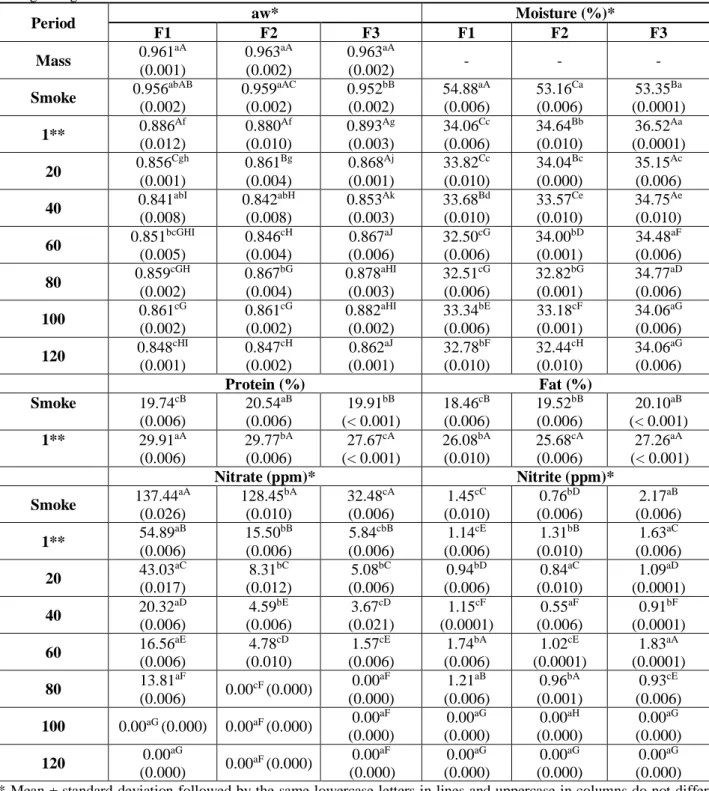
The values of water activity (aw) and moisture (Table 1) decreased (p <0.05) during storage and differed between the formulations, where formulation F3 showing greater water activity and moisture until the end of storage, because F3 contains in its composition a higher concentration of green tea (0.024%), lower sodium erythorbate (0.048%) and dehydrated glucose (0.589%) and contains 0.189% curing salt.
Braz. J. of Develop.,Curitiba, v. 6, n. 8, p. 55144-55160 aug. 2020. ISSN 2525-8761
Formulations F1 and F2 on the 1st day of storage (28 days of maturation) and F3 on the 20th day of storage were within the limits stipulated by Brazilian legislation (BRASIL, 2000), which defines that salami ready for consumption must present a maximum water activity of 0.92 and a maximum moisture of 35% after the maturation period.
The values of aw (0.88) on the 28th day of maturation (1 day of storage) (Table 1), are similar to those obtained by Wang et al. (2018), that obtained 0.93, 0.85 and 0.83 in samples of salami, chinese dry-cured sausage and chinese smoked-cured sausage, respectively. Settanni et al. (2020) when studying fresh swine sausage containing rosemary and green tea extracts during retail verified aw of 0.83 in 45 days of maturation. Fieira et al. (2015) found 0.894 to 0.899 in samples of Italian type salami prepared with different salts and initial cultures. A possible explanation for the aw observed in the present study, may be related to the composition of the samples (higher or lower proportions of the different components), as well as to the salami maturation site (Kunrath et al., 2017).
Alamprese et al. (2016) found for fresh swine salami moisture of 32 to 34% on the 20th day of storage and also found a linear decrease with storage. As the relative humidity in the fermentation and ripening rooms is constantly kept lower than the aw of salami, there is a difference in vapor pressure that causes the removal of moisture through the out side layers of the products. The water loss has to occur at the right speed and to be as uniform as possible in order to avoid case hardening that is negative for both safety and texture of salami. In addition, if a product is not dried at a suitable speed, the desired firmness (or loss in weight) will be obtained in longer time and every day of extended drying or ripening is very costly (Fernández et al., 2000).
Braz. J. of Develop.,Curitiba, v. 6, n. 8, p. 55144-55160 aug. 2020. ISSN 2525-8761
Table 1. Values of water activity (aw), moisture, protein, fat, nitrate and nitrite of formulations of Italian type Salami
during storage.
Period aw* Moisture (%)*
F1 F2 F3 F1 F2 F3 Mass 0.961 aA (0.001) 0.963aA (0.002) 0.963aA (0.002) - - - Smoke 0.956 abAB (0.002) 0.959aAC (0.002) 0.952bB (0.002) 54.88aA (0.006) 53.16Ca (0.006) 53.35Ba (0.0001) 1** 0.886 Af (0.012) 0.880Af (0.010) 0.893Ag (0.003) 34.06Cc (0.006) 34.64Bb (0.010) 36.52Aa (0.0001) 20 0.856 Cgh (0.001) 0.861Bg (0.004) 0.868Aj (0.001) 33.82Cc (0.010) 34.04Bc (0.000) 35.15Ac (0.006) 40 0.841 abI (0.008) 0.842abH (0.008) 0.853Ak (0.003) 33.68Bd (0.010) 33.57Ce (0.010) 34.75Ae (0.010) 60 0.851 bcGHI (0.005) 0.846cH (0.004) 0.867aJ (0.006) 32.50cG (0.006) 34.00bD (0.001) 34.48aF (0.006) 80 0.859 cGH (0.002) 0.867bG (0.004) 0.878aHI (0.003) 32.51cG (0.006) 32.82bG (0.001) 34.77aD (0.006) 100 0.861 cG (0.002) 0.861cG (0.002) 0.882aHI (0.002) 33.34bE (0.006) 33.18cF (0.001) 34.06aG (0.006) 120 0.848 cHI (0.001) 0.847cH (0.002) 0.862aJ (0.001) 32.78bF (0.010) 32.44cH (0.010) 34.06aG (0.006) Protein (%) Fat (%) Smoke 19.74cB (0.006) 20.54aB (0.006) 19.91bB (< 0.001) 18.46cB (0.006) 19.52bB (0.006) 20.10aB (< 0.001) 1** 29.91aA (0.006) 29.77bA (0.006) 27.67cA (< 0.001) 26.08bA (0.010) 25.68cA (0.006) 27.26aA (< 0.001) Nitrate (ppm)* Nitrite (ppm)* Smoke 137.44 aA (0.026) 128.45bA (0.010) 32.48cA (0.006) 1.45cC (0.010) 0.76bD (0.006) 2.17aB (0.006) 1** 54.89 aB (0.006) 15.50bB (0.006) 5.84cbB (0.006) 1.14cE (0.006) 1.31bB (0.010) 1.63aC (0.006) 20 43.03 aC (0.017) 8.31bC (0.012) 5.08bC (0.006) 0.94bD (0.006) 0.84aC (0.010) 1.09aD (0.0001) 40 20.32 aD (0.006) 4.59bE (0.006) 3.67cD (0.021) 1.15cF (0.0001) 0.55aF (0.006) 0.91bF (0.0001) 60 16.56 aE (0.006) 4.78cD (0.010) 1.57cE (0.006) 1.74bA (0.006) 1.02cE (0.0001) 1.83aA (0.0001) 80 13.81 aF (0.006) 0.00 cF (0.000) 0.00aF (0.000) 1.21aB (0.006) 0.96bA (0.001) 0.93cE (0.006) 100 0.00aG (0.000) 0.00aF (0.000) 0.00aF (0.000) 0.00aG (0.000) 0.00aH (0.000) 0.00aG (0.000) 120 0.00 aG (0.000) 0.00 aF (0.000) 0.00aF (0.000) 0.00aG (0.000) 0.00aG (0.000) 0.00aG (0.000) * Mean ± standard deviationfollowed by the same lowercase letters in lines and uppercase in columns do not differ statistically at 5 % level (Tukey´s test). **28 days of maturation
In meat products, the protein content has several roles that determine the yield, quality, structure and sensory attributes (Olivo; Shimokomaki, 2006). According to the results (Table 1).
Braz. J. of Develop.,Curitiba, v. 6, n. 8, p. 55144-55160 aug. 2020. ISSN 2525-8761
1), there is a small variation in the protein content from 19.74 to 20.54% after smoking, and at 28 days of maturation values from 27.67 to 29.91%. Kunrath et al. (2017) when studying the application and evaluation of propolis as a natural antioxidant in Italian type salami verified values that varied from 28.86 to 32.78% 28 days after production, values similar to those obtained in this study.
Lipid is considered an important constituent of this meat product, as it gives the products juiciness, flavor and aroma (Olivo; Shimokomaki, 2006). The formulations showed a fat level of 18.46 to 20.10% after smoking, and at 28 days of maturation, values of 25.68 to 27.26% (Table 1). These variations are considered normal in this type of product, due to the presence of ingredients such as bacon and the distribution of these in the mass of the product part, which was also verified by Zanardi et al. (2004) and Settanni et al. (2020). The formulations after maturation are in accordance with current legislation (BRAZIL, 2000) which fixes for proteins the minimum of 25% and for fat maximum of 32%.
As shown in Table 1, it can be seen that for nitrate there was a significant difference (p <0.05) between the formulations after smoking and on the 1st day of storage (corresponding to 28 days of maturation). F1 showed a significant difference (p <0.05) from the other formulations until the 80th day of storage, and the values obtained for such formulation are higher when compared with F2 and F3. On the 100th day of storage, it appears that there is no significant difference (p> 0.05) between the formulations, presenting residual zero for nitrate. However, for nitrite was observed a significant difference (p <0.05) between the formulations up to the 80th day of storage and on the 100th and 120th the samples show residual zero for nitrite.
Nitrite is responsible for color development and also for antimicrobial action. In fermented meat, nitrite is reduced to nitric oxide through the action of the enzyme nitrite reductase and when the pH of the medium is between 5.6 and 6.2 (Ritter, 2016; Gaziano et al., 2007). In the process of curing meat products, the levels of nitrite and nitrate tend to decrease after some time of storage, because both nitrite and nitrate are converted into other substances.
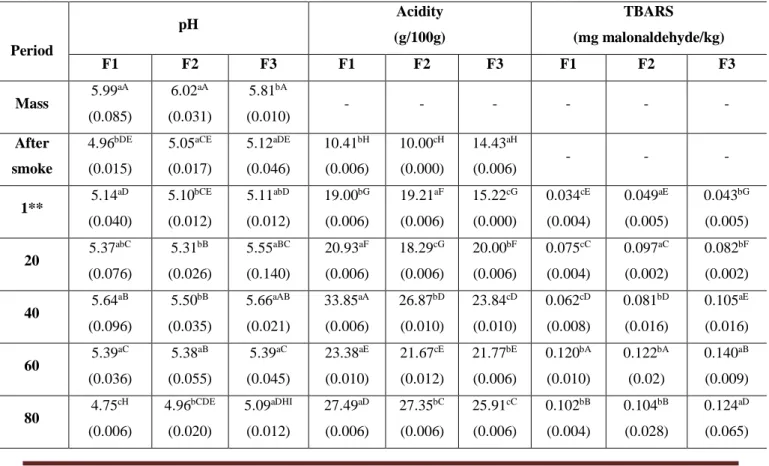
The pH values (Table 2) of salami changed during the maturation period, showing a higher value at the beginning of manufacture (6.02 to 5.81). The decrease of pH until 28 days of maturation probably occurred due to the presence of Lactobacillus in the initial culture added to the formulation, obtaining a pH between 5.14 to 5.10. Marangoni; Moura (2011) studied Italian type salami with addition of essential oil Coriandrum Sativum L. as an antioxidant activity and found pH values 5.10 to 5.29, close to those observed in the present study. Italian type salami is evaluated with the addition of C. Sativum L. essential oil as an antioxidant activity.
Braz. J. of Develop.,Curitiba, v. 6, n. 8, p. 55144-55160 aug. 2020. ISSN 2525-8761
In general, the formulations shown an increase in pH until the 40th day of storage and in the period of 40 to 80th days there is a decrease in pH, and an increase in acidity, which may be due
to the production of organic acids (Terra et al., 2006). However, in the period of 100 and 120th of storage there is an increase (p <0.05) in the pH for F3 and F2.
The decline in the pH value during the first days of ripening (fermentation) is very important due to the inhibition of undesired bacteria, rate of conversion of colour, and formation of desired flavour in dry-fermented sausages (Bozkurt, 2006). Furthermore, such acidification has positive technological aspects, including the faster drying and improved texture as a result of protein denaturation and coagulation and increased reddening through the formation of nitric oxide and nitrosyl myoglobin (Ammor; Mayo, 2007; Wang et al., 2018). Acidification promotes a decrease in pH until reaching the isoelectric point of proteins, release of water in sausages, thus reducing water activity and promoting properties such as feasibility (Pinto et al., 2001).
F3 showed higher (p <0.05) values for TBARS after the 40th day of storage, which had lower levels of green tea (0.008%), sodium erythorbate (0.048%) and glucose (0.589%) and 0.189% curing salt. The formulations F1 and F2 with the addition of 0.016% of green tea showed a significant reduction in oxidative activity compared to formulation F3, demonstrating the effectiveness of green tea against oxidative damage.
Table 2. Values of pH, acidity and TBARS of formulations of Italian type Salami during storage.
Period pH Acidity (g/100g) TBARS (mg malonaldehyde/kg) F1 F2 F3 F1 F2 F3 F1 F2 F3 Mass 5.99 aA (0.085) 6.02aA (0.031) 5.81bA (0.010) - - - - After smoke 4.96bDE (0.015) 5.05aCE (0.017) 5.12aDE (0.046) 10.41bH (0.006) 10.00cH (0.000) 14.43aH (0.006) - - - 1** 5.14 aD (0.040) 5.10bCE (0.012) 5.11abD (0.012) 19.00bG (0.006) 19.21aF (0.006) 15.22cG (0.000) 0.034cE (0.004) 0.049aE (0.005) 0.043bG (0.005) 20 5.37 abC (0.076) 5.31bB (0.026) 5.55aBC (0.140) 20.93aF (0.006) 18.29cG (0.006) 20.00bF (0.006) 0.075cC (0.004) 0.097aC (0.002) 0.082bF (0.002) 40 5.64 aB (0.096) 5.50bB (0.035) 5.66aAB (0.021) 33.85aA (0.006) 26.87bD (0.010) 23.84cD (0.010) 0.062cD (0.008) 0.081bD (0.016) 0.105aE (0.016) 60 5.39 aC (0.036) 5.38aB (0.055) 5.39aC (0.045) 23.38aE (0.010) 21.67cE (0.012) 21.77bE (0.006) 0.120bA (0.010) 0.122bA (0.02) 0.140aB (0.009) 80 4.75 cH (0.006) 4.96bCDE (0.020) 5.09aDHI (0.012) 27.49aD (0.006) 27.35bC (0.006) 25.91cC (0.006) 0.102bB (0.004) 0.104bB (0.028) 0.124aD (0.065)
Braz. J. of Develop.,Curitiba, v. 6, n. 8, p. 55144-55160 aug. 2020. ISSN 2525-8761 100 5.01 cDEF (0.012) 5.13bBC (0.026) 5.27aCDH (0.006) 30.64aB (0.006) 28.78cB (0.006) 28.83bA (0.006) 0.117bA (0.012) 0.121bA (0.018) 0.136aC (0.026) 120 5.11 cD (0.110) 6.04aA (0.190) 5.51bBC (0.070) 30.27aC (0.006) 29.89bA (0.006) 28.65cB (0.006) 0.103bB (0.008) 0.104bB (0.010) 0.145aA (0.014) * Mean ± standard deviationfollowed by the same lowercase letters in lines and uppercase in columns do not differ statistically at 5% level (Tukey´s test). **28 days of maturation
There are reports in the literature that natural antioxidants reduce the formation of TBARS more than BHT (Tang et al., 2001; Bozkurt, 2006). Finding the natural equivalent of synthetic antioxidants is important for human health because some synthetic antioxidants have carcinogenic activity and their usage in the food industry is more than the natural antioxidants (Bozkurt, 2006).
Marangoni; Moura (2011) with analysis of TBARS indicated that the coriander oil was more effective than BHT as an antioxidant in Italian type salami, where the use of only coriander oil was more efficient than in conjunction with BHT, presenting a significant effect greater than the BHT in relation to the amount of malonaldehyde present in the sample.
Terra et al. (2003), evaluated the action of different concentrations (0.5% and 1.0%) of yerba mate antioxidant and synthetic antioxidant (BHA) (0.025%) in improving the quality of Italian type salami and found that 0.5% of yerba mate extract and BHA showed the best results. Then to use 0.5% of yerba mate extract can be used as a substitute for the antioxidant BHA in Italian type salami. The antioxidant capacity of these extracts is largely due to the presence of phenolic compounds of various classes that are inherent to the plants (Jiang; Xiong, 2016). Phenolic compounds function predominantly as primary antioxidants via hydrogen atom donation, and quench reactive free radicals. The delocalization of the radical species in the phenol significantly reduces the reactivity of the ensuing radical compound (Liebler et al., 1990). In addition to scavenging free radicals, plant phenolics can also function as secondary antioxidants and chelate metal ions (Estévez; Heinonen, 2010). The antioxidative property of green tea is due to the presence of catechins, apicatechins, epicatechin gallate, epigallocatechin, and epigallocatechin gallate (Higdon; Frei, 2003; Bozkurt, 2006; Nimse; Pal, 2015; Oswell et al., 2018; Schilling et al., 2018).
The results of the microbiological analyzes presented results for Thermotolerant Coliforms (<1.0 x 10 CFU/g), positive coagulase Staphyococcus (Absence/25g), Salmonella (Absence/25g) and Listeria (Absence/25g) in the formulations F1, F2 and F3, stored at room temperature for 120 days, and are on the standars of they Normative Instruction 60, of December 23, 2019 (Brazil, 2019), thus being suitable for human consumption. Consequently, the effective combined factors such as low pH, reduced aw, nitrate or nitrite addition has contributed to the preservation of cured meat
Braz. J. of Develop.,Curitiba, v. 6, n. 8, p. 55144-55160 aug. 2020. ISSN 2525-8761
products (Rocelle et al., 1996), associated with the quality of raw material and the Good Practices of Manufacturing adopted during processing.
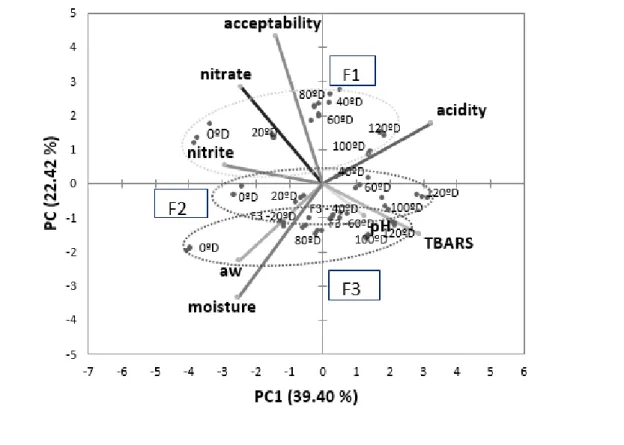
Table 4 and Figure 1 shows Pearson's correlation and principal components analysis (PCA) of physical-chemical and sensory variables of the formulations (F1, F2 and F3) in 0, 20, 40, 60, 80, 100 and 120th day of storage, respectively.
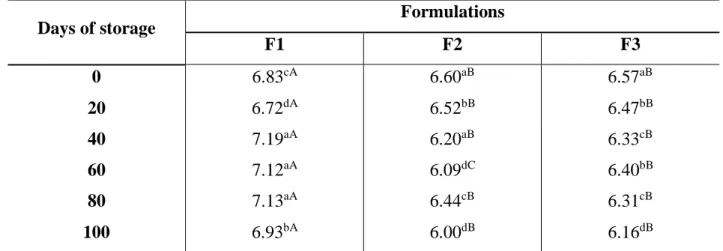
In Figure 1 the variables are represented as vectors, the longer the vector, the better the explanation of the variability between the variables. The first (PC1) and second (PC2) dimensions explained 64.04% of the total variance. The main component 1 (PC1) accounted for 36.23%, while the main component 2 (PC2) accounted for 27.81%. There is discrimination between the formulations of Salami, mainly F3 in relation to F1 and F2. F3 is the closest to the variables of moisture and aw at 0, 20, 40, 60 and 80th day of storage. F2 had the largest TBARS from 40 days of storage. F1 stood out in terms of acceptance (Table 3, Figure 1), with a higher initial and residual concentration of nitrate and nitrite on the 80th day of storage, because presenting in its formulation 0.016% green tea, 0.012% sodium nitrite and 0.013% sodium nitrate and also 0.081% sodium erythorbate and 0.806% dehydrated glucose, which positively influenced the sensory characteristics and oxidative stability of the product during storage.
Table 3. Average score of tasters for the acceptability of formulations of Italian type Salami during storage. Days of storage Formulations F1 F2 F3 0 6.83cA 6.60aB 6.57aB 20 6.72dA 6.52bB 6.47bB 40 7.19aA 6.20aB 6.33cB 60 7.12aA 6.09dC 6.40bB 80 7.13aA 6.44cB 6.31cB 100 6.93bA 6.00dB 6.16dB
* Mean ± standard deviationfollowed by the same lowercase letters in columns and uppercase in lines do not differ statistically at 5% level (Tukey´s test).
Braz. J. of Develop.,Curitiba, v. 6, n. 8, p. 55144-55160 aug. 2020. ISSN 2525-8761
Table 4. Pearson correlation matrix for the variables nitrite, nitrate, pH, aw, moisture, acidity, TBARS and acceptability
(accep.) of salami formulations on 0, 20, 40, 60, 80, 100 e 120th day of storage.
Variables Nitrite Nitrate pH aw Moisture Acidity TBARS Accep.
Nitrite 1 Nitrate 0.366 1 pH -0.128 -0.072 1 aw 0.228 0.141 -0.455 1 Moisture 0.387 0.014 0.013 0.588 1 Acidity -0.635 -0.364 0.115 -0.507 -0.650 1 TBARS -0.372 -0.636 0.065 -0.261 -0.347 0.442 1 Accep. 0.385 0.474 -0.369 -0.068 -0.212 0.048 -0.383 1
Values in bold the correlation > 0.47, significance level =0.05.
The values obtained by Pearson's correlation (Table 4) confirm the relationship between the parameters observed in PCA (Figure 1), where the nitrite concentration was negatively correlated (p <0.05) with acidity (r = - 0.635), indicating that by decreasing the nitrite content, the acidity of the product increases.
Braz. J. of Develop.,Curitiba, v. 6, n. 8, p. 55144-55160 aug. 2020. ISSN 2525-8761
Nitrate also is negatively correlated (r = - 0.636) with TBARS and weakly correlated with acceptability (r = 0.474), indicating that by decreasing nitrate there is a tendency to increase oxidation and decrease acceptability. In addition, there is a positive correlation between aw and moisture (r = 0.588), and acidity is negatively correlated with nitrate (r = - 635), aw (r = -0.507) and moisture (r = - 0.650).
Thus, the results obtained indicated that the addition of green tea, associated with sodium nitrate/nitrite and sodium erythorbate reduces the formation of maloaldehydes, maintaining the oxidative stability and acceptance of the product during storage.
4 CONCLUSIONS
The natural antioxidant (green tea) was used in Italian Type Salami and its effect on safety and quality was investigated during the maturation periods. The addition of green tea, associated with sodium nitrate / nitrite and sodium erythorbate significantly reduced the formation of TBARS and did not affect the sensory quality of the product. Thus, this natural antioxidant can be easily used in Salami to improve quality and provide safer products.
ACKNOWLEDGMENTS
The authors thaks the National Council for Scientific and Technological Development (CNPq), Coordination for the Improvement of Higher Education Personnel (CAPES - Finance Code 001) and Research Support Foundation of the State of Rio Grande do Sul (FAPERGS).
COMPLIANCE WITH ETHICAL STANDARDS
The authors declare no potential conflicts of interest.
REFERENCES
Alamprese, C., Fongaro, L., Casiraghi, E. (2016). Effect of fresh pork meat conditioning on quality characteristics of salami. Meat Science, 119, 193 – 198.
Ambrosiadis, J., Soultos, N., Abrahim, A., Bloukas, J. G. (2004). Physicochemical, microbiological and sensory attributes for the characterization of Greek traditional sausages. Meat Science, 66 (2), 279 – 287.
Ammor, M. S., Mayo, B. (2007). Selection criteria for lactic acid bacteria to be used as functional starter cultures in dry sausage production: An update. Meat Science, 76 (1), 138 – 146.
Association of official analytical chemists - AOAC. (2012). Official methods of analysis. 19. ed. Maryland: [s.n.].
Beal, P., Faion, A. M., Cichoski, A. J., Cansian, R. L., Valduga, A. T., De Oliveira, D., Valduga, E. (2011). Oxidative stability of fermented Italian-type sausages using mate leaves (Ilex
Braz. J. of Develop.,Curitiba, v. 6, n. 8, p. 55144-55160 aug. 2020. ISSN 2525-8761
paraguariensis St. Hil) extract as natural antioxidant. International Journal of Food Sciences and Nutrition, 62, 703 – 710.
Biswas, A. K., Keshri, R. C., Bisht, G. S. (2004). Effect of enrobing and antioxidants on quality characteristics of precooked pork patties under chilled and frozen storage conditions. Meat Science, 66, 733 – 741.
Bozkurt, H. (2006). Utilization of natural antioxidants: Green tea extract and Thymbra spicata oil in Turkish dry-fermented sausage. Meat Science, 73, 442 – 450.
Brasil. (2000). Instrução Normativa n° 22 de 31 Julho de 2000 da Secretaria de Defesa Agropecuária do Ministério da Agricultura e do Abastecimento. Diário Oficial, 03 Agosto 2000.
Brasil. (2005). Ministério da Saúde, Agência Nacional de Vigilância Sanitária. Métodos Físico-Químicos para Análise de alimentos/ Ministério da Saúde, Agência Nacional de Vigilância Sanitária. – Brasília: Ministério da Saúde. 1018p.
Brasil. (2019). Instrução Normativa n° 60 de 23 de dezembro de 2019 da Secretaria de Defesa Agropecuária do Ministério da Agricultura e do Abastecimento. Diário Oficial, 26 Dezembro de 2019.
Campagnol, P. C. B. (2007). Cultura Starter seleciona meio de cultura de plasma e antioxidante natural na elaboração de salame. 2007. 74 f. Dissertação (Mestrado em Ciência e Tecnologia de Alimentos) - Programa de Pós-Graduação em Ciência e Tecnologia de Alimentos, Universidade Federal de Santa Maria, Santa Maria.
Cichoski, A. J., Terra, N. N., Freitas, R. S. (2004). Teoria dos obstáculos (Hurdle technology) em produtos cárneos curados. Higiene Alimentar, 18, 33 – 36.
Coró, F. A. G.; Gaino, V. O.; Carneiro, J.; Coelho, A. R.; Pedrão, M. R. (2019). Control of lipid oxidation in jerked beef through the replacement of sodium nitrite by natural extracts of yerba mate and propolis as antioxidant agente. Brazilian Journal of Development, 6 (1), 4834 – 4850.
Cunha, L. C. M., Monteiro, M. L. G., Lorenzo, J. M., Munekata, P. E. S., Muchenje, V., Francisco De Carvalho, F. A. L., Conte-Junior, C. A. (2018). Natural antioxidants in processing and storage stability of sheep and goat meat products. Food Research International, 111, 379 – 390.
Dalla Santa, O. R. (2008). Avaliação da qualidade de salames artesanais e seleção de culturas starter para a produção de salame tipo italiano. (Tese de Doutorado – Tecnologia de Alimentos, Setor de Tecnologia). Universidade Federal do Paraná.
Dutcosky, S. D. (2013). Análise Sensorial de Alimentos. Fourth ed. Champagnat – Pucpress, Curitiba.
Estévez M., Heinonen, M. (2010). Effect of phenolic compounds on the formation of α-amoniadipic and γ-glutamic semialdehydes from myofibrillar proteins oxidized by copper, iron, and myoglobin. Journal of Agricultural and Food Chemistry, 58, 4448 – 4455.
Fernández, M., Ordóñez, J. A., Bruna, J. M., Herranz, B., De La Hoz, L. (2000). Accelerated ripening of dry fermented sausages. Trends in Food Science & Technology, 11, 201 – 209.
Fernandez-Lopez, J., Sevilla, L., Sayas-Barbera, E., Navarro, C., Marin, F., & Perez-Alvarez, J. A. (2003). Evaluation of the antioxidant potential of hyssop (Hyssopus officinalis L.) and rosemary (Rosmarinus officinalis L.) extracts in cooked pork meat. Journal of Food Science, 68, 660 – 664. Fieira, C.; Marchi, J. F; Alfaro, A. T. (2015). Substituição parcial do cloreto de sódio no salame italiano e influência nas propriedades sensoriais e na textura. Acta Scientiarum Technology Maringá, 37(2), 293 – 299.
Formanek, Z., Kerry, J. P., Higgins, F. M., Buckley, D. J., Morrissey, P. A., Farkas, J. (2001). Addition of synthetic and natural antioxidants to alpha-tocopheryl acetate supplemented beef patties: Effects of antioxidants and packaging on lipid oxidation. Meat Science, 58, 337–341. García-Lomillo, J., Gonzalez-SanJose, M.L., Del Pino-Garcia, R., Ortega-Heras, M., Muñiz-Rodríguez, P. (2017). Antioxidant effect of seasonings derived from wine pomace on lipid oxidation in refrigerated and frozen beef patties. Food Science and Technology, 77, 85 – 91.
Braz. J. of Develop.,Curitiba, v. 6, n. 8, p. 55144-55160 aug. 2020. ISSN 2525-8761
Gaziano, T. A., Galea, G., Reddy, K. S. (2007). Scaling up intervention for chronic disease prevention: the evidence. The Lancet. 370, 1939 – 1946.
Higdon, J. V., Frei, B. (2003). Tea catechins and polyphenols: health effects, metabolism, and antioxidant functions. Critical Reviews in Food Science and Nutrition, 43, 89 – 143.
Jayathilakan, K., Sharma, G. K., Radhakrishna, K., Bawa, A. S. (2007). Antioxidant potential of synthetic and natural antioxidants and its effect on warmed-over-flavour in different species of meat. Food Chemistry, 105, 908 – 916.
Jiang, J., Xiong, Y. L. (2016). Natural antioxidants as food and feed additives to promote health benefits and quality of meat products: A review. Meat Science, 120, 107 – 117.
Jongberg, S., Lund, M. N., Skibsted, L. H. (2017). Protein Oxidation in Meat and Meat Products. Challenges for Antioxidative Protection. Global Food Security and Wellness, 315 – 337.
Karakaya, M., Bayrak, E., Ulusoy, K. (2011). Use of natural antioxidants in meat and meat products. Journal of Food Science and Engineering, 1, 1–10.
Karre, L., Lopez, K., & Getty, K. J. K. (2013). Natural antioxidants in meat and poultry products. Meat Science, 94, 220 – 227.
Kunrath, C. A., Savoldi, D. C., Mileski, J. P. F., Novello, C. R., Alfaro, A. T., Marchi, J. F., Tonial, I. B. (2017). Application and evaluation of propolis, the natural antioxidant in Italian-type salami. Brazil Journal of Food Technology. Campinas, v. 20.
Liebler, D. C., Baker, P. F., Kaysen, K. L. (1990). Oxidation of vitamin E: evidence for competing autoxidation and peroxyl radical trapping reactions of the tocopheroxyl radical. Journal of the American Chemical Society, 112, 6995 – 7000.
Marangoni, C., Moura, N. F. (2011). Antioxidant activity of essential oil from Coriandrum Sativum L. in Italian salami. Ciência e Tecnologia de Alimentos, 31(1), 124 – 128.
Melo; E. A., Guerra, N. B. (2002). Ação antioxidante de compostos fenólicos naturalmente presentes em alimentos. Boletim da Sociedade Brasileira de Ciência e Tecnologia de Alimentos, 36 (1), 1 – 11.
Mc Carthy, T. L., Kerry, J. P., Kerry, J. F., Lynch, P. B., Buckley, D. J. (2001). Assessment of the antioxidant potencial of natural food and plant extracts in fresh and previously frozen pork patties. Meat Science, 57, 177 – 184.
Nimse, S. B., Pal, D. (2015). Free radicals, natural antioxidants, and their reaction mechanisms. RSC Advances, 5, 27986 – 28006.
Olivo, R., Shimokomaki, M. (2006). Fatores que influenciam como características das matérias-primas e suas implicações tecnológicas. In: Shimokomaki, M.; Olivo, R.; Franco, B. D. G. M.; Terra, N. N. Atualidades em ciência e tecnologia de carnes. São Paulo: Livraria Varela, 236 p.
Oswell, N. J., Thippareddi, H., Pegg, R. B. (2018). Practical use of natural antioxidants in meat products in the U.S.: A review. Meat Science, 145, 469 – 479.
Pereira, L. F. S., Inácio, M. L. C., Pereira, R. C., Angelis-Pereira, M. C. (2015). Prevalência de Aditivos em Alimentos Industrializados Comercializados em uma Cidade do Sul de Minas Gerais. Revista Ciências em Saúde, v. 5.
Piedade, K. R. (2007). Uso de ervas aromáticas na estabilidade oxidativa de filés de sardinha (Sardinella brasiliensis). Dissertação (Mestrado em Ciência e Tecnologia de Alimentos) Universidade de São Paulo, Piracicaba-SP.
Pinto, M. F., Ponsano, E. H. G., Heinemann, R. J. B. (2001). Bactérias envolvidas no processamento de produtos cárneos – uma revisão. Boletim do BCTA, 35 (1-2), 109 – 116.
Prete, R. de O.; Serafim, R. A.; De Souza, D. F. M.; Sakanaka, L. S.; Yamaguchi. M. M. (2020). Caracterização e aplicação de óleo de orégano como antioxidante natural em linguiça suína frescal. Brazilian Journal of Development, 6 (7), 44109 – 44118.
Rababah, T. M., Ereifej, K. I., Alhamad, M. N., Al-Qudah, K. M., Rousan, L. M., Al-Mahasneh, M.A., Al-u'datt, M. H., Yang, W. (2011). Effects of green tea and grape seed and TBHQ on
Braz. J. of Develop.,Curitiba, v. 6, n. 8, p. 55144-55160 aug. 2020. ISSN 2525-8761
physicochemical properties of Baladi goat meats. International Journal of Food Properties, 14, 1208 – 1216.
Raharjo, S., Sofos, J. N., Schmidt, G. R. (1992). Improved speed, specificity, and limit of determination of an aqueous acid extraction thiobarbituric acid-C18 method for measuring lipid peroxidation in beef. Journal of Agricultural and Food Chemistry, 40 (50), 2182 – 2185.
Ribeiro, A. C. (2015). Efeito da adição de óleo essencial de pimenta (Schinusterebinthifolius Raddi) microencapsulado em queijo minas frescal. 86 f. Dissertação (Mestrado em Ciência e Tecnologia de Alimentos), Universidade Federal do Espirito Santo, Alegre.
Ribeiro, J. S., Santos, M. J. M. C., Silva, L. K. R., Pereira, L. C. L., Santos, I. A., Lannes, S. C. S., Silva, M. V. (2019). Natural antioxidants used in meat products: A brief review. Meat Science, 148, 181 – 188.
Ritter, A. R. C. (2016). Produção de salame tipo Italiano adicionado de culturas iniciadoras nativas e extrato de aipo (Apium graveolens L.) como fonte de nitrato. Dissertação (Mestrado em Ciencia e Tecnologia de Alimentos). Faculdade de Agronomia Eliseu Maciel da Universidade Federal de Pelotas.
Rocelle, M., Clavero, S., Larry, R. (1996). Survival of Escherichia coli O157:H7 in broth and processed salami as influenced by pH, water activity, and temperature and suitability of media for its recovery. Applied and Environmental Microbiology, 62 (8), 2735 – 2740.
Settanni, L., Barbaccia, P., Bonanno, A., Ponte, M., Di Gerlando, R., Franciosi, E., Di Grigoli, A., Gaglio, R. (2020). Evolution of indigenous starter microorganisms and physicochemical parameters in spontaneously fermented beef, horse, wild boar and pork salamis produced under controlled conditions. Food Microbiology, 87, 103 – 385.
Summo, C., Caponio, F., Pasqualone, A. (2006). Effect of vacuum-packaging storage on the quality level of ripened sausages. Meat Science, 74 (2), 249-254.
Schilling, M. W., Pham, A. J., Williams, J. B., Xiong, Y. L., Dhowlaghar, N., Tolentino, A. C., Kin, S. (2018). Changes in the physiochemical, microbial, and sensory characteristics of fresh pork sausage containing rosemary and green tea extracts during retail display. Meat Science, 143, 199 – 209.
Shah, M. A., Don Bosco, S. J., Mir, S. A. (2014). Plant extracts as natural antioxidants in meat and meat products. Meat Science, 98, 21 – 33.
Shahidi, F; Synowiecki, J. (1997). Protein hidrolyzates from seal meat as phosphate alternatives in food processing applications. Food Chemistry, 60 (1), 29-32.
Shan, B., Cai, Y. Z., Brooks, J. D., Corke, H. (2009). Antibacterial and antioxidant effects of five spice and herb extracts as natural preservatives of raw pork. Journal of the Science of Food and Agriculture, 89, 1879–1885.
Tang, S., Kerry, J. P., Sheehan, D., Buckley, D. J., Morrissey, P. A. (2001). Antioxidative effect of added tea catechins on susceptibility of cooked red meat, poultry and fish patties to lipid oxidation. Food Research International, 34, 651 – 657.
Terra, N. N., De Carli, E. M., Telles, M. M., Drehmer, A. M. F., Quadros, C. P., Malheiros, P. S., Wagner, R.; Fries, L. L. M. (2003). Antioxidante natural na melhoria da qualidade do salame tipo italiano. In: 2º Simpósio em Ciência de Alimentos (2003: Florianópolis). Anais. Florianópolis: SBCTA.
Terra, N. N., Fries, L. L. M., Kubota, E. H. (2005). Natural antioxidants in mechanically deboned chicken meat and meat products protection. Projeto de pesquisa. 22 p. Departamento de Tecnologia e Ciência dos Alimentos. Centro de Ciências Rurais. Universidade Federal de Santa Maria, 2005. Terra, N., Cichoski, A. J., Freitas, R. J. S. (2006). Valores de nitrito e TBARS durante o processamento e armazenamento da paleta suína curada, maturada e fermentada. Ciência Rural, 36 (3), 965 – 970.
Braz. J. of Develop.,Curitiba, v. 6, n. 8, p. 55144-55160 aug. 2020. ISSN 2525-8761
Terra, N. N., Milani, L. I. G., Fries, L. L. M., Urnau, D., Cirolini, A., Santos, B. A. (2008). Extrato de erva-mate (Ilex paraguariensis) como antioxidante em carne de peru submetida a tratamento térmico. Revista Higiene Alimentar, 22, 189 – 193.
Wang, B., Pace, R. D., Dessai, A. P., Bovell-benjamin, A., Phillips, B. (2002). Modified extraction method for determinating 2-Thiobarbituric acid values in meat with increased specificity and simplicity. Journal of Food Science, 67 (8), 2833 – 2836.
Wang, X., Zhang, Y., Ren, H., Zhan, Y. (2018). Comparison of bacterial diversity profiles and microbial safety assessment of salami, Chinese dry-cured sausage and Chinese smoked-cured sausage by high-throughput sequencing. Food Science and Technology, 90, 108 – 115.
Zanardi, E., Ghidini, S., Battaglia, A., Chizzolini, R. (2004). Lipolysis and lipid oxidation in fermented sausages depending on different processing conditions and different antioxidants. Meat Science, 66, 415 – 423.