BJRS
RADIATION SCIENCES
07-02B (2019) 01-10ISSN: 2319-0612 Accepted: 2019-02-22
Applying Human Factors Engineering Program to the
Modernization Project of NPP Control Room in accordance
with U.S.NRC and KTA Regulations
R. K. Avellar
a; R. Schirru
baEletrobras Eletronuclear S.A, CEP 20091-906, Rio de Janeiro – RJ, Brasil
bPrograma de Engenharia Nuclear – COPPE/UFRJ, CEP 21941-914, Rio de Janeiro – RJ, Brasil
ABSTRACT
Application of Human Factors Engineering (HFE) in the design and implementation of such a project is essential to ensure that the new man-machine interface outcoming from the modernization does not have any negative impacts on human performance and plant safety.
This paper analyzes the applicability of the Human Factors Engineering Program in the licensing and certification of Konvoi Nucleoelectric Power Plant Control Room modernization Project using digital instrumentation and control in accordance with U.S.NRC and KRA regulations.
The results of the analyses show that although regulatory bodies adopt different methodology in the process of licensing the modernization of control rooms, the engineering aspects are being developed based on the principles of engineering.
1. INTRODUCTION
Many nuclear power plants (NPP) in the world are approaching 20 to 30 years of operation. With license renewal, even these plants still have at least 30 to 40 more years of operation life (IAEA, 2004). Therefore, the application of new generations of digital equipment in modernization and upgrading the automation systems, plant control rooms and local control stations has resulted from a complex combination of factors, including the degradation and obsolescence of analog electronic systems, the difficulty obtaining spare parts for such systems and the improved performance of human-system interface (HSI) functionality (Galleti, 1996). Additionally, IAEA (2010) emphasizes other reasons for this modernization, such as the reduction of operations and maintenance costs, the safety enhancement and the improvement of competitiveness.
However, the modernization process brings positive and negative points. While the introduction of advanced HSI technology is generally considered to enhance system performance, it may induce unexpected side-effects on operators in the systems due to the poor interaction between operators and advanced systems (Liu et al., 2016). The unexpected effects include the potential to negatively impact human performance, spawn new types of human errors and reduce human reliability (O’Hara et al, 1997).
O’Hara et al. (2002) concluded that new digital systems often provide the opportunity to give personnel information not available from analog systems. Improved instrumentation and control can help ensure that the information is more accurate, precise and reliable. The stability of digital control system can reduce the need for operators to adjust control settings to compensate for drift. The Three Mile Island Unit 2 (TMI-2) accident in 1979 was the most serious accident in U.S. commercial nuclear power plant operating history, although its small radioactive releases had no detectable health effects on plant workers or the public. It occurred as result of a series of human, organizational and mechanical failures. There has been general agreement in nuclear industry that human factors principles and requirements should be incorporated in the engineering process (Hugo, 2012).
The nuclear regulatory bodies require the evidence of systematic human factors application on the HSI design. The U.S.NRC reviews the human factors engineering (HFE) aspects of NPPs to ensure
that their design uses state-of-the-art HFE principles (O’Hara et al., 2010). It published requirements, standards and guidelines related to HFE issues, such as NUREG-0800, NUREG-0700 and NUREG-0711.
2. MATERIALS AND METHODS
As mentioned, the U.S.NRC published some standards and guides to evaluate HFE aspects in the construction and modifications projects of nuclear power plants. In this item, we will perform a description of regulatory guide NUREG-0711.
NUREG-0711 was published to establish the methodology for reviewing the HFE principles of design certification submittals for NPP. This program review model uses a top-down approach for conducting a U.S.NRC safety evaluation, so that the significance of individual topics is seen in relationship to the high-level goal of plant safety.
The HFE program review model incorporates the following elements: HFE Program Management, Operating Experience Review, Function Requirements Analysis and Function Allocation, Task Analysis, Staffing and Qualifications, Human Reliability Analysis, Human-Machine Interface Design, Procedure Development, Training Program Development, Human Factors Verification and Validation, Design Implementation and Human Performance Monitoring. Figure 1 illustrates the relationship between the HFE elements and PRA/HRA in the HFE program.
In program review are included the objectives of each HFE element, applicants products and submittals, the scope of an HFE element, inputs and outputs, and relationships to other HFE elements or design activities.
Figure 1: Overview of 12 elements of HFE Program Review
Source: NUREG-0711 Rev. 3
According to German Legislation, nuclear facilities may not be built and operate before a state license has be granted. The control rooms are considered as man-machine systems according to the safety philosophies and must meet certain requirements.
In Germany, the set of regulations and standards is formed by laws, ordinances, guides, standards and codes. The Nuclear Safety Standards Commission (KTA) consists of members of the German nuclear community and aims to establish safety standards for nuclear facilities. These documents are prepared by experts and are based on established national and international standards and rules. In this part of the paper, we will present a brief description of the main standards and rules applied in the licensing process of nuclear power plant control rooms in Germany.
Schnürer et al. (1995) informed that the usage of digital I&C in safety system of German NPPs is not sufficiently regulated by national standards. German KTA rules and associated IEC and ISO standards will be applied for licensing and design certification of modernization control room.
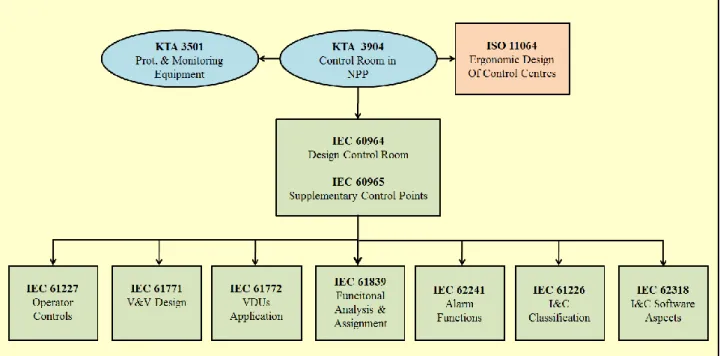
Figure 2: Applicable Standards for Design and Construction of Control Rooms
Source: KTA 3904
The Figure 2 presents the regulatory standards which are essential for design and construction of digital control room in nuclear power plant in Germany.
The safety standard KTA 3904 is considered the start point of control room licensing process. The document specifies the basic requirements for design and construction and recommends the use of other standards and rules for detailed requirements.
IEC 60964 specifies the functional design requirements to be applied in the control room design. This document presents the HFE principles used in HSI and control room design. According to this document, some of the HFE elements, such as Functional Analysis, Assignment of Functions and Verification and Validation, will be detailed in more specific standards.
IEC 61839 has been prepared to present the procedures of Functional Analysis and Assignment for the control room system design and to define criteria for Functions Allocation. This standard serves as supplementary standard to IEC 60964.
The standard IEC 61771 gives specific requirements for the performance verification and validation in the design of the control room system. IEC 61771 recommends the application of the V&V process in all the areas affected by control room modification to ensure the correct integration with the control room.
The other guides presented in Figure 2 are supplementary to the standards referenced in this work. In the German licensing process of NPP, the HFE principles are present in the standards and rules, however they are not structured in the form of a program review as the methodology developed by the NRC. For this reason, it is necessary to normalize the program developed by the U.S.NRC from the perspective of the German regulatory guides to carry out a better analysis with the same basis.
3. RESULTS AND DISCUSSION
Koskinen et al. (2012) relates the main HFE elements have been identified in the control rooms design according to a review of related literature and studies on the field. However, the methodolo-gy proposed by NUREG-0711 does not identify all the HFE activities such as screening, concept of operations and maintenance.
According EPRI (2004), screening is a review of the planned modification to determine the impact on design function, method of performing or controlling the function.
Concept of operations refers to the direction in which the operational personnel is organized and monitors and controls the plant under normal, abnormal and emergency operations. It is important to emphasize how this operational philosophy may change as the control room and other HSIs are modernized (EPRI, 2004).
Screening and concepts of operations are activities that their analysis should begin in the planning design phase.
Prevent equipment failures and repair out of order are main activities of maintenance. Specific requirements should address also the HF aspects of the maintenance activities and verified from the beginning of the project to anticipate possible future failures by trying to make the systems more “maintenance-error tolerant” (Koskinen et al., 2012).
Nuclear industry organizations confront issues of the loss of experienced workers and the knowledge and abilities they possess, furthermore, commonly this expertise is undocumented and the skills levels require time and efforts to acquire. The NUREG-0711 highlights the importance of OER on HFE process, although does not explicit the need for knowledge management. The management helps an organization to gain overview and understanding from its own experience (IAEA, 2006).
In relation to analysis of the German licensing process, the regulatory guides do not cover sufficiently the application of digital technology in modernization project of control rooms and it is necessary to use the other standards to complement the licensing process.
In addition, as a result of normalization, the description of the elements of the program can be identified in a specific standard or even distributed in a set of rules.
4. CONCLUSION
The application of digital technology into modernization process of control rooms and HSI is already a trend in NPPs. In this process, new solutions and new issues related HFE are introduced. The HFE Program Review is a methodology for conducting a safety assessment from the point of view of HFE principles, however not all HFE elements are covered. HFE analysis should be started as early as possible in design process and should continue throughout the life-cycle the plant.
For the licensing process of this modernization, good communication between the operator and Regulatory Bodies is necessary. The involvement of the regulator at the beginning of the project helps in the adequacy of the tasks performed with modernization according to the rules and standards.
In addition, considering that project is unique in that it is not a routine operation, but a specific set of operations designed to accomplish a singular goal, the set of regulatory documents should be a guidance to ensure the safe and functional implementation and operability.
The final results from U.S.NRC methodology and German regulation are basically the same. As occurred in the evaluation of the HFE Program developed by U.S.NRC, some HFE elements are not addressed in the German methodology.
From the perspective of KTA methodology, the applicability of the HFE Program for the modernization of control rooms follows a more technical line with more detailed descriptions for FRA, FA and V&V.
The HFE Program development by U.S.NRC is more structured and its applicability has a broader scope for modification projects and follows a more managerial philosophy.
5. ACKNOWLEDGMENT
The authors would like to thank the Eletronuclear for the availability of rules and standards to de-velopment this work.
REFERENCES
1. EPRI - Electric Power Research Institute. Human Factors Guidance for Control Room
and Digital Human-System Interface Design and Modifications – Guidelines for Planning, Specification, Design, Licensing, Implementation, Training, Operation and Maintenance. Report 1008122, Palo Alto, CA, 2004.
2. GALLETI S. G. Human Factors Issues in Digital System Design and Implementation. In:
INTERNATIONAL TOPICAL MEETING ON NUCLEAR PLANT INSTRUMEN-TATION, CONTROL AND HUMAN-MACHINE INTERFACE TECHNOLOGIES.
La Grange Park, IL, 1996, American Nuclear Society.
3. HUGO J. Linking Humans and Systems in Nuclear Power. In: 8th INTERNATIONAL TOPICAL MEETING ON NUCLEAR PLANT INSTRUMENTATION, CONTROL AND HUMAN-MACHINE INTERFACE TECHNOLOGIES. San Diego, CA, 2012,
American Nuclear Society.
4. IAEA - International Atomic Energy Agency. Integration of Analog and Digital
Instrumentation and Control Systems in Hybrid Control Rooms. NP-T-3.10, Vienna,
2010.
5. IAEA - International Atomic Energy Agency, Risk Management of Knowledge Loss in
Nuclear Industry Organizations, Vienna, 2006.
6. IAEA - International Atomic Energy Agency. Managing Modernization of Nuclear Power
Plant Instrumentation and Control Systems. TECDOC-1389, Vienna, 2004.
7. IEC - International Electrotechnical Commission. Nuclear Power Plants – Control Room
– Design. IEC 60964 Rev. 2009, Geneva, 2009.
8. IEC - International Electrotechnical Commission. Nuclear Power Plants – Main Control
Room Verification and Validation of Design. IEC 61771 Rev. 1995, Geneva, 1995.
9. IEC - International Electrotechnical Commission. Nuclear Power Plants – Design of
Control Room – Functional Analysis and Assignment. IEC 61839 Rev. 2000, Geneva,
2000.
10. KOSKINEN H.; LAARNI J.; SALO L.; SAVIOJA, P. Developing a Human Factors Engineering Process for Control Room Upgrades. INTERNATIONAL CONFERENCE
ON HUMAN FACTORS IN ENERGY: OIL, GAS, NUCLEAR AND ELECTRIC POWER INDUSTRIES, Walt Disney World, FL, 2016, AHFE International.
11. LIU P., LI ZZ. Comparison between conventional and digital nuclear power plant main con-trol rooms: A task complexity perspective, part I: Overall results and analysis.
12. U.S.NRC - Nuclear Regulatory Commission. Human Factors Engineering Program
Review Model. NUREG-0711 Rev.3, Washington, 2012.
13. KTA - Nuclear Safety Standards Commission. Control Room, Remote Shutdown Station
and Local Control Stations in Nuclear Power Plants. KTA 3904, Salzgitter, 2007.
14. O’HARA J.; HIGGINS, J.; FLEGER, S.; BARNES, V. Human-system Interfaces for Automatic Systems. In: 7th AMERICAN NUCLEAR SOCIETY INTERNATIONAL
TOPICAL MEETING ON NUCLEAR PLANT INSTRUMENTATION, CONTROL AND HUMAN-MACHINE INTERFACE TECHNOLOGIES. Las Vegas, NV, 2010.
15. O’HARA J.; STUBLER, B.; KRAMER, J. Human Factors Considerations in Control Room Modernization: Trends and Personnel Performance Issues. 6th IEEE CONFERENCE ON
HUMAN FACTORS AND POWER PLANTS: HUMAN FACTORS AND POWER GENERATION - A GLOBAL PERSPECTIVE, Orlando, FL, 1997.
16. O’HARA J.; STUBLER, W. F.; HIGGINS, J. C. Human Factors Evaluation of Hybrid
Human-System Interfaces in Nuclear Power Plants, Handbook of Human Factors Testing
and Evaluation, 2nd Edition, Lawrence Erlbaum Associates, Mahwash, NJ, 2002.
17. SCHNÜRER G.; WACH, D.; SEIDEL, F.; WEIL, L. Upgrades of Digital I&C in German Nuclear Power Plants Regulatory Aspects and Qualification Requirements. IAEA
SPECIALISTS MEETING ON MODERNIZATION OF INSTRUMENTATION AND CONTROL SYSTEMS IN NUCLEAR POWER PLANTS, Munich, 1995.