UNIVERSIDADE DA BEIRA INTERIOR
Ciências da Saúde
Does repetitive transcranial magnetic stimulation
have positive effects on adults with eating
disorders and/or excessive weight?
Pedro Garcia Batista
Dissertação para obtenção do Grau de Mestre em
Medicina
(ciclo de estudos integrado)
Orientador: Prof. Dr. Maria Assunção Morais e Cunha Vaz Patto
Co-orientador: Dr. Nuno Filipe Cardoso Pinto
ii
Agradecimentos
Quero aproveitar esta secção para agradecer aos meus pais, por todos os sacríficos que fizeram; à minha irmã e à minha amiga de infância (e atual colega do 6º ano) Leonor Amaral que com a força, inteligência e dedicação que nelas sempre habitou me influenciaram a seguir este caminho e a todos os meus familiares e amigos pelo apoio incondicional.
Quero fazer um agradecimento especial aos meus professores do terceiro ciclo, secundá-rio, à minha ex-professora de teatro, aos meus atuais professores de piano, canto e dança sem os quais não seria a mesma pessoa.
Um agradecimento especial também ao Pedro Vasconcelos e ao Dr. Tiago Maricoto pela ajuda na elaboração deste trabalho, à Prof. Dra. Vaz Patto, pela sábia orientação e pelo gosto que me transmitiu ao longo dos anos pela área de neurologia, ao Dr. Nuno Pinto pelo apoio na elabo-ração desta tese e pela sua disponibilidade total. Também agradecer ao prof. Dr. Miguel Castelo Branco pelo seu auxílio durante o percurso académico.
iii
Resumo
Background
Perturbações alimentares (PA) são patologias com tratamentos de eficácia limitada. A es-timulação magnética transcraniana repetitiva (rTMS) tem sido estudada como terapia para pato-logias neuropsiquiátricas como a perturbação depressiva major (PDM). Há evidências sobre a sua eficácia na melhoria da sintomatologia das PA quando aplicada ao córtex pré-frontal dorsolateral (dlPFC) esquerdo.
Objetivos
Esta tese é uma revisão sistemática sobre o uso de rTMS como terapia para bulimia, ano-rexia e perturbação de binge eating, bem como o desejo por comida em indivíduos com excesso de peso.
Materiais e métodos
Realizou-se uma revisão sistemática de ensaios clínicos randomizados (ECR) com base na pesquisa bibliográfica eletrónica utilizando os termos: rTMS, bulimia, anorexia, binge-eating e
overweight. Os critérios de inclusão foram: ECR em inglês, qualquer sexo ou étnia, 18 anos ou
mais, IMC superior a 25 kg/𝑚2, diagnostico de PA; uso de rTMS.
Resultados
Os estudos incluídos (5 no total) incidem sobre o efeito da rTMS no dlPFC esquerdo. Van den Eynde et al. (1) mostraram que o grupo de BN tratado por rTMS (n=17) teve uma redução significativa nas compulsões alimentares (p=0,028). Walpoth et al. (2) estudaram 14 mulheres com BN nas quais o número médio de compulsões alimentares por dia não diminuiu no grupo de inter-venção (n=7) relativamente ao de placebo (p=0,211). Gay et al. (3) investigaram 47 mulheres com BN e concluíram que não houve melhoria significativa nos sintomas de compulsão alimentar (p=0,96). Kim et al. (4) examinaram os efeitos de 4 sessões de rTMS (n=57), em doentes com excesso de peso tendo o grupo estimulado apresentado perda de peso significativa (p=0,002). McClelland et al. (5) estudaram os efeitos de uma sessão de rTMS em 49 pacientes com AN, con-cluindo que não houve efeitos significativos na redução dos sintomas nucleares de AN (p>0.05). Dada a heterogeneidade dos participantes/patologias e resultados, não foi possível realizar uma meta-análise.
Conclusão
A estimulação no dlPFC esquerdo por rTMS parece ter um papel positivo na modulação dos sintomas das perturbações alimentares. Mais estudos, especialmente com ECR e com amostras maiores são necessários.
iv
Palavras-chave:
Estimulação magnética transcraniana; perturbações alimentares; excesso de peso, neuro-modulação, cortex pré-frontal, revisão sistemática.
v
Resumo Alargado
Background
As perturbações alimentares (PA) são doenças crónicas com tratamentos de eficácia com-provada limitada. A rTMS tem sido investigada como terapia para doenças neuropsiquiátricas, es-tando já certificada para a PDM. As PA e o excesso de peso caracterizam-se não apenas por padrões alimentares disfuncionais mas também por mudanças no IMC e na qualidade de vida (7). A Bulimia nervosa (BN) é um distúrbio caracterizado por episódios de ingestão calórica excessiva e uma sen-sação de perda de autocontrole seguidos por comportamentos expurgatórios inadequados (10). A anorexia nervosa (AN) caracteriza-se por um forte impulso para a magreza, baixo IMC, medo de ganhar peso, uma percepção distorcida da auto-imagem e por uma recusa em manter o peso cor-poral saudável (10). A perturbação binge eating (BED) caracteriza-se pelo consumo de uma quan-tidade anormalmente grande de alimentos num curto período de tempo associado a uma perda de autocontrole durante o episódio (10). O excesso de peso é uma condição multifatorial crónica em que os indivíduos apresentam excesso de tecido adiposo e, geralmente, um IMC superior a 25 kg/𝑚2.
Objetivos
Esta revisão sistemática investiga a aplicação terapêutica da rTMS a individuos com PA ou excesso de peso.
Materiais e métodos
A pesquisa bibliográfica no PubMed/MEDLINE/EMBASE foi realizada utilizando os seguintes termos de pesquisa: Transcranial Magnetic Stimulation, Theta Burst Stimulation, rTMS, TMS, TBS, Bulimia Nervosa, Bulimia, Feeding and Eating Disorders, Anorexia Nervosa, Binge-Eating Disorder, Obesity, Overweight, Food Addiction, Craving, Body Weight. Os critérios de inclusão considerados foram: ECR, qualquer sexo ou etnia, 18 anos ou mais, diagnóstico de excesso de peso (IMC ≥ 25 kg/𝑚2) ou de AN, BED ou BN; uso de rTMS pelos investigadores e língua inglesa.
Resultados
Foram identificados cinco estudos que preencheram os critérios de inclusão. Três destes foram realizados em pacientes com BN, um em indivíduos com excesso de peso e um em pacientes com AN. Todos os estudos avaliaram os efeitos da rTMS no dlPFC esquerdo. Van den Eynde et al. (1) mostraram que o grupo com BN tratado por rTMS (n=17) teve uma redução significativa nas compulsões alimentares (p=0,028). Cinco participantes em cada grupo relataram uma leve cefaleia como efeito colateral (p=0,763). Walpoth et al. (2) estudaram 14 mulheres com BN nas quais o número médio de compulsões alimentares por dia diminuiu por individuo, mas sem diferença sig-nificativa (p=0,211) inter-grupo (controlo vs intervenção). Gay et al. (3) investigaram 47 mulheres com BN e concluíram que não houve melhoria significativa nos sintomas de compulsão alimentar (p=0,96). Kim e colaboradores (4) examinaram os efeitos de 4 sessões de rTMS (n=57) em doentes
vi
com excesso de peso tendo o grupo intervencionado apresentado perda de peso significativa (p=0,002). McClelland et al. (5) estudaram os efeitos de uma sessão de rTMS em 49 pacientes com AN, concluindo que não houve efeitos significativos na redução dos sintomas nucleares de AN (p>0.05).
Discussão
Van den Eynde et al. (1) não relataram como os pacientes foram selecionados e randomi-zados, tendo um alto risco de viés de seleção. Walpoth et al. (2) não relatam alguns aspectos metodológicos tais como o processo de aleatorização dos participantes. Ademais, têem uma amos-tra pequena e alguns participantes têm doença bipolar. Gay et al. (3) relatam que o estado hor-monal pode ter sido uma fonte de viés pois pode ter afetado a resposta à rTMS, tal como a inclusão de pacientes com considerável consumo de álcool. Kim et al. (4) é um estudo single-blinded em obesos, com excelentes resultados e com um razoavel tamanho de amostra em relação aos restantes estudos. No entanto o tamanho da amostra (N=57) foi estimado usando dados de um estudo piloto não publicado em pacientes obesos com depressão. McClelland et al. (5) aplicaram o método de temporal discounting (TD), técnica que avalia a impulsividade, para analisar os efeitos da rTMS na AN. Este estudo mostrou uma redução da taxa de TD mas apenas no nível de tendência, não tendo sido estatisticamente significativa. Dada a heterogeneidade dos partici-pantes/patologias e resultados nos estudos seleccionados, não foi possível realizar uma meta-análise
Conclusão
A rTMS parece alterar os comportamentos alimentares, reduzir o desejo por comida e, portanto, pode ser uma potencial terapia para as PA. Embora pareça improvável que os tratamen-tos de neuromodulação sejam eficazes isoladamente, esta revisão evidencia os seus possíveis efeitos positivos quando usada como tratamento adjuvante. Em resumo, a estimulação no dlPFC esquerdo parece ter um papel positivo na melhoria sintomática das PA. Mais estudos, especial-mente com ECR, duplaespecial-mente-cegos, com amostras grandes, avaliando os resultados de neuromod-ulação da rTMS, são necessários.
vii
Abstract
Background
Eating disorders (ED) are chronic illnesses with treatments of limited proven efficacy. Re-petitive transcranial magnetic stimulation (rTMS) has been investigated as a therapeutic tool for neuropsychiatric illnesses and is already certified for major depression disorder (MDD). There is evidence that when the left dorsolateral pre-frontal cortex (dlPFC) is targeted, the ED sympto-matology is improved.
Objectives
This article is a systematic review that intends to assess the validity of rTMS as a therapy for ED and food craving.
Methods
We conducted a literature search using the following search terms: rTMS, ED, anorexia, bulimia, binge-eating disorder and excessive weight. Articles published in English and indexed in the following databases were searched: Pubmed, Embase, hinari; inasp; eIFL; Cochrane Library; EBSCO; CINAHL; Current Contents; DARE; metacrawler; PsycINFO.
Results
All studies (5 in total) assessed the effects of rTMS on dlPFC. Van den Eynde et al. (1), showed that the real rTMS group with BN (n=17) had a significant reduction in cue-induced food craving (p=0.028). Walpoth and colleagues (2) studied 14 women with BN in whom the average number of binges per day did not declined significantly in the active group (n=7) relatively to placebo (p=0,211). Gay et al. (3) concluded that there were no significant improvements in binge-ing/purging symptoms in BN patients (p=0.96). Kim et al. (4) examined the effects of four rTMS sessions (n=57) in overweight patients, showing a significant weight loss in the intervention group (p=0.002). McClelland et al. (5) studied the effects of one session of rTMS and concluded that there was no significant reduction of core anorexia symptoms (p>0.05). Given the heterogeneity of par-ticipants/pathologies and results it was not possible to perform a meta-analysis.
Conclusions
Excitatory rTMS appears to have a positive effect in changing ED sympotms. More studies, especially RCT with large samples, are needed.
Key-words:
Transcranial Magnetic Stimulation; Eating Disorders; Overweight; Neuromodulation; Pre-frontal Cortex; Systematic Review
viii
Índice
Agradecimentos ... ii Resumo ... iii Resumo alargado ... v Abstract ... vii List of figures ... ix List of tables ... x Abbreviations ... xi Introduction ... 1Material and methods ... 7
Results ... 11
Discussion ... 19
Conclusion ... 23
ix
List of figures
Figure 1 ... 9
Figure 2 ... 18
x
List of tables
Table 1 ... 13 Table 2 ... 15 Table 3 ... 17 Table 4 ... 22xi
Abbreviations
AN- Anorexia nervosa BED- Binge eating disorder BMI – Body mass Index BN- bulimia nervosa BP- Blood pressure
CBT - Cognitive behavioral therapy
CINAHL- Cumulative Index to Nursing and Allied Health Literature CRH - corticotropin-releasing hormone
CRH - corticotropin-releasing hormone cTBS- Continuous theta-burst stimulation DARE- Drug Abuse Resistance Education dlPFC- dorsolateral prefrontal cortex
DSM-V- fifth edition of Diagnostic and Statistical Manual of Mental Disorders
ED- Eating disorders
EDE-Q - Eating Disorder Examination Questionnaire EDNOS- eating disorder not otherwise specified
GRADE- Grading of Recommendations Assessment, Development and Evaluation HADS- Hospital Anxiety and Depression Scale
HPAA- Hypothalamic–pituitary–adrenal axis
MARDS- Montgomery-Asberg Depression Rating scale MDD - major depression disorder
MT- motor threshold
NIBS- Non-invasive brain stimulation OCD- obsessive compulsive disease
xii
RCT- Randomized clinical trial
rTMS - Repetitive transcranial magnetic stimulation TD- temporal discounting
TMS- transcranial magnetic stimulation VAS- visual analogue scale
vmPFC- Ventromedial Prefrontal córtex VTA- ventral tegmental área
1
Introduction
Background
This systematic review studies the effects of repetitive transcranial magnetic stimulation (rTMS) on eating behaviours. More specifically, we analyze the therapeutic potential of this tech-nology that modulates neuron's activity (with magnetic fields) for eating disorders (ED). It is a non-invasive therapy already approved for psychiatric conditions such as major depression disorder (MDD). Only randomized clinical trials (RCTs) were considered and Cochrane recommendations for systematic reviews were followed (6).
Eating disorders (ED) are chronic illnesses with treatments of limited proven efficacy and where more effective brain-directed interventions are crucial. Neurobiology researches have tried to uncover the role on ED of target anatomic regions, neuron-membrane receptors and chemical substrates (7), having uncovered similarities between drug and food cravings: increased activity in the orbitofrontal/anterior cingulate cortex and a diminished regulatory influence from lateral pre-frontal circuits (7).
There is increasing data to support some therapeutic effects of rTMS when applied to the left dorsolateral prefrontal cortex (dlPFC). According to the latest evidence, it is thought that it ameliorates ED symptomatology (8) by reducing food craving and improving motivational self-con-trol. Given the success of rTMS in treatment-resistant MDD, as well as the encouraging studies on ED, there is a strong rationale for further exploring its therapeutic potential.
Description of the condition
ED and obesity are conditions characterized not only by dysfunctional eating patterns but also by changes in body mass index (BMI) and life quality (7). Bulimia nervosa (BN), anorexia ner-vosa (AN), binge eating disorders (BED) are some of the ED considered on the fifth edition of Diagnostic and Statistical Manual of Mental Disorders (DSM-V). They generally result in inappropri-ate food intake and eating behaviors. One intention of the DSM-5 adjustments was to decrease the number of cases falling into the “eating disorder not otherwise specified” (EDNOS) category, a poorly defined and heterogeneous classification, representing the majority of DSM-IV ED cases (9). BED was introduced as an independent diagnosis, with an expansion of AN/BN boundaries.
A cyclical binging (overeating episodes with a lack of self-control), followed by inappro-priate compensatory conducts like self-induced vomiting, laxatives abuse and/or strenuous physi-cal activity characterize BN (10). Binge and purging episodes must occur on average at least once a week for three months (9). Most of these patients have other psychiatric comorbidities and may
2
present with a wide weight range, from normal BMI to morbid obesity. Plus, some of them progress to AN, an ED characterized by a strong drive for thinness, low body weight, fear of weight gain, a distorted perception of self-image and by a refusal to maintain a standardized BMI (10). There is a marked disturbance in the way one’s body weight/shape is experienced, undue influence of the latter on self-evaluation and denial of the dangerous low body weight. Onset is usually peripubertal and mainly affects females (10:1 ratio), whose lifetime prevalence of AN is 2–4 % (11). AN may also include binging and purging, but its hallmark feature is the maintenance of low body weight for age, sex and developmental trajectory (10). Both BN and AN can include significant body image distortions and are often comorbid with affective disorders such as depression or bipolar disorder (10).
Prior neuroimaging studies have reported that cognitive processes such as tasks of motiva-tional self-control and response inhibition are altered on AN patients. Playing a key role in those tasks, the dlPFC is a potencial therapeutic target for rTMS. Reward processing abnormalities and obsessive routines resembling those seen in obsessive compulsive disease (OCD) are also seen. It has been proposed an aberrant functioning of evaluative prefrontal regions (involved in executive control) and subcortical regions promoting stimulus-driven responses, namely anxiety-related mesolimbic circuits and reward-related regions (12). Some of the neural pathways’ dysfunction are circuitry pertaining to self-awareness (e.g. parietal cortex), visual and gustatory sensation (e.g. occipital cortex) and reward (e.g. ventral striatum, anterior/subcallosal cingulate, dlPFC and vmPFC). The insula, linked to interoception (one’s self-observation of internal homeostasis), is implicated in many of these circuits and may participate in distorted perceptions. Food restriction and excessive exercise regimens become rewarding and compulsive with time (13). Some investi-gators defend that there is an imbalance in serotonergic and dopaminergic signaling within the ventral striatum, explaining the dysphoric mood and anxiety. Imaging studies have further demon-strated a reduced glucose perfusion in decision-making and motor centers: superior frontal cortex, caudate, thalamus and putamen in these patients. Patients possess decreased anterior cingulate volume, with subsequent enlargement after treatment (7).
The consumption of an abnormally large amount of food in a short period of time and a loss of self-control (10) characterizes BED. It is associated with a significant life quality impair-ment, affecting a broad range of individuals even though it has a higher prevalence in overweight population. These episodes feature at least 3 of the following: consuming food faster than normal; eating until uncomfortably full; ingesting large amounts of food when not hungry; consuming food alone due to embarrassment and a feeling of sadness or guilt afterwards.
Excessive weight is a chronic multifactorial condition where individuals have an increased adipose tissue and usually a BMI greater than 25 kg/𝑚2. If their BMI is superior to 30 kg/𝑚2 they
are classified as obese. Morbid obesity is defined as a BMI greater than 40 kg/𝑚2, which has a
prevalence of approximately 14% on US adults (14). The latest obesity diagnostic algorithm incor-porates an assessment of ethnicity-adjusted anthropometrics as well as the presence and severity
3
of obesity-related complications, taking into account the impact on health (15). Excessive weight is associated with an increased risk for a wide range of comorbidities like hypertension, stroke, type 2 diabetes, dyslipidemia, osteoarthritis, obstructive sleep apnea, gastro-esophageal reflux disease and colon cancer. Although obesity may be drug-induced or secondary to endocrine dis-eases (e.g. Cushing's syndrome), a vast majority are due to behaviors with inadequate patterns of diet and physical activity. In those patients there may be a reduced activation of the inhibitory control regions (prefrontal and parietal cortex) in response to food stimuli (16).
Pathophysiology
The neural physiopathology of ED is not fully understood, although it has been linked to an interaction between reward pathways (mesolimbic/mesocortical circuits, striatum, amygdala, or-bitofrontal cortex and midbrain), where homeostatic circuitry that regulates perceived dietary energy needs plays a role. The mesolimbic reward pathway is a dopaminergic pathway that has been associated with immediate rewards, being activated by pleasant foods, drugs of abuse, cop-ulation and other rewarding stimuli. Moreover, a relationship between mesolimbic dopamine re-lease and novelty seeking has also been established, hence the influence of expectation/reinforce-ment in craving and addiction (7). On the other hand, the mesocortical dopaminergic output from the ventral tegmental area (VTA) to the pre-frontal cortex is a representation of delayed reward, cognitive control, motivation in addition to regulation of emotional responses and food intake (7).
Actual Treatment
Cognitive behavioral therapy (CBT) is one of the mainstay treatments for BN. It is often combined with anti-depressants (e.g.
s
elective serotonin reuptake inhibitors (SSRIs)) and neuro-leptics, being also used for AN. However, these treatments are not as effective as desired and up to 30% of AN patients are medically intractable (17). The situation is similar for BN patients who are treated with CBT and/or antidepressant pharmacotherapy, but the majority remain sympto-matic following therapy. Psychological interventions and effective treatment for BED, associated with a long-term impact on weight, is limited, being CBT also the treatment of choice (10). Drug treatments have little effect on weight (except sibutramine, withdrawn from the market in many countries, and topiramate, associated with low tolerability). Moreover, the knowledge of patho-physiology of BED is limited, needing a deeper investigation. For overweight people, pharma-cotherapy and lifestyle changes (e.g. reducing high-calorie intake and sedentarism) are essential therapeutic tools. However, they are associated with just a modest weight loss and patients fre-quently fail to maintain long-term control. Current treatments vary in efficacy and invasiveness, ranging from conservative measures (e.g. diet, exercise, CBT) to medications (e.g. benzpheta-mine, orlistat, rimonabant) and bariatric surgery (the most effective for rapid weight loss but with a relatively high failure rate). This surgical procedure is the ultimate care for patients with a BMI4
> 40 kg/𝑚2or > 35 kg/𝑚2with comorbidities, reducing morbidity and mortality rates (18).
Pharma-cotherapy is based on centrally-acting anorexiants and gastrointestinal lipid-absorption blockers. Unfortunately, some of the most effective medications have severe side effects such as diarrhea, fecal incontinence, oily spotting, flatulence, bloating and dyspepsia (19).
There is little knowledge about how to best treat AN and BN. Current best practices indi-cate family-based therapy for anorexia in adolescence and CBT for bulimia, having antidepressants benefits for the latter condition as well (20). However, there are few options for treatment-re-sistant patients with BN (5). Early treatments of ED focus on nutritional status and somatic health restoration, being offered support to the patient and respective family (21). Once this is achieved, a wide variety of approaches are available, from pharmacotherapy to cognitive-behavioral and group psychotherapies. Antidepressants are the most commonly used medication in ED. It has been shown to be of benefit in BN, but the evidence is weaker for most AN patients (22). Pharmacologic intervention is not recommended as a first-line treatment for AN; and while there is evidence that SSRIs may reduce symptoms, there is no evidence of benefit in facilitating weight gain or preven-tion of relapse (10).
Description of the non-invasive intervention
Non-invasive brain stimulation (NIBS) techniques share the goal of changing the excitability of targeted neuron populations in specific brain regions via electromagnetic devices. These alter-ations can be temporary (e.g., single-session NIBS) or long-lasting (e.g., multisession NIBS) and may work as down or up-regulation of excitability. NIBS procedures include transcranial magnetic stimulation (TMS) and transcranial electrical stimulation (tES) (23). The placing of scalp electrodes with low voltage constant or alternating currents characterize tEs. Those weak currents can inter-act with neural processing, modify plasticity and thus modify behavior (23). TMS can be delivered in single pulse format, paired pulses or repeated trains of pulses (rTMS). The latest is the primary modality used in ED research and can further be administered in single session or multi-session format. The magnetic field produced (pulsed in predefined patterns) penetrates the skull and enhance (or inhibit) electrical activity within the brain. It includes techniques designed to enhance excitation of targeted neuron populations such as intermittent theta burst stimulation (iTBS) (24) and high-frequency (>1 Hz) rTMS. Continuous theta-burst stimulation (cTBS) and low frequency rTMS are intended to reduce excitability (7,24,25).
In rTMS protocols a coil is firstly applied over the motor cortex by convention to establish an individualized cortical excitation threshold. This is achieved by administering single pulses of increasing magnitude until a motor evoked potential or a finger twitch is observed. The following step is to locate the target region, usually by placing an EEG cap according to the International 10-20 system or by using structural MRI and neuro-navigation equipment (7). In clinical trials sub-jects are usually placed into two groups: real and sham rTMS. While identical in setup and duration, sham rTMS does not induce a cortical/subcortical activation due to an orthogonal position of the
5
coil or the use of specific sham coils (5). No major adverse events have been reported in relation to rTMS protocols that stick to current guidelines (25). It is considered safe for single and multi-session therapeutic application, being the occurrence of seizures the primary safety concern. How-ever, the latest is infrequent and poses only a considerable risk among those with a pre-existing seizure disorder (26). Additional tolerability concerns have to do with scalp discomfort during the procedure, as well as transient dizziness/disorientation.
How the intervention might work
Neuromodulation tools like rTMS appear to increase neuroplasticity (brain’s capability to form new synaptic connections) and hence this technology is a promising opportunity for clear-cut brain-directed treatments and might be of value in treatment-resistant neuro-circuit-based disor-ders as well as in cognitive modulation (13). Cortical excitability depends on a number of factors such as age, gender, menstrual cycle, level of anxiety, mood, sleep deprivation, substance abuse, thickness of skull, brain atrophy and psychotropic treatments (27). Since rTMS effectiveness de-pends on the state of neuronal activation in the targeted brain region at the time of stimulation, all of these must be accounted for before the start of a study with this intervention.
To investigate the potential role of rTMS on ED, the left dlPFC is the anatomic area tar-geted in most studies. This brain region underpins executive functions such as inhibitory cognitive control and self-control in a food intake context. When applied to the left dlPFC, rTMS inhibits food craving in healthy “strong cravers”, bulimic-type disorders or comorbid depression, associ-ated or not with anorexia (28). It has even been reported an immediate lower craving and less self-reported binging episodes among patients with bulimic-like ED. Moreover, down-regulation of left dlPFC function via cTBS may also result in higher anticipated reward value of high caloric foods, with a selective increase consumption of such foods (29). Studies involving dlPFC show evi-dence of a significant rTMS effect on food cravings’ reduction following a single session even though these studies have some limitations (30). Even just a single-session can lighten AN symp-toms (1) and cue-elicited food craving in healthy women (31). Nevertheless, the theoretical ra-tionale for application of excitatory rTMS targeting the dlPFC for treatment of AN is unclear. The ideal dosage of rTMS, in terms of stimulation intensity, frequency and even session frequency, has yet to be established for most ED. Further refinement of these may have important effects on clinical trial outcomes, as has happened with depressive disorders (32).
TMS has the potential to increase dopaminergic activity in the ipsilateral anterior cingulate cortex (inhibitory control and conflict resolution), orbito-frontal cortex (salience attribution and motivation) and striatum (7). As dopamine is implicated in reward, addictions, preoccupation, anticipation or craving (33), its striatal release may reduce the need for immediate ‘reward’ (such as craving). Alternatively, other studies suggest that stress is involved in the development and maintenance of compulsive seeking via interactions between glucocorticoid and dopaminergic sys-tems (33). Glucocorticoids stimulate dopamine-driven behaviors such as craving and compulsive
6
drug seeking in animals. Thus, a direct effect of rTMS on hypothalamic–pituitary–adrenal axis (HPAA activity), lowering glucocorticoids, may result in less craving. Moreover, since corticotropin-re-leasing hormone (CRH) levels are increased in acute drug withdrawal, the inhibitory effect of rTMS on CRH production may also correlate with less craving (33).
Why it is important to do this review
ED are a group of serious conditions that are becoming increasingly prevalent among young populations in western countries (34). Relapses are common and it is usually necessary to try var-ious therapeutic strategies. Along with the prevvar-ious illnesses, obesity can also interfere with pa-tient's physical, psychosocial and financial resources. Due to the impact of these conditions, cou-pled with the limited proven efficacy of current therapeutic modalities, new interventions are of significant interest in an attempt to soften the increasing morbidity of these conditions. With the current data available, the acute effects of single-session rTMS on food cravings are not sufficient to support its use as a therapy for ED. Thus far, small scale clinical trials have examined the effects of multisession excitatory NIBS of the dlPFC on food intake among overweight individuals. Although the findings from these preliminary studies are encouraging, they highlight the need for more research. For this reason, long term effects of multi-session rTMS are a topic of interest and could be the focus of future researches with overweight patients. In light of paucity of effective treat-ments for ED and obesity, along with the growing knowledge of its neural biology, research into novel therapeutic approaches is essential (13). Neuromodulatory tools like rTMS have shown pre-liminary benefits in ED. Thus, it is crucial to assess the efficacy and neural correlates of those promising tools.
Objectives
This systematic review has the objective to provide a detailed summary of data regarding rTMS effectiveness in reducing food craving, BMI normalization and in improving ED symptoms.
7
Material and Methods
A systematic review was conducted following the recommendations used by the Cochrane Collaboration (6). We included all relevant RCTs in English that explored the therapeutic efficacy of rTMS on adults with AN, BED, BN or excessive weight. Parameters like food cravings, eating behaviours, food intake, weight, BMI were included. There was no limitation on the number of studies searched based on year of publication untill 2017.
Types of participants
Inclusion Criteria: males and/or females with 18 years old or older, from any ethnic back-ground, with a diagnosis of excessive weight, AN, BED and/or BN; compliance with rTMS safety guidelines.
Exclusion Criteria: nonrandomized trials; lack of relevant outcomes reported; reported outcomes not sufficiently defined or studies with insufficient data.
Types of interventions
One or more rTMS sessions. Comparators such as sham rTMS/TBS or no intervention groups (placebo rTMS or non-stimulated patients) were also included.
Types of outcome measures
Primary outcomes of this review are: binge eating/craving/purging reduction, BMI stand-ardization, weight loss (overweight patients) or gain (anorectic and/or bulimic patients). Second-ary outcomes of this review are self-report measures (ED symptoms improvement). Adverse out-comes analyzed include seizures; pain related events (e.g. headaches); personality or cognitive changes; euphoria; verbiage.
Search methods for identification of studies
The bibliographic search consisted in a computerized screening of electronic databases up to December 2017 on EMBASE and PUBMED/MEDLINE in order to identify studies meeting inclusion criteria
The literature search in PubMed/MEDLINE was done using the following search terms and MeSH terms: (“Transcranial Magnetic Stimulation”[MeSH] OR “Theta Burst Stimulation” OR “rTMS” OR “TMS” OR “TBS”) AND (“Bulimia Nervosa”[MeSH] OR "Bulimia"[MeSH] OR "Feeding and Eating Disorders"[MeSH] OR "Anorexia Nervosa”[MeSH] OR "Binge-Eating Disorder"[MeSH] OR "Obe-sity"[MeSH] OR “Overweight”[MeSH] OR "Food Addiction”[MeSH] OR “Craving"[MeSH] OR "Body Weight"[MeSH]). The following terms and Emtree terms were searched on Embase: ('transcranial magnetic stimulation system'/exp OR 'transcranial magnetic stimulation'/exp OR 'magnetic stimu-lation'/exp OR 'repetitive transcranial magnetic stimustimu-lation'/exp) AND ('obesity'/exp OR 'food
ad-8
diction'/exp OR 'eating disorder'/exp OR 'bulimia'/exp OR 'anorexia'/exp OR 'binge eating disor-der'/exp). Only articles published in English were considered. Articles indexed in the following database were also searched: hinari; inasp; eIFL; Cochrane Library; EBSCO; CINAHL; Current Con-tents; DARE; metacrawler; PsycINFO
Data collection and analysis
Full copies of articles meeting inclusion criteria (based on their title and abstract analysis), were obtained for data synthesis. Relevant articles identified through reference list and biblio-graphic searches were similarly considered for data collection. For all studies meeting the eligi-bility criteria, full-text articles were obtained and assessed by two reviewers independently. Ref-erence lists of the included studies were hand-searched by two reviewers to identify other perti-nent studies. We provide a narrative synthesis of the findings from the included studies, recording the reasons for excluding some trials. Neither of the review authors were blind to the journal titles or to the study authors or institutions.
Selection of studies
A total of 197 articles from EMBASE, 118 from Pubmed, 5 from Hinari and 6 from Cochrane library were obtained. No articles were obtained from inasp; eIFL; EBSCO; CINAHL; Current Con-tents; DARE; metacrawler or PsycINFO. One Embase article and 33 Pubmed articles were dupli-cated. The review authors analyzed, independently and manually, the titles and abstracts of every retrieved result; assessing relevant studies afterwards. There was no disagreement about inclusion criteria otherwise a third party would have been consulted. We present a PRISMA (Preferred Re-porting Items for Systematic reviews and meta-Analyses) flow chart (Fig. 1) regarding study selec-tion method.
9
Fig. 1- PRISMA flow chart
Data extraction and management
Extracted information from the included studies for assessment of study quality and evi-dence synthesis included: methodology; setting; population; participant demographics and base-line characteristics; intervention details; control conditions; recruitment and study completion rates; outcomes and times of measurement; indicators of acceptability to users; suggested mech-anisms of intervention action and bias assessment. Data extraction work was independently re-viewed. Each one of the reviewers analysed all relevant articles. Potentially relevant studies were analysed as full-text.
10
Assessment of risk of bias in included studies
Two review authors independently assessed the risk of bias for each study. Disagreements were absent but a third party would have been consulted if there were any. Information was col-lected using the Cochrane Collaboration tool for assessing the risk of bias, which covered: random-ization sequence generation (randomrandom-ization bias); treatment allocation concealment; blinding; incomplete outcome data (attrition bias); selective outcome reporting (selection bias); other sources of bias. The risk of bias is rated as ‘high risk’, ‘low risk’ or ‘unclear’ (insufficient details reported). We present a graphic representation of potential bias within and across studies recur-ring to Review Manager 5.1. software (presented in results)
Dealing with missing data
No missing data was noticed. If there were, we would have contacted the authors in an attempt to obtain it since their contact was available in all of articles retrieved.
Assessment of heterogeneity, data synthesis and subgroup analysis
It was not possible to assess heterogeneity since the individuals of the included studies did not have the same disorder, and even those who had, the data presentation did not allow us to perform statistical analysis. Thus, it was not possible to perform a meta-analysis due to the het-erogeneity of evaluated parameters, small number of RCTs and low total number of patients stud-ied regarding the use of rTMS on ED and overweight subjects. A qualitative study was done instead, where we provide a systematic narrative synthesis with information presented in the text and tables to summarize and explain the main findings of the included studies (Table 1- Results). We carried subgroup analyses for the different diagnosis included in this review: BN, AN and excessive weight.
11
Results
Description of studies
We identified five studies that met the inclusion criteria, with a total of 204 subjects. Three studies were conducted in bulimic patients, one in overweight individuals and one in pa-tients with anorexia nervosa.
The number of rTMS sessions varied in all studies, ranging from 1 session (1,5) to 15 sessions (2).The motor threshold (MT) determination, which determines the intensity of the rTMS to be applied, was described in three studies (3,4,5), recurring to the visual method (watching the mo-bilization of the long thumb abductor), a less accurate method than using an electromyogram, which was used only by McClelland and colleagues (5). Then frequency applied was 10 Hz and 110% of the individual's MT in all studies except in the one carried by Walpoth and colleagues (2) that used 20 Hz and 120% respectively. The latest study was also the only that used a 60s inter-train interval (which is also a safety parameter) while all other studies used 55 seconds. Three studies reported a good tolerance, even though there were some participants who experienced safety issues during the trial (3,4,5).
Studies in Bulimia Nervosa
Van den Eynde et al. (1) aimed to establish whether the effect of rTMS extended to cue-elicited food craving in people with any bulimic eating disorder in which bingeing and craving are prominent. Thirty-eight people with bulimic-type eating disorders were randomly allocated to re-ceive one session of real or sham high frequency rTMS in a double-blind procedure. Authors made the participants watch a 2-minute film of people eating palatable food in order to stimulate food craving. Outcome measures included a self-reported food craving immediately after the stimula-tion session, frequency of bingeing over a 24-hour follow-up period and a 10-cm visual analogue scale (VAS) of “urge to eat” (primary outcome). The real rTMS group (n=17) showed a significant reduction in cue-induced food craving (p=0.028) compared with the sham group. The standard 5-cm localization procedure to apply rTMS was used and better results might have been obtained with improved (neuronavigational) localization methods. Five participants in each group reported a transient slight headache as a side effect (p= 0.763)
Walpoth et al. (2) studied fourteen women with BN that were included in a randomized placebo-controlled double-blind trial. Mean age of patients in the real-rTMS group was slightly higher when compared with the sham group. As a consequence, the authors added age as a covari-ate throughout the analysis. After all patients were submitted to a one-week sham treatment, subjects were randomized into two groups for 3 weeks of real or sham stimulation. The primary outcome was a change in the number of binges and purges. The average number of binges per day declined between baseline and the end of treatment in an individual basis, but the inter-group (active vs sham) difference was not significant (p=0.211). Both Walpoth et al. (2) and Van den
12
Eynde et al. (1) did not find a significant effect on mood symptoms in BN patients after real rTMS. Walpoth et al (2) did not mention safety and tolerance parameters.
Gay et al. (3) investigated forty-seven women with bulimia nervosa who were randomized to a real or sham stimulation group. The main outcome was the number of binge episodes in the 15 days following the end of stimulation. The two groups showed no significant differences for either primary or secondary outcomes (features of binge episodes, number of days without binge-ing, maximal craving before a binge, number of vomiting episodes and mood). Overall, no signifi-cant improvement in bingeing and purging symptoms was noted (p=0.96).
Studies in Anorexia Nervosa
McClelland et al. (5) studied the effects of one session of sham-controlled high-frequency rTMS to the left DLPFC in 60 patients with AN. The main outcome measure was core AN symptoms: urge to restrict caloric ingestion, levels of feeling full and fat. In order to evaluate these, the authors applied temporal discounting (TD) tasks, which measure the degree to which a reward is subjectively discounted in relation to its temporal delay and thus providing an indication of choice impulsivity and temporal foresight. Of the forty-nine participants who completed the study, the ones in the real-rTMS reported lower levels of core AN symptoms after stimulation. However, these differences were not significant following Bonferroni corrections for multiple comparisons (p>0.05).
Studies in excessive weight
Kim et al. (4) conducted a two-week randomized, sham-controlled, single-blinded, paral-lel-group trial to examine the effects of four sessions of rTMS targeting the left dlPFC. Sixty pa-tients with a BMI superior to 25 kg/𝑚2, between 18 and 65 years-old were recruited in order to
evaluate the weight change in kilograms from baseline to 4 weeks. Fifty-seven patients completed the 4-week follow-up (29 in the rTMS group and 28 in the sham group). While there were no dif-ferences in weight change in the sham group, participants submitted to real-rTMS showed a signif-icant weight loss from baseline following four sessions (p= 0.002). Authors concluded that rTMS delivered to the left dlPFC was effective in decreasing food intake and facilitating weight loss, suggesting that it could be an effective treatment for obesity. However, this study was single-blinded, which might have had an impact on the outcomes. Plus, the sample size was estimated using data from an unpublished pilot study in obese patients with depression (Kim, 2017).
Included and excluded studies
13
Table 1 - Characteristics of included studies
Kim et al. (4) Gay et al. (3) McClelland et al. (5) Van den Eynde et al. (1) Walpoth et al. (2)
N 57 47 49 37 14
Participants
BMI ≥ 25 kg/𝑚2,; 18 to 65 years old; naive to rTMS; right-handed; weight stable in the previous 3 months
BN for at least 6 months, right-handed, no im-provement under SSRI treatment for at least 5 weeks; 18 to 40 years old
diagnosis of AN established via referring clinicians, >18 years-old; BMI between 14.5 to 18.5
kg/𝑚2,
18 to 60 years-old with BN or BED 18 to 60 years-old with BN; at least six binges over the previous 28 days Exclusion criteria contraindication to rTMS; weight-loss drugs; very-low-calorie diet; pregnancy; history of an ED or substance dependence; diabetes; unstable cardiovascular disease; contraindication to rTMS; ongoing psycho-therapy for BN, positive pregnancy test and re-fusal to use effective contraception for the en-tire rTMS programme.
contraindications to rTMS, left-handedness, current psy-chotropic medication, preg-nancy, alcohol consumption (>3 units/day) and/or nicotine use (>15 cigarettes/day).
contraindications to rTMS; left-handedness, current psychotropic medication, pregnancy, nicotine (>10 cigarettes/day) and substance dependence
contraindications to rTMS; severe depressive symp-toms, BMI <17.5 kg/𝑚2,, psychotherapy and psycho-pharmacological medication during the last 3 months ; positive pregnancy test
Sham/ Active group dif-ferences baseline demographic, anthropometric, and clinical characteristics were similar
borderline difference for alcohol/substance abuse and perfectionism.
Two participants in the active group dropped out due to dis-comfort; the Eating Disorder Examination Questionnaire (EDE-Q) weight and shape subscale scores were higher in the sham group.
No differences between the two
14
Protocol
4 sessions targeting the left DLPFC for 2 non-consecutive days per week for 2 weeks; 20 trains of 5s; 55 s inter-train intervals; 10 Hz; MT intensity of 110%, 1000 pulses over 20 min; Magstim Rapid de-vice, eight coils
10 sessions targeting the left DLPFC; Sham and ac-tive Magstim Rapid de-vice, eight coils; stimula-tion 6 cm anterior to the motor cortex; each ses-sion with 20 trains of 5s; 55s intervals between trains, 10 Hz; MT inten-sity of 110%, a total of 1000 pulses per session in 20 minutes
One session targeting left DLPFC; real and sham Magstim Rapid device, eight coils; brainsight neuronavigation; 5s trains; 55s train inter-vals, 10Hz, 110% MT, 1000 pulses over 20 minutes. BP and pulse recorded; a saliva sample collected; 10 cm VAS measuring discomfort
one session targeting left DLPFC; Magstim Rapid device, with real and sham figure eight coils; 10 Hz; MT intensity of 110%;1000 pulses over 20 minutes; 55s inter-train in-tervals
15 sessions; 120% of MT; 20 Hz, in one session per day during 3 weeks; 10 trains of 10 s, train interval of 60 s; 2,000 stimuli per session summing up to a total of 30,000 in the actively treated group.
Methods
Randomized, single-blinded, sham con-trolled; parallel group trial
Randomized, double-blinded, sham con-trolled; parallel group trial
Randomized, double-blinded, sham controlled; parallel group trial
Randomized, double-blinded, sham controlled; parallel group trial
Randomized, double-blinded, sham controlled; parallel group trial
Primary outcomes
There was a signifi-cantly greater weight loss compared with the sham group.
No significant improve-ment in the number of binges in the previous 15 days compared with the sham group
No significant reduction of core AN symptoms compared with the sham group
Significant reduction of cue-in-duced food craving, compared with the sham group
no significant difference compared with the sham group in terms of binge/purge behaviour.
15
Title of the study Authors
Publi-cation
year
Reason for exclusion
Off-line rTMS of left dorsolateral prefrontal cor-tex reduces food cravings in females but not
males
Cazzato V.; Williams H.; Makris S
2017
The participants were healthy, thus not fulfilling
inclusion criteria (wrong patient population)
Repetitive transcranial magnetic stimulation re-duces cortisol concentrations in bulimic
disor-ders.
Claudino AM; Van den Eynde F
2011 Outcomes not relevant (wrong outcome)
Acute neuro-endocrine effects of deep Transcra-nial Magnetic Stimulation (TMS) in obesity
Ferrulli A.; Adamo M.; Paini S.; Luzi
L.
2016
Full data not available since it is still an ongoing
trial
The effects of continuous theta burst stimulation to the left dorsolateral prefrontal cortex on ex-ecutive function, food cravings, and snack food
consumption.
Lowe CJ.; Hall PA.; Staines WR.
2014
The participants were healthy, thus not fulfilling
inclusion criteria (wrong patient population)
Chronic effects of repetitive transcranial mag-netic stimulation on satiety and body weight
control
Luzi L.; Ferrulli A.; Massarini S.
2017 Lack of full text published
Transcranial magnetic stimulation of medial pre-frontal cortex modulates implicit attitudes
to-wards food
Mattavelli G.; Zuglian P.;
Dabroi 2015
The participants were healthy, thus not fulfilling
inclusion criteria (wrong patient population)
Clinical outcomes and neural correlates of 20 sessions of repetitive transcranial magnetic
stim-ulation in severe and enduring anorexia nervosa (the TIARA study): study protocol for a
random-ised controlled feasibility trial.
Bartholdy S McClelland J
Kekic M
16
Risk of bias in included studies (see Fig 2 and 3)
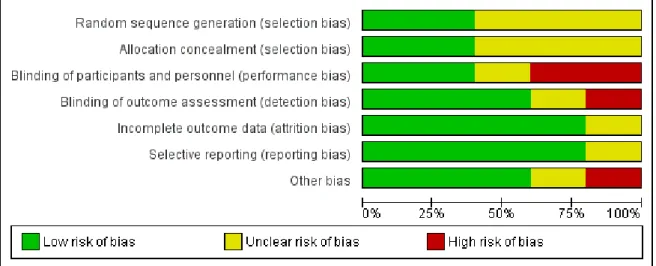
Kim et al. (4) carried a study with a low risk of bias in all parameters except for perfor-mance and detection bias since it was a single-blinded study. Gay et al. (3) investigation has a high risk of bias only regarding selection bias (subjects’ recruitment and allocation) given the inclusion in the same group (4 subjects in real-rTMS group and none in the sham group) of patients with considerable alcohol consumption. McClelland et al. (5) trial could have a risk of performance bias since the researcher administering rTMS was unblinded. Van den Eynde et al (1) has no data regarding how subjects were recruited and allocated to different groups. None of the studies has a high risk of attrition bias (no unequal loss of participants between groups) nor of reporting bias (no selective suppression of participants' information). The study from Walpoth et al. (2) has been classified as "unclear risk" in all bias parameters given the lack of data.
In table 3 we present the main sources of bias in RCTs involving rTMS and ED and/or over-weight patients.
17
Main sources of bias in RCTs using rTMS in eating disorders and/or overweight conditions Selection bias
Method of recruitment (e.g.Van den Eynde et al (1)) Duration and severity of the disorder Stage of treatment prior to enrolment
Observation Bias
The Hawthorne effect (behavior modification in response to the awareness of being observed) Placebo effect of rTMS itself
Poor targeting of the cerebral area
Insufficient number of pulses and number of sessions Attrition bias (e.g. McClelland et al. (5)) Running statistical analyses per protocol
Counfounding bias
Sociodemographic characteristics Hormonal status (e.g. Gay et al. (3))
Volume of gray matter Comorbidities Handedness (e.g. Gay et al. (3)) Duration of session (e.g. Walpoth et al (2))
Cumulative effects of rTMS in two consecutive short sessions Sample size (e.g. Walpoth et al (2))
Ability of the treatment-seeking participants to use relapse prevention techniques during cue-induced craving procedures
18
Figure 2- Risk of bias graph: review about each risk of bias item presented as percentages across all included
studies.
19
Discussion
This systematic review analysed the clinical effects and safety of rTMS on ED and craving. There are no studies with positive results in AN. One study with BN patients has positive results and there is also only one study with positive results in overweight subjects. Therefore, one study for bulimia nervosa and one study for weight reduction supported rTMS efficacy, particularly in the short term.
Kim et al. (4) conducted a trial where there was a significant reduction in BMI and fat mass in the ative group compared with the control group. When delivered to the left dlPFC, rTMS was effective in decreasing food intake and facilitating weight loss, suggesting that it could be an effective treatment option for obesity. However, this study was single-blinded, which might have been a source of bias. Even though it has a relatively good sample size (N=57), compared with the remaining included studies, it was estimated using data from an unpublished pilot study in obese patients with depression. When asked to guess whether they received real or sham stimulation, 23 out of 28 participants in the sham group and 22 out of 29 in the real group believed that they had received real-rTMS. Even though the precise mechanisms for weight loss by rTMS in overweight patients are not fully understood, it is thought to be due to an increased dopamine excretion in the striatum and an enhanced cognitive control (4). Plus, given the link between excessive food cravings and decreased activation in the dlPFC, resetting of reward thresholds has a therapeutic potential for obesity. The authors of this study did not measure neurotransmitters, so they did not assess their role in the regulation of eating behaviour and body weight.
McClelland et al. (5) applied TD tasks in BN subjects, which is a good way to assess sub-jects’ impulsivity since those who discount delayed rewards at higher rates are more likely to engage in unhealthy behaviours. This trial showed that the rate of TD was reduced following real (but not sham) rTMS only at trend level. Even though these results were not statistically significant they suggest that rTMS may encourage more prudent decision making. The researchers used an effective method of targeting the dlPFC, stating that their pre-protocol analysis and lack of a healthy comparison group might have led to a statistical bias. Even though post hoc/bootstrapped comparisons suggested significant results, that was not the case following Bonferroni corrections (p values adjustments when several statistical tests are being performed simultaneously). Moreo-ver, the researcher administering rTMS was unblinded and the study might be underpowered (hence the high risk of performance bias) because of dropout (9 participants withdrew post-ran-domization). This trial’s results are in line with existing evidence, giving emphasis about the role of the dlPFC in self-regulatory mechanisms and TD tasks since a hypoactivity in this region con-tributes to both impaired inhibitory control and poor cognitive flexibility.
20
Van den Eynde et al. (1) showed that real rTMS group had a significant reduction in cue-induced food craving after watching a two-minute film of people eating palatable food. According to the authors, larger effects might have been observed with neuronavigational localization meth-ods. This study has a high probability of selection bias, being classified as “unclear risk” given that the authors did not report details about selection and randomization, thereby the sample obtained might not be representative of the population intended to be analysed.Plus, the author reported that the blinding was only partially successful since 88.2% (15/18) of those who received real rTMS guessed correctly their allocation.
Walpoth and colleagues (2) concluded that rTMS decreased BN symptoms but not signifi-cantly. However, this study does not report methodological features, with a consequent unclear risk in all bias parameters. It also has a small sample size and some participants with bipolar disease, which might have biased the study (the authors do not report how many nor whether these subjects were in the active/sham group or both). Even though there were symptoms im-provements at an individual level, the inter-group difference was not significant (p>0.05). This was the only trial that did not assessed the blinding by asking participants at the end of the study to guess their allocation.
Gay et al. (3) concluded that ten sessions of high-frequency rTMS to the left dlPFC had no significant improvement in BN symptoms over placebo between the initial and final visits. Even though there were no positive primary or secondary outcomes, the MADRS (Montgomery–Åsberg Depression Rating Scale) showed a borderline significant decrease (p=0.66), indicating a mood improvement in the real rTMS group only. According to the authors the hormonal status may affect the response to rTMS regarding ED and may therefore be a source of confounding bias along with the inclusion of alcoholic patients. When participants were questioned (in order to determine the blinding efficacy) only 3 out of the 24 patients in the sham group and 5 out of the 23 in the real rTMS group guessed their allocation correctly, suggesting the good efficacy of blinding.
All studies show that rTMS is a safe tool even though there were some side-effects re-ported. Van den Eynde et al. (1) mentioned that five participants in each group reported a transi-ent slight headache as a side effect (p= 0.763). Kim et al. (4) reported that the four sessions were well tolerated, being a transient mild headache the most common adverse event, verified in six participants (4 in real-rTMS group and 2 in sham group) immediately after the rTMS session. How-ever, no participant dropped out due to discomfort during this trial. Walpoth et al (2) reported that one participant in the sham group dropped out due to worsened depressive symptoms during the placebo wash-out phase. McClelland et al (5) trial had no significant differences between real/sham groups in terms of side-effects. Nine subjects (five in the real and four in the sham group) reported a mild headache and three (2 of the real and 1 of the sham group) had to take painkillers. However, none of these participants dropped out due to discomfort. Gay et al. (3) reported that one participant in the sham group made a suicide attempt (related to an acute adverse life event) and that another participant in this group and one in the real group experienced headaches. However, they responded to painkillers and completed the study.
21
The equipment used in all of the five studies was MagStim®, being the placebo method based on the use of a sham coil. The cortical target selected in all studies was the left dlPFC, most often located by moving the coil 5 cm anterior to the motor cortex, along a parasagittal line (the "5 cm" method). Only McClelland et al. (5) used a neuronavigated method. The quality of the sham procedure is also an important aspect to interpret the outcomes. Walpoth et al. (2) describes that their sham treatment was delivered just like active treatment differing only by the use of a mag-netic-field-absorbing micro metal plate. Gay et al. (3) states that they used a specially designed sham, but do not provide further details. McClelland et al. (5) used a sham coil similar to real rTMS being the only difference a lack of magnetic field emission. Results presented by a study that does not describe the placebo method may have some bias associated. Furthermore, using only a sham coil does not create the ideal placebo since it does not produce a tactile sensation on the face or scalp (27). In an attempt to overcome this issue, some researches use electrical stimulation through the skin equivalent to the one used in real-rTMS, which was done by Kim et al. (4). Other studies do not state whether they did the same or not.
When the participants were seeking or undergoing treatment one may assume that their disorders were more severe and long-standing. Plus, it may be argued that those undergoing treat-ment might have learnt how to control their urge to eat (e.g. relapse prevention techniques) with a consequent underestimation of craving (27). Included studies avoided that issue because all of those subjects were excluded. However, Walpoth and colleagues (2) argue that the lack of inter-group differences might have been due to regular contacts with a trained psychiatrist, which might have made those subjects more aware of the inadequate behaviours even though they were not being exposed to any kind of psychotherapy.
The population studied is heterogeneous given the different conditions being studied. One must interpret the findings of this systematic review attending the context of the methodologies considered. The differences between protocols, specially through a number of different parame-ters like the number of sessions, which limits their comparability.
Only Van den Eynde et al. (1) reported the importance of handedness in their results stat-ing that, when applied to the left DLPFC, rTMS produces different effects in right-handed and left-handed patients. While the role of hemispheric differences of dlPFC in ED is not fully clear, some studies have outlined the correlation between right fronto-temporal lesions and ED (7). All in-cluded studies exin-cluded left-handed people, except the one carried by Gay et al. (3), which did not include those subjects on exclusion criteria. Thus, it is important for future clinical trials to include left-handed people in order to compare left vs right sided rTMS in the same trial.
All studies except the one carried by Kim et al. (4) used subjective parameters to analyse the effects of rTMS. Some investigators defended that, in studies concerning ED, taste test para-digms are more reliable than self-report questionnaires (35). However, its contextual aspects and foods selected may have an impact on the expression of rTMS effects (35). None of the included
22
studies report details about social context nor what instructions participants were given, threat-ening the validity of the quantified eating behaviour since it might have had an influence on how the patient understood the task that should have been carried (35). Furthermore, assessing craving with VAS presents obstacles since it is subjective and fluctuant. A better approach would be cou-pling it with objective physiological measurements of craving.
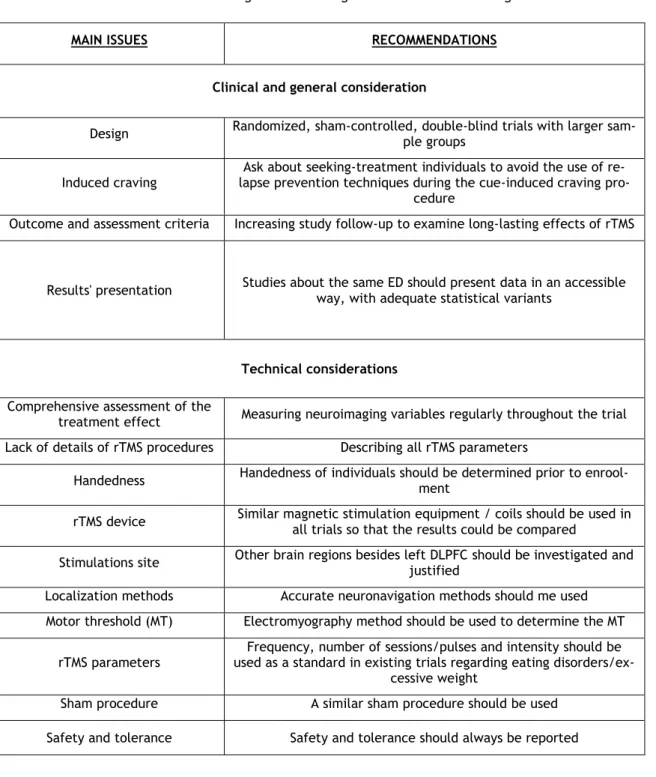
In table 4 we present some recommendations for future trials using rTMS in patients with ED and/or excessive weight.
Table 4- Recommendations for trials using rTMS for eating disorders and food craving
MAIN ISSUES RECOMMENDATIONS
Clinical and general consideration
Design Randomized, sham-controlled, double-blind trials with larger sam-ple groups
Induced craving
Ask about seeking-treatment individuals to avoid the use of re-lapse prevention techniques during the cue-induced craving
pro-cedure
Outcome and assessment criteria Increasing study follow-up to examine long-lasting effects of rTMS
Results' presentation Studies about the same ED should present data in an accessible way, with adequate statistical variants
Technical considerations
Comprehensive assessment of the
treatment effect Measuring neuroimaging variables regularly throughout the trial Lack of details of rTMS procedures Describing all rTMS parameters
Handedness Handedness of individuals should be determined prior to enrool-ment rTMS device Similar magnetic stimulation equipment / coils should be used in all trials so that the results could be compared Stimulations site Other brain regions besides left DLPFC should be investigated and justified Localization methods Accurate neuronavigation methods should me used Motor threshold (MT) Electromyography method should be used to determine the MT
rTMS parameters used as a standard in existing trials regarding eating disorders/ex-Frequency, number of sessions/pulses and intensity should be cessive weight
Sham procedure A similar sham procedure should be used Safety and tolerance Safety and tolerance should always be reported
23
Conclusion
Future research should continue by replicating the existing trials but with improved de-signs. For that reason, we propose some recommendations for future studies (table 4). Random-ized, sham-controlled, double-blind studies with large samples should assess whether reductions in food craving induced by repeated sessions of rTMS result in a sustained reduction of bulimic symptoms. In AN, future studies should confirm the existing preliminary results suggesting the therapeutic efficacy of rTMS. Identifying biomarkers of response should also be a focus in ED and obesity, in an attempt to probe disease mechanisms. The primary outcomes considered are crucial because otherwise data analysis will be problematic. That was the main reason why we were not able to compare BN studies in this systematic review. Only two out of the five included studies had positive effects. Moreover, even those have relatively small sample sizes and analyse only the short-terms effects of rTMS, thus limiting the intervention's usefulness in terms of long-term neu-roplasticity. Even though the efficacy of this tool has yet to be confirmed, it will have an important role among therapeutic strategies given its non-invasive, safe and relatively tolerable nature.
This review illustrates the effects of neuromodulation technologies like rTMS on eating-related behaviours, intrinsically linked to multifactorial conditions such as ED and obesity. Such behaviour changes are likely to arise as a consequence of the effects on the underlying cognitive, emotional and self-regulatory aspects. Modification and restoring of these neural circuits will be key for future therapeutic success. Thus, new approaches like rTMS will be key for ED and obesity treatment.
24
References
1. Van den Eynde F, Claudino A, Mogg A, Horrell L, Stahl D, Schmidt U. Repetitive transcranial magnetic stimulation reduces cue-induced food craving in bulimic disorders. Biological Psychi-atry. 2010; 67(8), 793e795.
2. Walpoth M, Hoertnagl C, Mangweth B, Kemmler G, Hinterholzl J, Conca A, et al. Repetitive transcranial magnetic stimulation in bulimia nervosa: Preliminary results of a single-centre, randomised, double-blind, sham-controlled trial in female outpatients. Psychotherapy and Psy-chosomatics. 2008; 77(1), 57e60. doi:000110061 [pii].
3. Gay A, Jaussent I, Sigaud T, Billard S, Attal J, Seneque M, Guillaume S. A lack of clinical effect of high-frequency rTMS to dorsolateral prefrontal cortex on bulimic symptoms: A randomised, double-blind trial. European Eating Disorders Review, Wiley, 2016, 24 (6), pp.474-481. ⟨10.1002/erv.2475⟩. Available from:http:// dx.doi.org/10.1002/erv.2475 [doi].
4. Kim S, Chung J, Kim T, Seong L, Youngkook K, Lee Y, et al. The effects of repetitive transcra-nial magnetic stimulation on eating behaviors and body weight in obesity: A randomized con-trolled study. Brain Stimulation: Basic, Translational, and Clinical Research in Neuromodula-tion, Volume 11, Issue 3, 528 – 535
5. McClelland J, Kekic M, Bozhilova N, Steffen N, Tracy D, Frederique V, et al. A Randomised Controlled Trial of Neuronavigated Repetitive Transcranial Magnetic Stimulation (rTMS) in An-orexia Nervosa. Hay PJ, ed. PLoS ONE. 2016; 11(3): e0148606. doi: 10.1371/jour-nal.pone.0148606.
6. Higgins JPT, Green S. Cochrane Handbook for Systematic Reviews of Interventions Version 5.1.0 [updated March 2011]. The Cochrane Collaboration, 2011. Available from www.cochrane-handbook.org.
7. Lee DJ, Elias GJB, Lozano AM. Neuromodulation for the treatment of eating disorders and obesity. Therapeutic Advances in Psychopharmacology. 2018;8(2):73-92. doi:10.1177/2045125317743435
8. Von Hausswolff Y, Samantha J Brooks, Matias Larsson.The neurobiology of eating disorders: a clinical perspective. Acta psychiatrica Scandinavica.2015.131 4.244-55
9. Lindvall C, Wisting L. Feeding and eating disorders in the DSM-5 era: a systematic review of prevalence rates in non-clinical male and female samples. Journal of Eating Disorders. 2017; 5:56. doi:10.1186/s40337-017-0186-7.
10. American Psychiatric Association. Diagnostic and statistical manual of mental disorders (5th ed.). Washington, DC: Author. 2013
11. Smink FR, Van Hoeken D, Hoek HW. Epidemiology, course, and outcome of eating disorders. Curr Opin Psychiatry. 2013; 26:543–8.
12. Sanders N, Smeets PA, van Elburg AA, Danner UN, van Meer F, Hoek HW, et al. Altered food-cue processing in chronically ill and recovered women with anorexia nervosa. Front Behav Neurosci. 2015; 9:46.