Cop
yright
© ABE&M t
odos os dir
eit
os r
eser
vados
.
Emerging trends in management
of propionic acidemia
Tendências emergentes no manejo da academia propiônica
Muhammad Raique1
ABSTRACT
Objetivo: To evaluate the therapeutic agents used during metabolic crises and in long-term mana-gement of patients with propionic acidemia (PA). Materials and methods: The records of PA pa-tients were retrospectively evaluated. Results: The study group consisted of 30 patients with 141 admissions. During metabolic crises, hyperammonemia was found in 130 (92%) admissions and almost all patients were managed with normal saline, ≥ 10% dextrose, and restriction of protein in-take. In 56 (40%) admissions, management was done in intensive care unit, 31 (22%) with mecha-nical ventilation, 10 (7%) with haemodialysis, 16 (11%) with vasopressor agents, and 12 (9%) with insulin. In the rescue procedure, L-carnitine was used in 135 (96%) patients, sodium bicarbonate in 116 (82%), sodium benzoate in 76 (54%), and metronidazole in 10 (7%), biotin in about one-quarter, L-arginine in one third, and antibiotics in three-quarter of the admissions. Blood/packed RBCs were used in 28 (20%) patients, platelets in 26 (18%), fresh frozen plasma in 8 (6%), and granulocyte--colony stimulating factors in 10 (7%) admissions. All patients were managed completely/partially with medical nutrition formula plus amino acid mixture, vitamins and minerals. For long-term ma-nagement 24 (80%) patients were on L-carnitine, 22 (73%) on sodium benzoate, 6 (20%) on biotin, one half on alkaline therapy and 4 (13%) on regular metronidazole use. Almost all patients were on medical formula and regular follow-up. Conclusion: Aggressive and adequate management of acute metabolic crises with restriction of protein intake, stabilization of patient, reversal of catabo-lism, and removal of toxic metabolites are essential steps. Concerted efforts to ensure adequate nutrition, to minimize the risk of acute decompensation and additional therapeutic advances are imperative to improve the outcome of PA patients. Arq Bras Endocrinol Metab. 2014;58(3):237-42
Keywords
Propionate; therapeutic agents; management; latest trends; metabolic crises; hyperammonaemia
RESUMO
Objetivo: Avaliar os agentes terapêuticos usados durante as crises metabólicas e para o mane-jo de longo prazo de pacientes com academia propiônica (AP). Materiais e métodos: Avaliação retrospectiva das ichas médicas de pacientes com AP. Resultados: O grupo estudado consistiu de 30 pacientes com 141 hospitalizações. Durante as crises metabólicas, a hiperamonemia foi ob-servada em 130 (92%) pacientes hospitalizados e quase todos foram tratados com solução salina regular, ≥ 10% dextrose e restrição da ingestão de proteína. Em 56 (40%) das hospitalizações, o manejo foi feito na unidade de terapia intensiva, 31(22%) com ventilação mecânica, 10 (7%) com hemodiálise, 16 (11%) com vasopressores e 12 (9%) com insulina. Para o resgate, a L-carnitina foi usada em 135 (96%) pacientes, o bicarbonato de sódio em 116 (82%), o benzoato de sódio em 76 (54%), o metronidazole em 10 (7%), a biotina em cerca de um quarto, a L-arginina em um quarto e antibióticos em três quartos dos pacientes hospitalizados. Sangue/concentrado de hemácias foram usados em 28 (20%), plaquetas em 26 (18%), plasma fresco congelado em 8 (6%) e fatores estimu-lantes de colônias de granulócitos em 10 (7%) pacientes hospitalizados. Todos os pacientes foram manejados completamente/parcialmente com fórmula de nutrição hospitalar mais uma mistura de aminoácidos, vitaminas e minerais. Para o manejo de longo prazo, 24 (80%) dos pacientes foram tratados com L-carnitina, 22 (73%) com benzoato de sódio, 6 (20%) com biotina, a metade com tratamento alcalino e 4 (13%) com uso regular de metronidazole. Quase todos os pacientes foram tratados com fórmulas médicas e acompanhamento regular. Conclusão: O manejo adequado e agressivo de crises metabólicas com restrição da ingestão de proteína, estabilização do pacientes e reversão do catabolismo, e remoção dos metabólitos tóxicos são passos essenciais. Esforços concentrados para garantir a nutrição adequada, minimizar o risco de descompensação aguda e avanços terapêuticos adicionais são imperativos na melhora dos desfechos de pacientes com AP.
Arq Bras Endocrinol Metab. 2014;58(3):237-42
Descritores
Propionato; agentes terapêuticos; manejo; últimas tendências; crises metabólicas; hiperamonemia
1 Central Aseer Hospital Abha,
Kingdom of Saudi Arabia
Correspondence to:
Muhammad Raique Associate Professor, Department of Paediatrics, Fatima Jinnah Medical College, University of Health Sciences Lahore, Pakistan
Cop
yright
© ABE&M t
odos os dir
eit
os r
eser
vados
.
INTRODUCTION
P
ropionic acidemia (PA) is a rare metabolic disorder, caused by deiciency of a mitochondrial enzyme pro-pionyl CoA carboxylase (PCC) resulting in accumulation of highly toxic metabolites. The disorder is unusually frequent in Saudi Arabia, and has been reported to occur in 1 in 2,000 to 1 in 5,000 live births in this region (1). About 80% PA patients are early-onset cases (diagnosed < 3 months of age). They have more severe disease and classically present, in the neonatal period, lethargy, vomiting, refusal to feed, hypotonia and, less frequently, dehydration and seizures.Some patients have late-on-set disease (manifested any time after three months of age), show milder symptoms, and long survival rate. PA is usually associated with long-term neurological com-plications and is characterized by recurrent episodes of metabolic crises (2). Several metabolites and physiologi-cal stressors are thought to account for many of the acute and chronic disease manifestations. Common indings include metabolic acidosis, ketosis, hyperammonemia, increased incidence of infections and bone marrow sup-pression. During metabolic crises, total protein restric-tion, reversal of catabolism and rapid detoxiication are essential life-saving steps to prevent acute brain injury, severe morbidity and mortality (2). Treatment options include low protein diet, carnitine, biotin, a precursor free amino acid formula and alkaline therapy. Hemodi-ailteration/hemodialysis is recommended for severe hy-perammonemia, extreme acidosis, and dangerous elec-trolyte imbalance (3). Packed red blood cells (RBCs) transfusion and/or granulocyte colony stimulating fac-tors (G-CSF) are recommended in anemia, neutropenia, or bone marrow suppression (2). Antibiotics are com-monly used during metabolic crises, which have strong association with immuno-suppression and sepsis (1).The objective of this study was to evaluate the ther-apeutic agents used for acute management during met-abolic crisis and those used on a regular basis for long term management of the PA patients to minimize the risk of recurrent metabolic decompensation.
MATERIALS AND METHODS
This retrospective study was conducted in a tertiary care public hospital from January 2001 to March 2013. Our study group included 30 children, in a total of 141 ad-missions. The records of all patients who were admitted in the Department of Pediatrics with conirmed
diagno-sis of PA during the study period were evaluated. The patients were diagnosed based on high propionylcar-nitine level in blood, detected by Tandem Mass Spec-trometry; high level of propionate excreted in the urine; enzyme analysis; and genetic studies. All cases were re-viewed for the following variables – age of the patients at diagnosis, age at last admission before this study, family history of PA, therapeutic agents/blood products used, and procedures carried out to manage acute problems/ imbalances developed during metabolic crises. Prophy-lactic agents regularly used for long-term management to avoid metabolic decompensations were also recorded. Information was gathered regarding admissions in neo-natal intensive care unit (NICU), pediatric intensive care unit (PICU), mechanical ventilation during metabolic decompensation. The percentage of patients discharged after recovery and who died during metabolic crises was also calculated. Weight and height/length of the pa-tients were recorded. These anthropometric parameters were plotted on growth charts speciic for Saudi chil-dren and their normal-for-age percentages were calcu-lated. Percentages of under-nutrition/wasting (weight < normal for age) and short stature/stunting (height < normal for age) of the PA patients were calculated. The data were analysed using Microsoft Excel spread sheets. The results were expressed in percentages. The study was approved by the Research and Ethical Committee of the institution (Record # 2012 - 10 - 08).
RESULTS
Cop
yright
© ABE&M t
odos os dir
eit
os r
eser
vados
.
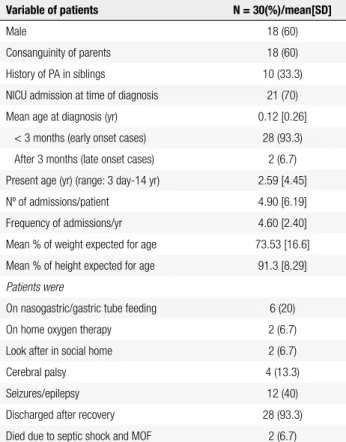
Table 1. Data of patients with PA. Values are given in n (%)/mean [SD]
Variable of patients N = 30(%)/mean[SD]
Male 18 (60)
Consanguinity of parents 18 (60)
History of PA in siblings 10 (33.3)
NICU admission at time of diagnosis 21 (70)
Mean age at diagnosis (yr) 0.12 [0.26]
< 3 months (early onset cases) 28 (93.3)
After 3 months (late onset cases) 2 (6.7)
Present age (yr) (range: 3 day-14 yr) 2.59 [4.45]
Nº of admissions/patient 4.90 [6.19]
Frequency of admissions/yr 4.60 [2.40]
Mean % of weight expected for age 73.53 [16.6]
Mean % of height expected for age 91.3 [8.29]
Patients were
On nasogastric/gastric tube feeding 6 (20)
On home oxygen therapy 2 (6.7)
Look after in social home 2 (6.7)
Cerebral palsy 4 (13.3)
Seizures/epilepsy 12 (40)
Discharged after recovery 28 (93.3)
Died due to septic shock and MOF 2 (6.7)
NICU: neonatal intensive care unit; MOF: multi-organ failure.
Table 2. Therapeutic agents used during metabolic crises and for long-term management in n = 141 admissions of 30 patients with PA
Therapeutics agents n (%)
During metabolic crises
L-carnitine 135 (95.7)
Biotin 32 (22.7)
L-arginine 50 (35.5)
Sodium bicarbonate 116 (82.3)
Sodium benzoate 76 (53.9)
Metronidazole 10 (7.1)
Laxatives 6 (4.3)
Blood/packed red blood cells transfusion 28 (19.9)
Platelets 26 (18.4)
Granulocyte-colony stimulating factors 10 (7.1)
Fresh frozen plasma 8 (5.7)
Intravenous immunoglobulin 2 (1.4)
Antibiotics 105 (74.4)
Antifungal/antiviral (acyclovir) 9 (6.4)
Vesopressor 16 (11.3)
Anticonvulsants 18 (12.8)
Insulin infusion 12 (8.5)
Regular use for prophylaxis in n = 30 pts.
Special medical food 30 (100)
L-carnitine 24 (80)
Sodium benzoate 22 (73.3)
Sodium bicarbonate 15 (50)
Biotin 6 (20)
Metronidazole 4 (13.3)
anabolism. Mean hospital stay of the patients was 9.32 ± 8.15 days. In 56 (39.71%) admissions, patients were admitted in the PICU, with mean duration of stay 8.9 ± 8.47 days. In 31 (22%) admissions, patients were me-chanically ventilated with mean duration of 7.9 ± 6.97 days. In 10 (7.1%) admissions of our patients, hemodial-ysis was performed for quick recovery of metabolic crisis.
DISCUSSION
Stabilization, if critical
In stressful conditions, acute metabolic crises with hy-perammonemia are common in PA individuals. For their management, patients should be stabilized with IV luid, glucose, restriction of proteins, vasopressors (if hypo-tension persists), and mechanical ventilation (if oxygen saturation is not maintained by alternative measures) (3). In this study, almost all the patients were managed with parenteral normal saline, ≥ 10% dextrose (1.5 times maintenance requirement of IV luids), and restriction of protein intake. In 22% admissions, patients were me-chanically ventilated, and in 11% admissions, inotropic agents were used to maintain blood pressure.
Reversal of catabolism
pa-Cop
yright
© ABE&M t
odos os dir
eit
os r
eser
vados
.
tients were managed along the same lines. Insu-lin infusion was used in 9% admissions. In a few patients, intralipids were also added. Hemodi-alysis is recommended in cases of ammonia le-vels > 300 umol/L, extreme acidosis/electro-lyte imbalance, coma, deterioration, and failure to improve. In 7% admissions, hemodialysis was performed, whereas Grunert and cols. reported this igure as 15% (7). In 40% admissions, our patients were managed in the PICU, which is compatible with another case series(7).
• L-carnitine conjugates with propionate and pro-motes transfer out of the mitochondria, so it can be excreted in the urine. It is helpful to eliminate the use of sodium bicarbonate for metabolic cor-rection, and to correct its deiciency, which is a common inding in PA (7). Broadly in line with another report (equal to 93%) (7), L-carnitine was used in 96% admissions of our patients, while other authors reported it as equal to 82% (2).
• In the acute phase of a not yet diagnosed meta-bolic patient with hyperammonemia, it is useful to start a nitrogen scavenger, sodium benzoate (3).In a case series, alternative pathway medi-cations included sodium benzoate in 80% pa-tients, sodium phenyl acetate in 40%, metroni-dazole in 40%, and sodium bicarbonate in 20% (8). In children with inborn error of metabo-lism with continued production of acid (de-spite normal tissue perfusion and oxygenation); sodium bicarbonate is usually an essential part of treatment of metabolic acidosis (9). In the present study, sodium bicarbonate was used in 82% admissions, sodium benzoate in 54%, and metronidazole in 7%. A big portion of propio-nate (20-30%) is produced as food is metabo-lised by bacteria in the gut, which can be allevi-ated by using non-absorbable oral antibiotics, such as metronidazole/neomycin, which have been reported to be helpful in improving meta-bolic crises. Laxative agents, such as lactulose, increase gut motility and acidify the intestine, thus decreasing ammonia uptake (3,5,11). Dur-ing decompensation, we used metronidazole in 7% admissions, and laxatives in 4%. However, a report of metronidazole use in PA patients was as high as 47% (8), and another one was as 40% (metronidazole alone in 20% patients, and met-ronidazole plus colistin in another 20%) (7).
• N-carbamylglucomate has been shown to be beneicial in decreasing ammonia levels in acute hyperammonemia in patients with PA (6,10,11).
• PCC is a biotin-dependent enzyme responsible for propionate metabolism in mitochondria. Biotin has been used by some researchers dur-ing metabolic crises (6,8). This data is in
agree-ment with our study, in which biotin was used in about one quarter of the admissions of PA patients.
• In some case series, L-arginine has also been used in acute management of hyperammo-nemia (5,12). Consistently, we also used it in about one third of the admissions.
• Antimicrobial therapy is recommended during metabolic decompensation as PA is associated with suppression of the immune system and in-creased risk of infections (10). In line with Al Essa and cols. (1) antibiotics were used in three quarter of the admissions of our patients. Simi-larly, in some patients of this study, antifungal and antiviral therapy was also used.
• Proteins should be re-introduced within 24-36 hours of initiation of therapy during metabolic crisis. Consistently, within 24-48 hours, we also re-started proteins in our patients in the form of MNT (7).
• Packed RBCs and other blood product transfu-sions are recommended if patients are anemic, immunocompromised or have bone marrow suppression (3,12).In this study, blood/Packed RBCs were transfused in 20% admissions, plate-lets in 18%, and fresh frozen plasma in 6%. G-CSF was used in 7% admissions to counteract neutropenia caused by bone marrow suppres-sion, which is consistent with another report (13).
• In agreement with Land and Roberts’ report, immunoglobulins were used in some of our pa-tients to enhance their immunity (13).
Transition from acute to chronic management
Cop
yright
© ABE&M t
odos os dir
eit
os r
eser
vados
.
received a diet that restricted natural protein. In addition, a nonpropiogenic amino acid mixture was supplemented to meet age-appropriate pro-tein intake recommendations (7,14,15). In the present study, almost all patients were found to be managed completely/partially with MNT, amino acid mixture, vitamins, and minerals.
• Many PA patients were poor oral feeders. Na-sogastric/gastrostomy (NG/G) tube feeding can be used to meet daily metabolic nutrition therapy goals when patients are anorexic, as it is often seen in PA (3,15). Our 20% children were exclusively on NG/G tube feeding. How-ever, Grunert and cols. reported this igure as 15% (7).
• Regular use of carnitine is required to avoid metabolic decompensations and to prevent sec-ondary deiciency of this agent (7,15). In ac-cordance with another report (7), 92% of our patients used it regularly.
• Some patients need alkaline therapy for long-term management (9). This is consistent with our study. One half of our patients were on regular sodium bicarbonate therapy.
• In addition to prevention of constipation, for gut lora control, long-term oral antimicrobial (metronidazole) therapy may offer signiicant clinical beneits in children with PA (7,15). In line with another report, 13% of our patients were on long-term metronidazole therapy (7).
• Screening studies, such as electrocardiogram, echocardiogram, hearing screening, and optic ield assessment are regularly recommended in PA patients (3,15). Most of our patients were on regular follow-up, at the current/another centre.
• Physical and occupational therapy should start as soon as possible in patients with physical dis-abilities (3). This is compatible with our man-agement of PA patients.
• Similar to our policy, parental education about the disease and management has also been con-sidered to be crucial (3,12).
• Some researchers have described the role of growth hormone to improve lean body mass and linear growth and to increase tolerance to natural proteins in PA patients (15).
Long-term management of the individuals with PA is imperative. The severity of radiological abnormalities
seems to correlate with the degree of compliance to therapy, but not with the number of hospital or PICU admissions (16). Liver transplantation may be consid-ered in individuals with recurrent episodes of hyperam-monemia/metabolic decompensation that are not ad-equately controlled with medical therapy (9,15). Last, development in the ield of somatic gene therapy are also very promising (8).
There were some limitations in this study due to unavailability of complete records of some patients, especially those who were being followed up at other centres.
CONCLUSION
Aggressive identiication of PA patients and initiation of therapy are necessary to prevent severe morbidity and mortality. During metabolic decompensation, re-versal of catabolism and removal of toxic compounds is a life-saving measure. Concerted efforts are needed to ensure adequate nutrition of PA patients, to mini-mize the risk of acute decompensation, and to treat episodes of metabolic crises promptly. The long-term, irm education and guidance of parents and patients by established diagnostic and therapeutic centers, and additional therapeutic advances are indispensible for a beneicial outcome.
Grant/support: no inancial support was provided by any organi-zation for this study
Disclosure: no potential conlict of interest relevant to this article was reported.
REFERENCES
1. Al Essa M, Rahbeeni Z, Jumaah S, Joshi S, Al Jishi E, Rashed MS, et al. Infectious complications of propionic acidemia in Saudi Arabia. Clin Genet. 1998;54:90-5.
2. van der Meer SB, Poggi F, Spada M, Bonnefont JP, Ogier H, Hu-bert P, et al. Clinical outcome and long term management of 17 patients with propionic acidemia. Eur J Pediatr. 1996;155:205-10. 3. Chapman KA, Gropman A, MacLeod E, Stagni K, Summar ML,
Ueda K, et al. Acute management of propionic acidemia. Mol Ge-net Metab. 2012;105(1):16-25.
4. Keane V. Assessment of growth. In: Kleigman RM, Behrman RE, Jenson HB, Stanton BF.18th ed. Philadelphia PA: W.B. Saunders; 2007. p. 70-4.
5. Haberle J. The management of hyperammonaemia. Eur J Pediatr. 2011;170:21-34.
Cop
yright
© ABE&M t
odos os dir
eit
os r
eser
vados
.
7. Grunert SC, Mullerleile S, De Silva L, Barth M, Walter M, Wal-ter K, et al. Propionic acidemia: clinical course and outcome in 55 pediatric and adolescent patients. Orphanet J Rare Dis. 2013;8:6-14.
8. Vara R, Turner C, Mundy H, Heaton ND, Rela M, Mieli-Vergani G, et al. Liver transplantation for propionic acidemia in children. Li-ver Transpl. 2011;17:661-7.
9. Jones SA, Walter JH. Diagnosis and treatment of severe metabo-lic acidosis. Paediatr Child Health. 2007;17(7):260-5.
10. Gosen LV. Organic acidemias: a methylmalonic and propionic aci-demia. J Pediatr Nurs. 2008;23(3):225-33.
11. Tuchman M, Caldovic L, Daikhin Y, Horyn O, Nissim I, Nissim I, et al. N-carbamylglutamate markedly enhances ureagenesis in N-acetylglutamate deiciency and propionic acidemia as measu-red by isotopic incorporation and blood biomarkers. Pediatr Res. 2008;64(2):213-7.
12. Lehnert W, Sperl W, Suormala T, Baumgartner ER, et al. Propionic acidemia: clinical, biochemical and therapeutic aspects. Eur J Pe-diatr. 1994;153(7 Suppl 1):S68-80.
13. Land MH, Roberts RL. Neutropenia and hypo-gammaglobuline-mia in propionic acidehypo-gammaglobuline-mia. J Allergy Clin Immunol. 2006(Suppl 1);117(2):S172.
14. Ogier de Boulny H, Dionisi-Vici C, Wendel U. Branched-chain or-ganic acidurias/acidemias. In: Saudubray JM, van den Berghe G, Walter JH (eds). Inborn metabolic diseases. Diagnosis and treat-ment, 5th edn. Springer, Heidelberg; 2012. p. 277-96.
15. Sutton VR, Chapman KA, Gropman AL, MacLeod E, Stagni K, Sum-mar ML, et al. Chronic management and health supervision of indi-viduals with propionic acidemia. Mol Genet Metab. 2012;105:26-33. 16. Brismar J, Ozand PT. CT and MRI of the brain in disorders of the