Liquid Metallic Hydrogen III. Intercalation and Lattice Exclusion Versus
Gravitational Settling and Their Consequences Relative to Internal Structure,
Surface Activity, and Solar Winds in the Sun
Joseph Christophe Robitaille∗and Pierre-Marie Robitaille† ∗P.O. Box 21025, Columbus, Ohio, 43221.
†Department of Radiology, The Ohio State University, 395 W. 12th Ave, Columbus, Ohio 43210, USA. [email protected]
Invocation of a liquid metallic hydrogen model (Robitaille P.M. Liquid Metallic Hydro-gen: A Building Block for the Liquid Sun. Progr. Phys., 2011, v. 3, 60–74; Robitaille P.M. Liquid Metallic Hydrogen II: A Critical Assessment of Current and Primordial He-lium Levels in Sun. Progr. Phys., 2013, v. 2, 35–47) brings with it a set of advantages for understanding solar physics which will always remain unavailable to the gaseous models. Liquids characteristically act as solvents and incorporate solutes within their often fleeting structural matrix. They possess widely varying solubility products and often reject the solute altogether. In that case, the solute becomes immiscible. “Lattice exclusion” can be invoked for atoms which attempt to incorporate themselves into liquid metallic hydrogen. In order to conserve the integrity of its conduction bands, it is antic-ipated that a graphite-like metallic hydrogen lattice should not permit incorporation of other elements into its in-plane hexagonal hydrogen framework. Based on the physics observed in the intercalation compounds of graphite, non-hydrogen atoms within liq-uid metallic hydrogen could reside between adjacent hexagonal proton planes. Conse-quently, the forces associated with solubility products and associated lattice exclusion envisioned in liquid metallic hydrogen for solutes would restrict gravitational settling. The hexagonal metallic hydrogen layered lattice could provide a powerful driving force for excluding heavier elements from the solar body. Herein lies a new exfoliative force to drive both surface activity (flares, coronal mass ejections, prominences) and solar winds with serious consequences relative to the p–p reaction and CNO cycle in the Sun. At the same time, the idea that non-hydrogen atomic nuclei can exist between layers of metallic hydrogen leads to a fascinating array of possibilities with respect to nucleosyn-thesis. Powerful parallels can be drawn to the intercalation compounds of graphite and their exfoliative forces. In this context, solar winds and activity provide evidence that the lattice of the Sun is not only excluding, but expelling helium and higher elements from the solar body. Finally, exfoliative forces could provide new mechanisms to help understand the creation of planets, satellites, red giants, and even supernova.
Science is a living thing, not a dead dogma. It fol-lows that no idea should be suppressed. That I to-tally disagree with what you say, but will defend to the death your right to say it, must be our underlying principle. And it applies to ideas that look like non-sense. We must not forget that some of the best ideas seemed like nonsense at first. The truth will prevail in the end. Nonsense will fall of its own weight, by a sort of intellectual law of gravitation. If we bat it about, we shall only keep an error in the air a little longer. And a new truth will go into orbit.
Cecilia Payne-Gaposchkin[1, p. 233]
1 Introduction
As humanity will always be unable to conduct experiments on the stars, insight into stellar physics can only be gained in four steps: 1) the phase of the solar body must be properly ascertained from observational evidence, 2) the substance of
which it is comprised must be identified, 3) stellar data must be acquired, and 4) the properties of earthly materials, whose physics might provide at least some level of understanding relative to astrophysical questions, must be taken into ac-count. While such an approach cannot be assured of definitive conclusions, it can nonetheless provide a framework through which the stars can be “understood”. Within this context, so-lar and stelso-lar observations become paramount, as they alone can offer the necessary clues to build realistic models of the stars. Astrophysical data forms the proper foundation for any mathematical treatment. Devoid of observation, theory lacks guidance and leads to stellar models stripped of physical re-ality.
might alter our insight relative to the Sun, one must turn to-wards condensed matter physics and the intriguing phenom-ena associated with both graphite and liquid metallic hydro-gen. The consequences are far reaching, touching upon vir-tually every aspect of astrophysics and provide an elegant setting through which one can begin to understand the most complex observations. Condensed matter offers many advan-tages not available to gaseous solar models and numerous facts now support a liquid state [4–20].∗ For instance, evi-dence suggests that the solar body and the photosphere are behaving as condensed matter [2, 3, 10, 14, 15, 20]. It is not simply that the photosphere gives the appearance of a surface as a result of opacity changes: it is acting as one [14]. The same can be said of every structural element on the Sun, in-cluding sunspots, faculae, and granules [15, 20]. The solar body is also behaving as a liquid in sustaining the oscillations which currently occupy helioseismologists. Seismology is a science of the condensed state [10]. Thus, there can be little doubt that the body of the Sun is condensed matter.
Though Gustav Kirchhoffhad promoted the idea that the photosphere was liquid, the prevailing models of the period already focused on the gaseous state [21]. By 1865, con-densed matter merely floated on the gaseous solar body [21]. Fragmented liquid or solid surfaces continued to survive as a strange addition to gaseous stars [21], but the idea that they were fully liquid never truly materialized in modern astron-omy [21]. Finally, liquid stars were definitively abandoned in the days of Sir James Jeans, their last major advocate [22]. Jeans had been unable to identify a proper structural material for his models [22].
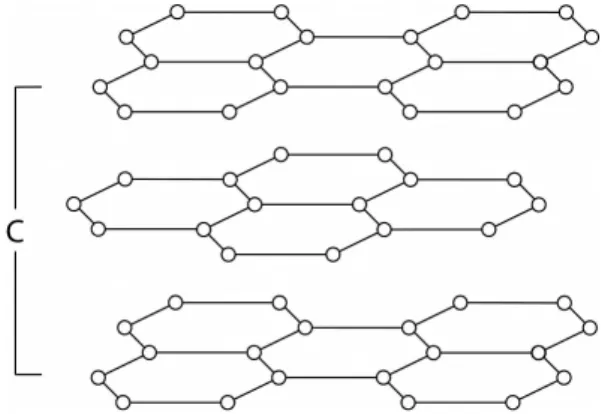
Then, in 1935, Wigner and Huntington proposed that pressurized hydrogen could assume a low energy configu-ration with graphite-like lattice order (see Fig. 1) [23]. In doing so, they unknowingly provided Jeans with a candidate for the solar substance [2, 3], though it is likely that he re-mained unaware of their solution’s value. A layered graphite-like structure was critical to proper solar modeling, as this lattice configuration was closely linked with the study of ther-mal emission on Earth [24,25]. Carbon-based materials, such as graphite and soot, are the closest naturally occurring ex-amples of blackbodies [24,25]. Consequently, they have con-tinued to be vital in the production of such cavities in the lab-oratory [24, 25]. Thus, a hydrogen based lattice which could adopt a graphite-like structure provides an interesting frame-work for assembling the Sun. Wigner and Huntington [23] had endowed astrophysics with the perfect candidate for so-lar material.
In this work, we wish to briefly highlight some of the as-trophysical benefits which accompany a liquid metallic hy-drogen [23] model of the Sun [2, 3]. Through the liquid mo-del, not only are features on the solar surface given a proper
∗The senior author has provided a complete list of his relevant papers to help facilitate the study of this new model.
structural foundation, but the entire set of solar observations becomes easily understood [2, 3, 10, 14, 15, 20]. Unlike the gaseous models and their reliance on magnetic fields to ex-plain all aspects of solar activity, the liquid model can se-cure answers without recourse to such phenomena. Magnetic fields become an effect, not an underlying cause. At the same time, there are ramifications associated with condensed solar matter, especially with respect to gravitational settling, so-lar activity, and nucleosynthesis. These should be addressed both in the context of existing gaseous models and of the new liquid models of the stars [2, 3].
Fig. 1: Schematic representation of the layered hexagonal lattice structure found within graphite and proposed for the liquid metallic hydrogen lattice of the Sun.
2 Solar collapse versus incompressibility
The prevention of solar collapse has always been a central problem with the gaseous models. Theoretical arguments were based on the existence of both gas and radiation pres-sures in order to balance the masses of the stars against the forces of gravity. In the days of Arthur Stanley Eddington, ra-diation pressure was believed to play an important role in pre-venting solar collapse [26]. Over time, this process became generally restricted to supermassive stars [27, p. 180–186]. Solar collapse was prevented by gas pressure [27, p. 132] and radiation thought to contribute only a tiny fraction of the re-quired forces [27, p. 212].
The idea that gas pressure could exist within a star was awkward. On Earth for instance, the atmosphere can be up-held by gas pressure as the planet has a surface through which gas atoms can build positive pressure. Furthermore, the pres-sure-volume relationship developed using the ideal gas law implied enclosures and rigid surfaces. It was their presence that gave meaning to gas pressure precisely since a rigid com-partment defined the volume of interest. But within gaseous stellar models, there are no surfaces. As such, no mechanism exists for speaking of gas pressure.
absorption) of these particles from a real (or imagined) face in the gas results in a transfer of momentum to that sur-face. By Newton’s second law (F = d p/dt), that momen-tum transfer exerts a force on the surface. The average force per unit area is called the pressure. It is the same mechan-ical quantity appearing in the statement that the quantity of work performed by the infinitesimal expansion of a contained gas is dW = PdV. In thermal equilibrium in stellar interi-ors, the angular distribution of particle momenta is isotropic; i.e., particles are moving with equal probabilities in all direc-tions. When reflected from a surface, those moving normal to the surface will transfer larger amounts of momentum than those that glance offat grazing angles” [28, p. 79]. Clayton’s footnote stated: “In a nonperfect gas strong forces between the particles will represent an additional source or sink of energy for expansions and will therefore contribute to pres-sure” [28, p. 79].
There are two problems with Clayton’s argument. First, surfaces do not exist within a gaseous Sun. Secondly, by modeling the stars using the ideal gas law, astronomy was requiring elastic collisions between atoms. Yet, if the colli-sions are elastic, an atom which is moving towards the in-terior of the Sun could transfer all of its momentum to an-other atom, without reversing its own direction towards the exterior. In fact, it would simply propel a stationary atom in the interior further inside the Sun. This principle has been well established in the game of billiards. The cue ball can remain completely stationary upon transferring essentially all of its energy to another ball. It is only when a ball hits the banks of the billiard table, or makes use of spin and frictional forces associated with the table surface itself, that it can re-verse its momentum. This explains, in the simplest terms, why gas pressure cannot exist within a gaseous Sun devoid of real surfaces and subject to elastic collisions. No net force can be generated with “imaginary surfaces” as the particles have equal probabilities of moving in all directions and trans-fer their momentum perfectly with no change of direction. A real surface is required to generate a net directional force and such structures cannot exist within a gaseous Sun. Therefore, modern solar models are unable to prevent internal collapse by resorting to gas pressure. In the absence of sufficient ra-diative forces, gaseous stars collapse.
At the same time, the use of gas models introduced many complications in astronomy. The first was summarized in Ed-dington’s concern regarding internal heating, as stars became increasingly dense: “I can hardly see how a star which has once got into this compressed condition is ever going to get out of it. . . Imagine a body continually losing heat but with in-sufficient energy to grow cold” [29, p. 172]. Ralph H. Fowler would solve Eddington’s dilemma. In 1926 [30], he adapted Fermi-Dirac statistics to stellar problems (e.g. [27, p. 118– 128]). Stars could now grow cold. Donald Clayton high-lighted the salient aspects of Fowler’s solution: “The physi-cal basis for the resolution of this problem is the
thermody-namic peculiarity of a degenerate gas: the temperature no longer corresponds to kinetic energy. The electrons in a zero-temperature degenerate gas must still have large kinetic en-ergy if the density is great” [28, p. 104]. In fact, Fowler’s treatment was so theoretically powerful and the arguments so elegant [30], that gaseous stellar models now dominate as-tronomy. Nonetheless, no mechanism existed for generating gas pressure within Sun-like stars behaving as ideal gases [27, p. 130–132]. Fowler’s solution addressed much later stages of stellar evolution [30].
Conversely, liquids are, by their nature, essentially in-compressible. Thus, the problem of solar collapse does not occur within the condensed matter context [2, 3], because the layered graphite-like structure of liquid metallic hydro-gen (see Fig. 1) would act to uphold the solar mass. Still, it is anticipated that the hexagonal lattice of metallic hydro-gen can become slightly compressed with increasing internal solar pressures. The essentially incompressible nature of liq-uids implies that, while resisting compression, they remain subject to pressure effects to a small extent. Therefore, it is reasonable to anticipate that liquid metallic hydrogen be-comes more metallic farther in the solar interior assuming a Type II lattice [2, 3]. The lower pressures of the photosphere would be conducive to supporting a less dense solar lattice (Type-I) with associated decreased metallicity [2, 3]. Con-versely, since the Wilson effect [31] implies that sunspots are depressed relative to the photospheric level, it is reasonable to infer the presence of a Type-II lattice with its increased metal-licity in these structures [2,3]. In addition, as facular material is tightly associated with sunspots and may well have been ejected from such regions, it was not unreasonable to extrap-olate that their increased metallicity occurs as a result of as-suming a Type-II lattice, despite the fact that they appear to float on the photospheric surface [20].
3 Gravitational Settling Versus Restricted Diffusion
Within the context of the gaseous models [32, 33] atoms and ions can diffuse freely within stellar bodies. At the same time, since certain elements are heavier than others, it could be ex-pected that they would slowly move towards the interior of a star through the action of gravitational settling. In fact, such a concept was advanced to explain the lack of helium lines in certain B type stars [34]. Long before, Henry Russell had minimized the idea that heavy elements were gravitationally settling in the Sun: “It does not appear necessary, therefore, to assume that downward diffusion depletes the sun’s atmo-sphere of the heavier elements, though the possibility of such an influence remains” [35, p. 59]. Of course, gravitational set-tling could potentially invalidate all elemental abundances in stellar atmospheres obtained from spectroscopic lines.
con-cluded that temperature diffusion was astrophysically irrele-vant in the Sun and that diffusion effects were, in general, important only in “special cases” not including the Sun [27, p. 60–61]. Today, the effect of gravitational settling has been included in the calculation of standard solar models [32, 33]. In part, this was because it improved the agreement with the p-mode oscillations from helioseismology: “One of the prin-cipal improvements that has been made in recent years is to include in the calculations the effects of element diffusion. In the absence of an external field, diffusion smooths out vari-ations. However, in the case of the Sun, the stronger pull of gravity on helium and the heavier elements causes them to slowly diffuse downward (towards the solar interior) rela-tive to hydrogen . . . Models that include at least helium dif-fusion agree with helioseismological determinations of the depth of the convective zone, while neglecting diffusion en-tirely leads to disagreement with the helioseismological data” [33]. Gravitational settling was embraced; for gaseous mod-els had no other means of accounting for helioseismological observations.
Within a liquid metallic hydrogen model of the Sun, the free diffusion of the elements becomes highly restricted, as the layered lattice structure of the solar body acts to inhibit the flow of atoms. Rapid diffusion of elements should occur primarily in the layers between the hexagonal liquid metal-lic hydrogen planes. Such motion may be facilitated by lat-tice distortions in the hexagonal hydrogen planes in a manner similar to that observed in graphite intercalation compounds.
4 Intercalation and Graphite
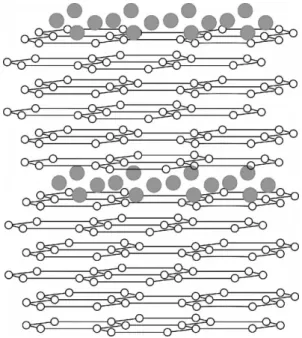
Graphite [36–38] can be made to interact with various rea-gents such that non-carbon atoms occupy lattice points be-tween the hexagonal carbon planes forming intercalation compounds [39–43]. Layered intercalation compounds (see Fig. 2) are created when intraplanar binding forces are much stronger than interplanar forces: “The most important struc-tural characteristic of graphite intercalation compounds is the occurrence of separate graphite and intercalate layers due to the very strong intraplanar binding and the weak in-terplanar binding. Thus, the graphite layers retain the basic properties of pristine graphite, and the intercalate layers be-have similarly to the parent intercalate material” [39, p. 36].
In the graphite case, the hexagonal plane excludes non-carbon atoms, the intercalant. In doing so, intercalant atoms can profoundly alter the electrical, thermal, magnetic prop-erties of graphite by acting as electron donors (i.e. Li, K), or acceptors (i.e. FeCl3, HF, BF3), to the hexagonal plane [39–43]. As a result, graphite intercalation compounds can range from superconductors to insulators [39] with their con-ductivity often exceeding that of classic metals [43, p. 190]. They consequently occupy an important place in solid state physics. Graphite intercalation compounds can also undergo phase transitions including “changes in interlayer ordering
Fig. 2: Schematic representation of an intercalation compound. Non-carbon elements are located between layers of pristine graphite.
and changes in intralayer or in-plane ordering, magnetic transitions, and superconductive transition. Structural phase transitions have been induced by variation of the tempera-ture, pressure, and in some cases by variation of the vapour pressure of the intercalant” [39, p. 55–56]. The presence of intercalated atoms can weaken the interlayer attractive forces within graphite. Since the concentrations of the intercalate can be varied, it is possible to build intercalation compounds wherein many adjacent graphite layers are interrupted by the occasional intercalate layer (see Fig. 3). The stage index,n, characterizes the number of graphite layers between interca-lation layers (e.g. [39] and [43, p. 88]). In the laboratory,n usually ranges from 1 to 10 [39].
Graphite intercalation compounds are known to relieve internal strains by undergoing exfoliation [39, p. 9] whereby a great expansion along the c-axis (see Fig. 1) occurs usually due to elevated temperatures [44]. The temperature required for exfoliation is linearly dependent on applied load against the sample [44]. Higher breakaway temperatures, or temper-atures of exfoliation, are required under increased pressure. Expansions of the c-axis lattice dimensions of up to a fac-tor of 300 have been reported [44]. These can be violent, even explosive, events wherein layers of material can be torn away from the underlying structure (see e.g. [39, p. 9] and [43, p. 403–413]). They occur as a result of gases being expelled from the graphite intercalated compound. The resultant prod-ucts are characterized as “spongy, foamy, low-density, high-surface-area carbon materials” [43, p. 403].
Martin and Broklehurst [44] performed detailed studies of exfoliation which involved the effect of “restraining loads on suppressing the onset of exfoliation” [43, p. 406]. Enoki et al. describe the situation as follows: “According to [Martin and Broklehurst’s] model, the intercalate undergoes a phase change to the vapor phase, forming disk-shaped bubbles of radiusrand height Icin the interlayer region between gra-phite planes, with gas pockets accumulating in certain re-gions where diffusion is facilitated by the presence of defects. Exfoliation then occurs when the gas pressure exceeds the in-ternal stress parallel to the c-axis” [43, p. 406]. Expressions for the forces involved can be derived, assuming the ideal gas law [44].
Lattice exclusion remains the central lesson of these ex-periments: the graphite hexagonal planes continue to exclude the intercalate and struggle to remain “pristine” even at the cost of exfoliation. Such behavior has strong ramifications when considering the graphite-like liquid metallic hydrogen lattice believed to exist within the Sun [2, 3].
5 Intercalation and Stellar Matter
Graphite’s tendency to remain pristine and exclude other el-ements from its hexagonal plane, even through the process of exfoliation, has important consequences for solar physics. Thermal emission arguments have led Robitaille [2] to pos-tulate that liquid metallic hydrogen in the Sun must adopt a graphite-like layered arrangement. Should this be correct, then liquid metallic hydrogen should be excluding other el-ements from its hexagonal plane and constantly working to drive them out of the solar body. Such lattice exclusion and the possibility that stars might undergo processes like exfolia-tion could play a crucial role in at least five separate aspects of solar and stellar dynamics: 1) supplying the driving forces for solar winds, 2) generating the settings for flares, coronal mass ejections, and prominences, 3) accounting for the eleven year solar cycle, 4) providing an alternative explanation for planet and satellite formation, and 5) explaining the existence of red giants and supernovae. Each of these areas could consume
many years of study as the liquid metallic hydrogen model of the Sun is adopted. Suffice it, for now, to address these briefly.
5.1 Solar Winds
In modern gaseous models, magnetic fields are thought to be produced by the flow of isolated charged particles within the solar body. In order to prevent collapse, the Sun remains in perfect hydrostatic equilibrium wherein the forces of gravity are balanced by gas and radiation pressure [27, p. 6–7]. How-ever, the preservation of hydrostatic equilibrium severely lim-its all proposals advanced for the existence of solar winds. An object in equilibrium cannot easily be driving material away from itself.
Conversely, in a condensed model of the Sun, a layered liquid metallic hydrogen lattice exists (see Fig. 1) which is dominated by hexagonal hydrogen planes [2, 3]. Such a lat-tice restricts the translation of protons within each hexagonal hydrogen layer while permitting electrons to flow in the asso-ciated conduction bands [2]. The ability to create conduction bands provides the interatomic binding forces needed to sta-bilize the hydrogen framework. Proton-proton distances are restricted in order to establish optimal quantum mechanical conditions for these conduction bands. This alone stabilizes the lattice. Since hydrogen atoms possess a single electron and these are restricted to the conduction bands, no conven-tional bonding can occur. All elements other than hydrogen would be excluded from the hexagonal layer in order to main-tain its structural integrity and electronic structure. Protons could be thought of as constantly working to expel elements from the hexagonal planes. This would severely limit the flow of non-hydrogen elements. Each hydrogen layer would act as a barrier to diffusion along the c-axis (see Fig. 1), while providing a channel for rapid elemental diffusion in the re-gion between two hexagonal layers. Herein can be found the driving force for the solar winds and the variable elemental compositions they present due to solar activity [3].
5.2 Flares, Coronal Mass Ejections, and Prominences
Solar flares are well known to produce helium abundance enhancements (HEA) and have been suggested as the cause of significant3He HEAs [45]. In an impulsive flare, the3He/4He ratio can be assumed to approach 1 [51] and thousand-fold enhancements of the ratio have been reported [52] . Solar en-ergetic particle events can result in 100–10,000 fold enhance-ments of heavy element to oxygen ratios relative to the quiet corona [52]. Solar atmospheric ratios of Mg/O, Si/O, Fe/O and Ne/O can all be substantially elevated with flare activ-ity [51]. In active coronal regions, significant (3–4 fold) ele-mental enhancements of elements with a first ionization po-tential (FIP) less than 10 eV can be observed with respect to the quiet photosphere [53, 54]. Within bright active regions, a further twofold elemental enhancement can be detected [55]. The absolute abundance of potassium and calcium are greater in flare plasma than in the photosphere [54].
Magnetic reconnection [49, 50], the physical mechanism invoked to drive solar flares in the gaseous models, cannot easily account for the variable elemental abundances associ-ated with flares and coronal mass ejections [56, 57]. As a parallel, models of quiescent coronal loops result in a 10 fold excess of helium to hydrogen when a 10% helium abundance is assumed for the chromosphere [58]. Such tremendous ex-cesses of helium call for much lower chromospheric helium abundances, but these are incompatible with levels required to account for helium in the solar winds [58]. In addition, in order to explain O and Ne abundances in the fast solar winds, a coronal He abundance of 20–40% is required [59]. The model assumes gravitational settling in the corona [59], which is highly unlikely to take place. As such, the gaseous models are struggling to coherently resolve elemental abun-dances in the solar winds as a result of the interaction between coronal loops, the chromosphere, and the corona. The situa-tion relative to understanding elemental abundances in flares and coronal mass ejections is equally tenuous.
Long ago, Friedrich Z¨ollner recognized that solar flares required regions of increased pressure in the solar interior [60]. He placed a liquid layer within his gaseous Sun: “we must therefore conclude that the layer of division consists of an incandescent liquid” [60]. The need to generate pres-sure was justified, but could not easily survive within a fully gaseous solar model.
In the liquid metallic hydrogen model of the Sun, solar flares, coronal mass ejections, and prominences can be ex-plained by the process of intercalation and exfoliation, as de-scribed above by Martin and Broklehurst [44]. The pressure anticipated by Z¨ollner [60] is produced when the intercalate atoms increasingly populate the region between two adjacent hydrogen layers. A rapid increase in temperature in this re-gion, presumably due to localized nuclear reactions (see sec-tion 5), generates a gaseous phase whose elevated pressures manifest as solar activity. Therefore, solar flares, coronal mass ejections, and prominences share a common mecha-nism of formation. Their subtle differences result only from
the depth of formation. Magnetic fields are not required to produce these phenomena. They are merely altered by their presence.
5.3 The Eleven Year Solar Cycle
The existence of the eleven year solar cycle remains incom-pletely understood [61–66]. Nonetheless, increased solar ac-tivity is associated with changes in the solar dynamo which characterize the 11 year cycle [61, 64]. Cycle periods as great as 2,400 years have been postulated [66]. Solar inertial mo-tion (SIM), wherein the locamo-tion of the center of the Sun’s mass in the solar system drifts due to interaction with the gi-ant planets [61–66], has been postulated as a possible cause of increased activity. Still, as Cionco and Compgnucci high-light: “at present there is no clear physical mechanism relat-ing these phenomena” [64]. How can planetary rotations and the associatedSIMtrigger solar activity? Perhaps the Sun is already predisposed to increased surface turbulence and re-quires only a simple disturbance to initiate activity. In this regard, insight can be gained from the condensed model of the Sun [2, 3].
In the context of a liquid metallic hydrogen model [2, 3], non-hydrogen elements reside in the layers between hydro-gen hexagonal planes forming an intercalate arrangement (see Fig. 2). With solar nuclear activity (see section 5), these in-terplanar regions become increasingly populated and possible intercalate lattice points occupied. Eventually, localized sat-uration of a given intercalate layer takes place. The maximal concentration of intercalating atoms has been reached. When this occurs, only slight disturbances, such as found through solar inertial motion, could trigger solar activity and cause the intercalate atoms to be ejected from interior layers. Solar activity then becomes linked to the need to eject saturating levels of non-hydrogen elements from the solar body. As the rate of nuclear activity must remain rather constant over the time frames involved, the Sun is constantly building elements in its interior (see section 5), degassing, and repeating the en-tire process. The driving force for degassing becomes lattice exclusion, but the trigger to release the instability may, or may not, remain linked to solar inertial motion.
5.4 Planet, Red Giant, and Supernova Formation
prob-lem is removed when the Sun becomes condensed matter and exfoliative forces can be harnessed to promote planet forma-tion, especially for the solid planets of the inner solar system. The central requirement appears to be that interlayer elemen-tal abundance must be permitted to increase dramatically in one region of the solar interior, followed by ejection from the hydrogen lattice. Over time, the Sun could thus transfer some of its angular momentum to the planets. A similar approach could be utilized to help explain satellite formation around the giant planets, as they are also rich in hydrogen [75–77].
On a tangential note, exfoliation might well account for the very low density and great dimensions of the red giants, as the experiments of Martin and Broklehurst suggest [44]. A red giant would remain condensed matter in that it was formed through a process of exfoliation from a star which had permitted a nearly uniform stage index to develop in its interior. A trigger finally turned the intercalate rapidly into the gaseous phase resulting in a red giant. In the final ex-panded star the dimensions would be enormous and the den-sity greatly reduced, despite the preservation of condensed matter for the metallic hydrogen framework. Interlayer gas pressure between the layers of the expanded star would help to maintain its structural integrity. Supernova could be envi-sioned as produced in a similar manner, but with non-uniform staging in the interior. For instance, a band or core of interca-late material in the precursor star rapidly enters the gas phase and explodes its liquid metallic hydrogen envelope, while compressing its hydrogen core. In the end, the advantages of adopting a liquid metallic hydrogen model for the Sun are numerous and its consequences extend much beyond the solar system.
6 Evolution and Nuclear Reactions in Gaseous Stars
With the publication of the Origin of Species[78] Charles Darwin would send shock waves not only throughout the bi-ological sciences, but also in areas seemingly as far removed as astronomy. The great American father of solar astronomy, George Ellery Hale, commented as follows in the first line of his text devoted to stellar evolution and experimental as-tronomy: “It is not too much to say that the attitude of sci-entific investigators towards research has undergone a rad-ical change since the publication of the Origin of Species” [79]. Hale expanded on this concept throughout his first chap-ter, as he elegantly intertwined biological evolution and as-tronomy. Hale also highlighted the conflict which Herbert Spencer [21], the prominent evolutionist, had with the as-tronomers: “convinced that the principle of evolution must operate universally, and that the stars must have their origin in the still unformed masses of the nebulae, [Spencer] ven-tured to question the conclusion that the resolution of nebulae into stars was only a question of resolving power. He had not long to wait . . .” [79, p. 47].
Given Hale’s fame as an observer for first reporting the
presence of magnetic fields on the Sun [80], his leadership in constructing four record setting telescopes (at Yerkes (1), Mount Wilson (2), and Palomar (1) [81]), and his role in es-tablishing the Astrophysical Journal[82], it is not surpris-ing thatThe Study of Stellar Evolution [79] has profoundly affected the course of modern astrophysics. George Ellery Hale’s interest in stellar evolution [28, 83–87] was certain to ascend to a preeminent position in modern astronomy. At the same time, since prolonged biological evolution was also as-sociated with increased functional abilities, astronomers quickly adopted the same concepts relative to the stellar evo-lution. As stars aged their core temperatures increased and gradually acquired the ability to make heavier elements. As-tronomers began to see the stars not only as progressing through a life cycle, but also, as endowed with different syn-thetic abilities. Older stars possessed hotter cores, and hence, could sustain nuclear processes thought to require higher tem-peratures – the synthesis of heavier and heavier elements. On the surface at least, the theory was elegant with the excep-tion of one very serious consideraexcep-tion: the gaseous Sun was deprived of the ability to directly synthesize the elements.
Early on, the fathers of stellar nucleosynthesis, such as Gamow [88, 89], Bethe [90–92], von Weizs¨acker [93], and Hoyle [94, 95] would advance the idea that helium could be built from hydrogen within the stars. From the onset, nucle-osynthesis was linked to stellar evolution [88, 89]. Gamow believed that “different rates of energy liberation must be due to different physical conditions inside the stars and chiefly to differences in their central temperature” [83, p. 116]. The p–p reaction [90], which assembled helium directly from proton combinations while relying on positron and neutrino emis-sion, was believed to be active only in low weight main se-quence stars [83, p. 118]. However, for stars larger than the Sun much of the synthesis of4He came from the carbon-nitrogen-oxygen (CNO) cycle which had been independently proposed by Bethe and von Weizs¨acker [91–93]. Interest-ingly, while the cycle required three elements of intermediate weight, Hans Bethe insisted that: “no element heavier than 4He can be built up in ordinary stars” [92]. He argued, “The
heavier elements found in stars must therefore have existed already when the star was formed” [92]. With those words, most of the stars were deprived of their ability to make any element beyond helium, despite the fact that mankind would eventually synthesize much heavier elements.
elaborate theory of nucleosynthesis which covered all of the elements. This work would continue to influence nucleosyn-thesis in the stars until the present day [97]. Nonetheless, the Sun itself had been crippled. All of the elements in the solar system, other than helium, had been produced by early gen-eration stars which no longer existed.
7 Nucleosynthesis and Condensed Matter
Perhaps the greatest advantage of the liquid metallic hydro-gen model of the Sun rests in the fact that atomic positions be-come restricted to lattice points and subject to the forces asso-ciated both with solar pressures and lattice vibrations. Hydro-gen is confined to its hexagonal planes and all other elements to the intercalate positions between the hydrogen planes. The synthesis of helium would be driven by the need to relieve the strains of stellar pressures on the underlying lattice. Two pro-tons combine to form a deuteron, with positron and neutrino emission as in the p–p reaction [98]. Upon formation, the deuteron could immediately combine with another in-plane proton resulting in the formation of 3He, which would be ejected from the lattice plane into the intercalate layer. As p–p reactions continue, the population of3He would expand, and soon continue to react producing4He, as expected from branch 1 of the p–p chain [98]. With time, the intercalate region would become the birthplace of all the elements. Pres-sure and lattice vibrations alone can be viewed as controlling the reactions with protons readily available from the hexag-onal plane. All stars gain the ability to synthesize every ele-ment [19]. Multiple eleele-ments could react simultaneously in the intercalate layer because of lattice vibrations. This greatly lowers the energy requirements on a given species for nu-clear reaction. Eventually, as elemental concentrations build, the stresses against the hexagonal hydrogen planes would in-crease. These could then break and the intercalate region ex-pand beyond the confines of strict lattice points. Intercalation now abandoned in this region, thick layers of non-hydrogen elements could arise. These would continue to act as nuclear furnaces. During periods of increased solar activity, localized changes in temperature could vaporize these areas and release newly synthesized elements to the stellar atmosphere beyond the solar surface. During planet formation, such regions could simply be expelled, with (or perhaps without) vaporization, from the interior of the Sun.
8 Conclusions
Much speculation has been offered in this work and the end result was deliberate. In order to consider the condensed models of the Sun, scientists must ponder upon the ability to explain the highest amount of observable phenomena in a manner consistent with known physics. The great solar physi-cist John Bahcall once commented: “Science progresses as a result of the clash between theory and experiment, between speculation and measurement” [99]. In earlier work,
con-siderable focus was placed on establishing what was known about the Sun and the evidence it displayed with respect to its phase and composition [2–20]. Ample proof supports the idea that the Sun exists in the condensed state and Occam’s razor would slice in its favor.
Given the elevated levels of hydrogen in the universe [100], a liquid metallic hydrogen framework appears not only reasonable but, in light of its thermal emission, necessary [2, 3]. The unique link between graphite and the layered form of metallic hydrogen, as first proposed by Wigner and Hunt-ington [23], presents enormous potential to refine our concept of the stars. In this regard, graphite intercalation compounds bring a wealth of behavioral and structural information cru-cial to understanding the heavens [39–44]. The layered nature of liquid metallic hydrogen [23] would not only support the Sun from collapse, but would also severely limit any gravita-tional settling. Furthermore, exfoliation in graphite interca-late compounds [44] has profound consequences, regarding stellar structure and behavior. Solar winds and solar activity (flares, coronal mass ejections, prominences) become inher-ently linked to preserving the hydrogen nature of the Sun [3]. The conversion of intercalated atoms from the liquid to the gas phase, as proposed by Martin and Broklehurst [44], has profound implications towards driving solar activity which will forever remain unavailable to gaseous models. The hy-pothesis that the solar cycle originates from the degassing of non-hydrogen elements and their expulsion from the in-terior is unique to the liquid metallic hydrogen model. For the first time, a reasonable thesis is being advanced to ex-plain both solar activity and cycles. A mechanism thereby becomes available to those who believe that solar inertial mo-tion might trigger solar activity [61–66]. In addimo-tion, the idea that a layered metallic hydrogen lattice will choose to exclude non-hydrogen elements and sequester them within the Sun could add much needed insight relative to the formation of the planets. Exfoliation of a metallic hydrogen lattice of uni-form stage might well account for both the size and density of the red giants. Most importantly, this model enables el-emental synthesis in the stars. Hexagonal hydrogen planes harbor the p–p reactions, while the interlayers between pro-ton planes become furnaces of more advanced nuclear syn-thesis.
“The future of a subject is the product of its past, and the hopes of astrophysics should be implicit in what the science has already achieved. Astrophysics is a young science, how-ever, and is still, to some extent, in a position of choosing its route; it is very much to be desired that present effort should be so directed that the chosen path may lead in a permanently productive direction. The direction in which progress lies will depend on the material available, on the development of ory, and on the trend of thought . . . The future progress of the-ory is a harder subject for prediction, than the future progress of observation. But one thing is certain: observation must make the way for theory, and only if it does can the science have its greatest productivity . . . There is hope that the high promise of astrophysics may be brought to fruition.”
Cecilia Payne-Gaposchkin [1, p. 199–201]
Acknowledgment
Luc Robitaille is acknowledged for the preparation of figures.
Dedication
This work is dedicated to Lindsey Marie Robitaille.
Submitted on: January 6, 2013/Accepted on: January 10, 2013 First published in online on: February 2, 2013
References
1. Haramundanis K. Cecilia Payne-Gaposchkin: An autobiography and other recollections (2nd Edition), Cambridge University Press, Cam-bridge, U.K., 1996.
2. Robitaille P.M. Liquid metallic hydrogen: A building block for the liq-uid Sun.Progr. Phys., 2011, v. 3, 60–74.
3. Robitaille P.M. Liquid Metallic Hydrogen II: A critical assessment of current and primordial helium levels in Sun.Progr. Phys., 2013, v. 2, 35–47.
4. Robitaille P.M. The collapse of the Big Bang and the gaseous Sun. New York Times, March 17, 2002, p. A10 (available online: http://thermalphysics.org/pdf/times.pdf).
5. Robitaille P.M. Evidence for a liquid plasma model of the Sun.Am. Phys. Soc. Meeting — April, 2004, S280002.
6. Robitaille P.M. The Sun as a hot liquid plasma: additional evidence. Am. Phys. Soc. Meeting — Ohio Spring, 2004, S50002.
7. Robitaille P.M. The photosphere as condensed matter.Am. Phys. Soc. Meeting — Ohio Fall, 2004, S60005.
8. Robitaille P.M. The Sun as a hot liquid plasma: more evidence.Am. Phys. Soc. Meeting — NE Fall, 2004, S10004.
9. Robitaille P.M. The Sun as a high energy/high density liquid metal-lic hydrogen plasma. The 33rd IEEE International Conference on Plasma Science, June 4-8, 2006, Traverse City, Michigan, p. 461, DOI:10.1109/PLASMA.2006.1707334.
10. Robitaille P.M. The solar photosphere: Evidence for condensed matter. Progr. Phys., 2006, v. 2, 17–21 (also found in slightly modified form withinResearch Disclosure, 2006, v. 501, 31–34; title #501019).
11. Robitaille P.M. A high temperature liquid plasma model of the Sun. Progr. Phys., 2007, v. 1, 70–81 (also in arXiv: astro-ph/0410075).
12. Robitaille P.M. A radically different point of view on the CMB. In: Questions of Modern Cosmology — Galileo’s Legacy, ed. by M. D’Onofrio and C. Burigana, Springer, New York, 2009.
13. Robitaille P.M. Liquid metallic hydrogen: Building block of a liquid Sun.Am. Phys. Soc. Meeting — Ohio Spring, 2011, D4.00005. 14. Robitaille P.M. On the Presence of a Distinct Solar Surface: A Reply to
Herv´e Faye.Progr. Phys., 2011, v. 3, 75–78.
15. Robitaille P.M. On Solar Granulations, Limb Darkening, and Sunspots: Brief Insights in Remembrance of Father Angelo Secchi.Progr. Phys., 2011, v. 3, 79–88.
16. Robitaille P.M. On the Temperature of the Photosphere: Energy Parti-tion in the Sun.Progr. Phys., 2011, v. 3, 89–92.
17. Robitaille P.M. Stellar opacity: The Achilles heel of the gaseous Sun. Progr. Phys., 2011, v. 3, 93–99.
18. Robitaille P.M. Lessons from the Sun.Progr. Phys., 2011, v. 3, 100– 102.
19. Robitaille P.M. Nucleosynthesis of the elements and the liquid metallic hydrogen model of the Sun.Am. Phys. Soc. Meeting — Four Corners Annual, 2012, D1.00026.
20. Robitaille P.M. Magnetic Fields and Directional Spectral Emissivity in Sunspots and Faculae: Complimentary Evidence of Metallic Behavior on the Surface of the Sun.Progr. Phys., 2013, v. 1, 19–24.
21. Robitaille P.M. A thermodynamic history of the solar constitution — I: The journey to a gaseous Sun.Progr. Phys., 2011, v. 3, 3–25. 22. Robitaille P.M. A thermodynamic history of the solar constitution — II:
The theory of a gaseous Sun and Jeans’ failed liquid alternative.Progr. Phys., 2011, v. 3, 41–59
23. Wigner E. and Huntington H.B. On the possibility of a metallic modi-fication of hydrogen.J. Chem. Phys., 1935, v. 3, 764–70.
24. Robitaille P.M. Blackbody radiation and the carbon particle. Progr. Phys., 2008, v. 3, 36–55.
25. Robitaille P.M. Kirchhoff’s Law of Thermal Emission: 150 years. Progr. Phys., 2009, v. 4, 3–13.
26. Eddington A.S. On the radiative equilibrium of the stars.Mon. Not. Roy. Astron. Soc., 1916, v. 77(1), 16–35 (Also found in Lang K.R. and Gingerich O.: A Source Book in Astronomy and Astrophysics, 1900– 1975. Harvard University Press, Cambridge, MA, 1979, p. 225–235).
27. Kippenhahn R. and Weigert A. Stellar structure and evolution. Springer-Verlag, Berlin, 1990.
28. Clayton D.D. Principles of stellar evolution and nucleosynthesis. MgGraw-Hill, New York, 1968.
29. Eddington A.S. The internal constitution of the stars. Cambridge Uni-versity Press, Cambridge, U.K., 1926.
30. Fowler R.H. On dense matter.Mon. Not. Roy. Astron. Soc., 1926, v. 87, 114–122.
31. Wilson A. Observations on the solar spots.Phil. Trans. Roy. Soc., 1774, v. 64, 1–30.
32. Bahcall J.N. and Pinsonneault M.H. Standard solar models, with and without helium diffusion, and the solar neutrino problem.Rev. Mod. Phys., 1992, v. 64, no.4, 885–926.
33. Bachall J.N., Pinsonneault M.H. and Wasserburg G.J. Solar models with helium and heavy-element diffusion.Rev. Mod. Phys., 1995, v. 67, no. 4, 781–808.
34. Greenstein G.S., Truran J.W. and Cameron A.G.W. Helium deficiency in old halo B type stars.Nature, 1967, v. 213, 871–873.
35. Russell H.N. On the composition of the Sun’s atmosphere.Astrophys. J., 1929, v. 70, 11–82.
36. Kelly B.T. Physics of graphite. Applied Science Publishers, London, U.K., 1981, p. 34–61.
37. Delha`es P. World of carbon — vol. 1: Graphite and precursors. Gordon and Breach Science Publishers, Amsterdam, The Netherlands, 2001. 38. Pierson H.O. Handbook of carbon, graphite, diamond and fullerenes:
39. Dresselhaus M.S. and Dresselhaus G. Intercalation compounds of graphite.Adv. Phys., 2002, v. 1, no. 1, 1–186 (reprinted fromAdv. Phys., 1981, v. 30(2), 139–326).
40. Pietronero L. and Tosatti E. Physics of intercalation compounds. Springer-Verlag, Berlin, 1981.
41. Zabel H. and Solin S.A. Graphite intercalation compounds I: Structure and dynamics. Springer-Verlag, Berlin, 1990.
42. Dresselhaus M.S. and Kalish R. Ion implantation in diamond, graphite and related materials. Springer-Verlag, Berlin, 1992.
43. Enoki T., Suzuki M. and Endo M. Graphite intercalation compounds and applications. Oxford University Press, Oxford, U.K., 2003.
44. Martin W.H. and Brocklehurst J.E. The thermal expansion behavior of pyrolytic graphite-bromine residue compounds.Carbon, 1964, v. 1, no. 2, 133–141.
45. Kahler S.W. Solar flares and coronal mass ejections.Ann. Rev. Astron. Astrophys., 1992, v. 30, 113–141.
46. Priest E.R. Solar flare theory and the status of flare understanding. In High Energy Solar Physics: Anticipating HESSI.ASP Conf. Ser., 2000, v. 206, 13–26.
47. Priest E.R. and Forbes T.G. The magnetic nature of solar flares.Astron. Astrophys. Rev., 2002, v. 10, 313–377.
48. Hudson H.S. Global properties of solar flares.Space Sci. Rev., 2011, v. 158, 5–41.
49. Holman G.D. The mysterious origin of solar flares.Sci. Am., 2006, v. 294, no. 4, 38–45.
50. Forbes T.G. Magnetic reconnection in solar flares.Geophys. Astrophys. Fluid Dynam., 1991, v. 62, 15–36.
51. Ramaty R., Mandzhavidze N., Kozlovsky B. and Murphy R.J. Solar atmospheric abundances and energy content in flare-accelerated ions from gamma-ray spectroscopy.Astrophys. J., 1995, v. 455, L193–L196.
52. Reames D.V. and Ng C.K. Heavy-element abundances in solar ener-getic particle events.Astrophys. J., 2004, v. 610, 510–522.
53. Laming J.M. Non-WKB modles of the first ionization potential effect: Implications for solar coronal heating and the coronal helium and neon abundances.Astrophys. J., 2009, v. 695, 954–969.
54. Doschek G.A., Feldman U. and Seely J.F. Elemental abundances from solar flare spectra.Mon. Not. Roy. Astron. Soc., 1985, v. 217, 317–326.
55. Ciaravella A., Raymond J.C., Li J., Reiser P., Gardner L.D., Ko Y.K. and Fineschi S. Elemental abundances and post-coronal mass ejection current sheet in a very hot active region.Astrophys. J., 2002, v. 575, 1116–1130.
56. Feldman U., Landi E. and Laming J.M. Helium Abundance in High-Temperature Solar Flare Plasmas.Astrophys. J., 2005, v. 619, no.2, 1142–1152.
57. Andretta V., Mauas P.J.D., Falchi A. and Teriaca L. Helium Line For-mation and Abundance during a C-Class Flare.Astrophys. J., 2008, v. 681, no. 1, 650–663.
58. Killie M.A., Lie-Svendsen Ø. and Leer E. The helium abundance in quiescent coronal loops.Astrophys. J. Let., v. 632, no. 2, L155–L158.
59. Byhring H.S., Esser R. and Lie-Svendsen Ø. O and Ne in H-He fast solar wind.Astrophys. J., 2011, v. 743, no. 2, 205(11p).
60. Z¨ollner F. On the temperature and physical constitution of the Sun.Phil. Mag. 4th Series, 1870, v. 40, 313–327 (essentially reprinted in: Z¨ollner F. On the Sun’s temperature and physical constitution.Nature, 1870, v. 2(52), 522–526).
61. Hathaway D.H. The solar cycle.Living Rev. Solar Phys., 2010, v. 7, 1–66.
62. Schwentek H. and Elling W. A possible relationship between spectral bands in sunspot number and the space-time organization of our plane-tary system.Solar Phys., 1984, v. 93, no. 2, 403–413.
63. Grandpierre A. On the origin of solar cycle periodicity. Astrophys. Space Sci., 1996, v. 243, no. 2, 393–400.
64. Cioncoa R.G. and Compagnucci R.H. Dynamical characterization of the last prolonged solar minima.Adv. Space Res., 2012, v. 50, no. 10, 1434–1444.
65. Tan B. Multi-timescale solar cycles and the possible implications. As-trophys. Space Sci., 2011, v. 332, no. 1, 65–72.
66. Charv´atov´a I. Can origin of the 2400-year cycle of solar activity be caused by solar inertial motion.Ann. Geophysicae, 2000, v. 18, 399– 405.
67. Payne-Gaposhchkin C. and Haramundanis K. Introduction to astron-omy (2nd Edition), Prentice-Hall Inc., Englewood Cliffs, N.J., 1970. 68. Laplace P.S. Exposition du syst`eme du monde. Imprimerie du
Cercle-Social, Paris, 1796 (available online: http://dx.doi.org/10.3931/ e-rara-497; Also available in English: Pond J. The system of the world, Lon-don, 1809).
69. Numbers R.L. Creation by Natural Law: Laplace’s Nebular Hypothesis in American Thought. Seattle, 1977, p. 124-132.
70. Swedenborg E. The Principia; or the first principles of natural things, being new attempts towards a philosophical explanation of the elemen-tary world. Translated by: Augustus Clissold, W. Newbery, London, 1846.
71. Woolson M.M. Solar system — Its origin and evolution.Quarterly J. Roy. Astron. Soc., 1993, v. 34, 1–20.
72. Montmerle T., Augerneau J.C., Chaussidon M., Gounell M., Marty B. and Morbidelli A. 3. Solar system formation and early evolution: The first 100 million years.Earth, Moon, and Planets, 2006, v. 98, 39–95.
73. Thommes E.W., Duncan M.J. and Levison H.F. The formation of Uranus and Neptune among Jupiter and Saturn.Astrophys. J., 2002, v. 123, 2862–2883.
74. Stevenson D.J. Origin of the moon — The collision hypothesis.Ann. Rev. Earth Planet Sci., 1987, v. , 271–315.
75. Nellis W.J., Ross M. and Holmes N.C. Temperature measurements of shock-compressed hydrogen: Implications for the interior of Jupiter. Science, 1995, v. 269, no. 5228, 1249–1252.
76. Nellis W.J., Weir S.T. and Mitchell A.C. Metallization and electrical conductivity of hydrogen in Jupiter.Science, 1996, v. 73, no. 5277, 936–938.
77. Vorberger J., Tamblyn I., Militzer B. and Bonev S.A. Hydrogen he-lium mixtures in the interior of giant planets.Phys. Rev. B, 2007, v. 75, 024206(1–11).
78. Darwin C. On the origin of species by means of natural selection, or the preservation of favoured races in the struggle for life. John Murray, London, U.K. 1859.
79. Hale G.E. The study of stellar evolution: An account of some recent methods of astrophysical research, The decennial publications of the University of Chicago — Second Series, Vol. X. University of Chicago Press, Chicago, I.L., 1908.
80. Hale G. E. On the probable existence of a magnetic field in sun-spots. Astrophys. J., 1908, v. 28, 315–343.
81. Mason T. and Mason R. The journey to Palomar, PBS, DVD released on November 18, 2008 (90 minutes).
82. Newall H. F. George Ellery Hale. 1868-1938.Obituary Not. Fell. Roy. Soc., 1939, v. 2(7), 522–526.
83. Gamow G. The birth and death of the sun: A lucid explanation of stellar evolution and atomic energy. New American Library, New York, N.Y., 1952.
84. Struve O. Stellar evolution: An exploration from the laboratory. Prince-ton University Press, PrincePrince-ton, N.J., 1950.
86. Arnett D. Supernovae and nucleosynthesis: An investigation of the his-tory of matter, from the Big Bang to the present. Princeton University Press, Princeton, N.J., 1996.
87. Pagel B. E. J. Nucleosythesis and the chemical evolution of galaxies (2nd Edition), Cambridge University Press, Cambridge, U.K., 2009.
88. Gamow G. Nuclear energy sources and stellar evolution.Phys. Rev., 1938, v. 53, 595–604.
89. Gamow G. Nuclear reactions in stellar evolution.Nature, 1939, v. 144, 620–622.
90. Bethe H.A. and Critchfield C.L. The Formation of Deuterons by Proton Combination.Phys. Rev., 1938, v. 54, no. 4, 248–254.
91. Bethe H. A. Energy Production in Stars.Phys. Rev., 1939, v. 55, no. 1, 103.
92. Bethe H.A. Energy Production in Stars.Phys. Rev., 1939, v. 55, no. 5, 434–456.
93. von Weizs¨acker C. F. ¨Uber Elementumwandlungen in Innern der Sterne II.Physikalische Zeitschrift, 1938, v. 39, 633–646.
94. Hoyle F. The synthesis of the elements from hydrogen.Mon. Not. Roy. Astron. Soc., 1946, v. 106, 343–383.
95. Hoyle F. On nuclear reactions occurring in very hot stars. I. The synthe-sis of elements from carbon to nickel.Astrophys. J. Suppl. Ser., 1954, v. 1, 121–146.
96. Burbidge M., Burbidge G.R., Fowler W.A. and Hoyle F. Synthesis of the elements in stars.Rev. Mod. Phys., 1957, v. 29, no. 4, 547–654.
97. Wallerstein G., Iben I., Parker P., Boesgaard A.M., Hale G.M., Cham-pagne A.E., Barnes C.A., K¨appeler F., Smith V.V., Hoffman R.D., Timmes F.X., Sneden C., Boyd R.N., Meyer B.S. and Lambert D.L. Synthesis of the elements in stars: Forty years of progress.Rev. Mod. Phys., 1997, v. 9, no. 4, 995–1084.
98. Bahcall J.N. Neutrinos from the Sun.Sci. Am., 1969, v. 221, no. 1, 28– 37.
99. Bahcall J.N. How the Sun shines.
www.nobelprize.org/nobel prizes/physics/articles/fusion/index.html?print=1