Universidade de Lisboa
Faculdade de Farmácia
PRELIMINARY STUDY TOWARDS A NOVEL CHRONIC EXPERIMENTAL
MODEL TO STUDY INFLAMMATORY BOWEL DISEASE
Rita Eusébio Modesto
Dissertation supervised by Professor Rui Manuel Amaro Pinto and
co-supervised by Professor Vanessa Alexandra Pinho Mateus
Biopharmaceutical Sciences
2019
Universidade de Lisboa
Faculdade de Farmácia
PRELIMINARY STUDY TOWARDS A NOVEL CHRONIC EXPERIMENTAL
MODEL TO STUDY INFLAMMATORY BOWEL DISEASE
Rita Eusébio Modesto
Dissertation supervised by Professor Rui Manuel Amaro Pinto and
co-supervised by Professor Vanessa Alexandra Pinho Mateus
Biopharmaceutical Sciences
2019
"Recomeça... se puderes, sem angústia e sem pressa e os passos que deres, nesse caminho duro do futuro, dá-os em liberdade, enquanto não alcances não descanses, de nenhum fruto queiras só metade. " Miguel Torga
VII
Acknowledgments
O meu mais profundo agradecimento ao meu orientador, Professor Doutor Rui Pinto, pela oportunidade de integrar um grupo de trabalho no qual tanto aprendi e por acreditar que estaria altura deste desafio. Uma excelente pessoa e um profissional que muito prezo, revelou-se um apoio incondicional e imprescindível na realização desta tese. Foi e é um enorme prazer desenvolver este projeto através dos seus ensinamentos.
Quero agradecer também á minha co-orientadora, Professora Doutora Vanessa Mateus, por tão bem me ter acolhido, pela disponibilidade e apoio no desenvolvimento desta tese. É sem dúvida um grande exemplo de trabalho, esforço, dedicação e paixão pela ciência.
O meu agradecimento aos meus colegas de trabalho, em especial á Professora Inês, com quem foi um prazer trabalhar e partilhar estes momentos de aprendizagem, mas também de amizade.
Um agradecimento à Faculdade de Farmácia da Universidade de Lisboa, especialmente ao Departamento das Ciências Farmacológicas e ao Instituto de Investigação do Medicamento (iMed.ULisboa) que me permitiram desenvolver esta tese de mestrado.
Ao Laboratório de Análises Clínicas Dr. Joaquim Chaves pela colaboração no doseamento dos biomarcadores presentes neste estudo.
Ao Instituto de Medicina Molecular que nos disponibilizaram as instalações e permitiram o desenvolvimento do trabalho experimental.
Muito obrigada aos meus pais por sempre acreditarem, incentivarem e permitirem que mais esta aventura no meu percurso académico/profissional fosse possível, obrigada por serem os meus pilares, sempre me apoiarem e não me deixarem desistir.
Á Patrícia, que em momentos chave foi o empurrão e o apoio que tanto precisava. Ao Fábio pelo amor e compreensão.
A todos os que de alguma maneira contribuíram para que pudesse concretizar este sonho e atingir mais esta meta.
IX
Abstract
Inflammatory bowel disease is a chronic inflammatory disorder of the epithelium of the intestinal tract caused by multiple factors and for which therapeutic options are limited. IBD is an idiopathic disease and the exact cause remains unknown. Patients with IBD have increased intestinal permeability, barrier disfunction of the epithelium and cumulative exposure to antigens leading to activation of the immune system, production of pro-inflammatory cytokines and reactive oxygen species resultant in intestinal mucosa lesions. The treatment currently used to IBD requires a long-term pharmacological approach based on the combination of drugs that have anti-inflammatory activity and allows the inhibition of the initial events of inflammation, however consist only of symptomatic and palliative treatments and are unable to maintain remission of inflammation in the colon for long periods of time. Experimental models of IBD supply considerable information on the pathogenesis of this illness and represent an important tool in testing new strategies of treatment, since they mimic the features of the disease. The main aim of this project is to develop a preliminary study towards a novel chronic experimental model to study IBD in order to support a future new model of chronic induced colitis in rodents using TNBS. The experimental model with TNBS consists in the induction of intestinal inflammation by a chemical process through intracolonic administration of TNBS. The mice were evaluated taking into account parameters such as body weight, stool consistency, anus appearance and colon length and biochemical markers such as ALP, urea, creatinine, ALT, fecal hemoglobin, TNF-α, IL-10 and histopathological score. TNBS-induced chronic colitis was tested in 6 weeks, with weekly TNBS instillations, providing a chronic intestinal inflammation model. The TNBS groups showed a slight change in intestinal motility characterized by diarrhea, anus edema and moderate morbidity, while the control groups remained unchanged. These mice also showed a slight and progressive increase in body weight, a reduced colon length, and an increase in fecal hemoglobin concentration, which was maintained until the end of the experimental protocol. Colitic mice presented raised values of ALP, TNF-α and fecal hemoglobin after week 4 until the end of the experiment, and contrary to expected increase values of an anti-inflammatory cytokine, IL-10. These results are consistent with the correct induction of experimental chronic colitis by TNBS. These preliminary data allow suggesting that TNBS-induced chronic colitis should be developed in 4 weeks, providing a chronic intestinal inflammation model.
Key-Words: Inflammatory Bowel Disease, Crohn Disease, Ulcerative Colitis, TNBS- induced colitis, animal model
XI
Resumo
A doença inflamatória intestinal (DII) é uma desordem inflamatória crónica do epitélio do trato intestinal causada por múltiplos fatores e para os quais as opções terapêuticas são limitadas [1,2]. A DII é uma doença idiopática na qual a causa exata permanece desconhecida [3]. Os pacientes com DII apresentam permeabilidade intestinal aumentada, disfunção da barreira do epitélio e exposição cumulativa a antigénios que levam à ativação do sistema imunitário, produção de citocinas pro-inflamatórias e espécies reativas de oxigénio resultando em lesões da mucosa intestinal [4]. O tratamento atualmente utilizado para DII requer uma abordagem farmacológica de longo prazo baseada na combinação de drogas que têm atividade anti-inflamatória e permite a inibição dos eventos iniciais de inflamação, no entanto consiste apenas em tratamentos sintomáticos e paliativos que são incapazes de manter a remissão da inflamação no cólon por longos períodos de tempo [4,5]. Os modelos experimentais de doença inflamatória intestinal fornecem informações consideráveis sobre a patogénese da doença e representam uma ferramenta importante no teste de novas estratégias de tratamento [6,7]. O principal objetivo deste projeto é desenvolver um estudo preliminar em direção a um novo modelo experimental crónico para estudar a DII, a fim de apoiar um futuro modelo de colite crónica em roedores com TNBS. O novo modelo experimental de colite crónica deve ser capaz de simular a doença inflamatória intestinal em humanos, para posterior estudo das vias metabólicas envolvidas na DII e futura modulação farmacológica com o objetivo de melhorar os tratamentos para DII atualmente conhecidos.
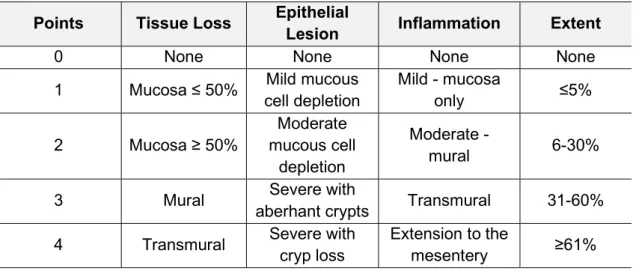
O modelo experimental com TNBS consiste na indução de inflamação intestinal por um processo químico através da administração intracolónica de TNBS como descrito pelo método de Morris [8]. Utilizou-se murganhos CD-1 de 6-10 semanas de idade e com 25-40g de peso. Os grupos experimentais foram estruturados de acordo com o principal objetivo do estudo. Foram ainda formados grupos de controlo para servirem de referência na comparação dos resultados com os grupos em estudo. No final do período experimental, os ratos foram anestesiados e foram recolhidas amostras de sangue por punção cardíaca. Em seguida, os murganhos foram sacrificados por deslocação cervical e necropsiados. Os murganhos foram avaliados tendo em conta sinais clínicos como peso corporal, consistência das fezes, aparência do ânus e comprimento do cólon e marcadores bioquímicos como ALP, ureia, creatinina, ALT, hemoglobina fecal avaliados através do método automático ADVIA e TNF-α e IL-10 determinados por ELISA. O score histopatológico final será avaliado com base na gravidade e extensão das lesões segundo os critérios adaptados de Corazza e colegas [9] e Seamons e colegas [10]. As seções histopatológicas serão examinadas e pontuadas de acordo com a presença de inflamação (0-4 de gravidade crescente) com alguns parâmetros, a saber: (1) presença de perda / necrose tecidual, (2) gravidade da lesão epitelial da mucosa, (3) inflamação, ( 4) extensão 1 - a percentagem de intestino afetado de qualquer maneira e (5) extensão 2 - a percentagem de intestino afetado pela lesão mais grave. A gravidade da colite foi calculada somando as lesões individuais e os scores de extensão, promovendo um score final de colite (score máximo = 20).
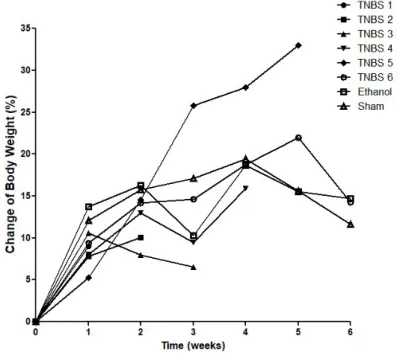
XII O principal objetivo é o desenvolvimento e padronização do modelo de colite crónica induzida por TNBS, uma vez que a evolução de parâmetros associados a infeção crónica como da lesão intestinal mais grave causada pelo TNBS ocorrem gradualmente após uma semana de indução com durabilidade de até 8 semanas eos protocolos do modelo de colite induzida por TNBS não são padronizados [8,11,12]. Seis grupos independentes de colite induzida por TNBS em murganhos foram então monitorizados sob as mesmas condições específicas durante 6 semanas. Os grupos foram induzidos semanalmente e sacrificados no dia 7 de cada semana, dependendo do grupo experimental, a fim de se obter um modelo crónico de colite induzida por TNBS. O objetivo era identificar em que período de tempo o padrão de lesão crónica intestinal máxima se mantinha, pelo método de indução usado no presente estudo. Relativamente aos resultados obtidos nesta experiência, verificou-se que o modelo crónico preliminar de colite induzida por TNBS desenvolveu-se a partir da quarta semana de indução. O grupo TNBS apresentou uma leve alteração da motilidade intestinal caracterizada por diarreia, edema do ânus e morbilidade moderada, enquanto os grupos controlo permaneceram sem alterações. Estes murganhos apresentaram ainda um aumento leve e progressivo do peso corporal, um comprimento do cólon reduzido e um aumento da concentração de hemoglobina fecal, que se mantém até ao final do protocolo experimental. A indução de colite por TNBS promoveu, ao fim de 4 semanas, um aumento dos mediadores inflamatórios, tais como, TNF-α, e contrariamente ao esperado aumento da uma citocina anti-inflamatória, IL-10, bem como a manutenção destes valores até ao final do período experimental. Estes resultados são consistentes com a indução correta de colite crónica experimental por TNBS.
Em conclusão, a validação desse modelo animal é realmente relevante para a comunidade científica, pois, até á data, não existe prática padronizada na indução de colite por TNBS e a utilização deste modelo em futura modulação farmacológica pode facilitar um tratamento mais eficaz e seletivo do que o atualmente conhecido.
Palavras-chave: Doenças Inflamatórias Intestinais, Doença de Crohn, Colite Ulcerativa, Colite induzida por TNBS, Modelo animal
XIII
General Index
Index of Figures ... XV Index of Tables ... XVII Acronyms and Abbreviations ... XIX
Introduction ... 2
Aim ... 6
Chapter 1 - Inflammatory Bowel Disease ... 8
1. Definition... 8 1.1 Classification ... 10 1.2 Epidemiology ... 12 1.3 Etiology ... 13 1.3.1 Environmental factors ... 13 1.3.2 Genetic factors ... 14 1.3.3 Immunological Factors ... 15 1.3.4 Microbial Factors ... 16 1.4 Pathogenesis ... 17
2. Diagnostic of Inflammatory Bowel Disease ... 19
3. Pharmacological treatment of Inflammatory Bowel Disease ... 20
3.1 Aminosalicylates ... 22
3.3 Immunomodulators ... 23
3.4 Biological Therapies ... 24
3.5 Antibiotics ... 25
4. Prognosis of Inflammatory Bowel Disease ... 26
Chapter 2 - Animal Models of Inflammatory Bowel Disease ... 28
1. Animal models of Inflammatory Bowel Disease... 28
1.1 Dextran sulfate sodium-induced Colitis ... 30
1.2 Trinitrobenzene sulfonic acid-induced Colitis ... 31
Chapter 3 – Materials and Methods ... 34
Chapter 4 – Results ... 40
Chapter 5 – Discussion ... 50
Chapter 6 – Conclusion ... 54
XV
Index of Figures
Figure 1. Ulcerative Colitis vs Crohn´s Disease………...8
Figure 2. Conceptual framework for the pathogenesis of IBD………... 17
Figure 3. Cytokines in the pathogenesis of IBD………... 19
Figure 4. Therapeutic pyramid for the management of IBD………... 21
Figure 5. Mechanism of colitis induction and tolerance in the TNBS-induced colitis model……….. 32
Figure 6. Change of body weight during the development of TNBS-induced colitis….. 41
Figure 7. Gross morphology damage score during the development of TNBS-induced colitis………41
Figure 8. Effect of TNBS-induced colitis on survival in the IBD……… 42
Figure 9. Effect of TNBS-induced colitis on colon length in the IBD………. 43
Figure 10. Effect of TNBS-induced colitis on fecal hemoglobin in the IBD……….. 44
Figure 11. Effect of TNBS-induced colitis on serum total ALP concentration in the IBD……….. 44
Figure 12. Effect of TNBS-induced colitis on serum urea concentration in the IBD…...45
Figure 13. Effect of TNBS-induced colitis on serum creatinine concentration in the IBD………...46
Figure 14. Effect of TNBS-induced colitis on serum ALT concentration in the IBD……46
Figure 15. Effect of TNBS-induced colitis on TNF-α concentration in the IBD………… 47
XVII
Index of Tables
Table 1. Differences between Crohn´s disease and ulcerative colitis………....9
Table 2. Montreal classification of Crohn`s disease………10
Table 3. Grading of disease activity in Crohn´s disease……….…...11
Table 4. Montreal classification for ulcerative colitis extent……….…..11
Table 5. Montreal classification for ulcerative colitis severity………..……..12
Table 6. Advantages and limitations of using animal models………29
Table 7. Animal chemically induced models of IBD………....30
Table 8. Criteria for scoring of gross morphologic damage………...…35
Table 9. Scheme of study design of the experimental groups………...…..….36
XIX
Acronyms and Abbreviations
5-ASA – 5-Aminosalicylic acid ALP - Alkaline phosphatase ALT - Alanine aminotransferase
Anti-TNF-α - Monoclonal antibodies against TNF-α CD - Crohn’s disease
CDAI - Crohn's disease activity index COX - Cyclooxygenase
DSS - Dextran sulfate sodium EPO - Erythropoietin
GM-CSF - Granulocyte macrophage colony stimulating factor IBD - Inflammatory bowel diseases
IFN-γ - Interferon-γ IκB - Inhibitory κB IL - Interleukin
IP - Intraperitoneal injection IV - Intravenous
NaCl - Sodium chloride
NF-κB - Nuclear transcription factor kappa B ROS - Reactive oxygen species
STAT - Signal transducer and activator of transcription protein Th - T helper
TDZD-8 - Thiadiazolidinone-8
TNBS - Trinitrobenzene sulfonic acid TNF-α - Tumor necrosis factor α UC - Ulcerative colitis
2
Introduction
Inflammatory bowel disease (IBD) is a common chronic inflammatory disease of the gastro-intestinal tract characterized by chronic inflammation of the intestinal epithelium, bowels ulceration and damaging mucosal tissues, resulting in symptoms of diarrhea, weight loss and abdominal pain [1,2]. IBD results from inappropriate and uncontrolled immune responses driven by the luminal flora in genetically susceptible individuals. Crohn's disease (CD) and Ulcerative colitis (UC) are the two major forms of IBD and can be distinguished by the location of inflammation within the gastrointestinal tract [5]. These disorders present similarity, however, they are distinguished by the different pathophysiological aspects and clinical manifestations [4]. CD presents transmural inflammation in the entire length of the GI tract, although it predominantly affects the region adjacent to the ileum and cecum [13]. Typically presents in a discontinuous manner, affecting several proportions of the gastrointestinal tract and associated with complications such as fistulas, stenosis and abscesses [14]. In contrast, UC patients, inflammation usually involves the rectum and extends contiguously in the colon by a variable degree affecting only the superficial mucosa [14].
The IBD is a chronic and intermittent disease, during relapses, symptoms severity varies between slight to severe and during remissions the symptoms can even diminish or disappear. Generally, symptoms depend on the intestinal affected segment and usually include diarrhea often with blood, colic abdominal pain and fecal urgency. Beyond these, other unspecific symptoms may occur like fever, loss of appetite and weight, fatigue and primary amenorrhea [15].
Immunologically patients with IBD have continuously activated innate and acquired immune system with increased recruitment and retention of effector macrophages, neutrophils, T and B cell in the local inflammation where they are activated, release pro-inflammatory cytokines, and loss of tolerance to enteric commensal bacteria. The higher recruitment as well as prolonged survival of effector cells caused by decreased cellular apoptosis exacerbate the immune response and promote the accumulation of effector cells in local intestinal area [16]. Thus, pathogenesis of inflammatory bowel disease is not completely understood but, it is well accepted that abnormal mucosal immune response, microbial factors and epithelial cell abnormalities can facilitate this response [17].
Otherwise, the histologic involvement of lymphocytes T helper CD4 is observed in both subtypes of IBD, however the pro-inflammatory cytokines responsible for the establishment and development of pathology are different [4]. The inflammatory response in CD is mediated by lymphocytes Th1 and Th17 with high levels of interleukin 12 (IL-12), interferon gamma (IFN-γ) and tumor necrosis factor alpha (TNF-α) [3,4,16]. By his side, UC inflammatory response is atypically unleashed by lymphocytes Th2, increasing interleukins 4 and 5 and granulocyte macrophage colony stimulating factor.
3 The IBD has been revealed a world health problem with growing incidence, particularly in subjects with 15 to 30 years old [4]. The IBD has increased incidence in Portugal, currently affecting around 7000 to 15000 Portuguese [18]. Statistical data show a marked increase in the countries of the southern hemisphere, although it is still more prevalent in north hemisphere countries, which can be justified by the lifestyle westernization of habitants from poorest countries [4]. Specifically, the hygiene hypothesis reveals that persons less exposed in childhood to infections or unsanitary conditions lose commensal organisms or organisms that regulates T cell development, or instead do not develop a sufficient immune repertoire once they were not exposed to necessary noxious organisms. Such individuals are associated with a higher incidence of chronic immune diseases, including inflammatory bowel disease [19,20,21].
The etiology of IBD remains undefined, but it is well accepted that IBD is multifactorial, involving interactions between host immune system, genetic susceptibility and responses to environmental and microbial factors [17]. Genetic and environmental factors, immune system dysregulation, modification of luminal bacteria and the increase of intestinal permeability, have a crucial role in the dysregulation of intestinal immunity, origin gastrointestinal injury. [7,22] Four genes have been associated with Crohn’s disease, CARD15, SLC22A4/5, DLG5, PPARG and one with ulcerative colitis, MDR1, it is suggested that these genes regulate several important biologic functions, including immune regulation, mucosal barrier integrity and microbial homeostasis [7,16]. Several environmental factors like smoking, diet, the use of antibiotics and non-steroidal anti-inflammatory drugs, stress and infection are proposed as possible cause in the pathogenesis of inflammatory bowel disease [16,23,24]. These factors trigger in patients with IBD increased intestinal permeability, which leads to a decrease in the barrier function of the epithelium, allowing greater exposure to antigens and consequent activation of the immune system and pro-inflammatory cytokines raising inflammation [16].
The diagnostic of CD and UC includes clinical characteristics, laboratorial tests like complete blood count, sedimentation rate, biochemical analyzes such as c-reactive protein, ferritin, serum albumin, fecal occult blood test and stool culture to mislead infections caused by microorganisms. More specifically, is used Anti-Saccharomyces cerevisiae antibodies (ASCA) and Perinuclear Anti-Neutrophil Cytoplasmic Antibodies (p-ANCA) which allow diagnostic precision in complex cases and distinguish CD from UC. Besides that, abdominal X-ray, colonoscopy, endoscopy and biopsy should be done. [1]
The treatment of IBD often requires a long-term pharmacological approach based on the combination of drugs to control acute reactions, maintain remission and treat specific complications. Actually, therapeutics to the treatment of IBD include a large number of drugs, like aminosalicylates, glucocorticoids, immunosuppressants, immunomodulators and biologic therapy, which have little selectivity for IBD [4,5]. The majority of therapeutics have anti-inflammatory activity that allows the inhibition of the initial events of inflammation with the migration of inflammatory mediators, vasodilation, vascular permeability and leukocyte infiltration. These drugs also act decreasing macrophages recruitment, inhibit the production of IL-1 by monocytes, IL-2 and TNF-α by lymphocytes, phospholipase A2, prostaglandins and leukotrienes [4,5].
4 Unfortunately, the therapeutic options available today do not bring alive the cure to IBD and the accessible treatments have serious side effects and high cost, besides that, there are patients who do not respond to any of the treatments, aspects that greatly limit its use [5]
Nowadays IBD treatments introduce risks to patients, do not represent the cure for the disease, consist only of symptomatic and palliative treatments and are unable to maintain remission of inflammation in the colon for long periods of time, indicating the urgent need to search for new products with intestinal anti-inflammatory activity for cure or prevent this disease [1,5].
In our research group, we have tested several new pharmacological approaches with benefits in this field [25-30], in this sense it is extremely important clarify the inflammatory process related with this pathology to propose new strategies to modulate inflammatory response, different from those already known, to treat effectively IBD and carrying out further studies in this and other areas that may solve many of the puzzles that mark this pathology.
With this project we propose to develop a preliminary study towards a novel chronic experimental model to study IBD, able to mimic inflammatory bowel disease in humans, for posterior study metabolic pathways involved in IBD and future pharmacological modulation. Thus, this thesis was divided into two chapters of literature review, one chapter of methodology, one chapter of presentation and discussion of results related to the development of the model, one chapter of the final discussion and main conclusions and, finally, one last chapter of the references. Therefore:
- Chapter I: state of the art description of inflammatory bowel disease, including its classification, diagnosis, as well as pharmacological treatment currently recommended;
- Chapter II: relevance of studies in animal models, presentation of existing animal models of experimental colitis and characterization of the chemically induced model of colitis used in this experimental work;
- Chapter III: description of the used methodology, such as the induction method,
experimental groups, evaluated parameters and statistical tests;
- Chapter IV: presentation of the results of the development of experimental colitis induced by TNBS;
- Chapter V: discussion of the development of experimental colitis induced by TNBS;
- Chapter VI: synthesis, discussion and the main conclusions of the work, as well as future prospects;
6
Aim
The main aim of this project is to develop a preliminary study towards a novel chronic experimental model to study IBD in order to support a future new model of chronic induced colitis in rodents using TNBS. The model should be able to mimic inflammatory bowel disease in humans, for posterior test a set of drugs that modulate some important metabolic pathways in the establishment and development of inflammation in IBD.
8
Chapter 1 - Inflammatory Bowel Disease
1. Definition
IBD is a chronic, idiopathic, and relapsing inflammatory disease that affect the gastrointestinal tract through a cascade of inflammatory reactions that culminate in an immune system response. IBD is characterized by chronic inflammation of the intestinal epithelium, bowels ulceration and damaging mucosal tissues, resulting in symptoms like diarrhea, weight loss and abdominal pain [1,2].
Figure 1. Ulcerative Colitis vs Crohn´s Disease [adapted from site QuIBD.com] UC and CD are the two major forms of IBD, have different pathological and clinical characteristics, in which they differ in the extent and distribution of inflammation in the gastrointestinal tract and in the depth of involvement of the intestinal wall (Figure 1) [4,5]. Ulcerative colitis is a recurrent chronic ulcer inflammatory disorder that begins in the rectum and extends contiguously along the colon in the retrograde direction with inflammatory involvement by a variable degree affecting the inner layer of the mucosa, with diffuse and uniform inflammation. It is a disease in continuity and has as characteristics the presence of abdominal pain and episodes of bloody mucoid diarrhea. The course of UC is characterized by symptomatic periods interspersed with periods of remission [31,32].
9 In contrast, the CD lesions are distributed in a non-confluent pattern, presenting transmural inflammation, reaching all layers of the digestive wall. This disease can affect the entire length of the GI tract, from the mouth to the anus, although it predominantly affects the region adjacent to the ileum and cecum, altering the entire intestinal integrity [13,33,34]. The progression of the disease is usually characterized by episodes of exacerbation and remission of variable duration. The clinical presentation will depend on the location of the disease, including diarrhea, abdominal pain, fever, signs of intestinal obstruction, presence of blood and mucus in the feces and perianal lesions. CD is associated with complications such as fistulas, stenosis, abscesses and intestinal obstruction (Table 1) [35-37].
A third classification of IBD, IBD unclassified or indeterminate colitis, can be used when a distinction in diagnosis of UC and CD cannot be made through clinical signs and when all diagnostic exams where take in consideration. However, indeterminate colitis only represents a minority of cases of IBD, thus allowing in the majority of cases monitoring and treatment of the disease [34].
Table 1. Differences between Crohn´s disease and ulcerative colitis [adapted from MSD Professional Edition Manuals, 2019]
Crohn's Disease Ulcerative Colitis
Small intestine involved in 80% of the time. Disease is confined to the colon. Retossigmoid is generally spared; the colonic
involvement is usually on the right side.
Retosigmoid is invariably affected; the colonic involvement is generally on the left. Severe rectal bleeding is uncommon, except
in 75 to 85% of cases of Crohn's colitis. Significant rectal bleeding is always gift. Fistulas, masses, and abscesses are
common.
No fistulas occur. Perianal lesions are significant in 25 to 35% of
cases. No significant perianal lesions ever occur.
In radiographs, the intestinal wall is asymmetrically affected and in a segmental
way, with areas spared between segments affected.
The intestinal wall is affected symmetrically and of the proximal rectum.
The endoscopic appearance is irregular, with discrete ulcerations separated by segments of
normal-appearing mucosa.
The inflammation is uniform and diffuse. Microscopic inflammation and fissures
transmural; the distribution of lesions is usually highly focal.
Inflammation is restricted to the mucosa, except in severe cases.
Epithelioid granulomas (sarcoidosis type) are detected in the intestinal wall or lymph nodes
in 25 to 50% of cases (pathognomonic).
10
1.1 Classification
The current IBD classification, known as the Montreal Classification, resulted from the review of the Vienna classification, permits characterizes the clinical features of this disorders as well as, clarify the diagnosis of CD an UC [38,39].
The Montreal classification, regarding CD, considers 3 parameters, age of onset (A), location of disease (L) and disease behavior (B). The presentation of CD is highly variable. A single episode may not be followed by further episodes or the patient may experience continuous, unremitting disease (Table 2) [38,39].
Table 2. Montreal classification of Crohn`s disease [adapted from Satsangi et al., 2006]
Since there is an inherent subjectivity to symptoms that may condition the evaluation of CD activity, there are several indices which are used as an aid in identifying the phase of the pathology. An additional tool, known as CDAI (Crohn's disease activity index), should be considered in patients with CD. CDAI is not a classification of CD but represents a numerical estimate of the interpretation of the patient's symptoms, allowing to define the severity of disease activity. The CDAI calculation is the sum of the products of a list of eight items, multiplied by weighting factors, the total of which defines the severity of disease activity. Thus, CD activity can be classified as mild to moderate, moderate to severe and severe to fulminant. Total values less than or equal to 150 are associated with quiescent or remission. Values above 150 are indicative of active disease, if greater than 450 allow the classification of extremely severe disease (Table 3) [34,40]. AGE AT DIAGNOSIS A1 < 16 years A2 17 - 40 years A3 > 40 years LOCATION L1 Ileal L2 Colonic L3 Ileocolonic
L4 Isolated upper disease
BEHAVIOUR
B1 Non-stricturing, non-penetrating B2 Stricturing
B3 Penetrating
11 Table 3. Grading of disease activity in Crohn´s disease
[adapted from Dignass et al., 2012]
Legend: CDAI - Crohn’s Disease Activity Index; BMI - Body mass index; CRP - C reactive protein.
The typical follow-up of UC consists in periods of exacerbation alternating with periods of symptomatic remission. The determination of the clinical picture and subsequent individualization of the therapy depend of two factors: extent and severity of inflammation. The Montreal classification, relative to UC, assessed the disease according this two parameters, severity and extension. [38,39].
The Montreal classification of disease extent of UC allows extent to be defined into three subgroups (Table 4), according to the maximal extent of inflammation observed at colonoscopy. Extension can be divided into proctitis when only the rectum is inflamed, distal when the affected extension is up to the splenic, encompassing proctitis when it extends beyond the splenic angle not reaching the blind and pancolitis when it reaches the full extent to the blind [39].
Table 4. Montreal classification for ulcerative colitis extent [adapted from Satsangi et al., 2006]
Extent Anatomy
Ulcerative proctitis
Involvement limited to the rectum (that is, proximal
extent of
inflammation is distal to the rectosigmoid junction) Left sided UC (distal UC)
Involvement limited to a proportion of the colorectum
distal to the splenic flexure Extensive UC (pancolitis)
Involvement extends proximal to the splenic
flexure Legend: UC – Ulcerative colitis. Mild
CDAI of 150 – 220 (eg. ambulatory, eating and
drinking, < 10% weight loss) No features of obstruction, fever, dehydration, abdominal mass or tenderness CRP increased above the upper limit of normal Moderate
CDAI of 220 – 450 (eg. intermittent vomiting or
weight loss > 10%)
Treatment for mild disease ineffective or tender mass.
No overt obstruction
CRP elevated above the
upper limit of normal Severe
CDAI > 450 (eg. cachexia (BMI < 18 Kg m-2 ) or evidence of obstruction or abscess) Persistent symptoms despite intensive treatment CRP increased
12 UC is an intermittent and relapsing disease where patients experience periods with no symptoms, which makes diagnosis difficult since the symptoms are not sufficiently clear [31,32,41]. Hereupon, the Montreal classification also classified the UC severity as mild, moderate and severe and fulminant determined by clinical signs and symptoms (Table 5) [38]. The arbitrary distinction between the different classifications are determined by the clinical signs and symptoms and are, generally, clinical recommendations for therapeutic decision-making.
Table 5. Montreal classification for ulcerative colitis severity [adapted from Satsangi et al., 2006]
Legend: ESR - Erythrocyte sedimentation rate; CRP - C reactive protein.
1.2 Epidemiology
The inflammatory bowel disease is a chronic disease that affects approximately 3 million people in Europe and has been revealed a world health problem with growing incidence [42]. IBD affects individuals of any age, however, it has two peaks of greater incidence, a first between 15 and 30 years and a second between 50 and 70 years [14,43] The annual healthcare costs were estimated at around 4.5–5.6 billion euros, in Europe, and 6.3 billion dollars, in the United States of America [44].
In the past, it was an uncommon condition, increasing its incidence in the developed countries, in particular in the Europe, Australia, New Zealand and North America, where it is estimated that its prevalence practically double over the next decade. The distribution of the disease has undergone changes, in particular in the over last 20 years, and has also expanded to developing countries [44].
Statistical data show a marked increase in the countries of the southern hemisphere, although it is still more prevalent in north hemisphere countries, which can be justified by the lifestyle westernization of habitants from poorest countries [4,45]. The hygiene hypothesis, a hypothetical explanation to this data, suggests that persons less exposed in childhood to infections or unhygienic conditions lose commensal organisms or organisms that regulates T cell development, or yet do not develop a sufficient immune repertoire once they were not exposed to essential harmful organisms, propose a higher incidence of chronic immune diseases, including inflammatory bowel disease, for that individuals [19-21]. These results may vary according to the study carried out,
Mild Moderate Severe
BLOODY STOOLS/DAY < 4 4 or more if ≥ 6 and PULSE < 90 bpm ≤ 90 bpm > 90 bpm or TEMPERATURE < 37.5˚C ≤ 37.8˚C > 37.8˚C or HAEMOGLOBIN > 11.5 g/dl ≥ 10.5 g/dl < 10.5 g/dl or ESR < 20 mm/h ≤ 30 mm/h > 30 mm/h or CRP Normal ≤ 30 mg/L > 30 mg/L
13 since the epidemiological of IBD is limited due to the difficulty in carrying out population studies, the non-use of universally accepted diagnostic criteria and the scarcity of registries. However, it is notorious that the incidence of IBD has increased worldwide [18].
In Portugal, the IBD incidence has increased, currently affecting around 7000 to 15000 Portuguese however, epidemiological data are scarce, which does not allow the incidence and prevalence of IBD in our country over time. One study conducted between 2003 and 2007, which assessed the prevalence of IBD in Portugal, states that there was an increase from 86 to 146 per 100,000 people and that this increase was homogeneous in all districts of the country. The prevalence of UC and CD is similar, as his distribution pattern by age and sex, although female prevalence is slightly higher than the male sex. Particularly the districts of Lisbon and Porto were the most affected with the disease [18,44]. Furthermore, hospitalization rates have increased by 33% and 13%, concerning CD and UC patients, respectively, from 2000 to 2015 [44].
1.3 Etiology
The etiology of IBD remains undefined, but it is well accepted that IBD is multifactorial, involving interactions between host immune system, genetic susceptibility and responses to environmental and microbial factors. None of the factors alone is sufficient to the development of the disease [7,22]. Thus, the interaction between genetic susceptibility and an abnormal immune response with deregulation of the innate and adaptive immune response and commitment of the function of the epithelial barrier are the main cause to IBD (Figure 2) [14].
1.3.1 Environmental factors
Several environmental factors like smoking, diet, the use of antibiotics and non-steroidal anti-inflammatory drugs, stress and infection are proposed as possible cause in the pathogenesis of inflammatory bowel disease [16,23,24]. These factors trigger in patients with IBD increased intestinal permeability, which leads to a decrease in the barrier function of the epithelium, allowing greater exposure to antigens and consequent activation of the immune system and pro-inflammatory cytokines, raising inflammation, how-ever the mechanism on which this factors act promising the disease is not yet known [16].
IBD has a higher incidence in industrialized countries proposed due to the westernization of its lifestyle. Regions like Eastern Europe and Asia, where this increase in IBD can be observed, have recently adopted westernized diets, like low-fiber, high-sugar and high animal fat, suggesting the influence of diet in the development of the disease. Thus, it is logical to consider diet as a determinant factor in IBD since it is an enteric disease and it is known the ability of some foods to act as antigens promoting inflammation, such as alcohol, refined sugar and coffee and in turn others are preventive in the intestinal inflammatory process like fruits, vegetables and fibers, otherwise various data try to compose the relationship of IBD with a specific diet or food without success [46,47].
14 Since it is more common in developed areas and there is currently an increase in non-industrialized countries, has been developed a theory to explain the phenomenon, the hygiene hypothesis reveals that persons less exposed in childhood to infections or unsanitary conditions lose commensal organisms or organisms that regulates T cell development, or instead do not develop a sufficient immune repertoire, once they was not exposed to necessary noxious organisms, contributing to an immature immune system which causes an inappropriate immune response when exposure to noxious agents reoccurs [19,20].
Smoking is recognized as contributor to IBD, nicotine, carbon monoxide and hypoxia have all been suggested to be mediators of the effects of smoking on IBD [48-50]. However, smoking have different effects when it comes to CD and UC, if in turn the CD has an exacerbating effect on the disease in UC have an protective effect, nevertheless, there is still no explanation for this event [16]. CD patients who smoke tent to have more complications and more severe symptoms throughout the disease, indicative of detrimental effect on CD [47,51,52]. Contrary on UC smoking seems to have protective effect delay the beginning of disease and studies have shown that current smoking reduced the risk of UC [43,47].
Oral contraceptives and non-steroidal anti-inflammatory drugs are drugs studied as possible etiological factors with IBD. In the case of oral contraceptives their association with IBD is not yet fully known but it is believed that thrombogenic properties may be related to ischemia and changes in mucosal integrity and consequently allow the entry of antigens into the intestinal lumen [47]. Non-steroidal anti-inflammatory drugs in turn have a side effect causing injury in the gastrointestinal tract. There is an increase in vascular permeability and local lesion caused by these drugs and in addition a systemic effect on the prostaglandins, reducing the protection of the mucosa of the gastrointestinal tract causing alterations in the permeability of the colon membrane leading to the development of IBD [53].
Nowadays various changes in human behavior have been associated with an increase in the incidence of IBD. This increase in countries that have been to adopt an industrialized lifestyle suggests that the environmental factors are crucial as triggers of disease. There are epidemiological data that appear to show a close correlation between the infectious diseases, vaccination and stress of the population with increasing incidence of autoimmune diseases and chronic inflammatory diseases, but so far without conclusive results [47].
1.3.2 Genetic factors
Actually, there is evidence that different genetic factors, through different inflammatory mechanisms predispose to the development of IBD. The role of genetics in the pathogenesis of IBD was initially suggested in household and in twins,however there is no evidence of classic heredity.IBD is overlapping in both genders but occurrence of disease is suggested to be influenced by race and some specific ethnic groups [43,51,52].
15 At least 201 loci were identified, most of them associated with both forms, indicating common mechanisms in both diseases, but specific to CD and specific UC. Despite the divergence in the effect in the immune system, putative genes can be divided into those that influence innate immunity, autophagy, the epithelial barrier, immune responses, adaptive responses to oxidative stress and antimicrobial [7,16].
Four genes have been associated with Crohn’s disease, CARD15, SLC22A4/5, DLG5, PPARG and one with ulcerative colitis, MDR1, it is suggested that these genes regulate several important biologic functions, including immune regulation, mucosal barrier integrity and microbial homeostasis [7,16]. CARD15 localized at chromosome 16 promotes NF-κB activation and regulation, killing of intracellular pathogens, paneth-cell function, α-defensin production and plays an important role in the innate immune response, apoptosis and recognition, conferring greater susceptibility to CD. SLC22A4/5 located at 5 chromosome has as function organic cation, carnitine transporters, possibly transport xenobiotic substances. The gene DLG5 in 10 chromosome is an epithelial scaffolding protein and PPARγ in chromosome 3 acts as an intracellular inhibitor of NF-κB and in cellular activation, lastly MDR1 located at 7 chromosome is an efflux transporter for drugs and, possibly, xenobiotic compounds. Other genes involved in the autogenic innate immune system, such as ATG16L1, IRGM and LRRK, and the genes involved in adaptive immunity, such as IL23R, IL12B and STAT3, are strongly associated with CD and possibly UC [7,16].
Genetic factors play a significant role in predisposition to IBD once increase susceptibility to IBD but also influence the degree of severity and extension of pathology. Genetic factors may be important for the understanding of the disease as well as the association of these with changes in the intestinal immune system are critical points for the knowledge of the physiology of the disease and for the development of new drugs [7,16].
1.3.3 Immunological Factors
The intestinal immune system is one of the largest and most complex of the human body, protects from the entry of pathogens and is essential for the maintenance of physiology and prevention of infections. The intestinal immune system is exposed to large numbers of antigens however is well coordinated to prevent the entry of harmful and pathogenic agents and does not react against commensal bacteria and antigens from the diet. The intestinal mucosa has a specialized defense system that is divided immune and not immune due to the constant exposure to pathogens and the ability to recognize harmful agents [47].
But when a reaction occurs against non-pathogenic particles and breaking this homeostasis inflammatory disturbances such as IBD may occur. Patients with IBD have continuously activated innate and acquired immune system with increased recruitment and retention of effector macrophages, neutrophils, T and B cell in the local inflammation where they are activated, release pro-inflammatory cytokines, and loss of tolerance to enteric commensal bacteria [14]. The higher recruitment as well as prolonged survival of effector cells caused by decreased cellular apoptosis exacerbate
16 the immune response and promote the accumulation of effector cells in local intestinal area, raising continuously uncontrolled inflammation [16].
1.3.4 Microbial Factors
The intestinal microbiota is a crucial factor in the development of IBD, the enteric bacteria and their production are involved in the triggering and perpetuation of the disease. The mechanism by which bacteria lead to the development of disease relates to increased site permeability and triggering of the immune response. Various microorganisms are related to the development of IBD as Mycobacterium paratuberculosis, Listeria monocytogenes, Chlamydia trachomatis and Escherichia coli [43]. The balance between beneficial bacteria and pathogenic species determines intestinal homeostasis and this balance can be manipulated by different drugs for the treatment and prevention of recurrences of IBD. The intestinal microbiome is the largest reservoir of microorganisms in the human body, having extremely useful functions, namely digestive, immune system education and repression of the growth of harmful microorganisms. The dysbiosis in IBD translates into a change in microbioma composition, diversity and quantity, microbiological changes present in both forms of IBD [47].
17 Figure 2. Conceptual framework for the pathogenesis of IBD
[adapted from Neurath, 2014]
Legend:NSAID - Non-steroidal anti-inflammatory drugs; Treg cell - Regulatory T cells.
1.4 Pathogenesis
Actually, is known that IBD is characterized by an atypical mucosal immune response and that various factors can enable this response but still not exist a defined origin to pathogenesis of IBD. However there are two different theories taking into account the awakening of the disease, the first proposes an initial dysregulation of the mucosal immune system that takes to exacerbated immunologic responses, in turn the other concept values that changes in the composition of bowel microflora associated with disturbed epithelial barrier function cause pathologic responses from the normal mucosal immune system (Figure 3) [17].
Phenotypically IBD patients have activated innate and acquired immune responses with accumulation of high levels of macrophages, neutrophils and T and B cells
18 recruitment in the inflamed bowel with production of pro-inflammatory cytokines and loss of tolerance to enteric commensal bacteria [16]. The enhanced recruitment as well as prolonged survival caused by decreased cellular apoptosis contribute to the maintenance of increased levels of effector cells in the inflamed intestine and consequently preservation of the inflammation and subsequent disease evolution to chronic [16]. Thus, pathogenesis of inflammatory bowel disease is not completely understood but, it is well accepted that abnormal mucosal immune response, microbial factors and epithelial cell abnormalities can facilitate this response [17].
The adaptive immune response crucial in IBD are fundamentally driven by T cells, Th0 cells become activated and differentiate into Th1 or Th2 or Th17 cells. Th1 cells are essential in the elimination of intracellular pathogens, Th2 cells are protective against parasites and mediate allergic reactions and Th17 can contribute to the clearance of extracellular bacteria [54].
Pathophysiological CD and UC are similar, however the cellular responses observed in CD and UC are different, while CD is a dominantly T helper Th1 and Th17 mediated process, UC seems to be a Th2 disorder [16].
Particularly in patients with CD it is observed a mediated cellular response dominantly Th1 and Th17. More specifically, Th1 activated T cells have the ability to produce interferon IFN-γ which in turn will activate dendritic cells and macrophages. Activated dendritic cells and macrophages produce cytokines such as interleukin (IL)-1β, 6, IL-12, IL-18, IL-23 and tumour necrosis factor TNF-α. Th17 polarized cells secrete IL-17 and IL-22 [55-57]. TNF-α and IL-6 are the main factor in the pathogenesis of CD, since it induces the expression of adhesion molecules in the vascular endothelium and invasion of inflammatory cells into the mucosal layer subsequently occurs [56]. Thus, it is very important controlling TNF-α and IL-6 biological action in order to ensure the regulation of this process in to control the disease [58-60].
On the other hand, it is observed in the mucosa of patients with UC a mediated response by IL-5 and IL-3 origin an atypical Th2 polarized T cell and natural killer T cells response [57,61]. Polarized T cell responses, initiate an inflammatory cascade that involves endothelial activation, chemokine production and white blood cell recruitment [55]. Triggering and perpetuation of the inflammatory response is related to deficiencies in the innate immune response caused by failures in controlling the anti-inflammatory response through IL-10, transforming growth factor b, macrophages and B cells and stromal cells and defective type I IFN production [55].
19 Figure 3. Cytokines in the pathogenesis of IBD [adapted from Neurath, 2014] Legend: GATA3 – Transcription factor ; FOXP3 -Forkhead Box P3 Protein; IEC – Intestinal Epithelial Cells; IFN-γ - interferon-γ ; IL - interleukin; NK cell – Natural killer cells; ROR-related orphan receptor gamma; Th - T helper; TGF -
transforming growth factor; TLR - Toll-like receptor; TNF - tumor necrosis factor; Treg - Regulatory T cells.
2. Diagnostic of Inflammatory Bowel Disease
The diagnostic of CD and UC are based on combined results obtained from different diagnostic exams available to identify colitis, along with clinical characteristics, family history of IBD and phenotypic features [31,32,41].
The major symptoms generally, depend on the intestinal affected segment and usually include diarrhea often with blood, colic abdominal pain and fecal urgency. Beyond these, other unspecific symptoms may occur like fever, loss of appetite and weight, fatigue and primary amenorrhea [15]. As well as complications like intestinal obstruction, perforation of the intestine, abscesses in the abdomen, fistulas, anal fissures and in severe cases cancer of the colon in CD and rectal bleeding, fulminant colitis and cancer of the colon in UC [31,32,41].
Laboratorial tests are enable to analyze biochemical markers to evaluate and determine the severity of colitis, like complete blood count, sedimentation rate, c-reactive protein, ferritin, serum albumin, to evaluate anemia and infection and alkaline phosphatase (ALP) determined as a marker of intestinal homeostasis once suggest damage and intestinal lesion. Urea, creatinine and alanine aminotransferase (ALT) are biochemical markers non related directly with intestine but with external organs, representative of external and consequent manifestations of the inflammation represent extraintestinal manifestations and secondary effects involved with almost every organ system and some of the most frequently involved organs like the liver and kidney [31,32]. The fecal occult blood test does the determination of fecal hemoglobin and permits the diagnosis and evaluation of various colorectal diseases, once it determines the intensity of the hemorrhagic focus in the damage colonic tissue [Hirata et al., 2007].
20 Stool culture is important to mislead infections caused by microorganisms and parasitic infestation, associated with cross-infection. More specifically, is used Anti-Saccharomyces cerevisiae antibodies and Perinuclear Anti-Neutrophil Cytoplasmic Antibodies which allow diagnostic precision in complex cases and distinguish CD from UC [62].
Besides these, abdominal X-ray, colonoscopy, endoscopy and biopsy even as alternative medical imaging techniques associated with clinical pattern and laboratorial tests can confirm and diagnose the presence of colitis as well as determine the extent of disease [63,64].
3. Pharmacological treatment of Inflammatory Bowel Disease
The current therapy of IBD encompasses pharmacological, nutritional and surgical treatment and aims to control the activity of the disease as well as the prevention of relapses, reduction of inflammation, resolution of complications, relief of clinical manifestations and induction of remission and its maintenance. The clinical recommendations for treatment use the signs and symptoms as markers of the activity and severity of the pathology. The severity is not directly related to the extent of intestinal involvement, but is determined by medical history, physical examination, and endoscopic and radiological studies and should be take into account as they determine the dose, dosage and formulation of the drug to be effective [34,65].The classic clinical approach to treating IBD is called a step-up. In this approach, the treatment strategy begins with the use of less effective drugs but with better safety profile. If these drugs do not are effective in inducing the remission of the disease, it is recommended to use drugs with high efficacy but with possible more marked toxic effects. In contrast to this classic "step up" approach, proposal of a top-down approach. This approach advocates the use of biologic and immunosuppressive drugs as first-line therapy in patients in whom more complicated course of the disease, in order to avoid unnecessary use of corticosteroids, taking into account the spectrum of side effects and the high percentage of patients who are dependent or refractory to treatment with this class of drugs (Figure 4) [66].
At this point there is no knowledge of a cure, so the treatment of IBD focuses on the use of drugs that decrease the inflammatory process and induce remission of the disease. The majority of therapeutics have anti-inflammatory activity that allows the inhibition of the initial events of inflammation with the migration of inflammatory mediators, vasodilation, vascular permeability and leukocyte infiltration [4,5]. Actually, therapeutics to the treatment of IBD include a large number of drugs, like aminosalicylates, glucocorticoids, immunosuppressants, immunomodulators and biologic therapy, which have little selectivity for IBD [4,5].
In the last decade, the treatment of IBD has evolved considerably, with the appearance of several drugs directed to block specific inflammatory chain components. The search for these therapeutics that act on specific cytokines and are able to blocking the
21 remaining inflammatory chain, allow avoiding situations of unnecessary generalized immunosuppression and seems to be a secure bet on the future. Besides that, despite the wide range of therapeutic options mentioned above, only a part of patients achieve sustained remission with these drugs and are subject to significant long-term side effects. Allied to this it is believed in short future that the treatment of IBD pass through a combination of several cytokines capable of cover in several intracellular signaling pathways [67].
Nowadays recent advances in the pathogenesis of IBD have helped in the development of new strategies to reach new therapeutic concepts to IBD and consequently future therapies. In the future, the search for new strategies for the treatment of IBD should focus on finding specific pathways to treat the disease, contrary to what has been developed so far, which will increase the amount and quality of therapies practiced to date for IBD, progressively evolve to become broader in general options but though more targeted and individualized in patients [68].
In sum, the treatment of IBD can become complex, especially with the emergence of new therapeutic strategies, so it is essential to monitor these patients to ensure the efficacy and safety of treatment and an optimization of the adherence to therapy [69].
Figure 4. Therapeutic pyramid for the management of IBD [adapted of Aloi et al., 2014].
22
3.1 Aminosalicylates
Sulfasalazine and related drugs, such as mesalamine, olsalazine and balsalazide, are the main ones used types of aminosalicylates. These medicines can suppress the symptoms when they appear and reduce the inflammation, especially in the large intestine [5].
They are derivatives of 5-amino-salicylic acid (5-ASA), used as first-line therapy UC and mild to moderate CD. These drugs have therapeutic effects at the intestinal lumen, with various oral formulations, enemas and suppositories, developed to allow better distribution of the drug [70,71].
Sulfasalazine consists of two components at the same molecule, sulfapyridine do not have substantial therapeutic effect and it believed to contribute to undesirable adverse effects and mesalamine (5- aminosalicylic acid – 5-ASA) by its time is the active therapeutic key. At the colon the two molecules combined by an azo bond are cleaved by bacterial azoreductase freeing 5-ASA and sulfapyridine [5].
Several methods of action have been implicated for these drugs, including inhibition of production of IL-1 and TNF-alpha, production of free radicals and oxidants, as well as inhibition of lipoxygenase pathway and nuclear factor kappa B however the exact mechanism of action remains unknown [73].
The vast majority of the side effects of sulfasalazine are related to the sulfapyridine molecule. The absence of this molecule in formulations of mesalazine, olsalazine and balsalazine may explain the lower incidence of adverse effects of these new drugs [70]. Mesalazine, olsalazine and balsalazine are considered to be prodrugs, with the same nitrogenous binding as sulfasalazine, however the sulfapyridine is replaced by another 5-ASA (olsalazine) or an inert compound (balsalazine). These compounds act in the same locations as the sulfasalazine, being effective in inducing maintenance of IBD remission [5].
3.2 Corticosteroids
Corticosteroids are effective in inducing remission in patients with active CD or UC, this class of drugs will suppress inflammation in its early stages, as well as late manifestations for moderate to severe relapses of IBD and in patients with no response 5-ASA oral formulations. However, are not suitable as maintenance therapy because of the severe side effects and associated with long-term use [1,73].
Corticosteroids influence the immune response of lymphocytes decrease the production of inflammatory cytokines and others inflammatory mediators as nuclear factor ƙB [74]. They act through inhibition of several inflammatory pathways like suppressing IL transcription, induction of inhibitory κB (IκB) that stabilises the NF-κB
23 complex, suppression of arachidonic acid metabolism and stimulation of apoptosis of lymphocytes within the lamina propria of the bowel [1].
Corticosteroids can be administered orally, as enemas, or systematically in conjunction with or without other medications. The most commonly used are prednisolone, methylprednisolone, and budesonide [73].
Corticosteroids, such as prednisolone, which is given orally, can dramatically reduce fever and diarrhea, relieve abdominal pain and tenderness, and improve appetite and sense of well-being and are the preferred steroid administered in emergency situations. However, prolonged use of corticosteroids causes side effects. Generally, high doses are taken initially to relieve inflammation and intense symptoms. The dose is then reduced, and the medicament is discontinued as soon as possible [73].
Hydrocortisone is a steroid specifically used in patients with short areas of distal proctitis and fluid retention difficulty. Budesonide, another corticosteroid, is a synthetic corticosteroid recommended as one of the first line for the treatment designed to release in the terminal ileum. Budesonide has fewer side effects than prednisolone, although it is not as quickly effective and generally does not prevent relapses after six months. Can be given orally or as an enema, because of its rapid hepatic metabolism and this drug is associated with a lower rate of side effects associated with corticosteroids [74].
3.3 Immunomodulators
Immunomodulators or immunosuppressant drugs are immunological modifiers used as maintenance therapy in patients with IBD after induction therapy with corticosteroids or surgery, patients with severe IBD, dependent or resistant to the action of corticosteroids and as treatment of first line of fistulas. These drugs are also recommended in patients with severe ulcerative colitis requiring treatment with corticosteroids or patients who need a new treatment of corticosteroids within a year. Although have side effects immunosuppressant drugs are safer than long term corticosteroid therapy and benefit from treatment seem to justify the risk. However, more studies to define the optimal duration of treatment, in order to maximize the duration of clinical remission, with a minimal risk of potentially lethal complications must be done [5].Thiopurines, azathioprine and mercaptopurine, methotrexate and cyclosporin are the most commonly immunomodulators drugs used [1].
Azathioprine and mercaptopurine are medicines that decrease the actions of the immune system. They are effective for patients with Crohn's disease who do not respond to other medications and are particularly useful for maintaining long periods of remission. They significantly improve the general clinical condition, decrease the need for corticosteroids, and often cure fistulas. However, these medications may not bring benefits before one to three months and may have potentially serious side effects [1]. Both, azathioprine and mercaptopurine pro-drugs are thiopurine analogs that function
24 through their active metabolite, the 6-thioguanine nucleotide (6-TGN), which leads to inhibition of ribonucleotide synthesis as well as T-cell apoptosis [37].
Methotrexate is an effective therapy in the induction and maintenance of remission in patients with IBD. Recent data demonstrate that, the methotrexate shows a considerable response rate in patients with CD or UC, intolerant or unresponsive to treatment with azathioprine or mercaptopurine, since some patients cannot tolerate and others do not respond to treatment. Treatment with methotrexate is also reserved for patients cortico-resistant or dependent.
This drug inhibits dihydrofolate reductase, blocking DNA synthesis and causing death cellular, being important in the treatment of autoimmune diseases. However, the benefits of this drug in IBD are a result of anti-inflammatory effects [1].
Ciclosporin is given in high doses injection, is used to treat IBD since 80s, as it is a medicine initially used in organ transplantation. Cyclosporine is a potent immunosuppressant drug since is an inhibitor of calcineurin, that prevents clonal expansion of T cell subsets. It acts to prevent clonal expansion of T cell subsets. At this time, cyclosporine is effective in severe UC that has failed to respond adequately to glucocorticoid therapy. This medication may help cure fistulas caused by Crohn's disease, but it cannot be used safely for a long time because of side effects such as kidney problems, infections, and seizures. Cyclosporine is effective in specific clinical settings in IBD, but the high frequency of significant adverse effects limits its use as a first-line medication [5].
3.4 Biological Therapies
Biological agents are drugs that act on specific cytokines, blocking the remaining inflammatory chain modeling the inflammatory response. In this way, the development of these biological agents will allow immune directed blockade problem, avoiding situations of unnecessary generalized immunosuppression [1]. In CD the immune responses are a characteristic Th1 cells response mediated by TNF-α, and although various cytokines are produced in the gut when inflamed, TNF- α is a major mediator of the inflammatory process. The administration of humanized monoclonal antibodies is an entirely new and potentially highly successful concept for treating IBD [5]. Currently at European level the European Medicines Agency (EMA) have several approved biological drugs like infliximab, adalimumab and golimumab to UC, anti TNF-α drugs, vedolizumab an anti-α4β7 integrin drug to CD and UC, and ustekinumab an anti IL-12 and IL-23 drug to treat CD.
Infliximab is a modulator of the immune system actions which is derived from monoclonal antibodies against tumor necrosis factor (FNT inhibitor) that binds into the form of a chimeric immunoglobulin and neutralizes TNF-α [73]. Infliximab is administered intravenously and may be used to treat moderate to severe Crohn's disease, which does not respond to other medicines, as well as to treat people with fistulas and maintain response when it is difficult to control the disease. Side effects that may occur with infliximab include worsening of an existing uncontrolled bacterial
![Figure 1. Ulcerative Colitis vs Crohn´s Disease [adapted from site QuIBD.com]](https://thumb-eu.123doks.com/thumbv2/123dok_br/15453395.1028233/27.892.143.756.357.832/figure-ulcerative-colitis-crohn-disease-adapted-from-quibd.webp)
![Table 1. Differences between Crohn´s disease and ulcerative colitis [adapted from MSD Professional Edition Manuals, 2019]](https://thumb-eu.123doks.com/thumbv2/123dok_br/15453395.1028233/28.892.134.792.568.1203/differences-disease-ulcerative-colitis-adapted-professional-edition-manuals.webp)
![Table 2. Montreal classification of Crohn`s disease [adapted from Satsangi et al., 2006]](https://thumb-eu.123doks.com/thumbv2/123dok_br/15453395.1028233/29.892.166.727.459.796/table-montreal-classification-crohn-disease-adapted-satsangi-et.webp)
![Table 4. Montreal classification for ulcerative colitis extent [adapted from Satsangi et al., 2006]](https://thumb-eu.123doks.com/thumbv2/123dok_br/15453395.1028233/30.892.68.820.195.412/table-montreal-classification-ulcerative-colitis-extent-adapted-satsangi.webp)
![Table 5. Montreal classification for ulcerative colitis severity [adapted from Satsangi et al., 2006]](https://thumb-eu.123doks.com/thumbv2/123dok_br/15453395.1028233/31.892.116.802.370.537/table-montreal-classification-ulcerative-colitis-severity-adapted-satsangi.webp)
![Figure 4. Therapeutic pyramid for the management of IBD [adapted of Aloi et al., 2014]](https://thumb-eu.123doks.com/thumbv2/123dok_br/15453395.1028233/40.892.222.669.576.980/figure-therapeutic-pyramid-management-ibd-adapted-aloi-et.webp)
![Figure 5. Mechanism of colitis induction and tolerance in the TNBS-induced colitis model [adapted of Strober et al., 1998]](https://thumb-eu.123doks.com/thumbv2/123dok_br/15453395.1028233/51.892.217.674.571.897/figure-mechanism-colitis-induction-tolerance-induced-colitis-strober.webp)