Cybernetics and Systems
Society is now facing challenges for which the traditional management toolbox is increasingly inadequate. Well-grounded theoretical frameworks, such as systems thinking and cybernetics, offer general level interpretation schemes and models that are capable of supporting understanding of complex phenomena and are not impacted by the passage of time.
This book serves the knowledge society to address the complexity of decision making and problem solving in the 21st century with contributions from systems and cybernetics.
A multi-disciplinary approach has been adopted to support diversity and to develop inter- and trans-disciplinary knowledge within the shared thematic of problem solving and decision making in the 21st century. Its conceptual thread is cyber/systemic thinking, and its realisation is supported by a wide network of scientists on the basis of a highly participative agenda.
The book provides a platform of knowledge sharing and conceptual frameworks developed with multi-disciplinary perspectives, which are useful to better understand the fast-changing scenario and the complexity of problem solving in the present time.
Sergio Barile is Full Professor of Business Management at Sapienza, University of Rome.
Raul Espejo is President of the World Organization of Systems and Cybernetics. Igor Perko is Director-General of the World Organization of Systems and Cybernetics.
Marialuisa Saviano, PhD, is Full Professor of Business Management at the University of Salerno, Italy.
Routledge-Giappichelli Systems Management
Series Editors: Sergio Barile
Full Professor of Business Management at Sapienza, University of Rome
and
Marialuisa Saviano
Full Professor of Business Management at the University of Salerno, Italy
The Systems Management series contributes to the advancement of knowledge in a context of growing complexity in which managers and policy makers are expected to be able to face both the challenges of profitable organizations and a more sustainable, equitable and inclusive world. The systems approach can offer an incomparable contribution to this aim providing a unitary and coherent body of knowledge rooted in systems thinking. Accordingly, the Systems Management series collects new research-level academic books such as monographs, textbooks and contributed volumes that represent the outcomes of original studies and impactful research conducted by scholars and researchers, as well as experts in various managerial areas by adopting a systems approach.
The Systems Management series welcomes contributions that are scientifically well-argued and rigorous, as well as equipped with practical examples and cases studies, in order to make knowledge accessible and useful for research, teaching and management purposes. A coherent combination of theoretical and conceptual perspectives, on the one hand, and practical examples and case studies as well as empirical research evidences, which cover a variety of topics that deal with complex management issues hard to face with the traditional toolbox, represent ideal contributions to the series.
Cybernetics and Systems Social and Business Decisions
Edited by Sergio Barile, Raul Espejo, Igor Perko and Marialuisa Saviano with Francesco Caputo
For more information about this series, please visit: www.routledge.com/ Routledge-Giappichelli-Systems-Management/book-series/RGSYSTEMSMAN
Cybernetics and Systems
Social and Business Decisions
Edited by Sergio Barile, Raul Espejo,
Igor Perko and Marialuisa Saviano
Assistant Editor: Francesco Caputo
First published 2019 by Routledge
2 Park Square, Milton Park, Abingdon, Oxon OX14 4RN and by Routledge
52 Vanderbilt Avenue, New York, NY 10017
Routledge is an imprint of the Taylor & Francis Group, an informa business © 2019 selection and editorial matter, Sergio Barile, Raul Espejo, Igor Perko, Marialuisa Saviano, Francesco Caputo; individual chapters, the contributors
The right of Sergio Barile, Raul Espejo, Igor Perko, Marialuisa Saviano and Francesco Caputo to be identified as the authors of the editorial material, and of the authors for their individual chapters, has been asserted in accordance with sections 77 and 78 of the Copyright, Designs and Patents Act 1988.
All rights reserved. No part of this book may be reprinted or reproduced or utilised in any form or by any electronic, mechanical, or other means, now known or hereafter invented, including photocopying and recording, or in any information storage or retrieval system, without permission in writing from the publishers. Trademark notice: Product or corporate names may be trademarks or registered trademarks, and are used only for identification and explanation without intent to infringe.
British Library Cataloguing-in-Publication Data
A catalogue record for this book is available from the British Library Library of Congress Cataloging-in-Publication Data
A catalog record for this book has been requested ISBN: 978-1-138-59728-0 (hbk)
ISBN: 978-0-429-48698-2 (ebk) Typeset in Galliard
List of figures
xviii
List of tables
xx
Foreword
xxi
RAUL ESPEJOPreface
xxvi
An overview
xxvii
Keynotes contributions
1Knowledge for development vision 2030 (K4Dev_Vision 2030):
a systems perspective challenges and opportunities for theory,
policy and practice
3
ELIAS G. CARAYANNIS
Governance in the Anthropocene: cybersystemic possibilities?
9
RAY ISON
The brain of the future
11
ALEXANDRE PEREZ CASARES
Design of regional system
14
ALFONSO REYES
Sustainability science: linking science, policy and society for a
sustainable future
16
KAZUHIKO TAKEUCHI
Creating a science of purposeful systems
18
STUART A. UMPLEBY
vi Contents
THEME I
Human aspects of managing systems
23
SERGIO BARILE, MARIALUISA SAVIANO AND FRANCESCO CAPUTO
Six intelligences making the employees’ values systems
by knowledge-cum-values management and social
responsibility values
25
ŽIVA VEINGERL ČIČ, MATJAŽ MULEJ AND SIMONA ŠAROTAR ŽIŽEK
Prospective memory: neurocognitive correlates of memory
for delayed intentions
32
ALBERTO COSTA
Eleogenetics and its applications
35
MASSIMO SCHINCO
The human side of open innovation: the case of Officina
delle Reti
41
GIUSEPPE RUSSO AND FEDERICA EVANGELISTA
The human dimension in project management
49
VÉRONIQUE GIGNOUX-EZRATTY
A five-step inclusive model to help corporate leaders not to
lose their soul in uncertain times
52
MARIE-LAURE BLANC
Human organizational theoretical aspects of the cybernetic
management conditional systems of international businesses’
competitive strategies, viable with equifinality
56
GIOVANNI TAMPONI
Gender equality in economic development – key factor for
innovative growth in global economy
61
EKA SEPASHVILI
About the importance of brand as a system
65
MAIA SETURI AND EKATERINE UROTADZE
The role of the influencer in innovation adoption
70
BEATRICE ORLANDO, ANTONIO RENZI, GIUSEPPE SANCETTA AND MARIA ANTONELLA FERRI
Contents vii
A conceptual framework to combine Maturana’s theory of
autopoiesis and Checkland’s soft systems methodology
to explore human activity systems
75
ALBERTO PAUCAR-CACERES AND BRUNO JERARDINO-WIESENBORN
Implementation of augmented reality in Real Palace
Museum of Naples: an organisational perspective
78
FILOMENA IZZO
Social entrepreneurship and corporate social responsibility
in the context of moral economy-dilemma for post-Soviet
countries – Georgian case
84
IA NATSVLISHVILI
Dynamic capabilities models in systems thinking
89
MARCELLO SANSONE, ROBERTO BRUNI AND ANNARITA COLAMATTEO
Navigating managerial decision-making processes between
competition, asymmetric information, isomorphism, legitimacy,
decoupling, manipulation, power and cynicism
91
CLAUDIO NIGRO AND ENRICA IANNUZZI
How dynamic capabilities matter for the implementation of a
successful equity crowdfunding campaign
96
NICOLA DEL SARTO AND DOMITILLA MAGNI
The temporal acceleration of communication in organizations:
the ICT workers, enablers or victims?
101
SOLVEIG BEYZA EVENSTAD, SYLVIE ALEMANNO AND NICOLAS PÉLISSIER
Enactive management: a nurturing technology enabling
fresh decision-making to cope with conflict situations
105
OSVALDO GARCÍA D, PATRICK HUMPHREYS AND MARIA SOLEDAD SAAVEDRA U
Group dynamics and systems thinking: interdisciplinary roots,
metaphors and applications
109
SERGIO BARILE, XHIMI HYSA, MARIO CALABRESE AND LAURA RIOLLI
In search of a possible evolutionary principle of management
theory and practice
114
SERGIO BARILE, MARIALUISA SAVIANO, MARIO CALABRESE AND ANTONIO LA SALA
viii Contents
Sustainable supply chain management: a review of tools,
enablers and best practices
122
EWA WANKOWICZ, ALESSANDRA COZZOLINO, HARWIN DE VRIES AND ENRICO MASSARONI
Transnational firms aggregation in agro-food sector:
a viable system view
129
LEONARDO DI GIOIA, SAVINO SANTOVITO, RAFFAELE SILVESTRI AND NICOLA FACCILONGO
Interdependences of duality, systems theories and
cybernetics in business systems
133
VOJKO POTOCAN, MATJAZ MULEJ AND ZLATKO NEDELKO
THEME II
Sustainability and the Anthropocene
141
MARIALUISA SAVIANO, HERNAN LOPEZ GARAY, SANDRO SCHLINDWEIN, MARKUS SCHWANINGER AND RAY ISON
Managing open innovation with public partners:
the case of smart cities
143
ALBERTO FERRARIS, STEFANO BRESCIANI AND ARMANDO PAPA
The role of international educational and science programs
for sustainable development (systemic approach)
148
INEZA GAGNIDZE
Formation of an environment suitable for the improvement
of the education level of human resources and production
of highly qualified staff in developing countries
154
IRINA GOGORISHVILI
Importance of education in Georgia in terms of sustainable
development of tourism
159
MARINA METREVELI
Sustainability of the Anthropocene: a cybernetic concept
166
MARKUS SCHWANINGER
The trade-off between Italian universities’ education
plans and student’s awareness regarding sustainability
167
Contents ix
Systems analytics for change
174
LOUIS KLEIN
Co-learning for sustainability: partnership between engineering
students and green micro-entrepreneurs in Colombia
177
MARÍA CATALINA RAMÍREZ, JULIA DÍAZ AND ANDRÉS ACERO
Actors, smart technologies and governance in sustainable cities
180
FRANCESCO BIFULCO, CRISTINA CATERINA AMITRANO, MARCO TREGUA AND ANNA D’AURIA
The organizational space in health: the mApp as a sustainable
knowledge creation process
184
ROCCO REINA, MARCELLO MARTINEZ, PRIMIANO DI NAUTA AND BIAGIO MEROLA
Understanding public goods and education from a sustainable
development goals perspective for the 21st century:
from economics to humankind
192
JOSE-RODOLFO HERNANDEZ-CARRION AND RAFAEL SOLER-MUÑOZ
Learning for the future: operationalizing competences in ESD
194
FRANCESCA FARIOLI AND MICHELA MAYER
Edu-care: towards an ethos of holistic care
199
HERNÁN LÓPEZ GARAY
Reflecting upon the role of smart grids in linking smartness
and sustainability
205
FRANCESCO CAPUTO, BARBORA BUHNOVA AND LEONARD WALLETZKY
An analysis of FDI impact in GDP growth: case of Albania
211
REMZI SULO AND AUREL KOROCI
Is a smarter planet also more sustainable? Co-creating
knowledge for sustainability
214
SERGIO BARILE, FRANCESCA FARIOLI, FABIO ORECCHINI AND MARIALUISA SAVIANO
An integrated model of governance for sustainability
225
MASSIMO SCALIA, SERGIO BARILE, MARIALUISA SAVIANO AND FRANCESCA FARIOLI
x Contents
Innovation between redundancy and vicariance: the rising
need for a culture of variety
232
BERNARDINO QUATTROCIOCCHI, CRISTINA SIMONE, MARIO CALABRESE, FRANCESCA IANDOLO AND IRENE FULCO
The sustainability laboratory and Project Wadi Attir
238
MICHAEL BEN-ELI
A path towards an evolutionary interpretation of the education
service in Italian Universities: a systems variety perspective
241
SERGIO BARILE, PRIMIANO DI NAUTA AND FRANCESCO CAPUTO
THEME III
Smartness and Big Data
247
FABIO ORECCHINI, FRANCESCO POLESE AND IGOR PERKO
How to measure the level of smartness of a destination?
249
GIUSEPPE TARDIVO, MILENA VIASSONE AND GABRIELE SANTORO
Discovering young adult preferences: the social media
analysis state of the art
254
IGOR PERKO
Money saving or what? Understanding the advantages of
carpooling through Big Data analysis
259
MARIA VINCENZA CIASULLO, MARÍA JIMENA CRESPO GARRIDO, GENNARO MAIONE, CARLO TORRE AND ORLANDO TROISI
A new method for asynchronous mapping, localization
and control of vehicles
266
DAMIAN PETRECKI AND JERZY JÓZEFCZYK
Ubiquitous smart devices: source of Big Data and a solution
for Big Data
270
BOJAN ŽLAHTIČ, GREGA ŽLAHTIČ, PETER KOKOL AND MILAN ZORMAN
Co-creation in action as the acid test of smart service
systems viability
272
FRANCESCO POLESE, LUCA CARRUBBO AND DEBORA SARNO
The ICT adoption in the European Museum sector:
building a positioning model
278
CLAUDIO NIGRO, PRIMIANO DI NAUTA, ENRICA IANNUZZI AND MIRIAM PETRACCA
Contents xi
Towards management of construction site Big Data
285
ANDREJ TIBAUT AND DAMJAN ZAZULA
How smart technologies and Big Data affect systems’ lives?
Conceptual reflections on the smart city ecosystem
291
FRANCESCO CAPUTO, LEONARD WALLETZKY AND PETR STEPANEK
Beyond Big Data: from smart to wise knowledge management
297
ELIAS G. CARAYANNIS, MANLIO DEL GIUDICE, MARIALUISA SAVIANO AND FRANCESCO CAPUTO
THEME IV
Democracy, transparency and social dynamics
305
AMANDA GREGORY, DANIELE BOURCIER, RAUL ESPEJO AND ZORAIDA MENDIWELSO-BENDEK
Government transparency: reality or mirage?
307
NOÉMIA BESSA VILELA, ZAN JAN OPLOTNIK AND PAULO MORAIS
Post-agreement in Colombia: a linear pretext for a circular
causation process
310
GERMÁN BULA ESCOBAR
Managing the commons – corporate governance perspective
314
JERNEJ BELAK AND ANDREJA PRIMEC
An agenda for social transparency: making sense of Big Data
320
RAUL ESPEJO
Systemic performance for human/citizen/managers:
pragmatizing systems thinking through forum theatre
323
TOM SCHOLTE
Workers’ self-organization: the case of Empresas Recuperadas
in Argentina and Uruguay
328
NATHALIE COLASANTI, ROCCO FRONDIZI AND MARCO MENEGUZZO
Community self-organization: democratic confederalism
and its application in Rojava
330
NATHALIE COLASANTI AND MARCO MENEGUZZO
Subject-subject management approach. Case: “Civilian Strategy”
regional development from below
333
xii Contents
Punished by punishment: how model-based policies
counteract delayed feedback in prison overcrowding
338
CAMILO OLAYA, JULIANA GOMEZ-QUINTERO AND ANDREA NAVARRETE
Unleashing local democratic potential: democratic knowledge
in community self-organising processes
344
ZORAIDA MENDIWELSO-BENDEK
THEME V
Interactions revolution
347
ALBERTO MARINO AND MANLIO DEL GIUDICE
Systems thinking and organisational change in the NHS: from
heroic to system leadership
349
DAVID MICHAEL COOPER
Innovative approach to social media as communication channels
353
ZDENKA ZENKO AND VANESA STEFANOVSKI
Observing engagement in systems
356
ROBERTO BRUNI, LUCA CARRUBBO AND DEBORA SARNO
Artificial intelligence and constructed-language emergence:
overtaking synthetic conlangs with Self-Organized
Linguistic Systems
361
DIEGO GONZALEZ-RODRIGUEZ AND JOSE-RODOLFO HERNANDEZ-CARRION
The interaction type approach to relationships management
364
GIANCARLO NOTA AND ROSSELLA AIELLO
The relationship between hotels and online travel agencies:
opportunities and challenges for long-term strategies
368
ANTONIO IAZZI, PIERFELICE ROSATO AND ORONZO TRIO
The role of banks in the sustainable development of territory:
an ecosystems view
372
VINCENZO FORMISANO, MARIALUISA SAVIANO, FRANCESCO CAPUTO AND MARIA FEDELE
Credit risk and commercial banks’ performance in Albania:
a state model approach
380
Contents xiii
Towards a smart systems view of museum networks
383
FRANCESCO CAPUTO, MARTA MARIA MONTELLA, LEONARD WALLETZKY AND BIAGIO MEROLA
Managing variety in healthcare through personalized
medication: the contribution 3D-printing technologies
389
RITA PATRIZIA AQUINO, SERGIO BARILE, ANTONIO GRASSO AND MARIALUISA SAVIANO
THEME VI
Knowledge and organisation
397
ANDRÉE PIECQ, CLAUDE LAMBERT AND SERGIO BORIA
The emergence and the interpretative process in the systemic
approach of the organization
399
CLAUDE LAMBERT
Artifact-dependent dialectic processes as enablers of
self-organization in knowledge-driven teams
404
SVEN-VOLKER REHM
Complexity, autopoiesis and governing issues of company
people organization
408
LUCIANO MARTINOLI
Theoretical notes regarding the practical application of
Stafford Beer’s Viable System Model
410
MARKUS ORENGO
A path towards sustainability through social innovation:
evidences from Italy
413
ROSSELLA CANESTRINO, PRIMIANO DI NAUTA AND PIERPAOLO MAGLIOCCA
Using a systems-thinking approach to identify needs of an
organization in order to enable its transformation
418
ALEXANDER KAISER, FLORIAN KRAGULJ, FLORIAN FAHRENBACH, THOMAS GRISOLD AND ROMAN WALSER
Co-constructing a learning organization as an opportunity
to participate in an horizontal, collaborative system
421
xiv Contents
Uncertainty and democratic governances: interactions
between “Vision of Democracy” and its contexts
425
ANDRÉE PIECQ
THEME VII
Systems thinking and system dynamics
435
MARIE NOELLE SARGET, JOSE-RODOLFO HERNANDEZ-CARRION AND STEFANO ARMENIA
Technological unemployment as frictional unemployment:
from Luddite to Routine-Biased Technological Change
437
FEDERICO FIORELLI
Evaluation of measures to combat poverty on the basis of
multi-country global hybrid econometric model
441
ABDYKAPPAR ASHIMOV, YURIY BOROVSKIY AND DAUREN AIDARKHANOV
Global problems and parametric control theory
444
ABDYKAPPAR ASHIMOV AND YURIY BOROVSKIY
Towards forward looking policy activities: a meta-model
and a case study
447
SIMONE LANDINI AND SYLVIE OCCELLI
Nobody deserves this fate: the vicious cycle of low human
development in Guinea-Bissau
453
BASSIRO SÓ, EDUARDO FERREIRA FRANCO, HAMILTON CARVALHO AND JOAQUIM ROCHA DOS SANTOS
System dynamics and agents-based simulation as tools for
characterising intangible process assets in organisations
457
MARIA-ISABEL SANCHEZ-SEGURA, GERMAN-LENIN DUGARTE-PEÑA AND FUENSANTA MEDINA-DOMINGUEZ
The architecture for innovation and change: a viable
system analysis
462
PAUL JAMES JACKSON AND DIANA LIMBURG
Current trends in international trade: challenges and
opportunities for development
466
Contents xv
Systems/systemic approach to scientific investigation: a case
study of competitive intelligence
471
STANISLAVA MILDEOVA
Financial market in emerging economies: drawing lessons
for Albania
474
ARSENA GJIPALI AND VALBONA KARAPICI
A system dynamics approach to the analysis of food insecurity
478
STEFANO ARMENIA AND ANTONELLA PASSARELLI
Systemic characteristics of a Human and Organizational
Factors (HOF) approach of safety management
482
JEAN-FRANÇOIS VAUTIER, NICOLAS DECHY, THIERRY COYE DE BRUNÉLIS, GUILLAUME HERNANDEZ AND RICHARD LAUNAY
How to overcome systemic obstacles to problem solving
of the inclusion of disabled people
488
PATRICK FARFAL
Exploration of application stores’ business model deploying
value network and system dynamics approach: case of
Apple App Store
491
NASTARAN HAJIHEYDARI AND REZA ALIBAKHSHI
Driver or inhibitor for innovation? Modelling and simulating
dynamic aspects and contradictory forces of team diversity
497
ANJA KREIDLER AND MEIKE TILEBEIN
THEME VIII
Quantum modelling
503
FRANÇOIS DUBOIS
On macroscopic intricate states
505
FRANÇOIS DUBOIS
A quantum-based model for textual semantics and
information retrieval
508
FRANCESCO GALOFARO, ZENO TOFFANO AND BICH-LIÊN DOAN
Social laser model – Stimulated Amplification of Social Actions:
from color revolutions to Brexit and Trump
513
xvi Contents
Quantum modelling of the learning curve
516
CLAS-OTTO WENE
Eigenlogic: interpretable quantum observables with
applications to fuzzy behavior of vehicular robots
519
ZENO TOFFANO AND FRANÇOIS DUBOIS
THEME IX
Reflexivity, second order science and context
527
STUART A. UMPLEBY AND VLADIMIR LEPSKIY
The evolution of cybernetics: classical, non-classical
and post-non-classical science
529
VLADIMIR LEPSKIY
Reflexive models of complex activity
535
MIKHAIL V. BELOV AND DMITRY A. NOVIKOV
Reflexive games of the human mind: people as dolls
and dolls as people, people and automats
541
VICTOR BORSEVICI
Construction-deconstruction-reconstruction framework:
a methodology for interdisciplinary research
544
PEDRO HENRIQUE JULIANO NARDELLI
Reflexivity as a change in cultural mental models
546
CARLOS CÓRDOBA AND CÉSAR GARCÍA-DÍAZ
Belligerent science versus neutrality: questioning the role
of science in the 21st century
550
JOSE-RODOLFO HERNANDEZ-CARRION AND IGNACIO MARTINEZ DE LEJARZA
The equilibrium at the set of reflexive strategies
553
FELIX ERESHKO
Accelerating technology for self-organizing networked
democracy
556
Contents xvii
Second order science and autoreflexion: cyber-systemic
perspectives
560
DENIS ZHURENKOV
Change management in social and labor relations during
the emergence of a new economy
563
TATIANA A. MEDVEDEVA
Participant universities
568
Participant associations
570
Partners
572
Sponsor
573
Strategic committee
574
About the editors
579
About the keynotes
582
Contributor index
585
Figures
1.1 Strategic knowledge, serendipity and arbitrage: multi-modal,
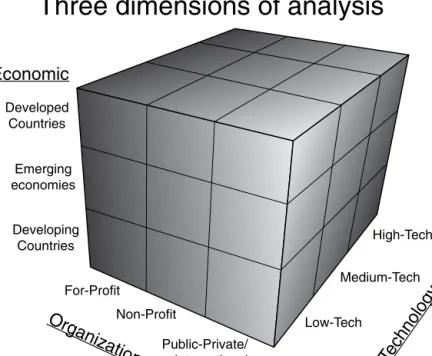
multi-nodal, multi-lateral, multi-level C3 processes 4 1.2 Heterogeneity dynamics – input, process, output 5 1.3 Dynamic cube of e-development intervention strategies.
Three dimensions of analysis of e-development in the
knowledge economy 7
10.1 The conceptual model 43
26.1 The cycle of knowledge tool-technique-method 115
26.2 The general scheme of decision process 116
30.1 Weak sustainability (“a”) and strong sustainability (“b”)
and the hierarchical model of sustainability (“c”) 149 30.2 Mutually beneficial effective circular system 151 32.1 Dynamics of the number of beneficiaries engaged in EE for
2006–2016 162 32.2 System approach model towards sustainable development of
tourism and environmental protection 164
34.1 Training courses in the degree courses (%) (n°31 university) 169
38.1 Organizational bullseye system 185
38.2 Shares of technical and non-technical comments in Android 189 38.3 Shares of technical and non-technical comments in IoS 190 42.1 The Smartness Cycle for Sustainability (SmaCySu) 207 44.1 A boundary-crossing co-creation model for Sustainable
Development (SD) 217
45.1 An integrated model of governance for sustainability 226 46.1 Innovation: a taxonomy based on the literature review 233 46.2 Value categories related to the information variety: a two
polar framework 234
46.3 ‘Innovation–Cultural model’ matrix 235
49.1 The young adults social media preliminary relations model 255
51.1 Control system structure 267
51.2 Controller model 268
54.1 Positioning map of the European Museum’s sample through
Figures xix
55.1 Technical framework for collection of Big Data onconstruction site 286
55.2 (a) BIM model of the “Vinarium lookout tower” and
(b) corresponding construction site 287
56.1 The role of smart technologies and Big Data in systems’ linking 292
57.1 The 4Cs knowledge curve 299
57.2 Problematic contexts and key leverages of knowledge
management 301
61.1 Three roots of communicative action 321
65.1 The relationships between participants 336
66.1 Key delayed control feedbacks 340
66.2 Key reinforcing feedbacks 340
75.1 The conceptual model 374
79.1 The interpretive process 401
90.1 Shifting the burden in the Guinea-Bissau macro system 455
97.1 Model of a working situation 486
101.1 SD model of functional diversity and innovation 499 104.1 Bloch sphere with the general qubit quantum state |φ>
characterized by angles θ and ϕ 521 104.2 Principle of a multivalued fuzzy quantum Braitenberg vehicle 524
105.1 Structural Element of Activity (SEA) 536
105.2 Basic hierarchies of SEAs 537
109.1 Reflexivity described as a process between individuals and reality 547 112.1 The networked citizens’ decision-making situation 558
25.1 Group analysis from different viewpoints 110 26.1 Resolution approaches: an instrumental, technical and
methodological perspective 117
27.1 A preliminary classification of the environmentally sustainable
practices 125 32.1 Total number of tourists traveling to Georgia and comparison
of due incomes with incomes from tourists traveling to
protected areas according to years 2007–2015 161
34.1 Reference authors 168
34.2 General section 169
34.3 Five aspects 170
34.4 The eight dimensions of identified CSR 171
38.1 Keywords 187
38.2 Fee apps on IOS and Android 187
38.3 Fee apps on IOS and Android 188
38.4 Number of comments 189
40.1 RSP competence framework 196
57.1 A vSa-based taxonomy of knowledge management approaches 301 66.1 Policy design implications based on policies to tackle prison
overcrowding 341 104.1 Quantum logical observables for BV actuators 523 105.1 The generalized results of the philosophical and
methodological analysis of the evolution of cybernetics
(philosophical, methodological and theoretical levels) 530 105.2 The generalized results of the philosophical and methodological
analysis of cybernetics evolution (methodical level) 531 106.1 The relations of the superior (upper) and subordinate
(lower) SEAs 539
Foreword
Raul Espejo
1WOSC 2017, the 17th Congress of the World Organisation of Systems and Cybernetics, was planned as a conversational space about social dynamics under-pinned by systems and cybernetics. Its conceptual thread has been made alive by a network of scientists, practitioners, and researchers from varied countries around the world (see Authors). Multiple conversations helped to integrate a variety of themes that are elaborated in this foreword and developed in over a hundred extended abstracts. The construction of its agenda was highly participative; efforts were made to support diversity within the shared thematic of Science with and for Society-Contributions of Cybernetics and Systems. This document is offered as a platform for the conversations we expect to hold in Rome from the 25th to the 27th of January 2017. We all agree that we are in an increasingly intercon-nected world. As expected our world is becoming more complex and therefore increasingly beyond our traditional response capabilities. The challenge is how we account for this complexity in the quest for a sustainable world underpinned by inclusion and fairness. More effective problem solving requires constructing a better world which enables individuals to offer their potentials and develop their capabilities. Dealing with an overwhelming complexity requires imaginative propositions and innovative behaviours that we believe can benefit from cyber-systemic problem solving.
Systemic thinking helps us visualise wholeness and avoid dysfunctional frag-mentation; cybernetics helps us understand how to maintain stability in the interactions between people, institutions, and organisations. Systemic thinking gives us methodological tools; cybernetics gives us tools to manage the complex-ity of situations from the local to the global. Interactions among us and with the environment may reach regulatory capacity limits in which the situational complexity scales down or up as required by the need to maintain sustainabil-ity and viabilsustainabil-ity. WOSC 2017 provided a platform to discuss the nature of our social and individual interactions and the constraints impinging in their success. Contributions to the Congress aim at exploring, debating, and clarifying what kinds of complexity management strategies are more likely to focus our societal and individual actions on desirable directions of sustainability, inclusion, mutual respect, democracy, effective organisation, and quality of life. The challenge is
xxii Foreword
making these strategies functional to societal interests and not to the interests of the few.
We started proposing three major themes for the Congress: A People, technology, and governance for sustainability B Democracy, interactions, and organisation
C Cyber-systemic thinking, modelling, and epistemology
Theme A included tracks about human aspect of management, technology and innovation, and governance for sustainability; Theme B explored democracy and transparency, interactions, law, and organisation; and the last one offered the space for cyber-systemic thinking and modelling.
Proposed tracks for the first theme were human aspects of managing systems, smartness and sustainability, smart technologies and Big Data, the brain of the future, and governance in the Anthropocene. The human aspects of managing systems opened the space for psychological and social reflexions about interactions among us and with others in the environment. Interactions within organisations and between them and their environments give us the platform to discuss today’s lack of fitness of governance in the Anthropocene; our society and its institu-tions need effective learning mechanisms, so far lacking, to cope with a fragile environment. Current information technology offers tools to foster smartness in the quest for sustainability. Effective communications and smart technolo-gies make organisational structures sensitive to changing environments and able to distribute scalable responses from the local to the global. The application of digital technologies in organisations is disrupting their structures and increasing their capabilities to deal with complexity and interactions. These technologies are offering the potential for better organisational structures and more effective pro-cesses of governance. Cognitive machines, algorithms, deep learning, Big Data are all contributing to the brain of the future; while they amplify human capabilities, they may help introduce constraints in the environment to avoid overwhelming us with irrelevant complexity.
Beyond managerial and institutional matters, the second theme – democracy, interactions, and organisation – was proposed as a bottom-up theme that related the local decision making at multiple structural levels; this was a theme about democratic processes to align local needs and ecologies with organisations and political processes. This was a space to discuss self-organisation, transparency, and local influence in the global. Focus on the local opens reflections about interactions, complexity management, and constraints. The interactions revolution was thought of as emerging from, among others, social networks and the internet; it is about the increasing social and human fluidity allowed by digital technologies and also by the conceptual frameworks of systemic and cybernetic thinking. Ethical issues derive from the development of technologies in the world of e-government and law. Bottom-up processes provide a new perspective of organisational systems, includ-ing non-directive approaches to manage the complexity of social systems and the
Foreword xxiii
emergence of constraint in complex adaptive systems. These issues are proposed as book tracks in the list below. Additionally, in this second theme we included the role of the educational system to respond to the challenges of sustainable development.The third theme of WOSC 2017 was methodological and epistemological. Sys-tems thinking in the 21st century reflects on applying sysSys-tems thinking to current problems, such as social inequality, migration, global warming, and many more. Studying and dealing with these problems requires methodologies and tools; implying contribution to the practice of information and communication systems as well as to the systemic conceptualisation of 21st-century problems. Model-ling problematic situations with the support of System Dynamics has proved to be a useful tool in a variety of situations. Formalisms of quantum mechanics have offered a novel platform to discuss modelling complex situations, such as the economy, organisations, psychology, artificial intelligence, human language, cognition, information retrieval, biology, and political science. These formalisms offer the opportunity for transdisciplinary insights and knowledge. Finally, at an epistemological level, this theme included contributions that challenged the scientific basis of traditional science; it referred to conversations about reflexivity, second order science, and conceptualisation of context.
These original three themes evolved into nine, which provided the scaffolding for WOSC 2017 and for this book of abstracts:
• Theme I: human aspects of managing systems • Theme II: sustainability and the Anthropocene • Theme III: smartness and Big Data
• Theme IV: democracy, transparency, and social dynamics • Theme V: interactions revolution
• Theme VI: knowledge and organisation
• Theme VII: systems thinking and system dynamics • Theme VIII: quantum modelling
• Theme IX: reflexivity, second order science, and context
The challenge for WOSC 2017 was their debate and discovering relations across these themes. Authors may read contributions to all nine themes, and hope-fully reflect in their final papers the cross fertilisation of ideas. Abstracts related to all these themes are available on the Congress Website and authors can access them with the support of the Padlets collaborative tool (Padlet.com), which allows leaving comments and developing conversations. Overall our purpose is to provide scientific contributions to the governance, organisation, and admin-istration of social, environmental, economic business issues, with the support of systems and cybernetic ideas. This is referred in the book as the cyber-systemic approach, which aims at a holistic view of all these issues with a focus on the regulation, control, and communications among and between the multiple agents constituting their complexity. Regulation, control, and communications are the outcome of interactions and it is through these interactions that stable forms of relations emerge that constitute organisations.
xxiv Foreword
The themes are connected and one way or the other all of them contribute to the overarching concern for a cyber-systemic appreciation of societal issues. Are together the abstracts submitted to these themes contributing to a richer and more powerful understanding of societal and organisational issues? This is a matter of individual and group discoveries. We would like to think that the nine themes have the potential to enable discoveries in the direction of making sense of the huge complexity that is overwhelming humankind currently. Hopefully WOSC 2017 turns out to be a small contribution to science with and for society.
Authors’ contributions to the Congress were made in the context of nine keynote talks, two roundtables, and one experimental session to connect theatre and cybernetics.
A connecting line for the keynotes is the Congress aim to improve our under-standing of the relationships between people, organisations, and their environ-ments. It is widely acknowledged that we are affecting our environment in ways that anticipate significant problems for future generations. Dealing with these problems requires clarifying what are acceptable levels of balance between us, our organisations, and their environments; working out essential variables and related performance criteria at multiple levels of aggregation, from the local to the global, is necessary to support action towards a sustainable world. Since it is actions that are affecting the stability of our world, we need to produce repairing efforts, which imply distributed governance and action.
The Congress’s first two keynotes in this book offer insights about these relation-ships. The first of these, “Sustainability Science: Linking Science, Policy and Society for a Sustainable Future” (by Kazuhiko Takeuchi), offers a framework for a sus-tainable future. The second, “Governance in the Anthropocene: Cybersystemic Possibilities?” (by Ray Ison), questions whether in the epoch of the Anthropocene, we are making sufficient use of governance options, technology, and education in the construction of a more sustainable world. What are possible cybersystemic contributions in this construction? The discussion on the governance of the Anthropocene, supported by sustainability principles and structural requirements for effective distributed governance is debated in Theme II “Sustainability and Anthropocene”. This theme addresses specific aspects of smart use of technolo-gies, distributed governance towards achieving global and local sustainability targets, and the role of education for sustainable development.
Human aspects of managing systems are many-sided. Among others, they relate to policy processes, people’s behaviour, social dynamics, distribution of power, and ethics and norms. These human aspects shape our social relations. We had two keynotes, focused on democracy, participation, and current technolo-gies. First, the keynote “Digital Bill of Rights” (by Richard Barbrook) opens the debate about regulating individual use of online activities not only in their inter-est but also the common interinter-est, introducing the age of cybernetic citizens with rights and responsibilities in the world of algorithms and autonomous machines, and the second “Artificial Intelligence and Law: What Perspective?” (by Daniele Bourcier). It addressed ethical considerations and the potential of soft law to take into account the sensitive and evolutionary aspects of artificial intelligence applica-tions in some areas of human activity (medicine, security, e-government, military robots, and law). These aspects affect the balance between individual rights and
Foreword xxv
the commons. Cybernetic ideas can help us to discuss freedom of expression, autonomy, and respect for each other. Related to these keynotes, three themes provide discussion in more depth issues of participation and social and individual behaviour in the cybersystemic age: first “Human Aspects of Managing Systems”, second “Democracy, Transparency, and Social Dynamics”, and third “Interactions Revolution”.Present technological developments are enablers as well as threats to democ-racy. They are amplifying the scope of interactions in orders of magnitude, some-thing that hugely increases social complexity and therefore the potentials for more participation and guided self-organisation, but also for exploitation, abuses of power, and fragmentation. These technologies have the potentials to connect social, economic, and sustainability issues; they pose challenges and open oppor-tunities, but they also increase regulatory difficulties. These issues are explored by three keynotes. The “The Brain of the Future” (by Alexandre Perez Casares) explores how cognitive machines are altering social relationships and increasing the relevance of artificial intelligence in economic activities, to the point that human jobs may be replaced by inference machines, dominated by performative algorithms rather than by simplifying mappings. The second keynote “Knowl-edge for development vision 2030” (by Elias G. Carayannis) offers a reflection about the societal developments such as smart cities which connect technology, innovation, organisation, economic and social trends; and the third, “Design of a Regional System” (by Alfonso Reyes), provides, at a micro level, considerations for designing enablers for self-organisation and regional development. Three Congress themes enhance the debates offered by these plenaries: “Smartness and Big Data”, “Knowledge and Organisation”, and “Systems Thinking and System Dynamics”.
A most important concern of this publication is exploring the contributions that systems and cybernetics can make towards improving policy processes and policy making. A particular policy issue of great social significance was discussed in the keynote “From Precision Medicine to Systems Medicine: Clinical and Social Implication” (by Christian Pristipino). This particular policy arena, in the age of Big Data and real-time streaming, can offer a holistic approach to medicine of great significance for the future of health services. The transformation from reductionist medicine to holistic medicine is precisely an arena to discuss ethically appropriate individual-patient treatments with the support of systems thinking and cybernetic modelling. The keynote “Recognizing the Dangers of Simplicity Addiction” (by Michael Lissack), introduced the issue of cybernetics and policy issues. This keynote made apparent that though simplification is necessity to cope with complexity, too much simplification is dangerous and argues for requisite variety to achieve effective performance. It opens the space for innovative contributions to modelling and epis-temological issues. Two related themes, “Quantum Modelling” and “Reflexivity, Second Order Science, and Context”, open discussion on related topics.1
Note
Below, in the Overview of this book readers can have a more detailed presentation of the nine themes of WOSC 2017.
Nowadays, society is facing challenges for which the traditional management toolbox is increasingly inadequate. Well-grounded theoretical frameworks, such as systems thinking and cybernetics, offer general level interpretation schemes and models that are capable to support understanding of complex phenomena and suffer less from the passing of time.
This book is the outcome of the WOSC 2017, the 17th edition of the Congress of the World Organisation of Systems and Cybernetics, a world organisation that invites scientists, policy-makers, professionals, and students across the globe to contribute to the debate of the dynamics underpinning contemporary societal problems from cybersystemic perspectives. WOSC offers a space for conversations about social dynamics from multiple points of view. A multi-disciplinary approach has been adopted to develop inter- and trans-disciplinary knowledge within the shared thematic of problem solving and decision making in the 21st century. Its realisation is supported by a wide network of scientists in a highly participative agenda.
The book provides a platform of knowledge and conceptual frameworks devel-oped with multi-disciplinary perspectives, which are useful to better understand our fast-changing scenarios and the complexity of problem solving in the 21st century.
The book promotes a boundary-crossing knowledge creation process high-lighting the necessity of adopting a multi-disciplinary approach to address the challenges of decision making and problem solving in the 21st century. Under the common view of the general frameworks offered by systems and cybernetics, the book addresses three macro-themes: first, people, technology, and governance for sustainability; second, democracy, interactions, and organisation; and third, cyber-systemic thinking, modelling, and epistemology. The contributions collected in the book are the outcomes of knowledge sharing processes and articulated meth-odologies and perspectives.
Sergio Barile Raul Espejo Igor Perko Marialuisa Saviano
Preface
WOSC 2017 invited contributions to 16 tracks, which were finally structured into nine themes. Some of the tracks have maintained their identity while others have evolved constituting larger themes, incorporating two or three tracks. Some tracks, even if the number of received submissions were small, have remained. Here we introduce the reader to the nine Congress themes. This introduction relies on the abstracts proposed by the tracks and themes coordinators and abstract submissions.
Theme I: human aspects of managing systems
This theme initiated by Sergio Barile, Marialuisa Saviano and Francesco Caputo invited theoretical and empirical contributions, centred on the debate of expected and potential disruptions and modifications in enterprises resulting from current technological and human changes. Direct and indirect modifications in social dynamics and the relevance of people (driving new consumer behaviour and manufacturers’ attitudes) are central to evolving enterprises. Contributions were expected to define and interpret the impacts of the changing role and behaviour of people in complex organisations (enterprises, etc.) and also impacts of changing business and management systems on the behaviour of individuals. The proposed focus was mostly on human aspects and human processes that can be analysed at behavioural, cognitive, neurocognitive and affective levels (i.e. values, planning, decision making, memory, problem solving).
Received submissions emphasised aspects of intrinsic motivation and self-organisation in firms. They emphasised the importance of training to bridge cognitive gaps between employers and employees as well as of gender equality to have smart economies and to trigger ethical differences. They highlighted change management in social and labour relations and the emergence of new relations in the network economy, such as equity crowdfounding, dynamic capabilities and successful projects.
This theme is a pivot for many of the Congress contributions. Structural aspects such as centralisation are seen as inadequate for good decision making, highlight-ing the advantages of heterarchies and autonomy to support flexible adaptable learning organisations in which everyone learns from others. Digital data and
An overview
xxviii An overview
networking complexity are growing faster than people’s data absorption capacity, triggering data handling weaknesses. This idea relates to Theme VI, “Knowl-edge and Organisation”. Resilience and antifragility are necessary to enable self-organisation and self-regulation. Organisations need anticipatory smart systems as well as dynamic capabilities to reinforce interactions with their environments and structural adaptation to changes. These are all issues also related to Theme III, “Smartness and Big Data”.
Acceleration of communications in organisations is associated to digital tech-nology. This quicker pace of communications is increasing interactive imbalances, triggering sustainability issues in organisations (Theme II). The fastest, most agile, survives. Communication professionals’ burn out in the digital era is increas-ing. Organisations need stronger response capacity (Theme V).
Human aspects in project management were highlighted emphasising the softer people aspects, raising questions about balancing cognition and interactions, for instance how to make use of managers’ unavoidable bounded rationality to work out constraints and strategies to manage complexity. Management at the edge of chaos requires considering constraint as well as augmented reality.
Related to Theme VII, “Systems Thinking and System Dynamics,” the need for soft systems methodologies is proposed. Reality is complex; it is socially constructed and a product of people’s ongoing interactions (Theme V, “Interac-tions Revolution”). This interpretivist ontology triggers the ideas of grounding epistemology in ontology.
New institutional perspectives are emerging from changes in technology as well as better appreciation of human aspects of managing systems. There are trade-offs between internal efficiency and external legitimacy. Strategies to remain competi-tive could imply mimicking others’ strategies to gain legitimacy but this mimick-ing may affect negatively intra-organisational relationships that are necessary to strengthen viability. The Viable Systems Model and Approach are used as two conceptual frameworks for management. Requisite holism is argued.
Theme II: sustainability and the Anthropocene
Sustainability is required as a must for human activities from the most local to the global. It is at this global level that the Anthropocene is understood as a new geological epoch in which humanity is affecting the earth’s dynamics. This second theme, as proposed by Marialuisa Saviano, Hernan Lopez-Garay, Sandro Schlind-wein, Markus Schwaninger and Ray Ison, acknowledges that local and global are deeply intertwined. It covers all aspects of sustainability.
Smartness, as discussed in Themes III and I, is grounded in technology and recognises digitalised processes and telematic interactions in human activities. Sustainability is focused on successful human activities as well as in processes and interactions encompassing social, environmental and economic perspectives. How can we make smartness unavoidably linked to sustainability?
Unfortunately, we live in an ever-increasing unsustainable world. Systems think-ing helps disclosthink-ing sustainability problems because of its focus on interactions
An overview xxix
and relationships. These are problems deeply rooted in our social structures and culture. Unsustainability relates to human, organisational and environmental imbalances in the management of critical variables. Instabilities are disclosing critical situations. The challenge of sustainability requires transforming research and education from a descriptive-analytic mode towards a transformative one. Distributed educational programs are necessary to build capacity for understand-ing the systemic nature of our current unsustainable world and the real-world sustainability problems. These programs are necessary to educate future genera-tions of decision makers, problem solvers, change agents and transition managers. We need to reflect upon and learn the competences, pedagogies and assessment tools needed for these purposes. In WOSC 2017 this theme wants to shed light into programs that use cybersystemic tools to educate a new breed of human being aware of the historical conditions we are in. The aim is people caring for the development of a harmonious sustainable world.As proposed by Ray Ison, earth scientists are claiming that we have entered a new geological epoch: human influences have become so great that they are affecting “whole Earth dynamics” through a range of biophysical and social processes leading to complex global changes. Unfortunately, these changes are the outcome of happenstance more than of reflective governance systems. This calls for a critical reflexion of our past thinking, practices, institutions, patterns of investment and governance.
The Paris Agreement in December 2015 was a call for national, organisational and institutional commitments to take action towards a satisfactory balance between human activity and earth sustainability. This theme wants to reflect upon cybersystemic governance of social-ecological systems.
Contributions to “smartness and sustainability” are closely related to those to Theme III, “Smartness and Big Data”. Aspects of value co-creation between pro-viders and customers, willingness to adopt data management technology to sup-port sustainable behaviours are being proposed in both themes. In this context a major topic for debate is “smart cities”. Actors, smart technologies, designers and governance come together in sustainable cities; What is a sustainable city? How can systems thinking inform the design and management of smart cities? Can non-conventional conversational places, such as the Cybersyn operations rooms help in the ongoing design of smart cities? What can smart grids, as enabling technolo-gies for interactions, do? These are questions that are also relevant to the themes “Knowledge and Organisation” and “Systems Thinking and System Dynamics”. Smartness and sustainability relate environmental, economic and social dynamics. A challenge for the Congress is debating an integrated framework for sustainabil-ity: algorithms, hard and soft approaches that weave sustainability and technology. The Viable System Model offers a conceptual framework for the governance of local and global systems. Its reliance on the Law of Requisite Variety makes it relevant to the debates of the “Systems Thinking and System Dynamics” theme (Theme VIII).
Governing socio-ecological systems in the Anthropocene reveals the high dependency between nature and society. “Socio-ecological systems” are complex
xxx An overview
and need to be adaptive. They need resilience to absorb change. The structural coupling between ecology and society is a wicked problem. We need models and tools to appreciate better the structural coupling of social systems and their ecosystems. They should help disclose critical variables and the relationships that need to be conserved over time. Contributions to this theme may enable debates about the governance in the Anthropocene using the metaphor of a triple helix between academy, government and industry. Universities should play a significant role not only in research but also in education for sustainability.
It can be appreciated that this theme also weaves several others.
Theme III: smartness and Big Data
This theme, as proposed by Fabio Orecchini, Francesco Polese and Igor Perko, offers the opportunity for a more focused debate about Big Data. This is a dis-ruptive technology in nearly all the domains of our interest. Big Data support interactions, decision processes, production and in general all kinds of services delivery activities fostering the co-evolution of agents of all kinds. Theme III aims at analysing the state-of-the-art and future of Big Data and smart technology’s definition, design, exploitation, potentials and limits.
This theme is focused not only on smart cities but also on other kinds of social, economic and production services. Reflections on the smart city ecosystem, the disruptive nature of its relevant technologies, the disruption of traditional market balances to support the emergence of more efficient, effective and sustainable cit-ies are ideas discussed in this theme. Smart citcit-ies are the arena for stakeholders’ interactions (Theme V, “Interactions Revolution”). Contributors to this theme see cities as complex adaptive systems.
It is based on data collection, analytics and measurements for social, economic and technical systems. Big Data is disrupting the interactions within and between enterprises of all kinds, and over time is supporting the emergence of new relation-ships between firms and public organisations, between R&D and universities, and indeed the emergence of virtual networks and organisations. Discussions about the nature and characteristics of these relationships should help to visualise new social forms. Contributions to this theme have emphasised triple helix articula-tions between universities, the economy and society. Smartness helps to focus on stakeholders of all kinds, like youth, elderly, professionals, interest groups, unem-ployed and so forth. Big Data, analytics and measurement are relevant to each, and many more, of these groups to disclose communication channels relevant to them.
It is necessary to understand the capabilities of internet and data manage-ment companies. Enterprises like Amazon, Google, Facebook are shaping our interactions and relationships. Applications like the internet of things and the automation of transport activities will be shaping the way we live. Ubiquitous smart devices are increasing data collection at staggering speed. This growth in data collection capabilities will trigger further technological changes, like for instance quantum computers, linking this theme to the “Quantum Modelling” theme (Theme VIII).
An overview xxxi
To define a technology as smart it must be aware of its environment and must have capacity to co-evolve with environmental agents and self-configure its capa-bilities. This theme discusses the viability of smart service systems.This theme, as well as the “Knowledge and Organisation” theme (Theme VI), is responding to the challenge of knowledge management in the 21st century. Big is not necessarily smart. Data management has the potential of being the pathway towards a smarter planet with better capabilities for solving social, eco-nomic or/and other human issues. This is a connection with the “Sustainability and Anthropocene” theme (Theme II). But also, this theme wants to discuss matching managerial capabilities to data, a topic connected to the “Interactions Revolution” (Theme V).
Theme IV: democracy, transparency and social dynamics
Amanda Gregory, Daniele Bourcier, Raul Espejo and Zoraida Mendiwelso-Bendek are coordinating this theme.
The theory of self-organisation, based on the premise that some form of overall order or coordination can arise out of the local interactions between the component parts of a system, has a long history and a wide field of application. Self-organisation is relevant to social systems constituted through local or virtual interactions. It reflects the assumption that self-organisation will emerge through the realisation of the benefits of autonomy, a positive orientation towards self-empowerment and purposeful action. Self-organisation happens in interactions of unequal complexity such as instances of societies facing extreme environ-mental problems, or dire economic pressures, or challenges of accommodating different values and norms of behaviour. While some self-organisation efforts flourish, others fail as economic, environmental, political and social factors can pose challenges that undermine them. Self-organisation may be dysfunctional to the point of threatening the fairness, justice and even the viability of the interact-ing agents. These are undesirable instance of social dynamics. Contributions to Theme V – the “Interactions Revolution” – and Theme VI – “Knowledge and Organisation” – also discuss aspects of self-organisation.
One of the contributions addresses the issue of the peace process in Colombia, which suggests the need for national cohesion and the enabling of self-organisa-tion to overcome the entrenched corrupself-organisa-tion in some of the regions of the coun-try. Corruption makes transparency and democracy unachievable. Citizens science is proposed as a tool to improve communications between citizens, experts and politicians. Democratic deficits, even in the most advanced democracies, pose the need for reflection and this is one of the aims of this theme.
Barbrook is proposing in this Congress the creation of a Digital Bill of Rights to avoid the threat of authoritarian states and monopolistic businesses in the age of the internet. This proposition requires attention to interaction spaces enabling self-organisation. Cybernetic principles of complexity management can enable the democratisation of internet services. As proposed by Espejo, Beer’s Viable System Model is one such framework for complexity management and the Law
xxxii An overview
of Requisite Variety offers a heuristic for the democratisation and transparency of these processes. The Liberty Machine, which underpinned Beer’s design and development of the projects Cybersyn and Cyberfolk in the Chile of the early 1970s, offered an extraordinary vision of a utopian society in which the people could express themselves, individually or collectively, with autonomy. Today these projects can be undertaken with more sophisticated methodologies and epistemologies, which should support better processes of social construc-tion (Theme IX: “Reflexivity, Second Order Science, and Context”). Also, as is discussed by the “Smartness and Big Data” theme (III), we have hugely more developed information and communication technologies, which should allow us to deal with complexity and support interactions at scales that were unthinkable 40 years ago. These conceptual and technological developments give us opportu-nities to transform our societies into more democratic and transparent ones. This theme has been proposed as a platform for contributions to discuss and illustrate the application of cybernetic principles and digital technologies to the design of participative and inclusive processes in the public, private and third sector spheres.
As proposed by Bourcier in this Congress the movement of Commons is not only protecting and improving the management of (scarce) resources but also offering the opportunity to renew democracy through a redefection of state and market interactions with the support of systemic ideas. This theme wants to discuss this renewal from the “making of law” perspective. How to reach a consensus on regulation? The notion of Common good highlights the need for a different normative; it suggests a re-thinking of the legal framework towards the production of Common good. It is necessary to experiment building a normative system on local, global and interpersonal relations between social actors, and to implement collaborative legal tools, scalable, inclusive, integrative and experi-mental. This theme focuses on how have the Commons or Common good been integrated into the legislative texts? And, how can we rethink a normative process based on the social dynamics of the Commons? It is proposed to rethink existing normative tools in our democracies; how have new methods for writing norms emerged from the Commons movement?
Finally, this theme proposes to rethink democracy through legal tools designed in a cooperative and decentralised process. Further developments invite case stud-ies in the various types of legal norms (constitutions, statutes, by-laws, customary laws), in soft law (ethics, charts, guides, Creative Commons licences, . . .) and smart contracts.
Scholte discusses in one of the submissions to this theme: “Varieties of Systems Theatre” is offered as a reflection about interactions and reflexivity. It is experi-mental in nature. He discusses, following Ross Ashby’s assertion that “the discov-ery that two fields are related leads to each branch helping in the development of the other”, how theatre experiments offer an opportunity for cross fertilisation between theatre and second order cybernetics. He is looking for cross fertilisation between “varieties systems theatre” and the cybernetics and systems community. First, he argues that theatre has cybernetic underpinnings; particularly it can be an instance of applied epistemology. Second, it links modes of cybernetic explanation
An overview xxxiii
to processes of agent-based modelling (patterns of interactions). Third, it offers reflections about the theatre of the oppressed, which involves the audiences.Theme V: interactions revolution
This theme originally proposed by Espejo and Dominici wants to enable theo-retical and empirical contributions about the increased speed of self-organising processes in today’s world. Its focus is fluid interactions in the age of digital tech-nologies. Its worldview is interactions and relationships between systems and their environments and also interactions within organisations. Its emphasis is dynamic and structural couplings and co-evolution rather than the study of the parts of a system. Today organisations and social systems need increased fluidity and agility to respond to environmental, social and economic pressures. Particularly these are requirements focused on the future and therefore this theme is connected to the Keynote “The Brain of the Future”. The aim is to investigate opportunities and challenges for organisational and business systems in future scenarios that will require new strategies and policies to face increased fluidity in social structures.
It offers a space for digital technologies and transdisciplinary conceptual frameworks to disclose self-organised organisational forms that are more likely to anticipate and respond to environmental, social and economic changes.This is an ‘interactions revolution’ towards distributed value co-production and guided self-organisation. Problem solving is at the core of these self-organising processes; which interaction strategies increase response capacity and help, making sense of an often overwhelmingly complex surrounding? These are aspects related to req-uisite variety. Also, which interactive strategies help to maintain dynamic stability with this environment?
Contributions to this theme have not necessarily recognised this conceptual framework, but at its core are forms of interaction diagnosing, designing and discovering problem-solving strategies. Instances illustrate how people can benefit from current technologies in today’s digital world to make their interactions – often dominated by information asymmetry, domination, abuses of power, inequality, lack of mercy and so forth – more humane and acceptable. The emer-gence of mercy in interactions – eleogenetics – as one of the abstracts proposes is not only a spiritual matter but also a matter of communicative capacity, say, between a mother and a child. Equally, lack of trust, corruption, unfairness relate to communicative capacity. There is much scope for an increased transparency, as well as exposure, in interactions. In a technical sense, algorithms and software code can break through murky communications.
A particular aspect of the abstracts to this theme is their foci on instances, such as a country’s banking for sustainable development, language development to improve communications, smart cities to strengthen cohesion and improve quality of life, 3D printing technologies for personalised medication and health workers’ interactions with patients to improve their services and so forth. One way or the other interactions are the currency of most of the other Congress themes; however in this theme the emphasis is instances of problem solving and