EDUCAÇÃO E DESENVOLVIMENTO SOCIAL EDUCATION AND SOCIAL DEVELOPMENT
EDUCACIÓN Y DESAROLLO SOCIAL
mill
e
nium
35
Millenium, 2(5), 35-42.
UTILIZAÇÃO DO MODELO DE CRENÇAS EM SAÚDE COMO PREDITOR DA INTENÇÃO DE COMPRA DE
MEDICAMENTOS DIETÉTICOS DE VENDA LIVRE.
UTILIZING THE HEALTH BELIEF MODEL TO PREDICT THE PURCHASE INTENTION OF OVER-THE-COUNTER DIET
DRUGS
UTILIZAR EL MODELO DE CREENCIAS DE SALUD PARA PREDECIR LA INTENCIÓN DE COMPRA DE MEDICAMENTOS
DIETÉTICOS DE VENTA LIBRE
Silvia Villaverde
1Diana Gavilan
2Maria Avello
21
ESIC Business and Marketing School
2
Complutense University of Madrid
Silvia Villaverde - [email protected] | Diana Gavilan - [email protected] | Maria Avello - [email protected]
Corresponding Author
Silvia Villaverde
ESIC Business & Marketing School.
Avenida de Valdenigrales s/n, Pozuelo de Alarcón. 28223 Madrid, España
RECEIVED: 30th november, 2017 ACCEPTED: 18th january, 2018
Villaverde, S., Gavilan, D. & Avello, M. (2018). Utilizing the health belief model to predict the purchase intention of over-the-counter diet drugs. Millenium, 2(5), 35-42
DOI: https://doi.org/10.29352/mill0205.03.00168
m
36
5
RESUMO
Introdução: Um em cada dois medicamentos vendidos na Europa é comercializado em venda livre. Tradicionalmente, a
investigação sobre decisões do consumidor em relação à saúde foi explicada com base no modelo de crenças em saúde. No entanto, nenhuma pesquisa de que há conhecimento investigou a compra de medicamentos com o objetivo de melhorar a saúde.
Objetivo: Testar a adequação do modelo de crenças em saúde para explicar a intenção de comprar medicamentos dietéticos
sem receita médica para melhorar um problema de saúde, particularmente o peso.
Método: foi utilizado um desenho transversal quantitativo através de aplicação de um questionário on-line a uma amostra de
193 indivíduos.
Resultados: os resultados evidenciam que existe uma influência significativa de todas as dimensões do modelo de crenças em
saúde na intenção de comprar medicamentos de venda livre para perder peso. No entanto, a relação entre as barreiras percebidas para a ação e a intenção de comprar revelou-se oposta à direção esperada.
Conclusões: os resultados sugerem que o modelo de crenças em saúde é adequado para explicar a intenção dos indivíduos de
comprar medicamentos sem receita médica. As conclusões permitirão à indústria farmacêutica planear estratégias de comunicação com base num conhecimento do consumidor mais aprofundado.
Pesquisas futuras podem investigar outras variáveis, como a influência do passa palavra sobre o comportamento orientado para a saúde, bem como a confiança do consumidor nas propriedades de produtos que supostamente ajudam a regular o peso.
Palavras-chave: modelo de crenças em saúde; medicamentos dietéticos; Intenção de compra; perda de peso.
ABSTRACT
Introduction: One out of two packages of medicines sold in Europe is a non-prescription medicinal product. Research on
consumer decisions in terms of health has traditionally been explained based on the Health Belief Model. However, no research we are aware of has investigated the purchasing of drugs with an aim of improving health.
Objectives: Test the suitability of the Health Belief Model in the explanation of the purchase intention of over-the-counter diet
drugs to improve a health problem, particularly weight.
Methods: A quantitative transversal design was used. An online self-reported questionnaire was administered to a sample of
193 subjects.
Results: Results show a significant influence of all the dimensions of the health belief model on the purchase intention of
over-the-counter diet drugs. However, the relationship between barriers to taking action and the intention to purchase was reversed to that predicted.
Conclusions: Results suggest that the health belief model is suitable for the explanation of the individuals´ intention to purchase
over-the-counter diet drugs. Key findings will allow the pharmaceutical industry to design communication strategies based on deep consumer knowledge.
Future research may deepen into variables such as the influence of word-of-mouth in health-oriented behavior, as well as consumer’s confidence in the properties of the products that allegedly help to adjust weight.
Keywords: health belief model; diet drugs; purchase intention; weight loss.
RESUMEN
Introducción: Uno de cada dos medicamentos vendidos en Europa es de venta libre. Tradicionalmente, la investigación sobre las
decisiones del consumidor en materia de salud se ha explicado basándose en el modelo de creencias de la salud. Sin embargo, ninguna investigación de la que tengamos conocimiento ha investigado la compra de medicamentos con el objetivo de mejorar la salud.
Objetivo: Probar la idoneidad del modelo de creencias de la salud en la explicación de la intención de compra de medicamentos
dietéticos de venta libre para mejorar un problema de salud, particularmente el peso.
Métodos: Se utilizó un diseño transversal cuantitativo mediante la administración ión de un cuestionario en línea a una muestra
de 193 sujetos.
Resultados: Los resultados muestran una influencia significativa de todas las dimensiones del modelo de creencias de salud en la
intención de compra de fármacons de venta libre para perder peso. Sin embargo, la relación entre las barreras percibidas para la acción y la intención de comprar resultó ser de sentido opuesto al previsto.
Conclusiones: Los resultados sugieren que el modelo de creencias de salud es adecuado para explicar la intención de los
individuos de comprar fármacos de venta libre. Estas conclusiones permitirán a la industria farmacéutica diseñar estrategias de comunicación basadas en un profundo conocimiento del consumidor.
Villaverde, S., Gavilan, D. & Avello, M. (2018).
Utilizing the health belief model to predict the purchase intention of over-the-counter diet drugs. Millenium, 2(5), 35-42.
DOI: https://doi.org/10.29352/mill0205.03.00168
m
5
37
Las investigaciones futuras pueden profundizar en variables como la influencia del boca-oreja en el comportamiento orientado a la salud, así como la confianza del consumidor en las propiedades de los productos que supuestamente ayudan a ajustar el peso.Palabras Clave: modelo de creencias de salud; medicamentos dietéticos; intención de compra; pérdida de peso.
INTRODUCTION
Over-the-counter (OTC) drugs are sold without prescription. This makes a consumer the decision-maker in addition to being the consumer, bringing these products to consumer goods.
Legislative differences between countries explain that the distribution channels through which OTC can be acquired vary from country to country. While in Spain OTC can only be sold in pharmacies, in the UK the sale of these products is widely available through other retail channels such as supermarkets (Gavilan, Avello & Abril, 2014).
OTC drugs are a growing market that has generated new opportunities at a time when government regulations make prescription drugs less profitable. In Spain OTC drugs have a 20% share of the entire pharmaceutical market.
Unlike other consumer goods, drugs and especially weight-loss drugs have particular characteristics from a marketing standpoint. They can be advertised in mass media; its use entails a necessary awareness of the problem and a wish to act accordingly: diet, exercise, new habits, in addition to the support of the weight-loss drug consumption; indeed, a dynamic product category with a high rate of innovation, which makes weight-loss drugs the sales leaders among OTC products.
The academic approaches to the decisions of subjects in terms of health have been widely explained by the Health Belief Model (Park, 2011; Sullivan et al., 2008; Daddario, 2007; Nejad, Wertheim & Greenwood, 2005; Kang, Jin & Lee, 1998; Price, Roberts, Jurs, & McKinley, 1985). These studies attempted to explain the preventive behavior of serious diseases such as AIDS through educational interventions, vaccination (Janz & Becker, 1984), preventing breast cancer through breast self-examinations or visiting a doctor (Frankenfield, 2009), or prostate cancer screening through early diagnostic tests (Anderson, 2013). It has also been used to explain preventive behaviors against moderate or mild diseases, like seasonal influenza in population over 60 (Sullivan et al., 2008); or the preventive behavior against avian influenza (Jones et al.,2015). Other applications are the general pattern of adopting healthy habits such as a moderated consumption of alcohol among youngsters (Lara et al., 2009). Another set of healthy habits are those of weight-control. Nejad et al. (20055) observed that the perceived benefits of the drugs are the most important feature to explain the intention to monitor the loss of weight. Kang et al. (1998) conducted a study among obese students, and concluded that the degree of dissatisfaction with their actual weight and their past experience to control it became a predictor regarding the control of obesity. Nejad et al., (2005) showed that the perceived benefits and perceived susceptibility dimensions exerted the highest influence in the fact of following a diet. Park (2011) analyzed the influence of the different dimensions of the HBM depending on the weight level perceived by the participants in the study at three levels: underweight, normal weight and overweight.
In such circumstances, the Health Belief Model (HBM) provides interesting results. However, to the best of our knowledge, there are no studies that consider health-related behaviors in purchasing of products that help prevent illnesses or improve health. The aim of this research is therefore to test whether the Health Belief Model is also able to explain the decision of buying a product that contributes to improve a health problem such as diet OTC drugs.
1. THEORETICAL FRAMEWORK
Originated around 1952, the Health Belief Model was initially developed by social psychologists at the US Public Health Service as a systematic method to explain and predict preventive health behavior. It focused on the relationship of health behaviors, practices and utilization of health services (Rosenstock, Derryberry & Carriger, 1959). More recently, the HBM has been revised to include general health motivations in order to discern between illnesses and sick-role behaviors from health behaviors. The behavior towards health care is based on the individual´s susceptibility to suffering from an illness; the belief that a disease may have certain severity, and the perception that particular behaviors can improve the illness even if there are barriers that make the decision more difficult to take.
Perceived Susceptibility – subjects own perception of the likelihood of experiencing a condition that would adversely affect one's
health. Individuals vary widely in their perception of susceptibility to a disease or condition.
The increased susceptibility leads to perform behaviors to minimize the associated risks. For example, the susceptibility to flu motivates people to get vaccinated against the disease (Chen, Fox, Cantrell, Stockdale & Kagawa-Singer, 2007). However, susceptibility is not always associated with shifts in behavior, and therefore, despite being aware of the risk, individuals do not engage in preventive behaviors. Certain people continue sunbathing without sunscreen, despite being aware of the risk of skin cancer (Day, Wilson, Roberts, & Hutchinson, 2014).
Villaverde, S., Gavilan, D. & Avello, M. (2018). Utilizing the health belief model to predict the purchase intention of over-the-counter diet drugs. Millenium, 2(5), 35-42
DOI: https://doi.org/10.29352/mill0205.03.00168
m
38
5
There is a positive relationship between the level of perceived susceptibility of being overweight or obese, and those behaviors aimed at reducing such susceptibility (Nejad et al., 2005) as for instance the purchase of a weight-loss OTC drug. Thus, we propose the following hypothesis:
H1: (Perceived Susceptibility) Perceived Susceptibility positively influences the intention to purchase a weight-loss OTC drug.
Perceived Seriousness – refers to the beliefs a person holds concerning the effects a given disease or condition would have on
one's state of affairs. These effects can be considered from the point of view of the difficulties that a disease can create. For instance, pain and discomfort, loss of work time, financial burdens, difficulties with family, relationships, and susceptibility to future conditions. It is important to include these emotional and financial burdens when considering the seriousness of a certain disease (Janz & Becker, 1984).
For overweight and obesity, perceived seriousness has been studied from a psychological point of view such as the difficulty of wearing certain clothes or from the perspective of the health problems generated by overweight (Park, 2011). Perceived severity of overweight in addition to the shift in eating habits can stimulate the decision to buy a weight-loss OTC drug. Thus, we posit the following hypothesis:
H2: (Perceived Seriousness) Perceived Seriousness positively influences the intention to purchase a weight-loss OTC drug.
Perceived Benefits of Taking Action – refers the benefits of taking action toward the prevention of a disease. The direction of
action that a person chooses will be influenced by the beliefs regarding that action.
In terms of preventing obesity and overweight, the perceived benefits of weight loss include reducing health risks and improving physical appearance (James, Campbell & Hudson, 201). To the extent that the subject attributes greater value to those benefits he/she will be more oriented towards the purchase of an OTC drug to lose weight. Thus, we posit the following hypothesis: H3: (Perceived Benefits) Perceived Benefits of taking action positively influence the intention to purchase a weight-loss OTC drug.
Barriers to Taking Action – Barriers relate to the characteristics of a treatment or preventive measure may be inconvenient,
expensive, unpleasant, painful or upsetting. These characteristics may lead a person away from taking the desired action (James et al., 2002).
Park (2011) analyzes the complexity of hunger and the associated difficulty to stop eating on special occasions. James, Pobee, Brown & Joshi (2012) discusses the lack of social support and reliable information about diets.
Many of the weight- loss OTC drugs are positioned as reducers of some of these barriers such as starve, or suffer from anxiety, so we can anticipate that the stronger these barriers are, the greater the interest of the subject to mitigate its effects, and therefore the greater the intention to purchase an OTC drug to lose weight. Therefore:
H4: (Barriers to Taking Action) Barriers to Taking Action positively influence the purchase intention of weight –loss OTC drugs.
Cues to Action – Refers an event that triggers the desired behavior. These cues may be internal –such as the existence of
symptoms– or external such as a medical prescription (East, Hammond & Lomax, 2008), the influence of group membership and the information received from the media (Ahadzadeh, Sharif, Ong, & Khong, 2015).
Sharing information is part of modern life. Peer-to-peer communication or sharing feedback, either face to face (WoM) or electronically (eWoM) is shifting the status quo of our daily life (East et al., 2008). People are subjected to extensive information on the experiences and opinions of others. When the receiver accepts the information, either consciously or subconsciously, he/she can use the information to take a specific purchase decision (Rabjohn, Cheung & Lee, 2008).
Social pressure, discrimination and stereotyping that revolve around the obese, such as being perceived as lazy, incompetent or lack of individual self-discipline, have been identified as key actions in the control of obesity (Puhl & Heuer, 2010).
Although there are no studies on the subject, based on research into the phenomena of virality and purchase decisions, we can argue that positive WoM can to be the factor that drives the purchase intention of weight-loss OTCs drug. Therefore, we posit that:
H5: (Cues to Action) Positive WoM positively influences the purchase intention of OTC weight- loss drugs.
Self-efficacy – Bandura (1977) introduces the concept of self-efficacy as “the conviction that one can successfully execute the behavior required to produce an outcome”. To change behavior to succeed, the individual must feel competent (self-efficacious) to implement that change. Thus, in the context of weight loss, the conviction that one can successfully reduce weight through his/her own personal effort reduces customer likelihood to purchase OTC drugs.
Villaverde, S., Gavilan, D. & Avello, M. (2018).
Utilizing the health belief model to predict the purchase intention of over-the-counter diet drugs. Millenium, 2(5), 35-42.
DOI: https://doi.org/10.29352/mill0205.03.00168
m
5
39
2. METHODS
The methodology developed has been quantitative, using the online survey as data collection technique. To test the proposed hypotheses, an online survey was conducted.
2.1 Sample
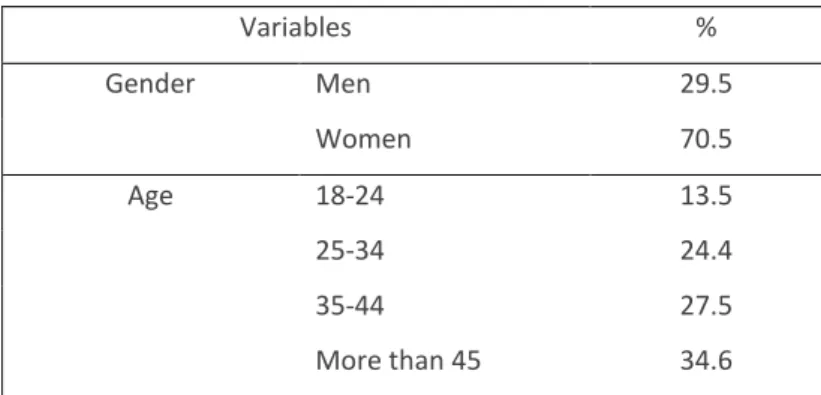
The sample consisted of 193 persons aged between 18 and 55, with a mean age of 41 (SD=12.1), mean weight of 70.77 kg (SD=16.7) and mean height of 168.19 (SD=9.3)
Table 1 - Characteristics of the sample
Variables % Gender Men 29.5 Women 70.5 Age 18-24 13.5 25-34 24.4 35-44 27.5 More than 45 34.6
2.2 Data Collection instruments
A self-reported questionnaire was developed to measure the six dimensions of the Health Beliefs Model, the purchase intention and five questions related to the sociodemographic and personal characteristics, such as weight and height. All participants answered the questionnaire in the same order:
- Perceived susceptibility was measured with 3 items adapted from Cockburn, Fahey and Sanson-Fisher (1987) and Park (2011).
- Perceived seriousness was measured with 5 items adapted from Frankenfield (2009) and Park (2011). - Perceived benefits were measured with 4 items adapted from Park (2011).
- Barriers to taking action were measured with 4 items adapted from Park (2011) and Cockburn, Fahey and Sanson-Fisher (1987).
- Cues to action were measured with 5 items adapted from Park (2011) and East et al. (2008). - Self-efficacy was measured with 6 items adapted from Park (2011).
In each dimension, respondents were asked to indicate their level of agreement with the given statement on a five-point Likert scale, scored from 1 (completely disagree) to 5 (completely agree).
Purchase intention was scored according to a five-point Likert-type scale, ranging from 1 (unlikely to purchase) to 5 (likely to purchase).
The questionnaire was examined by a panel of experts to ensure content validity and to guarantee the accuracy of the translations. To verify the clarity of the questions and gain feedback on the length of the questionnaire, it was tested previously in a group of 25 customers.
2.3 Inclusion criteria and procedures
The inclusion criteria verified by Toluna were: (1) Spanish as native language and residents in Spain; (2) age between 25-65; (3) men 30%, women 70%. If a survey fits the profile, Toluna would send an email invitation to respond to the survey, including a link to complete it. Five hundred and fifteen panelists were invited to participate in the study with a response rate of 37.5%. Respondents were given an incentive consisting of Toluna points redeemable for prizes.
2.3 Data analysis
The statistical program IBM, SPSS version 21 was used to conduct the analysis of the data. Descriptive statistics were performed to characterize the sample and personal features of the participants. Next, Scales were submitted to exploratory factorial analysis followed by an alpha Cronbach’s test. Path Analysis was performed to test the hypothesis with a maximum likelihood estimation method. The measurement model was first estimated to assess factor structure, reliability, convergent validity and discriminant validity. Subsequently, the parameters of the structural model were estimated.
Villaverde, S., Gavilan, D. & Avello, M. (2018). Utilizing the health belief model to predict the purchase intention of over-the-counter diet drugs. Millenium, 2(5), 35-42
DOI: https://doi.org/10.29352/mill0205.03.00168
m
40
5
3. RESULTS
Results of the exploratory factor analysis were acceptable with a KMO = 0.89 and Bartlett’s Test of Sphericity being significant at p<0.000 suggesting the appropriateness of the data. Internal consistency of the constructs were satisfactory with Cronbach´s alphas ranging from .733 to .913.
The proposed theoretical model fits the data sample adequately. The fit indices are above the acceptable threshold (Hu & Bentler, 1999): χ2 = 113,235 (p < 0.01); Goodness of Fit Index (GFI) = 0.963; Tucker-Lewis Index (TLI) = 0.961 and Root Mean Square Error of Approximation (RMSEA) = 0.062.
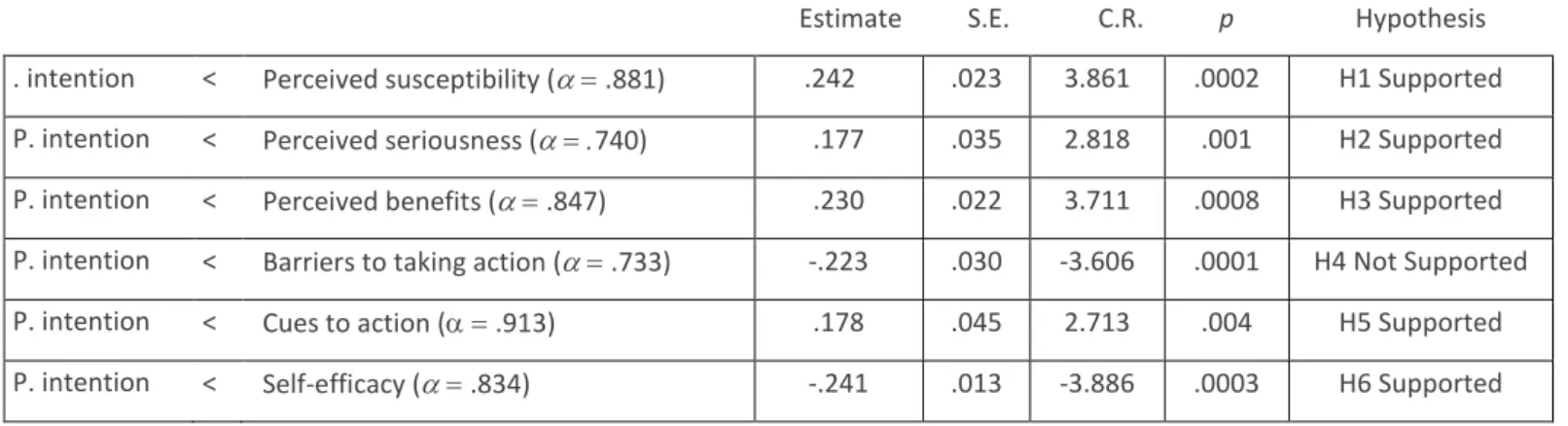
Table 2 - Stantandardized Path Coefficients
Estimate S.E. C.R. p Hypothesis . intention < Perceived susceptibility (.881) .242 .023 3.861 .0002 H1 Supported P. intention < Perceived seriousness (740) .177 .035 2.818 .001 H2 Supported P. intention < Perceived benefits (.847) .230 .022 3.711 .0008 H3 Supported P. intention < Barriers to taking action (.733) -.223 .030 -3.606 .0001 H4 Not Supported P. intention < Cues to action (.913) .178 .045 2.713 .004 H5 Supported P. intention < Self-efficacy (.834) -.241 .013 -3.886 .0003 H6 Supported
Results show that all standardized path coefficients are significant indicating a significant influence of the dimensions of the health belief model on the consumer´s purchase intention. Thus, Perceived susceptibility, perceived seriousness, perceived benefits, cues to action and self-efficacy are, as hypothesized, good predictors of the purchase behavior of an OTC diet drug. However, H4 shows a reverse relationship to that established. This means that the higher the barriers to taking action, the lower the purchase intention of OTC diet drugs. Therefore, the presumptive positioning of weight-loss drugs for reducing the effects of discomfort associated with weight loss is not achieved in this research.
4. DISCUSSION
The aim of this study was to test the suitability of the Health Belief Model in the explanation of the purchase intention of OTC diet drugs to improve a health problem, particularly weight. Results show significant relationships between every dimension of the model and the purchase intention of OTC diet drugs.
Regarding the perceived susceptibility and perceived seriousness, the results of our research are in line with those of Anderson, 2008. Nevertheless, some authors have shown that despite individuals perceiving a disease as serious, the susceptibility level might be low and this leads to a lack of preventive behavior in such a way that it is necessary to manifest a high perceived severity for susceptibility to play a predictive role in behavior (Champion & Skinner, 2008). More recent studies (Daddario, 2007) found that the first motivation for behavioral change is the perceived threat level or the perception of having a risk of obesity, in other words, the perceived susceptibility and severity.
Regarding the perceived benefits, previous studies on overweight or obesity, argued that the perceived benefits were the most important predictor of the intention to control obesity in the face of a health threaten, especially among the population that already had an obesity problem (Kang, 1998; Nejad et al, 2005).
Exceptionally, barriers to taking action reduce purchase intention significantly. This conclusion suggests that individuals don’t perceive that the damage and inconvenience involved in going on a diet to lose weight can be relieved with the purchase of these drugs.
Our results show a significant influence of WoM, as a Cue to action, on the intention to purchase OTC diet drugs. We live in a society in which the influence of other people, and the social proof they endow us with, become a key aspect of purchasing decisions.
Regarding the self-efficacy dimension, our results reinforce those of other authors such as García and Mann (2003) who conclude that models that include the self-efficacy variable are more effective than those that do not include it in analyzing the behavior of avoiding food and being.
It is difficult to compare the results with previous work, since in previous studies did not address purchase intention directly. However, the ability of the dimensions of the HBM to anticipate certain behaviors supports the results of authors such as Garcia and Mann (2003) or Nejad et al. (2005). When comparing the results of different studies in which HBM has been applied,
Villaverde, S., Gavilan, D. & Avello, M. (2018).
Utilizing the health belief model to predict the purchase intention of over-the-counter diet drugs. Millenium, 2(5), 35-42.
DOI: https://doi.org/10.29352/mill0205.03.00168
m
5
41
authors find differences in the influence exerted by the different dimensions on behavior. Even authors such as Sullivan (2008) conclude that not all dimensions of HBM are always significant.
CONCLUSIONS
The use of the HBM can improve our understanding of consumer behavior regarding over-the-counter diet drugs. This implies that the Model itself applied to OTC drugs could follow the same process as when dealing with serious illnesses or to analyze consumer behavior towards the initiation of treatments or prevention with healthy behaviors. Also, the key findings of this study allow the pharmaceutical industry to design communication strategies based on deep consumer knowledge related with the OTC purchase decision.
The present study has certain limitations. Mainly, data collection is based on a convenience sample of less than 200 subjects. However, to reduce the possible negative impact that the size of the sample could have on the results, respondents were selected from a panel and rewarded for their contributions.
Future research may deepen into the influence of WOM in health-oriented behavior, as well as consumer’s confidence in the properties of the products that allegedly help to adjust weight.
REFERENCES
Ahadzadeh, A. S., Sharif, S. P., Ong, F. S., & Khong, K. W. (2015). Integrating health belief model and technology acceptance model: an investigation of health-related internet use. Journal of medical Internet research, 17(2).
Anderson, M. M. (2013). Testing the Health Belief Model Using Prostate Cancer Screening Intention: Comparing Four Statistical Approaches Applied to Data from the 2008-09 Nashville Men's Preventive Health Survey (Doctoral dissertation, Vanderbilt University).
Bandura, A. (1977). Self-efficacy: Toward a unifying theory of behavioral change. Psychological Review, 84(2), 191-215.
Champion, V. L., & Skinner, C. S. (2008). The health belief model. Health behavior and health education: Theory, research, and
practice, 4, 45-65.
Chen, J. Fox, S, Cantrell, C, Stockdale, S. & Kagawa-Singer M. (2007). Health disparities and prevention: Racial/ethnic barriers to flu vaccinations. Journal of Community Health, 32(1), 5-20.
Cockburn J., Fahey P. & Sanson-Fisher R. (1987). Construction and validation of a questionnaire to measure the health beliefs of general practice patients. Family Practice, 4(2), 108-116.
Daddario, D. (2007). A Review of the Use of the Health Belief Model for Weight. Medsurg Nursing, 16(6), 363-366.
Day, A. K., Wilson, C., Roberts, R. M., & Hutchinson, A. D. (2014). The skin cancer and sun knowledge (SCSK) scale: validity, reliability, and relationship to sun-related behaviors among young western adults. Health Education & Behavior, 41(4), 440-448.
East, R., Hammond, K., & Lomax, W. (2008). Measuring the impact of positive and negative word of mouth on brand purchase probability. International Journal of Research in Marketing, 25(3), 215-224.
Frankenfield, K. M. (2009). Health Belief Model of breast cancer screening for female college students. Master's Theses and Doctoral Dissertations submitted to the School of Health Promotion and Human Performance Eastern Michigan University.
Garcia, K., & Mann, T. (2003). From ‘I wish’to ‘I will’: Social-cognitive predictors of behavioral intentions. Journal of Health
Psychology, 8(3), 347-360.
Gavilan, D., Avello, M. & Abril, C. (2014). Shopper marketing: A new challenge for Spanish community pharmacies. Research in
Social and Administrative Pharmacy, 10(6), 125-136.
Hu, L.T. & Bentler, P.M. (1999). Cutoff criteria for fit indexes in covariance structure analysis: Conventional criteria versus new alternatives. Structural equation modeling: a multidisciplinary journal, 6(1), 1-55.
James, A., Campbell M., & Hudson M. (2002). Perceived Barriers and Benefits to Colon Cancer Screening among African Americans in North Carolina: How Does Perception Relate to Screening Behavior. Cancer Epidemiology, Biomarkers &
Prevention, 11(6), 529-534.
James D., Pobee J., Oxidine D., Brown L., & Joshi G. (2012). Using the Health Belief Model to Develop Culturally Appropriate Weight Management Materials for African-American Women. Journal of the Academy of Nutrition and Dietetics, 112(5), 664-670. Janz N., & Becker M. (1984). The health belief model: A decade later. Health Education Quarterly, 11(1), 1-47.
Villaverde, S., Gavilan, D. & Avello, M. (2018). Utilizing the health belief model to predict the purchase intention of over-the-counter diet drugs. Millenium, 2(5), 35-42
DOI: https://doi.org/10.29352/mill0205.03.00168
m
42
5
Jones, C. L., Jensen, J. D., Scherr, C. L., Brown, N. R., Christy, K., & Weaver, J. (2015). The health belief model as an explanatory framework in communication research: exploring parallel, serial, and moderated mediation. Health
communication, 30(6), 566-576.
Kang Y, Jin K, & Lee H. (1998). Factors influencing weight control intention of obese adolescents. Korean Journal of Preventive
Medicine, 31, 199-214.
Lara, C. V., Pérez, C. L., Amézquita, M., Cortés, J., Guerra, M., Castiblanco, A. H., & Ordóñez, J. (2009). Diseño del cuestionario de creencias referidas al consumo de alcohol para jóvenes universitarios. Diversitas, 5(2), 337-347.
Nejad, L. M., Wertheim, E. H., & Greenwood, K. (2005). Comparison of the health belief model and the theory of planned behavior in the prediction of dieting and fasting behavior. Sensoria: A Journal of Mind, Brain & Culture, 1(1), 63-74. Park, D. Y. (2011). Utilizing the Health Belief Model to predicting female middle school students' behavioral intention of weight
reduction by weight status. Nutrition research and practice, 5(4), 337-348.
Puhl, R. M., & Heuer, C. A. (2010). Obesity stigma: important considerations for public health. American journal of public
health, 100(6), 1019-1028.
Rosenstock, I. M., Derryberry, M., & Carriger, B. K. (1959). Why people fail to seek poliomyelitis vaccination. Public health
reports, 74(2), 98.
Rabjohn, N., Cheung, C. M., & Lee, M. K. (2008). Examining the perceived credibility of online opinions: information adoption in the online
environment. In Hawaii International Conference on System Sciences, Proceedings of the 41st Annual (pp. 286-286). IEEE.
Sullivan, K. A., White, K. M., Young, R. M., Chang, A., Roos, C., & Scott, C. (2008). Predictors of intention to reduce stroke risk among people at risk of stroke: An application of an extended health belief model. Rehabilitation Psychology, 53(4), 505-512.