ContentslistsavailableatScienceDirect
Micron
jo u r n al h om ep a g e :w w w . e l s e v i e r . c o m / l o c a t e / m i c r o n
New
insight
on
the
underdrawing
of
16th
Flemish-Portuguese
easel
paintings
by
combined
surface
analysis
and
microanalytical
techniques
S.
Valadas
a,
R.
Freire
a,b,
A.
Cardoso
a,
J.
Mirão
a,
P.
Vandenabeele
c,
J.O.
Caetano
d,
A.
Candeias
a,e,∗aÉvoraUniversity,HERCULESLaboratory,SchoolofSciencesandTechnology,LargoMarquêsdeMarialva8,7000-809Évora,Portugal bÉvoraUniversity,CHAIA—CentreforArtHistoryandArtisticResearch,LargoMarquêsdeMarialva8,7000-809Évora,Portugal cGhentUniversity,ArchaeologyDepartment,Sint-Pietersnieuwstraat35,B-9000Ghent,Belgium
dNationalAncientArtMuseum,GeneralDirectorateofCulturalHeritage,RuadasJanelasVerdes,1300-001Lisbon,Portugal eJosedeFigueiredoLaboratory,GeneralDirectorateofCulturalHeritage,Ruadasjanelasverdes37,1300-001Lisbon,Portugal
a
r
t
i
c
l
e
i
n
f
o
Articlehistory:
Received1December2015
Receivedinrevisedform13March2016 Accepted14March2016
Availableonline17March2016
Keywords: Underdrawing Easelpaintings
16thcenturyportuguese-Flemish workshop
Infraredsurfaceexams SEM-EDX
-Ramanspectroscopy
a
b
s
t
r
a
c
t
Thispaperfocussesonthestudyoftheunderdrawingsof16thcenturyeaselpaintingsattributedtothe workshopofthePortuguese-FlemishMasterFreiCarlos.Thisinvestigationencompassesmultidisciplinary researchthatrelatestheresultsofsurfaceexams(infraredreflectography,standardlightphotography andinfraredphotography)withanalyticalinvestigations.
ThesurfaceanalysisofFreiCarlos’underdrawingsbyinfraredreflectographyhasshownheterogeneous work,revealingtwodifferentsituations:(1)anabundantandexpressiveunderdrawing,revealinga Flem-ishinfluenceand(2)asimpleandoutlinedunderdrawing.Thispreliminaryresearchraisedanimportant questionrelatedtothisPortuguese-Flemishworkshopandtotheanalyticalapproach:Isthe underdraw-ing’sheterogeneity,asobservedinthereflectograms,relatedtodifferentartistsoristhisratheraneffect thatisproducedduetotheuseofdifferentmaterialsintheunderdrawing’sexecution?Consequently, ifdifferentmaterialswereused,howcanwehaveaccesstothehiddenunderdrawings?Inorderto understandthereasonsforthisdissemblance,chemicalanalysisofmicro-samplescollectedin under-drawingareasandrepresentingbothsituationswerecarriedoutbyopticalmicroscopy,microFourier transforminfraredspectroscopy(-FTIR),scanningelectronmicroscopycoupledwithenergydispersive X-rayspectrometry(SEM-EDX)andmicro-Ramanspectroscopy(-Raman).Takingintoaccountthe dif-ferentpossibilitiesandpracticalandtheoreticallimitationsofsurfaceandpunctualexaminationsinthe studyofeaselpaintingunderdrawings,themethodologyofresearchwasadjusted,sometimesresulting inare-analysisofexperimentalresults.Thisresearchshowstheimportanceofcombining multispec-tralsurfaceexamsandchemicalanalysisintheunderstandingoftheartisticcreativeprocessesof16th centuryeaselpaintings.
©2016ElsevierLtd.Allrightsreserved.
1. Introduction
Underdrawingsarethepreliminarydrawingsonthepanels(or
canvas)andmuchofinterestinthisstudyliesinwhattheyreveal
about thecreative processes of the artist, providing important
informationaboutworkshopsanddevelopmentsinacertaintime
period(Bomfordetal.,2002;Kammereretal.,2007).
∗ Correspondingauthorat:ÉvoraUniversity,HERCULESLaboratory,Schoolof SciencesandTechnology,LargoMarquêsde8,Évora,Marialva,7000-809,Portugal.
E-mailaddress:[email protected](A.Candeias).
Infrared reflectographyhasbeenthetechnique most widely
usedforrevealingandstudyingunderdrawings.Since its
devel-opmentinthelateof60softhetwentiethcenturybytheDutch
physicist Van Asperende Boer(Boer, 1968,1970), theinfrared
reflectographytechnique hasbeenanimportant tool for thein
situanalysisanddiagnosisofworks ofart(Faries,2005),
allow-ing toreveal theunderdrawings under layers of paintthrough
selectivereflection/absorptionofinfraredradiationbythevarious
constituent materials.Drawing,strokes,signatures, inscriptions,
mechanicaltransferprocesses,pentimentiandchangesof
compo-sitionhiddenbeneathlayersofpaintcanbeobservedandrevealed,
allowing a deeper knowledge of the technique of an artist or
http://dx.doi.org/10.1016/j.micron.2016.03.004
workshop.Anotherimportantaspectconcernstothestyleofthe
underdrawing,whethertheunderdrawingisasimplesketch,
free-handorrathermethodicalandorderly.Finally,anotherimportant
issueconcernstotheidentificationofthematerialsanddrawing
toolsusedin thecreation oftheunderdrawing(Bomfordetal.,
2002;FischerandKakoulli,2006;Kammereretal.,2007;Candeias etal.,2011).
Thenatureofmaterialsusedintheunderdrawingsexecution
usually involves analytical research, which includes
micro-sampling,microscopy observationsand micro-analysis.It is not
alwayspossibletocollectmicro-samplesand,evenwhenitis
pos-sible,verysmallamountsofsampleareobtainedandevenmuch
smalleramountsofunderdrawingmaterialareavailablefor
anal-ysis.Additionally,onehastotakeintoaccountthefactthatthe
underdrawingislocatedbetweenpaintlayersandthereforeone
hastoconsiderthenatureofmaterialspresentinadjacentlayers,
whichcouldnotonlyhamperitsvisibilitythroughinfraredimaging
toolsbutalsotheycouldcompromisesomehowtheanalyticaldata.
Ontheotherhand,anumberofmaterialsusedtocreate
underdraw-ingdesignsarebasedonsomeformofcarbonandsometimes,even
withadeeperchemicalanalysis,itisnotpossibletodistinguish
betweenthem(Bomfordetal.,2002).Atthis level,bothsurface
analysisbyinfraredlightandmicro-analyticalresearchshouldbe
complementedbyeachother,givinginformationontheresponseof
thedrawingmaterialsatinfraredlight(e.g.visibleornotvisible,dry
orfluid)andrelatingthistotheiropticalpropertiesandchemical
composition(Bomfordetal.,2002).Moredifficultisthe
identifi-cationofcarbonandmetal-basedinks,asithaspoorresponsein
infraredreflectography.Thishindersthemicro-samplingprocess
andalso,duetothecomplexityofcompoundsthatcouldbepresent
(e.g.irongallinksandrespectivegallatonatecompounds),its
chem-icalcharacterization.Theseseemtobethemajorreasonswhyvery
few,andextraordinary,analyticalstudiesofthesematerialshave
beenpublished(DunkertonandRoy,1986;Springetal.,2009).
Thecharacterizationoftheunderdrawinginallthoseaspects
couldcontribute,atthelimit,toanswersomequestionsrelatedto
theattributionandauthenticationofworksofart.
Thispaperpresentsanextensiveresearchbasedonthetechnical
andmaterialcharacterizationoftheunderdrawingofsixteen
cen-turyPortuguese-FlemisheaselpaintingsattributedtoFreiCarlos’
Workshop.
Frei Carlos, one of the most important “Portuguese-Flemish
Painters”,workingintheregionof Évora(activebetween1517
and1539–40),leftalargenumberofworksthatcomemainlyfrom
theEspinheiro’sConventwherehemadetheProfessionofFaith
(in1517).“Portuguese-FlemishPainting”isacommonexpression
usedintheHistoryofPortugueseartofthefirstthirdofthe
six-teenthcentury and inits mostbasicmeaningit designatesthe
workofFlemishMasterswhosettledinPortugalduringthereign
ofKingManuel(1495–1521)contributingdecisivelytothe
pro-cessofrenewalofPortuguesepaintingatthetime(Santos,1971).
However,thedesignationsurpassesthissimpleandobjective
per-spectivewhenittendstotransformitintoaconceptwithhigher
operatinginterpretativeambitions,asforexample,whenitis
sug-gestedthatsuchFlemishmasters“adaptedtheirworkprocessesto
theaestheticconceptsandspiritualclimateprevailinginthe
work-shopsofthePortuguesemasters,butwithoutlosingthequalities
andtechnicalskillsacquiredintheFlemishworkshopswherethey
didthelearning”(Santos,1971).Or,goingfurther,whenone
con-sidersthatthe“fusionofthecharacteristicsofthetwoschools”,
PortugueseandFlemish,originated“astyle,whichiscommonly
calledthePortuguese-Flemish”(Santos,1971).
Itisofutmostimportancetodoresearchthatwilldeliver
fun-damentalnewdataaboutthetechniquesofartisticproductionand
thematerialityoftheworks.Ultimately,itwillallowusto
iden-tifypossiblesimilaritieswithworksofFlemishpaintersoftheir
time,openingupchancestodeterminethecentres(Bruges,Ghent,
Antwerp,orothers)wheretheymighthavestartedtheircareers
beforearrivingtoPortugalandthatthedocumentalsourcesomit.
ThefirststeptounderstandtheFreiCarlos’workshopwasthe
pioneeringwork of Couto(Couto,1943)which based his
attri-butions by combiningvisual examinationswithsurface exams,
concludingthatthetechnicalandstylisticdifferencesdidnotshow
changesinthewayofpaintingofasingleMasterbutinsteadwere
theresultofcollaborationofseveralofficinalpainters.Acritical
review oftheseargumentswaslater donebytheArtHistorian
SeabraCarvalho(Carvalho,1988–1993,1998,2006,2011)which
concludedthattwotypesofpictorialpreparatorydrawingseemed
toappear in theworkshopcreation, perhapsindicating a more
complexinternalstructure.Morerecently,newdataobtainedby
infraredreflectographyconfirmtheheterogeneouscreative
pro-cessofthisworkshopandtheneedofadeeperresourcebasedon
thechemicalcompositionofthematerials(Candeiasetal.,2011;
Carvalho,2013).
A deepinvestigation of this Master workshop and practices
isbeing developedthrough multi-disciplinaryteamscombining
historical research ondocumental sources with surface
exami-nationandmaterialcharacterizationusingstate-of-artanalytical
techniques.Theresultsobtainedsofarhighlightseveral
similari-tiesbetweenFreiCarlos’workshopandFlemishschools,regarding
materialsandsomeparticularitiesofthetechniqueofartistic
pro-duction(Valadasetal.,2013,2014).
Thisinvestigationbringsnewperspectiveoftheworkattributed
tothisworkshop,thoughtthetechnicalandmaterial
characteriza-tionofthefirstsketchofanartistwhenhestartshiswork,the
underdrawing.
2. Materialsandmethods
2.1. Surfaceanalysis
The study of 16th Century Portuguese-Flemish paintings
attributed to the Master Frei Carlos’ workshop started with
the visual examination of the paintings and surface exams,
namely standard light photography, U.V. fluorescence
photog-raphy, infrared reflectography, infrared photography and X-ray
radiography.
Standardlightphotographywasperformedwithahigh
resolu-tiondigitalcameraNikonD3100equippedwithaCMOSsensor(DX
format,14.2effectivemegapixel)andlensesAF-SDXzoom-Nikkor
18–55mmf/3.5–5.6GEDII.Twolampswithtungstenlightbulbs
and3200Kcolourtemperaturewereusedtouniformlyilluminate
eachofthepaintings.ThedetailswererealizedwithaNikonAF-S
DXMicroNikkor40mmf/2.8lens.
Thereflectograms wereobtainedby using a highresolution
infrared reflectography camera (Osíris) with an InGaAs
detec-torallowing a wavelengthresponse from 900to1700nm, and
equippedwitha16×16cm2 tilesystemwhichallowsanimage
sizeof4096×4096pixels.Thecameracomeswithalongpassfilter
SchottRG850,allowingtotransmitinfraredwavelengthandblock
theundesiredshorterwavelengthuntil850nm.Thereflectograms
wereperformedfor45×45cm2paintingarea.
Infrared photography was performed with a digital camera
Nikon D3100 that wasmade sensitive toinfrared radiation by
removingthelow-passfilterandoperatingwithlensesAF-SDX
MicroNikkor40mmf/2.8G. Theinfraredradiationstartsonthe
visibleradiationlimitaboveredtillhertzianwaves,from730to
105nmhowever,onlya partcanberegisteredbyphotography:
thenearinfraredthatgoestill1100nm.Thissystemwasalso
Table1
AnalysisoftheunderdrawingsinthepaintingsattributedtoFreiCarlosworkshopandhisfollower.
Titleof
painting/inventory number
Date Provenance Underdrawingidentification
Bestresponse
areaexams
Technique Material
Anunciation MNAA677pint Dated1523a St.MariadoEspinheiro
Monastery
IRR+IRP FH:fluidmedia C+IG
IRR T:pouncing(brocade) C
RX Metal-point –
Mysticmarriageof SaintCatherine
MNAA54pint c.1517–1538b St.MariadoEspinheiro
Monastery(?)
IRR FH:fluidmedia C
ThreeSaints MNAA174pint c.1517–1538b St.MariadoEspinheiro
Monastery(?)
IRR FH:fluidmedia C
St.Francisreceiving thestigmata
MNAA276pint c.1520–1530c LóiosMonastery IRR FH:fluidmedia;
Drydrawingmedia
C
St.Anthonyandthe Child
MNAA64pint c.1520–1530c LóiosMonastery IRR FH:fluidmedia C
RX Metal-point –
St.SebastianeSt. Vicent (FollowerofFrei Carlosd)
MNAA100pint c.1530–1540?d St.VicentedeFora
Monastery
IRR FH:fluidmedia;T: pouncing(brocade)
C
VirginwiththeChild andanangel (FollowerofFrei Carlosd)
MNAA58pint c.1530–1540?d St.VicentedeFora
Monastery
IRR FH:fluidmedia;T: pouncing(brocade)
C
RX Metal-point –
AppearanceofChrist totheVirgin
MNAA2pint Dated1529 St.MariadoEspinheiro Monastery
<IRR FH:fluidmedia C+IG
RX Metal-point –
Verónica MNAA51pint 1sthalfof16th century
St.MariadoEspinheiro Monastery
IRR FH:fluidmedia;T: pouncing(brocade)
C
ProfessionofSt. Paula
MNAA85pint 1sthalfof16th century
St.MariadoEspinheiro Monastery(?)
IRR FH:fluidmedia C
RX Metal-point –
Assumptionofthe Virgin
MNAA82pint 1sthalfof16th century
St.MariadoEspinheiro Monastery
IRP FH:fluidmedia C+IG
AscensionofChrist MNAA83pint 1sthalfof16th century
St.MariadoEspinheiro Monastery
IRP FH:fluidmedia C+IG
IRR T:pouncing(brocade) C EcceHomo MNAA
2184pint
c.1530a Unknown IRR FH:fluidmedia C
St.Brás ME1523 c.1520–1530d SantaMariado
EspinheiroMonastery (?)
<IRR FH:fluidmedia C+IG
IRR T:pouncing(brocade) C St.Cristóvão ME1524 1sthalfof16th
century
St.MariadoEspinheiro Monastery(?)
<IRR FH –
Nativity ME1525 c.1520–1525a St.MariadoEspinheiro
Monastery
<IRR FH:fluidmedia; C+IG
IRR FH:Drydrawingmedia C Lamentation MNAA74pint c.1530a St.MariadoEspinheiro
Monastery
IRR FH:fluidmedia;T: pouncing(brocade)
C
GoodShepherd MNAA1pint c.1520–1525a St.MariadoEspinheiro
Monastery
IRP FH:fluidmedia C+IG
IRR FH:Drydrawing media;
T:pouncing(brocade) C
RX Metal-point –
Resurrection MNAA73pint 1sthalfof16th century
St.MariadoEspinheiro Monastery
IRR+IRP FH:fluidmedia C+IG
Virginwithachild andtwoangels (front)andChrist Blessing(back) MNAA 1179pint 1sthalfof16th century St.MariadeBelém Monastery
IRP FH:fluidmedia C+IG
CalvaryTriptych MNAA 2173pint
c.1520–1530d QuintadaPalmeira,
Seixal
IRR FH:fluidmedia C
RX Metal-point –
IRR—betterbyinfraredreflectography;IRR+IRP—combinationofIRRwithIRP;IRP—betterresponsewithinfraredphotography;<IRR—lowresponsebyIRR;RX—detectedby X-rayradiography.FH—freehand;T—Transferprocess.C—carbon;IG—iron-gallink;MP—metal-point.
aCaetano,J.O.,MestresLuso-FlamengosemÉvora−Apinturaeodesenho,inPrimitivosPortugueses1450–1550—OSeculodeNunoGoncalves,MNAAandIMC(Eds.),
2011,pp.276–293.
bArchivalinventorydatabasematriznet:www.matriznet.imc-ip.pt.
c Carvalho,J.A.S.,DoisMestresLuso-Flamengos:MestredaLourinhãeFreiCarlos,inPrimitivosPortugueses1450–1550—OSéculodeNunoGonc¸alves,MNAAandIMC
(Eds.),2011,pp.156–173.
Fig.1.Surfaceexams:(a)and(b)detailofEcceHomobystandardlightphotographyandinfraredreflectography,respectively,showinganabundantandexpressive under-drawing(representativeofsituation(a));(c)and(d)detailofVirginwiththeChildandtwoangelsthroughstandardlightphotographyandinfraredreflectography,respectively (thearrowsindicatetheregionswhereunderdrawingiswellvisibleatnakedeye).Photographiccredits:(a)and(b)SóniaCosta,(c)RitaFreireandSaraValadas,(d)Luís Piorro.
thatblock50%oftheinfraredlightandallowsinfraredlighttopass
untilthelimitofdetectionofthecamera.
2.2. Micro-analyticaltechniques
Thisstudyencompassestheanalyticalandtechnicalresearch
oftwentyonepaintingsattributedtoFreiCarlos’workshop(see
Table1),focusingonthestudyoftheunderdrawings.The
selec-tionofrepresentativeunderdrawingareasformicrosamplingwas
supportedbyimagingtechniques.Microfragmentswerecollected
andmountedinepoxyresininordertoexposethepaintlayersfor
furtheranalysis.
Opticalmicroscopy observations(×100and ×200
magnifica-tions)and thecorrespondingphotographicdocumentationwere
obtainedbyadark-fieldmicroscope(LeicaDM2500,equippedwith
aLeicaDFC290HDcamera).
Scanningelectronmicroscopycoupledwithenergydispersive
X-rayspectroscopy(SEM-EDX)werecarriedoutusingaHitachi
S-3700NscanningelectronmicroscopecoupledwithaBrukerXFlash
5010SDDdetector.Thesamples(cross-sections)were analysed
throughlow vacuum,at40Pa and thevoltageusedwas 20kV.
Thisanalyticalsetupallowedtheidentificationofparticleswith
dif-ferentcompositionbycombiningelectronbackscatteringimaging
withEDSanalysis,andalsoprovidedgoodqualityX-ray
composi-tionalmaps.
TheMolecularanalysisofunderdrawingmaterialsstartedwith
aNexus®670-FTIRcoupledtoaNicoletContinuummicroscope
byThermoNicolet,intherange600–4000cm−1,withanIRsource,
KBrbeamsplitter anda DMCTdetectorforMIRmeasurements.
Individualsamplelayerswereobtainedbyphysicaldissectionand
thin-sectionswereobtainedbysqueezingeachsample between
twodiamondcells.Foreachsample256scanswererecordedwith
aresolutionof4cm−1.
Cross-sectionsofunderdrawingareaswereanalysedbyaHoriba
Xplora confocalmicro Raman spectrometer,which is equipped
withanOlympusBX41cameraandaCCDdetector.The
characteri-zationofunderdrawingmaterialswasperformedbyusingaHe-Ne
laseroperatingat785nm.Non-destructiveanalyseswereensured
bycombiningdensityfilters(maximum10%)anda100×objective,
resultinginapoweratthesampleofapproximately1mW.
3. Results
3.1. Surfaceanalysis
Several historical and technical questions (Caetano, 2011;
Carvalho,2011,2013)relatedtothecharacterizationofthe
under-drawingsinEspinheiro´ısworkshopcouldbesolvedbyextensive
researchbasedonthecombinationofstandardlightphotography
andinfraredreflectography.Throughtheanalysisofthepaintings
surfacesbynakedeye,onecanseethattheunderdrawingseems
tobeveryabundant.Thisisclearonseveralareassuchas
carna-tions,lightareasordamagedareas.However,thecombinedresults
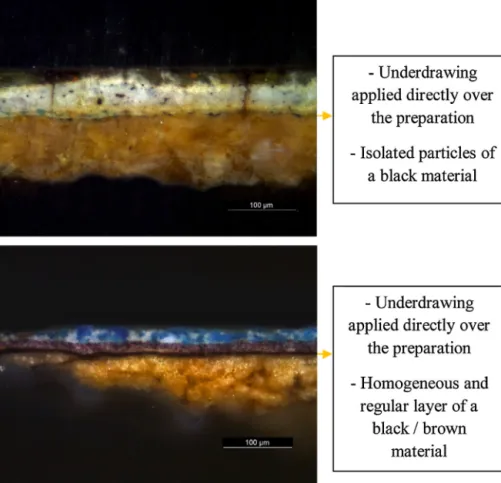
Fig.2.Opticalmicroscopyofcrosssectionscontainingunderdrawing,where(a)correspondtosituation(c)and(b)illustratessituation(d).
a)Inseveralpaintings,infraredreflectographyrevealedan
abun-dantandexpressiveunderdrawing,pointingtotheuseofawet
medium.Sometimesitisalsopossibletoseedropletsattheends
ofstrokes,whichseemstoconfirmthis;
b)Inothersituations, althoughonecan evenseebynakedeye
hatchedandcross-hatchedunderdrawingatthepaintings
sur-face, the reflectograms only revealed a thin and outlined
underdrawing.
X-rayradiographyandinfraredreflectographyhaveshown
pre-viouslytheexistenceofreservedareas,anabundantandexpressive
underdrawingpresentinseveralpaintingsandthelackofchanges
in composition that revealed how the work was meticulously
planned.Consideringthisworkshoppractice,itwasexpectedthat
similarworkwouldbepresentintheotherpaintingsattributed
tothesameworkshopwheretheunderdrawingisnotdetectable
byinfraredreflectography.Furthermore,previousstudies(Billinge
et al., 1997; Bomford et al., 2002; Finaldi and Garrido, 2006; Tamarit,2006;VerriandHiggitt,2010)developedonfifteenand
sixteencenturyFlemishand Italianeaselpaintingsindicatethat
whenartistsusenon-carbonaceous-basedinks,underdrawingis
notvisibleorispoorlyvisibleininfraredsurfaceexams.A
simi-larsituationcouldbethereasonfortheunconformityofthedata
found,pointingtoamaterialissuethatcanonlybesettledwith
supplementaryanalyticalinvestigations.
3.2. Microanalysis
Concerningtheunderdrawingdetectionbyinfrared
reflectogra-phy,twosituationstookplaceasmentionedbefore(situations(a)
and(b)).Theanalyticalstudyoftheseunderdrawingsreliedonthe
dataobtainedbysurfaceexaminationsandthepossibilityto
col-lectmicrosamplesinspecificareas.Thelatter,however,ishighly
dependentonthemuseumcontextinwhichthepaintingsareand
theirstateofconservation.
Due to the thinness of the underdrawing layers, analytical
research started with the preparation of the micro-samples in
cross-sectionsanddarkfieldmicroscopicalobservation.The
strati-graphicanalysisrevealedsomeopticallydistinguishableproperties
intheunderdrawingslayers(Fig.2):
c)In mostcases,theunderdrawinglayerappearsasan
irregu-lar/notcontinuouslinecontainingeitherisolatedblackparticles
ordistinguisheddepositsofablackmaterialappliedoverthe
preparationlayer;
d)Sometimes,itispossibletodistinguishacontinuousand
home-geousdarkbrown/blacklayerappliedoverthepreparationlayer,
pointingtotheuseofafluidmaterial,corroboratingtheuseof
awettechnique.
Bycomparingallabovesituationswecansuggestthatwhen
theunderdrawingiswellvisiblethroughinfraredreflectography,
itseemstobemorelikelytocorrespondtosituation(c)andthe
blackisolatedoraglomeratedparticlesshouldcontainsome
car-bonaceousmaterial.Nevertheless,whenthesituation(d)occurs,
itseemstocorrespondtothosecaseswheretheunderdrawingis
poorly/notvisiblebyinfraredreflectography(situation(b)),
point-ingtotheuseofa differentmaterialappliedinawetmedium.
Despitethementionedcorrelations,sometimesitishardto
distin-guishbetweenthem,sincetheyarenotexclusivefromeachother.
Ontheotherhand,thecharacterizationoftheunderdrawinglayers
throughopticalpropertiesletsusexcludetheuseofcommon
mate-rialssuchassomecolouredchalks,ascitedinliterature(Bomford
Fig.3. Analysisofanunderdrawingregion(microsamplecollectedfromtheVeronica):microsamplingárea(a)andrespectivecross-section(b);andSEM-EDXanalysis showingBSEimagewithindicationofpunctualEDXanalysis(c)andtherespectiveEDXspectrumoftheunderdrawingarea(d).
In conclusion, although optical microscopy gave some clues
aboutthetechniqueandthenatureofthematerialsusedinthe
underdrawingsexecutionitremainstoanswerwhichmaterialis
responsiblefortheinvisibilityoftheunderdrawinginsituation(b).
Inthisparticularcase,stratigraphicanalysisalsoadvanceda
possi-blematchofthismaterialdemonstratingthatitseemstobeapplied
inawetmediumand,takingintoaccount,thereisahigh
proba-bililityoftheuseofanirongallink(Campbell,1998;Bomfordetal.,
2002).
Furtheranalyticalresearchwascarriedoutinordertoascertain
thenatureofthismaterial.Cross-sectionsrepresentativeforboth
situationsandcontainingrelativelyhighamountsof
underdraw-ingmaterial,wereselectedandsubmittedtoSEM-EDXanalysis,
givingsomeindicationsaboutthenatureofthematerialsusedin
theunderdrawingsexecution.
Elementalanalysesrevealedtheuseofacarbonbasedmaterial
(probablycarbonblack)inpaintingswheretheunderdrawingis
wellvisiblebyinfraredreflectography(situation(a)seeFig.3),as
expected.
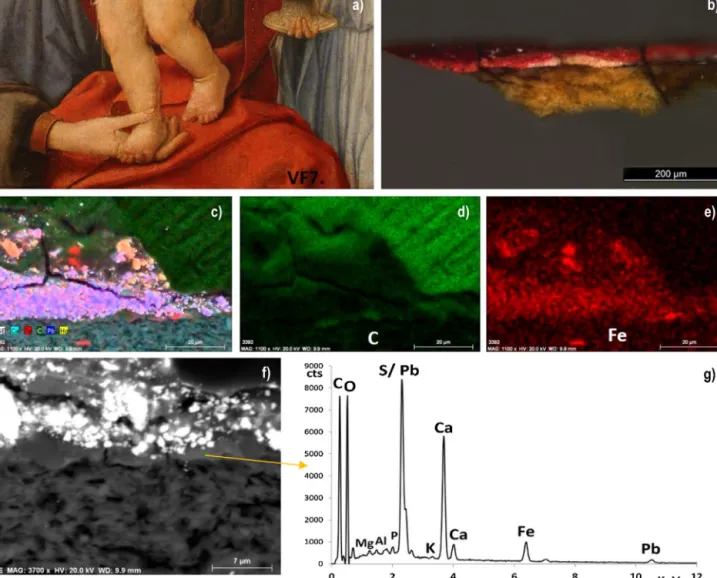
Ontheotherhand,SEM-EDXanalysisrevealedanenrichmentin
iron(Fe)inthepaintingswheretheunderdrawingisnotvisibleor
isbarelyvisiblebyinfraredreflectography,relatedtosituations(b),
(Fig.4).AccordingtopreviousstudiesbasedonSEM-EDXanalysisof
easelpaintings´ıunderdrawings(DunkertonandRoy,1986;Spring
etal.,2009)wecanproposethehypothesisoftheuseofirongallink.
Besidestheironcontent,SEM-EDXanalysisalsorevealedthe
pres-enceofmagnesiumandaluminumasminorelements(Fig.4g))and
sometimesitalsorevealedsometracesofcopperwhich,according
toseveralstudiesonhistoricalmanuscripts,couldbeassociatedto
ironsulphatecontaminationsintheinkformulation(Hahnetal.,
2004).Several studies(Camera, 2004; Hahn et al., 2004; Kolar
etal.,2006)onthecharacterizationofirongallinksinhistorical
manuscriptsthroughelementalanalysis(SEM-EDXand/orPIXE)
alsoreferthepossiblepresenceof otherelementssuchaszinc,
manganese,sulfur,calcium,potassium,sodium,cobalt,nickeland
silica.Althoughpunctualanalysisalsopointstothepresenceof
calciumintheunderdrawingarea(Fig.4c)andg)),onehastotake
thenatureofnearbylayersintoconsiderationwherethiselement
couldbepresent,e.g.thepreparationlayerconsistsofacalcium
basedmaterial(e.g.calciteorgypsum)(Valadasetal.,2013),raising
somedubietyaboutitspresenceasacontaminantoftheink.
Compositionalelementalmappings alsorevealedahigh
con-tentofcarbonandoxygenintheunderdrawinglayers,suggesting
anadditionofanorganicmaterial,probablycomingfromthe
bind-ingmediausedintheinkformulation.Moreover,thisanalytical
techniquealsorevealedinsomecasestheadditionofnoticeable
isolatedcarbonparticlestotheironbasedmaterial,appearing
par-tiallymixedandpointingtoapossibleexistenceofathirdmaterial
usedbythisworkshopintheunderdrawingsexecution.
Additionally,despitethepresenceofironandcopperin
metal-gallinks(Acetoetal.,2008),theseelementscanalsooccurasmetal
impuritiesincarbon-basedinks.Althoughthemetalconcentration
isoftenagoodindicatorofthemetalsource,fulldiscrimination
isonlypossibleifcomplementedbymolecularinformationabout
theinkorganic/organometalliccomponents(tanninsand
metal-complexes).Theinfraredimagesof thepaintings mightsuggest
certainmolecularspecies,butarenotconclusive.Theanswerto
theserisinghypothesescanthereforebeprovidedbytechniquesfor
structuralanalysisinthestudyofnon-carbon-based
Fig.4. Analysisofamicrosamplecontaingunderdrawing,collectedfromtheVirginwiththeChildandtwoangels(#VF7):(a)microsamplingarea;(b)cross-sectionofrespective region;andSEM-EDXanalysisrevealinginimage(c)thecombinedelementalmapping,(d)and(e)compositionalelementalmaps,(f)BSEimageindicatingthelocalofEDX analysisandin(g)therespectiveEDXspectrumoftheunderdrawingarea.
FTIRexperimentswereperformedinordertoallowthe
assign-ment of characteristic absorption bands of functional groups
associatedtounderdrawingareas.
-FTIRanalysiswasperformedinfewpaintingsattributedto
FreiCarlos’workshopwherepreparationsaremainlycomposedby
calcite,seekingtoeliminateasmuchaspossiblethe
contamina-tionsofsulfategroupspresentinthenearbygypsumpreparations,
foundinmostpaintings(Valadasetal.,2013).Theindividuallayers
ofunderdrawingwereobtainedthroughdissectionofthesamples
withascalpelandtheresultingthinsectionswerethenanalysed.
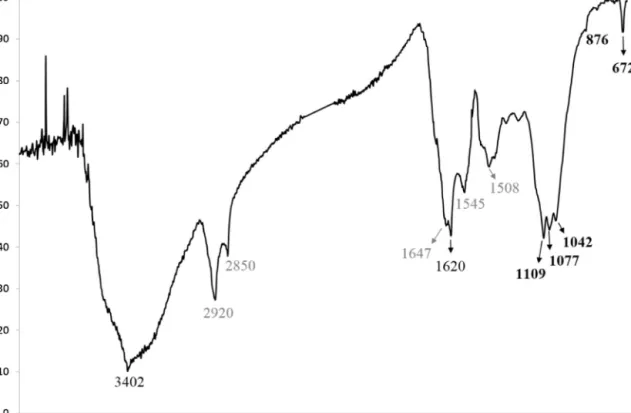
Fig.5showsthewavelengthassignmentsofunderdrawinglayers,
evidencingthepresenceofOHvibrationsinwatermoleculesand
thecontributionsofproteinandoilmediums.Tracesofcalcium
carbonateshouldalsobeconsideredand,although itspresence
hereisnot exclusivefor underdrawinglayers,this mineraland
relatedoxaliccompoundshavefrequentlybeenfoundinirongall
inkcomposition(FerrerandSistach,2005).Recordedspectraalso
displaycharacteristicabsorptionbands,duetothe3
antisymmet-ricstretchingvibrationsinsulfatefunctionalgroupsintherange
1300–1000cm−1 and typicalbendingassignment,which occurs
around680–600cm−1(Derricketal.,2000;Rouchonetal.,2012).
Thebandsat1109cm−1 and672cm−1 aretypicalforanhydrite
(CaSO4),andarerelatedtothe3antisymmetricstretchvibration
and4antisymmetricbendingvibration,respectively.Anhydrite
usuallyexhibitsoneweakbandat1015cm−1duetothe1
sym-metricstretchvibrationmodesofSO4tetrahedras,buthereitseems
tobeabsent(Liuetal.,2009;Meloetal.,2014).
ApreviousstudypublishedbyEspadaleretal.(Espadaleretal.,
1995)hasshownthepresenceofprecipitatedCaSO4betweenpaper
fibers where iron gall ink had beenapplied and somehow our
resultspointtoasimilaroccurrence.Infact,severaloftheabove
mentionedstudiesreferthepresenceofcalciumasanink
contami-nant.Takingtheacidicenvironmentinwhichirongallinkisformed
andtheink’smetal-sulfateadditivesintoaccount (e.g.blue
vit-riol,CuSO4·5H2O,(Cennini,1954;Hahn,etal.,2004;Chiavarietal.,
2007)itisnotsurprisingthatsomeanhydritecouldbepresent.
Amoredifficultassignmentconcernstotheoccurrenceoftwo
bandsat1077cm−1 and1042cm−1,stillintheregionofsulfate
groups,pointingtoadifferentsulfatebasedcompoundthatcould
bepossiblyrelatedtothepresenceofanironsulfatematerialused
inirongallink(Senvaitiene,2006;Bicchierietal.,2008a,b).
How-ever,whencomparingthefullrangeofassignmentswiththetypical
wavelengthsofiron gallinkcomplexes,gallatonatecompounds,
gallicacid,pyrogallolorevengumarabic,itdoesnotseemtoreveal
clearmatches(Mohammed-ZieglerandBilles,2002;Ursescuetal.,
2009).Thereasonsforthisabsencecanberelatedtothesmall
quan-tityofsampleavailableforanalysisandalsotothecontributionof
Fig.5. RecordedFTIRspectrumofanunderdrawinglayercollectedfromamicrosampleoftheAnnounciation(#AN5).
couldbepresentintheunderdrawingareasandinadjacentlayers,
whichmaymaskthetypicalspectralregionsofthesecompounds.
-FTIRanalysishighlightedtheoccurrenceoffew functional
groupsfrequentlyfoundinirongallinksandrelatedcompounds
althoughthepresenceofthisunderdrawingmaterialcouldbeno
morethanamerelyhypothesis.
Complementary,-Ramananalysiswasperformedinseveral
underdrawingareasandthespectraobtainedinourworkwere
comparedwithspectraobtainedfrompreviousstudiesdeveloped
inancientmanuscriptsandpapers,comercialirongallinksandalso
withsomeexperimentalreprodutionsaccordingtoancientrecipes
(BrownandClark,2004;VandenabeeleandMoens,2004;Leeetal., 2006,2008;Chiavarietal.,2007;Acetoetal.,2008;Creaghetal., 2009).
Finally,atypicalspectrumof irongallinkwasobtainedand
isshowninFig.6,revealingthefourlargestbandsusedas
posi-tiveidentificationofthiscompound(Goltz,2012).Theseoccurred
at1468,1337,580and528cm−1(combinedbroadband).While
thebandat1468cm−1 ischaracteristicoftheiron-gallink
com-plex,thebandthatappearsat580cm−1 hasbeenassociatedto
aniron-organicsubstratecomplex/metallicsaltandseemstobe
independentoftheinkcomposition(Bicchierietal.,2008a,b).
Addi-tionally,somerecordedspectraalsopresentasharpbandaround
1012cm−1,probablyrelatedtoaresidualpresenceofsulfateanions
(Aceto et al., 2008).Sometimestraces of carbon black are also
detected,suggestingthatacarboninkunderdrawingmaterialwas
alsousedbythisworkshop.
Althoughtheobtained-Ramanspectrafrequentlypresented
poorresolutionandweakerbandsaboveahighfluorescence
base-line,thistechniqueallowedtheconfirmationoftheuseofirongall
inkbyFreiCarlos’workshopandthisiswithnodoubtthemain
resultofthiswork.Italsoleadstothejustificationfortheprevious
reporteddiscrepancy,observedbyinfraredreflectography.
Additionally,SEM-EDXanalysisalsorevealedanassociationof
iron-basedmaterialtocarbonparticles,risingthreemainsituations
relatedtothematerialsusedintheunderdrawings:
-Underdrawingmadewithacarbonbasedmaterial(probablyin
wetmedium).
-Underdrawingexecutedwithirongallink(wetmedium).
-Underdrawingmadewithamixtureofirongallinkandcarbon
(inafluidprocess)orthereinforcementofirongallinkmaterial
overthecarbonunderdrawing(asexplainedbyCenninoCennini
inchapterCXXII,howthepaintersshoulddrawonpanelwith
charcoal,tobeginwith,andtofixitwithink(Cennini,1954)).
Combiningtheseresultstosurfaceanalysis,weconfirmedthat
whentheunderdrawingisexecutedwithacarbonmaterial,itis
wellvisiblebyinfraredreflectographyasitwasexpected,butwhen
theironbasedmaterialispresenttheinfraredimageisnot
visi-bleorisbarelyvisible,probablydependingontheratioirongall
ink:carbon(seeTable1).
3.3. Surfaceanalysisrefinement
Takingintoconsideration:
-theresultsthatrevealtheuseofirongallinkinthisworkshop,
whichhasapoorresponseininfraredreflectographynotallowing
thecharacterizationofunderdrawingundertheseconditions;
-the recent studies based on DFT calculations using periodic
boundaryconditionsonirongall3Dcoordinationpolymerwhich
indicatethatthiscompoundhasamaximuminitsabsorption
spectrumataround700nm(Zaccaronetal.,2013a,b)and
previ-ousworkonirongallinksspectralabsorption(Senvaitien ˙eetal.,
Fig.6.Ramanspectrumofirongallink(underdrawinglayercollectedfromamicrosampleoftheGoodShepherd,#BP10).
Fig.7. DetailoftheVirginwiththeChildandtwoangelsby:(a)standardlightphotography,(b)Infraredreflectography(850–1700nm)(c)Infraredphotography(1000–1100)nm and(d)Infraredphotography(780–1100nnm).Photographiccredits:(a)RitaFreireandSaraValadas;(b),(c)and(d)SaraValadasandSóniaCosta.
-Previous studies based on multispectral and hyperspectral
imaging technologiesassessed ondrawing inks(Baker, 1985;
Kammereretal.,2007)andeaselpaintings(FischerandKakoulli, 2006);
we decided to refine the surface analysis methodology to
perceive this type of underdrawing. Therefore, to capture the
underdrawingexecutedwiththismaterialthathadnotyetbeen
revealedbyinfraredreflectography,weusedseveralbandpass
fil-terscoupledtoaninfraredphotographiccamera.
Theanalysisofthepaintingsurfacewithinfraredreflectography
andphotographytogetherwiththeanalyticalresearch,allowedus
toconclude:
-Inthe paintingswhere a carbonaceous materialwasused for
theunderdrawingexecution,infraredreflectographyrevealedan
abundantunderdrawing,betterthaninfraredphotography,asit
wasexpected.
-For thepaintingswhere iron gallinkwas mostlyused inthe
underdrawingsexecution,infraredphotographyrevealedbetter
results.(seeFig.7).Inthesecases,thetestsperformedbyinfrared
filtersrevealedabettersignalforthe780nmfilter,probablydue
totheabsorptionoftheFebasedmaterialatlowerwavenumbers.
AlthoughIRRgavemoreinformationconcerningcarbon-based
materialsthat absorbathigher wavelengths,sometimesa new
analysisofpaintingsisneededbyusinglowerinfraredradiations,
thatcouldbeusefultorevealunderdrawingsmadewithsomeiron
gallink.
4. Conclusions
This multianalytical and interdisciplinary study enabled a
deeperinsightontheworkofFlemish-Portuguese16thcentury
painterFreiCarlosbyrevealingtheuseofiron-gallinkinthe
under-drawingofseveralpaintings.Thisisparticularlyrelevantbecause
althoughhistoricdocumentalsourcesrefertotheuseofiron
gall-inksfromaboutthethirdcenturyBCandalthoughsomestudieson
15thand16thcenturyeaselpaintingshavepointedoutitspossible
useinunderdrawing,itisthefirsttimethatithasbeen
unequivo-callyidentifiedin16thcenturyeaselpainting.
Furthermore,itallowedustoexplainthepreviousdiscrepancies
ontheunderdrawingofthisMasterworkshopthatwerepointed
outbyarthistoriansthroughobservationofIRreflectographies,
concludingthatthisMasterhadtwotypesofunderdrawing:avery
strongandmarkedunderdrawinginoppositiontoaverylightand
almostimperceptibleone.Itisnowclearthatthesediscrepancies
areduetoachoiceinmaterials(charcoaland/oriron-gallink)rather
thanadifferenttechnicalorstylisticapproach.
Thisstudypointsoutfortheneedofdeveloppingmoreadvanced
methodologiesinthestudyofunderdrawing,particularlywhenno
signalorweakresponseisgivenbyIRreflectography.Foriron-gall
inkunderdrawing,thebestresultsareobtainedbyIRphotography
atlowerwavelenghts.
Thisresearchcouldalsoleadtotherefinementofmethodologies
andtechniquesofexaminationforunderdrawingstudies.
Acknowledgements
Theauthorswish toacknowledgetheFundac¸ãoparaa
Ciên-ciaeTecnologia(PortugueseScienceandTechnologyFoundation)
forfinancialsupport(PhDgrantSFRH/BD/66068/2009andproject
ONFINARTS − PTDC/EAT-HAT/115692/2009) through program
QREN-POPH-typology4.1.,co-participatedbytheSocialEuropean
Fund(FSE)andMCTESNationalFund.Theauthorswishtothank
totheHERCULESLabandJosédeFigueiredoLabteamsforall
sci-entificcollaborationparticularly,SoniaCostaandLuisPiorrofor
aidinginthe surfaceexams.The authorsalsowish tothankto
theÉvoraMuseumandNationalAncientArtMuseum(Lisbon)for
grantingaccesstothepaintingsanditsstaff,inparticulartoart
historiansJoséAlbertoSeabraandJoaquimCaetanoforarthistory
collaborationandconservatorsSusanaCamposandTeresaMoura
fortechnicalsupportduringpaintingshandlingandanalysis.
References
Aceto,M.,Agostino,A.,etal.,2008.TheVercelliGospelslaidopen:aninvestigation intotheinksusedtowritetheoldestGospelsinLatin.X-raySpectrom.37(4), 286–292.
Baker,C.A.,1985.Acomparisonofdrawinginksusingultravioletandinfraredlight examinationtechniques.In:Applicationofscienceinexaminationofworksof art:proceedingsoftheseminar,September7–9,1983,MuseumofFineArts.
Bicchieri,M.,Monti,M.,etal.,2008a.Allthatisiron-inkisnotalwaysiron-gall!J. RamanSpectrosc.39(8),1074–1078.
Bicchieri,M.,Monti,M.,etal.,2008b.Insidetheparchment.In:9thInternational ConferenceonNDTofArt,Jerusalem,Israel.
Billinge,R.,Dunkerton,L.C.J.,Foister,S.,Kirby,J.,Pilc,J.,Roy,A.,Spring,M.,White, R.,1997.MethodsandMaterialsofNorthernEuropeanPaintingintheNational Gallery,1400–1550.NationalGalleryTechnicalBulletin.NationalGallery PublicationsLimited,London,pp.6–55.
Boer,V.A.d.,1968.Infraredreflectography:amethodfortheexaminationof paintings.Appl.Opt.7(9),1711–1714.
Boer,V.A.d.,1970.Infraredreflectography:acontributiontotheexaminationof earlierEuropeanpaintings,UniversiteitvanAmsterdamDoctoraldissertation. Bomford,D.,Billinge,R.,etal.,2002.ArtintheMaking—Underdrawingsin
RenaissancePaintings.NationalGalleryLondon,London.
Brown,K.L.,Clark,R.J.H.,2004.TheLindisfarneGospelsandtwoother8thcentury Anglo-Saxon/Insularmanuscripts:pigmentidentificationbyRaman microscopy.J.RamanSpectrosc.35(1),4–12.
Caetano,J.O.,2011.MestresLuso-FlamengosemÉvora—Apinturaeodesenho. PrimitivosPortugueses1450–1550—OSéculodeNunoGonc¸alves.MNAAand IMC,Lisboa,pp.276–293.
Camera,D.L.,2004.AnInvestigationintothePrevalence&ChemistryofCrystal FormationsontheSurfaceofIronGallInk:ThePreliminaryResults.Book& PaperGroup(23),pp.75–86.
Campbell,L.,1998.ThefifteenthcenturyNetherlandishpaintings.In:National GalleryCatalogues.NationalGallerycompany,N.Gallery.London,pp.30.
Candeias,A.,Piorro,L.,Valadas,S.,Dias,C.,Mirão,J.,2011.Nãohádeencobertoque nãovenhaaserdescoberto,nemdeocultoquenãovenhaaserrevelado. Considerac¸õessobreatécnicadereflectografiadeinfravermelhos.Primitivos Portugueses1450-1550—OSéculodeNunoGonc¸alves.MNAAandIMC,Lisbon, pp.294–298.
Carvalho,J.A.S.,1988–1993.Pinturaluso-flamengaemÉvoranoiníciodoséculo XVI.OMestredaLamentac¸ãodaOficinadoEspinheiro.ACidadedeÉvora. Évora,CâmaraMunicipaldeÉvora,pp.75–104.
Carvalho,J.A.S.,1998.FreiCarloseooutro.Proposic¸õessobreapinturadaOficina doEspinheiro.DoMundoAntigoaosNovosMundos.Humanismo,Classicismo enotíciasdosDescobrimentosemÉvora1516–1624.Lisboa,Comissão NacionalparaasComemorac¸õesdosDescobrimentosPortugueses. Carvalho,J.A.S.,2006.FreiCarlospintornoConvento.ConventodoEspinheiro,
MemóriaePatrimónio.SPPTH.
Carvalho,J.A.S.,2011.DoisMestresLuso-Flamengos:MestredaLourinhãeFrei Carlos.PrimitivosPortugueses1450–1550—OSéculodeNunoGonc¸alves. MNAAandIMC.Lisboa,pp.156–173.
Carvalho,J.A.S.,2013.OS.VicentedeFreiCarlos—estudocomparativo.FreiCarlos daAmérica—Investigac¸ãoeCrítica.MNAA.Lisboa,DGPC,pp.40–55. Cennini,C.d.A.,1954.TheCraftsman’sHandbook:IlLibrodell’Arte.Dover
PublicationsInc.,NewYork.
Chiavari,G.,Montalbani,S.,etal.,2007.Applicationofanalyticalpyrolysisforthe characterisationofoldinks.J.Anal.Appl.Pyrolysis80(2),400–405.
Couto,J.,1943.ApinturaflamengaemÉvoranoséculoXVI.Variedadedeestilose detécnicasnaobraatribuídaaFreiCarlos.CidadedeÉvora.Évora,Câmara MunicipaldeÉvora.
Creagh,D.,Lee,A.,etal.,2009.Recentandfuturedevelopmentsintheuseof radiationforthestudyofobjectsofculturalheritagesignificance.Radiat.Phys. Chem.78(6),367–374.
Derrick,M.R.,Stulik,D.,etal.,2000.InfraredSpectroscopyinConservationScience. GettyPublications.
Dunkerton,J.,Roy,A.,1986.TheTechniqueandRestorationofCima’s ¨The IncredulityofS.Thomas¨.NationalGalleryTechnicalBulletin,10.Orderofthe Trustees,London,pp.4–27.
Espadaler,I.,Sistach,M.,etal.,1995.Organicandinorganiccomponentsof manuscriptinks.Anal.Quimica,c1996–c1997,Barcelona,Spain Springer-VerlagIberica.
Faries,M.,2005.Analyticalcapabilitiesofinfraredreflectography:anart historian’sperspective.In:ScientificExaminationofArt:ModernTechniques inConservationandAnalysis.TheNationalAcademiesPress,pp.87–104.
Ferrer,N.,Sistach,M.C.,2005.CharacterisationbyFTIRspectroscopyofink componentsinancientmanuscripts.Restaurator26(2),105–117.
Finaldi,G.,Garrido,C.,2006.Eltrazooculto.Dibujossubyacentesenpinturasdelos siglosXVyXVI.MadridMuseoNacionaldelPrado.
Fischer,C.,Kakoulli,I.,2006.Multispectralandhyperspectralimagingtechnologies inconservation:currentresearchandpotentialapplications.Stud.Conserv.51 (Suppl.2),3–16.
Goltz,D.M.,2012.Areviewofinstrumentalapproachesforstudyinghistoricalinks. Anal.Lett.45(4),314–329.
Hahn,O.,Malzer,W.,etal.,2004.Characterizationofiron-gallinksinhistorical manuscriptsandmusiccompositionsusingX-rayfluorescencespectrometry. X-raySpectrom.33(4),234–239.
Kammerer,P.,Lettner,M.,etal.,2007.Identificationofdrawingtoolsby classificationoftexturalandboundaryfeaturesofstrokes.PatternRecognit. Lett.28(6),710–718.
Kolar,J., ˇStolfa,A.,etal.,2006.Historicalirongallinkcontaining
documents—propertiesaffectingtheircondition.Anal.Chim.Acta555(1), 167–174.
Lee,A.S.,Mahon,P.J.,etal.,2006.Ramananalysisofirongallinksonparchment. Vib.Spectrosc.41(2),170–175.
Lee,A.S.,Otieno-Alego,V.,etal.,2008.Identificationofiron-gallinkswith near-infraredRamanmicrospectroscopy.J.RamanSpectrosc.39(8), 1079–1084.
Liu,Y.,Wang,A.,etal.,2009.Raman,MIRandNIRspectroscopicstudyofcalcium sulfates;gypsum,bassanite,andanhydriteLunarandPlanetaryScience Conference,Texas.
Melo,H.P.,Cruz,A.J.,etal.,2014.ProblemsofanalysisbyFTIRofcalcium sulphate-basedpreparatorylayers:thecaseofagroupof16th-century Portuguesepaintings.Archaeometry56(3),513–526.
Mohammed-Ziegler,I.,Billes,F.,2002.Vibrationalspectroscopiccalculationson pyrogallolandgallicacid.J.Mol.Struct.THEOCHEM618(3),259–265.
Rouchon,V.,Badet,H.,etal.,2012.RamanandFTIRspectroscopyappliedtothe conservationreportofpaleontologicalcollections:identificationofRamanand FTIRsignaturesofseveralironsulfatespeciessuchasferrinatriteand sideronatrite.J.RamanSpectrosc.43(9),1265–1274.
Santos,A.V.,1971.PinturaLuso-Flamenga.DicionáriodePinturaUniversal,Pintura Portuguesa.E.Cor.Lisboa.III.
Senvaitien ˙e,J.,Beganskien ˙e,A.,etal.,2005.Characterizationofhistoricalwriting inksbydifferentanalyticaltechniques.Chemija16(3–4),34–38.
Senvaitiene,J.,2006.Analyticalidentificationofhistoricalwritinginks—anew methodologicalapproach.LithuanianJ.Phys.Tech.Sci.46,109–115.
Spring,M.,Daniilia,S.,etal.,2009.Underdrawing,ground/priminglayers.Scientific ExaminationfortheInvestigationofPaintings:AHandbookfor
Conservator-Restorers.DanielaPina,MonicaGaleottiandR.Mazzeo.Florence, CentroDi.
Tamarit,P.I.,2006.Elconocimientodelsoporteydeldibujosubyacentepormedio delaradiografíayreflectografíadeinfrarrojoLosretablos:Técnicas,materiales yprocedimientos.G.E.d.IIC.Espa ˜na.
Ursescu,M.,Malutan,T.,etal.,2009.Irongallinksinfluenceonpapersthermal degradation.FTIRspectroscopyapplications.Eur.J.Sci.Theol.5(3),71–84.
Valadas,S.,Cardoso,A.,etal.,2013.APinturaFlamengaemÉvoranoséculoXVI– novasperspectivassobreaobraatribuídaaFreiCarlos.Aspreparac¸õesna PinturaPortuguesaSéculosXVeXVI.F.d.L.d.U.d.Lisboa.MuseuNacionalde ArteAntiga,Lisboa,Portugal,PPPSéculosXV&XVI:115–122.
Valadas,S.,Freire,R.,etal.,2014.Ontheuseoftheunusualgreenpigment Brochantite(Cu4(SO4)(OH)6)inthe16thcenturyPortuguese-Flemishpaintings
attributedtotheMasterFreiCarlosworkshop.Microsc.Microanal.21(2), 518–525.
Vandenabeele,P.,Moens,L.,2004.PigmentIdentificationinIlluminated Manuscripts.Elsevier,Amsterdam,pp.635.
Verri,G.,Higgitt,S.T.C.,2010.Inksandwashes.In:Higgitt,Catherine,Ambers, Janet,Saunders,David(Eds.),ItalianRenaissanceDrawings:Technical ExaminationandAnalysis.ArchetypePublications,TheBritishMuseum.
Zaccaron,S.,Ganzerla,R.,etal.,2013a.Ironcomplexeswithgallicacid:a computacionalstudyoncoordinationcompoundsofinterestforthe preservationofculturalheritage.J.Coord.Chem.66(10),1709–1719.
Zaccaron,S.,Ganzerla,R.,etal.,2013b.DFTcalculationsusingperiodicboundary conditionsonanirongall3Dcoordinationpolymerofinterestforcultural heritageconservation.SciencesatCa’Foscari.(1|2013).