MASTER THESIS
Evaluation of the potentialities of a new β-lyase enzyme in the
release of S-volatile aromatic compounds in White and Red wines
Dor Amsalem
Dissertation to obtain the degree of
European Master of Science in Viticulture and Enology
Supervisor: Jorge Manuel Rodrigues Ricardo Da Silva.
Co-Supervisor: Engenheiro Ari De Mari.
Jury:
President: Doutor Carlos Manuel Antunes Lopes, Professor Associado com agregação
do Instituto Superior de Agronomia da Universidade de Lisboa.
Members: Doutor Jorge Manuel Rodrigues Ricardo da Silva, Professor
Catedrático do Instituto Superior de Agronomia da Universidade de Lisboa. Doutora Doris Rauht, Professor da Universidade de Geisenheim, Hochschule
Geisenheim University (DE). Doutora Sofia Cristina Gomes Catarino, Professora Auxiliar Convidada do
Instituto Superior de Agronomia da Universidade de Lisboa
Declaration of Academic Honesty
I Dor Amsalem herewith declare that the Master Thesis submitted here with the title;
Evaluation of the potentialities of a new β-lyase enzyme in the release of S-volatile aromatic compounds in white and red wines.
This thesis has been composed by myself without any inadmissible help and without the use of sources other than listed in the list of references. All person and institutions that have directly or indirectly helped me with the preparation of the thesis, have been acknowledged and that this thesis has not been submitted wholly or substantially, as an examination document at any other institution.
Lisbon, Signature July, 2015
ACKNOWLEDGEMENTS
This thesis dissertation was made possible thanks to the support and help of few individuals.
First, I want to thank to Prof. Dr. Jorge Manuel Rodrigues Ricardo da Silva for his supervision for this Master's thesis and his help and understanding of the situation, been a foreigner, non-European student and making the effort to adapt to adapt to this situation. I do not take this as obvious issue.
Second, I want to pay my thanks to Diana Faria, which without her assistance this thesis wouldn't be made possible; from help and guidance in the lab, question and acting as a translator when needed, thanks a lot for your help. As well as for Suzana Ferreira Dias for the help with the statistical analysis of the study.
Third, I want to thank to my colleagues and friends from Superior de Agronomia and Vinifera Euro master for the help, advices and conversations regarding this project as well as any other in the past two years of the Master's.
Lastly, I want to thank my family for the long distance support from the decision to move to Europe and for everything that came after.
Abstract
In the past twenty years a rapid growing interest in thiols can be seen as a function of the amount of papers and research done on this topic, with the aim of understanding the biosynthesis of the main varietal thiols, as well as the desire to develop methods and ways to increase their concentration in wine. The aim of this research is to evaluate the potentialities of an additive in the form of β-lyase enzyme and the protocol used to utilize it. Two red varieties (Syrah and Touriga Nacional) and four white varieties (Alvarinho, Arinto, Encruzado and Viosinho) were used, grown and processed in Instituto Superior de Agronomia (ISA) in Lisbon, Portugal. To each varietal wine a control wine and a test wine (with enzyme addition) were made and compared for their chromatic characters and sensorial impression. Using the Statistical tools; t-Test, ANOVA, PCA and cluster analysis each treated wine was compared to its control. The results of this dissertation suggest that there are no significant differences between the treated wines and the control either in terms of chromatic characters or sensorial impressions, concluding that there may be loss of thiols to oxidation which requires a change in vinification scale.
Resumo
Nos últimos vinte anos observou-se um rápido e crescente interesse em tióis, em função da quantidade de artigos e de investigação feitos sobre este tópico, com o objectivo de compreender a biossíntese dos principais tióis varietais, tal como a vontade de desenvolver métodos e modos de aumentar a sua concentração no vinho (Roland et al., 2011b). Apesar de, frequentemente, se associar os tióis varietais à casta Suvignon Blanc, muitas outras castas revelam possuir estes compostos, especialmente os 3-mercaptohexan-1-ol (3MH), acetato de 3-mercaptohexila (3MHA), 4-mercapto-4-metilpentan-2-ona (4MMP), e, de menor relevância, mercapto-4-metilpentan-2-ol (4MMPOH) (Roland et al., 2012; Coetzee & Toit, 2012), que podem contribuir positivamente para o aroma do vinho, dando-lhe odores de buxo, groselha, toranja, maracujá, entre muitos outros aromas frutados. Os tióis são produzidos pelas leveduras durante a fermentação e originam de diferentes precursores oriundos das uvas, tais como o S-3-(hexan-1-ol)-L-cisteína (Cys-3MH) ou a S-4-(4-metilpentan-2-ona)-glutationa (Glut-4MMP). Até agora, a transformação destes precursores pela acção da enzima β-liase das leveduras é muito baixa, quando comparados ao conjunto total de precursores encontrados no mosto. A conversão de Cys-3MH está apenas entre 0.1-12%, de acordo com Coetzee & Toit., (2012). Este facto torna a investigação de tióis muito mais interessante, levantando desafios de como as concentrações finais destes tióis possam ser aumentadas e este potencial inexplorado usado para influenciar o estilo de produção de vinho. Nesta tese de Mestrado, uma enzima β-liase foi adicionada ao mosto durante a fermentação, como um aditivo enológico, com o objectivo de desenvolver um protocolo para aumentar a concentração final de tióis varietais em vinhos. Foram utilizadas duas castas tintas (Syrah e Touriga Nacional) e quatro castas brancas (Alvarinho, Arinto, Encruzado e Viosinho), produzidas e processadas no Instituto Superior de Agronomia (ISA), em Lisboa, Portugal. Para cada vinho varietal foram feitos um vinho de controlo e um vinho de teste (com adição de enzima) e foram comparados nas suas características cromáticas e impressão sensorial. Utilizando ferramentas estatísticas (Teste-t, ANOVA, PCA e Clustering), cada vinho tratado foi comparado ao seu controlo. Os resultados desta dissertação sugerem que não existem diferenças significantes entre os vinhos tratados e os controlos, tanto em termos de características cromáticas como em impressões sensoriais, concluindo que pode haver uma perda de tióis por oxidação, o que requer uma alteração na escala de vinificação.
Table of Contents
List of Tables, Figures and Graphs………8-9 Abbreviations………10 1. Introduction………...11 2. Literature Review………...12-25 2.1 Wine's Aromas……….12-15 2.1.1 Classification of aromas……….12 2.1.2 Chemical classes of volatile compounds in wines………..13 2.1.2.1 Terpenes……….…13 2.1.2.2 C13-Norisoprenoid Derivatives ………..13-14 2.1.2.3 Methoxypyrazines………14 2.1.2.4 Sulfur-containing compounds………..14-15 2.2 Varietal Thiols………..15-23 2.2.1 Precursors and Location in the grapes………...15-17 2.2.2 Biogenesis and occurrence of precursors and volatile thiols………..17-19 2.2.3 Viticulture Practices ……….…20 2.2.4 Enology Practices………...20-22 2.2.5 Oxidative loss of thiols and Negative sulfur compounds………22-23 2.3 β-lyase Enzyme………...23 2.4 Varieties………..23-25 2.4.1 Red Varieties ……….24 2.4.1.1 Syrah………..24 2.4.1.2 Touriga Nacional ………..24 2.4.2 White Varieties……….24-25 2.4.2.1 Alvarinho……….24 2.4.2.2 Arinto……….…24-25 2.4.2.3 Encruzado ……….…25 2.4.2.4 Viosinho………25 3. Material and Methods……….…26-35 3.1 Vinification Process………..26 3.1.1 White Wines Vinification………26-27 3.1.2 Red Wines Vinification………...27-28
3.2 Chemical Analysis………..29-31 3.2.1 Wine's Basic Parameters………29-31 3.3 Sensorial Analysis………..…31-35 3.4 Statistical Analysis……….35 4. Results and Discussion……….36-58 4.1 Maturation Control and Basic Parameters………..…36-41 4.2 Chromatic Characteristics………42-45 4.3 Sensorial Analysis………..45-58 5. Conclusions……….58-59 6. Bibliography………60-63 7. Annex……….64-66
List of Tables, Figures and Graphs
List of Tables:Table 1: Main volatile thiols in wines, their occurrence and concentration………19
Table 2: Control Parameters and their OIV references or method………..29
Table 3: Analytical data for the calculation of chromatic characteristics………30
Table 4: The randomized codes that were given to the wines for the sensorial analysis……….31
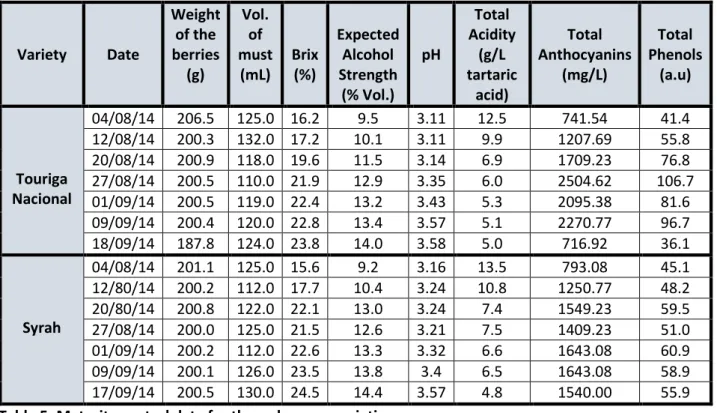
Table 5: Maturity control data for the red grapes varieties……….37
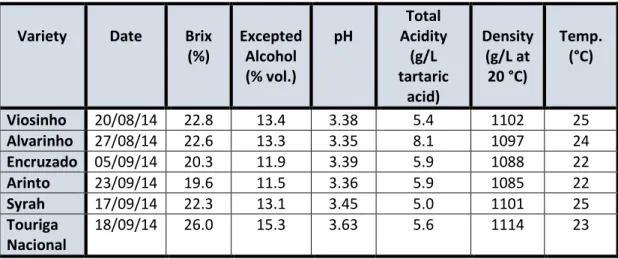
Table 6: Maturity control for white grapes varieties……….38
Table 7: Initial must parameters of each of the white and red varieties……….38
Table 8: Temperatures and Densities in the beginning and the ending of fermentation……….39
Table 9: Basic control Parameters for red wines at the end of fermentation and during the ageing process…….40
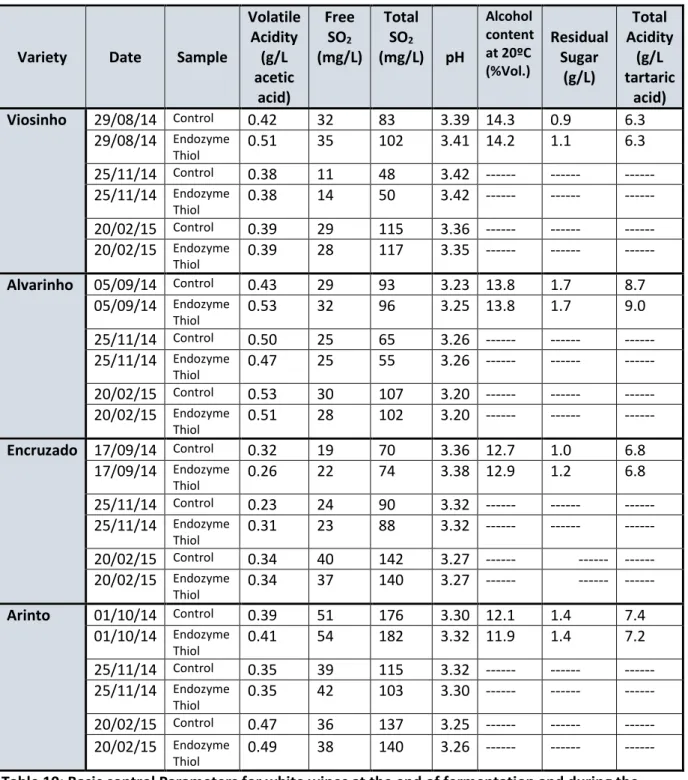
Table 10: Basic control Parameters for white wines at the end of fermentation and during the ageing process....41
Table 11: Chromatic analysis of the white wines, average results………...42
Table 12: P values of t-Test: Paired Two Sample for Means, with significance level α of 1% and 5% for chromatic parameters of the white wines. (*α=0.05, **α=0.01)………43
Table 13: Chromatic analysis of the red wines, average results……….44
Table 14: P values of t-Test: Paired Two Sample for Means, with significance level (α) of 1% and 5%, for chromatic parameters of the red wines (*α=0.05)………..…45
Table 15: Average results of the sensorial tasting for red wines, presented in non-randomized order………46
Table 16: The difference between each treated wine to its control wine, with no statistical analysis, red wines…47 Table 17: Statistical analysis of the red wines tasting panel; one-way ANOVA………47
Table 18: Eigenvalues of correlation matrix, and related statistics for red wines, active variables only………..48
Table 19: Factor coordinates of the variables, based on correlations with factor one and two for the red wines...49
Table 20: Average results of the sensorial tasting for white wines, presented in non-randomized order. (Alvarinho = Alv., Encruzado = Enc., Viosinho = Vio., Arinto = Ar., T=test, C=control)……….53
Table 21: The difference between each treated wine to its control wine, with no statistical analysis, white wines………..53
Table 22: Statistical analysis of the white wines tasting panel; one-way ANOVA. (*α=0.05, ** α=0.01)……….54
Table 23: Eigenvalues of correlation matrix, and related statistics for white wines, active variables only………….55
Table 24: Factor coordinates of the variables, based on correlations with factor one and two for the white wines………..56
Table 25: The enological products used for the vinification of white and red wines……….64
Table 26: The full triplicate data for the chromatic parameters of the white wines………65
Table 27: The full triplicate data for the chromatic parameters of the red wines………..66
List of Figures Figure 1: Chemical structures of Cys-3MH (A) and Glut-3MH (B)………..…16
Figure 2: Chemical structures of Cys-4MMP (A) and Glut-4MMP (B)………..16
Figure 4: the chemical structure of the 3 main thiols: 3MH, 3MHA and 4MMP……….18
Figure 5: General Flowchart of the main steps for white wines vinification………28
Figure 6: General Flowchart of the main steps for red wines vinification………..28
Figure 7: Wine tasting sheet used for the white wines, English and Portuguese versions………...……..…32-33 Figure 8: Wine tasting sheet used for the red wines, English and Portuguese versions………34-35 List of Graphs Graph 1: Eigenvalues of correlation matrix as a function of Eigenvalue number for red wines……….49
Graph 2: Projection of variables on the factor-plane, using Factor 1 and Factor 2, for the red wines………50
Graph 3: Projection of the different red wines (treatment and control), using Factor 1 and Factor 2………..51
Graph 4: Cluster analysis for the red wine………52
Graph 5: Eigenvalues of correlation matrix as a function of Eigenvalue number for white wines………...55
Graph 6: Projection of variables on the factor-plane, using Factor 1 and Factor 2, for the white wines……….56
Graph 7: Projection of the different white wines (treatment and control), using Factor 1 and Factor……….57
Graph 8: Cluster analysis for the white wines……….……58
Abbreviations
AlvC: Alvarinho Control AlvT: Alvarinho Treatment ANOVA: Analysis of Variance ArC: Arinto Control
ArT: Arinto Treatment
Cysgly-3-MH: 3-S-cysteinylglycinehex-an-1-ol Cys-3MH: S-3-(hexan-1-ol)-L-cysteine.
Cys-4MMP: S-4-(4-methylpentan-2- one)-L-cysteine EnC: Encruzado Control
EnT: Encruzado Treatment
Glut-3MH: S-3-(hexan-1-ol)-glutathione
Glut-4MMP: S-4-(4-methylpentan-2-one)-glutathione. IBMP: 3-isobutyl- methoxypyrazine
IPMP: 3-isopropyl-2-methoxypyrazine ISA: Instituto Superior de Agronomia MLF – Malo-Lactic Fermentation. PCA: Principal Component Analysis OAV: Odor Active Values.
SBMP: 2-sec-butyl-3-methoxypyrazine SO2 – Sulfur dioxide
SYC: Syrah Control SYT: Syrah Treatment
TNT: Touriga Nacional Treatment TNC: Touriga Nacional Control VioC: Viosinho Control VioT: Viosinho Treatment 3MH: 3-mercaptohexan-1-ol. 3MHA: 3-mercaptohexyl acetate.
4MMP: 4-mercapto-4-methylpentan-2-one. 4MMPOH: Mercapto-4-methylpentan-2-ol.
1. Introduction
In the past twenty years a rapid growing interest in thiols can be seen as a function of the amount of papers and research done on this topic, with the aim of understanding the biosynthesis of the main varietal thiols, as well as the desire to develop methods and ways to increase their concentration in wine (Roland et al., 2011b). Though the varietal thiols are often associated with Sauvignon Blanc grape variety, many other varieties have been shown to possess these compounds, especially 3-mercaptohexan-1-ol (3MH), 3-mercaptohexyl acetate (3MHA), 4-mercapto-4-methylpentan-2-one (4MMP) and to a less extent, Mercapto-4-methylpentan-2-ol (4MMPOH) (Roland et al., 2012; Coetzee & Toit., 2012), all of which may contribute to the positive aromas of the wine giving it odors of Box tree, blackcurrant, grape fruit, passion fruit as well as other fruity aromas. Thiols are the product of yeasts during fermentation, and are originating from different precursors coming from the grapes, such as S-3-(hexan-1-ol)-L-cysteine (Cys-3MH), or S-4-(4-methylpentan-2-one)-glutathione (Glut-4MMP). As to now, the turnover of this precursors via the action of the yeast's β-lyase enzyme is very low comparing it to the total pool of precursors found in the must. The conversion of Cys-3MH is only between 0.1- 12% according to Coetzee & Toit., (2012). This fact makes the research of thiols much more interesting, arising challenges as to how the final concentrations of these thiols may be increased and this untapped potential used to impact wine making style. In this Master's thesis, a β-lyase enzyme was added to the wine's must during fermentation as an enological additive, with the aim to develop a protocol to increase the varietal thiols final concentration in wines. The experiment was done under enological conditions in Instituto Superior de Agronomia's (ISA) vineyards and cellar using two red varieties (Syrah and Touriga Nacional) and four white varieties (Alvarinho, Arinto, Encruzado and Viosinho), with the collaboration of AEB group. The wines were compared in their sensorial impressions on the 25/06/2015 by a panel of 10 trained and experienced tasters with the focus on tropical notes as interest attribute and the results of the tasting is presented and analyzed here, together with a chromatic comparison of each of the wines.
2. Literature Review 2.1 Wine's Aromas
Wine is a very complex matrix in terms of aroma compounds, having more than 1000 volatile compounds that have been identified so far. (Roland et al., 2012). It is important to note that in this thesis research I will focus on compounds that are "varietal aromas", not implying that these aromas or volatile compounds, may exist in one variety and not in another, but that each grape variety will have a different aroma profile thanks to a particular combination of the compounds, which means that these volatile compounds or their precursors can be found in the musts and wines produced from several different grape varieties. (González-Barreiro et al., 2015).
2.1.1 Classification of aromas
The aromatic compounds of wine can be classified according to the time when they were formed, as was proposed by Drawert (1974) (Roland et al., 2011b, Roland et al., 2012) resulting in four classes of compounds: Varietal aroma compounds; these compounds may be the result of odorless precursors that can be found in grapes (Roland et al., 2012).More commonly found in a bound form, linked to a non-volatile group (amino acid, sugar, etc.) by a covalent bond but can also be in a free, volatile form. The first form is considered to be a direct and specific precursor, that can be the product of the wine making process, and that the original structure of the precursor is preserved to an extent in the new aromatic compound, this comparing with most of yeast's substrates that go through a complex series of bio-chemical reactions, in which the primary structure of the precursor is not recognizable in the resulting aromatic product, being a different class of aromatic compounds (Roland et al., 2011b).
Pre-fermentation aromas; occur between harvest and alcoholic fermentation, during the crashing of
the berries and an enzymatic reactions. (Roland et al., 2011b)
Fermentation aromas; refers to the secondary products of the metabolism of micro-organism of the
fermentation process, i.e. yeast, lactic acid bacteria, resulting in an aromatic profile of vinous and fruity.
Post-fermentation aroma; via chemical and bio-chemical reactions that modify volatile compounds,
occurring in the process of wine aging and may attribute to the complexity of old wines (Roland et al., 2011b).
2.1.2 Chemical classes of varietal compounds in wines
Looking at the grape berry growth and development, it is possible to notice two sigmoidal growth periods separated by a lag phase; berry formation and berry ripening, respectively (Coombe & McCarthy., 2000). At the second stage of the development we may see the formation and increase in second metabolites, such as volatile flavor compounds. The aroma compounds, or their precursors, are found in the flash, and more considerably in the skin of the berry (González-Barreiro et al., 2015).
The next text will be focus on a few of the main varietal volatiles in grapes.
2.1.2.1 Terpenes
The family of terpenes compounds are greatly common around the plant kingdom, approximate to be around 4000 in number. (Ribéreau-Gayon et al., 2006). Monoterpenes (10 carbon atoms) and sesquiterpenes (15 carbon atom), are likely to be odoriferous, with the first one varying in forms: simple hydrocarbons (limonene, myrcene, etc.), aldehydes (linalal, geranial, etc.), alcohols (linalol, geraniol, etc; some of these alcohol compounds are part of the most odoriferous), acids (linalic and geranic acid, etc.) and even esters (linalyl acetate, etc.). According to (González-Barreiro et al.,2015) terpenes can be found in most grapes, contributing to the fruity (citric) and floral aromas of the wine, though some of the about 40 identified terpenes in grapes may have resin aromas. Terpenes have a quite low perception threshold concentrations, ranging from tens of μg/l (such as Linalol; 50 μg/l) to
as little as few hundred μg/l (as Nerol; 400 μg/l) (Ribéreau -Gayon et al., 2006). Muscat's wine and grapes are characterized by this family of compounds, showing high concentrations often increasing those of the perception threshold. (Ribéreau-Gayon et al., 2006). The important once being linalool, geraniol, nerol and citronellol. (Styger et al., 2011). Some of these compounds may be found in a non-volatile state at the grapes and must; having a sugar group attached to it, i.e. glycosylated form, requiring the liberation of the volatile terpene group. The bound form is more abundant in the grapes than free aromas, though the concentration of both is higher in the skin of the grape than in the flesh, and the proportion of the two forms is grape variety depended. (Ribéreau-Gayon et al., 2006, Styger
et al., 2011). Its localization in the skin resulted in increase of both bound and free forms of
monoterpenes after skin contact treatment. (Styger et al., 2011).
2.1.2.2 C13-Norisoprenoids Derivatives
As applied from their name; these compounds consist of 13 atoms of carbon, resulting from an oxidative degradation of carotenoids (40 carbon atom terpenes). (Ribéreau-Gayon et al., 2006). Chemically wise, this group of compounds can be divided into two forms; Megastigmane, which includes β- damascenone, β-ionone, 3-oxo-α-ionol, β-damascone, and 3-hydroxy- β-damascone, and
Non-megastigmane, with a few important compounds from this group, such as TDN
(1,1,6-trimethyl-1,2-dihydronaphthalene), with a distinctive kerosene-like odor; TPB ((E)-1-(2,3,6-trimethylphenyl)buta-1,3-diene), may contribute as strong cut-grass aroma in white wines, actinidiols and vitispirane, which have odors reminiscent of camphor. (González-Barreiro et al., 2015). Many of the Norisoprenoids are in their nonvolatile glycosides form in the grape, and are being hydrolyzed (acid or enzymatic) during fermentation and storage to release the aromatic compound. Even though their concentration in wine in very low, the perception threshold for most of them is also very low, which makes them an important contributor to wine's aroma. (González-Barreiro et al., 2015). Like most varietal aromas, also Norisoprenoids are highly influenced by the yeast strain used. (Styger et al., 2011).
2.1.2.3 Methoxypyrazines
Nitrogenated heterocyclic products originating from the metabolism of amino acids from the grapes. These compounds may contribute to the vegetal profile of the wine via molecules such as 3-isobutyl- methoxypyrazine (IBMP), 2-sec-butyl-3-methoxypyrazine (SBMP), and 3-isopropyl-2-methoxypyrazine (IPMP); bell peppers or green gooseberries, asparagus or green bean pea or bell pepper respectively. (González-Barreiro et al., 2015). Maximum levels of pyrazines can be found in veraison with a decrease of it during ripening. The final consternations are affected by the origin and climate; high temperature and light exposure leads to degradation. Considering that, canopy management could influence their levels. At harvest, the localization of pyrazines is mostly in the skin, and therefore influenced by skin contact time. (Coetzee & Toit., 2012).
2.1.2.4 Sulfur-containing compounds
When classifying these compounds, we may consider two groups; one group contains volatile Sulphur compounds with negative aromas, such as the formation of H2S by wine yeast, resulting in rotten egg
aroma, or the occurrence of other Sulphur containing compounds, as thioacetic acid esters and mercaptans, arising because of low redox potential and might cause aromas such as cooked vegetables, onion and cabbage. (Coetzee & Toit., 2012). On the contrary, a second group may attribute to the positive aromas of the wine through the occurrence of volatile or varietal thiols. (Coetzee & Toit., 2012). The same compounds, either positive or negative, may change their impact on the wine, depending on their absolute and relative concentration in the wine. (Pretorius et al., 2007). Five groups of sulfur compounds may be considered; (1) hydrogen sulfide (rotten egg), (2) methanethiol (methylmercaptan - cooked cabbage), (3) dimethylsulfide, dimethyldisulfide, and dimethyltrisulfide (cabbage, cauliflower, and garlic), (4) methylthioesters (S-methyl thioacetate, S-methyl thiopropanoate, and S-methyl thiobutanoate - cooked cauliflower, cheesy, and chives aromas) (5)
volatile thiols (passionfruit, grapefruit, gooseberry, guava, and box hedge aromas) (Pretorius et al., 2007).
2.2 Varietal Thiols
The volatile thiol compounds are not in their free from in the berry or must, but are linked to a functional group, such as alcohols, esters and ketones. (Coetzee & Toit., 2012). Looking at the main varietal thiols, we may consider; 4-mercapto-4-methylpentan-2-one (4MMP), 3-mercaptohexan-1-ol (3MH) and its acetate, 3-mercaptohexyl acetate (3MHA). Each compound may contribute to the aromatic profile of the wine, with aromas such as Black currant, box tree, grape fruit and passion fruit. (Tominaga et al., 1996; Tominaga et al., 1998a; Roland et al., 2012 Coetzee & Toit., 2012; Masneuf-Pomarède et al., 2006). A firth compound, 4-mercapto-4-methylpentan-2-ol (4MMPOH), with less importance than the first three; having a concentration that is rarely above its olfactory threshold (Coetzee & Toit., 2012), may attribute to positive wine aromas. These compounds are usually associated with Sauvignon Blanc grapes, as it was first published by Du Plessis and Augustyn (1981) that South African Sauvignon Blanc presents a guava like aromas that are mostly due to 4MMP (Roland
et al., 2011b). This grape variety had become very popular cultivater, with perception of tropical
aromas, highly contributed by the volatile thilols. The disscovery of the compunds in grapes with the increasing popularity of this variety have statred an influx of reaserch foucisng primarly on Sauvignon Blanc gapres. (Roland et al., 2011b, Roland et al., 2012, Coetzee & Toit., 2012).
2.2.1 Precursors and Location in the grapes
Early trials done by Darriet et al., (1995) had shown, in wine made from Sauvignon Blanc grapes, the presence of a precursor that through the work of an enzyme, during the fermentation process, is releasing thiols. That research and others (Tominaga et al., 1998a,Peyrot des Gachons et al., 2002) allowed to identify the precursor as an amino acid with a thio-ether bond that was named cysteinylated S-conjugate precursors and glutathione conjugates (Peyrot des Gachons et al., 2002, Roland et al., 2011a, Roland et al., 2012).
The main precursors addressed in literature are:
S-3-(hexan-1-ol)-L-cysteine (Cys-3MH).
S-4-(4-methylpentan-2- one)-L-cysteine (Cys-4MMP). S-3-(hexan-1-ol)-glutathione (Glut-3MH).
S-4-(4-methylpentan-2-one)-glutathione (Glut-4MMP).
O H NH2 O S O O H NH NH OH O NH2 O O O S O O H NH NH OH O NH2 O O O S OH A B
Figure 1: Chemical structures of Cys-3MH (A) and Glut-3MH (B)
Figure 2: Chemical structures of Cys-4MMP (A) and Glut-4MMP (B)
The volatile thiols are almost absent in the grape, though according to (Capone et al., 2010), a concentration of about 100 ng/l of 3MH was seen at harvest time. The final thiol's concentration in wine is depended also on the pool of precursors available in the must, thus it is important to know the location of the precursors to be able to fully take into advantage their potential in the wine. (Peyrot des Gachons et al, 2002). At harvest Cys-3MH was more abundant in the skin than in the pulp in Sauvignon Blanc grapes (Peyrot des Gachons et al., 2002, Allen et al, 2011.). Cys-4MMP was mostly in the flesh (about 80%). To be precise, the concentration of the precursor Cys-3MH in the skin was shown to be eight times than in the flesh. This statement was supported using the results of skin contact trials; showing an increase in precursors in the juice with 15% increase for Cys-4MMP, 30% increase for 4MMPOH precursor and 50% increase in Cys-3MH, after 19 hours of skin contact in laboratory conditions. The precursors of 4MMP and 4MMPOH can mostly be found in the pulp of the grape. (Peyrot des Gachons et al., 2002). Glut-3MH has been found to be up to 35 times higher than that of Cys-3MH and it thus seems that the cysteine conjugate is quantitatively not the main precursor (Capone et al., 2010). However, the conversion rate from the precursor to the free thiol has been found to be more efficient for the cysteinylated precursor compared to the glutathionylated precursor in model juice (Winter et al., 2011, Coetzee & Toit., 2012). According to Roland et al., (2011a), Glut-3MH
O
H NH2
O
S
is equally distributed between skin and pulp, and its levels are depended on glutathione content in the vine. Same dependency can be observed for Glut-4MMP. (Makhotkina et al., 2014). Research done on Sauvignon Blanc and Melon B. grapes, comparing the precursors distribution according to grape variety, had shown differences among the two varieties, with higher occurrence of precursors for Sauvignon Blanc, but it is important to note the observation that considerable amounts of all precursors were located in the skin, regardless of the variety. (Roland et al., 2011a).
2.2.2 Biogenesis and occurrence of precursors and volatile thiols
The biogenesis of the varietal thiols have been the research of a lot of papers. The precursors already mentioned are synthetized in the grape, released to the must and are going through a series of reactions before releasing the volatile compound. (Figure 4 present the chemical structure of the main thiols). (Roland et al., 2011b, Roland et al., 2012, Coetzee & Toit., 2012). As described in their review, (Roland et al., 2011b) the biogenesis of 4MMP and 3MH can be commonly explained by three pathways; cysteinylated precursor, glutathionylated precursor and C6 unsaturated compounds. The
pathways suggested are still being researched and the exact mechanisms is not yet fully understood (Coetzee & Toit., 2012), though the literature presents information regarding different parts of the different mechanisms. The first pathway; Cys-3MH is a direct precursor of 3MH (Tominaga et al., 1998b). Cys-3MH is structurally similar to cysteine, hence its uptake by the yeast is thought to happen via amino-acid transporters. (Coetzee & Toit., 2012). The precursor is processed by β-lyase enzyme originating from the yeast, especially for 3MH, being more abundant in the grapes than Cys-4MMP. (Roland et al., 2011b). The enzyme works and cleaves the Carbon-Sulphur linkage (Dubourdieu
et al., 2006, Coetzee & Toit., 2012). That was evidence when the gene encoding for that enzyme was
deleted from the yeast and as a result 4MMP levels were reduced. (Howell et al., 2005). The second pathway is the glutathionylated pathway. Research done on this pathway using Glut-3MH, had presented different results, either rendering it as pro-precursor of Cys-3MH or precursor of 3MH (Roland et al., 2010, Thibon et al., 2011, Roland et al., 2011b). When considering it to be a pro-precursor to Cys-3MH, a suggested pathway involves the elimination of toxic compounds in the grape as a response to biotic or abiotic stress, when it is conjugated with glutathione by S-glutathione transferas. From the resulting product a glutamic acid is removed by γ-glutamyltrans-peptidase and glycine by cardoxypeptidase. These reactions will result in the Cys-3MH product. (Coetzee & Toit., 2012). The last pathway is through a sulfur addition (i.e. H2S or glutathione) to a C6 unsaturated
compounds, such as (E)-2-hexenal (Figure 3), at alcoholic fermentation. As reported by Capone et.al, (2010), Allen et al., (2011) and Harsch et al., (2013) Glut-3MH can be a product of enzymatic or chemical conjugation of glutathione and (E)-2-hexenal. An intermediate to that conjunction, is suggested in the form of aldehyde that also seems to be an additional potential precursor of 3MH.
(Capone & Jeffery., 2011a). In the must, (E)-2-hexenal forms from unsaturated lipids, in the present of oxygen. (Subileau et al., 2008, Harsch et al., 2013). In the work of Roland et al., (2011a) it was shown an increase 3MHA and 3MH production with glutathione or hexenal additions. Conversion of (E)-2-hexen-1-ol to (E)-2-hexenal is favorable by yeast in the presence of oxygen. (Harsch et al., 2013). The research done in attempt to understand the different pathways is an important one and have been shown progress over the years. That being said there is much work to be done in order to paint a complete picture that will account for the vast gaps between the concentration of precursors and that of volatile thiols in the wine. (Coetzee & Toit., 2012). For example, according to (Roland et al., 2012), 90% of the 3MH can't be explained by the three pathways suggested here, and only 20% of 4MMP, in Sauvignon Blanc was the result of Glut-4MMP. To account for the evolution of the processors, more intermediate forms may be identified, as in the research of (Capone & Jeffery., 2011b), where a new conjugate, 3-S-cysteinylglycinehex-an-1-ol (Cysgly-3-MH) was identified. This dipeptide seems to be an intermediate of cysteine and glutathione on the pathway of 3MH biogenesis.
Figure 3: Chemical structure of (E)-2-hexenal.
As for 3MHA; its biogenesis is by the action of the yeast ester-forming alcohol acetyltransferase, from 3MH and acetyl-CoA, which is encoded by the ATF1 and ATF2 genes, and is differ in its ability to catalyze the reaction between yeast strains (Swiegers et al., 2009, Coetzee & Toit., 2012, Villas-Boas et al., 2014). The occurrence of 3MHA is usually up to 10% of 3MH concentration. (Dubourdieu et al., 2006).
3MH 3MHA
4MMP
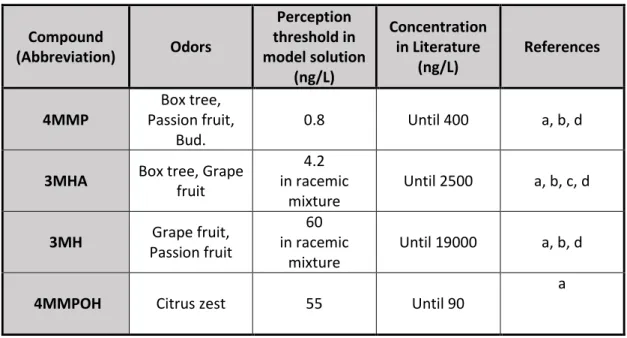
When talking about occurrence and concentration (table 1) levels of thiols, the scale is a small one, with 4MMP recorded at the range of 4-40 ng/l in wines (Coetzee & Toit., 2012) with a perception threshold of less than 1 ng/l (Tominaga et al., 2000). 3MH present perception threshold of about 60 ng/l, while 3MHA is around 4 ng/l, both in hydro-alcoholic solutions (Tominaga et al., 2000, Coetzee & Toit., 2012), and with a vast occurrence in wines, occurring at up to 18,000 ng/l for 3MH and 2500 ng/l for 3MHA (Roland et al., 2012; Coetzee & Toit., 2012). 4MMPOH shows a concentration that is rarely above its olfactory threshold of 55ng/l. (Coetzee & Toit., 2012). The low perception threshold of 3MHA makes it a significant contributor to wine, and its occurrence in wine is with its two enantiomeric forms, R being four times higher in perception threshold than the S form and presenting aroma of passion fruit. The S form is herbaceous and is found three times higher in concentration comparing with R. (Tominaga et al., 2006). 3MH is also found in its two enantiomeric forms, usually presenting an equal amount of both R and S forms in white dry wines, but with different perception thresholds and possible aroma; The R form reminiscent of grape fruit and citrus peel with perception threshold of 50 ng/l of and the S form has a 60 ng/l threshold and attribute to the passion fruit aroma of the wine. (Tominaga
et al., 2006). At too high concentrations these compounds might damage the wine's aromatic profile
and cause sweaty or cat urine impression, at the levels pf mg/L. (Swiegers et al., 2009; Coetzee & Toit., 2012; Peña-Gallego et al., 2012). Compound (Abbreviation) Odors Perception threshold in model solution (ng/L) Concentration in Literature (ng/L) References 4MMP Box tree, Passion fruit, Bud. 0.8 Until 400 a, b, d
3MHA Box tree, Grape fruit 4.2 in racemic mixture Until 2500 a, b, c, d 3MH Grape fruit, Passion fruit 60 in racemic mixture Until 19000 a, b, d
4MMPOH Citrus zest 55 Until 90
a
Table 1: Main volatile thiols in wines, their occurrence and concentration
a – Roland et al., (2011b); b - Coetzee & Toit., (2012); c - Tominaga et al., (1996); d- Tominaga et al., (1998b).
2.2.3 Viticulture Practices
Research done on cysteine precursors, in Sauvignons Blanc grapes from Bordeaux for two years where the level of Cys-4MMP, Cys-4MMPOH and Cys-3MH were checked one month before harvest had shown vast differences in concentration; ripening had a direct effect on processors level by increasing it. (Roland et al., 2011b). Cys-3MH development in grapes may be increased through water deficit (Chone et al., 2006), and its amount is directly proportional to it. Cys-4MMP is inversely proportional to the water deficit. (Roland et al., 2011b). Temperature shocks (hot and cold), UV-C radiation, biochemical stimulation or botrytis bunches (Allen et al., 2011; Thibon et al., 2011) may also increase Cys-3MH levels. Both Cys-3MH and Glut-3MH may be influenced by the soil
composition, environmental conditions and the elevation, as it seen in Koshu grapes. In the lowest elevation, the most rapid accumulation was observed. (Kobayashi et al., 2010). The vineyard
management has an impact on the must composition, which is appear to be linked to the precursor's concentration. Together with the water deficit impact, also the vine nitrogen status could influence the levels of all cysteinylated precursors; low nitrogen can decrease their concentration. (Chone et
al., 2006, Roland et al., 2011b). Sulfur additions with sufficient nitrogen supply may increase the
concentration of these precursors. (Roland et al, 2011b, Coetzee & Toit., 2012). Glutathione precursors may be influenced by similar environmental conditions that might limit glutathione content in the vine, thus resulting in lower glutathione precursors (Chone et al., 2006, Roland et al., 2011a).
2.2.4 Enology Practices
When considering the different enology practices and their impact on volatile thiols levels, we may follow the line of production and processing of the grapes to evaluate the different factors; Harvest and transport; according to a study done by (Capone & Jeffery., 2011a), when machine harvested grapes, that were transported over 800 km for about 12 hours were compared with hand-picked grapes with no transportation, the first showed Cys-3MH concentration 10 times higher than the last, while Glut-3MH did not present the same increase. Considering the fact that Cys-3MH appear to be easily utilized, this is an important observation (Coetzee & Toit., 2012); that seems to be caused by more grape damage and longer skin contact time (Capone & Jeffery., 2011a). The additions of antioxidant agents, when transporting grapes, with ascorbic acid alone or with 50 mg/L SO2 did not
affect much the concentration of Cys-3MH. When no antioxidant was added an increase of Cys-3MH was observed, though also phenolic oxidation was visible. In terms of Glut-3MH, ascorbic acid with moderate levels of SO2 exhibit an increase in the precursor. The use of 500 mg/L SO2 in combination
impact as an inhibitor to some enzymes, it also could be in the conversion stage of Glut-3MH to Cys-3MH, and possibly also at the construction of (E)-2-hexenal, by preventing necessary oxidation of fatty acid or inhibit enzyme in the chain of reactions. (Coetzee & Toit., 2012). This was confirmed by a study done by Capone & Jeffery., (2011a) who found that most of the Cys-3MH identified in the juice is already present in the berry, whereas most of the Glut-3MH is formed in the juice during processing. (Kalua & Boss., 2010). Finally, it seems that normal levels of SO2, addition of O2 to the must, with
enough time for enzymatic reactions, can result in increase of precursors of 3MH. (Roland et al., 2010b, Coetzee & Toit., 2012, Coetzee & Toit., 2012). Pre-fermentation treatments; as already mention, in trials done by (Peyrot des Gachons et al., 2002) with skin contact of Sauvignon Blanc grapes, an increase in thiols precursors in the juice was observed, showing a favorable results for Cys3-MH, with little effect on Cys-4MMPOH and Cys-4MMP. In the same experiment, an increase in the temperature during the skin contact had resulted in a considerable increase in Cys-3MH in the must, but allowed only a slight increase in 4MMPOH and 4MMP precursors. Due to slow diffusion time of the precursors to the juice, long periods of time gave higher extraction results. (Peyrot des Gachons et al., 2002, Coetzee & Toit., 2012). Higher pressed juice had showed higher level of 3MH precursors (Pate et al., 2010), though due to an increase in phenolic compounds and the oxidation process, the wines presented a decrease of 50% in 3MH and 3MHA. Therefor it is advised to protect and process these pressed juice to prevent to loss of thiols. (Roland et al., 2011b). Cold-soaking of a seven period day had not changed much the precursor's concentration, though a significant increase in 3MH and 3MHA was visible (up to 55%) in the corresponding wines. (Coetzee & Toit., 2012). Fermentation; the process of fermentation is greatly impacted by many factors, such as the composition of the must, the clarification process, the yeast strain used, the temperature; these factors and more will influence the final aromatic profile of the wine. (Masneuf-Pomarède et al., 2006, Swiegers et al., 2009). When the temperature is considered; low values (10-15 °C) are in interest for they may enhance the production of a number of positive volatile compounds (in the form of esters, acetates, and medium chain- fatty acids), nevertheless it might also result with a stuck fermentation. Studies done on Sauvignon Blanc wines, in which the aromatic characteristic is due to volatile thiols, had shown that the final concentrations of the three main volatile thiols (4MMP, 3MH and 3MHA) were higher when the temperature during fermentation was higher (20 °C compare to 13 °C) and that was shown to be regardless of the yeast strain used. (Masneuf-Pomarède et al., 2006). That doesn't say that the choice of yeast doesn't impact the final concentrations as well; the ability to release these thiols vary with the strain of yeast, for example S. bayanus var. uvarum strains and hybrids S. cerevisiae×S. bayanus var. have shown to possess high abilities to the task; in the same paper, (Masneuf-Pomarède et al., 2006) had tested the influence of different yeast strains (three S. cerevisiae and one hybrid strains S.cerevisiae×S. bayanus var. uvarum) on the production of the three main volatile thiols; their results
suggested significant differences between the strains in terms of thiols release abilities. According to (Swiegers et al., 2009), when seven yeast strains were tested they presented significant differences in the volatile thiols, though the basic chemical composition showed minor differences. In addition, a large degree of correlation between the flavors compound analysis and the sensory analysis. The use of different yeast strains lead to variations in the major thiols compounds (4MMP, 3MH and 3MHA), and a unique volatile flavor profile. (Swiegers et al., 2009). Not just the use of different yeast strains may result in changes of thiol concentration, but also co-inoculation of two S. cerevisiae may modify this characteristic. (King et al., 2008) this was further supported by (King et al., 2010), showing not just differences in compounds composition as result of different yeast treatment, but also a large variances in consumer acceptance. Additionally, in their research (Anfang et al., 2009) presented results suggesting possible interactions between some S. cerevisiae and certain non-Saccharomyces yeasts, which have the potential to increase varietal thiols (specially 3MHA) in Sauvignon Blanc wines. It seems as if no matter what the yeast strains used, there is a limitation to its ability to process precursors into volatile thiols, as already mention. The conversion of Cys-3MH into 3MH and 3MHA was between 0.1 to 12% and that of Glut-3MH was less than 5% in different researches that were conducted. (Coetzee & Toit., 2012). In terms of finning off the wine; already in the process of thiols identification, it was noticed that addition of copper can remove these tropical characteristics, due to reaction between the copper and the sulfur compound resulting with insoluble odorless sulfides (Swiegers et al., 2009). At and after bottling; volatile thiols might be affected from the oxygen entering the wine and the quality of the closure. (Coetzee & Toit., 2012). If O2 filtrates to the wine through the closure, the wine might
have a significantly lower levels of SO2, ascorbic acid and also volatile thiols, as it was found in
Sauvignon Blanc grapes. (Lopes et al., 2009; Ugliano et al., 2011). The oxidative loss of thiols (see also section 2.2.5) may be prevented by additions of glutathione, 20 mg/L just before bottling as it was shown in (Ugliano et al., 2011) that 3MH levels were increased 6 months after bottling in these conditions.
2.2.5 Oxidative loss of thiols and Negative sulfur compounds
In their precursor form, thiols are quite stable against oxidations thanks to C-S bond (Roland et al., 2010b). Volatile thiols, together with other wine compounds, are nucleophilic compounds, likely to react with quinones; a reactive electrophilic oxidation intermediates in wines. The reaction of both may result in the loss of varietal thiols. (Waterhouse et al., 2012). In their research, Waterhouse et al., (2012) tested the competitive kinetics of nucleophilic compounds with quinones. The results suggest that the anti-oxidant compounds (SO2, glutathione and ascorbic acid) and H2S will react favorably with
quinones than volatile thiols would. That may result in the perseveration of these aromatic compounds if the wine is undergoing oxidation. Three mechanisms seems to govern the oxidation of these thiols;
(1) O2 and iron might form H2S, (2) reaction with electrophilic compounds or (3) chemical reactions
with products such as quinone, i.e. products of phenolic oxidation. (Coetzee & Toit., 2012). The Hydrogen sulfide, H2S is a product of the sulfate reduction sequence (SRS) pathway that occurs inside
the yeast's cell. As part of the bio-synthesis of required organic sulfur compounds during fermentation (such as Cysteine and Methionine). HS- ions are used together with compounds that are derived from
nitrogen metabolism (O-acetyl serine and O-acetyl homoserine) for the synthesis process. However when nitrogen supply in insufficient, the free H2S that is derived from the HS- is accumulated in the cell
and then released to the must. (Pretorius et al., 2007) H2S is highly reactive and easily combined with
other compounds in the wine, might resulting in other negative aromatic compounds (Vermeulen et
al., 2005). To prevent or decrease the formation of H2S a sufficient nitrogen conditions are required
and the attention to other environmental conditions is highly recommended. (Pretorius et al., 2007)
2.3 β-lyase Enzyme
The use of enzymes in flavor-chemistry to biocatalyst different reactions have been well-known methodology. (Wakabayashi et al., 2002). The β-lyase enzyme was established to be involved in the release of 4MMP as well as 3MH and it's encoded by the gene IRC7 in S.cerevisiae yeast. (Villas-Boas
et al., 2014). Concerning Cys-3MH; the precursor is taken up by the yeast during fermentation via
transporters such as Gap1p. The Glut-3MH is transported via Opt1p. In the cytoplasm of the yeast the precursors are transformed by the β-lyase enzyme. (Marullo et al., 2013). Different proteins had been reported to have the ability to cleave synthetic or natural cysteinylated precursors of 3MH, however with different efficiencies. This may be a function of the kind of precursor, its concentration and most likely other environmental parameters in the must. (Marullo et al., 2013). In terms of 4MMP, it seems as if the Irc7p enzyme is the unique β-lyase that transforms its precursors. (Marullo et al., 2013). According to Gardner et al. (2013) it was only the knockout of IRC7 gene the lead to a significant decrease in both 4MMP and 3MH (about 96 and 40% respectively). The bioconversion of the precursors into their volatile form had been shown to be affected by Nitrogen Catabolite Repression (NCR), i.e. genes that encodes for transcriptional regulators with the ability to impact other gene's full expression under rich nitrogen source conditions. (Marullo et al., 2013). Considering that, the manipulation of NCR genes, either genetically or by the use of urea as a nitrogen source had shown to result in an increase in thiol synthesis. (Gardner et al., 2013).
2.4 Varieties
A well-known variety for its varietal thiols is Sauvignon Blanc. With wines produced from this variety being increasingly popular, also since its range of styles can be influenced both in the vineyard and the cellar. (Coetzee & Toit., 2012). Varietal thiols are not unique to this cultivator and can be found in many
other varieties; Riesling, Colombard, Semillon, Cabernet Sauvignon and more (Roland et al., 2011b; Coetzee & Toit., 2012). A primary reseacrh, studing the presence of thiols in white Portugues garpe varities was done by Ferreira et al., (2011), starting a growing intersest in the topic, showing the presence of volatile thiols, comparing it to that of Sauvingon Blanc wines, as will be described here.
2.4.1 Red Varieties 2.4.1.1 Syrah
The grape variety Syrah is originated from France and is capable of producing wines with strong colors, high intensity and violet shades in the duration of its youth. Aromatically, it is nonaromatic grape (Martínez-Gil et al., 2012), but during its vinification and as wine it may present a complex aromatic profile, with floral, fruity, spices and animals notes. The richness in tannins and its strength give the Syrah made wines well ageing potential. (Chaves, 2012).
2.4.1.2 Touriga Nacional
This grape variety originated from the north of Portugal, though it's grown in all the country's regions. It is suitable for quality wine production, port wines, sparkling wines and rose wines. May present aromas of red and ripped fruits, with some floral tones. The velvet color is prevalence, and the wine has good astringency and ability to evolve in the bottle. (Chaves, 2012).
2.4.2 White Varieties 2.4.2.1 Alvarinho
A very Old Portuguese white variety with low production, mainly planted in the areas of Monção and Melgaço (Vinho Verde regions). It is possible to find two distinct forms of this variety; small bunches, compact with small and golden berries, or medium/larger berries that remains greenish when they are ripped. The wines produced from this grape variety are very aromatic, with instrumental analysis showing that chemical compounds contributing the most to the related sensorial perception are fruity (ethyl esters and acetates) and floral aromas (monoterpenes). (Vilanova et al., 2010, Chaves, 2012).
2.4.2.2 Arinto
Cultivated in almost all wine regions in Portugal, being very versatile. In the region of Vinho Verde is known as Pedernã. However, in Bucelas region this variety became well known, being considered the "queen" variety of the region. The variety is with big and compact bunches, composed of small berries. Often used in the production of blended wines and sparkling wines. In Bucelas region, wines produced only from this grape present high acidity, with citrus, floral and fruity aromas when the wine is young (Chaves, 2012). According to Ferreira et al., (2011), the grape variety Arinto received higher score than
Sauvignon Blanc for grape fruit notes by a panel of 10 trained tasters, with the detection of the presence of 4MMP and 3MH in two subsequent years (2009 and 2010) and the presence of 3MHA one of the years (2010)
2.4.2.3 Encruzado
Almost exclusive to the region of Dão, and probably the most used variety there, for white wines; as one variety wine or as a blend. Characterized with good production scale and well balanced in terms of sugar and acidity. On the other hand, it is very sensitive to rot and to harsh weather (rain and wind). The wines produced from it are very aromatic and sharp. Can be saved in a bottle for long periods of time (Chaves, 2012).
2.4.2.4 Viosinho
Only grown in the Douro and Tras-os-Montes, where it has been used since the nineteenth century. Exhibit good quality wines and suitable for the production of still wine and port, but has a low income and so it is little cultivated. The Viosinho has small bunches and early maturing berries but it is very sensitive to rot. Well adopted and develops best in dry soils. The variety produces well-structured wines with fresh and complex floral aromas. Usually they are also alcoholic and able to age in the bottle for a few years (Chaves, 2012). Accoring to Ferreira et al., (2011), the presence of 4MMP and 3MH was detected by analytical methods, though in a panel of 10 tasters, non-of the attributes for this wine were higher than that of Sauvignon Blanc wine.
The Objective of this study is to evaluate a new enological strategy to release volatile thiols from their precursors using a β-lyase enzyme in white and red wines. This approach may permits a wine making style which is independent of the use of selected yeast for the release of thiols compounds.
This is a second study done with this approach, following a study that was done by Chaves, (2012) as a thesis dissertation in ISA, with the main difference been the skin contact time to fclitiatae the extraction of precursors, as described in section 3.
3. MATERIALS AND METHODS 3.1 Vinification process
Two red varieties (Syrah and Touriga Nacional) and four white varieties (Alvarinho, Arinto, Encruzado and Viosinho) were used for this study. All of the varieties are from Instituto Superior de Agronomia's (ISA) vineyards, located in Lisbon, Portugal. Both red and white grapes were monitored for their maturation process close to harvest time (table 5 and 6 respectively). The parameters that were checked for red grapes are; berries weight (g), volume of the must (mL), Brix (%), expected alcohol (% volume), pH, total acids (g/L of tartaric acid), total anthocyanins (mg/L) and total phenols (absorbance units. i.e. a.u). For the white grapes; Brix (%), expected alcohol (% volume), pH, total acids (g/L of tartaric acid). Protocols were adjusted to both white and red wines (see sections 3.1.1 and 3.1.2 respectively), with the use of β-lyase enzyme (Endozym Thiol® for the white wines and Endozyme Thiol Rouge® for the reds), manufactured by AEB group as well as other enological additives, with the aim to promote the completion of the fermentation with an increase in precursors and their free thiols. The β-lyase enzyme is a liquid pectolytic preparation produced with specific secondary activities, promoting the hydrolysis of the thiol's precursors such as 3MH, 3MH, 4MMP and 4MMPOH, from cysteine and glutathione derivatives.
3.1.1 White wines vinification
Viosinho, Alvarinho, Encruzado and Arinto grapes were harvested by hand on the 20/08/2014, 27/08/2014, 05/09/2014 and 23/09/2014 respectively. All the grapes started the processing at the same day of harvesting; crushing of the grapes with the application of potassium metabisulfite, 100 mg/kg of grapes been equivalent to 50 mg Sulphur dioxide, i.e. SO2 (see section 3.2.1 for further
explanation), and an enological product containing SO2 and ascorbic acid (Aromax B4®) - 50 g/100kg
of grapes, with the aim of protecting the must from oxidation. The grape's must was checked for the initial density (g/L at 20 °C), temperature (°C), pH, total acidity (g/L tartaric acid), expected alcohol (% vol.) and Brix (%) (Table 7) and was treated with a pectolytic enzyme (Endozyme ICS 10 Arôme®) 0.6 ml/100kg to induce the partial lysis of the cellular walls and to facilitate the extraction of varietal aromas from the skin to the must, as well as decreasing the viscosity of the must. The must was then macerated for 4 hours at room temperature (skin contact) to further promote extraction of thiols precursors. That was followed by the pressing of the grapes (manual pressing) and the separation of juice and solids. A second pectolytical enzyme was added to the separated juice (Endozyme Muscat®) - 2 g/hl to improve the clarification and extraction. The must was then put for 24 h in room temperature and was racked. After the racking, the must was inoculated with active dry yeast (Zymasil ® Bayanus) - 20 g/hl, obtained from a pure culture of Saccharomyces bayanus. This neutral yeast allows a better
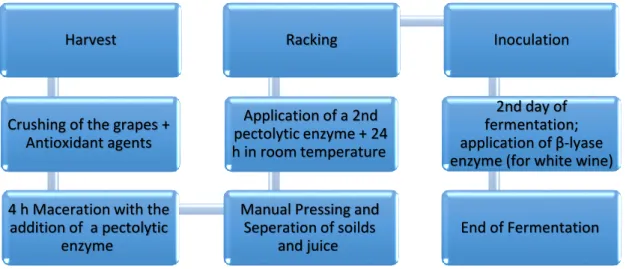
evaluation of the β-lyase enzyme additive rather than of the yeast's. The reactivation medium of the yeasts was added with amino acids and vitamins (Fermoplus Energy Glu® - 25% of the amount of the yeast) and was put into the must. 30 g/hl of Nitrogen, vitamins and micro-elements (Enovit®), with 10 g/hl being equivalent to 20 mg/l of assimilated nitrogen was added to the must after inoculation. At the second day of fermentation 5 ml/hl of β-lyase enzyme (Endozyme Thiol®), suitable for white wines was added to the tested wines, leaving the control wines without this last addition. The temperature was kept not less than 18 and no more than 26 °C throughout the fermentation (room temperature), and the densities were measured to control the process of fermentation (table 8). At the last third of fermentation (with density being 1020 to 1040) 30-40 g/hl of nutrients were added to promote a complete fermentation (Fermoplus Integrateur®). Once the fermentation ended, the wine was racked and sampled to check and control its chemical state (section 3.2.1). On the 23/02/2015 the wines were bottled using a manual bottling equipment. Figure 5 illustrates the vinification process of the white wines). Table 25 in the annex summarize the different additives used in the vinification process.
3.1.2 Red wines vinification
Syrah and Touriga Nacional were harvested on the 17/09/2014 and 18/09/2014 respectively. All the grapes started the processing at the same day of harvesting; destemming together with crushing of the grapes and the application of 100 mg/kg potassium metabisulfite, been equivalent to 50 mg of SO2.
The must was then inoculated with active dry yeast (Zymasil® Bayanus) 20 g/hl with a reactivation medium (Fermoplus Energy Glu®) - 25% of the amount of the yeast. The inoculated must was added with Nitrogen, vitamins and micro-elements (Enovit®), and was let fermenting with its solids parts. At the second day of fermentation 5 ml/hl of β-lyase enzyme that is specific for red wines (Endozyme Thiol Rouge®) was added to the tested wines, leaving the control wines without this last addition. The temperature was kept not less than 21 and no more than 26 °C throughout the fermentation (room temperature), and the densities with temperatures were measured to control the process of fermentation (table 8).
At the last third of fermentation (with density being 1020 to 1040) 30-40 g/hl of nutrients were added to promote a complete fermentation (Fermoplus Integrateur®).
Once the fermentation ended, the wine was macerated still to complete a period of about 15 days of maceration, the wine was pressed and separated from its solids. All of the red wines went through Malo-Lactic fermentation (MLF) and afterwards were checked for their basic control parameters (see section 3.2.1) and corrected if needed. The red wines went through the same chemical control as the white wines from the start of vinification (together with MLF control), and were bottled at the same date, 23/02/2015. Figure 6 illustrates the vinification process of the red wines. Table 25 in the annex summarize the different additives used in the vinification process.
Figure 5: General Flowchart of the main steps for white wines vinification.
Figure 6: General Flowchart of the main steps for red wines vinification. Harvest
Crushing of the grapes + Antioxidant agents
4 h Maceration with the addition of a pectolytic
enzyme
Manual Pressing and Seperation of soilds and juice Application of a 2nd pectolytic enzyme + 24 h in room temperature Racking Inoculation 2nd day of fermentation; application of β-lyase enzyme (for white wine)
End of Fermentation Harvest Destemming + Crushing + Antioxidant angents. Inoculation 2nd day of fermentation; application β-lyase enzyme (for red wine) End of fementation and
completetion of 15 days of maceration. Pressing and Separation
of wine and soilds
Malo-Lactic fermetation
3.2 Chemical analysis
3.2.1 Wine's basic parameters
Both red and white wines were analyzed using chemical analysis as mentioned in section 3.1.1 at the receiving of the grapes for the assessment of the must. At the end of fermentation (table 9 for the red wines and table 10 for the whites). The wines were checked for the pH, total acidity, volatile acidity, residual sugar, total Sulfites levels as well as the free levels, which according to it sulfites additions and corrections were done (units are written in the tables) . The wine's sulfur dioxide levels were corrected to achieve around 30 mg/L free SO2 for the red wines, and about 35 mg/L for the white wines. The
form of sulfur dioxide used was potassium metabisulfite (K2S2O5) powder diluted with water before
use. 100 mg of K2S2O5 originates (by hydrolysis) 50 mg of SO2; about 1/3 stays free while the other 2/3
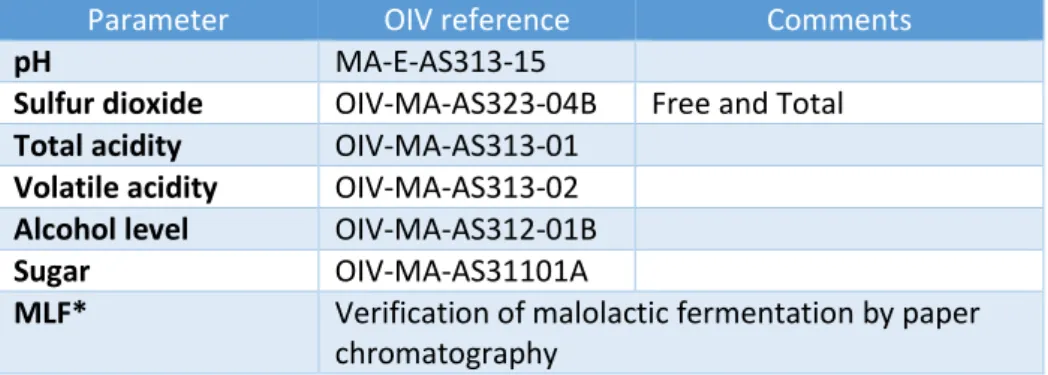
combine. The wines were checked again, about 2 months after fermentation ended for pH, volatile acidity, total Sulfites levels as well as the free levels, which according to it sulfites additions and corrections were done. After bottling the wines were checked again for the same parameters. All of the analysis, during and after fermentation, for the basic control parameters were performed at the laboratories of ISA, according to OIV recommended protocols. The tested basic parameters and their corresponding OIV reference number (or method) are presented in table 2. None of the wines showed any signs of sluggish fermentation. In addition to that, the general chromatic characteristics of the wine were obtained to paint a more comprehensive picture of the wine, together with the phenolic profile and the tannin power.
Parameter OIV reference Comments
pH MA-E-AS313-15
Sulfur dioxide OIV-MA-AS323-04B Free and Total Total acidity OIV-MA-AS313-01
Volatile acidity OIV-MA-AS313-02 Alcohol level OIV-MA-AS312-01B
Sugar OIV-MA-AS31101A
MLF* Verification of malolactic fermentation by paper chromatography
Table 2: Control Parameters and their OIV references or method.
*MLF – Malo-Lactic Fermentation.
Analysis of chromatic characteristics:
The chromatic analysis of the wine was done in order to achieve a better and more detailed picture of the wines, both treated and untreated. All the analysis were performed at the laboratories of ISA using
spectrophotometer method proposed by Somers and Evans (1977). The red wines were checked and compared for color intensity (a.u), color shade (a.u), total pigments (a.u), polymerized pigments (a.u), total anthocyanins (mg/l), ionized (colored) anthocyanins (mg/l), degree of ionization of anthocyanin (%), polymerization index (%) as well as total phenols index, total flavonoids and total non-flavonoids. The white wines were checked for color intensity (a.u), total phenols index, total flavonoids and total non-flavonoids. The last three were analyzed using the method suggested by Kramling and Singleton (1969) and the results were expressed as Gallic acid (mg/L) using the curve X= (0.0169 + y)/0.0309, with y being the absorbance value and X the expressed result for total phenols and total non-flavonoids while total flavonoids was expressed in mg/L Catechin using the curve X=y/0.0125. All the trials were done in a triplicate way in 1 mm cell (in that case the dilution factor is X10) or 10 mm cell (which was multiplied by 101) and the formula of each one is presented in table 3, without the dilution factor.
Characteristics Formula
Color intensity* A420 + A520 + A620
Color Shade A420 / A520
Total Pigments A520(HCl)
Polymerized Pigments A520(SO2)
Total Anthocyanin (mg/L) 20 x (A520(HCl) - 5/3A520(SO2))
Colored Anthocyanin (mg/L) 20 x (A520 - A520(SO2))
Ionization Index % 100 x (A520 - A520(SO2))
(A520HCl - 5/3A520(SO2))
Polymerization Index % 100 x (A520(SO2))
(A520(HCl))
Total Phenols index (TPI) A280
Total Not Flavonoids A280(with HCl)
Total Flavonoids (TPI – Total Not Flavonoids)
Table 3: Analytical data for the calculation of chromatic characteristics. * For white wines the intensity is only the measurement of A420.
Tannin Power
The Tannin power was evaluated using the method of Freitas and Mateus, (2001). Model solution for dilution of wine sample was prepared by hydro-alcoholic solution of 12% (v/v); pH 3.2, pH was reduced by using tartaric acid solution of 5 g/L. Solution was filtered (0.45 μm) prior to use. Wine sample after centrifugation was diluted by using model solution to 1:50 for red wines and 5:50 for whites. The turbidity of this sample was measured by using the turbidimeter (Hach 2100N). The
Instrument was calibrated by using formazin standards. Later in other test tube diluted wine sample (8 mL) was introduced by 300 μL of BSA (Bovine Serum Albumin 0.8 g/L). It was mixed by using vortex and stored in dark place at ambient temperature for 45 minutes. After that turbidity of this wine sample along with BSA was also measured by using Turbidimeter. Tannin power of wine sample was obtained by using following formula:
Tannin Power (NTU/mL) = (d - d0) / 0.08
Where, d - turbidity of sample along with BSA d0 - turbidity of sample without BSA
3.3 Sensorial Analysis
The sensorial tasting of the wines were held in ISA's tasting room, and was concluded from a panel of 10 trained and experience tasters. Each wine received a random identification code (table 4) and all wines were served randomly. Each taster received a tasting sheet; one for the white wines (Figure 6) and another one for the red wines (Figure 7). The tasters were asked to evaluate the wines in terms of three parameters; color, aroma and taste. Each parameter was further divided into sub-parameters as can be seen in Figures 6 and 7. The sub-parameter "Tropical Notes" was emphasized in this study, and was grouped as passion fruit, grapefruit or cat urine. The evaluation was done on a scale of one to five; one been nonexistent; 2, slightly intense; 3, moderately intense; 4, intense and 5, very intense. For the parameters, equilibrium (aroma and taste) and Overall Assessment; 1, Mediocre; 2, Satisfactory; 3, Good; 4; Very Good; 5, Excellent.
Code Variety Sample
Red Wines 273 Touriga Nacional Control
220 Syrah Test
171 Syrah Control
589 Touriga Nacional Test
White Wines 121 Alvarinho Control
360 Encruzado Test 145 Viosinho Test 476 Encruzado Control 810 Arinto Test 160 Viosinho Control 190 Alvarinho Test 730 Arinto Control
Figure 7: Wine tasting sheet used for the white wines, English and Portuguese versions.
Instituto Superior de Agronomia
White Wine's Tasting Sheet
Name:
Taste the wines in random order and classify the different attributes using the following scales:
For color, aroma and taste: 1. None 2. Slightly Intense (a)
3. Moderately Intense (a) 4. Intense (a) 5. Very Intense (a)
For equilibrium (aroma and taste) and Overall Assessment: 1. Mediocre
2. Satisfactory 3. Good 4. Very Good 5. Excellent
*Tropical Notes: Passion Fruit, Grapefruit, Cat Urine. Comments:
Wines / Codes
121 360 145 476 810 160 190 730 Color Limpidity Yellow Green Aroma Fruity Floral Tropical Notes* Vegetable Equilibrium Taste Body bitterness Acid Persistence Equilibrium Overall AssessmentInstituto Superior de Agronomia
Ficha de Prova de Vinhos Brancos
Nome:
Prove os vinhosem ordem aleatória e classifique os diferentes atributos utilizando as seguintes escalas:
Para Cor, Aroma e Gosto: 1. Inexistente 2. Pouco Intenso(a) 3. Medianamente Intenso(a) 4. Intenso(a) 5. Muito Intenso(a)
Para Equilíbrio (Aroma e Gosto) e Apreciação Global: 1. Medíocre 2. Satisfatório 3. Bom 4. Muito Bom 5. Excelente
*Notas Tropicais: Leia-se, Maracujá, Toranja, Xixi de Gato.