FOREST LANDSCAPE RESTORATION, BIODIVERSITY AND
ECOSYSTEM SERVICES
Elvin Carol Kohen
Dissertation to obtain a Master’s Degree in
Mediterranean Forestry and Natural Resources Management
Supervisor: Barbara Vinceti, Bioversity International
Supervisor: Miguel Bugalho, School of Agriculture, University of Lisbon
Jury: Presidente:
Doutor José Guilherme Martins Dias Calvão Borges, Professor Associado com Agregação do(a) Instituto Superior de Agronomia da Universidade de Lisboa
Vogais:
Doutor José Miguel Oliveira Cardoso Pereira, Professor Catedrático do(a) Instituto Superior de Agronomia da Universidade de Lisboa;
Doutor Miguel Nuno do Sacramento Monteiro Bugalho, Professor Auxiliar do(a) Instituto Superior de Agronomia da Universidade de Lisboa, orientador;
Doutora Brigite Roxo Botequim, Investigadora do(a) Instituto Superior de Agronomia da Universidade de Lisboa.
I Resumo
A deflorestação e a degradação florestal são desafios globais que afectam a biodiversidade e os serviços dos ecossistemas. O ‘Restauro Florestal à escala da paisagem’ poderá contribuir para responder a estes desafios, recuperar os ecossistemas florestais, a biodiversidade e os serviços de ecossistema e contribuir para os Objectivos Millennium de Desenvolvimento Sustentável. O restauro da paisagem florestal pode criar oportunidades para a conservação da biodiversidade, produção de alimento e de produtos florestais lenhosos e não-lenhosos. Actualmente os projectos de restauro florestal caracterizam-se por uma ampla variedade de abordagens, sendo essencial avaliar como estas abordagens são implementadas ao nível global. Em particular é importante identificar: localização geográfica dos projectos, principais objectivos e metodologias usadas, e acções para a conservação da biodiversidade e serviços de ecossistemas, incluindo potenciais benefícios para a segurança alimentar.
Este trabalho visou caracterizar as práticas de restauro da paisagem florestal em todo o mundo. Para isso realizaram-se inquéritos on-line, direccionados a gestores de projectos de restauro florestal. Obtiveram-se respostas relativas a 47 projectos de restauro. Concluiu-se que a maioria destes projectos se concentram nas regiões tropicais, tendo como objectivos mais frequentes o aumento da cobertura vegetal e a conservação da biodiversidade. Cerca de 60% dos projectos investigados usaram simultaneamente técnicas de regeneração artificial e natural. Baseado nas respostas ao inquérito, verificou-se que na maioria dos projectos (75%), 100% das espécies plantadas eram nativas da área do projecto. No entanto, o número de espécies plantadas variou entre 1 a 3 espécies diferentes por hectare. De um total de 131 espécies de árvores plantadas 17% eram espécies classificadas como ameaçadas. Na maioria dos casos, os projectos de FLR não usaram espécies arbóreas com valor nutricional. Verificou-se também que os gestores dos projectos, assim como as comunidades locais, homens e mulheres, participaram na selecção de espécies para restauro florestal.
Palavras-chave: Restauro Florestal, Espécies arbóreas, Biodiversidade, Serviços do ecossistema, Nutrição
II Abstract
Deforestation and forest degradation are global challenges that negatively affect forests, ecosystem services and biodiversity. The concept of ‘Forest Landscape Restoration’ has emerged as a contribution to address these challenges and recover forests, restore biodiversity, improve ecosystem services and human well-being, thus contributing to the Sustainable Development Goals. Forest landscape restoration may create opportunities for biodiversity conservation, reduction of erosion, water regulation, and supply of food and wood products. Today, Forest Landscape Restoration projects are applied with a wide variety of approaches. However, there is still a need to assess how this concept is being put into practice by different initiatives. This includes getting information on project locations, project main objectives, methods, implications on biodiversity and ecosystem services, nutritional benefits of trees, and evaluate how the selection of tree species is done.
In order to provide a complete picture of forest landscape restoration practices around the world, this research focused on obtaining information from various projects through an online survey aimed at practitioners of forest restoration worldwide. Responses from 47 FLR projects showed that most restoration activities targeted are currently undergoing in the tropics. Increasing vegetation cover and recovering biodiversity were the most common objectives. About 60% of the projects used a mixture of artificial and natural regeneration. According to the responses, in most of the projects (75%), 100% of the planted species were native to the project site. The diversity of planted species was on average of 1 to 3 species per hectare. From the total list of 141 responses, 131 planted tree species were derived, threatened species covered a small proportion of 17%. In general, FLR projects did not plant any edible tree species. It was also found that project managers and local communities are often involved in species selection, in most cases both men and women.
Keywords: Forest Landscape Restoration, Tree species, Biodiversity, Ecosystem services, Nutrition
III Resumo alargado
As florestas desempenham um papel essencial na conservação da biodiversidade e dos serviços dos ecossistemas, albergando mais de 80% das espécies terrestres e gerando serviços de ecossistemas que contribuem para a subsistência de mais de 1,6 mil milhões de pessoas em todo o mundo. Por biodiversidade entende-se a “variabilidade da vida” a várias escalas, desde os genes aos ecossistemas, enquanto por “serviços dos ecossistemas" se entende serem os ‘benefícios’ que os ecossistemas geram para o bem-estar humano. Os serviços dos ecossistemas são usualmente classificados em: serviços de suporte (ex: ciclo de nutrientes, produção primária), serviços de aprovisionamento (ex: alimentos, combustível, madeira e produtos florestais não madeireiros), serviços de regulação (ex: sequestro de carbono, regulação ciclo da água) e serviços culturais (ex: recreio, turismo, valores estéticos e espirituais). Actualmente sabe-se que existe uma relação positiva entre biodiversidade (ex: número de espécies) e a capacidade dos ecossistemas de gerar serviços.
A deflorestação e a degradação florestal, no entanto, ameaçam a biodiversidade florestal e os serviços dos ecossistemas, nomeadamente devido à fragmentação e perda de habitat, com impactos negativos na capacidade dos ecossistemas para mitigar eventos extremos (e.g. secas, incêndios) ou proporcionarem segurança alimentar.
O conceito de restauro florestal à escala da paisagem visa reverter a deflorestação e a degradação florestal, conservando a diversidade biológica, e os serviços dos ecossistemas, contribuindo também para os objectivos do Desenvolvimento Sustentável (SDG) do Millennium. O termo ‘Restauro florestal à escala da paisagem’ é definido como “um processo
planeado que aponta para a recuperação da integridade ecológica e o melhoramento do bem-estar humano em paisagens desflorestadas ou degradadas”. Embora o restauro florestal
inclua abordagens e metodologias diferentes, todas as actividades que visam restaurar áreas desflorestadas e degradadas podem ser consideradas como restauro florestal.
Os projectos de restauro florestal encontram-se enquadrados por uma variedade de abordagens e politicas globais. Tratados e acordos como, por exemplo: “Aichi Targets Declaration”, a “Bonn Challenge”, A “New York Declaration on Forests”, ou a “Land Degradation Neutrality” impõem metas e objectivos concretos para acções de restauro florestal. É todavia essencial compreender como se distribuem e são implementados os projectos de restauro florestal a nível global. O objectivo deste trabalho foi pois o de analisar uma amostra de projectos de restauro da paisagem florestal, ao nível global, procurando identificar: localização geográfica do projecto, objectivos principais, métodos usados, relação com a conservação da biodiversidade e dos serviços dos ecossistemas. No âmbito dos
IV serviços dos ecossistemas considerou-se em particular de que maneira o restauro florestal pode contribuir para a segurança alimentar das populações locais, nomeadamente identificando eventuais benefícios nutricionais das árvores usadas no restauro florestal. Na literatura sobre restauro florestal, raramente os aspectos acima referidos são analisados em conjunto, impedindo uma visão completa e sobre as implicações do restauro florestal. O presente trabalho visou obter informação sobre vários aspectos de projectos de restauro florestal através de inquéritos on-line, globais, dirigidos aos profissionais do sector.
Para este efeito, elaborou-se um inquérito em plataforma digital, online, no qual se colocaram as seguintes questões: (1) Onde estão a decorrer os projectos, quais ecossistemas florestais alvo e principais objectivos dos projetos em curso no mundo? (2) Quais são os principais métodos (ex: regeneração natural, regeneração assistida, regeneração artificial) utilizados nestes projectos? (3) Como varia a diversidade de espécies e estatuto de conservação (ex: espécies nativas, espécies endémicas, espécies ameaçadas) utilizadas nos projectos de restauro? (4) Que factores e serviços do ecossistema, incluindo potenciais benefícios nutricionais, são considerados durante o processo de selecção das espécies? E finalmente (5) Que actores (ex técnicos, populações locais, percentagem de homens ou mulheres) estão envolvidos na selecção das espécies usadas nos projectos de restauro?
O inquérito foi distribuido através do programa SurveyMonkey, uma ferramenta para elaboração de inquéritos on-line. Os inquéritos foram enviados para várias organizações na área do restauro florestal, nomeadamente organizações não governamentais de ambiente e agências de investigação, com a solicitação de que fossem redistribuídos por outras entidades relevantes, de forma a alcançar o maior número possível de organizações e projectos. Como o número de respostas foi relativamente baixa nesta primeira fase, foi ainda realizada uma segunda distribuição de inquéritos, dirigida a um maior número de organizações do sector.
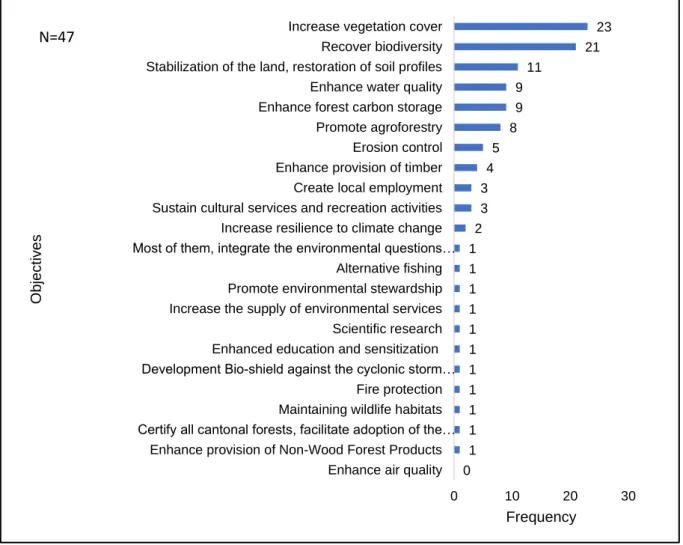
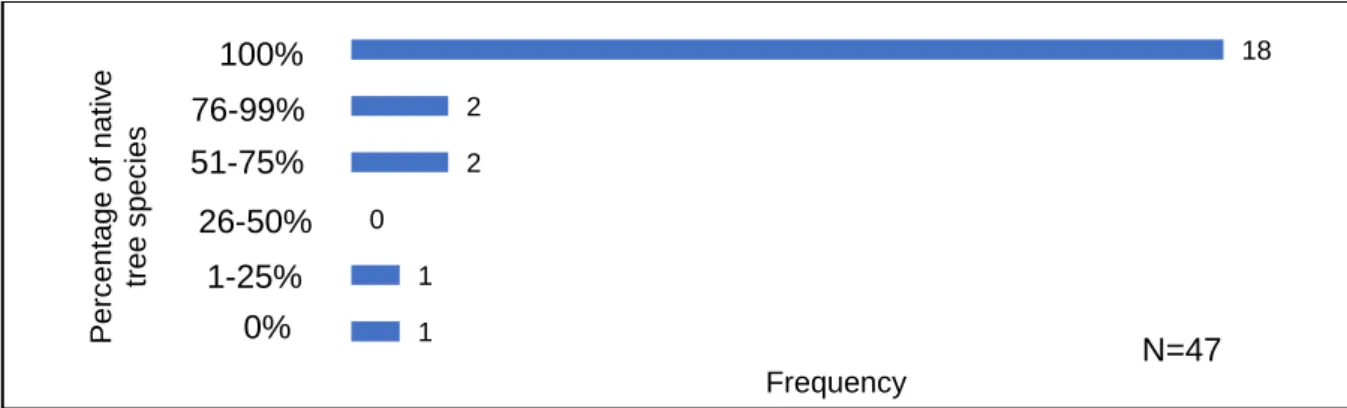
Foram recebidas 55 respostas, das quais 47 foram validadas para análise. Os resultados mostraram que a maioria das actividades de restauro ocorrem nas regiões tropicais. Nas respostas analisadas África, Ásia e América do Sulcobrem quase 80% dos projectos de restauro em todo o mundo. Aumentar a cobertura vegetal e promover a conservação da biodiversidade são os objectivos mais frequentes listados nos projectos analisados. São também mencionados outros objectivos como, por exemplo, a educação ambiental ou a certificação florestal. Cerca de 60% dos projectos utilizaram uma mistura de regeneração artificial e natural. Baseado nas respostas ao inquérito, verificou-se que na maioria dos projetos (75%), 100% das espécies plantadas eram nativas na área do projecto. O número
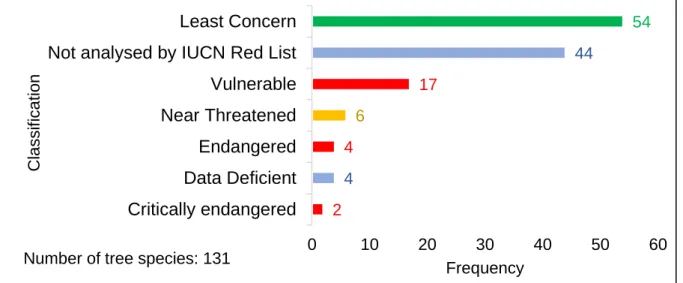
V de espécies plantadas variou em média entre 1 a 3 espécies por hectare. Do total de 141 espécies de árvores plantadas 23 espécies tinham estatuto de espécie ameaçada. Na maioria dos casos, os projectos de FLR não usaram espécies arbóreas com valor nutricional. Verificou-se também que os gestores de projectos e as comunidades locais, quer homens quer mulheres, são envolvidos na selecção de espécies.
Tendo em conta que estes resultados se baseiam na amostra analisada e possam não ser absolutamente representativos das actividades globais de FLR , mesmo assim conclui-se que: Cada projecto de restauro uma dinâmica própria.Analisar a variedade de práticas adoptadas nos projectos de FLR é crucial para diagnosticar a diversidade de abordagens e os objectivos globais do restauro florestal.
Conclui-se também que a regeneração natural e artificial são frequentemente usados simultaneamente no restauro florestal. Adicionalmente a FLR tem objectivos diversos, incluindo a conservação da biodiversidade e a promoção de alguns serviços do ecossistema. Plantar uma maior diversidade de espécies arbóreas e espécies ameaçadas pode favorecer a conservação da biodiversidade nos projectos FLR. Quanto ao envolvimento das populações locais, é necessário integrar aspectos sociais e relativos ao bem-estar humano nos projectos FLR. O aumento da segurança alimentar, por exemplo, pode desempenhar um papel importante para mostrar o potencial das árvores em nutrição para abordar a segurança alimentar das pessoas locais e motivá-las para a manutenção das práticas de FLR.
A presente tese revelou também que os projectos de restauro se localizam principalmente em áreas tropicais húmidas. Um maior esforço de restauro em regiões áridas poderá aumentar o potencial da FLR em mitigar a insegurança alimentar e a pobreza das pessoas que vivem nessas áreas, e também, o desenvolvimento sustentável.
Esta tese reconhece que a FLR como uma ferramenta que pode contribuir para o desenvolvimento sustentável, compilando informação global sobre práticas de FLR que visam atingir as metas globais de restauro florestal, e contribuir simultaneamente para a integridade ecológica e o bem-estar humano.
VI TABLE OF CONTENTS
Resumo. ... I Abstract ... II Resumo alargado ... III List of Figures ... VII List of Abbreviations ... VIII
1. INTRODUCTION ... 1
-1.1. Global Threats to Forests ... 1
-1.2. Forest Landscape Restoration ... - 2 -
1.3. Forest Landscape Restoration on the International Agenda ... 3
-1.4. Objectives of Forest Landscape Restoration ... - 5 -
1.5. Methodologies for Forest Landscape Restoration ... 6
-1.6. Biodiversity Concerns: Species Diversity, Nativeness and Conservation Status .. - 7 -
1.7. Drivers of tree species selection ... 8
-1.8. Food Provision in Forest Landscape Restoration ... - 9 -
1.9. Tree species selection: who decides? ... 10
-1.10. Forest Landscape Restoration Practices ... - 11 -
1.11. Research Questions of the Thesis ... 13
-2. METHODOLOGY ... 14
-2.1. Questionnaire ... 14
-2.2. Pilot Survey ... - 15 -
2.3. Data Collection ... 15
-2.4. The second stage of data collection ... - 16 -
2.5. Double-checking the quality of the obtained responses about tree species ... - 17 -
2.5.1. Identification of conservation status of planted tree species through IUCN Red List of Threatened Species ... 18
-3. RESULTS ... 19 -4. DISCUSSION ... 32 -5. CONCLUSIONS ... 38 REFERENCES ... 40 Appendix1... 53 Appendix2... 54 Appendix3... 67 Appendix4... 70
-VII List of Tables and Figures
List of Tables
Table 1: Existing studies that analyzed FLR practices ... 12 -Table 2: Definitions of categories in the IUCN Red List of Threatened Species ... - 18 - Table 3: Most selected 4 replies on the main characteristics of the FLR projects analyzed and the number of projects falling in a different type ... 19 -Table 4: Information obtained from the survey on edible tree species, their native range and uses ... 29
-List of Figures
Figure 1: Geographic distribution of the FLR projects from which responses to the survey were obtained ... 21 -Figure 2: Number of survey responses in each continent ... - 21 - Figure 3: Number of responses received from FLR projects in different countries ... 22 -Figure 4: Types of forest ecosystems and the number of FLR projects aimed at restoring them ... 23 -Figure 5: Most commonly adopted goals of FLR projects and number of projects that apply them ... 24 -Figure 6: Number of FLR projects that applied different restoration methods ... - 24 - Figure 7: Number of species planted per hectare and associated FLR projects ... - 25 - Figure 8: Different percentages of native trees and the number of projects planting those - 26 -
Figure 9: Classifications of tree species in IUCN Red List Threatened species and number of tree species in each category ... - 27 - Figure 10: Factors and ES considered during the species selection process ... 27 -Figure 11: Percentage of edible tree species in a project and the corresponding number of projects ... 28 -Figure 12: Different actors and the number of projects that included them in species selection ... 30 -Figure 13: Status of men and women involvement in local communities and the number of projects apply each option ... 31
-VIII List of Abbreviations
AFR100 – African Forest Landscape Restoration Initiative AFRP – Atlantic Forest Restoration Pact
APAFRI – Asia Pacific Association of Forestry Research Institutions APFORGEN – Asia Pacific Forest Genetic Resources Programme BGCI – Botanic Gardens Conservation International
CBD – Convention on Biological Diversity
CGIAR – Consultative Group on International Agricultural Research CER – Certified Emission Reduction
CDM – Clean Development Mechanism COP – Conference of the Parties
D&D – Forest Degradation and Deforestation ES – Ecosystem services
EUFORGEN – European Forest Genetic Resources Programme FAO – Food and Agriculture Organization
FLR – Forest Landscape Restoration
GBIF – Global Biodiversity Information Facility
GPFLR – Global Partnership on Forest and Landscape Restoration GRN – Global Restoration Network
IISD – International Institute for Sustainable Development IMFN – International Model Forest Network
IPAM – The Amazon Environmental Research Institute IUCN – International Union for Conservation of Nature
IUFRO – International Union of Forest Research Organization
IX NGO – Non-Governmental Organization
NTFP – Non-Timber Forest Products PES – Payment for Ecosystem Services PFAF – Plants For A Future
REDD+ – UNFCCC-Reducing Emissions from Deforestation and Forest Degradation UN-CCD – United Nations Convention to Combat Desertification
UNFCCC – United Nations Framework Convention on Climate Change SAFORGEN – Sub-Saharan African Forest Genetic Resources
SDGs – United Nations Sustainable Development Goals SER – Society of Ecological Restoration
WWF – World Wide Fund for Nature WRI – World Resources Institute
- 1 - 1. INTRODUCTION
The term “forest” stands for a minimum of 0.5 hectares of land, with trees higher than 5 meters at maturity and at least 10% of tree crown cover (FAO, 2010). Forest ecosystems are crucial reservoirs of biodiversity that host more than 80% of entire species living on land (Aerts & Honnay, 2011; United Nations, 2011), and generate ecosystem services that contribute to livelihoods of more than 1.6 billion people worldwide (Chao, 2012; The World Bank, 2004). Biodiversity is the variability of living organisms in all types of ecosystems (Groot et al., 2012). Biodiversity is positively related to the ecological functions that promote the provision of ecosystem services (ES) (Benayas, Newton, Diaz, & Bullock, 2009; Brockerhoff et al., 2017). ES are defined by Millennium Ecosystem Assessment as the benefits ecosystems provide to humankind, and can be classified into: supporting services (e.g. nutrient cycling, primary production, maintenance of habitats and genetic diversity) provisioning services (e.g. food, fuel, timber and non-timber forest products); regulating services (e.g. climate and disease control, carbon sequestration, water treatment, moderation of extreme climatic events); and cultural services (e.g. recreation, tourism and spiritual values) (Brockerhoff et al., 2017; Millennium Ecosystem Assessment, 2005) .
1.1. Global Threats to Forests
Deforestation and forest degradation are the biggest threats to forests worldwide (IUCN, https://www.iucn.org/resources/issues-briefs/deforestation-and-forest-degradation).
Deforestation is the extensive removal of vegetation to less than 10% crown cover (Hobley, 2010), whilst forest degradation is the reduction of the capability of a forest to provide goods and services (Lamb, Stanturf, & Madsen, 2012). Effects of forest deforestation and degradation (D&D) induce habitat fragmentation, biodiversity reduction and loss of ES (Duguma et al., 2019), and ultimately generate food insecurity and intensify the effects of climate change. Livelihoods of millions of forest-dependent people may be affected by D&D. Some authors indicate that at least 3.2 billion people may be affected (Besseau, Graham, S., & Christophersen, T., 2018), with negative repercussions on societies and economies (Cunningham et al., 2015).
Direct drivers of deforestation include conversion of forest to other land uses. Agriculture is estimated to be the most intense driver by leading to around 80% of deforestation worldwide. 2/3 of the total deforestation is caused by commercial agriculture practices, including livestock agriculture in Latin America. Meanwhile, in Africa and (sub)tropical Asia, commercial and subsistence agriculture each causes 1/3 of deforestation, leaving the other 1/3 for mining, urban area expansion, and infrastructure. Overall, commercial agriculture of answering international demand for cattle, soybean and palm oil is a stronger driver than subsistence agriculture in the last 30 years. In terms of forest degradation, 70% of total degradation in Latin
- 2 - America and (sub)tropical Asia is caused by commercial timber extraction and logging, while in Africa fuelwood collection is the main driver (Kissinger, Herold, & De Sy, 2012). Indirect drivers of D&D are complex interplays in the social, economic, political and cultural environments at global, regional and local levels, such as local subsistence and poverty, prices at international markets, national policies and governance (Sabogal, Besacier, & McGuire, 2015). Recent forest fires that occurred in the Amazon rainforest in 2019 demonstrate that the threats of D&D are yet to be mitigated. According to the current report of The Amazon Environmental Research Institute (IPAM), the fires that occurred in the summer of 2019, a non-dry year, in municipalities which were already highly deforested are intentional and mostly caused by clearing of forest areas (Silvério, Silva, Alencar, & Moutinho, 2019), which according to the international media is taking place to expand logging and agricultural activities (Andrade, 2019).
As a result of both direct and indirect factors, the estimated total extent of global deforestation since 1990 is 129 million hectares - nearly the size of South Africa - (Besseau et al., 2018; FAO, 2016), with a global deforestation rate of about 13 million hectares per year (Bremer & Farley, 2010). About 850 million hectares of forests worldwide are classified as degraded (Mansourian & Vallauri, 2014). Considering that the total human population is expected to increase up to 9.8 billion by 2050 (United Nations, DESA, Population Division, 2017), an increase in the demand and overexploitation of forest resources is inevitable. Recent efforts of sustainable management and the establishment of protected areas reduced the rate of net forest loss, however, D&D remains a major global challenge in the 21st century (Vallauri, Aronson, Dudley, & Vallejo, 2010).
1.2. Forest Landscape Restoration
The Forest Landscape Restoration (FLR) concept has emerged as a solution to the consequences of D&D. “Forest Landscape Restoration” was defined by specialists as a planned process that aims to regain ecological integrity and enhance human well-being in deforested or degraded landscapes (Dudley, Mansourian, & Vallauri, 2010; Newton & Tejedor, 2011; Stanturf, Mansourian, & Kleine, 2017). By definition, ecological integrity refers to adequate levels of biodiversity, as well as ecosystem stability, resilience, sustainability, and naturalness (Mansourian, Stanturf, Derkyi, & Engel, 2017). Generally, Forest Landscape Restoration aims to enhance biological diversity, provide ES and create a win-win outcome to achieve biodiversity conservation and socio-economic development (Benayas et al., 2009). The FLR concept goes beyond planting trees individual sites or re-creating past ecosystems. FLR includes a landscape approach that considers mosaics of interacting land uses such as
- 3 - agriculture, agroforestry and improved fallow systems, ecological corridors, areas of forests and woodlands, and river or lakeside plantings to protect waterways (Bonn Challenge, http://www.bonnchallenge.org/content/forest-landscape-restoration). The rationale for this approach is that ecological, economic and social needs can be balanced by creating self-sustainable forests that benefit both people and biodiversity (Janishevski, Santamaria, Gidda, Cooper, & Brancalion, 2015). Consequently, FLR is an interdisciplinary concept implying not only forestry and biodiversity conservation but also socio-economic issues (Sayer, 2010) as D&D results mostly from human use of the lands. Therefore, long-term engagement of people to take part in restoration is essential. If all actors (e.g. public administrations, private corporations, NGOs, civil society organizations, local communities) are committed to FLR, they will fulfill their responsibilities on restoration and protection of natural resources. There is not a uniform method to apply in all cases to ensure that commitments from different actors are respected, especially considering the pressure to address multiple, and occasionally competing, needs and demands of this wide range of interest groups. Each situation and place is unique with different dynamics, different types of environment, different D&D drivers and different stakeholders. As a result, each FLR activity is distinctive and one definite application does not exist. Nevertheless, a participative implementation of FLR initiatives is assumed to be more sustainable, politically more acceptable and long-lasting although more complex (Lamb et al., 2012).
1.3. Forest Landscape Restoration on the International Agenda
FLR became a significant item on the international and national political agenda and in conservation strategies (Mansourian & Vallauri, 2014). Today, many governments, companies and non-governmental organizations (NGOs) are committing to forest restoration and to the promotion of FLR (Mansourian et al., 2017). The FLR approaches set in place can differ substantially based on the final objectives. Ecological restoration assists the recovery of an ecosystem that has been degraded, damaged or destroyed to ensure it returns to a condition very similar to the initial state, before disturbance (Society for Ecological Restoration, 2004). Other approaches are afforestation, reforestation, reclamation. Afforestation refers to the establishment of a forest on degraded land that had no forest cover before, while reforestation is the re-establishment of a forest cover on degraded land that was previously a forest. Reclamation is an approach that ensures the return of a vegetation cover on sites usually highly degraded as a result of mining or other forms of industrial exploitation (Mansourian, 2018). These various approaches and terminologies may cause ambiguity. As suggested by Mansourian et al., (2017) there is a need for consistent and clear terminology. Forest Landscape Restoration is a broad approach that includes others and refers to different types
- 4 - of ecosystems and land uses (Romijn et al., 2019). In this study, all types of efforts that aim to recover degraded and deforested land, either naturally or through human activities, and either performed in a large or small scale are included under the term “Forest Landscape Restoration”. The terms “restoration project” or “FLR project” will be used here to refer to a project that applies a range of approaches (as described above), depending on the environmental context and objectives of restoration activities.
Various international programs and agreements are associated with the implementation of FLR at a global level. Some examples include; The Aichi Targets, Bonn Challenge, Land Degradation Neutrality and the New York Declaration on Forests. Each of these international agreements was defined under a specific platform. The Aichi Targets were defined by the Convention on Biological Diversity (CBD). Aichi target 14 determines restoration as essential for the provision of ES (Ockendon et al., 2018), while Aichi target 15 sets a global goal of restoration of at least 15% of degraded ecosystems (Janishevski et al., 2015). In 2011, The International Union for Conservation of Nature (IUCN) and the Government of Germany launched the Bonn Challenge and invited governments, the private sector, and civil society to accomplish the goal to restore 150 million hectares by 2020 worldwide. Under the Bonn Challenge, 63 countries have committed to restoration so far. The Bonn Challenge is an actualization of many existing commitments such as the United Nations Framework Convention on Climate Change Reducing Emissions from Deforestation and Forest Degradation goal (UNFCC REDD+), and Rio 20+ Land Degradation Neutrality Goal (Bonn Challenge, http://www.bonnchallenge.org/content/challenge). The goals of REDD+ integrated with FLR practices can contribute to decrease greenhouse gas emissions and to store carbon in forest ecosystems while supplying benefits to humans (Alexander et al., 2011). Land Degradation Neutrality, set by the United Nations Convention to Combat Desertification (UNCCD) in 2012, aims to reverse land degradation to achieve a net-zero loss of healthy and productive land (UNCCD, https://knowledge.unccd.int/topics/land-degradation-neutrality). In 2014, during the United Nations Climate Summit, the Bonn Challenge was included in the New York Declaration on Forests and the goal of Bonn Challenge was extended to restore about 350 million hectares by 2030.
There are 4 large-scale regional initiatives that promote restoration and support the Bonn Challenge: 20x20 initiative for Latin America, AFR100 for Africa, the Agadir commitment for the Mediterranean and the Action Plan for FLR for the Asia-Pacific region
(http://www.fao.org/in-action/forest-landscape-restoration-mechanism/resources/detail/en/c/1152305/, FAO). The 20x20 initiative was launched in December 2014 by the UNFCC Conference of the Parties (COP) with the aim to restore 20
- 5 - million hectares of degraded land in Latin America and the Caribbean by 2020 (Laestadius, Buckingham, Maginnis, & Saint-Laurent, 2015). The African Forest Landscape Restoration Initiative (AFR100), initiated with the involvement of the World Resources Institute (WRI), targets 100 million hectares by 2030 in Africa (Stanturf et al., 2017). The Agadir Commitment aims to restore a minimum of 8 million hectares in the Mediterranean region by 2030 (http://www.fao.org/forestry/silva-mediterranea/93061/en/, FAO). The Regional Strategy and Action Plan for Forest and Landscape Restoration in the Asia-Pacific promotes and accelerates FLR in degraded and deforested landscapes in the region (FAO and APFNet, 2018).
In general, FLR is considered as an approach to achieve the United Nations Sustainable Development Goals (SDGs) (Mansourian, 2018). The SDGs are 17 different goals, determined by the United Nations and acknowledged by 193 countries, set to achieve global sustainable development (United Nations, accessed on 7 May 2019). Depending on its specific objectives, FLR can contribute to SDGs in various ways, such as; SDG 1 – no poverty by improving livelihoods; SDG 2 – Zero Hunger and SDG 3 – Good Health and Well-being by increasing food provision and water quality; SDG – 5 Gender Equality through gender-responsiveness; SDG 13 – Climate Action by carbon sequestration and SDG 15 – Life on Land through the recovery of biodiversity.
Although the FLR concept has gained momentum at a global scale, according to Chazdon et al. (2015) there is a knowledge gap in how to operationalize and implement restoration at different scales, considering different local demands and needs. Therefore, there is also a need to assess where and how FLR projects are implemented.
1.4. Objectives of Forest Landscape Restoration
By restoring degraded and deforested areas that have lost the capacity to provide goods and services; FLR improves ES, such as maintenance of biodiversity and therefore the well-being of humans (FAO, 2011a; Janishevski et al., 2015). Furthermore, by enhancing the biological richness, FLR also contributes to the diversification and improvement of ES, and therefore to the resilience of the environment and local communities (Beatty, Cox, & Kuzee, 2018). According to Benayas et al.,(2009), provisioning ES, including biodiversity are significantly improved in restored ecosystems compared to degraded lands. FLR can target the improvement of a single ES or aim, (e.g. biodiversity conservation or climate change adaptation/mitigation) or multiple ES (Sabogal et al., 2015). Examples of FLR objectives can be:
- 6 - • Forest biodiversity conservation or recovery (Beatty et al., 2018),
• Improving food security and nutrition by diversification of food resources derived from plants (Kumar, C., Saint-Laurent, C., Begeladze, & Calmon, M., 2015),
• Improvement of forest ES provision that determines the livelihoods and quality of lives of people such as food, timber, fuel, and medicines (Besseau et al., 2018).
• Increase productivity of agriculture and agroforestry through improved fertility of soils and diversification of crops (Mansourian & Vallauri, 2014)
• Biomass production and climate change mitigation/adaptation (Ciccarese, Mattsson, & Pettenella, 2012),
• Aesthetics, recreation, educational and cultural values (Lamb, 2018; Mansourian & Vallauri, 2014),
• Increasing vegetation cover (Romijn et al., 2019),
Through a global analysis, Hallett et al. (2013) focused on assessing the objectives of different FLR projects implemented and recorded that most projects focus on bio-physical targets while socio-economic objectives were not as frequently adopted. There is a need to understand if the ongoing FLR projects tend to favor (through planting) tree species that have the potential to meet some of the needs of local communities.
1.5. Methodologies for Forest Landscape Restoration
There are different methods for restoration namely: natural regeneration, assisted regeneration and artificial regeneration. These methods can also be applied simultaneously by mixing them in appropriate conditions. Natural regeneration is based on enabling natural succession processes and minimizing human intervention, by usually isolating the area being restored to allow native vegetation to regenerate naturally (Nunes, Soares-Filho, Rajão, & Merry, 2017). This method is also called ‘passive’ due to the minimum human interference. Natural regeneration is appealing because it enables to restore of many ES at lower cost, without the need to address the issue of seed sourcing and species selection (Lamb, 2018). Due to its naturalness, affordability, and simplicity, natural regeneration is an attractive strategy for restoration. However, it highly depends on the climate, soil, disturbances, former land use and dispersal of seeds and sprouts (Chazdon & Guariguata, 2016; Nunes et al., 2017). In some cases, soil conditions are unfavorable for tree establishment due to continual burning, grazing activities or competition with herbaceous vegetation. Assisted regeneration can be used to help trees regenerate in these conditions by removal or reduction of barriers to natural regeneration such as prevention of fire, grazing, wood harvesting and protection of mother trees (FAO, http://www.fao.org/forestry/anr/en/). Natural regeneration and assisted
- 7 - regeneration methods do not require as much financial sources as active restoration methods. Consequently, they are preferred at large-scale. Although natural regeneration method comes as the first preference, if the ecosystem is significantly altered or the biodiversity is under high-risk, then active restoration may play a major role (Mansourian & Dudley, 2010). Active restoration can help to control floristic diversity in the initial phases and can be particularly helpful to achieve more rapid recovery of endangered species (Chazdon & Guariguata, 2016). Conditions such as compaction of soil, high level of fragmentation and species invasion are examples of profound changes in the ecosystem structure that require active interventions that can be achieved through planting nursery-grown seedlings or by direct seeding to support forest regeneration. Although financially it is a more demanding method (Nunes et al., 2017), in certain circumstance active restoration may provide certain environmental benefits more rapidly than waiting for natural regeneration to get established. In particular, artificial regeneration can favor a faster recovery of soil fertility and of soil physical properties. It can also attract wildlife to the site and may create conditions that enable native species to get established later on in the succession, when the conditions of the sites have improved (Cunningham et al., 2015).
Natural and artificial regeneration can be also mixed (Nunes et al., 2017). A combination of methods requires considerations of the conditions of different plots, to apply the appropriate method according to their characteristics.
Choosing the most appropriate method for restoration requires a local diagnosis. Site conditions, landscape contexts, management goals and available financial resources.
1.6. Biodiversity Concerns: Species Diversity, Nativeness and Conservation Status
FLR can contribute to biodiversity at different levels: genetic diversity, species diversity, and ecosystem diversity. Genetic diversity refers to within-species diversity and is at the base of species adaptation to local conditions and future environmental conditions (EUFORGEN, http://www.euforgen.org/forest-genetic-resources/why-do-they-matter/). FLR approaches imply decisions on tree species diversity to be used (e.g., monospecific or mixed-species tree stands), sometimes with considerations on what the species selected can contribute at the landscape level (Beatty et al., 2018).
Restoration methods that include plantation (artificial regeneration and a mixture of artificial and natural regeneration) influence the genetic diversity of the future stand depending on how seed sourcing is organized. The monoculture plantation is the practice of planting a low diversity of species, usually with an industrial perspective to answer the demand for provisioning ES such as timber production, or other ES that can enhance financial benefits
- 8 - such as carbon sequestration. Although monospecific plantations may not support biodiversity, if well planned and integrated at the landscape scale, they may contribute to enhance local livelihoods (Chazdon & Guariguata, 2016). Multi-species plantation (mixed-species plantation) method refers to the plantation of a wide diversity of tree species that can assist biodiversity and generate a wide range of ES as compared to monocultures.
FLR also contributes to the reintroduction and conservation of threatened tree species by providing suitable habitat for them (Beatty et al., 2018). Based on the views of many authors (Benayas et al., 2009; Bremer & Farley, 2010; Hall, Ashton, Garen, & Jose, 2011; Hartley, 2002); use of native tree species is preferable. Native species can assist in genetic diversity preservation and provide an ideal habitat for local wildlife. According to Suárez et al. (2012), when properly managed, FLR done with native species can provide diversified goods, be more sustainable and resistant to pests and diseases. Nevertheless, this is also dependent on the objectives of intervention. It is important to review what choices regarding tree diversity are made in ongoing FLR activities and to assess to what extent FLR projects contribute to conservation of biodiversity.
1.7. Drivers of tree species selection
If the restoration project is based on tree planting, selection of tree species and seed sources require careful consideration since the future achievement of restoration goals is directly related to these initial choices (Thomas et al., 2017). Species should be planted ensuring a balance of socioeconomic goals and biodiversity objectives in the landscape (Montagnini, 2010).
FLR practices that aim to support food security should focus on increasing the density of trees that provide edible products and support livelihoods, through income generation. Besides, trees can increase resilience for shocks caused by changes in the market or climatic conditions (Kumar, C. et al., 2015; Reed et al., 2017). In the case that FLR initiative focuses on climate change mitigation, species that produce extensive biomass and enhance carbon sequestration are chosen. Considering regulating ES, tree species that have deep, extensive fibrous roots and provide soil protection from water erosion are targeted. Soil protection from wind erosion requires tolerant species, especially the trees in the windbreaking zone may have roots that expand laterally. Restoring soil fertility is possible by planting nitrogen-fixing tree species to improve soil nitrogen. In general, the species with deep roots can adapt to infertile soil and enhance soil properties. In order to achieve pollination of agricultural crops, a diversity of tree species is necessary to provide habitat, pollen, and nectar for pollinators (Lamb, 2018). To ensure provision of cultural ES, species preferred by local communities based on traditional
- 9 - knowledge, (usually multipurpose trees) are favored or species with aesthetical/recreational value (e.g., species with particular leaf shapes and colours). If those cases where FLR practitioners are more concerned with ecological conservation or restoring the habitat for wildlife through planting, then project tends to plant a wide diversity of native species (Lamb et al., 2012). Besides the socio-economic and ecological objectives, selection of tree species in FLR also depends on the availability of proper seeds and seedlings (Jalonen et al., 2014; Jalonen, Valette, Boshier, Duminil, & Thomas, 2017).
1.8. Food Provision in Forest Landscape Restoration
Forests are vital for nutrition in various ways: They provide edible products and supply also certain ES which help to stabilize food systems such as habitats for biodiversity, pollination, water and climate regulation, soil protection, nutrient cycling (Jamnadass & McMullin, 2015; Millennium Ecosystem Assessment, 2005). They assist the quality of agrarian landscapes by restoring soil fertility, they provide shade and protect agricultural crops from extreme temperatures. Forests also reduce soil water loss by evaporation and transpiration, prevent wind erosion and keep the topsoil in dry areas contributing to ameliorate conditions for the cultivation of other species with nutrition aims. In the upper steep areas with strong rainfalls, trees decrease the risk of erosion by stabilizing the soil and keeping nutrients; and consequently assisting agriculture and food security (FAO, 2011b). In addition to regulating services, forests enhance nutrition by supplying fuelwood for cooking and providing food from trees.
Those trees that have edible parts can contribute to the diversity of people’s diets and help them intake significant nutrients (Vira et al., 2015). Through planting a variety of tree species that reflect nutritional diversity for humans, FLR can significantly contribute to complement agricultural commodities and to achieve more nutritious diets (Vinceti et al., 2013), enhancing food and nutritional security (Jamnadass & McMullin, 2015). Food from the forests is derived from certain tree species that yield edible parts with nutritional value for people. These parts can be fruits, seeds, nuts, edible oils and leaves that answer nutritional demands of humans. Although forest foods are not a solution to combat global hunger, they help filling nutrient gaps, widening choices for food consumption and contributing to food supply especially in vulnerable times due to lean seasons or disturbances. Edible products from trees in particular enhance nutritional quality of the diet as they are a source of significant micronutrients such as iron, vitamin A, vitamin C, vitamin B9 and calcium (Asher & Shattuck, 2017).
This brings up the question of how different FLR initiatives are tackling food provisioning around the world.
- 10 -
1.9. Tree species selection: who decides?
There are plenty of approaches to support the species selection process. Restool (http://www.restool.org/en/) is an example of a tool developed for the restoration of tropical dry forests in Colombia. The tool assists in selecting tree species for planting and provides the best combination of tree species, depending on the conditions of the planting site, restoration goals, and species’ traits that match the needs and favor adaptation to the site (Thomas et al., 2017). Other approaches for species selection can be based on plant functional traits (e.g. legume species to increase N fixation), that is, a consideration of linkages between certain species, their roles in the ecosystem and generation of ES (Charles, 2018). Another option is a selection based on genetic diversity focusing on characteristics associated with different tree provenances (Janishevski et al., 2015). The Framework Species Method suggests a mixture of indigenous tree species with high survival rate, rapid growth, shade provision for other plants and attraction of wildlife (Wangpakapattanawong, Tiansawat, & Sharp, 2016). However, the species selection process is not only technical. It is also crucial to consider cultural perceptions, social benefits, and approval of local stakeholders. Local people are essential to be a part of the species selection process (Meli, Martínez‐Ramos, Rey-Benayas, Carabias, & Ewald, 2014), because they are the primary witnesses of their forest area degradation and those who may identify potential benefits of restored ecosystems and livelihood possibilities derived from trees (Basnett, Elias, Ihalainen, & Valencia, 2017). In addition, only if local people are given voice on the implementations of an FLR, they would support the restoration efforts and natural resources sustainably (Galabuzi et al., 2014), sharing their local knowledge; which would lead to improved livelihoods and improvement of local economies (Besseau et al., 2018). An example has been provided by Sayer (2010): a government-initiated restoration project faced opposition by local people in Vietnam since tree species planted were not meeting the needs of local people who were not be committed to the project efforts in the long term. Therefore, participatory approaches are necessary also during species selection (Sacande & Berrahmouni, 2016) to involve local knowledge, experience and wisdom on the management and use of natural resources (He, Ho, & Xu, 2015; Maradiaga & FAO Guatemala, 2015; Florencia Montagnini, Suárez Islas, & Santana, 2008). In order to ensure engagement of local communities, FLR needs to consider a wide range of local socio-economic demands such as contributing to poverty alleviation by creating livelihood opportunities or enhancing food security through planting tree species that supply edible products to improve diets of local people.
The information about who takes the decision on tree species selection is critical for the long-term acceptance and engagement of local communities in restoration projects.
- 11 - There may be more vulnerable subgroups within the communities that are marginalized due to age, ethnicity, religion, social classes, and mostly gender. Due to legal and cultural barriers, the rights of women on the land and trees are often limited. These barriers cause inequalities and discriminations that continue damaging global sustainable development. This issue is also considered by SDG 5 – Gender Equality, for women and their rights for equal participation in decision making and equal rights on resources (Basnett et al., 2017). Therefore, even if local communities are given a voice for the FLR decisions, it is necessary that gender aspects are addressed at the same time. According to Broeckhoven & Cliquet (2015), gender aspects are vital in restoration for two main reasons: firstly for enhancement of human rights and gender equality, secondly for improvement of effectiveness and efficiency of restoration. A restoration project should be gender-responsive by not only improving the women voice in decision-making but also enhancing their livelihoods and access to resources and services equally by men and women, ensuring an adequate identification of stakeholders and maintenance of equality in the landscape (IUCN, 2017) and taking into account interests and knowledge of both men and women and distributing the restoration benefits equally (Basnett et al., 2017). The involvement of women during the species selection process has been mentioned in different studies. In the example of Suárez et al. (2012), within the local community involved in species selection, the ratio of women participation was limited to 20%. A larger-scale analysis would be necessary to understand how gender issues are addressed in FLR projects and derive guidelines from cases that follow best practices.
1.10. Forest Landscape Restoration Practices
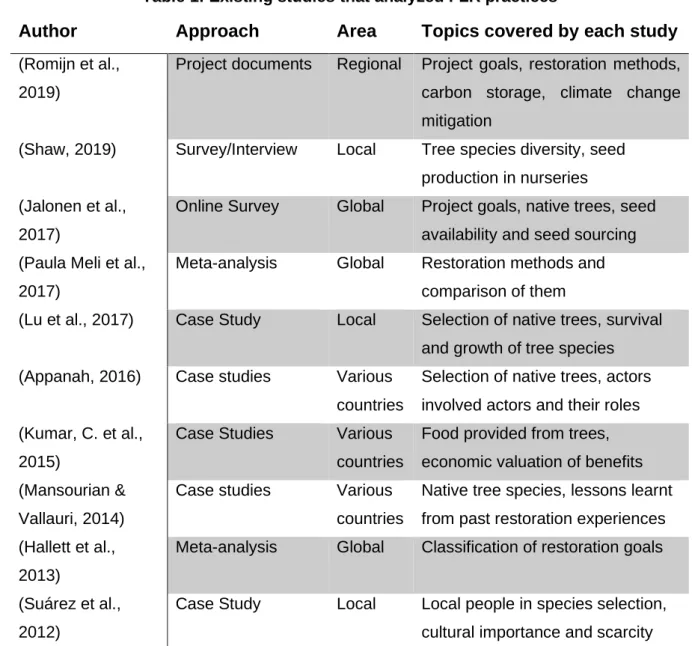
There are reports on FLR practices made at various levels: from the local level to global meta-analysis. Local-level studies usually analyze FLR focusing on one or a few locations. For example, Shaw (2019) addressed biodiversity, namely tree species diversity, native and threatened species used in FLR in southern Brazil. Similarly, Lu et al., (2017) focused on the evaluation of native tree species by describing their common names and uses for addressing restorations efforts in southwest China. An FLR project in central Veracruz, Mexico (Suárez et al., 2012) analyzed local people’s preferences and perceptions during tree species selection. Additionally, there are several studies focusing on restoration practices at the regional level. For instance, Romijn et al., (2019) focused on objectives, restoration methods and scales of restoration projects in Latin America and the Caribbean region through databases gathered from NGOs and governmental bodies and interviews. Appanah (2016) examined Asian case studies from China, Indonesia, Myanmar, Nepal, Thailand, the Philippines, and Viet Nam. Furthermore, Kumar, C. et al. (2015) compiled FLR experiences from seven countries
- 12 - including Brazil, Burkina Faso, Ethiopia, Ghana, Guatemala, the Philippines, and Viet Nam looking in particular to the nutritional benefits of the projects to humans. A WWF report provided information on characteristics of projects in Bulgaria, Armenia, Azerbaijan and Georgia, China, Madagascar; Malaysia, New Caledonia, Paraguay, Portugal, Tanzania and Viet Nam, in terms of geography, main goals of projects and involved actors (Mansourian & Vallauri, 2014). Global-scale analyses were made on the relationship between restoration and biodiversity (Bremer & Farley, 2010), (Benayas et al.,2009), and there were also global reviews on goals adopted (Hallett et al., 2013) and main methodologies used in FLR (Meli et al., 2017). Overall, the aspects examined in these studies are presented in the table below. This list is a sample example of the different experience documented in the literature, that aims to give a sense of the range of themes addressed.
Table 1: Existing studies that analyzed FLR practices
Author
Approach
Area
Topics covered by each study
(Romijn et al., 2019)
Project documents Regional Project goals, restoration methods, carbon storage, climate change mitigation
(Shaw, 2019) Survey/Interview Local Tree species diversity, seed production in nurseries (Jalonen et al.,
2017)
Online Survey Global Project goals, native trees, seed availability and seed sourcing (Paula Meli et al.,
2017)
Meta-analysis Global Restoration methods and comparison of them
(Lu et al., 2017) Case Study Local Selection of native trees, survival and growth of tree species (Appanah, 2016) Case studies Various
countries
Selection of native trees, actors involved actors and their roles (Kumar, C. et al.,
2015)
Case Studies Various countries
Food provided from trees, economic valuation of benefits (Mansourian &
Vallauri, 2014)
Case studies Various countries
Native tree species, lessons learnt from past restoration experiences (Hallett et al.,
2013)
Meta-analysis Global Classification of restoration goals
(Suárez et al., 2012)
Case Study Local Local people in species selection, cultural importance and scarcity
- 13 - (Bremer & Farley,
2010)
Meta-analysis Global Diversity of native species, biodiversity in different land types (Benayas et al.,
2009)
Meta-analysis Global FLR effects on and ES,
biodiversity in different land-uses
These studies can help understanding how FLR activities can be distinctive depending on local dynamics. Nevertheless, the studies listed do not include a complete picture of native and threatened species, their nutritional uses and species selection processes. There is a dearth of studies addressing the nutritional benefits of FLR at the global level.
1.11. Research Questions of the Thesis
Some of the gaps emerging from the literature have become the focus of the research questions addressed in this study:
1: Where are restoration projects located, which forest ecosystems are targeted and what are the main objectives of restoration projects globally?
2: Which restoration methods are adopted by the restoration projects around the world? 3: How do the diversity, nativeness and conservation status of planted tree species vary within restoration projects?
4: Which ES are considered during the species selection process? How do FLR projects address nutritional benefits?
5: Which actors are involved in species selection? To what extent do restoration projects include local women during tree species selection?
- 14 - 2. METHODOLOGY
2.1. Questionnaire
To answer the research questions, a survey on FLR practices was undertaken. A questionnaire was prepared and made available on a platform called SurveyMonkey, a cloud-based platform for online survey development. The questionnaire was directed to different FLR stakeholders: managers, coordinators, NGOs and research agencies relating to FLR, through a link sent via e-mail. A link to the survey past distributed via email to a roster of forest restoration practitioners. The e-mail was drafted with a brief summary of the objectives of the study and the organizations (see Appendix-1 for e-mail template) responsible for it, the University of Lisbon, Bioversity International, and Associação Natureza Portugal / WWF. The respondents were informed about the duration of the questionnaire and about the deadline for submission. The respondents were informed that their participation to reply to the questionnaire was voluntary. They were also informed that all their answers would be analyzed anonymously. Participants were also given an option to receive the final report of the study. In case of a positive answer to this last question, they would have to leave behind their contact details. to receive the final report.
There were different types of questions: 1) closed questions (if the answer was yes, clicking to the related box, if the answer was no, leaving the box unticked), 2) questions with multiple choices (predefined) and 3) questions with open text box for specific responses (e.g. country of the project). Multiple-choice questions were those that respondent needed to choose only one valid reply among various options. Check-box questions were those questions that more than 1 option could be chosen as valid answers. Multiple-choice and checkbox questions included an option entitled ‘other’ for the respondents to fill in any specific information when necessary.
The questionnaire was divided into 5 main groups of questions: The 1st section asked information about the characteristics of each project: location, width, life span, dominant climate and vegetation, owner of the land and project funding source, causes of D&D and main objectives. The 2nd section asked restoration methods applied. The 3rd asked the number of tree species planted by the project, by hectare and in total. The 4th section was about species names of planted tree species, their nativeness and edible parts. The 5th section asked about the tree species selection process in terms of participation of different actors (see Appendix-2 for a copy of the questionnaire).
For open questions with pre-defined answers, the various options for responses were adapted from the terminology used by Beatty et al., (2018); Mansourian & Vallauri (2014) and Romijn
- 15 - and Coppus (2018). Based on the respondents’ answer to the question asking about the approach used for forest regeneration, if they indicated the options ‘natural regeneration’ or ‘assisted regeneration’, they would be excluded from filling the questions on tree planting and they would be redirected to contact details question at the end of the survey.
The questionnaire had to be as short as possible and the questions should be clear and encouraging for the respondent to continue answering all questions in the survey.
2.2. Pilot Survey
Before distributing the survey to a large group of contacts, a pilot test was conducted to check the questionnaire’s level of feasibility and clarity to the respondent and the time needed to complete it. Four extra questions were included only for the pilot survey, asking the respondents feedback on the questionnaire, asking if the length of the questionnaire was fair or too long, how much time it took them to fill it and if the questions were easy to understand and practical to fill or not. The last question was a comment box question asking respondents their comments on the points that could be improved. The pilot survey was available only in English.
Publicly available e-mail contact information of five active projects from different countries was found through Google searches. The pilot survey was sent to the e-mail of forest restoration practitioners found online with a request to kindly contribute to the study by filling the attached online form. It was explained how their e-mail contacts were found. The pilot test was conducted on Monday 15th of April 2019 and closed on the 21st of April, at 21:00 (CET+1) hours.
2.3. Data Collection
After the pilot survey, some parts of the questionnaire were improved as follow: the 3rd group of questions was turned into a filter to redirect respondents according to their answers to the question about the total number of tree species planted by the project:
• If the number of tree species planted was between 1-3, the respondents would see 3 questions on tree species names and their nutritional uses, 1 of them was compulsory. • If the number of tree species planted was between 4-6, the respondents would see 4 questions on tree species names and their nutritional uses, 2 of them were compulsory. • If the number of tree species planted was between 7-9, the respondents would see 5
questions on species names and their nutritional uses, 3 of them were compulsory. • If the number of tree species planted was more than 10 species, the respondents would
see 10 questions on tree species names and their nutritional uses; 4 of them were compulsory.
- 16 - The main objective of this setup was simply not to expose respondents with a low number of tree species to a long list of questions. The mandatory modality for some fields was introduced to reduce the risk of null replies. Furthermore, the English questionnaire was translated to French, Spanish and Portuguese to facilitate access by FLR managers in various countries. Target populations were FLR practitioners at management level. Neither the number of respondents nor their contacts were directly known to send the questionnaire. Therefore, the survey was sent to a roster of NGOs, networks, large-scale regional programs and they were asked for assistance in spreading the survey among their local contacts, therefore the number of actual candidate respondents was not known. The survey was shared on the 24th April 2019 the following initiatives:
• Asia Pacific Association of Forestry Research Institutions (APAFRI)
• Consultative Group on International Agricultural Research (CGIAR) Research Programme on Forests, Trees, and Agroforestry
• Regional forest genetic resources networks in Asia, Latin America and Sub-Saharan Africa (APFORGEN, LAFORGEN, and SAFORGEN)
• Global Trees Campaign
• International Institute for Sustainable Development (IISD) • International Model Forest Network (IMFN)
• International Union of Forestry Research Organizations (IUFRO) • the Secretariat of the Convention on Biological Diversity (CBD)
Between 24th April and 30th April, the number of replies obtained was not sufficient to conduct an analysis, therefore a second launch of the survey took place.
2.4. The second stage of data collection
Further efforts were applied to disseminate the survey to a larger network and by using different channels. Additional contacts were found by looking at accessible documents of the World Bank, Global Environment Facility (GEF), United Nations Framework Convention on Climate Change that helped to identify stakeholders. When contact information was publicly available in these documents, they were used to send the survey. The survey was also distributed to international and regional initiatives related to forests, conservation, carbon sequestration and certification (e.g UNCCD, Bonn Challenge, UN-REDD, UNFCCC Clean Development Mechanism and Forest Stewardship Council). The database created by Romijn and Coppus (2018) was used to derive information on focal points responsible for forest restoration projects conducted in Latin America. Moreover, further organizations related to FLR were identified
- 17 - through Google searches. Many combinations of keywords were used in the search engine, some examples are: ‘forest restoration’, ‘forest landscape restoration’, ‘forest restoration NGO’, ‘forest restoration projects’, ‘forest restoration initiatives’, ‘tree-planting organizations’. This research yielded details from many projects and organizations (e.g WRI, Botanic Gardens Conservation International, Fruit Tree Planting Foundation and projects of WWF). They were contacted through openly available e-mail addresses and they were kindly asked reply to the questions if the survey was pertinent and related to their activities. These initial contacts were also asked to further distribute the survey to their contacts in the field of FLR. As an additional method to e-mailing, fora related to FLR were used to reach professionals in the restoration sector. The International Institute for Sustainable Development (IISD) maintain different online fora on biodiversity, forests, and climate; these were targeted to spread the news about the survey (see Appendix-3 for the full list of organizations and platforms contacted). Mostly, multiple e-mails were sent to an organization’s various departments related to FLR. In total, approximately 200 e-mails of relevant contact were gathered and targeted. The e-mails addressed to the identified contacts included links to the survey in different languages sent from the e-mail address [email protected]. The emails were sent on Tuesday 30th of April 2019. The deadline was responding was set on Friday 30thof May Friday 09:00 PM (GMT+1) hours.
2.5. Double-checking the quality of the obtained responses about tree species
The replies to the survey received were organized in a dataset and checked for quality. The first objective of the analysis was to observe the robustness of the responses about tree native ranges and edible parts of the trees consumed by comparing the responses with the information available in other openly accessible databases (e.g. Global Biodiversity Information Facility (GBIF), World Agroforestry Centre). Secondly, the names of the tree species planted were searched in the IUCN Red List of Threatened species to determine their conservation status. These analyses were done only for the species names and did not include the responses in which the name of the tree species included only a specification of the genus and not of the species. The second objective of the quality check of responses was based on a comparison of the information obtained through the survey on tree species native range and edible parts consumed, and the information available in openly accessible online databases to verify the alignment of the responses with other accessible sources. Some degree of misalignment was expected as on the types of use of a certain tree species are context-specific and may vary from place to place. Cross-checks of native ranges were done through the databases of Global Biodiversity Information Facility (GBIF) and the database of Botanic Gardens Conservation International (BGCI) (https://tools.bgci.org/global_tree_search.php).
- 18 - For what concerns the information about edible uses of tree species, the data derived from the survey were double-checked with the databases of the World Agroforestry Centre (http://db.worldagroforestry.org//species) and of the Plants For A Future (PFAF) (https://pfaf.org/user/Default.aspx) initiative.
2.5.1. Identification of conservation status of planted tree species through IUCN Red List of Threatened Species
The survey did not include a direct question on the conservation status of the tree species reported. Therefore, an analysis of the conservation status of tree species planted by FLR projects was conducted by searching the names of these species in the IUCN database of threatened species, the IUCN Red List of Threatened Species (https://www.iucnredlist.org/about/background-history).
The IUCN Red List of Threatened Species is a tool to access information concerning the global extinction risk of plant, animal and fungi species, by dividing species into 9 categories (Table 1) Each tree species was attributed to a category based on the categories identified by IUCN. Table 2: Definitions of categories in the IUCN Red List of Threatened Species
Derived from (IUCN, 2012).
Critically endangered, endangered and vulnerable species are called ‘threatened’. The categorization for critically endangered, endangered and vulnerable are made through certain criteria defined by IUCN, such as reduction of population size, geographical range and extinction risk within 10 years or three generations (IUCN, 2012).
Data Deficient Lack of information on abundance and/or distribution Least Concern Widespread and abundant species
Near Threatened Possibility to go under the threatened category in the future Vulnerable High risk of extinction in the wild
Endangered Very high risk of extinction in the wild Critically endangered Facing extreme risk of extinction in the wild
Extinct in the wild Survival in cultivation, captivity or as a naturalized population outside its range
- 19 -
3. RESULTS
In total 55 responses were received: 38 replies from the English questionnaire, seven replies from the Spanish version, six replies from the Portuguese version, two from the French version, two from the pilot survey (two responses were fully completed in the test phase so they were included in the analysis).
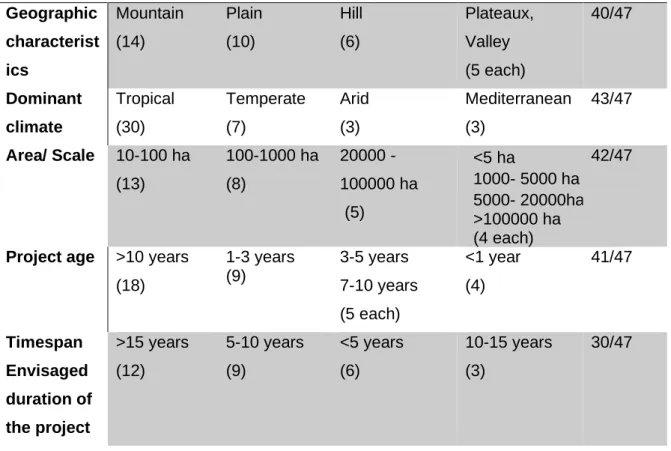
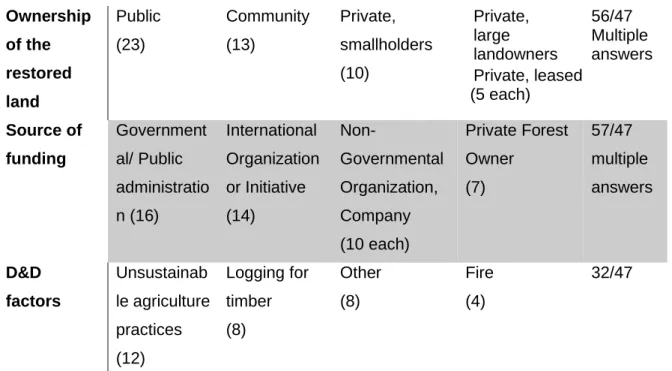
Responses were downloaded from SurveyMonkey into Excel. Afterward, all data were translated into English and merged into one file. Eight responses were largely incomplete, so they were excluded, and this brought the total number of valid responses to 47, each from a different FLR project. Although well diversified with regard to location, scale, forest type and project objectives, the 47 responses may not be sufficiently representative at the global scale, therefore results were treated without generalizing on the global scale. The information collected on projects’ characteristics was gathered and summarized into most frequent 4 replies per question as well as their frequency by Table 3. The responses that can be utilized to answer the research questions of the thesis will be discussed further.
Table 3: Most selected 4 replies on the main characteristics of the FLR projects analyzed and the number of projects falling in a different type
Total number of most cited 4 options Geographic characterist ics Mountain (14) Plain (10) Hill (6) Plateaux, Valley (5 each) 40/47 Dominant climate Tropical (30) Temperate (7) Arid (3) Mediterranean (3) 43/47 Area/ Scale 10-100 ha (13) 100-1000 ha (8) 20000 - 100000 ha (5) <5 ha 1000- 5000 ha 5000- 20000ha >100000 ha (4 each) 42/47
Project age >10 years
(18) 1-3 years (9) 3-5 years 7-10 years (5 each) <1 year (4) 41/47 Timespan Envisaged duration of the project >15 years (12) 5-10 years (9) <5 years (6) 10-15 years (3) 30/47