IUL School of Social Sciences
Department of Social and Organizational Psychology
Experiencing and representing transsexuality: Developmental
trajectories of, and social representations on, transsexual people
Nuno Emanuel Branquinho Guedes Pinto
Thesis submitted in partial fulfillment of the requirements for the degree of Doctor in Psychology
Specialty in Clinical and Health Psychology
Supervisor:
Ph.D, Carla Marina Madureira de Matos Moleiro, Assistant Professor ISCTE - Lisbon University Institute, Lisboa, Portugal
IUL School of Social Sciences
Department of Social and Organizational Psychology
Experiencing and representing transsexuality: Developmental
trajectories of, and social representations on, transsexual people
Nuno Emanuel Branquinho Guedes Pinto
Thesis submitted in partial fulfillment of the requirements for the degree of Doctor in Psychology
Specialty in Clinical and Health Psychology
Jury
Ph.D. Maria Gabriela Martins de Nóbrega Moita, Assistant Professor at ISSSP, Portugal Ph.D. Ana Sofia Antunes das Neves, Assistant Professor at ISMAI, Portugal
Ph.D. Henrique Marques Pereira, Assistant Professor at UBI, Portugal
Ph.D. Sónia Gomes da Costa Bernardes, Assistant Professor at ISCTE-IUL, Portugal Ph.D. Carla Marina Madureira de Matos Moleiro, Assistant Professor at ISCTE-IUL,
Portugal
The present work was sponsored by a Doctoral Grant (Ref. SFRH/BD/66519/2009) of the Portuguese Science and Technology Foundation
Acknowledgements
All people whom I want to express my gratitude speak Portuguese. Thus, this section is not written in English.
O meu primeiro agradecimento é dirigido a todas as pessoas que se voluntariaram para participar nos nossos estudos. Este trabalho não seria possível sem a sua colaboração. Pessoas que se disponibilizaram para partilhar as suas histórias, confiando a um estranho episódios íntimos da sua vida – tantas vezes (demasiadas vezes) marcados por dor e sofrimento, e por isso mesmo difíceis de partilhar. Pessoas que interromperam o seu quotidiano para se dirigirem ao ISCTE-IUL, que me receberam nas suas casas, que me apresentaram às suas famílias e às suas pessoas. Muitos/as dos/as participantes dos nossos estudos são, sem qualquer dúvida, das pessoas mais corajosas que já conheci. Se sinto que durante o doutoramento muito evoluí enquanto investigador e académico, o mesmo posso dizer enquanto cidadão, pessoa e ativista: cada entrevista foi também um momento de aprendizagem – da (minha) humildade, da resistência à opressão e, acima de tudo, da procura da felicidade contra quase tudo e quase todos/as. O início e a prossecução de um doutoramento assentam, naturalmente, em diversas motivações e aspirações pessoais. Mas, e especialmente à medida que me fui confrontando com as realidades das pessoas trans, uma aspiração tornou-se central no nosso trabalho: que a nossa investigação contribuísse, mesmo que de um modo indireto ou não imediatamente visível, para que mais pessoas trans tenham acesso, no mais curto espaço de tempo possível, a mais oportunidades de felicidade. Não sei se conseguimos, mas sei que tentámos – e que vamos certamente continuar a fazê-lo.
Em segundo lugar, agradeço à minha orientadora, a Professora Carla Moleiro, por me ter incentivado a iniciar o doutoramento, por ter apostado e confiado em mim, pelo incentivo constante, pelo apoio, e por desafiar-me sempre a ir mais longe e – em simultâneo – dar-me espaço para construir o meu trajeto e a minha voz. Se me parece que a academia é (cada vez mais?) um contexto em que há pouco espaço e tempo para tropeçar, “falhar” ou simplesmente hesitar, sei que tive a sorte de o poder fazer – porque a rede e o amparo estavam sempre lá. Carla: obrigado pelos recursos e oportunidades que me tem fornecido desde há praticamente 7 anos – recursos e oportunidades intelectuais e de conhecimento, mas também emocionais; é um privilégio trabalhar consigo.
Vários/as colegas ajudaram-me em diversos momentos do doutoramento. O meu agradecimento para todos/as. Não posso, contudo, deixar de mencionar em particular os/as colegas que se tornaram amigos/as: Sandra, Cláudia, Jaclin e Nuno.
Agradeço, também, à relatora do meu doutoramento, a Professora Sónia Bernardes, pelo acompanhamento do nosso trabalho e pelas sempre pertinentes sugestões. À Professora Paula Castro e à Professora Carla Mouro pela inspiração e ajuda no nosso Estudo 1. Ao Professor Miguel Vale de Almeida e à Professora Célia Soares, pelos comentários e sugestões ao nosso trabalho em sede de “Seminários de Pesquisa”.
O meu obrigado a todas as pessoas, grupos e organizações que divulgaram os nossos estudos e que ajudaram na angariação de participantes; agradeço, em particular, à Dra. Zélia Figueiredo, que foi incansável nesta tarefa.
À Dra. Raquel Moreira e ao Professor Paulo Côrte-Real agradeço pelo reconhecimento e confiança quando me recomendaram à Fundação para a Ciência e a Tecnologia para Bolsa de Doutoramento. Ao Paulo agradeço, ainda, pela constante inspiração.
Por fim, aos meus pais: por me terem permitido o privilégio de me formar e estudar o quanto quis. E ao André: porque conhecimento e trabalho sem amor e paixão sabem-me a muito pouco.
Resumo
Em Portugal, o conhecimento acerca da transexualidade e das experiências das pessoas transexuais é ainda incipiente. Esta tese tem como objetivo central a promoção do conhecimento sobre as experiências específicas das pessoas transexuais, mas também sobre como o modo como diferentes atores sociais constroem a noção de (e, consequentemente, a realidade da) transexualidade. São apresentados três estudos empíricos. O Estudo 1 analisou as representações sociais sobre transexualidade disseminadas durante o debate público referente a uma lei inovadora em Portugal que permite às pessoas transexuais alterarem o seu nome e sexo legal. Os resultados mostram que, apesar de as representações sociais terem sido (re)produzidas com recurso a uma linguagem fortemente biológica e clínica, o debate público ancorou-se nas noções de igualdade e justiça social. A análise do discurso de diferentes atores sociais resultou na identificação de três configurações distintas. O Estudo 2 - estudo central da tese – explorou os processos através dos quais as pessoas transexuais reconhecem e lidam com a sua identidade de género. Os resultados descrevem cinco estágios de desenvolvimento, e identificam várias condições internas e externas, estratégias de (inter)ação, e consequências psicossociais típicas de cada fase. O Estudo 3 centra-se na discussão acerca da existência de diagnósticos de saúde relacionados com a transexualidade – ou seja, da chamada despatologização da transexualidade. São descritos em detalhe vários tópicos que mostram a profunda complexidade deste debate. Globalmente, os resultados dos vários estudos sugerem a necessidade de uma abordagem que permita uma compreensão mais profunda da transexualidade e do transgénero.
Keywords: transexualidade, representações sociais, trajetórias desenvolvimentais, diagnósticos de género
PsycINFO Codes:
2960 Political Processes & Political Issues 2970 Sex Roles & Women’s Issues
3210 Psychological Disorders
Abstract
In Portugal, we still lack the understanding of the big picture on transsexuality and transsexual people. Thus, this thesis is aimed to further the understanding not only about the experiences of transsexual people, but also about how different social actors construct the notion and reality of transsexuality. Three empirical studies are presented. Study 1 examined social representations on transsexuality and transsexual people, by focusing on the public debate held during the period preceding the implementation of the innovative law on legal gender recognition in Portugal. Findings showed that, although social representations of transsexual people were being (re)produced within a discourse heavily dependent on biological and clinical language, the public debate was anchored within the broad notions of equality and social justice. Regarding the discourse of the different social actors, three distinct configurations emerged. Study 2 – this thesis core study – explored how transsexual people recognize, acknowledge, and come to terms with their gender identities. Results show the participants moving through five developmental stages, highlight various internal and external conditions, action/interaction strategies, and psychosocial consequences that participants had to cope with in each stage. Study 3 is focused on the controversies surrounding (trans)gender diagnoses. Discourses about the so-called depathologization of transsexuality have been inconclusive, filled with mixed messages and polarized opinions. We describe various topics that show the deep complexity of this debate. Altogether, our work suggests the need of a more comprehensive approach to improve the understanding of transsexuality and transgenderism.
Keywords: transsexuality, social representations, developmental trajectories, (trans)gender diagnoses
PsycINFO Codes:
2960 Political Processes & Political Issues 2970 Sex Roles & Women’s Issues
3210 Psychological Disorders
Table of Contents
Resumo……….……… ix
Abstract……… xi
Table of Contents...……….. xiii
Index of Figures………... xvii
Index of Tables………. xvii
Chapter 1. GENERAL INTRODUCTION 1 1. Aims and overview of the present thesis……… 3
2. General background……… 5
Language and concepts……….. 5
The gap of transgender and transsexual studies in Portugal……….. 8
3. Experiencing transsexuality: Individual, communitarian and social implications………. 10
Challenges to psychological, physical and social well-being…...…………. 11
Transitioning, "identity development", and intervening variables…….…… 14
Legal gender recognition……… 18
4. Healthcare provision to transsexual people……… 20
Barriers in accessing (competent) healthcare provision………. 20
Controversies on (trans)gender diagnoses………. 23
The Standards of Care……… 25
An ongoing paradigm shift………. 26
5. Depicting transsexuality and transgenderism...………. 28
(Media) representations of transgender and transsexual people……… 28
Depictions of transsexuality coming from the social sciences……….. 29
6. The present research program………. 32
7. References………...…... 35
Chapter 2. (TRANS)GENDER REPRESENTATIONS: The public debate on an innovative law for legal gender recognition 47 1. Abstract………..………... 49
2. Introduction……….……….. 50
The paradigm shift on transsexuality and gender variance………... 50
Legal gender recognition as a legal innovation……….. 52
(Social) representations of transsexuality and gender variance……...…….. 53
3. Objectives……….………...………... 57
4. Method……….………... 57
5. Results………...……….. 61
Dataset 1: Media pieces……….. 61
Dataset 2: Quotations from different social actors………. 62
6. Discussion………... 67
7. References………...…………... 72
Chapter 3. (TRANS)GENDER TRAJECTORIES: Transsexual people coming to terms with their gender identities 77 1. Abstract……….. 79
2. Introduction………...……..………... 80
Transgender trajectories: Previous developmental models……….... 81
3. Our study……… 82
Context and aims………... 82
Participants………...……….. 83
Procedures: Data collection and analysis…...……… 83
4. Results………. 85
Stage 1 – Confusion and increasing sense of gender difference………..….. 87
Stage 2 – Finding an explanation and a label: Exploring identity………….. 89
Stage 3 – Deciding what to do and when: Exploring options……….... 90
Stage 4 – Embracing gender identity: Performing a new social identity and undergoing body modifications………..……… 92
Stage 5 – Identity consolidation and invisibility……… 93
5. Discussion………..………. 94
6. Implications and applications………... 95
7. Limitations………....………. 97
8. References………...…...……… 98
Chapter 4. (TRANS)GENDER DIAGNOSES: “I do not really see myself as someone with an illness, but I obviously need medical care” 103 1. Abstract………...………...………… 105
2. Introduction………...………....……… 106
A history of “assessing” (gender) identity rather than distress………..…… 107
Defining and classifying psychopathology………...……. 109
3. The study: Trans people talking about (trans)gender diagnoses, mental
health and access to medical care... 112
Distress and impairment………..……... 114
Mental illness and stigma………... 115
Access to (competent) medical care………... 117
4. Discussion………... 119
5. References……...………...……... 124
Chapter 5. GENERAL DISCUSSION 129 1. Revisiting our research questions and the findings………...…..…... 131
How social representations and social knowledge on transsexuality are used and developed by different social actors?... 131
What are the processes by which transsexual people come to terms with their gender identities, and what are the main intervening actions and conditions?... 134
How our findings contribute to the public debates on (trans)gender diagnoses and on legal gender recognition?... 137
2. General conclusions, implications and limitations.……….... 139
Index of Figures
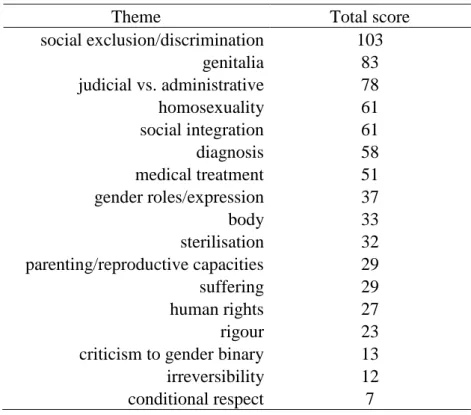
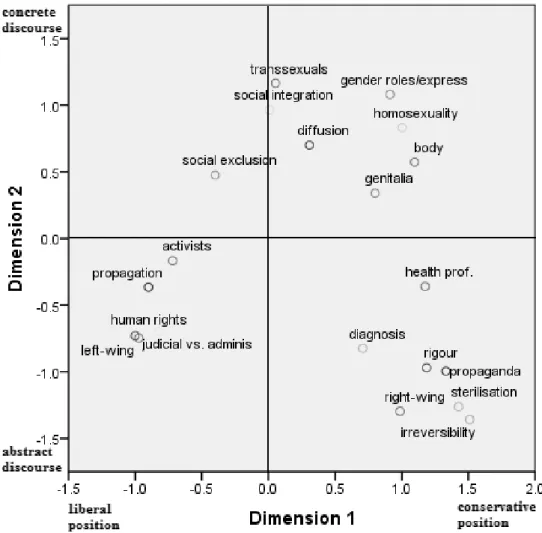
Figure 2.1 Description of the themes and guidelines for coding…….………..58/59 Figure 2.2 Data corpus………60 Figure 2.3 Projection of the first two dimensions yielded by the MCA……….65 Figure 3.1 Gender trajectories: Conditions, action/interaction strategies, and
consequences………...86 Figure 3.2 Transition triggers: What facilitates movement through the stages?...87
Index of Tables
Table 2.1 Total scores of the themes within dataset 1 (media pieces).………...61 Table 2.2 Themes and communicative modalities within dataset 2…………...……...63
1
GENERAL INTRODUCTION
In 2006 I was working in an outreach project in the city of Porto which provided support to street sex workers. At that time I was already engaged with LGBT (Lesbian, Gay, Bisexual and Transgender) activism. Gisberta Salce Júnior, a transsexual Brazilian woman, was a regular user of the project and I had several personal encounters with her. In February 2006, Gisberta was murdered in one of the most violent and well-known hate crimes in Portugal. In the evening of the day in which the first news about the murder appeared in the media, I participated in a gathering of LGBT activists aimed to collect information about the case. The news on the media were unclear, mentioning a “transvestite” and a “woman with a penis”. During the gathering, attention was somehow turned to me since I personally knew Gisberta. Some of my fellow activists asked me questions such as: “Is she transvestite or transsexual?”; “Is she a real transsexual or she is transgender?”; “Did she made the surgery?” or “What is her real name?”. I do not remember exactly my answers but I do remember a general feeling of confusion; not only because I had never thought of Gisberta in those terms – for me, until that moment, she was simply a woman; a visible transsexual woman, but a woman (I had never thought about her genitalia, for example). Moreover, most of us in that room were using different words to refer to the same concepts or had distinct views about transsexuality and transgenderism.
Recounting this story highlights that, just a few years ago, in Portugal and even within a group of LGBT activists, we lacked the proper language and knowledge on transsexuality, gender identity and gender expression. Furthermore, in the weeks that followed, the Portuguese press often addressed the case using incorrect and erroneous language – for instance, referring to Gisberta using masculine pronouns. Nine years after Gisberta’s murder, what is the state of art in the field of transsexuality? Which are the particular experiences of transsexual men and women? And what kind of representations are being used and developed - including by the media - about transsexuality?
1. Aims and overview of the present thesis
The general purpose of this thesis is to further the understanding not only about the experiences of transsexual people, but also about how different social actors construct the notion and reality of transsexuality. In Portugal, studies on social sciences regarding the issue of transsexuality are still very scarce. Thus, in this thesis we cover a
diversity of topics, with the aim of contributing to different spheres of knowledge and levels of intervention. The specific aims are: (1) to examine how social representations and social knowledge on transsexuality are used and developed by different social actors; (2) to explore the processes by which transsexual people come to terms with their gender identities, and to describe the main intervening actions and conditions; (3) to contribute to the main current public debates related to transsexuality – including the debate on legal gender recognition and the one about the so called depathologization of transsexuality.
The present work is organized in five chapters. The present chapter starts by addressing the issues related to the use of language and to definitions in the field of transgenderism and transsexuality; and also by describing the few studies developed in this area in Portugal. Then, we review the international research on the individual, communitarian and social implications of being transsexual – including challenges to psychological, physical and social well-being. We focus in particular on the literature about the so-called stage models of identity development; and we provide a glimpse into the implications regarding legal gender recognition. Next, we describe various topics related to healthcare provision to transsexual people: historical aspects; barriers in the access to specific care; recent developments in the international guidelines for the health of transsexual and transgender people; and controversies about the existence of medical diagnoses that are specific to transsexual people. Then, we refer to depictions of transsexuality and transgenderism, including media representations and those coming from the social sciences. Finally, in the last section of this chapter, we introduce our research program, and how it aims to contribute to the current state of the art on transsexuality.
The three chapters that follow this theoretical introduction are empirical chapters in which we present three studies (Chapters 2, 3, and 4). All of these chapters are based on published or submitted articles. In Chapter 2, we present a study aimed to examine the public debate held during the period preceding the implementation of an innovative law on gender recognition in Portugal; and for which we examined several media pieces and other official documents: the debate that occurred in the Parliament, the message from the Portuguese President when he vetoed the law, and press-releases from the main LGBT rights-organization in Portugal. Chapter 3 reports an empirical study aimed to explore how transsexual people recognize, acknowledge, and come to terms with their gender identities. The results are supported by in-depth interviews of twenty-two
transsexual people, and describe an integrated and related set of concepts, illustrative of the processes through which participants managed their gender identities. In the last empirical chapter, Chapter 4, we explore specific extracts from eight of the twenty-two interviews collected for the study presented in Chapter 3. The primary goal is to better understand the concepts, main dilemmas, and possible paths related to medical diagnoses that are specific to transsexual people.
Finally, Chapter 5 presents a summary of the findings obtained in our studies, and integrates them in a general discussion, stating the contributions they give to the understanding of transsexuality. At last, we identify the main limitations of our research and avenues for future research.
2. General background
Language and concepts
Language, concepts and definitions that refer to transgenderism and transsexuality are an evolving field. Many of the terms used in the past to describe transgender and transsexual people are now considered to be outdated and even offensive - and some of the terms used nowadays did not exist a decade ago (Serano, 2007). Furthermore, individual people may use different words to describe themselves, regardless of the terms most commonly used by academics, activists and health professionals (Saleiro, 2013).
In the 1950s, transsexual people were described as those who wanted to “belong to the other sex and correct nature’s anatomical ‘error’” (Benjamin, 1953, p. 12). The narrative of the “wrong body” emerged and has become the defining trait of transsexuality; that is, the desire, insistence, and obsession with body modification (Lev, 2004). For decades, the term transsexual was restricted for individuals that had undergone medical procedures, including genital reassignment surgeries (Hines, 2007). In contrast, the term transgender appeared in the 1970s to describe people who lived full time as a member of the opposite sex but had not undergone medical procedures (Valentine, 2007). As explained further on, this distinction between transsexual and transgender people is not commonly accepted nowadays, and is not the one used in this thesis.
In turn, the expression gender identity was coined in the middle 1960s, and referred to one’s persistent inner sense of belonging to either the male and female gender category (Money, 1994). Gender identity was seen as the private experience of gender role and gender role as the public manifestation of gender identity (Money, 1985). The concept of gender identity evolved over time to include those people who do not identify either as female or male. Nowadays, a “person’s self concept of their gender (regardless of their biological sex) is called their gender identity” (Lev, 2004, p. 397). In this thesis we use this expression as described by the American Psychological Association (APA, 2009): “the person’s basic sense of being male, female, or of indeterminate sex” (p. 28). The expression gender identity is nowadays commonly used both by activists and by academics and health practitioners. Nevertheless, some transsexual people may prefer other terms - such as “subconscious sex” - to refer to “the gender we subconsciously feel ourselves to be” (Serano, 2007, p. 78). Potential problems and misconceptions deriving from the usage of the expression gender identity will be addressed in the final chapter of the thesis.
Nowadays, and in contrast with the recent past, defining transsexuality is not dependent on the medical choices people may do: “[transsexual] refer[s] to anyone who lives socially as a member of the opposite sex, regardless of which, if any, medical interventions they have undergone or may desire in the future” (APA, 2009, p.28). In fact, the latest version of the Standards of Care for the Health of Transsexual, Transgender, and Gender Nonconforming People, published by The World Professional Association for Transgender Health (WAPTH; Coleman, Bockting, Botzer et al., 2012), clarified that “gender identities and expressions are diverse, and hormones and surgery are just two of many options available to assist people with achieving comfort with self and identity” (p. 168). Moreover, we agree with Serano’s words:
[A]ttempts to limit the word ‘transsexual’ to only those who physically transition is not only classist (because of the affordability issue), but objectifying, as it reduces all trans people to the medical procedures that have been carried out on their bodies (Serano, 2007, p.31).
Accordingly, in this thesis we use the word transsexual to refer to anyone who has a gender identity incongruent with the sex assigned at birth and therefore is currently, or is working toward, living as a member of the sex other than the one they were assigned
at birth, regardless of what medical procedures they may have undergone or may desire in the future. The term cissexual is used to describe those persons whose gender identity is congruent with the assigned sex at birth.
In sum, the current notion of transsexuality is focused on gender identity (particularly on the incongruence between gender identity and sex assigned at birth) and on gender expression, rather than on medical choices. Gender expression refers “to the way in which a person acts to communicate gender within a given culture” (APA, 2008, p. 28); for example, in terms of clothing, aesthetics, communication patterns, and interests.
At the same time, the meaning assigned to the term transgender also evolved. Since the 1990’s the word transgender has been used primarily as an umbrella term to describe those people who defy societal expectations and assumptions regarding gender (APA, 2008; Lev, 2004; Saleiro, 2013; Serano, 2007). In this thesis we use the term transgender with this connotation. It includes people who are transsexual and intersex, but also those who identify outside the female/male binary (and may identify as genderqueer, agender, bigender, third-gender, or gender-fluid), and those whose gender expression and behavior differs from social expectations (including crossdressers, drag performers, and even “masculine” women and “feminine” men). The term gender-variant is commonly used as a synonym of transgender. In our perspective, in a broad approach of the term, lesbian, gay and bisexual people should be spanned by these umbrella terms, since their sexual desire and conjugality defies societal expectations regarding gender – although this inclusion is not common in most academic literature. The word cisgender is used to refer to those people who are not transgender.
More recently, the expression trans – a prefix that has been transformed into a base word – is becoming popularized (Lev, 2004). Although some people (including activists and academics) use this expression (or the alternative “trans*”) to refer to all transgender people (Saleiro, 2013), it is mostly used as an alternative to transsexual. For example, the main international LGBT (lesbian, gay, bisexual and transgender) organizations are changing their designation to LGBTI (lesbian, gay, bisexual, trans and intersex). By unfolding the word transgender into two words (trans and intersex), more visibility is accomplished both to transsexual and intersex people. In Chapter 4 we will intentionally use the term trans instead of transsexual: because this chapter addresses issues related to pathologization of transsexual people we find more suitable to employ
language coming from the activism rather than terms originally coined in the medical field.
In this thesis, we employ language in accordance with people’s identities. Thus, the expression transsexual man refers to a person whose gender identity is male and whose assigned sex at birth was female, and the expression transsexual woman refers to the opposite situation. Occasionally, we use the expressions female-to-male (FtM) to describe transsexual men, and male-to-female (MtF) to describe transsexual women. These expressions may be seen as problematic because they relegate transsexual people to “third sex” categories and they disregard the profoundly felt gender identity of transsexuals (Serano, 2007). Nevertheless, in Chapter 3 we find the expressions FtM and MtF useful for describing the situation of those transsexual participants who are still living according the sex assigned at birth, regardless of their gender identities.
Finally, some transsexual and other transgender people may not identify with the terms used by academics, activists and health professionals (Saleiro, 2013). However, we need common language to communicate, and specific terms to refer to different situations. The issues of identity development and identification with ascribed categories will be addressed in more detail in the last chapter.
The gap of transgender and transsexual studies in Portugal
In Portugal, the interest of the social sciences for gender issues is recent. This field started to develop after the end of the Portuguese dictatorship, in the 1970s, and it was only in the 1990s that the gender perspective shaped the work of several disciplines, including social psychology (Amâncio, 2003b). However, “gender-focused analysis are still rare, and gender is more likely to be used as a statistical variable than as analytical tool” (Amâncio, 2003a, p. 186). Furthermore, the notions of sex and gender are still used in a random way, as if they were the same concept (Amâncio, 2003b). Nevertheless, and at least in social psychology, gender studies reached a point in which they are capable of raising new challenges and questions to the traditional research programs (e.g., Nogueira, 2001; Nogueira, Neves & Barbosa, 2005).
Within this scenario, studies addressing LGBT people in Portugal are still in an “embryonic stage” (Vale de Almeida, 2010, p.70). If this is true for studies regarding sexual orientation and lesbian, gay and bisexual people, it is even truer for studies regarding gender identity and transgender/transsexual people. Saleiro (2009) referred
that “in Portugal persists a ‘vacuum’ in sociological research, and more generally in the field of social sciences, about these phenomena” (p. 84).
In fact, Saleiro (2013) carried out the first doctoral thesis in the field of social sciences on transgenderism in Portugal. The study consisted in a contextual analysis, addressing the legal-political, medical and associative movement domains. Various self-identifications within the transgender spectrum were mapped and described: transsexual man, transsexual woman, cross-dresser, travesti, androgynous, drag king, transgender and ultra-gender. For mapping the various categories, Saleiro (2003) intersected different dimensions: gender self-identification; sex assigned at birth; expressed gender; relationship with sex assigned at birth; relation between sex assigned at birth and expressed gender; time and space of the gender expressed; medical care; body modifications; genital surgeries; relation between gender identity and sexual orientation. Among other conclusions, Saleiro (2013) mentioned the importance of addressing the distinction between the particular experiences of the people comprised in the different transgender categories. Age was identified as a major distinguishing factor in the experiences of self-identified transsexual participants: one of the big differences between younger and older people concerns the historical moment in which they came into contact with medical/psychological discourse about transsexuality. Moreover, younger and older transsexual participants had access to resources such as the internet and LGBT organizations/transsexual groups in different life stages, and that produced different life experiences. These and other findings are discussed in further detail in other sections of this chapter and in the general discussion.
Additionally, some isolated social studies on transsexuality were developed and published in Portugal. The author of this thesis participated in a study developed by the LGBT organization “Associação ILGA Portugal” in partnership with ISCTE – Lisbon University Institute (Pinto & Moleiro, 2012). The study aimed to explore the healthcare experiences of transsexual people, and several practitioners and transsexual persons were interviewed. The results showed certain competences and skills of the clinical teams that provide specific healthcare to transsexual people, but also revealed the existence of practices contrary to international guidelines (Coleman et al., 2011) – including excessive or inadequate gatekeeping. Carvalho (2010) studied the process through which transsexual people develop a “contrary identity” (p. 393), concluding that normative social parameters manage that process. Other authors (Rodrigues, Carneiro & Nogueira, 2013) studied the “pathological processes, social exclusion and
discrimination based on transsexual status” (p. 49), with a particular focus on the controversies related to the existence of medical diagnoses that are specific to transsexual people. This issue is addressed in detail in the Chapter 4 of this thesis. Additionally, Ramalho (2013) studied the particularities of a specific group within transgender people: transgender sex workers.
Moreover, and regarding the field of social sciences in Portugal, transsexuality and gender identity have been addressed in studies aimed to investigate LGBT issues altogether. For instance, in the first – and, until this moment, unique – study commissioned by the Portuguese government about discrimination on the grounds of sexual orientation and gender identity, transsexual people were found to be perceived by the general population as the most discriminated group in Portugal (Costa, Pereira, Oliveira & Nogueira, 2010).
In sum, in Portugal there is a gap of studies in the social sciences on transgenderism and transsexuality. This is most probably related to the fact that the interest of social sciences for gender is relatively recent (Amâncio, 2003b) and that the field of gender studies is still incipient (Vale de Almeida, 2010). Thus, this thesis constitutes an important contribution to the development of studies on transsexuality in Portugal.
3. Experiencing transsexuality: Individual, communitarian and social implications
There are no accurate data on the prevalence and characterization of transsexual people in Portugal. The information available is based on informal reports drafted by health professionals (Saleiro, 2009) and on data referring to the clinical processes within healthcare services (Albuquerque, 2006). Nevertheless, it is reasonable to assume that in Portugal – as in other contexts – transsexual people constitute a heterogeneous and diverse population. In fact, transsexual people may be teens, adults or elderly; may form different family configurations, with or without children, and may have any sexual orientation; they belong to all socio-economic levels, and carry out the most varied work activities; and belong to different ethnic and religious groups (Raj, 2002).
What is common to all transsexual people is precisely the fact that they are transsexual, this is, that they have a gender identity incongruent to the sex assigned at birth, and are currently - or are working toward - living as a member of the sex other
than the one they were assigned at birth. Different people may manage the incongruence between gender identity and sex assigned at birth in different ways, and the so-called transition processes may comprise individual and distinct options (Coleman et al., 2011). This topic is addressed in detail in Chapter 3. Nevertheless, being transsexual entails specific individual, communitarian, social and legal implications.
Challenges to psychological, physical and social well-being
As mentioned before, transsexual people were found to be perceived as the most discriminated group in Portugal (Costa et al., 2010). In fact, international research clearly shows that transsexual people often suffer from various forms of discrimination, including harassment, physical and psychological abuse, and economic alienation (e.g., Clements, Wilkinson, Kitano & Marx, 1999; Lombardi, Wilchins, Priesing & Malouf, 2001; Nuttbrock, Hwahng, Bockting et al., 2010). Experiences of discrimination and abuse may occur in the context of meaningful interpersonal relationships - such as family or work relationships (Lombardi et al., 2001; Kenagy, 2005; Nuttbrock et al., 2010). In Portugal, Saleiro (2013) identified significant barriers in school environment and in the access to employment.
The European Union Agency for Fundamental Rights (FRA, 2014) recently published an empirical report about the situation of trans1 people in the European Union (EU). Findings show that “the level of perceived discrimination EU trans respondents report is alarming” (FRA, 2014, p. 21). The findings refer to the year preceding the survey. More than half of all participants (54%) felt personally discriminated against or harassed because they were perceived as trans. Young trans people, or people not in paid work or from a low social income class, were more likely to feel discriminated against. Discrimination occurred in different areas of social life: employment, education (school/university), and in healthcare and social services. Moreover, only a small number of respondents reported the discriminatory incidents. The results also show that the annual incidence rate of violence or harassment is around one incident per two participants: one in two respondents indicate that they were attacked or targeted trough violence, threats or insults in the year preceding the survey. Accordingly, the survey
1
We decided to use here the word trans because it is the word employed in the study (FRA, 2014). It was “chosen to avoid confusion with one of the possible identity groups from which the respondents could choose” (p. 9). In the General Discussion we discuss limitations related to language in the field of studies on transsexuality and
found that almost one in five participants avoid being open about being trans in their own home and, for instance, six in ten avoid being open in public transport. The authors conclude:
Stereotypes and ignorance about the reality of the daily lives and rights of trans persons perpetuate negative public attitudes and maltreatment of varying intensity; from idiotic jokes and offensive language to serious harassment and exclusion. […] Ultimately, as trans respondents noted, they are citizens who feel that they are not allowed to be themselves (FRA, 2014, pp. 10-11).
In parallel, a significant amount of studies found lower levels of mental health, psychological well-being and quality of life of transsexual people, when compared to the average population (e.g., APA, 2008; Budge, Adelson & Howard, 2013; Dean, Meyer, Robinson et al., 2000; Newfield, Hart, Dibble & Kohler, 2006; Sánchez & Vilain, 2009). For example, transsexual people have been identified as being at a greater risk for developing: anxiety disorders (Hepp, Kramer, Schnyder et al., 2005; Mustanski, Garofalo & Emerson, 2010); depression (Nemoto, Bodeker & Iwamoto, 2011; Nuttbrock et al., 2010); social phobia and adjustment disorders (Gómez-Gil, Trilla, Salamero et al., 2009); substance abuse (Lawrence, 2008); or eating disorders (Vocks, Stahn, Loenser & Tegen-bauer, 2009). At the same time, data on the suicide ideation and attempts in this population are alarming: Magen and Shipherd (2010) found the percentage of attempted suicides to be as high as 40% in transsexual men and 20% in transsexual women. Nuttbrock and colleagues (2010), using a sample of 500 transsexual women, found that around 30% had already attempted suicide, around 35% had planned to do so and close to half of the participants expressed suicide ideation.
Only recently the well-being and mental health of transgender youth, particularly of transsexuals, began to be addressed in psychology research (Dean et al., 2000). Adolescence has been identified as a period of increased risk with regard to the mental health of transsexual people. This may be due to the advent of puberty and the development of secondary sexual characteristics, which is often accompanied by feelings of isolation and body distress (Korell & Lorah, 2007). However, it may also be related to the psychological and physical abuse that often characterize interpersonal relationships of transsexual people particularly in this life stage, because of gender
expressions perceived by others as non-normative (Nuttbrock et al., 2010). Thus, the data indicative of the risk to the mental health and psychological well-being of transsexual people are more solid if we focus on adolescents or young adults. For instance, Israel and Tarver (1997) indicated that between 50% and 88% of transsexual youth have considered or have attempted suicide.
In sum, research clearly shows that transsexual people are in risk for lower levels of mental health and psychological well-being. However, the idea that this is due solely to the high levels of discrimination that this group is exposed to is not consensual. In fact, decreased mental health may be a corollary of discrimination and social alienation (APA, 2008; Nuttbrock et al, 2010; Sánchez & Vilain, 2009). Nonetheless, psychological distress in transsexual people may also result from internal conflicts arising from the very experience of being transsexual (Dean et al., 2000; Newfield, et al., 2006). The incongruence between gender identity and sex assigned at birth (and the subsequent development of the body, but also the expected gender roles and expressions) may put transsexual people in risk for psychopathology. Nuttbrock and colleagues (2010), referring to their study with 571 transsexual women, stated:
The findings of this study strongly suggest, but do not fully demonstrate, that gender-related abuse directly causes major depression and suicidality during the adolescence of MTSs. […] It should also be emphasized that gender dysphoria may itself, to some degree, be a determinant of psychopathology in this population (pp. 21-22).
In fact, transsexual people may experience, at some point of their lives, gender dysphoria – in other words, “discomfort or distress that is caused by a discrepancy between a person’s gender identity and that person’s sex assigned at birth (and the associated gender roles and/or primary and secondary sex characteristics)” (Coleman et al., 2011; p. 168). This issue is closely related to the existence, or not, of medical diagnoses that are specific of transsexual people – such as the diagnoses of “gender dysphoria” and “transsexualism”. Controversies and complexities of this matter are addressed in more detail in the section “Controversies on (trans)gender diagnoses” of the General Introduction, and fully addressed by the study described in Chapter 4.
Transitioning, “identity development”, and intervening variables
Various studies have addressed transsexual people’s identity development, focusing mainly on the so-called transition and highlighting a series of developmental stages. Before continuing we are keen to address two important questions. First, the expression “identity development” is problematic because: (1) on one hand, it may result from the assumption that there is a “transsexual identity” or, at least, that all transsexual people develop or express an identity as transsexuals – as in the case of Devor’s (2004) model of transsexual identity formation; (2) on the other hand, it may imply or suggest that what we designate by gender identity (that is, one’s persistent inner sense of belonging to a gender category) is a life course developmental variable – though many transsexual persons report that they know who they are, in terms of gender categories, since their early childhood (Serano, 2007). Secondly, although we use the word transition many times in this thesis, this term is also problematic. When we say that someone transitioned to the other gender (or even to the other sex), we are somehow dismissing their gender identities, by reinforcing the idea that people’s gender is defined by their gender expressions and bodies - and not by who they feel to be. Alternatives for the term transition have been proposed. For instance, King (2003), from a sociological point of view, proposed the expression “gender migration”:
After all what we see as sociologists are not transsexuals or people suffering from gender dysphoria. We see people who have lived part of their lives as men living as women or vice versa. The concept of gender migration focuses attention on what is happening socially – the movement from one social position to another. (p. 190)
Hence, regardless of the way the studies described next in this section enunciated their aims, all of them examined how people manage the discrepancy between gender identity and sex assigned at birth. In other words, they studied the processes through which transsexual people come to terms with their gender identities – which is, precisely, the main objective of this thesis’ core study, described in Chapter 3. And these processes may entail not only sociological variables but also individual and psychological dimensions.
Gagné, Tewksbury and McGaughey (1997) studied the coming-out experiences of “masculine-to-feminine transgenderists” (p.478) and described four main
themes of identity formation: (1) early transgender experiences – referring to the earliest recollection that individuals have of feeling that either their sex or gender was wrong or did not fit for them; (2) coming out to oneself – which involves learning that there are names for their feelings and that there are others who had similar experiences; (3) coming out to others – the sources of validation that are most important for the stabilization of identity are the significant others in one’s life and the community of similar others; and (4) resolution of identity – for the transsexual participants that included “an aspiration to be seen and identified as women” (Gagné et al., p. 501). The authors conclude that “despite the policing of gender that was experienced by the transgenderists in our sample, the need to express a ‘true gender’ was an overwhelming urge that could not be denied” (p. 504).
Devor (2004) addressed “transsexual identity formation” (p. 41) by developing a model that shows the transsexual person moving through 14 stages. Although the model is based on “twenty years of sociological field research, personal experience, social and professional interactions with a wide range of transgendered persons” (Devor, 2004, p. 42), it is mostly inspired by previous models of homosexual identity. The model encompasses fourteen possible stages: (1) abiding anxiety; (2) identity confusion about originally assigned gender and sex; (3) identity comparisons about originally assigned gender and sex; (4) discovery of transsexualism; (5) identity confusion about transsexualism; (6) identity comparisons about transsexualism; (7) tolerance of transsexual identity; (8) delay before acceptance of transsexual identity; (9) acceptance of transsexualism identity; (10) delay before transition; (11) transition; (12) acceptance of post-transition gender and sex identities; (13) integration; and (14) pride. The author describes two processes in which the development of transsexual identity is based: witnessing (being witnessed by other for whom one is) and mirroring (being mirrored in others’ eyes as one sees her or himself).
Lev (2004) presented a model of “transgender emergence” which describes in detail six developmental stages that transsexual people experience while they engage in conscious decisions regarding sex reassignment. The author outlined that the model is “not meant to ‘label’ people, define transgender maturity, or limit anyone to these experiences” (p. 234). Instead they are meant to “outline a general trajectory of experiences for transgendered and transsexual men and women” (p. 234), and they best describe “those who present themselves to a clinician seeking help for their transgenderism” (p. 234). Accordingly, Lev (2004) also describes a series of therapeutic
tasks that can guide therapists assisting transsexual clients in each stage. The stages described are the following six: (1) awareness (when people are often in great distress, and for which the therapeutic task is the normalization of the experiences related to transgenderism); (2) seeking information/reaching out (which involves seeking to gain education and support about transgenderism, and for which the therapeutic task is to facilitate linkages and encourage outreach); (3) disclosure to significant others (referring to coming-out to significant others, and for which the therapeutic task is to assist the person’s integration in the family system); (4) exploration: identity and self-labeling (involving the exploration of various identities, and for which the therapeutic task is to support the articulation and comfort with one’s gendered identity); (5) exploration: transition issues/possible body modification (involving the exploration of options for transition regarding identity, presentation, and body modifications, and whose task is the resolution of the decisions and advocacy toward their manifestation); and (6) integration: acceptance and post-transition issues (when the person is able to integrate and synthesize identity, and whose therapeutic task is to support adaptation to transition-related issues).
Morgan and Stevens (2008) examined “transgender identity development” in a group of “female-to-male transgendered adults”. The authors mentioned that “participants’ stories about how they came to recognize and experience their identity as transgendered displayed a similar pattern of life experience” (p. 587). The commonality was reflected in four themes: early sense of body-mind dissonance; biding time; missed opportunities; and the process of transition. More recently, Pollock and Eyre (2012) studied “identity development among female-to-male transgender youth” (p. 209) and identified three stages: (1) a growing sense of gender (school, puberty, sexuality and exposure to diverse gender options impact upon each young person’s sense of his own gender); (2) recognition of transgender identity (a young person experiences a growing sense of discomfort with his female birth gender and comes to recognize himself as transgender); and (3) social adjustment (after becoming aware of himself as transgender, a young person adapts to life as a male).
These various models and findings undoubtedly have their merits and may, in fact, be significant in improving competent and effective interventions with transsexual and other transgender people – for example, in health care and support services. However, they have some limitations. First, not all of these stage models derive from bottom-up empirical research. For instance, Lev’s (2004) model is based on clinical
experience, and the one proposed by Devor (2004) was built upon a previous model of homosexual identity formation and the methodological aspects of its study are not clear. Secondly, not all of these studies and proposals address the unique experience of both transsexual men and women. On the contrary, they refer to the experiences of various people who fall into the transgender spectrum. The study developed by Gagné and colleagues (1997) comprised “transsexual, fetish and nonfetishistic cross-dresser, [and] drag queen” (p.483) participants. The model proposed by Lev (2004) refers to the experience of transgendered and transsexual adults, and Pollock and Eyre’s study (2012) describes the experiences of FTM individuals. Thirdly, some of these studies are not successful in defining what they intent to mean by “transsexual identity” and even “transgender identity”.
Nevertheless, these and other studies highlighted various commonalities within transsexual people's experiences. As described in the previous section, many transsexuals are vulnerable to psychological distress, especially in the early stages of their paths (Devor, 2004; Gagné et al., 1997; Lev, 2004; Pollock & Eyre, 2012). For most, the exposure to accurate information on transsexuality is of vital importance to overcome the discrepancy between sex assigned at birth and gender identity (Devor, 2004; Lev, 2004). Saleiro (2013), in her Portuguese study, found that older participants had different life experiences in part because they had access to resources such as the internet in later life stages.
Several studies have also addressed the importance of social support in the lives of transsexual people, including support coming from peer-groups, transsexual support services or LGBT organizations (Budge et al., 2013; Hinnes, 2007b; Korell & Lorah, 2007; Lev, 2004, 2007). Although family is one of the support systems to which transsexual people may resort (Bethea & McCollum, 2013; Korell & Lorah, 2007; Lev, 2004), this is conditioned by the family dynamics triggered by the disclosure of one’s transsexuality (Emerson & Rosenfeld, 1996; Norwood, 2012). Moreover, as mentioned before, family may be a context of discrimination and violence. Accordingly, it has been suggested that gender identity disclosure and gender role casting are more likely in achieved (e.g., friends) as compared to ascribed (e.g., family) relationships (Nuttbrock, Bockting, Hwahng, et al., 2009).
Thus, reaching out to other transsexual persons seems to be of vital importance for the development and accommodation of gender identity (Saleiro, 2013). Engagement with people in similar situations is related to less fearfulness, less
suicidality, and more comfort (Testa, Jimenez & Rankin, 2014). Participation in support groups - which can be more or less formal - is related to various dimensions (Hinnes, 2007b): the ability to be honest regarding their gender identity and to come out in public; the demand for support, not only emotional but also informational/educational support; or even the possibility of not only receiving support but of also providing it. Support groups, which often start from (or are limited to) online communities (Lev, 2007), are often identified as essential in addressing the lack of information and educational resources coming from other sources, including from the medical community (Hinnes, 2007b). In fact, transsexual people rely extensively on healthcare services and practitioners, not just for clinical and medical acts, but also for accessing information on transsexuality (Korell & Lorah, 2007). Because of their complexity, issues regarding healthcare provision to transsexual people are addressed in more detail in the following sections of this General Introduction.
Legal gender recognition
In the previous paragraphs we described various individual and social realities that are likely to be experienced by transsexual people nowadays. Nevertheless, being transsexual entails a particular legal implication that is worth to be addressed separately because of its complex intricacies and severe implications: the need for the legal recognition of their gender identities. Legal identification is required for many vital activities in daily life, such as applying for jobs, renting accommodation, opening a bank account, or voting. Thus, there are severe risks for marginalization and discrimination for transsexual people whose documents are incongruent with their gender identity and expressions (Open Society Foundations, 2014). The findings from the FRA’s study (FRA, 2014) on the situation of trans people in the European Union are clear:
The lack of identity documents that conform with one’s gender identity or expression can lead to discrimination. On in three trans respondents felt discriminated against when showing their identification card or other official document that identifies their sex. Almost nine in 10 (87%) say that easier legal procedures for gender recognition in their preferred gender would help them to live a more comfortable life (p. 11).
Nevertheless, the vast majority of transsexual people around the world cannot obtain official documents under their name and sex to match their gender identity (Open Society Foundations, 2014). In this context, the need for the legal recognition of transsexual people’s gender identity has been highlighted as a human rights issue (European Commission, 2012), and in the last decade various countries created or improved legislation regulating legal gender recognition and name change on official documents for transsexual people. Thus, this topic has been addressed as a political and civil rights issue, with specific legal intricacies and a worldwide scope. Activists around the world, but also politicians (e.g., Hammarberg, 2009), international organizations and medical professionals (e.g., APA, 2012; Coleman et al., 2011), have been advocating for human rights-based laws on legal gender recognition.
There is no “one size fits all” law or regulation: different countries have been producing legislation or jurisprudence that differ in the requirements that allow change of name and legal sex on official documents (Open Society Foundations, 2014). Although proof of genital surgeries tends to be privileged over other evidence (Anders, Caverly, & Johns, 2014), requirements may comprise: transition-related medical treatment, such as hormonal or gender affirming surgeries; sterilization, either explicitly or by requiring medical procedures that result in sterilization; prohibition of parenting now or the intention of having children in the future; living continuously in one’s desired gender, with gender expression matching gender identity; divorce; or a medical diagnosis. In addition to the requirements, an important distinction between legal gender recognition processes is whether they are administrative or judicial (Open Society Foundations, 2014).
In Portugal, before 2011 there was no law on legal gender recognition, so transsexual people had to sue the State if they wanted to change their name and legal sex. The process could take several years, and only some people were successful in the end - since most of the above-mentioned requirements were imposed in court. In 2011, “the first European law on name change and legal gender recognition that meets the Yogyakarta Principles and the Recommendations of the Commissioner for Human Rights of the Council of Europe entered into force in Portugal” (European Commission, 2012, p. 72). With the new law, the process that allows Portuguese transsexual people to acquire legal identification that matches their gender identities is now administrative and the only requirement is the presentation in the Civil Registry of a medical diagnosis supported by a multidisciplinary team of clinicians. The process is supposed to be
expeditious: within 8 days the registrar must accept the request, ask for further information, or reject the request (Open Society Foundations, 2014).
In Chapter Two we address in detail the issues regarding legal gender recognition. Moreover, we describe an empirical study aimed to examine the public debate surrounding the new Portuguese law, including the appropriation and use of social representations related to transsexuality and transsexual people by different social actors.
4. Healthcare provision to transsexual people
Barriers in accessing (competent) healthcare provision
Transgenderism is well documented throughout human history (Lev, 2004). However, the term and notion of transsexuality only emerged in the middle of the 20th century, when hormonal and surgical treatments became obtainable. The work developed in the medical field for decades, and the clinical perspectives on transgender and transsexual people, had a major role in determining current representations of these phenomena (Hines, 2007; Saleiro, 2013). Healthcare practitioners (including psychiatrists, psychologists, physicians and sexologists) have “amassed a large body of research on the subjects of transsexuality and transgenderism that has very much shaped the way our culture views and values transgender people, as well as how transgender people come to understand themselves” (Serano, 2007, p. 116). The narrative of the “wrong body”, developed within the medical field, settled: transsexuality came to be understood as the desire, insistence, and obsession with body modification (Lev, 2004).
The power of the medical perspectives on transsexuality is deeply related to the gatekeeping function. For gaining access to hormonal treatment and surgeries, transsexual persons first need to be assessed and then referred to a physician by a mental health practitioner. In this process, many people may express a personal narrative consistent with what they believe the clinicians’ expectations to be (Johnson, 2007; Lev, 2004; May, 2002). Thus, in order to have access to medical treatments, transsexual people may be adapting their personal narratives and, by doing that, reinforcing the medical perspectives on transsexuality and transgenderism.
The gatekeeping function, which is regulated by the Standards of Care (SOC) of WPATH (that are described in following sections) was initially aimed to sort out the “true” transsexuals from all other transgender people. The former would have access to physical transition, and the later would be denied any medical intervention other than psychotherapy (Serano, 2007). The classic archetype of true transsexuals is founded in a profound desire for body modification (Lev, 2004), and seems to be primarily grounded in an attentiveness of the gatekeeper to eliminate sex and gender-related ambiguities (Serano, 2007). In other words, until recently, gatekeeping limited the availability of hormones and sex reassignment procedures only to those transsexual people who were seen as able to successfully blend into society as ordinary women and men. For example, body ambiguity was not allowed: those people who did not desire or had not undergone genital surgeries were not seen as true transsexual (Hines, 2007), and they were often relegated to third-sex categories – such as “she-male” (Serano, 2007). Sexual orientation was also taken into consideration for determining who was, or was not, a true transsexual. For example, those transsexual women who were homosexual (that is, attracted to women) were seen as a so-called secondary-type transsexuals, often designed as autogynephilic: biological men who are attracted to women and who seek body modifications because they were sexually aroused by the idea of having female bodies themselves (Bailey, 2003).
In sum, stereotypes, prejudices, and personal and political views of gender and sexuality shaped the way transsexuality was constructed and developed within the medical and clinical field. Instead of directing the focus of attention to the incongruence between gender identity and sex assigned at birth (and to the distress and impairment that may be associated to it), health professionals favored the exam of people’s gender expressions and their ability to fit into social expectations about what it is to be a woman or a man: “by focusing so intensely on the transsexual’s ability to ‘pass’ and conform to oppositional sexist notions of gender, the gatekeepers reduced the issue of relieving trans people’s gender dissonance to a secondary, if not marginal, concern” (Serano, 2007, p. 123). Although this scenario is changing (as described in following sections), research shows that currently transsexual people still face serious challenges in accessing healthcare provision, including those related to inappropriate gatekeeping (e.g., Bauer, Hammond, Travers, et. al., 2009; Bockting, Robinson, Benner, et al., 2004). The findings of the study aimed to explore the healthcare experiences of transsexual people in which the author of this thesis participated (Pinto & Moleiro,
2012) are clear in showing that, in Portugal, the gatekeeping function still includes criteria related to the gatekeepers’ perspectives on gender and sexuality. Some of the health practitioners who practice gatekeeping in Portugal may exclude transsexual people for accessing medical treatments on the grounds of the following criteria: the intention of not carrying out genital surgeries; the fact the person applying for medical treatments is a mother or a father (and, consequently, by endorsing a physical transition the gatekeepers would somehow endorse same-sex parenting); by having clinically significant psychopathology, otherwise not-incompatible with the experience of gender dysphoria; or even the fact that one’s friends are mostly lesbian, gay, and bisexual people (Pinto & Moleiro, 2012).
Notwithstanding, transsexual people may resort to mental health practitioners for diverse reasons, not necessarily for gaining access to hormones and surgeries. In fact, psychotherapy may help in coping with stigma, discrimination and decreased mental health (APA, 2008). In Rachlin’s study (2002), mostparticipants reported positive life changes associated with psychotherapeutic experiences - even when they felt that the therapist had no special training in transgender and transsexual issues or even in situations where they would not recommend the therapist to a friend.
Accordingly, FRA’s study (FRA, 2014) shows that 23% of the participants did not seek psychological or medical help for being trans because they were afraid of prejudice from the healthcare provider; 19% did not do it because they had no confidence in the services provided; and 30% simply because they did not “dare to”. The study also shows that only 14% of trans people in Portugal are open about their gender identity in healthcare settings.
In fact, it may be challenging to find clinicians and psychotherapists with appropriate knowledge, awareness and skills on transgender and transsexual issues (Sanchez, Sanchez & Danoff, 2009; Singh, Boyd & Whitman, 2010). Several participants in Korell and Lorah’s study (2007) reported that they were the first transsexual clients of their therapists, and have had to inform and educate them on these topics – which triggered feelings of frustration and anxiety, since those professionals have the power to allow (or not) access to medical treatments. Even practitioners adequately trained for clinical work with other minority clients (such as lesbian, gay and bisexual people) may not be necessarily informed and fit to work with transgender clients (Israel, 2005). Moreover, even health professionals with knowledge in this field are not necessarily free of stereotypes and prejudices (Sanchez et al., 2009). This is