The Influence of Job Satisfaction and Affective
Commitment on Turnover Intention among Senior
Professionals in Public Hospitals: An Empirical Study in
Guangdong Province, China
Xu Xuehu
Thesis submitted as partial requirement for the conferral of the degree of
Doctor of Management
Supervisor:
Prof. Virgínia Trigo, Professor Emeritus, ISCTE University Institute of Lisbon
Co-Supervisor:
Prof. Shaozhuang Ma, Invited Professor, Southern Medical University
The Inf luen ce of Job Sati sfa cti on a nd Af fe cti ve C o mm it ment on T urnov er I ntention among S enior P rof essi ona ls i P ubli c Hospit als: An E mpi ric al S tudy i n Gua ngdong P rovinc e, C hina XU XU EH U
The Influence of Job Satisfaction and Affective
Commitment on Turnover Intention among Senior
Professionals in Public Hospitals: An Empirical Study in
Guangdong Province, China
Xu Xuehu
Thesis submitted as partial requirement for the conferral of the degree of
Doctor of Management
Jury
Doutor. Xia Weidong, Professor, Florida International University
Wang Dong, Professor, Dean of the School of Humanities and Management, Southern Medical University
Doutor Xia Weidong, Professor, Florida International University
Doutora Fatima Jorge, Professora Auxillar, Universidade de Evora Doutora Virginia Trigo, Professor Emer
Abstract
Chinese public hospitals have been plagued by insufficient investment from government and by the need to generate enough revenue to guarantee their survival and development needs, which requires hospitals to strengthen their core competences and gain competitive advantage. This depends not only on the technical level and service ability of medical staff, but mainly on their talented senior professionals who are specialists in various subjects. Their achievements determine the clinical level of a hospital and represent its technical and scientific advantage thus guaranteeing the hospital quality and attraction. However these professionals are scarce resources in high demand by the huge medical market and competing hospitals in China. In these circumstances, how to improve job satisfaction and develop affective commitment so as to retain these highly demanded senior professionals is a human resource management problem worthy of study and it is the topic of this thesis.
For this research 33 representative hospitals (Third level Class-A hospitals) in the largest cities of Guangdong province were selected and 1,500 questionnaires were distributed among senior professionals according to specific criteria. Finally, 508 responses have been considered valid and data were processed. Results show that, in this sample, (i) there is no correlation between job satisfaction and turnover intention; (ii) there is a negative correlation between affective commitment and turnover intention; (iii) there is a positive correlation between job satisfaction and affective commitment; and (iv) affective commitment is a mediator through which job satisfaction affects the turnover intention of the senior professionals surveyed. The research also found that the size of the hospital, job tenure and job position are valid predictors of turnover intention.
According to the research results, the thesis puts forward suggestions on improving the management of senior professionals in public hospitals and sheds light for future studies. Key words: Senior Professionals, Job Satisfaction, Affective Commitment, Turnover Intention, Public Hospitals in China
Resumo
Os hospitais públicos na China têm vindo a ser afetados por um investimento governamental insuficiente. Forçados a gerar receitas próprias para garantir a sua sobrevivência e desenvolvimento, muitos hospitais têm procurado reforçar as suas competências chave como forma de obter vantagens competitivas. Para tal, o nível técnico e as capacidades do seu pessoal médico e, em particular, dos profissionais especializados em várias disciplinas são fatores fundamentais pois os seus êxitos determinam o nível clínico e científico do hospital, a sua qualidade e atratividade. Estes profissionais são porém recursos escassos e objeto de uma grande procura devido à enorme dimensão do mercado e ao elevado número de hospitais existentes na China. Nestas circunstâncias, como melhorar o seu nível de satisfação, desenvolver o seu compromisso afetivo para com a organização e aumentar a sua retenção é um assunto de grande interesse para a gestão e é este precisamente o tema desta tese.
Para este estudo selecionaram-se 33 hospitais de nível 3A nas principais cidades da província de Cantão tendo sido distribuídos 1.500 questionários aos profissionais com as características requeridas. Destes foram consideradas válidas 508 respostas que foram objeto de tratamento estatístico. Os resultados desta amostra revelam que (i) nãoexiste correlaçãodireta entre a satisfação no trabalho e a intenção de deixar a organização; (ii) existe uma correlação negativa entre o compromisso afetivo para com a organização e a intenção de a deixar; (iii) existe uma correlação positiva entre a satisfação no trabalho e o compromisso afetivo; e (iv) o compromisso afetivo é uma variável mediadora através da qual a satisfação no trabalho afeta a intenção de rotatividade por parte dos profissionais inquiridos. Os resultados mostram também que a dimensão do hospital e a posição ocupada pelos respondentes influenciam significativamente a intenção de rotatividade.
Com base nos resultados da investigação, a tese apresenta sugestões sobre a forma de gestão destes profissionais especializados bem como sobre investigação futura.
Palavras chave: Profissionais Especializados, Satisfação no Trabalho, Compromisso
Organizacional, Intenção de Rotatividade, Hospitais Públicos na China
I
Acknowledgments
How time flies! Before I know it, my doctoral life is going to end. In retrospect, all the struggle, diligence, happiness and laughter surface to my eyes. On this occasion, I would like to express my heartfelt gratitude and best wishes to those who have helped and supported me.
First and foremost, my thanks go to my supervisor, Professor Virgínia Trigo. In the past few years, her profound professional knowledge, rigorous academic attitude, excelsior work style, tireless professional ethics and easy-going personality have exerted a profound influence on me. She teaches me not only how to write a thesis, but also how to behave. This thesis reviews the relationship between job satisfaction, affective commitment, and turnover intention of senior professionals in hospitals, proposes the predictive factors of turnover intention, designs the turnover influence road-map and model, explores key factors affecting stability of senior professionals, and proposes suggestions to reduce turnover intention, hoping to play an active role in helping improve human resource management of senior hospital professionals in China. All these steps are finished under the supervision of Professor Trigo, and hereby I would like to express heartfelt gratitude and best wishes to her.
I am also deeply indebted to Professor Ma Shaozhuang, who has accompanied me across China and Portugal. His meticulous guidance and assistance helped me find the direction in my harsh time. It is from him that I know the power of persistence and doing research is an art.
My heartfelt thanks also go to all staff of Guangdong Hospital Association for their support of this research. I want to thank Zhao Di, Xu Ruimin, Lai Yonghong, Chen De, Lin Ying, Zhang Qiwei and Zhao Xinming for their help. I would like to thank colleagues of the 33 hospitals that were willing to fill the questionnaires.
My special thanks go to my parents, my wife and my son Peter for their constant support. Finally, I would like to thank experts of the thesis review and defense committee for their valuable suggestions.
I
CONTENTS
Chapter 1 Introduction ... 1
1.1 Research Background ... 1
1.1.1 Senior professionals in China’s public hospitals ... 9
1.1.2 The Status quo of the Turnover of the Senior Professionals in China’s public hospitals ... 13
1.1.3 Research Purpose ... 18
1.2 Research Questions ... 21
1.3 Thesis Structure ... 22
1.4 Chapter Summary ... 23
Chapter 2 Literature Review ... 25
2.1 Turnover of Medical Staff in China’s Public Hospitals... 25
2.1.1 Current situation ... 25
2.1.2 Contributors of the Turnover of Medical Staff in China’s Public Hospitals ... 27
2.2 Job Satisfaction, Commitment and Turnover Intention ... 30
2.2.1 Job Satisfaction and Affecting Factors ... 30
2.2.2 Organizational Commitment and Affective Commitment ... 34
2.2.3 Influence Factors of Turnover Intention ... 38
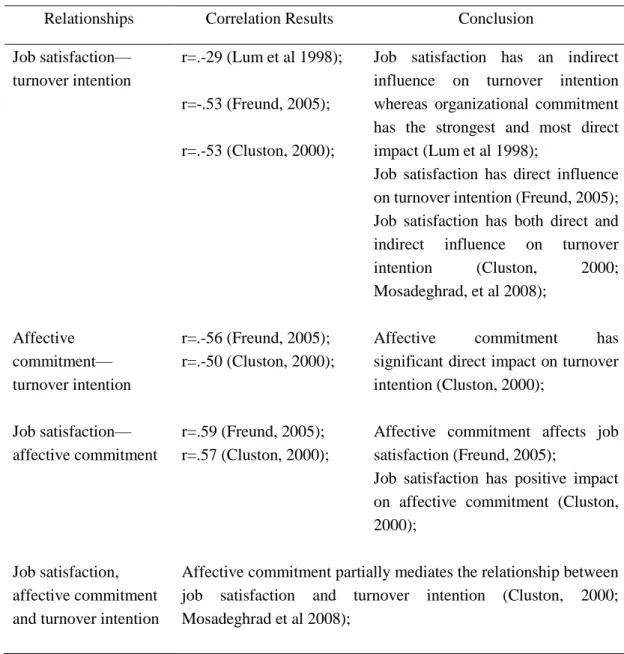
2.3 Job Satisfaction, Affective commitment and Turnover Intention ... 39
2.3.1 Job Satisfaction on Turnover Intention ... 39
2.3.2 The Effect of Affective commitment on Turnover Intention ... 41
2.3.3 Job Satisfaction and Affective commitment ... 42
2.3.4 Effect of the Job Satisfaction and Affective commitment on Turnover Intention .. 44
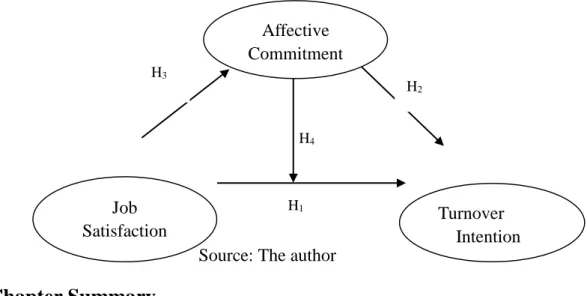
2.4 Research Model and Research Hypotheses ... 47
2.5 Chapter Summary ... 49
Chapter 3 Empirical Research ... 51
3.1 Research Subjects and Method ... 51
3.1.1 Research Subjects... 51
3.1.2 Definition and Measurement of Basic Concepts ... 51
3.2 Data Collection and Data Analysis... 54
3.2.1 Questionnaire Design, Administration and Data Collection ... 54
3.2.2 Data Analysis ... 56
Chapter 4 Results and Data analysis ... 59
4.1 Descriptive Analysis ... 59
4.2 Factor Analysis ... 60
4.2.1 Job Satisfaction ... 60
4.2.2 Affective Commitment ... 61
4.2.3 Turnover Intention ... 61
4.2.4 CFA Tests of Three Scales ... 62
4.3 Correlation analysis ... 64
4.5.2 Summary of Hypothesis Test Results ... 70
4.6 Chapter Summary ... 71
Chapter 5 Discussion and Conclusion... 73
5.1 Key Findings ... 73
5.1.1 Job Satisfaction, Affective Commitment and Turnover Intention Differences ... 73
5.1.2 Job Satisfaction and Its Dimensions ... 76
5.1.3 Job Satisfaction, Affective Commitment and Turnover Intention ... 76
5.2 Suggestions for Retention Practice ... 77
5.2.1 Establish a talent management system that can improve job satisfaction ... 77
5.2.2Improve work environment and increase affective commitment ... 79
5.2.3 Career development of senior professionals and increase their sense of belonging ... 81
5.2.4 Select young and middle-aged academic backbones and encourage senior hospital professionals to assume management posts. ... 82
5.2.5 Establish relationships with medical universities ... 84
5.3 Major Innovations and Contributions ... 85
5.4 Research Limitations ... 85
5.5 Research Conclusions ... 86
Bibliography ... 87
III
List of Tables
Table 1-1 Physician density in some countries (average between 2000 and 2009) ... 5
Table 1-2 Number of hospitals across China: number of hospitals according to registration type, sponsor, operating mode, hospital level and institution category ... 7
Table 1-3 Proportion of medical personnel at different levels ... 8
Table 1-4 The Workload of Doctors in General Public Hospitals in Parts of China ... 9
Table 1-5 Levels of Professional Title and Promotion Years in China and Foreign Countries ... 13
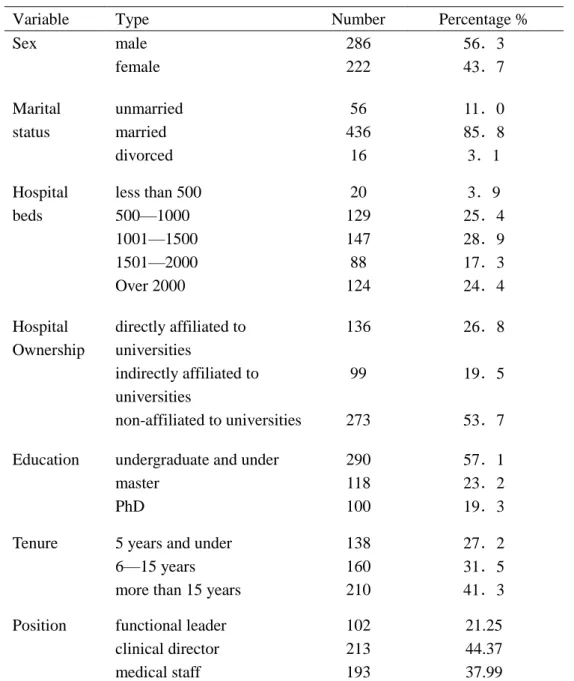
Table 4-1 Descriptive Analysis ... 60
Table 4-2 Survey Items of Reliability and Validity of the Factor Analysis in Three Scales ... 62
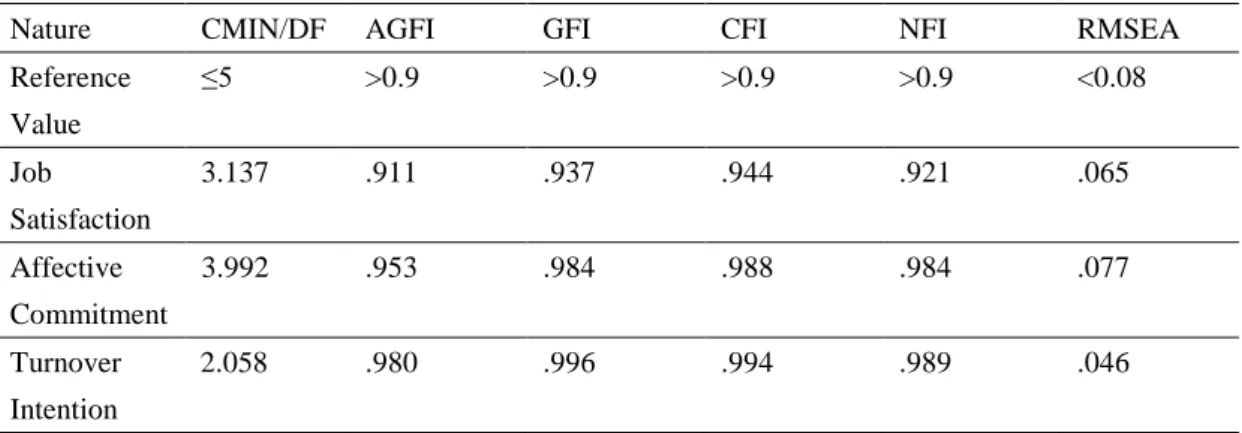
Table 4-3 Model fit criterial for CFA analysis ... 62
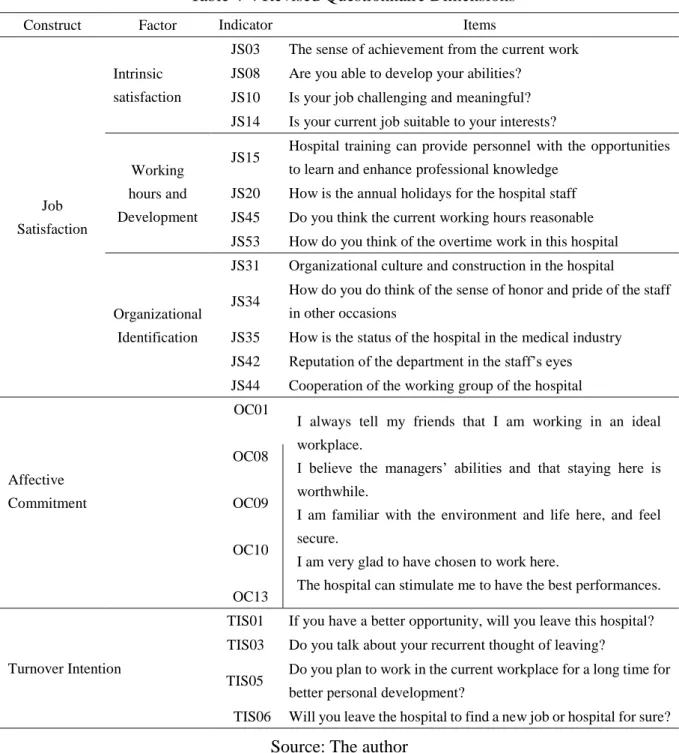
Table 4-4 Revised Questionnaire Dimensions ... 63
Table 4-5 Mean, standard deviation, Correlation and Cronbach's α ... 64
Table 4-7 Model fit criterial for CFA analysis ... 68
Table 4-8 Result Map of Three Dimensions’ Mediator Variables ... 70
I
List of Figures
Figure 1-1 Characteristics of hospital’s senior professionals ... 12
Figure 2-1 Hypothetical modelof the relationships between job satisfaction and organizational commitment and turnover intention relating to the senior professionals in public hospitals ... 49
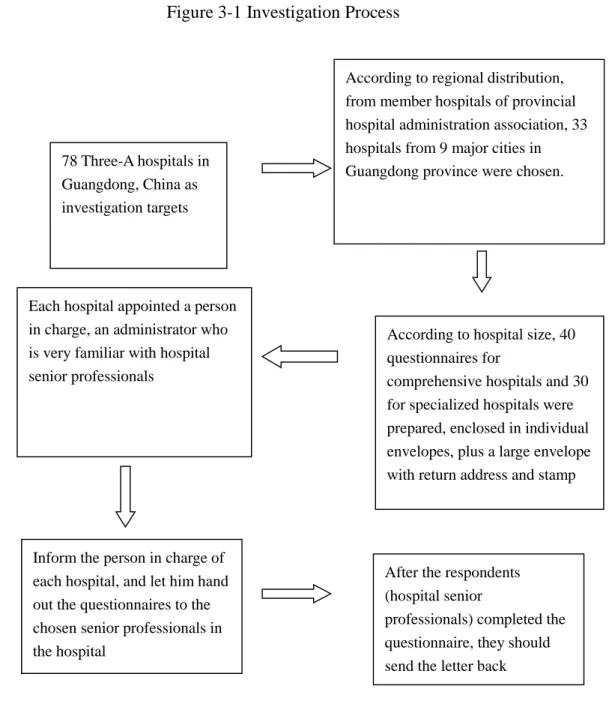
Figure 3-1 Investigation Process ... 56
Figure 4-1 Direct Effect of Job Satisfaction onTurnover Intention ... 69
1
Chapter 1
Introduction
1.1 Research Background
Nowadays, there are public hospitals and private hospitals coexisting in China’s medical market, with the public hospitals as the main body and the private hospitals and other joint venture hospitals as the supplement. At present, the number of beds and service volume of public hospitals and non-public medical organizations account for about 80 percent and 20 percent respectively (Liu et al., 2014). By the end of 2012, there were23,000 hospitals in China, including 1,624 tertiary hospitals (of which 989 are class-A tertiary hospitals) and 9,786 private general hospitals (of which about 200 are joint venture and cooperative medical organizations) according to China’s Health and Family Planning Statistical Yearbook 2013.
Because of the insufficient investment from government, Chinese public hospitals have to generate profits themselves to maintain their survival and development (Zhang & Feng, 2013). In order to solve the resulting problems of over-treatment and excessively-centralized medical resources, a new round of medical system reform is being carried out since2009 in China, whose measures include: allow foreign capital to enter the Chinese medical market; encourage foreign investors to sponsor joint venture hospitals; allow private capital to invest in hospitals; encourage the rational flow of medical staff in public hospitals; and perfect the multi-site medical practice system with a view to easing the huge pressure on demand for medical services in China (Yuan et al., 2014).
Although it is not difficult for private hospitals to own high-end medical equipment and luxury decoration and provide people-oriented service by investing a considerable amount of money at the early stage, it is the stable and special medical technology as well as the number and technical level of senior professionals in the hospital that give the sense of safety and trust to the people. Since foreign doctors are allowed to work in
China only for one year and the development cycle of China’s doctors is as long as 13 years with the requirement for the training platform in the growth period being also very high, senior professionals are in high demand by foreign-invested and private hospitals. They spare no expense to provide good working environment and higher compensation to attract senior professionals working in public hospitals.
Another initiative of China’s healthcare reform is to roll out the multi-site medical practice system, which allows good doctors to offer medical services at multiple sites so that they can be shared by the whole society. The restrictions on practice site for the past 40 years have been lifted, which promotes the rational flow of the medical staff allowing people in neighboring areas to enjoy high-quality treatment provided by senior professionals from large-scale general public hospitals.
The contradiction between the growing demand for medical services and limited health service providers thwarts progress towards achieving the goals of improving the operational efficiency, service level and medical quality in China’s health care system. At the same time, the hospital level management system has also objectively exacerbated the uneven distribution of medical personnel. According to the current Hospital Classification Management Methods, a third level class-A (short as 3A) hospital is China’s highest level of hospitals with more than 501 beds, whose first-class medical service and management, medical quality and safety as well as technical level and efficiency make it the medical center in a region. With a high level of subjects, clinical services, scientific research abilities and teaching conditions in that region, the hospital of this sort has large demand for high-level senior professionals and is also more attractive to medical talents, thus becoming the main gathering place of health senior professionals (Luo, 2015). The perfect platform and good reputation of public hospitals are always the factors that make the senior professionals hesitate when they have the intention to leave.
As an economically developed area in China, Guangdong province was in the vanguard of China’s reform and opening up. With good medical equipment, Guangdong province now has 1,186 hospitals, of which 105 are tertiary hospitals
3 including 78 third level class-A hospitals. By the end of 2014, there were 449 private medical organizations in Guangdong province. Guangdong province has 78 hospitals with more than 800 beds, ranking the fourth or in the top 13% among 31 provinces across China (Guangdong Health and Family Planning Commission, 2014).
Guangdong province is among the first to establish the multi-site medical practice filing system, allowing doctors to work for more than one medical organization. Meanwhile, it steps up efforts to promote the development of non-government funded hospitals. With Taiwan, Hong Kong and Macau in the neighborhood, the enormous demand for different kinds of medical services has contributed to the fast flow of medical talents among public hospitals. In 2015, Guangdong government stepped up the pace to approve licensed doctors to practice medicine at multiple sites and fully implemented the multi-site medical practice filing system. It also simplified the approval procedures and standards for non-government funded medical organizations, and encouraged qualified private medical organizations to be included into the medical insurance system and meanwhile in any case, the government’s planning for healthcare cannot become an assured ground of disapproving non-government funded medical organizations, or to put it plainly, the site selection of any new medical organization (hospitals, clinics) sponsored by social capital will not be restricted by the government’s medium to long-term regional health planning and layout planning for medical organizations, meaning that the social sponsors can build new medical organizations wherever they want. As a result, these policies have encouraged the emergence of new types of private hospitals.
The core competence theory based on the resource-based view (Barney, 1991) includes theories based on capacities and knowledge and argues that human resources arethe main source of firm’s competitiveness. In recent years the Chinese government has strictly limited the scale expansion of hospitals and thus China’s public hospitals began to shift their focus on the fine management aimed at improving medical quality (Ye, Fu & Ma, 2013) and nurturing their talented human resources.
strategic resources, represent the medical level and management abilities of a hospital at various levels. Relying on senior professionals to enhance the core competence for hospitals’ sustainable development has become part of the strategic development planning in China’s public hospitals (Mao, 2014). The role of these senior professionals in a hospital will directly affect the hospital's influence in the society and its medical market share, which is the guarantee of the survival and development of China's hospitals. Whether they can have a sufficient number of health senior professionals and maintain their loyalty and work enthusiasm are the critical factors that help hospitals stay competitive and gain competitive advantage.
According to the Several Opinions of the State Council on Promoting the Development of the Health Service Industry issued on Oct 14 2013, China’s first guiding document for health industry, by the end of 2020, the total volume of China’s health service industry will reach more than 1.228 trillion dollars. China has the world’s largest population, but its medical workers are seriously insufficient and, what is more, they have been working overtime and under great pressure. Meanwhile, the high requirements for training platform and the long growth cycle of doctors make the health senior professionals even scarcer (Zhang, 2014).
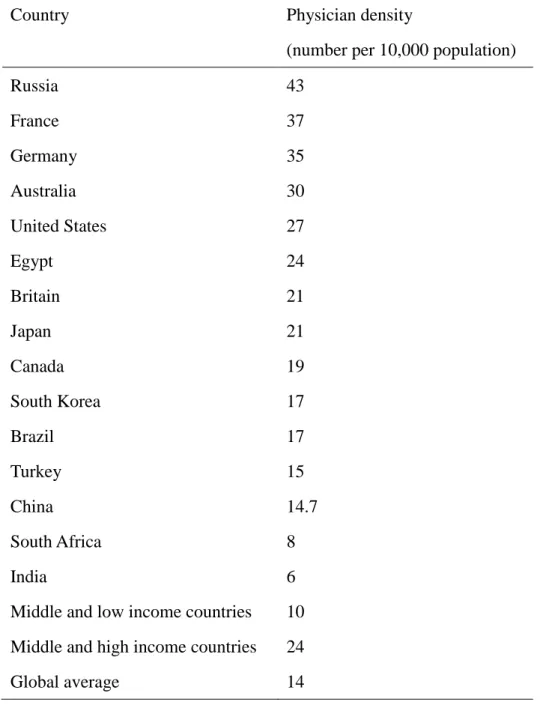
According to China’s Health and Family Planning Statistical Yearbook 2013, from 2002 to 2012, the number of patients increased by 104.5 percent, while the number of medical workers only increased by 56.3 percent, significantly lower than the growth rate of demand. While assessing the situation of human resources in the health industry, the indicator “physician density”, or the number of physicians per 10,000 population is often used. China’s physician density has been increasingly slowing down, with 14.7 in 2010 and 19.4 in 2012. According to the criterion of the United Nations and World Bank, China is expected to rank among the high and middle income countries in the near future and, in these countries, the average physician density is 24 (see table 1-1). A survey on the growth of human resources in the health field in recent 20 years in China shows that this field is in crisis and that the number of medical workers in medical organizations is generally inadequate. China’s physician density is far lower than that
5 of the United States, France, Germany, British, and Russia, even lower than that of Japan, South Korea and Brazil, which makes it difficult to improve the medical service quality (Gu, 2011).
Table 1-1 Physician density in some countries (average between 2000 and 2009)
Country Physician density
(number per 10,000 population)
Russia 43 France 37 Germany 35 Australia 30 United States 27 Egypt 24 Britain 21 Japan 21 Canada 19 South Korea 17 Brazil 17 Turkey 15 China 14.7 South Africa 8 India 6
Middle and low income countries 10 Middle and high income countries 24
Global average 14
Source: World Health Organization (2010) & Ministry of Health of The People’s Republic of China (2011)
According to China’s Health and Family Planning Yearbook 2013, by the end of July 2013, China, a country with a population of 1.36 billion, had 981,000 medical organizations with a total of 4.1615 million beds. There were1,059 general hospitals
with more than 800 beds, of which 74 in Guangdong province, accounting for 6.2 percent of the total in China. In 2012, the total outpatient visits to hospitals across China were 2,541,616,000 with 2,288,663,000 visits to public hospitals and 252,953,000 visits to private hospitals. The number of inpatients was 130 million across China while the number of outpatient visits and inpatients to hospitals in Guangdong province reached 310 million and 12 million respectively.
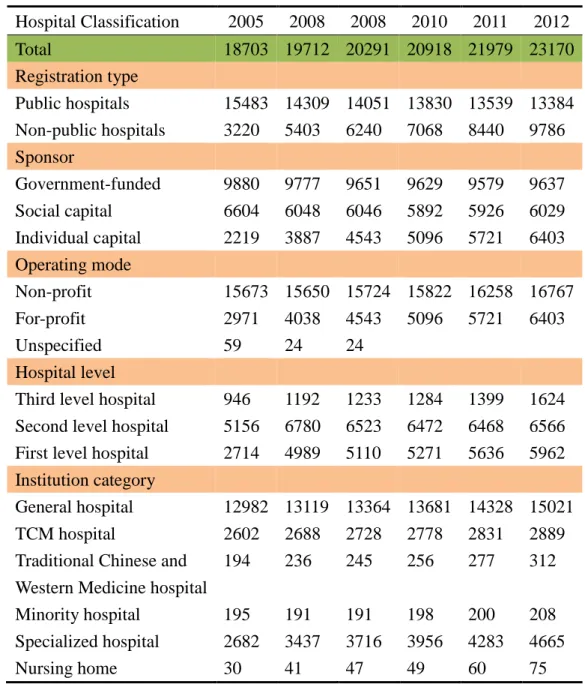
As per Table 1-2 below, there are 23170 hospitals in China of which 9,637 are government-funded. Hospitals in China are categorized into three levels. Tertiary hospitals represent the highest level of Chinese medical technology. Most senior hospital professionals like to work at this kind of hospital.
As per Table 1-3 below, there are 6,675,549 medical workers in China. Guangdong province has 518,414 medical employees, of which 8,295 have a senior title, accounting for only 1.6 percent of the total. However they are the scarce resources for which all hospitals compete.
7 Table 1-2 Number of hospitals across China: number of hospitals according to registration type, sponsor, operating mode, hospital level and institution category
Hospital Classification 2005 2008 2008 2010 2011 2012 Total 18703 19712 20291 20918 21979 23170 Registration type Public hospitals 15483 14309 14051 13830 13539 13384 Non-public hospitals 3220 5403 6240 7068 8440 9786 Sponsor Government-funded 9880 9777 9651 9629 9579 9637 Social capital 6604 6048 6046 5892 5926 6029 Individual capital 2219 3887 4543 5096 5721 6403 Operating mode Non-profit 15673 15650 15724 15822 16258 16767 For-profit 2971 4038 4543 5096 5721 6403 Unspecified 59 24 24 Hospital level
Third level hospital 946 1192 1233 1284 1399 1624 Second level hospital 5156 6780 6523 6472 6468 6566 First level hospital 2714 4989 5110 5271 5636 5962 Institution category
General hospital 12982 13119 13364 13681 14328 15021 TCM hospital 2602 2688 2728 2778 2831 2889 Traditional Chinese and
Western Medicine hospital
194 236 245 256 277 312
Minority hospital 195 191 191 198 200 208 Specialized hospital 2682 3437 3716 3956 4283 4665
Nursing home 30 41 47 49 60 75
Source: National Health and Family Planning Commission of the People's Republic of China (2013)
Table 1-3 Proportion of medical personnel at different levels Category Total Medical personnel Rural doctor/ health workers Other technicians Management personnel Skilled workers Subtotal Physician (assistants) Physician Registered nurses
Pharmacists technicians others
Total 9115705 6675549 2616064 2138836 2496599 377398 363642 821846 1094419 319117 372997 653623 Professional title Director 1.6 3.7 4.5 0.1 0.5 0.6 0.4 0.4 3.1 Deputy director 5.9 11.7 14.4 1.8 2.8 4.3 1.8 2.6 9.7 Intermediate title 23.2 29.3 35.4 21.0 22.1 25.4 9.4 15.0 27.8 Doctor/ Assistant doctor 32.5 39.9 38.7 27.4 37.9 35.3 20.0 26.9 27.6 Technicians 28.0 10.2 2.8 43.7 30.9 27.9 36.2 33.4 20.7 To be appointed 8.8 5.1 4.3 6.0 5.7 6.5 32.2 21.7 11.1
9 In terms of service efficiency, the daily outpatient visits and inpatients per doctor (actual number of occupied beds*days/total number of doctors/the calendar days each month) in the general public hospitals of Guangdong province were11.7 and 2.2 respectively, ranking in the middle among the 31 provinces surveyed across China (see Table 1-4 illustrating the results of three Eastern and two Western provinces).
Table 1-4 The Workload of Doctors in General Public Hospitals in Parts of China Daily outpatient visits per doctor Daily inpatients per doctor
Beijing 10.6 1.4 Shanghai 15.2 2.2 Guangdong province 11.7 2.2 Xinjiang 6.0 3.3 Tibet 5.0 1.4 National average 7.6 2.7
Source: National Health and Family Planning Commission of the People's Republic of China, 2013
1.1.1 Senior professionals in China’s public hospitals
Senior professionals in China’s public hospitals mainly refer to the technical experts and management personnel who play a leading role in medical teams or hospital management. They typically include the director of clinical departments, director of national and provincial key disciplines and laboratories, chairmen or vice chairmen of professional associations at various levels, head of major research projects/research results at all levels as well as chief editors or deputy editors of professional textbooks. Most of them not only have doctoral or master’s degree and the experience of further
studying at home and abroad as well as postdoctoral research, but also have the highest professional titles like professor, chief physician, senior technologist, and researcher.
Although they account for less than 10 percent of the total workforce (National Health and Family Planning Commission of the People's Republic of China, 2013), they always provide emergency treatment for critically ill patients, master important clinical skills, keep a close eye on the latest development trend of disciplines, have the comprehensive ability of medical treatment, teaching and scientific research and enjoy good reputation among patients and their families. Moreover, they are particularly popular among patients, enjoy high prestige among colleagues, have the ability to lead teams to complete tough tasks, and take the responsibility of supervising clinical quality and business management indicators. Therefore, they cannot be regarded as general employees in the traditional economic era, but as important elements and carriers of hospital’s discipline levels and clinical skills. They represent the hospital’s technical level, ensure that the hospital has the abilities to provide medical services and maintain its core competitiveness.
Unlike other ordinary medical staff, they participate in the hospital’s strategy formulation and set development goals according to the actual conditions of clinical departments and management departments led by senior professionals. As the strategy makers, they deliver these strategies to medical staff by words and deeds. They undertake to promote the implementation of the strategic goals of the hospital and therefore play an essential and irreplaceable role in the organization.
According to interviews with a few respondents in the preliminary study for this research, the hospital’s senior professionals, compared with other medical staff, have the following notable features: first, they play an irreplaceable role as they grasp clinical skills, core resources and critical knowledge and have social networks. Being in the key posts in the hospital system, they play a vital role in their professional field (Pu, Tang & Sun, 2013).
In second comes the complexity of their work that includes personalized treatment programs, patent technologies, successful cases of difficult and complicated surgeries,
11 and research results. Their work objects are critically ill patients including the treatment and diagnosis of difficult diseases and research on technological innovation. Their work has no fixed pattern and does not follow simple procedures. Also, they need to show qualities of leadership as well as responsibilities and abilities in technological innovation, extension and application of medical technologies, and imparting professional knowledge. Their achievements are often shown as the team’s wisdom and are difficult to quantify and assess.
Thirdly, they need to possess learning abilities so as to receive long term training bestowing professional quality and strong ability and desire to learn. To be a senior professional, a would-be doctor must receive strict and formal training and continuously accumulate experience for a long time.
In fourth place there is the pursuit of self-actualization, which often is their main objective. Although their income is much higher than that of ordinary medical staff, they work not only for a compensation but hope to give full play to their professional expertise and achieve their career goals. As Fang (2012) has found, to work in a free and relaxed hospital environment is an important element for retention.
Finally, these high level medical professionals are scarce resources and are most needed by hospitals at various levels. When they feel they cannot bring their talent into full play, they are more easily to quit than ordinary medical staff. They have been hunted and scrambled by all hospitals and it is not only difficult to grab them but also costly. As they are in high demand in the medical human resources market, hospitals that lose them will suffer the loss of patients and profit reduction and face difficulties in the development of specialized departments. As all hospitals are competing for these top-notch talents with highly attractive compensation and working conditions, they are able to choose and pay more attention to the work platform and to the hospital’s management system while possessing a strong bargaining power. Therefore, not only hunting, but especially maintaining these talents will significantly improve the hospital’s labor costs. Figure 1-1 below summarizes the characteristics of this special labor force and highlights their bargaining power.
Hospital's senior professionals Play an irreplaceable role Complexity of their work Strong learning ability
Work for the realization of self-value Scarce human resources Introducing them requires high labor cost
Figure 1-1 Characteristics of hospital’s senior professionals
Source: the author.
One of the notable features of senior professionals in China’s hospitals is that they must receive a long period of training and education. According to the promotion system for clinicians in China’s hospitals, it will take a would-be doctor 13 years to get a medical doctor degree and complete the resident training. Then, according to the Criteria for Assessment of Intermediate and Senior Professional Titles for Clinical Medicine issued by the Ministry of Health, there are up to four levels of titles, the most in the world (two levels in the United States and Taiwan, three levels in Britain and Hong Kong), for a potential health talent to transit from the primary title (resident physician), intermediate title (attending physician), vice senior title (associate chief physician) and senior title (chief physician). This information is summarized in Table 1-5.
13 Table 1-5 Levels of Professional Title and Promotion Years
in China and Foreign Countries
Mainland China Britain/Hong Kong United States/Taiwan
Professional title level 4 3 2
Nr. of years for promotion
15 9 5
Source: the author.
As it can be seen from the table above, in Mainland China it will take a medical graduate at least 15 years to obtain the senior tile (chief physician), which is one of the basic conditions to be considered a hospital senior professional. Moreover, China has another set of titles in its teaching and scientific research system (teaching assistant, lecturer, associate professor, professor), which is stricter than the clinical title system. In order to get promoted, China’s doctors must perform well enough to meet the extremely strict assessment standards at each stage. The assessment contents include: professional theory, clinical skills, practical experience, the ability to master the latest developments in their professional field, the ability to lead the development of their respective subjects, the ability to teach graduate students, advanced students and junior doctors, the condition of developing new therapies and technologies. In addition no medical accident can be permitted, and other competencies are required such as the ability in foreign languages, computer skills, teaching ability, participation in national and provincial research projects, and the number of published papers in SCI or core journals. Medical employees who meet the above conditions can be regarded as the senior professionals in this study.
1.1.2 The Status quo of the Turnover of the Senior Professionals in China’s public hospitals
constrained by the personnel management system prevailing in China’s hospitals and is now being affected by market forces. Before 2009, unlike in Europe and the US, China’s hospitals adopted the traditional personnel management system in which the relationship between the medical staff and the hospital is fixed and the medical staff was not allowed working for any other medical organizations. They were given the budgeted posts instead of signing employment contracts with the hospital, which was something like the personnel management in government.
The president is appointed and the scale and level of the hospital, number of beds, manning quotas, and personnel structure are determined by the health administrative department. The promotion, salary, job transfer and welfare are put under an unified management. Therefore, the limitations of the management system, imperfect distribution and lack of scientific performance assessment have greatly limited the talent flow (Xu, 2011). Bounded by so many additional conditions, senior professionals can only work for one hospital instead of bringing their talents into full play in many medical organizations, resulting in the shortage and waste of talent resources. However, things have changed since 2009 with new medical policies allowing certified doctors to practice in multiple sites.
Because of the rigid employment system, strict promotion system, poor working environment and low pay, China’s public hospitals are put in a passive position in the tense talent competition. It is reported that since 1980s, there have been famous medical experts from affiliated hospitals of famous medical colleges in Beijing, Shanghai and Guangzhou working as part-time doctors in other medical organizations at weekends. Therefore, competing for senior talents has become increasingly fierce.
The free flow mechanism for senior professionals in China’s public hospitals is taking shape. In the meanwhile, the restriction on multiple-site practice of certified practitioners has been lifted. The Opinions of the CPC Central Committee and the State Council on Deepening the Health Care System Reform issued in April 2009 proposed to steadily promote the rational flow of health care professionals, facilitate diversified ways of talent exchange among different health care institutions, and explore the
15 feasibility of multiple-site practice of certified practitioners (Shi et al., 2012). Currently, medical senior professionals can legally offer medical services in other medical organizations instead of only working for one hospital in the past. After the Notice on Developing and Standardizing Multi-site Medical Practice of Certified Physicians was issued by the National Health and Family Planning Commission in 2014, from Jan 2010, the pilot projects of multi-site medical practice have been going on for five years in Guangdong province. In 2015, the Guangdong government encouraged to explore regional registration and has fully implemented the multi-site medical practice filing system (Sina Guangdong News, 2015). This system means that excellent registered doctors can offer medical services in multiple sites except in the public hospitals where they work. Thus, the excellent health professionals can be shared by the whole society and patients in the neighboring areas will benefit from the medical skills of senior professionals from large-scale public hospitals.
However, according to the statistical data of Guangdong Health and Family Planning Commission, only 3800 out of 160,000 strong certified physicians in Guangdong province have applied for the multi-site medicine practice during the four years the pilot program has been in place (Ma, 2014). Therefore, it is still rare that certified doctors practice in multiple sites. In 2015, there were also independent medical teams emerging, but given the restrictions on doctors under the current system and the great working pressure, a doctor who practices medicine in different medical organizations is not yet well guided and protected in terms of job responsibilities, time and energy allocation as well as legal liability.
Besides, the growing number of opportunities in the medical market will increase the turnover rate of senior professionals in China’s public hospitals. With the economic development in China, the scale of local hospitals is expanding and the imbalance of demand and supply for medical services becomes serious. Meanwhile, the number of joint ventures and private hospitals is rapidly increasing. Tempted by the institutional advantage of other hospitals and higher salary and benefits, more and more senior professionals in public hospitals are taking a part-time job or consider to leave the
hospitals they currently work for.
At the same time, China has softened the management system over for-profit and non-profit hospitals. In this case, public hospitals have become legal entities with rights to recruit, allocate and manage employees and with the ability to operate autonomously and establish internal incentive mechanisms. The human resources management of China’s hospitals has been transformed from a national and unified employment system to a case by case unit employment system with hospitals having independent rights to recruit clinical talents and according to their actual clinical needs without following administrative instructions from the provincial and municipal Department of Health entrust the personnel agency to keep the personnel files (Qi, 2015). Hospitals can set positions according to human resources planning and recruit various types of health talents.
According to the research conducted by Chinese scholars on the turnover of senior professionals in public hospitals in recent years, it can be seen that:
1. The number of dropouts is rising. In recent years, dropouts in public hospitals show an upward trend, and there are even medical teams resigning collectively in some hospitals (Zeng & Wang, 2015). For example the number of dropouts in the First Affiliated Hospital of Fujian Medical University rose from 22-25 people between 2008 and 2010 to 44 in 2010 (Wang, 2012); the dropouts in Zhejiang Chinese Medicine Hospital rose from 14-23 between 2008 and 2010 to 61 in 2010; the dropouts in the Third People’s Hospital of Nanhai district of Foshan rose from 9 in 2008 to 18 in 2010; the dropouts in Peking Union Medical College Hospital also reached more than 40 in 2012 (Zhou, 2012; Tang et al., 2010). From 2012 to 2013, there were 84 health professionals quitting their jobs from the Third Affiliated Hospital of Guangzhou Medical University where the author currently works.
2. The turnover rate of senior professionals in public hospitals also shows an upward trend. According to the research data of the First Affiliated Hospital of Nanjing Medical University in recent 10 years, the turnover rate of senior professionals in public hospitals is on the increase. The dropouts in 2013 and 2014 have doubled respectively
17 compared with 2012 and 2013 (Song, et al., 2015) and there were 53 health professionals with doctor’s degree quitting their jobs, accounting for 22.7 percent of the total dropouts. In 2014, a research report published by the Liaoning Medical Association on the current situation of occupational stress, occupational risk, job satisfaction and job burnout of physicians in that province showed that 41.4 percent of physicians had turnover intention and more than half of the physicians lacked a sense of accomplishment (Wang, 2015).
The loss of core talents will reduce the influence of public hospitals, increase the costs of reallocating human resources and negatively affect the hospital’s future development. The factors that affect the turnover of senior professionals include organizational factors, work factors, psychological factors, personal characteristics and social factors (Lin et al., 2014). Studies suggest (e.g. Song, 2014) that after quitting their jobs, health senior professionals still work in their original professional field in new hospitals, showing that they not only pay attention to the salary and welfare, but also want a better platform to achieve their career development. The turnover intention is often caused not by a single factor but by a combination of factors, like the desire of participating in hospital’s management, hospital’s reputation, specialty prospects, team climate, scientific research platform and patient needs. Therefore, how to establish a mechanism that can help to introduce and retain health talents and promote their development is an important research subject for the human resource management in China’s hospitals.
The high turnover rate can produce many negative effects like the continuous loss of talents, unstable medical technological level, reputation damage, decline of the core competitiveness of the hospital and even loss of patients. Therefore, how to improve the job satisfaction and organizational commitment of senior professionals, reduce the factors that affect the turnover intention and reduce the turnover rate has become the foremost problem worthy to be discussed and solved as soon as possible by the management level of China’s hospitals and this is the core content of this thesis.
1.1.3 Research Purpose
As part of the health care reform, China will step up efforts to form a multi-sponsored medical configuration, allow multi-site medical practice, encourage private capital to sponsor non-profit hospitals, allow overseas capital to sponsor for-profit hospitals, create a sector-wide fair medical environment, provide quality medical services to satisfy the people’s multi-layer and diversified demands and promote the healthy competition in the medical market. The legalization of part-time work allows the health senior professionals to offer medical services in multiple sites.
As the number of China’s hospitals and beds increase and private Chinese and overseas capitals are encouraged to invest in hospitals, the reemployment opportunities for health senior professionals mastering core medical technologies in public hospitals have been greatly expanded. For health talents, they will have more opportunities to select the best platform that can favor their development; for the country, the rational flow of talents can make the scarce resources evenly distributed and address the shortage of senior health professionals, thus helping to achieve a wide coverage of quality medical services.
For public hospitals, the free flow of senior professionals will bring about negative effects. Their resignations will reduce the medical service efficiency of the hospital and increase its labor costs including turnover costs, recruitment costs, selection costs, training costs, employment costs and production loss costs (Timothy et al., 2000). However employees will not leave their hospitals if they are in tune with its culture. On the contrary, their dependence and trust to hospitals will be deepened and thus a strong cohesion and solidarity will emerge, which could reduce the cost of turnover effectively (Guo, 2015). According to Chen, Chu and Wang (2006), the costs of employment, training and production loss alone may exceed 5 percent of the annual budget of an organization. Meanwhile, when turnover is high the cohesion of the organization is weakened (Mueller& Price, 1989). Before job vacancies are filled by new talents, the remaining medical staff have to take on an increased workload and suffer great mental stress, which may trigger new turnover intention (Abelson, 1986) and further affect the
19 survival and development of the hospital (Sofaer & Myrtle, 1991).
Given the great difference between China’s history, religious culture and humanistic education and Western culture, whether the research model and conclusion regarding the influencing factors of turnover intention based on Western human resources theory and organizational behavior can be applied to China is still to be tested. Research on turnover intention and behavior based on Chinese culture is still not mature, and the research on turnover behavior of senior professional talents in public hospitals is still rare in the literature. According to the research on the turnover intention of China’s hospitals in recent three years, the research objects often focus on nursing staff or general medical staff, and most of them are about the effect of job satisfaction on the turnover intention of the medical staff (Sun et al., 2014). Therefore, it is of great theoretical and applicable significance to establish turnover model of senior professionals in public hospitals through making an analysis of two important factors (namely job satisfaction and commitment) on the turnover intention of senior professionals in public hospitals based on the large-scale public hospitals in Guangdong province. Guangdong province was selected for the context of this thesis, as it is one of the most developed provinces in China and an early adopter of reforms. Whatever is experimented in Guangdong, if successful, other provinces will follow suit.
According to the above mentioned challenges faced by the senior professional’s management, this study has the following purposes:
1. Understand the status quo and statistical data of the job satisfaction, commitment and turnover intention of senior professionals in large-scale hospitals in Guangdong province.
2. Explore the relationships between job satisfaction, commitment and turnover intention of senior professional talents in public hospitals. The research on the turnover intention of medical staff in China is still at an infant stage and currently most of the Chinese literature just focuses on the review or qualitative analysis of the topic lacking theoretical discussion and empirical study. Especially, the study on the correlations between job satisfaction, commitment and turnover intention of senior professional
talents in public hospitals have rarely received attention. Therefore, the theoretical and empirical study on the related problems of turnover intention is conducted in this thesis to identify the relationships between job satisfaction, commitment and turnover intention of senior professionals in public hospitals.
3. Identify the key factors of job satisfaction that affect the turnover intention of senior professionals. China has a population of 1.3 billion people, but its health care system is still backward. On the one hand, the long-term insufficient investment from the government causes medical resources to be unevenly distributed across China and most medical resources concentrate in the large-scale hospitals in large cities; on the other hand, there is no perfect training system for general practitioners and resident physicians, resulting in the serious shortage of high-level health talents. Health senior professionals are urgently needed by all hospitals, so they will have more opportunities to make a new choice. Then which factors of job satisfaction will affect turnover intention? The answers to these questions may help to create a good working environment for health senior professionals.
4. Provide ground for management strategies that can stabilize health senior professionals. China’s new medical reform policies promote the emergence of various types of foreign-funded and private hospitals and the opening of medical human resources market, which increases the possibility of the flow of health senior professionals. In order to survive and further develop, public hospitals have to improve the job satisfaction and commitment of their top talents and work out strategies to cultivate and stabilize high-level medical professionals.
Through analyzing such key factors like job satisfaction that can affect the turnover intention of senior professionals in China’s public hospitals, the empirical study here conducted aims at summarizing the laws of the high-level medical labor market and at providing a reference for the formulation of talent flow policies. Meanwhile, it aims at guiding public hospitals in creating a good working environment through improving the job satisfaction and commitment of their senior staff.
21
1.2 Research Questions
The empirical study of this thesis focuses on discussing the factors that affect the turnover intention of senior medical professionals in public hospitals, especially the effect of job satisfaction and commitment on turnover intention. The research object is senior professionals in third level class A public general hospitals in Guangdong province.
The research purpose includes the study of: 1. the effect of job satisfaction on turnover intention of health senior professionals; 2. the effect of commitment on turnover intention of health senior professionals; 3. the effect of job satisfaction and commitment on turnover intention of senior professionals in public hospitals.
In addition, the research has several purposes: first, to understand the status quo and statistical data of the satisfaction, commitment and turnover intention of senior professionals in large-scale hospitals in Guangdong province; second, to understand the effect of demographic factors on job satisfaction, commitment and turnover intention of senior medical professionals in public hospitals; third, to discuss the relationships between job satisfaction and commitment and turnover intention as well as their affecting factors; to summarize the factors that can improve the job satisfaction and commitment of the subjects studied; put forward suggestions that can help to improve work efficiency and provide reference for hospital’s human resources management.
Based on the role of job satisfaction and commitment in affecting turnover intention, the thesis focuses on discussing the turnover intention of senior professionals in public hospitals in Guangdong province and puts forward some preventive measures. The specific research contents presents a model of the effect of job satisfaction and commitment on the turnover intention of health senior professionals and aims at answering the following questions:
1. Among job satisfaction, and commitment, which plays (or how do they play together) a key role in influencing the turnover intention of senior professionals?
2. What measures can improve the job satisfaction and commitment of health senior professionals?
1.3 Thesis Structure
The thesis has the following structure:
Chapter 1: Introduction. This chapter mainly introduces the hospital system in China, the research background and the current situation of the turnover intention among health senior professionals in China’s hospitals.
Chapter 2: Literature Review and Research Hypotheses: First, the chapter introduces the turnover situation in China’s hospitals and related research; second, it reviews the theories of job satisfaction, commitment and turnover intention and analyzes the job satisfaction and its influencing factors, commitment, and the basic connotation of influencing factors of turnover intention and its research progress; third, it discusses the relationships between job satisfaction, commitment and turnover intention; finally, it puts forward the theoretical framework and research hypotheses of this study.
Chapter 3: Defines the research method and basic concepts, introduces the selection and design of variable scales, explains the process of data acquisition, and tests the reliability of empirical data.
Chapter 4: Presents the results and analysis of the Relationships between Job Satisfaction, Commitment and Turnover Intention using a Structural Equation Model. First, the correlation between job satisfaction, commitment and turnover intention of health senior professionals is analyzed; second, a model for observed and latent variables is created, then AMOS model fitting results is carried out, as well as the analysis of the model modification and model evaluation (causal path); third, a structural equation model is used to verify the structural relationships between the latent variables of the model and further test the related hypotheses.
Chapter 5: Discussion and Conclusion. The influence of latent variables such as job satisfaction and commitment in the model is analyzed and the research results are discussed. The Chapter puts forward suggestions for managerial practice and provides guidance for the management of core healthcare talents. Through empirical analysis,
23 the levels of job satisfaction, commitment and turnover intention of senior professional talents in hospital are compared and the influence of demographic factors and hospital organizational factors on job satisfaction, commitment and turnover intention is discussed. Based on the hypotheses in the afore said literature, the research results are explained and discussed while the limitations of this study are evidenced as well as future research prospects in this field.
1.4 Chapter Summary
This Chapter has described the importance of senior medical professionals in China’s public hospitals and their turnover intention, and has put forward the research problems, research subjects, purpose and thesis structure.
25
Chapter 2
Literature Review
2.1 Turnover of Medical Staff in China’s Public Hospitals
2.1.1 Current situation
As the scale of China’s hospitals is expanding, different types of hospitals appear, and the personnel management system reform in public hospitals makes a continued progress, the turnover rate of senior medical staff in public hospitals is gradually rising. As evidenced in the previous chapter, the proportion of medical staff with turnover intention in Chinese public hospitals is increasing year by year.
The Chinese Medical Doctors Association is a national, industry-specific and non-profit organization that is organized under the Medical Practitioners Act on behalf of practicing physicians, practicing assistant physicians and unit members. The association is committed to protecting the legitimate rights and interests of physicians, providing all-round training for physicians in order to ensure the healthy development of physician teams.
The association made three surveys on the practice status of physicians in 2009, 2011 and 2014 respectively. The White Paper of Practice Status of Chinese Physicians (Chinese Medical Doctors Association, 2015) based on these survey results shows that 44.82% of physicians wanted to give up the profession in 2009 and 48.51% of physicians were not satisfied with the current working environment in 2011. According to Mu (2011), the degree of job burnout and turnover intention have been suffering a significant increase. From 2009 to 2014, the number of physicians who did not want their children to apply for medical universities rose from 62.49% to 64.48%, indicating that physicians' dissatisfaction with the practice environment had affected their evaluation of professional achievement. A questionnaire survey on turnover intention targeting 933 medical employees from 29 public hospitals using stratified random sampling method showed that 49.0% of them had turnover intention (Li et al., 2010).
Meanwhile, about one third of grass-root medical workers in China say they want to or have a great desire to give up their current work (Song, 2014).
In reality the turnover rate in China’s public hospitals is effectively rising year by year. In 2010, the turnover rate in Peking Union Medical College Hospital was 1% (Tang et al, 2010), with about 45 resignations per year. By 2013, the turnover rate of the medical staff in hospitals at the same level in the same city had risen to 5% (Feng, Li & Hong, 2013). Most of them still chose to work in other hospitals, partly showing that the real reason for the turnover is because they are not satisfied with the current situation of their hospital. In a high-level public hospital in Shandong province with nearly 3,000 beds and 5,540 employees, among which there are 3,671 professional personnel and 382 hold senior title, the turnover rate of those with master degree or above increased progressively, from 3% in 2010 to 4.5% in 2014 (Zhai, 2015). While the turnover intention of general medical staff and nursing staff has been extensively studied, the research on the turnover rate of senior clinical doctors has been rarely made (Li, 2010).
According to the White Paper of the Practice Status of Chinese Physicians 2015, the doctors with higher title are more easily dissatisfied with the work conditions than those with lower title. The medical employees with senior title, or senior professionals, have the highest dissatisfaction with their job, reaching 55.47% (China Xinhua News Agency, 2015). On Oct 10, 2014, a research report showed that 41.4 percent of physicians had turnover intention and more than half of the physicians with senior title lacked a sense of accomplishment (Wang & Gao, 2014).
In addition, a survey by Peking Union Medical College Hospital (Tang et al, 2010) showed that the number of turnover staff working less than six years accounted for 60.7% of the total number of medical staff who had quitted their jobs. Most of the employees quitting their jobs were between 30 and 40 years old, accounting for 45.5% of the total. The turnover intention of clinicians aged under 30 and above 40 was 16.9% and 15.4% respectively. Clinicians in this age group are in a turbulent period of career development, and have not yet reached a stable stage. In this period, they not only need to report to
27 their superiors but also guide junior doctors, so the workload and work responsibilities are very heavy. In this sense, they are easily dissatisfied with their jobs and show intention to quit.
Clinical doctors aged over 40 have high professional skills and carry significant authority among medical staff. Meanwhile, with high income, they are at the stable stage of career development and can easily gain a sense of fulfillment and satisfaction. However, they also have more opportunities for job-hopping in search of a higher salary and welfare. The above-mentioned research showed that the reason for the turnover of employees with vice senior titles is mainly due to external career opportunities (62.5%), while the reason for the turnover of employees with senior titles is totally due to external career opportunities (100%). The higher professional title they have, the more popular they are in the human resources market. The doctors, especially those with senior titles in public hospitals, have more choices of reemployment through which they can find a more satisfying platform for career development. For example, after leaving their former hospital, doctors with senior titles often work as subject leader in a new hospital.
A 3-year data research conducted by (Zhou & Li, 2015) on the destination of job-hoppers shows that 22.02% and 20.78% of medical employees who have quitted their jobs move to higher level hospitals or to hospitals in other cities respectively.
2.1.2 Contributors of the Turnover of Medical Staff in China’s Public Hospitals
The quitting of health senior professionals shows that their patience and trust in the current system and management are wearing thin. In the recent three years, senior professionals are accounting for an increasing proportion of the turnover and there is strong evidence that job satisfaction, career value recognition, life satisfaction and work place violence can contribute to their turnover intention (Lin et al, 2014).
According to research conducted in recent years the reasons and causative factors for the turnover of medical employees in China’s public hospitals are as follows:
First, work autonomy and workload: Both these two factors were found to affect the stability of doctors. With their career development, doctors have gradually shifted
their focus to the stage of self-actualization (Huang et al, 2014). The contributors to turnover intention are also different at different career stages. For example, in the entry-level period, they hope to win appraisal from leaders and get a fair pay. In the development period, they require a certain level of autonomy and hope for more training opportunities. In the mature period, the demand for better career prospects and a high level of autonomy are the strongest contributors to the turnover of senior professionals (Lin et al, 2014).
Second, work conditions: Currently, China is experiencing a complex set of phenomena such as social transformation, interest structure adjustment and economic system reform, which make social contradictions increasingly prominent. Because of the insufficient investment in health care, doctors often receive a substantial number of complaints from the public. They are chronically overworked but receive low pay. Yet, for all that, they do not receive the due respect from the society (Xu et al, 2014). The tense relationship between doctors and patients, plus more and more medical disputes, cause the frequent occurrence of violent attacks and body injuries.
A paper entitled “Doctor, the most dangerous occupation in China” published in The Lancet in August 2010, the world’s leading medical journal, argues that personal safety is the top concern of China’s doctors because they often become the victims of violent accidents caused by medical disputes. In a 2012 research, Wang asserted that personal safety and social respect are the top concerns of China’s doctors with 65% of them giving priority to medical safety, in contrast with 53% of doctors willing to do their utmost to cure diseases for patients. This shows the worsening patient-doctor relationship that threatens the personal safety of doctors. Meanwhile recent research (Pan et al, 2015) showed that this negative feeling also directly affects their decisions in making career planning for their children with 78% of the surveyed not wanting their children to practice medicine.
In addition, the fourth survey on the practice status of China’s physicians conducted by the Chinese Medical Doctor Association in 2011 showed that several aspects of work conditions need to be improved as 30.51% of doctors enquired hope to
29 establish and strengthen laws and regulations that effectively protect the legitimate rights and interests of doctors; 27.92% hope to improve the welfare of doctors; 21.55% hope to improve work conditions and protect the rights and interests of doctors (Mu, 2011). A questionnaire survey on the turnover intention among 415 medical employees in the Emergency Department of18 hospitals in Guangdong province shows that 22.79% of them have turnover intention. This shows that geographical location, high pressure and psychological symptoms are among common contributors to turnover intention (Wang et al., 2011). Clinicians who have suffered workplace violence are two times more likely to foster turnover intention than those who have not. The higher the violence level is, the stronger the turnover intention is (Ding et al., 2014).
Third, family factor: According to Adam et al (2009), the work-family conflict is regarded as a causative factor of low job satisfaction and high turnover rate, which has been verified in the survey among the clinicians conducted in 2013 in Liaoning province (Gao et al., 2013). Low work enthusiasm, family support and unpromising career prospects largely contribute to turnover intention (Li et al. 2010a). Researchers (Feng et al., 2013) found that the income, whether the family relationship is harmonious and whether the proposals are taken seriously have significant effect on job satisfaction and turnover intention. It was also found that the life satisfaction of clinicians is negatively correlated with their turnover intention as a low life satisfaction easily leads to slackness in work and the increase of turnover intention (Lin et al., 2014).
Fourth, work value recognition: All doctors hope for the appraisal of their leaders. Doctors whose work value is not recognized and proposals are not accepted are more likely to have turnover intention. In this sense, the doctors in public hospitals often quit their jobs to seek work value recognition and in the hope to eliminate job burnout (Jia et al., 2014). Low work value recognition has many negative effects including low personal accomplishment, indifference to patients, job burnout and turnover intention. According to Zhou & Li (2015), the loss of health talents in public hospitals can be attributed primarily to unreasonable talent selection, weak appointment mechanisms, insufficient promotion channels and lack of opportunities to give full play to their
talents.
2.2 Job Satisfaction, Commitment and Turnover Intention
2.2.1 Job Satisfaction and Affecting Factors
Definitions of job satisfaction
Hoppock (1935) is widely recognized as the world’s first person to propose the concept of job satisfaction. Inspired by the famous Hawthorne Studies (1924-1932), in his book entitled Job Satisfaction, he defines job satisfaction as any combination of psychological and environmental circumstances that cause a person truthfully to say I am satisfied with my job. Since the birth of the concept, employers tried to improve productivity by paying attention to and satisfying workers’ social needs. People gradually regarded workers as the “social man” whose feeling and attitudes need to be paid attention to, instead of the “economic man” who purely pursues a salary. Henceforth, people’s behaviors have become the core content of management. Managers began to pay increasing attention to the workers’ social recognition and psychological needs in the belief that workers’ social and psychological factors are the main factors that can improve their satisfaction and organizational productivity. High job satisfaction means that workers hold positive attitude towards their work (Stephen, 2011). Therefore, job satisfaction has been regarded as an important subject by scholars in the field of human resources and organizational behavior within enterprise management and many theories related to job satisfaction have been developed.
The concept and connotation of job satisfaction have experienced an evolutionary process from conception to maturity. Vroom (1964) equates job satisfaction with work attitude and thus he defines job satisfaction as a person’s positive orientation on his/her current role or the affective orientations on the part of individuals toward work roles which they are presently occupying. Schultz (1982) defines job satisfaction as "the psychological disposition of people toward their work -- and this involves a collection of numerous attitudes or feelings". In turn Locke (1996) describes the concept as "a pleasurable or positive affective state resulting from the appraisal of one's job or job