* Study carried out at the Pontifícia Universidade Católica do Rio Grande do Sul – PUCRS, Pontifical Catholic University of Rio Grande do Sul – Porto Alegre (RS) Brazil.
1. Professor in the Nutrition Department, Methodist University Center of the Instituto Porto Alegre – IPA, Porto Alegre Institute – Porto Alegre (RS) Brazil. 2. Adjunct Professor in the Pediatrics Department of the School of Medicine, Pontifícia Universidade Católica do Rio Grande do Sul – PUCRS, Pontifical Catholic University of Rio Grande do Sul – Porto Alegre (RS) Brazil.
3. Full Professor in the Internal Medicine Department of the School of Medicine, Pontifícia Universidade Católica do Rio Grande do Sul – PUCRS, Pontifical Catholic University of Rio Grande do Sul – Porto Alegre (RS) Brazil.
Correspondence to: Renato Tetelbom Stein. Pontifícia Universidade Católica do Rio Grande do Sul, Faculdade de Medicina, Departamento de Pediatria, Av. Ipiranga, 6690, conj. 420, Partenon, CEP 90610-001, Porto Alegre, RS, Brasil.
Tel 55 51 3336-4211. Fax 55 51 3336-2033. E-mail: [email protected] Submitted: 26 October 2006. Accepted, after review: 3 November 2006.
Aline Petter Schneider1, Renato Tetelbom Stein2, Carlos Cezar Fritscher3
Abstract
In many populations, the prevalence of asthma and atopy has increased in recent years. As a result, both conditions have become major public health problems. The possible influence of nutrition-related factors has been demonstrated in an increasing number of studies. Information regarding the role of breastfeeding, diet, nutritional status (obesity in particular), as well as regarding the immunologic responses triggered, helps to improve our understanding of the correlation between oxidative stress, bronchial inflammation, and the development of atopic and asthma symptoms. The article presents a review of the published literature on the relationships established between and among nutrition, asthma, and atopy over the last two decades.
California (USA), it was observed that the maternal intake of fish oil during pregnancy can protect chil-dren against asthma; however, consuming processed batter-coated fish, a source of trans-fatty acids, during pregnancy can increase the risk of asthma in children.(3)
Observations of how the diet type of the mother can affect the development of allergy-related diseases suggest the development of approaches focused on preventing atopic disease in the child. One possibility would be to identify women at high risk of giving birth to an atopic child, based on the history of atopic disease in the mother, father, or previous child, and prescribe an antigen-free diet for such women during pregnancy. Current evidence does not suggest a strong protective effect of this type of diet on the incidence of atopic eczema or asthma, at least during the first 12-18 months of life. Data on allergic rhinitis/conjunctivitis and urticaria are limited to one study each, which is insufficient for significant inferences to be drawn. In addition, these special diets could even have undesirable effects on maternal or fetal nutrition.(4)
Breastfeeding
Breastfeeding is the preferred method of infant feeding, for innumerable reasons. Nevertheless, the role played by breastfeeding in the occurrence of allergic diseases, particularly in asthma, is contro-versial. In some studies, breastfeeding alone, in the first 6 months of life of the suckling infant, resulted in reduced appearance of allergies and asthma,(5,6)
as well as discretely decreasing the risk of atopy.(7,8)
In other studies, a positive association was found between breastfeeding and the development of respiratory allergies.(9,10) However, a lack of effects
has also been observed.(11)
There is conflicting data regarding the impact of breastfeeding on the development of asthma in late childhood. A recent study conducted in Australia investigated the relationship between breastfeeding and the prevalence of asthma in 14-year-old chil-dren: in a cohort of 4964 children for whom data were available, breastfeeding neither increased nor decreased the prevalence of asthma.(12)
The reasons for this controversy include method-ological differences and design flaws in the studies conducted, the immunological complexity of breast milk, and, possibly, genetic differences among
Introduction
In recent decades, there has been a significant increase in the prevalence of asthma and atopy in various populations.(1) The genetic and
environ-mental aspects of this occurrence have been widely studied. Asthma is a chronic inflammatory disease characterized by lower airway hyperresponsiveness and by variable airflow limitation that can resolve spontaneously or through treatment, whereas atopy is the positive response to common environmental allergens, measured through skin allergy tests, or by serum levels of specific immunoglobulin E (IgE) to allergens. Dietary factors have recently been associated with the increase in the prevalence of asthma and atopy. Chief among these factors is the impact of breastfeeding, diet, and nutritional status. However, the understanding of many of the associations of asthma and atopy with different dietary aspects is still limited by the lack of evidence of a cause-and-effect relationship. This is due to the difficulty in determining the longitudinal effect of the diet, especially regarding its impact in the incidence and severity of the disease. In order to delineate preventive measures aimed at reversing the increase in asthma and atopy, it is desirable that the factors involved in its appearance be identified. In this article, we will present a review of the issues addressed in the specialized literature regarding the interaction between nutrition, asthma, and atopy. A search of the Medline and Latin American and Caribbean Health Sciences Literature databases was made, using the pre-specified terms asthma, atopy, diet, nutrition, and nutritional status.
Mother-child interactions
The intrauterine environment is the first envi-ronment to which the individual is exposed. In utero exposures have the potential to cause long-lasting effects, and organic functions, such as respiration, can be profoundly affected.(2) In this context, it is
Atopic children, already sensitized to these foods, can present exacerbation after the intake of breast milk containing these allergens and present improve-ment of the disease after the mother restricts her intake.(21) Even if these antigens are detectable, it
remains uncertain whether they can lead to sensiti-zation or tolerance. It seems evident, at least, that breastfeeding for at least 4 months protects against the development of atopic dermatitis, in children with early wheezing.(7)
The absence of breastfeeding has been associated with various chronic childhood disorders: asthma, celiac disease, and obesity.(22) Some studies have
demonstrated an association between breastfeeding and greater risk of developing asthma and eczema. It has been proposed that this can result from the fact that early signs of atopic disease in the child induce mothers to prolong breastfeeding. This could mask the protective effect of breastfeeding, or even result in the conclusion that breastfeeding constitutes a risk factor for the development of atopic diseases, which should be considered in future investigations on breastfeeding and atopic diseases.(23)
Dietary intake
The lungs are continuously exposed to rela-tively high concentrations of oxygen, representing, in comparison to other organs, a tissue sensitive to oxidant effects. At certain moments in life, this daily challenge increases exponentially. The first oxidative aggression occurs at birth, when the cells are exposed to a sudden five-time increase in oxygen concen-tration. From this moment on, the human lung, from childhood to old age, is subject to hazardous oxidative events, caused by inhaled pollutants, envi-ronmental irritants, and various diseases, including asthma, chronic obstructive pulmonary disease, and cystic fibrosis.(24)
The nutritional hypothesis attributes the increase in respiratory allergies to changes in dietary intake, principally of anti-oxidants and lipids.(25,26)
Anti-oxidants and lipids in the diet induce varied and complex immunomodulatory and pro-inflammatory mechanisms, with a probable beneficial association between these compounds and the parameters of asthma and atopic disease.(25)
In parallel, studies involving children and adults have revealed an inverse association between intake of vitamin E/vitamin C and asthma/atopy, the patients, which have an influence on whether
breastfeeding protects against the development of allergies or, inversely, sensitizes the individual. In general, infant formulas that do not contain cow milk or soy protein, compared to breast milk, result in greater incidence of atopic dermatitis, as well as of childhood diseases that provoke wheezing.(13)
One of the principal reasons why the effect of breastfeeding on the development of allergies remains in dispute is the complexity of the interac-tion between breast milk, the intestinal milieu, and the immune system. Some elements of breast milk are protective against the development of allergies, whereas others sensitize the individual. Even a low level of exposure of the mucosa to inhaled allergens can induce the secretion of antibodies in breast milk, in allergic and nonallergic mothers alike.(14)
It is known that IgA secretion is transferred from the mother to the suckling infant via breast milk, or colostrum,(15) and the levels of IgA for ovalbumin
have been shown to be lower in the colostrum and mature milk of allergic mothers than in those of nonallergic mothers.(14) Concentrations of cytokines
can play a role in the immunogenicity of breast milk. The cytokines interleukin (IL)-4, IL-5, and IL-13, which are primarily involved in IgE produc-tion and inducproduc-tion of the eosinophilic response, are present in higher concentrations in the breast milk of atopic mothers than in that of nonatopic mothers.(16) Transforming growth factor beta, one of
the predominant cytokines in breast milk, increases the capacity of the suckling infant to produce IgA against beta-lactoglobulin, casein, gliadin, and ovoalbumin.(17) Soluble CD14, which is present in
high concentrations in breast milk and plays an important role in the induction of the T helper lymphocyte response to bacteria, can also protect against the development of allergies.(15) The high
level of eosinophil cationic protein in breast milk is associated with the higher incidence of allergy to cow milk protein and of atopic dermatitis.(18)
Food antigens have been detected in breast milk. Beta-lactoglobulin, casein, and bovine globulin have been detected in the breast milk of women who did not restrict their intake of cow milk, eggs, and wheat while breastfeeding.(19,20) Allergens have
which have been associated with the inflammatory response observed in asthma and atopy.(31) The
asso-ciations with fatty acids n-6 and n-3 are complex and can differ between asthma and atopic derma-titis. The idea is that atopic dermatitis is associated with an enzyme defect in lipid metabolism. However, the results of interventions involving supplementa-tion in established dermatitis were not favorable. There is increasing interest in the hypothesis that anti-oxidant and lipid intake can be important to modulate the expression of the disease during preg-nancy and early childhood, opening the possibility of dietary interventions directed at these groups. It is also quite probable that there is an individual vari-ation in responses to supplementvari-ation with lipids and anti-oxidants.(25)
Cross-sectional studies demonstrate reduced risk of asthma associated with high intake of fruits and vegetables.(32-34) A study that investigated whether
dietary intake predicts the prevalence of asthma among French women, after adjustment for age, body mass index (BMI), menopausal status, smoking, total caloric intake, physical activity, and use of dietary supplements, revealed that greater intake of tomatoes, carrots, and leafy vegetables induces lower prevalence of asthma. Except for apples, no fruits have been associated with the prevalence of asthma. The results suggest that the intake of some vegetables can decrease the prevalence of asthma in adults.(34) It is known that high consumption
of apples can protect against asthma and chronic obstructive pulmonary disease, an effect attributed to the flavonoid content. In a British case-control study, the dietetic intake of catechins, flavonols and flavones (the three principal sub-classes of flavo-noids) was not found to be associated with asthma, asthma severity, or chronic production of sputum, after adjusting for potential confounding factors. It is possible that other flavonoids or polyphe-nols present in apples can explain their protective effect against obstructive pulmonary disease.(35) In
a Scandinavian study, the intake of fresh fruits or vegetables, but not of excessive quantities of vita-mins, or cod liver oil supplements, decreased the risk of asthma in childhood. The early use of cod liver oil supplements, and extra vitamins, was found to be associated with greater allergic sensitization. The place of residence was also found to influ-ence allergic sensitization, with differinflu-ences between coastal and interior areas.(36)
suggesting that these substances play a protective role.(27,28) However, the potential effects of certain
nutrients, such as the so-called immunomodulators, are debatable, principally regarding the possibility of preventing or minimizing the risk of asthma and respiratory allergies through interventions with dietary supplementation. Since symptomatic asthma in adults is associated with low intake of fruits, nutritional anti-oxidants, vitamin C, and magnesium, it has been suggested that the diet is a potentially modifiable risk factor for the develop-ment of asthma.(29)
Western dietary standards tend to be anti-oxidant-deficient, which is, at least temporally, associated with an increase in the prevalence of respiratory diseases. A change in the dietary intake of anti-oxidants can reduce pulmonary defenses, with increased respiratory susceptibility to oxida-tive damage, resulting in respiratory inflammation and asthma.(25) A cross-sectional study on the
asso-ciation of anti-oxidant nutrients and markers of oxidative stress with forced expiratory volume in one second (FEV1) and forced vital capacity (FVC), in people with chronic airflow limitation, revealed that various nutrients, such as beta-cryptoxanthin, lutein, retinol, beta-carotene, vitamin C, and lyco-pene, were positively associated with FEV1 (% of predicted) and FVC, whereas erythrocyte glutath-ione and acid reactive substances were negatively associated with the same parameters. The results support the hypothesis that, at least in adults, an imbalance in the anti-oxidant/oxidant status seems to be associated with some level of chronic airflow limitation, to which dietary habits and oxidative stress contribute.(30)
The mechanism through which sensitization and airway inflammation develop can be promoted by increased intake of omega-6 fatty acids, marga-rine, and vegetal oil derivatives, as well as decreased intake of omega-3 and fish oil derivatives, together with decreased intake of anti-oxidants (fruits and vegetables), which would contribute to the increase of asthma and atopy.(25) The most common
suggested a protective effect,(32,33) a longitudinal
study revealed no association with the incidence of asthma.(37) It is known that carotenoid plasma levels
reflect carotenoid levels in airways, and that the use of oral supplements improves plasma levels, which is reflected in the airways. It has also been observed that vitamin A levels in children with asthma are significantly lower than those in controls, and that the severity of asthma correlates negatively with serum levels of vitamin A, which are considerably lower in children with severe asthma than in those with mild intermittent asthma.(39)
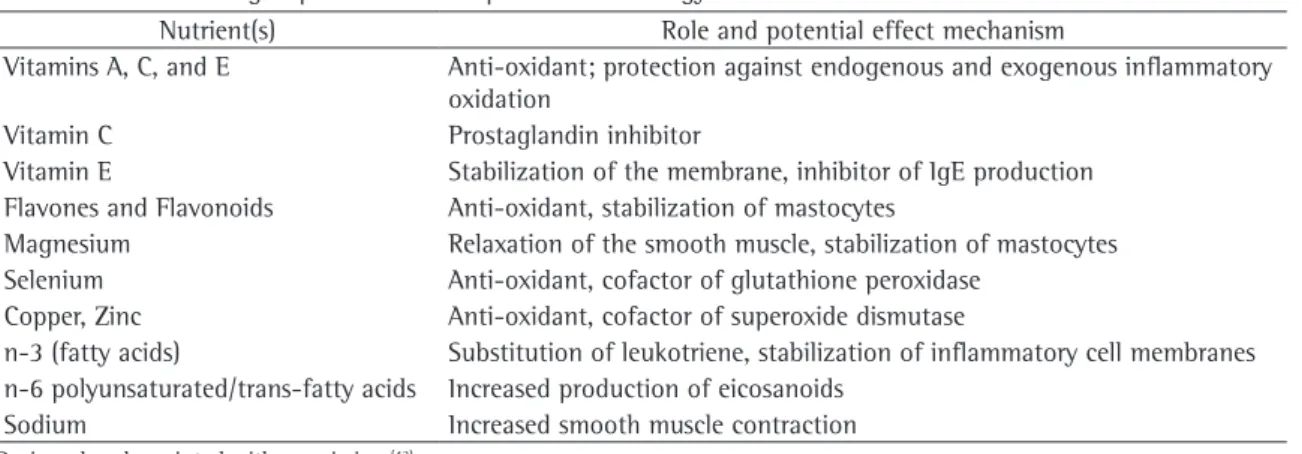
Changes in lifestyle offer a likely explanation for the increase in allergic diseases in recent decades. According to a cross-sectional study involving 1321 children in New Zealand, the consumption of fast food is related to the prevalence of asthma and allergy. After adjusting for lifestyle factors, including other diets and BMI variables, the authors found that the consumption of hamburger meat was a (dose-dependent) independent risk factor for wheezing. They did not observe any effect on atopy.(40) Table 1 summarizes the possible influences
on the development of asthma and allergy.
Calorie restriction
Epidemiological studies suggest a correlation between the appearance of asthma and nonallergic dietary factors, especially a high calorie diet. In a study involving 38 patients, there was significant increase in FEV1 and FVC in the calorie restriction group, compared to the control group. Dietary interventions, with weight loss programs, can be Vitamin C, extensively investigated, has been
associated with a reduced risk of asthmain several cross-sectional and case-control studies,(32,33)
although a longitudinal study on the intake of vitamin C did not find any effect on the incidence of asthma.(37) In randomized trials, vitamin C, combined
with other anti-oxidants, revealed protection against ozone-induced bronchoconstriction.(32) However,
there is little conclusive evidence that vitamin C administered in isolation has any effect. It has been observed, however, that plasma and leukocyte vitamin C concentrations are significantly lower in individuals with asthma than in healthy individuals, and that there is an association between the dura-tion of asthma and plasma levels of vitamin C.(38)
The effects of vitamin E have been less studied. However, there is some evidence linking vitamin E to asthma,(32,33) indicating that, in adults, vitamin
E intake is inversely associated with allergic sensi-tization and IgE serum levels,(28) as well as with a
reduction in the incidence of asthma.(37) Similar to
vitamin C, vitamin E is effective when adminis-tered together with other anti-oxidants, protecting against the effects of ozone in asthma.(32,33) However,
arecent 6-week randomized clinical trial involving 72 patients with asthma and comparing vitamin E supplementation with the administration of a placebo did not reveal any clinical benefit.(27)
Carotenoids are potent dietary anti-oxidants that can protect against asthma, reducing oxidative damage. A low concentration of vitamin A is detected in various pediatric diseases. However, evidence of the effects of vitamin A and beta-carotene is also limited. Although some cross-sectional studies have
Table 1 - Nutrients or group of nutrients implied in the etiology of asthma and its effect mechanism. Nutrient(s) Role and potential effect mechanism
Vitamins A, C, and E Anti-oxidant; protection against endogenous and exogenous inflammatory oxidation
Vitamin C Prostaglandin inhibitor
Vitamin E Stabilization of the membrane, inhibitor of IgE production Flavones and Flavonoids Anti-oxidant, stabilization of mastocytes
Magnesium Relaxation of the smooth muscle, stabilization of mastocytes Selenium Anti-oxidant, cofactor of glutathione peroxidase
Copper, Zinc Anti-oxidant, cofactor of superoxide dismutase
n-3 (fatty acids) Substitution of leukotriene, stabilization of inflammatory cell membranes n-6 polyunsaturated/trans-fatty acids Increased production of eicosanoids
Sodium Increased smooth muscle contraction
tions. However, whether this environment alters the risk or phenotype of asthma remains unknown.(46)
Leptin, a pro-inflammatory cytokine produced by the adipose tissue, has been associated with asthma in children.(50) Recent literature implies a
pro-in-flammatory role for hypercholesterolemia. A study involving 188 children and adolescents revealed that serum cholesterol levels were higher in the indi-viduals with asthma than in the healthy indiindi-viduals, and that the patients with asthma were significantly more obese than were those without asthma. In that study, hypercholesterolemia and obesity, independ-ently, increased the probability of asthma.(51)
It is important to understand the mechanism of the relationship between obesity and asthma, since the prevalence of obesity is extremely high among children who live in urban environments, where the prevalence of asthma is particularly high.(52) In
schoolchildren and adolescents, BMI was found to be associated with airway hyperresponsiveness and atopy.(53) In the south of Brazil, a
cross-sec-tional study of adolescents revealed that obesity presented a positive association with the preva-lence and severity of asthma, predominantly among the girls.(54) Obesity is a strong predictive factor for
the recurrence of asthma in childhood.(55) In
addi-tion, over 75% of the patients who seek treatment for asthma in emergency rooms are overweight or obese.(56)
The study on the obesity-asthma relationship in large cohorts, in which self-reports are frequently used to define the diagnosis of asthma, is compli-cated by alterations in the pulmonary physiology caused by obesity, which can lead to dyspnea or other respiratory symptoms, but do not meet the physiological criteria accepted for asthma.(46)
The principal respiratory complications of obesity include increased demand for oxygen, increased respiratory effort, respiratory muscle inefficiency, and decreased respiratory compliance. Decreased functional residual capacity and expiratory reserve volume have been associated with peripheral alveolar closure, abnormalities in the ventilation-perfusion ratio, and hypoxemia, especially in the supine position.(57) Conventional respiratory
func-tion tests are little affected by obesity, except in extreme cases.(57,58) The principal circulatory
compli-cations are the greater total blood and lung volume, high cardiac index, and increased left ventricle end-diastolic pressure. Patients with obesity typically beneficial for specific patients. However, the impact
of a calorie-controlled diet on the signs and symp-toms of asthma, in the population in general, needs to be established.(41)
Nutritional status
In recent years, we have observed an increased number of eating errors, sedentary life style, and weight gain, concomitantly with an increase in accompanying diseases.(43,44) Obesity has become
a public health problem, in the United States and in several other countries, which includes the prevalence of overweight status in children and adolescents.(43) In Brazil, there is also a
progres-sive increase in obesity.(44) Various cross-sectional
studies have demonstrated that obesity is associated with asthma, respiratory symptoms, and bronchial hyperresponsiveness.(45,46) Nevertheless, the
posi-tive association observed between high BMI and asthma was not significant for atopy and total serum eosinophil counts.(47) There is still
consider-able discrepancy regarding the influence of obesity on the severity of asthma.(45,46) The relationship is
much stronger in females. In a cohort of 1000 indi-viduals, increased BMI was associated with asthma and atopy in women but not in men.(48) The findings
in 9552 participants in the European Community Respiratory Health Survey and in the Swiss Cohort Study on Air Pollution and Lung Disease in Adults corroborate the reports that the association between asthma and obesity is stronger in women than in men.(49)
The observation that weight loss improves asthma, and that obese rats present innate airway hyperresponsiveness and greater response to asthma trigger factors supports the relationship between obesity and asthma. Although the basis for this rela-tionship is unknown, it might result from common etiologies, co-morbidities, effects of obesity on lung volume, or adipokines.(45) Studies to elucidate
the genetic basis of asthma and obesity identified polymorphisms in specific regions of chromosomes 5q, 6p, 11q13, and 12q, which contain one or more genes that codify relevant receptors for asthma, inflammation, and metabolic disorders, including beta(2)-adrenergic ADRB2 and the glucocorticoid receptor gene NR3C1.(46)
complica-Asthma and obesity have significant impacts on public health, and the incidence of asthma has been associated with obesity. The fact that asthma and obesity present a significant association in some studies does not necessarily indicate a cause-and-effect relationship. The understanding of the mechanisms of this relationship can provide the cornerstone for new therapeutic strategies directed at the population at risk, simultaneous to alternative means of improving the control of the disease and the quality of life of the patients. Therefore, lifestyle interventions, in which the role that dietary inter-vention plays in reducing the incidence of asthma and atopy is evaluated, should be undertaken.
References
1. Heinrich J, Hoelscher B, Frye C, Meyer I, Wjst M, Wichmann HE. Trends in prevalence of atopic diseases and allergic sensitization in children in Eastern Germany. Eur Respir J. 2002;19(6):1040-6.
2. Stick SM, Burton PR, Gurrin L, Sly PD, LeSouef PN. Effects of maternal smoking during pregnancy and a family history of asthma on respiratory function in newborn infants. Lancet. 1996;348(9034):1060-4.
3. Salam MT, Li YF, Langholz B, Gilliland FD. Maternal fish consumption during pregnancy and risk of early childhood asthma. J Asthma. 2005;42(6):513-8.
4. Kramer MS. Maternal antigen avoidance during pregnancy for preventing atopic disease in infants of women at high risk. Cochrane Database Syst Rev. 2000;(2):CD000133. 5. Oddy WH, Holt PG, Sly PD, Read AW, Landau LI, Stanley FJ,
et al. Association between breast feeding and asthma in 6 year old children: findings of prospective birth cohort study. BMJ. 1999;319(7213):815-9.
6. Chulada PC, Arbes SJ, Dunson D, Zeldin DC. Breast-feeding and the prevalence of asthma and wheeze in children: analyses from the Third National Health and Nutrition Examination Survey, 1988-1994. J Allergy Clin Immunol. 2003;111(2):328-36
7. Kull I, Wickman M, Lilja G, Nordvall SL, Pershagen G. Breast feeding and allergic diseases in infants-a prospective birth cohort study. Arch Dis Child. 2002;87(6):478-81.
8. Kull I, Almqvist C, Lilja G, Pershagen G, Wickman M. Breast-feeding reduces the risk of asthma during the first 4 years of life. J Allergy Clin Immunol. 2004;114(4):755-60.
9. Bergmann RL, Diepgen TL, Kuss O, Bergmann KE, Kujat J, Dudenhausen JW, et al. Breastfeeding duration is a risk factor for atopic eczema. Clin Exp Allergy. 2002;32(2):205-9. 10. Sears MR, Greene JM, Willan AR, Taylor DR, Flannery
EM, Cowan JO, et al. Long-term relation between breastfeeding and development of atopy and asthma in children and young adults: a longitudinal study. Lancet. 2002;360(9337):901-7.
11. Hide DW, Guyer BM. Clinical manifestations of allergy related to breast and cows’ milk feeding. Pediatrics. 1985;76(6):973-5.
develop hypoventilation and sleep apnea syndrome, with airway responsiveness attenuated by hypoxia, and hypercapnia. The consequences are hypoxemia, pulmonary hypertension, and progressive inca-pacitation. Obese patients more typically present dyspnea symptoms and lower exercise capacity, both of which have a significant impact on quality of life. In addition to the cardiopulmonary effects of obesity, loss of muscle mass, greater joint pain, and skin friction are major determinants of reduced exercise capacity. Weight reduction and physical activity are effective means of reverting these altera-tions.(57) The diagnosis and appropriate management
of exercise-induced bronchospasm can improve the performance of physical activities, facilitate weight loss, breaking the vicious cycle.(58)
Final considerations
In recent years, the nutritional aspect has come to represent an important conditioning factor for many chronic cardiovascular, gastrointestinal, and pulmonary diseases. Many published studies docu-ment specific airway inflammatory abnormalities in individuals with mild to moderate asthma, and the inflammatory state is frequently associated with greater production of oxygen free radicals. This evidence has stimulated many researchers to suppose that oxidative stress can be an important pathogenic factor and a determinant of the progression of chronic diseases. In addition, the decrease in oxidant insults to the lung can be modified with supplementary anti-oxidant therapy. Dietary supplementation could, in conjunction with the pharmacological strategies currently in use, reduce oxidative stress, minimize the appearance of asthma symptoms, and constitute a new approach in asthma management.
pulmonary function in individuals diagnosed with asthma or COPD. Eur J Clin Nutr. 2006;60(8):991-9.
31. Geronikaki AA, Gavalas AM. Antioxidants and inflammatory disease: synthetic and natural antioxidants with anti-inflammatory activity. Comb Chem High Throughput Screen. 2006;9(6):425-42
32. Fogarty A, Britton J. The role of diet in the aetiology of asthma. Clin Exp Allergy. 2000;30(5):615-27.
33. Smit HA. Chronic obstructive pulmonary disease, asthma and protective effects of food intake: from hypothesis to evidence. Respir Res. 2001;2(5):261-4.
34. Romieu I, Varraso R, Avenel V, Leynaert B, Kauffmann F, Clavel-Chapelon F. Fruit and vegetable intakes and asthma in the E3N study. Thorax. 2006;61(3):209-15.
35. Garcia V, Arts IC, Sterne JA, Thompson RL, Shaheen SO. Dietary intake of flavonoids and asthma in adults. Eur Respir J. 2005;26(3):449-52.
36. Njå F, Nystad W, Lødrup Carlsen KC, Hetlevik O, Carlsen KH. Effects of early intake of fruit or vegetables in relation to later asthma and allergic sensitization in school-age children. Acta Paediatr. 2005;94(2):147-54.
37. Troisi RJ, Willett WC, Weiss ST, Trichopoulos D, Rosner B, Speizer FE. A prospective study of diet and adult-onset asthma. Am J Respir Crit Care Med. 1995;151(5):1401-8. 38. Shidfar F, Baghai N, Keshavarz A, Ameri A, Shidfar S.
Comparison of plasma and leukocyte vitamin C status between asthmatic and healthy subjects. East Mediterr Health J. 2005;11(1-2):87-95.
39. Arora P, Kumar V, Batra S. Vitamin A status in children with asthma. Pediatr Allergy Immunol. 2002;13(3):223-6. 40. Wickens K, Barry D, Friezema A, Rhodius R, Bone N, Purdie
G, Crane J. Fast foods - are they a risk factor for asthma? Allergy. 2005;60(12):1537-41.
41. Cheng J, Pan T, Ye GH, Liu Q. Calorie controlled diet for chronic asthma. Cochrane Database Syst Rev. 2005;(3):CD004674. 42. McKeever TM, Britton J. Diet and Asthma. Am J Respir Crit
Care Med. 2004;170(7):725-9.
43. Jackson RJ. The impact of the built environment on health: an emerging field. Am J Public Health. 2003;93(9):1382-4. 44. Mello E, Luft V, Meyer F. Obesidade Infantil:como podemos
ser eficazes? J Pediatr (Rio J). 2004;80(3):173-82
45. Shore SA. Obesity and asthma: cause for concern. Curr Opin Pharmacol. 2006;6(3):230-6.
46. Beuther DA, Weiss ST, Sutherland ER. Obesity and asthma. Am J Respir Crit Care Med. 2006;174(2):112-9.
47. von Mutius E, Schwartz J, Neas LM, Dockery D, Weiss ST. Relation of body mass index to asthma and atopy in children: the National Health and Nutrition Examination
Study III. Thorax. 2001;56(11):835-8.
48. Hancox RJ, Milne BJ, Poulton R, Taylor DR, Greene JM, McLachlan CR, et al. Sex differences in the relation between body mass index and asthma and atopy in a birth cohort. Am J Respir Crit Care Med. 2004;171(5):440-5.
49. Chinn S, Downs SH, Anto JM, Gerbase MW, Leynaert B, de Marco R, et al. Incidence of asthma and net change in symptoms in relation to changes in obesity. Eur Respir J. 2006;28(4):763-71.
50. Sood A, Ford ES, Camargo CA. Association between leptin and asthma in adults. Thorax. 2006;61(4):300-5.
51. Al-Shawwa B, Al-Huniti N, Titus G, Abu-Hasan M. Hypercholesterolemia is a potential risk factor for asthma. J Asthma. 2006;43(3):231-3.
12. Burgess SW, Dakin CJ, O’Callaghan MJ. Breastfeeding does not increase the risk of asthma at 14 years. Pediatrics. 2006;117(4):787-92.
13. Friedman NJ, Zeiger RS. The role of breast-feeding in the development of allergies and asthma. J Allergy Clin Immunol. 2005;115(6):1238-48
14. Casas R, Böttcher MF, Duchén K, Björkstén B. Detection of IgA antibodies to cat, beta-lactoglobulin, and ovalbumin allergens in human milk. J Allergy Clin Immunol. 2000;105(6 Pt 1):1236-40.
15. Savilahti E, Siltanen M, Kajosaari M, Vaarala O, Saarinen KM. IgA antibodies, TGF-beta1 and -beta2, and soluble CD14 in the colostrum and development of atopy by age 4. Pediatr Res. 2005;58(6):1300-5
16. August A, Mueller C, Weaver V, Polanco TA, Walsh ER, Cantorna MT. Nutrients, nuclear receptors, inflammation, immunity lipids, PPAR, and allergic asthma. J Nutr. 2006;136(3):695-9.
17. Kalliomäki M, Ouwehand A, Arvilommi H, Kero P, Isolauri E. Transforming growth factor-beta in breast milk: a potential regulator of atopic disease at an early age. J Allergy Clin Immunol. 1999;104(6):1251-7.
18. Osterlund P, Smedberg T, Hakulinen A, Heikkilä H, Järvinen KM. Eosinophil cationic protein in human milk is associated with development of cow’s milk allergy and atopic eczema in breast-fed infants. Pediatr Res. 2004;55(2):296-301. 19. Cant A, Marsden RA, Kilshaw PJ. Egg and cows’ milk
hypersensitivity in exclusively breast fed infants with eczema, and detection of egg protein in breast milk. Br Med J (Clin Res Ed). 1985;291(6500):932-5.
20. Troncone R, Scarcella A, Donatiello A, Cannataro P, Tarabuso A, Auricchio S. Passage of gliadin into human breast milk. Acta Paediatr Scand. 1987;76(3):453-6.
21. Saarinen KM, Juntunen-Backman K, Järvenpää AL, Klemetti P, Kuitunen P, Lope L, et al. Breast-feeding and the development of cows’ milk protein allergy. Adv Exp Med Biol. 2000;(478):121-30.
22. Akobeng AK, Heller RF. Assessing the population impact of low rates of breast- feeding on asthma, coeliac disease and obesity: the use of a new statistical method. Arch Dis Child. 2006;92(6):483-5.
23. Lowe AJ, Carlin JB, Bennett CM, Abramson MJ, Hosking CS, Hill DJ, Dharmage SC. Atopic disease and breast-feeding--cause or consequence? J Allergy Clin Immunol. 2006;117(3):682-7.
24. Kelly FJ. Vitamins and respiratory disease: antioxidant micronutrients in pulmonary health and disease. Proc Nutr Soc. 2005;64(4):510-26.
25. Devereux G, Seaton A. Diet as a risk factor for atopy and asthma. J Allergy Clin Immunol. 2005;115(6):1109-17. 26. Mickleborough TD, Lindley MR, Ionescu AA, Fly AD. Protective
effect of fish oil supplementation on exercise-induced bronchoconstriction in asthma. Chest. 2006;129(1):39-49. 27. Pearson PJ, Lewis SA, Britton J, Fogarty A. Vitamin E
supplements in asthma: a parallel group randomised placebo controlled trial. Thorax. 2004;59(8):652-6.
28. Fogarty A, Lewis S, Weiss S, Britton J. Dietary vitamin E, IgE concentrations and atopy. Lancet. 2000;356(9241):1573-4. 29. Patel BD, Welch AA, Bingham SA, Luben RN, Day NE, Khaw
KT, et al. Dietary antioxidants and asthma in adults. Thorax. 2006;61(5):388-93.
adolescence: role of obesity and age at the onset of puberty. Am J Respir Crit Care Med. 2004;170(1):78-85.
56. Thomson CC, Clark S, Camargo CA; MARC Investigators. Body mass index and asthma severity among adults presenting to the emergency department. Chest. 2003;124(3):795-802. 57. Parameswaran K, Todd DC, Soth M. Altered respiratory
physiology in obesity. Can Respir J. 2006;13(4):203-10. 58. Ulger Z, Demir E, Tanaç R, Göksen D, Gülen F, Darcan S,
et al. The effect of childhood obesity on respiratory function tests and airway hyperresponsiveness. Turk J Pediatr. 2006;48(1):43-50.
52. Luder E, Melnik TA, DiMaio M. Association of being overweight with greater asthma symptoms in inner city black and Hispanic children. J Pediatr. 1998;132(4):699-703. 53. Jang AS, Lee JH, Park SW, Shin MY, Kim DJ, Park CS. Severe
airway hyperresponsiveness in school-aged boys with a high body mass index. Korean J Intern Med. 2006;21(1):10-4. 54. Cassol VE, Rizzato TM, Teche SP, Basso DF, Centenaro DF,
Maldonado M, et al. Obesity and its relationship with asthma prevalence and severity in adolescents from southern Brazil. J Asthma. 2006;43(1):57-60.