TECHNICAL UNIVERSITY OF LISBON
Faculty of Veterinary Medicine
Risk assessment for Bluetongue Virus vectors occurrence based on
Geographical Information Systems and statistical modelling
Solange Almeida Pacheco
SUPERVISOR:
Prof. Dr. Klemens Fuchs
CO-SUPERVISOR: Prof. Dra. Yolanda Maria Vaz
2009
LISBON
CONSTITUTION OF THE JURY:Prof. Dr. Virgílio da Silva Almeida Prof. Dra. Yolanda Maria Vaz
Prof. Dra. Isabel Neto da Cunha Fonseca Prof. Dr. Klemens Fuchs
TECHNICAL UNIVERSITY OF LISBON
Faculty of Veterinary Medicine
Risk assessment for Bluetongue Virus vectors occurrence based on
Geographical Information Systems and statistical modelling
Solange Almeida Pacheco
DISSERTATION OF THE INTEGRATED MASTER IN VETERINARY MEDICINE
SUPERVISOR:
Prof. Dr. Klemens Fuchs
CO-SUPERVISOR: Prof. Dra. Yolanda Maria Vaz
2009
LISBON
CONSTITUTION OF THE JURY: Prof. Dr. Virgílio da Silva AlmeidaProf. Dra. Yolanda Maria Vaz
Prof. Dra. Isabel Neto da Cunha Fonseca Prof. Dr. Klemens Fuchs
i
DEDICATION
ii
ACKNOWLEDGEMENT
This dissertation is the most important project during my student career and it couldn’t be possible without many people’s effort.
First of all, I would like to thank my parent’s, my brother and boyfriend who always supported and encouraged me to go further.
I’m also grateful to Dr. Telmo Nunes for inspiring me into these new areas, to Eng. Hugo Martins and Dra. Filipa Baptista for all the patience on teaching Epidemiology, Geographical Information Systems and Statistics.
I greatly appreciated my supervisor Prof. Fuchs, one of the best teachers I’ve ever had and a great mentor. For him, and his lovely family, my special thanks for all the support in Austria, in the dissertation and in the overall process of adapting in to a new country.
I would like to express my gratitude to Dr. Johannes Hofrichter whom granted all the support in the statistics; Dr Angelika Loitsch and Peter Wagner who provided all the information on the Austrian surveillance system; Dr. Michael Schwarz for all the lessons and help with GIS material and all the team at the Austrian Agency for Health and Food Safety (AGES): Adelheid Hammer, Mag. Corina Schleicher, Mag. Karin Kepplinger, Mag. Sophie Narath, Mag. Tanja Strimitzer and Dr. Hans Peter Stüger who couldn’t be more kind. Without AGES’s acceptance and support my work wouldn’t be possible.
I also would like to thank my dear Prof. Yolanda Vaz for all the patience, knowledge and motivation during my studies.
A special thanks to all my friends who where always there when I needed them and never let me down.
iii
ABSTRACT
Risk assessment for Bluetongue virus vectors occurrence based on geographical Information Systems and statistical modeling
Bluetongue (BTD) is amongst the World Animal Health Organization (OIE) listed diseases due to its potential for rapid spread and serious economic impact on livestock. Because of its epidemiology, in the past, only Southern European countries were affected by the disease. However in the latter half of 2006 an unprecedented outbreak of Bluetongue virus (BTV)-8 occurred in North-western European countries.
To define potential regions that are at risk for BTD epidemics it’s essential to study the vector’s distribution and abundance. Thus, this study is concerned with the BTD vectors spread, mostly in Austria. The objective is to produce risk maps with the more suitable areas for the occurrence of the vectors, hence to support and conduct the process of preventing and controlling the BTD.
The introductory review gives an overview of the epidemiology of the disease with focus on the vectors, the recent outbreaks in North-western Europe and the importance of statistical modelling and Geographical Information Systems (GIS) in the process of prediction, prevention and control of BTD. The statistical analysis is based mainly on data from Austrian entomological surveillance system, weather stations and topographical information. A multiple linear regression model was fitted to the data to predict the occurrence of the BTV vectors and subsequently to create the risk maps for the whole country.
Despite the fact that the limited nature of the data does not allow precise estimation, in general, the models indicated that each vector has preferential areas to occur where they can be very abundant.
A more detailed analysis should be carried out with a multidisciplinary team including epidemiologists, biologists, meteorologists, entomologists, statisticians, among others. In this way the complexity of BTD epidemiology might be better understood, resulting in a more efficient process of prevention and control of this disease.
iv
RESUMO
Análise do risco da ocorrência de vectores da Língua Azul com base em Sistemas de Informação Geográfica e modelos estatísticos.
A Língua Azul (LA) está entre as doenças da lista da Organização Mundial de Saúde Animal (OIE) devido ao seu potencial de rápida disseminação e do grave impacto económico na pecuária. No passado, devido à sua epidemiologia, apenas os países do sul da Europa eram afectados pela doença. No entanto, no segundo semestre de 2006, um surto sem precedentes, de infecção pelo vírus da Língua Azul (BTV) serotipo 8, ocorreu em países do norte da Europa Ocidental.
Para definir as regiões em potencial risco de epidemias de LA é essencial o estudo da distribuição e abundância do vector. O presente estudo baseia-se assim na dispersão de vectores de febre catarral ovina na Áustria. O objectivo é a criação de mapas de risco com as áreas de preferência para esses vectores, no sentido de apoiar e conduzir o processo de prevenção e controle da doença.
A revisão bibliográfica introdutória, contém uma visão geral sobre a epidemiologia da doença com especial destaque para os vectores, para os recentes surtos no Norte da Europa Ocidental e para a importância da aplicação de modelos estatísticos e de Sistemas de Informação Geográfica (SIG) no processo de previsão, prevenção e controle da LA. A análise estatística baseia-se essencialmente nos dados do sistema de vigilância entomológica Austríaco, estações meteorológicas e da topografia do país. Os dados foram analisados com um modelo de regressão linear múltipla com o objectivo de prever a abundância dos vectores da LA e subsequentemente criar os mapas de risco para todo o país.
Apesar do carácter limitado dos dados não permitir uma estimativa precisa, em geral, os modelos indicaram que os vectores possuem áreas preferenciais nas quais podem atingir grande número.
Uma análise mais detalhada deve ser realizada por uma equipe multidisciplinar, incluindo epidemiologistas, biólogos, meteorologistas, entomologistas, estatísticos, entre outros. Desta forma, a complexidade da epidemiologia da LA poderá ser mais facilmente compreendida resultando numa maior eficiência na prevenção e controle da doença.
v
TABLE OF CONTENTS
Dedication ... i Acknowledgement ... ii Abstract ... iii Resumo ... iv 1 Training description ... 1 2 Introduction ... 3 3 Review ... 6 3.1 BTD epidemiology ... 6 3.1.1 Virus ... 63.1.2 Hosts and symptoms ... 6
3.1.2.1 Viraemia ... 7
3.1.2.2 Transmission between hosts ... 7
3.1.3 Culicoides ... 7
3.1.3.1 Distribution and sympatry ... 8
3.1.3.2 Life cycle ... 9
3.1.3.3 The age status of Culicoides female midges ... 10
3.1.3.4 Breeding habitat ... 11
3.1.3.5 Heliophily/ umbrophily ... 12
3.1.3.6 Endophilly/ exophilly, exophagy/endophagy ... 12
3.1.3.7 Longevity ... 13
3.1.3.8 Susceptibility to infection and transmission... 13
3.1.3.9 BTV and Culicoides ... 14
3.1.3.10 Competence of Culicoides ... 15
3.1.3.11 Prove vector status ... 15
3.2 History ... 15
vi
3.2.2 Origin of the outbreak... 17
3.2.3 Austrian situation ... 18
3.3 BTD introduction, establishment and spread ... 20
3.4 Prevention and control ... 20
3.4.1 Surveillance ... 21 3.4.1.1 Capture of Culicoides ... 23 3.4.1.2 Identification of Culicoides ... 24 3.5 Risk factors ... 24 3.5.1 Temperature ... 25 3.5.2 Precipitation ... 26 3.5.3 Wind ... 26 3.5.4 Aridity ... 27 3.5.5 Slope ... 27
3.5.6 Altitude and latitude ... 27
3.5.7 Moisture, Normalized Difference Vegetation Index (NDVI) and Middle Infrared reflectance (MIR) ... 28
3.6 Modelling ... 28
3.7 GIS ... 29
3.8 Risk maps ... 29
4 Material and methods ... 30
4.1 Data and software ... 30
4.2 Data sources and collection ... 30
4.2.1 Data sources ... 30
4.2.2 Data collection ... 30
4.3 Data processing ... 32
4.3.1.1 Entomological surveillance data ... 32
4.3.1.2 Weather stations data ... 32
vii
4.3.1.4 Altitude ... 33
4.3.1.5 NDVI ... 33
4.3.1.6 Land cover ... 33
4.4 Statistical modelling ... 34
4.5 Construction of the risk maps ... 36
5 Results ... 38
5.1 Descriptive statistics of the data from the Surveillance System ... 38
5.2 Statistical modelling analysis ... 42
5.2.1.1 Monthly analysis ... 42
5.2.1.2 Seasons analysis ... 48
5.3 Risk maps ... 52
5.3.1 Monthly analysis ... 52
5.3.1.1 Monthly risk maps for Obsoletus complex ... 52
5.3.1.2 Monthly risk maps for Pulicaris complex ... 57
5.3.2 Season analysis ... 61
5.3.2.1 Season risk map for Obsoletus complex ... 61
5.3.2.2 Season risk map for Pulicaris complex ... 62
6 Discussion ... 63
6.1 Occurrence of Obsoletus and Pulicaris complexes ... 63
6.2 Significant variables for the Obsoletus and Pulicaris complexes in Austria in the study period ... 63
6.2.1 Monthly analysis ... 63
6.2.2 Season analysis ... 65
6.3 Geographical distribution of Obsoletus and Pulicaris complexes in Austria in the study period ... 66
6.3.1 Monthly risk maps ... 66
6.3.2 Season risk maps ... 67
viii
6.5 Complexity of BTD ... 68
7 Conclusion ... 69
7.1 Suggestions for the future ... 70
ix
LIST OF FIGURES
Figure 1: The Culicoides life cycle... 9
Figure 2: Gonotrophic stages of Culicoides females. ... 10
Figure 3: Bluetongue outbreaks in The Netherlands, Belgium, Germany and France. ... 16
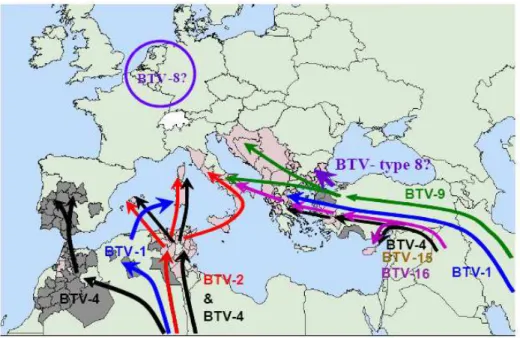
Figure 4: Map of the possible routes of introduction of the different BTV serotypes isolated in Europe since 1998. ... 17
Figure 5: BTV-8 outbreak in Schärding bordering Germany... 18
Figure 6: Distribution of BTV serotypes and vector species worldwide. ... 19
Figure 7: Restricted zones and the distribution of each serotype in Europe. ... 19
Figure 8: Map representing the Austrian surveillance system with the national grid, the locations of the traps and the weather forecast stations in each Province. ... 31
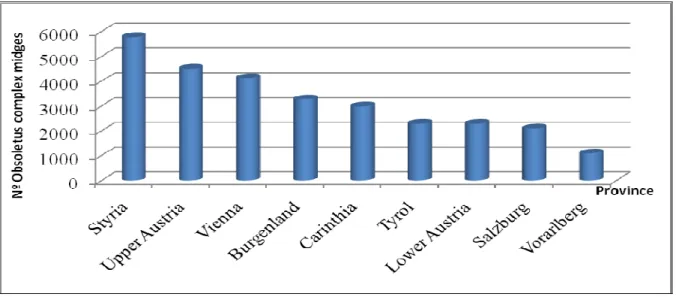
Figure 9: Percentages of midges from the Obsoletus (on the left side) and Pulicaris complexes (on the right side) trapped in each Austrian Province. ... 39
Figure 10: Average of the amount of vectors from the Obsoletus complex by sample in each province. ... 40
Figure 11: Average of the number of vectors from the Pulicaris complex by sample, in each province. ... 40
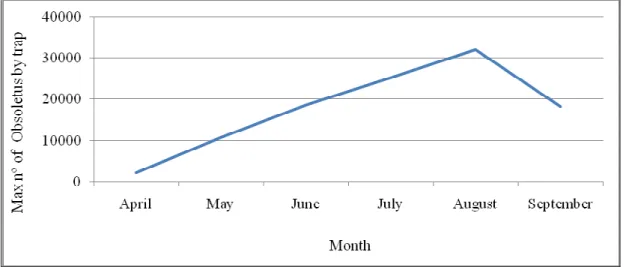
Figure 12: Evolution of the maximum value by month along the study period for Obsoletus complex. ... 41
Figure 13: Evolution of the maximum value by month along the study period for Pulicaris complex. ... 41
Figure 14: Examples of a plot to check for linearity where the red line is close to a X=0 line. ... 46
Figure 15: Examples of a plot to check for homocedasticity where the values are approximately close to a horizontal line. ... 47
Figure 16: Example of one of the QQ plots showing how close the residuals (represented by the points) fit a normal distribution (represented by the line in the graph). ... 47
Figure 17: Example of a plot to check for outliers showing that there are no points that lay outside the Cook’s distance line. ... 48
Figure 18: Examples of plots to check for linearity (18a) and outliers (18b). ... 51
Figure 19: Risk maps for April with the expected amount of midges trapped from the Obsoletus complex (19a), and the respective significant variables (19b-d). ... 52
Figure 20: Risk maps for May with the expected amount of midges trapped from the Obsoletus complex (20a), and the respective significant variables (20b-c). ... 53
x
Figure 21: Risk maps for June with the expected amount of midges trapped from the Obsoletus complex (21a), and the respective significant variables (21b-e). ... 54 Figure 22: Risk maps for July with the expected amount of midges trapped from the Obsoletus complex (22a), and the respective significant variable (22b). ... 55 Figure 23: Risk maps for August with the expected amount of midges trapped from the Obsoletus complex (23a), and the respective significant variables (23b-c). ... 55 Figure 24: Risk maps for September with the expected amount of midges trapped from the Obsoletus complex (24a), and the respective significant variables (24b-e). ... 56 Figure 25: Risk maps for April with the expected amount of midges trapped from the Pulicaris complex (25a), and the respective significant variables (25b-d). ... 57 Figure 26: Risk maps for June with the expected amount of midges trapped from the Pulicaris complex (26a), and the respective significant variables (26b-f). ... 58 Figure 27: Risk maps for July with the expected amount of midges trapped from the Pulicaris complex (27a), and the respective significant variables (27b-d). ... 59 Figure 28: Risk maps for August with the expected amount of midges trapped from the Pulicaris complex (28a), and the respective significant variables (28b-d). ... 60 Figure 29: Risk maps for September with the expected amount of midges trapped from the Pulicaris complex (29a), and the respective significant variables (29b-c). ... 60 Figure 30: Risk maps for the Obsoletus complex for each season. ... 61 Figure 31: Risk maps for the Pulicaris complex for each season. ... 62
xi
LIST OF TABLES
Table 1: Variables in the datasets. ... 33
Table 2: Variables in the beginning of the model reduction and their type in the statistical analysis program. ... 35
Table 3: Number of traps and samples by Province ... 38
Table 4: Number of BTV vectors trapped from April to September 2008 and the correspondent percentages. ... 38
Table 5: Number of Culicoides spp., Obsoletus and Pulicaris complexes trapped during all the study period in each Province. ... 39
Table 6: Significant variables from April to September... 42
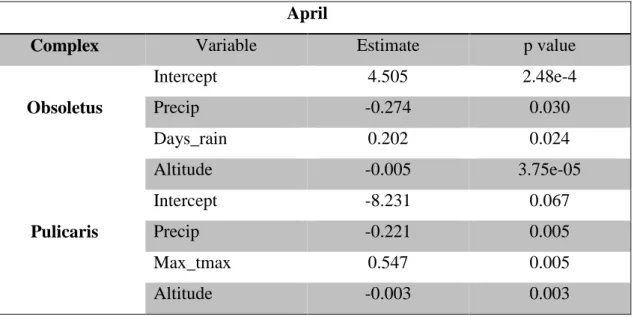
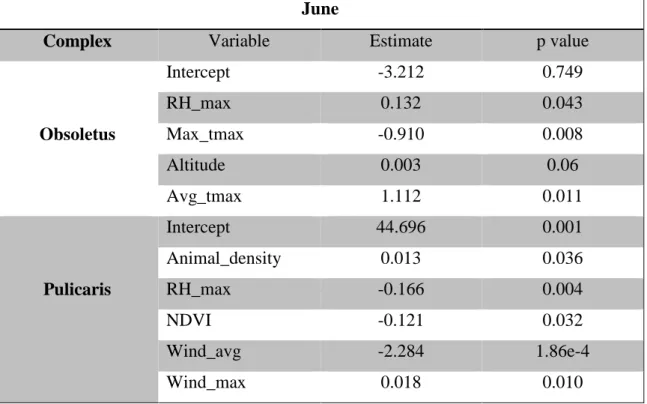
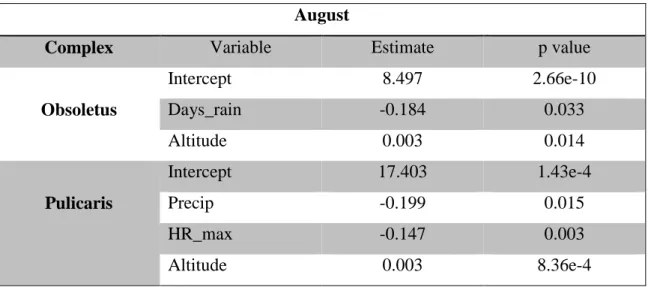
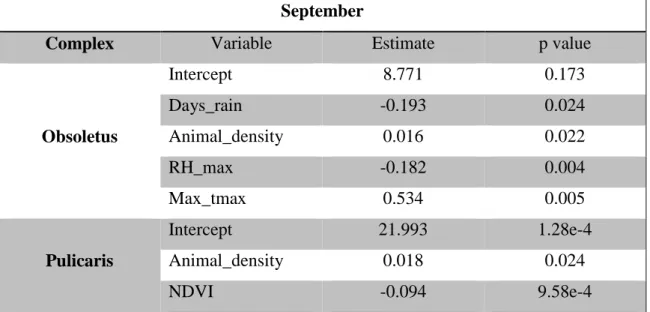
Table 7: R outputs with the significant variables for April for each complex ... 43
Table 8: R outputs with the significant variables for May for each complex ... 43
Table 9: R outputs with the significant variables for June for each complex ... 44
Table 10: R outputs with the significant variables for July for each complex ... 44
Table 11: R outputs with the significant variables for August for each complex ... 45
Table 12: R outputs with the significant variables for September for each complex ... 46
Table 13: Significant variables for the Spring and Summer. ... 48
Table 14: R outputs with the significant variables for the Obsoletus complex for each season. ... 49
Table 15: R outputs with the significant variables for the Pulicaris complex for each season. 50 Equation 1: Formula of the multiple linear regression model. ... 35
xii
ABBREVIATIONS
AGES Austrian Agency for Health and Food Safety AHSV African horse sickness virus
AKAV Akabane virus
BIC Bayesian information criteria
BTD Bluetongue
BTV Bluetongue virus
BTV-8 Bluetongue virus serotype 8 BTV+ Bluetongue virus positive
CGIAR-CSI Consultative Group for International Agriculture Research - Consortium for Spatial Information
C. Culicoides
DE Digital elevation
DEM Digital Elevation Model
EC European Commission
EEV Equine encephalitis virus
EFSA European Food Safety Authority EHDV Epizootic haemorrhagic disease virus EIP Extrinsic incubation period
ESRI Environmental Systems Research Institute
EU European Union
FMV Faculdade de Medicina Veterinária GIS Geographical Information Systems IAH Institute for Animal Health
LST Land Surface temperature
MHFY Ministry of Health, Family and Youth MIR Middle infra-red reflectance
MS Member State
NDVI Normalized Difference Vegetation Index
NOAA-AVHRR
National Oceanic and Atmospheric Administration - Advanced Very High Resolution Radiometer
OIE World Animal Health Organization PCR Polymerase chain reaction
xiii
QQ Quantile plots
RH Relative humidity
spp The specific names are not specified
ss sensu stricto
TAIR Temperature of the air
UTL Universidade Técnica de Lisboa
WAHID World Animal Health Information Database
1
1
TRAINING DESCRIPTION
First part: Portugal
The first part of my training was developed between the 1st October and the 20th of February 2008/2009, in the unit of Epidemiology/Risk Analysis in the Faculty of Veterinary Medicine (FMV) in the Technical University of Lisbon (UTL). During this stage the team, constituted by Dr. Telmo Nunes, Dr. Filipa Baptista and Eng. Hugo Martins introduced me to the following contents:
• epidemiology;
• statistics: including the statistical analysis software SAS®;
• risk analysis;
• Geographical Information Systems (GIS): including ArcGis® and gvSIG.
All of these subjects were learned with theoretical presentations followed by practical exercises.
Second part: Austria
Between the 1st of March and the 28th of May, I worked at the Austrian Agency for Health and Food Safety (AGES) in Graz under Prof. Dr. Klemens Fuchs supervision. This agency includes several departments with various areas of expertise including food inspection, bacteriology and serology, veterinary medicine and, under Prof. Dr. Klemens Fuchs responsibility, data collection, statistics and risk assessment.
The main goal of the ERASMUS experience was to explore a subject, in a useful way for the agency, and at the same time to achieve knowledge about new areas of interest in a different country, thus, with different perspectives and methodologies.
During this period I did several activities including:
• meetings with Prof. Dr Klemens Fuchs (supervisor/ statistician), Dr Johannes Hofrichter (statistician), Dr Angelika Loitsch (veterinary of AGES at Mödling) and Peter Wagner (Chief Veterinary Officer from Styria) to choose the theme of the dissertation and how to explore the data available;
• selecting the data and its sources;
• gather the data;
• data processing;
2 I also attended the following courses:
• “Introduction to R” from 2nd to 12th March, by Dr. Johannes Hofrichter;
• “Introduction to Geographical Information Systems I”, on 13th March, by M.S. Michael Schwarz;
• “Introduction to Geographical Information Systems II- practice with gvSIG” on 13th March, by MS Michael Schwarz;
• “Biostatistics I - Descriptive Statistics”, on 17th April, by Prof. Dr. Klemens Fuchs;
3
2
INTRODUCTION
The Bluetongue disease (BTD) is an arthropod-borne viral disease transmitted by different species of Culicoides insects in a range of ecosystems (Wittmann, Mellor & Baylis, 2001). Because of its economical impact on livestock, BTD is included by The World Organisation for Animal Health (OIE) in the list of immediate reporting diseases and the World Animal Health Information Database - WAHID (World Organisation for Animal Health [OIE], 2008a). This means it has the potential for very serious and rapid spread, irrespective of national borders, and is capable of serious socio-economic consequences that are of major importance in the international trade of animals and animal products (Tatem et al., 2003). Due to the important role of the vector in Bluetongue Virus (BTV) epidemics, the vast majority of the studies on BTD epidemiology incorporate its capture and identification for further knowledge on its competence, abundance and distribution (Wittmann et al., 2001). This study assess the risk of BTD considering that the entrance, maintenance and abundance of the vector may provide a measure of disease risk before the outbreaks and also target control measures in periods of peak vector activity.
BTD is endemic in the African continent and some areas of Southern Europe, especially in the Mediterranean basin. However, in 2006, while multiple outbreaks of the BTV continued to occur in Southern Europe, unprecedented outbreaks of the BTV serotype 8 (BTV-8) affected five countries in North-Western Europe (European Food Safety Authority [EFSA], 2007a). BTD, which up to then was thought to be limited to regions between latitudes 35° South and 40° North, suddenly appeared at latitudes of more than 50° North (Belgium, Germany, the Netherlands, France and Luxembourg) and has presently affected most European countries (OIE, 2002). Due to its geographical position, Austria, mainly the provinces bordering German areas already affected, was seriously under the threat of a new outbreak.
In June, 2007, Austrian Ministry of Health, Family and Youth (MHFY), aware of BTD spread and impact, initiated the first entomological surveillance programme in the country (Sehnal, Schweige, Schindler, Anderle & Schneemann, 2008). The findings from this program provide a basis for the understanding of Culicoides (C.) temporal distribution and abundance.
The present work draws from the awareness of the impact of several parameters in vectors ecology, which cannot be discarded, and the consideration of important suggestions concerning BTD ecology as follows.
According with Meiswinkel and his colleagues (2008a) it is now known that the Culicoides fauna, endemic to Northern Europe, harbours multiple vectors of BTV. Culicoides transmit a
4
series of globally important pathogens besides BTV and are doing so across an ever-widening geographic range, so there is an urgent and increasing need to identify species with absolute precision.
To enter, spread and establish in a new area, a midge must be active. Flight activity is influenced by a series of edaphic, topographic and climatic factor like temperature, luminosity, humidity and wind speed, amongst others. The length of the period of flight activity is determined by the interrelationships of these factors (EFSA, 2007c). Even though all Culicoides species share the same basic habitat requirements, i.e. presence of host for blood-meals and breeding sites for egg and larval development, they differ on their life-history characteristics, and in turn, the extent to which their distribution and abundance is affected by environmental factors (Mellor, Boorman & Baylis, 2000).
Predictive risk maps for BTD derived entirely from distribution data for one species exclude extensive regions at risk of transmission via novel vector species. A full examination of the relative role of different vectors and their climatic requirements, demands the development of models of species abundance rather than presence, based on data collected regularly throughout outbreak periods. The distribution and abundance of these species should be re-modelled using surveillance data from current European Union (EU) project to a local and national level (Purse et al., 2004b). The major issues that have impeded efforts to reduce the impact of BTV on animal health and the economics of animal industries continue to be the accurate prediction of regions with high risk for BTV transmission to livestock; and, within these regions, the prediction of temporal periods of risk before a BTD outbreak. The analysis of spatial information with GIS techniques may identify high risk areas for BTD, in which might be possible, with proper prevention and control measure, to avoid that it becomes endemic (Tabachnick, 2004).
The main goal of this dissertation is to find areas that are more suitable for the main BTV vectors in Austria. According with the results of the entomological program, Obsoletus and Pulicaris complexes are the main vectors captured in the country. The combination of this information with statistical modelling and GIS techniques allowed the creation of risk maps which can help to predict BTV vectors occurrence and abundance. Aiming to improve disease surveillance and control methods, risk maps might give precious help by providing a basis for targeting of financial and monitoring efforts to pre-defined areas.
On the “Review” (chapter 3) there is a brief overview over BTD epidemiology with a special concern about its vectors (3.1.3). On chapter 3.2 the BTD history is developed including the outbreak in North-western Europe (3.2.1), with the Austrian situation in detail (3.2.3). BTD prevention and control comes on chapter (3.4) specially focusing on surveillance strategies
5
(3.4.1). The risk factors for Culicoides come in a separated chapter (3.5), considering its importance to understand the introduction, establishment and spread of BTV vectors. In the end of the review there is a brief explanation about the modelling process (3.6) and GIS technologies (3.7) to achieve the risk maps (3.8), which will be fully explained later in the “Material and methods” (4). In the previous chapter an explanation of the whole building process of this work is presented starting with the selection of the data sources (4.2.1), collection (4.2.2) and processing (4.3); followed by the statistical modelling (4.4) to achieve the risk maps (4.5). The “Results” (5) and “Discussion” (6) follow the same order described before. The conclusions are presented on chapter 7.
6
3
REVIEW
3.1 BTD epidemiology
BTD is a vector borne viral infection transmitted to ruminants by species of Culicoides insects.
3.1.1 Virus
BTV is an Orbivirus belonging to the family Reoviridae with 70 µm size and 24 known serotypes (Mehlhorn et al., 2007).
The distribution of the BTV has been described by Tabachnick, Mellor & Standfast (1992) and is limited to geographic areas with competent vector species. Vectors of BTV elsewhere in the world are known to transmit also other viral pathogens, such as African horse sickness virus (AHSV), Akabane virus (AKAV), Epizootic haemorrhagic disease virus (EHDV) and Equine encephalitis virus (EEV) (Mellor & Leake, 2000).
3.1.2 Hosts and symptoms
According with Barnard (1997) all ruminants are probably susceptible to BTV infection. BTD affects a wide range of species including: cattle, sheep, goats, dromedaries and wild ruminants. However the incidence of clinical disease varies by serotype, strain and host specie (Wilson & Mellor, 2008).
BTD can induce in sheep cyanotic blue tongue due to oedema in the pharyngeal cavity and food aspiration into the respiratory tract. After a mean incubation period of 6-9 days the symptoms described include fever with approximately 41 ºC, severe nasal discharge, lacrimation, facial oedema and nasal excoriations. Typical lesions appear involving coronitis and inflammation of the whole claw region. Foot is hot to touch and movements of the animal are stiff. The lymph nodes are swollen, oedematous and hemorrhagic. In the whole mouth appear ulcers and haemorrhagic lesions complicated with bacterial infections. There are also oedemas at the udder, in the lung and trachea. In severe cases asphyxiation might occur and also leucopenia, hyperaemia, lethargy, anorexia, torticollis and possibly death (Mehlhorn et al., 2007).
In cattle, the disease is usually subclinical, although clinical signs appear to occur often during the initial introduction of BTV into a naïve population (Parsonson, 1990). Even subclinical infection may carry significant associated costs, including loss of body condition, reduced milk yield, infertility and abortion (Osburn, 1994), while indirect costs are largely
7
created by the export restrictions and surveillance requirements imposed to limit the spread of the virus (Hoogendam, 2007).
Culicoides are opportunistic also feeding upon birds and mammals, but they are strongly
attracted to large mammals. The importance of the role of wildlife species remains to be assessed. Studies in North America suggest that wild ruminants may play a part in BTD epidemiology depending upon the size of the populations and their levels of contact with local domestic livestock. The part played by other wildlife species (e.g. carnivores) in BTV transmission cycle, also remains to be assessed (EFSA, 2007b). Nevertheless the vast majority feed upon cattle and sheep varying the body region from host to host (EFSA, 2008a).
3.1.2.1 Viraemia
Ruminants naturally infected with one serotype of BTV have a solid, lifelong immunity to the homologous serotype, but only partial or no protection against other (heterologous) serotypes. This prolonged blood infection of ruminants increases the likelihood that feeding insect vectors will acquire infection, and prolonged infection might also complicate the safe movement of animals between BTV-free and infected regions. The incubation period following natural BTV infection of sheep is estimated at 7 days, but can range between 2-15 days. In sheep the viraemia rarely persists for longer than 14 days and is usually present for 6 to 8 days. In cattle is typically prolonged to about 50 days (Verwoerd and Erasmus, 2004).
3.1.2.2 Transmission between hosts
BTD is not contagious and very little virus are found in the secretions and excretions of infected animals. One exception is semen from viraemic bulls which can infect cows (Bowen, Howard & Pickett, 1985). Transmission of BTV from dam to progeny can occur by transplacental transfer and by oral infection of neonates by infected milk or colostrums (EFSA, 2008a), but their role, together with embryo transfer, seems to be negligible.
3.1.3 Culicoides
Ceratopogonidae are small biting midges (Insecta: Diptera) comprising about 6000 species in
110 genera (Mullen, 2009). In four genera, including Culicoides there are hematophagous females (Kampen & Kiel, 2006). Within Culicoides, 96% are obligatory blood suckers in mammals (Mellor et al., 2000). Fifty species are known to act as vectors for human and animal diseases, approximately 30 Culicoides species act as vectors for BTV worldwide. Adult females of Culicoides species are the main vectors. According with Mehlhorn and his colleagues (2007), seven species were proven as true vectors while, in experiments, 17 other species were found to be suitable hosts.
8
The subgenus Avaritia include the Obsoletus complex, the C. chiopterus, C. dewulfi and C.
imicola (EFSA, 2008a), whereas C. pulicaris, C. lupicaris and C. punctatus belong to the
subgenus Culicoides (Meiswinkel et al., 2008b).
3.1.3.1 Distribution and sympatry
BTV vectors are distributed across the globe from the tropics to the tundra and from sea level to 200 m (in Tibet). Approximately 120 species of Culicoides occur in Europe; this diversity declines markedly towards the Arctic, with only about 25 species living beyond the 60º latitude.
In the past, C. imicola was by far the most important BTV vector specie. In Europe, C.
imicola, C. obsoletus, C. scoticus, C. dewulfi, C. pulicaris and, very recently, C. chiopterus
have been implicated in BTV transmission (Meiswinkel, van Rijn & Lejis, 2007). In fact, in all of the area without C. imicola where BTV has been detected, Culicoides of the Obsoletus and Pulicaris groups are by far the most abundant and prevalent biting-midge species (Mellor & Pitzolis, 1979).
Culicoides obsoletus and C. scoticus, with four other species that occur further eastwards
across the Holarctic region, comprise the Obsoletus complex (EFSA, 2007c). Although they are believed responsible for only 10% of BTV transmission in Europe it appears that they are beginning to play an increasingly more important vectorial role. The first findings to positively incriminate C. obsoletus midge as BTV vectors occurred in southern Europe on the island of Cyprus (Mellor & Pitzolis, 1979). Its status as a vector was reaffirmed in 2003, together with its related C. scoticus (EFSA, 2007c). There, while C. imicola is scarce or absent, Obsoletus Complex midges apparently comprised more than 90% of over 10 000 collected Culicoides (Savini, Goffredo, Monaco, de Santis & Meiswinkel, 2003).
Most authors equal Culicoides subgenus with C. pulicaris group or the Pulicaris complex. More correctly, Pulicaris complex comprises only 12 species of which, at least, eight are found in Europe (EFSA, 2007c). Each taxon within the Pulicaris complex inhabits an almost exclusive biotope which will influence greatly its distribution, both in space and time. During the outbreak of BTV-8 in North-Western Europe (2006) C. pulicaris sensu stricto (ss) was found to comprise less than 5% of approximately 100 000 Culicoides captured and was also limited in its distribution (EFSA, 2007c). C. pulicaris ss was first incriminated as BTV vector in 2003, on the island of Sicily, when Caracappa and his colleagues made five isolations of BTV in midges from this specie, at locations and times when C. imicola was absent. These are the first field isolations ever reported from this species. Still, in Northern Europe C.
9
pulicaris ss seems less abundant than some of the other members of the complex such as C. newsteadi (Meiswinkel et al., 2008b).
These findings confirms the importance of Pulicaris and Obsoletus complexes midges even within latitudes where C. imicola occurs (Mellor, 2004) and demonstrates clearly that species endemic to the Palaearctic region are quite capable of transmitting BTV..
3.1.3.2 Life cycle
There are four main stages in Culicoides life cycle: egg, larva (4 stages), pupa and adults (Figure 1).
Figure 1: The Culicoides life cycle.
Source: Purse et al. (2005)
Generally, adult females are the ones that require blood meals at intervals of 3-4 days, to obtain protein to mature the ovaries and to lay between 30-450 eggs (Birley & Boormann, 1982). However, in some cases they may be autogenic i.e., able to develop eggs using nutrients retained from the larval phase or using alternative food sources such as nectars. Midges need to survive only 5 days to lay the first egg mass, but they must survive 10 days to transmit the virus. In general Culicoides eggs usually hatch in 4-5 days at 25 ºC. Low temperatures affect egg viability and time required for oviposition. In general, the time from egg until maturity is at least 3 weeks, depending on environmental temperatures (EFSA, 2007c).
10
All 4 larval instars are slim and smooth, characteristics that facilitate their movement through the semi-solid media they inhabit. Larvae of European Culicoides browse on bacterial films, microorganisms and nematodes. The vast majority of the larvae of Culicoides are pupated within 3.5 months. The lengthening of the larval cycle across latitudes appears related with temperatures and the number of daylight hours. The water content determines the suitability of a breeding habitat since they need moist to avoid desiccation. The pupa is a short-lived, non-feeding stage from which the adult midge hatches 2 days to 4 weeks later (EFSA, 2007c). All the members of the world-wide existing species of the genus Culicoides are rather small reaching often only a length of 1mm (Mehlhorn et al., 2007). Mating occurs mainly around sunset. Before Culicoides are able to mate, both sexes require several days to reach sexual maturity. Some Culicoides species are univoltine, having a single annual generation, but most appear to be multivoltine and 2-3 generations per year are common (McCarthy et al., 2008). From field data it has been estimated that the optimal temperatures for C. imicola development range between 18-38 ºC and for C. obsoletus between 11-27.5 °C (Dzhafarov, 1976).
3.1.3.3 The age status of Culicoides female midges
Dyce (1969) distinguished three stages of gonotrophic development in adult female
Culicoides which are also a reliable indicator of their ages (Figure 2). The three stages include
young, unfed, nulliparous females; older parous female and older gravid females. Parous midges have taken and digested a blood-meal and laid eggs, at least once previously, and so are the only specimens likely to harbour the virus (Mellor, 2004).
Figure 2: Gonotrophic stages of Culicoides females.
Adapted from Lucientes (2006)
Young, unfed, nulliparous
Older gravid
Engorged (blood-feeded) Older parous
11
Thus the age-grading of female Culicoides is an extremely useful tool in-field epidemiological study as it provides valuable information on the level of risk for BTV transmission. This topic will be explored in subsequent chapters.
3.1.3.4 Breeding habitat
It is of critical importance to recognise that each species occupies a specific niche in nature and that little overlap occurs amongst them. In fact, midge habitats are largely species-specific. More research is required to clarify the true breeding habitat for each species among the wide variety reviewed by Kettle & Elson (1980) and Meiswinkel, Venter & Nevill (2004). Of those, three main categories are presented.
1. Wet soils, between aquatic and terrestrial habitats - most world species of Culicoides breed in the muddy habitats, those that border water bodies; which range from fresh flowing streams to polluted stagnant pools, with varying degrees of acidity, alkalinity or salinity. The degree of light and the plant cover are additional factors determining the larval habitat. The soils will vary from the coarsest sand to the finest clay, with or without organic matter. Furthermore, C. halophilus occurs in coastal salt mud flats whereas, the closely related, C. pulicaris favours freshwater vegetated swamps. In Africa C. imicola favours moist (but not waterlogged) nutrient-rich clay soils.
2. Dung pats of large animals - in Europe, C. dewulfi breeds wherever cattle dung occur. The particularly close association between coprophilic Culicoides and livestock enhances their vector potential. All world species of dung inhabiting Culicoides, which includes almost half the world vectors of BTV, belong in the subgenus Avaritia. 3. Moist decaying vegetative material - the breeding sites for C. Obsoletus includes a wide variety of habitats, like rotten banana stumps (Mellor & Pitzolis, 1979), forest leaf litter, stagnant water and marshy areas (Dzhafarov, 1976), horse dung, and heaps of garden compost (Campbell & Pelham-Clinton, 1960). This plasticity in the ability of C. obsoletus to exploit a continuum of vegetative habitats explains why it occurs ubiquitously across Europe penetrating also into urban treed environment such as urban gardens (Conte, Goffredo, Ippoliti & Meiswinkel, 2007).
Accordingly, it is clear that half of the world vectors of BTV breed either in animal dung or in moist decaying vegetative materials and in some instances these breeding habitats are augmented by farming practices (EFSA, 2007b). Man might create breeding opportunities if the maintenance of livestock in the farmyard is neglected adding the daily water spill that creates muddy situations in which Culicoides will breed (EFSA, 2007c).
12
3.1.3.5 Heliophily/ umbrophily
C. pulicaris ss, like C. imicola, favours sparsely to moderately vegetated habitats that are
open to sunlight (heliophily), but differ in that it occurs at more boreal altitudes and latitudes. For the Obsoletus complex they favour more densely vegetated habitats, experiencing reduced solar radiation (umbrophily). These characteristics will have a big influence in the length of the life cycles of Culicoides species (Conte et al., 2007).
3.1.3.6 Endophilly/ exophilly, exophagy/endophagy
It is often assumed that Culicoides are purely exophagic (i.e. feed outdoors) and that they remain outside (exophily) to rarely enter buildings (endophily). To date there is no clear information about resting sites for the main vector species (EFSA, 2008a). Nevertheless they spend well over 90% of their time resting (Mullens, Gerry, Lysyk & Schmidtmann, 2004). In general, the biting activity is highest during crepuscular and nocturnal hours. However, during cooler periods of the year, they emerge from their resting places sooner in the day, when is still reasonably warm, to attack livestock while still at pasture. According with studies from Olbrich (1987), there is evidence of species (such as C. obsoletus) intensifying their attacks on overcast days when low-light conditions prevail. In this way it is possible that they follow cattle returning from their milking sheds and to accompany them indoors. Once inside these Culicoides would complete their blood feeding meal (Meiswinkel et al., 2008a). The indoor activity, especially during winter time may extend the seasonal activity when outdoor activity is absent (EFSA, 2008a). Studies from Baldet and Delécolle (2006) verified that the indoor activity seemed dependent on temperature and not on intrinsic behaviour.
C. obsoletus, C. scoticus, C. chiopterus and C. dewulfi seem to be strongly endophagic. In
Northern France, Baldet and his colleagues (2008) observed that in autumn adult Culicoides activity (mainly C. obsoletus and C. scoticus) was higher indoors than outdoors. These sample included a high percentage of parous females, with a relatively high proportion of them freshly blood feeded. Endophagic tendencies of the Obsoletus group seemed to be influenced primarily by external temperature and secondly by animal husbandry practices. The absence of an age category in Culicoides captured at the shed indicated that all Culicoides after engorgement exit the building to undergo oogenesis elsewhere.
Meiswinkel and his colleagues (2008c), in a study concerning the pronounced exophily of the Pulicaris complex, suggested that in areas where it predominates the housing of animals may prove beneficial. When conditions are warmer and calm, earlier in the season, outside catches can be high exceeding those inside. Therefore, stabling early in the season may protect animals from the Culicoides attack. In opposite, later in the season, when conditions are cold
13
and windy, outside catches are suppressed and inside catches increase. For that reason, stabling proves not to be beneficial.
3.1.3.7 Longevity
The longevity of adult Culicoides is dependent on the species and ranges from a few weeks or less, quite often, to 3.5 months in rarely cases. Studies in Germany showed that the active period of C. obsoletus, as a vector of BTV-8, was apparently longer and laboratory experiments proved that adult midges may live up to 3.5 months. These two peculiarities make it understandable that C. obsoletus may become the main vectors in Central Europe since it has a better chance to catch an agent of disease and also has more time to transmit replicated/ reproduced viruses during a higher number of bites compared with other vectors (Mehlhorn et al., 2007).
The proportion of older parous females within a population increases gradually as the season progresses to peak in late summer and autumn, precisely when outbreaks of Culicoides-borne pathogens also peak. Furthermore, a high parous rate is indicative of a high survival rate and increased longevity, which is essential for a pathogen to be successfully replicated within the insect vector and for it to be transmitted afterwards to a susceptible vertebrate host (EFSA, 2007c). Parous females are the older members within a population of Culicoides (meaning they have sucked blood and laid eggs at least once previously), and thus, are the ones most likely to harbour BTV in their salivary glands. Only BTV positive (BTV+) non-blood-feeded parous specimens indicate the replication of virus in the insect that may be transmitted subsequently to a ruminant host. Indeed only the presence of parous non feeding females will represent a high risk for BTV transmission (Baldet et al., 2008). Non engorged specimens that are BTV+ may simply reflect that they have sucked blood from an infected animal and not necessarily their capability of replicating BTV (Baldet & Delécolle, 2006).
3.1.3.8 Susceptibility to infection and transmission
The susceptibility of wild populations of Culicoides to infection by a blood-feeding meal is typically low (O’Connell, 2002). Within a vector species of Culicoides, susceptibility to infection and transmission of a particular serotype or strain is a genetically heritable trait. Consequently, results obtained by testing one or several populations of a suspect vector species of Culicoides shouldn’t be extrapolated across most populations of that species (Mellor, 2004).
Probability of transmission from an infectious vector to a susceptible host is close to 100% (O’Connell, 2002). The efficiency in the transmission of BTV varies with vectors susceptibility, biting and survival rates, virus type and strain and environmental temperature.
14
The transmission from a vector to a host is more efficient when compared with the transmission from a viraemic host to the vector. Although the infection rates in vectors are low the high vector abundances and increased biting rates tend to compensate it.
In a study about the incursion of infected vectors to Switzerland, Racloz, Venter, Griot and Stärk (2008) explained that the number of new infections that would result from the introduction of a single infected vector specimen, into a completely susceptible population of hosts, relies on three main components:
1. Infection of the host that depends on vector density, vector biting rate, transmission rates from vector to cattle, cattle recovery rates and cattle death rates.
2. Longevity of the vector, which is dependent on the extrinsic incubation period (EIP), vector death rates, the time the virus is developing inside the vector amongst others. 3. Efficiency of transmission from host to vector which is the number of infectious bites
per infected host. This is dependent on the transmission rates from cattle to vector and on the vectors death rates.
There is evidence of high rates of seroconversion to BTV in sentinel cattle in several years without high numbers of outbreaks, suggesting that many strains of BTV are non-virulent (Shimshony, Barzilai, Savir & Davidson, 1988). The transmission of replicating viruses is possible during a later blood meal after an initial infection, since it takes, at a temperature of 25 ºC, about 10-15 days to produce a sufficient number of transmittable viruses inside the female midge (Mehlhorin et al., 2007). Infected midge remains infective for life whatever is the titre, if the vectors competency and attack rate permit (EFSA, 2007b).
3.1.3.9 BTV and Culicoides
During a blood meal from an infected host, the virus passes into the lumen of the last part of the mid-gut. It then has to access the body of the insect before the potentially hostile environment in the gut lumen inactivates it or before it is excreted. Since this virus will be orally transmitted by the vector, it must reach the salivary glands with or without amplification in other susceptible tissues, multiply in them and finally be released with the saliva into the salivary ducts where it is available to infect a second vertebrate host during a subsequent bite. The details of this cycle are controlled by a range of interdependent variables (Mellor, 2004).
Due to the existence of various barriers to arbovirus infection in haematophagous insects, the proportion of Culicoides that is capable of virus transmission is lower than the proportion that can become infected (Paweska, Venter & Mellor, 2002).
15
3.1.3.10 Competence of Culicoides
After a “competent” adult Culicoides female feeds on a BTV infected ruminant host, many points can fail resulting in an “incompetent” midge. Vector competence refers to the ability of a vector to support virus infection and replication and/or dissemination (Mullens, Gerry, Lysyk & Schmidtmann, 2004). Vectorial capacity on the other hand refers to the ability of the vector population to transmit a pathogen. As result a competent vector may have a low vectorial capacity, due to low biting rates or survivorship, while a vector with low competence may be important (Mullens et al., 2004). Has a result, vectorial capacity provides a measure of disease risk, including vector competence, vector abundance, biting rates and incubation period (OIE, 2008b).
3.1.3.11 Prove vector status
According with Walton (2004) four criteria must be assessed to prove vector status. For BTV in particular are as follows:
1. The isolation of the BTV from wild-caught Culicoides specimens.
2. The demonstration of Culicoides ability to become infected by feeding upon a viraemic host.
3. The demonstration of Culicoides ability to transmit BTV by bite.
4. The confirmation, through field evidence, of the association of the infected midge with the vertebrate population in which infection is occurring.
3.2 History
The bluetongue disease was first described in 1876 in South Africa by an anonymous author and later referred by Hutcheon as “fever” and “malarial catarrhal fever of sheep”. Theiler, famous for his works on theileriosis, suggested in 1906 that this disease is the result of the action of a virus, similar to those described by Leoffler and Frosch in 1897 concerning the foot and mouth disease.
Originally, the disease was endemic in South Africa but was imported to other regions by transport of infected animals, especially to the Mediterranean basin (Mehlhorn et al., 2007).
3.2.1 2006 outbreak
Historically, BTD outbreaks in Europe were rare and short-lived. However, during the last 10 years, it has become firmly established in Southern Europe and, since 2006, has begun to occur in Northern Europe (Wilson & Mellor, 2008). In fact, in the latter half of 2006 an unprecedented outbreak of BTV-8 in sheep and cattle affected five member states (MS) in
16
Northern Europe. The first notification of BTV occurred in The Netherlands in the border area of Maastricht on August 14th and was confirmed by the Community Reference Laboratory at the Institute for Animal Health (IAH), Pirbright, on August 17th. Shortly thereafter, Belgium and Germany reported also outbreaks of BTV (on the 18th and on the 21st, respectively) and close to the same area (Baldet & Delécolle, 2006). Even with the reinforcement of the monitoring program, later, France and Luxemburg were also affected (Figure 3).
Figure 3: Bluetongue outbreaks in The Netherlands, Belgium, Germany and France.
Source: Rogers (2008)
This epizootic has probably caused greater economic damage than any previous single serotype of BTD. The total direct costs of the 2006 outbreak to the farming industry in the affected countries was estimated at € 1.1 million, while the direct costs of the 2007 exceeded € 150 million (Hoogendam, 2007).
BTD outbreaks can occur long distances outside the known range of the serotype responsible. The global BTV distribution is currently between latitudes of approximately 53º North and 34º south but is known to be expanding in the Northern hemisphere. Culicoides are responsible for the transmission of other important pathogens besides BTV and are doing so across an increasing geographic range (OIE, 2008b). Although rigorous import testing may help to mitigate the risk of BTD dissemination through livestock movements, Culicoides are capable of being transported by the wind for long distances and the movement of infected midges has been implicated as the most likely source of a number of outbreaks of bluetongue
17
and other Culicoides-borne diseases (Sellers, Pedgeley & Tucker, 1977; Sellers, Pedgeley & Tucker 1978; Selers, Gibbs, Herniman, Pedgeley & Tucker, 1979).
The ability to define potential regions that are at risk for BTD epidemics is primarily based on the identification of the areas with competent vector species and on potential factors that could influence the temporal distribution of BTD outbreaks. The last includes the occurrence of viral incursion in surrounding countries, the introduction of new virus strains and the variation in presence of susceptible hosts (and levels of herd immunity). Still, there are many localities where populations of many of these known vector species can be found, yet there is no evidence of BTD (Tabachnick, 2004).
3.2.2 Origin of the outbreak
There are major gaps in the information related to the epidemiological situation of the different serotypes existing around EU. Genetic analysis of BTV isolated in Europe has shown that 6 serotypes of the virus (1, 2, 4, 8, 9 and 16) have entered the region since 1998. Possible pathways of introduction of BTV-8 (Figure 4) include imported infected ruminants, infected vectors introduced along with horses or with exotic plants and contaminated or unstable vaccines.
Figure 4: Map of the possible routes of introduction of the different BTV serotypes isolated in Europe since 1998.
18
In general the experts consider first the role of infected ruminants in the introduction of new BTV serotypes and, additionally, the infected Culicoides transported by the wind in the subsequent spread in a free region (EFSA, 2007a).
Phylogenetic analysis have shown that the BTV-8 from the 2006 outbreak was most closely related to the 1982 chain of BTV-8 from West Africa (Meiswinkel, Goffredo, Leijs, & Conte, 2008d).
3.2.3 Austrian situation
The outbreak in wild birds in Austria of the Flavivirus named Usutu is one indicator, amongst others, of possible emerging threats in this country (World Animal Health Information Database [WHAID], 2008).
With the increasing awareness of the dynamics of BTD pathogen and the series of outbreak occurrences in neighbouring countries, in 2007, the first restricted zone was declared in the district of Bregenz (Vorarlberg) in Austria (European Commission [EC], 2007). In addition, the MHFY initiated a vector surveillance program, for the first time in the country, which was started in June 2007, and implemented by the Museum of Natural History in collaboration with the AGES (Silbermayr, 2009).
The first case of BTV in Austria was detected on the 31st of October 2008 in the district of Schärding (Upper Austria), during a routine screening on infectious bovine rhinotracheitis and infectious pustular vulvovaginitis (Figure 5).
Figure 5: BTV-8 outbreak in Schärding bordering Germany.
19
Later in the same year, on 11th December, another outbreak occurred in Bregenz. Both districts border Germany. In the end of 2008 the overall number of BTV-8 cases was 19 in Schärding and 2 in Bregenz, all in cattle. The disease was considered endemic from the 11th of May 2009 (WHAID, 2008).
These occurrences underline how pressing it is for Austria to establish a concise model to predict the occurrence of BTD vectors and identify flag areas, and risk zones, in which the disease can get established due to geographic, climatic and biological factors.
The distribution of each BTV serotype and vectors and the current European situation are illustrated in Figure 6 and 7 respectively.
Figure 6: Distribution of BTV serotypes and vector species worldwide.
Source: MacLachlan & Osburn (2006)
Figure 7: Restricted zones and the distribution of each serotype in Europe.
20
3.3 BTD introduction, establishment and spread
Epidemiology studies the distribution and determinants of diseases, including a spatial and/or temporal component (Carpenter, 2001).
There are 3 important and different steps in disease: introduction, establishment and spread. Introduction of a disease in a new area can occur through dispersal of infected midges, migration or through human intervention (e.g. commerce and travel). Establishment only occurs if the local conditions are permissive to agent permanence. Spread takes some time, as the agent needs to occupy all suitable niches. Its establishment point comes through the same processes that may have caused the original arrival, but always in habitats that are environmentally permissive. The natural flight of Culicoides, in the absence of any assistance of the wind, is on average of the order of up to 1 or 2 km per day (Purse & Rogers, 2008).
3.4 Prevention and control
According with the EU Directive 2000/75/EC (EC, 2000) when virus circulation is suspected or confirmed, MS must ensure the immediate notification of the competent authority and the official veterinarian shall, among other tasks, compile an inventory of places suitable for the vectors. In addition, the competent authority demarcates a protection zone and a surveillance zone, based on geographical, administrative, ecological and epidemiological factors connected with BTD and of the control arrangements. The protection zone has at least 100 km radius around the infected holding. The surveillance zone extends at least 50 km beyond the limits of the protection zone. The competent authorities from the MSs are responsible for the implementation of an epidemiosurveillance programme, including monitoring of sentinel groups and vector populations, in the protection zone.
There is no efficient treatment for BTD. Recovered animals pose no threat for transmission of the original infecting virus if they are confirmed to be virus-free (most readily by PCR prior to their movement) (EFSA, 2007c). Nevertheless in disease-free areas a quarantine and serological survey must be conducted. Due to the importance of the vector in BTD epidemiology, on both, disease free and infected areas, vector control is a priority. Whereas the air-borne and communicable diseases can sometimes be controlled by vaccination and quarantine, this is less clear for vector borne diseases (Takken et al., 2007).
Vaccination against BTV is a very important tool for the control of disease and is also used to achieve a safer trade in live ruminants in accordance with OIE standards and EU legislation. It is important to determine the waiting period relative to the use of attenuated and inactivated vaccines, before a vaccinated animal can be safely traded (EFSA, 2007b).
21
Protection risk management strategies when transporting animals through BTV infected countries or infected zones are of major importance in preventing BTD, particularly when avoiding the contact between vectors and hosts. These strategies include:
1. Treating animals with chemical repellents prior to and during transportation;
2. Loading, transporting and unloading animals at times of low vector activity (i.e. bright sunshine, low temperature);
3. Ensuring vehicles do not stop when movements occurs during dawn or dusk, or overnight, unless the animals are held behind insect proof netting;
4. Darkening the interior of the vehicle, for example by covering the roof and/or sides of vehicles with shadecloth;
5. Surveillance for vectors at common stopping and offloading points, to gain information on seasonal variations;
6. Using historical, ongoing and/or BTV modelling information to identify low risk ports and transport routes (OIE, 2008b).
Precise levels of protection provided by insecticide treatment and housing of stock is unclear and neither is likely to eliminate the risk of BTV transmission. However, insecticides treatments should be included in a set of measures designed to decrease biting midge densities. The efficacy of the insecticide depends on its activities, the protocol of application and the proportion of the herds in which it is applied. Even the most efficacious repellents are unlikely to significantly reduce Culicoides biting rates by more than a few hours.
If housing is not effectively sealed, housing livestock has little protective value, because
Culicoides will enter buildings and bite cattle. It is advisable to control the vector densities by
the elimination of most of the breeding sites instead of insecticide systematic use. It isn’t prudent to treat the dung with insecticide; instead, regular cleaning of dung and housing, preventing sources of humidity are amongst other recommended measures (EFSA, 2007b).
3.4.1 Surveillance
The increasing occurrence and prevalence of vector-borne zoonoses are being attributed to environmental change and increased movement of livestock from one country to the other. In addition, vectors can rapidly spread across regions with favourable wind, with trucks and as ectoparasites on pets.
The open border policy of the EU requires the control of animal movements at the origin, with random checks at the destination (Takken et al., 2007). It is difficult to assess the risk of BTV transmission to susceptible animals moved through restricted zones given the difficulty of estimating parameters associated with vector biology (EFSA, 2008b).
22
Definition of zone boundaries and zone status, requires effective monitoring systems, to detect changes in the distribution of BTV, in response to changing climatic or environmental conditions. Zone boundaries are determined on the basis of monitoring results, geographical and environmental factors, and outputs of temporo-spatial models of vectors and virus distribution (Van Ark & Meiswinkel, 1992).
In the absence of clinical disease in a country or zone, its BTV status should be determined by an ongoing surveillance programme that may need to be adapted to targeted parts of the country at a higher risk, due to historical, geographical, climatic factors and Culicoides ecology. The purpose of surveillance is the detection of virus circulation in a country or zone and not the determination of the status of an individual animal or herd. Surveillance deals, not only with the occurrence of clinical signs caused by BTV but also with the evidence of infection in subclinical cases (OIE, 2008b).
There are several surveillance strategies, each aiming to a specific objective:
• The clinical surveillance aims at the detection of clinical signs of BT at the flock/ herd level.
• The objective of the serological surveillance is to detect evidence of BTV circulation. Samples should be examined for antibodies against BTV using tests prescribed in the Terrestrial Manual of the OIE.
• The isolation and genetic analysis of BTV from a proportion of infected animals constitutes the virulogical surveillance, providing information on serotype and genetic characteristics of the viruses concerned.
• The sentinel animal programme primary purpose is to detect BTV infections occurring at a particular place. For instance, sentinel groups may be located on the usual boundaries of infected zones to detect changes in distribution of BTV. In addition, sentinel animal programmes allow the timing and dynamics of infections to be observed.
• Finally, and the most important for this work, the vector surveillance allows the identification of potential vector species accurately, although many such species are closely related and difficult to differentiate with certainty. The main purpose of vector surveillance is to define high, medium and low- risk areas and local details of seasonality; by determining the various species present in an area, their respective seasonal occurrence, and abundance. Vector surveillance has particular relevance to potential areas of spread. Long term surveillance can also be used to assess vector suppression measures. The most effective way of gathering this information must take in to consideration the biology and behavioural characteristics of the local vector
23
species of Culicoides. The operation of vector surveillance sites at the same locations as sentinel animals is advisable (OIE, 2008b).
According with the OIE (2008b), surveillance of BTD should be in the form of a continuing programme. The entomological surveillance systems allow the achievement of field data for the continuous refinement of the distribution map of Culicoides together with the detection and elucidation of the prevalence of new suspected vectors. It also elucidates the seasonal dynamics of all vectors in order to identify zones that are seasonally vector free. And at last, but not the least, it aims to collect samples for the detection of BTV in Culicoides during outbreaks of the disease. These goals can only be achieved with data that are both comparable and sensitive. In any BTD surveillance system, the principal aim is to capture adult Culicoides in the near vicinity of vertebrate hosts, with powerful traps (to enhance surveillance sensitivity at low Culicoides levels and, furthermore, to increase the number of midges captured for virus isolation studies) (Goffredo & Meiswinkel, 2004).
According with the entomological programme, a country or zone is said to be BTV free for instance if there is no evidence of Culicoides likely to be competent BTV vector in its geographical area. BTV seasonally free zone is a part of an infected country or zone for which, for a part of the year, surveillance demonstrates no evidence either of BTV transmission or when less than 5 parous Culicoides are found in a light trap suspended outdoors for one night (Meiswinkel et al., 2008a). This period ends immediately if current climatic data, or data from the surveillance programme, indicates an earlier resurgence of activity of adult Culicoides likely to be competent, amongst other reasons (OIE, 2008b). This criteria could be augmented by subjecting also the parous midges to Polimearse Chain Reaction (PCR) assay, as the specimens from the previous season are more likely to be affected than the new ones (EFSA, 2007b).
MS shall provide scientific data that explain the epidemiology of BTD in the region concerned and adapt the surveillance strategies (OIE, 2008b).
3.4.1.1 Capture of Culicoides
According with Goffredo and Meiswinkel (2004), Culicoides can be captured using several methods. The adults are most easily captured using various light trap models (these vary in power, colours and additional attractants), truck traps, aspirators, bait traps and also emergence traps for the sampling of larval habitats. In addition, the immature stages can be harvested from various moist habitats. Each method has specific advantages and disadvantages.