Author | Sara do Nascimento Duarte Mariz
Advisor | Nuno Magalhães Guedes
Dissertation submitted in partial fulfillment of requirements for the degree of MSc in Business Administration, at the Universidade Católica Portuguesa, January 2013
i
ABSTRACT
Founded in 2009, through the merger of two companies (Sumolis and Compal), SUMOL+COMPAL is the Portuguese leading company in the non-alcoholic beverages market. Due to its long history, most of the company’s products are somehow etched in the memory of the Portuguese.
As a result of this merger, the product portfolio increased significantly, all the synergies created contributed to its success and the company achieved in 2011 a turnover of 331.6 million euros, a lower value than the one achieved in the previous year. Manuel Lopes, SUMOL+COMPAL’s CEO, was building a powerful Portuguese company; nevertheless, it had the potential to be even greater.
Company’s sales were suffering a decrease and in the year of 2011, Portuguese sales volume dropped by 9.1%. The economic downturn, the competitive environment and the emergency of private labels were motives to rethink the company’s strategy. The differentiation strategy adopted in Portugal was being questioned, as well as the passive presence in international markets. Unlike the domestic market, sales in foreign countries had increased by 30%. Given this indicator, why not to increase the investment in those markets? The hypothesis of adopting a more aggressive internationalization strategy in order to contribute to the company’s growth is one of the central issues of this study.
The other crucial aspect of analysis is related to the company’s strategy in the Portuguese market. In Portugal, the prices charged by SUMOL+COMPAL are high, its products have high quality, but the company’s leading position may be threatened. Thus, should the company continue to pursue its differentiation strategy in a market where the competition adopted the opposite strategy and is able to increase considerably its market share? These questions will be explored along this dissertation, discussing topics such as internationalization, growth strategies, differentiation and positioning. The main purpose of this paper is to identify and analyze the company’s strategies both in the national and international markets.
ii
RESUMO
A SUMOL+COMPAL foi fundada em 2009, como resultado da fusão de duas empresas (a Sumolis e a Compal), sendo a empresa líder no mercado português de bebidas não alcoólicas. Graças à sua longa história, os produtos desta empresa estão gravados na memória da maioria dos portugueses.
Como resultado da fusão, o portefólio de produtos da empresa aumentou significativamente, todas as sinergias criadas contribuíram para o sucesso e a empresa atingiu em 2011 um volume de negócios de 331.6 milhões de euros, valor inferior ao atingido no ano anterior. Manuel Lopes, CEO da SUMOL+COMPAL, estava a construir uma empresa portuguesa poderosa, no entato, esta tinha potencial para ser ainda maior.
As vendas da empresa estavam a sofrer um decréscimo e no ano de 2011, em Portugal, o volume de vendas caiu 9,1 %. Tanto a recessão económica como o ambiente competitivo, assim como a emergência das marcas de distribuição eram motivos para repensar a estratégia da empresa. A estratégia de diferenciação adoptada em Portugal estava a ser questionada, bem como a presença passiva da empresa nos mercados internacionais. Contrariamente ao mercado doméstico, as vendas nos países estrangeiros tinham aumentado 30% em 2011. Tendo em conta este indicador, porque não aumentar o investimento nesses mercados? A hipótese de adoptar uma estratégia de internacionalização mais agressiva, de forma a contribuir para o crescimento da empresa, é um dos assuntos centrais deste estudo.
Outro tópico crucial de análise está relacionado com a estratégia da empresa no mercado português. Os produtos da SUMOL+COMPAL têm alta qualidade, pelo que os preços praticados são altos. Desta forma, a posição de liderança da empresa pode estar ameaçada. Deverá a empresa continuar a adoptar a sua estratégia de diferenciação, num mercado onde a concorrência adopta a estratégia oposta e consegue aumentar consideravelmente a sua quota de mercado?
Estas questões irão ser exploradas ao longo desta dissertação, discutindo tópicos tais como a internacionalização, as estratégias de crescimento, a diferenciação e o posicionamento. O principal objectivo deste estudo é identificar e analisar as estratégias da empresa no mercado nacional e internacional.
iii
ACKNOWLEDGEMENTS
I am grateful to several people for their help during this last stage of my master studies. First of all I would like to acknowledge Dr. Diogo Dias for making it possible to write about his company and for his constant support, giving me all the information required to this project. It would not be possible to develop this dissertation without his precious contribution.
In second place, I am thankful to my master thesis advisor, Nuno Magalhães Guedes, who provided relevant feedback and helped me with all the support I needed during these months of work.
Finally, my family and friends also contributed to my wellbeing in stressful times, so I would like to thank them for their endless cooperation.
iv
TABLE OF CONTENTS
I. Introduction 1
II. Case Study 3
SUMOL+COMPAL: A Challenging Merger 4
History of The Company 5
The Two Single Companies 7
Merger Time 10
The Successful Strategy 14
The Industry 15
Competition 17
The Worldwide Positioning 20
How To Grow? Future Decisions 21
EXHIBITS 23
III. Literature Review 33
1. Industry 34
1.1. Porter’s Five Forces 34
1.2. Strategic Groups 35
2. Positioning 36
2.1. Ansoff’s Matrix 36
2.2. Porter Generic Strategies 37
2.3. Strategic Clock: Bowman 38
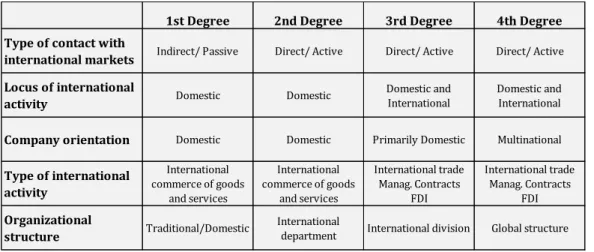
3. Internationalization 39
3.1. Entry Modes 40
3.2. Stages of Internationalization 41
3.2.1. Korth Model 42
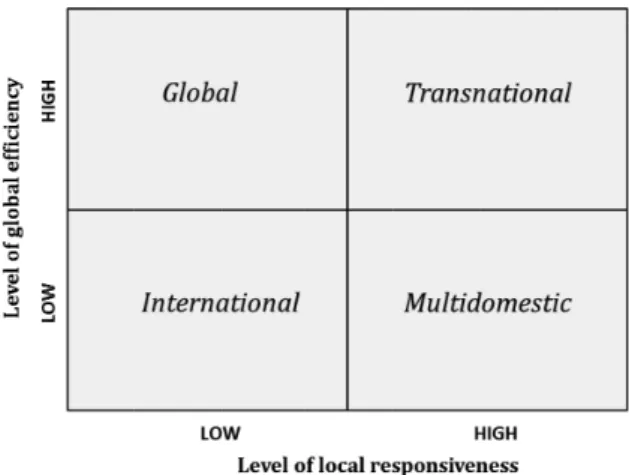
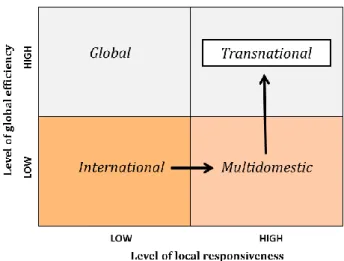
3.2.2. The Integration Responsiveness Framework 42
4. Replication 44
4.1. Private Labels 44
4.2. Brands 45
4.3. Dynamic Capabilities 46
4.4. VRIN Framework 47
4.5. Blue Ocean Strategy 48
IV. Teaching Note 50
1. Case Summary 51 2. Learning Objectives 53 3. Assignment Questions 54 4. Class Plan 55 5. Analysis 56 V. Conclusion 76 VI. References 78
v
TABLE OF FIGURES
Figure 1: Porter’s Five Forces 34
Figure 2: Ansoff’s Matrix 36
Figure 3: Porter Generic Strategies 37
Figure 4: Strategy Clock 38
Figure 5: Entry Modes 40
Figure 6: Korth Model 42
Figure 7: The Integration Responsiveness Framework 43
Figure 8: SWOT Analysis for SUMOL+COMPAL 59
Figure 9: Ansoff’s Matrix for SUMOL+COMPAL 62
Figure 10: Strategic Groups in the Beverages Industry 63 Figure 11: Strategy Clock of Companies in the Beverages Industry 67 Figure 12: The Integration Responsiveness Framework applied
1
I. INTRODUCTION
SUMOL+COMPAL is the leading company operating in the non-alcoholic beverages market in Portugal. This success had its roots in 2009 due to the merger of two independent companies, both cherished by the Portuguese consumers. Manuel Lopes knew that the merger with its strategic impact had everything to triumph. However, SUMOL+COMPAL’s growth was not as bright as he thought it would be. Facing a fierce competition and operating in a country strongly affected by the global financial crisis, the company had to find a key strategy for its future success.
Along this dissertation, both the results of the merger and the future expectations of the company are explored. Furthermore, the question regarding the company’s internationalization together with the concern about the future of the domestic market, where SUMOL+COMPAL’s leadership has been challenged, are the two main topics studied.
Considering the status of this company in the Portuguese market and looking to the terrible environment companies are facing, it is quite relevant to pay our attention to the decrease in SUMOL+COMPAL’s performance. What led such a strategic change during a recession time? What crucial factors influenced the growth of SUMOL+COMPAL? Why is the company growing lower than expected? Should the company’s future growth strategy be focused mainly in Portugal? Or should SUMOL+COMPAL be a “Coca-Cola of the juices sector?” All these questions will be a matter of analysis, being the dilemma present in the case (focusing in Portugal versus adopting a strong internationalization strategy) the basis for this study.
The paper is divided into three main parts. The first one is the case study where the strategy of the company is described. Also, the changes created through the merger and the future growth strategies are explained. Moreover, a brief description of the two companies, as well as the description of the competitive environment where the company is placed is made.
Secondly, the literature review section explores the theoretical frameworks helpful for further analysing the case. The main topics covered are related to the subjects of positioning, internationalization and replication.
2 Lastly, the teaching note section contains the analysis of the case study based on the themes raised in the literature review. A summary of the case, a class plan, and the analysis of important questions related to the case are all present in this section.
This dissertation intends to provide an analysis that might be helpful for an instructor that uses the case in strategy courses and will hopefully allow a better understanding of the challenges faced in the present days by a very strong company. It is a practical example of the difficulties that a company faces after a restructuration, showing the type of problems that may arise. If companies are unable to overcome them, success could be a struggle. Time only will tell SUMOL+COMPAL’s progress, but for now questions will be asked in order to discuss and suggest strategies that could improve the company’s performance.
4
II. CASE STUDY
SUMOL+COMPAL: A Challenging Merger
It was the 20th of January of 2012. The sun was shining in a bright morning of a cold winter day. Manuel Lopes1, CEO of SUMOL+COMPAL, a large company in the beverages sector with a turnover of 331.6 million euros, was living a nostalgic moment, when he found himself contemplating the paintings made by its employees, placed in his office’s wall.
Looking to the artistic side of his employees, Lopes reminded how much they were important in the progress of the company. At the same time, the thought of the company's journey came to his mind and he started wondering about the future of his company. Three years had passed since the merger of Sumolis and Compal. It had been a successful merger which seemed to bring great outcomes, Lopes thought. Products were unique, the brand portfolio was exclusive, talented people were part of the company’s strategy…however, SUMOL+COMPAL was not yet materializing its enormous potential. The company’s future did not seem very bright. Lopes wondered: Why was not the company growing according to its potential?
While analysing the results of 2011, Lopes realized that, for the first time in the history of the company, international markets overtook the Portuguese market. Nevertheless, the company was still paying the debt arising from the merger, which limited the possibility to invest in foreign markets.
Suddenly, Guilherme Cardoso, Marketing and Sales Director, knocked at his door. He was there to invite Lopes to have lunch. At the same time, a thought crossed his mind and Lopes stood up from his comfortable chair, looked at him and just said: “We will get there!”
1Names of management are disguised.
5
HISTORY OF THE COMPANY
SUMOL+COMPAL, a well-known Portuguese company operating mainly in the
non-alcoholic beverages sector, was created in January 2009, through the merger of two independent companies (Sumolis and Compal), each one with a 50 year history.
During their independent activity both companies achieved great results. The companies were leaders in the Portuguese market in the segment of juices, nectars and fruit drinks and about 15% of each company’s sales were exported. After the merger the indices jumped to 30%, meaning that exports doubled (See Exhibit 1).
Fruit was the key raw material in the majority of SUMOL+COMPAL’s products and the fast moving beverages2 were its core business. The company sold juices and nectars, soft drinks, bottled water, beer, fruit and vegetable servings and tomato derivatives.
The company’s mission was to be “an international reference in fruit beverages, to strengthen its leadership in the non-alcoholic beverages market in Portugal and maintaining strong positions in prepared vegetables and tomato-based products”3; SUMOL+COMPAL aspired to be the company chosen in consumers daily life. Its vision was that “consumers choose and consume one of its products every day in all markets where the SUMOL+COMPAL brands are available”4.
A constant goal was to develop the continuous improvement of working processes and achieve excellence. Furthermore, product quality, internal capacity of innovation, differentiation and the strong connection with nature were the company’s engine.
By the end of 2011, the company’s brands included: Sumol, Compal, B!, Um Bongo, Tagus and Água Serra da Estrela. Among the brands it distributed were Pepsi, 7 Up, Guaraná Antarctica, Lipton, Gatorade and Damm (See Exhibit 2). In 2011 revenues from national and international sales were 317,2 million and from filling services were 14,4 million euros.
In the same year, SUMOL+COMPAL detained 26,6% of the non-alcoholic drinks market, which made the company the number one in that sector (See Exhibit 3). Also, in the take
2 Fast moving beverages are the beverages segment that includes juices and nectars, soft drinks, water and
beer.
3 Information present in SUMOL+COMPAL’s annual report (2011). 4 Information present in SUMOL+COMPAL’s annual report (2011).
6 home market5 and in HORECA6 channel the company assumed a leadership position registering respectively 21% and 30, 5% market share.
SUMOL+COMPAL was making a continuous effort and investment to internationalize its products. In 2011, the company sold to 69 different countries (See Exhibit 4) and was aspiring to grow in international markets. In Portugal, SUMOL+COMPAL had around 1,300 employees and a portfolio of almost 80,000 customers (served both by its sales force and by its network of distributors).
In 2011, the company saw its growth threatened in the Portuguese market. In 2008, the global recession originated in the USA was quickly spread to other economies, notably in Europe. Portugal was not immune to this political and economic crisis suffering the deepest recession in decades. With the rise of unemployment, the decline of exports and investment, and especially with the lack of confidence by economic agents, the reduction in economic activity was very visible. The alternative to deal with this scenario was to use external financial assistance in order to recover the Portuguese economy.
As a consequence of such a recession time, the company had to adapt its tactic to the current situation of the market. The sales volumes fell by 9.1%7 in the Portuguese market. This decline was related to the fall in the consumers’ income, as well as the reduction in demand for fast moving consumer goods. Portugal was confronted with the most adverse scenario ever, full of uncertainties. There were increases in prices of raw materials; decreases in Portuguese purchase power and consumers became more price sensitive. Furthermore, during that year the summer was cooler than usual.
Contrarily to the Portuguese market, in 2011, the sales in international markets grew by 30%8. This increase was justified by the strong focus in Angola. Also taking advantage of the external growth in the other markets, mainly where a Portuguese presence is strong (Switzerland, France, Luxembourg and Germany), SUMOL+COMPAL was able to thrive and positioned itself among the most internationalized Portuguese brands.
5 The take home market includes supermarkets, hypermarkets and traditional food stores channel. 6 HORECA: Hotels, Restaurants and Cafeterias.
7 Information present in SUMOL+COMPAL’s annual report (2011). 8 Information present in SUMOL+COMPAL’s annual report (2011).
7
THE TWO SINGLE COMPANIES
Compal
Compal SA was found in 1952 in Entroncamento. During the 50’s, the company was focused on the tomato production along Ribatejo Province.
Later on, Compal decided to give another direction to its business. It began to invest in fruit juices, which became its main commercial activity. The non-alcoholic beverages market was the main base of business for Compal SA (commercializing juices/nectars, soft drinks and sparkling water). The initial business of the company, related mainly to prepared canned vegetables and tomato products, become less important, assuming a secondary place.
During the 60’s Compal was integrated into Nutrinveste9. With that integration Compal gained a new financial breath and was able to invest in developing professional management and adopted a different and innovative attitude. The company started to focus its business in the consumer, a strategy that still remains. In the second half of the 60s, a culture of marketing was born. During that time, the company created the slogan “Compal: it is really natural” that lasted until the new millennium.
In 1964, the company invested in its production plant located in Almeirim. Six years later, the gradual concentration of activities in Almeirim led to the deactivation of Entroncamento’s plant, which became a warehouse.
Best known for its values of tradition, credibility, demand and reliability; the company had the vision of being the best Portuguese beverages company and the mission of satisfying consumer needs through excellence in brand management and distribution channels. Compal had always been an innovative company: it was the first company launching nectars in Portugal and introducing pioneer concepts such as canned soups and prepared meals. Plus, the quality of its products, the creation of strong brands, and the ability to manage distribution channels were sources of competitive advantage that supported the company’s strategy throughout the five decades of its existence.
According to Nielsen, from 1987 to 2004, the retail industry in Portugal suffered an important transformation: family businesses were no longer dominant in the market and multinational chains were gaining market share (See Exhibit 5). Thanks to these changes
9 Nutrinveste is a company that operated in the agribusiness sector and belonged to the Group CUF
8 in the retail industry, in the first years of the new millennium, Compal investments were made to accompany the increase in demand.
From 1998 to 2003 a new Compal’s production plant was built in Almeirim. This investment allowed the company to reorganize its units of juices and canned vegetables. The result of such reorganization was a superior rationalization of the production process. This meant the company was able to globalize its core business: juices and nectars.
In 2002, Compal also renewed a plant located in Vila Flôr for bottling water. This unit became responsible for the Frize brand. The company was betting in the sparkling water market, investing in the Frize brand, a 100% natural sparkling mineral water, acquired in 1999.
Also in the beginning of the new millennium, a new trend affected the out of home beverages consumption with the creation of private labels, competing in price with the existing brands. Fearing the competition from the growth of private labels, Compal had to react. In 2002, the company bought “UM BONGO”, a children oriented fruit juice drink with the slogan “the good taste of the jungle”, for its portfolio. In September of the same year, Compal also launched a new brand B!. B! was a refreshing low calorie beverage based on fruit juice, without gas. This brand was characterized as a “different beverage for different people”10 and had a funny and young image associated.
Throughout its existence Compal redesigned its logo a few times (1982 and 1994) and in 2004 the company developed a totally renewed institutional image. Together with its new image, the company assumed a new position: it considered itself as brand manager of its beverage and food portfolio.
In 2005, Compal had its portfolio separated in two different areas: nutrition and thirst and operated in two different distribution channels: food retail and HORECA (See Exhibit 6). Being present in dynamic markets where innovation and differentiation were a source of investment, Compal had to follow the market trends. Aware of the importance of innovation, in 2006, the company launched an original product: Compal Essencial. Compal used the know-how and the brand image to create an exclusive product: fruit doses. It was the only brand in Portugal selling a juice where each package was equivalent to an individual fruit.
9
Sumol Group - Sumolis
Sumolis was born within a small company named Refrigor which started its activity in 1945. The company was created in a hopeful period; the Second World War was over and people were starting to organize and restructure their lives.
Refrigor appeared when a group of friends decided to open a small company in Algés in order to produce ice, soft drinks and orangeades. In 1950, a new partner, António João Eusébio, who would transform the company thanks to his entrepreneurial spirit joined the company. Its mission was to be the leading group in the business of fast moving beverages in Portugal and to develop a relevant position in other geographical areas, ensuring the proper creation of value. The main values of the company were the satisfaction of consumer needs, the continuous performance improvement, the ethical behaviour, the relationships of trust with suppliers and the wellness in the communities where it was inserted.
In 1954 the “orangeade of oranges”, as it was called, was substituted by a new formula: Sumol. Sumol, a mix of two Portuguese words: SUMO (which means juice) and SOL (which means sun). It was considered as the beverage of the decade and characterized an entire era and an important turning point in the juices and sodas’ industry. Sumol Orange was the first fruit juice drink pasteurized in Portugal. At the beginning, the profile of Sumol’s consumers was young children and women. Portugal was, at that time, a Latin country where wine was heavily consumed by men.
Refrigor’s future depended on the innovative capacity of the company. It launched the first beverage that was expanded nationwide through franchising and adopted a truly marketing strategy, in an era where marketing was an unknown reality in the country.
In 1971, the company Sumolis was created in Carnaxide. At that time, there were two other different companies that integrated the Sumol Group (Sureno located in Viseu and Cialbe located in Faro). Ten years later, the Sumol Group acquired a new company in Pombal (Frugal) and started to produce also in the centre of the country.
Due to the brand's popularity, during the 70’s, there were up to twenty imitations of Sumol. The brand was such a phenomenon that was compared to international brands with unquestionable quality such as 7up and Pepsi.
During the 80’s, the company created a partnership with the Pepsi Company and through its bottling agreement, Sumolis started to represent the brands Pepsi and 7up.
10 In 1986 another plant was established in Gouveia, SASEL (Sociedade de Águas da Serra da Estrela) which was created to explore the water resources and produce bottled water.
In 1991 a new plant in Carnaxide opened its doors. In the mid-nineties Sumol was sold with tree different flavours: orange, pineapple and passion fruit. Also at that time, Sumolis made a distribution agreement with the Lipton brand and started to distribute Lipton’s products in the HORECA channel.
The company acknowledged that the consumption of fast moving beverages was significant and was increasing even more. Given that, Sumolis understood that it was facing a challenge. In order to grow, the company had to create value and to make an effort to satisfy the customers with its own brands. It also represented the brand “Água Serra da Estrela” but the biggest effort was made through the Sumol brand.
Since the beginning of the new century, when Sumolis decided to reinforce Sumol’s positioning in the youth segment, a new cycle in terms of releases and communication began. In addition to the launch of Sumol Mango, in 2006, a new line of soft drinks named Sumol Z (Zero) was created. This was aimed specifically to the youth segment and conveyed the message of healthy products without any loss of flavour.
From 2010 on, Sumol sought to convey a new brand positioning: the manifesto "Stay Original", calling for the Portuguese people to remain original regardless of their age. This manifesto led to the successful campaign "One day ...”, focused on youth as a state of mind. More recently, in 2011, Sumol presented to consumers a new image where the ubiquitous green colour from all decades and generations prevailed. The new logo was inspired by the iconography of 1954, in honour of the brand's history (See Exhibit 7).
MERGER TIME
Back in 2006, the non-alcoholic beverages market was giving signals of growth and was receptive and sensitive to the innovations pushed forward by some brands. At the time, Compal belonged to Nutrinveste. Nutrinveste had three main business units related to different sectors: edible oils, fruit and juice and coffee sectors. Surprisingly, in 2009, Vasco D’Orey, CEO of Compal, decided to sell its company for the strategic reason of centralizing investments in the edible oils business.
11 Noticing that Compal was “for sale”, four different companies tried to acquire it. The candidates were Central de Cervejas11, Refrige12, the management of Compal, and Sumolis. Sumolis, together with Caixa Geral de Depósitos13, was the one who pesented a better proposal. The price the company offered was 1% above the other companies’ prices and, because of that, Sumolis won that “battle”. Sumolis interest was mainly in the portfolio complementarity, and in all the synergies that could come up; namely costs, deliveries and people driven.
From this strategic decision, issues related to human resources, operations and distribution, and financial statements were raised.
Human Resources
2009, the year of the merger, was a very frantic year for those who worked in SUMOL+COMPAL. There were changes in systems and processes used, some people had to change their workplace, others had to move into new positions and, unfortunately, others had to leave the company.
At the end of 2009, SUMOL+COMPAL had 1.370 employees, with the proportion of elements that came from Sumolis and Compal being roughly the same as the one that existed before the merger. Overlapping in functions, in some areas, brought the inevitable downward adjustment in the workforce of around 220 workers. SUMOL+COMPAL tried to promote integration among equals and retained people according to the suitability of profiles.
Regarding the new Executive Board, two of the four members came from Compal (Engº Rui Frade and Dr. José Jordão) and the other two belonged already to Sumolis administration (Dr. Duarte Pinto and Dr. António Pinto). The non-executive shareholders were all from Sumolis origin.
In 2011, the company had 1,344 employees, a reasonable number in Lope’s opinion, taking into account the financial crisis the country was suffering.
11 Central de Cervejas: a company that produced and commercialized beer, soft drinks and water. It had strong
focus on the beer sector.
12 Refrige: the company responsible for producing, distributing and selling all the brands of “The Coca-Cola
Company” in Portugal.
12
Operations and Distribution
With the merger, the manufacturing operations of SUMOL + COMPAL did not suffer significant changes. Operations were based on the four existing production units, which maintained its scope of activity. The two units of water in Vila Flôr and Gouveia, that were formerly part of Compal and Sumolis respectively, began operating in 2009 under a common direction, achieving in that way the optimization of resources and facilitating the identification of operational synergies.
The distribution network planning and logistics were the areas of operations where changes were most accentuated. Since the beginning of 2009, the distribution network was streamlined, and the number of distribution centres reduced.
SUMOL+COMPAL operated according to what is stated in its “Route to Market Scheme” (See Exhibit 8). There were different consumers, different occasions where people consume SUMOL+COMPAL’s products and to reach all types of clients and consumers, the company needed different means and structures of distribution. In order to distribute the products to the out of home consumption, the company operated through the HORECA channel, or first to the Cash and Carry channel that later on interacts with the HORECA channel. On the other hand, in the home consumption SUMOL+COMPAL’s products were available through the supermarkets and hypermarkets, through the food retail and also through distributors.
The HORECA channel and traditional retail were covered trough 9 sales centres spread throughout Portugal (See Exhibit 9).
The network of SUMOL + COMPAL’s logistics flows, with four different sources of production, gained an increased complexity compared to the situation prior to the merger. The natural increase in capacity occurred and it needed some extra space in warehouse. The production plant in Almeirim had a plant with sufficient size, adjustable to the new capacity. The same was not true in Pombal’s plant. This plant had space limitations and the fact that the land around the plant was not available to construction made the situation even more complex.
In order to centralize logistics, SUMOL+COMPAL opted to invest in one of the largest logistics centres in Portugal, a central warehouse placed in Leiria. One year later, the capacity storage in Almeirim and Pombal was also expanded and new loading docks were built. This investment allowed the reduction of overlapped transportation. Subsequently,
13 the merger required a reorganization in order to respond to the higher capacity and the increasing complexity.
In 2011, SUMOL+COMPAL had four industrial plants located in Portugal (See Exhibit 10).
Financial Results
The debt the company was still paying was to be reduced in the next years. To achieve that, SUMOL+COMPAL must generate free cash-flow and should manage in an efficient way its working capital.
At the end, Lopes considered that the merger brought success essentially at two different levels: costs and profits. Regarding the costs, structural costs were reduced. Instead of having two different offices the business was located at Sumolis’s headquarter and costs were reduced. Also the costs with the labor force were reduced, since around 200 people left the company. There were enormous savings with this change.
Cardoso explained: “Let’s consider the example of visiting a café. In the past, to provide all the beverages a café needed the two companies had to make an individual visit to sell its products. Now, SUMOL+COMPAL has the entire beverages portfolio: waters, juices, soft drinks and even beer. Looking to this at the costs level we can observe that first, instead of two vehicles we just need one. This shows us how transportations costs were reduced (diesel, number of vehicles, etc). Also, there were important time savings and people on the road were reduced by half. It meant a great improvement for the company”.
Regarding profits, both companies had complementary aspects that became valuable in the merger. While Sumolis had a major presence in the HORECA channel, Compal was strong in the food retail, specifically in hypermarkets and supermarkets. In what concerned the international markets, both companies were present in different markets. In Africa, for example, Sumolis operated strongly in Cape Verde and Compal had a strong presence in Angola. Thus, there was a complementarity in the international markets. The union of the two companies was a way of complementing them. Lopes considered it as a win-win situation, given that both companies gained with such a strategy. “It was a merge among equals, done to safeguard the future of the two brands”, he said.
The acquisition of Compal was financed through substantial levels of debt as the price paid was around the 400 million euros. In 2011, SUMOL+COMPAL was still paying its debt, that remained at 298.7 million euros.
14 Lopes was apprehensive. Even the synergies created with the merger had not been enough to recover the value of the debt, and he did not know how long it would take to recover it. SUMOL+COMPAL was working to pay its debt. But, how could the merger limit the future external investment?
In order to grow, Lopes had considered two options: innovate and extend SUMOL+COMPAL’s field of operation in Portugal, or focus its business in alternative countries, meaning internationalizing its products. However, if the company was thinking about increasing its market share the easiest way was to grow in the markets where it was alone. In Portugal, at that time, the market was falling and SUMOL+COMPAL was fighting against other giants in the beverages sector. Moreover, if something went wrong or there was a need to access national banks, SUMOL+COMPAL should face difficulties because it was still indebted.
Therefore, the internationalization path seemed to be a good option to expand its activity. Even having no dimension to access international banks, placing its products in additional countries seemed to be the best alternative to grow.
THE SUCESSFUL STRATEGY
The strategy of SUMOL+COMPAL involved different concepts to motivate consumers to buy its products such as product differentiation, powerful advertising and communication, strong distribution channels, vast product portfolio, history of the brands and investment in R&D. The company’s products were available on the market with unique qualities comparing to other competing products.
The natural freshness of the fruit, the specific taste of the juices and the originality of some brands were all part of its success. This was an important strategy considered as a source of competitive advantage. Some consumers perceived these products as distinctive and were willing to pay more for them.
Bearing in mind that all of those factors were important to the success of the company, Cardoso stated: “The critical issue in this business is to ensure that our brands are close from the heart & the hand of our consumers. Close to the heart in the sense that we want to create brands that consumers love. And, in order to make them fall in love with our brands, we need to invest both in R&D and communication. On the other hand, we also need to be close to the hand of the consumer. Our products need to be wherever the
15 consumers are, and at any time of their lives. Therefore, efficient distribution is critical. We need to be where our consumers are, whether in their home (and here is important our presence in Hyper and Supermarkets), or in the coffee shop they usually go, in the pastry where they have breakfast, in the restaurant they use to have lunch or dinner and even in the bar where they go in their free time”.
In order to love the products, consumers need to know them. One of the ways to do that is to try the product in advance. SUMOL+COMPAL used to do sampling with this purpose, but in 2011 this technique was not considered as a central method. A well done sampling in store associated with an effective communication via advertising usually facilitated the contact to the customers. However, at that time, there was a big problem: modern distribution was very much concentrated and charged increasingly higher listing fees and margins for new products. This could be seen as a real tax on innovation.
Thus, the communication process needed to be more developed and became one of the key points in SUMOL+COMPAL’s strategy. Hence, in the opinion of the Marketing and Sales Director, the critical tasks of this business were the efficiency of the distribution channels and the investment in R&D and communication
One example of the effort made by the company in the communication area was the change made in Sumol’s brand signature. During the last three years the company launched a new line of communication (manifesto “Stay Original”) to reposition its brand within the youth segment. This new line of communication had greatly improved the robustness of Sumol’s brand. The brand was stronger than ever and became to be seen as a modern brand younger consumers could identify with.
THE INDUSTRY
Portugal was living a disturbing recession time. The purchasing power was diminished and, because of that, many businesses were closing. Hundreds of SUMOL+COMPAL clients in the HORECA channel and some main clients in the Cash and Carry and Modern Trade channel closed, which contributed to a negative performance both of the company and the market. As a result, in 2011, sales fell 9.1% to 237.2 million euros, compared to 2010 a decrease of 23.8 million euros. This value reflected a lower net operating profit at the end of the year 2011. It went down from approximately 32 million euros in 2010 to 28 million euros in 2011 (See Exhibit 11).
16 The financial crisis Portugal was living, the diminished available income, the lack of confidence that affected Portuguese consumers and the consumers’ preferences for private labels all contributed to this decline in consumption.
The beverages market suffered a decline of 1.5% in 2011, comparatively to the previous year, and there was a move from out of home consumption to take home consumption, according to Nielsen.
The market included different product lines such as soft drinks, juices and nectars, bottled water and beer. Unfortunately, all those drinks had registered a decline in sales in the last few years. In 2011, soft drinks registered a drop of 3% (in volume and value), juices and nectars fell by 7% volume and 2% in value, water fell by 1% in sales, but increased by 1% in value. Finally, beer fell 0, 4%.
Regarding the non-alcoholic sector, the different categories suffered in specific ways:
Juices and Nectars: in 2011 the take home consumption (INA14) segment contracted 9% (volume) and 7% (value), out of home consumption (INICM15) grew 2% (volume) and 4% (value). The increase of beverages’ VAT initiated in 2010 was also maintained in 2011. Despite a lower VAT rate (6%) sales were also affected. The preference given by consumers to ice teas category influenced by private labels was another sector that contributed to the drop on juices and nectars sales.
Children's Beverages: the company considered as children's beverages the brands with
a children oriented image and those with a more childish packaging. In 2011, the market dropped 1% compared to the value of the previous year. Although the brand UM BONGO had lost market share, it maintained its leadership position. The most children-oriented version of COMPAL CLÁSSICO, a genuine nectar full of fruit flavour, also followed the trend and lost market share.
Soft Drinks: sales in this category fell by 2%. Not only the hostile financial situation and
the decline in Portuguese consumption contributed to the negative impact on sales, but also the unusual cold summer and the growth in sales of private labels.
Fruit-flavoured soft drinks fell almost 3%, but the lemon-lime flavour was the segment most affected, with a decline of 6% (value and volume).
14 Índice Nielsen Alimentar – Nielsen Food Index.
17 Notwithstanding, the soft drinks segment achieved a higher performance than the average market.
Bottled Water: the bottled water market grew in 2011 in volume. Sales of private labels
of still water were responsible for this growth, since this water segment was characterised by low prices. Both the sparkling water segment and the flavoured sparkling water registered a decline.
Even knowing the situation of the Portuguese market, SUMOL+COMPAL decided to maintain its product differentiation strategy. The company took this decision in order to maintain its brand value. Cardoso admitted that for some people he has talked to before, it was considered as a risky option, since the company was avoiding the low price strategy that was followed by the majority of its competitors.
Moreover, private labels were registering a growth in sales via low price strategies and the majority of Portuguese companies were struggling in such a tragic scenario.
Although the company’s decision had brought a loss of market share of 1, 7% from 2010 to 2011 in the RAM16 sector, SUMOL+COMPAL was able to maintain its leadership position in the non-alcoholic beverages sector with a market share of 26,6% (See Exhibit 3).
COMPETITION
In the opinion of Cardoso, the largest competitor for the company was Refrige, the local arm of the “Coca-Cola Company”. The other two major competitors (Unicer and Central de Cervejas) had some strong brands that are fierce competitors to specific SUMOL+COMPAL’s brands, but in general, as a company, represented less danger. Another giant in this area, Unilever, was not considered as a competitor since SUMOL+COMPAL was partner of it, distributing its famous brand “Lipton-Ice Tea” in the HORECA Channel.
Refrige
Refrige was the company who represented all the brands of “The Coca-Cola Company” in Portugal. It was responsible for production, marketing and distribution of those brands. It had a huge portfolio of well-known beverages in Portugal such as: Coca-Cola, Fanta, Sprite, Nestea, among others (See exhibit 12).
18 Operating in the Portuguese market since 1977, Refrige had its main plant located in Setúbal. It also had nine delegations throughout Portugal and a vast network of distributors.
As a dynamic company looking for success and leadership in the beverage market in Portugal, it was driven by the satisfaction of its clients and consumers. It worked to make daily products with high quality, supported by the use and optimization of the most advanced technological processes and innovative programs.
Thanks to its portfolio variety, and to the strength of the Coca-Cola brand it was considered as a huge competitor for SUMOL+COMPAL. It didn´t compete only in the soft beverages sector, but also in the water segments.
According to Nielsen, in December of 2011, the sales of the Coca-Cola brand were around 88 million euros, while sales from Pepsi (SUMOL+COMPAL’s brand) rounded the 6.6 million euros. It was an important indicator of the fierce competition SUMOL+COMPAL had with Refrige in that specific product line.
Unicer
Unicer was a company mainly present in the beer and bottled water sector. Since it was also present in the segment of soft drinks it can be considered also as a direct competitor for SUMOL+COMPAL. In the beer sector, well known brands such as SuperBock, Carslberg and Cristal were included in the company’s portfolio. Regarding water, Vitalis and Pedras Salgadas were other two important brands. Finally, in the soft drinks sector the company had brands such as Frisumo, Frutis, Snappy, Frutea Ice Tea, among others (See Exhibit 13). With 1500 employees, Unicer was present from North to South of Portugal, with production centres, as well as points of sales and operations for beer, juice and nectars, soft drinks, wine and water. The constant focus on innovation, the quality of the brands and the service it provided, was the value added of the company.
According to Nielsen, the sales of Lipton Ice Tea were of 54,9 million of euros, contrasting to 3,8 million of euros of Frutea (the brand detained by Unicer).
Central de Cervejas
Sociedade Central de Cervejas was founded in 1934, mainly focused on the beer business. Its famous Portuguese beer Sagres brand was one of the preferred among Portuguese. It
19 also represented international brands in this sector such as Heineken, Guinness or Bud. From 2008 on, Sagres had been the best seller beer brand in Portugal.
In the soft drinks sector, brands such as Schweppes, Trina and Joi were also part of the company’s portfolio. Moreover, the Luso brand, another strong brand for Portuguese consumers, was a plus for the company (See Exhibit 14).
According to Nielsen data for the full year of 2011, the Sagres beer held 45.7% of total market share in value and Água do Luso had 22.2% share in the segment of water without gas, compared to 23.2% of the previous year.
Private Labels
Private labels were increasing its share of the beverages market, becoming one of the major concerns of SUMOL+COMPAL. They were seen as dangerous competitors given their capacity and quickness in copying and replicating the products of the major producers. By practicing lower prices and using their marketing power to constantly advertise it, private labels were becoming quite powerful. There were several factors that helped private labels’ growth such as the economic crisis Portugal was living, the increasing quality of their products and, finally, the retailers’ concentration.
Ten years before, private labels had a small impact on SUMOL+COMPAL sales. However the situation changed since the Portuguese market was controlled mainly by two retailers - Sonae17 and Jerónimo Martins18- that decided to create their own brands. These retailers were not only investing in simple private labels, but were also enlarging their product portfolio through the creation of “premium” private labels and gourmet products. As an example of Sonae’s power, in 2011, the company’s private label sales were worth one billion euros, which meant an increase of 7% compared to 201019.
Because of such power, SUMOL+COMPAL was obliged to accept the conditions retailers offered and could do nothing to avoid that. The fight for shelf space, the decrease in margins and, consequently, the decrease on sales were all effects that SUMOL+COMPAL had to face.
17 Sonae is a retail company that operates in food and non-food retail stores through its well-known
subsidiary Continente.
18 Jerónimo Martins is a Portuguese based company that operates in consumer products manufacturing and
food distribution through its Pingo Doce chain.
20
THE WORLDWIDE POSITIONING
SUMOL+COMPAL had been investing in the international business. In 2011, its products were present in 69 countries (an increase in 6 countries comparing to the previous year). Looking back to 2008, for example, the brands of the company were only commercialized in around 45 countries.
The company made investments to develop several markets. Mozambique, Angola, Cape Verde, France, Luxembourg and Switzerland were those where the company had its strongest presence. For all the other 63 countries SUMOL+COMPAL just exported for local agents.
While Lopes was analysing the reports for the previous year, 2011, he concluded that the sales in international markets grew by 30%, which meant 80 million euros or 31% of the total volume sold in 2011; a higher value compared to the 53.9 million euros sold in 2009 (See Exhibit 15 and Exhibit 16).
Regarding the specific brands of the company, mainly Sumol and Compal were the contributors for the growth of the company. The company had more than 50% of Sumol and Compal’s volume out of Portugal.
Europe
In 2011 the sales in Europe, excluding Portugal, increased by 15.9%. Markets such as Scandinavia were new entrants through the SUMOL+COMPAL’s strategy of differentiation. The brands that contributed to this entrant were COMPAL ESSENCIAL and GUARANÁ ANTARCTICA, a refreshing drink made with exotic Brazilian extracts. Other markets such as France, Switzerland, Luxembourg and the United Kingdom, registered an important growth (See Exhibit 18).
Africa
Africa was the most important destination for SUMOL+COMPAL. In 2011, sales growth was 38.5%. SUMOL+COMPAL products were present in 20 African countries and Angola continued to be a strong focus. Especially in Luanda, the company had invested in advertising campaigns and also started to target its audience.
Furthermore, in SADC20 the sales were positive particularly in Mozambique, where the investment plan in order to buy a plant and start producing juices and nectars in the country, was approved by the end of the year. The estimated value of the investment
21 would be around 8 million euros. In addition, Cape Verde was another area where SUMOL+COMPAL was present, mainly through the brand Sumol.
Finally, in the West Coast of Africa and in the Northern African Arab nations, a “double-digit” growth was registered.
Other Markets
Although the America region was positive in general, in the year of 2011 there was a decrease in sales in Canada and the Caribbean.
Although the sales were in the very beginning, China seemed to Lopes a solid market since the growth registered was significant.
SUMOL+COMPAL continued to study the option to consolidate its international presence. Asia is the key market…but is the company able to make such a big investment?
HOW TO GROW? THE FUTURE DECISIONS…
Bearing in mind the weaknesses and strengths of SUMOL+COMPAL, Lopes and his team had to define a sustainable growth strategy for the future. Focus on internationalization and continued the differentiation strategy in Portugal were the two biggest issues in Lopes’s thought. However, he knew that invest in Portugal would not be enough and the investment in foreign markets was limited by the debt the company was still paying. The range of products of SUMOL+COMPAL had made it a number one company in the non-alcoholic beverages sector in Portugal. When these two brands decided to merge it was a huge increase of potential and Lopes thought: “Now we have everything, we have all the potential to beat our competitors and to grow at a fast pace!” However, the reality was not as bright as Lopes had imagined.
Having lunch in one of the best restaurants in Chiado, centre of Lisbon, Lopes was eating a delightful codfish and was discussing with Cardoso the future moves of the company. “We need to replicate our successful leadership strategy in different countries! Our actual strategy in foreign markets is merely defensive. We are not acting local; we are just present in the easiest way”! Lopes said.
“You are right, but remember that we will need a huge investment and we are still indebted. Furthermore, we will need local partners and our type of business is demanding… In order to jump from a domestic presence to an international presence we
22 need to make a great effort. Do you think it will be worth it? I would say that our focus should be maintaining and improving the differentiation strategy here in Portugal. What do you think?” Cardoso answered.
And, in an assertive and confident tone of voice, Lopes just said: “We are the number one in Portugal, but we need to aspire for more. Why can´t we became the number one in other countries?”
The lunch ended and it was time to get back to office. How should Lopes and his team react to the threat of low growth? How can they position SUMOL+COMPAL in order to be successful beyond that little country named Portugal?
23 0% 5% 10% 15% 20% 25% 30%
Sumolis Compal SUMOL+COMPAL
Export Indices before and after de merger EXHIBIT 1: Growth of export indices after the merger
Source: SUMOL+COMPAL
EXHIBIT 2:SUMOL+COMPAL’s brand portfolio
24
EXHIBIT 3: SUMOL+COMPAL’s market share in the non-alcoholic beverages sector in
Portugal in 2011
Source: Nielsen
EXHIBIT 4: SUMOL+COMPAL’s sales in 2011 in foreign countries (excluding Portugal)
Source: SUMOL+COMPAL
Private labels
25
EXHIBIT 5: Food retailers in Portugal from 1987 to 2004
Source: Nielsen
EXHIBIT 6: COMPAL’s main divisions
26
EXHIBIT 7:Sumol’s logo evolution
Source: Author
EXHIBIT 8:Route to Market Scheme
Source: SUMOL+COMPAL
27
EXHIBIT 9: The HORECA channel and traditional retailers were covered trough 9 sales
centres
Source: SUMOL+COMPAL
EXHIBIT 10:The four production plants of SUMOL+COMPAL
Source: SUMOL+COMPAL Pombal Almeirim Gouveia Vila Flôr Póvoa do Varzim Ovar Viseu Pombal Carnaxide Seixal Évora Portimão Faro
28
EXHIBIT 11: SUMOL+COMPAL’s consolidated income statements for the years ended in
31st December 2011 and 2010
29
EXHIBIT 12: Refrige’s brand portfolio
Source: Author
EXHIBIT 13: Unicer’s brand portfolio
30
EXHIBIT 14: Central de Cervejas’s brand portfolio
Source: Author
EXHIBIT 15: Percentage of the total volume sold in 2011 in international and national
markets
Source: Adapted from SUMOL+COMPAL’s annual report (2011)
69%
31%
Total Sales Volume in 2011
31
EXHIBIT 16: Total volume sold in 2011
Source: SUMOL+COMPAL
EXHIBIT 17: International marketing campaigns
ANGOLA Source: SUMOL+COMPAL ENGLAND SWITZERLAND MOROCCO
CAPE VERDE CHINA
53,9 61,6 80,0 0 10 20 30 40 50 60 70 80 90 2009 2010 2011
Sales in international markets from 2006 to 2011
Mi
ll
ion euro
32
EXHIBIT 18: International sales in 2011 and 2010
2011
2010
Var (%)
TOTAL (€)
80.107.359
61.707.314
29,8%
Europe
12.725.230
10.981.561
15,9%
Spain 831.538 622.893 33,5% France 4.112.849 3.762.827 9,3% Switzerland 2.531.518 2.206.453 14,7% Germany 1.294.774 1.135.955 14,0% United Kingdom 1.223.807 991.552 23,4% Luxembourg 1.005.167 841.892 19,4% Denmark 231.745 124.773 85,7% Italy 321.391 268.720 19,6% Others 1.172.442 1.026.495 14,2%America & Asia
3.047.367
3.012.811
1,1%
EUA 1.331.690 1.284.020 3,7%
Canada 788.848 952.770 -17,2%
Others 926.828 776.021 19,4%
Angola
54.008.159
38.260.106
41,2%
Africa and Middle East
8.774.960
7.080.366
23,9%
Cape Verde 4.199.654 4.237.700 -0,9%
Mozambique 811.850 541.121 50,0%
Guinea-Bissau 810.000 598.656 35,3%
Morocco 396.810 377.849 5,0%
S.Tomé and Príncipe 1.127.485 639.850 76,2%
Senegal 133.509 134.566 -0,8%
Others 1.295.661 550.623 135,3%
34
III. LITERATURE REVIEW
The main objective of this chapter is to review theoretical frameworks related to the themes that are going to be analysed in the Teaching Note. This section is divided in four main topics: industry, positioning, internationalization and replication. In the first topic the overall industry where SUMOL+COMPAL is positioned will be analysed. Regarding the positioning section different strategies adopted by the company will be explained.
Furthermore, the fourth topic will mention the importance of internationalization and will describe the different stages of internationalization. Lastly, concerning the replication topic, the themes covered will be related to the threat of private labels while compared with brands such as SUMOL+COMPAL and the common strategies companies could adopt when deciding to replicate a strategy.
1. INDUSTRY
1.1. PORTER’S FIVE FORCES
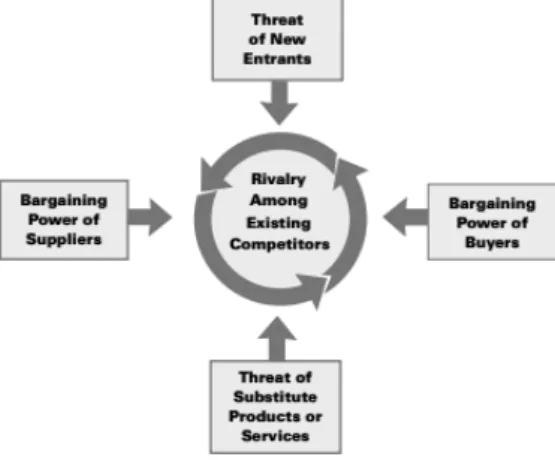
The Porter’s Five Forces is a framework designed to help companies to measure the position and the attractiveness of the industry in which they are placed. Porter did not consider competition as the only threat of the industry. Instead, he also analysed the likelihood of entry of new competitors, the threat of substitutes, and the bargaining power of both suppliers and buyers.
In order to enhance the company’s long-term profits, managers need to understand how profitability is influenced within its industry. By doing so, companies can plan their strategic positioning and are also able to
anticipate their competition in order to increase their profitability (Porter, 2008). Companies must find a way to place themselves in a position capable of overtake the competition and should identify and try to “play” in an industry segment where the five forces are weak (Besanko, 2004).
35 The first force is the threat of new entrants. In an industry, the emergence of new entrants is a signal of pressure to the existent companies. New entrants aspire to gain market share and they will pressure on prices and costs. Hence, incumbents have advantage when they have entry barriers such as economies of scale, switching costs, or access to distribution channels.
The bargaining power of buyers is another force of the industry. Powerful buyers have
the capacity to discuss and negotiate prices, claim higher quality or additional services in order to gain and increase profits from sellers (Besanko, 2004). On the other hand, the
bargaining power of suppliers is present when suppliers are able to charge higher
prices to reduce the quality or the number of services in such a way they can reduce the costs and capture more value (Porter, 2008).
In addition, the industry profitability is also affected when the threat of substitutes is high. Substitute products are considered alternative products that offer the same or similar benefit to industries by a different process. As a result of the high number of substitutes, companies should invest in tactics such as marketing or product performance to try to increase their potential (Porter, 2008).
High rivalry among existing competitors will limit the profitability of the industry. It can be expressed through different ways such as: innovation and new product development, product improvements, price discounts or powerful advertising campaigns (Porter, 2008). To sum up, Porter’s essential message is that industries are not attractive to compete in when the five forces are high.
The five forces model has been subject of much critique. Its central weakness result from the historical context in which it was developed. The model makes a qualitative analysis and can be used for measuring trends, but it does not value other factors that affect the demand like changes in consumer income and tastes and other firm strategies. Another criticism concerns Porter’s single focus in the industry. By doing that, individual companies that may place unique positions are being ignored (Porter, 2008).
1.2. STRATEGIC GROUPS
Hunt, in 1972, presented the term strategic group for the first time. He used it to characterize the “symmetry of operations” present in the industry (Reger and Huff, 1993). Nowadays, the term is commonly used to define “a group of firms within the same industry making similar decisions in key areas” (Porter, 1980, p.129).
36 Playing in the same industry, companies do not act similarly in the way they position the products in the market. Instead, they adopt quite different positions. This can be seen, for instance, through the segments to which they direct their business, the different quality of their products, their distribution channels, the policy they adopt in terms of price, their advertising process…
Still, apart from those differences, some companies adopt a business model with the same strategies and resources and, because of that, strategic groups can be formed. The strategic group mapping is a tool used to analyse companies’ position in a certain industry compared with their rivals’ position.
When a company decides to entry a specific strategic group, it should consider if it will be able to imitate or overtake their future competitors and if it will be cost effective or not (Hill and Jones, 2012).
2. POSITIONING
2.1. ANSOFF’S MATRIX
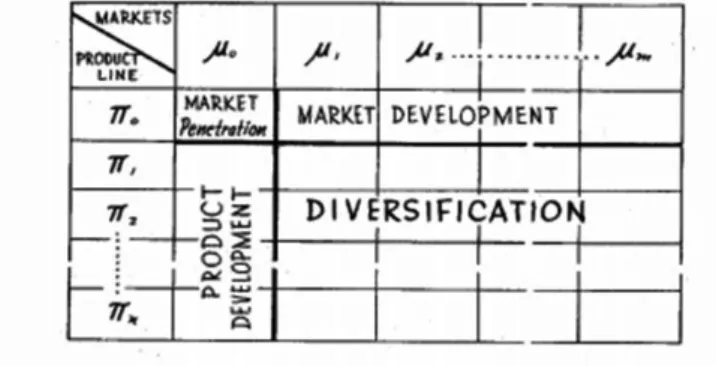
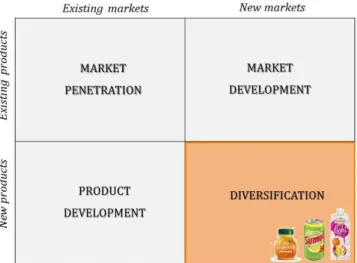
In order to grow, companies have to adopt different strategies. The aim of these growth strategies is normally to increase sales, gain market share and try to beat competitors. Looking to the different ways of growing, companies need to adequate their strategies according to their goals and fit to the specific marketplace where they are planning to act. Igor Ansoff developed a matrix that identifies four possible approaches to companies’ growth (market penetration, market development, product development and diversification) represented in Figure 2. This simple and effective tool helps to analyse opportunities for growth and its aim is to clarify the way companies need to compete by combining existent or potential products of the company with existent or future new markets (Lester, 2009). The first growth option is market penetration, where a company increases its market share maintaining its current products in the existent markets. To develop its business performance, the company can increase the sales volume to the current
37 customers or can find new customers for existing products (Ansoff, 1957). Although it is a low risk strategy, a company needs to gain market share from competitors to achieve success. In order to obtain that, increase the perceived value of the product and reduce costs are two essential changes (Lester, 2009).
Other growth strategy is market development. Here the company adapts its original product to new market segments (Ansoff, 1957). These segments can be geographical such as a new city, a new country or can be simply a different set of customers. It is important to leverage a company’s reputation to easily be accepted by new markets (Lester, 2009).
Product development consists of creating new products in existent markets. Assuming
that companies desire to enhance their performance in the original market, it is essential that they apply their knowledge to create different products that meet future customer’s needs. This will add perceived value to the customer and companies will start to compete in an indirect way (Ray, 2010).
Lastly, the diversification strategy is based on the option of selling new products to different markets. The high risk of the strategy can be dangerous, so companies need to create unique skills to enter new markets (Lester, 2009).
2.2. PORTER GENERIC STRATEGIES
Michael Porter (1985) developed three approaches to create competitive advantage and outperform competitors in the industry. These strategies are: cost leadership, differentiation and focus.
By adopting a cost leadership
strategy, companies create higher
value than their competitors since they offer a product with lower cost (Besanko, 2004). This strategy is normally used when companies want to attain economies of scale or scope. Selling a product with
low perceived benefit to price sensitive consumers is the perfect scenario for this strategy. Companies that adopt the cost leadership strategy are the ones who have a broad scope and that operate in different segments and industries (Porter, 1985).
38 On the other hand, with a differentiation strategy companies offer a product with different features than their competitors. Companies create “something that is perceived industry wide as being unique” (Porter, 1980, p. 37) in order to help them to create more value and make their products preferable to those offered by competitors. By having such an exclusive product, with higher quality than competitors, companies are able to charge a price premium since people are willing to pay more (Besanko, 2004). Normally, this strategy is costly but it is thought to gain market share and achieve returns above the average (Porter, 1980).
A different approach is the focus strategy. Here, the value creation is originated by focusing the product on a specific and narrow set of customers. This kind of strategy helps companies to isolate themselves from competitors and achieve customer’s loyalty and retention. It is also a way to accomplish higher returns when the customers’ segment is small and companies are dealing with few competitors (Besanko, 2004).
Porter also considered that companies should adopt only one strategy and should not pursue elements of both cost leadership and differentiation. Doing that, they are “stuck in the middle”, which means condemned to failure. In this position companies have unclear and incoherent strategies, inconsistent actions and will end up with low profitability, failing to achieve the advantages of one or another strategy (Besanko, 2004).
2.3. STRATEGY CLOCK: BOWMAN
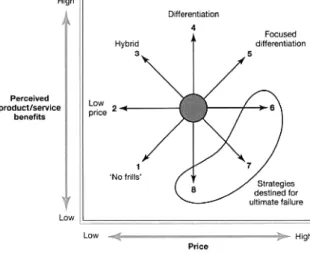
In order to improve Porter’s generic strategies, Bowman developed a more market oriented framework named Strategy Clock. This framework enlarges the three strategic positions developed by Porter into eight.
“In a competitive situation, customers make choices on the basis of their perception of value for money, the combination of price and perceived product/service benefits” (Johnson, Scholes and Whittington, 2008, p.224). The purpose of the strategy clock is to “help managers understand the changing requirements of their markets and the choices they can make about positioning
Figure 4: Strategy Clock (Johnson, Scholes, and