PHYSIOLOGICAL BASES OF TEXTURE AND COLOR CHANGES IN
FRESH-CUT FRUIT USING PEAR AND MELON AS MODEL
SYSTEMS: IMPLICATIONS FOR THE DEVELOPMENT OF
TECHNOLOGIES AND PROCESSES
Thesis submitted to the Universidade Católica Portuguesa to attain the degree of PhD in Biotechnology – with specialization in Food Science and
Engineering
By
Maria Helena Martins Teixeira Gomes
Under the supervision of Prof. Dr. Domingos Paulo Ferreira de Almeida
To my family, particularly to my grandfather António Teixeira Gomes, and to Beatriz and Ana.
iii
ABSTRACT
The aim of this research was to examine the physiological and biochemical bases of color (enzymic browning) and textural changes, two of the main quality attributes limiting the storage life of fresh-cut fruit, and to evaluate the physiological response to current technologies, as modified atmosphere packaging and food additives. Two fruit species were selected as model systems: one highly susceptible to enzymic browning („Rocha‟ pear), and another fruit whose shelf-life is limited by softening and juice retention but not does not undergo significant color changes (cantaloupe melon).
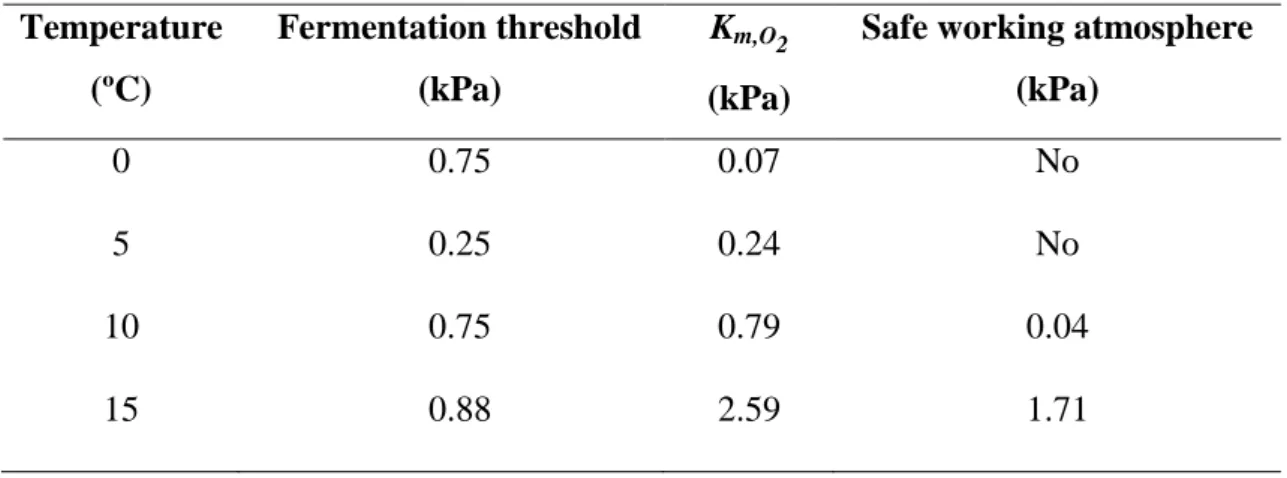
The kinetics of respiration as a function of oxygen partial pressure was determined in pear and melon at four temperatures (0-15 ºC) to provide fundamental information to assess the potential benefits of modified atmosphere packaging (MAP), and to design MA packages. Respiratory parameters (maximum respiration rate and apparent Km) were derived from Michaelis-Menten kinetic models adjusted to the experimental data, and the effect of temperature on the respiration rate was modelled by exponential functions. Apparent Km values for oxygen uptake in fresh-cut pear and melon were very close to or even lower than the fermentation thresholds at all temperatures, indicating that there is a strong physiological limitation to the reduction of respiration rate of these fresh-cut fruits by lowering oxygen levels. This hypothesis was tested in packaged fresh-cut pear stored at 5 ºC for 20 days. Packages were designed to achieve three equilibrium levels of oxygen partial pressures, high (HO), low (LO) and very-low (VLO) O2. Changes in quality attributes related to fruit metabolism, namely firmness, titratable acidity, pH, and SSC were not affected by oxygen levels. Water activity and levels of ascorbate during storage were independent of oxygen levels. Oxygen partial pressure inside the packages affected browning and microbial growth, which were reduced under VLO. Sensory analyses
iv
confirmed that panelist perceived the differences in color but did not notice differences in firmness or taste among samples. These results confirmed the theoretical estimation.
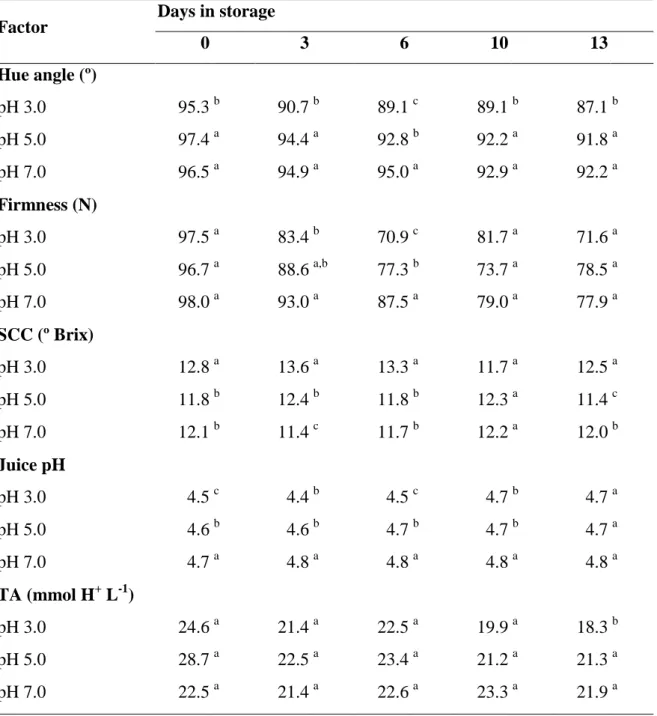
The use of additive is likely to alter, intentionally or unintentionally, the surface pH of fresh-cut produce. Considering the wide range of pH optima for enzymes germane to the quality of fresh-cut fruit, it is also anticipated that pH might have differential effects on the various quality attributes. The effects of pH, per se and in interaction with calcium formulations, of dipping solutions on enzymic browning (related to polyphenoloxidase activity), on textural changes, and on the disassembly of the cell wall of fresh-cut pear were studied. Pear slices were dipped in a buffer solution at pH 3.0, 5.0 or 7.0 and stored at 4.5 ºC for 13 days. In other experiments, pear slices were dipped in buffer solutions containing 250 mM of calcium ascorbate, lactate, chloride, or propionate, at pH 3.0 or 7.0, and stored at 4.5 ºC for 6 days. pH of the dipping solution significantly affected browning, softening, and microbial growth in fresh-cut pears. Browning and softening were more intense in pears treated at pH 3.0 than at pH 5.0 or 7.0, but microbial growth was lower in slices treated at pH 3.0. Calcium salts also affected texture and color in a salt-specific manner. Discrepancies were observed between the pH dependency of PPO activity and tissue browning. Chemical inhibition of PPO was affected by the pH of the buffer, and chemicals.
In conclusion, the knowledge of the kinetics of respiration rates as a function of oxygen partial pressure is fundamental to the assessment of the potential of low-oxygen atmospheres to reduce respiration and extend shelf-life. MAP is of little benefit to delay physiological changes in fresh-cut pear and pH of the dipping solution can affect, per se, the quality of fresh-cut fruit. The choice of calcium additives to prevent undesirable change on visual and sensorial quality of cut produce should consider the pH ranges that provide the expected benefits.
v
RESUMO
Título da tese: „Bases fisiológicas das alterações da textura e da cor em fruta
minimamente processada utilizando pêra e melão como sistemas modelo: implicações para o desenvolvimento de tecnologias e processos‟.
As frutas e as hortaliças minimamente processadas (ou de IV gama) aliam a conveniência de consumo e os benefícios para a saúde, e representam um segmento de mercado em crescimento nos países desenvolvidos. A manutenção do aroma, textura, cor, nutrientes e segurança alimentar, durante o processamento e ao longo da cadeia de distribuição, são os principais desafios enfrentados pela indústria de produtos minimamente processados. O processamento implica o ferimento dos tecidos vivos e sujeita-os a stresse. O desafio de reconciliar a necessidade de frescura com a resposta fisiológica ao stresse provocado pelo processamento e pelos métodos de conservação, implica um conhecimento profundo da fisiologia dos frutos minimamente processados.
Este trabalho de investigação teve por objectivo obter informação sobre as bases fisiológicas e bioquímicas das alterações da cor (acastanhamento enzimático) e da textura, dois dos principais atributos da qualidade que limitam a vida útil dos frutos minimamente processados, e avaliar a resposta fisiológica às tecnologias disponíveis, nomeadamente embalagem em atmosfera modificada e aditivos alimentares, tendo ainda em conta a estabilidade microbiológica e a qualidade sensorial dos produtos. Seleccionaram-se duas espécies de frutos como sistemas modelo: um susceptível ao escurecimento enzimático (pêra „Rocha‟), e outro fruto cuja vida útil é limitada pelo amolecimento e pela retenção de sumo mas que não sofre variações significativas de cor (melão cantalupe).
vi
A cinética da respiração em função da pressão parcial de oxigénio foi determinada em pêra e melão a quatro temperaturas (0, 5, 10 e 15 ºC), de modo a obter a informação fundamental para inferir sobre os potenciais benefícios da embalagem em atmosfera modificada (MAP, do inglês Modified Atmosphere Packaging) e para a concepção de embalagens. Os parâmetros respiratórios (taxa máxima de respiração e Km aparente) foram derivados de modelos de Michaelis-Menten ajustados aos dados experimentais, e o efeito da temperatura na taxa de respiração foi modelado por funções exponenciais. Os valores de
Km aparente para o consumo de oxigénio em pêra e melão cortados foram muito próximos ou mesmo inferiores aos limiares de fermentação para todas as temperaturas, indicando a existência de uma forte limitação fisiológica a reduções significativas da taxa de respiração destes frutos cortados. Dada esta limitação fisiológica, foi levantada a hipótese de que baixos teores de oxigénio no interior das embalagens teriam um benefício insignificante na redução do metabolismo. Neste caso, a sua optimização seria infrutífera para peras e melões minimamente processados. Esta hipótese foi testada com pêra cortada.
Os dados respiratórios foram utilizados no desenho de embalagens em atmosfera modificada para testar o efeito de baixos teores de oxigénio na redução significativa da actividade metabólica. As embalagens foram desenhadas para permitirem três níveis de pressão parcial de oxigénio: alta (HO) 18 kPa O2, baixa (LO) 2 kPa O2 e muito baixa (VLO) 0.5 kPa O2, com 1-5 kPa CO2. A pêra cortada foi tratada com ascorbato de cálcio (250 mM), tamponado a pH 3.0 e pH 7.0, embalada e armazenada a 5 ºC durante 20 dias. Os valores (médias ± intervalo confiança a 95%) de oxigénio obtidos experimentalmente foram 16.7±0.2, 1.8±0.2 e 0.25±0.04 kPa com níveis de CO2 correspondentes de 1.3±0.1, 4.3±0.2 e 6.5±0.4 kPa, respectivamente para os tratamentos HO, LO e VLO. As alterações nos atributos de qualidade de pêra cortada relacionados com a actividade metabólica, como a firmeza, os sólidos solúveis, o pH e a acidez titulável do sumo não foram afectados pelas
vii
concentrações de oxigénio. A actividade da água também não foi afectada pela concentração de oxigénio e a taxa de perda de ascorbato durante o armazenamento foi independente do nível de oxigénio. A pressão parcial de oxigénio no interior das embalagens afectou o acastanhamento e o crescimento microbiano, os quais foram reduzidos sob VLO. As análises sensoriais efectuadas após 8 dias de armazenamento confirmaram que o painel de provadores detectou diferenças na cor, mas não percebeu diferenças na firmeza e no sabor entre os vários tratamentos de oxigénio. O acastanhamento foi mais intenso a pH 3.0 e o crescimento microbiano foi mais rápido a pH 7.0. Os resultados mostram que reduzindo os níveis de oxigénio no interior de embalagens não se conseguem ganhos significativos de qualidade nos parâmetros que dependem da fisiologia da respiração, confirmando a estimativa teórica.
Os aditivos alimentares usados para prevenir as perdas de qualidade devidas a acastanhamento enzimático, amolecimento ou crescimento microbiano, alteram, intencionalmente ou não, o pH da superfície dos produtos minimamente processados. É expectável que o pH interfira com vários atributos de qualidade de frutos cortados, como as reacções de acastanhamento mediadas pela enzima polifenoloxidase, a textura e o metabolismo da parede celular, e o crescimento microbiano. Considerando o amplo intervalo de valores de pH óptimo para as enzimas mais directamente relacionadas com a qualidade de frutos minimamente processados, antecipa-se que o pH possa ter efeitos diferenciais nos vários atributos de qualidade. O efeito do pH da solução de imersão na qualidade de fruta cortada foi estudado em pêra, pela sua susceptibilidade ao acastanhamento (relacionada com a actividade da polifenoloxidase) e ao amolecimento (relacionado com as enzimas da parede celular).
Os efeitos do pH, per se e em interacção com as formulações de cálcio, das soluções de imersão foi estudado no escurecimento enzimático, nas alterações de textura, e na
viii
desintegração da parede celular de pêra cortada. As fatias de pêra foram mergulhadas por 60 s em soluções tampão a pH 3.0, 5.0 ou 7.0 e armazenadas por 13 dias a 4.5 ºC. Noutras experiências, as fatias de pêra foram mergulhadas por 60 s em soluções tampão contendo 250 mM de ascorbato, lactato, cloreto, ou propionato de cálcio, a pH 3.0 ou 7.0, e armazenadas a 4.5 ºC por 6 dias. O pH da solução afectou significativamente o acastanhamento, o amolecimento e o crescimento de microrganismos em peras cortadas. O acastanhamento e o amolecimento foram mais intensos em peras tratadas a pH 3.0 do que a pH 5.0 ou 7.0, mas o crescimento microbiano foi menor em fatias tratadas a pH 3.0. Os sais de cálcio também afectaram a textura e a cor, de um modo de específico para cada sal. As maiores variações de cor ocorreram nos tratamentos com os sais propionato e lactato, em que as fatias tratadas a pH 3.0 amoleceram mais e apresentaram maior efluxo de electrólitos do que as fatias tratadas a pH 7.0. O ascorbato de cálcio foi muito eficaz na preservação da cor e na redução do crescimento microbiano independentemente do pH, mas promoveu a solubilização de pectinas e o amolecimento a pH 3.0.
Os efeitos do pH e do substrato fenólico no acastanhamento da superfície de pêra cortada e na actividade da polifenoloxidase (PPO) foram estudados no sentido de relacionar o acastanhamento com a actividade da PPO para vários substratos fenólicos. A maior actividade da PPO obteve-se com catecol a todos os valores de pH testados. Observaram-se discrepâncias entre a dependência do pH para o escurecimento e para a actividade da PPO. Obtiveram-se correlações significativas entre a actividade da PPO e os parâmetros de cor luminosidade (L*) ou diferença métrica de tonalidade (∆H*) no intervalo de pH entre 3.0 e 8.0, excepto para o ácido clorogénico e o 4-metilcatecol. Com o ácido clorogénico, o mais abundante substrato fenólico para a PPO em pêra „Rocha‟, o acastanhamento dos tecidos foi maior a pH 3.0 (∆H* mais alto), mas a actividade da PPO foi menor a este pH. Similarmente a outros substratos fenólicos, o acastanhamento a pH 3.0 foi superior à
ix
correspondente actividade da PPO. Testou-se ainda a inibição química da PPO usando catechol como substrato. A inibição da PPO foi afectada pelo pH da solução tampão e foi mais efectiva quando se utilizou ácido ascórbico, N-acetil-L-cisteína e ascorbato de cálcio. Estes resultados sugerem que o pH dos aditivos para pêra cortada deve ser corrigido para reduzir o acastanhamento potencial.
Em conclusão, a análise da cinética das taxas de respiração em função da pressão parcial de oxigénio é fundamental para avaliar o potencial que as atmosferas com baixa concentração de oxigénio poderão ter na redução da respiração e na extensão da vida útil. A verificação da existência de uma „atmosfera prática de segurança‟ deve preceder as tentativas morosas de optimização dos níveis de oxigénio no interior de embalagens em atmosfera modificada para frutos minimamente processados. O pH dos aditivos pode afectar, per se, a qualidade dos frutos cortados. A escolha dos aditivos de cálcio para prevenção de alterações visuais e organolépticas indesejáveis de produtos minimamente processados deve considerar os valores de pH compatíveis com os benefícios pretendidos.
xi
ACKNOWLEDGMENTS
This work was funded by Fundação para a Ciência e a Tecnologia (Portugal), and co-funded by Programa Operacional Potencial Humano (POPH), European Social Fund (ESF), via project grant PTDC/AGR˗ALI/66144/2006 and the PhD grant SFRH/BD/22628/2005.
My thanks go to my supervisor Dr. Domingos P. F. Almeida for his total support and friendship from the PhD proposal to submission of articles. To me it was a pleasure work with him all these years.
I should acknowledge to Dr. F. Xavier Malcata who allowed me to come to ESB-UCP and to work in his group. A special acknowledgment to Dr. Randolph Beaudry, who received me in his laboratory at Michigan State University and taught me the bases to model respiratory processes and to design modified atmosphere packages.
Pears used in the experiments were kindly offered by CPF – Centro de Produção e
Comercialização Hortofrutícola, Lda. (Bombarral, Portugal) and COOPVAL – Cooperativa Agrícola dos Fruticultores do Cadaval, CRL (Cadaval, Portugal), and I am
grateful to their technicians Filipe Silva and Nelson Isidoro. Special thanks to Dr. Olivier Belet (Amcor-Flexibles, UK) who offered the plastic films used in the MAP experiments.
I greatly appreciate the help of Joana Fundo, Ana Amaro, Dr. Fátima Poças, Dr. Susana Fonseca, project team co-workers, Sílvia Santos, Tiago Vieira, Dr. Teresa Brandão, Dr. Susana Carvalho, and all colleagues at ESB. Special thanks to the collaborators of the Departments of Chemistry and Sensory Analyses (Maria João Monteiro, Susana Teixeira and Pedro Machado) and Packaging (Joel, Telma, Karine, Isabel and Céu) at AESBUC.
I am grateful to my family that is my circle of strength and love, and to my friends.
xiii CONTENTS Abstract ... iii Resumo ... v Acknowledgments ... xi Contents ... xiii
Symbols and abbreviations ... xv
Chapter 1 General introduction ... 1
Chapter 2 Modelling respiration of packaged fresh-cut fruit as affected by oxygen concentration and temperature ... 27
2.1 Fresh-cut „Rocha‟ pear ... 29
2.2 Fresh-cut cantaloupe melon ... 48
Chapter 3 Effects of hydrogen ion concentration and calcium additive on the quality retention of fresh-cut ‘Rocha’ pear ... 63
Chapter 4 Effects of pH, phenolic substrate and food additives on polyphenoloxidase activity and tissue browning of fresh-cut ‘Rocha’ pear ... 87
Chapter 5 Effects of package oxygen concentration and calcium ascorbate pH on the quality retention of fresh-cut ‘Rocha’ pear ... 113
Chapter 6 General discussion ... 143
xv
SYMBOLS AND ABBREVIATIONS
Respiration and modified atmosphere packaging
A Surface area (cm2)
Ea Activation energy (kJ mol-1) FT Fermentation threshold (kPa)
2
O m,
K Michaelis-Menten constant for the pO2 pkg at half of
T max, O2 R (kPa) 2 CO mn,
K Michaelis-Menten constant for the non-competitive CO2 inhibition
l Thickness (cm)
M Mass (kg)
MAP Modified atmosphere packaging
p Partial gas pressure (kPa)
P Permeability (mmol cm cm-2 h-1 kPa-1)
R Universal gas constant (0.0083144 kJ mol-1 K-1) RMSE Root mean square error
2
O
R ,
2
CO
R Respiration (consumption, production) rate (mmol kg-1 h-1)
T max, O2
R Michaelis-Menten constant for maximal value of
2 O R (mmol kg-1 h-1) RQ Respiratory quotient T Temperature (K) Subscripts
atm Outside the package pkg Inside the package
xvi
Additives and enzymes
AA Ascorbic acid
Ca-Asc Calcium ascorbate Ca-Chl Calcium chloride Ca-Lact Calcium lactate Ca-Prop Calcium propionate 4-HR 4-hexylresorcinol NAC N-acetyl-L-cysteine
POD Peroxidase
PPO Polyphenoloxidase
Quality parameters
a* Chromaticity coordinate on a green (-a*) to red (+a*) axis b* Chromaticity coordinate on a blue (-b*) to yellow (+b*) axis C* Chroma, C* = [(a*)2 + (b*)2] ½
CFU Colony forming units [log (CFU g-1)] CIE Commision Internationale de L'Eclairage
ΔH* Metric-hue difference, ΔH* = [(Δa*)2 + (Δb*)2 ˗ (ΔC*)2] ½ ΔE* Color difference, ∆E*ab = [(ΔL*)2 + (Δa*)2 + (Δb*)2] ½ EE Electrolyte efflux (% electrolyte leakage)
EIS Ethanol-insoluble solids hº Hue angle, hº = tan-1 (b*)/(a*)
L* Lightness
SSC Soluble solids content (º Brix) TA Titratable acidity (mmol H+ L-1)
CHAPTER 1
2
1. Minimally processed fruits
Fruit are traditionally perceived as having inherent health benefits, and no marketing effort is needed to clarify consumers (Innova Market Insights, 2010). When inherent goodness and healthy eating joined convenience in the fresh-cut fruit, a new market segment was created. This segment is growing and is expected to continue expanding in the coming years (Innova Market Insights, 2010). “Fresh-cut produce” were defined by the International Fresh-cut Produce Association (now United Fresh Produce Association), as “any fresh fruit or vegetable or any combination thereof that has been physically altered from its original form, but remains in a fresh state. Regardless of commodity, it has been trimmed, peeled, washed and cut into 100% usable product that is subsequently bagged or prepackaged to offer consumers high nutrition, convenience and value while still maintaining freshness” (Lamikanra, 2002). As consequence of processing, minimally processed fruit are highly perishable compared to intact fruit. Safe and secure fresh-cut produce requires adequate technologies and strict quality-control in every step. Negligent postharvest handling, like poor produce or equipment sanitation, poor water quality, and temperature abuse, increase the chance that the ready-to-eat foods at the point of sale become microbiologically unacceptable and represent a potential health risk to humans (Suslow et al., 2003). Disease outbreaks linked to fresh-cut produce will reflect on consumer confidence, and ultimately on sales, and will depreciate all the efforts made by all other operators in this market segment. In addition to safety, quality attributes related to produce physiology are inherently difficult to manage in the supply chain of fresh-cut produce.
3
2. Quality of fresh-cut produce
Quality perception is subjective, with diverse attributes being unequally important to different players within the distribution chain (Shewfelt, 1999), but can be defined based on the product intrinsic properties that are important for consumers and market handlers. Quality can be limited by visual (e.g., color), textural (e.g., firmness), microbial, chemical (e.g., nutritional) and sensorial (e.g., flavor) attributes. Postharvest changes lead to product depreciation, and quality parameters should be quantified to meet market demands and limits. Keeping quality (defined as the time until a product becomes unacceptable) will depend on the initial produce quality, and on the rate of quality decrease of individual quality attributes to reach the acceptance limit (Tisjkens and Polderdijk, 1996). Excellent raw material is a prerequisite for excellent starting quality of fresh-cut product, while external storage conditions, such as temperature, modified atmosphere and relative humidity, are assumed to affect only the rate of the degradation reactions (Tisjkens and Polderdijk, 1996).
The loss of cellular integrity and protective tissues during processing of cut produce modifies the metabolism and accelerates quality depreciation. Respiration rates of fresh-cuts are generally higher than those of whole product (Watada et al., 1996; Gorny et al., 2000; Mao et al. 2006; Techavuthiporn et al., 2008). The wound response also includes an increase of ethylene production (Brecht, 1995), an induction of enzymes of phenolic metabolism (Howard and Griffin, 1993; Reyes et al., 2007) and enzymes of membrane and cell wall degradation (Karakurt and Huber, 2003). Processing, and a higher degree of cutting, enhances moisture loss and dehydration of damaged cells (Tatsumi et al., 1991; Cisneros-Zevallos et al., 1995), loss of vitamins and flavor volatiles (Lamikanra and Richard, 2002; Gil et al., 2006; Techavuthiporn et al., 2008), softening (Karakurt and Huber, 2003), browning or other color changes (Ke and Saltveit, 1989; Tatsumi et al.,
4
1991; Cisneros-Zevallos et al., 1995), and overall degradation rates that result in the shortening of the useful lifespan. Minimally processed fruits become unacceptable because of alterations in one or more of the following attributes (Ahvenainen, 1996; Soliva-Fortuny and Martín-Belloso, 2003), depending on the type of fruit: 1) tissue softening, 2) enzymic browning and other undesirable color changes, 3) microbiological stability, 4) sensory and nutritional depreciation. The evolution of each one of these attributes depends 1) on the physiology of the fruit, 2) on the processing conditions, and 3) on the preservation technologies.
Quality maintenance of fresh produce in the supply chain is the goal of processors, distributors and researchers. Preservation of fresh-cut fruit resorts to good sanitation, gentle processing methods, refrigeration, modified atmosphere packaging, enzymic browning inhibitors, and firming additives (Ahvenainen, 1996; Watada and Qi, 1999; Toivonen and Brummell, 2008).
2.1 Quality attributes and tissue wound response
2.1.1 Texture and cell wall stability
Textural properties, such as firmness, crispness, and juice retention, are very important to the appearance and flavor of fresh-cut fruit. Turgidity, rigidity, and crispness of the tissues depend on cell size, cell wall composition, and are affected by the ability of the parenchyma cells to retain water thus causing turgor pressure (Bourne, 1979; Toivonen and Brummell, 2008). In pear fruit, it is possible to notice grittiness due to the presence of sclereids (collenchyma cells) in the flesh (Bourne, 1979). Texture can be quantified by instrumental methods or assessed by sensorial panels. Instrumental tests usually use puncture (measuring the force required to a probe penetrate into the food to a defined depth,
5
causing irreversible tissue rupture), or deformation (the food is gently squeezed, and the distance to which the product compresses under a standard force or the force required to compress it to a standard distance is measured) (Szczesniak and Bourne, 1969). Flesh firmness of fresh-cut pear is usually measured by penetration using a firmness tester or a texture analyzer (Gorny et al., 1998; Dong et al., 2000; Oms-Oliu et al. 2006; Soliva-Fortuny et al., 2007); the midpoint between endocarp and skin or the geometric center of the sample is penetrated by a flat-head probe, to one-half of its thickness. The same procedures can be used to assess firmness of fresh-cut cantaloupe or honeydew melons (Luna-Guzman and Barrett, 2000; Aguayo et al, 2004; Lamikanra et al, 2005). Kramer shear tests are believed to be closely related to the human experience of chewing foods. In this technique, the movable blades are attached to the load cell and are forced through the test sample producing a force proportional to the sum of both the shear and compression failure point of the test sample. Shear tests were chosen by Qi et al. (1999), Bai et al. (2001), and Saftner et al. (2003) to measure the firmness of fresh-cut melons. Texture of whole fruit can also be measured by tensile strength, twist tests, and by recording the chewing sounds (Harker et al., 2002). A promising non-destructive technique for pear is based on dynamic resonance frequency of drop impact (Wang et al., 2007). Sensory panelists can assess a wide range of texture attributes including crispness, crunchiness, hardness, juiciness, ease of breakdown, and mealiness (Harker et al., 2002). However, it is often problematic to find a relationship between objective measurements and sensory studies. Puncture tests (using an 11 mm diameter Effegi probe) were better at predicting sensory texture attributes of intact apple, although a panel only perceived a texture variation when firmness differed by more than 6 N (Harker et al., 2002). In addition, these authors separated the mechanism of tissue failure along a range of apple firmnesses: at values higher than 66 N cell fracture (cells break across the equator and release juice) generally
6
occurred; between 66 and 45 N cells ruptured (cells burst and collapse with separation of the plasma membrane and cell wall), while debonding (neighboring cells separate at the middle lamella without compromising cell integrity) occurred at firmness values lower than 39 N, which was the minimum acceptable firmness. Microscopic images of olive fruit also revealed cell fracture in green fruit and a progressive parenchyma cell separation along the middle lamella region as the fruit soften (Mafra et al., 2001). Soft apples developed a mealy texture, and a critical puncture force threshold for acceptable texture of apples was set above 50 N (Harker et al., 2002). Partially ripe pears (44-58 N) are assumed to be the most suitable for fresh-cut processing (Gorny et al., 2000; Soliva-Fortuny et al., 2004a); by analogy with apple texture, cell rupture and fracture are presumably the predominant phenomena during textural measurements in pear tissue.
Textural deterioration of fresh-cut produce occurs as a result of physiological responses to wounding, water loss, turgor changes, and lignification in case of vegetables (Toivonen and Brummell, 2008). After cutting there is a continuation of ripening-related cell wall disassembly events, enhanced by ethylene, which decrease cell wall strength and reduce intercellular adhesion (Toivonen and Brummell, 2008). A decline in fruit firmness during ripening coincide with partial solubilization of pectic, hemicellulosic and cellulosic polysaccharides within the cell wall matrix, and lead to a progressive loss of cell adhesion and increased cell separation (Mafra et al., 2001). In addition, membrane disruption during fruit ripening (Varela et al., 2007) or during storage of fresh-cuts (Soliva-Fortuny et al., 2002b) cause cellular collapse and exudation, altering tissue organization. Textural changes during fruit ripening and softening are mediated by several enzymes, such as polysaccharide hydrolases, transglycosylases, lyases, and expansins, and the relative role of these enzymes differ among fruit types (for review see Brummell and Harpster, 2001; Toivonen and Brummell, 2008; Li et al., 2010). Polygalacturonase (PG, EC 3.2.1.15)
7
activity is responsible for pectin depolymerization and solubilization, but PG requires a pectin substrate that is partially demethylesterified by pectin methylesterase (PME, EC 3.1.1.11). Furthermore, PG activity is affected by the pH and mineral composition of the apoplast (Almeida and Huber, 1999). Large increases in the activity of β-galactosidase (β-gal, EC 3.2.1.23), which catalyzes the removal of the terminal nonreducing β-D-galactosyl residues from galactan, accelerate cell wall disassembly and enhance softening of fresh-cuts by changing the accessibility or reactivity of cell wall polysaccharide to other cell wall hydrolases (Toivonen and Brummell, 2008; Li et al., 2010). Endo-1,4-β-D-glucanase
(EGase, EC 3.2.1.4), and xyloglucan endotransglycosylase (XET, EC 2.4.1.207), play a role in the degradation of cellulose matrix in ripening fruit and contribute to fruit softening (Li et al., 2010). Karakurt and Huber (2003) found that fresh-cut papaya soften and deteriorate more rapidly than whole papaya, and verified that the activity of α- and β-galactosidases, lipoxygenase, phospholipase D, and polygalacturonase were enhanced in response to cutting. However, transgenic experiments showed that suppression of ripening-related cell wall enzymes have little or no impact on fruit firmness (Brummell and Harpster, 2001). Saladié et al. (2007) calls the attention to the importance of turgor regulation at the cell- and tissue-level to the softening of fleshy fruits, as an additional key factor affecting tissue texture.
2.1.2 Color
Color changes on minimally processed produce include browning, discoloration events, and other color-changing processes specific to particular crops (Toivonen and Brummell, 2008). If enzymes and their substrates are separated within cells, as is the case of polyphenoloxidase and the phenolic substrates, a physical stress or deteriorative process (e.g., wounding or senescence) are necessary to initiate browning reactions (Toivonen and
8
Brummell, 2008). Wounding of lettuce induces the synthesis of enzymes of phenylpropanoid metabolism, which initiate the conversion of L-phenylalanine to trans-cinnamic acid by phenylalanine ammonia lyase (PAL; EC 4.3.1.5). Subsequent synthesis and accumulation of phenolic compounds that can be oxidized by polyphenoloxidase lead to wound-induced browning (Ke and Saltveit, 1989). In many fruit, however, the levels of preexistent phenolic substrates are enough for rapid browning to occur independently of the
de novo synthesis of phenolic compounds. Enzymic browning reactions on fruits are mainly
catalyzed by polyphenoloxidase (PPO; EC 1.14.18.1). PPO causes the oxidation of the o-diphenols to o-quinones, which then polymerize to produce brown pigments called melanin (Martinez and Whitaker, 1995). Phenol peroxidase (POD; EC 1.11.1.7.) can also mediate browning reactions, namely on pear (Richard-Forget and Gauillard, 1997), melon (Chisari et al., 2008), and lettuce (Degl‟Innocenti et al., 2005), although its activity is limited by hydrogen peroxide availability. White discoloration on peeled carrots is considered a result of surface cells dehydration and wetting characteristics of the lignin produced after cutting (Tatsumi et al., 1991; Howard and Griffin, 1993; Cisneros-Zevallos et al., 1995), while chlorophyll degradation is involved in discoloration of green tissues (Fonseca et al., 2005; Toivonen and Brummell, 2008).
Objective color description is based in the numerical expression of three coordinates in the chromaticity diagram (Konica Minolta, 2007): the Cartesian (rectangular) coordinates L*, a*, and b*, or the cylindrical coordinates hue (hº), lightness (L*), and saturation (syn. chroma, C*). The L*a*b* color space defined by the International Commission on Illumination (CIELAB) is very often used in color studies of horticultural commodities. Lightness (L*) changes from white (+100) to black (0). A decrease in L* value indicates a loss of whiteness (brightness) or darkening. The chromaticity coordinates, a* and b*, vary on a green (-a*) to red (+a*) axis and on a blue (-b*) to yellow (+b*) axis. A more positive
9
a* value indicates browning, whereas a more positive b* indicates yellowing. As the a* and b* value become more positive (+60) or more negative (-60) the saturation of the color increases (more vivid colors). Chroma values, C* = [(a*)2 + (b*)2] ½, measure color saturation and vary between 0 (pale color) and +60 (vivid color). Hue angle is expressed in degrees, hº = tan-1 (b*)/(a*), and is defined as the angle the vector makes with the +a* axis; 0º corresponds to red hue (+a*), 90º to yellow (+b*), 180º to green a*) and 270º to blue (-b*). Color difference, ∆E*ab = [(ΔL*)2 + (Δa*)2 + (Δb*)2] ½, indicates the degree of color difference but not the direction. For difference measurements the metric-hue difference is calculated, ΔH* = [(ΔE*ab)2 − (ΔL*)2 − (ΔC* 2] ½ = [(Δa*)2 + (Δb*)2 − (ΔC*)2] ½). The hue difference (Δh) can also be quantified, and is the simple difference between the hº of the sample and the hº of the target (initial value or reference sample).
Browning intensity on cut surfaces can be assessed by an increase of a* values on pear (Gorny et al., 2000) and apple (Tortoe et al., 2007), and a decrease of L* values (Gunes et al., 2001; Soliva-Fortuny et al., 2002a). Several authors have used the decline in hue angle as an indicator of cut pear browning (Pittia et al., 1999; Dong et al., 2000; Oms-Oliu et al., 2006). On the other hand, browning reactions in melons are nearly inexistent. The small changes in lightness, chroma, and hue measured in fresh-cut cantaloupe, confirmed visually by a sensorial panel, indicate absence of browning (Lamikanra et al., 2000). Nevertheless, Portela and Cantwell (2001) observed a decrease in L* and chroma of melon blunt-cut pieces, which were associated with the appearance of translucency.
2.1.3 Taste, aroma, and nutritional composition
Satisfaction in terms of flavor (taste and aroma) motivates consumers for repeated purchases (Kader, 1999); it is therefore important to consider the wound effects on flavor of fresh-cut fruit. The main pre-cutting factors that influence the naturally occurring flavor of
10
intact produce are maturity and storage temperature and atmosphere (Beaulieu and Baldwin, 2002). Processing and subsequent storage alter endogenous volatile compounds, but allow synthesis of enzyme-mediated secondary compounds that could have a positive or a negative impact on flavor of fresh-cuts (Beaulieu and Baldwin, 2002). Lamikanra and Richard (2002) observed a drastic decrease of total volatiles of fresh-cut cantaloupe just 24 h after processing, although further decreases were minimal over a period of 7 days at 4 ºC. Aromatic esters were better retained during storage, but enzymic hydrolysis of aliphatic esters was severe, significantly modifying the flavor of the cut cantaloupe (Lamikanra and Richard, 2002). Cut tissue subjected to intense stress, such as sterilization by UV light, also fails to maintain ester compounds (Lamikanra et al., 2002). Wound-induced lipoxygenases (LOX; EC 1.13.11.12) and browning reactions related to oxidation of phenolic compounds (catalyzed by PAL) may contribute to the formation of numerous aldehydes and ketones responsible for off-odors (Beaulieu and Baldwin, 2002). Quality of fresh-cuts based on flavor is assuming increasing importance, and is an area of active research (Beaulieu and Baldwin, 2002).
Consumers are concerned with the nutritive value of foods, i.e., energy, and the content of vitamin, minerals, sugars, amino acid, fat, fiber, and phytochemicals. Produce response to wounding depends on the type of fruit or vegetable tissue. Gil et al. (2006) evaluated nutrient retention in several fresh-cut fruits (pineapples, mangoes, cantaloupes, watermelons, strawberries, and kiwifruits) in comparison with whole fruits stored under the same conditions. These authors observed greater, but variable among species, losses in carotenoids in cut than in whole fruits, and no significant losses in total phenolics throughout the storage. Vitamin C was well preserved in cut fruits that have acid pH but not in cantaloupe melon whose pH > 6.0. In tomato cultivars (pH 4.3-4.5) the content of lycopene, vitamin C and phenolics, and the antioxidant capacity did not differ significantly
11
between whole and processed fruit (Odriozola-Serrano et al., 2008). On the other hand, ascorbate depletion was higher in cut than in intact broccoli, a difference that is correlated with the higher respiration rate of the former (Techavuthiporn et al., 2008). Reyes et al. (2007) suggested that wound response is influenced by the initial levels of reduced ascorbic acid and phenolic compounds of vegetable tissues. These authors observed a significant increase in soluble phenolic content and antioxidant activity of shredded lettuce, celery, carrot, parsnips and sweetpotato, while in shredded lettuce zucchini, potato and red cabbage a decrease in the same variables was observed. In general, a loss of vitamin C is associated with the increase or maintenance of antioxidant capacity, suggesting that phenolics are the main antioxidant compounds in fresh-cut vegetables. In tissues with low levels of reduced ascorbic acid (e.g., lettuce, carrot, parsnips, and celery), phenolics are possibly synthesized to scavenge reactive oxygen species and compensate for the rapid consumption of ascorbate (Reyes et al., 2007). In contrast, when ascorbate is not limiting, the phenolics synthesized after wounding can be used for the formation of insoluble polymers (e.g., lignin and suberin).
2.1.4 Microbiological safety
Physicochemical properties and nutrient composition of the raw material, together with the handling operations, are major factors determining possible microbial spoilage of fresh-cut produce (Ahvenainen, 1996; Soliva-Fortuny and Martín-Belloso, 2003). Processed produce have a large number of cut cells exposed to air and prone to contamination with bacteria, yeasts and moulds. The rate of growth is dependent upon the produce type, humidity, temperature, surrounding gas composition and type of packaging. Most minimally processed vegetables, and some fruits, provide ideal conditions for the growth of microorganisms because they are low-acidic matrices (pH 5.8-6.0) with high
12
water content (Ahvenainen, 1996; Soliva-Fortuny and Martín-Belloso, 2003). During storage, an increase in the temperature and carbon dioxide concentration in the package favors a change in the composition of the dominant microflora from fungi to lactic acid bacteria (Ahvenainen, 1996). The production of lactic acid, a decrease in pH, and the loss in soluble solids during storage at 20 °C, but not at 4 ºC, indicates that lactic acid bacteria multiplication in fresh-cut cantaloupe is favored by temperature abuse during processing and storage (Lamikanra et al., 2000). This group of microorganism is responsible for fruit flavor deterioration, mediated by increased lipase production and changes in the amino acids profile (Lamikanra et al., 2000). Comparing sensory results with microbial counts in fresh-cut vegetables it was possible to set a maximum lactic acid bacteria count of 106 colony forming units g-1 as the microbiological limit of shelf-life (García-Gimeno and Zurera-Cosano, 1997). This value has been considered as satisfactory for total aerobic counts in fresh-cut produce (Gilbert et al., 2000). The microbiological limits are dependent on the type of food product, the processing it has received, the number of indicator organisms, and on the presence of pathogens, and should be revised as new knowledge is accumulated or the production and processing conditions of fresh-cut produce evolve (Gilbert et al., 2000).
2.2 Factors affecting quality changes during processing and storage
2.2.1 Temperature
Refrigeration is the most important technology for quality preservation of fresh fruits and vegetables. The desirable temperature for most fresh-cuts is 0 ºC, but very often preparation, shipment, and storage occur at 5 °C and even at 10 °C (Watada et al., 1996). Elevated temperatures hasten produce deterioration, mainly due to higher respiration rates
13
(Watada et al., 1996). The Arrhenius‟ equation has been widely used to describe the temperature dependence of respiration rates in several commodities, e.g., cauliflower (Ratti et al., 1996), cucumber (Schouten et al., 2002), endive (Charles et al., 2005), blueberry (Song et al., 1992; Cameron et al., 1994), pear (Ho et al., 2008), fresh-cut pear (Gomes et al., 2010a), and fresh-cut vegetables (Jacxsens et al., 2000). The influence of temperature on respiration rate was first quantified by the temperature coefficient (Q10) value, the rate by which a process increases when the temperature is raised by 10 °C (Fonseca et al., 2002). The Q10 values for respiration of whole fruits and vegetables, in air and in 3% O2, range from 2 to 3 between 0 and 10 ºC (Exama et al., 1993), but processed vegetables have higher Q10 than the intact counterparts (Jacxsens et al., 2000).
The effect of temperature on the growth of microorganisms and/or toxin production is well known. The lag phase (time before an increase in the number of cells is apparent) and generation time of a microbial population depend on temperature: as storage temperature decreases below optimum, the lag phase extends and the rate of growth decreases (IFT, 2003).
2.2.2 Cultivar, ripening stage, and degree of cutting
The correct selection of cultivars for minimal processing is essential to assure quality of the final product (Ahvenainen, 1996). There are differences among mango cultivars in susceptibility to browning, tissue damage, desiccation, spoilage and aroma loss during storage of fresh-cut (Beaulieu and Lea, 2003). „Conference‟ pear was preferred by a trained panel who favored the combination of less browning, higher sugar and juice content than in „Williams‟ (Arias et al., 2008). Browning intensity and tissue softening of pear slices differ widely among „Bartlett‟, „Bosc‟, „Anjou‟ and „Red Anjou‟ pears, with the first variety being the best for fresh-cut processing (Gorny et al., 2000). Between four clingstone
14
peach cultivars, „Romea‟ was the one more indicated for processing, given its lower polyphenoloxidase activity and degree of browning (González-Buesa et al., 2011). These examples illustrate the potential for improving the quality of fresh-cut produce via breeding of specific cultivars for processing.
The proper stage of maturity provides acceptable eating quality to the consumer, but at same time fruit should be adequately firm for handling, processing and shipping. The effect of the stage of maturity on quality of fresh-cut pears was studied by Gorny et al. (2000), Soliva-Fortuny et al. (2004a) and Bai et al. (2009). Soft pears can develop translucency related to higher degree of mechanical injury during processing and packaging (Soliva-Fortuny et al., 2004a). Partially ripe pears (44-58 N) preserved tissue firmness and integrity better than ripe fruit, extending marketable shelf-life, and were found to be the most suitable for fresh-cut processing (Gorny et al., 2000; Soliva-Fortuny et al., 2004a). In addition, Bai et al. (2009) suggested delayed-harvest „Anjou‟ fruits (55 N) for fresh-cut instead of commercially-harvest fruits (66 N). . The former had a desirable crunchiness, higher juiciness, finer texture, and less browning, associated with a more aromatic flavor. Flavor is also an important attribute in the choice of the correct stage of maturity of cantaloupe and mango for processing, even in detriment of a firmer raw material with extended shelf-life (Beaulieu et al., 2004).
Wounding intensity and sharpness of blades affect several quality attributes that limit the shelf-life of cut produce. Slicing methods that minimize cell rupture and tissue exudates postponed off-odor development due to tissue decay, and provide superior appearance and aroma scores of carrot (Barry-Ryan and O‟Beirne, 1998). The degree of cutting of the produce is positively correlated with respiration rates (Zhu et al., 2001) and tissue dehydration (Artés-Hernández et al., 2007). Cantaloupe melon blunt-cut pieces had increased ethanol concentrations, off-odor scores, and electrolyte leakage compared to
15
sharp-cut pieces (Portela and Cantwell, 2001), but low temperature (5 ºC) was able to minimize differences in respiration and ethylene production rates between these two cutting treatments. A higher severity of wounding increased PAL activity and browning in cut lettuce (Ke and Saltveit, 1989).
2.2.3 Post-cutting treatments and packaging
Postharvest treatments to keep the quality of fresh-cut fruits generally include dipping in antioxidant and firming solution, and modified atmosphere packaging (Soliva-Fortuny and Martín-Belloso, 2003; Oms-Oliu et al., 2010). Alternatives methods to control produce deterioration, such as the application of plant extracts and physical treatments (e.g., mild heat treatments, irradiation, high hydrostatic pressure) continue to be studied but, as of yet, their commercial application to fresh-cut fruits and vegetables remains limited.
2.2.3.1 Dipping solutions and other complementary treatments
Solutions of compounds aiming at reducing undesirable color and textural changes, microbial growth, and other degradative reactions are often used in the fresh-cut industry. The preferred method of application of these additives to fresh-cut produce is by dipping the cut pieces into the solution. The choice of the preservative compounds applicable to fresh-cut produce is limited by the odors and tastes imparted by the additives (Soliva-Fortuny and Martín-Belloso, 2003). Another important issue is pH of the dipping solution. Low pH values are usually recommended to prevent microbial proliferation (Parish et al., 2003). Soliva-Fortuny and Martín-Belloso (2003) list some situations where it is advisable to raise pH values, e.g., the development of pinkish-red colored compounds on fruit tissue when cysteine is used under acidic conditions. Besides this effect on color, pH can also be
16
co-responsible for undesirable changes in firmness of minimally processed fruit (Ponting et al., 1971; Pinheiro and Almeida, 2008).
Browning inhibitors can be classified by their action on PPO enzyme, on adducts, and on the reaction medium (Garcia and Barrett, 2002). Medium acidification using citric acid is a common practice. Higher inhibition of apple PPO is achieved when pH is reduced from 5.0 to 3.6 using carboxylic acids (Janovitz-Klapp et al., 1990). Reductant compounds react with o-quinones formed by the PPO-mediated oxidation of phenolics. Ascorbic acid reduces the o-quinones back to their precursor diphenols, while thiol-containing amino acids, such as L-cysteine, N-acetyl-L-cysteine and glutathione produce stable and colorless adducts (Garcia and Barrett, 2002). During these reactions, ascorbate is irreversibly oxidized and can lose its reducing power shortly after the treatment (Son et al., 2001). Complexing agents (e.g., cyclodextrins), chelating cooper agents (e.g., polyphosphate), and specific enzyme inhibitors (e.g., 4-hexylresorcinol) are other categories of antibrowning additives (Garcia and Barrett, 2002; Arias et al., 2007). The combination of acidulants, chelators and reductants is often proposed to improve the treatments‟ effectiveness.
Firming additives containing calcium, such as the calcium salts of ascorbate, chloride, lactate, propionate, and gluconate, can be successfully used in several fresh-cut fruit (Dong et al., 2000; Luna-Guzmán and Barrett, 2000; Saftner et al., 2003; Lamikanra and Watson, 2007; Aguayo et al., 2008, 2010). Calcium chloride dips are the most common treatment (Soliva-Fortuny and Martín-Belloso, 2003), while alternative calcium salts are being tested for similar firming effect without the undesirable bitterness (Luna-Guzmán and Barret, 2000). Calcium is required to membrane and cell wall integrity, and can improve cell adhesion and cell turgor (Mignani et al., 1995; Picchioni et al., 1995) by binding to the negative charges of demethylated galacturonic residues of pectins (Toivonen and Brummell, 2008), therefore improving firmness retention.
17
Microbial load is a quality criterion determinant of the shelf-life of fresh-cut fruit, and surface sanitization is required for raw materials and, sometimes, for final product. Acidic solutions are used to limit bacterial growth (Bhagwat et al, 2004; Karaibrahimoglu et al., 2004; Simón et al., 2010) and malic acid is effective in repressing fungal growth (Raybaudi-Massilia et al., 2007). Acidification to pH 4.5 is sufficient to prevent microbial proliferation (Parish et al., 2003). The antimicrobial activity of organic acids depends on their low pH and on their structure (Soliva-Fortuny and Martín-Belloso, 2003), since species should be present in the solution as undissociated acids to affect microbial metabolism (Ita and Hutkins, 1991). Reduction in microbial load in response to some calcium salts, namely propionate, chloride, lactate and carbonate, has also been documented (Buta et al., 1999; Saftner et al., 2003; Mao et al., 2006; Aguayo et al., 2008).
Alternative methods are being used to reduce the use of chemical compounds in quality preservation of fresh-cut produce. Natural compounds, namely plant volatiles that play a role in the defense system against decay microorganisms, are generally recognized as safe (Lanciotti et al., 2004). Hexanal, 2-(E)-hexenal, hexyl acetate and citrus essential oils, have antimicrobial activity against naturally occurring spoilage species and pathogenic bacteria such as Escherichia coli, Salmonella enteritidis, and Listeria monocytogenes (Lanciotti et al., 2004). Carvacrol and cinnamic acid are effective in delaying spoilage of fresh-cut kiwifruit and honeydew melon (Roller and Seedhar, 2002). Vanillin, a phenolic compound, possesses antimicrobial activity in vitro and also when applied to fresh apple slices (Rupasinghe et al., 2006). Recommendation for use of these substances in post-cut dipping solution requires information about their possible odors and flavors or undesirable color changes that might compromise consumer acceptance (Roller and Seedhar, 2002). Food irradiation with UV-C radiation is effective in reducing yeast, mold, and
18
microorganisms in watermelon, without affecting juice leakage, color, and overall visual quality (Fonseca and Rushing, 2006). Gamma radiation reduces total aerobic plate counts on apple slices, but increases tissue softening and browning (Fan et al., 2005). Dipping fresh-cut celery in ozonated water diminishes PPO activity, respiration rate, and microbial contamination, while sensory quality was improved (Zhang et al., 2005). Mild heat treatments, applied to whole or cut fruit, combined or not with calcium dips, showed good results in preserving firmness of fresh-cut melon (Luna-Guzmán and Barrett, 2000; Lamikanra and Watson, 2007), fresh-cut pear (Abreu et al., 2003) and fresh-cut kiwifruit (Beirão-da-Costa et al., 2006). Mild heat treatments applied to fresh-cut pear were also considered beneficial to color retention, microbial counts, with an acceptable loss of texture (Pittia et al., 1999). However, more severe treatments (increasing heating times and/or temperature) can result in a significant loss of firmness and weight (Pittia et al., 1999), and surface discoloration (Abreu et al., 2003).
2.2.3.2 Modified atmosphere packaging and edible coatings
Modified atmosphere packaging (MAP) and edible coatings can be successfully used to maintain quality of fresh-cut fruits and vegetables (Farber et al., 2003; Olivas and Barbosa-Canovas, 2005; Rojas-Graü et al., 2009; Sandhya, 2010).
A controlled or modified atmosphere is created by altering the normal air composition (79 kPa nitrogen, 21 kPa oxygen, 0.03 kPa carbon dioxide and traces of noble gases). In controlled atmosphere (CA), a known gas mixture is established and maintained under relatively tight control throughout storage. Large quantities of product can be packed, for transportation and storage, in pallet bags and paperboard containers wrapped with a barrier plastic film (bulk packaging), within which product will experience a passively modified atmosphere (Farber et al., 2003). When small amounts of product (intact or
fresh-19
cut) are packed using a selected film type, an equilibrium atmosphere is reached naturally, as a consequence of the products‟ respiration and the diffusion of gases through the film (passive MAP). An improvement can be obtained with active MAP, where steady state gas levels inside package are reached faster by the injection of the desired mixture of gases. In addition, a layer of edible materials with barrier properties can be applied onto the surface of a cut-fruit with the objective of modifying the composition of the internal atmosphere or vehicle food additives (antimicrobial, antibrowning, texture enhancers, or nutraceuticals), in order to improve overall product quality during storage (Olivas and Barbosa-Canovas, 2005; Rojas-Graü et al., 2009; Oms-Oliu et al., 2010). Some commercially available CA and MAP systems, polymers for MAP, and edible films are listed in Farber et al. (2003).
Minimally processed fruits and vegetables packed under low oxygen and elevated carbon dioxide can have extended shelf-life and marketing period, since MAP protects from water-loss, contamination and, sometimes, reduces the metabolic rate. Beaudry (1999) discussed the effect of controlled and modified atmospheres on primary and secondary metabolism. Oxygen depletion and elevated CO2 reduce respiratory activity, oxidative tissue damage or discoloration, ethylene sensitivity, and, therefore, the rate of ripening, the rate of chlorophyll degradation, and other ethylene-dependent phenomena. When subjected to extreme atmospheres, i.e. above the tolerance limits of the commodity, plant responses include fermentation, off-flavor development, and induction of tissue injury. Lowering oxygen levels below ~ 5 kPa affect the enzymes of glycolytic metabolism and aerobic respiration rate is reduced, and, at very low O2 levels, the decline of energy and carbon skeletons availability induces fermentation (Beaudry, 1999). Inhibition of ethylene synthesis occurs at higher O2 levels than those required for significant reductions in respiration rate. Farber et al. (2003) reported an oxygen partial pressure of 8 kPa to be sufficient to start reducing ethylene biosynthesis but reductions in respiration rate only
20
occur below 1 to 5 kPa of oxygen. A study with pea seedlings showed that 50% inhibition (Km) of the ethylene response occurred at 2.8 kPa O2 while the Km for respiration was 0.25 kPa O2. Low levels (1.55 kPa) of CO2 were enough to compete with ethylene and inhibit its response during growth of pea stem sections, without affecting respiration rate (Burg and Burg, 1967). The inhibition of wound-induced ethylene production in climacteric fruits depends on CO2 concentration; elevated CO2 (~ 20 kPa) inhibits l-aminocyclopropane-1-carboxylate (ACC) synthase and, in some cases, ACC oxidase (Mathooko, 1996). Some studies reported that high levels of CO2 could reduce, have no effect, or even stimulate respiration (Beaudry, 1999; Fonseca et al., 2002). Low oxygen levels decrease PPO activity (its Km for O2 is around 7-10 kPa), and dark pigment generation can be slowed down (Beaudry, 1999). Browning prevention in lettuce resort to fermentative oxygen levels (< 0.5 kPa), but, in this particular product, the resulting off-flavors are less important than the improved appearance (Beaudry, 1999). Poor availability of oxygen generally suppresses the production of flavor-important volatiles, but the effect of CO2 on aroma volatiles is unclear (Beaudry, 1999).
MAP can also be designed to avoid the optimal O2 level for microbial growth (21 kPa for aerobes, 0-2 kPa for anaerobes). Oxygen partial pressures below 1 to 2 kPa can stimulate the growth of anaerobic pathogens, and increasing CO2 levels (below 50 kPa) inhibit spoilage microorganisms but pathogens, such as Clostridium perfringens, C.
botulinum and L. monocytogenes, are only minimally affected and can proliferate due to a
lack of competition by the indigenous microflora (Farber et al., 2003). Low oxygen levels and moderate to high levels of CO2 (10-20 kPa) are enough to inhibit the growth of aerobic microorganisms, such as pseudomonas, but lactic acid bacteria can be stimulated under these conditions (García-Gimena and Zurera-Cosano, 1997; Farber et al., 2003). CO2 has a significant and direct antimicrobial activity, as a result of a reduction in intracellular pH,
21
changes on enzyme activity, and alteration of overall microbial cellular metabolism (Farber et al., 2003). This inhibition is concentration and temperature dependent; as temperature decreases, the inhibitory power of CO2 increases (García-Gimena and Zurera-Cosano, 1997). However, very few horticultural commodities cultivars tolerate exposures to CO2 levels known to have an antimicrobial effect (Kader et al., 1989; Watkins, 2000), which limits the use of CO2 as an effective antimicrobial agent in fresh-cut produce.
The effect of superatmospheric oxygen levels (CA and MAP) and high CO2 levels have been tested to prevent quality changes, with varying results. In elevated CO2 atmospheres (10-20 kPa) tissue necrosis was observed in pear fruit, although softening rates were similar to those of pears kept in atmospheric air (Gorny et al., 2002). In contrast, atmospheres with a high concentration of CO2 (21 kPa O2 + 10 kPa CO2 and 2 kPa O2 + 10 kPa CO2) were the most appropriate to preserve color and microbial stability of fresh-cut pear at low temperatures (Arias et al., 2008). High levels of O2 can be effective in inhibiting enzymic discoloration, preventing anaerobic fermentation reactions, and inhibiting aerobic and anaerobic microbial growth (Farber et al., 2003). Different results were obtained with mango cubes held at 13 ºC, but not at 5 ºC, where 60 kPa oxygen stimulated respiration rate, browning, and growth of mesophilicaerobic bacteria (Poubol and Izumi, 2005). Fresh-cut pears stored in 70 kPa O2 at 4 ºC were susceptible to enzymic browning and produced objectionable levels of fermentative metabolites but the growth of spoilage microorganisms was reduced (Oms-Oliu et al., 2008b).
MAP effectiveness to preserve fresh-cut quality depends on the temperature. MAP is designed to generate an equilibrium between the product respiration rate and gas permeability of the plastic film, both dependent on temperature (Jacxsens et al., 2000). In the packages designed to obtain very low O2 atmospheres (near the fermentation threshold) at low temperatures, risks of hypoxia occur when the temperature-related rise in respiration
22
rate is higher than the increase in gas permeation through the package (Exama et al., 1993). This effect is greater in microperforated packages than in those in which gas flows through the continuous films, since diffusion through holes is relatively temperature-independent (Cameron et al., 1994).
3. Mathematical models relevant to fresh-cut produce
Models are useful tools to describe and predict changes in variables occurring in a system, at equilibrium or under dynamic conditions (as a function of time). Several models have been proposed to describe physiological processes, such as respiratory metabolism and softening, or microbial growth. Respiratory models as a function of gas concentration are needed to assist in the design of modified atmosphere packaging (Fonseca et al., 2002). The oxygen uptake has been described by Michaelis-Menten kinetics (Lee et al., 1991; Cameron et al., 1994; Jacxsens et al., 2000), polynomial (Yang and Chinnan, 1988), and even exponential models (Beaudry et al., 1992). Specific rates of chemical, biochemical and enzymic reactions usually depend exponentially on temperature according to Arrhenius‟ law (Chang, 1981), and respiratory metabolism is no exception (Fonseca et al., 2002). Respiratory data is also used as an independent variable in different model equations, e.g., to predict softening of whole apples and kiwifruit (Hertog et al., 2001, 2004), color changes (Ishikawa and Hirata, 2001) and ascorbate decrease (Techavuthiporn et al., 2008) in packed fresh broccoli, and spoilage by Botrytis in strawberry (Hertog et al., 1999). Firmness loss in whole (Hertog et al., 2004) or cut (Soliva-Fortuny et al., 2002b; Lana et al., 2005) fruit has been described by first-order fractional conversion models, and differential equations have been adopted to describe color changes based on chlorophyll degradation (Schouten et al., 2002). Taoukis and Labuza (1989) proposed that the depreciation of a single quality attribute can be described by one or more of the following
23
basic mechanisms: i) zero order reactions with a linear kinetics; ii) Michaelis-Menten kinetics; iii) first order reactions having an exponential kinetics; iv) autocatalytic reactions following a logistic kinetics. More recently, Tisjkens and Polderdijk (1996) proposed a generic model for keeping quality (time to cross the quality acceptance limit) of horticultural crops, for single or double limiting attributes, that included the effects of temperature, chilling injury, and different levels of initial quality and of quality acceptance limits.
Mathematical models that predict the rate of growth or decline of spoilage microorganisms under a given set of environmental conditions are helpful in the estimation of the shelf-life of minimally processed produce. Microbial growth curves are often modelled by the logistic or other sigmoid functions such as the Gompertz equation, modified by Zwietering et al. (Soliva-Fortuny et al., 2004b; Raybaudi-Massilia et al., 2007) or re-parameterized to directly include shelf-life as a fitting parameter (Corbo et al., 2006). Best curve adjustment equation was used by García-Gimena and Zurera-Cosano (1997) to describe bacterial growth of minimally processed vegetables as a function of time in order to establish the end of a product‟s shelf-life. Although kinetic parameters use empirical coefficients, experimentally determined from microbial measurements, they facilitate the assessment of different process technologies in reducing microbial populations (IFT, 2002).
A proper design of MAP for fresh-cut produce is based on mathematical models for O2 and temperature dependence of aerobic respiration and permeability of a packaging film, combined with the weight of product, package area, and type of film (Cameron et al., 1994; Jacxsens et al., 2000). Matching the intrinsic properties of the produce (respiration rate, optimal modified atmosphere, and minimum O2 and maximum CO2 concentrations required) with the package gas environment and temperature, it is possible to create the optimal storage conditions.
24
Quantification of the dynamics of quality changes throughout storage, processing, and distribution chains will help market operators to make rational options in order to optimize the shelf-life of their fresh-cut products.
4. Aim and outline of this thesis
The aim of this thesis was to contribute to the understanding of the physiological bases of quality changes of fresh-cut fruits, in order to assist in process optimization and technology development. The specific objectives of the research that lead to this thesis were:
1) Obtain experimental data on the respiratory behavior of fresh-cut pear and melon under a range of oxygen partial pressures inside packages in a range of temperatures relevant to the supply-chain of fresh-cut fruits (0, 5, 10 and 15 ºC); 2) Mathematically model the experimental data to determine the respiratory
parameters and to assess the physiological limits to decreasing respiration via the reduction of oxygen partial pressure;
3) Test the effectiveness of low oxygen concentrations in modified atmosphere packaging in reducing metabolic activity;
4) Evaluate the effect of pH and calcium additives on textural changes and enzymic browning of fresh-cut „Rocha‟ pear and on the underlying mechanisms of cell wall disassembly and PPO activity.
Minimally processed fruits are highly perishable and their quality can be limited by several attributes, as discussed in the General Introduction. Color (enzymic browning) and texture were selected as the dependent variables (quality attributes) for detailed studies of the physiological and biochemical bases for the quality changes, and evaluation of the
25
effect of current technologies on these attributes. Microbial proliferation and consumer sensory evaluation were not ignored, although not studied with the same detail, because their relation to the physiological processes occurring in cut fruit is indirect. Two fruit species were selected as model systems: pear (cv. „Rocha‟) and cantaloupe melon. Pear shelf-life is limited by enzymic browning, while quality in melon fruit is limited by softening and juice release but not by browning reactions.
The General Introduction (Chapter 1) summarizes the relevant literature on the changes in quality of fresh-cut produce. Post-cutting treatments of fresh-cut fruits generally include dipping in antioxidant and firming solution, and modified atmosphere packaging (Soliva-Fortuny and Martín-Belloso, 2003). The use of a low O2 concentration and a high CO2 concentration, in combination with storage at refrigeration temperatures, is proposed by many researchers as optimal conditions to maintain the quality of fresh-cuts. Current recommendations for modified atmospheres for sliced pear (0.5 kPa O2 plus <10 kPa CO2) and cubed cantaloupe (3-5 kPa O2 plus 6-15 kPa CO2) (Gorny, 2001) were reassessed based on comprehensive respiration data. Since much of the improvement in MAP have been due to trial-and-error experimentation (Beaudry, 1999), the benefits of MAP were evaluated by studying the physiological behavior of these two fruit types under a range of oxygen levels. As proposed by Beaudry (2000), low oxygen atmospheres could be useful if a sizeable reduction in respiration rate (e.g. 50%) can be reached without the induction of fermentation. The respiratory behavior of fresh-cut pear and melon, as affected by oxygen concentration and temperature, was mathematically described using Michaelis-Menten kinetics and respiratory parameters were derived from the models (Chapter 2). After theoretical inference about benefits of MAP (Chapter 2), the effectiveness of low oxygen atmospheres in reducing the metabolic activity was tested on packed fresh-cut pear (Chapter 5).