EUROPEAN ORGANIZATION FOR NUCLEAR RESEARCH (CERN)
CERN-PH-EP/2013-037 2016/04/06
CMS-SUS-14-013
Search for supersymmetry in events with a photon, a
lepton, and missing transverse momentum in pp collisions
at
√
s = 8 TeV
The CMS Collaboration
∗Abstract
A search for supersymmetry involving events with at least one photon, one electron or muon, and large missing transverse momentum has been performed by the CMS
experiment. The data sample corresponds to an integrated luminosity of 19.7 fb−1of
pp collisions at√s = 8 TeV, produced at the CERN LHC. No excess of events is
ob-served beyond expectations from standard model processes. The result of the search is interpreted in the context of a general model of gauge-mediated supersymmetry breaking, where the charged and neutral winos are the next-to-lightest supersymmet-ric particles. Within this model, winos with a mass up to 360 GeV are excluded at the 95% confidence level. Two simplified models inspired by gauge-mediated supersym-metry breaking are also examined, and used to derive upper limits on the production cross sections of specific supersymmetric processes.
Published in Physics Letters B as doi:10.1016/j.physletb.2016.03.039.
c
2016 CERN for the benefit of the CMS Collaboration. CC-BY-3.0 license
∗See Appendix A for the list of collaboration members
1
1
Introduction
The extension of the standard model (SM) of particle physics through the concept of super-symmetry (SUSY) [1], which imposes a super-symmetry between fermions and bosons, can offer a solution to some of the issues not accommodated in the SM, such as the existence of dark mat-ter in the universe or the extreme fine tuning required to control radiative corrections to the Higgs boson mass (hierarchy problem) [2–4]. The minimal supersymmetric standard model (MSSM) [5–7] provides a calculable framework with a fully known particle content, introduc-ing a superpartner for each SM particle. For example, squarks, gluinos, and gravitinos are the SUSY partners of quarks, gluons, and gravitons, respectively. The MSSM has guided the search program for physics beyond the SM at facilities such as the Fermilab Tevatron and CERN LHC. Existing searches have not yet found evidence for SUSY, but a large parameter space of the MSSM remains to be explored.
Within the MSSM, scenarios based on gauge-mediated SUSY breaking (GMSB) [8–18] are of particular interest because of their ability to naturally circumvent the so-called SUSY flavour problem [19]. The framework of general gauge mediation (GGM) [20] offers a clear definition
of GMSB and establishes its key aspects. For example, GMSB predicts the gravitino ( eG) to be
the lightest supersymmetric particle (LSP). The combination of this feature and the weakness of
the coupling of eG to other MSSM particles has specific consequences in collider
phenomenol-ogy. Under the assumption that R-parity [6] is conserved, SUSY particles are pair-produced at the LHC. Except for direct LSP pair production, each SUSY particle initiates a decay chain that yields the next-to-lightest supersymmetric particle (NLSP). Branching fraction for the SUSY
particle decay involving eG is negligible except for the NLSP, leaving the decay of the NLSP to
its SM partner and the eG as effectively the only gravitino production mechanism. The
grav-itino escapes detection, leading to missing momentum in the event. The signature of a GMSB signal is thus strongly dependent on the identity of the NLSP. In most GMSB models, the NLSP is taken to be a bino- or wino-like lightest neutralino, where a bino and wino are the super-partners of the SM U(1) and SU(2) gauge fields, respectively. Previous searches for a GMSB signal typically exploited the diphoton signature [21–29], in which each of the two bino-like neutralinos decays promptly into a photon and a gravitino. Similar scenarios with nonprompt NLSP decays have also been considered [30, 31]. Thus far, no evidence for GMSB SUSY has been observed, resulting in upper limits on the production cross sections given as a function of the SUSY particle masses, the NLSP lifetime, or other model parameters.
This paper presents a search for SUSY with the CMS experiment at the LHC, and targets GGM models with wino-like NLSPs. The data sample corresponds to an integrated luminosity of
19.7 fb−1 of pp collision data collected in 2012 at √s = 8 TeV. In particular, we study the
wino co-NLSP model [32], in which nearly mass-degenerate charged and neutral winos are significantly lighter than the other electroweakinos and constitute the lightest SUSY particles aside from the gravitino. Although the lifetime of the NLSP is effectively a free parameter in GGM phenomenology, a prompt decay of winos is assumed in this analysis. A signature of at
least one photon (γ), one electron or muon (`), and large missing transverse momentum (~pTmiss)
is used in this search. The photon is assumed to be emitted by a neutralino NLSP, and the leptons by either a charged or neutral NLSP decaying to a W or Z boson, respectively. This signature suppresses many SM backgrounds, obviating the need for additional requirements such as associated jet activity. The diagrams in Fig. 1 provide examples of the decay chains studied in this analysis. The present search is sensitive to the direct electroweakino production mode of Fig. 1 (a), where the winos are produced without involving coloured SUSY particles,
2 2 CMS detector
Fig. 1 (b). Similar searches were conducted by the ATLAS [33] and CMS [34, 35] experiments
using LHC pp collision data at √s = 7 or 8 TeV, as well as the CDF experiment [36] at the
Tevatron using pp collision data at √s = 1.8 TeV. None of these analyses sees an excess of
events over the respective SM predictions. The wino co-NLSP model has also been probed through the signatures of three leptons or two leptons and two jets [37, 38], which target the decay of the neutralino NLSP to a gravitino and a Z boson rather than to a gravitino and a photon. None of these analyses observed a significant excess of events over their respective SM predictions. (a) ˜0 1 ˜1 W p p ˜ G ˜ G ` ¯ ⌫` (b) ˜ g ˜ g ˜0 1 ˜±1 p p q ¯ q ˜ G ˜ G W± ¯ q q
Figure 1: Diagrams showing the production and decays of wino-like co-NLSPs (χe
±
1 and χe
0 1)
leading to final states with a photon, an electron or muon, and missing momentum from
unde-tected gravitinos eG (a) without and (b) with involvement of coloured SUSY particles.
2
CMS detector
The central feature of the CMS apparatus is a superconducting solenoid of 6 m internal diame-ter, providing a magnetic field of 3.8 T. Within the solenoid volume are a silicon pixel and strip tracker, a lead tungstate crystal electromagnetic calorimeter (ECAL), and a brass and scintilla-tor hadron calorimeter (HCAL), each consisting of a barrel and two endcap sections. Muons are measured in gas-ionization detectors embedded in the steel flux-return yoke outside the solenoid. Extensive forward calorimetry complements the coverage provided by the barrel and endcap detectors. A detailed description of the CMS detector, together with a definition of the coordinate system and the relevant kinematic variables, can be found in Ref. [39].
In the barrel section of the ECAL, an energy resolution of about 1% is achieved for unconverted
and late-converting photons with transverse energy ET ≈ 10 GeV. The remaining barrel
pho-tons have a resolution of about 1.3% up to a pseudorapidity|η| < 1.0, rising to about 2.5% for
|η| =1.4 [40].
The electron momentum is determined by combining the energy measurement in the ECAL with the momentum measurement in the tracker. The momentum resolution for electrons
with transverse momentum pT ≈ 45 GeV from Z → e+e− decays ranges from 1.7% for
non-showering electrons in the barrel region to 4.5% for non-showering electrons in the endcaps [41].
Muons are measured in the range|η| < 2.4, with detector elements based on three
technolo-gies: drift tubes, cathode strip chambers, and resistive plate chambers. Through the matching of track segments measured in the muon detectors with tracks measured in the tracker, a
trans-verse momentum resolution of 1.3–2.0% is achieved for barrel muons with 20< pT <100 GeV.
In the endcaps, the resolution increases up to around 6%. The pT resolution in the barrel is
3
Physics objects are defined using the particle-flow (PF) algorithm [43, 44], which reconstructs and identifies individual particles through an optimized combination of information from dif-ferent elements of the CMS detector. The PF candidates are classified as photons, charged hadrons, neutral hadrons, electrons, or muons. Finally, the CMS detector is nearly hermetic,
permitting accurate measurements of~pmiss
T .
3
Data collection and event selection
The search is conducted in the electron-photon (eγ) and muon-photon (µγ) channels. The data samples are collected using a dedicated trigger for each channel, as described below. An event is considered to be in the eγ (µγ) channel if it contains at least one high-energy photon and an electron (muon). Events that simultaneously satisfy the criteria for the two search channels, representing about 0.1% of the selected events, are classified as µγ candidates because muon objects are less often the result of hadron misidentification than are electron objects.
The trigger for the eγ channel requires at least two isolated photon-like objects, with ET
thresh-olds of 36 and 22 GeV for the highest and second-highest ET photon, respectively. The trigger
does not veto photon objects that can be matched to a track, allowing events with a photon and an electron to also satisfy the trigger. The µγ channel uses a muon-photon trigger with a
pT threshold of 22 GeV for both the photon and muon objects. To ensure a fully efficient
trig-ger and a similar selection efficiency for the two channels, the subsequent analysis requires
ET > 40 GeV for the photon and pT > 25 GeV for the electron or muon. With these
require-ments, the trigger efficiency for the signal models described in Section 7 is found to be 93–98% for both channels, depending on the model and SUSY mass values.
Photon candidates are reconstructed from clusters of energy in the ECAL [40]. The momentum vector of the photon points from the primary pp interaction vertex to the center of the ECAL en-ergy cluster, under the assumption that the photon originates from the primary vertex, which
is defined as the vertex with the highest ∑ p2T of associated tracks. Only photons from
clus-ters in the pseudorapidity range|η| < 1.44 are included in this analysis. These clusters were
selected as photon candidates by a set of criteria that are designed to achieve a 90% identifi-cation efficiency for true photons. For a cluster to be identified as a photon, its shape must be consistent with that expected from a photon, and the energy detected in the HCAL behind the cluster cannot exceed 5% of the ECAL energy. To further suppress the misidentification of hadrons as photons, a PF-based isolation requirement is imposed. The transverse component of the momentum sum of each of the PF photons, charged hadrons, and neutral hadrons within
a cone of∆R≡ √(∆η)2+ (∆φ)2 =0.3 around the direction of the photon candidate (where φ
is the azimuth measured in radians) is required not to exceed fixed values defined to achieve a desirable balance between the identification efficiency and misidentification rate. The photon object that is being identified is not included in the isolation sums, and charged hadrons are
included only if they are associated with the primary vertex. The pT sums are corrected for
contributions from additional pp interactions (pileup). To distinguish photon candidates from isolated electrons, photon objects are vetoed if a matching track segment from the inner tracker is identified.
Electron (muon) candidates must lie in the pseudorapidity range|η| <2.5(2.4). For electrons,
the transition region 1.44 < |η| < 1.56 between the barrel and the endcap detectors is vetoed
because the reconstruction efficiency in this region is difficult to model. Electron objects are reconstructed by associating a cluster of energy deposited in the ECAL with a reconstructed track. The electron selection [45] is based on the shower shape, the matching of a track to
4 3 Data collection and event selection
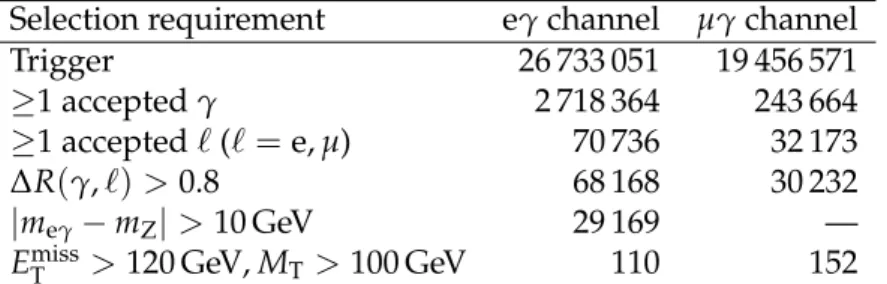
Table 1: Summary of event selection requirements and observed number of events after
apply-ing the listed selection requirements in successive order. The symbol meγ and mZ denote the
invariant mass of the electron-photon system and the nominal Z boson mass, respectively.
Selection requirement eγ channel µγchannel
Trigger 26 733 051 19 456 571 ≥1 accepted γ 2 718 364 243 664 ≥1 accepted`(` =e, µ) 70 736 32 173 ∆R(γ,`) >0.8 68 168 30 232 |meγ−mZ| >10 GeV 29 169 — Emiss T >120 GeV, MT>100 GeV 110 152
the cluster, and isolation, where the isolation variable is calculated from the momenta of PF
photons, charged hadrons, and neutral hadrons within a cone of∆R=0.3 around the electron
direction, corrected for the effects of pileup. The isolation sum is required not to exceed a fixed
fraction of the electron pT, where the selection criteria are defined to obtain an 80% electron
identification efficiency. The muon selection [42], targeting a 90% efficiency for true muons, utilizes the quality of the track fit, the number of detector hits used in the tracking, and the isolation. The isolation requirement for muons is similar to that for electrons, but uses a larger
cone size∆R=0.4. Electrons and muons must originate from a primary vertex, with respective
distances of closest approach for electrons (muons) of less than 0.2 mm (2 mm) in the transverse
plane and<1 mm (<5 mm) along the beam direction.
The reconstruction of jets and~pTmiss is also based on the PF objects. All reconstructed PF
can-didates are clustered into jets using the anti-kT clustering algorithm [46, 47], with a distance
parameter of 0.5. Jet objects are used to calculate the HTvariable, defined as the scalar pTsum
of jets. To be considered in the HT sum, a jet must have a calibrated and pileup-corrected [48]
pT value greater than 30 GeV,|η| < 2.5, and be consistent with an origin at the primary
ver-tex [49]. In addition, it must be no closer than∆R = 0.5 to the photon or lepton candidates.
The missing momentum~pmiss
T is given by the negative of the vector pT sum of all PF objects,
with jet-energy corrections applied. The magnitude of~pTmissis referred to as EmissT .
To suppress the background from final-state radiation events with an on-shell W (Z) boson that
decays to`νγ(``γ), the highest-ET photon in an event must be separated by∆R > 0.8 from
the highest-pT electron or muon. Additionally, for the eγ channel, the invariant mass of the
electron-photon system is required to differ by more than 10 GeV from the nominal Z boson mass [50], to reduce background from electrons misidentified as photons.
After applying the selection requirements described above, the obtained event yields are com-pared to expectations from SM background processes. The signal region of interest is defined
by ETmiss > 120 GeV and MT > 100 GeV, where transverse mass MT is defined by MT =
√
2EmissT p`T[1−cos∆φ(`,~pTmiss)], with p`T the transverse momentum of the highest-pT lepton
and∆φ(`,~pTmiss)the azimuthal angle between the lepton and~pTmiss. The MT requirement
re-duces backgrounds from processes that produce W bosons. Table 1 shows the observed num-ber of events at different stages of the selection process. Because of a higher selection efficiency for muons, after implementing the selection requirements, the number of observed events in the µγ channel is larger than in the eγ channel.
5
4
Background estimation
Three sources of SM background are considered: misidentified photons, misidentified leptons, and electroweak backgrounds.
4.1 Misidentified-photon background
The background from misidentified photons arises from events in which a photon object does not correspond to a genuine prompt photon. The dominant background processes in this
cat-egory are Drell–Yan dielectron (qq → γ∗ → e+e−) and W (→ `ν)+jets production, in which
an electron or jet, respectively, is misidentified as a photon. Minor contributions arise from tt events with leptonic top quark decays, for both the eγ and µγ channels. Events with tt produc-tion also contribute to the background if a jet is misidentified as a photon. An electron can be misidentified as a photon if it fails to register track seeds due to detector inefficiencies such as non-operational sensors in the tracker. A jet can be misidentified as a photon if a large fraction
of its energy is carried by mesons decaying to photons, such as π0 → γγ. These two types of
background are estimated from data using weighted control samples. The method proceeds in two steps. First, a control sample enriched in particles that are prone to be misidentified as pho-ton candidates, i.e., electrons or neutral hadrons, is selected by inverting certain criteria in the photon identification, while keeping the other selection requirements identical to those for sig-nal candidates. This control sample is called the proxy sample. The second step is to determine
the transfer factor Nmisid/Nproxy, where Nmisid is the estimate of the number of misidentified
events in the signal candidate sample and Nproxyis the number of events in the proxy sample.
The proxy sample is then scaled by the transfer factor. The definition of the proxy sample is tuned to make its kinematic properties similar to those of events with misidentified photons. Thus, this two-step procedure takes the set of misidentified events in a control region where
the SUSY signal contribution is expected to be negligible, e.g. in events with small EmissT , and
utilizes it to model the distribution of the misidentified background for a given kinematic vari-able. In particular, from the extrapolation of the observed events in the control region, the method predicts an expectation for the number of events and corresponding kinematic distri-bution in the signal region. A detailed validation of this background estimation is performed by applying the method to Monte Carlo (MC) simulation samples, and comparing the outcome of this procedure to the known generated MC content. Good agreement is found in all such tests.
The proxy sample for events with an electron-to-photon misidentification is constructed by inverting the electron-seed veto in the photon identification, which turns the photon candi-date into an electron proxy. The transfer factor for this proxy sample is determined by
count-ing Z → e+e− decays in a separate control sample, defined by EmissT < 70 GeV. The ratio
NZmisid/NZproxy constitutes the transfer factor, where NZmisidis the number of Z → e+e− events
in the control sample with an e+or e−misidentified as a photon, while NZproxyis the number of
Z→ e+e−events in the control sample with the proxy condition applied. The control sample
for the eγ channel is taken from the data set collected with the same diphoton trigger as the signal candidates, while the sample for the µγ channel is from a data set based on a trigger that requires at least one isolated electron. To ensure that the samples dominantly consist of
Z → e+e− decays, events with one high-purity electron object (“tag”) are selected from the
respective data sets. The photon candidate and the electron-proxy object are called “probes”. For each sample of probe candidates, a fit is performed to the invariant mass distribution of the
tag-probe system to extract the number of Z→e+e−decays.
6 4 Background estimation
transverse momentum of the probe object (pprobeT ), the track multiplicity of the primary vertex
(Ntrack), and the number of reconstructed interaction vertices in the event (Nvtx). To account for
the correlations in the distributions of the three variables, the dependence of the transfer factor on these quantities is modelled by a three-dimensional parametric function, which is then used to assign an event-by-event weight to the proxy sample. The transfer factor is a decreasing
function of pprobeT and Ntrack, and an increasing function of Nvtx. For a median value of Nvtx,
its value varies from 0.04 for events with low pprobeT and low Ntrack, to 0.007 for high pprobeT
and high Ntrack. The relative uncertainty in the transfer factor is typically of order 10%, which
is dominated by systematic uncertainties such as those arising from the tag-and-probe fitting procedure and the parametrization of the transfer factor. The dependence of the transfer factor
on Nvtx is approximately linear, with a value that changes from about 0.005 to 0.012 for Nvtx
values between 5 (low pileup) and 25 (high pileup).
The estimation of the jet-to-photon misidentification background follows the same procedure of defining a proxy sample and scaling it with the transfer factor. The proxy sample for events with a jet-to-photon misidentification is constructed by inverting the requirements on the
vari-able describing the ECAL cluster shape (σηηin Ref. [41]) and on one of the isolation variables in
the photon selection. The transfer factor for the hadronic-proxy sample is determined through an assessment of the fraction of events with jet-to-photon misidentification among the photon candidates. This fraction is denoted as the “hadron fraction”. This measurement is performed
in a low-EmissT control sample from a fit to the distribution of σηη based on two templates, one
representing pure photons and one modelling the events with jet-to-photon misidentification. The fit is performed with photon candidates in muon-photon events, where a very small con-tamination of misidentified electrons is expected in the photon sample. The pure photon
tem-plate is obtained from Z→µµγdata by tagging two muons and requiring the three-body µµγ
invariant mass to be consistent with the Z boson mass. The template that models events with jet-to-photon misidentification is obtained by inverting the isolation requirement on the
signal-photon candidates. The hadron fraction is measured in pT bins of the photon candidate and
decreases, in general, as a function of pT. In the eγ channel, its value varies from 0.25±0.03 at
pT = 40 GeV to 0.08±0.02 at pT = 120 GeV. In the µγ channel, the corresponding values are
0.30±0.03 and 0.09±0.02. The uncertainties are dominantly due to possible mismodelling of
the fit templates. The small difference in the hadron fraction of the photon candidates between the eγ and µγ channels originates from small differences in trigger requirements on the photon object between the diphoton and muon-photon triggers used to select the eγ and µγ data sets.
The pT distribution of the photon objects is multiplied by the hadron fractions determined as
described above. In the eγ channel, the estimated pT distribution of misidentified electrons is
subtracted first. The resulting distribution provides the estimate of the pTshape for the events
with jet-to-photon misidentification. Rather than forming the ratio of this distribution with
the pT distribution of the proxy sample, both distributions are parameterized individually by
simple analytic functions. The ratio of these two parameterizations constitutes the transfer factor for the jet-to-photon misidentification.
4.2 Misidentified-lepton and electroweak backgrounds
The misidentified-lepton and electroweak (EWK) backgrounds are evaluated together, as de-scribed below. A misidentified lepton is defined as a reconstructed lepton that does not arise directly from W or Z boson decays, nor from τ decays that originate from a W or Z boson. Misidentified-lepton events arise primarily from the decay of heavy-flavour quarks and from hadrons misidentified as leptons, with other sources such as decays-in-flight constituting a much smaller contribution. Events where both the lepton and photon are misidentified, which
4.2 Misidentified-lepton and electroweak backgrounds 7
constitute up to 30% of the total misidentified-photon background, are already accounted for by the procedure described in Section 4.1. The SM electroweak background is dominated by events with Vγ (V=W, Z) production. In particular, Wγ events have the same signature as
sig-nal events: an energetic photon, a lepton, and significant Emiss
T . The EWK background includes
rare multiboson events and events with tt γ production, which we collectively refer to as the “rare EWK” background. Rare EWK events provide only a minor contribution to the overall
background but are relevant in the high-EmissT signal region.
Similar to the determination of the misidentified-photon background, proxy samples are formed and scaled by transfer factors to estimate the contribution of misidentified leptons to the signal region. Each event in the proxy sample contains at least one candidate photon and at least one misidentified-lepton proxy, but no candidate lepton. Proxy objects that model misidentified leptons are selected by inverting the isolation condition in the lepton selection. For electrons, the track-cluster matching requirements are also inverted to further enrich the proxy sample with hadronic objects. The calculation of the transfer factor used to evaluate the misidentified-lepton background is described below.
The modelling of the EWK background is based on MC simulation. Samples of Wγ, Zγ, tt
γ, and WWγ events, listed in the order of decreasing overall background contributions, are
generated with up to two additional partons using the MADGRAPH5 1.3 [52] event generator.
The PYTHIA6.4 [53] program is used to describe the parton shower and hadronization. The
PYTHIA program is further used to generate samples of WZγ events, which produce an even smaller background contribution than WWγ events. All samples use the CTEQ6L1 [54] parton distribution functions (PDF). Simulated minimum-bias events are overlaid on the main hard-scattering events to simulate pileup. The generated particles are processed through the full
CMS detector simulation framework based on the GEANT4 [55] package, and are subjected to
the same event selection procedure as the data, including the trigger requirements. Differences between simulation and data in the pileup profile, trigger efficiency, and object identification efficiency are corrected by reweighting the MC events by factors that lie within a few percent of unity. The ttγ, WWγ, and WZγ samples are normalized to the integrated luminosity of the data using cross sections calculated with the event generators, which are valid to leading order (LO) in quantum chromodynamics. For the tt γ sample, a next-to-leading order (NLO)-to-LO scale factor of 2.0 [56] is applied to the cross section to account for higher-order contributions. For the Vγ background, calculated cross sections are used to fix the ratio between the Wγ and Zγ components, but the overall normalization of the combined sample is derived from data to mitigate potential uncertainties in the theoretical calculation. This is accomplished through a two-component template fit describing the Vγ and misidentified-lepton backgrounds. The templates originate from two background samples obtained using the event selection criteria for the Vγ MC sample and for the misidentified-lepton proxy sample. Distributions of the
variable ∆φ(`,~pTmiss) from the two background samples in the control region 40 < ETmiss <
70 GeV are employed as templates. The lower bound ETmiss = 40 GeV is applied to reduce the
contribution of Zγ events. Expected contributions from the misidentified-photon background and rare EWK backgrounds are subtracted from the data distribution before the fit. The fit provides scale factors for the template histograms that are used directly as transfer factors for the Vγ and the misidentified-lepton proxy samples. Besides avoiding a reliance on the value of the theoretical Vγ cross section, which is observed to underestimate the measured production rate of Wγ events [57, 58], this method has the benefit that it does not double count the contributions of background events with both a misidentified photon and lepton. This class of events is already accounted for in the misidentified-photon background sample, as mentioned above.
8 5 Systematic uncertainties
Figure 2 shows the results of the template fit, which is performed in the eγ and µγ channels independently. The resulting scale factors for the Vγ background in the eγ and µγ channels
are 1.59±0.27 and 1.47±0.16, respectively, which are similar to each other as expected. The
uncertainties in the scale factors are estimated through toy MC studies repeating the fit after changing the contributions of the subtracted misidentified-photon and rare EWK components by their uncertainties. ) miss T p (e, φ ∆ 3 − −2 −1 0 1 2 3 /15.5) π Events / ( 0 200 400 600 800 1000 1200 1400 γ
V Misid. e proxy Fit total
/ rare EWK subtracted)
γ (misid. Observed γ 1 ≥ 1 e, ≥ (a) (8 TeV) -1 19.7 fb CMS ) miss T p , µ ( φ ∆ 3 − −2 −1 0 1 2 3 /15.5) π Events / ( 0 200 400 600 800 1000 1200 1400 γ
V Misid. µ proxy Fit total
/ rare EWK subtracted)
γ (misid. Observed γ 1 ≥ , µ 1 ≥ (b) (8 TeV) -1 19.7 fb CMS
Figure 2: Results of the∆φ(`,~pmiss
T )template fit for events with 40 < EmissT < 70 GeV, used to
determine the Vγ and misidentified-lepton background for the (a) eγ and (b) µγ channels.
5
Systematic uncertainties
Table 2 summarizes the sources of systematic uncertainty for the background predictions and the signal yields. For each source, the size of the uncertainty is given (in percentage) relative to the number of events in the corresponding background or signal sample. For the background, the size of the uncertainty relative to the total number of background events is also shown. If the relative uncertainties differ significantly among background samples because of statistical fluctuations due to the limited number of events available for the evaluation of the systematic uncertainties, the range from the minimum to the maximum relative uncertainty is shown. The dominant experimental uncertainty for the background prediction is due to the normalization scale factors applied to the rare EWK and Vγ samples. For the rare EWK sample, a 50% uncer-tainty is assigned as a conservative approximation of the unceruncer-tainty in the NLO-to-LO cross section ratio of tt γ production, which is the dominant component in this sample. Also, for the rare EWK sample, we evaluate the uncertainty due to the luminosity determination [59]. Normalization uncertainties in the background estimates of events with misidentified photons or leptons are absorbed in the uncertainty of the Vγ scale factor through the uncertainty
esti-mation in the∆φ(`,~pTmiss)template fit described above. Subdominant systematic uncertainties
arise from potential mismodelling of the shapes of the Vγ and proxy samples for misidentified photons and leptons.
For simulation-based background estimates, differences with respect to the data in the jet en-ergy scale (JES) and resolution (JER) are considered as systematic uncertainties. The uncertainty
associated with the JES is evaluated by varying the scale by±1σ, where σ is the half-width of
9
Table 2: Summary of systematic uncertainties. The third column gives the uncertainty relative to the number of events in the corresponding background or signal sample. The fourth column shows, for the background terms, the uncertainty relative to the total number of background events in the signal region.
Name Sample Relative uncertainty (%)
Sample Total
Rare background rate Rare EWK 50 19
Vγ scale factor Vγ 14 6
Proxy sample shape Misidentified γ&` 20–27 5
Trigger and identification efficiency Rare EWK 8 3
JES EWK 0–6 2
Vγ shape Vγ 5 2
Integrated luminosity Rare EWK 2.6 1
JER EWK 0-2 1
JES Signal 0-22 —
JER Signal 0-17 —
Trigger and identification efficiency Signal 8 —
Initial-state radiation Signal 0–5 —
Integrated luminosity Signal 2.6 —
Renormalization scale and PDF Signal 4–41 —
HT values in the Vγ and rare EWK samples, and similarly for the JER term. The shift in the
expected event yield in the signal region is taken as the estimate of the systematic uncertainty. Table 2 also lists the systematic uncertainties considered for the signal MC samples that are used for the interpretation of the result of this search. The uncertainties due to the JES and JER are evaluated using the procedure described above. In addition, for the signal samples, uncertainties in the description of initial-state radiation as well as the renormalization scale and PDF [60] are considered.
6
Results
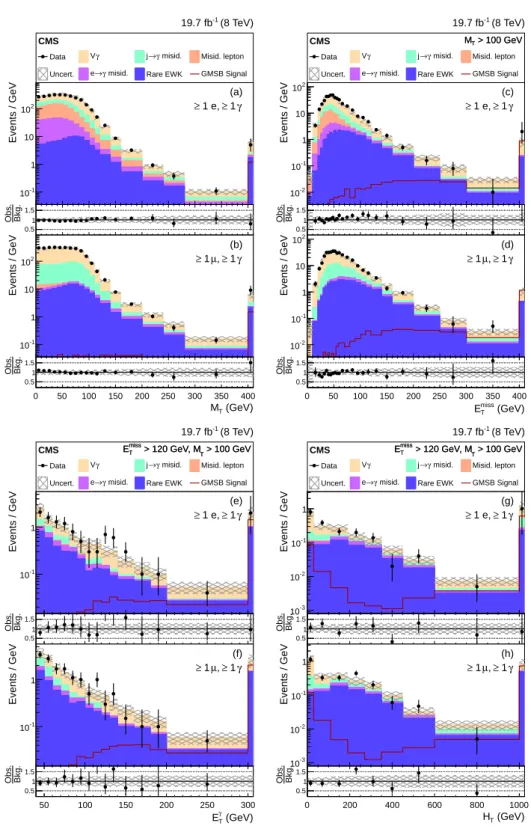
Figure 3 shows the observed distributions of MT, EmissT , photon ET (ETγ), and HT in the eγ and
µγchannels, together with the background expectations obtained as described in Section 4. The
ratio of the observed number of events to the total background expectation is displayed in the
lower part of each panel. The MTdistribution includes all events that satisfy the event selection
criteria of Table 1 except for the restrictions on MT and EmissT . Events in the ETmiss distribution
must additionally satisfy MT > 100 GeV, and events in the EγT and HT distributions ETmiss >
120 GeV and MT > 100 GeV. The uncertainty bands shown for the background estimates are
the statistical and systematic terms added in quadrature. The data are seen to agree with the SM prediction within the uncertainties.
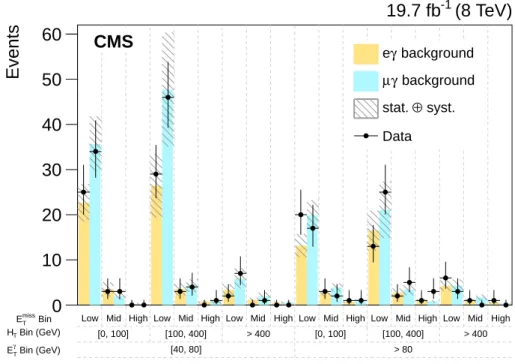
Figure 4 shows a compilation of event yields compared to the total background expectations. To enhance the sensitivity to different SUSY scenarios, the signal region is further explored
in bins of ETγ ([40, 80] and >80 GeV), HT ([0, 100], [100, 400], and >400 GeV), and EmissT (Low,
Mid, and High, corresponding to[120, 200],[200, 300], and>300 GeV, respectively). The data
are found to be consistent with the background prediction in all regions. Thus no significant excess of events beyond the SM expectation is observed.
10 6 Results
Data Vγ j→γ misid. Misid. lepton Uncert. e→γ misid. Rare EWK GMSB Signal
CMS (a) γ 1 ≥ 1 e, ≥ (b) γ 1 ≥ , µ 1 ≥ (8 TeV) -1 19.7 fb (GeV) T M 0 50 100 150 200 250 300 350 400 Events / GeV -1 10 1 10 2 10 Events / GeV -1 10 1 10 2 10 Bkg. Obs. 0.5 1 1.5 Bkg. Obs. 0.5 1 1.5
Data Vγ j→γ misid. Misid. lepton Uncert. e→γ misid. Rare EWK GMSB Signal
> 100 GeV T M > 100 GeVT M CMS (c) γ 1 ≥ 1 e, ≥ (d) γ 1 ≥ , µ 1 ≥ (8 TeV) -1 19.7 fb (GeV) miss T E 0 50 100 150 200 250 300 350 400 Events / GeV -2 10 -1 10 1 10 2 10 Events / GeV -2 10 -1 10 1 10 2 10 Bkg. Obs. 0.5 1 1.5 Bkg. Obs. 0.5 1 1.5
Data Vγ j→γ misid. Misid. lepton Uncert. e→γ misid. Rare EWK GMSB Signal
> 100 GeV T > 120 GeV, M miss T E > 100 GeV T > 120 GeV, M miss T E CMS (e) γ 1 ≥ 1 e, ≥ (f) γ 1 ≥ , µ 1 ≥ (8 TeV) -1 19.7 fb (GeV) γ T E 50 100 150 200 250 300 Events / GeV -1 10 1 Events / GeV -1 10 1 Bkg. Obs. 0.5 1 1.5 Bkg. Obs. 0.5 1 1.5
Data Vγ j→γ misid. Misid. lepton Uncert. e→γ misid. Rare EWK GMSB Signal
> 100 GeV T > 120 GeV, M miss T E > 100 GeV T > 120 GeV, M miss T E CMS (g) γ 1 ≥ 1 e, ≥ (h) γ 1 ≥ , µ 1 ≥ (8 TeV) -1 19.7 fb (GeV) T H 0 200 400 600 800 1000 Events / GeV -3 10 -2 10 -1 10 1 Events / GeV -3 10 -2 10 -1 10 1 Bkg. Obs. 0.5 1 1.5 Bkg. Obs. 0.5 1 1.5
Figure 3: Distributions of (a, b) MT, (c, d) ETmiss, (e, f) E
γ
T, and (g, h) HT compared with the
stacked background expectations for the (a, c, e, g) eγ and (b, d, f, h) µγ channels. See text for details of the event selections applied to these distributions. The rightmost bin of each plot shows the overflow, with contents that are not normalized by the bin width. Expected signal
distributions from a GMSB model for a representative mass point(M
e
g, MWe) = (915, 405)GeV
are overlaid. The lower part of each panel shows the ratio of the data to the predicted back-ground. The uncertainty bands represent the statistical and systematic terms added in quadra-ture.
11 Events 0 10 20 30 40 50 60 Bin miss T E Bin (GeV) T H Bin (GeV) γ T E [40, 80] [0, 100] Low Mid High
[100, 400] Low Mid High
> 400 Low Mid High
> 80 [0, 100]
Low Mid High
[100, 400] Low Mid High
> 400 Low Mid High background γ e background γ µ syst. ⊕ stat. Data (8 TeV) -1 19.7 fb CMS
Figure 4: Event yields in all signal region bins, compared with the combined SM background predictions. The numbers in brackets indicate the range of the bins in the signal region
vari-ables EmissT , HT, and EγT. For the EmissT bins, Low, Mid, and High correspond to the intervals
[120, 200],[200, 300], and>300 GeV, respectively.
7
Interpretation
The results of the search are interpreted in terms of cross section upper limits on a GMSB model and two distinct simplified models. For each parameter point of the three models, a large number of hard-scattering simulation events are generated. These events are processed with a detailed fast simulation of the CMS detector response [61]. A large number of minimum-bias interactions are superimposed on the hard-scattering process in order to reproduce the pileup profile observed in data. The event selection applied to the simulated signal events is identical to that applied to data, including the trigger requirements. The resulting event yields are weighted by correction factors to account for selection efficiency differences between data and simulation.
For each mass point of the signal models, a 95% confidence level (CL) cross section upper limit
is obtained utilizing the “LHC-style” CLsprescription [62–64], which calculates frequentist CLs
limits using the one-sided profiled likelihood as a test statistic. The SM background prediction, signal expectation, and observed number of events in each signal-region bin of the eγ and µγ channels as shown in Fig. 4 are combined into one statistical interpretation, turning the analysis into a multichannel counting experiment.
7.1 Interpretation in a GMSB model
A GMSB model with wino co-NLSPs [32], which contains both electroweak and strong pro-duction as the primary SUSY propro-duction process, is examined. All SUSY particles except for the gluino and winos are considered in the limit of very large mass values such that they do not participate in the interactions. In this limit, the lightest chargino and neutralino become purely wino-like. There is no restriction on the decays, but the gluino always undergoes at
12 7 Interpretation
least a three-body decay and the charged wino decays to a W boson and the gravitino. The neutral wino decays to a gravitino and either a photon or a Z boson, with branching fractions dictated by the weak mixing angle and the wino mass. In the generated scans, the gluino mass (M
e
g) ranges from 715 to 1415 GeV in 50 GeV steps, and the wino mass (MWe) from 205 GeV to
[M
e
g−10 GeV], also in 50 GeV steps.
The SUSY particle spectra and branching fractions are determined using the SUSPECT2.41 [65]
andSDECAY1.3 [66] programs. PYTHIA6.4 is employed for the SUSY particle generation, de-cays, and the subsequent parton showers. The cross section for each mass point is determined
to NLO accuracy in quantum chromodynamics using the PROSPINO2.1 [67] program. This
cross section result, along with its uncertainty, is used to derive 95% CL exclusion limits on the SUSY particle masses.
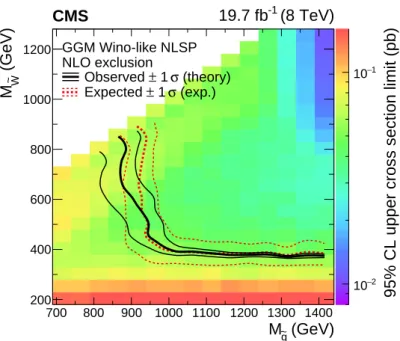
Figure 5 shows the observed 95% CL cross section upper limits with the exclusion contours
overlaid. In the figure, the dashed curves are the median and ±1 standard deviation (σ)
ex-pected exclusion contours assuming the nominal cross sections for the signal model. The solid
curves represent the observed exclusion with the signal cross sections at the nominal and±1σ
values. All mass points on the bottom left side of the contours are excluded. Note that the ap-proximate one standard deviation discrepancy between the expected and observed exclusion contours toward larger values of M
e
Wis due to an upward fluctuation observed in a single bin
of the signal region with ETγ > 80 GeV, EmissT > 300 GeV, and an intermediate bin in HT from
100 to 400 GeV.
In this inclusive GMSB model, electroweak production will always take place when the wino is light, independent of the gluino mass. Thus the exclusion curve becomes horizontal for
MWe ≈ 360 GeV. Note that for this and for all other instances in this paper where a numerical
result is quoted for a mass limit, the result is based on the theoretical prediction for the cross section minus its 1σ uncertainty. The expected distributions for signal in Fig. 3 correspond to
the GMSB model for the mass point (M
e
g, MWe) = (915, 405)GeV. This mass point has
com-peting contributions from strong and electroweak SUSY production and exhibits a non-trivial
behavior in HTas can be seen in Fig. 3(g) and (h).
7.2 Interpretation in simplified models
In a simplified model [68–70], a limited set of hypothetical particles and decay chains are
in-troduced to describe a given topological signature such as the `γ final state studied in this
analysis. The production and decay amplitudes of these particles are parameterized in terms of the particle masses.
The two simplified models considered are denoted the TChiWg and T5Wg models. The TChiWg
model is initiated by the direct production of hypothetical particlesχe
± and
e
χ0, whose decays
are restricted to W±G and γ ee G, respectively. The gravitino eG is nearly massless as in GMSB
models. Thus, this model can be identified with electroweak production in the GMSB wino co-NLSP model, depicted by the diagram in Fig. 1(a), differing only in the decay branching
fractions. The particles χe
±and
e
χ0 are therefore identified with gauginos in the remainder of
this paper. A mass range of 100 ≤ Mχe ≤ 800 GeV is considered, where Mχeis the
degener-ate mass of the gauginos. The generation of events for the T5Wg model, corresponding to the diagram in Fig. 1(b), starts with the pair production of gluinos. The two gluinos undergo
three-body decayseg → qqχe
± and
e
g → qqχe
0, followed by the decays of the
e
χ±andχe
0as
dis-cussed above. The T5Wg samples are generated in a mass region 700 ≤ M
e
g ≤ 1400 GeV and
13 (GeV) g ~ M 700 800 900 1000 1100 1200 1300 1400 (GeV) W ~ M 200 400 600 800 1000 1200
95% CL upper cross section limit (pb)
2 − 10 1 − 10 GGM Wino-like NLSP NLO exclusion (theory) σ 1 ± Observed (exp.) σ 1 ± Expected (8 TeV) -1 19.7 fb CMS
Figure 5: Observed and expected 95% confidence level upper limits on the cross section and corresponding exclusion limits for the GMSB model.
Events for both models are generated with the MADGRAPH5 1.3 program, with up to two
final-state partons in addition to the hard interaction. The events are then interfaced toPYTHIA6.4,
which is used to describe the SUSY decay chains and parton showers. The neutralino-chargino and the gluino pair production cross sections are calculated to NLO and NLO+NLL (next-to-leading logarithm) accuracy [60], respectively, and used to derive 95% exclusion limits.
Figure 6(a) shows the computed 95% CL cross section upper limit for the TChiWg model as
a function of Mχe, together with the theoretical cross section. Assuming a 100% branching
fraction forχe
0 →γ eG, the mass range 100< M
e
χ < 540 GeV is excluded, where the lower limit
corresponds to the lowest M
e
χ included in the scan. Assuming a more physically motivated
branching fraction through a rescaling of the theoretical cross section by the weak mixing angle,
the exclusion range is 100 < Mχe < 340 GeV. The latter result is similar to the limit MWe <
360 GeV obtained from the GMSB model with a wino-like NLSP.
The production cross section of the T5Wg model is determined solely by Meg. Nevertheless, the
Meg−Mχemass difference affects the HTand E
miss
T spectra, resulting in nontrivial exclusion-limit
contours in the Mχe-Meg plane. The 95% CL cross section upper limits and exclusion contours
for the T5Wg model are shown in Fig. 6(b). For M
e
χ >200 GeV, pair production of gluinos is
ex-cluded for gluino masses below 1 TeV. For 500< M
e
χ<700 GeV, gluinos below approximately
1.1 TeV are excluded.
8
Summary
This paper presents a search for the anomalous production of events with a photon, an elec-tron or muon, and large missing transverse momentum produced in proton-proton collisions
at√s = 8 TeV. The data are examined in bins of the photon transverse energy, the magnitude
of the missing transverse momentum, and HT, the scalar sum of jet energies. The standard
model background is evaluated primarily using control samples in the data, with simulation used to evaluate backgrounds from electroweak processes. No excess of events above the stan-dard model expectation is observed. The results of the search are interpreted as 95% confidence
14 8 Summary (GeV) χ∼ M 200 300 400 500 600 700 800 (pb) σ -3 10 -2 10 -1 10 1 (a) G~ γ → 0 χ∼ , G~ ± W → ± χ∼ , 0 χ∼ ± χ∼ → pp 95% CL upper limits Observed σ 1 ± Expected σ 2 ± Expected σ 1 ± NLO W θ 2 sin × (8 TeV) -1 19.7 fb CMS (GeV) g ~ M 700 800 900 1000 1100 1200 1300 1400 (GeV) χ∼ M 0 200 400 600 800 1000 1200 1400 1600
95% CL upper cross section limit (pb)
3 − 10 2 − 10 (b) G~ γ → 0 χ∼ , G~ ± W → ± χ∼ , ± 0/ χ∼ q q → g ~ , g ~ g ~ → pp NLO+NLL exclusion (theory) σ 1 ± Observed (exp.) σ 1 ± Expected (8 TeV) -1 19.7 fb CMS
Figure 6: Observed and expected 95% confidence level upper limits on the (a) TChiWg and (b) T5Wg simplified models. For the T5Wg model, the 95% confidence level exclusion contour is also shown.
level upper limits on the production of new-physics events in the context of a gauge-mediated supersymmetry breaking (GMSB) model. The GMSB model is excluded for wino masses be-low 360 GeV. Results are also interpreted in the context of two simplified models inspired by GMSB, denoted TChiWg and T5Wg. The TChiWg model is excluded for gaugino masses be-low 540 GeV or, if the cross sections are scaled by the weak mixing angle, bebe-low 340 GeV. The T5Wg model with gaugino mass above 200 GeV is excluded for gluino masses below 1 TeV.
Acknowledgments
We congratulate our colleagues in the CERN accelerator departments for the excellent perfor-mance of the LHC and thank the technical and administrative staffs at CERN and at other CMS institutes for their contributions to the success of the CMS effort. In addition, we gratefully acknowledge the computing centers and personnel of the Worldwide LHC Computing Grid for delivering so effectively the computing infrastructure essential to our analyses. Finally, we acknowledge the enduring support for the construction and operation of the LHC and the CMS detector provided by the following funding agencies: BMWFW and FWF (Austria); FNRS and FWO (Belgium); CNPq, CAPES, FAPERJ, and FAPESP (Brazil); MES (Bulgaria); CERN; CAS, MoST, and NSFC (China); COLCIENCIAS (Colombia); MSES and CSF (Croatia); RPF (Cyprus); MoER, ERC IUT and ERDF (Estonia); Academy of Finland, MEC, and HIP (Finland); CEA and CNRS/IN2P3 (France); BMBF, DFG, and HGF (Germany); GSRT (Greece); OTKA and NIH (Hungary); DAE and DST (India); IPM (Iran); SFI (Ireland); INFN (Italy); MSIP and NRF (Re-public of Korea); LAS (Lithuania); MOE and UM (Malaysia); CINVESTAV, CONACYT, SEP, and UASLP-FAI (Mexico); MBIE (New Zealand); PAEC (Pakistan); MSHE and NSC (Poland); FCT (Portugal); JINR (Dubna); MON, RosAtom, RAS and RFBR (Russia); MESTD (Serbia); SEIDI and CPAN (Spain); Swiss Funding Agencies (Switzerland); MST (Taipei); ThEPCenter, IPST, STAR and NSTDA (Thailand); TUBITAK and TAEK (Turkey); NASU and SFFR (Ukraine); STFC (United Kingdom); DOE and NSF (USA).
Individuals have received support from the Marie-Curie program and the European Research Council and EPLANET (European Union); the Leventis Foundation; the A. P. Sloan Founda-tion; the Alexander von Humboldt FoundaFounda-tion; the Belgian Federal Science Policy Office; the
References 15
Fonds pour la Formation `a la Recherche dans l’Industrie et dans l’Agriculture (FRIA-Belgium); the Agentschap voor Innovatie door Wetenschap en Technologie (IWT-Belgium); the Ministry of Education, Youth and Sports (MEYS) of the Czech Republic; the Council of Science and In-dustrial Research, India; the HOMING PLUS program of the Foundation for Polish Science, cofinanced from European Union, Regional Development Fund; the Compagnia di San Paolo (Torino); the Consorzio per la Fisica (Trieste); MIUR project 20108T4XTM (Italy); the Thalis and Aristeia programs cofinanced by EU-ESF and the Greek NSRF; the National Priorities Research Program by Qatar National Research Fund; the Rachadapisek Sompot Fund for Postdoctoral Fellowship, Chulalongkorn University (Thailand); and the Welch Foundation.
References
[1] S. P. Martin, “A Supersymmetry primer”, Adv. Ser. Dir. High Energy Phys. 21 (2010) 1,
doi:10.1142/9789814307505_0001, arXiv:hep-ph/9709356.
[2] J. Wess and B. Zumino, “Supergauge transformations in four dimensions”, Nucl. Phys. B
70(1974) 39, doi:10.1016/0550-3213(74)90355-1.
[3] H.-C. Cheng and I. Low, “TeV symmetry and the little hierarchy problem”, JHEP 09 (2003) 051, doi:10.1088/1126-6708/2003/09/051, arXiv:hep-ph/0308199. [4] T. Appelquist, H.-C. Cheng, and B. A. Dobrescu, “Bounds on universal extra
dimensions”, Phys. Rev. D 64 (2001) 035002, doi:10.1103/PhysRevD.64.035002,
arXiv:hep-ph/0012100.
[5] P. Fayet, “Supersymmetry and weak, electromagnetic and strong interactions”, Phys. Lett. B 64 (1976) 159, doi:10.1016/0370-2693(76)90319-1.
[6] G. R. Farrar and P. Fayet, “Phenomenology of the production, decay, and detection of new hadronic states associated with supersymmetry”, Phys. Lett. B 76 (1978) 575, doi:10.1016/0370-2693(78)90858-4.
[7] S. Dimopoulos and H. Georgi, “Softly broken supersymmetry and SU(5)”, Nucl. Phys. B
193(1981) 150, doi:10.1016/0550-3213(81)90522-8.
[8] M. Dine, W. Fischler, and M. Srednicki, “Supersymmetric technicolor”, Nucl. Phys. B 189 (1981) 575, doi:10.1016/0550-3213(81)90582-4.
[9] S. Dimopoulos and S. Raby, “Supercolor”, Nucl. Phys. B 192 (1981) 353, doi:10.1016/0550-3213(81)90430-2.
[10] M. Dine and W. Fischler, “A phenomenological model of particle physics based on supersymmetry”, Phys. Lett. B 110 (1982) 227,
doi:10.1016/0370-2693(82)91241-2.
[11] M. Dine and W. Fischler, “A supersymmetric GUT”, Nucl. Phys. B 204 (1982) 346,
doi:10.1016/0550-3213(82)90194-8.
[12] C. R. Nappi and B. A. Ovrut, “Supersymmetric extension of the SU(3)xSU(2)xU(1) model”, Phys. Lett. B 113 (1982) 175, doi:10.1016/0370-2693(82)90418-X. [13] L. Alvarez-Gaume, M. Claudson, and M. B. Wise, “Low-Energy Supersymmetry”, Nucl.
16 References
[14] M. Dine and A. E. Nelson, “Dynamical supersymmetry breaking at low-energies”, Phys. Rev. D 48 (1993) 1277, doi:10.1103/PhysRevD.48.1277, arXiv:hep-ph/9303230. [15] M. Dine, A. E. Nelson, and Y. Shirman, “Low energy dynamical supersymmetry breaking
simplified”, Phys. Rev. D 51 (1995) 1362, doi:10.1103/PhysRevD.51.1362,
arXiv:hep-ph/9408384.
[16] M. Dine, A. E. Nelson, Y. Nir, and Y. Shirman, “New tools for low-energy dynamical supersymmetry breaking”, Phys. Rev. D 53 (1996) 2658,
doi:10.1103/PhysRevD.53.2658, arXiv:hep-ph/9507378.
[17] H. Baer, M. Brhlik, C.-H. Chen, and X. Tata, “Signals for the minimal gauge mediated supersymmetry breaking model at the Fermilab Tevatron collider”, Phys. Rev. D 55 (1997) 4463, doi:10.1103/PhysRevD.55.4463, arXiv:hep-ph/9610358.
[18] S. Dimopoulos, S. D. Thomas, and J. D. Wells, “Sparticle spectroscopy and electroweak symmetry breaking with gauge-mediated supersymmetry breaking”, Nucl. Phys. B 488 (1997) 39, doi:10.1016/S0550-3213(97)00030-8, arXiv:hep-ph/9609434. [19] S. Dimopoulos and D. W. Sutter, “The supersymmetric flavor problem”, Nucl. Phys. B
452(1995) 496, doi:10.1016/0550-3213(95)00421-N, arXiv:hep-ph/9504415.
[20] P. Meade, N. Seiberg, and D. Shih, “General Gauge Mediation”, Prog. Theor. Phys. Suppl.
177(2009) 143, doi:10.1143/PTPS.177.143, arXiv:0801.3278.
[21] CMS Collaboration, “Search for new physics in events with photons, jets, and missing
transverse energy in pp collisions at√s =7 TeV”, JHEP 03 (2013) 111,
doi:10.1007/JHEP03(2013)111, arXiv:1211.4784.
[22] ATLAS Collaboration, “Search for diphoton events with large missing transverse
momentum in 7 TeV proton–proton collision data with the ATLAS detector”, Phys. Lett. B
718(2012) 411, doi:10.1016/j.physletb.2012.10.069, arXiv:1209.0753.
[23] CDF Collaboration, “Search for Supersymmetry with Gauge-Mediated Breaking in Diphoton Events with Missing Transverse Energy at CDF II”, Phys. Rev. Lett. 104 (2010) 011801, doi:10.1103/PhysRevLett.104.011801, arXiv:0910.3606.
[24] D0 Collaboration, “Search for Diphoton Events with Large Missing Transverse Energy in
6.3 fb−1of p ¯p Collisions at√s=1.96 TeV”, Phys. Rev. Lett. 105 (2010) 221802,
doi:10.1103/PhysRevLett.105.221802, arXiv:1008.2133.
[25] ALEPH Collaboration, “Search for gauge mediated SUSY breaking topologies in e+e−
collisions at centre-of-mass energies up to 209 GeV”, Eur. Phys. J. C 25 (2002) 339, doi:10.1007/s10052-002-1005-z, arXiv:hep-ex/0203024.
[26] DELPHI Collaboration, “Photon events with missing energy in e√ +e−collisions at
s =130 to 209 GeV”, Eur. Phys. J. C 38 (2005) 395,
doi:10.1140/epjc/s2004-02051-8, arXiv:hep-ex/0406019.
[27] L3 Collaboration, “Single- and multi-photon events with missing energy in e+e−
collisions at LEP”, Phys. Lett. B 587 (2004) 16,
References 17
[28] OPAL Collaboration, “Searches for Gauge-Mediated Supersymmetry Breaking
topologies in e+e−collisions at centre-of-mass energies up to√s=209 GeV”, Eur. Phys.
J. C 46 (2006) 307, doi:10.1140/epjc/s2006-02524-8, arXiv:hep-ex/0507048. [29] H1 Collaboration, “Search for light gravitinos in events with photons and missing
transverse momentum at HERA”, Phys. Lett. B 616 (2005) 31,
doi:10.1016/j.physletb.2005.04.038, arXiv:hep-ex/0501030.
[30] CMS Collaboration, “Search for long-lived particles in events with photons and missing
energy in proton–proton collisions at√s =7 TeV”, Phys. Lett. B 722 (2013) 273,
doi:10.1016/j.physletb.2013.04.027, arXiv:1212.1838.
[31] ATLAS Collaboration, “Search for nonpointing photons in the diphoton and EmissT final
state in√s =7 TeV proton-proton collisions using the ATLAS detector”, Phys. Rev. D 88
(2013) 012001, doi:10.1103/PhysRevD.88.012001, arXiv:1304.6310.
[32] J. T. Ruderman and D. Shih, “General neutralino NLSPs at the early LHC”, JHEP 08 (2012) 159, doi:10.1007/JHEP08(2012)159, arXiv:1103.6083.
[33] ATLAS Collaboration, “Search for photonic signatures of gauge-mediated
supersymmetry in 8 TeV pp collisions with the ATLAS detector”, Phys. Rev. D 92 (2015) 072001, doi:10.1103/PhysRevD.92.072001, arXiv:1507.05493.
[34] CMS Collaboration, “Search for supersymmetry in events with a lepton, a photon, and
large missing transverse energy in pp collisions at√s=7 TeV”, JHEP 06 (2011) 093,
doi:10.1007/JHEP06(2011)093, arXiv:1105.3152.
[35] CMS Collaboration, “Search for supersymmetry with photons in pp collisions at√s =8
TeV”, Phys. Rev. D 92 (2015) 072006, doi:10.1103/PhysRevD.92.072006,
arXiv:1507.02898.
[36] CDF Collaboration, “Search for new physics in photon-lepton events in p ¯p collisions at√
s =1.8 TeV”, Phys. Rev. D 66 (2002) 012004, doi:10.1103/PhysRevD.66.012004,
arXiv:hep-ex/0110015.
[37] ATLAS Collaboration, “Search for direct production of charginos, neutralinos and sleptons in final states with two leptons and missing transverse momentum in pp
collisions at√s=8 TeV with the ATLAS detector”, JHEP 05 (2014) 071,
doi:10.1007/JHEP05(2014)071, arXiv:1403.5294.
[38] CMS Collaboration, “Searches for electroweak production of charginos, neutralinos, and sleptons decaying to leptons and W, Z, and Higgs bosons in pp collisions at 8 TeV”, Eur. Phys. J. C 74 (2014) 3036, doi:10.1140/epjc/s10052-014-3036-7,
arXiv:1405.7570.
[39] CMS Collaboration, “The CMS experiment at the CERN LHC”, J. Instrum. 3 (2008) S08004, doi:10.1088/1748-0221/3/08/S08004.
[40] CMS Collaboration, “Performance of photon reconstruction and identification with the
CMS detector in proton-proton collisions at√s=8 TeV”, (2015). arXiv:1502.02702.
Submitted to JINST.
[41] CMS Collaboration, “Performance of electron reconstruction and selection with the CMS
detector in proton-proton collisions at√s=8 TeV”, JINST 10 (2015), no. 6, P06005,
18 References
[42] CMS Collaboration, “Performance of CMS muon reconstruction in pp collision events at√
s =7 TeV”, J. Instrum. 7 (2012) P10002, doi:10.1088/1748-0221/7/10/P10002,
arXiv:1206.4071.
[43] CMS Collaboration, “Particle–Flow Event Reconstruction in CMS and Performance for
Jets, Taus, and EmissT ”, CMS Physics Analysis Summary CMS-PAS-PFT-09-001, CERN,
2009.
[44] CMS Collaboration, “Commissioning of the Particle-flow Event Reconstruction with the first LHC collisions recorded in the CMS detector”, Technical Report
CMS-PAS-PFT-10-001, CERN, 2010.
[45] CMS Collaboration, “Energy calibration and resolution of the CMS electromagnetic
calorimeter in pp collisions at√s=7 TeV”, J. Instrum. 8 (2013) P09009,
doi:10.1088/1748-0221/8/09/P09009, arXiv:1306.2016.
[46] M. Cacciari, G. P. Salam, and G. Soyez, “The anti-ktjet clustering algorithm”, JHEP 04
(2008) 063, doi:10.1088/1126-6708/2008/04/063, arXiv:0802.1189.
[47] M. Cacciari, G. P. Salam, and G. Soyez, “FastJet user manual”, Eur. Phys. J. C 72 (2012) 1896, doi:10.1140/epjc/s10052-012-1896-2, arXiv:1111.6097.
[48] CMS Collaboration, “Determination of jet energy calibration and transverse momentum resolution in CMS”, J. Instrum. 6 (2011) P11002,
doi:10.1088/1748-0221/6/11/P11002, arXiv:1107.4277.
[49] CMS Collaboration, “Pileup Jet Identification”, CMS Physics Analysis Summary CMS-PAS-JME-13-005, CERN, 2013.
[50] Particle Data Group, K. A. Olive et al., “Review of Particle Physics”, Chin. Phys. C 38 (2014) 090001, doi:10.1088/1674-1137/38/9/090001.
[51] CMS Collaboration, “Measurements of inclusive W and Z cross sections in pp collisions
at√s=7 TeV”, JHEP 01 (2011) 080, doi:10.1007/JHEP01(2011)080,
arXiv:1012.2466.
[52] J. Alwall et al., “The automated computation of tree-level and next-to-leading order differential cross sections, and their matching to parton shower simulations”, JHEP 07 (2014) 079, doi:10.1007/JHEP07(2014)079, arXiv:1405.0301.
[53] T. Sj ¨ostrand, S. Mrenna, and P. Skands, “PYTHIA 6.4 physics and manual”, JHEP 05 (2006) 026, doi:10.1088/1126-6708/2006/05/026, arXiv:hep-ph/0603175. [54] J. Pumplin et al., “New Generation of Parton Distributions with Uncertainties from
Global QCD Analysis”, JHEP 07 (2002) 012,
doi:10.1088/1126-6708/2002/07/012, arXiv:hep-ph/0201195.
[55] GEANT4 Collaboration, “GEANT4—a simulation toolkit”, Nucl. Instrum. Meth. A 506 (2003) 250, doi:10.1016/S0168-9002(03)01368-8.
[56] K. Melnikov, M. Schulze, and A. Scharf, “QCD corrections to top quark pair production in association with a photon at hadron colliders”, Phys. Rev. D 83 (2011) 074013,
References 19
[57] ATLAS Collaboration, “Measurements of Wγ and Zγ production in pp collisions at√
s =7 TeV with the ATLAS detector at the LHC”, Phys. Rev. D 87 (2013) 112003,
doi:10.1103/PhysRevD.87.112003, arXiv:1302.1283.
[58] CMS Collaboration, “Measurement of the Wγ and Zγ inclusive cross sections in pp
collisions at√s=7 TeV and limits on anomalous triple gauge boson couplings”, Phys.
Rev. D 89 (2014) 092005, doi:10.1103/PhysRevD.89.092005, arXiv:1308.6832. [59] CMS Collaboration, “CMS luminosity based on pixel cluster counting – summer 2013
update”, CMS Physics Analysis Summary CMS-PAS-LUM-13-001, 2013.
[60] M. Kr¨amer et al., “Supersymmetry production cross sections in pp collisions at√
s =7 TeV”, (2012). arXiv:1206.2892.
[61] CMS Collaboration, “Comparison of the Fast Simulation of CMS with the first LHC data”, CMS Detector Performance Summary CMS-DP-2010-039, CERN, 2010.
[62] T. Junk, “Confidence level computation for combining searches with small statistics”, Nucl. Instrum. Meth. A 434 (1999) 435, doi:10.1016/S0168-9002(99)00498-2,
arXiv:hep-ex/9902006.
[63] A. L. Read, “Presentation of search results: The CLstechnique”, J. Phys. G 28 (2002) 2693,
doi:10.1088/0954-3899/28/10/313.
[64] ATLAS and CMS Collaborations, “Procedure for the LHC Higgs boson search combination in Summer 2011”, Technical Report CMS-NOTE-2011-005, ATL-PHYS-PUB-2011-11, CERN, 2011.
[65] A. Djouadi, J.-L. Kneur, and G. Moultaka, “SuSpect: a Fortran code for the
Supersymmetric and Higgs particle spectrum in the MSSM”, Comput. Phys. Commun.
176(2007) 426, doi:10.1016/j.cpc.2006.11.009, arXiv:hep-ph/0211331.
[66] M. M ¨uhlleitner, A. Djouadi, and Y. Mambrini, “SDECAY: A Fortran code for the decays of the supersymmetric particles in the MSSM”, Comput. Phys. Commun. 168 (2005) 46, doi:10.1016/j.cpc.2005.01.012, arXiv:hep-ph/0311167.
[67] W. Beenakker, R. H ¨opker, and M. Spira, “PROSPINO: A Program for the Production of Supersymmetric Particles in Next-to-leading Order QCD”, (1996).
arXiv:hep-ph/9611232.
[68] J. Alwall, P. Schuster, and N. Toro, “Simplified models for a first characterization of new physics at the LHC”, Phys. Rev. D 79 (2009) 075020,
doi:10.1103/PhysRevD.79.075020, arXiv:0810.3921.
[69] D. Alves, E. Izaguirre, and J. G. Wacker, “Where the sidewalk ends: jets and missing energy search strategies for the 7 TeV LHC”, JHEP 10 (2011) 012,
doi:10.1007/JHEP10(2011)012, arXiv:1102.5338.
[70] D. Alves et al., “Simplified models for LHC new physics searches”, J. Phys. G 39 (2012) 105005, doi:10.1088/0954-3899/39/10/105005, arXiv:1105.2838.
21
A
The CMS Collaboration
Yerevan Physics Institute, Yerevan, Armenia
V. Khachatryan, A.M. Sirunyan, A. Tumasyan
Institut f ¨ur Hochenergiephysik der OeAW, Wien, Austria
W. Adam, E. Asilar, T. Bergauer, J. Brandstetter, E. Brondolin, M. Dragicevic, J. Er ¨o, M. Flechl,
M. Friedl, R. Fr ¨uhwirth1, V.M. Ghete, C. Hartl, N. H ¨ormann, J. Hrubec, M. Jeitler1, V. Kn ¨unz,
A. K ¨onig, M. Krammer1, I. Kr¨atschmer, D. Liko, T. Matsushita, I. Mikulec, D. Rabady2,
B. Rahbaran, H. Rohringer, J. Schieck1, R. Sch ¨ofbeck, J. Strauss, W. Treberer-Treberspurg,
W. Waltenberger, C.-E. Wulz1
National Centre for Particle and High Energy Physics, Minsk, Belarus
V. Mossolov, N. Shumeiko, J. Suarez Gonzalez
Universiteit Antwerpen, Antwerpen, Belgium
S. Alderweireldt, T. Cornelis, E.A. De Wolf, X. Janssen, A. Knutsson, J. Lauwers, S. Luyckx, S. Ochesanu, R. Rougny, M. Van De Klundert, H. Van Haevermaet, P. Van Mechelen, N. Van Remortel, A. Van Spilbeeck
Vrije Universiteit Brussel, Brussel, Belgium
S. Abu Zeid, F. Blekman, J. D’Hondt, N. Daci, I. De Bruyn, K. Deroover, N. Heracleous, J. Keaveney, S. Lowette, L. Moreels, A. Olbrechts, Q. Python, D. Strom, S. Tavernier, W. Van Doninck, P. Van Mulders, G.P. Van Onsem, I. Van Parijs
Universit´e Libre de Bruxelles, Bruxelles, Belgium
P. Barria, C. Caillol, B. Clerbaux, G. De Lentdecker, H. Delannoy, D. Dobur, G. Fasanella, L. Favart, A.P.R. Gay, A. Grebenyuk, T. Lenzi, A. L´eonard, T. Maerschalk, A. Marinov, L. Perni`e,
A. Randle-conde, T. Reis, T. Seva, C. Vander Velde, P. Vanlaer, R. Yonamine, F. Zenoni, F. Zhang3
Ghent University, Ghent, Belgium
K. Beernaert, L. Benucci, A. Cimmino, S. Crucy, A. Fagot, G. Garcia, M. Gul, J. Mccartin, A.A. Ocampo Rios, D. Poyraz, D. Ryckbosch, S. Salva, M. Sigamani, N. Strobbe, M. Tytgat, W. Van Driessche, E. Yazgan, N. Zaganidis
Universit´e Catholique de Louvain, Louvain-la-Neuve, Belgium
S. Basegmez, C. Beluffi4, O. Bondu, S. Brochet, G. Bruno, R. Castello, A. Caudron, L. Ceard,
G.G. Da Silveira, C. Delaere, D. Favart, L. Forthomme, A. Giammanco5, J. Hollar, A. Jafari,
P. Jez, M. Komm, V. Lemaitre, A. Mertens, C. Nuttens, L. Perrini, A. Pin, K. Piotrzkowski,
A. Popov6, L. Quertenmont, M. Selvaggi, M. Vidal Marono
Universit´e de Mons, Mons, Belgium
N. Beliy, G.H. Hammad
Centro Brasileiro de Pesquisas Fisicas, Rio de Janeiro, Brazil
W.L. Ald´a J ´unior, G.A. Alves, L. Brito, M. Correa Martins Junior, T. Dos Reis Martins, C. Hensel, C. Mora Herrera, A. Moraes, M.E. Pol, P. Rebello Teles
Universidade do Estado do Rio de Janeiro, Rio de Janeiro, Brazil
E. Belchior Batista Das Chagas, W. Carvalho, J. Chinellato7, A. Cust ´odio, E.M. Da Costa,
D. De Jesus Damiao, C. De Oliveira Martins, S. Fonseca De Souza, L.M. Huertas Guativa, H. Malbouisson, D. Matos Figueiredo, L. Mundim, H. Nogima, W.L. Prado Da Silva,
22 A The CMS Collaboration
Universidade Estadual Paulistaa, Universidade Federal do ABCb, S˜ao Paulo, Brazil
S. Ahujaa, C.A. Bernardesb, A. De Souza Santosb, S. Dograa, T.R. Fernandez Perez Tomeia,
E.M. Gregoresb, P.G. Mercadanteb, C.S. Moona,8, S.F. Novaesa, Sandra S. Padulaa, D. Romero
Abad, J.C. Ruiz Vargas
Institute for Nuclear Research and Nuclear Energy, Sofia, Bulgaria
A. Aleksandrov, V. Genchev†, R. Hadjiiska, P. Iaydjiev, S. Piperov, M. Rodozov, S. Stoykova,
G. Sultanov, M. Vutova
University of Sofia, Sofia, Bulgaria
A. Dimitrov, I. Glushkov, L. Litov, B. Pavlov, P. Petkov
Institute of High Energy Physics, Beijing, China
M. Ahmad, J.G. Bian, G.M. Chen, H.S. Chen, M. Chen, T. Cheng, R. Du, C.H. Jiang, R. Plestina9,
F. Romeo, S.M. Shaheen, J. Tao, C. Wang, Z. Wang, H. Zhang
State Key Laboratory of Nuclear Physics and Technology, Peking University, Beijing, China
C. Asawatangtrakuldee, Y. Ban, Q. Li, S. Liu, Y. Mao, S.J. Qian, D. Wang, Z. Xu, W. Zou
Universidad de Los Andes, Bogota, Colombia
C. Avila, A. Cabrera, L.F. Chaparro Sierra, C. Florez, J.P. Gomez, B. Gomez Moreno, J.C. Sanabria
University of Split, Faculty of Electrical Engineering, Mechanical Engineering and Naval Architecture, Split, Croatia
N. Godinovic, D. Lelas, D. Polic, I. Puljak
University of Split, Faculty of Science, Split, Croatia
Z. Antunovic, M. Kovac
Institute Rudjer Boskovic, Zagreb, Croatia
V. Brigljevic, K. Kadija, J. Luetic, L. Sudic
University of Cyprus, Nicosia, Cyprus
A. Attikis, G. Mavromanolakis, J. Mousa, C. Nicolaou, F. Ptochos, P.A. Razis, H. Rykaczewski
Charles University, Prague, Czech Republic
M. Bodlak, M. Finger10, M. Finger Jr.10
Academy of Scientific Research and Technology of the Arab Republic of Egypt, Egyptian Network of High Energy Physics, Cairo, Egypt
R. Aly11, E. El-khateeb12, T. Elkafrawy12, A. Lotfy13, A. Mohamed14, A. Radi15,12, E. Salama12,15,
A. Sayed12,15
National Institute of Chemical Physics and Biophysics, Tallinn, Estonia
B. Calpas, M. Kadastik, M. Murumaa, M. Raidal, A. Tiko, C. Veelken
Department of Physics, University of Helsinki, Helsinki, Finland
P. Eerola, J. Pekkanen, M. Voutilainen
Helsinki Institute of Physics, Helsinki, Finland
J. H¨ark ¨onen, V. Karim¨aki, R. Kinnunen, T. Lamp´en, K. Lassila-Perini, S. Lehti, T. Lind´en, P. Luukka, T. M¨aenp¨a¨a, T. Peltola, E. Tuominen, J. Tuominiemi, E. Tuovinen, L. Wendland
Lappeenranta University of Technology, Lappeenranta, Finland
![Fig. 1 (b). Similar searches were conducted by the ATLAS [33] and CMS [34, 35] experiments using LHC pp collision data at √](https://thumb-eu.123doks.com/thumbv2/123dok_br/16089176.1107245/4.892.117.782.339.530/fig-similar-searches-conducted-atlas-experiments-using-collision.webp)