Master’s Degree in Tourism and Communication
Dissertation
Content and Language Integrated Learning
in Tourism Vocational Education and Training in Portugal
Maria Altina Almeida
Mestrado em Turismo e Comunicação
Dissertação
Content and Language Integrated Learning
in Tourism Vocational Education and Training in Portugal
Maria Altina Almeida
Master’s Degree in Tourism and Communication
Dissertation
Content and Language Integrated Learning
in Tourism Vocational Education and Training in Portugal
Maria Altina Almeida
Supervisor: Professora Doutora Ana Gonçalves
Co-supervisor: Professora Doutora Cláudia Viegas
Dissertation presented for the award of the Master’s Degree in Tourism and
Communication from the Escola Superior de Hotelaria e Turismo do Estoril
(Estoril Higher Institute for Tourism and Hotel Studies)
Mestrado em Turismo e Comunicação
Dissertação
Content and Language Integrated Learning
in Tourism Vocational Education and Training in Portugal
Maria Altina Almeida
Orientadora: Professora Doutora Ana Gonçalves
Coorientadora: Professora Doutora Cláudia Viegas
Dissertação apresentada à Escola Superior de Hotelaria e Turismo do Estoril para a
obtenção do Grau de Mestre em Turismo e Comunicação.
To all the teachers who have decided to “stay hungry and stay foolish…”
“Teachers of the future must have the intellectual, moral and critical
thinking abilities to meet the challenges of 21st century schools.”
AKNOWLEDGEMENTS
I owe my deepest gratitude to Professor Ana Gonçalves for always guiding and supporting me through the different steps that led me to accomplish this dissertation. She has not only been a source of knowledge, providing insight and expertise that greatly assisted my research and writing, but also of energy and inspiration, for her professionalism, unfailing support and encouragement. Her nobleness of character, wisdom and enthusiasm will always inspire me as a student, a researcher, a teacher and a human being.
I would also like to thank Professor Cláudia Viegas for her endless availability, patience and joy, introducing me to the colourful world of boxplots and passionately guiding me through the basic notions of statistics. The success of my research and final outcome of this dissertation was only possible thanks to their supervision and assistance and I am extremely privileged to have got this all along. It was a great pleasure and an honour to have worked with both of them.
My research owes its very own existence to all the students, former students, and teachers from the Turismo de Portugal’s schools who so kindly answered my questions and shared their experience. Interviewing teachers ended up being one of the most enriching parts of my research, thanks to their openness and commitment. I am also grateful to the school directors and pedagogical directors, particularly to Ms. Ana Moreira, from the Escola de Hotelaria e Turismo
de Lisboa, who took keen interest in my work, for her trust, support and availability, but also to
Mr. Rui Santos, from the Escola de Hotelaria e Turismo do Estoril, for making me feel so welcome and answering all my questions. From the Escola de Hotelaria e Turismo do Porto, I would like to thank Ms. Helena Cardoso for her interview and also Mr. José Carvalho, for helping me in applying the questionnaires to students and former students.
My thanks and appreciation also go to Ms. Alexandra Pereira, the training director of Turismo de
Portugal, for answering my questions and sharing the TP’s strategy for tourism vocational
education and training in Portugal.
And last but by no means least, to all those who love me and have been deprived of my company and my time, I am grateful for their patience and respect, their encouraging words and silences, and fundamentally for their understanding and Love! As in the end, it is all about Love!
CONTENTS
Aknowledgements... V List of figures... IX List of tables ... IX Abstract... XI Resumo... XIII List of acronyms and abbreviations ... XV1. Introduction... 1
2. Education trends and policies in Europe ... 11
2.1. Vocational Education and Training and the European Qualifications Framework ... 11
2.2. Tourism education ... 18
3. The role of CLIL in Education in Portugal ... 23
3.1. Understanding CLIL ... 23
3.2. CLIL vs. other teaching and learning approaches ... 32
3.3. CLIL in Portugal ... 35
4. Case study: Courses taught in English at the Turismo de Portugal’s schools ... 39
4.1. Tourism and hotel schools ... 39
4.2. Design and Methodology ... 46
4.2.1. Aims and research questions ... 46
4.2.2. Design and Methodology of the Study ... 47
4.2.3. Questionnaires to current and former students ... 48
4.2.4. Semi-structured interviews to teachers ... 50
4.2.5. Semi-structured interviews of school directors or pedagogical directors ... 54
4.2.6. Semi-structured interview to the training director of Turismo de Portugal ... 55
4.3. Results and Findings ... 56
4.3.1. Questionnaires to current and former students ... 56
4.3.2. Interviews to teachers ... 68
4.3.3. Interviews to school and pedagogical directors and the TP’s Training Director ... 75
5. Conclusions... 79
References ... 89
Annexes ... 97
LIST OF FIGURES
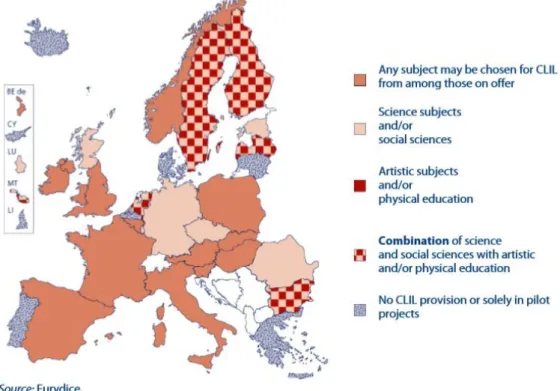
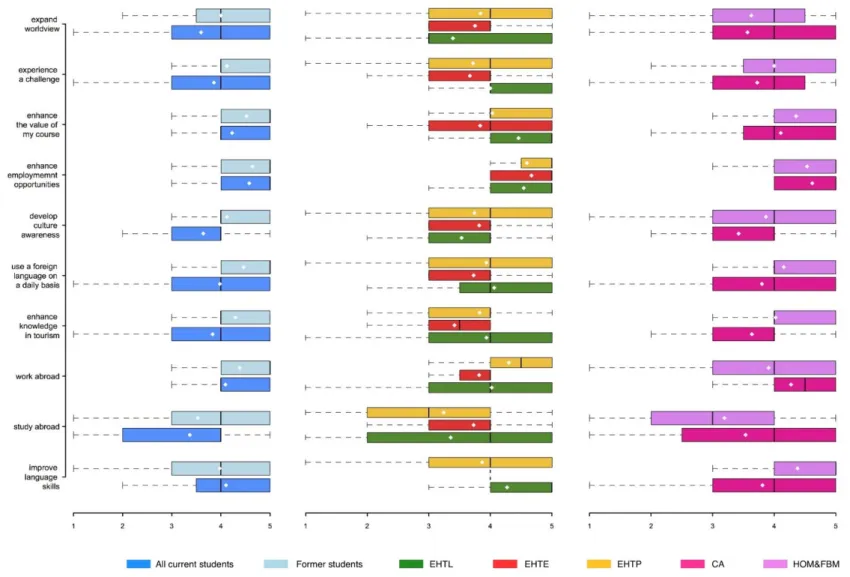
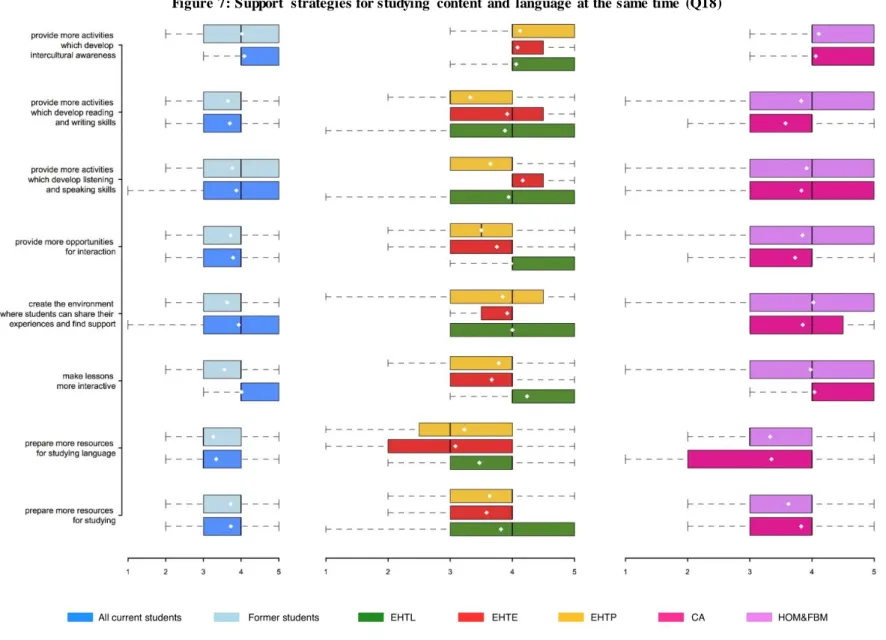
Figure 1: Top 10 skills, Future of Jobs report, World Economic Forum ...3 Figure 2: Subjects in the CLIL curriculum in mainstream school provision in general secondary education, 2004/05... 25 Figure 3: Comparison of Motivations for studying in English (Former and Current Students) .. 58 Figure 4: Is content and language equally promoted? ... 59 Figure 5: CLIL methodologies ... 62 Figure 6: Most common problems students face... 64 Figure 7: Support strategies for studying content and language at the same time ... 65 Figure 8: Advantages of learning content in a non-native language ... 67 Figure 9: How comfortable teachers feel teaching in English ... 70 Figure 10: The language triptych, a conceptual representation of language in CLIL ... 85
LIST OF TABLES
ABSTRACT
Tourism is an international industry which involves a range of intercultural encounters where communication is the key feature. It is clear that the language of tourism in an international context is English as, when dealing with international guests, a better command of English means providing higher quality service. Furthermore, tourism has been perceived by many students as having good employment prospects, which has been a further driver for Tourism and Hospitality vocational programmes. The Vocational Education and Training (VET) system is increasingly expected to be responsive to the changing demands of society, shaped by pedagogical, social, cultural, economic and employment considerations.
To respond to the demands of globalisation and internationalisation the Turismo de Portugal’s (TP) schools offer three technological specialisation courses with programmes in English: Food and Beverage Management; Hospitality Operations Management; and Culinary Arts, whose teaching strategies and effectiveness are the scope of study of this dissertation. Content and Language Integrated Learning (CLIL) is a dual-focused educational approach with the objective of promoting both content and language competence. This study aims at understanding how far these courses integrate both content and language learning and if CLIL is the best learning approach within the scope of tourism vocational education and training. In order to investigate these questions, both quantitative and qualitative methods of inquiry were applied: questionnaires to current and former students of these courses, followed by semi-structured interviews to teachers from the three schools where the courses are offered, school and pedagogical directors and finally the training director of TP.
The findings suggest that students are extremely motivated to study in English, but despite some methodologies that are also used within the CLIL approach, it is possible to conclude that content is more emphasised than language. In fairness, it consists of teaching in English, whereas CLIL is teaching through an additional language based on connected pedagogies and using contextual methodologies. By showing the relevance of the CLIL approach in tourism vocational education, I intend to bring about change in educational practices, which may have implications for various areas: for tourism education in general and particularly for VET; for framing best practice when teaching in a foreign language; and for CLIL education involving content and language teachers. This is an opportunity for teachers to improve their overall skills in leading classes and managing teaching as a whole, for students to improve their English language competence and cultural skills through authenticity and relevance, and for schools/institutions to meet students’ expectations while addressing today’s market needs.
RESUMO
O turismo é uma indústria internacional que convoca uma diversidade de encontros interculturais, nos quais a comunicação é a principal característica. É evidente que a língua de comunicação do turismo num contexto internacional é o inglês, já que no atendimento a clientes de outros países um serviço de qualidade implica um bom domínio da língua inglesa. Além disso, a área do turismo tem sido escolhida por muitos alunos pelas suas perspetivas de emprego, o que, por sua vez, tem dado origem a mais cursos profissionais de turismo e hotelaria. Paralelamente, é espe rado que o sistema de Ensino e Formação Profissional (EFP) responda às exigências de uma sociedade em constante mudança, pautado por questões pedagógicas, sociais, culturais, económicas e laborais. Para responder às exigências da globalização e à necessidade de internacionalização, as escolas do Turismo de Portugal (TP) oferecem três Cursos de Especialização Tecnológica em inglês:
Food and Beverage Management (Gestão de Restauração e Bebidas), Hospitality Operations Management (Gestão Hoteleira – Alojamento) e Culinary Arts (Gestão e Produção de Cozinha),
cujas metodologias de ensino, bem como a sua eficácia, são objeto de estudo desta dissertação. A Aprendizagem Integrada de Conteúdos e Língua (AICL) é uma abordagem de ensino que tem o duplo objetivo de promover a aprendizagem dos conteúdos e a competência linguística. Este estudo tem, pois, o propósito de compreender se os referidos cursos integram a aprendizagem de conteúdos e língua e se esta é a melhor abordagem no âmbito do ensino e formação profissiona l na área do turismo. Para analisar estas questões foram usados métodos de investigação quantitativos e qualitativos: questionários aos atuais e antigos alunos desses cursos, seguidos de entrevistas semi-estruturadas a professores das três escolas onde os cursos são lecionados, diretores de escola, coordenadores pedagógicos e, por fim, à diretora de formação do TP. Os resultados obtidos sugerem que os alunos estão extremamente motivados para estudar em inglês, mas, apesar de se verificar que algumas das metodologias também são utilizadas na abordagem AICL, é possível concluir que é dada maior ênfase aos conteúdos do que à língua. Objetivamente, trata-se de ensino em inglês, enquanto que a abordagem AICL consiste no ensino
através da língua, assente na utilização de métodos pedagógicos inter-relacionados e devidamente
contextualizados. Ao expôr a relevância da abordagem AICL no ensino profissional do turismo é meu objetivo promover a mudança de práticas educativas, o que poderá ter implicações em diversas áreas: no ensino em turismo no geral e no ensino e formação profissional em particular; no enquadramento de boas práticas de ensino em língua estrangeira; e na aprendizagem AICL envolvendo professores de línguas e de outras áreas. Trata-se de uma oportunidade para os professores aperfeiçoarem as suas competências de ensino, para os alunos melhorarem as suas competências linguísticas e culturais através de contextos e materiais autênticos e relevantes e
Palavras-chave: Ensino em turismo; Ensino e Formação Profissional (EFP); Aprendizagem Integrada de Conteúdos e Língua (AICL); Ensino em inglês; Metodologias de ensino-aprendizagem
LIST OF ACRONYMS AND ABBREVIATIONS
AICL: Aprendizagem Integrada de Conteúdos e Língua ATLAS: Association for Tourism and Leisure Education BICS: Basic Interpersonal Communication Skills
CA: Culinary Arts
CALP: Cognitive Academic Language Proficiency
Cedefop: European Centre for the Development of Vocational Training CEFR: Common European Framework of Reference for Languages CEIL: Content and English Integrated Learning
CET: Curso de Especialização Tecnológica CLIL: Content and Language Integrated Learning CTSP: Cursos Técnicos Superiores Profissionais DET: Diploma de Especialização Tecnológica EC: European Commission
ECTS: European Credit Transfer System EFP: Ensino e Formação Profissional
EHTE: Escola de Hotelaria e Turismo do Estoril EHTL: Escola de Hotelaria e Turismo de Lisboa EHTP: Escola de Hotelaria e Turismo do Porto ELT: English Language Teaching
EMI: English as a Medium of Instruction EQF: European Qualifications Framework
ESHTE: Escola Superior de Hotelaria e Turismo do Estoril ESP: English for Specific Purposes
EU: European Union
FL: foreign language
GDP: Gross Domestic Product
GPC: Gestão e Produção de Cozinha HE: Higher Education
HEI: Higher Education Institution
HOM: Hospitality Operations Management ICT: Information and Communication Technology INE: Instituto Nacional de Estatística
INFT: Instituto Nacional de Formação Turística INP: Instituto Superior de Novas Profissões IVET: Initial Vocational Education and Training L1: speaker’s first language
NQF: National Qualifications Framework
OECD: Organisation for Economic Co-operation and Development PENT: Plano Estratégico Nacional do Turismo
ReCLes.pt: Network Association of Language Centres in Higher Education in Portugal SELF: Secções Europeias de Língua Francesa
TEFI: Tourism Education Futures Initiative
(UN)WTO: (United Nations) World Tourism Organization VET: Vocational Education and Training
1. INTRODUCTION
Globalisation has led to a growing awareness of language and cultural diversity. Cultural and linguistic differences are inherent to the act of travelling and language plays a crucial role in the way we perceive the world and others. The proficiency in foreign languages, especially in English, is a basic assumption for successful communication in tourism. The globalisation process is driving European educational systems to pay more attention to foreign language learning, therefore European schools and institutions are offering courses taught in foreign languages. It is evident that in the field of tourism and hospitality it is extremely important to develop not only communicative language ability but also intercultural competence, which is the ability to effectively and appropriately communicate with people from different cultures, showing respect and openness. Knowledge, awareness and understanding of the relation between the host and the guest produce this intercultural awareness (Božinović & Sindik, 2013).
The travel and tourism industry has developed around the universal use of English as a global language, as the increasing flows of people on the move around the globe create unprecedented opportunities for intercultural encounters, and English is the most widely used language in these situations. It is in places such as hotels, restaurants, airports, train stations, museums or heritage sites that tourism and hospitality staff should be particularly aware of the importance and meaning of their communication (verbal and non-verbal) with guests, as they communicate much more than just factual information. According to Petrovska (2010), language is the most important medium of human communication, since through it we express information, ideas, emotions, attitudes and so many other things. Languages are more than skills, they are the medium through which communities of people engage with, make sense of and shape the world (Phipps & Gonzalez, 2004). Thus, communicative competence without the existence of awareness of cultural dimensions in the use of any language is not complete. In accordance with Luka (2007) intercultural competence includes attitude, knowledge, interpretation and related skills, various
discovery and interaction skills, as well as critical awareness of culture or political education. Students of tourism, hospitality and management also have to acquire theoretical and practical cultural knowledge, which can be gained through intercultural communication and the development of intercultural competence. This is mostly referred to as an ability to see and understand differences in one’s own and other people’s culture, to accept them and accordingly react in conversation and behaviour (Božinović & Sindik, 2013). At the same time this competence includes the knowledge of one’s own nation and culture, and the awareness of its values as well as the necessity of their preservation (Luka, 2007).
The ease with which a host communicates with tourists can have not only direct financial consequences, but also shape tourists’ experience and determine the perception they have of a country. Language context shapes the individual’s daily experience and “this includes everything from the choice (intentional or unintentional) of a single variant in an individual utterance” (Hall-Lew & (Hall-Lew, 2014: 342). Both tourists and hosts are “dynamic social actors” (Selby, 2004: 191) and being aware of this is of the outmost importance in the tourism and hospitality field. Being responsible, friendly and helpful hosts means allowing others to have enriching, meaningful and positive experiences. That is why language competence is crucial at different levels: social, cultural, cognitive, and also economic.
As Prebežac et al. (2014) point out in the introduction of The Tourism Education Futures
Initiative, “in 2030 students will be applying for jobs that do not even exist today, and much of
what we teach our students is obsolete by the time they graduate. These pressures and the increasing need for responsible stewardship of tourism destinations call out for a new paradigm of values-based tourism education” (Prebežac et al., 2014: 1). Similarly, and according to the World Economic Forum (2016b), in 2020 over one-third of skills that are considered important in today’s workforce will have changed. The developments in robotics, autonomous transport, artificial intelligence and machine learning, advanced materials and biotechnology are already transforming the way we live and the way we work, and it is certain that the future workforce will need to align their skillset to keep pace. The Future of Jobs report (World Economic Forum, 2016a) looks at the employment, skills and workforce strategy for the future, after asking human resources managers and strategy officers from leading global employers what the current shifts mean across industries and geographies, and concluded that business leaders, educators and governments all need to be proactive in up-skilling and training people so everyone can benefit from the constant changes in our society. As we can see in figure 1, creativity will become one of the top three skills professionals will need. The other two are critical thinking and complex problem solving. Similarly, active listening, considered a core skill in 2015, will disappear
completely from the top 10, whereas emotional intelligence, which did not feature in the top 10 in 2015, will become one of the top skills needed by all in the next decade.
Figure 1: Top 10 skills1, Future of Jobs report (World Economic Forum, 2016a)
Vocational Education and Training (VET) institutions around the world have also realised the urgent need to prepare their students for a complex and uncertain society as well as a competitive labour market, not only by preparing them for specific careers, but also by enhancing the quality of training. Traditionally, VET has been defined by its aims, which are directly linked to the labour market, as Cedefop stresses: “VET aims to equip people with knowledge, know-how, skills and/or competences required [...] on the labour market” (2011b: 15). According to Cedefop (2011c), around half of all jobs in 2020 will require a medium-level qualification, which will often be achieved by some form of VET. Investment in human resources through education, training and other forms of learning is essential to achieve “smart, sustainable and inclusive growth” and VET will continue to play an important role in the shift towards more equipped and prepared societies. VET benefits can be grouped and identified in two main categories: economic and social. Both can be analysed on three different levels: for individuals, for companies, and for the society as a whole, as developed in section 2.1 of this dissertation.
Cedefop has brought together a diverse array of researchers and policy-makers to collaborate in a project aiming to offer valuable insights into tackling upcoming challenges in VET. The three -year study on the changing nature and role of VET in Europe is expected to be concluded in 2018,
1
but its initial findings have recently been discussed at a Cedefop workshop in Thessaloniki and provided new data on how European citizens perceive VET’s attractiveness and effectiveness. For example, most Europeans (71%) know what VET is and two in three (68%) have a positive opinion of it. Moreover, finding a job is the number one reason for choosing a VET path. More specifically, Europeans value VET at upper secondary level as a way to strengthen the economy, help reduce unemployment, and tackle social exclusion. Almost nine in 10 VET graduates at upper secondary level are happy with the work-related skills they acquired during their studies and eight out of 10 consider VET in general a good choice both for personal and professional development (Cedefop, 2017c).
VET structures are major economic and sociological systems that have been shaped by pedagogical, social, cultural, economic and employment considerations. Many factors influence these structures and over time they have to adapt the type of education provision. Education and training need to be in line with societal development, not only regarding outcomes but also considering students’ motivation for learning.
As VET, also CLIL has the focus on the demands of today’s society and labour market and consists of a very practical approach. CLIL – Content and Language Integrated Learning – is an innovative dual-focused educational approach where subjects are taught and studied through the medium of a foreign language with the objective of promoting both content and language competence to predefined levels (Marsh, 1998). In section 5 of this dissertation, readers can find some concluding remarks on the benefits of CLIL in a VET context, as both give students the necessary skills to adapt to the changing needs of the labour market. CLIL integrates both content and language learning, which are interrelated, even if the emphasis is greater on one or the other at a given time. This blend is a unique educational approach, where both language and content are linked to the processes of convergence, involving the combination of elements which may have been previously fragmented, such as subjects in the curriculum (Coyle et al., 2013). This is where CLIL breaks new ground. Using CLIL, students are not expected to be proficient in the new language before they begin studying. They learn the language they need for studying at the same time as they learn the subject. Learning the content and learning the language are equally important and they are developed and integrated slowly, but steadily (Montalto, 2016).
In addition to this, CLIL offers a number of advantages such as: it builds intercultural knowledge and understanding; it develops intercultural communication skills; it improves language competence and oral communication skills; it develops multilingual interest and attitudes; it provides opportunities to study content through different perspectives; it complements other subjects rather than competing with them; it increases learners’ motivation and confidence in both
the language and the subject being taught and it provides materials which develop thinking skills from the start (Marcela & Candela, 2014).
The recent growing interest in CLIL can be understood by examining best practice in education which suits the demands of the present day. Globalisation and the forces of economic and social convergence have had a significant impact on who learns which language, when, how and why. Although the driving forces for language learning differ according to country, region and, of course, individuals, they share the objective of wanting to achieve the best possible results in the shortest time. This requirement is often linked to the need to adapt content-teaching methodologies so as to raise overall levels of proficiency (Coyle et al., 2013).
Turismo de Portugal (TP) promotes training aimed at preparing young people for the labour
market. Through its national network of 12 tourism and hotel schools throughout the country, TP provides specialised vocational training in the areas of tourism, hospitality, food and beverage and culinary arts, including Technological Specialisation Courses, level 5, three of which fully taught in English since 2010, and the case study of this dissertation: Culinary Arts (CA) in the schools of Lisbon, Estoril and Oporto; Food and Beverage Management (FBM) in Lisbon; and Hospitality Operations Management (HOM) in Lisbon and Oporto. These courses are in line with TP’s strategy of internationalisation and are the only ones fully taught in English in tourism vocational and educational training in Portugal.
The aim of my research is to examine the extent to which the learning of both content and language is emphasised in these courses and, in case it is not, investigate how relevant a content and language integrated teaching/learning approach would be in tourism vocational education and training and what changes could be made in order to implement it. These aims can be formulated into two main research questions, as presented below:
1. Do the above-mentioned programmes integrate both content and language learning with a dual and integrated focus on developing learners’ content knowledge via the instruction of the target language? And, if so, how far is this method being effectively used? 2. Is CLIL the best learning approach within the scope of tourism vocational education and
training in a foreign language?
In order to answer these questions I had to observe if CLIL strategies are being used in these courses and identify them; investigate if the subjects are taught by language and/or content teachers; examine the extent to which content teachers are qualified to teach CLIL; identify the teaching strategies used; understand students’ motivation for studying in English; investigate how students’ language abilities and content knowledge are assessed; and finally, draw reflection on
the convenience of CLIL or other methodologies used in the specific context of these courses and in the effective communication with international guests.
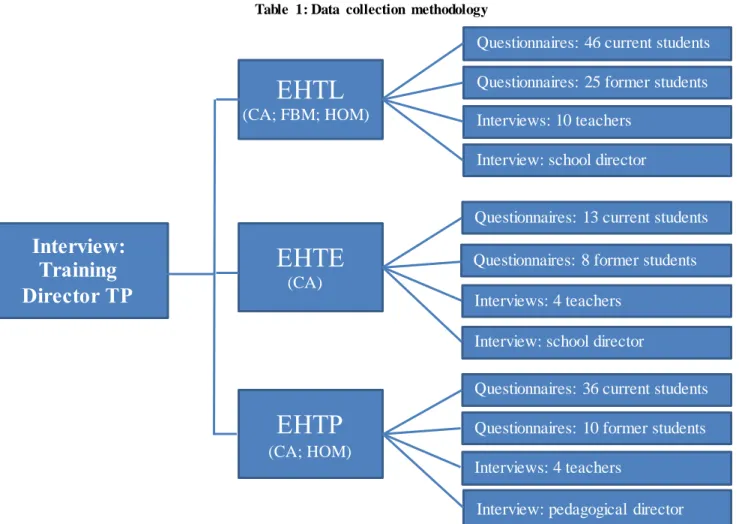
This study draws, therefore, on a mixed-methods approach by relying on both quantitative and qualitative methods of research. At a first moment, a questionnaire was distributed to the current students of the three courses in the schools of Lisbon, Estoril and Oporto, while an online questionnaire was sent to the former students. Then, individual semi-structured interviews were conducted first with teachers from different subjects, secondly with the schools’ directors and pedagogical directors, and finally with the training director of TP. Furthermore, the curricular programs and course plans were also analysed in order to understand the guiding principles of these courses.
I have decided to develop this study on the assumption that having good communication skills in English is a key competence for anyone working or willing to work in the tourism industry and, from my point of view as a client and as an English language teacher, students and employees are not always fully aware of this, sometimes excusing their mistakes, inaccuracy, or even their lack of understanding and poor communication skills. In April 2016 I attended a speech by Mr Luís Araújo, the president of Turismo de Portugal, at the Tourism and Hospitality school of Lisbon about the importance of quality training in the sector (Araújo, 2016) and there were three ideas mentioned that were particularly relevant. First, that tourism cannot rely on improvisation and that training is the opposite of improvisation. Second, that the workforce, the people, the human factor is the key element to value and differentiate our country in the sector. Third, that although we (Portuguese) tend to be recognised by our art of hospitality and welcoming, this is one of the aspects pointed out by international tourists where we can still improve. Thus, it is at school that this improvement starts, through policies, methodologies, and attitudes. The need for English language competence is unquestionable, but are English language teaching and teaching in English meeting students’ expectations and the labour market needs?
Furthermore, I have chosen to focus on VET as the students who opt for this kind of more practical, hands-on training are usually the ones who are going to be in a more direct contact with the clients/guests, at reception desks, restaurants, and other front of the house positions, whereas the ones who study tourism in higher education (HE) are more likely to get management positions. In terms of the Portuguese context, research development in the area of CLIL is very scarce, even more so in relation to VET. In terms of strategies used when considering teaching English, English for Specific Purposes (ESP) or English as a Medium of Instruction (EMI) are the most common. Therefore, I intend to develop an analysis of the students’ needs and motivations, and evaluate
the adequacy of the CLIL approach in tourism education and particularly in tourism vocational education and training.
Bearing this in mind, this research aims to observe whether the methodologies used are the most effective ones in achieving the goals of TP and meeting the expectations of both students and teachers, while responding to the needs of the labour market, thus serving the dual purpose of developing reflection within the model used and deepening knowledge about the CLIL educational approach. The answers to these central questions will result in a thorough analysis of the current approach and some suggestions which may be useful to consider in tourism vocational education and training. Moreover, this study also intends to bring reflection on education practices, in an attempt to bring education and training in line with societal development. I hope that by presenting responses to the research questions above, this dissertation may contribute to a better understanding of how English language competence, content knowledge and cultural awareness can be integrated, as CLIL aims to broaden teachers and policy makers’ perception of the skills necessary to engage in effective intercultural communication; hence, going beyond the issue of “only” teaching/learning vocabulary or grammar.
In the context of the European Qualifications Framework, the European Parliament and the Council adopted in 2006 the Recommendation on Key Competences for Lifelong Learning, providing a common reference framework that describes the essential knowledge, skills and attitudes central to lifelong learning. Eight European interdependent key competences have been highlighted: communication in the mother tongue; communication in foreign languages; mathematical competence and basic competences in science and technology; digital competence; learning to learn; social and civic competences; sense of initiative and entrepreneurship; cultural awareness and expression (European Commission, 2017). Each has a concise definition of its scope and all emphasise critical thinking, creativity, initiative, problem solving, risk assessment, decision taking, and constructive management of feelings (Marsh, 2012). These competences are now being reviewed and updated to ensure that they reflect political, social, economic, ecological and technological developments occurred since 2006, and propose changes to better reflect recent developments in areas such as multilingualism, cultural diversity and varied ways of communicating, migration, citizenship, and sustainability issues (European Commission, 2017), to which CLIL can strongly contribute. Still in the context of the European Qualifications Framework, skills are described as cognitive (involving the use of logical, intuitive and creative thinking) or practical (involving manual dexterity and the use of methods, materials, tools and instruments), thus referring to the ability to apply knowledge and use know-how to complete tasks and solve problems (Marsh, 2012).
The trend seems to be that CLIL will be used more and more in the future in most European countries (Montalto, 2016) as a modern educational approach that has the potential to facilitate the European policy on multilingualism as well as to address the needs of the new generation of learners (Matos, 2014), such as cultural, communication, and relational skills, which I will further develop.
The qualifications held by teachers involved in CLIL activities have been a key question for most countries, urging the need for the development of teacher training programmes. It is not enough to ensure that teachers have specialised training in languages and content subjects, they should also be trained to encourage students’ ability to learn subjects in a language in which their level of proficiency is not that of native speakers (Eurydice, 2006). Further added value is attributed to CLIL through enhanced cognitive development brought about by more learner engagement. Wolff suggests that the “true potential of CLIL lies in exchanging encrusted educational structures with modern pedagogical principles which promote collaborative teaching and learning, and autonomy within a complex whole approach to education as opposed to isolated and fragmentary subject teaching” (2002: 48). This is further supported by Ting who suggests that CLIL can open a new chapter in 21st century education, “one which must provide learners with a deep-level comprehension of concepts rather than a myriad of facts. The challenge for (…) education today is not the inculcation of facts but empowering learners with a solid concept-base to discern trash from treasure”. (2010: 14). CLIL can therefore be seen as an agent for change, bringing about transformation in educational practices in Europe. Marsh states that CLIL “threatens certain established ways of thinking, and offers opportunities for initiating change in education” (2014). This is what gives CLIL the potential to be a catalyst of reflection from those involved (Coyle et al., 2013). Being able to function in these roles begins with teachers’ self-awareness, self-inquiry, and self-reflection.
Taking a look at the structure of this dissertation, sections 2 and 3 are predominantly concerne d with reviewing the relevant literature and research on education trends and policies in Europe, namely in terms of VET and tourism education, followed by CLIL. Section 2 begins with the mission of VET in the European context, its emergence in the 1980s, its goals, and its eight reference levels, focusing on level 5 VET qualification and the programmes leading to this qualification in Portugal, the technological specialisation courses (Cursos de Especialização
Tecnológica – CETs). The section then focuses on tourism education, the emergence of tourism
as an area of study, and how VET institutions have been working to meet the demands and opportunities created by tourism employers. Section 3 presents CLIL in detail, from its emergence to its spread across Europe, its advantages and flexibility in different contexts. Moreover, it is compared to other teaching and learning approaches, in terms of the differences but also the
elements it shares with other educational practices. Finally, some publications of CLIL studies in Portugal and some undergoing CLIL projects are presented.
As for the following sections, they turn to the context of the study itself, which examines how far the CLIL approach is present in the three Technological Specialisation Courses taught in English at TP’s schools, presenting the context, describing the chosen research methodology, the results of the study, the discussion of the findings and the advantages of implementing the CLIL approach.
It is suggested that specific guidelines in terms of language teaching and assessing should be clearly contemplated in the course plans, and that more attention should be given to CLIL development in terms of teacher training, especially as it may have a greater effect on content and language teaching, but also contribute to teachers’ reflection of their roles and responsibilities. This dissertation also embraces change, and reflective practices are essential in examining and processing change. Teachers need to do this, but this needs to be supported by decision makers and schools’ directive boards.
2. EDUCATION TRENDS AND POLICIES IN EUROPE
2.1. V
OCATIONALE
DUCATION ANDT
RAINING AND THEE
UROPEANQ
UALIFICA T IONSF
RAMEWORKVocational Education and Training (VET) has always had the aim of developing skills for the benefit of individuals and industry, but also of the economy and society at large. Although it has evolved significantly over the last decades, the central mission of VET and its key actors – students, employers, and providers – remain the same. These actors are indeed as important now as they have ever been in their efforts to collaboratively develop and deliver a skilled labour force suited to the jobs available in a diverse economy (Atkinson & Stanwick, 2016). Traditionally conceived to prepare people for technical, manual or crafts occupations, the boundaries of VET have been shifting over time: vocational qualifications are spreading to higher levels of education and training, which reflects the need for vocational skills and competences at increasingly advanced education/training levels, but also the need to combine academic and professional preparation (Cedefop, 2011a).
While the actors may be broadly constant, major changes in the labour market have been seen in the past two decades. The growth of services, the greater demands for connectedness with global markets and technology-led productivity have driven changes in VET policy, impacting not only on both learners and employers, but also on VET providing institutions. People participating in VET are expected to develop relevant technical skills but also to learn how to cope with change, complexity and adaptation. As a general rule, the pace of change seems to be accelerating: society itself is changing at a faster rate because of technological, economic and social developments,
therefore the VET system is increasingly expected to be responsive to the changing demands. “Education and training play a crucial role in Europe’s economy and society because economic welfare strongly depends on the knowledge, skills and competences of the workforce” (Cedefop, 2014a: 18). It is then absolutely imperative to focus not only on the instruction of technical skills but also on soft skills, such as communication and interpersonal skills, collaboration and time management, problem solving and critical thinking, leadership and organisational skills2, in order
to make the most of young people’s employability potential. According to the World Economic Forum (2016), in 2020 over one-third of skills that are considered important in today’s workforce will have changed. Business leaders, educators and governments all need to be proactive in up-skilling and training people so everyone can benefit. Creativity will become one of the top three skills workers will need. The other two are critical thinking and complex problem solving. With the array of new products, new technologies and new ways of working, professionals will need to become more creative in order to benefit from these changes.
As previously mentioned, the current VET structures are major economic and sociological systems that have been shaped by pedagogical, social, cultural, economic and employment considerations. Many factors influence these structures, but their relative importance tends to change over time and also according to the type of education provision. VET “covers a broad set of purposes, levels, settings and outcomes for young people and adults through different forms of formal and non-formal initial and continuing education and training” (Gordon, 2015: 441-442). VET provision extends from very low basic skills to higher education (HE) level access and qualifications, across the full spectrum of the economic sectors and their needs for skilled, competent and specialist staff (Gordon, 2015).
By the second half of the 1980s there was a very real need to be much more pro-active on transition to work, including introducing measures to go beyond the perception of what Jallade defined as “a sharp break between two vastly different worlds” in 1985 (Jallade, 1989). There were fewer routine and low-skilled or unskilled jobs left, while remaining and newly created jobs tended to be more skill-demanding (Bengtsson, 1993). Furthermore, youth unemployment was rising. Thus, the emergence of education and training systems, whose main feature was the inclusion of work practice in a training form. “Transition education”, as coined by Jallade, described a set of approaches that aimed to be tailored to the needs of very diverse groups, going beyond cognitive skills (associated with general education), and including different approaches
to the structuring of knowledge and skills. Different forms of organisation, such as modularisation and assessment were introduced (Jallade, 1989).
Thus, in 1985, the European Commission introduced a system for Comparability of Vocational Qualifications. The work undertaken by the European Centre for the Development of Vocational Training (Cedefop3) introduced a five-level training structure, ranging from the semi-skilled
(level 1) to the professional/university graduate level (level 5). Research by the Organisation for Economic Co-operation and Development (OECD) was already pointing to the need to provide all school leavers with threshold skills, or core competences, which were seen as prerequisites for insertion into work and social life and for preventing functional illiteracy (Bengtsson, 1993). Globalisation and new technologies posed major challenges to national governments related to the fear of their effects on employment, but also to new demands related to the need to move towards more knowledge-intensive economies that would require major changes in education and training systems. These reflections raised issues about the role of low-skilled jobs in the changing labour market, multi-skilling, skills shortages, transferable basic skills, mismatches and gaps, and lifelong learning, all of which were to rapidly become part of the common language of VET in the 1990s (Bengtsson, 1993). Jallade concluded his 1989 article by noting that increasing the supply of VET opportunities was a concern shared by all European countries as they were heading towards universal education or training for all 16-18 year olds, a trend which had until then been greatly facilitated by youth unemployment.
The EU’s Lisbon Strategy was launched in March 2000 as the heads of government committed their countries to a new strategic goal: “to create the most competitive and dynamic knowledge-based economy in the world, capable of sustainable economic growth with more and better jobs and greater social cohesion”, having 2010 as a target date. A work programme to monitor progress in education and training was adopted in 2002, Education and Training 2010, with three key objectives: improving the quality and effectiveness of education and the measurement of progress through agreed instruments, facilitating the access of all to education and training systems and opening up education and training systems to the wider world (Gordon, 2015).
A significant milestone in monitoring progress was the study developed by the Qualifications and Curriculum Authority with the support of the European Commission and published in 2004:
Achieving the Lisbon Goal: The Contribution of VET. Data from 31 countries was analysed,
examining the progress made by VET systems in contributing to the Lisbon Strategy’s goal. It
3 Cedefop is one of European Union’s decentralised agencies and was founded in 1975. It supports the development of
European VET policies and contributes to their implementation. It works to strengthen European cooperation and provide the evidence on which to base European VET policy, working closely with the European Commission, M ember
drew attention to the role of innovation in VET curricula, teaching and learning, and the differing contexts in which VET was implemented, as well as to the wide range of purposes it was expected to fulfil for different groups. While an interest in increasing the attractiveness and flexibility of VET was evident, VET systems seemed unlikely to be drawn into convergence through the European process because of distinctive characteristics of national systems, even though levels of cooperation were growing among Member States. The study highlighted evidence that VET contributed to preventing and tackling social exclusion, being for many young people the way to progress from education into the labour market or, increasingly, to further education or training. Nowadays, for companies, VET is a means of raising productivity, improving skills and modernising work practices. Governments see VET as a means of improving competitiveness, employment levels and growth, and also as a means of raising levels of education and social cohesion more generally (Gordon, 2015). VET is no longer regarded as a second-class education option by students and parents, many of whom thought that it was a system for those who had failed in traditional academic routes. Indeed, from a course programme perspective, it is easier to respond to customer requirements in vocational education than in general education, because these requirements are better known, thanks to the close connection between companies and VET institutions, and the nature of training is more practical. Workplaces provide a strong learning environment because they offer real on-the-job experience that makes it easier to acquire both hard and soft skills. It is well known from cognitive science that most of the population learns more quickly and retains more through applied learning methods, which also motivates both teachers and students, as they can see a practical result of their work.
The Portuguese National Qualifications Framework (NQF) was created in December 2007, with the publication of Decree-Law no. 396/2007 of 31st December, to reorganise Vocational Education and Training. Under the coordination of the members of government responsible for Vocational Training and Education, the NQF adopted a strategy that focuses on the provision of tools that allow personal development, as well as the educational and professional progression of students. This short-cycle technical and vocational education initiated in Portugal in 2007 has been mainly stimulated through public polytechnics and accounted for more than 300 courses offered by 2012, representing nearly 6,000 enrolments and more than 2,000 graduates per year (Cedefop, 2013). In 2014, the 46% of upper secondary students enrolled in Initial Vocational Education and Training (IVET) was only slightly lower than the European Union’s (EU) average of 48%; Company provision of training (65%) and employee participation in on-the-job training (20%) are also close, or equal to the EU average (66% and 20% respectively) (Cedefop, 2017a). However, based on 2015 data, the percentage of young VET graduates in further education and training was still below the EU average: 26.4% in Portugal against 33% in the EU. However, in
terms of skills development and labour market relevance, Portugal scores higher than the EU in the percentage of innovative enterprises with supportive training practices: 53.6% against 41.6% in the EU (Cedefop, 2017a), and also in the percentage of workers with skills matched to their duties (75.7% compared to 57.3% in the EU). The employment rate of IVET graduates (aged 20 to 34) at 77.4% is slightly higher than the EU average of 77.2%, based on 2015 data (Cedefop, 2017a). On the other hand, the share of early leavers from education and training at 13.7% was higher than the EU average of 11%. Although it has been strongly decreasing between both the 2006-10 and 2010-15 periods, the figure for the indicator was still higher than the Europe 2020 average target and the national target, both set at 10% (Cedefop, 2017b).
In 2008, the European Parliament and the Council adopted a Recommendation on the establishment of the European Qualifications Framework (EQF) for lifelong learning, aiming to create a common reference framework for qualifications systems in Europe, and therein to facilitate comparison between different qualifications systems and levels throughout Europe (Devaux, 2013). The EQF acts as a transferable device to make the qualifications acquired within different education and training systems in Europe more readable and understandable, but also recognised in the different countries. The implementation of the EQF, allowing for a systematic comparison of national qualifications from a learning outcomes perspective, has demonstrated the critical role played by qualifications operating at general, vocational and academic sectors. To use the EQF countries were asked to link the levels of their national qualifications systems or frameworks to the EQF levels and, by June 2012, 15 countries, including Portugal, had finalised this process and presented their EQF referencing report (Cedefop, 2014b).
According to Cedefop (2016) the NQF has then reached an operational stage and is already considered a permanent feature of the national qualifications system. The legal framework is in place, qualifications have been assigned to levels, and quality assurance arrangements have been implemented. All VET is already organised around the NQF: databases are organised considering the NQF structure and access to financial support also takes the framework into consideration. Education and training stakeholders are involved in implementing the NQF. The framework is becoming increasingly visible to learners, parents, employers and employees, training providers and career guidance experts, but visibility could be further improved. Information on the NQF is provided through education providers and awarding bodies, the relevant ministries as well as the
Qualifica Centres, the former centres for qualification and vocational education (Cedefop,
2017b).
The core of the EQF is its eight reference levels described in terms of learning outcomes. These qualifications, in many cases placed at EQF level 5, are growing in importance and provide
interesting examples of how European education and training are adapting to changing labour market needs and requirements (Cedefop, 2014a).
Traditionally, education and training systems have distinct subsystems ‒ general, vocational and higher education (academic and professional) ‒ which are organised and regulated separately. Usually they are related to one another in a hierarchical manner. EQF level 5 operates across these subsystems with a heterogeneous mix of qualifications awarded by a wide range of VET and HE institutions, playing an important role in providing access to employment and career development, as well as enabling further learning and progression to higher education. This double function makes them attractive to learners and employers. They are developed as a response to increased needs for advanced technical and/or managerial skills in a rapidly changing labour market and are especially attractive to students with VET backgrounds. They are also seen as valuable and relevant by employers as most include some form of work-based learning, an educational strategy that provides students with real-life work experiences where they can apply academic and technical skills and develop employability skills. It takes place not only in the classroom with practical and work-oriented activities, but most importantly at an employer's worksite through internships or job shadowing. The work-based learning activities are coordinated with school-based activities in an attempt to show students the practical aspect of what they are learning and provide career awareness and opportunities, helping them reach competencies such as positive work attitudes and employability skills. By acting as a bridge between education and training institutions and subsystems, these qualifications allow learners to move more easily between different types of education (such as academic and vocational) and between different levels (such as VET and HE), as they decide (Cedefop, 2014a).
However, EQF level 5 could also represent a second choice for students who do not have a ccess to traditional academic paths due to their economic or social backgrounds or who have failed in it and so could appear to be at a dead end (European Commission & Cedefop, 2009). Some students have less chance to succeed in traditional programmes because of their more practical and job oriented profiles, others have considerable experience and are better suited to these practical programmes. There are also situations where people have been pushed into unemployment by the economic crises or felt disappointed at their careers and see these programmes as a second chance to follow a career path or even their dream career. This represents an open system able to offer continuity and progression regardless of the type of institutions or programmes offered and highlights the added value of VET at all qualification levels, contributing to the overall attractiveness and image of VET. Learners enrolled in programmes leading to an EQF 5 qualification are a heterogeneous group as regards their education, age and work experience, since they come from different backgrounds and have different reasons for enrolling.
According to The European Qualifications Framework for Lifelong Learning the learning outcomes relevant to level 5 are: “comprehensive, specialised, factual and theoretical knowledge within a field of work or study and an awareness of the boundaries of that knowledge ”; “a comprehensive range of cognitive and practical skills required to develop creative solutions to abstract problems”; and in terms of responsibility and autonomy, students are expected to exercise management and supervision in contexts where there is unpredictable change, besides reviewing and developing their performance and that of others4.
When focusing on the learning outcomes of these qualifications, the distinction between VET and HE is not always clear. For instance, in Portugal, the technological specialisation diploma (Diploma de Especialização Tecnológica – DET) is registered as NQF/EQF level 5 VET qualification. However, the programme leading to this qualification, the technological specialisation courses (Cursos de Especialização Tecnológica – CETs), is provided by public and private higher and non-higher education institutions (Cedefop, 2014b). While beneficiaries of
CET can update skills and develop new ones through practical training oriented to the labour
market, DET are an alternative gateway to higher education, particularly relevant to those who have been away from education and training for some time. Following the adoption of Decree-Law No. 88/2006, there was a significant increase in the number of learners enrolled in CETs (academic year 2007/08). “With the introduction of ECTS and its applicability to CETs, these courses have become a valuable tool to raise the level of qualifications of the Portuguese population and to expand access to higher education to an important number of youngsters and adults that had not concluded the upper secondary education” (Cedefop, 2011a).
In addition, new higher professional technical courses (Cursos Técnicos Superiores Profissionais
– CTSP) were introduced by Decree-Law No. 43/2014 of 18th March 2014. These courses aim to
broaden and diversify higher education provision in Portugal by attracting new audiences to higher education, in particular young people coming from secondary vocational education. CTSPs have a strong regional presence and interact with regional companies and business associations, aiming to meet economic needs of the region in which they are taught. They are offered by polytechnic higher education institutions and their curricula consist of general training, scientific training, technical training, and work-based learning. Each course is created following consultation with local companies, employers and professional associations and national authorities in employment and vocational training, in sectors such as engineering, computer science, commerce, environment, sports, tourism and hospitality. CTSPs are comprised of four academic semesters (two years), consist of 120 ECTS and award a certificate of higher
professional technician corresponding to EQF level 5 for lifelong learning. Measures are in place to increase their attractiveness for polytechnic education. The most recent budgetary plan considers specific support for the polytechnic institutes to strengthen their action in research and innovation. This will be done through the Foundation for Science and Technology and by developing closer relations with local business networks.5
Most EQF level 5 qualifications are clearly linked to occupations/professions. Level 5 qualifications provide advanced VET skills and competences, potentially responding quickly to new labour market demands. Cedefop’s analysis (2014a) shows that qualifications are available for all major economic sectors. Exploring the different types and purposes of qualifications at EQF level 5 in European countries can help policy-makers identify gaps in their own qualifications landscape and use this level as a platform for developing new qualifications.
2.2. T
OURIS M EDUCATIONTourism emerged as a clear area of study in the 1960s due to a number of key changes in the nature of tourism activity, higher education and society. Those specialising in academic disciplines namely geographers and economists, had paid attention to the role of tourism in regional studies or foreign trade studies before, but these early developments were relatively fragmented, and due to its transdisciplinarity tourism was not seen as a “proper” academic field. In some ways the driver behind this change is fairly obvious: tourism as an activity has shown continuous growth since the end of World War II and the organisations involved in meeting the needs of tourists have expanded with the emergence of new companies, from airlines to tour operators and hotel chains.
The growth in tourism, combined with the increasing professionalism of tourism suppliers, played its part in inducing educational institutions to meet the demands and opportunities created by tourism employers. Airey and Tribe (2005) noted two significant developments: a massive increase in the number of students, institutions and teachers of tourism and the fact that the curricula have broadened beyond the vocational, leading tourism to emerge as a subject for study at many different levels of education. Airey (2004) reflected on how tourism can be a victim of its own success. Its success in attracting students and scholars has been creating a prosperous subject area that offers rich topics for research and study which can make a real difference to a
major sector of human activity. Yet the aspects that have made it successful, particularly its vocationalism and multidisciplinarity, are what may stand in the way of its full development and recognition as a field of study (Airey, 2004).
Prompted by changes in the world of work and the development of the service economy, together with the need to maintain competitive advantage, governments have encouraged strong vocational orientation of travel and tourism programmes (Airey, 2002). Furthermore, students have become much more aware of employment potential in making their choice of study. As a growing sector of economic activity, the tourism industry has been perceived by many students as having good employment prospects both in their home countries and abroad. This has been a further drive for vocational programmes and has consolidated tourism’s position in the wider educational curriculum.
At the end of the millennium, Burton (1988) saw the need for building bridges between education and the tourism industry. She advocated the inclusion of work experience and the introduction of professional tourism organisations in curriculum planning. A number of good practice procedures to meet the challenge of industry involvement were suggested, including study visits to the industry, industry speakers and co-operation with the industry on specific projects, as well as more work-based learning through hands-on practical classes and internships.
The World Tourism Organization (1998) identified a set of tourism competencies applicable at the global level and, in association with ATLAS (the Association for Tourism and Leisure Education), developed common core curricula that focused primarily on the vocational and business aspects of tourism. The challenges for the 21st century identified by Go (1994) include
social change, concern for the environment, globalisation and the rapid advances in technology have similarly been met by calls for these issues to be included in the curricula (Buhalis, 2006). Figures published by Turismo de Portugal show the tourism industry to be a large and growing sector of the Portuguese economy. According to the most recent data available from the United Nations World Tourism Organization (UNWTO), in 2015 transport and tourism accounted for 363,000 jobs, corresponding to 7.9% of employment in Portugal. The number of international tourist arrivals was 1.184 million, corresponding to a 4.4% increase compared to the previous year (INE, 2016). According to the World Travel & Tourism Council (WTTC), tourism and travel generated €11.3 billion for Portugal’s Gross Domestic Product (GDP) (6.4% of wealth) (INE, 2016).
As the Portuguese tourism industry is likely to remain competitive, education will carry on playing a key role. In recognising this role successive governments have supported educational institutions in their provision of tourism programmes, thus the number of tourism and hospitality
courses and schools have increased over the past few years, both in VET and HE. It has been shown that tourism courses have proved popular among students, which can be explained by the growth of the tourism industry, student perception of significant employment opportunities and general developments in vocational education. “The robust performance of the sector is contributing to economic growth and job creation in many parts of the world. It is thus critical for countries to promote policies that foster the continued growth of tourism, including travel facilitation, human resources development and sustainability” said UNWTO Secretary-General, Taleb Rifai, in a press release in January 2016.6
The investment in preparing human resources for the tourism sector began in the 1950s. In 1957, the Lisbon School of Tourism and Hospitality (Escola de Hotelaria e Turismo de Lisboa – EHTL) was created as the first structure for tourism and hotel professional training in the country. In 1965, and in order to encourage and promote professional training for the tourism sector in Portugal, the National Centre for Tourism Training (Centro Nacional de Formação Turística) was created, being replaced in 1979 by the Instituto Nacional de Formação Turística (INFT), a public body that assumed responsibility for the Tourism and Hospitality Schools created in the meantime. The INFT had the fundamental role of designing, guiding and implementing measures to develop human resources, standardising methodologies and guiding and coordinating their implementation. It was responsible for creating, maintaining and developing the necessary structures and resources for professional tourist training, namely schools, application units, mobile units and training of trainers. Through these, the INFT developed a variety of courses, namely the technological specialisation courses (Cardim, 1999). In 2004, the Institute of Tourism of Portugal (Turismo de Portugal, IP) was created and has currently a network of 12 schools across the country.
Twenty-first century tourism educators and career-seekers are facing new challenges: given the dynamic and complex nature of the contemporary tourism industry, students must be equipped with industry-relevant skills for the decades to come, such as intercultural and relational communication; leadership; responsibility; and a content/context-based set of domain-specific skills, namely in ICT. Unprecedented demand for these skills has occurred in line with the changes in technology and in the types of work expected of the emerging workforce (Stone et al., 2017). The new and innovative technologies and the impact of globalisation together with evolving consumer expectations have caused significant change in both the hotel and tourism industry and academic programs (Stone et al., 2017). Because the industry covers a diverse array of services, such as food and beverage, transportation, accommodation, arts, and entertainment, and continues